
- Home
- »
- Homecare & Decor
- »
-
Baby Bottles Market Size, Share, Trends Report, 2026 - 2033GVR Report cover

Baby Bottle Market (2026 - 2033)
Size, Share & Trends Analysis Report By Product (Plastic, Silicone, Glass, Stainless Steel), By Distribution Channel (Offline, Online), By Region (North America, Europe, Asia Pacific, Central & South America, Middle East & Africa), And Segment Forecasts
Market Size, 2025
$4.0BMarket Estimate, 2026
$4.3BMarket Forecast, 2033
$6.5BCAGR, 2026–2033
6.1%Baby Bottle Market Summary
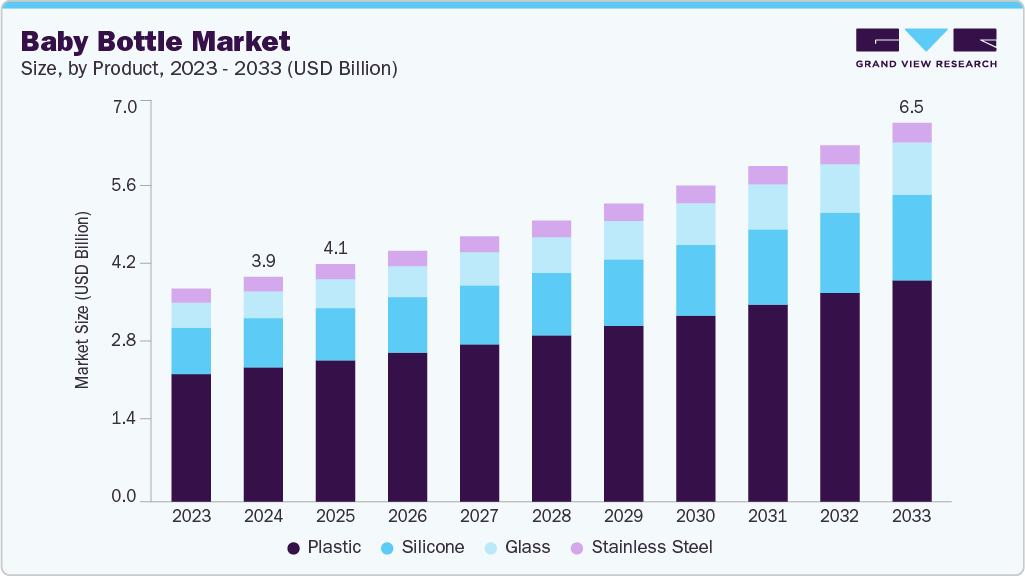
The global baby bottles market size was valued at USD 4.0 billion in 2025 and is projected to grow from USD 4.3 billion in 2026 to USD 6.5 billion by 2033, growing at a CAGR of 6.1% from 2026 to 2033. Asia Pacific dominated the market, accounting for the largest global share of 33.3% in 2025. A foundational growth driver in the global baby bottle market is the tightening regulatory landscape governing material safety and chemical exposure, particularly concerning endocrine-disrupting substances.
 Source: Grand View Research, IR Documents, Primary Interviews, Paid DatabasesTo learn more about this report,
 Download Free Sample Report
 Key Market Trends & Insights
- By product: Plastic product segment held the largest revenue share of 59.5% in 2025.
- By distribution channel: Offline distribution channel segment held the largest share of 77.4% in 2025.
Regional Highlights
- Largest regional market: Asia Pacific (33.3% revenue share, 2025)
- By country: China held the largest share of Asia Pacific in 2025.
Market Size & Forecast
- Market size in 2025: USD 4.0 Billion
- Estimated market size in 2026: USD 4.3 Billion
- Projected market size by 2033: USD 6.5 Billion
- CAGR (2026-2033): 6.1%
Three ways to get this report
Buy it, customize it, or ask a question.Ask an Analyst
Analyst response in 1 business day
- AccessReport author, directly
- Reply timeWithin 1 working day
- No sales callDirect answer only
- FormatEmail reply
- CostFree, no cost
Get the Full Report
What the study covers
- FormatsPDF · Excel · Dashboard
- Timeline2026–2033 annual, 2025 base
- Coverage20+ countries, 5 regions
- Companies10+ key players profiled
Customize the Report
20% free customization
- IncludeCountries, segments, points
- TailorTo your product definition
- ExtendDeeper competitor detail
- OrA fully bespoke study
- Turnaround5–10 working days
Regulatory authorities across multiple jurisdictions continue to refine safety standards and enforce stringent compliance requirements for infant-contact feeding materials. For instance, the Indian Standard IS 14625 (2015) explicitly prohibits the use of polycarbonate materials, which may potentially release Bisphenol-A (BPA) when exposed to heat or repeated use.As a direct consequence, manufacturers have been compelled to transition toward certified, non-toxic substrates such as polypropylene (PP), medical-grade silicone, borosilicate glass, and stainless-steel-based alternatives. Concurrently, heightened parental awareness and scrutiny regarding chemical migration, microplastic risks, and long-term infant health outcomes continue to drive market traction for BPA-free, phthalate-free, and food-grade certified baby bottle solutions, making material transparency a critical factor in brand competitiveness.
 To learn more about this report, Download Free Sample Report
 Another key demand catalyst is the rising emphasis on infant feeding efficacy and developmental alignment, which has expanded the market for performance-engineered bottle designs. Modern caregivers increasingly seek products that address functional feeding challenges, including colic, reflux, nipple confusion, aerophagia, and incorrect latch formation. Consequently, manufacturers are prioritizing advanced venting technologies, orthodontic and breast-mimicking nipple geometries, and age-appropriate flow control engineering to support smoother digestion and feeding comfort. A notable example is Dr. Brown’s anti-colic vent-based system, which remains well-recognized in the global market for its ability to minimise air ingestion and reduce irritability, thereby positioning its portfolio at the premium end of the performance-centric segment. This trend highlights a shift from basic feeding utility to medically informed, evidence-based design innovation.
Operational convenience and system compatibility also serve as significant market drivers, particularly as contemporary parents demand streamlined, hygienic, and time-efficient feeding solutions. Manufacturers are increasingly integrating bottles into broader feeding ecosystems that comprise breast pumps, storage containers, sterilization platforms, nipple variants, and modular accessories. This integration reduces repetitive milk handling, expedites cleaning cycles, and simplifies coordination among multiple caregivers. A pertinent reference is Philips Avent, whose ecosystem-based portfolio allows direct breast-to-bottle milk transfer through pump compatibility across its bottle and container formats. Such interoperable product ecosystems not only improve end-user efficiency but also foster higher brand retention, cross-category adoption, and increased lifetime customer value.
In addition, digital-first retail transformation and direct-to-consumer (D2C) business models have reshaped access, awareness, and evaluation behaviour within the baby bottle segment. E-commerce platforms and social-commerce ecosystems enable rapid product discovery, comparative assessment, experiential review sharing, and influencer-driven recommendation cycles. These channels have created fertile ground for emerging premium, eco-conscious, and design-focused challenger brands that may not rely on traditional brick-and-mortar distribution, but instead scale through community-driven validation. As a result, the category is experiencing heightened innovation velocity, brand fragmentation, and consumer experimentation, particularly among digitally oriented, millennial, and Gen-Z parent cohorts.
At a macro level, the market is further supported by shifting socioeconomic and demographic dynamics, particularly the rise in female workforce participation, the prevalence of dual-income households, and the emergence of shared parenting structures. These lifestyle transitions have increased reliance on expressed breastmilk feeding, mixed-feeding models, and on-the-go infant nourishment, thereby driving sustained adoption of portable, sterilizer-friendly, heat-resistant, and travel-compatible bottle formats. In highly urbanised environments, where time scarcity, childcare outsourcing, and compact living spaces prevail, baby bottles are perceived not merely as a feeding necessity but as an essential caregiving infrastructure item, ensuring long-term, resilient market demand.
Market Dynamics
The baby bottle market is gaining momentum as parents increasingly prioritize infant nutrition, feeding convenience, and product safety. Modern baby bottles incorporate features such as anti-colic venting systems, breast-like nipples, ergonomic designs, temperature-sensitive indicators, and BPA-free materials to enhance feeding experiences and support infant health. Growing awareness regarding safe feeding practices, rising demand for premium and sustainable products, and increasing participation of women in the workforce are encouraging the adoption of advanced baby feeding solutions. Furthermore, continuous product innovation and expanding online retail accessibility are expected to support sustained growth in the baby bottle market over the forecast period.
The increasing awareness among parents regarding infant nutrition, feeding safety, and early childhood health is significantly driving demand for baby bottles. Factors such as rising concerns about exposure to harmful chemicals, growing preference for BPA-free and food-grade materials, and increased emphasis on hygienic feeding practices have encouraged the adoption of high-quality baby feeding products. Parents are increasingly seeking bottles equipped with advanced features such as anti-colic systems, breast-mimicking nipples, and easy-to-clean designs that support healthy feeding and reduce discomfort among infants.
The growing number of working mothers and dual-income households further supports market growth by increasing reliance on bottle feeding and expressed breast milk storage solutions. In addition, rising disposable incomes and greater willingness to invest in premium infant care products are accelerating demand for innovative baby bottles made from glass, silicone, and other safe materials. As awareness regarding infant well-being continues to rise, parents are increasingly prioritizing technologically advanced and safety-certified feeding solutions, thereby supporting sustained growth of the baby bottle market.
Concerns regarding the safety of plastic materials and the environmental impact of disposable baby feeding products remain key restraints for the baby bottle market. Although plastic bottles continue to dominate the market due to their affordability and durability, increasing consumer awareness about potential chemical migration, microplastic exposure, and long-term health effects has led many parents to question the safety of conventional plastic feeding products. This has created greater scrutiny of product materials and manufacturing standards across the industry.
In addition, growing environmental concerns related to plastic waste and sustainability are influencing purchasing decisions. Consumers are increasingly seeking eco-friendly alternatives such as glass, silicone, and stainless-steel bottles, which often come at higher price points and may limit affordability for some households. Stringent product safety regulations, frequent product recalls, and evolving compliance requirements further increase manufacturing costs and operational complexities for market participants. These factors may hinder the widespread adoption of certain baby bottle products and create challenges for manufacturers seeking to balance safety, affordability, and sustainability.
The increasing demand for premium, eco-friendly, and technologically advanced baby feeding products is creating substantial growth opportunities in the baby bottle market. Modern parents are increasingly prioritizing product safety, sustainability, and convenience, driving demand for innovative baby bottles made from glass, silicone, and other environmentally friendly materials. Features such as anti-colic venting systems, breast-like nipples, temperature indicators, and ergonomic designs are gaining popularity as consumers seek feeding solutions that enhance infant comfort and support healthy development. The rapid growth of e-commerce platforms and direct-to-consumer sales channels further supports this opportunity by improving product accessibility and enabling brands to reach a wider consumer base. In addition, continuous innovation in feeding technologies and the development of integrated feeding ecosystems, including breast pumps, sterilizers, and milk storage solutions, are expected to strengthen market growth and create new revenue opportunities for industry participants.
Analyst Perspective
The baby bottle market is benefiting from powerful long-term growth drivers, including increasing parental focus on infant health, rising participation of women in the workforce, and growing demand for premium feeding solutions. While product safety and material innovation remain key differentiators, the strongest competitive advantage will likely be held by manufacturers that build comprehensive infant feeding ecosystems integrating baby bottles with breast pumps, sterilizers, milk storage solutions, and feeding accessories. As consumers increasingly prioritize convenience, safety, and sustainability, brands that establish trusted end-to-end feeding platforms are expected to strengthen customer loyalty and capture higher-value growth opportunities across the infant care category.
Consumer Insights
Material Safety, Regulatory Compliance, and Health Assurance: The foremost decision criterion for caregivers is the demonstrated safety of bottle materials in direct contact with infant nutrition. Factors such as BPA-free certification, phthalate-free composition, FDA-approved polymers, food-grade silicone, borosilicate glass composition, and heat-stability testing outcomes strongly influence purchasing behaviour. Increasing parental awareness of risks associated with chemical leaching, microplastics, and endocrine disruptors heightens demand for medical-grade and transparently certified products, making regulatory and safety labeling a decisive differentiator.
Feeding Performance and Infant Comfort Features: Consumers increasingly prioritise bottle attributes that deliver measurable outcomes related to smooth feeding and reduced digestive distress. Anti-colic vent technology, controlled-flow nipples, orthodontic nipple geometry, breast-simulation design, and latch-supporting textures significantly influence purchase choice. Bottles perceived as enhancing feeding continuity, reducing reflux, and preventing nipple confusion are favoured by parents adopting breast-bottle combination feeding or seeking clinically rationale-driven products.
 To learn more about this report, Download Free Sample Report
 Product Usability, Hygiene, and Maintenance Efficiency: Ease of cleaning, assembly, disassembly, and sterilisation safety form another major determinant for purchase intent. Features such as wide-neck openings, minimalist part architecture, dishwasher/UV-sterilizer compatibility, anti-retention internal surfaces, and thermal shock resistance enhance user convenience and increase decision confidence. Given the time constraints experienced by modern caregivers, low-maintenance, quick-clean, and residue-resistant bottles are preferred.
Ecosystem Integration and Accessories Compatibility: Decision-making is increasingly shaped by compatibility with breast pumps, milk storage solutions, warming systems, and travelling accessories. Parents prefer modular, cross-functional, and brand-ecosystem-compatible products because they enable workflow continuity, reduced handling steps, and operational efficiency. Brands offering an interoperable portfolio across feed preparation, feed storage, and feed delivery systems can secure longer-term customer loyalty and repeat business.
Product Insights
Based on product, the plastic product segment led the market with the largest revenue share of 59.5% in 2025 and glass product is expected to grow at the fastest CAGR over the forecast period. Plastic baby bottles continue to gain strong adoption due to their significantly lower production and retail costs compared to premium materials such as glass, stainless steel, or silicone. Their affordability makes them accessible across middle- and lower-income households as well as institutional buyers (e.g., daycare centres, maternity hospitals), thereby supporting high-volume, price-sensitive, and replacement-cycle-driven consumption. The lightweight nature of plastic bottles, combined with their impact-resistant and non-breakable properties, makes them preferred for outdoor, travel, and daycare use. Unlike glass alternatives, plastic bottles minimize the risk of breakage-related injury and are easier for infants and toddlers to grasp independently, thereby boosting utilization in early developmental feeding stages.
Demand for glass baby bottles is projected to grow at the fastest CAGR of 7.8% over the forecast period. Glass baby bottles are strongly preferred among health-conscious and premium-segment consumers due to their inherent non-porous, non-leaching, and chemically inert properties, which eliminate concerns related to BPA, phthalates, microplastics, and thermal-induced chemical migration. Their alignment with clean-label, toxin-free, and medical-grade feeding trends positions glass bottles as the material of choice for parents prioritising long-term safety over price and convenience.
As sustainability and eco-ethical purchasing gain relevance, glass bottles benefit from being perceived as environmentally responsible, long-life, reusable, and recyclable feeding solutions. This perception aligns closely with emerging high-income, millennial, and eco-lifestyle consumer cohorts, enabling glass bottles to occupy premium and aesthetically elevated brand positioning, often bundled with silicone sleeves or stainless-steel accessories. Glass bottles, particularly borosilicate-grade formats, offer superior heat resistance, making them compatible with microwave heating, boiling, steaming, bottle warmers, and UV sterilisation without risk of material degradation. This thermal resilience appeals to parents seeking rigorous, high-frequency sterilisation routines, common among newborn and NICU discharge infants whose feeding items require strict hygiene protocols.
Distribution Channel Insights
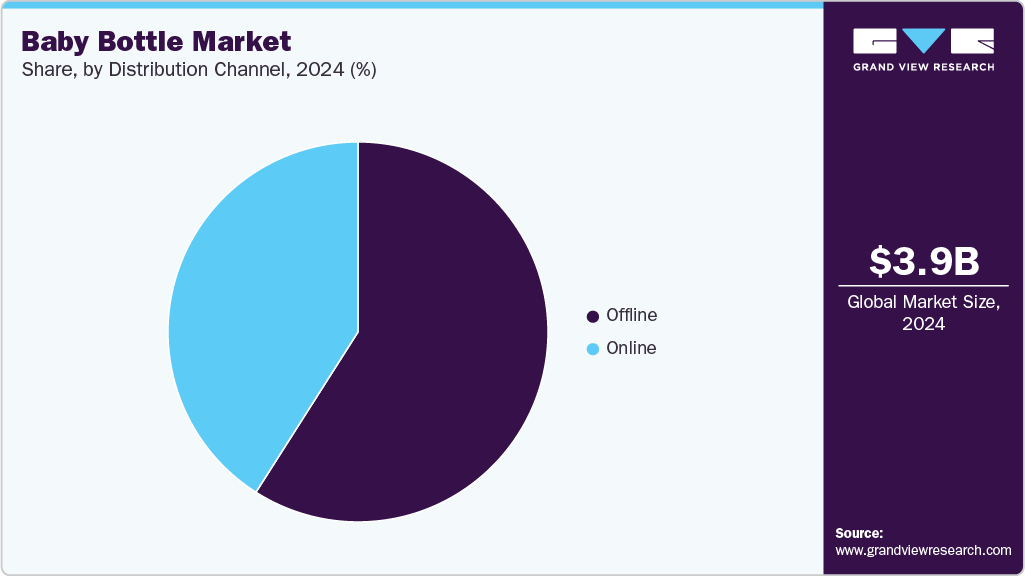
Based on distribution channel, the offline distribution channel segment led the market with the largest revenue share of 77.4% in 2025. Parents, especially first-time buyers, prefer offline retail environments for tactile evaluation of products, including weight, grip ergonomics, nipple texture, sleeve fit, and bottle durability. The ability to physically examine material quality and compare variants instantly enhances confidence in safety, suitability, and long-term usability, making offline platforms a preferred channel for premium, medical assurance, or first-purchase decisions. Offline stores - particularly pharmacies, maternity boutiques, paediatric hospitals, and lactation centres - offer professional assistance, enabling caregivers to make informed choices supported by clinical, practical, or medically aligned advice. Staff recommendations, in-store demonstrations, and paediatric referrals elevate offline stores as high-credibility purchase environments, especially for newborn and early-feeding stage products.
Online sales for baby bottles are projected to grow at a CAGR of 6.9% over the forecast period, damaged nipples, sterilisation failures, or sudden travel requirements, where instant access outweighs price sensitivity. This immediacy advantage sustains consistent foot traffic and repeat micro-purchases across accessories, nipples, sterilization components, and bottle-cleaning products.
 To learn more about this report, Download Free Sample Report
 Online sales for baby bottles are projected to grow at a CAGR of 6.9% from 2026 to 2033. Online platforms offer broader SKU availability, covering niche, imported, eco-premium, and innovation-led baby bottle brands that may not be stocked in regional offline retail. Parents benefit from being able to compare material types, flow variants, designs, sizes, and cross-brand ecosystems within a single browsing journey, enabling informed and personalised selection. Verified reviews, ratings, parent forums, influencer content, and usage videos significantly influence online purchasing behavior. These digital trust signals have become a key accelerant of category growth, especially for parents seeking evidence-driven decisions and reassurance from real-world user experiences.
E-commerce platforms are preferred for time-efficient shopping, repeat replenishment, doorstep delivery, scheduled subscriptions, and hassle-free returns. For working, urban, and new-parent households, the ability to repurchase compatible parts and accessories without store visits is a significant driver of ongoing channel stickiness.
Regional Insights
The baby bottle market in North America held 22.6% of the global revenue in 2025. The growth of the regional market is underpinned by a mature consumer base with high purchasing power, as well as strong awareness of infant health and safety. Parents in this region place a premium on products that are rigorously tested, BPA-free, and compliant with stringent U.S. and Canadian regulations. This regulatory consciousness drives demand for premium materials, including medical-grade silicone, glass, and advanced plastics. The region also benefits from innovation, with anti-colic designs, ergonomic shapes, and smart-feeding solutions widely accepted, as manufacturers respond to a sophisticated, safety-first consumer. For instance, in North America, there is significant uptake of eco-friendly bottles, leveraging both sustainability demand and health concerns.
The baby bottle market in the U.S. is anticipated to grow at a CAGR of 5.8% from 2026 to 2033. Moreover, the prevalence of dual-income households in the U.S. and Canada further reinforces demand for baby bottles. Working parents often rely on expressed breast milk or formula feeding, which increases the frequency and recurrence of bottle purchases. Innovations around convenience (such as compatibility with breast pumps) and sterilisation compatibility align strongly with these parents’ needs. The ease of access to baby gear through a robust retail infrastructure-spanning established big-box chains, pharmacies, and premium baby boutiques-ensures that new-generation, high-quality bottles are within reach. This combination of high income, health awareness, and product innovation has made North America a core contributor to the global baby bottle market.
U.S. Baby Bottle Market Trends
The baby bottle market in the U.S. is anticipated to grow at a CAGR of 5.8% from 2026 to 2033. Both safety concerns and convenience-oriented design heavily influence the U.S. market, as parents seek advanced anti-colic vent systems, interchangeable nipples, and bottles that integrate with breast pumps. In addition, socioeconomic dynamics such as strong female labor force participation and a high proportion of dual-income households fuel consistent demand for feeding accessories. Parental willingness to invest in premium and high-functionality bottles is also tied to value perception: features such as eco-friendly materials, long-lasting usage, and comprehensive feeding systems justify higher price points. This combination of buyer sophistication, strong consumer infrastructure, and innovation orientation ensures that the U.S. remains a key engine for global baby bottle revenue.
Europe Baby Bottle Market Trends
The European baby bottle industry accounted for a revenue share of 26.8% in 2025. A confluence of stringent regulation, environmental consciousness, and premiumization drives the market. European parents are particularly sensitive to the origins and safety of baby products due to well-established regulatory frameworks such as REACH and those governing materials in food-contact products. These regulations, coupled with consumer demand for non-toxic and sustainable materials, strongly favor the use of glass, stainless steel, and high-grade silicone bottles. In countries like Germany, widespread formula- or mixed-feeding practices (supported by data showing high percentages of formula- or mixed-fed infants) further drive bottle adoption.
At the same time, a growing green parenting movement in Western Europe promotes eco-conscious alternatives to conventional plastics. European premium brands (such as MAM, NUK, and others) are capitalizing on this by launching eco-certified bottles and recyclable or mono-material packaging. The result is a strong and stable regional demand, rooted in both regulation and values, that supports high-value bottle segments and underpins Europe’s disproportionately large global share.
Asia Pacific Baby Bottle Market Trends
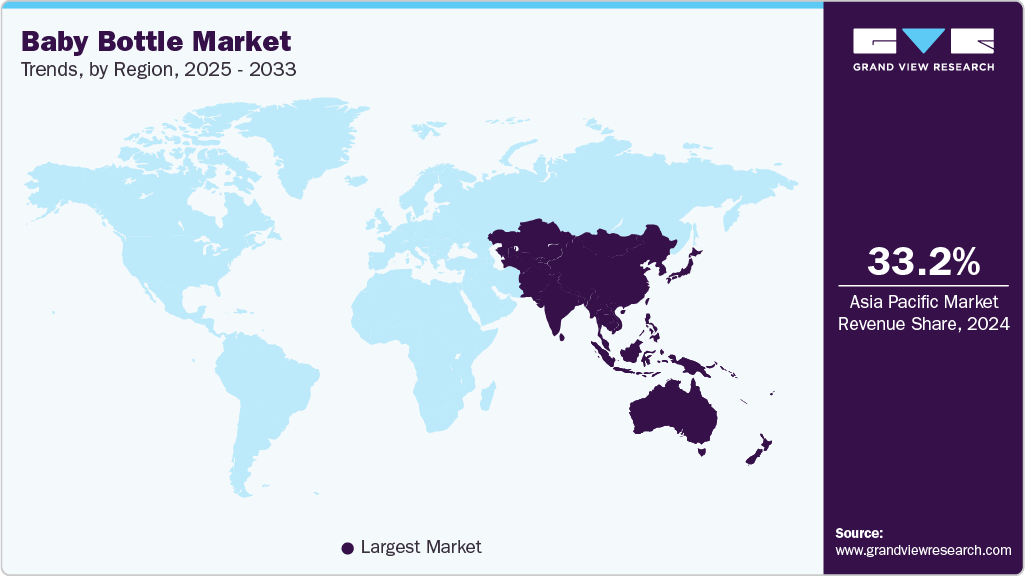
Asia Pacific dominated the baby bottle market with the largest revenue share of 33.3% in 2025. Large and growing populations in key markets, such as China, India, and Southeast Asia, continue to drive demand. As more urban families form, the need for reliable, high-quality feeding accessories increases. Rising disposable incomes in these markets are enabling more parents to trade up to premium baby bottles, especially those made from safer or more durable materials. Simultaneously, urbanization and the rise of dual-income households are driving greater reliance on expressed breast milk and formula feeding. This has propelled demand for multifunctional and sterilizable bottle systems. For instance, Hegen, a Singapore-based brand, has gained strong traction across the Asia Pacific with its “Express-Store-Feed” bottle system, which integrates pumping, storage, and feeding-a model ideally suited to working parents in the region. The baby bottle market in China held the largest share in the Asia Pacific region in 2025.
 To learn more about this report, Download Free Sample Report
 Key Baby Bottle Company Insights
The competitive landscape of the baby bottle market is characterised by a blend of global incumbents, regional specialists, agile direct-to-consumer challengers, and private-label suppliers. Market participants compete across multiple vectors beyond price - notably material safety credentials, feeding-performance engineering, ecosystem compatibility (pump/storage/sterilizer integration), brand trust, and channel coverage. This multidimensional competitive intensity has produced a layered market structure in which premium, mid-market, and value tiers coexist, each driven by distinct consumer priorities and procurement behaviors.
Market concentration is moderate: a set of long-standing multinational companies (for example, established baby-care brands with extensive R&D, regulatory resources, and retail partnerships) dominate headline revenue and shelf presence, while a large number of small and mid-sized firms occupy niche positions. Incumbents leverage brand recognition, clinical endorsements, and scale-driven distribution agreements with major retailers, hospitals, and institutional buyers. In parallel, specialist manufacturers-often regionally based-utilize local regulatory knowledge, cultural food preferences, and supply-chain proximity to capture a share in national markets.
Key Baby Bottle Companies
The following key companies have been profiled for this study on the baby bottle market.
-
Pigeon Corporation
-
Medela AG
-
Goodbaby International Holdings Limited
-
Koninklijke Philips N.V.
-
Handi-Craft Company
-
Artsana S.p.A
-
Comotomo
-
Richell Corporation
-
Munchkin, Inc.
-
Nanobebe US LTD
Competitive Benchmarking
Operating Strategies
Competitive Edge
Weaknesses
Established Players (Pigeon Corporation, Koninklijke Philips N.V. (Philips Avent), Medela AG, Artsana S.p.A. (Chicco), Handi-Craft Company (Dr. Brown’s))
- Expand integrated feeding ecosystems through compatibility with breast pumps, sterilizers, storage containers, and feeding accessories.
- Invest in BPA-free, glass, and anti-colic bottle innovations while strengthening retail and e-commerce distribution networks globally.
- Focus on product safety certifications, premium product development, and partnerships with hospitals and pediatric healthcare professionals.
- Strong brand recognition, extensive global distribution, high consumer trust, established regulatory compliance capabilities, and broad product portfolios.
- Advanced feeding technologies such as anti-colic vent systems, breast-mimicking nipples, and feeding ecosystem integration support customer retention and premium positioning.
- Higher manufacturing and compliance costs due to stringent safety regulations.
- Dependence on mature markets can limit growth rates, while large organizational structures may slow innovation and responsiveness to emerging consumer preferences.
Emerging & Niche Players (Comotomo, Nanobebe US LTD, Munchkin, Inc., Richell Corporation, Goodbaby International Holdings Limited)
- Focus on specialized segments such as breast-like bottle designs, eco-friendly materials, silicone bottles, smart feeding solutions, and direct-to-consumer sales channels.
- Leverage digital marketing, influencer partnerships, parenting communities, and online marketplaces to accelerate brand awareness and customer acquisition.
- Greater agility in product innovation, ability to address niche parental preferences, strong appeal among millennial and Gen Z parents, and faster adoption of premium, sustainable, and design-centric products.
- Digital-first business models support rapid market penetration.
- Limited financial resources and lower global brand recognition compared with established competitors.
- Greater reliance on online channels, smaller distribution networks, and challenges in achieving large-scale manufacturing efficiencies and regulatory compliance across multiple regions.
Recent Developments
-
In April 2025, Momtech Inc. announced the expansion of its mōmi baby-bottle portfolio, introducing multiple new formats engineered to replicate natural breastfeeding behaviour. The newly released lineup included 4-ounce standard bottles, 9-ounce borosilicate glass variants, and 10-ounce BPA-free plastic configurations, all equipped with the company’s proprietary babypace nipple technology designed to simulate the suck-swallow-breathe rhythm observed during natural nursing. This launch strengthened the brand’s positioning in the premium biomimetic feeding segment, targeting parents seeking continuity between breast and bottle feeding.
-
In 2024, Munchkin introduced the Bond silicone-coated glass baby bottle, featuring a borosilicate glass interior to minimize direct milk-to-plastic contact while maintaining a tactile, impact-resistant silicone exterior shell. The bottle also featured an integrated all-silicone anti-colic valve, designed to reduce digestive discomfort in infants while enhancing post-feeding satisfaction outcomes. This launch underscored Munchkin’s strategic focus on hybrid-material innovation, balancing chemical-free feeding with durability, grip comfort, and reduced breakage concerns.
-
In 2024, Philips Avent unveiled a new glass-based iteration of its Natural Response baby bottle series, featuring a wide-neck borosilicate glass construction, complemented by a Natural Response nipple designed to release milk only when actively drawn by the infant. This model also integrated anti-colic venting architecture, supporting smoother feeding cycles and reduced gastrointestinal stress. The launch represented Philips Avent’s continued transition toward premium, safe-material compliance, catering to the growing consumer preference for non-plastic, clinically aligned feeding solutions.
Baby Bottle Market Report Scope
Report Attribute
Details
Market size value in 2025
USD 4.0 billion
Market size value in 2026
USD 4.3 billion
Revenue forecast in 2033
USD 6.5 billion
Growth rate
CAGR of 6.1% from 2026 to 2033
Base year for estimation
2025
Historical data
2021 - 2024
Forecast period
2026 - 2033
Quantitative units
Revenue in USD million/billion, and CAGR from 2026 to 2033
Report coverage
Revenue forecast, company ranking, competitive landscape, growth factors, and trends
Segments covered
Product, distribution channel, region
Regional scope
North America; Europe; Asia Pacific; Latin America; MEA
Country scope
U.S.; Canada; Mexico; Germany; UK; France; Italy; Spain; Norway; Sweden; China; Japan; India; Brazil; Argentina; South Africa; UAE
Key companies profiled
Pigeon Corporation; Medela AG; Goodbaby International Holdings Limited; Koninklijke Philips N.V.; Handi-Craft Company; Artsana S.p.A; Comotomo; Richell Corporation; Munchkin, Inc.; Nanobebe US LTD
Customization scope
Free report customization (equivalent up to 8 analysts' working days) with purchase. Addition or alteration to country, regional & segment scope.
Pricing and purchase options
Avail customized purchase options to meet your exact research needs. Explore purchase options
Global Baby Bottle Market Report Segmentation
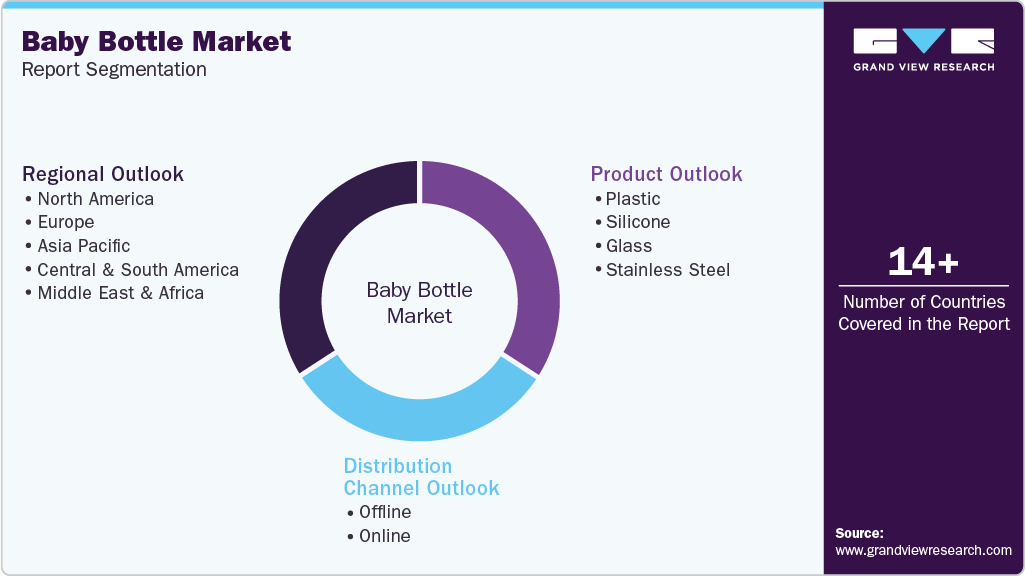
This report forecasts revenue growth at global, regional & country levels and provides an analysis of the latest trends and opportunities in each of the sub-segments from 2021 to 2033. For this study, Grand View Research has segmented the baby bottle market based on product, distribution channel, and region.
 To learn more about this report, Download Free Sample Report
 -
Product Outlook (Revenue, USD Million, 2021 - 2033)
-
Plastic
-
Silicone
-
Glass
-
Stainless Steel
-
-
Distribution Channel Outlook (Revenue, USD Million, 2021 - 2033)
-
Offline
-
Online
-
-
Regional Outlook (Revenue, USD Million, 2021 - 2033)
-
North America
-
U.S.
-
Canada
-
-
Europe
-
Germany
-
UK
-
France
-
Italy
-
Spain
-
Norway
-
Sweden
-
-
Asia Pacific
-
China
-
India
-
Japan
-
-
Central & South America
-
Brazil
-
Argentina
-
-
Middle East & Africa
-
South Africa
-
UAE
-
-
Research Methodology
The baby bottles market figures in this report are based on a proven research process that combines executive interviews with secondary research from proprietary databases, company filings, and recognized regulatory and institutional sources. Market size is built through value-chain sizing-reconciling supply-side and demand-side estimates-and triangulated with bottom-up and top-down approaches. Every estimate passes multiple levels of expert validation before publication, with each cryptocurrency payment apps segment quantified using the revenue-capture definitions in the table below.
Segment Definition
Segment - Product
Revenue capture definition
Plastic
This segment covers the revenues generated through the sales of plastic baby bottles used for infant feeding. Plastic baby bottles are lightweight, durable, shatter-resistant, and cost-effective, making them the most widely used feeding solution among parents. These bottles are commonly manufactured using BPA-free polypropylene and other food-grade plastics.
Silicone
This segment covers the revenues generated through the sales of silicone baby bottles designed to provide a soft, squeezable, and flexible feeding experience. Silicone bottles are valued for their durability, safety, heat resistance, and ability to mimic the natural feel of breastfeeding. They are increasingly preferred by parents seeking premium and chemical-free feeding products.
Glass
This segment covers the revenues generated through the sales of glass baby bottles used for safe and sustainable infant feeding. Glass bottles are manufactured from high-quality, heat-resistant glass and are favored for being free from chemicals, odors, and stains. Their recyclability and durability make them a popular choice among health-conscious and environmentally aware consumers.
Stainless Steel
This segment covers the revenues generated through the sales of stainless-steel baby bottles designed for long-lasting, reusable, and eco-friendly feeding applications. Stainless-steel bottles offer excellent durability, resistance to breakage, and insulation properties while eliminating concerns related to plastic exposure. These products are increasingly adopted by consumers seeking sustainable infant feeding solutions.
Estimation Model
Layer Name
Key Questions
Description
Infant Population Layer
Who requires baby feeding solutions?
Identify the annual birth cohort, infant population (0–24 months), and households with newborns and toddlers that require bottle-feeding products. This represents the total potential consumer base for baby bottles.
Accessible Caregiver Layer
Who can purchase baby bottles?
Apply household purchasing power, urbanization levels, retail accessibility, and e-commerce penetration to derive the addressable consumer base. Consider pharmacies, supermarkets, and online channels.
Product Adoption Layer
Who actively uses baby bottles?
Apply adoption rates for formula feeding, expressed breastmilk feeding, and mixed-feeding households, considering preferences for safe and performance-oriented bottle designs.
Monetisation Layer
How much revenue is generated?
Estimate revenue using purchase frequency, replacement cycles, premium material adoption (glass, silicone, stainless steel), and accessory spending.
Delivered Customizations
This report has been delivered with the following In-depth customizations
Client Request
Customization Delivered
Value Adds
Infant Feeding Product Preferences & Material Trends
Conducted a focused analysis of baby bottle demand across plastic, glass, silicone, and stainless-steel products, evaluating consumer preferences for safety, durability, BPA-free materials, anti-colic features, and age-specific feeding solutions.
Helps stakeholders identify high-growth product categories, evaluate evolving parental preferences, and assess innovation opportunities in infant feeding products.
Premiumization & Health-Conscious Parenting Trends
Evaluated adoption trends for premium baby bottles, eco-friendly materials, anti-colic technologies, ergonomic designs, and products aligned with growing awareness of infant health, hygiene, and feeding safety.
Provides insights into emerging consumer trends, unmet parental needs, and commercially attractive product segments to support product positioning and portfolio expansion strategies.
Distribution Channel & Market Expansion Opportunity Assessment
Assessed demand across offline and online platforms, along with regional growth opportunities driven by rising birth rates, increasing disposable incomes, urbanization, and expanding infant care spending.
Supports investment and expansion strategies by identifying high-potential markets, evaluating channel effectiveness, and strengthening long-term growth opportunities within the global baby bottle industry.
Frequently Asked Questions About This Report
The global baby bottle market was valued at USD 4.0 billion in 2025 and is estimated at USD 4.3 billion in 2026.
Some of the key players operating in the baby bottle market include Pigeon Corporation; Medela AG; Goodbaby International Holdings Limited; Koninklijke Philips N.V.; Handi-Craft Company; Artsana S.p.A; Comotomo; Richell Corporation; Munchkin, Inc.; Nanobebe US LTD
Key factors that are driving the baby bottle market growth include that Parents are becoming more safety conscious, leading to an increased demand for high-quality baby bottles made from materials such as BPA-free plastic, glass, silicone, and steel.
The plastic bottle product segment dominated the baby bottle market with a share of 59.5% in 2025.
The offline distribution channel dominated the baby bottle market with a share of 77.4% in 2025.
The glass product is the fastest-growing segment over the forecast period.
The Middle East & Africa are the fastest-growing regions over the forecast period.
The global baby bottle market is expected to grow at a compound annual growth rate of 6.1% from 2026 to 2033 to reach USD 6.5 billion by 2033.
Asia Pacific dominated the baby bottle market with a share of 33.3% in 2025. This is attributable to the presence of an abundant number of manufacturers in the region, particularly in China, and an increasing number of working women in the region.
About the Author(s)
Homecare & Decor Research Team
Consumer Goods · Homecare & DecorThis report was authored by the homecare & decor research team at Grand View Research - comprising two research analysts, one senior research analyst, and one industry expert - with specialized expertise in the homecare & decor segment of the consumer goods industry. All findings are based on proprietary consumer goods databases, executive interviews, and regulatory analysis, subject to internal peer review prior to publication.
Last Updated:
Speak to Analyst

Customize this report to your needs - add regions, segments, or data points, with 20% free customization.
Or view our licence options:


ISO 9001:2015 & 27001:2022 Certified
We are GDPR and CCPA compliant! Your transaction & personal information is safe and secure. For more details, please read our privacy policy.


