
- Home
- »
- Advanced Interior Materials
- »
-
Bio-based Construction Materials Market Size Report, 2033GVR Report cover

Bio-based Construction Materials Market (2026 - 2033)
Size, Share & Trends Analysis Report By Material Type (Insulation Materials, Composites, Concrete and Binders, Plastics and Polymers), By End Use (Residential, Non-residential), By Region, And Segment Forecasts
Market Size, 2025
$39.0MMarket Estimate, 2026
$42.4MMarket Forecast, 2033
$75.6MCAGR, 2026–2033
8.6%Bio-based Construction Materials Market Summary
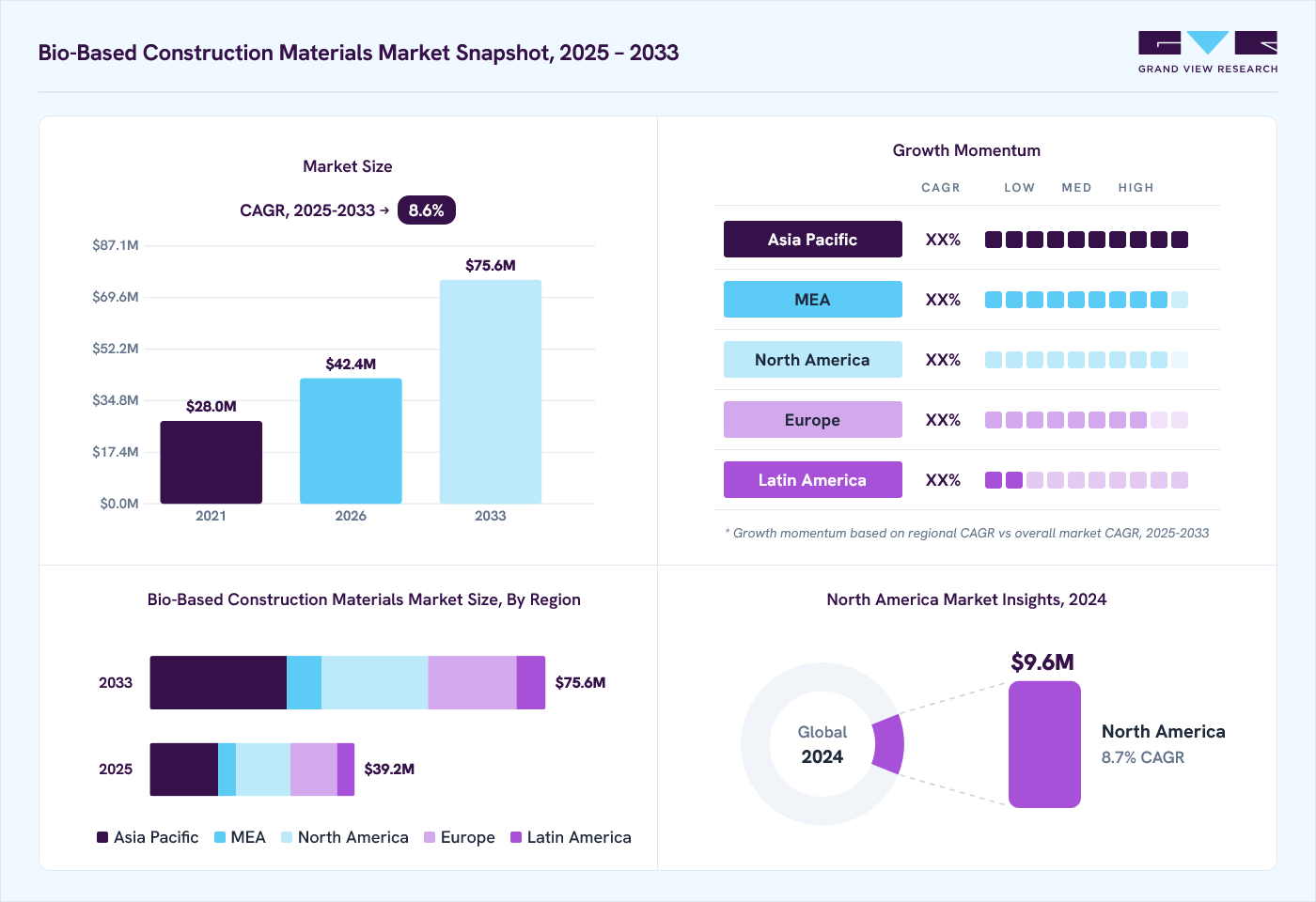
The global bio-based construction materials market size was valued at USD 39.0 million in 2025 and is projected to grow from USD 42.4 million in 2026 to USD 75.6 million by 2033, at a CAGR of 8.6% from 2026 to 2033. Asia Pacific dominated the market, accounting for a revenue share of 33.5% in 2025. The industry is driven by the increasing emphasis on sustainability within the construction sector.
 Source: Grand View Research, IR Documents, Primary Interviews, Paid DatabasesTo learn more about this report,
 Download Free Sample Report
 Key Market Trends & Insights
- By material type: Plastics and polymers segment led the market with the largest revenue share of 31.0% in 2025
- By end use: Residential segment led the market with the largest revenue share of 61.5% in 2025
Regional Highlights
- Largest regional market: Asia Pacific (33.5% revenue share, 2025)
- By country: China held the largest market share in 2025.
Market Size & Forecast
- Market size in 2025: USD 39.0 Million
- Estimated market size in 2026: USD 42.4 Million
- Projected market size by 2033: USD 75.6 Million
- CAGR (2026-2033): 8.6%
Three ways to get this report
Buy it, customize it, or ask a question.Ask an Analyst
A direct answer, usually in 1 working day
- AccessReport author, directly
- Reply timeWithin 1 working day
- No sales callDirect answer only
- FormatEmail reply
- CostFree, no cost
Get the Full Report
What the study covers
- FormatsPDF · Excel · Dashboard
- Timeline2026–2033 annual, 2025 base
- Coverage20+ countries, 5 regions
- Companies10+ key players profiled
Customize the Report
20% free customization
- IncludeCountries, segments, points
- TailorTo your product definition
- ExtendDeeper competitor detail
- OrA fully bespoke study
- Turnaround5–10 working days
With growing concerns over the environmental impact of conventional materials such as concrete and steel, bio-based alternatives offer a lower carbon footprint and improved eco-friendliness. Many governments worldwide have implemented stringent regulations and incentives to promote the adoption of sustainable building practices, which in turn fuels demand for bio-based materials like timber, hempcrete, and bamboo. This regulatory support is pivotal, as it aligns with wider goals of reducing greenhouse gas emissions and achieving net-zero carbon targets in urban development.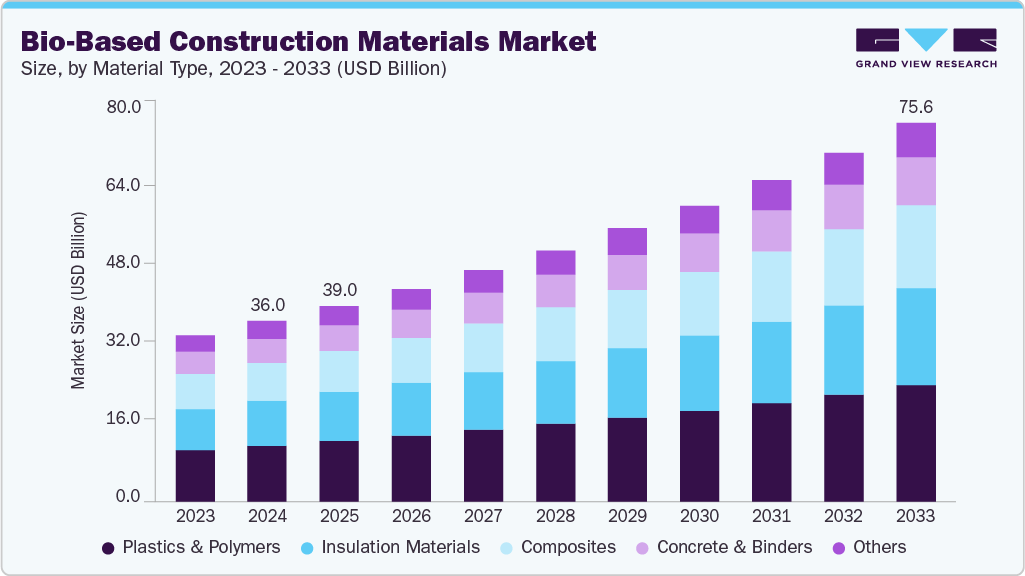 To learn more about this report, Download Free Sample Report
 Technological advancements in material science and production methods also play a critical role in expanding the bio-based construction materials market. Innovations such as bio-based resins, engineered wood products, and mycelium-based composites have improved material performance, durability, and cost-efficiency. Furthermore, emerging manufacturing technologies like foam forming and energy-efficient processing facilitate the commercial scalability of these materials, making them more competitive against traditional options. These technological improvements enhance the feasibility of bio-based solutions across a variety of construction applications, accelerating their adoption globally.
Another major driver is the rising consumer awareness and preference for healthier indoor environments. Bio-based construction materials often enhance indoor air quality by emitting fewer volatile organic compounds compared to synthetic or fossil-based products. Consequently, homeowners, architects, and developers are increasingly prioritizing materials that contribute not only to sustainability but also to occupant health and comfort. This trend is closely linked to the broader movement towards green building certifications and sustainable urban living, which encourage the use of renewable and non-toxic materials in construction projects.
Market Dynamics
The bio-based construction materials market is witnessing steady growth due to increasing emphasis on sustainable construction practices, stringent environmental regulations, and growing demand for low-carbon building materials. Bio-based materials such as timber, hempcrete, bamboo, straw panels, cork, mycelium composites, and bio-based insulation products are gaining traction as viable alternatives to conventional construction materials. Rising investments in green building projects, circular economy initiative es, and net-zero carbon commitments by governments and private developers are further accelerating market expansion. Technological advancements in engineered bio-based products and improved material performance are also enhancing adoption across residential, commercial, and industrial construction sectors.
The construction industry is under increasing pressure to reduce its environmental footprint, as buildings account for a significant share of global carbon emissions and resource consumption. Bio-based construction materials offer lower embodied carbon, renewable sourcing, biodegradability, and improved energy efficiency compared to conventional materials such as concrete, steel, and plastics. As a result, architects, builders, and developers are increasingly incorporating bio-based alternatives into building designs to meet sustainability targets and green certification requirements.
Furthermore, government policies promoting green buildings and carbon-neutral infrastructure are creating favorable conditions for market growth. Programs supporting sustainable forestry, renewable material utilization, and energy-efficient construction are encouraging the adoption of bio-based materials. The growing popularity of certifications such as LEED, BREEAM, and other sustainable building standards is also driving demand for environmentally friendly construction solutions, thereby supporting long-term market expansion.
Despite growing interest, the widespread adoption of bio-based construction materials is constrained by limited manufacturing capacity and relatively higher costs compared to traditional building materials. Many bio-based products remain in the early stages of commercialization, resulting in fragmented supply chains and lower economies of scale. This often leads to higher procurement costs and limited availability, particularly in developing regions.
The increasing focus on circular economy principles and net-zero carbon building strategies presents significant opportunities for the bio-based construction materials market. Governments, developers, and investors are prioritizing materials that minimize environmental impact throughout their lifecycle, from sourcing and manufacturing to disposal and recycling. Bio-based materials align closely with these objectives by utilizing renewable feedstocks and offering lower greenhouse gas emissions.
Market Concentration & Characteristics
The industry concentration remains moderate, characterized by a mix of global leaders and innovative niche players. Major corporations such as Braskem, Evonik Industries, and Arkema hold substantial market shares due to their extensive R&D capabilities and advanced production facilities, which give them a competitive edge. These firms primarily focus on strategic mergers, joint ventures, and collaborations to expand their product portfolios and scale manufacturing capacities, further reinforcing their market dominance. The industry exhibits a relatively consolidated structure, with key players driving innovation and market growth while smaller firms contribute through niche and specialty offerings, fostering a dynamic yet somewhat concentrated landscape.
 To learn more about this report, Download Free Sample Report
 Innovation levels in the bio-based construction materials industry are increasingly high, fueled by advancements in green chemistry, nanotechnology, and bioengineering. Companies are investing heavily in developing next-generation composites, such as mycelium-based insulators and bio-resins, which significantly outperform traditional materials in sustainability and performance metrics. Furthermore, mergers and acquisitions among research-intensive firms are accelerating the commercialization of innovative solutions, aiming to meet evolving regulatory standards and consumer demand for eco-friendly products. The impact of supportive regulations and incentives is also crucial, as they create a favorable environment for sustainable innovations and facilitate market entry for novel bio-based technologies.
Analyst Perspective
The bio-based construction materials market is evolving from a niche sustainable building segment into a technology-driven market centered on carbon footprint reduction, renewable resource utilization, circular economy integration, energy-efficient construction, and next-generation green building solutions. The strongest growth opportunities are emerging from residential housing projects, commercial buildings, institutional infrastructure, industrial facilities, and net-zero construction developments where builders and developers are increasingly seeking low-carbon alternatives to conventional construction materials. Rising environmental regulations, green building certification requirements, corporate sustainability commitments, and demand for resource-efficient construction practices are accelerating the adoption of bio-based materials across global construction markets.
Material Type Insights
Based on material type, the plastics and polymers segment led the market with the largest revenue share of 31.0% in 2025 and is expected to grow at a CAGR of 8.5% over the forecast period, driven by the increasing shift from petroleum-based to renewable feedstocks in construction and manufacturing. Bio-based polymers such as polylactic acid (PLA), polyhydroxyalkanoates (PHA), and bio-polyethylene are gaining traction due to their lower carbon footprint and biodegradability. These materials are being widely adopted in flooring, insulation, and piping applications, supporting green building initiatives.
The composites segment is expected to grow at the fastest CAGR of 9.3% over the forecast period, driven by technological advancements in natural fiber reinforcement and resin development, enhancing the structural and functional properties of bio-based materials. The use of hemp, flax, jute, and bamboo fibers in bio-resins is creating lightweight, durable, and recyclable composites ideal for architectural and structural components. Rising demand for sustainable prefabrication and modular construction is further expanding the use of these materials.
End Use Insights
Based on end use, the residential segment led the market with the largest revenue share of 61.5% in 2025 and is expected to grow at a CAGR of 8.4% over the forecast period, driven by growing consumer awareness of sustainability, energy efficiency, and healthy living environments. Homeowners are increasingly choosing bio-based materials for their natural, non-toxic, and low-carbon attributes. Products such as bio-based insulation panels, flooring, and wall composites contribute to enhanced indoor comfort and reduced energy consumption.
 To learn more about this report, Download Free Sample Report
 Non-residential segment is expected to grow at the fastest CAGR of 8.9% over the forecast period, driven by the widespread incorporation of sustainable materials in commercial, industrial, and institutional construction projects. Corporations and developers are increasingly adopting bio-based solutions to meet ESG targets and reduce operational carbon footprints. Bio-composites, resins, and biopolymers are being used in façades, insulation systems, and interior applications for their durability and environmental benefits. Supportive government procurement policies and international sustainability standards are further encouraging adoption in large-scale infrastructure and commercial projects.
Regional Insights
Asia Pacific Bio-Based Construction Materials Market Trends
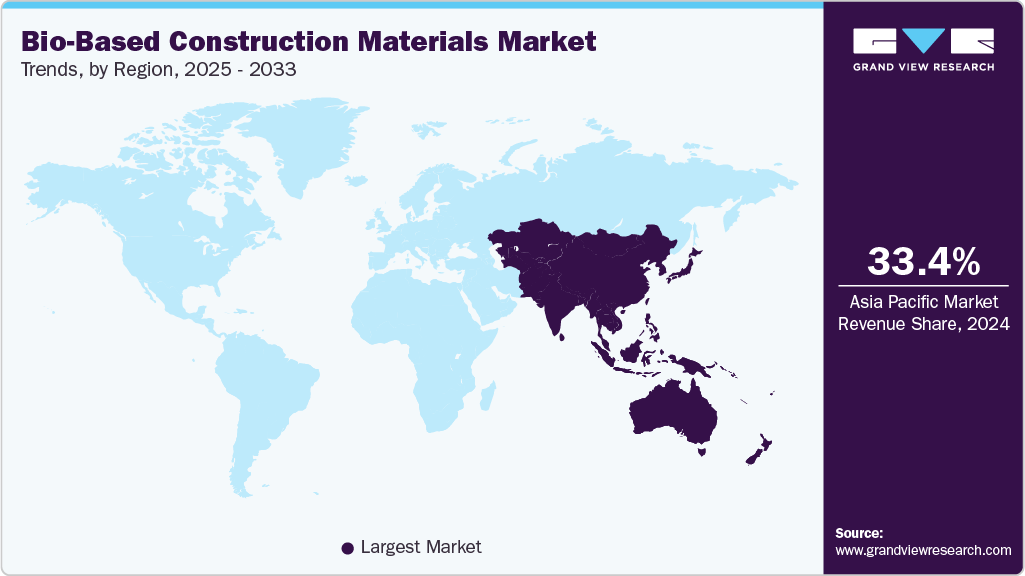
Asia Pacific dominated the bio-based construction materials market with the largest revenue share of 33.5% in 2025, propelled by rapid urbanization and infrastructure growth, paired with increasing environmental awareness among governments and consumers. Countries such as Japan, China, and India are investing heavily in sustainable construction to reduce carbon emissions. The availability of abundant biomass resources supports cost-effective production of bio-based materials. National green building programs, such as India’s GRIHA and China’s Three-Star Green Building System, are fostering material innovation. The expansion of eco-cities and smart urban projects across Southeast Asia is enhancing adoption. Moreover, collaborations between global bio-material firms and local manufacturers are improving scalability in the region.
 To learn more about this report, Download Free Sample Report
 The bio-based construction materials market in China held the largest share in the Asia Pacific region in 2025. The nation’s focus on “green transition” and “circular economy” policies supports large-scale integration of bio-based materials. Continuous urban expansion has prompted demand for sustainable concrete alternatives and renewable insulation materials. Chinese companies are increasingly investing in bio-composite technology to meet domestic and export market needs. The Belt and Road Initiative also promotes the use of eco-friendly materials in international infrastructure projects. Moreover, rising environmental concerns among urban populations are reinforcing the demand for sustainable construction solutions.
North America Bio-Based Construction Materials Market Trends
The bio-based construction materials market in North America is driven by the growing emphasis on green building certifications such as LEED and BREEAM, promoting the use of sustainable and renewable materials. Government incentives for energy-efficient buildings and carbon-neutral construction practices are accelerating adoption. Additionally, the region’s strong R&D infrastructure fosters innovations in biocomposites, bio-resins, and natural insulation materials. Increased corporate commitments toward ESG (Environmental, Social, and Governance) standards are also driving market expansion. The presence of leading construction companies integrating bio-based solutions enhances commercialization. Moreover, heightened consumer awareness regarding climate resilience and low-carbon infrastructure supports consistent market growth.
U.S. Bio-Based Construction Materials Market Trends
The bio-based construction materials market in the U.S. is primarily influenced by the Biden administration’s climate policies emphasizing net-zero emissions in infrastructure. The Infrastructure Investment and Jobs Act encourages the adoption of low-carbon and renewable construction materials. Rising demand for sustainable housing, coupled with stringent regulations on construction waste, has bolstered the uptake of bio-based composites and adhesives. The U.S. Green Building Council’s initiatives further encourage the use of renewable raw materials. Strong collaboration between private developers and bio-material startups has led to product diversification. Additionally, consumer preference for eco-friendly and energy-efficient structures continues to fuel market development.
Europe Bio-Based Construction Materials Market Trends
The bio-based construction materials market in Europe is supported by robust regulatory frameworks such as the European Green Deal and Circular Economy Action Plan. The region is leading in sustainable material innovation, driven by strong public-private R&D collaborations. Construction firms are increasingly adopting bio-polymers, wood-based panels, and natural fiber composites to comply with carbon neutrality goals. High energy costs have encouraged the use of efficient, low-impact materials. The growing refurbishment of aging infrastructure using eco-friendly alternatives further stimulates demand. Moreover, consumer preference for sustainable housing and government incentives for carbon labeling are propelling the regional market.
Germany bio-based construction materials market is driven by strict sustainability standards in the building sector and strong government funding for eco-innovation. The German Energy Transition (Energiewende) promotes the use of renewable materials to minimize embodied carbon. A well-developed bioeconomy ecosystem facilitates large-scale production of bioplastics, lignin-based binders, and cellulose composites. The country’s advanced manufacturing capabilities enable precision in bio-material design and performance. Increasing adoption of prefabricated and modular construction enhances efficiency and sustainability. Furthermore, collaboration between research institutions and industry stakeholders ensures continued technological advancements and market maturity.
Central & South America Bio-Based Construction Materials Market Trends
The bio-based construction materials market in the Central & South America is expanding due to rising infrastructure development and environmental sustainability initiatives across emerging economies. Countries like Brazil, Chile, and Mexico are increasingly promoting bio-based materials to reduce construction waste and deforestation. The region’s abundant agricultural resources provide a strong feedstock base for biopolymers and natural composites. International investments in sustainable urban projects are enhancing market penetration. Additionally, government programs focusing on green housing and energy-efficient construction are fostering adoption. Growing awareness among architects and builders about renewable alternatives is expected to drive sustained market growth.
Middle East & Africa Bio-Based Construction Materials Market Trends
The bio-based construction materials market in the Middle East & Africa is driven by increasing government focus on sustainability and diversification away from oil-based economies. Initiatives such as Saudi Arabia’s Vision 2030 and the UAE’s Green Building Regulations are fostering the use of renewable construction inputs. The region’s large-scale infrastructure projects and smart city developments encourage demand for bio-based insulation, coatings, and composites. International collaborations with European and Asian firms are improving technology transfer and production capacity. The scarcity of natural resources also motivates the shift toward sustainable material sourcing. Furthermore, growing awareness of climate adaptation and desertification control reinforces adoption in the region.
Key Bio-Based Construction Materials Companies Insights
Key players operating in the bio-based construction materials market are undertaking various initiatives to strengthen their presence and increase the reach of their products and services. Strategies such as expansion activities and partnerships are key in propelling the market growth. Some of the key players operating in the industry include BASF SE, DuPont de Nemours, Inc.
-
BASF offers a range of eco-friendly construction solutions, including bio-based polyurethane foams, biopolymers, and natural fiber composites. BASF’s products enhance energy efficiency and reduce embodied carbon, supporting green certification standards.
-
DuPoint provides bio-based resins, adhesives, and insulation solutions designed for green building applications. DuPont’s Sorona polymer, derived partly from renewable plant-based ingredients, is used in carpeting and interior applications.
LafargeHolcim Ltd., Sika AG are some of the emerging market participants in bio-based construction materials market.
-
LafargeHolcim Ltd produces bio-based concrete additives and green cements designed to reduce CO₂ emissions. Its ECOPact range incorporates renewable and recycled content, offering a lower carbon footprint compared to traditional concrete.
-
Sika AG specializes in advanced chemical products for construction and industrial applications, with an increasing focus on bio-based innovation. The company’s product range includes bio-based sealants, adhesives, and coatings derived from renewable raw materials. Sika’s sustainable construction solutions enhance structural durability while minimizing environmental impact.
Key Bio-based Construction Materials Companies:
The following key companies have been profiled for this study on the bio-based construction materials market.
-
BASF SE
-
DuPont de Nemours, Inc.
-
LafargeHolcim Ltd.
-
Sika AG
-
Cargill, Incorporated
-
NatureWorks LLC
-
Interface, Inc.
-
Saint-Gobain S.A.
-
Green Building Materials LLC
Competitive Benchmarking
Category
Operating Strategies
Competitive Edge
Weakness
Established Players (BASF SE, NatureWorks LLC, DuPont de Nemours, Inc., Green Building Materials LLC, Holcim Ltd., Sika AG)
- Invest heavily in R&D to develop advanced bio-based insulation, composites, and low-carbon construction materials.
- Expand sustainable product portfolios through acquisitions, partnerships, and integration across the construction value chain.
- Leverage global manufacturing and distribution networks to ensure large-scale product availability and regulatory compliance.
- Strong brand recognition, extensive customer relationships, and global market presence across construction sectors.
- Large-scale production capabilities enable cost efficiencies and consistent supply of sustainable materials.
- Significant financial resources support continuous innovation, certification processes, and sustainability initiatives.
- Large organizational structures can slow product development and market responsiveness.
- Dependence on legacy construction material businesses may limit the pace of transition toward fully bio-based offerings.
- Higher operational complexity and regulatory compliance costs across multiple regions.
Emerging Players (NatureWorks LLC, Green Building Materials LLC)
- Focus on niche bio-based material segments such as biopolymers, natural fiber composites, and innovative renewable building products.
- Collaborate with green building developers, research institutions, and sustainability-focused organizations to accelerate commercialization.
- Adopt flexible production models and targeted regional expansion strategies to penetrate emerging green construction markets.
- Greater agility in adopting innovative technologies and responding to evolving sustainability requirements.
- Specialized expertise in bio-based materials and renewable feedstocks enhances product differentiation.
- Strong alignment with circular economy principles and low-carbon construction trends attracts environmentally conscious customers.
- Limited manufacturing scale and distribution networks compared to established industry leaders.
- Lower brand recognition and reduced bargaining power with large contractors and construction firms.
- Greater vulnerability to raw material supply fluctuations and funding constraints for commercialization and expansion.
Recent Developments
- In October 2025, Braskem unveiled its latest bio-based product innovations at K 2025, emphasizing sustainable material development. The company’s collaboration with Dutch innovators Bottle Up and Eurobottle integrates bio-based polymers into durable and reusable bottle designs.
Bio-Based Construction Materials Market Report Scope
Report Attribute
Details
Market size in 2025
USD 39.0 million
Estimated market size in 2026
USD 42.4 million
Projected market size by 2033
USD 75.6 million
Growth rate
CAGR of 8.6% from 2026 to 2033
Base year for estimation
2025
Historical data
2021 - 2024
Forecast period
2026 - 2033
Quantitative units
Revenue in USD million and CAGR from 2026 to 2033
Report coverage
Revenue forecast, company ranking, competitive landscape, growth factors, and trends
Segments covered
End use, material type, region
Regional scope
North America; Europe; Asia Pacific; Central & South America; Middle East & Africa
Country scope
U.S.; Canada; Mexico; UK; Germany; France; Italy; Spain; China; India; Japan
Key companies profiled
BASF SE; DuPont de Nemours, Inc.; LafargeHolcim Ltd.; Sika AG; Cargill, Incorporated; NatureWorks LLC; Interface, Inc.; Saint-Gobain S.A.; Green Building Materials LLC.
Customization scope
Free report customization (equivalent up to 8 analysts' working days) with purchase. Addition or alteration to country, regional & segment scope.
Pricing and purchase options
Avail customized purchase options to meet your exact research needs. Explore purchase options
Global Bio-Based Construction Materials Market Report Segmentation
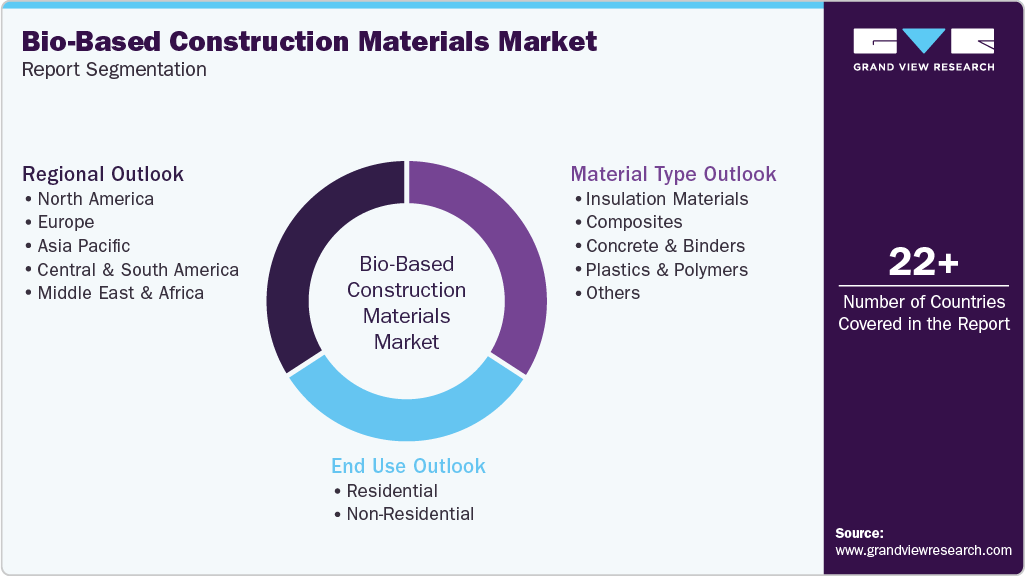
This report forecasts revenue growth at global, regional, and country levels and provides an analysis of the latest industry trends in each of the sub-segments from 2021 to 2033. For this study, Grand View Research has segmented the global bio-based construction materials market report based on material type, end use and region.
 To learn more about this report, Download Free Sample Report
 -
Material Type Outlook (Revenue, USD Million, 2021 - 2033)
-
Insulation Materials
-
Composites
-
Concrete and Binders
-
Plastics and Polymers
-
Others
-
-
End Use Outlook (Revenue, USD Million, 2021 - 2033)
-
Residential
-
Non-Residential
-
-
Regional Outlook (Revenue, USD Million, 2021 - 2033)
-
North America
-
U.S.
-
Canada
-
Mexico
-
-
Europe
-
Germany
-
UK
-
France
-
Italy
-
Spain
-
-
Asia Pacific
-
China
-
Japan
-
India
-
-
Central & South America
-
Middle East & Africa
-
Research Methodology
The bio-based construction materials market figures in this report are based on a proven research process that combines executive interviews with secondary research from proprietary databases, company filings, and recognized regulatory and institutional sources. Market size is built through value-chain sizing - reconciling supply-side and demand-side estimates - and triangulated with bottom-up and top-down approaches. Every estimate passes multiple levels of expert validation before publication, with each bio-based construction materials segment quantified using the revenue-capture definitions in the table below.
Segment Definition
Segment - Material Type
Revenue capture definition
Insulation Materials
Revenue generated from bio-based insulation materials utilized in residential, commercial, industrial, and institutional buildings for thermal and acoustic insulation applications. This segment captures revenues from manufacturers and suppliers providing products such as cellulose insulation, hemp insulation, wood fiber insulation, cork insulation, sheep wool insulation, and other renewable insulation solutions designed to improve energy efficiency, indoor comfort, and sustainability in building construction.
Composites
Revenue generated from bio-based composite materials used in structural and non-structural construction applications. This segment captures revenues from manufacturers and suppliers providing natural fiber-reinforced composites, wood-plastic composites, bamboo composites, and other bio-based composite materials utilized in decking, cladding, façade systems, interior panels, doors, windows, and architectural components that offer durability, lightweight performance, and reduced environmental impact.
Concrete and Binders
Revenue generated from bio-based concrete additives, binders, and alternative cementitious materials employed in construction projects. This segment captures revenues from manufacturers and suppliers providing bio-based binders, lignin-based additives, biochar-enhanced concrete materials, and other sustainable cement alternatives designed to reduce carbon emissions, enhance material performance, and support environmentally responsible construction practices.
Plastics and Polymers
Revenue generated from bio-based plastics and polymer materials used across building and construction applications. This segment captures revenues from manufacturers and suppliers providing bio-based polyethylene, polylactic acid (PLA), polyhydroxyalkanoates (PHA), starch-based polymers, and other renewable plastic materials utilized in pipes, fittings, insulation components, membranes, coatings, panels, and construction products aimed at reducing dependence on fossil-based materials.
Others
Revenue generated from other bio-based construction materials including bamboo, timber products, cork products, mycelium-based materials, straw-based panels, natural fibers, and emerging renewable construction solutions. This segment captures revenues from manufacturers and suppliers providing sustainable materials used in structural applications, interior finishes, roofing systems, flooring products, and various green building components.
Segment - End Use
Revenue capture definition
Residential
Revenue generated from bio-based construction materials utilized in single-family homes, multi-family residential buildings, apartments, condominiums, and housing developments. This segment captures revenues from manufacturers and suppliers providing bio-based insulation, composites, binders, plastics, and other sustainable construction materials used to improve energy efficiency, occupant comfort, environmental performance, and compliance with green building standards in residential construction projects.
Non-Residential
Revenue generated from bio-based construction materials utilized in commercial buildings, industrial facilities, educational institutions, healthcare facilities, government buildings, hospitality establishments, retail centers, warehouses, and infrastructure projects. This segment captures revenues from manufacturers and suppliers providing bio-based construction materials for structural components, insulation systems, façade applications, interior finishes, roofing systems, and sustainable building solutions designed to enhance environmental performance, durability, and energy efficiency across non-residential construction applications.
Estimation Model
Layer Name
Key Question
Description
Global Construction Industry Expenditure
What is the total spending on global construction activities?
The analysis begins with the overall value of residential, commercial, industrial, institutional, and infrastructure construction activities worldwide. Growth in urbanization, population expansion, infrastructure investments, and building development establishes the addressable market base for construction materials.
Sustainable & Green Building Materials Adoption
What portion of construction spending is allocated to sustainable building materials?
From the total construction expenditure, a share is attributed to green and environmentally sustainable building materials. This layer captures increasing adoption driven by carbon reduction goals, green building certifications, regulatory requirements, and demand for energy-efficient and environmentally responsible construction solutions.
Bio-Based Construction Materials Penetration
What percentage of sustainable building material spending is represented by bio-based construction materials?
This layer estimates the penetration of bio-based materials such as insulation materials, composites, bio-based concrete additives and binders, bio-based plastics and polymers, bamboo, timber, cork, and other renewable construction products. Adoption is influenced by sustainability targets, lifecycle carbon reduction benefits, and advancements in bio-based material technologies.
Bio-Based Construction Materials Market Revenue
What revenue is generated from the sale of bio-based construction materials globally?
The final layer quantifies revenues generated by manufacturers and suppliers of bio-based construction materials across residential and non-residential applications. Market value is derived from the consumption of bio-based products used in insulation, structural components, cladding, flooring, roofing, wall systems, and other building applications designed to improve sustainability and environmental performance.
Delivered Customizations
This report has been delivered with the following In-depth customizations
CLIENT REQUEST
CUSTOMIZATION DELIVERED
VALUE ADDS
Supply Chain and Value Chain Evaluation
Detailed mapping of the bio-based construction materials value chain, including renewable feedstock suppliers, raw material processors, material manufacturers, distributors, construction product suppliers, contractors, and end users. The analysis also included assessment of sourcing strategies, supply chain bottlenecks, feedstock availability, manufacturing economics, pricing trends, and downstream demand channels across key bio-based material categories.
Enabled stakeholders to identify margin opportunities, evaluate supply chain risks, strengthen sourcing strategies, optimize procurement decisions, and improve operational resilience through a deeper understanding of the industry's value creation process.
Regional Growth Opportunity Analysis
Comprehensive regional assessment covering the major regions, including country-level demand trends, construction spending patterns, sustainability initiatives, green building adoption rates, regulatory support, and investment activities. The study also identified high-growth countries, emerging demand centers, and region-specific market opportunities for bio-based construction materials.
Assisted clients in prioritizing geographic expansion strategies, identifying high-potential markets, allocating resources effectively, and developing region-specific growth plans based on local market dynamics and sustainability trends.
Understanding of Regulatory and Sustainability Frameworks
In-depth evaluation of building codes, environmental regulations, carbon reduction policies, sustainable procurement standards, green building certification systems, renewable material mandates, and circular economy initiatives influencing the adoption of bio-based construction materials. The customization further included an assessment of compliance requirements, policy developments, and regulatory outlook across major regional markets.
Supported informed business planning by helping clients anticipate regulatory changes, ensure compliance, align product development with sustainability requirements, reduce market-entry risks, and capitalize on policy-driven growth opportunities in the green construction sector.
Frequently Asked Questions About This Report
The plastics and polymers segment led the market with the largest revenue share of 31.0% in 2025.
The residential segment dominated the market and accounted for the largest revenue share of 61.5% in 2025, driven by growing consumer awareness of sustainability, energy efficiency, and healthy living environments.
Some of key players in the bio-based construction materials market are BASF SE, DuPont de Nemours, Inc., LafargeHolcim Ltd., Sika AG, Cargill, Incorporated, NatureWorks LLC, Interface, Inc., Saint-Gobain S.A., and Green Building Materials LLC.
The key factors driving the bio-based construction materials market include increasing demand for sustainable building solutions, advancements in green material technologies, stringent environmental regulations, and rising adoption of circular economy practices in the construction industry.
Asia Pacific is the fastest-growing region in the bio-based construction materials market, with a CAGR of 9.0% over the forecast period.
Asia Pacific dominated the bio-based construction materials market with a 33.5% revenue share in 2025.
The global bio-based construction materials market size was estimated at USD 39.0 million in 2025 and is expected to reach USD 42.4 million in 2026.
The bio-based construction materials market is expected to grow at a compound annual growth rate of 8.6% from 2026 to 2033 to reach USD 75.6 million by 2033.
About the Author(s)
Advanced Interior Materials Research Team
Advanced Materials · Advanced Interior MaterialsThis report was authored by the advanced interior materials research team at Grand View Research - comprising two research analysts, one senior research analyst, and one industry expert - with specialized expertise in the advanced interior materials segment of the advanced materials industry. All findings are based on proprietary advanced materials databases, executive interviews, and regulatory analysis, subject to internal peer review prior to publication.
Last Updated:
Speak to Analyst

Customize this report to your needs - add regions, segments, or data points, with 20% free customization.
Or view our licence options:


ISO 9001:2015 & 27001:2022 Certified
We are GDPR and CCPA compliant! Your transaction & personal information is safe and secure. For more details, please read our privacy policy.


