
- Home
- »
- Plastics, Polymers & Resins
- »
-
Biodegradable Plastic Market Size, Share Report, 2026-2033GVR Report cover

Biodegradable Plastic Market (2026 - 2033)
Size, Share & Trends Analysis Report By Product (Starch Blends, Polylactic Acid), By End-use (Agriculture, Textiles, Packaging, consumer goods), By Region, And Segment Forecasts
Market Size, 2025
$9.1BMarket Estimate, 2026
$10.2BMarket Forecast, 2033
$25.5BCAGR, 2026–2033
14.0%Biodegradable Plastic Market Summary
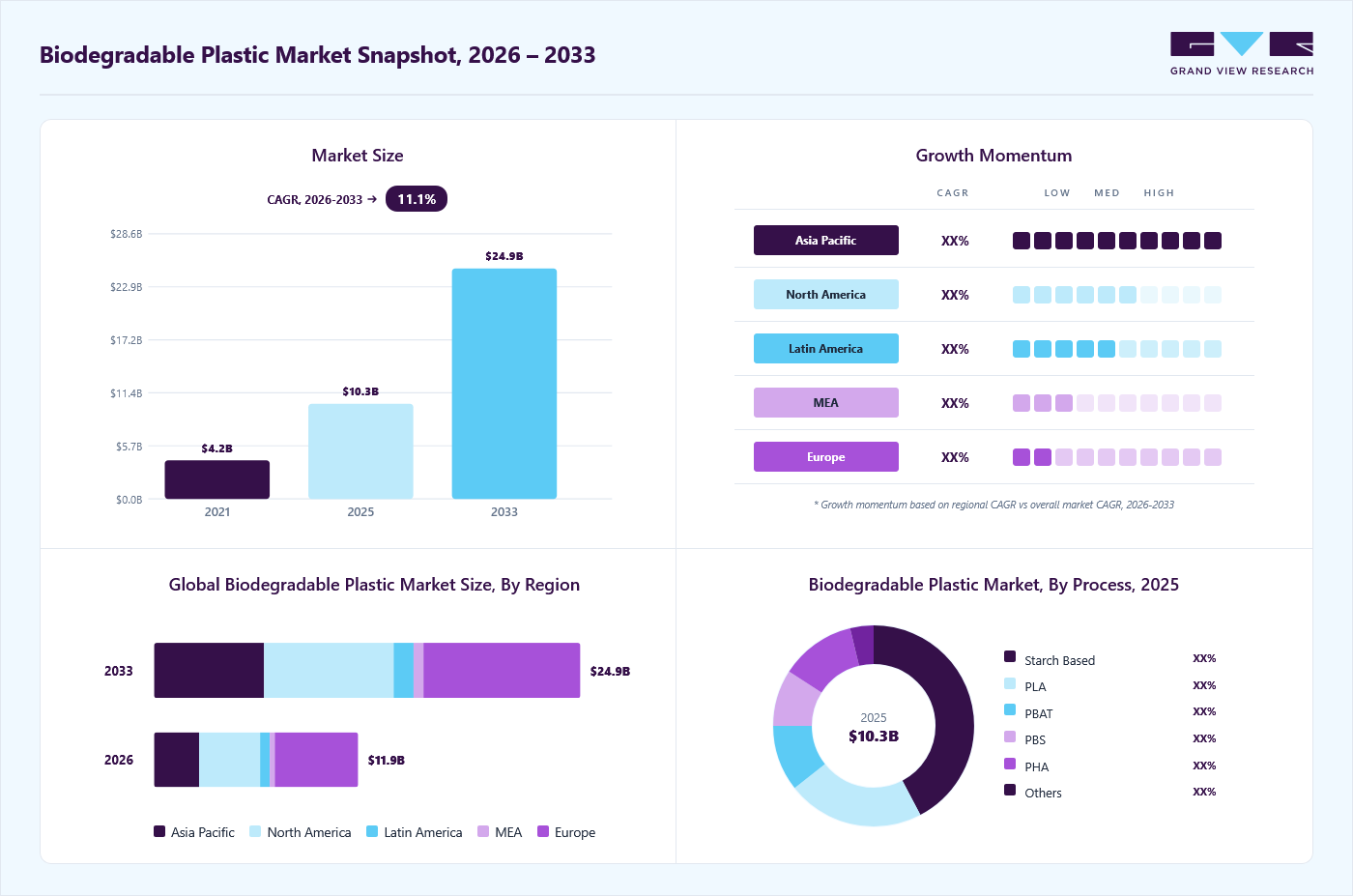
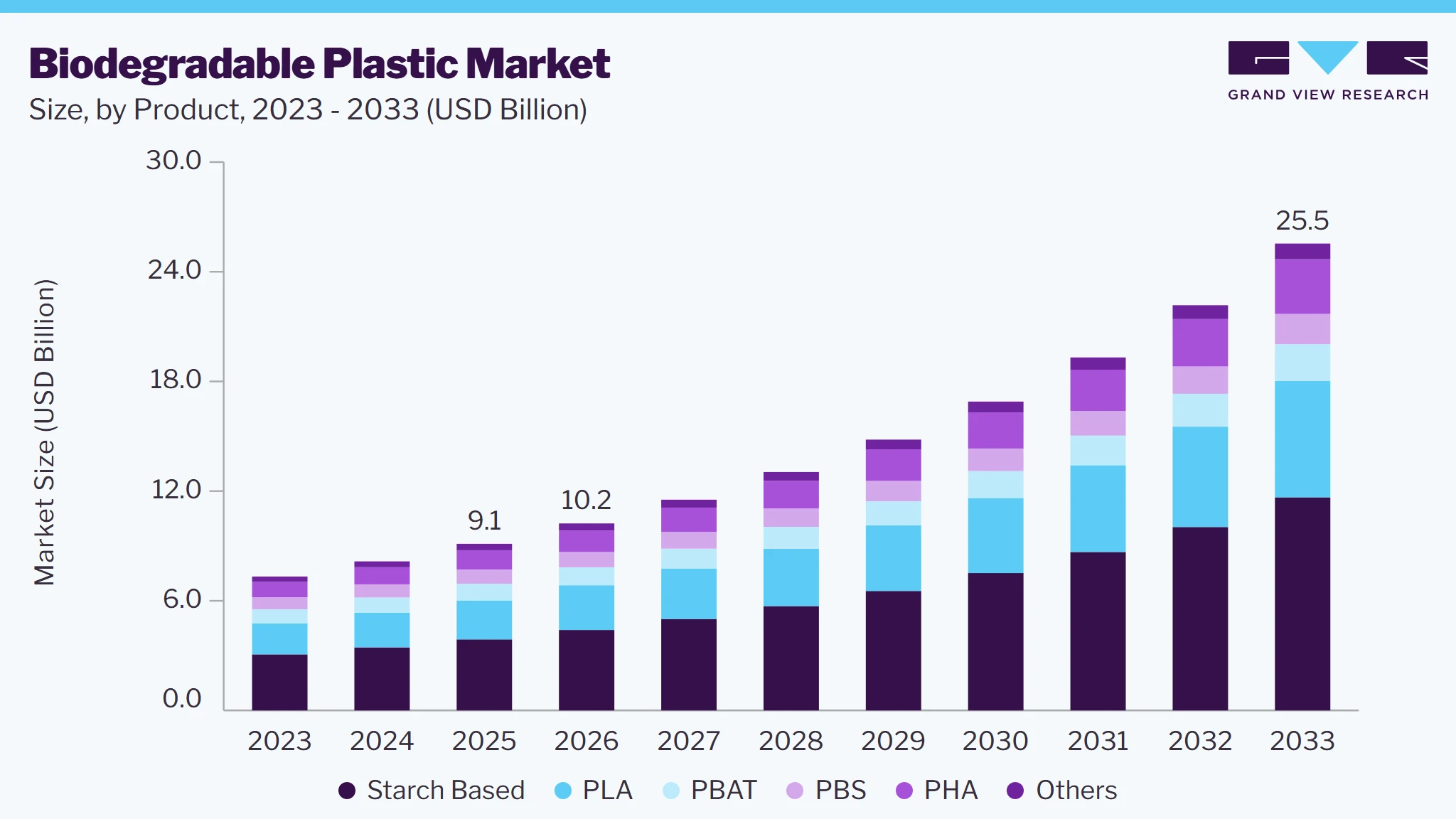
The global biodegradable plastic market size was valued at USD 9.1 billion in 2025 and is projected to grow from USD 10.2 billion in 2026 to USD 25.5 billion by 2033, at a CAGR of 14.0% from 2026 to 2033. Europe dominated the market, accounting for a revenue share of 41.4% in 2025. Increasing environmental concerns, stringent regulations on single-use plastics, and rising demand for sustainable packaging solutions are driving the growth of the biodegradable plastic market.
 Source: Grand View Research, IR Documents, Primary Interviews, Paid DatabasesTo learn more about this report,
 Download Free Sample Report
 Key Market Trends & Insights
- By process: Starch-based segment led the market with the largest revenue share of 42.7% in 2025.
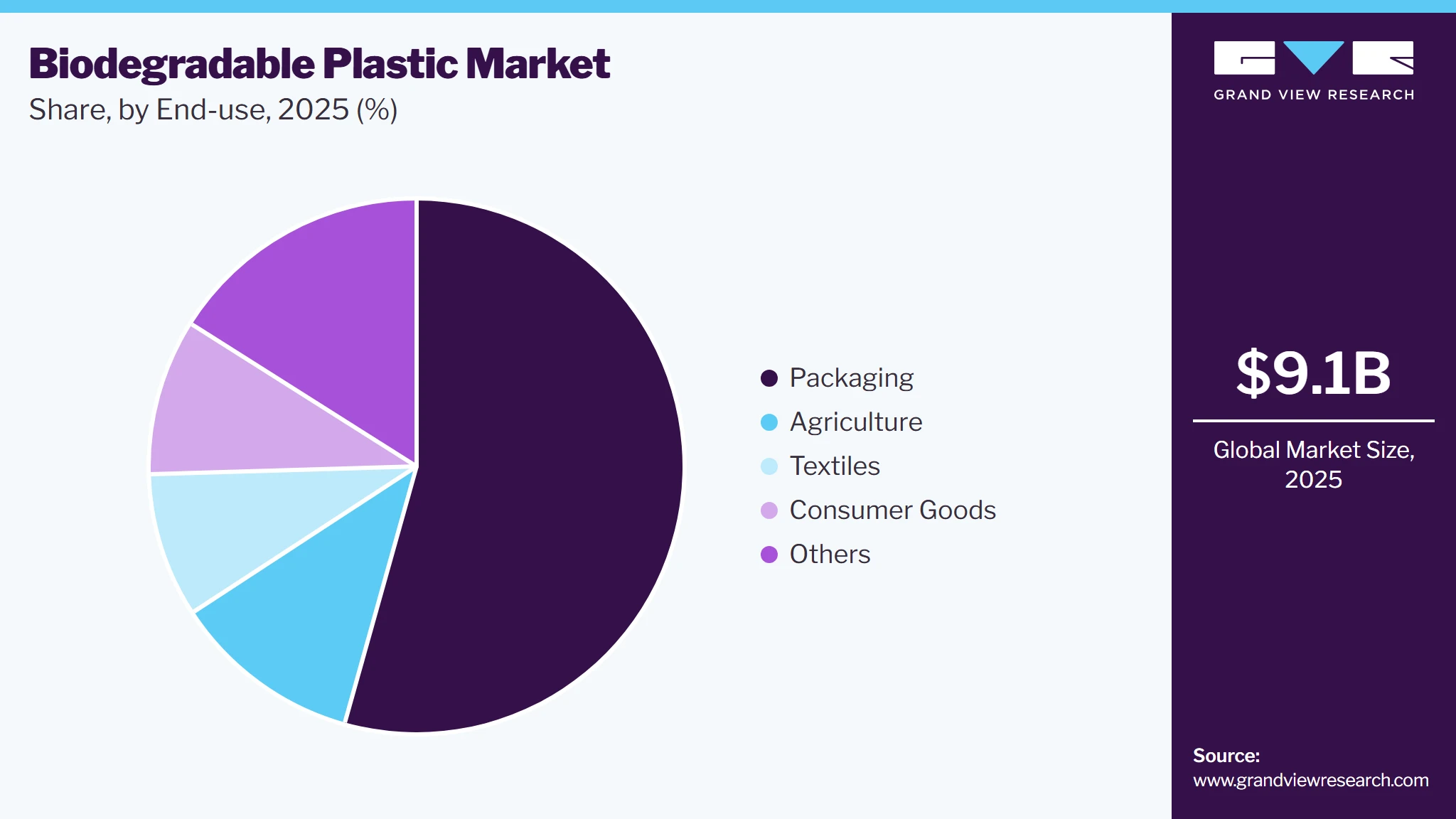
- By end use: Packaging segment led the market with the largest revenue share of 54.3% in 2025.
Regional Highlights
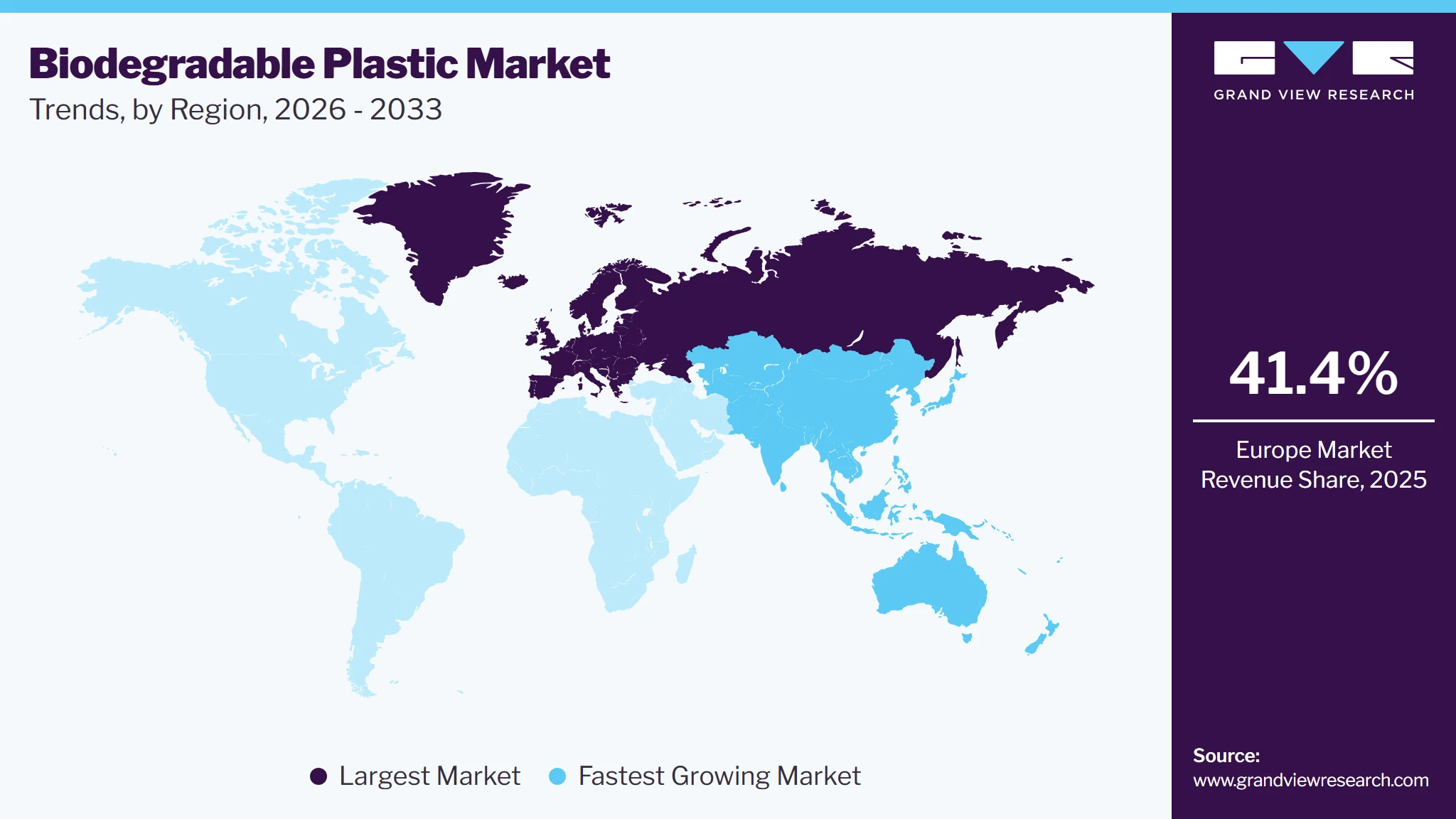
- Largest regional market: Europe (41.4% revenue share, 2025)
- Fastest-growing regional market: Asia Pacific (highest CAGR, 2026-2033)
- By country: Germany held the largest market share in 2025.
Market Size & Forecast
- Market size in 2025: USD 9.1 Billion
- Estimated market size in 2026: USD 10.2 Billion
- Projected market size by 2033: USD 25.5 Billion
- CAGR (2026-2033): 14.0%
Three ways to get this report
Buy it, customize it, or ask a question.Ask an Analyst
Analyst response in 1 business day
- AccessReport author, directly
- Reply timeWithin 1 working day
- No sales callDirect answer only
- FormatEmail reply
- CostFree, no cost
Get the Full Report
What the study covers
- FormatsPDF · Excel · Dashboard
- Timeline2026–2033 annual, 2025 base
- Coverage20+ countries, 5 regions
- Companies10+ key players profiled
Customize the Report
20% free customization
- IncludeCountries, segments, points
- TailorTo your product definition
- ExtendDeeper competitor detail
- OrA fully bespoke study
- Turnaround5–10 working days
 To learn more about this report, Download Free Sample Report
Their enhanced conductivity, flexibility, durability, and reliability are accelerating adoption across healthcare, sportswear, military, and wearable electronics applications. At the same time, continuous innovations in material engineering and increasing demand for high-performance intelligent textiles are expected to strengthen long-term market growth during the forecast period. This technological progress is encouraging wider adoption across various sectors, including sportswear, defense, and healthcare. Investment is concentrating on polymers that combine conductivity, sensing, and durability for wearable systems. Market forecasts show strong double-digit growth as system integrators adopt e-textiles for healthcare, sports, and industrial safety. Modular designs and scalable printing processes are shortening time-to-market for new polymer-enabled garments. This is driving consolidation between material suppliers and electronics integrators.Market Dynamics
The smart textile polymers market is driven by rapid advancements in flexible electronics, nanomaterials, and wearable technologies, along with increasing demand across healthcare, sportswear, defense, and industrial safety applications. The superior conductivity, sensing capability, flexibility, durability, and comfort of smart textile polymers are accelerating their adoption in next-generation wearable systems. Additionally, growing investments in multifunctional polymer materials, scalable printing technologies, modular garment designs, and strategic collaborations between material suppliers and electronics integrators are enhancing product performance, reducing commercialization timelines, and supporting strong long-term market growth during the forecast period.
The smart textile polymers market is witnessing strong growth, driven by increasing regulatory emphasis on digital healthcare, expanding telemedicine adoption, and rising demand for continuous remote patient monitoring solutions. Smart textile polymers are increasingly integrated into wearable medical garments owing to their superior flexibility, lightweight structure, conductivity, stretchability, and comfort, enabling reliable biosignal monitoring without the need for rigid electronic hardware. Their ability to deliver accurate physiological data while improving patient mobility and long-term wearability continues to strengthen their role in next-generation healthcare and connected medical devices.
Rising healthcare digitalization, favorable reimbursement frameworks, and increasing investments in wearable medical technologies further support market growth. Growing demand for durable, wash-resistant conductive and dielectric polymer systems has accelerated adoption across hospitals, home healthcare, and occupational health monitoring applications. Continuous advancements in polymer formulations, flexible sensor technologies, and textile manufacturing processes are enhancing product reliability, user comfort, and long-term performance. As healthcare providers and employers increasingly prioritize preventive care, remote diagnostics, and workforce wellness, the smart textile polymers market is expected to witness sustained growth during the forecast period.
High material costs and complex manufacturing processes remain significant restraints for the smart textile polymers market. Advanced conductive and functional polymers require specialized raw materials and multi-step fabrication processes that are highly sensitive to production variations, increasing manufacturing complexity and overall costs. These challenges raise unit prices, complicate supply chains for apparel and wearable device manufacturers, and limit large-scale commercialization. Furthermore, the lack of standardized testing methods and limited production throughput restricts broader market adoption, confining smart textile polymers primarily to high-value, low-volume applications and slowing long-term market growth.
The increasing demand for sustainable and bio-based materials is creating significant growth opportunities for the smart textile polymers market. Rising preference for biodegradable and recyclable polymers with high strength, flexibility, and electrical conductivity is accelerating their adoption across apparel, automotive, and wearable electronics applications. Growing emphasis on circular economy initiatives, regulatory compliance, and certified sustainable materials is further supporting market expansion. At the same time, continuous advancements in polymer chemistry, enzyme-based recycling technologies, and lifecycle validation are expected to enhance cost competitiveness, strengthen OEM partnerships, and drive long-term premium product adoption during the forecast period.
Market Concentration & Characteristics
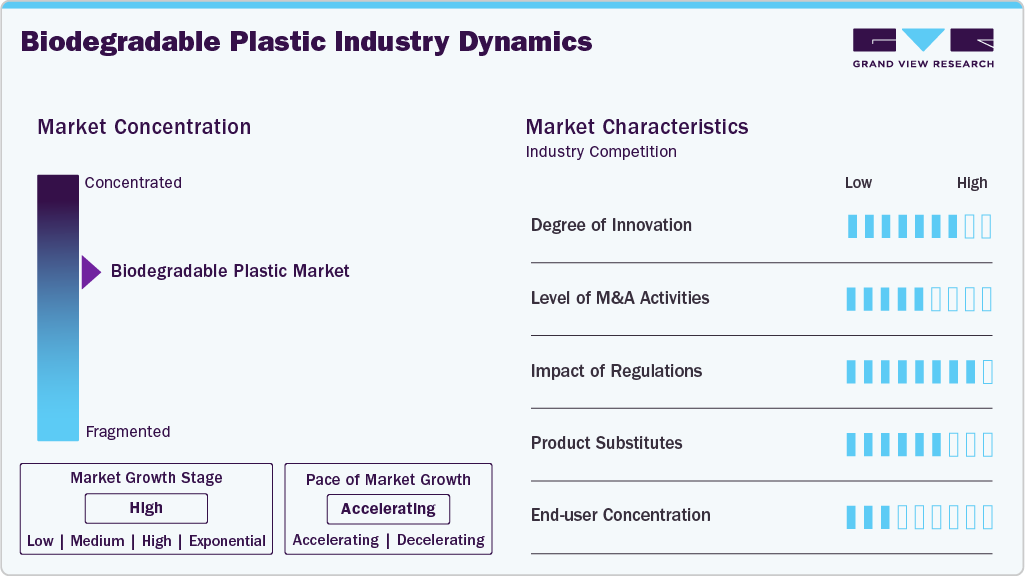
The market growth stage is high, and the pace of growth is accelerating. The market exhibits slight concentration, with key players dominating the industry landscape. Major companies such as Cargill Incorporated, PTT MCC Biochem Co., Ltd., Biome Technologies plc, Plantic Technologies Limited, BASF SE, Total Corbion PLA, NatureWorks LLC, Eastman Chemical Company, Trineso, Danimer Scientific, and others play a significant role in shaping the market dynamics. These leading players often drive innovation within the market, introducing new products, technologies, and applications to meet the evolving demands of the industry.
 To learn more about this report, Download Free Sample Report
 Innovation intensity is rising as producers focus on improving mechanical strength, heat stability, and composting performance. New catalyst systems and reactive extrusion methods are enabling better molecular control, which improves the durability of biodegradable resins. Growth in the biodegradable plastic industry is also supporting this shift, with tailored compatibilizers and performance enhancers helping materials meet stricter packaging and food-contact requirements. These advancements allow suppliers to address higher value applications and reduce the performance gap with conventional plastics.
Analyst Perspective
The biodegradable plastic market is expected to evolve into an innovation-driven, value-focused industry, supported by advances in bio-based feedstocks, polymer engineering, and circular economy initiatives. Packaging will remain the leading application, followed by agriculture, consumer goods, textiles, and medical uses. Improvements in PLA, PHA, PBAT, PBS, and other biodegradable polymers will enhance performance and expand applications. However, feedstock price volatility, composting infrastructure gaps, evolving standards, and competition from conventional plastics may constrain profitability. Companies focusing on technology, sustainable materials, supply chain resilience, and application-specific solutions are likely to gain a competitive advantage.
Product Insights
Based on process, thestarch-based segment led the market with the largest revenue share of 42.7% in 2025. The starch-based segment is benefiting from strong interest in low-carbon feedstocks and rapid scale-up of agricultural waste valorization. Producers are improving extrusion and blending technologies to achieve better tensile strength and moisture resistance. This supports wider use of starch blends in flexible packaging and carry bags. These developments reinforce the overall shift toward the bio-based market, where buyers seek materials with clear agricultural traceability and measurable reductions in fossil resource dependence.
The PLA segment is anticipated to grow at a substantial CAGR of 11.9% through the forecast period. PLA demand is rising as brands prioritize high clarity, compostable formats for food contact applications. New reactor designs and optimized lactide purification processes are enabling manufacturers to achieve higher heat resistance and superior film performance. These improvements position PLA as a strong contender in the market, especially for labels, wraps, and fresh produce packaging. The segment benefits from steady investment in fermentation capacity and region-specific biorefinery projects aimed at reducing cost volatility.
End Use Insights
Based on end use, the packaging segment led the market with the largest revenue share of 54.3% in 2025. Packaging demand is expanding as retailers and foodservice chains adopt compostable solutions that align with waste diversion goals. Companies are switching to biodegradable trays, cups, and multilayer formats that meet performance benchmarks for rigidity and barrier protection. Growth in the biodegradable disposable plastic tableware market is further accelerating innovation in coatings and additives that maintain shelf appeal. The packaging segment gains from policy momentum that rewards materials compatible with organic waste collection systems.
 To learn more about this report, Download Free Sample Report
 The consumer goods segment is expected to expand at a substantial CAGR of 9.5% through the forecast period. In consumer goods, a key driver is the push for low-impact materials in everyday household and personal care items. Brands are redesigning product lines with compostable handles, casings, and accessory components that fit circular product strategies. This trend strengthens the market as companies seek verified sustainability claims and improved end-of-life outcomes. Better processing technologies and stronger retail commitments help expand adoption across stationery, cosmetics, and small durable items.
Regional Insights
Europe dominated the biodegradable plastic market with the largest revenue share of 41.4% in 2025. Europe remains a frontrunner due to stringent packaging waste directives and the rapid implementation of extended producer responsibility frameworks. The region’s focus on harmonized compostability standards and improved biowaste collection systems strengthens confidence in biodegradable materials. Retailers in the food and fresh produce segments are adopting compostable solutions to comply with upcoming recyclability and reuse targets. These policies create a favorable environment for investment in next-generation biopolymers.
 To learn more about this report, Download Free Sample Report
 Germany Biodegradable Plastic Market Trends
The biodegradable plastic market in Germany accounted for the largest market revenue share in Europe in 2025. Local producers are investing in enzyme-based degradation technologies and tailored additives that support higher material performance. Retail chains are trialing biodegradable films and serviceware to meet lifecycle assessment requirements under national packaging laws. Supportive funding programs for bio-based materials and circular manufacturing further enhance adoption prospects.
North America Biodegradable Plastic Market Trends
The biodegradable plastic market in North America is experiencing a surge in demand for biodegradable plastics as retailers align their packaging portfolios with emerging state-level compostability standards. Investment in organic recycling and municipal composting programs is expanding, which creates a more reliable end-of-life pathway. Brands in foodservice and e-commerce are accelerating trials of compostable mailers and inserts to meet corporate sustainability reporting requirements. These developments support higher adoption of high-performance biodegradable resins in mainstream applications.
The U.S. biodegradable plastic market is growing considerably, as regulatory momentum is accelerating the procurement of certified compostable materials. States such as California and Washington are enforcing clearer labeling rules and establishing infrastructure grants for composting facilities. Large consumer goods companies are shifting procurement to biodegradable formats to meet Scope 3 emissions targets and packaging reduction mandates. This creates long-term demand visibility, encouraging suppliers to scale domestic biopolymer and additive production.
Asia Pacific Biodegradable Plastic Market Trends
The biodegradable plastic market in the Asia Pacific demand is expanding as governments target pollution reduction and push for alternatives to conventional single-use plastics. Countries such as Japan, South Korea, and India are introducing procurement incentives and eco-labeling schemes that favor biodegradable options. Rapid growth in food delivery, e-commerce, and organized retail amplifies the need for sustainable, flexible packaging. Regional manufacturing investments in feedstocks such as starch and PLA strengthen supply availability and reduce cost barriers.
Key Biodegradable Plastic Company Insights
The biodegradable plastic industry is highly competitive, with several key players dominating the landscape. Major companies include Cargill Incorporated, PTT MCC Biochem Co., Ltd., Biome Technologies plc, Plantic Technologies Limited, BASF SE, Total Corbion PLA, NatureWorks LLC, Eastman Chemical Company, Trineso, and Danimer Scientific. The biodegradable plastic industry is characterized by a competitive landscape with several key players driving innovation and market growth. Major companies in this sector are investing heavily in research and development to enhance the performance, cost-effectiveness, and sustainability of their products.
Key Biodegradable Plastic Companies:
The following key companies have been profiled for this study on the biodegradable plastic market.
-
Cargill Incorporated
-
PTT MCC Biochem Co., Ltd.
-
Biome Technologies plc
-
Plantic Technologies Limited
-
BASF SE
-
Total Corbion PLA
-
NatureWorks LLC
-
Eastman Chemical Company
-
Trineso
-
Danimer Scientific
Competitive Benchmarking
Category
Operating Strategies
Competitive Edge
Weakness
Established Players (BASF SE; NatureWorks LLC; Total Corbion PLA; Eastman Chemical Company; Cargill Incorporated)
- Focus on strengthening their position in the biodegradable plastic market through the development and commercialization of bio-based polymers, compostable plastics, specialty biodegradable resins, and high-performance sustainable materials for packaging, agriculture, consumer goods, textiles, and medical applications.
- Strong emphasis is placed on expanding product portfolios with improved mechanical strength, processability, compostability, and regulatory compliance.
- Continuous investments in R&D, production capacity expansion, feedstock integration, process optimization, and strategic collaborations with brand owners, converters, and packaging manufacturers support global market penetration and long-term commercial growth.
- Extensive expertise in polymer science, bio-based feedstock integration, large-scale manufacturing, and sustainable material innovation enables the commercialization of high-performance biodegradable plastics with superior functionality and environmental performance.
- Strong research and development capabilities, globally recognized brands, vertically integrated supply chains, diversified product portfolios, established customer relationships, and broad international distribution networks provide sustainable competitive differentiation and recurring revenue opportunities across multiple end-use industries.
- High capital investment requirements for bio-based polymer production, advanced processing technologies, capacity expansion, and continuous product innovation increase operational complexity and manufacturing costs.
- Volatility in agricultural feedstock availability, evolving environmental regulations, certification requirements, and competition from conventional plastics influence profitability.
- Additionally, significant investments in next-generation biodegradable materials, recycling infrastructure, lifecycle validation, and global regulatory compliance may affect operating margins and long-term market share.
Emerging Players (PTT MCC Biochem Co., Ltd.; Danimer Scientific; Biome Technologies plc; Plantic Technologies Limited; Trineso)
- Focus on expanding their presence in the biodegradable plastic market through the development of innovative, application-specific, and sustainable polymer solutions for packaging, food service, agriculture, consumer goods, and specialty industrial applications.
- Emphasis is placed on improving biodegradable polymer performance, advancing bio-based material technologies, enhancing manufacturing efficiency, and strengthening collaborations with packaging converters, consumer brands, and material distributors.
- Strategic partnerships, regional production expansion, and targeted commercialization initiatives support product innovation, business growth, and penetration into high-growth domestic and international markets.
- Strong flexibility in product innovation, advanced biodegradable polymer technologies, customized material formulations, and responsive technical support enable these companies to address evolving sustainability and application requirements effectively.
- Their ability to rapidly commercialize specialty biodegradable plastics, starch-based materials, PLA and PHA technologies, and application-specific sustainable solutions while optimizing production efficiency strengthens customer adoption.
- Agile business models, niche market expertise, and customer-focused product development further enhance their competitive positioning in the biodegradable plastic market.
- Comparatively smaller manufacturing scale, limited product diversification relative to leading multinational competitors, and lower global market penetration may restrict participation in large-volume supply agreements.
- Dependence on emerging application segments, feedstock price fluctuations, evolving compostability and environmental certification requirements, and pricing pressure from established global suppliers can constrain market expansion.
- Additionally, substantial investments in production capacity, advanced polymer technologies, regulatory approvals, sustainable material innovation, and global customer acquisition are required to compete effectively in the biodegradable plastic market.
Recent Developments
-
In March 2025, NatureWorks LLC launched its new “Ingeo Extend” PLA platform, offering enhanced biodegradation and improved film-making efficiency, a move strengthening its position in the market.
-
In April 2025, Amcor PLC completed its all-stock acquisition of Berry Global (valued at USD 8.4 billion), expanding its global packaging footprint and bolstering its capabilities to deliver sustainable and biodegradable packaging solutions.
Biodegradable Plastic Market Report Scope
Report Attribute
Details
Market size in 2025
USD 9.1 billion
Estimated market size in 2026
USD 10.2 billion
Projected market size by 2033
USD 25.5 billion
Growth rate
CAGR of 14.0% from 2026 to 2033
Base year for estimation
2025
Historical data
2021 - 2024
Forecast period
2026 - 2033
Quantitative units
Revenue in USD million/billion, volume in kilotons, and CAGR from 2026 to 2033
Report coverage
Revenue forecast, company ranking, competitive landscape, growth factors, and trends
Segments covered
Product, end use, region
Regional scope
North America, Asia Pacific, Europe, Latin America, the Middle East, and Africa
Country scope
U.S.; Canada; Mexico; Germany; France; UK; Spain; Italy; China; Japan; India; South Korea; Brazil; Argentina; Saudi Arabia; South Africa; UAE
Key companies profiled
Cargill Incorporated; PTT MCC Biochem Co., Ltd.; Biome Technologies plc; Plantic Technologies Limited; BASF SE; Total Corbion PLA; NatureWorks LLC; Eastman Chemical Company; Trineso; Danimer Scientific
Customization scope
Free report customization (equivalent to up to 8 analysts' working days) with purchase—addition or alteration to country, regional & segment scope.
Pricing and purchase options
Avail customized purchase options to meet your exact research needs. Explore purchase options
Global Biodegradable Plastic Market Report Segmentation
This report forecasts revenue growth at global, regional, and country levels and provides an analysis of the latest industry trends in each of the sub-segments from 2021 to 2033. For this study, Grand View Research has segmented the global biodegradable plastic market report based on product, end use, and region:
 To learn more about this report, Download Free Sample Report
 -
Product Outlook (Volume, Kilotons; Revenue, USD Million, 2021 - 2033)
-
Starch-Based
-
PLA
-
PBAT
-
PBS
-
PHA
-
Others
-
-
End Use Outlook (Volume, Kilotons; Revenue, USD Million, 2021 - 2033)
-
Packaging
-
Food Packaging
-
Non-Food Packaging
-
-
Agriculture
-
Textiles
-
Consumer Goods
-
Others
-
-
Regional Outlook (Volume, Kilotons; Revenue, USD Million, 2021 - 2033)
-
North America
-
U.S.
-
Canada
-
Mexico
-
-
Europe
-
Germany
-
UK
-
France
-
Italy
-
Spain
-
-
Asia Pacific
-
China
-
India
-
Japan
-
South Korea
-
-
Latin America
-
Brazil
-
Argentina
-
-
Middle East & Africa
-
Saudi Arabia
-
South Africa
-
UAE
-
-
Research Methodology
The biodegradable plastic market figures in this report are based on a proven research process that combines executive interviews with secondary research from proprietary databases, company filings, and recognized regulatory and institutional sources. Market size is built through value-chain sizing - reconciling supply-side and demand-side estimates - and triangulated with bottom-up and top-down approaches. Every estimate passes multiple levels of expert validation before publication, with each biodegradable plastic segment quantified using the revenue-capture definitions in the table below.
Segment Definition
Segment - Process
Revenue capture definition
Starch Based
Revenue is captured through the production and sale of starch-based biodegradable plastics used in packaging, agricultural films, disposable tableware, compostable bags, and consumer products. Demand is driven by renewable feedstock availability, cost-effectiveness, biodegradability, compostability, ease of processing, and increasing regulatory support for reducing conventional plastic waste.
PLA (Polylactic Acid)
Revenue is captured through the production and sale of PLA biodegradable plastics used in rigid packaging, food service products, medical devices, 3D printing materials, textiles, and consumer goods. Growth is supported by excellent transparency, biocompatibility, compostability, bio-based origin, high stiffness, and rising demand for sustainable materials across packaging and healthcare applications.
PBAT (Polybutylene Adipate Terephthalate)
Revenue is captured through the production and sale of PBAT biodegradable plastics used in flexible packaging, compostable shopping bags, agricultural mulch films, food packaging, and waste collection bags. Demand is driven by superior flexibility, toughness, elongation, compostability, processability, and increasing adoption of high-performance biodegradable alternatives to conventional polyethylene films.
PBS (Polybutylene Succinate)
Revenue is captured through the production and sale of PBS biodegradable plastics used in food packaging, disposable products, agricultural applications, textile fibers, and molded industrial components. Growth is supported by excellent heat resistance, mechanical strength, biodegradability, chemical resistance, dimensional stability, and expanding demand for durable bio-based polymer solutions.
PHA (Polyhydroxyalkanoates)
Revenue is captured through the production and sale of PHA biodegradable plastics used in food packaging, agricultural films, biomedical devices, marine applications, coatings, and specialty consumer products. Demand is driven by complete biodegradability, marine degradability, biocompatibility, renewable production routes, regulatory support, and increasing demand for advanced sustainable materials with low environmental impact.
Others
Revenue is captured through the commercialization of other biodegradable plastics, including cellulose-based polymers, PCL, bio-based polymer blends, and emerging biodegradable materials used across packaging, agriculture, medical, textile, and industrial applications. Growth is supported by continuous material innovations, enhanced processing technologies, application-specific performance improvements, and expanding investments in sustainable polymer development.
Segment - End-Use
Revenue capture definition
Packaging
Revenue is captured through the production and sale of biodegradable plastics used in food packaging, beverage packaging, flexible films, compostable bags, rigid containers, trays, and protective packaging. Demand is driven by stringent single-use plastic regulations, increasing consumer preference for sustainable packaging, excellent compostability, food safety compliance, and growing adoption of circular packaging solutions.
Agriculture
Revenue is captured through the production and sale of biodegradable plastics used in mulch films, greenhouse films, seed coatings, plant pots, irrigation components, compostable twines, and controlled-release agricultural products. Growth is supported by improved soil management, reduced plastic waste, enhanced crop productivity, biodegradability, and increasing adoption of sustainable farming practices.
Textiles
Revenue is captured through the production and sale of biodegradable plastics used in fibers, nonwoven fabrics, apparel, footwear, technical textiles, and hygiene products. Demand is driven by increasing preference for sustainable fibers, lightweight materials, comfort, durability, moisture management, and growing investments in environmentally responsible textile manufacturing.
Consumer Goods
Revenue is captured through the production and sale of biodegradable plastics used in disposable tableware, household products, personal care items, toys, stationery, electronic accessories, and lifestyle products. Growth is supported by rising consumer awareness of environmental sustainability, regulatory restrictions on conventional plastics, attractive product design, durability, and increasing demand for eco-friendly alternatives.
Others
Revenue is captured through the commercialization of biodegradable plastics used across healthcare, automotive, construction, marine, electronics, horticulture, and other specialized applications. Demand is driven by expanding environmental regulations, growing sustainability initiatives, improved material performance, biodegradability, and increasing adoption of renewable polymer solutions across diverse end-use industries.
Estimation Model
Layer Name
Key Question
Description
Top-Down Biodegradable Plastic Demand Assessment Layer
What defines market boundaries?
This layer begins with global demand for biodegradable plastics across packaging, agriculture, textiles, consumer goods, healthcare, and other industrial applications. Demand is filtered based on packaging production, agricultural activities, consumer goods manufacturing, sustainability initiatives, regulatory restrictions on conventional plastics, bio-based material adoption, and increasing demand for compostable and environmentally friendly polymer solutions across global end-use industries.
Process and End-Use Validation Layer
Where is demand generated?
This layer evaluates demand distribution across starch-based plastics, PLA, PBAT, PBS, PHA, and other biodegradable polymers used in packaging, agriculture, textiles, consumer goods, and other end-use sectors. Market revenue is aligned with critical performance requirements, including biodegradability, compostability, mechanical strength, flexibility, heat resistance, moisture resistance, processability, food-contact compliance, and application-specific sustainability requirements across diverse industries.
Technology and Revenue Conversion Layer
Who captures market revenue?
This layer converts application-level demand into the biodegradable plastic market revenue by applying product mix ratios across major biodegradable polymer processes. Revenue allocation considers raw material sources, polymer chemistry, manufacturing technologies, processing methods, compostability certifications, production costs, product specifications, pricing strategies, regulatory compliance, and supplier positioning across the global biodegradable plastic value chain.
Regional Commercial Cross-Check Layer
How are assumptions validated?
This layer validates demand concentration by comparing North America's growth, supported by sustainability regulations, packaging innovation, and consumer awareness; Europe's demand, driven by stringent single-use plastic regulations, circular economy initiatives, and bio-based material adoption; and Asia Pacific's rapid expansion, fueled by increasing packaging consumption, agricultural modernization, industrialization, government sustainability policies, and expanding manufacturing activities across emerging economies.
Delivered Customizations
This report has been delivered with the following In-depth customizations
Client Request
Customization Delivered
Value Adds
Regional Segmentation
Delivered an in-depth regional assessment of the biodegradable plastic market covering North America, Europe, Asia Pacific, Latin America, and the Middle East & Africa, with country-level demand analysis, regulatory landscape, production capacity, consumption trends, and end-use industry adoption.
Enabled identification of high-growth regional markets, investment priorities, demand hotspots, regulatory differences, and market entry opportunities for strategic expansion.
Competitive Benchmarking
Delivered comprehensive benchmarking of leading and emerging biodegradable plastic manufacturers based on product portfolio, production capacity, technology capabilities, sustainability initiatives, geographic presence, partnerships, innovation pipeline, and strategic positioning.
Enabled competitive intelligence, identification of technology leaders, strategic gap analysis, partnership opportunities, and informed competitive positioning.
Opportunity Assessment
Delivered a strategic opportunity analysis covering high-growth applications, emerging biodegradable polymer technologies, untapped regional markets, circular economy initiatives, bio-based feedstock innovations, regulatory-driven demand, and investment opportunities across the value chain.
Enabled prioritization of growth investments, identification of emerging revenue streams, long-term innovation planning, and development of sustainable competitive advantages in the biodegradable plastic market.
Frequently Asked Questions About This Report
The global biodegradable plastics market size was valued at USD 9.1 billion in 2025 and is estimated at USD 10.2 billion for 2026.
Advancements in flexible electronics and the integration of nanomaterials are enhancing the performance and reliability of smart textile polymers, making them more suitable for real-world applications. This technological progress is encouraging wider adoption across various sectors, including sportswear, defense, and healthcare.
The smart textile polymers market is driven by rapid advancements in flexible electronics, nanomaterials, and wearable technologies, along with increasing demand across healthcare, sportswear, defense, and industrial safety applications.
Starch-based products dominated the market across all product segments in terms of revenue, accounting for a market share of 42.7% in 2025, and are forecasted to grow at a 12.1% CAGR from 2026 to 2033.
Europe dominated with a 41.4% revenue share in 2025.
Asia Pacific is the fastest-growing region over the forecast period.
The packaging segment led with a 54.3% revenue share in 2025.
The global biodegradable plastic market is expected to grow at a CAGR of 14.0% from 2026 to 2033, reaching USD 25.5 billion by 2033.
Key players include Cargill Incorporated; PTT MCC Biochem Co., Ltd.; Biome Technologies plc; Plantic Technologies Limited; BASF SE; Total Corbion PLA; NatureWorks LLC; Eastman Chemical Company; Trineso; Danimer Scientific.
About the Author(s)
Plastics, Polymers & Resins Research Team
Bulk Chemicals · Plastics, Polymers & ResinsThis report was authored by the plastics, polymers & resins research team at Grand View Research - comprising two research analysts, one senior research analyst, and one industry expert - with specialized expertise in the plastics, polymers & resins segment of the bulk chemicals industry. All findings are based on proprietary bulk chemicals databases, executive interviews, and regulatory analysis, subject to internal peer review prior to publication.
Last Updated:
Speak to Analyst

Customize this report to your needs - add regions, segments, or data points, with 20% free customization.
Or view our licence options:


ISO 9001:2015 & 27001:2022 Certified
We are GDPR and CCPA compliant! Your transaction & personal information is safe and secure. For more details, please read our privacy policy.


