
- Home
- »
- Biotechnology
- »
-
Bioprocess Analyzers Market Size, Share Report, 2026-2033GVR Report cover

Bioprocess Analyzers Market (2026 - 2033)
Size, Share & Trends Analysis Report By Product, By Type (Substrate Analysis, Metabolite Analysis), By Application (Antibiotics, Recombinant Proteins), By End Use (Biopharmaceutical companies, CROs & CMOs), By Region, And Segment Forecasts
Market Size, 2025
$2.3BMarket Estimate, 2026
$2.5BMarket Forecast, 2033
$4.6BCAGR, 2026–2033
9.0%Bioprocess Analyzers Market Summary
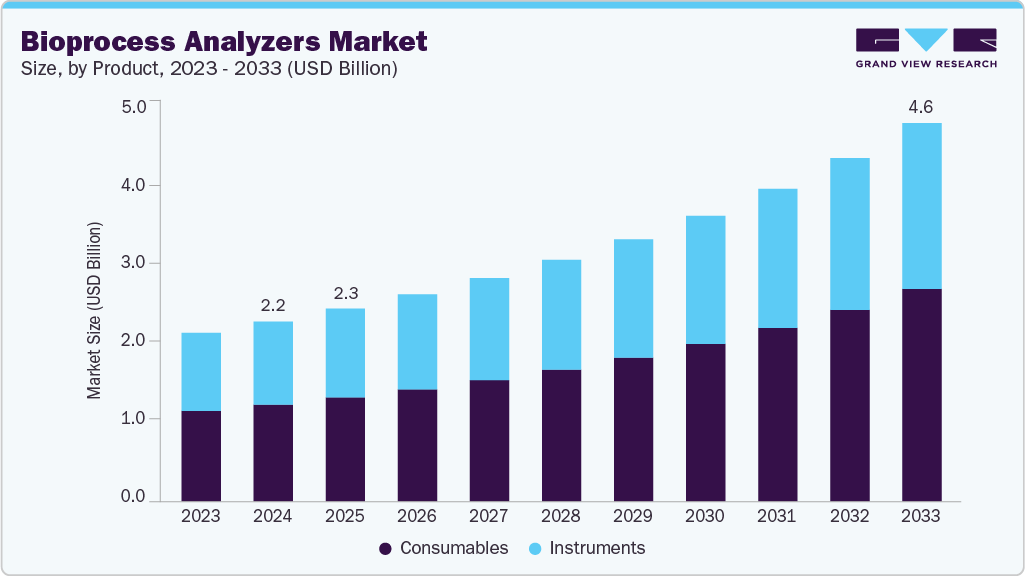
The global bioprocess analyzers market size was valued at USD 2.3 billion in 2025 and is projected to grow from USD 2.5 billion in 2026 to USD 4.6 billion by 2033, at a CAGR of 9.0% from 2026 to 2033. North America dominated the market, accounting for a revenue share of 36.6% in 2025. The bioprocess analyzers market is witnessing steady growth, primarily driven by the rising demand for biologics, biosimilars, and cell and gene therapies.
 Source: Grand View Research, IR Documents, Primary Interviews, Paid DatabasesTo learn more about this report,
 Download Free Sample Report
 Key Market Trends & Insights
- By product: Consumables segment dominated the market, with a revenue share of 53.9% in 2025.
- By type: Substrate analysis segment held the largest market share of 53.7% in 2025.
- By application: Recombinant proteins segment held the largest revenue share of 38.1%in 2025.
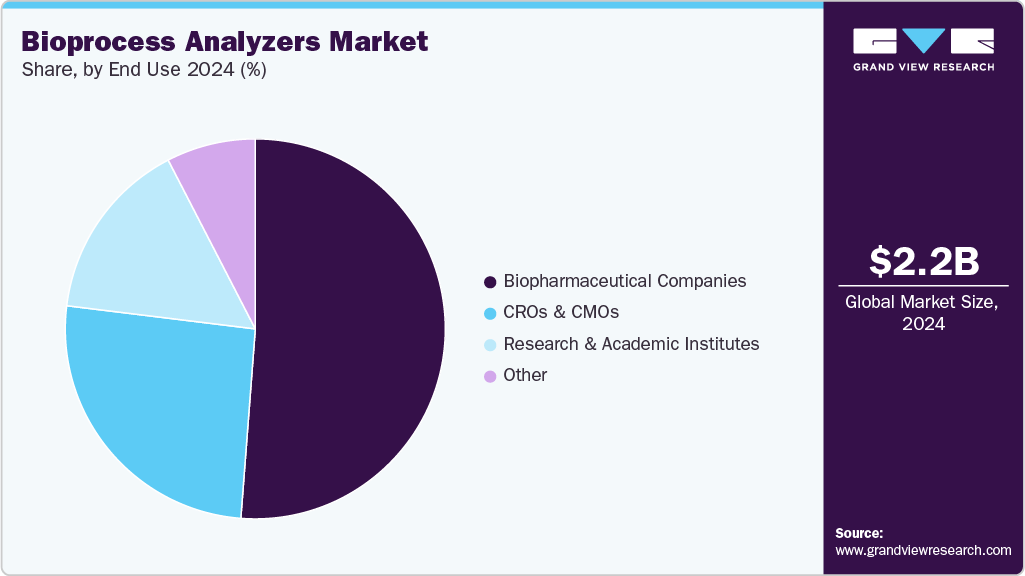
- By end use: Biopharmaceutical companies segment accounted for the largest revenue share of 51.0% in 2025.
Regional Highlights
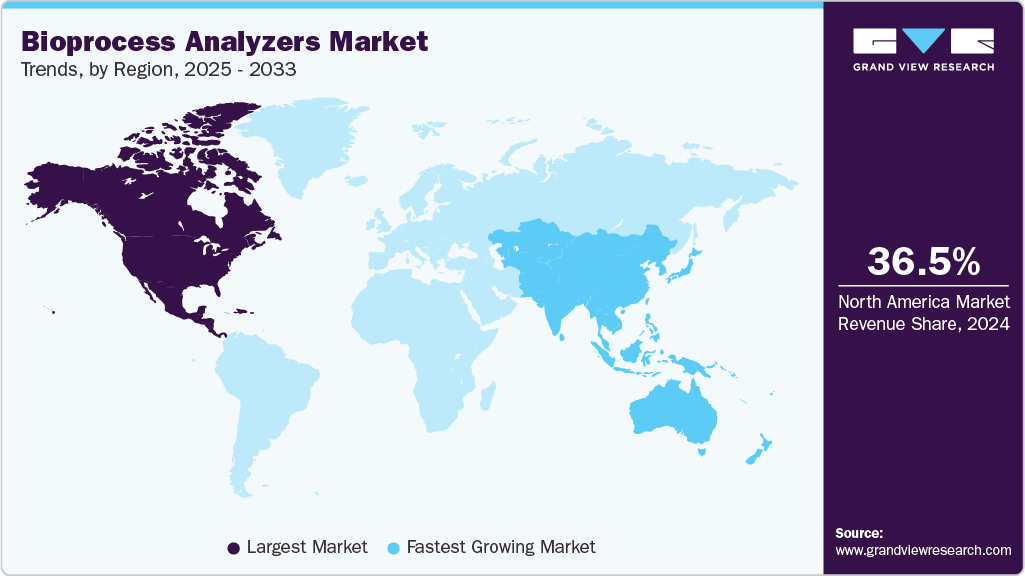
- Largest regional market: North America (36.6% revenue share, 2025)
- Fastest-growing regional market: Asia Pacific (highest CAGR, 2026-2033)
- By country: The U.S. held the largest market share in 2025.
Market Size & Forecast
- Market size in 2025: USD 2.3 Billion
- Estimated market size in 2026: USD 2.5 Billion
- Projected market size by 2033: USD 4.6 Billion
- CAGR (2026-2033): 9.0%
Three ways to get this report
Buy it, customize it, or ask a question.Ask an Analyst
A direct answer, usually in 1 working day
- AccessReport author, directly
- Reply timeWithin 1 working day
- No sales callDirect answer only
- FormatEmail reply
- CostFree, no cost
Get the Full Report
What the study covers
- FormatsPDF · Excel · Dashboard
- Timeline2026–2033 annual, 2025 base
- Coverage20+ countries, 5 regions
- Companies10+ key players profiled
Customize the Report
20% free customization
- IncludeCountries, segments, points
- TailorTo your product definition
- ExtendDeeper competitor detail
- OrA fully bespoke study
- Turnaround5–10 working days
 To learn more about this report, Download Free Sample Report
As biopharmaceutical production becomes more complex, companies are increasingly focusing on process optimization and real-time quality monitoring. Bioprocess analyzers enable continuous measurement of key parameters such as glucose, lactate, amino acids, and dissolved gases, ensuring higher yield, consistency, and compliance with regulatory standards.Shift toward automation and digitalization in bioprocessing
The bioprocess monitoring relied on manual sampling and offline measurements, which often introduced variability, delayed decision-making, and limited process control. However, the growing complexity of biologics manufacturing and the increasing need for precision and reproducibility have accelerated the adoption of automated and digitally connected analyzers. These systems enable real-time, continuous monitoring of critical process parameters such as pH, oxygen, glucose, lactate, and metabolites, reducing manual intervention and human error. By integrating with advanced control systems and data management platforms, automated analyzers provide instantaneous feedback that allows for dynamic process adjustments, ensuring optimal culture conditions, improved yield, and consistent product quality.
At the same time, digitalization is redefining how data from bioprocess analyzers is utilized across the production lifecycle. The incorporation of Industry 4.0 technologies such as artificial intelligence (AI), machine learning (ML), and cloud-based analytics platforms allows biopharmaceutical manufacturers to move from reactive to predictive process control. Data collected from analyzers is being leveraged for process modeling, digital twins, and predictive maintenance, enabling faster troubleshooting and reduced downtime. Moreover, regulatory bodies are encouraging digital traceability and real-time quality assurance, further pushing biomanufacturers toward adopting smart, automated analytical tools. As a result, companies are investing heavily in end-to-end digital bioprocessing solutions, where analyzers serve as the backbone of a data-driven ecosystem that enhances efficiency, scalability, and regulatory compliance across both clinical and commercial manufacturing settings.
Growing investments in biopharmaceutical R&D and expanding biomanufacturing capacities globally
Over the past decade, the surge in biologics development, particularly monoclonal antibodies, recombinant proteins, vaccines, and cell and gene therapies, has prompted both established pharmaceutical companies and emerging biotech firms to expand their research and production capabilities. Governments and private investors are channeling significant funding into biopharmaceutical innovation to accelerate drug discovery and strengthen supply resilience, especially in the wake of the COVID-19 pandemic. This has led to the construction of new biomanufacturing facilities, pilot-scale laboratories, and innovation hubs across North America, Europe, and Asia-Pacific. Within these settings, bioprocess analyzers have become indispensable tools for optimizing fermentation, purification, and formulation processes, ensuring product consistency and compliance with stringent regulatory standards.
The U.S., Canada, Germany, China, and India, are fueling demand for bioprocess analyzers. With the surge in biologics and biosimilar development, biopharma companies and CROs/CMOs are prioritizing advanced analytical tools to maintain product quality and regulatory compliance. In parallel, government support for life sciences innovation and increased funding for academic and industrial research are expanding the adoption of these systems in early-stage development. Collectively, these factors are reinforcing the role of bioprocess analyzers as essential tools for ensuring efficiency, precision, and scalability across the biomanufacturing value chain.
Market Dynamics
The bioprocess analyzers market is experiencing significant growth, driven by the increasing production of biopharmaceuticals and the growing adoption of process analytical technologies (PAT) in biomanufacturing. Rising demand for monoclonal antibodies, vaccines, recombinant proteins, and cell and gene therapies has accelerated the need for real-time monitoring and control of critical bioprocess parameters to ensure product quality and process efficiency.
In addition, increasing investments in biopharmaceutical manufacturing capacity, advancements in sensor technologies, automation, digital bioprocessing, and continuous manufacturing, coupled with stringent regulatory requirements for quality assurance and process validation, are expected to further support market growth over the forecast period. However, the high capital cost of advanced bioprocess analyzers, integration challenges with existing manufacturing systems, and the requirement for skilled personnel may restrain market growth to a certain extent.
Bioprocess monitoring relied on manual sampling and offline measurements, which often introduced variability, delayed decision-making, and limited process control. However, the growing complexity of biologics manufacturing and the increasing need for precision and reproducibility have accelerated the adoption of automated and digitally connected analyzers. These systems enable real-time, continuous monitoring of critical process parameters such as pH, oxygen, glucose, lactate, and metabolites, reducing manual intervention and human error. By integrating with advanced control systems and data management platforms, automated analyzers provide instantaneous feedback that allows for dynamic process adjustments, ensuring optimal culture conditions, improved yield, and consistent product quality.
At the same time, digitalization is redefining how data from bioprocess analyzers is utilized across the production lifecycle. The incorporation of Industry 4.0 technologies such as artificial intelligence (AI), machine learning (ML), and cloud-based analytics platforms allows biopharmaceutical manufacturers to move from reactive to predictive process control. Data collected from analyzers is being leveraged for process modeling, digital twins, and predictive maintenance, enabling faster troubleshooting and reduced downtime. Moreover, regulatory bodies are encouraging digital traceability and real-time quality assurance, further pushing biomanufacturers toward adopting smart, automated analytical tools. As a result, companies are investing heavily in end-to-end digital bioprocessing solutions, where analyzers serve as the backbone of a data-driven ecosystem that enhances efficiency, scalability, and regulatory compliance across both clinical and commercial manufacturing settings.
The high capital investment required for advanced bioprocess analyzers remains a significant restraint to market growth. Modern analyzers equipped with automated sampling systems, multi-parameter measurement capabilities, and real-time data integration features involve substantial acquisition costs. In addition to the initial purchase, companies must invest in installation, system integration, software licensing, calibration, and operator training, making adoption financially challenging for small and mid-sized biotechnology firms, contract development and manufacturing organizations (CDMOs), and academic research laboratories.
Beyond the upfront investment, ongoing operating expenses further increase the total cost of ownership. Routine maintenance, periodic calibration, replacement of sensors and consumables, software updates, validation activities, and technical support are essential to ensure analytical accuracy and regulatory compliance. These recurring costs can strain operational budgets, particularly for facilities with limited production volumes, thereby slowing the adoption of advanced bioprocess analyzers despite their long-term benefits in process optimization and quality assurance.
Market Concentration & Characteristics
Companies are continuously advancing their analytical technologies to support continuous bioprocessing, digital integration, and single-use system compatibility. Recent innovations include multi-parameter analyzers, microfluidic-based biosensors, and integration with AI-driven process control platforms. Furthermore, the emergence of PAT (Process Analytical Technology) frameworks has accelerated the development of analyzers capable of inline and online measurement, enabling dynamic control of critical quality attributes (CQAs).
The bioprocess analyzers industry has witnessed a moderate to high level of mergers and acquisitions (M&A) as major players look to expand their technological capabilities and strengthen their market footprint. Strategic acquisitions have primarily focused on integrating analytical instrumentation, automation technologies, and data analytics platforms into existing bioprocessing portfolios. For instance, larger corporations like Danaher, Thermo Fisher, and Sartorius have been actively acquiring specialized firms in biosensing, process control, and life sciences automation. These activities aim to broaden product offerings, enhance innovation pipelines, and provide end-to-end bioprocessing solutions.
 To learn more about this report, Download Free Sample Report
 Regulatory frameworks exert a strong influence on the bioprocess analyzers industry, shaping both technology development and adoption. Agencies such as the FDA, EMA, and ICH emphasize the importance of real-time monitoring, data integrity, and consistent product quality in biologics manufacturing. As part of regulatory compliance, the adoption of Process Analytical Technology (PAT) and Quality by Design initiatives has become integral to bioprocess workflows. This regulatory push has accelerated the integration of advanced analyzers capable of continuous measurement and traceable digital data recording.
The bioprocess analyzers industry is undergoing significant product expansion, as manufacturers introduce a diverse range of analyzers to meet varying scales and process needs across R&D and production. Vendors are extending their portfolios beyond traditional metabolite analyzers to include multi-parameter, automated, and portable bioprocess analyzers. There is also a strong focus on integrating software analytics, cloud connectivity, and AI-based data interpretation to enhance process efficiency.
The bioprocess analyzer industry is experiencing broad regional expansion, driven by global investments in biopharmaceutical manufacturing infrastructure. North America and Europe continue to dominate due to strong R&D ecosystems, high biologics production, and early adoption of automation technologies. However, the most rapid growth is occurring in Asia-Pacific, where countries such as China, India, and South Korea are actively building biomanufacturing capacity and fostering domestic innovation through government initiatives and partnerships with global biotech firms. Additionally, emerging markets in Latin America and the Middle East are beginning to invest in local biologics production capabilities, creating new opportunities for equipment suppliers.
Analyst Perspective
The market growth is driven by the rising demand for biologics, biosimilars, vaccines, and cell and gene therapies, along with the increasing adoption of process analytical technology (PAT) in biopharmaceutical manufacturing. Rising investments in bioprocessing infrastructure, the shift toward continuous manufacturing, and the need for real-time monitoring to improve process efficiency and product quality are accelerating market growth.
Technological advancements in automated analyzers, sensor technologies, digital bioprocess monitoring, and data analytics are further supporting market expansion. Key players are focusing on developing integrated bioprocess analysis platforms, enhancing automation capabilities, and expanding their product portfolios through innovation and strategic collaborations to meet the evolving requirements of modern biomanufacturing.
Product Insights
Based on product, the consumables segment held the largest revenue share of 53.9% in 2025, and expected to grow at fastest CAGR over the forecast period. Consumables such as sensors, reagents, filters, calibration kits, and sampling accessories are essential for ensuring consistent and accurate analytical performance across multiple production runs. As biopharma companies and CMOs expand their manufacturing capacities, the recurring need for high-quality consumables to support continuous process monitoring and real-time analysis is growing rapidly.
The instruments segment is expected to grow significantly during the forecast period. As the industry shifts toward continuous bioprocessing and adheres to stricter regulatory standards for process analytical technology (PAT), demand for advanced instruments capable of inline, online, and at-line analysis has surged. These analyzers play a critical role in monitoring key parameters, such as glucose, lactate, oxygen, and cell viability, to ensure optimal culture conditions and consistent product quality. Furthermore, ongoing advancements in automation, digital connectivity, and miniaturization are encouraging the deployment of multi-parameter and user-friendly analyzers across both research and production environments. The expansion of biomanufacturing facilities globally, coupled with the growing focus on reducing manual intervention and improving efficiency, continues to fuel investment in next-generation bioprocess analyzer instruments.
Type Insights
Based on type, substrate analysis segment held the largest revenue share of 53.7% in 2025. Substrate analyzers are essential for measuring critical components such as glucose, glutamine, and other nutrients that directly impact cell growth, productivity, and product quality. As biopharmaceutical manufacturers shift toward continuous and high-density cell culture systems, maintaining precise control over substrate concentrations has become vital for achieving consistent yields and minimizing process variability. The growing implementation of Process Analytical Technology (PAT) frameworks by regulatory authorities has further accelerated the adoption of advanced substrate analyzers that provide accurate, real-time feedback for feed strategy adjustments.
The concentration detection segment is expected to grow fastest during the forecast period. The market is driven by the increasing need for precise quantification of product concentration and critical quality attributes (CQAs) during biopharmaceutical production. Accurate concentration measurement of proteins, antibodies, and other biologics is essential for maintaining process consistency, ensuring product potency, and meeting stringent regulatory requirements. As biologics manufacturing becomes more complex, real-time concentration detection analyzers enable manufacturers to optimize purification steps, monitor yield, and reduce batch-to-batch variation.
Application Insights
Based on application, recombinant proteins segment held the largest revenue share of 38.1% in 2025. Recombinant protein production requires highly controlled bioprocess conditions to ensure optimal yield, stability, and biological activity, making bioprocess analyzers indispensable for monitoring key parameters such as nutrient consumption, metabolite accumulation, and protein expression levels in real time. As manufacturers increasingly adopt continuous and high-density cell culture systems, analyzers that support precise substrate, metabolite, and product concentration monitoring have become critical for process optimization and quality control.
The biosimilars segment is expected to grow at the fastest CAGR over the forecast period. Biosimilar manufacturing demands stringent process monitoring and control to ensure product equivalence in terms of purity, potency, and efficacy, making bioprocess analyzers essential tools in production and quality assurance. These analyzers enable real-time measurement of critical process parameters such as metabolite levels, substrate consumption, and protein concentration, ensuring consistent performance across batches. As regulatory authorities like the FDA and EMA impose rigorous comparability and analytical testing standards for biosimilars, manufacturers are increasingly adopting automated, high-precision analyzers to meet compliance and efficiency requirements.
End Use Insights
Based on end use, the biopharmaceutical companies segment held the largest revenue share of 51.0% in 2025, owing to fueled by the increasing production of biologics, biosimilars, and advanced therapies that demand precise process monitoring and control. As these companies focus on enhancing manufacturing efficiency, reducing batch failures, and maintaining stringent quality standards, the adoption of real-time, automated bioprocess analyzers has become essential. These instruments enable continuous monitoring of critical parameters, such as nutrient levels, metabolite concentrations, and product yield, ensuring optimal process conditions and regulatory compliance under Good Manufacturing Practice (GMP) frameworks.
 To learn more about this report, Download Free Sample Report
 The CROs & CMOs segment is expected to grow at the fastest CAGR during the forecast period. Contract organizations require flexible, high-throughput, and multi-parameter analyzers to manage diverse client projects while maintaining stringent quality and regulatory compliance across multiple sites. Real-time monitoring of critical process parameters, such as substrate consumption, metabolite levels, and product concentration, is essential to ensure reproducibility, optimize yields, and reduce operational risks in outsourced processes. Additionally, the growing demand for biosimilars, recombinant proteins, and cell & gene therapies has expanded the workload for CROs and CMOs, prompting investment in automated and digitally integrated analytical solutions.
Regional Insights
North America dominated the bioprocess analyzers market with the largest revenue share of 36.6% in 2025. The growth is primarily driven by the presence of a highly developed biopharmaceutical ecosystem, significant R&D investments, and early adoption of advanced manufacturing technologies. The region benefits from a high concentration of leading biopharma companies, CROs, and CMOs, which increasingly adopt automated, real-time, and multi-parameter analyzers to optimize biologics and biosimilar production. Strong regulatory frameworks, including FDA mandates for Process Analytical Technology (PAT) and Quality by Design (QbD), further encourage the use of advanced analyzers to ensure process control and compliance.
 To learn more about this report, Download Free Sample Report
 U.S. Bioprocess Analyzers Market Trends
The bioprocess analyzers market in the U.S. held the largest share in the North America region in 2025. The U.S. market is propelled by the concentration of global biologics R&D and commercial manufacturing facilities. High adoption rates of single-use technologies, inline/online monitoring, and automation solutions make the U.S. a key driver for instrument and consumable sales. Additionally, government funding for biopharmaceutical innovation, coupled with the expansion of contract manufacturing and biosimilar development, is boosting demand for bioprocess analyzers across both large-scale production and early-stage research.
Europe Bioprocess Analyzers Market Trends
Europe’s bioprocess analyzer market is driven by the strong presence of established biopharma hubs in Germany, Switzerland, and France, as well as the implementation of stringent regulatory standards by the EMA. Manufacturers increasingly rely on real-time, at-line, and inline analyzers to ensure consistent quality in biologics and biosimilars. The expansion of contract manufacturing services and investments in modernizing biomanufacturing facilities across the region also support analyzer adoption.
In the UK bioprocess analyzers market, growth is fueled by robust investment in biologics R&D, vaccine manufacturing, and the emergence of biopharma clusters in Cambridge and London. Adoption of automation, process monitoring, and data-integrated analyzers is increasing to support high-throughput development and commercial-scale production. Government initiatives promoting life sciences innovation and regulatory focus on PAT further reinforce market expansion.
The bioprocess analyzers market in Germany is a key European market for bioprocess analyzers, driven by its position as a leading hub for biopharmaceutical manufacturing and engineering expertise. High adoption of advanced metabolite, substrate, and concentration detection analyzers is supported by the country’s strong regulatory environment and focus on quality, efficiency, and innovation in biologics and biosimilars production. Expansion of contract manufacturing and technology partnerships further fuels market growth.
Asia Pacific Bioprocess Analyzers Market Trends
The bioprocess analyzers market in the Asia Pacific is anticipated to grow at the fastest CAGR over the forecast period. The rising biosimilar manufacturing, and government-backed investments in biopharma infrastructure. Countries like China, India, and South Korea are scaling up domestic biologics capacity, driving demand for analyzers that support process optimization, real-time monitoring, and compliance with international standards. Adoption of single-use and modular bioprocessing systems is also accelerating analyzer deployment.
The China bioprocess analyzers market growth is fueled by government initiatives to boost domestic biologics production, expand biosimilar manufacturing, and attract foreign biopharma investment. Companies are increasingly implementing automated, inline, and multi-parameter analyzers to enhance process efficiency, yield, and regulatory compliance. The country’s expanding contract manufacturing and vaccine production capabilities further stimulate demand for bioprocess analytical tools.
The bioprocess analyzer market in Japan is driven by its strong pharmaceutical and biotechnology sector, high regulatory standards, and adoption of cutting-edge automation and digital integration. Manufacturers focus on real-time monitoring, inline sensors, and multi-parameter analyzers to maintain product quality, optimize yields, and comply with GMP and PAT guidelines. The presence of leading biologics developers and contract manufacturing operations supports steady market growth.
Middle East & Africa Bioprocess Analyzers Market Trends
In the Middle East, growth is primarily fueled by investments in biopharmaceutical infrastructure and vaccine production as countries seek to develop local biologics capabilities. Governments are promoting technology adoption and establishing manufacturing hubs, driving demand for analyzers that ensure process standardization, quality control, and regulatory compliance. Increasing partnerships with global biopharma players further support market expansion.
The Kuwait bioprocess analyzer market is emerging, driven by government initiatives to diversify the healthcare sector and invest in local biologics and vaccine production. The adoption of modern analytical instruments, including automated and real-time monitoring systems, is being encouraged to improve process efficiency and maintain quality standards. Collaborations with international firms and educational institutions are also helping to expand analyzer deployment in research and pilot-scale production.
Key Bioprocess Analyzers Company Insights
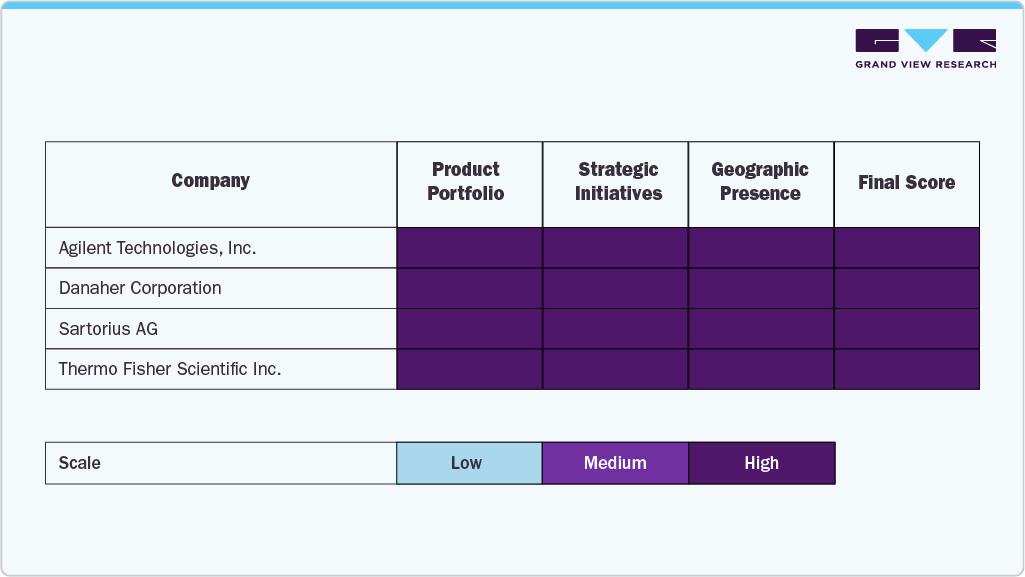
The bioprocess analyzer market is highly competitive and moderately consolidated, dominated by a few global players such as Thermo Fisher Scientific, Danaher Corporation, Sartorius AG, Agilent Technologies, & others. These companies leverage strong R&D capabilities, extensive product portfolios, and global distribution networks to maintain market leadership.
They focus on innovative, multi-parameter analyzers, automated and real-time monitoring systems, and integrated digital solutions to meet the growing demands of biopharmaceutical manufacturers, CROs, and CMOs. Mid-sized and niche players, compete by offering specialized analyzers, cost-effective solutions, or flexible instruments tailored to emerging markets and smaller-scale operations. Market dynamics are further influenced by strategic mergers and acquisitions, product expansions, and regional diversification, as companies aim to strengthen their technological capabilities, capture high-growth regions like Asia-Pacific, and address evolving regulatory standards in North America and Europe. Overall, the competitive landscape is shaped by continuous innovation, regulatory compliance requirements, and the increasing need for automation and digital integration in modern bioprocessing workflows.
 To learn more about this report, Download Free Sample Report
 Key Bioprocess Analyzers Companies:
The following are the leading companies in the bioprocess analyzers market. These companies collectively hold the largest market share and dictate industry trends.
- Agilent Technologies, Inc.
- Danaher Corporation
- Eppendorf AG
- F. Hoffmann-La Roche Ltd.
- Nova Biomedical
- Randox Laboratories Ltd.
- Sartorius AG
- Solida Biotech GmBH
- SYSBIOTECH GmbH
- Thermo Fisher Scientific Inc.
Competitive Benchmarking
Category
Operating Strategies
Competitive Edge
Weakness
Established Players (Thermo Fisher Scientific Inc., Danaher Corporation, Sartorius AG, Merck KGaA, etc.)
- Expand product portfolios through advanced bioprocess analyzers, PAT solutions, automation, and strategic collaborations with biopharmaceutical manufacturers.
- Broad product portfolios, strong global presence, established customer base, and robust R&D capabilities.
- High R&D costs, lengthy validation processes, and dependence on biopharmaceutical capital spending.
Emerging Players (Nova Biomedical, Solida Biotech GmbH, SYSBIOTECH GmbH, Repligen Corporation)
- Focus on niche applications, innovative sensor technologies, customized solutions, and strategic partnerships.
- Specialized expertise, faster innovation, and greater flexibility.
- Limited product portfolios, weaker global presence, and lower brand recognition.
Recent Developments
- In November 2025, Sartorius and Aber Instruments launched the BioPAT® Viamass single-use biomass sensor globally, integrating it across Ambr 250 High Throughput and Biostat systems to enable scalable, real-time inline biomass monitoring throughout bioprocess development and commercial manufacturing.
“The extension of BioPAT Viamass into Ambr 250 High Throughput vessels opens inline biomass monitoring early in development. It bridges the process-scale gap and underpins high throughput PAT as a scalable asset.”- Matthew Lee, CEO of Aber Instruments
- In September 2025, Duoning Biotech Co., Ltd. and Beijing Upstream Biotech Co., Ltd. officially entered into a strategic partnership. Under the agreement, Duoning Biotech obtained the exclusive global rights to Upstream Biotech’s full range of biochemical analyzers. This collaboration expanded Duoning Biotech’s product portfolio in upstream cell culture and strengthened its position as a comprehensive one-stop bioprocess solutions provider.
“We are very pleased to establish this deep strategic collaboration with Upstream Biotech to jointly promote the development and application of biochemical analysis equipment. Biochemical analysis is an indispensable step in cell culture. Integrating Upstream’s biochemical analyzers into Duoning’s product portfolio will not only enrich our offerings in cell culture but also create synergies with our bioreactors, serum-free media, and other solutions. This will further strengthen our upstream process development capabilities, enabling us to deliver more systematic, efficient, and controllable solutions for biopharmaceutical customers.”
- Wang Meng, Chairman and CEO of Duoning Biotech
Bioprocessing Analyzers Market Report Scope
Report Attribute
Details
Market size in 2025
USD 2.3 billion
Estimated market size in 2026
USD 2.5 billion
Projected market size by 2033
USD 4.6 billion
Growth rate
CAGR of 9.0% from 2026 to 2033
Historical data
2021 - 2025
Forecast period
2026 - 2033
Quantitative units
Revenue in USD million/billion, and CAGR from 2026 to 2033
Report coverage
Revenue forecast, company ranking, competitive landscape, growth factors, and trends
Segments covered
Product, type, application, end use, region
Regional scope
North America; Europe; Asia Pacific; Latin America; MEA
Country scope
U.S., Canada, Mexico, UK, Germany, France, Italy, Spain, Norway, Denmark, Sweden, China, Japan, India, South Korea, Australia, Thailand, Brazil, Argentina, Saudi Arabia, South Africa, UAE, Kuwait
Key companies profiled
Agilent Technologies, Inc., Danaher Corporation, Eppendorf AG, F. Hoffmann-La Roche Ltd., Nova Biomedical, Randox Laboratories Ltd., Sartorius AG, Solida Biotech GmbH, SYSBIOTECH GmbH, Thermo Fisher Scientific Inc., Merck KGaA, Repligen Corporation.
Customization scope
Free report customization (equivalent up to 8 analysts' working days) with purchase. Addition or alteration to country, regional & segment scope.
Pricing and purchase options
Avail customized purchase options to meet your exact research needs. Explore purchase options
Global Bioprocessing Analyzers Market Report Segmentation
This report forecasts revenue growth and provides an analysis on the latest trends in each of the sub-segments from 2021 to 2033. For the purpose of this report, Grand View Research has segmented the global bioprocess analyzers market on the basis of product, type, application, end use, and region.
-
Product Outlook (Revenue, USD Million, 2021 - 2033)
-
Instruments
-
Consumables
-
-
Type Outlook (Revenue, USD Million, 2021 - 2033)
-
Substrate analysis
-
Metabolite analysis
-
Concentration detection
-
-
Application Outlook (Revenue, USD Million, 2021 - 2033)
-
Antibiotics
-
Recombinant proteins
-
Biosimilars
-
Other applications
-
-
End Use Outlook (Revenue, USD Million, 2021 - 2033)
-
Biopharmaceutical companies
-
CROs & CMOs
-
Research & academic institutes
-
Others
-
-
Regional Outlook (Revenue, USD Million, 2021 - 2033)
-
North America
-
U.S.
-
Canada
-
Mexico
-
-
Europe
-
Germany
-
UK
-
France
-
Italy
-
Spain
-
Denmark
-
Sweden
-
Norway
-
-
Asia Pacific
-
China
-
Japan
-
India
-
South Korea
-
Australia
-
Thailand
-
-
Latin America
-
Brazil
-
Argentina
-
-
Middle East & Africa
-
South Africa
-
Saudi Arabia
-
UAE
-
Kuwait
-
-
Research Methodology
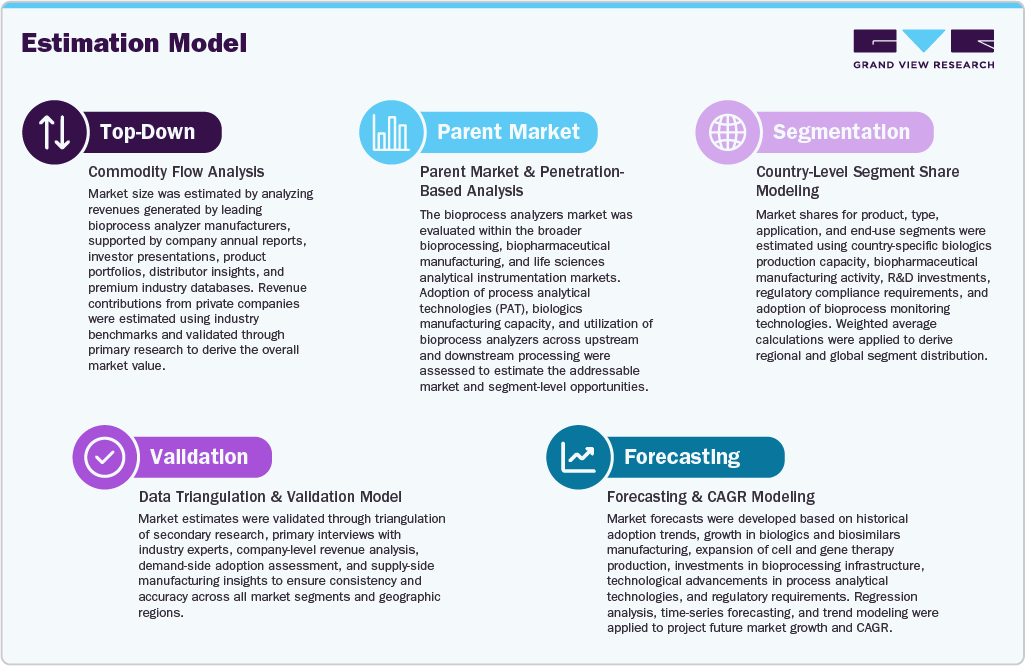
The identity and access management in healthcare market figures in this report are based on a proven research process that combines executive interviews with secondary research from proprietary databases, company filings, and recognized regulatory and institutional sources. Market size is built through value-chain sizing - reconciling supply-side and demand-side estimates - and triangulated with bottom-up and top-down approaches. Every estimate passes multiple levels of expert validation before publication, with each identity and access management in healthcare segment quantified using the revenue-capture definitions in the table below.
Segment Definition
Segment- Product
Revenue Capture Definition
Instruments
Revenue generated from instruments used for monitoring, measuring, and analyzing critical parameters during bioprocessing. This segment includes at-line, online, and inline bioprocess analyzers, metabolite analyzers, cell culture analyzers, nutrient analyzers, and integrated process monitoring systems used in upstream and downstream bioprocessing.
Consumables
Revenue generated from consumables required for the operation and maintenance of bioprocess analyzers. This segment includes reagents, calibration standards, assay kits, sensor cartridges, electrodes, membranes, sample cups, tubing, filters, and other disposable components used in bioprocess analysis.
Segment-Type
Revenue Capture Definition
Substrate Analysis
Revenue generated from bioprocess analyzers used to measure substrates consumed during cell culture and fermentation processes. This segment includes analyzers for glucose, glutamine, amino acids, and other nutrients essential for monitoring cell growth and optimizing bioprocess performance.
Metabolite Analysis
Revenue generated from analyzers designed to quantify metabolites produced or consumed during bioprocessing. This segment includes systems used to analyze lactate, ammonia, glutamate, ethanol, acetate, and other metabolic by-products that influence cell viability, productivity, and product quality.
Concentration Detection
Revenue generated from analyzers used to determine the concentration of biomolecules and process components during biomanufacturing. This segment includes systems for measuring proteins, antibodies, nucleic acids, cell density, biomass, dissolved gases, and other critical process parameters.
Segment-Application
Revenue Capture Definition
Antibiotics
Revenue generated from bioprocess analyzers used in the development and manufacturing of antibiotic products. This includes monitoring fermentation conditions, nutrient utilization, metabolite production, and process optimization to improve antibiotic yield and quality.
Recombinant Proteins
Revenue generated from bioprocess analyzers used during the production of recombinant proteins, including therapeutic proteins, enzymes, hormones, and vaccines. These analyzers support monitoring of cell culture conditions, nutrient levels, metabolite concentrations, and product consistency throughout manufacturing.
Biosimilars
Revenue generated from bioprocess analyzers used in the development and commercial manufacturing of biosimilars. This segment includes analytical systems employed for process optimization, quality control, and ensuring comparability with reference biologics during production.
Others (Application)
Revenue generated from bioprocess analyzers used in additional biomanufacturing applications, including cell and gene therapies, monoclonal antibodies, viral vectors, stem cell production, microbial fermentation, and other biologics manufacturing processes.
Segment- End Use
Revenue Capture Definition
Biopharmaceutical Companies
Revenue generated from the adoption of bioprocess analyzers by biopharmaceutical manufacturers for research, process development, commercial manufacturing, quality assurance, and process optimization of biologics and advanced therapies.
CROs & CMOs
Revenue generated from bioprocess analyzers utilized by contract research organizations (CROs) and contract manufacturing organizations (CMOs) providing bioprocess development, analytical testing, manufacturing, and process optimization services for biopharmaceutical companies.
Research & Academic Institutes
Revenue generated from bioprocess analyzers used by universities, research institutes, and academic laboratories for biotechnology research, process development, cell culture studies, fermentation research, and educational purposes.
Others
Revenue generated from bioprocess analyzers used by government research organizations, clinical laboratories, industrial biotechnology companies, regulatory institutions, and other end users involved in bioprocess development and analytical testing.
Estimation Model
 To learn more about this report, Download Free Sample Report
 Delivered Customizations
This report has been delivered with the following In-depth customizations
Client Request
Customization Delivered
Value Adds
Bioprocess Analyzers Application & End-User Cross-Segmentation Analysis
Detailed cross-segmentation analysis across applications and end users, covering adoption trends, biologics manufacturing workflows, analyzer utilization, and purchasing patterns across biopharmaceutical companies, CROs & CMOs, and research institutes.
Helps identify high-growth application-end-user combinations, optimize product positioning, and support commercialization and investment strategies.
Competitive Landscape
Comprehensive benchmarking of leading bioprocess analyzer companies based on product portfolio, technology capabilities, automation features, geographic presence, strategic partnerships, innovation pipeline, and manufacturing capabilities.
Enables assessment of competitive positioning, identification of technology gaps, evaluation of partnership opportunities, and development of effective market entry and expansion strategies.
Regional Demand & Biopharmaceutical Manufacturing Opportunity Analysis
Customized regional and country-level assessment covering North America, Europe, Asia Pacific, Latin America, and the Middle East & Africa, including biologics manufacturing capacity, biopharmaceutical investments, regulatory environment, and adoption of process analytical technologies (PAT).
Supports identification of high-growth markets, investment opportunities, regional expansion planning, and alignment of business strategies with evolving biopharmaceutical manufacturing demand.
Frequently Asked Questions About This Report
The global bioprocess analyzers market size was estimated at USD 2.3 billion in 2025 and is estimated at USD 2.6 billion in 2026.
Recombinant proteins segment held the largest revenue share of 38.1% in 2025 while biosimilars segment is expected to be the fastest-growing market.
Substrate analysis segment held the largest revenue share of 53.7% in 2025. Substrate analyzers are essential for measuring critical components such as glucose, glutamine, and other nutrients that directly impact cell growth, productivity, and product quality.
Key factors that are driving the market growth include increasing investments in life science and biomedical research, growing prevalence of chronic diseases and rising focus on precision medicine, and advancements in proteomics, genomics, and cell biology research.
The global bioprocess analyzers market is expected to grow at a compound annual growth rate of 9.0% from 2026 to 2033, reaching USD 4.6 billion by 2033.
North America dominated the bioprocess analyzers market with a share of 36.6% in 2025.
Biopharmaceutical companies segment held the largest revenue share of 51.0% in 2025 and CROs & CMOs segment is second fastest growing market.
Key players includes Agilent Technologies, Inc., Danaher Corporation, Eppendorf AG, F. Hoffmann-La Roche Ltd., Nova Biomedical, Randox Laboratories Ltd., Sartorius AG, Solida Biotech GmbH, SYSBIOTECH GmbH, Thermo Fisher Scientific Inc., Merck KGaA, and Repligen Corporation.
About the Author(s)
Biotechnology Research Team
Healthcare · BiotechnologyThis report was authored by the biotechnology research team at Grand View Research - comprising two research analysts, one senior research analyst, and one industry expert - with specialized expertise in the biotechnology segment of the healthcare industry. All findings are based on proprietary healthcare databases, executive interviews, and regulatory analysis, subject to internal peer review prior to publication.
Last Updated:
Speak to Analyst

Customize this report to your needs - add regions, segments, or data points, with 20% free customization.
Or view our licence options:


ISO 9001:2015 & 27001:2022 Certified
We are GDPR and CCPA compliant! Your transaction & personal information is safe and secure. For more details, please read our privacy policy.


