
- Home
- »
- Next Generation Technologies
- »
-
Blockchain In Energy Market Size, Share Report, 2026-2033GVR Report cover

Blockchain In Energy Market (2026 - 2033)
Size, Share & Trend Analysis By Type (Public Cloud, Private Cloud) By Offering (Platform, Services), By Application (Energy Trading, Renewable Energy & Carbon Markets, Grid Management), By End User, By Region, And Segment Forecasts
Market Size, 2025
$2.7BMarket Estimate, 2026
$3.2BMarket Forecast, 2033
$13.7BCAGR, 2026–2033
23.0%Blockchain In Energy Market Summary
The global blockchain in energy market size was valued at USD 2.7 billion in 2025 and is projected to grow from USD 3.2 billion in 2026 to USD 13.7 billion by 2033, at a CAGR of 23.0% from 2026 to 2033. North America market dominated the market, accounting for a revenue share of 37.6% in 2025. The increasing demand for transparent and secure energy transactions is driving the growth of the market.
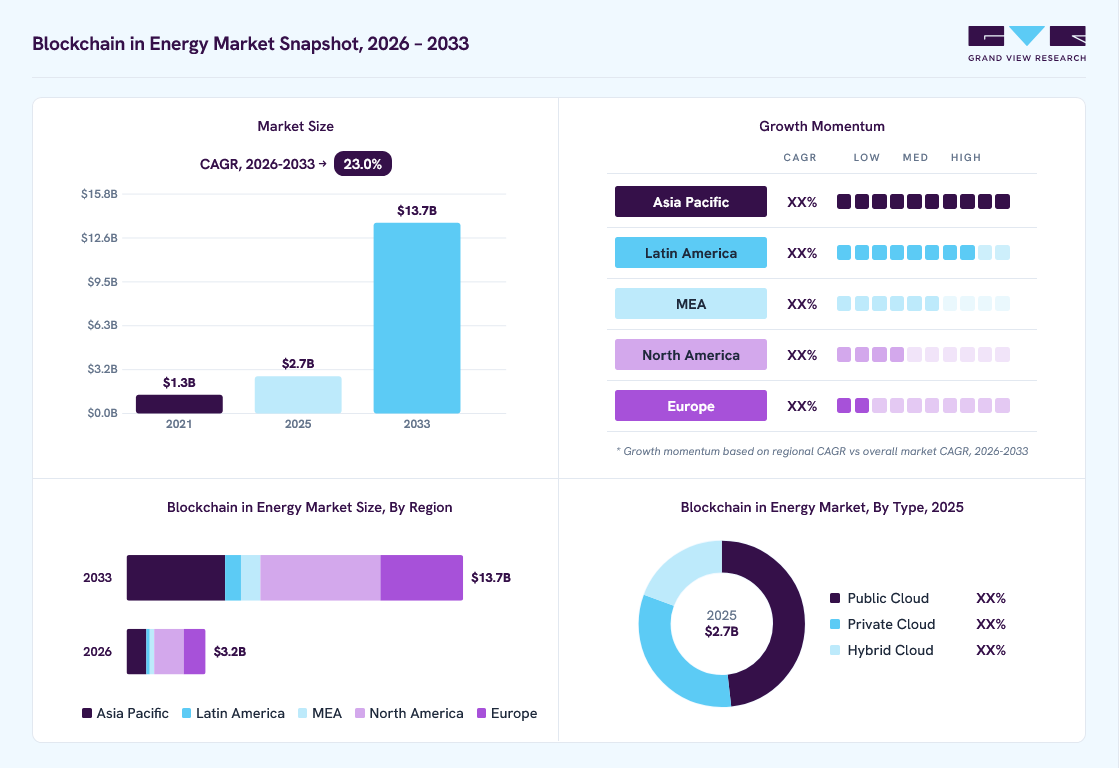 Source: Grand View Research, IR Documents, Primary Interviews, Paid DatabasesTo learn more about this report,
 Download Free Sample Report
 Key Market Trends & Insights
- By type: Public Cloud type segment led the market and accounted for 48.1% of the global revenue in 2025.
- By offering: Platform segment led the market and accounted for 57.8% of the global revenue in 2025.
- By application: Energy trading segment accounted for the largest share of 36.7% in 2025.
- By end user: Utilities and grid operator segment accounted for the largest revenue share of 35.7% in 2025.
Regional Highlights
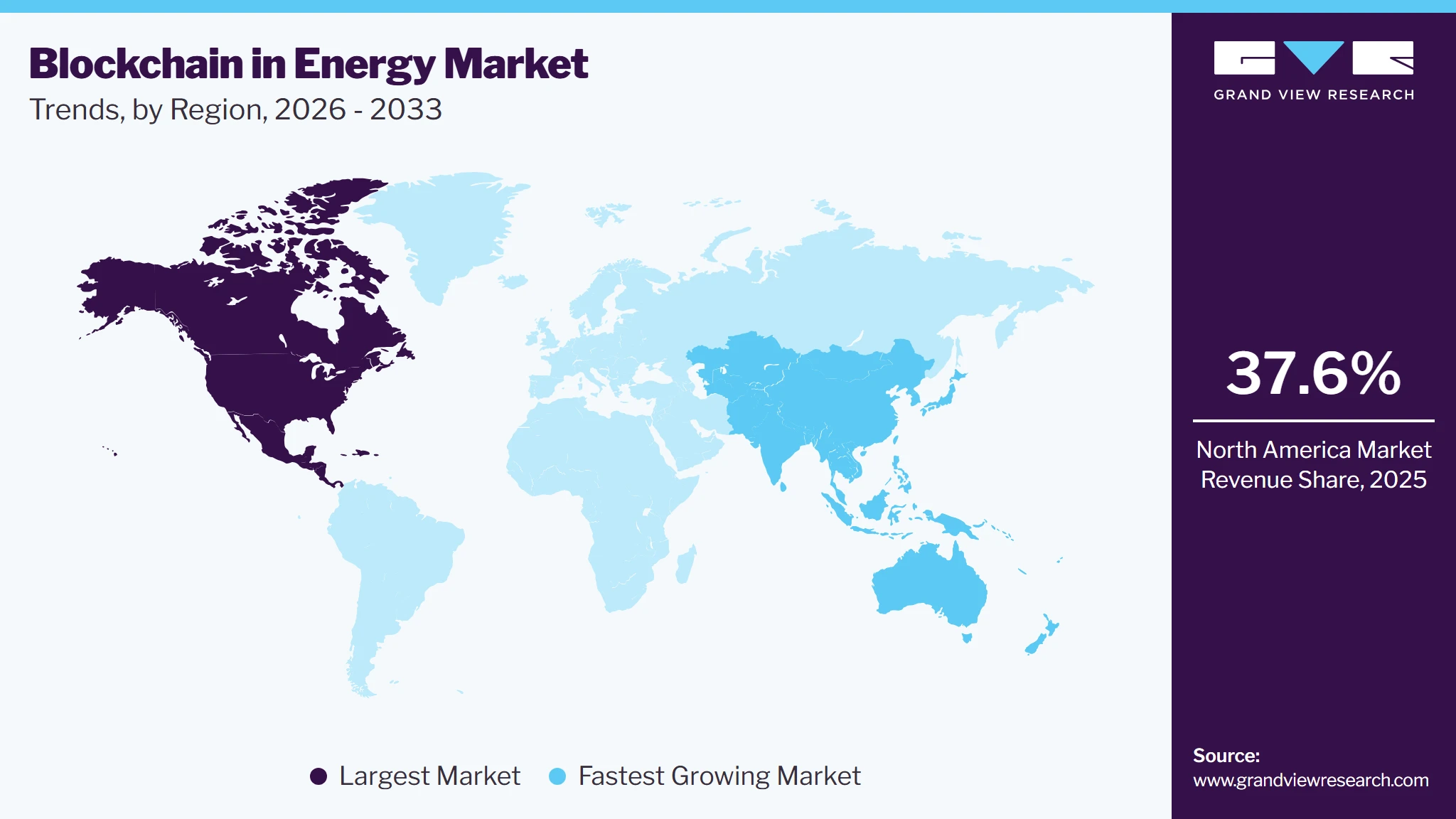
- Largest regional market: North America (37.6% revenue share, 2025)
- Fastest growing regional market: Asia Pacific (highest CAGR, 2026-2033)
- By country: The U.S. held the largest market share in 2025.
Market Size & Forecast
- Market Size in 2025: USD 2.7 Billion
- Estimated market size in 2026: USD 3.2 Billion
- Projected Market Size by 2033: USD 13.7 Billion
- CAGR (2026-2033): 23.0%
Three ways to get this report
Buy it, customize it, or ask a question.Ask an Analyst
Analyst response in 1 business day
- AccessReport author, directly
- Reply timeWithin 1 working day
- No sales callDirect answer only
- FormatEmail reply
- CostFree, no cost
Get the Full Report
What the study covers
- FormatsPDF · Excel · Dashboard
- Timeline2026–2033 annual, 2025 base
- Coverage20+ countries, 5 regions
- Companies10+ key players profiled
Customize the Report
20% free customization
- IncludeCountries, segments, points
- TailorTo your product definition
- ExtendDeeper competitor detail
- OrA fully bespoke study
- Turnaround5–10 working days
Rising electricity demand and the growing share of renewable power are creating a greater need for clear records of energy transactions. As more electricity is produced and traded across different sources, buyers and sellers need reliable information about the origin and movement of power. Blockchain can help maintain shared records, making transactions easier to track and verify. The regulator is also supporting the automatic issuance, tracking, and verification of renewable energy certificates. This growing focus on transparent energy records is supporting the use of blockchain across the energy sector.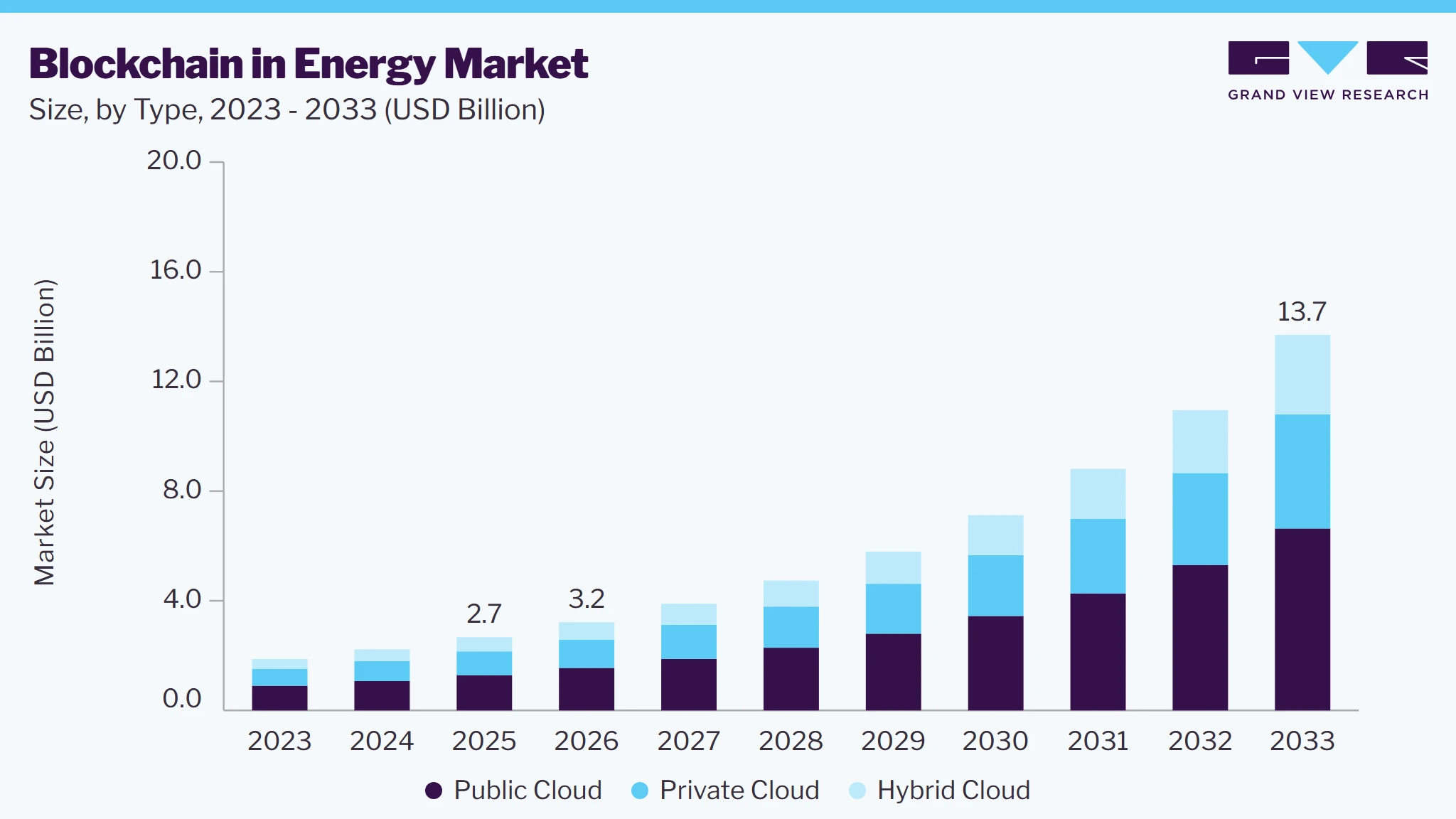 To learn more about this report, Download Free Sample Report
 The energy sector is increasingly using blockchain to record information about renewable electricity as it is generated and traded. This allows energy records to be updated more quickly and gives buyers clearer information about the source of electricity. The approach also facilitates easier tracking of renewable energy certificates and reduces the need for manual record checks. As renewable energy transactions become more frequent, real-time tracking is becoming increasingly important for maintaining clear and reliable records.
The regulatory landscape is significantly contributing to the growing adoption of blockchain in the energy sector. Governments and energy authorities are introducing requirements to improve the tracking and verification of renewable electricity and energy certificates. These requirements are encouraging energy participants to maintain clear, reliable, and easily accessible records of energy transactions. The growing focus on transparent renewable energy records is creating greater interest in blockchain-based solutions for managing energy information. As regulations continue to strengthen the need for accurate energy records, blockchain adoption is expected to gain further momentum.
The lack of common rules and standards is limiting the adoption of blockchain in the energy sector. Different countries follow different requirements for energy trading, data management, and digital records. These differences can make it difficult for companies to use the same blockchain solutions across markets. As a result, companies may face higher costs and uncertainty when expanding blockchain-based energy solutions.
Market Dynamics
The blockchain in energy market is being driven by the increasing digitalization of energy systems, the growth in renewable energy generation, the expansion of distributed energy resources, and the rising demand for transparent energy transactions. Energy markets are becoming more complex as utilities, generators, retailers, businesses, and consumers participate in multiple energy-related transactions. Blockchain is increasingly being considered to improve transaction records, renewable energy tracking, energy trading, grid coordination, and supply chain visibility.
The growing number of transactions between energy producers, utilities, retailers, businesses, and consumers is increasing the need for reliable and transparent transaction records. The expansion of renewable energy, distributed power generation, peer-to-peer electricity trading, and environmental markets has increased the number of participants involved in energy transactions. Traditional systems often require different parties to maintain and reconcile separate records, which can increase processing time and complicate the verification of transaction details.
Blockchain in energy solutions can provide a shared digital record that allows authorized participants to verify energy transactions without relying on multiple independent records. Blockchain can also support automated transaction settlement through predefined rules, helping reduce manual verification and improve transaction visibility. This is particularly relevant to renewable electricity trading, energy certificates, distributed energy transactions, and electricity settlement. As energy markets become more decentralized, the need for shared, verifiable transaction records is expected to drive blockchain adoption.
Regulatory uncertainty remains a major challenge for blockchain adoption in the energy sector. Electricity markets are governed by various rules governing energy trading, grid operations, consumer protection, data management, digital transactions, and settlement procedures. Blockchain-based energy transactions can involve several participants across different jurisdictions, while existing regulations may not clearly address decentralized transactions and automated digital agreements.
This uncertainty can delay commercial deployment because utilities and other energy participants may need regulatory approval before changing established transaction and settlement processes. The impact is particularly strong in highly regulated electricity markets and regions where energy trading remains largely centralized. Smaller energy companies may also be reluctant to invest in blockchain projects due to uncertain returns and the additional effort required to integrate new systems into existing energy infrastructure.
The expansion of renewable energy generation is creating opportunities for blockchain-based solutions that can track the origin, ownership, and use of renewable electricity. As businesses increasingly seek to demonstrate renewable energy consumption and manage environmental commitments, the need for accurate records of renewable electricity and related certificates is increasing. Blockchain can connect information related to energy generation, consumption, certificates, and transactions within a shared record.
The opportunity is particularly significant across renewable energy tracking, energy attribute management, carbon markets, and digital energy trading. Blockchain-based systems can improve the visibility of renewable energy transactions and support faster verification of environmental attributes. As renewable energy deployment and corporate demand for verified clean energy continue to increase, blockchain solutions that support traceability, verification, and market transactions are expected to gain greater adoption.
Market Concentration & Characteristics
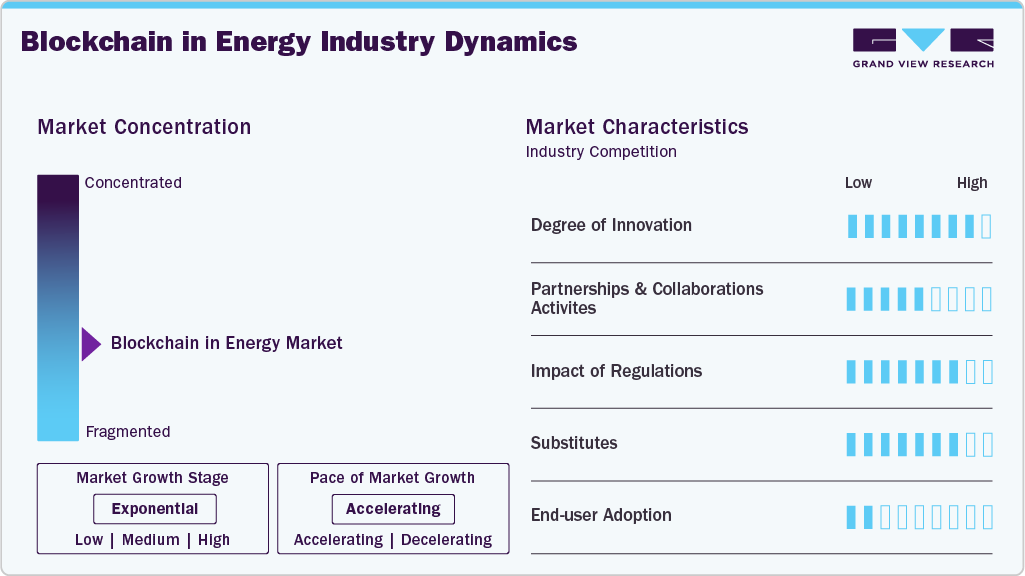
The blockchain in energy market is moderately fragmented, with participation spread across blockchain technology providers, energy companies, utilities, software developers, energy trading platforms, and specialized startups. The market does not have a small group of companies controlling a dominant share, as solutions are being developed for different applications such as peer-to-peer energy trading, renewable energy certificate management, energy transaction settlement, and decentralized energy management. The presence of both established technology and energy companies and smaller specialized providers creates a diverse competitive landscape. Companies are increasingly differentiating themselves through application-specific solutions, partnerships, platform capabilities, and integration with existing energy infrastructure.
 To learn more about this report, Download Free Sample Report
 The market characteristics indicate high innovation, strong regulatory influence, significant substitution pressure, and relatively low end-user adoption, reflecting the developing nature of blockchain applications in the energy sector. Innovation remains high as companies explore new applications for secure and transparent energy transactions, while collaborations between technology providers, utilities, energy companies, and other ecosystem participants remain important for developing and testing solutions. Regulations have a strong influence because blockchain-based energy transactions must operate within existing electricity market, data, consumer protection, and energy trading frameworks. Meanwhile, conventional centralized databases and digital energy-management systems provide alternatives to blockchain for several applications. End-user adoption remains comparatively low because many blockchain-based energy solutions are still progressing from pilot and demonstration projects toward wider commercial deployment, supporting the moderately fragmented market structure.
Analyst Perspective
The blockchain in energy market is moving toward greater adoption as energy systems become more decentralized, digital, and dependent on renewable generation. Increasing energy transactions, renewable energy tracking requirements, and demand for transparent environmental records are creating new application areas for blockchain. Cloud-based deployment, automated transaction processing, smart contracts, and integration with digital energy systems are expected to shape future development. Investment is likely to increase in renewable energy tracking, energy trading, carbon markets, EV energy systems, and grid-related applications. The market is also expected to move from small-scale trials toward more targeted commercial deployments as regulatory frameworks and integration capabilities improve.
Type Insights
Based on type, the public cloud type segment accounted for 48.1% of the largest share of global revenue in 2025. The growing use of shared energy services is supporting public cloud adoption. As energy businesses manage more transactions, they need flexible systems to handle growing records. Public cloud solutions allow them to access these services without building their own systems. This is supporting wider adoption across the energy sector in this segment
The hybrid cloud type segment is projected to grow at the fastest CAGR over the forecast period. Energy companies are increasingly adopting hybrid cloud solutions to manage their diverse business and data requirements. These solutions allow companies to keep sensitive information within their own systems while using cloud services for applications that require greater flexibility and scalability. This approach helps energy companies manage different types of information more efficiently while maintaining control over important data. As a result, the growing need for flexible and secure data management is supporting the adoption of hybrid cloud solutions in the energy sector.
Offering Insights
Based on offering, the platform segment accounted for 57.8% of the largest share of global revenue in 2025. Managing different energy activities through a single platform is driving the growth of the platform segment. As energy transactions involve more producers, suppliers, and customers, companies need a common system that can connect these participants and maintain shared records. Blockchain platforms provide this common system by bringing transaction information together in one place, making it easier for participants to access and verify records. As the number of energy transactions and participants continues to increase, the need for a shared, reliable system is driving demand for blockchain platforms across the energy sector.
The services segment is projected to grow at the fastest CAGR over the forecast period The growing adoption of blockchain in the energy sector is creating new opportunities for blockchain-related services. As energy companies shift from traditional record systems to blockchain-based platforms, they require support to implement, manage, and maintain these solutions. This development integrates blockchain into their existing operations and adapts their processes to the new systems. As more energy businesses use blockchain for transactions, data sharing, and record management, the need for implementation, maintenance, and other supporting services is expected to increase.
Application Insights
Based on application, the energy trading segment accounted for the largest share of 36.7% in 2025. The growing volume of electricity transactions is driving blockchain adoption in energy trading. Buyers and sellers need clear records as electricity moves between different participants. These records make purchases, sales, and payments easier to follow. This growing need for clear transactions is supporting the segment.
The renewable energy & carbon markets segment is expected to grow at a significant CAGR over the forecast period. The growing focus on clean energy is increasing the use of blockchain in renewable energy and carbon markets. Businesses need clear records to show where renewable energy comes from and how environmental credits are used. Blockchain helps keep this information together and makes it easier to check. This is increasing in blockchain solutions across the segment.
End User Insights
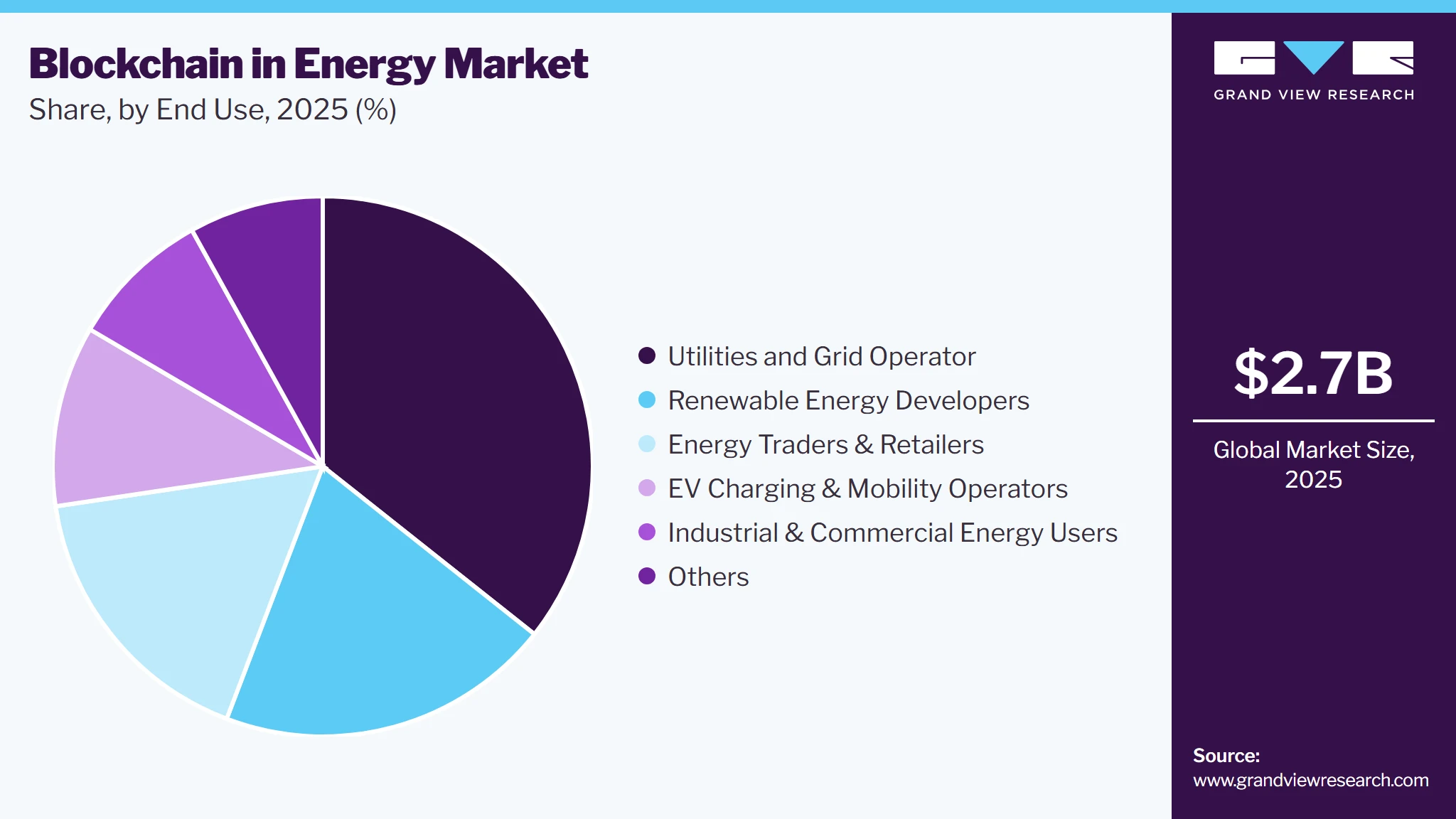
Based on end user, the utilities and grid operator segment accounted for the largest market revenue share in 2025. The increasing amount of electricity-related information is driving blockchain adoption among utilities and grid operators. As electricity generation and delivery involve more sources and participants, managing this information and maintaining clear records are becoming increasingly important. Blockchain helps organize this information in a shared record, making energy-related activities easier to track and verify. Growing electricity information is increasing the need for clear and reliable records, supporting wider blockchain adoption in the energy sector.
 To learn more about this report, Download Free Sample Report
 The energy traders & retailers segment is projected to grow at the fastest CAGR over the forecast period. The increasing complexity of energy buying and selling is creating opportunities for blockchain among energy traders and retailers. As buying and selling activities increase, clear records become more important. Blockchain can help keep trade details and payments together in one shared record. This can make energy trading easier to follow and support smoother business operations.
Regional Insights
North America blockchain in energy market led the global market and accounted for 37.6% of the global revenue in 2025. The growing use of hybrid cloud systems is supporting blockchain adoption among utilities and energy businesses in North America. These systems allow companies to manage energy information across different business environments while maintaining control of important records. As energy companies handle more transactions and renewable energy data, demand for flexible blockchain platforms is increasing.
 To learn more about this report, Download Free Sample Report
 U.S. Blockchain In Energy Market Trends
The U.S. blockchain in energy market is held the largest market share. The expansion of energy trading is creating opportunities for blockchain platforms in the U.S. More consumers, businesses, and small energy producers are participating in local electricity markets. This is creating scope for blockchain solutions that can make energy transactions easier to record, track, and settle.
Asia Pacific Blockchain In Energy Market Trends
The Asia Pacific blockchain in energy market is projected to grow at the fastest CAGR over the forecast period. The growing focus on renewable energy is supporting blockchain adoption in Asia Pacific. More renewable energy projects are creating a need to track energy production and related certificates clearly. Blockchain can help keep these records together and easier to check. This is supporting greater use of blockchain in renewable energy and carbon markets.
China held a dominant share in the Asia Pacific blockchain in energy market. The growth of energy supply chain tracking is creating new opportunities for blockchain in China's energy sector. Energy businesses are placing greater focus on following information across the movement of energy and related products. Blockchain can help maintain shared records across participants, supporting greater visibility throughout the energy supply chain.
Japan blockchain in energy market is expected to grow at a significant CAGR over the forecast period. The development of EV charging and mobility operators is creating opportunities for blockchain in Japan's energy market. As electric vehicles become more connected with charging services, operators need simpler ways to manage charging records and payments. This opens the scope for blockchain platforms that can support transparent transactions among vehicles, charging providers, and energy businesses.
Europe Blockchain In Energy Market Trends
The Europe Blockchain In Energy market poised significant growth from 2026 to 2033. The growing movement of energy across different markets is increasing the need for clear supply chain records. More participants are becoming involved as energy sources and trading activities expand. Blockchain can help keep information together as energy moves between producers, suppliers, and customers. This is increasing interest in blockchain for energy supply chain tracking across Europe.
The UK blockchain in energy market, driven by the development of EV energy systems, is gaining policy support in the UK as the country expands electric-vehicle charging and integrates renewable power. This improves the management of electricity used by vehicles and charging networks. The development creates an opportunity for blockchain solutions to support clear records of energy use and related transactions.
The Germany held a substantial share in the Europe blockchain in energy market. The expansion of renewable energy developers is supporting blockchain adoption in Germany as more electricity comes from wind and solar sources. These developers need reliable methods for recording energy production and related certificates. This is creating demand for blockchain solutions that provide clearer information across renewable energy transactions.
Key Blockchain in Energy Company Insights
Key players operating in the blockchain in energy market include Powerledger, Energy Web, Flexidao, BigchainDB GmbH, IBM Corporation, SAP SE, Microsoft Corporation, Accenture., Oracle and Infosys Limited. Key players in the blockchain in energy market are expanding their portfolios with blockchain-based energy trading, data management, renewable energy tracking, and transaction solutions while strengthening partnerships with utilities, grid operators, energy suppliers, and technology providers. Companies are focusing on improving transaction transparency, enhancing data security, supporting renewable energy integration, and meeting the growing demand for decentralized energy trading, energy certificates, peer-to-peer energy transactions, and digital energy management solutions.
-
Powerledger develops software solutions for tracking, tracing, and trading renewable energy. The company uses blockchain technology to support peer-to-peer energy trading and address challenges associated with integrating renewable energy into the grid. Its solutions include P2P energy trading, renewable energy portfolio management, energy traceability, hydrogen tracking, and EV solutions. Powerledger states that its platform is used by utilities, governments, and large corporations to track, trace, and trade energy.
-
Energy Web develops open-source and blockchain-based solutions for the energy sector. The company supports secure data exchange and asset identity management across electricity markets. Its solutions also help track low-carbon products and energy-related attributes. Energy Web works with energy-sector participants to support the transition toward cleaner energy systems.
Key Blockchain In Energy Companies
The following key companies have been profiled for this study on the blockchain in energy market.
-
Powerledger
-
Energy Web
-
Flexidao
-
BigchainDB GmbH
-
SAP SE
-
IBM Corporation
-
Microsoft Corporation
-
Accenture.
-
Oracle
-
Infosys Limited
Company Categorization
Operating Strategies
Competitive Edge
Weaknesses
Mature Players: IBM Corporation, SAP SE, Microsoft Corporation, Accenture., Oracle
- Mature players in the blockchain in energy market are focusing on integrating blockchain capabilities with cloud, enterprise software, consulting, data management, and digital energy solutions. These companies target utilities, energy companies, and large commercial users through broader digital transformation programs.
- Mature players gain a competitive advantage through strong enterprise relationships, global delivery capabilities, broad technology portfolios, and established cloud and consulting capabilities support large-scale deployments.
- These companies often face challenges related to their blockchain offerings are generally part of broader technology portfolios, which can result in less specialization in energy-specific blockchain applications.
Emerging Players: Powerledger, Energy Web
- Emerging players in the blockchain in energy market are focusing on specialized blockchain applications for energy trading, renewable energy tracking, environmental markets, decentralized energy systems, and energy-sector data management.
- Emerging players gain market traction through strong sector specialization and solutions designed specifically around energy-market requirements provide differentiation from broader technology providers.
- Emerging players face limitations due to smaller scale and narrower enterprise reach can make it more difficult to compete for large, complex projects requiring extensive integration and global implementation capabilities.
Recent Developments
-
In August 2025, Powerledger expanded POWR as a native multichain asset by integrating Wormhole’s NTT standard, enabling POWR to operate across Ethereum and Solana without wrapped tokens. The expansion improves cross-chain transfers, user flexibility, and access to wider blockchain ecosystems.
-
In October 2026, IBM Corporation launched Digital Asset Haven with Dfns to help financial institutions, governments, and corporations manage digital assets across custody, transactions, and settlement. The platform supports multiple blockchains and provides transaction management, governance, compliance, and security capabilities.
Blockchain In Energy Market Report Scope
Report Attribute
Details
Market size in 2025
USD 2.7 billion
Estimated market size in 2026
USD 3.2 billion
Projected market size by 2033
USD 13.7 billion
Growth rate
CAGR of 23.0% from 2026 to 2033
Base year for estimation
2025
Historical data
2021 - 2024
Forecast period
2026 - 2033
Quantitative units
Revenue in USD billion and CAGR from 2026 to 2033
Report coverage
Revenue forecast, company ranking, competitive landscape, growth factors, and trends
Segments covered
Type, offering, application, end user, region
Regional scope
North America; Europe; Asia Pacific; Latin America; MEA
Country scope
U.S.; Canada; Mexico; Germany; UK; France; China; Japan; India; South Korea; Australia; Brazil; KSA; UAE; South Africa
Key companies profiled
Powerledger; Energy Web; Flexidao; BigchainDB GmbH; IBM Corporation; SAP SE; Microsoft Corporation; Accenture.; Oracle; Infosys Limited
Customization scope
Free report customization (equivalent up to 8 analysts working days) with purchase. Addition or alteration to country, regional & segment scope.
Pricing and purchase options
Avail customized purchase options to meet your exact research needs. Explore purchase options
Global Blockchain In Energy Market Report Segmentation
The report forecasts revenue growth at global, regional, and country levels and provides an analysis of the latest industry trends in each of the sub-segments from 2021 to 2033. For the purpose of this study, Grand View Research has segmented the blockchain in energy market based on type, offering, application, end user, and region.
-
Type Outlook (Revenue, USD Billion, 2021 - 2033)
-
Public Cloud
-
Private Cloud
-
Hybrid Cloud
-
-
Offering Outlook (Revenue, USD Billion, 2021 - 2033)
-
Platform
-
Services
-
-
Application Outlook (Revenue, USD Billion, 2021 - 2033)
-
Energy Trading
-
Renewable Energy & Carbon Markets
-
Grid Management
-
EV Energy Systems
-
Energy Supply Chain Tracking
-
-
End User Outlook (Revenue, USD Billion, 2021 - 2033)
-
Utilities and Grid Operator
-
Renewable Energy Developers
-
Energy Traders & Retailers
-
EV Charging & Mobility Operators
-
Industrial & Commercial Energy Users
-
Others
-
-
Regional Outlook (Revenue, USD Billion, 2021 - 2033)
-
North America
-
U.S.
-
Canada
-
Mexico
-
-
Europe
-
Germany
-
UK
-
France
-
-
Asia Pacific
-
China
-
India
-
Japan
-
South Korea
-
Australia
-
-
Latin America
-
Brazil
-
-
Middle East & Africa (MEA)
-
UAE
-
Kingdom of Saudi Arabia (KSA)
-
South Africa
-
-
Research Methodology
The blockchain in energy market figures in this report are based on a proven research process that combines executive interviews with secondary research from proprietary databases, company filings, and recognized regulatory and institutional sources. Market size is built through value-chain sizing-reconciling supply-side and demand-side estimates-and triangulated with bottom-up and top-down approaches. Every estimate passes multiple levels of expert validation before publication, with each blockchain in energy segment quantified using the revenue-capture definitions in the table below.
Segment Definition
Type
Revenue capture definition
Public Cloud
The segment revenue is generated from blockchain-in-energy solutions delivered through shared cloud infrastructure, including subscriptions, usage-based fees, transaction processing charges, platform access fees, and cloud-based energy data management.
Private Cloud
The segment revenue is generated from blockchain-in-energy solutions hosted within dedicated cloud environments, including platform licensing, dedicated hosting, infrastructure management, maintenance, and enterprise support fees.
Hybrid Cloud
The segment revenue is generated from blockchain-in-energy solutions that combine public and private cloud environments, including platform subscriptions, integration services, infrastructure management, data management, and support services.
Offering
Revenue capture definition
Platform
The segment revenue is generated from blockchain-based software platforms used for energy trading, transaction management, renewable energy tracking, certificate management, grid applications, and energy supply-chain tracking, including licensing, subscriptions, and transaction-based fees.
Services
The segment revenue is generated from consulting, implementation, integration, customization, deployment, maintenance, technical support, managed services, and training associated with blockchain-in-energy solutions.
Application
Revenue capture definition
Energy Trading
The segment revenue is generated from blockchain solutions used to record, verify, manage, match, and settle electricity transactions between energy market participants.
Renewable Energy & Carbon Markets
The segment revenue is generated from solutions used to track, verify, issue, transfer, and manage renewable energy certificates, carbon credits, and other environmental attributes.
Grid Management
The segment revenue is generated from blockchain solutions used to manage and verify information and transactions associated with distributed energy resources, grid participants, energy assets, and electricity network activities.
EV Energy Systems
The segment revenue is generated from blockchain solutions supporting EV charging transactions, charging authentication, energy payments, renewable energy tracking, and interactions between EVs and electricity networks.
Energy Supply Chain Tracking
The segment revenue is generated from blockchain solutions used to record and verify the origin, movement, ownership, certification, and transactions of energy products and related materials.
End User
Revenue capture definition
Utilities and Grid Operator
The segment revenue is generated from blockchain platforms and services used for energy trading, transaction settlement, grid coordination, renewable energy tracking, and verification of energy-related records.
Renewable Energy Developers
The segment revenue is generated from blockchain solutions used to verify renewable energy generation, manage energy attributes, track certificates, and document renewable energy transactions.
Energy Traders & Retailers
The segment revenue is generated from blockchain solutions used for energy trading, transaction management, settlement, customer energy tracking, and verification of energy origin.
EV Charging & Mobility Operators
The segment revenue is generated from blockchain solutions used for EV charging payments, user authentication, charging transactions, energy tracking, and coordination between charging networks and electricity markets.
Industrial & Commercial Energy Users
The segment revenue is generated from blockchain platforms and services used to track energy consumption, verify renewable energy purchases, manage energy transactions, and document environmental attributes.
Others
The segment revenue is generated from blockchain-in-energy solutions used by other participants, including government organizations, energy service providers, technology organizations, research institutions, and other energy-market participants.
Estimation Model
Layer Name
Key Question
Description
Energy Ecosystem Mapping
Who generates demand for blockchain-in-energy solutions?
This layer identifies the major participants involved in the blockchain in energy market. It covers utilities, grid operators, renewable energy developers, energy traders and retailers, EV charging operators, and industrial and commercial energy users. The assessment focuses on energy activities where multiple participants need to share and verify information. This establishes the overall addressable market.
Application & Use Case Assessment
Where is blockchain being used across the energy value chain?
This layer evaluates blockchain adoption across energy trading, renewable energy and carbon markets, grid management, EV energy systems, and energy supply-chain tracking. Each application is assessed based on its transaction requirements, need for transparency, adoption level, and potential for blockchain deployment. Existing deployments and emerging use cases are considered to determine application-level demand.
Technology & Revenue Assessment
How are blockchain-in-energy solutions delivered and monetized?
This layer evaluates public cloud, private cloud, and hybrid cloud deployment models along with platform and service offerings. Revenue is assessed through subscriptions, licensing, transaction fees, implementation, integration, consulting, maintenance, and support services. The assessment also considers the use of blockchain infrastructure and related digital energy systems.
Market Validation & Forecasting
What is the current and future revenue potential?
This layer validates market estimates using deployment activity, solution adoption, partnerships, investments, and application-level demand. Revenue is cross-checked across deployment type, offering, application, end user, and geographic markets to avoid double counting. Growth assumptions consider renewable energy expansion, distributed energy resources, energy trading, EV adoption, and increasing energy-system digitalization.
Delivered Customization
We have successfully delivered the following deep-dive customizations
Client Request
Customization Delivered
Value Adds
Regional Blockchain In Energy Market Opportunity Assessment
Country/region-wise market sizing and forecasts
Analysis of demand, adoption trends, and regulatory landscape
Identification of high-growth regions and investment hotspots
Identified region-specific growth opportunities
Supported expansion and go-to-market strategy
Enabled informed regional investment decisions
Cross-Segmentation Analysis for the Blockchain In Energy Market
Criss-cross market analysis by type, offering, application, end user
Demand and adoption assessment across key segments
Segment attractiveness and growth potential benchmarking
Identified high-potential market segments
Supported targeted type positioning and marketing strategy
Improved customer and segment prioritization
Competitive Benchmarking and Strategic Positioning in the Blockchain In Energy Market
Benchmarking of key competitors across types, pricing, partnerships, and innovation
Comparative assessment of market share, capabilities, and strategies
Analysis of competitive strengths, gaps, and differentiation areas
Identified competitive white spaces and growth gaps
Supported strategic positioning and differentiation
Enabled data-driven competitive strategy development
Frequently Asked Questions About This Report
The global blockchain in energy market size was estimated at USD 2.7 billion in 2025 and is estimated at USD 3.2 billion in 2026.
North America led the global market and accounted for 37.6% of the global revenue in 2025.
Platform segment accounted for 57.8% of the largest share of global revenue in 2025, while services segment is expected to be the fastest-growing market.
Energy trading segment accounted for the largest share of 36.7% in 2025. The growing volume of electricity transactions is driving blockchain adoption in energy trading.
Utilities and grid operator segment accounted for the largest revenue share of 35.7% in 2025, while energy traders & retailers segment is expected to be the fastest-growing market.
The global blockchain in energy market is expected to grow at a CAGR of 23.0% from 2026 to 2033, reaching USD 13.7 billion by 2033.
Asia Pacific is the fastest-growing region over the forecast period.
Some key players operating in the blockchain in energy market include Powerledger, Energy Web, Flexidao, BigchainDB GmbH, IBM Corporation, SAP SE, Microsoft Corporation, Accenture., Oracle, and Infosys Limited
The increasing demand for transparent and secure energy transactions is driving the growth of the blockchain in energy market.
About the Author(s)
Next Generation Technologies Research Team
Technology · Next Generation TechnologiesThis report was authored by the next generation technologies research team at Grand View Research - comprising two research analysts, one senior research analyst, and one industry expert - with specialized expertise in the next generation technologies segment of the technology industry. All findings are based on proprietary technology databases, executive interviews, and regulatory analysis, subject to internal peer review prior to publication.
Last Updated:
Speak to Analyst

Customize this report to your needs - add regions, segments, or data points, with 20% free customization.
Or view our licence options:


ISO 9001:2015 & 27001:2022 Certified
We are GDPR and CCPA compliant! Your transaction & personal information is safe and secure. For more details, please read our privacy policy.


