
- Home
- »
- Medical Devices
- »
-
Blood Warmer Market Size And Share Report, 2026-2033GVR Report cover

Blood Warmer Market (2026 - 2033)
Size, Share & Trends Analysis Report By Type (Hardware, Consumables), By Product (Portable Blood Warmer, Non-portable Blood Warmer), By Flow Rate, By Application (Surgery, Pediatrics, Acute Care), By End Use, By Region, And Segment Forecasts
Market Size, 2025
$253.7MMarket Estimate, 2026
$273.3MMarket Forecast, 2033
$516.4MCAGR, 2026–2033
9.5%Blood Warmer Market Summary
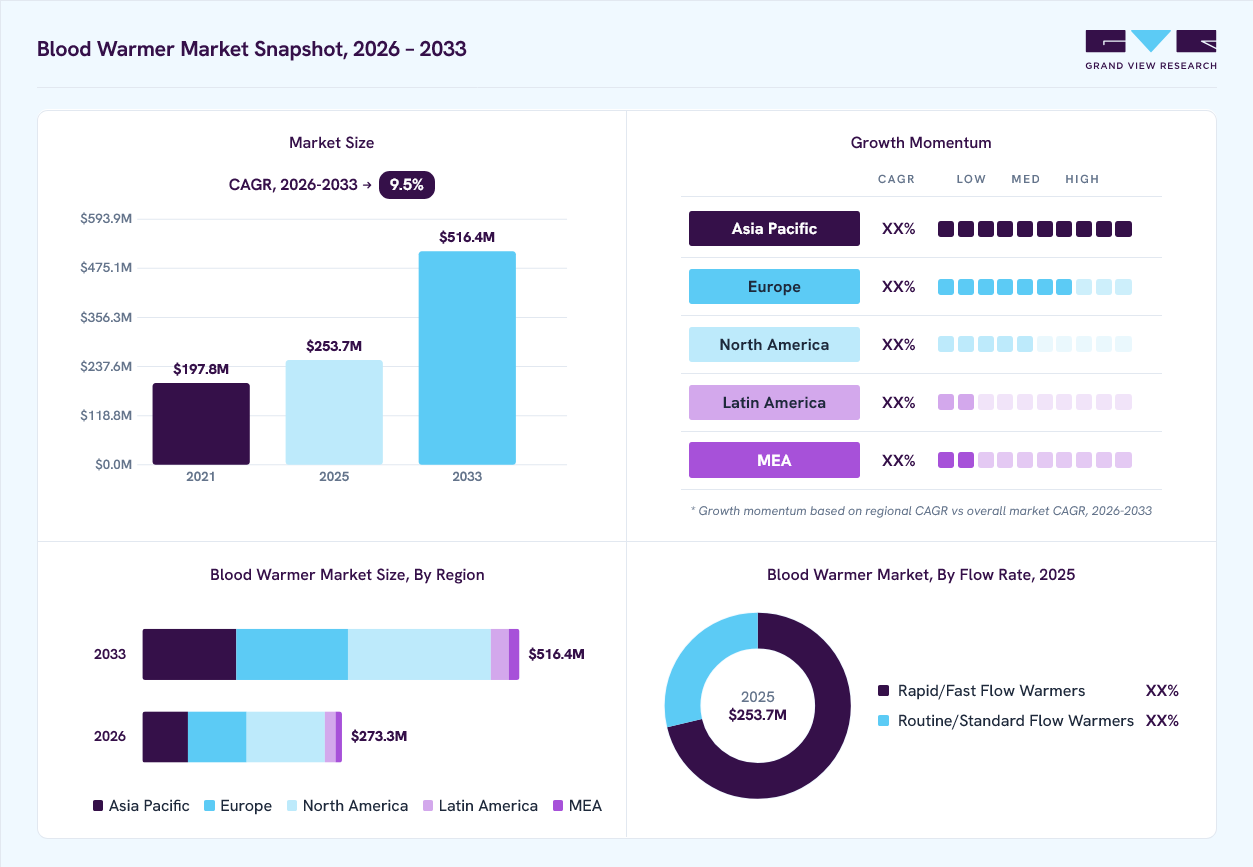
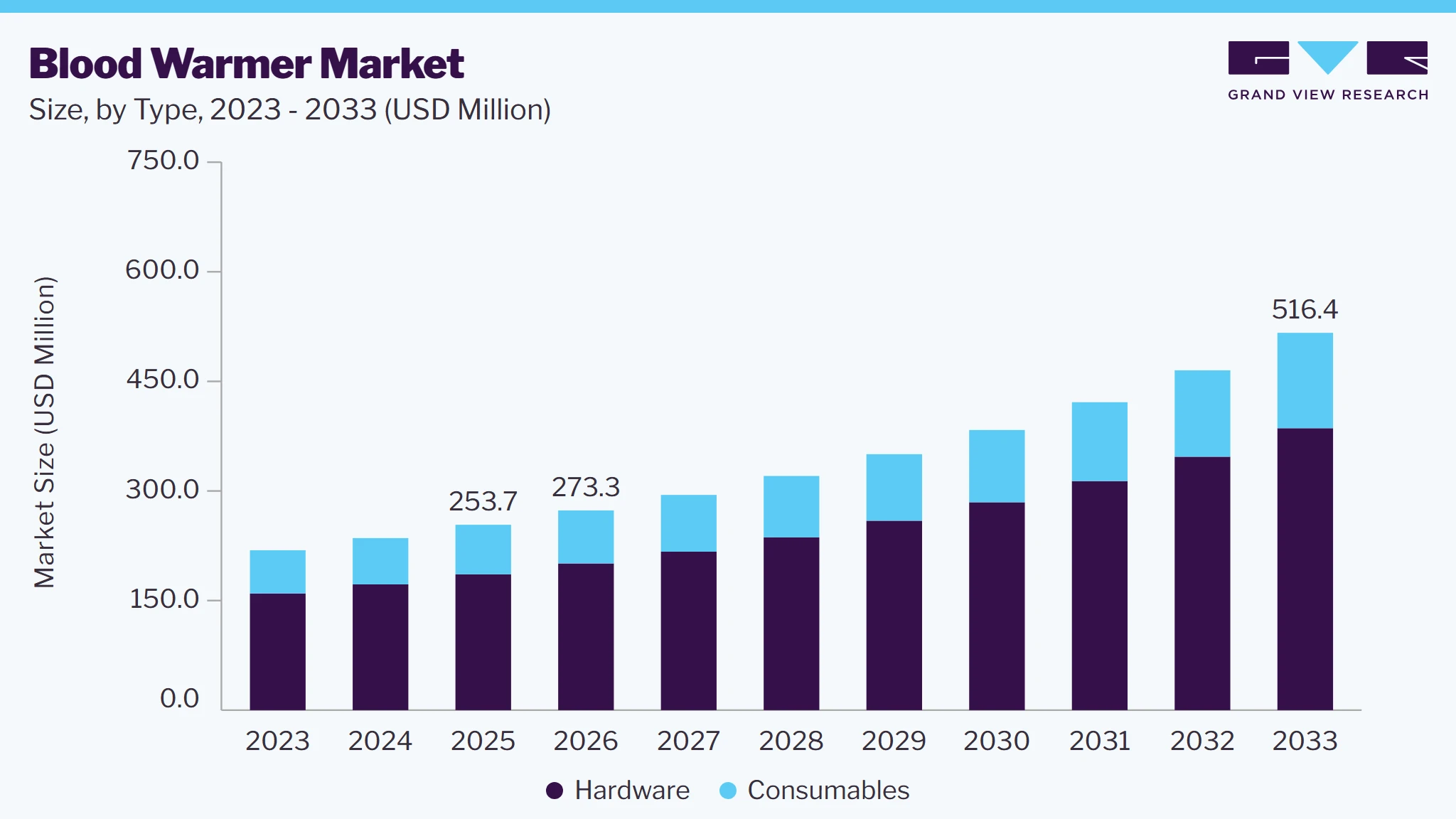
The global blood warmer market size was valued at USD 253.7 million in 2025 and is projected to grow from USD 273.3 million in 2026 to USD 516.4 million by 2033, at a CAGR of 9.5% from 2026 to 2033. North America dominated the blood/IV warmer market with the largest revenue share of 39.4% in 2025. The demand for blood warmer products is rising owing to the growing number of surgical cases and the rising cases of cold-weather injuries such as hypothermia.
 Source: Grand View Research, IR Documents, Primary Interviews, Paid DatabasesTo learn more about this report,
 Download Free Sample Report
Key Market Trends & Insights
- By type: Hardware segment held the largest market share of 73.3% in 2025.
- By application: Surgery segment held the largest market share of 36.9% in 2025.
- By product: Non-portable blood/IV warmers segment held the largest market share of 55.4% in 2025.
- By flow rate: Rapid/fast flow warmers segment held the largest market share of 71.2% in 2025.
Regional Highlights
- Largest regional market: North America (39.4% revenue share, 2025)
- Fastest-growing regional market: Asia Pacific (highest CAGR, 2026-2033)
- By country: The U.S. held the largest market share in 2025
Market Size & Forecast
- Market size in 2025: USD 253.7 Million
- Estimated market size in 2026: USD 273.3 Million
- Projected market size by 2033: USD 516.4 Million
- CAGR (2026-2033): 9.5%
Three ways to get this report
Buy it, customize it, or ask a question.Ask an Analyst
Analyst response in 1 business day
- AccessReport author, directly
- Reply timeWithin 1 working day
- No sales callDirect answer only
- FormatEmail reply
- CostFree, no cost
Get the Full Report
What the study covers
- FormatsPDF · Excel · Dashboard
- Timeline2026–2033 annual, 2025 base
- Coverage20+ countries, 5 regions
- Companies10+ key players profiled
Customize the Report
20% free customization
- IncludeCountries, segments, points
- TailorTo your product definition
- ExtendDeeper competitor detail
- OrA fully bespoke study
- Turnaround5–10 working days
For instance, statistics from the Military Health System published in November 2024 indicate that the incidence rate of cold-weather injuries among active U.S. military employees was 31.1 per 100,000 individual years during the 2023-2024 season. This highlights an 8.4% growth from the 28.7 per 100,000 individual years registered in the earlier season (2022-2023).In addition, the increasing number of surgeries and trauma cases is anticipated to propel the demand for blood-warming devices. These instruments are typically used during fluid administration in surgeries to mitigate a reduction in mean body temperature. A study published by the National Library of Medicine in April 2023 reported a 13% increase in trauma patients at a trauma center in Marin County between 2019 and 2020. In addition, according to an article published by Medindia in July 2023, the total number of surgeries performed across the globe is projected to be 310 million per year. Thus, the high surgical volume is expected to propel the demand for blood warmer in the coming years.
 To learn more about this report, Download Free Sample Report
Furthermore, the increasing incidences and mortality related to hypothermia are expected to boost the market growth in the coming years. For instance, according to data issued by the National Library of Medicine in January 2024, between 700 and 1,500 hypothermia-related casualties occur in the U.S. yearly. Thus, the rising cases of cold-weather injuries are anticipated to propel the demand for blood warmers over the forecast period.
In addition, the growing demand for blood warmers from ambulance services and the military & defense sectors is expected to drive market growth in the coming years. Several initiatives are being implemented to address this increasing demand in the defense and military sectors. For example, in December 2022, the Ministry of Defense and Air Ambulances UK collaborated with NHS Blood and Transplant (NHSBT) for a clinical trial, SWIFT, in which Air Ambulance crews carried ‘whole blood’ instead of separate plasma and red blood cells to treat severely injured patients at risk of bleeding to death. This trial benefits both civilian and military trauma care. Such supportive initiatives undertaken by government authorities are expected to boost the demand for blood warmers over the forecast period.
Market Dynamics
The blood warmer market is growing due to the rising number of major surgical procedures, trauma cases, emergency blood transfusions, and critical care admissions worldwide. The rising prevalence of cardiovascular diseases, cancer, organ transplantation, obstetric hemorrhage, and severe injuries has increased the demand for rapid blood and intravenous fluid administration, creating a greater need for blood warming devices to prevent hypothermia and improve patient outcomes. Growing adoption of perioperative temperature management protocols and patient blood management (PBM) programs across hospitals is further supporting market expansion. Technological advancements, including portable, battery-operated blood warmers, precise temperature-control systems, compact designs, and digital monitoring capabilities, are improving device safety, efficiency, and usability in operating rooms, emergency departments, ambulances, and military healthcare settings. In addition, expanding healthcare infrastructure, increasing investments in trauma and emergency care services, and the growing establishment of ambulatory surgical centers and intensive care units, particularly in emerging economies, are creating new growth opportunities for the market.
Growing cases of cardiovascular diseases, cancer, trauma, orthopedic disorders, and organ transplantation have led to a higher volume of complex surgeries that often require blood transfusions and large amounts of intravenous fluids. During these procedures, the administration of cold blood or fluids can lower a patient's body temperature, increasing the risk of hypothermia, excessive bleeding, cardiac complications, infections, and prolonged recovery. Blood warmers help maintain blood and fluid temperatures close to normal body temperature, improving patient safety and supporting better surgical outcomes. Hospitals are also adopting enhanced recovery after surgery (ERAS) protocols and perioperative temperature management guidelines that recommend active warming methods during surgery. As healthcare systems continue to expand surgical capacity and perform more high-risk procedures, the routine use of blood warmers is expected to increase across operating rooms, emergency departments, and intensive care units, supporting sustained market growth.
Stringent regulatory approval and compliance requirements remain a significant restraint for the blood warmer market. Since blood warmers directly affect the safety and quality of blood products, manufacturers must demonstrate that their devices maintain accurate temperatures without causing hemolysis, overheating, or damage to blood components. Regulatory agencies such as the U.S. Food and Drug Administration (FDA), the European Union under the Medical Device Regulation (MDR), and other national authorities require extensive laboratory testing, clinical validation, quality management systems, and documentation before products can be approved for commercialization. In addition, manufacturers must comply with ongoing post-market surveillance, product monitoring, and reporting requirements throughout the product lifecycle. These regulatory processes increase development costs, extend product launch timelines, and create barriers for smaller companies entering the market. Frequent updates to medical device standards also require continuous investments in product improvements and regulatory compliance, making market expansion more complex and resource-intensive.
The development of portable and battery-operated blood warmers presents a significant growth opportunity for the blood warmer market. Emergency medical services, military healthcare, air ambulances, disaster response teams, and remote healthcare facilities are adopting prehospital blood transfusion programs to improve survival among patients experiencing severe trauma and hemorrhage. These settings require compact, lightweight, and reliable blood warming devices that can operate without a continuous power supply while maintaining safe blood temperatures during transport. Advances in battery technology, energy efficiency, and device miniaturization are enabling manufacturers to develop highly portable systems that can function effectively in challenging environments. As governments and healthcare organizations continue to invest in emergency medical infrastructure and trauma care networks, demand for mobile blood warming solutions is expected to increase. Companies that develop durable, user-friendly, and technologically advanced portable blood warmers will be well-positioned to address this expanding clinical need and capture new opportunities in both developed and emerging healthcare markets.
Market Characteristics
The market growth stage is high, and the pace of growth is accelerating. The blood warmer industry is growing due to the rising number of surgical procedures and trauma cases, as well as advancements in blood warmers.
Players in the industry and researchers are focusing on developing innovative and advanced blood warmer products. For instance, in July 2022, the Combat Readiness Medical Research Program (CRRP), the U.S. Army Institute of Surgical Research, and MaxQ Research, LLC announced the development of the MaxExo blood warmer, a smaller, more user-friendly, and durable device that does not require electricity. Such developments are anticipated to drive innovation in the blood warmer industry.
 To learn more about this report, Download Free Sample Report
Regulatory agencies such as the Food and Drug Administration (FDA), the European Union, Health Canada, and other bodies oversee medical device regulations, including blood warmer products. These devices are categorized into various classes based on the associated risk levels. For instance, the U.S. FDA classifies blood warmers as Class II or Class III. Such regulatory classification helps manufacturers enter the blood warmer industry.
Several players in the blood warmer industry are pursuing mergers and acquisitions to strengthen their market position and expand their product portfolios. Some players adopting this initiative include TSC Life, ICU Medical, Inc., Stryker, and GENTHERM.
Players in the blood warmer industry are strategically focusing on provincial expansion to capitalize on emerging prospects and broaden their market presence. Numerous industry players are forming distribution partnerships to increase their product reach in various geographies. For instance, in June 2023, QinFlow and Life-Assist completed onboarding for their distribution partnership, focusing on the Warrior line of blood and IV fluid warmers. This collaboration enhances access to QinFlow's advanced fluid-warming solutions, providing first responders and emergency medical services with critical tools for managing hypothermia in pre-hospital and acute care settings.
Analyst Perspective
The blood/IV warmer market is expected to witness sustained growth, driven by the increasing number of major surgeries, trauma cases, emergency blood transfusions, and critical care admissions worldwide. The rising prevalence of cardiovascular diseases, cancer, organ transplantation, obstetric hemorrhage, and severe injuries is increasing the demand for safe blood and intravenous fluid warming to prevent perioperative and transfusion-related hypothermia. Market growth is further supported by expanding healthcare infrastructure, increasing investments in trauma centers and emergency medical services (EMS), rising adoption of patient blood management (PBM) programs, and the growing number of ambulatory surgical centers and intensive care units. Continuous technological advancements, including portable and battery-operated blood warmers, precise temperature control systems, digital monitoring, smart alarms, and compact device designs, are improving clinical efficiency, patient safety, and ease of use across hospital and prehospital settings.
Product Insights
Based on product, the non-portable blood/IV warmers segment led the market with the largest revenue share of 55.4% in 2025, while portable blood/IV warmers are expected to grow at the fastest CAGR over the forecast period. The growing incidence of road accidents, gunshot wounds, and mishaps is expected to drive segment growth. In addition, the increasing rate of hospitalization due to various medical disorders, the rising aging population, and improving financing for healthcare infrastructure in developing economies are all expected to propel the segment growth over the forecast period.
The portable blood warmers segment is expected to grow at the fastest CAGR of 9.45% from 2026 to 2033. The demand is expected to remain slightly higher than for non-portable devices in the coming years. The majority of the demand comes from ambulatory/paramedic services, rescue forces, and the defense sector. In addition, growing demand from remote clinics and emergency centers is also expected to drive the segment growth.
Application Insights
Based on application, the surgery segment led the market with the largest revenue share of 36.9% in 2025. The rising number of surgical procedures, such as prolonged surgeries & other major surgeries, drive the segment growth over the forecast period. Prolonged surgical procedures, particularly those involving substantial blood loss or exposure to cold environments, can result in hypothermia. Blood warmers help maintain optimal blood temperature during these procedures, reducing the risk of hypothermia-related complications. According to the data published by Smart Surgeons in July 2024, approximately 30 million surgeries are conducted annually in India. Thus, the increasing number of surgical procedures is expected to propel the segment growth in the coming years.
The pediatric segment is expected to grow significantly during the forecast period. Premature birth is a significant driver in the pediatrics application segment. For instance, as per a report by Artemis Hospitals in November 2024, an estimated 15 million babies are born prematurely globally each year. Premature babies are vulnerable to hypothermia as they have limited ability to regulate their body temperature. Blood warmers are crucial for ensuring that fluids and blood products administered to premature babies are warmed to the correct temperature, preventing further health complications. Thus, the increase in premature births is anticipated to support the segment growth in the coming years.
Type Insights
Based on type, the hardware segment led the market with the largest revenue share of 73.3% in 2025, while consumables is expected to grow at the significant CAGR over the forecast period. This segment growth can be attributed to several factors, such as the increasing need for blood transfusions, technological advancements in warming devices, and growing awareness of hypothermia risks. Furthermore, expanding healthcare facilities and the rising demand for portable solutions in military settings are further expected to support the segment's growth.
The consumables segment is expected to grow significantly during the forecast period. The consumables segment includes various disposable and single-use products crucial for effectively functioning blood-warming devices. The rising number of surgical procedures and growing focus on patient safety is anticipated to propel the segment growth in the coming years. Furthermore, the increasing aging population and a rise in chronic diseases have significantly increased the demand for surgeries. This, in turn, leads to greater use of blood-warming devices and higher consumption of disposables such as warming sets, tubing, and filters.
Flow Rate Insights
Based on flow rate, the rapid/fast-flow warmers segment led the market, with the largest revenue share of 71.2% in 2025. This growth is driven by the increasing demand for efficient blood temperature management in clinical settings. These devices are specifically designed to quickly warm blood and intravenous fluids, ensuring that patients receive safe, warm blood products during critical medical interventions.
The routine/standard flow warmers segment is expected to grow significantly during the forecast period. These warmers are designed for lower flow rates, typically a few hundred milliliters per minute, making them ideal for standard transfusion rates in non-emergency situations. They are commonly used in routine clinical settings, such as scheduled surgeries and procedures, where slower, more controlled infusions are feasible. Compared to rapid/fast-flow warmers, routine/standard-flow warmers are generally simpler and more cost-effective, enhancing their accessibility for regular use across various healthcare environments.
End Use Insights
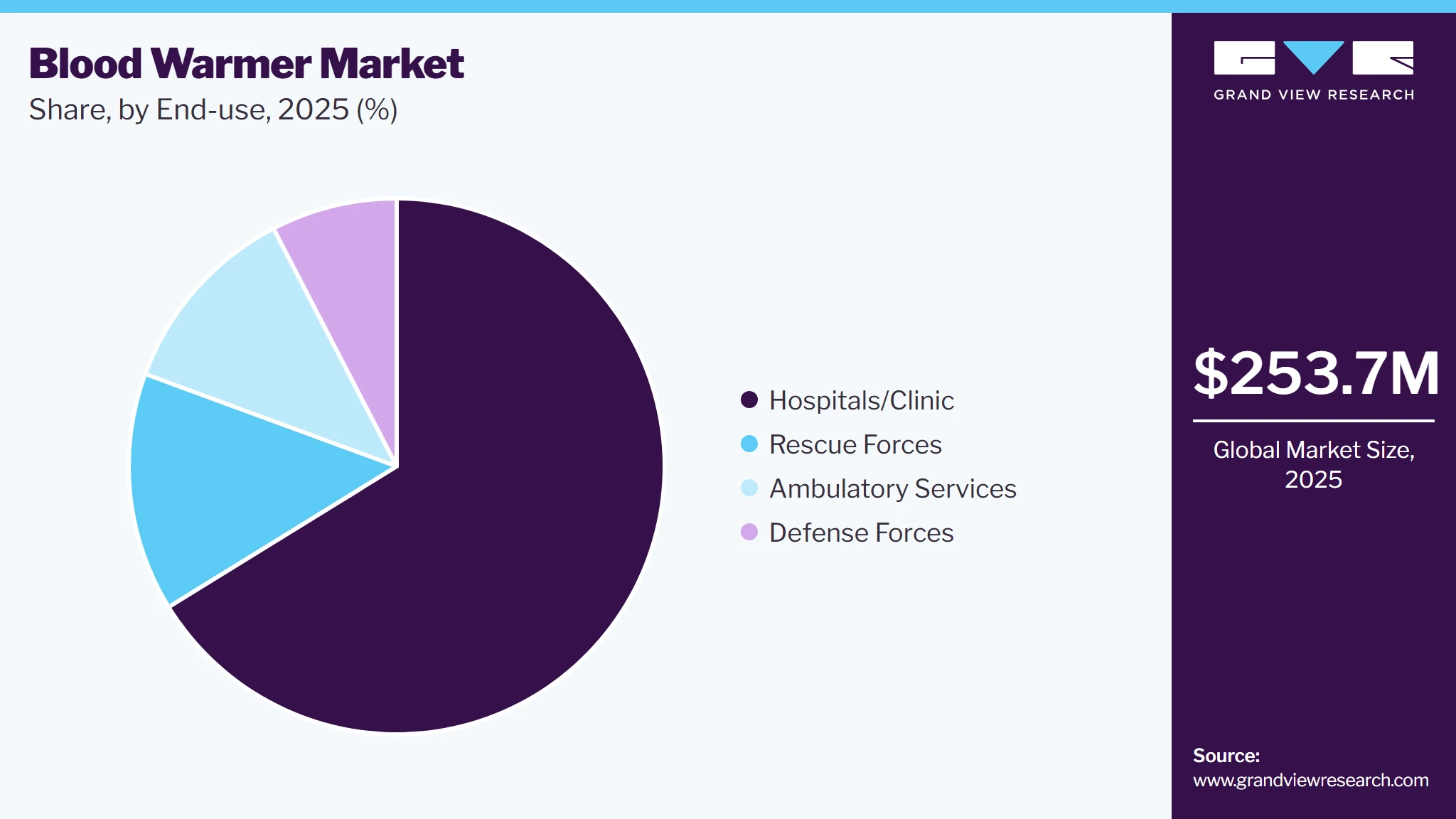
Based on end use, the hospitals/clinic segment led the market with the largest revenue share of 66.2% in 2025. Hospitals and clinics are the primary end users of blood warmers. The growth of this segment can be attributed to the increasing rate of hospitalization due to the rise in trauma cases and the growing number of well-furnished, well-equipped, & advanced hospitals. Furthermore, favorable policies and increasing funding and investment for developing hospitals and clinics are anticipated to support the segment's growth.
 To learn more about this report, Download Free Sample Report
The ambulatory services segment is expected to experience the fastest CAGR during the forecast period. This growth is primarily driven by the rising trend toward outpatient procedures and minimally invasive surgeries, which increase the demand for portable blood warmers. Due to their compact design and ease of transport, these devices are well-suited for use in ambulatory surgical centers and clinics. In addition, the expansion of emergency medical services (EMS) and the increasing incidence of accidents and trauma cases further contribute to the growing need for portable blood-warming solutions in ambulatory settings.
Regional Insights
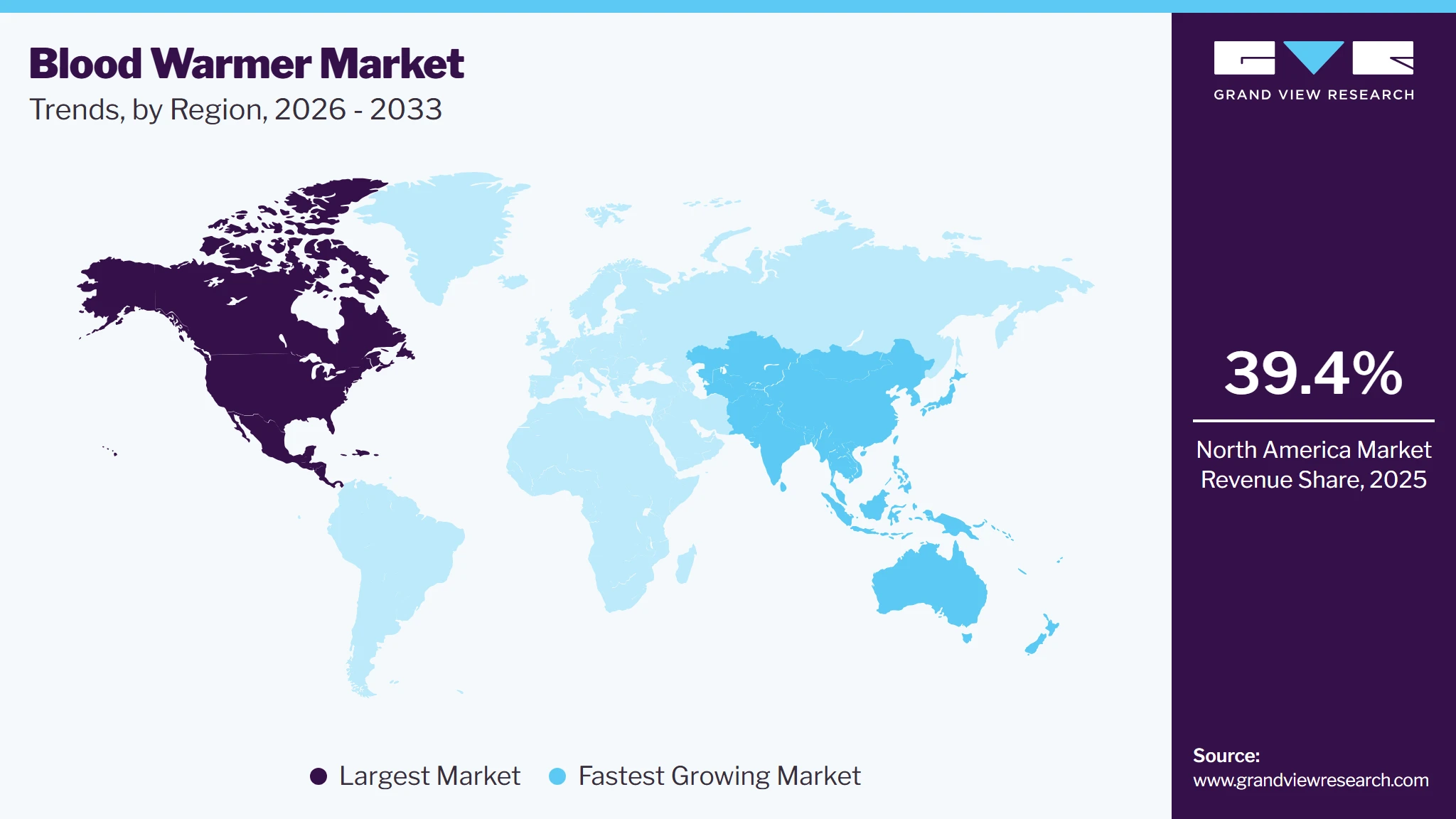
North America dominated the blood/IV warmer market with the largest revenue share of 39.4% in 2025. The key drivers of growth in the region are increasing hypothermia rate, rising number of trauma cases, surgical procedures, and medical conditions that necessitate large-scale blood transfusions. In November 2024, KUNM (a public radio station affiliated with the University of New Mexico) reported that nearly 100 people in New Mexico had visited the emergency room for weather-related conditions since the start of October 2024. These cases include frostbite, hypothermia, and other cold-related issues. Such rising incidences of cold-weather injuries are anticipated to boost the market growth over the forecast period.
 To learn more about this report, Download Free Sample Report
U.S. Blood Warmer Market Trends
The blood/IV warmer market in the U.S. held the largest share in the North America region in 2025 due to the presence of key players and the increasing launches of products. Some players operating in the U.S. market include GENTHERM, 3M, ICU Medical, Inc., Estill Medical Technologies, Inc., Quality In Flow Ltd (QinFlow), and North American Rescue, LLC.
Europe Blood Warmer Market Trends
The blood warmer market in Europe is projected to grow significantly in the coming years, driven by an increase in surgical procedures, a rising prevalence of trauma cases, and advancements in medical technology. In addition, the aging population is expected to further drive market expansion. According to Eurostat data published in February 2024, as of January 2023, the estimated EU population was 448.8 million, with over one-fifth (21.3%) aged 65 and older.
The blood warmer market in the UK is projected to grow moderately during the forecast period. This growth is driven by an aging population and a rising incidence of hypothermia, which has increased the demand for effective blood-warming systems. For instance, the data published by the Royal College of Emergency Medicine and Creative Commons in December 2022 estimate that the incidence of hypothermia in Great Britain ranges from 6 to 8 cases per 1,000 patients.
France's blood warmer market is projected to grow during the forecast period, driven by the increasing number of surgical procedures and the rising prevalence of conditions requiring blood transfusions. The Arago Clinic report, published in April 2024, indicates that in France, over 4,700 organ transplants are performed annually, benefiting nearly 40,000 individuals who rely on organ transplants.
Asia Pacific Blood Warmer Market Trends
The Asia Pacific blood warmer market is anticipated to witness the fastest CAGR of 9.98% during the forecast period, fueled by a rise in surgical procedures, an increasing prevalence of trauma cases, and growing awareness of patient safety. Countries like China and India are experiencing a significant increase in surgical interventions, an expanding healthcare infrastructure, and rising healthcare expenditures. As a result, hospitals and surgical centers are increasingly adopting advanced blood-warming technologies to improve patient care and safety.
China's blood warmer market is expected to grow throughout the forecast period, driven by increasing awareness of patient safety, rising government initiatives to prevent cold-weather injuries, and advancements in medical technology.
The blood warmer market in Japan is expected to grow substantially during the forecast period, driven by several key factors. These include rising surgical procedures nationwide and increasing the demand for blood warmer solutions. In addition, Japan's rapidly aging population is a significant driver, as elderly individuals are at higher risk of cold-weather injuries.
Middle East and Africa Blood Warmer Market Trends
The blood warmer market in the Middle East and Africa is projected to grow significantly in the coming years, driven by rising surgical procedures. Countries like the UAE, Saudi Arabia, and South Africa are making substantial investments in their healthcare systems, improving hospital capabilities and expanding surgical services.
The blood warmer market in Saudi Arabia is anticipated to grow over the forecast period. Government initiatives are expected to foster market growth. For instance, as part of Vision 2030, the Saudi Arabian government has outlined plans to allocate over USD 65 billion to improve the country's healthcare infrastructure.
The blood warmer market in Kuwait is expected to grow over the forecast period due to the growing demand for improved patient care, advancements in medical technology, and an increase in surgical procedures. Rising healthcare expenditures also propel country market growth.
The number of penetrating trauma cases in the U.S. from 2018 to 2021 is illustrated in the graph below:
 To learn more about this report, Download Free Sample Report
Medical procedures, particularly trauma treatments, often require blood transfusions. Blood warmer devices are crucial for patients who need rapid blood transfusions to maintain homeostasis. Blood warmers enable the rapid replacement of blood without causing harm. As a result, the growing number of trauma cases and associated blood transfusions is expected to drive the demand for blood warmer devices in the coming years.
Key Blood Warmer Company Insights
GENTHERM, Belmont Medical Technologies, 3M, ICU Medical, Inc., TSC Life, MEQU, Estill Medical Technologies, Inc., Quality In Flow Ltd (QinFlow), Biegler GmbH, Labtron Equipment Ltd., and North American Rescue, LLC are among the major players in the global blood warmer industry. Organizations are expanding their product portfolios to gain a competitive advantage in the coming years. Moreover, industry players are also undergoing distribution partnerships to meet the growing demand for blood warmers.
Key Blood Warmer Companies:
The following key companies have been profiled for this study on the blood warmer market.
- GENTHERM
- Belmont Medical Technologies
- 3M
- ICU Medical, Inc.
- TSC Life
- MEQU
- Estill Medical Technologies, Inc
- Quality In Flow Ltd (QinFlow)
- Biegler GmbH
- Labtron Equipment Ltd.
- North American Rescue, LLC
Competitive Benchmarking
Category
Operating Strategies
Competitive Edge
Weakness
Established Players (GENTHERM, Belmont Medical Technologies, 3M, ICU Medical, Inc., Biegler GmbH)
- Focus on developing technologically advanced blood and IV warming systems for operating rooms, intensive care units (ICUs), emergency departments, trauma centers, and military healthcare.
- Expand product portfolios through continuous R&D, regulatory approvals, and partnerships with hospitals, distributors, and healthcare providers while strengthening global distribution networks.
- Strong brand recognition, extensive global distribution, established regulatory expertise, broad product portfolios, and advanced temperature control technologies.
- Significant investments in research and development, manufacturing capabilities, and long-term customer relationships enable reliable product performance and widespread market penetration.
- High product development and regulatory compliance costs, lengthy approval timelines, and dependence on hospital capital expenditure cycles.
- Intense competition, pricing pressure, and the need for continuous technological innovation can impact profitability and product differentiation.
Emerging Players (TSC Life, MEQU, Estill Medical Technologies, Inc., Labtron Equipment Ltd)
- Focus on developing portable, lightweight, battery-operated, and cost-effective blood and IV warming systems for emergency medical services (EMS), ambulances, military medicine, disaster response, and outpatient settings.
- Expand market presence through strategic partnerships with regional distributors, healthcare providers, defense organizations, and emergency care networks.
- Strong specialization in portable warming technologies, flexible product development, faster innovation cycles, and the ability to address niche applications such as prehospital transfusion and field medicine.
- Competitive pricing and agility enable rapid entry into emerging markets and specialized healthcare segments.
- Limited global distribution networks, lower brand recognition, and comparatively smaller financial resources than established manufacturers.
- Dependence on third-party distributors, limited manufacturing scale, and challenges in obtaining regulatory approvals across multiple countries may restrict market expansion.
Recent Developments
-
In April 2024, TSC Life launched its direct sales operations in the UK, a significant milestone for the company. Establishing a direct sales presence suggests a strategic focus on increasing customer engagement and offering more personalized support.
-
In June 2024, MEQU received 510(k) clearance from the U.S. FDA for its °M Warmer System, a portable blood and IV fluid warming device designed for military and civilian applications. This regulatory milestone enables MEQU to expand into the U.S. market, providing a critical solution for effective fluid warming in emergency and pre-hospital care settings.
Blood Warmer Market Report Scope
Report Attribute
Details
Market size in 2025
USD 253.7 million
Estimated market size in 2026
USD 273.3 million
Projected market size by 2033
USD 516.4 million
Growth rate
CAGR of 9.5% from 2026 to 2033
Base year for estimation
2025
Historical data
2021 - 2024
Forecast period
2026 - 2033
Quantitative units
Revenue in USD million and CAGR from 2026 to 2033
Report coverage
Revenue forecast, company ranking, competitive landscape, growth factors, and trends
Segments covered
Type, product, application, flow rate, end use, region
Regional scope
North America; Europe; Asia Pacific; Latin America; MEA
Country scope
U.S.; Canada; Mexico; Germany; UK; France; Italy; Spain; Denmark, Sweden, Norway, China; Japan; India; Australia; Thailand; South Korea, Brazil; Argentina; South Africa; Saudi Arabia; UAE; Kuwait
Key companies profiled
GENTHERM, Belmont Medical Technologies, 3M, ICU Medical, Inc., TSC Life, MEQU, Estill Medical Technologies, Inc., Quality In Flow Ltd. (QinFlow), Biegler GmbH, North American Rescue, LLC, and Labtron Equipment Ltd.
Customization scope
Free report customization (equivalent to 8 analysts' working days) with purchase. Addition or alteration to country, regional & segment scope.
Pricing and purchase options
Avail customized purchase options to meet your exact research needs. Explore purchase options
Global Blood Warmer Market Report Segmentation
This report forecasts revenue growth at global, regional, and country levels and provides an analysis on the latest industry trends in each of the sub-segments from 2021 to 2033. For this study, Grand View Research has segmented the global blood warmer market report based on product, application, end use, type, flow rate, and region:
-
Product Outlook (Revenue, USD Million, 2021 - 2033)
-
Portable Blood/IV warmers
-
Non-portable Blood/IV warmers
-
-
Application Outlook (Revenue, USD Million, 2021 - 2033)
-
Surgery
-
Pediatrics
-
Acute Care
-
Homecare
-
-
End Use Outlook (Revenue, USD Million, 2021 - 2033)
-
Hospitals/Clinic
-
Ambulatory Services
-
Defense Forces
-
Rescue Forces
-
-
Flow Rate Outlook (Revenue, USD Million, 2021 - 2033)
-
Rapid/Fast Flow Warmers
-
Routine/Standard Flow Warmers
-
-
Type Outlook (Revenue, USD Million, 2021 - 2033)
-
Hardware
-
Consumables
-
-
Regional Outlook (Revenue, USD Million, 2021 - 2033)
-
North America
-
U.S.
-
Canada
-
Mexico
-
-
Europe
-
Germany
-
UK
-
France
-
Italy
-
Spain
-
Denmark
-
Sweden
-
Norway
-
-
Asia Pacific
-
Japan
-
China
-
India
-
South Korea
-
Australia
-
Thailand
-
-
Latin America
-
Brazil
-
Argentina
-
-
Middle East & Africa
-
South Africa
-
Saudi Arabia
-
UAE
-
Kuwait
-
-
Research Methodology
The blood warmer market figures in this report are based on a proven research process that combines executive interviews with secondary research from proprietary databases, company filings, and recognized regulatory and institutional sources. Market size is built through value-chain sizing - reconciling supply-side and demand-side estimates - and triangulated with bottom-up and top-down approaches. Every estimate passes multiple levels of expert validation before publication, with each blood warmer segment quantified using the revenue-capture definitions in the table below.
Segment Definition
Segment
Definition
Hardware
Hardware includes all reusable blood warming equipment designed to warm blood, blood components, intravenous (IV) fluids, and irrigation fluids to clinically appropriate temperatures before or during administration. This segment comprises portable and stationary blood warmers, blood and fluid warming consoles, rapid infusion systems with integrated warming capabilities, battery-operated warming devices, control units, heating modules, temperature monitoring systems, and associated reusable accessories. Hardware products are primarily used in operating rooms, emergency departments, intensive care units, trauma centers, ambulances, military field hospitals, and other acute care settings to help prevent perioperative hypothermia and transfusion-related complications.
Consumables
Consumables include all single-use or limited-use components required for the safe operation of blood warming systems. This segment comprises disposable warming sets, blood administration sets, IV fluid warming sets, tubing sets, cassette cartridges, disposable heat-exchange cartridges, sterile fluid pathways, extension lines, connectors, and other patient-contact accessories compatible with blood-warming devices. Consumables are replaced after each procedure or patient use to maintain sterility, prevent cross-contamination, and ensure consistent device performance, generating recurring revenue for manufacturers.
Estimation Model
Bottom-Up Epidemiological Modeling
Top-Down Revenue Triangulation
Demand-Side Care-Setting Modeling
Supply-Side Capacity & Utilization Modeling
Data Triangulation & Market Reconciliation
Estimate the target patient population requiring blood warming across procedures (e.g., surgeries, trauma care, transfusions) using epidemiological data on surgical volumes, transfusion rates, and hypothermia incidence, and apply adoption rates for blood warmers to derive market size.
Analyze total revenue reported by key blood warmer manufacturers and medical device companies, and allocate revenues to the blood warmer segment based on product portfolios, disclosures, and market share estimates.
Assess procedure volumes (e.g., cardiac surgery, general surgery, trauma, obstetrics) across hospitals, ambulatory surgical centers, and trauma centers combined with blood warmer penetration rates, average units per facility, and replacement cycles.
Evaluate manufacturing capacity, production utilization rates, raw material availability, and supply chain data to estimate achievable supply of blood warmers and identify region-wise capacity constraints or surpluses.
Synthesize outputs from multiple models using primary research, hospital procurement data, claims and reimbursement data, regulatory filings, and expert insights to ensure robust, validated blood warmer market size estimates.
Delivered Customizations
This report has been delivered with the following In-depth customizations
Client Request
Customization Delivered
Value Adds
ASP and volume analysis (historical and forecast)
Comprehensive ASP (Average Selling Price) and volume analysis for blood warmers across 2021–2033, segmented by product type, application, end user, and geography. Includes historical pricing trends, procurement models, utilization rates, replacement cycles, and forward-looking forecasts based on procedure growth and technology adoption.
Enables long-term revenue forecasting, pricing optimization, assessment of procurement strategy, identification of premium product opportunities, and evaluation of regional adoption trends to support commercialization and investment decisions.
Disease epidemiology and patient population analysis
Detailed epidemiological assessment covering patient populations requiring blood and fluid warming, including trauma cases, major surgical procedures, massive transfusion patients, obstetric hemorrhage, burn injuries, neonatal critical care, and hypothermia management. Includes patient segmentation by clinical indication, age group, transfusion requirements, treatment eligibility, and regional disease burden across key markets.
Supports accurate demand forecasting, estimation of addressable patient populations, clinical opportunity assessment, reimbursement planning, and long-term market sizing for blood warming technologies.
Competitive benchmarking and market share analysis
Detailed competitive assessment of leading blood warmer manufacturers, including product portfolio benchmarking, ASP comparison, installed base estimation, regional market shares, technological differentiation, regulatory approvals, distribution strategies, and innovation pipeline analysis.
Enables competitive positioning, market gap identification, pricing strategy optimization, partnership evaluation, and strategic planning for product launches and geographic expansion.
Frequently Asked Questions About This Report
Asia Pacific is the fastest-growing region over the forecast period.
The hardware segment held the largest share of 73.3% in 2025.
The rapid/fast flow warmers held the largest share of 71.2% in 2025.
The surgery held the largest share of 36.9% in 2025.
Key players include GENTHERM, Belmont Medical Technologies, 3M, ICU Medical, Inc., TSC Life, MEQU, Estill Medical Technologies, Inc., Quality In Flow Ltd. (QinFlow), Biegler GmbH, North American Rescue, LLC, and Labtron Equipment Ltd.
Key factors include the growing number of surgical cases and the rising cases of cold weather injuries such as hypothermia.
The non-portable blood/IV warmers held the largest share of 55.4% in 2025, while portable blood/IV warmers is the fastest-growing segment over the forecast period.
The global blood warmer market size was valued at USD 253.7 million in 2025 and is estimated at USD 273.3 million for 2026.
The global blood warmer market is expected to grow at a CAGR of 9.5% from 2026 to 2033, reaching USD 516.4 million.
Based on region, North America dominated with a 39.4% revenue share in 2025.
About the Author(s)
Medical Devices Research Team
Healthcare · Medical DevicesThis report was authored by the medical devices research team at Grand View Research - comprising two research analysts, one senior research analyst, and one industry expert - with specialized expertise in the medical devices segment of the healthcare industry. All findings are based on proprietary healthcare databases, executive interviews, and regulatory analysis, subject to internal peer review prior to publication.
Last Updated:
Speak to Analyst

Customize this report to your needs - add regions, segments, or data points, with 20% free customization.
Or view our licence options:


ISO 9001:2015 & 27001:2022 Certified
We are GDPR and CCPA compliant! Your transaction & personal information is safe and secure. For more details, please read our privacy policy.


