
- Home
- »
- Medical Devices
- »
-
Breast Density Assessment Software Market Report, 2033GVR Report cover

Breast Density Assessment Software Market (2026 - 2033)
Size, Share & Trends Analysis Report By Assessment Type, By Software Integration, By Imaging Modality, By Technology (AI-Based Algorithms), By Deployment, By Application, By End-use, By Region, And Segment Forecasts
Market Size, 2025
$164.6MMarket Estimate, 2026
$191.8MMarket Forecast, 2033
$430.8MCAGR, 2026–2033
12.3%Breast Density Assessment Software Market Summary
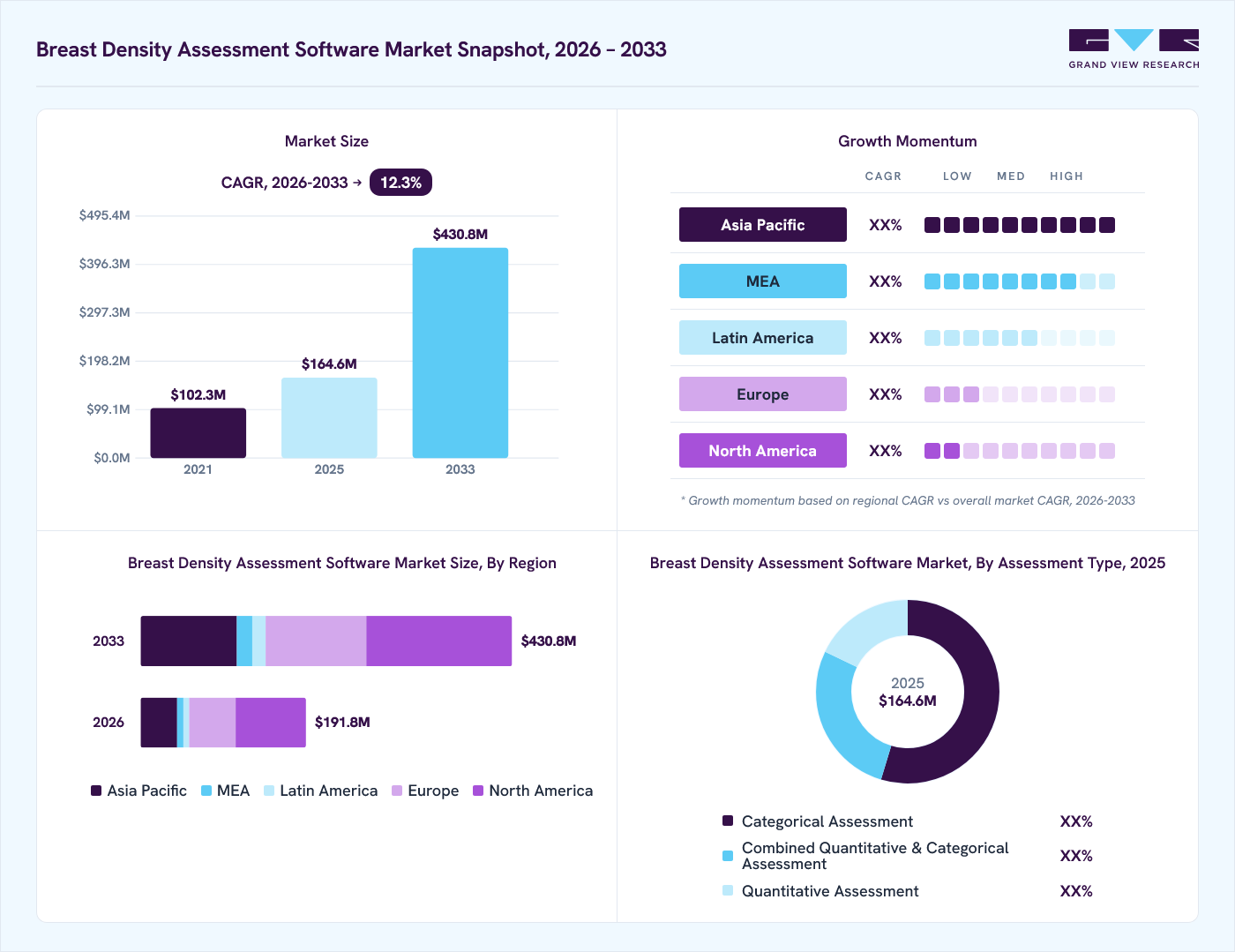
The global breast density assessment software market size was valued at USD 164.6 million in 2025 and is projected to grow from USD 191.8 million in 2026 to USD 430.8 million by 2033, at a CAGR of 12.3% from 2026 to 2033. North America dominated the market, with a revenue share of 43.0% in 2025. The global market growth is driven by increasing mammography screening volumes, growing adoption of AI-enabled breast imaging, regulatory requirements for breast density notification, and rising demand for standardized and automated breast density classification.
 Source: Grand View Research, IR Documents, Primary Interviews, Paid DatabasesTo learn more about this report,
 Download Free Sample Report
Key Market Trends & Insights
- By assessment type: Categorical assessment segment held the largest revenue share of 54.6% in 2025.
- By software integration: OEM mammography system integrated software segment held the largest revenue share of 35.0% in 2025.
- By imaging modality: Full-field digital mammography segment held the largest revenue share of 61.0% in 2025.
- By technology: AI-based algorithms segment held the largest revenue share of 58.5% in 2025.
- By deployment: On-premise segment held the largest revenue share of 42.1% in 2025.
Regional Highlights
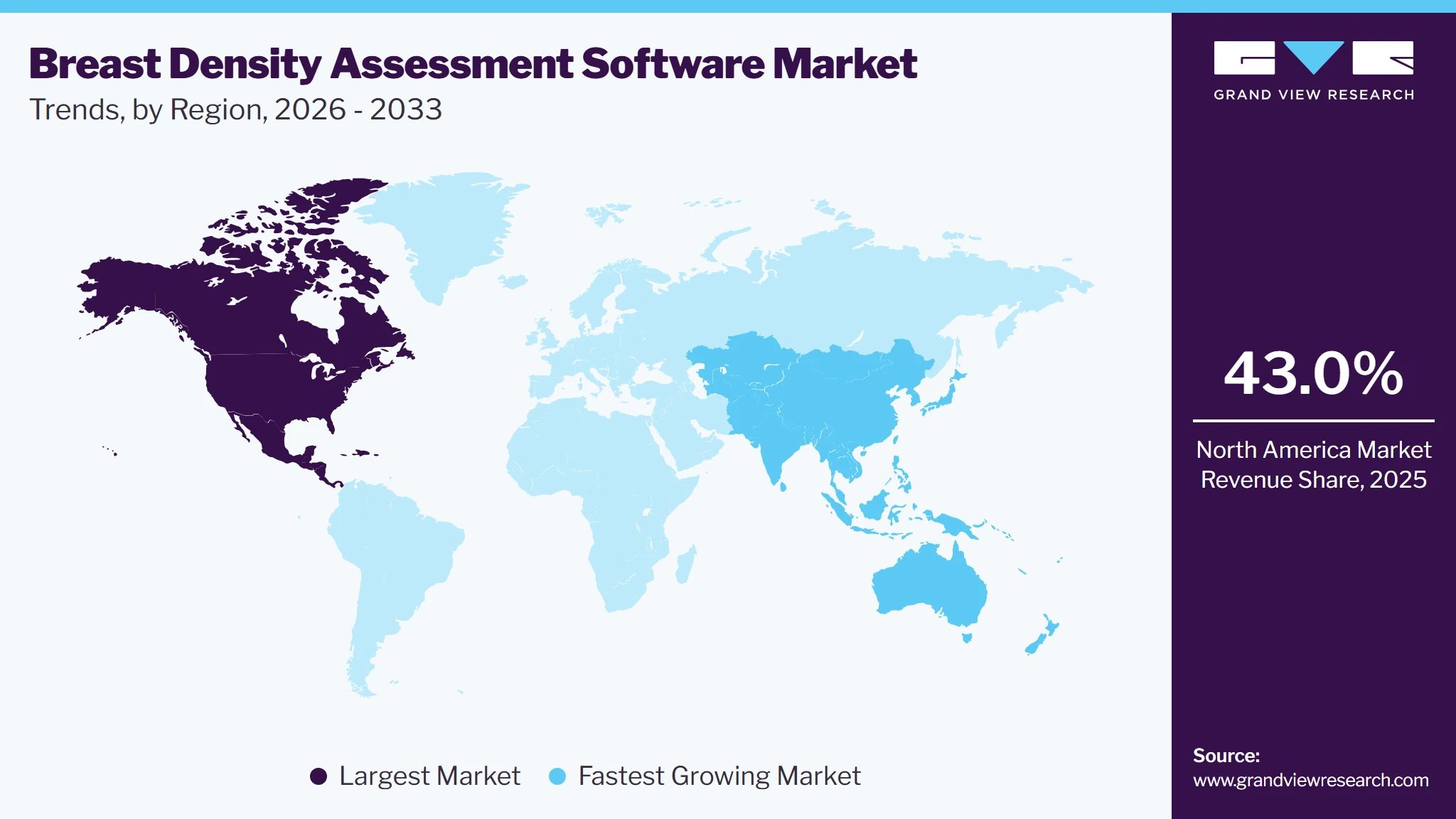
- Largest regional market: North America (43.0% revenue share, 2025)
- Fastest-growing regional market: Asia Pacific (highest CAGR, 2026-2033)
- By Country: The U.S. held the largest market share in 2025.
Market Size & Forecast
- 2025 Market Size: USD 164.6 Million
- 2026 Market Size: USD 191.8 Million
- 2033 Projected Market Size: USD 430.8 Million
- CAGR (2026-2033): 12.3%
Prism AI by Grand View Research Free to tryAsk a question about the breast density assessment software marketTry asking✓Every figure cited from GVR research Prefer the report? Download free sample →
In addition, market growth is being supported by the increasing adoption of integrated breast imaging workflows that connect mammography, digital breast tomosynthesis, image analysis, reporting, and clinical decision support systems. Integration allows breast density results to be generated within existing imaging environments, reducing manual assessment steps and supporting more consistent reporting across radiologists and healthcare facilities. As breast imaging becomes digital, demand is growing for interoperable software that can operate across different imaging systems and connect density assessment with broader screening and risk assessment workflows. For instance, in October 2025, Ambry Genetics announced an enhancement to its Ambry CARE Program that integrates breast density into the Tyrer-Cuzick breast cancer risk score within the electronic health record. The solution provides clinicians with breast density-based risk scores aligned with BI-RADS density categories, demonstrating the growing integration of breast density information into digital risk assessment and clinical workflows.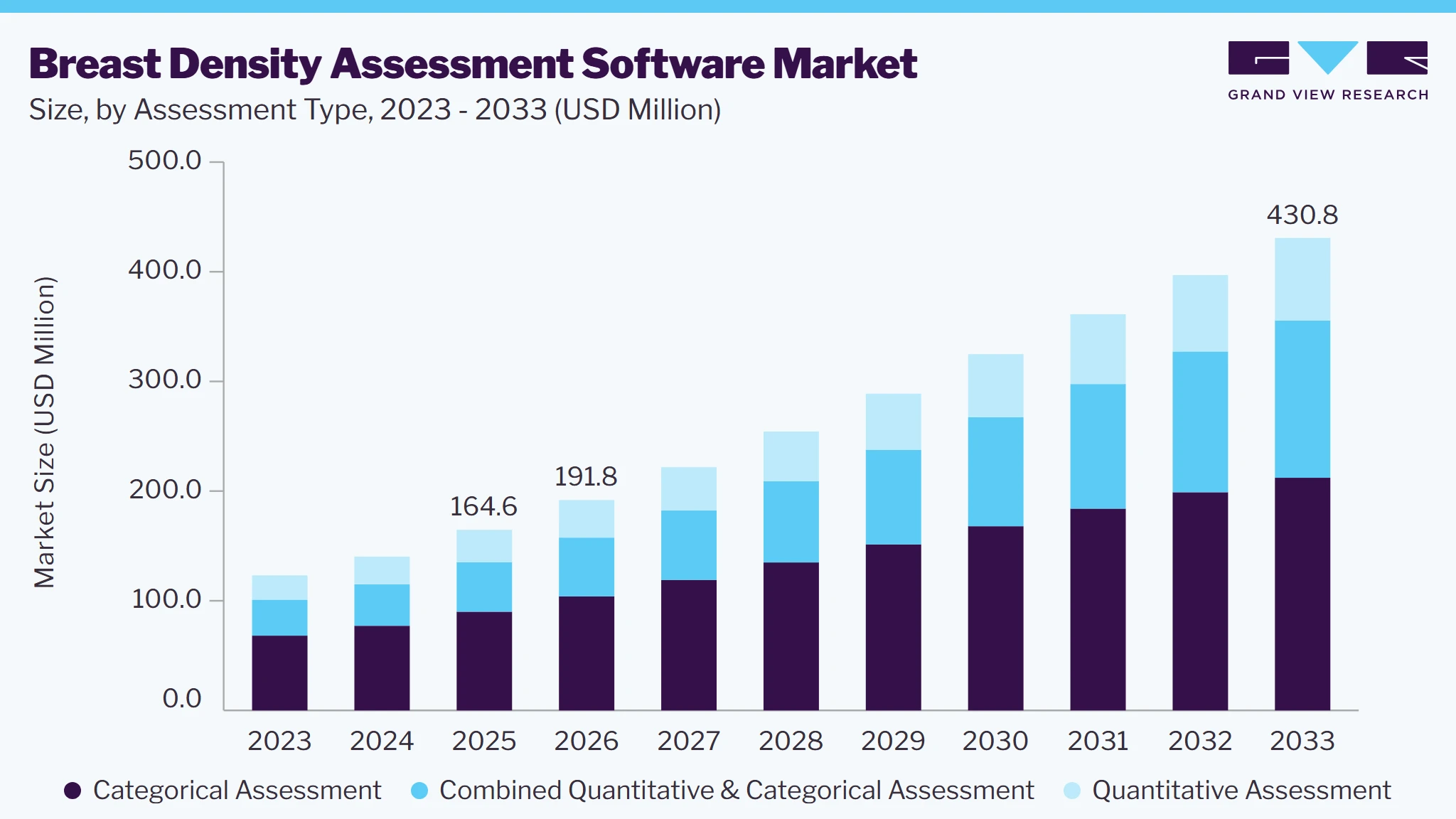 To learn more about this report, Download Free Sample Report
"Accurately assessing breast cancer risk is key to improving outcomes, but important factors like breast density often get overlooked. By bringing together Tyrer-Cuzick scoring and breast density right in the EHR, CARE shows how Ambry is making it easier for providers to get actionable insights within their workflow, ultimately helping patients get the care they need," said Tom Schoenherr, CEO of Ambry Genetics.
AI-enabled breast density assessment in clinical workflows
The adoption of AI-enabled breast imaging technologies is expanding as healthcare providers seek automated approaches to support breast density classification, screening interpretation, and clinical decision-making. These technologies can process mammographic images at scale and integrate density-related information into broader breast screening workflows, supporting more standardized assessment across healthcare facilities.
For instance, in December 2025, DeepHealth published the study titled “Increasing Cancer Detection in Dense Breasts: A Real-World Deployment of a Multistage AI-Driven Workflow in Breast Screening with Stratified Analyses on Over 570,000 Cases,” which evaluated the performance of a multistage AI-driven breast screening workflow in routine clinical practice. The analysis was conducted across 109 screening sites in four U.S. states and included more than 570,000 screening examinations, with results assessed according to breast density. The study compared examinations interpreted using the AI-supported workflow with those managed under standard-of-care screening and assessed cancer detection and positive predictive performance across density categories.
Parameter
Standard-of-care
AI-driven workflow
Change
Total screening examinations
307,692
208,891
-
Cancer detection rate in dense breasts
5.04 per 1,000
6.18 per 1,000
+1.14 per 1,000
PPV1 in dense breasts
3.68%
4.25%
+0.57 percentage points
Source: DeepHealth
The findings indicate that the AI-driven workflow improved breast cancer detection and PPV1 among women with dense breasts, with cancer detection increasing from 5.04 to 6.18 per 1,000 examinations and positive predictive value (PPV1) from 3.68% to 4.25%. These results support the use of AI-based breast imaging workflows for more effective screening in dense breasts.
Market Dynamics
The breast density assessment software market is gaining traction as healthcare providers adopt automated technologies to standardize breast density classification and support compliance with updated mammography reporting requirements. These solutions analyze mammographic images to classify breast density, reduce assessment variability, and support consistent communication between radiologists and patients. Market development is being supported by the broader use of digital mammography and digital breast tomosynthesis, along with advances in artificial intelligence and image-analysis algorithms. Integration with PACS, RIS, and breast-imaging workflows is also improving the practical deployment of these solutions across imaging facilities. In addition, growing awareness of dense breast tissue as a breast cancer risk factor, expanding screening programs, and demand for longitudinal density assessment are creating further opportunities for software adoption during the forecast period.
The FDA's recent regulatory activity indicates continued commercialization of breast density assessment software. For instance, in December 2024, the U.S. FDA cleared DeepHealth’s Saige-Density (2.5.0) through the 510(k) pathway for automated radiological image processing. The clearance supports the software’s use in breast-density assessment and further expands FDA-cleared AI solutions for mammography workflows. These regulatory clearances expand the pool of commercially deployable solutions and provide healthcare providers with more options for automating breast-density classification. The trend also supports further vendor investment in AI-based image analysis, workflow integration, and regulatory submissions.
The limited evidence on the clinical outcomes of supplemental screening in women with dense breasts remains a restraint for breast density assessment software adoption. The U.S. Preventive Services Task Force (USPSTF), in its 2024 final recommendation, concluded that evidence is insufficient to determine the balance of benefits and harms of supplemental ultrasound or MRI for women with dense breasts and an otherwise negative mammogram. The evidence review also found that supplemental MRI can increase cancer detection but may result in additional false-positive recalls and biopsies, while available studies have not established reductions in breast cancer mortality or morbidity. Therefore, identifying breast density using software does not consistently yield a defined supplemental screening pathway, which can slow adoption when healthcare providers seek clear evidence of downstream clinical benefit.
Integrating breast density assessment with individualized breast cancer risk assessment represents an opportunity for software providers to offer more comprehensive decision-support capabilities. By combining breast density information with patient age, family history, previous screening results, genetic factors, and other established risk factors, software platforms can support more personalized screening assessments. This integration can also improve workflow efficiency by bringing multiple risk-related inputs into a single breast-imaging platform. As healthcare systems increasingly move toward risk-based screening strategies, breast density assessment software can expand beyond density classification toward broader breast cancer risk evaluation and clinical decision support.
Market Concentration & Characteristics
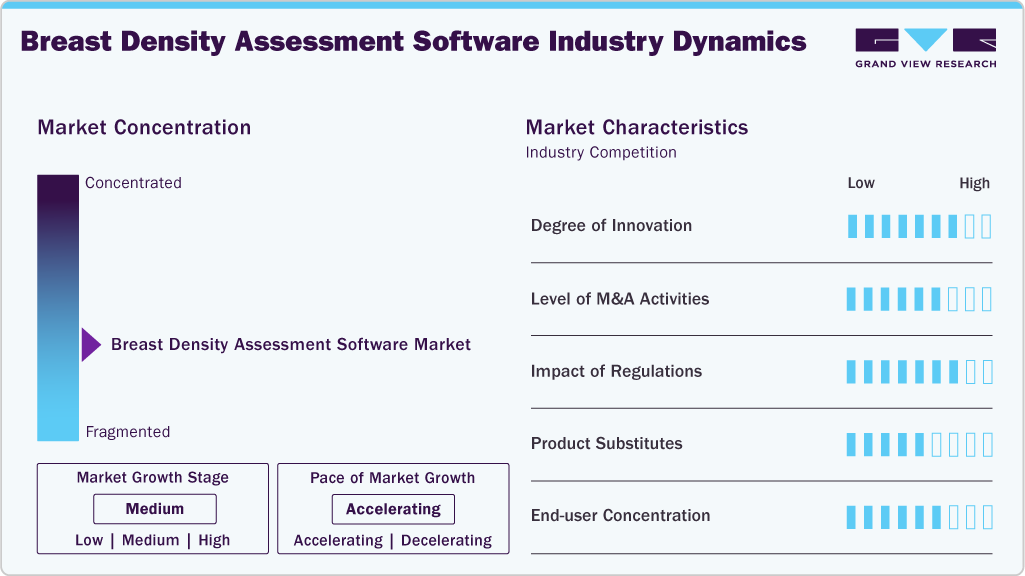
The breast density assessment software market is characterized by a high degree of innovation, driven by advances in artificial intelligence, machine learning, automated image analysis, and integration with mammography workflows. Software providers are developing solutions that automatically classify breast density from 2D mammography and digital breast tomosynthesis images, reduce variability in visual assessment, and support standardized reporting. For instance, Hologic’s Quantra 2.2 uses machine learning to analyze breast tissue distribution and texture and provides automated density categorization across 2D and tomosynthesis images.
The breast density assessment software industry has witnessed moderate M&A activity, particularly as imaging and AI companies expand their breast imaging portfolios. Acquisitions are being used to combine breast density assessment, cancer detection, risk assessment, and screening workflow technologies within broader AI platforms. For instance, in May 2024, Lunit completed its acquisition of Volpara Health, adding Volpara’s breast density assessment and screening workflow capabilities to its AI-based cancer solutions. This type of consolidation can support broader product portfolios and integrated breast-imaging solutions.
 To learn more about this report, Download Free Sample Report
“This merger represents an exciting opportunity to enhance our impact on global healthcare. We can significantly improve early cancer detection and patient outcomes by integrating Volpara’s innovative breast screening technology with Lunit’s AI capabilities. Together, we aim to set new standards in cancer diagnostics and drive forward advancements that will benefit healthcare providers and patients globally. Our shared vision to conquer cancer will undoubtedly pave the way for transformative developments in medical AI,” added Teri Thomas, CEO of Volpara.
Regulatory requirements are shaping the breast density assessment software market by increasing the need for clinically validated, standardized, secure, and interoperable solutions. Compliance with medical-device regulations raises requirements for clinical validation, software quality management, cybersecurity, documentation, post-market monitoring, and product lifecycle management. These requirements can increase development and regulatory costs and extend commercialization timelines, particularly for AI-enabled software.
The market faces competition from manual breast density assessment performed by radiologists during mammography interpretation. Radiologists can classify breast composition using the Breast Imaging Reporting and Data System (BI-RADS) framework without automated density software. However, manual assessment can be subject to reader variability, whereas automated software provides standardized analysis of mammographic images. Therefore, manual assessment remains a substitute, particularly in facilities with lower screening volumes or limited investment in specialized imaging software.
Demand for breast density assessment software is concentrated among hospitals, breast imaging centers, diagnostic imaging facilities, and radiology practices performing mammography screening. Adoption is particularly relevant in facilities managing large screening volumes, where automated analysis can help streamline density classification and reduce the time required for image interpretation. Large healthcare networks are also potential users because standardized assessment can support consistent reporting practices across multiple locations and radiologists. In addition, growing mammography screening volumes, updated breast density notification requirements, and increasing awareness of dense breast tissue are encouraging healthcare providers to evaluate automated assessment technologies. Academic and research institutions also represent a smaller customer group, using these technologies for clinical studies, algorithm development, and evaluation of breast-imaging workflows.
Analyst Perspective
The breast density assessment software market is expected to witness continuous growth, supported by mandatory breast density reporting, rising mammography screening volumes, and increasing adoption of AI-enabled imaging solutions. The market is also benefiting from advancements in automated density classification, digital breast tomosynthesis, longitudinal breast density assessment, and integration with breast cancer risk assessment workflows. In addition, the growing demand for standardized, reproducible density reporting is creating favorable conditions for software adoption. From an analyst's perspective, companies offering accurate, interoperable, and AI-enabled solutions while maintaining regulatory compliance will be better positioned. Future competitiveness will depend on clinical validation, workflow integration, cross-system performance, data security, and expansion across healthcare networks.
Assessment Type Insights
The categorical assessment segment dominated the breast density assessment software market, accounting for a revenue share of 54.6% in 2025. This dominance is supported by the widespread use of standardized breast density categories, straightforward interpretation of categorical outputs, and compatibility with established mammography reporting workflows. In addition, categorical assessment enables radiologists to communicate breast composition using standardized classifications, supporting consistent documentation across screening examinations.
The combined quantitative and categorical assessment segment is expected to grow at the fastest CAGR during the forecast period, driven by the increasing demand for breast density solutions that provide both numerical measurements and standardized categorical assessments within a single workflow. Combining these approaches can provide more comprehensive information for breast density reporting, risk assessment, and longitudinal evaluation while reducing the need to interpret outputs from separate assessment tools.
Software Integration Insights
The OEM mammography system integrated software segment dominated the breast density assessment software industry, accounting for a revenue share of 35.0% in 2025. This dominance is supported by the continuous integration of density assessment tools with mammography acquisition systems, point-of-care availability of results, reduced dependence on separate servers, and streamlined radiologist workflows. OEM-integrated solutions can process breast density information within the existing mammography environment, reducing the need for additional software infrastructure and simplifying implementation for imaging facilities.
The integrated breast-imaging AI platforms segment is expected to grow at the fastest CAGR during the forecast period, due to the increasing integration of breast density assessment with AI-based cancer detection, risk assessment, workflow management, and reporting capabilities. Integrated platforms can provide multiple imaging functions within a unified environment, reducing the need for separate software applications and supporting more efficient radiologist workflows. In addition, growing demand for interoperable, cloud-enabled breast imaging platforms is supporting adoption across multi-site healthcare networks.
Imaging Modality Insights
The full-field digital mammography segment dominated the breast density assessment software market, accounting for a revenue share of 61.0% in 2025. This dominance is supported by the established use of FFDM for routine breast density evaluation, the broad compatibility of density assessment software with digital mammography images, and the availability of automated quantitative and categorical assessment methods. In addition, FFDM provides standardized digital image data that can be processed by automated density assessment software, supporting integration into existing mammography reporting workflows.
The digital breast tomosynthesis/synthetic 2D segment is expected to grow at the fastest CAGR during the forecast period. This growth is driven by the increasing adoption of 3D breast imaging, growing use of synthetic 2D reconstruction, and rising demand for automated density assessment within advanced mammography workflows. DBT provides multiple breast image slices, enabling improved visualization of breast tissue compared with conventional 2D mammography.
Technology Insights
The AI-based algorithms segment dominated the breast density assessment software industry, accounting for a revenue share of 58.5% in 2025. This dominance is supported by the increasing commercialization and regulatory clearance of AI-enabled breast density assessment solutions. For instance, Hologic’s Quantra 2.2 uses machine-learning algorithms trained on thousands of mammographic studies to automatically categorize breast composition based on tissue pattern and texture. In its clinical evaluation of 230 screening examinations, Quantra achieved 93% agreement with radiologist-assigned fatty-versus-dense categories for tomosynthesis images.
The conventional image processing/physics-based algorithms segment is expected to grow at a significant CAGR during the forecast period, due to the established use of physics-based models for quantitative volumetric breast density measurement, compatibility with raw mammographic image data, and the ability to generate objective density measurements from breast thickness and X-ray attenuation characteristics. In April 2026, a study from the Royal Surrey NHS Foundation Trust and University of Surrey noted that commercial volumetric density tools use physics-based models incorporating breast thickness, exposure levels, and detector characteristics to estimate fibroglandular volume and volumetric breast density.
Deployment Insights
The on-premise segment dominated the breast density assessment software market, accounting for a revenue share of 42.1% in 2025. This dominance is supported by the widespread preference of hospitals and imaging centers for locally deployed software that provides greater control over patient data, integration with existing PACS and RIS infrastructure, and compliance with institutional data-security requirements. In addition, established healthcare facilities with dedicated IT infrastructure can deploy on-premise solutions within existing imaging environments without depending on external cloud connectivity.
The cloud-based segment is expected to grow at the fastest CAGR during the forecast period, driven by the increasing demand for scalable imaging infrastructure, remote software access, and centralized deployment across multi-site healthcare networks. Growth is further supported by the expansion of cloud-based PACS and enterprise imaging, which allows breast density assessment tools to process and access imaging data across geographically distributed facilities. In addition, cloud deployment can simplify software updates and support integration with AI-enabled breast imaging platforms.
Application Insights
The screening mammography segment dominated the breast density assessment software market, accounting for a revenue share of 67.7% in 2025. This dominance is supported by the large volume of routine mammography examinations and the broad availability of digital mammography infrastructure. Screening mammography represents the primary setting in which breast density is assessed, creating a consistent need for automated software within routine imaging workflows. Furthermore, the increasing use of digital mammography enables breast images to be processed electronically, facilitating automated density classification and quantitative analysis.
The longitudinal monitoring and research segment is expected to grow at the fastest CAGR during the forecast period, driven by increasing interest in tracking changes in breast density across successive screening examinations, expanding breast cancer risk assessment, and the growing use of longitudinal imaging datasets for clinical studies. In addition, advances in AI-based image analysis are enabling automated comparison of breast density measurements across multiple examinations, supporting research into changes in breast density and individualized screening strategies.
End-use Insights
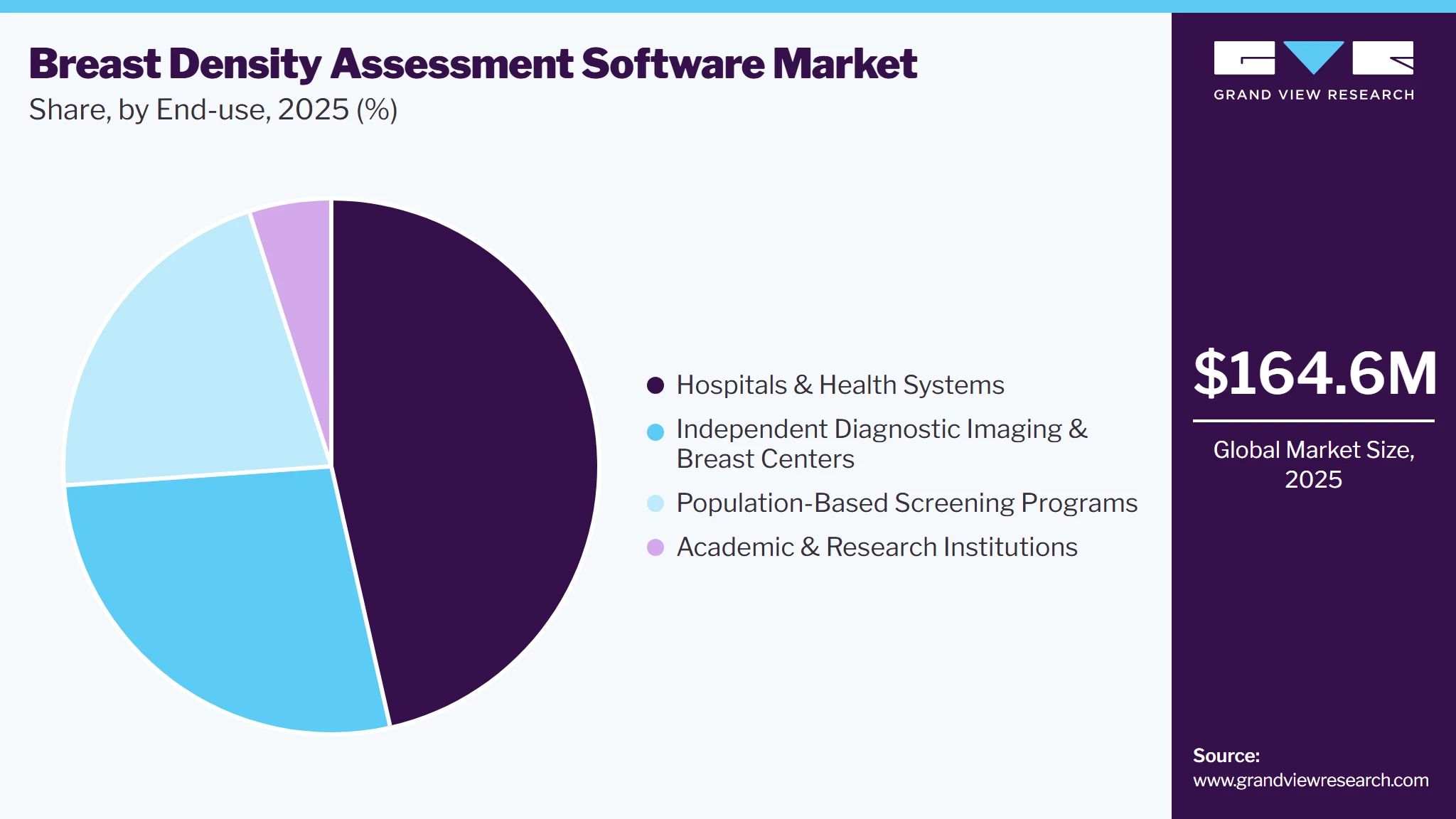
The hospitals and health systems segment dominated the breast density assessment software industry, accounting for a revenue share of 46.5% in 2025. This dominance is driven by the high volume of mammography examinations performed across hospital networks, increasing adoption of AI-enabled breast imaging solutions, and the need for standardized breast density reporting. In the U.S., FDA requirements effective September 2024 mandate mammography facilities to report breast density using four standardized categories and provide density information to patients. These requirements are encouraging hospitals and health systems to adopt automated software that supports consistent density assessment and reporting across multiple imaging facilities.
 To learn more about this report, Download Free Sample Report
The population-based screening programs segment is expected to grow at the fastest CAGR during the forecast period. Growth is driven by the expansion of organized breast cancer screening programs, rising mammography volumes, increasing adoption of digital imaging, and the need for standardized breast density assessment across large screening populations. In addition, mandatory breast density notification requirements and growing adoption of AI-enabled screening workflows are encouraging population-based programs to integrate automated density assessment into large-scale mammography services.
Regional Insights
The North America breast density assessment software market held the largest global revenue share of 43.0% in 2025, supported by extensive mammography infrastructure, high utilization of digital breast imaging, and regulatory requirements for breast density communication. In the U.S., the FDA reported 9,128 certified mammography facilities and 13,575 accredited digital breast tomosynthesis (DBT) units as of September 2026, while annual mammography procedures reported by certified facilities reached 45.0 million. The widespread availability of digital mammography and DBT provides a substantial installed imaging base for automated breast density assessment technologies.
 To learn more about this report, Download Free Sample Report
U.S. Breast Density Assessment Software Market Trends
The U.S. breast density assessment software market is being supported by regulatory changes that have increased the importance of standardized breast density reporting. Since September 2024, facilities subject to the Mammography Quality Standards Act (MQSA) have been required to provide breast density information in mammography reports and patient notifications. The FDA specifies four breast-density categories, including heterogeneous and extremely dense breasts. This regulatory requirement creates an ongoing need for consistent density assessment across mammography facilities and supports demand for automated software solutions.
Europe Breast Density Assessment Software Market Trends
The Europe breast density assessment software market is supported by established population-based breast cancer screening programs and increasing digitalization of breast imaging. Screening policies vary across European countries, creating demand for technologies that can support standardized image assessment within different healthcare systems. The increasing use of digital mammography and tomosynthesis, together with efforts to improve screening quality and personalized breast cancer assessment, is creating opportunities for automated density analysis. Adoption is particularly relevant in countries with large, well-organized screening networks and established breast imaging infrastructure.
The UK breast density assessment software market is supported by the scale and organization of the NHS Breast Screening Programme. In February 2026, NHS England published its 2024/25 breast screening statistics, reporting that 1.94 million women were screened through the NHS programme, compared to 1.75 million in 2023/24, while uptake among women aged 50 to under 71 reached 70.6%. The programme routinely invites women from age 50 to before their 71st birthday every three years. The high volume of standardized mammography examinations provides a substantial clinical environment for technologies designed to automate and standardize breast image assessment.
Asia Pacific Breast Density Assessment Software Market Trends
The Asia Pacific breast density assessment software market is expected to witness strong growth due to expanding breast cancer screening capacity, increasing digitalization of diagnostic imaging, and the development of healthcare infrastructure across major economies. Growth opportunities are particularly significant in countries where breast cancer screening programs are expanding, and healthcare providers are transitioning toward digital imaging and AI-assisted diagnostics. Increasing investments in radiology infrastructure and the availability of locally developed medical AI technologies are also creating a broader environment for automated breast-image analysis.
The China breast density assessment software market is supported by the country's continued expansion of breast cancer screening and modernization of medical imaging infrastructure. Large hospitals and specialized cancer centers are adopting digital mammography, breast tomosynthesis, and AI-assisted radiology technologies. The presence of domestic medical imaging and artificial intelligence developers also provides opportunities for locally adapted breast density assessment solutions. Expansion of diagnostic capacity beyond major metropolitan hospitals is expected to create additional opportunities for automated image-analysis technologies.
Latin America Breast Density Assessment Software Market Trends
The Latin America breast density assessment software market is supported by increasing efforts to expand access to mammography and improve early breast cancer detection. Brazil is a major regional market, with the Ministry of Health updating its population screening guidance in 2025 to recommend mammography every two years for women aged 50 to 74 years in the public healthcare system. These developments broaden the population with access to mammography and can increase demand for technologies that support standardized image assessment.
MEA Breast Density Assessment Software Market Trends
The Middle East & Africa breast density assessment software market is supported by increasing breast cancer awareness, screening initiatives, and the modernization of diagnostic imaging infrastructure. For instance, Saudi Arabia promotes mammography as an important method for early breast cancer detection and provides national breast cancer awareness initiatives targeting women aged 40 years and older. The country's Ministry of Health also provides guidance on the use of mammography alongside supplemental imaging for certain higher-risk groups, creating a clinical environment where breast characteristics can become relevant to screening decisions.
Key Breast Density Assessment Software Company Insights
Companies operating in the breast density assessment software market are focusing on increasing their customer base through product launches, partnerships, and distribution agreements. Growth strategies include enhancing automated density assessment capabilities, integrating software with mammography systems and enterprise imaging platforms, securing regulatory approvals, and strengthening clinical validation. Companies are also collaborating with hospitals, screening providers, and imaging equipment manufacturers to widen adoption and geographic reach.
Key Breast Density Assessment Software Companies
The following key companies have been profiled for this study of the breast density assessment software market.
-
Hologic, Inc.
-
Lunit Inc.
-
DeepHealth (RadNet, Inc.)
-
ScreenPoint Medical BV.
-
Siemens Healthineers AG
-
Visage Imaging, Inc.
-
Densitas Inc.
-
Whiterabbit.ai, Inc.
-
Therapixel SA
-
GE HealthCare
-
CureMetrix, Inc.
-
b-rayZ AG
-
ClariPi, Inc.
-
FUJIFILM Corporation
Competitive Benchmarking
Category
Operating Strategies
Competitive Edge
Weakness
Established Players (Hologic, Inc.; Lunit Inc.; Siemens Healthineers AG; GE HealthCare)
- Focus on developing AI-enabled breast-density assessment solutions, integration with digital mammography and DBT workflows, and expansion of software across large healthcare networks.
- Strengthen market presence through hospital partnerships, imaging centers, radiology networks, and integration with existing mammography platforms.
- Strong global brand recognition, extensive imaging and AI capabilities, established healthcare relationships, broad product portfolios, regulatory expertise, and large distribution and service networks.
- Ability to integrate breast-density assessment into wider breast-imaging and radiology workflows.
- High R&D and regulatory compliance costs, complex integration requirements, and potentially higher software and systems costs can limit adoption among smaller imaging centers.
- Large organizational structures may also result in longer product-development and implementation cycles.
Emerging Players (ScreenPoint Medical BV.; Visage Imaging, Inc.; Densitas Inc.; Whiterabbit.ai Inc.)
- Focus on developing specialized AI-based breast-density assessment, breast-imaging analytics, automated reporting, and workflow solutions.
- Expand through partnerships with mammography providers, hospitals, radiology groups, imaging networks, and technology partners.
- Specialized AI capabilities, focused breast-imaging expertise, flexible software platforms, and ability to develop targeted solutions.
- Smaller organizational structures can support focused innovation and faster adaptation to emerging clinical and regulatory requirements.
- Comparatively lower global brand recognition and smaller sales and service networks than major imaging companies.
- Dependence on healthcare system adoption, technology partnerships, regulatory approvals, and integration with diverse mammography/PACS/RIS environments may limit broader commercialization.
Recent Developments
-
In April 2026, GE HealthCare expanded its collaboration with DeepHealth to broaden global access to AI-powered breast cancer screening solutions, including ProFound Pro and Safeguard Review. The collaboration integrated DeepHealth’s Breast Suite with GE HealthCare’s Pristina Via mammography system to support breast cancer detection and screening workflows.
“At DeepHealth, we are committed to bringing the next era of AI-powered health informatics to help stage shift disease,” said Niccolo Stefani, MD, Business Leader Population Health & Clinical AI, DeepHealth. “Through our expanded collaboration with GE HealthCare, we are bringing the power of our new Breast Suite to providers around the world to enable early cancer detection, deeper clinical insights, and more confident decisions. Together we are pushing the boundaries of what mammography can deliver, not only for breast cancer screening but for women’s health more broadly.”
- In December 2025, DeepHealth (RadNet, Inc.) launched its Breast Suite, combining AI-powered breast cancer detection, density assessment, risk stratification, and workflow tools. The suite supported more than 10 million mammograms annually and aimed to improve diagnostic accuracy and standardize breast screening workflows.
“The launch of Breast Suite marks a pivotal step toward a new, AI-powered standard of care in breast cancer screening and diagnostic pathways,” said Kees Wesdorp, President and CEO of RadNet’s Digital Health Division, DeepHealth. “By embedding detection and risk intelligence with workflow tools, we give radiologists more capabilities to detect cancers earlier, with more confidence and to elevate patient care.”
-
In March 2025, Volpara Health, a Lunit subsidiary, announced that its volumetric breast density assessment had become a validated input for the BOADICEA breast cancer risk model. Volpara density can now support both BOADICEA/CanRisk and Tyrer-Cuzick/IBIS risk assessments. Existing customers can use their density results through CanRisk, which is supported by international guidelines across major markets.
Breast Density Assessment Software Market Report Scope
Report Attribute
Details
Market size in 2025
USD 164.6 million
Estimated market size in 2026
USD 191.8 million
Projected market size by 2033
USD 430.8 million
Growth rate
CAGR of 12.3% from 2026 to 2033
Base year for estimation
2025
Actual estimates/Historical data
2021 - 2024
Forecast period
2026 - 2033
Quantitative units
Revenue in USD million and CAGR from 2026 to 2033
Report coverage
Revenue forecast, company ranking, competitive landscape, growth factors, and trends
Segments covered
Assessment type, software integration, imaging modality, technology, deployment, application, end-use, region
Regional scope
North America; Europe; Asia Pacific; Latin America; Middle East & Africa
Country scope
U.S.; Canada; Mexico; UK; Germany; France; Italy; Spain; Denmark; Sweden; Norway; Japan; China; India; Thailand; Australia; South Korea; Brazil; Argentina; South Africa; Saudi Arabia; UAE; Kuwait
Key companies profiled
Hologic, Inc.; Lunit Inc.; DeepHealth (RadNet, Inc.); ScreenPoint Medical BV.; Siemens Healthineers AG; Visage Imaging, Inc.; Densitas Inc.; Whiterabbit.ai, Inc.; Therapixel SA; GE HealthCare; CureMetrix, Inc.; b-rayZ AG; ClariPi, Inc.; FUJIFILM Corporation
Customization scope
Free report customization (equivalent up to 8 analyst’s working days) with purchase. Addition or alteration to country, regional & segment scope
Pricing and purchase options
Avail customized purchase options to meet your exact research needs. Explore purchase options
Global Breast Density Assessment Software Market Report Segmentation
This report forecasts revenue growth at the global, regional & country levels and provides an analysis of the latest industry trends in each of the sub-segments from 2021 to 2033. For this study, Grand View Research has segmented the global breast density assessment software market report based on assessment type, software integration, imaging modality, technology, deployment, application, end-use, and region:
-
Assessment Type Outlook (Revenue, USD Million, 2021 - 2033)
-
Quantitative Assessment
-
Area-Based Assessment
-
Volumetric Assessment
-
-
Categorical Assessment
-
Combined Quantitative and Categorical Assessment
-
-
Software Integration Outlook (Revenue, USD Million, 2021 - 2033)
-
Standalone/Specialized Software
-
Integrated Breast-Imaging AI Platforms
-
PACS/Enterprise-Imaging Native Software
-
OEM Mammography-System Integrated Software
-
-
Imaging Modality Outlook (Revenue, USD Million, 2021 - 2033)
-
Full-Field Digital Mammography
-
Digital Breast Tomosynthesis/ Synthetic 2D
-
Others
-
-
Technology Outlook (Revenue, USD Million, 2021 - 2033)
-
Conventional Image Processing/Physics-Based Algorithms
-
AI-Based Algorithms
-
Hybrid Methods
-
-
Deployment Outlook (Revenue, USD Million, 2021 - 2033)
-
On-Premise
-
Cloud-Based
-
Hybrid
-
-
Application Outlook (Revenue, USD Million, 2021 - 2033)
-
Screening Mammography
-
Diagnostic and Risk-Stratification Support
-
Longitudinal Monitoring and Research
-
Others
-
-
End-use Outlook (Revenue, USD Million, 2021 - 2033)
-
Hospitals and Health Systems
-
Independent Diagnostic Imaging and Breast Centers
-
Population-Based Screening Programs
-
Academic and Research Institutions
-
-
Regional Outlook (Revenue, USD Million, 2021 - 2033)
-
North America
-
U.S.
-
Canada
-
Mexico
-
-
Europe
-
UK
-
Germany
-
France
-
Italy
-
Spain
-
Denmark
-
Sweden
-
Norway
-
-
Asia Pacific
-
Japan
-
China
-
India
-
Thailand
-
Australia
-
South Korea
-
-
Latin America
-
Brazil
-
Argentina
-
-
Middle East & Africa
-
South Africa
-
Saudi Arabia
-
UAE
-
Kuwait
-
-
Research Methodology
The breast density assessment software market figures in this report are based on a proven research process that combines executive interviews with secondary research from proprietary databases, company filings, and recognized regulatory and institutional sources. Market size is built through value-chain sizing-reconciling supply-side and demand-side estimates-and triangulated with bottom-up and top-down approaches. Every estimate passes multiple levels of expert validation before publication, with each breast density assessment software segment quantified using the revenue-capture definitions in the table below.
Segment Definition
Segment - Assessment Type
Revenue capture definition
Quantitative Assessment
Revenue generated from software solutions that quantify breast density using automated area-based or volumetric measurements derived from mammographic images.
Categorical Assessment
Revenue generated from software solutions that classify breast density into standardized categorical levels, including BI-RADS-based density categories, using automated or semi-automated image analysis.
Combined Quantitative
and Categorical Assessment
Revenue generated from software solutions that provide both quantitative breast density measurements and categorical density classification within the same assessment workflow.
Estimation Model
Approach
Description
Bottom-Up Estimation
The market is estimated by assessing the annual volume of mammography screening and diagnostic examinations performed across hospitals and health systems, independent diagnostic imaging and breast centers, population-based screening programs, and academic institutions at the country, regional, and global levels. The analysis incorporates software adoption rates, assessment volumes, and average software licensing or subscription prices.
Top-Down Approach
The market estimation begins with an assessment of the global breast imaging software, mammography AI, and medical imaging software markets, followed by estimating the share attributable to breast density assessment software through secondary research and expert validation. The analysis considers key market indicators such as mammography screening volumes, breast density reporting requirements, adoption of digital mammography and digital breast tomosynthesis.
Supply-Side Analysis
The analysis considers the revenue contribution and commercial presence of breast density assessment software providers, product portfolios, software licensing and subscription models, annual deployments, installed customer base, average selling prices, regulatory clearances, and geographic revenue distribution. In addition, factors such as integration with PACS and enterprise-imaging platforms, and OEM mammography-system integration.
Delivered Customizations
This report has been delivered with the following In-depth customizations
Client Request
Customization Delivered
Value Adds
Breast Density Assessment Software Portfolio & Assessment Analysis
Conducted a comprehensive assessment of the breast density assessment software portfolio, covering quantitative, categorical, and combined assessment approaches. Evaluated software capabilities across area-based and volumetric density assessment, automated BI-RADS categorization, and AI-enabled density analysis. The analysis also examined software application across screening mammography, diagnostic and risk-stratification support, and longitudinal monitoring, while assessing compatibility with full-field digital mammography and digital breast tomosynthesis.
Helps stakeholders identify high-growth assessment segments, understand evolving clinical requirements, evaluate software capabilities across imaging modalities, and align product development with increasing demand for automated and standardized breast density assessment.
Software Integration, Deployment & End-use Adoption Analysis
Analyzed adoption of breast density assessment software across standalone solutions, integrated breast-imaging AI platforms, PACS/enterprise-imaging environments, and OEM mammography systems. Assessed on-premise, cloud-based, and hybrid deployment models, along with adoption across hospitals and health systems, independent diagnostic imaging and breast centers, population-based screening programs, and academic and research institutions.
Enables software providers to identify attractive integration and deployment opportunities, strengthen commercialization strategies, optimize distribution and implementation models, and address workflow requirements across different healthcare settings.
Technology Positioning & Competitive Landscape Assessment
Evaluated leading breast density assessment software providers based on assessment methodology, AI capabilities, imaging modality compatibility, software integration, regulatory clearances, clinical validation, interoperability, geographic presence, and product portfolio breadth. The assessment also analyzed recent FDA clearances, acquisitions, product launches, partnerships, AI development initiatives, and integration of breast density assessment with breast cancer risk assessment and broader breast-imaging workflows.
Supports competitive benchmarking, identifies technology and portfolio development opportunities, facilitates differentiation across assessment and integration models, and helps companies strengthen market positioning through AI innovation, regulatory advancement, workflow integration, and expansion across healthcare networks.
Frequently Asked Questions About This Report
The global breast density assessment software market size was valued at USD 164.6 million in 2025 and is estimated at USD 191.8 million for 2026.
Key factors include the increasing mammography screening volumes, growing adoption of AI-enabled breast imaging, regulatory requirements for breast density notification, and rising demand for standardized and automated breast density classification.
North America dominated with a 43.0% revenue share in 2025.
Asia Pacific is the fastest-growing region over the forecast period.
The global breast density assessment software market is expected to grow at a CAGR of 12.3% from 2026 to 2033, reaching USD 430.8 million by 2033.
The categorical assessment segment held the largest share of 54.6% in 2025, while combined quantitative and categorical assessment segment is the fastest-growing segment.
The hospitals and health systems segment held the largest share of 46.5% in 2025, while population-based screening programs is the fastest-growing segment.
The screening mammography held the largest share of 67.7% in 2025, while longitudinal monitoring and research is the fastest-growing segment.
Key players include Lunit Inc., Hologic, Inc., DeepHealth, Inc., Densitas Inc., CureMetrix, Inc., ScreenPoint Medical BV, Siemens Healthineers AG, Therapixel SA, Visage Imaging, Inc., Whiterabbit.ai, Inc., GE HealthCare Technologies Inc., b-rayZ AG, ClariPi Inc., and FUJIFILM Corporation.
About the Author(s)
Medical Devices Research Team
Healthcare · Medical DevicesThis report was authored by the medical devices research team at Grand View Research - comprising two research analysts, one senior research analyst, and one industry expert - with specialized expertise in the medical devices segment of the healthcare industry. All findings are based on proprietary healthcare databases, executive interviews, and regulatory analysis, subject to internal peer review prior to publication.
Last Updated:
Speak to Analyst

Customize this report to your needs - add regions, segments, or data points, with 20% free customization.
Or view our licence options:


ISO 9001:2015 & 27001:2022 Certified
We are GDPR and CCPA compliant! Your transaction & personal information is safe and secure. For more details, please read our privacy policy.


