
- Home
- »
- Medical Devices
- »
-
Breast Reconstruction Market Size, Share Report, 2026-2033GVR Report cover

Breast Reconstruction Market (2026 - 2033)
Size, Share & Trends Analysis Report By Product (Implants, Tissue Expander, Acellular Dermal Matrix), By Shape (Round, Anatomical), By End-use (Hospitals, Cosmetology Clinics), By Region, And Segment Forecasts
Market Size, 2025
$2.3BMarket Estimate, 2026
$2.4BMarket Forecast, 2033
$3.9BCAGR, 2026–2033
7.1%Breast Reconstruction Market Summary
The global breast reconstruction market size was valued at USD 2.3 billion in 2025 and is projected to grow from USD 2.4 billion in 2026 to USD 3.9 billion by 2033, at a CAGR of 7.1% from 2026 to 2033. North America dominated the market, accounting for a revenue share of 61.0% in 2025. This growth is being aided by the rising breast cancer cases along with the presence of favorable reimbursement policies. Additionally, a rise in the number of breast reconstruction procedures, as well as technological developments, is anticipated to drive market expansion
 Source: Grand View Research, IR Documents, Primary Interviews, Paid DatabasesTo learn more about this report,
 Download Free Sample Report
Key Market Trends & Insights
- By product: Implants segment dominated the market, with a revenue share of 60.4% in 2025.
- By shape: Round shape segment held the largest market share of 54.9% in 2025.
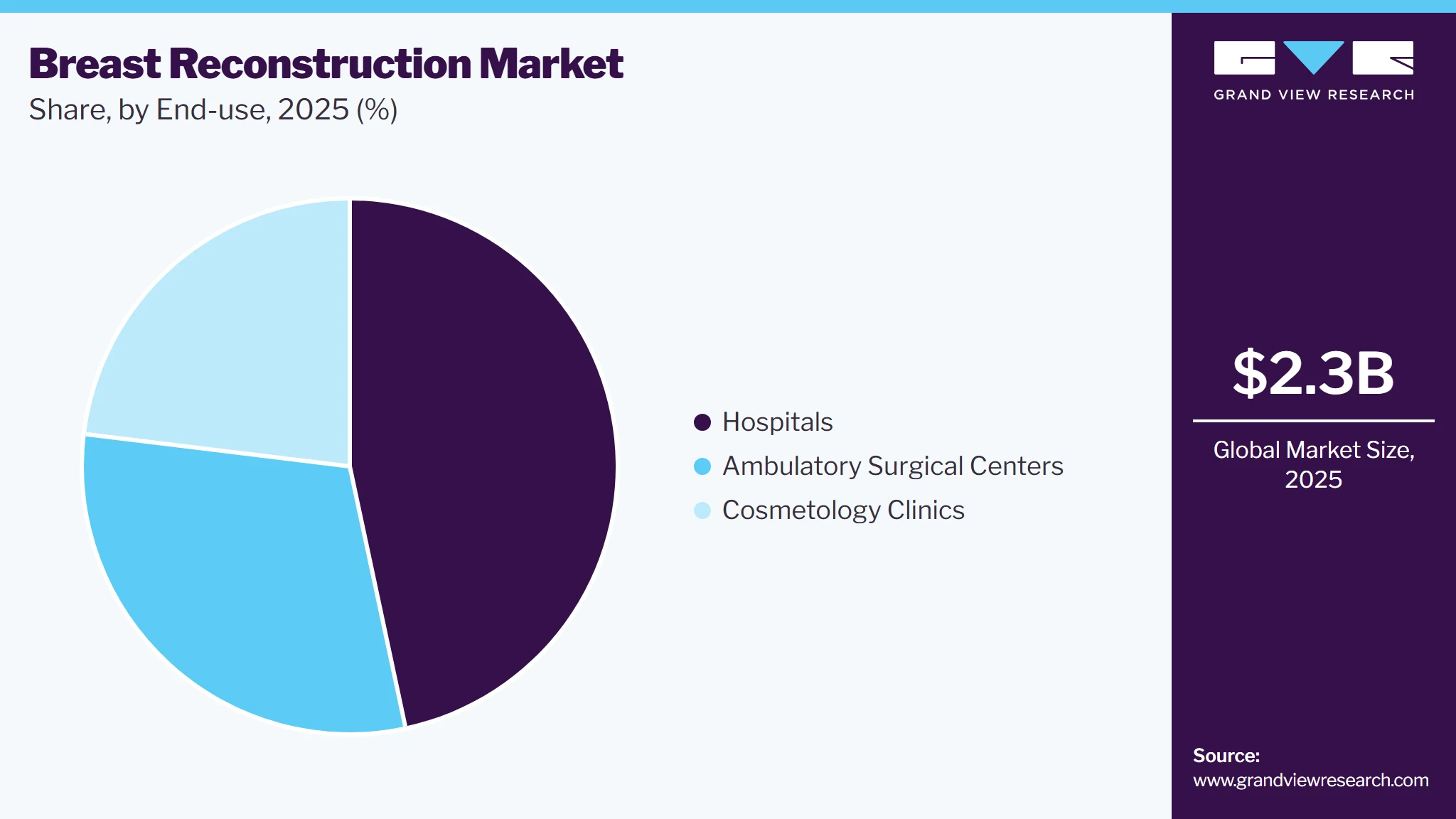
- By end use: Hospitals segment held the largest revenue share of 46.7% in 2025.
Regional Highlights
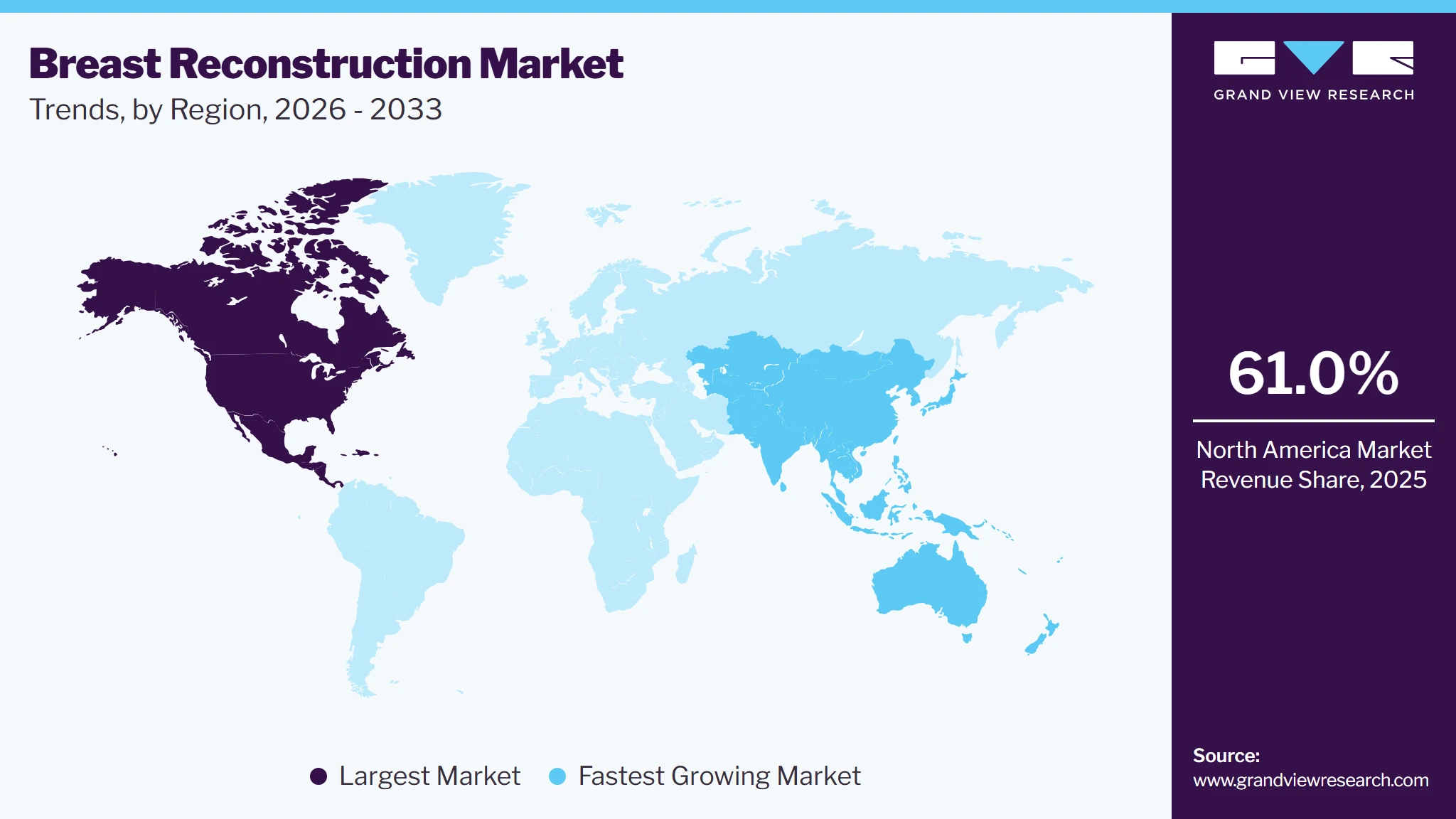
- Largest regional market: North America (61.0% revenue share, 2025)
- Fastest-growing regional market: Asia Pacific (highest CAGR, 2026-2033)
- By country: The U.S. held the largest market share in 2025.
Market Size & Forecast
- Market size in 2025: USD 2.3 Billion
- Estimated market size in 2026: USD 2.4 Billion
- Projected market size by 2033: USD 3.9 Billion
- CAGR (2026-2033): 7.1%
Three ways to get this report
Buy it, customize it, or ask a question.Ask an Analyst
Analyst response in 1 business day
- AccessReport author, directly
- Reply timeWithin 1 working day
- No sales callDirect answer only
- FormatEmail reply
- CostFree, no cost
Get the Full Report
What the study covers
- FormatsPDF · Excel · Dashboard
- Timeline2026–2033 annual, 2025 base
- Coverage20+ countries, 5 regions
- Companies10+ key players profiled
Customize the Report
20% free customization
- IncludeCountries, segments, points
- TailorTo your product definition
- ExtendDeeper competitor detail
- OrA fully bespoke study
- Turnaround5–10 working days
Additionally, a rise in the number of breast reconstruction procedures, as well as technological developments, is anticipated to drive market expansion. As per Medicare, breast reconstruction can be reimbursed provided the patient has undergone breast mastectomy owing to breast cancer. Moreover, as per Services Australia, the external breast prosthesis reimbursement program can reimburse breast prostheses after breast cancer. Such factors are expected to propel industry growth.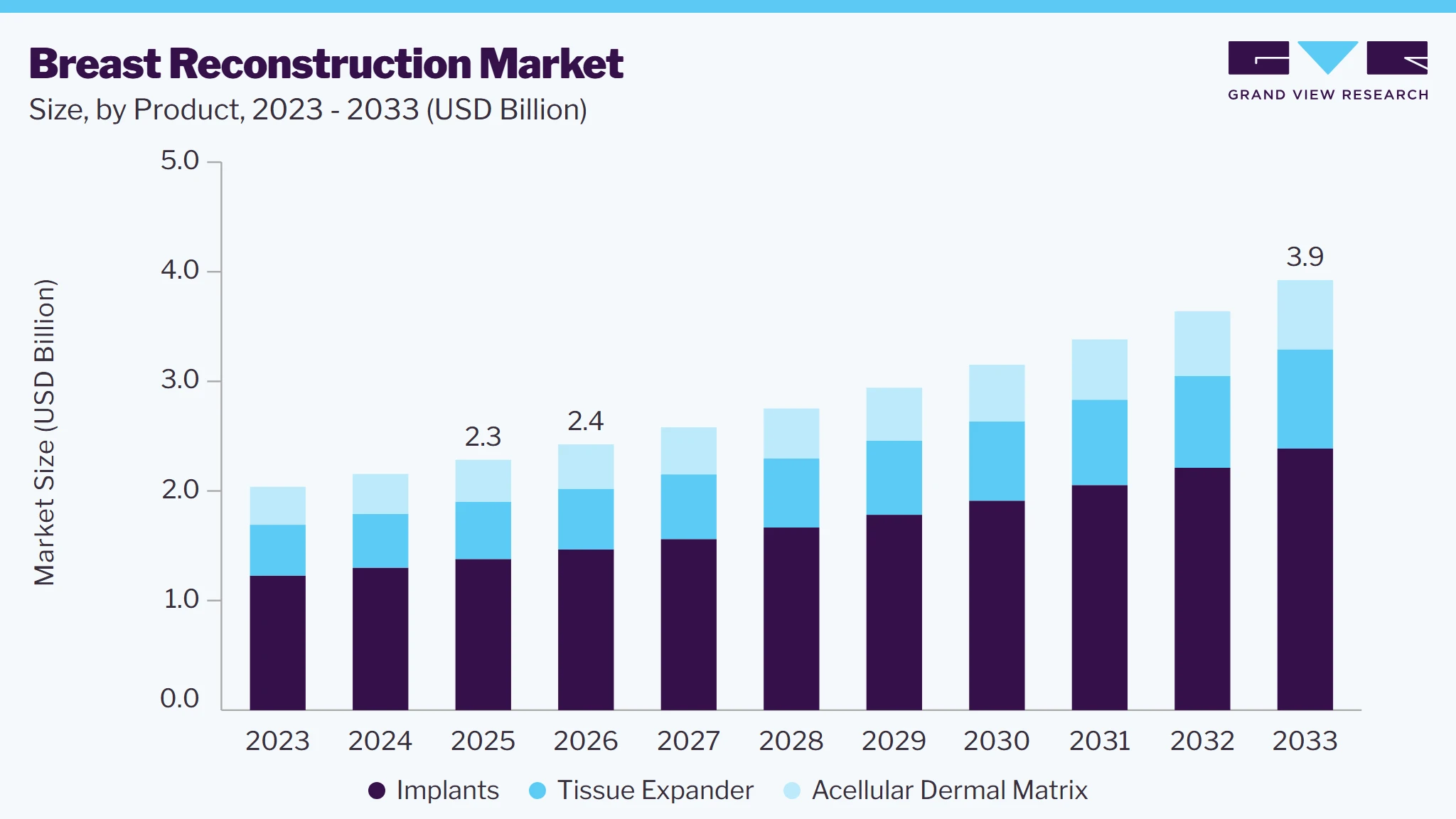 To learn more about this report, Download Free Sample Report
Moreover, to meet the increasing demand for breast reconstruction, key players are undertaking various strategic initiatives, such as product launches, awareness campaigns, and geographic expansions. For instance, the American Society of Plastic Surgeons and The Plastic Surgery Foundation organized the Breast Reconstruction Awareness Day program on October 18, 2023. The main purpose of this program was to create awareness about breast reconstruction among women when diagnosed with breast cancer. Similarly, in October 2021, Sientra, Inc. along with Mission Plasticos launched a philanthropic initiative, ‘Reshaping Lives: Full Circle’. This was aimed at providing women living in poverty with breast reconstruction post-mastectomy.
Market Dynamics
The breast reconstruction market is experiencing significant growth due to the increasing incidence of breast cancer and the rising number of mastectomy procedures performed worldwide. Growing awareness of breast reconstruction as an essential component of post-mastectomy care, along with improvements in reimbursement policies and patient education, is encouraging more women to undergo reconstructive surgery. The market is witnessing increasing adoption of implant-based reconstruction, autologous tissue reconstruction, tissue expanders, and fat grafting techniques to improve aesthetic outcomes and patient satisfaction. Technological advancements in silicone breast implants, three-dimensional (3D) surgical planning, and robotic-assisted breast reconstruction are further supporting market growth by enhancing surgical precision and reducing recovery time.
The global increase in the number of breast cancer patients is a key driver of the breast reconstruction market, as more women require reconstructive procedures following mastectomy or breast-conserving surgery. Breast reconstruction has become an integral part of breast cancer treatment, helping restore breast appearance and improving patients' psychological well-being and quality of life. The growing incidence of breast cancer has increased the number of eligible candidates for implant-based and autologous reconstruction procedures. Rising awareness of reconstruction options, improvements in surgical techniques, greater availability of advanced breast implants and tissue expanders, and increasing access to specialized reconstructive care are further contributing to procedure volumes. As breast cancer diagnoses continue to increase worldwide, demand for breast reconstruction products and procedures is expected to grow steadilyThe increasing availability and acceptance of alternatives to breast reconstruction are restraining market growth. Following mastectomy, many patients choose non-surgical options such as external breast prostheses, post-mastectomy bras, aesthetic flat closure, or decide not to undergo reconstruction based on personal preference, age, medical conditions, or concerns about additional surgeries and recovery time. Patient advocacy groups and shared decision-making between surgeons and patients have further increased awareness of these alternatives. In addition, some women prefer delayed reconstruction or choose cosmetic solutions instead of implant-based or autologous procedures. As healthcare providers emphasize individualized treatment plans, a larger proportion of patients are selecting non-reconstructive options that align with their lifestyle and clinical needs. This shift in patient preference reduces the number of breast reconstruction procedures performed and is expected to moderately limit the growth of the breast reconstruction market.
The rising adoption of robotic-assisted breast reconstruction procedures presents a promising opportunity for the breast reconstruction market. Robotic-assisted surgery provides enhanced precision, high-definition three-dimensional visualization, and improved dexterity, enabling surgeons to perform complex reconstructive procedures through smaller incisions. These techniques are being explored for autologous flap reconstruction, particularly latissimus dorsi flap procedures, where they may reduce postoperative pain, minimize scarring, and shorten recovery time. Growing investments by hospitals in robotic surgical platforms and increasing surgeon training in robotic techniques are supporting wider adoption. Furthermore, patients are showing greater interest in minimally invasive procedures that offer improved cosmetic outcomes and faster recovery.
Analyst Perspective
The breast reconstruction market is expected to witness steady growth, supported by the rising incidence of breast cancer, increasing mastectomy procedures, greater awareness of reconstructive options, and advancements in implant-based and autologous reconstruction techniques. Demand for silicone implants, tissue expanders, fat grafting, and personalized reconstruction solutions is also creating opportunities for market expansion. Companies offering comprehensive portfolios of breast implants, tissue expanders, and biologic reconstruction products while investing in next-generation materials and minimally invasive techniques are likely to strengthen their competitive position. Future market leadership is expected to depend on product innovation, improved clinical outcomes, favorable reimbursement, strong hospital and surgeon partnerships, regulatory compliance, and expanding access to breast reconstruction procedures in emerging markets.
End-use Insights
Based on end-use, the hospitals segment led the market with the largest revenue share of 46.7% in 2025 due to a rise in the number of hospitals worldwide. For instance, according to the Athar Institute of Health Management & Studies, hospitals in India make up 80% of the total healthcare market. Moreover, as per The Canadian Encyclopedia, there are 706 public & 193 private hospitals in Canada. In addition, there has been an increase in medical tourism globally. A rise in medical tourism is expected to increase the quality of healthcare facilities provided by hospitals.
 To learn more about this report, Download Free Sample Report
This growth rate can be attributed to a global increase in the number of breast reconstruction surgeries performed in ASCs. For instance, as per the Plastic Surgery Statistics Report, approximately 1,692,717 breast reconstruction surgeries were performed in the ASCs. Also, a similar report stated that there was an around 7% increase from 2019 to 2020. Such factors are anticipated to drive significant segment growth in the near future.
Regional Insights
North America dominated the breast reconstruction market with the largest revenue share of 61.0% in 2025. This was owing to the rising number of breast cancer cases in North America. For example, according to the Canadian Cancer Society, around 78 women are diagnosed with breast cancer daily in Canada, while 15 women die per day due to this condition. Moreover, a similar source states that 28,600 women in Canada were expected to be diagnosed with breast cancer in 2022.
 To learn more about this report, Download Free Sample Report
This number represents 25% of the new cases of cancer overall. Therefore, above mentioned factors are expected to boost market growth in this region. Asia Pacific is projected to register a CAGR of 6.91% from 2024 to 2030. This strong growth rate is owing to the rapidly rising number of breast cancer cases along with growing awareness about breast reconstruction surgeries. For instance, as per a report by NIH, in 2022, around 4,820,000 new breast cancer cases were reported in China, with 3,210,000 deaths in the same year.
U.S. Breast Reconstruction Market Trends
The breast reconstruction market in the U.S. held the largest share in the North America region in 2025. The U.S. breast reconstruction market is being supported by the increasing adoption of post-mastectomy reconstruction, greater patient awareness, and advances in implant-based and autologous techniques. For instance, according to the American Society of Plastic Surgeons (ASPS) 2024 data, which reported 162,579 breast reconstruction procedures in the U.S., up 3% from 157,740 in 2023. This growing procedural volume, supported by evolving surgical techniques and increasing patient preference for breast restoration after mastectomy, is expected to continue driving demand for breast reconstruction procedures in the U.S.
Asia Pacific Breast Reconstruction Market Trends
Asia Pacific is projected to register a fastest CAGR from 2026 to 2033. This strong growth rate is owing to the rapidly rising number of breast cancer cases along with growing awareness about breast reconstruction surgeries. For instance, as per a report by NIH, in 2022, around 4,820,000 new breast cancer cases were reported in China, with 3,210,000 deaths in the same year.
Product Insights
Based on product, the implants segment led the market with the largest revenue share of 60.4% in 2025. The implants segment held the largest revenue share of 60.39% in 2023. This growth is aided by the rising use of breast implants in breast augmentation surgeries. For example, as per the NCBI, around 8.08 women per 1,000 in the United States have any type of breast implant. Moreover, the University of Utah Health states that an estimated 35 million women have textured breast implants; a similar source says that it is believed that over 1.5 million women have breast implants annually. However, Tissue expander is expected to grow at the fastest CAGR over the forecast period.
This is attributed to the increasing use of tissue expanders for breast reconstruction. For instance, according to a report by Science Direct, tissue expander reconstruction contributed to 65% of the total breast reconstruction procedures performed. As per Medscape, with 137,808 breast reconstruction surgeries performed in the U.S. in 2020, 60.6% included tissue expanders and implants. In addition, breast reconstruction with the use of a tissue expander has several advantages as it is faster, simpler, and relatively cheaper. Furthermore, key players are focusing on launching a wide range of tissue expanders to increase their industry share. For instance, in June 2023, Sientra, Inc. received U.S. FDA approval for its AlloX2 Pro Tissue Expander.
Shape Insights
Based on shape, the round shape segment led the market with the largest revenue share of 54.9% in 2025 due to an increasing number of product launches, regular FDA updates on breast implant safety, and the conduction of various clinical trials. For instance, in May 2021, GC Aesthetics launched its next-generation round silicone breast implant PERLE. In October 2021, the U.S. FDA updated its safety requirements for breast implants, and restricted the sales & distribution of breast implants, to ensure patients undergoing breast implant surgery have adequate information.
However, the anatomical shape segment is projected to grow at a CAGR of 6.67% from 2024 to 2030. The growth rate can be attributed to several advantages of anatomically shaped breast implants. For instance, according to the Sayah Institute, these implants provide a natural shape and textured surface, therefore, it does not shift after placement. Moreover, their texture makes them ideal for breast augmentation in women with little natural breast tissue. Thus, propelling the segment growth.
Key Companies & Market Share Insights
Key players are adopting various strategies, such as geographic expansions, mergers & acquisitions, partnerships, new product launches, and seeking government approvals, to strengthen their foothold in the industry. For instance, in March 2023, Establishment Labs announced entering into a collaborative agreement with companies in Europe and a secondary partner network in Japan, to launch Mia Femtech, a minimally invasive breast aesthetics solution. Similarly, in October 2023, ExxonMobil merged with Pioneer Natural Resources. Key players are investing heavily in research and development to manufacture technologically advanced products.
Key Breast Reconstruction Companies:
- Mentor Medical Systems B.V. (Johnson & Johnson)
- Allergan, Inc. (AbbVie)
- Sientra, Inc.
- Ideal Implant Incorporated
- Establishment Labs
- POLYTECH Health & Aesthetics GmbH
- RTI Surgical
- Sebbin
- Integra LifeSciences
- GC Aesthetics
Competitive Benchmarking
Category
Operating Strategies
Competitive Edge
Weakness
Established Players (ALLERGAN (AbbVie), Mentor Worldwide LLC (Johnson & Johnson), GC Aesthetics)
- Focus on expanding breast reconstruction portfolios through continuous innovation in silicone breast implants, tissue expanders, smooth and textured implant technologies, and biologically compatible materials to improve safety, aesthetics, and long-term outcomes.
- Strengthen market presence through strategic collaborations with hospitals, breast cancer centers, plastic surgeons, distributors, and healthcare institutions while expanding regulatory approvals and global distribution networks.
- Strong brand recognition, extensive global distribution networks, well-established relationships with plastic and reconstructive surgeons, and comprehensive product portfolios.
- Significant R&D capabilities, clinical expertise, regulatory experience, and strong financial resources support continuous innovation and international market expansion.
- Intense competition requires continuous product innovation and differentiation to maintain market leadership.
- High costs associated with product development, clinical studies, regulatory compliance, post-market surveillance, and manufacturing, along with increasing scrutiny regarding implant safety and performance.
Emerging Players (SEBBIN, Sientra Inc. (Tiger Aesthetics Medical, LLC), Shanghai Kangning Medical Supplies Ltd.)
- Focus on developing cost-effective, high-quality breast reconstruction solutions with improved implant designs, enhanced biocompatibility, and natural aesthetic outcomes.
- Expand market presence through partnerships with plastic surgery clinics, regional distributors, hospitals, and direct engagement with reconstructive surgeons while increasing presence in emerging markets.
- Strong focus on specialized reconstructive products, competitive pricing, product customization, and the ability to respond quickly to evolving surgeon and patient preferences.
- Greater operational flexibility enables faster product development and regional market expansion.
- Limited global footprint, smaller distribution networks, and lower brand recognition compared with multinational companies.
- Narrower product portfolios, limited financial resources, and dependence on regional markets create challenges in achieving regulatory approvals, expanding internationally, and competing with established market leaders.
Breast Reconstruction Market Report Scope
Report Attribute
Details
Market size in 2025
USD 2.3 billion
Estimated market size in 2026
USD 2.4 billion
Projected market size by 2033
USD 3.9 billion
Growth rate
CAGR of 7.1% from 2026 to 2033
Base year for estimation
2025
Historical data
2021 - 2024
Forecast period
2026 - 2033
Quantitative units
Revenue in USD million/billion and CAGR from 2026 to 2033
Report coverage
Revenue forecast, company ranking, competitive landscape, growth factors, and trends
Segments covered
Product, shape, end use, region
Regional scope
North America; Europe; Asia Pacific; Latin America; MEA
Country scope
U.S.; Canada; Mexico; Germany; UK; France; Italy; Spain; Denmark, Sweden, Norway, China; Japan; India; Australia; Thailand; South Korea, Brazil; Argentina; South Africa; Saudi Arabia; UAE; Kuwait
Key companies profiled
ALLERGAN (AbbVie), GC Aesthetics, SEBBIN, Mentor Worldwide LLC (Johnson & Johnson), Sientra Inc. (Tiger Aesthetics Medical, LLC), POLYTECH Health & Aesthetics GmbH, Establishment Labs S.A., Shanghai Kangning Medical Supplies Ltd., Guangzhou Wanhe Plastic Materials Co., Ltd., HansBioMed, Bimini Health Tech., and SILIMED INDUSTRIA DE IMPANTES LTDA.
Customization scope
Free report customization (equivalent up to 8 analysts' working days) with purchase. Addition or alteration to country, regional & segment scope.
Pricing and purchase options
Avail customized purchase options to meet your exact research needs. Explore purchase options
Global Breast Reconstruction Market Report Segmentation
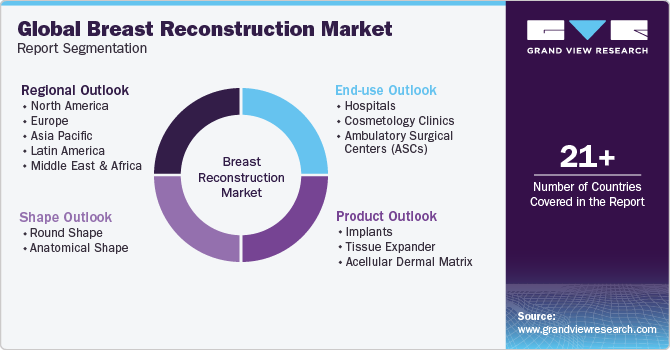
This report forecasts revenue growth at global, regional, and country levels and provides an analysis of the latest trends in each of the sub-segments from 2021 to 2033. For this study, Grand View Research has segmented the breast reconstruction market report based on product, shape, end-use, and region:
 To learn more about this report, Download Free Sample Report
-
Product Outlook (Revenue, USD Million, 2021 - 2033)
-
Implants
-
Silicone Breast Implants
-
Saline Breast Implants
-
-
Tissue Expander
-
Saline Expander
-
Air Tissue Expander
-
-
Acellular Dermal Matrix
-
-
Shape Outlook (Revenue, USD Million, 2021 - 2033)
-
Round Shape
-
Anatomical Shape
-
-
End-use Outlook (Revenue, USD Million, 2021 - 2033)
-
Hospitals
-
Cosmetology Clinics
-
Ambulatory Surgical Centers
-
-
Regional Outlook (Revenue, USD Million, 2021 - 2033)
-
North America
-
U.S.
-
Canada
-
-
Europe
-
U.K.
-
Germany
-
France
-
Italy
-
Spain
-
Denmark
-
Sweden
-
Norway
-
-
Asia Pacific
-
Japan
-
China
-
India
-
Australia
-
South Korea
-
Thailand
-
-
Latin America
-
Brazil
-
Mexico
-
Argentina
-
-
Middle East & Africa
-
South Africa
-
Saudi Arabia
-
UAE
- Kuwait
-
-
Research Methodology
The breast reconstruction market figures in this report are based on a proven research process that combines executive interviews with secondary research from proprietary databases, company filings, and recognized regulatory and institutional sources. Market size is built through value-chain sizing - reconciling supply-side and demand-side estimates - and triangulated with bottom-up and top-down approaches. Every estimate passes multiple levels of expert validation before publication, with each breast reconstruction segment quantified using the revenue-capture definitions in the table below.
Segment Definition
Segment - Product
Revenue capture definition
Implants
Revenue is generated from the sales of breast implants, including silicone gel-filled and saline-filled implants, used in immediate and delayed breast reconstruction procedures following mastectomy, lumpectomy, or congenital breast deformities.
Tissue Expander
Revenue is generated from the sales of temporary tissue expanders used to gradually stretch the breast skin and soft tissue before the placement of permanent breast implants during staged breast reconstruction procedures.
Acellular Dermal Matrix
Revenue is generated from the sales of acellular dermal matrix products derived from human or animal tissues that provide soft tissue support, implant coverage, and improved aesthetic outcomes during implant-based breast reconstruction procedures.
Estimation Model
Approach Name
Description
Bottom-Up Estimation
Market revenue is estimated by combining the sales of breast reconstruction products, including breast implants, tissue expanders, and biologic reconstruction products, across hospitals, cancer centers, ambulatory surgical centers, and specialty plastic surgery clinics at country, regional, and global levels. The number of breast reconstruction procedures following mastectomy, including implant-based and autologous reconstruction, is analyzed to estimate product utilization.
Top-Down Approach
The overall breast surgery and reconstructive surgery market is analyzed first, and the share of breast reconstruction products is estimated using secondary research and industry validation. Factors such as the incidence of breast cancer, number of mastectomy procedures, reconstruction rates, adoption of implant-based and autologous reconstruction, reimbursement coverage, and technological advancements are considered to determine market contribution.
Supply-Side Analysis
This approach evaluates the production, sales, and distribution of breast reconstruction products by leading manufacturers. Key factors include manufacturing capacity, product launches, shipment volumes, pricing trends, regulatory approvals, and distribution through hospitals, specialty clinics, distributors, and procurement networks.
Delivered Customizations
This report has been delivered with the following In-depth customizations
Client Request
Customization Delivered
Value Adds
Breast Reconstruction Product Portfolio & Adoption Analysis
Conducted a detailed assessment of breast reconstruction products, including breast implants, tissue expanders, acellular dermal matrices (ADMs), biologic meshes, and autologous reconstruction techniques. Evaluated adoption trends across hospitals, cancer centers, ambulatory surgical centers, and specialty plastic surgery clinics, along with procedure preferences for implant-based and autologous breast reconstruction.
Helps stakeholders identify high-growth product segments, understand surgeon preferences for reconstructive techniques, and evaluate demand across immediate and delayed breast reconstruction procedures.
Healthcare Provider & Procedure Landscape Analysis
Analyzed breast reconstruction procedure volumes across hospitals, oncology centers, academic medical centers, and specialty plastic surgery clinics. Assessed referral patterns, reconstruction rates following mastectomy, reimbursement trends, procurement practices, and adoption of advanced reconstructive technologies, including robotic-assisted surgery and regenerative products.
Enables companies to optimize commercial strategies, strengthen partnerships with hospitals and cancer centers, identify high-volume procedure settings, and expand product adoption across key healthcare providers.
Competitive Benchmarking & Technology Innovation Assessment
Evaluated leading breast reconstruction manufacturers based on product portfolio, implant technologies, tissue expanders, biologic reconstruction products, pricing, clinical evidence, innovation, regulatory approvals, and geographic presence. Assessed product differentiation, recent product launches, advancements in implant technologies, regenerative medicine, and minimally invasive reconstructive techniques.
Supports competitive benchmarking, identifies innovation opportunities, enables product portfolio optimization, and helps companies strengthen market positioning while addressing evolving surgeon and patient requirements.
Frequently Asked Questions About This Report
The global breast reconstruction market size was valued at USD 2.3 billion in 2025 and is estimated at USD 2.4 billion for 2026.
The global breast reconstruction market is expected to grow at a CAGR of 7.1% from 2026 to 2033, reaching USD 3.9 billion by 2033.
North America dominated with a 61.0% revenue share in 2025.
Asia Pacific is the fastest-growing region over the forecast period.
The round shape held the largest share of 54.9% in 2025.
The hospitals held the largest share of 46.7% in 2025.
Based on product, the implants segment held the largest share of 60.4% in 2025, while tissue expander is the fastest-growing segment over the forecast period.
Key players include ALLERGAN (AbbVie), GC Aesthetics, SEBBIN, Mentor Worldwide LLC (Johnson & Johnson), Sientra Inc. (Tiger Aesthetics Medical, LLC), POLYTECH Health & Aesthetics GmbH, Establishment Labs S.A., Shanghai Kangning Medical Supplies Ltd., Guangzhou Wanhe Plastic Materials Co., Ltd., HansBioMed, Bimini Health Tech., and SILIMED INDUSTRIA DE IMPANTES LTDA.
Key factors include rising breast cancer cases along with the presence of favorable reimbursement policies. In addition, a rise in the number of breast reconstruction procedures, as well as technological developments, is anticipated to drive market expansion.
About the Author(s)
Medical Devices Research Team
Healthcare · Medical DevicesThis report was authored by the medical devices research team at Grand View Research - comprising two research analysts, one senior research analyst, and one industry expert - with specialized expertise in the medical devices segment of the healthcare industry. All findings are based on proprietary healthcare databases, executive interviews, and regulatory analysis, subject to internal peer review prior to publication.
Last Updated:
Speak to Analyst

Customize this report to your needs - add regions, segments, or data points, with 20% free customization.
Or view our licence options:


ISO 9001:2015 & 27001:2022 Certified
We are GDPR and CCPA compliant! Your transaction & personal information is safe and secure. For more details, please read our privacy policy.


