
- Home
- »
- Consumer F&B
- »
-
Canned Meat Market Size, Share & Growth Report 2026-2033GVR Report cover

Canned Meat Market (2026 - 2033)
Size, Share & Trends Analysis Report By Meat Type (Beef, Seafood, Poultry, Pork), By Distribution Channel (Hypermarkets & Supermarkets, Retail Stores, Online), By Region (North America, Europe, APAC), And Segment Forecasts
Market Size, 2025
$8.6BMarket Estimate, 2026
$9.0BMarket Forecast, 2033
$13.2BCAGR, 2026–2033
5.6%Canned Meat Market Summary
The global canned meat market size was valued at USD 8.6 billion in 2025 and is projected to grow from USD 9.0 billion in 2026 to USD 13.2 billion by 2033, at a CAGR of 5.6% from 2026 to 2033. The North America market held the largest share of 34.8% of the global market in 2025. The market expansion is largely supported by rising disposable incomes and the growing penetration of convenient, ready-to-eat protein options across both developed and emerging economies.
 Source: Grand View Research, IR Documents, Primary Interviews, Paid DatabasesTo learn more about this report,
 Download Free Sample Report
 Key Market Trends & Insights
- By meat type: The canned poultry segment dominated the canned meat market, accounting for a 40.8% revenue share in 2025.
- By distribution channel: The Sales of canned meat through the hypermarkets & supermarkets segment dominated the canned meat industry, accounting for a revenue share of 42.8% in 2025.
Regional Highlights
- Largest regional market: North America (34.8% revenue share, 2025)
- Fastest-growing regional market: Asia Pacific (highest CAGR, 2026-2033)
- By country: The U.S. held the largest market share in 2025.
Market Size & Forecast
- Market size in 2025: USD 8.6 Billion
- Estimated market size in 2026: USD 9.0 Billion
- Projected market size by 2033: USD 13.2 Billion
- CAGR (2026-2033): 5.6%
Three ways to get this report
Buy it, customize it, or ask a question.Ask an Analyst
Analyst response in 1 business day
- AccessReport author, directly
- Reply timeWithin 1 working day
- No sales callDirect answer only
- FormatEmail reply
- CostFree, no cost
Get the Full Report
What the study covers
- FormatsPDF · Excel · Dashboard
- Timeline2026–2033 annual, 2025 base
- Coverage20+ countries, 5 regions
- Companies10+ key players profiled
Customize the Report
20% free customization
- IncludeCountries, segments, points
- TailorTo your product definition
- ExtendDeeper competitor detail
- OrA fully bespoke study
- Turnaround5–10 working days
Canned meat offers high protein density, minimal preparation time, and easy storage, making it attractive to students, working professionals, and families alike. Furthermore, the market benefits from the rising consumption of packaged seafood among health-conscious consumers who value high-protein, low-fat meal solutions.The long shelf life, portability, and versatility of canned meat in meal preparation further enhance its appeal, particularly among working professionals, students, and households seeking quick meal solutions. Moreover, innovations in flavor profiles have broadened its relevance across demographic groups, particularly Millennials and Gen Z, who show greater openness to global flavors and ready-made meal options.
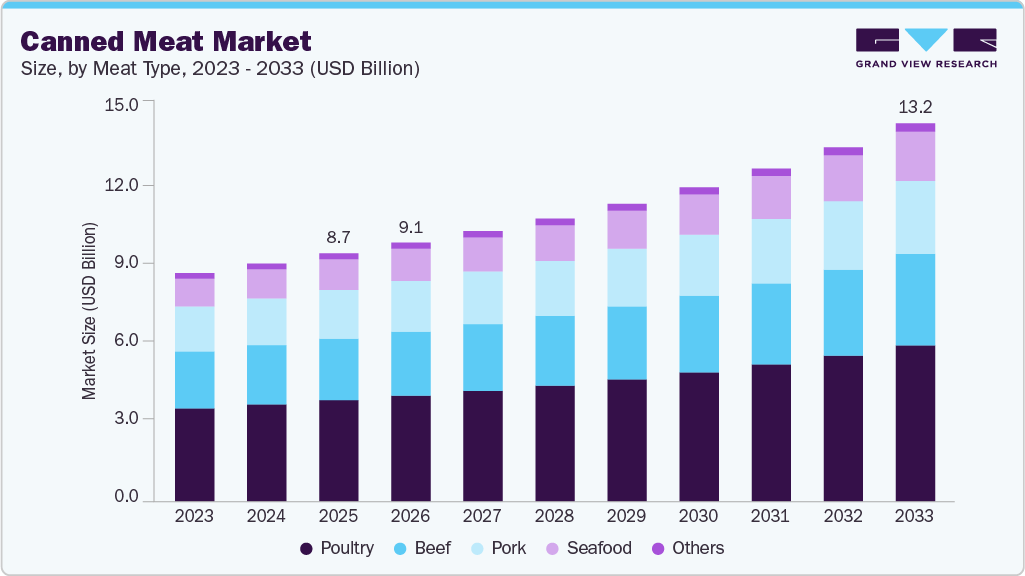 To learn more about this report, Download Free Sample Report
 Over the past few years, the consumption of seafood has increased significantly across the globe owing to its rich taste, nutritional properties, and smaller carbon footprint compared to other meat and beef meat types. A blog by the National Fisheries Institute suggested that 88% of all families in the U.S. have consumed canned meat. In addition, this fish is one of the top five most-consumed seafood globally. The meat industry has undergone a paradigm shift in recent years, driven by rising meat production, price competition, technological advances, and shifting consumer demand.
Advancements in packaging and sustainable fishing practices are vital to shaping the market landscape. Companies are adopting eco-friendly packaging solutions and responsible sourcing strategies to appeal to environmentally conscious consumers. As sustainability concerns grow, brands that emphasize ethical fishing practices and recyclable packaging are gaining a competitive edge. This trend is expected to drive market growth by attracting a wider consumer base.
In January 2025, Portuguese gourmet company 100 Misterios, known for its premium canned fish brands JOSE Gourmet, ATI Manel, ABC+, and MARIA Organic, opened a U.S. branch, 100 Misterios USA, LLC, in Las Vegas to bring its refined, tradition‑meets‑innovation seafood and meat products to American consumers. The expansion also includes new services to strengthen partnerships with U.S. distributors and collaborators.
Economic pressures and food inflation have encouraged consumers to seek cost-efficient protein alternatives. Canned meat offers predictable pricing and reduces food waste, making it attractive during periods of economic uncertainty. Retail and e-commerce channels have also played a pivotal role in market expansion, with improved visibility of meat types and subscription-based grocery delivery contributing to higher household penetration.
Market Dynamics
The growing demand for long-shelf-life and ready-to-eat food products is a major driver of the canned meat market. Consumers with busy lifestyles increasingly prefer convenient meal options that require minimal preparation and can be stored for extended periods without refrigeration. Canned meat provides portability, ease of storage, and reliable availability, making it suitable for households, students, and working professionals. According to the data published in May 2025, Hormel stated that budget-conscious consumers are increasingly turning to convenient and affordable protein products such as SPAM canned meat amid economic uncertainty and inflation pressures.
In addition, rising interest in emergency food stocking and reducing food waste has further strengthened demand for shelf-stable products. In addition, expanding retail and e-commerce availability has improved consumer access to a wide range of canned meat products globally.
Stringent food safety and regulatory standards act as a restraint in the canned meat market by increasing the complexity and cost of production. Manufacturers must comply with strict rules related to hygiene, processing methods, labeling, and packaging to ensure product safety and quality. These regulations often require advanced technologies, frequent inspections, and certification processes, which can slow down product launches. Additionally, differences in regulatory requirements across regions create challenges for global expansion and standardization. In May 2025, Hormel Foods issued a recall of more than 256,000 pounds of its canned “Dinty Moore Beef Stew” after reports from consumers of foreign matter, specifically wood pieces, in the product. The U.S. Department of Agriculture’s Food Safety and Inspection Service (FSIS) announced a recall impacting distribution across the country and advised customers to either dispose of or return the affected cans for safety reasons.
Consumer Insights
Consumers are increasingly preferring canned products due to the convergence of convenience, value, and long-term food security. Modern households, particularly in urban settings, seek meal components that are easy to store, quick to prepare, and versatile across recipes. Canned foods, including canned meat options, align with these expectations by offering extended shelf life, minimal preparation time, and a reliable source of protein, even in the absence of refrigeration. Furthermore, the trend toward minimizing food waste has strengthened demand, as canned products allow consumers to portion meals more efficiently while reducing spoilage commonly associated with fresh meat.
Health awareness has also influenced purchasing behavior. Consumers increasingly scrutinize ingredient lists and lean toward canned foods with reduced sodium, clean labels, and no artificial preservatives. The desire for transparent sourcing and responsible meat production practices has pushed manufacturers to provide clearer labeling, sustainable packaging, and detailed product information. This trend reflects a broader shift toward mindful consumption and greater trust in long-lasting pantry staples.
Markets such as Japan, South Korea, and Australia have strong canned seafood consumption patterns, with Japan showing high per-capita intake of canned mackerel, meat, and sardines. Emerging markets, including India, Indonesia, Thailand, and the Philippines, are witnessing rising adoption of canned meats and seafood driven by increased workforce participation and demand for convenient meal options.
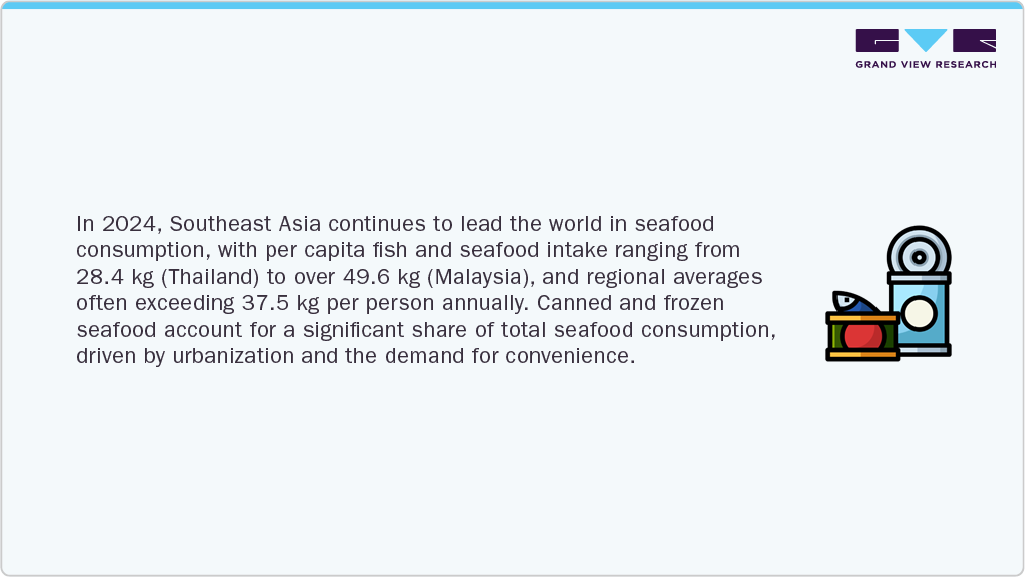 To learn more about this report, Download Free Sample Report
 Affordability is another key factor driving the popularity of canned meat. Compared to fresh seafood and several meat categories, it remains cost-effective, offering accessible nutrition at a stable price point. This has been especially relevant during periods of food inflation, when consumers tend to shift toward shelf-stable protein sources. Sustainability has also emerged as an important purchasing criterion. Labels indicating dolphin-safe practices, pole-and-line fishing, and Marine Stewardship Council (MSC) certification influence buying decisions, reflecting growing consumer awareness about ethical seafood sourcing and environmental responsibility.
Manufacturers are responding to rising demand by elevating product quality, enhancing safety protocols, and diversifying flavor offerings. Advanced retort processing technologies are being adopted to preserve texture and freshness while ensuring microbial safety. Many producers are transitioning to BPA-free, recyclable steel or aluminum cans to address consumer health and sustainability concerns.
Meat Type Insights
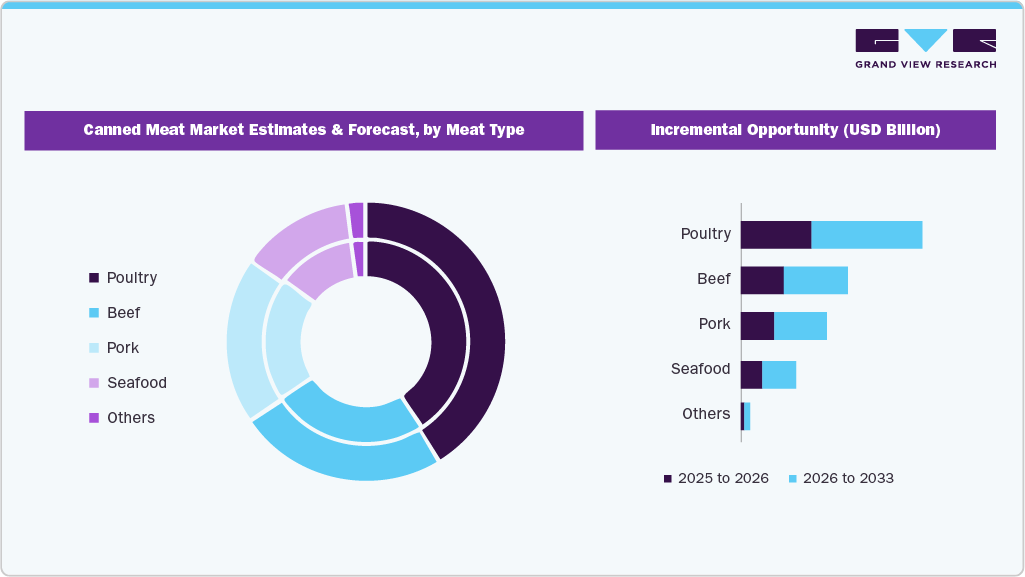
The canned poultry segment dominated the canned meat market, accounting for a 40.8% revenue share in 2025, as demand shifts toward convenient, shelf-stable, and protein-rich meal options that support fast-paced lifestyles. Rising interest in high-protein diets, affordable nutrition, and long-lasting pantry staples has made canned poultry an attractive choice, particularly for budget-conscious households and health-focused consumers. Additionally, improvements in product quality, such as cleaner labels, reduced sodium options, and enhanced flavor varieties, are boosting consumer confidence. The category is also benefiting from the expansion of e-commerce grocery shopping, where canned goods remain top-performing items due to their long shelf life and ease of bulk purchasing.
 To learn more about this report, Download Free Sample Report
 The canned seafood segment is expected to grow at a CAGR of 6.2% from 2026 to 2033. As health awareness increases, consumers are drawn to canned tuna, salmon, sardines, and mackerel for their high omega-3 content, clean protein profile, and long shelf life. Busy lifestyles and the shift toward easy meal solutions have also boosted adoption, with canned seafood offering quick preparation and versatility across cuisines. Additionally, improvements in sustainability practices, clearer labeling, and premiumization, such as gourmet, wild-caught, and organic variants, have enhanced consumer trust and expanded the category’s appeal, driving strong market growth.
Distribution Channel Insights
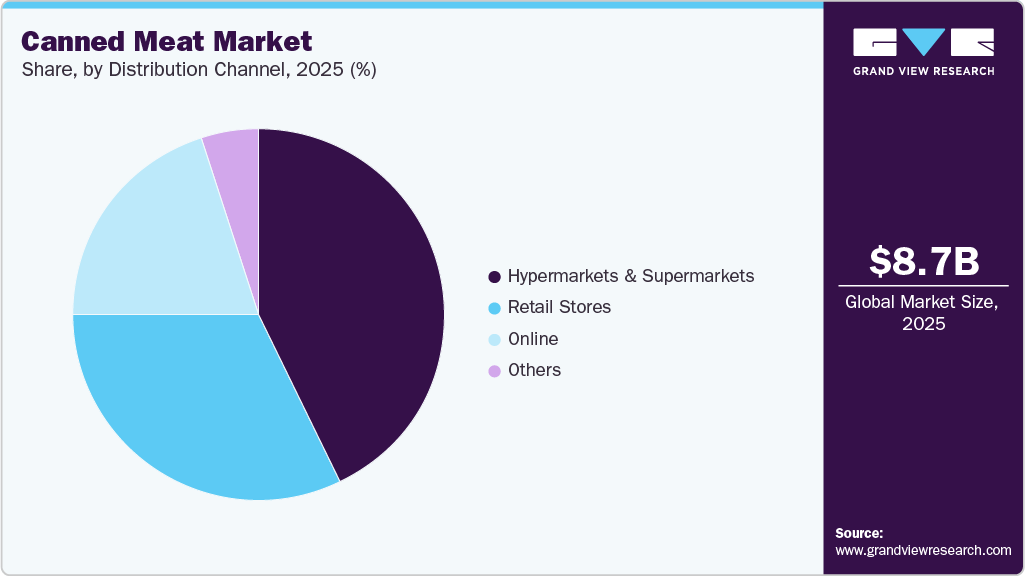
Sales of canned meat through the hypermarkets & supermarkets segment dominated the canned meat industry, accounting for a revenue share of 42.8% in 2025. The market is growing rapidly through supermarkets and hypermarkets, driven by rising consumer demand for convenient, affordable, and long-lasting protein options. These retail formats offer extensive product visibility, competitive pricing, and frequent promotions, making them the preferred channel for bulk and family purchases. Supermarkets and hypermarkets also offer a wider product variety, including flavored, ready-to-eat, and premium canned meats, which supports impulse buying and brand discovery. Their strong cold-chain infrastructure, reliable stocking, and trust in established retail brands further reinforce consumer confidence, driving consistent growth in canned meat sales through these channels.
 To learn more about this report, Download Free Sample Report
 Sales of canned meat through the online channel are expected to grow at a CAGR of 8.0% over the forecast period. E-commerce platforms offer a wider product variety, competitive pricing, and easy access to specialty or premium canned meat brands that may not be available in local stores. Online grocery adoption has accelerated post-pandemic, with many shoppers preferring the ease of bulk purchasing and home delivery for pantry staples. Additionally, clear labeling, customer reviews, and detailed product information available online help build trust and drive higher repeat purchases, further supporting the growth of canned meat sales in the digital marketplace.
Regional Insights
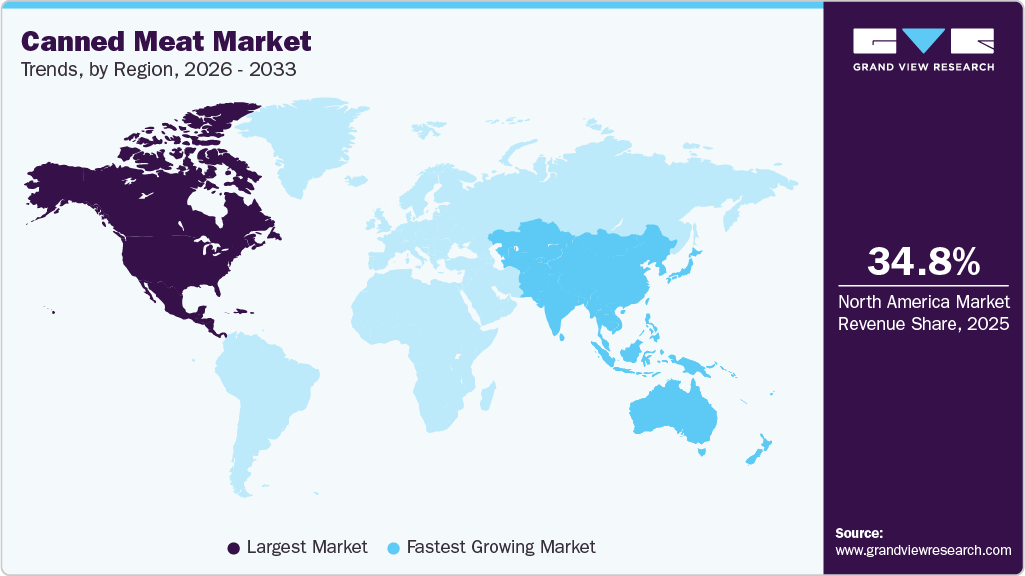
The North America canned meat industry accounted for a revenue share of 34.8% in 2025. Consumers are increasingly seeking affordable, long-shelf-life foods amid ongoing economic uncertainty and higher grocery prices, making canned meat an attractive, cost-effective alternative to fresh proteins. Additionally, the surge in outdoor activities, emergency preparedness trends, and household stocking behaviors has boosted demand for non-perishable protein sources. Improved formulations featuring cleaner labels, reduced sodium, and higher-quality meats, along with expanded flavor varieties, are also drawing health-conscious and younger consumers back to the category, supporting its sustained growth across the region.
 To learn more about this report, Download Free Sample Report
 U.S. Canned Meat Market Trends
The U.S. canned meat industry is expected to grow significantly over the forecast period, as consumers seek convenient, ready‑to‑eat protein with a long shelf life that fits busy lifestyles and emergency or pantry-stocking needs. Rising interest in affordable animal protein, expansion of e‑commerce and retail private labels, and innovation in higher‑quality poultry and seafood options are also supporting steady market growth across the region.
Europe Canned Meat Market Trends
The Europe canned meat industry is expected to grow at a CAGR of 4.3% from 2026 to 2033. Demand for canned meat is growing among European consumers, who increasingly prefer convenient, ready-to-eat, long-shelf-life food options that fit busy lifestyles. High inflation and cost-of-living pressures have also pushed consumers toward affordable protein sources, making canned meat an attractive choice. Additionally, improved meat type quality, cleaner ingredient lists, and greater availability of varieties such as chicken, turkey, and premium processed meats have enhanced consumer trust. The popularity of camping, outdoor activities, and emergency stocking has further supported demand, as canned meat offers portability, safety, and minimal preparation.
Asia Pacific Canned Meat Market Trends
The Asia Pacific canned meat industry is expected to register the fastest CAGR of 6.6% from 2026 to 2033, as busy urban lifestyles increase the need for convenient, ready-to-eat, and long-shelf-life food options. Rising workforce participation, smaller household sizes, and the popularity of quick meal solutions have made canned meat a practical choice for everyday consumption. In addition, improved product quality, greater flavor variety, and stronger cold-chain logistics have boosted consumer trust in packaged proteins. The growth of online grocery platforms and modern retail formats has also expanded access, making canned meat a reliable and affordable source of protein across the region.
Key Canned Meat Company Insights
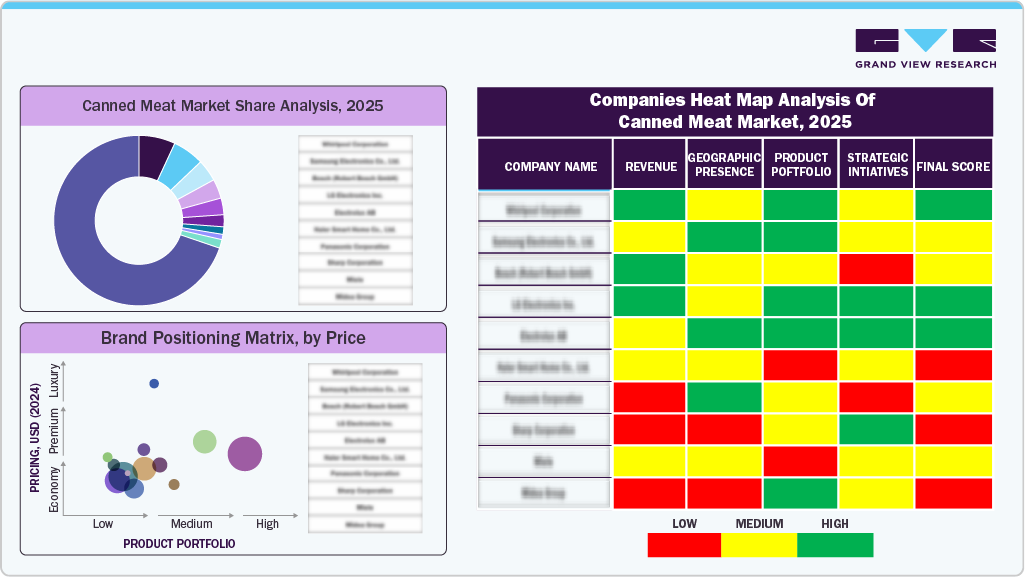
The presence of a few established players and new entrants characterizes the market. Many big players are increasing their focus on the growing trend of canned meat products. Players in the market are diversifying their service offerings in order to maintain market share.
 To learn more about this report, Download Free Sample Report
 Key Canned Meat Companies:
The following key companies have been profiled for this study on the canned meat market.
- JBS
- Hormel Foods Corp.
- Tyson Foods, Inc.
- Wild Planet Foods
- Bolton Group
- Vion Food Group
- Mundella Foods
- Campbell Soup Company
- Smithfield Foods
- Valleyfresh Global
Recent Developments
-
In October 2025, the brand KARAVEL launched FISH PEAS, a new line of plant-based canned seafood. This range includes various salads, spreads, and flakes developed from sustainable yellow pea protein, marketed as healthy, clean-label, gluten-free, and non-GMO.
-
In January 2024, King Oscar USA launched a new premium line of skinless and boneless Atlantic salmon in extra virgin olive oil, offered in three flavors: Extra Virgin Olive Oil, Mediterranean Style, and Olive Oil with Lemon. The products feature hand‑packed select cuts of responsibly farmed salmon, use recyclable packaging, and are already on shelves at major U.S. retailers.
Canned Meat Market Report Scope
Report Attribute
Details
Market size in 2025
USD 8.6 billion
Estimated market size in 2026
USD 9.06 billion
Projected market size by 2033
USD 13.24 billion
Growth rate
CAGR of 5.6% from 2026 to 2033
Base year for estimation
2025
Historical data
2021 - 2025
Forecast period
2026 - 2033
Quantitative units
Revenue in USD million/billion and CAGR from 2026 to 2033
Report coverage
Revenue forecast, company ranking, competitive landscape, growth factors, and trends
Segments covered
Meat type, distribution channel, region
Regional scope
North America; Europe; Asia Pacific; Central & South America; Middle East & Africa
Country scope
U.S.; Canada; Mexico; UK; Germany; France; Italy; Spain; China; Japan; India; South Korea; Australia & New Zealand; Brazil; South Africa
Key companies profiled
JBS; Hormel Foods Corp.; Tyson Foods, Inc.; Wild Planet Foods; Bolton Group; Vion Food Group; Mundella Foods; Campbell Soup Company; Smithfield Foods; Valleyfresh Global
Customization scope
Free report customization (equivalent up to 8 analysts working days) with purchase. Addition or alteration to country, regional & segment scope.
Pricing and purchase options
Avail customized purchase options to meet your exact research needs. Explore purchase options
Global Canned Meat Market Report Segmentation
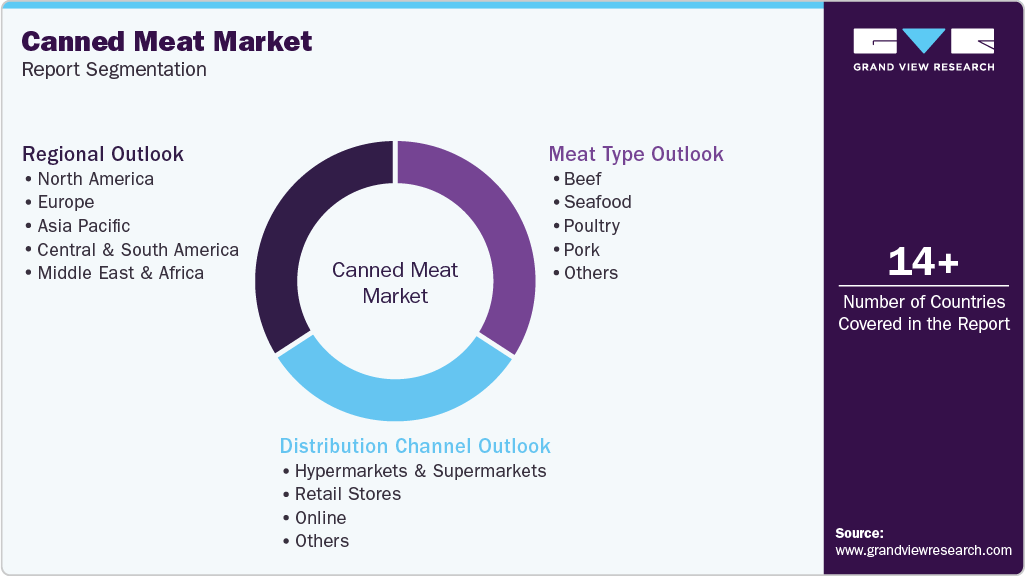
This report forecasts revenue growth at the global, regional & country levels and provides an analysis on the latest trends and opportunities in each of the sub-segments from 2021 to 2033. For this study, Grand View Research has segmented the canned meat market report based on meat type, distribution channel, and region:
 To learn more about this report, Download Free Sample Report
 -
Meat Type Outlook (Revenue, USD Million, 2021 - 2033)
-
Beef
-
Seafood
-
Poultry
-
Pork
-
Others
-
-
Distribution Channel Outlook (Revenue, USD Million, 2021 - 2033)
-
Hypermarkets & Supermarkets
-
Retail Stores
-
Online
-
Others
-
-
Regional Outlook (Revenue, USD Million, 2021 - 2033)
-
North America
-
U.S.
-
Canada
-
Mexico
-
-
Europe
-
UK
-
Germany
-
France
-
Italy
-
Spain
-
-
Asia Pacific
-
China
-
India
-
Japan
-
Australia & New Zealand
-
South Korea
-
-
Central & South America
-
Brazil
-
-
Middle East & Africa (MEA)
-
South Africa
-
-
Delivered Customizations
This report has been delivered with the following In-depth customizations
Client Request
Customization Delivered
Value Adds
Canned Meat Consumer Demand & Usage Pattern Assessment
In-depth evaluation of canned meat consumption trends across households, working professionals, students, and emergency preparedness consumers. Analysis covers key purchase drivers such as convenience, affordability, high protein content, long shelf life, and ready-to-eat usage occasions. It also examines consumption frequency, regional taste preferences, and demand across poultry, beef, pork, and processed meat variants.
Identify high-potential consumer segments such as budget-conscious households, students, and on-the-go professionals. Support targeted product positioning for ready-to-eat, affordable, and shelf-stable canned meat offerings. Highlight rising demand for clean-label, low-sodium, and flavored meat products.
Canned Meat Distribution & Retail Channel Evaluation
Assessment of supermarket, hypermarket, convenience store, and online grocery penetration for canned meat products. Includes analysis of shelf-stable logistics benefits, inventory efficiency, pricing competitiveness, and regional retail density. Evaluates the growing role of e-commerce, subscription grocery models, and private label expansion in driving category growth.
Support expansion strategies by identifying high-growth retail and e-commerce channels. Improve shelf visibility, optimize distribution networks, and enhance availability in urban and emerging markets. Enable stronger omnichannel execution and inventory planning.
Canned Meat Innovation & Product Development Benchmarking
Comparative analysis of canned meat innovation, including flavored meats, ready-to-eat meal solutions, premium gourmet variants, and mixed meat assortments. Covers advancements in clean-label formulations, reduced preservatives, BPA-free packaging, recyclable materials, and improved shelf-life technologies. Also includes traceability and transparency features such as QR-code enabled sourcing.
Identify whitespace opportunities in premium, health-oriented, and convenience-focused canned meat segments. Track innovation trends shaping consumer preferences and brand differentiation. Support R&D focus and sustainable packaging adoption strategies.
Frequently Asked Questions About This Report
Asia Pacific is the fastest-growing region over the forecast period.
The canned poultry segment led with a 40.8% revenue share in 2025.
Sales of canned meat through the hypermarkets & supermarkets segment held the highest market share of 42.8% in 2025.
The global canned meat market size was estimated at USD 8.6 billion in 2025 and is expected to reach USD 9.0 billion in 2026.
The global canned meat market is expected to grow at a compound annual growth rate of 5.6% from 2026 to 2033 to reach USD 13.2 billion by 2033.
North America dominated with a 34.8% revenue share in 2025.
Some key players operating in the canned meat market include JBS; Hormel Foods Corporation; Tyson Foods, Inc.; Wild Planet Foods; Bolton Group; Vion Food Group; Mundella Foods; Campbell Soup Company; Smithfield Foods; Valleyfresh Global.
Key factors include increasing preference for processed food and rising per capita spending on meat consumption are expected to fuel the demand for canned meat over the forecast period.
About the Author(s)
Consumer F&B Research Team
Consumer Goods · Consumer F&BThis report was authored by the consumer f&b research team at Grand View Research - comprising two research analysts, one senior research analyst, and one industry expert - with specialized expertise in the consumer f&b segment of the consumer goods industry. All findings are based on proprietary consumer goods databases, executive interviews, and regulatory analysis, subject to internal peer review prior to publication.
Last Updated:
Speak to Analyst

Customize this report to your needs - add regions, segments, or data points, with 20% free customization.
Or view our licence options:


ISO 9001:2015 & 27001:2022 Certified
We are GDPR and CCPA compliant! Your transaction & personal information is safe and secure. For more details, please read our privacy policy.


