
- Home
- »
- Advanced Interior Materials
- »
-
Carbon Fiber Wrap Market Size & Share Report, 2026-2033GVR Report cover

Carbon Fiber Wrap Market (2026 - 2033)
Size, Share & Trends Analysis Report By Resin Type (Epoxy Resin, Vinyl Ester Resin), By End Use (Aerospace, Construction & Infrastructure), By Region (North America, Asia Pacific, Europe, MEA), And Segment Forecasts
Market Size, 2025
$2.1BMarket Estimate, 2026
$2.2BMarket Forecast, 2033
$3.8BCAGR, 2026–2033
7.8%Carbon Fiber Wrap Market Summary
The global carbon fiber wrap market size was valued at USD 2.1 billion in 2025 and is projected to grow from USD 2.2 billion in 2026 to USD 3.8 billion by 2033, at a CAGR of 7.8% from 2026 to 2033. Asia Pacific dominated the market, accounting for a revenue share of 45.0% in 2025. Driven by increasing demand for lightweight and high-strength materials across various industries such as automotive, aerospace, construction, and marine.
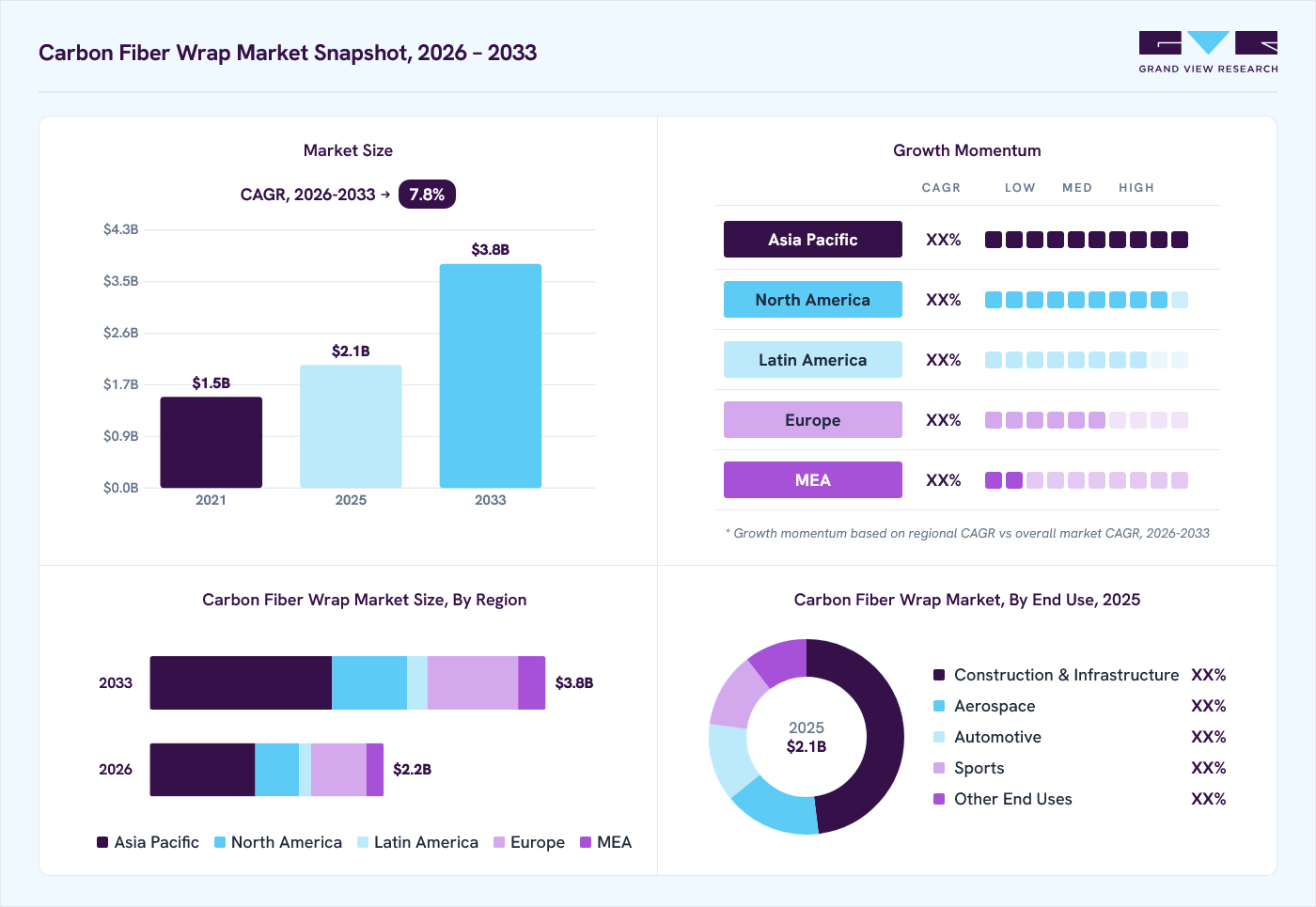 Source: Grand View Research, IR Documents, Primary Interviews, Paid DatabasesTo learn more about this report,
 Download Free Sample Report
Key Market Trends & Insights
- By resin type: Epoxy resin segment led the market with the largest revenue share of 63.6% in 2025
- By end use: Construction & infrastructure segment led the market with the largest revenue share of 48% in 2025
Regional Highlights
- Largest regional market: Asia Pacific (45.0% revenue share, 2025)
- By country: China held the largest market share in 2025.
Market Size & Forecast
- Market size in 2025: USD 2.1 Billion
- Estimated market size in 2026: USD 2.2 Billion
- Projected market size by 2033: USD 3.8 Billion
- CAGR (2026-2033): 7.8%
Three ways to get this report
Buy it, customize it, or ask a question.Ask an Analyst
Analyst response in 1 business day
- AccessReport author, directly
- Reply timeWithin 1 working day
- No sales callDirect answer only
- FormatEmail reply
- CostFree, no cost
Get the Full Report
What the study covers
- FormatsPDF · Excel · Dashboard
- Timeline2026–2033 annual, 2025 base
- Coverage20+ countries, 5 regions
- Companies10+ key players profiled
Customize the Report
20% free customization
- IncludeCountries, segments, points
- TailorTo your product definition
- ExtendDeeper competitor detail
- OrA fully bespoke study
- Turnaround5–10 working days
As manufacturers prioritize fuel efficiency and performance, carbon fiber wraps offer an ideal solution due to their exceptional strength-to-weight ratio. In the automotive sector, these wraps are increasingly used for both structural and aesthetic purposes, supporting vehicle weight reduction strategies that align with stringent emission regulations and fuel economy standards. In addition, the rising popularity of electric vehicles (EVs) is further amplifying the need for advanced lightweight materials, positioning carbon fiber wraps as a critical component in the evolving mobility landscape.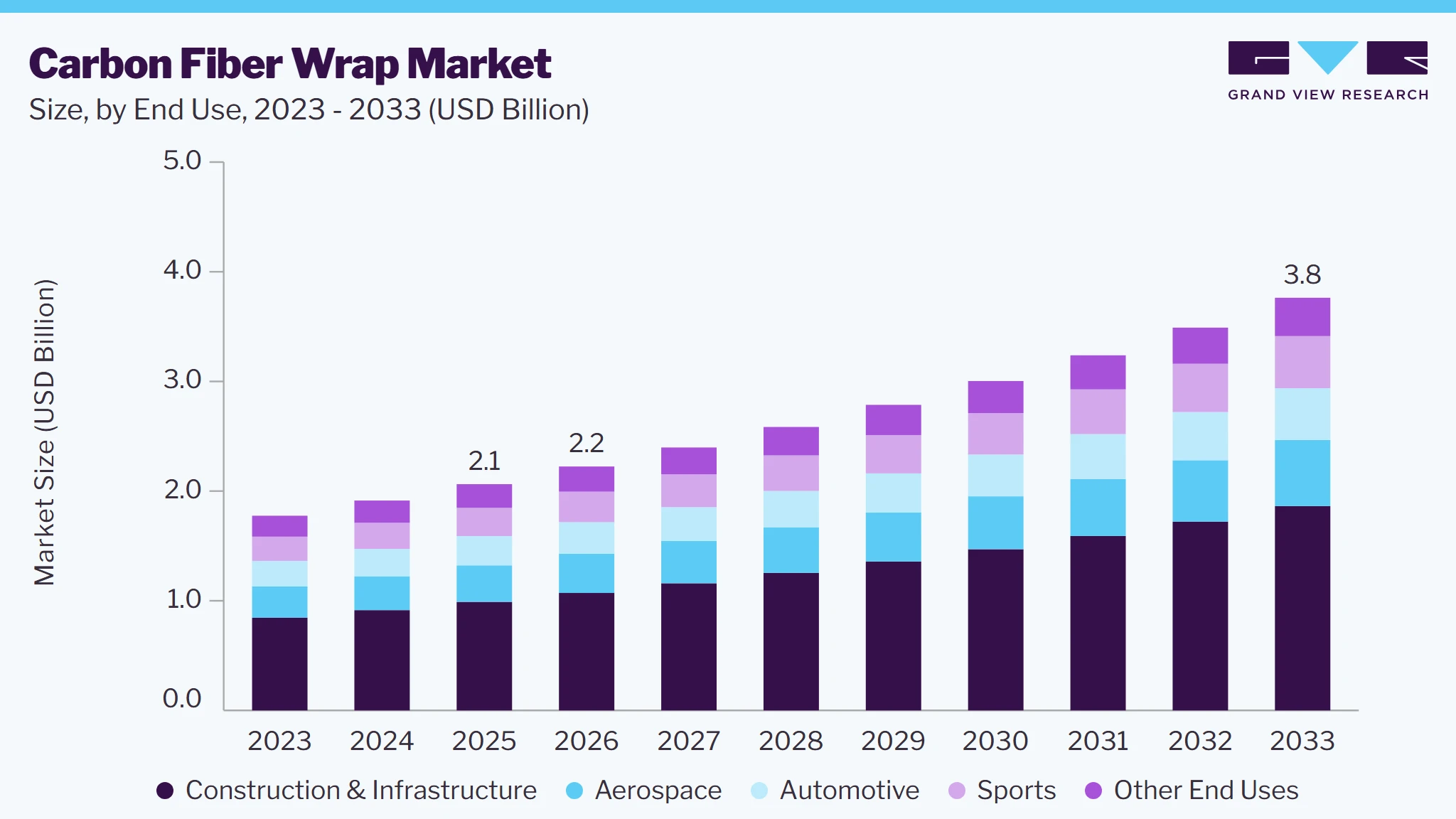 To learn more about this report, Download Free Sample Report
The construction and infrastructure sectors are adopting carbon fiber wraps for structural reinforcement and rehabilitation applications. These materials are particularly valuable in strengthening aging bridges, columns, and beams due to their corrosion resistance, ease of installation, and long-term durability. Governments and civil engineering firms are investing in retrofitting aging infrastructure, especially in seismic-prone regions, which is positively impacting market growth. Alongside this, advancements in carbon fiber manufacturing technologies have led to cost reductions and improved product accessibility, broadening their adoption across small and medium-sized enterprises. The growing emphasis on sustainability and longevity in engineering practices further supports the increased utilization of carbon fiber wraps globally.
In addition, growing awareness of non-invasive and cost-effective repair methods is influencing market adoption. Carbon fiber wraps offer a practical alternative to traditional heavy-duty repairs by allowing external reinforcement without dismantling existing structures or machinery. This is particularly beneficial in time-sensitive or remote operations where access and labor constraints make conventional solutions less feasible.
Market Dynamics
The carbon fiber wraps market is witnessing strong growth driven by increasing demand for advanced structural strengthening and rehabilitation solutions across construction, infrastructure, industrial, and transportation sectors. Carbon fiber wraps are widely used to reinforce concrete, steel, masonry, and timber structures due to their exceptional tensile strength, lightweight properties, corrosion resistance, and ease of installation. Growing investments in infrastructure repair, seismic retrofitting, and building modernization are accelerating market demand. Furthermore, advancements in fiber-reinforced polymer (FRP) technologies, epoxy resin systems, and installation techniques are improving application efficiency and expanding the adoption of carbon fiber wraps across a wide range of structural reinforcement projects.
The growing need to repair, strengthen, and extend the service life of aging infrastructure is a key driver for the carbon fiber wraps market. Governments and private infrastructure owners are investing significantly in the rehabilitation of bridges, highways, tunnels, parking structures, commercial buildings, and industrial facilities to improve structural integrity while avoiding the high costs associated with complete reconstruction. Carbon fiber wraps have become a preferred reinforcement solution due to their high tensile strength, lightweight nature, corrosion resistance, and ability to increase load-bearing capacity with minimal impact on the existing structure. Their ease of installation and reduced downtime further make them suitable for infrastructure repair and maintenance projects.
In addition, increasing concerns regarding seismic safety, extreme weather events, and stricter building regulations are accelerating the adoption of carbon fiber wraps for structural retrofitting applications. Rapid urbanization, expanding transportation infrastructure, and rising investments in public infrastructure modernization across both developed and emerging economies are creating sustained demand for advanced strengthening materials. Growing awareness of life-cycle cost savings and the long-term durability offered by fiber-reinforced polymer (FRP) systems is further encouraging engineers and asset owners to adopt carbon fiber wraps for critical structural reinforcement projects.
The carbon fiber wraps market faces challenges due to the relatively high material and installation costs compared to conventional repair and strengthening methods. Effective application requires specialized surface preparation, high-quality epoxy resin systems, skilled installers, and strict quality control to ensure reliable bonding and long-term structural performance. In addition, limited awareness of advanced composite reinforcement systems in some developing regions, along with the higher upfront investment and shortage of trained professionals, can restrict adoption, particularly in cost-sensitive infrastructure and construction projects.
The increasing emphasis on disaster-resilient infrastructure and sustainable asset management presents significant growth opportunities for the carbon fiber wraps market. Rising investments in seismic retrofitting, bridge rehabilitation, and infrastructure modernization are driving demand for lightweight, high-strength reinforcement solutions that extend the service life of existing structures while minimizing reconstruction costs. Moreover, advancements in resin technologies, prefabricated wrap systems, and fiber-reinforced polymer (FRP) solutions are improving installation efficiency and durability, further expanding the adoption of carbon fiber wraps across construction, industrial, transportation, and energy applications.
Market Concentration & Characteristics
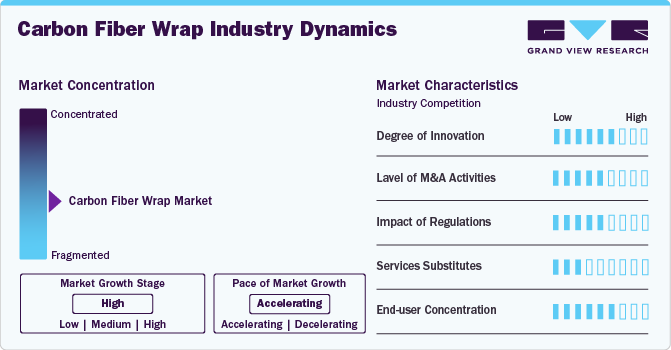
The global carbon fiber wrap industry demonstrates a moderately concentrated structure, characterized by the presence of a few dominant players alongside numerous regional and specialized manufacturers. The degree of innovation within the market remains high, driven by continuous advancements in resin formulations, fiber architecture, and application techniques to enhance strength, flexibility, and ease of installation. These innovations are crucial for meeting the evolving demands in infrastructure repair, automotive, aerospace, and industrial sectors. Strategic partnerships and collaborative R&D efforts are increasingly common, fostering the development of next-generation materials tailored to specific end uses.
Mergers and acquisitions play a significant role in shaping market dynamics, as leading firms seek to expand their product portfolios and geographical reach. Regulatory impacts are particularly notable in construction and environmental applications, where compliance with building codes and safety standards such as ACI, ASTM, and ISO certifications influence product adoption. While few direct service substitutes match the performance of carbon fiber wraps in structural reinforcement, alternatives such as steel jacketing and traditional concrete repairs persist in price-sensitive regions.
 To learn more about this report, Download Free Sample Report
End-use concentration remains high in the infrastructure and construction segment, particularly for retrofitting aging bridges, buildings, and pipelines, though uptake in high-performance automotive and aerospace applications is steadily increasing.
Analyst Perspective
The carbon fiber wraps market is evolving from a specialized structural repair solution toward a widely adopted reinforcement technology, supported by increasing investments in infrastructure rehabilitation, seismic retrofitting, and sustainable asset management across construction, industrial, and transportation sectors. While higher material and installation costs, along with the need for skilled application, continue to limit adoption in cost-sensitive projects, advancements in fiber-reinforced polymer (FRP) systems, resin technologies, and installation techniques are improving performance, durability, and cost efficiency. Over the long term, demand is expected to be driven by aging infrastructure, stricter structural safety regulations, and growing emphasis on extending the service life of existing assets rather than complete reconstruction. Consequently, companies that can offer high-performance reinforcement solutions, strengthen contractor and engineering partnerships, expand product portfolios, and support customers with technical expertise are likely to enhance their competitive position and achieve above-market growth.
Resin Type Insights
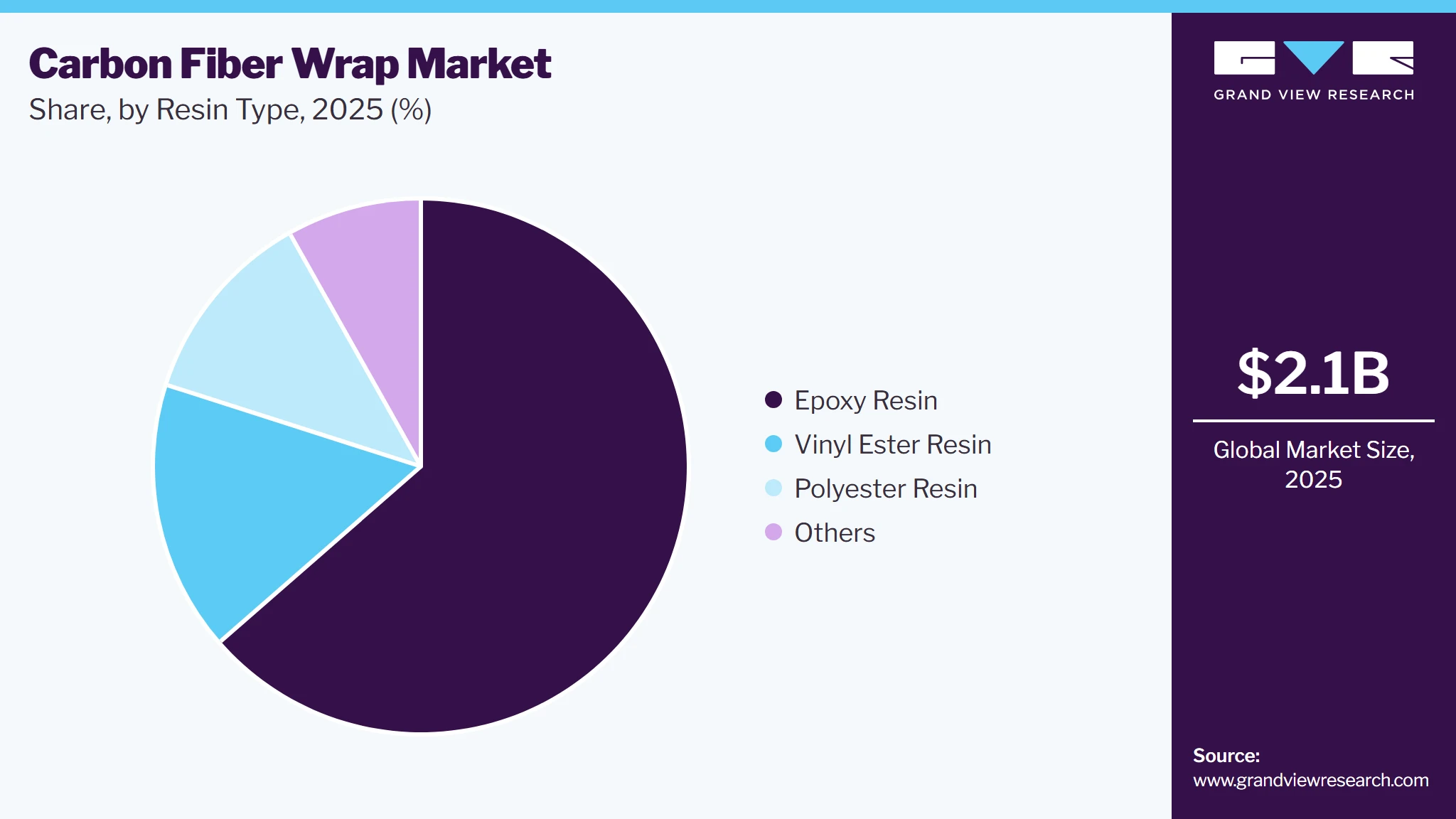
Based on resin type, the epoxy resin segment led the market with the largest revenue share of 63.6% in 2025 and is expected to grow at a CAGR of 8.1% over the forecast period, driven by its exceptional mechanical properties and versatility. Epoxy resins are renowned for their high strength-to-weight ratio, excellent adhesion to carbon fibers, and superior resistance to chemicals and heat. These characteristics make them particularly suitable for demanding applications in industries such as aerospace, automotive, and wind energy.
 To learn more about this report, Download Free Sample Report
The vinyl ester resin segment is expected to grow at a significant CAGR of 7.9% over the forecast period, driven by growing need for lightweight and high-performance materials in the automotive and aerospace industries. The combination of carbon fiber's strength-to-weight ratio and vinyl ester resin's resilience contributes to improved fuel efficiency and performance in vehicles and aircraft.
End Use Insights
Based on end use, the construction & infrastructure segment led the market with the largest revenue share of 48% in 2025 and is expected to grow at a CAGR of 8.2% over the forecast period, driven by increasing demand for structural rehabilitation solutions for aging infrastructure. As buildings, bridges, and pipelines deteriorate over time, there is a growing need for effective reinforcement methods to extend their service life. Carbon fiber wraps offer a lightweight yet robust solution for repairing and strengthening these structures, enhancing structural integrity and preventing further deterioration.
The sports segment is expected to grow at a significant CAGR of 8.0% over the forecast period, driven by the growing health and fitness consciousness among consumers is propelling the demand for advanced sports gear. As more individuals engage in sports and recreational activities, there is a heightened interest in equipment that enhances performance and reduces injury risk. Carbon fiber wraps, known for their shock absorption and ergonomic benefits, align well with these consumer preferences.
Regional Insights
The carbon fiber wrap market in North America is driven by increasing investments in aging infrastructure rehabilitation and disaster resilience initiatives. Governments across the region, particularly in the U.S. and Canada, are prioritizing the use of advanced composite materials for the structural strengthening of bridges, tunnels, pipelines, and public buildings to extend their lifespan and improve safety. Supportive policies, including infrastructure funding packages and adherence to rigorous construction standards such as those set by the American Concrete Institute (ACI), further propel market adoption.
U.S. Carbon Fiber Wrap Market Trends
The carbon fiber wrap market in the U.S. is driven by growing investment in infrastructure rehabilitation, particularly in the maintenance and seismic retrofitting of aging bridges, buildings, and pipelines. Stringent regulatory frameworks such as ACI guidelines and increased federal funding through infrastructure bills have encouraged the adoption of advanced composite materials like carbon fiber wrap. In addition, the rising focus on sustainable construction practices and the need for long-lasting, corrosion-resistant solutions further support market expansion.
Asia Pacific Carbon Fiber Wrap Market Trends
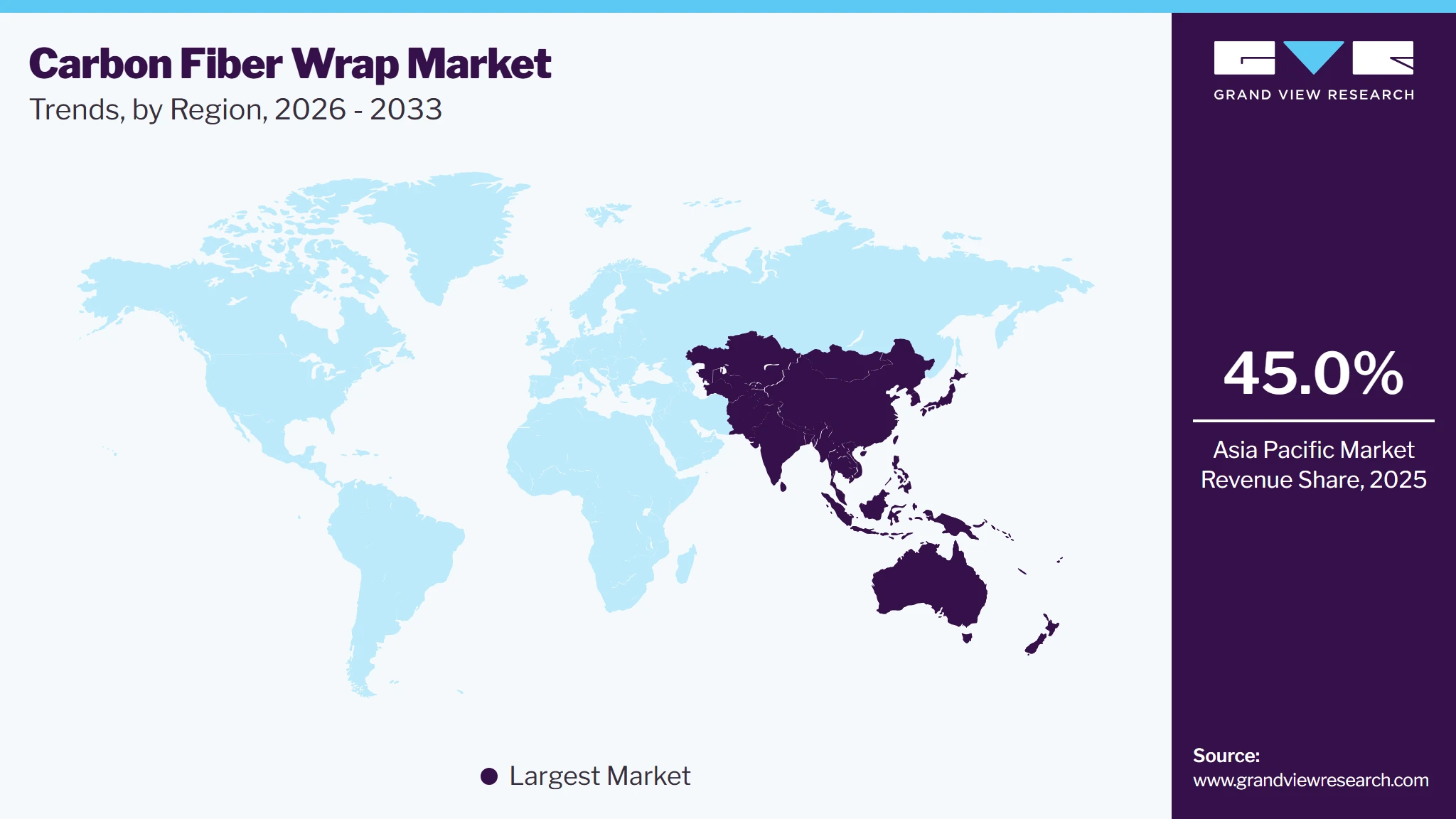
Asia Pacific dominated the carbon fiber wraps market with the largest revenue share of 45% in 2025, driven by rapid urbanization, infrastructure development, and industrial growth across emerging economies. Countries such as India, South Korea, and Japan are increasingly adopting carbon fiber wraps for structural reinforcement, especially in earthquake-prone zones. Government initiatives aimed at upgrading civil infrastructure and enhancing resilience against natural disasters are creating significant opportunities. The rising use of lightweight composites in the region’s automotive and aerospace sectors also contributes to market demand.
 To learn more about this report, Download Free Sample Report
The carbon fiber wraps market in China held the largest share in the Asia Pacific region in 2025. The government’s push for high-performance building materials to support long-term durability and energy efficiency has led to growing acceptance of carbon fiber technologies. Furthermore, China’s strong domestic production capacity for carbon fiber and resins reduces dependency on imports, supporting competitive pricing and expanded usage in both public and private sector construction projects.
Europe Carbon Fiber Wrap Market Trends
The carbon fiber wrap market in Europe is driven by stringent environmental and safety regulations, as well as the region’s commitment to sustainable infrastructure development. Countries across the EU are prioritizing the maintenance and retrofitting of existing structures to extend their service life and meet carbon reduction targets. The market also benefits from advanced R&D capabilities and the presence of several major aerospace and automotive manufacturers incorporating carbon fiber wrap in structural components and reinforcement.
The Germany carbon fiber wrap market is propelled by the country’s engineering-focused approach to construction and infrastructure management. Emphasis on preventive maintenance and energy-efficient building practices has led to the early adoption of carbon fiber wrapping technologies. Germany’s robust automotive and manufacturing sectors also contribute to demand, as carbon fiber wraps are increasingly utilized in vehicle body reinforcement, lightweight design solutions, and industrial machinery maintenance.
Latin America Carbon Fiber Wrap Market Trends
The carbon fiber wrap market in Latin America is gaining momentum due to increasing awareness of the benefits of composite materials in infrastructure preservation and seismic strengthening. Countries such as Brazil, Mexico, and Chile are investing in retrofitting aging public infrastructure, particularly bridges and water pipelines. Although cost sensitivity remains a challenge, growing support from international development programs and rising construction activity are expected to drive future growth.
Middle East & Africa Carbon Fiber Wrap Market Trends
The carbon fiber wrap market in Middle East & Africa is driven by efforts to enhance the durability and resilience of critical infrastructure exposed to harsh environmental conditions such as extreme heat, humidity, and corrosion. Investment in water management systems, oil & gas infrastructure, and smart city development projects is fueling demand for high-performance materials like carbon fiber wrap. In addition, increasing government focus on long-term infrastructure sustainability is creating favorable conditions for market expansion.
Key Carbon Fiber Wrap Company Insights
Some of the key players operating in market includeAvery Dennison, Hexis
-
Avery Dennison offers high-performance wrap films under its Supreme Wrapping Film and Conform Chrome series. These films are designed for superior conformability, durability, and ease of installation, and include realistic carbon fiber finishes that are widely used for automotive customization and commercial vehicle branding.
-
Hexis is a French manufacturer specializing in self-adhesive vinyl films for visual communication, vehicle wraps, and surface protection. In the carbon fiber wrap segment, Hexis provides a variety of textured and realistic carbon fiber films within its HX30000 and HX20000 series. These wraps are recognized for their high conformability, UV resistance, and long-lasting finishes, catering to automotive and industrial applications.
Ritrama, Oracal are some of the emerging market participants in carbon fiber wrap industry.
-
Ritrama, a part of the Fedrigoni Group, is an Italian company known for its production of pressure-sensitive films for various applications including automotive and promotional graphics. The company’s carbon fiber wrap offerings include textured films that replicate the look and feel of real carbon fiber, suitable for both full vehicle wraps and accent applications.
-
Oracal, a brand under ORAFOL Group, is a globally recognized manufacturer of adhesive vinyl films used in signage, automotive customization, and industrial labeling. In the carbon fiber wrap industry, Oracal offers premium textured films such as the ORACAL 975 Premium Structure Cast series. These films provide an authentic carbon fiber appearance and are engineered for durability, dimensional stability, and high conformability on curved surfaces.
Key Carbon Fiber Wrap Companies:
The following key companies have been profiled for this study on the carbon fiber wrap market.
-
Avery Dennison
-
Hexis
-
Ritrama
-
Oracal
-
MetroWrapz
-
Xpel
-
Vvivid Vinyl
-
TeckWrap
Competitive Benchmarking
Category
Operating Strategies
Competitive Edge
Weakness
Established Players (Avery Dennison, Hexis, Ritrama, Oracal, XPEL)
- Develop high-performance carbon fiber wrap films with enhanced durability and aesthetics.
- Expand product portfolios through innovation in adhesive technologies, finishes, and installation-friendly products.
- Strengthen global distribution networks and partnerships with automotive restylers, distributors, and installers.
- Strong global brand recognition and extensive distribution networks.
- Broad product portfolios with proven quality and performance.
- Significant R&D capabilities and established relationships with OEMs and professional installers.
- Premium pricing compared to regional brands.
- High investment in product development and marketing.
- Dependence on automotive aftermarket demand and consumer spending trends.
Emerging Players (MetroWrapz, Vvivid Vinyl, TeckWrap)
- Focus on affordable and customizable carbon fiber wrap solutions.
- Expand online sales channels and strengthen installer partnerships.
- Launch new textures, colors, and finishes to address evolving consumer preferences.
- Competitive pricing and high customization capabilities.
- Faster product launches and responsiveness to market trends.
- Strong presence in e-commerce and growing recognition among automotive enthusiasts.
- Limited global distribution and production capacity.
- Lower brand recognition than established players.
- Smaller R&D investments and narrower product portfolios.
Carbon Fiber Wrap Market Report Scope
Report Attribute
Details
Market size in 2025
USD 2.1 billion
Estimated market size in 2026
USD 2.2 billion
Projected market size by 2033
USD 3.8 billion
Growth rate
CAGR of 7.8% from 2026 to 2033
Base year for estimation
2025
Historical data
2021 - 2024
Forecast period
2026 - 2033
Quantitative units
Revenue in USD million/billion and CAGR from 2026 to 2033
Report coverage
Revenue forecast, company ranking, competitive landscape, growth factors, and trends
Segments covered
Resin type, end use, region
Regional scope
North America; Europe; Asia Pacific; Central & South America; Middle East & Africa
Country scope
U.S.; Canada; Mexico; UK; Germany; France; Italy; Spain; China; India; Japan; South Korea
Key companies profiled
Avery Dennison; Hexis; Ritrama; Oracal; MetroWrapz; Xpel; Vvivid Vinyl; TeckWrap
Customization scope
Free report customization (equivalent up to 8 analysts' working days) with purchase. Addition or alteration to country, regional & segment scope.
Pricing and purchase options
Avail customized purchase options to meet your exact research needs. Explore purchase options
Global Carbon Fiber Wrap Market Report Segmentation
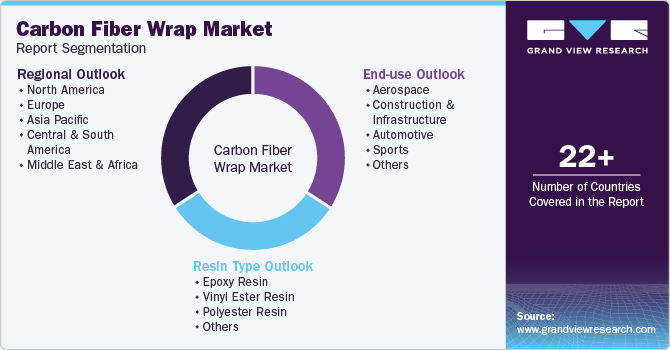
This report forecasts revenue growth at global, regional, and country levels and provides an analysis of the latest industry trends in each of the sub-segments from 2021 to 2033. For this study, Grand View Research has segmented the global carbon fiber wrap market report based on resin type, end use and region.
 To learn more about this report, Download Free Sample Report
-
Resin Type Outlook (Revenue, USD Million, 2021 - 2033)
-
Epoxy Resin
-
Vinyl Ester Resin
-
Polyester Resin
-
Others
-
-
End Use Outlook (Revenue, USD Million, 2021 - 2033)
-
Aerospace
-
Construction & Infrastructure
-
Automotive
-
Sports
-
Others
-
-
Regional Outlook (Revenue, USD Million, 2021 - 2033)
-
North America
-
U.S.
-
Canada
-
Mexico
-
-
Europe
-
Germany
-
UK
-
France
-
Italy
-
Spain
-
-
Asia Pacific
-
China
-
Japan
-
India
-
South Korea
-
-
Central & South America
-
Middle East & Africa
-
Research Methodology
The carbon fiber wrap market figures in this report are based on a proven research process that combines executive interviews with secondary research from proprietary databases, company filings, and recognized regulatory and institutional sources. Market size is built through value-chain sizing - reconciling supply-side and demand-side estimates - and triangulated with bottom-up and top-down approaches. Every estimate passes multiple levels of expert validation before publication, with each carbon fiber wrap segment quantified using the revenue-capture definitions in the table below.
Segment Definition
Segment- Resin Type
Revenue Capture Definition
Epoxy Resin
Revenue generated from the sale of carbon fiber wraps manufactured using epoxy resin systems for structural strengthening, repair, and reinforcement of concrete, steel, masonry, timber, and composite structures across construction, infrastructure, aerospace, automotive, industrial, and other end-use applications.
Vinyl Ester Resin
Revenue generated from the sale of carbon fiber wraps manufactured using vinyl ester resin systems for structural reinforcement applications requiring enhanced chemical resistance, corrosion protection, and durability across industrial facilities, marine structures, infrastructure, and other demanding environments.
Polyester Resin
Revenue generated from the sale of carbon fiber wraps manufactured using polyester resin systems for cost-effective structural strengthening, repair, and reinforcement applications in commercial buildings, industrial structures, transportation infrastructure, and general construction projects.
Others
Revenue generated from the sale of carbon fiber wraps manufactured using alternative resin systems, including polyurethane, phenolic, bio-based, and other specialty resins, used in specialized structural reinforcement and repair applications requiring specific mechanical, thermal, or environmental performance characteristics.
Segment- End Use
Revenue Capture Definition
Aerospace
Revenue generated from the sale of carbon fiber wraps used for structural reinforcement, repair, maintenance, and refurbishment of aircraft, helicopters, unmanned aerial vehicles (UAVs), spacecraft, and aerospace components to improve strength, durability, and fatigue resistance.
Construction & Infrastructure
Revenue generated from the sale of carbon fiber wraps used for strengthening, seismic retrofitting, rehabilitation, and repair of bridges, tunnels, highways, commercial buildings, residential structures, parking facilities, dams, and other civil infrastructure to enhance structural performance and extend service life.
Automotive
Revenue generated from the sale of carbon fiber wraps used for structural reinforcement, repair, and lightweight component strengthening in passenger vehicles, electric vehicles (EVs), commercial vehicles, motorsports, and specialty automotive applications.
Sports
Revenue generated from the sale of carbon fiber wraps used for reinforcing, repairing, and enhancing the durability of sporting goods and recreational equipment, including bicycles, golf clubs, tennis rackets, hockey sticks, skis, fishing rods, and other high-performance sports equipment.
Estimation Model
Layer Name
Key Question
Description
Structural Rehabilitation & Construction Industry Assessment
What is the total addressable structural reinforcement market generating demand for carbon fiber wraps?
This layer evaluates structural repair, rehabilitation, and strengthening activities across key sectors such as construction & infrastructure, aerospace, automotive, sports, and industrial applications to establish the potential demand for carbon fiber wraps.
Carbon Fiber Wrap Adoption Across End-use Industries
What proportion of structural reinforcement projects utilize carbon fiber wraps?
This layer assesses the adoption of carbon fiber wraps across various end-use industries based on structural strengthening requirements, seismic retrofitting activities, corrosion protection needs, rehabilitation projects, and preference for fiber-reinforced polymer (FRP) reinforcement systems over conventional repair methods.
Resin Type and Product Utilization Analysis
What share of demand is served by different resin systems used in carbon fiber wraps?
This layer analyzes the utilization of epoxy, vinyl ester, polyester, and other resin systems across end-use industries based on bonding performance, chemical resistance, durability, environmental exposure, project specifications, and application requirements.
Carbon Fiber Wraps Market Revenue
What revenue is generated from the sale of carbon fiber wraps globally?
This final layer estimates market revenue by combining carbon fiber wrap demand volumes with average selling prices across resin types, end-use industries, and regional markets.
Delivered Customizations
This report has been delivered with the following In-depth customizations
CLIENT REQUEST
CUSTOMIZATION DELIVERED
VALUE ADD
Opportunity Assessment
Detailed assessment of growth opportunities across resin types, end-use industries, and structural reinforcement applications, including analysis of infrastructure rehabilitation, seismic retrofitting, bridge strengthening, industrial maintenance, and increasing adoption of fiber-reinforced polymer (FRP) systems.
Enables identification of high-growth application areas, emerging end-use opportunities, and strategic investment priorities across the carbon fiber wraps value chain.
Technology & Sustainability Assessment
Comprehensive evaluation of technological advancements and sustainability trends in the carbon fiber wraps market, including advanced epoxy and vinyl ester resin systems, high-performance FRP technologies, innovative installation techniques, durable reinforcement solutions, and sustainable infrastructure rehabilitation practices.
Supports product innovation, technology roadmap development, sustainability initiatives, and competitive differentiation through advanced structural reinforcement solutions.
Regional Segmentation Analysis
In-depth regional and country-level analysis covering market size, growth outlook, infrastructure investments, bridge and building rehabilitation activities, seismic retrofitting initiatives, construction trends, competitive landscape, and carbon fiber wrap adoption across key geographic markets.
Assists in identifying high-growth regions, optimizing expansion strategies, and understanding region-specific demand drivers, infrastructure spending, and long-term market opportunities.
Frequently Asked Questions About This Report
The global carbon fiber wrap market size was estimated at USD 2.1 billion in 2025 and is expected to reach USD 2.2 billion in 2026.
The global carbon fiber wrap market is expected to grow at a compound annual growth rate of 7.8% from 2026 to 2033 to reach USD 3.8 billion by 2033.
The epoxy resin segment led the market and accounted for the largest revenue share of 63.6% in 2025, driven by its exceptional mechanical properties and versatility.
Some of the key players operating in the carbon fiber wrap market include Avery Dennison, Hexis, Ritrama, Oracal, MetroWrapz,Xpel, Vvivid Vinyl, and TeckWrap
The key factors that are driving the carbon fiber wrap market include rising demand for lightweight and high-strength materials, growth in automotive and aerospace sectors, and increasing use in sports equipment and infrastructure reinforcement.
Asia Pacific accounted for the largest share of the carbon fiber wraps market in 2025, capturing approximately 45% of the global market.
Construction & Infrastructure end use accounted for the largest share of the carbon fiber wraps market in 2025, capturing approximately 48% of the global market.
About the Author(s)
Advanced Interior Materials Research Team
Advanced Materials · Advanced Interior MaterialsThis report was authored by the advanced interior materials research team at Grand View Research - comprising two research analysts, one senior research analyst, and one industry expert - with specialized expertise in the advanced interior materials segment of the advanced materials industry. All findings are based on proprietary advanced materials databases, executive interviews, and regulatory analysis, subject to internal peer review prior to publication.
Last Updated:
Speak to Analyst

Customize this report to your needs - add regions, segments, or data points, with 20% free customization.
Or view our licence options:


ISO 9001:2015 & 27001:2022 Certified
We are GDPR and CCPA compliant! Your transaction & personal information is safe and secure. For more details, please read our privacy policy.


