
- Home
- »
- Medical Devices
- »
-
Cell And Gene Therapy Clinical Trials Market Report 2026-2033GVR Report cover

Cell And Gene Therapy Clinical Trials Market (2026 - 2033)
Size, Share & Trends Analysis Report By Phase (Phase I, Phase II, Phase III), By Indication (Oncology, Cardiology, CNS, Musculoskeletal, Infectious Diseases), By Region, And Segment Forecasts
Market Size, 2025
$12.3BMarket Estimate, 2026
$14.2BMarket Forecast, 2033
$39.4BCAGR, 2026–2033
15.6%Cell And Gene Therapy Clinical Trials Market Summary
The global cell and gene therapy clinical trials market size was valued at USD 12.3 billion in 2025 and is projected to grow from USD 14.2 billion in 2026 to USD 39.4 billion by 2033, at a CAGR of 15.6% from 2026 to 2033. North America dominated for the largest revenue share of 50.7% in 2025. The market is driven by an increase in R&D funding, rising patient demand for innovative therapies, growing interest in cell and gene therapies for cancer treatment, and a favorable regulatory environment.
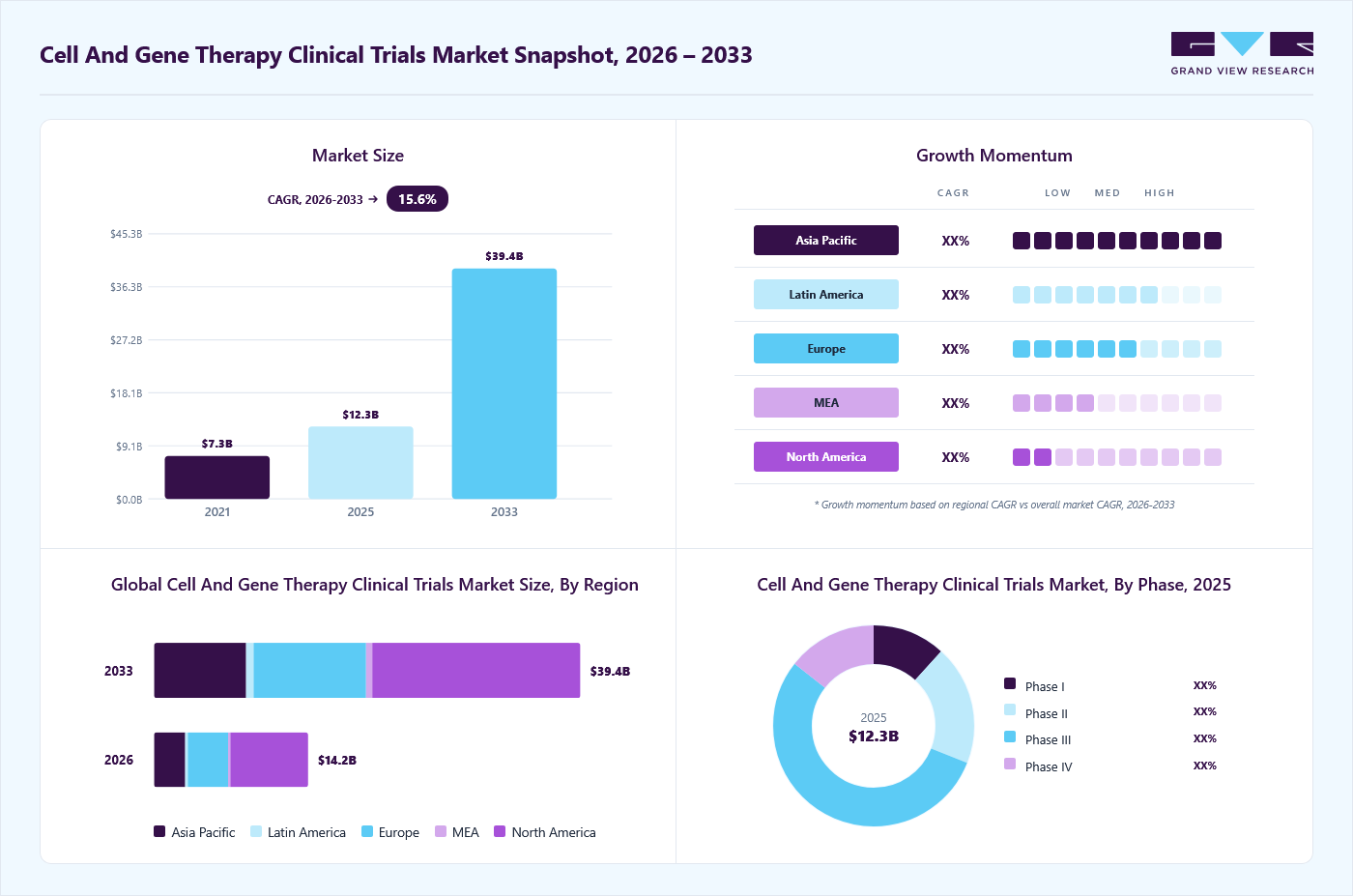 Source: Grand View Research, IR Documents, Primary Interviews, Paid DatabasesTo learn more about this report,
 Download Free Sample Report
Key Market Trends & Insights
- By phase: Phase III segment accounted for the largest revenue share of 54.6% in 2025.
- By indication: Oncology segment dominated the market with a revenue share of 48.3% in 2025.
Regional Highlights
- Largest regional market: North America (50.7% revenue share, 2025)
- Fastest-growing regional market: Asia Pacific (highest CAGR, 2026-2033)
- By country: The U.S. held the largest market share in 2025
Market Size & Forecast
- Market size in 2025: USD 12.3 Billion
- Estimated market size in 2026: USD 14.2 Billion
- Projected market size by 2033: USD 39.4 Billion
- CAGR (2026-2033): 15.6%
Three ways to get this report
Buy it, customize it, or ask a question.Ask an Analyst
Analyst response in 1 business day
- AccessReport author, directly
- Reply timeWithin 1 working day
- No sales callDirect answer only
- FormatEmail reply
- CostFree, no cost
Get the Full Report
What the study covers
- FormatsPDF · Excel · Dashboard
- Timeline2026–2033 annual, 2025 base
- Coverage20+ countries, 5 regions
- Companies10+ key players profiled
Customize the Report
20% free customization
- IncludeCountries, segments, points
- TailorTo your product definition
- ExtendDeeper competitor detail
- OrA fully bespoke study
- Turnaround5–10 working days
The market is primarily driven by the accelerating pace of innovation in genetic medicine and increasing regulatory support for advanced therapies. Advancements in genome editing technologies such as CRISPR, as well as breakthroughs in viral and non-viral vector delivery systems, have enabled researchers to develop highly targeted therapeutic candidates for rare genetic disorders, cancers, and autoimmune diseases. Regulatory bodies, including the FDA and EMA, have introduced accelerated approval pathways, orphan drug designations, and RMAT (Regenerative Medicine Advanced Therapy) designations to support CGT development. These incentives have significantly reduced the time and cost burden for companies developing novel CGT products, encouraging the launch of early-phase trials.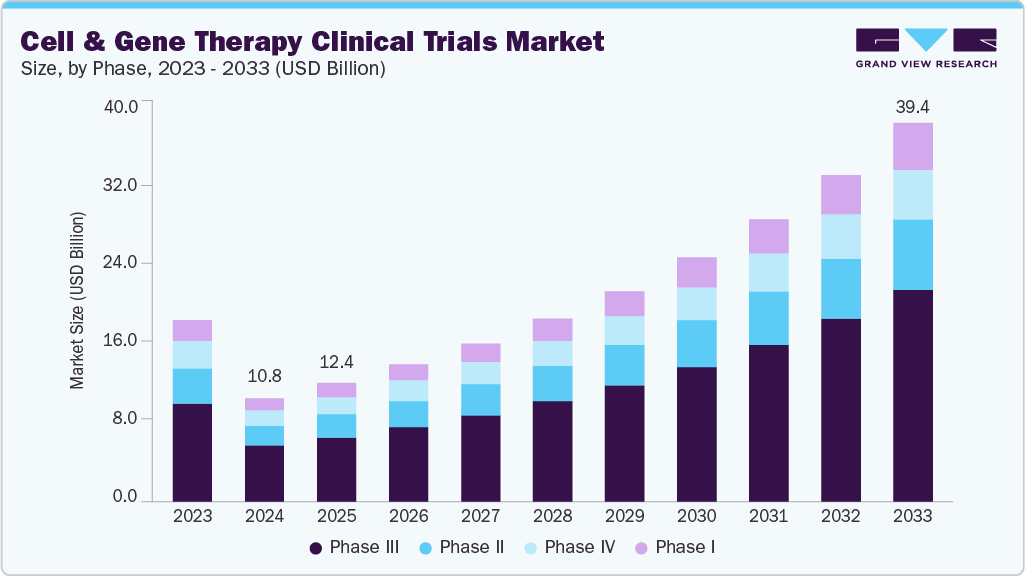 To learn more about this report, Download Free Sample Report
Furthermore, the influx of funding and strategic partnerships between biotech firms, large pharmaceutical companies, and academic research centers focused on CGT development is driving the market growth. This financial momentum, especially from venture capital and public-private collaborations, is enabling clinical trial sponsors to scale up from pilot studies to multi-site international trials. Companies like Bluebird Bio, CRISPR Therapeutics, and Beam Therapeutics, numerous Phase I/II trials are being initiated in areas such as sickle cell disease, CAR-T therapies, and gene editing-based oncology pipelines.Moreover, the need to validate safety, dosing, and long-term efficacy of these therapies has increased demand for specialized CROs and trial infrastructure tailored to CGT studies.
Market Dynamics
The cell and gene therapy (CGT) clinical trials market is undergoing rapid expansion, driven by increasing investment in genetic medicine, advancements in gene-editing technologies, rising clinical activity in oncology and rare diseases, and supportive regulatory pathways. Growing outsourcing of complex CGT studies to specialized CROs, coupled with expanding clinical pipelines and manufacturing innovation, continues to reshape the competitive landscape.
One of the strongest growth drivers for the cell and gene therapy clinical trials market is the rapid expansion of the global CGT pipeline supported by favorable regulatory frameworks and increasing investment activity. Cell and gene therapies are increasingly being developed for oncology, hematological disorders, rare genetic diseases, autoimmune conditions, and neurological disorders, significantly expanding the addressable clinical trial landscape. Oncology alone accounted for the largest share of clinical trial activity in 2025, driven by CAR-T therapies, tumor-infiltrating lymphocytes (TILs), and gene-edited immune cell products.
Advancements in CRISPR-Cas9, base editing, prime editing, viral vectors, and non-viral delivery systems have improved therapeutic precision and safety profiles, enabling sponsors to launch a growing number of first-in-human and late-stage studies. The increasing maturity of these technologies is creating sustained demand for specialized clinical trial services, patient recruitment capabilities, biomarker testing, and regulatory support.
Regulatory agencies have further accelerated market growth through programs such as the FDA’s Regenerative Medicine Advanced Therapy (RMAT), Fast Track, Breakthrough Therapy, and orphan drug designations. These pathways shorten development timelines and provide enhanced interactions with regulators. Recent FDA initiatives aimed at streamlining gene therapy development are expected to further reduce development barriers and support trial expansion.
Patient enrollment remains particularly challenging because many CGT programs target rare diseases or narrowly defined patient populations. Long-term follow-up requirements for safety monitoring further increase study duration and resource requirements. As therapies advance into late-stage trials, sponsors must demonstrate durable efficacy, manufacturing consistency, and long-term safety outcomes, creating additional regulatory hurdles.
Furthermore, regulatory expectations continue to evolve as novel modalities move into clinical development. Recent examples where regulators requested additional clinical evidence for gene therapy programs highlight the uncertainty associated with approval pathways and commercial timelines. These challenges can delay trial progression, increase development costs, and create investment risk for sponsors, particularly smaller biotechnology companies.
Analyst Perspective
The Cell and gene therapy clinical trials market is poised for robust growth through 2033, supported by expanding clinical pipelines, increasing adoption of gene-editing technologies, and continued investment in advanced therapies targeting oncology, rare diseases, and genetic disorders. Growing outsourcing of complex clinical studies to specialized CROs is expected to drive demand for integrated trial management, regulatory support, and patient recruitment services. While manufacturing constraints, patient enrollment challenges, and evolving regulatory requirements may continue to create execution risks, advancements in trial design, decentralized technologies, and regulatory acceleration programs are expected to improve development efficiency. Companies with deep scientific expertise, global trial execution capabilities, and specialized cell and gene therapy infrastructure will be best positioned to capitalize on the market's long-term growth opportunities.
Opportunity Analysis
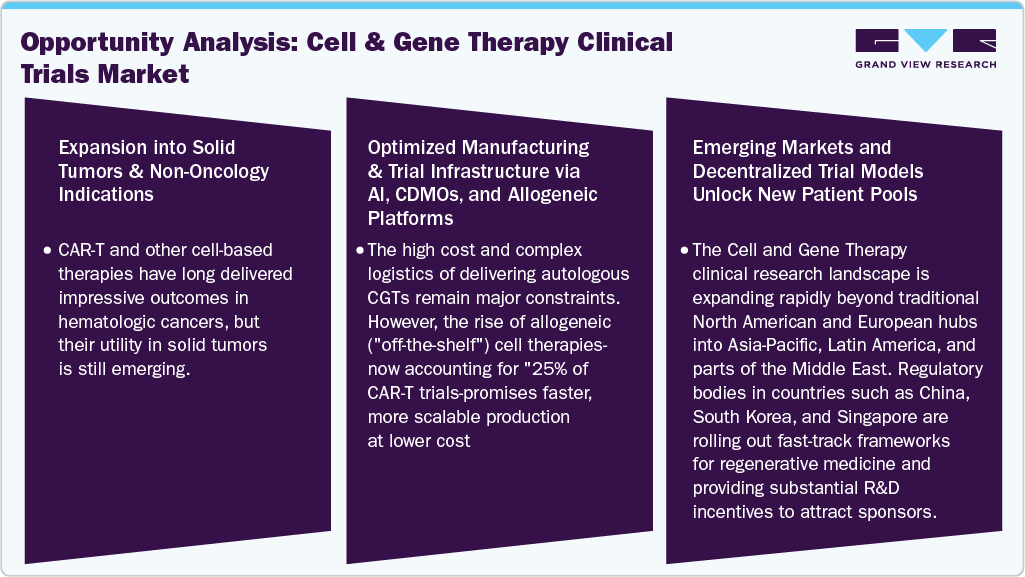 To learn more about this report, Download Free Sample Report
Technological Advancements
The refinement of gene editing technologies-particularly CRISPR-Cas9, base editors, and prime editing-is dramatically accelerating the CGT trial landscape. These tools offer precise gene correction with minimized off-target effects, enabling safer and more durable therapeutic responses. Companies like Beam Therapeutics and Editas Medicine are running clinical trials using next-gen base editors to treat conditions like sickle cell disease and Leber congenital amaurosis. In parallel, innovations in viral vector engineering (AAVs, lentiviruses) and non-viral delivery systems (lipid nanoparticles, electroporation) have enhanced transduction efficiency, payload capacity, and tissue specificity, expanding the types of diseases that CGTs can safely and effectively target.
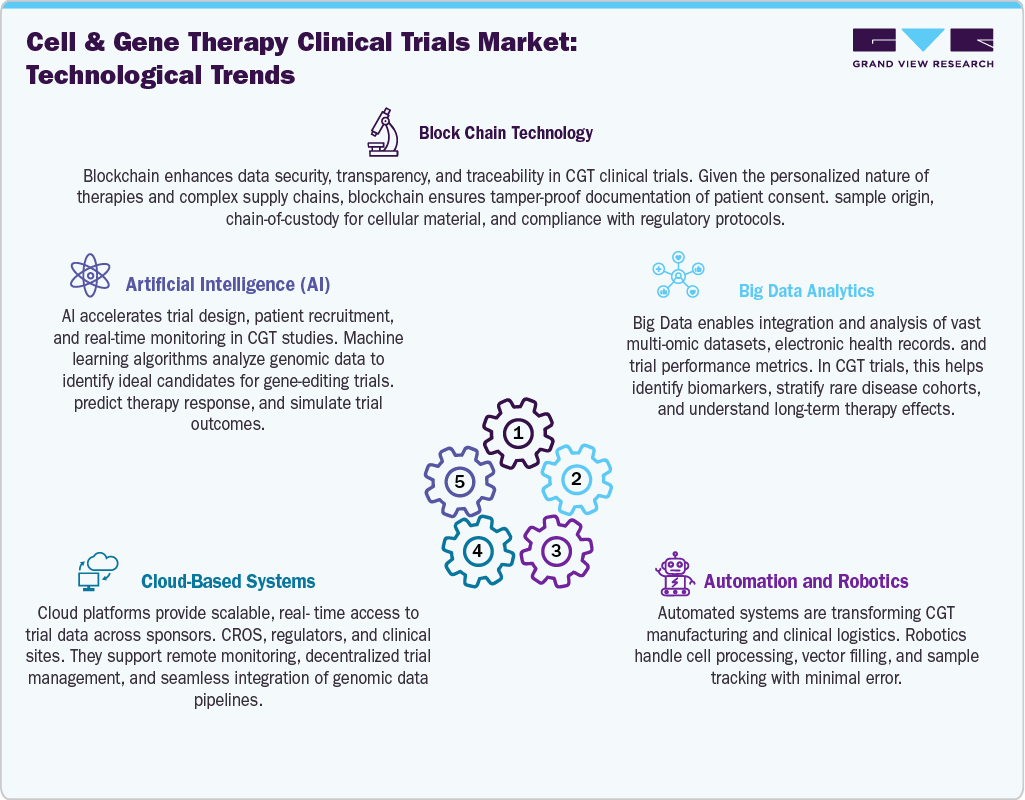 To learn more about this report, Download Free Sample Report
Pricing Analysis
The pricing model landscape of the Cell and Gene Therapy Clinical Trials Market is shaped by the complexity of personalized treatment development, high per-patient costs, and growing pressure for value-based justification. Unlike traditional trials, CGT studies involve intricate processes such as autologous cell harvesting, genome manipulation, and cold chain logistics, which significantly increase operational expenditure. Consequently, pricing strategies are evolving from conventional fee-for-service models to more integrated, milestone-driven, or risk-sharing approaches that align with the therapeutic value and trial outcomes. Many service providers and CROs are now adopting modular pricing, offering scalable solutions based on trial phase, platform technology (e.g., AAV vs. CAR-T), and sponsor size.
 To learn more about this report, Download Free Sample Report
Phase Insights
On the basis of phase, the market is classified into phase I, phase II, phase III, and phase IV. The Phase III segment accounted for the largest revenue share of 54.6% in 2025. The growth of the segment is due to the increasing number of late-stage pipeline candidates transitioning from early-phase success. As CGT therapies advance through regulatory pathways, Phase III trials serve as the critical stage for evaluating efficacy, long-term safety, and comparative effectiveness at scale.
The Phase I segment is anticipated to grow at the fastest CAGR during the forecast period. The segment growth is driven due to the rapid expansion of early-stage investigational programs in cell and gene therapies. As advancements in gene editing tools, viral vector technologies, and synthetic biology platforms accelerate, a growing number of biotech startups and academic institutions are initiating first-in-human studies to validate novel therapeutic mechanisms.
Indication Insights
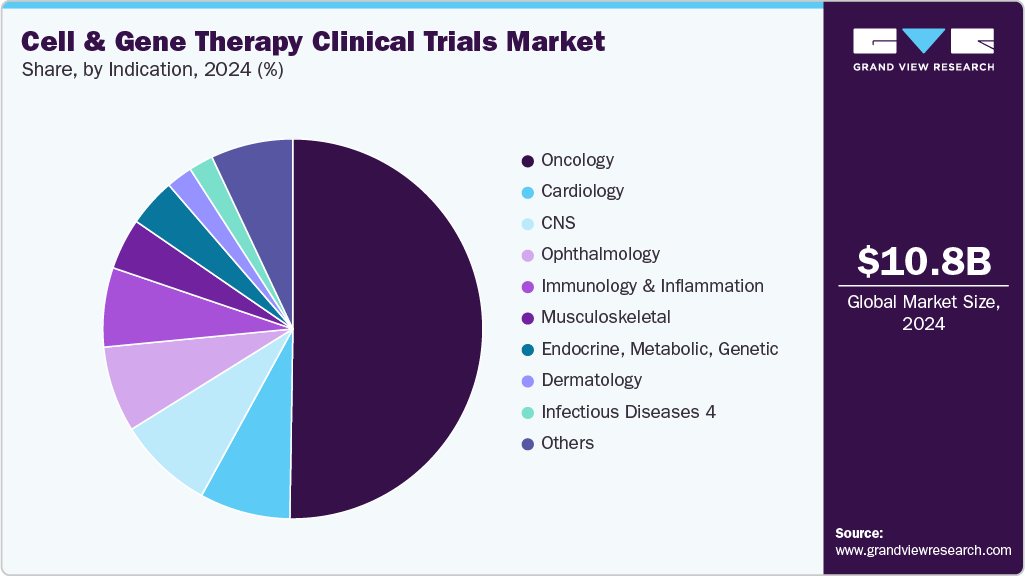
On the basis of indication, the market is segregated into oncology, cardiology, CNS, musculoskeletal, infectious diseases, dermatology, endocrine, metabolic, genetic, immunology & inflammation, ophthalmology, hematology, gastroenterology, and others. The oncology segment dominated in 2025 with 48.3% market share, due to the high volume of pipeline candidates targeting hematologic malignancies and solid tumors. Cancer remains one of the most studied therapeutic areas in CGT, with a significant concentration of CAR-T cell therapies, tumor-infiltrating lymphocytes (TILs), and gene-edited immune cell products progressing through clinical development. The strong efficacy signals observed in refractory cancers, such as acute lymphoblastic leukemia, multiple myeloma, and non-Hodgkin lymphoma, have encouraged sponsors to initiate larger and more diversified oncology trials.
 To learn more about this report, Download Free Sample Report
The cardiology segment is anticipated to grow at a lucrative CAGR over the forecast period. The growth of the segment is due to the expanding application of regenerative cell and gene therapies in treating cardiovascular disorders that are otherwise resistant to conventional interventions. Conditions such as heart failure, myocardial infarction, and inherited cardiomyopathies are increasingly being targeted with gene-editing tools, stem cell therapies, and gene delivery vectors aimed at restoring cardiac function and repairing damaged tissue.
Regional Insights
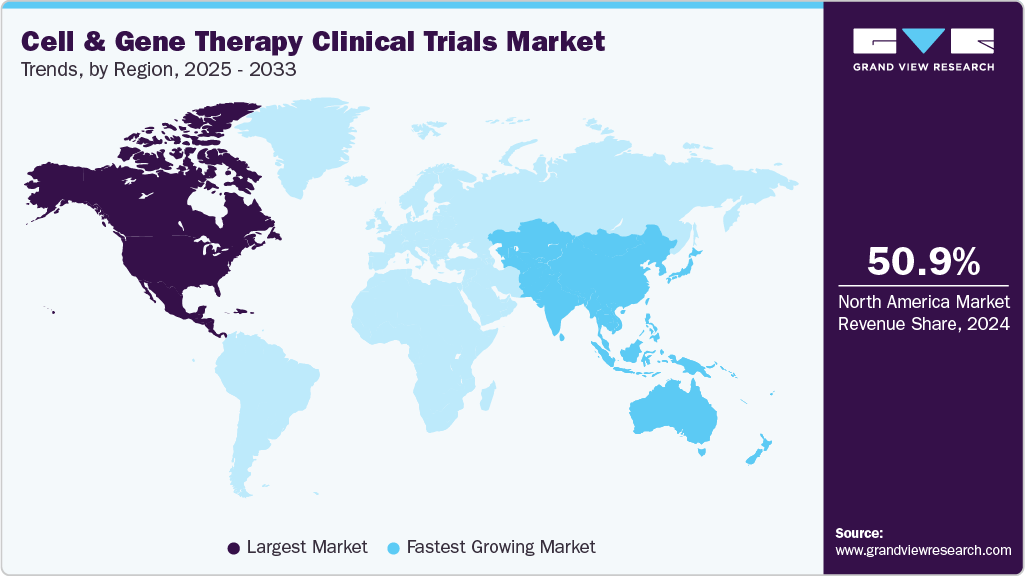
North America cell and gene therapy clinical trials market accounted for the largest revenue share of 50.7% in the cell and gene therapy clinical trials market in 2025. This is attributed to the region’s advanced clinical research infrastructure, high concentration of biotech and pharmaceutical companies, and strong regulatory support for innovative therapies. The United States, in particular, leads in the number of CGT clinical trials, driven by expedited approval pathways such as the FDA’s RMAT designation and Orphan Drug status, which incentivize early and mid-stage development.
 To learn more about this report, Download Free Sample Report
U.S. Cell And Gene Therapy Clinical Trials Market Trends
The cell and gene therapy clinical trials market in the U.S. held the largest share in 2025. The country’s growth is due to its mature biopharmaceutical ecosystem, cutting-edge research capabilities, and proactive regulatory environment. The U.S. Food and Drug Administration (FDA) has played a pivotal role in accelerating CGT development through initiatives like the Regenerative Medicine Advanced Therapy (RMAT) designation, Fast Track, and Breakthrough Therapy designations, which streamline the clinical approval process for innovative treatments.
Europe Cell And Gene Therapy Clinical Trials Market Trends
The cell and gene therapy clinical trials market in Europe is expected to grow significantly due to the region’s increasing regulatory harmonization, supportive funding mechanisms, and growing infrastructure for advanced therapy research. The European Medicines Agency (EMA) has established the Committee for Advanced Therapies (CAT) to streamline the scientific evaluation of cell and gene therapies, while programs like PRIME (PRIority MEdicines) offer accelerated development support for promising candidates.
Germanycell and gene therapy clinical trials market held a significant share in 2024, owing to the country’s strong biomedical research ecosystem, favorable regulatory environment, and advanced clinical infrastructure. Germany hosts a high concentration of certified clinical trial centers, university hospitals, and GMP-compliant manufacturing facilities that are well-equipped to conduct complex CGT trials. The Paul-Ehrlich-Institut, Germany’s regulatory body for advanced therapies, has established clear guidelines and a supportive framework for the approval and oversight of ATMPs (Advanced Therapy Medicinal Products), fostering innovation and reducing administrative delays.
The cell and gene therapy clinical trials market in the UK held the largest share in 2024. The growth of the market is due to its pioneering regulatory framework, strong public investment, and world-class clinical research infrastructure. The Medicines and Healthcare products Regulatory Agency (MHRA) has introduced progressive approval pathways and early scientific advice programs specifically designed for Advanced Therapy Medicinal Products (ATMPs), enabling faster trial initiation.
Asia Pacific Cell And Gene Therapy Clinical Trials Market Trends
The cell and gene therapy clinical trials market in Asia Pacific is expected to be the fastest-growing industry due to the region’s rapidly evolving regulatory frameworks, increasing healthcare investments, and expanding biotech ecosystems. Countries like China, Japan, South Korea, and Singapore are actively streamlining approval processes and offering incentives such as priority review and expedited clinical trial authorizations specifically for advanced therapies.
Chinacell and gene therapy clinical trials market held the largest share in 2024. The growth is due to the country’s strong government support, evolving regulatory frameworks, and growing domestic biotech innovation. Regulatory agencies have introduced accelerated approval pathways and clearer guidelines that encourage early-phase trial initiation, reducing traditional barriers for advanced therapies. China’s large and diverse patient population offers significant advantages for recruiting participants, especially in rare genetic and oncology indications.
The cell and gene therapy clinical trials market in Japan is expected to grow over the forecast period. The country’s growth is due to the combination of supportive regulatory frameworks, robust research infrastructure, and increasing demand for innovative treatments. The Pharmaceuticals and Medical Devices Agency (PMDA) has implemented expedited approval processes, such as the Sakigake designation system, to accelerate the development and commercialization of advanced therapies. This regulatory support, coupled with substantial government funding and strategic partnerships between academic institutions and biotech companies, has fostered a conducive environment for clinical trials.
Indiacell and gene therapy clinical trials market is anticipated to grow at a lucrative CAGR over the forecast period. India's large and diverse patient population, cost-effective research capabilities, and supportive regulatory environment are driving the country’s growth. The Central Drugs Standard Control Organization (CDSCO) has implemented structured regulatory pathways and accelerated approval processes for orphan diseases and rare genetic disorders, facilitating the initiation and progression of clinical trials.
Key Cell And Gene Therapy Clinical Trials Company Insights
Key players operating in the cell and gene therapy clinical trials market are undertaking various initiatives to strengthen their presence and increase the reach of their products and services. Strategies such as expansion activities and partnerships are key in propelling the market growth.
Key Cell And Gene Therapy Clinical Trials Companies
The following are the leading companies in the cell and gene therapy clinical trials market.
-
IQVIA
-
ICON Plc
-
LabCorp
-
Charles River Laboratories
-
PAREXEL International Corp.
-
Syneos Health
-
Medpace
-
Thermo Fisher Scientific, Inc.
-
Novotech
-
Veristat, LLC
Competitive Benchmarking
Category
Operating Strategies
Competitive Edge
Weakness
Established Players (CRL, IQVIA, Icon plc, PAREXEL)
- Expand end-to-end CGT trial capabilities through integrated clinical, regulatory, biomarker, and manufacturing support.
- Form strategic partnerships with biotech sponsors, academic centers, and therapy developers to accelerate patient recruitment and trial execution.
- Global site networks, regulatory expertise, and established relationships with sponsors enable efficient multinational trials.
- Strong experience in complex CGT studies, including oncology, rare diseases, and advanced therapy medicinal products (ATMPs).
- Large organizational structures may reduce flexibility and slow customization for smaller sponsors.
- Premium pricing models can limit accessibility for early-stage biotech companies.
Emerging Players (Veristat, Novotech, Medpace, Syneos Health)
- Focus on niche CGT therapeutic areas, rare diseases, and specialized trial management services.
- Leverage digital trial technologies, decentralized models, and targeted geographic expansion.
- Greater operational agility and faster decision-making for emerging biotech clients.
- Highly specialized scientific expertise in gene editing, cell therapies, and translational research.
- Limited global infrastructure and patient recruitment reach compared with large CROs.
- Lower financial resources may constrain large-scale trial execution and technology investments.
Recent Developments
-
In April 2024, Labcorp announced the expansion of its Precision Oncology portfolio to support biopharma, pharmaceutical, and clinical research in advancing drug development programs.
-
In February 2024, IQVIA entered into a partnership agreement with California Institute for Regenerative Medicine (CIRM), WuXi AppTec, City of Hope, and Charles River Laboratories to enhance cell and gene therapy clinical trial capabilities, accelerating patient recruitment and data analytics. This collaboration aims to streamline trial execution and improve therapy development timelines.
Cell And Gene Therapy Clinical Trials Market Report Scope
Report Attribute
Details
Market size value in 2025
USD 12.3 billion
Estimated market size in 2026
USD 14.2 billion
Projected market size by 2033
USD 39.4 billion
Growth rate
CAGR of 15.6% from 2026 to 2033
Historical data
2021 - 2025
Forecast period
2026 - 2033
Quantitative units
Revenue in USD million/billion and CAGR from 2026 to 2033
Report coverage
Revenue forecast, company ranking, competitive landscape, growth factors, and trends
Segments covered
Phase, indication, region
Regional scope
North America; Europe; Asia Pacific; Latin America; MEA
Country scope
U.S.; Canada; Mexico; Germany; UK; France; Italy; Spain; Norway; Denmark; Sweden; Russia; Iceland; Finland; China; Japan; India; South Korea; Australia; Thailand; Singapore; Brazil; Argentina; Saudi Arabia; South Africa; UAE; Kuwait; Israel
Key companies profiled
IQVIA; ICON Plc; LabCorp; Charles River Laboratories; PAREXEL International Corp.; Syneos Health; Medpace; Thermo Fisher Scientific, Inc.; Novotech; Veristat, LLC
Customization scope
Free report customization (equivalent up to 8 analysts' working days) with purchase. Addition or alteration to country, regional & segment scope.
Pricing and purchase options
Avail customized purchase options to meet your exact research needs. Explore purchase options
Global Cell And Gene Therapy Clinical Trials Market Report Segmentation
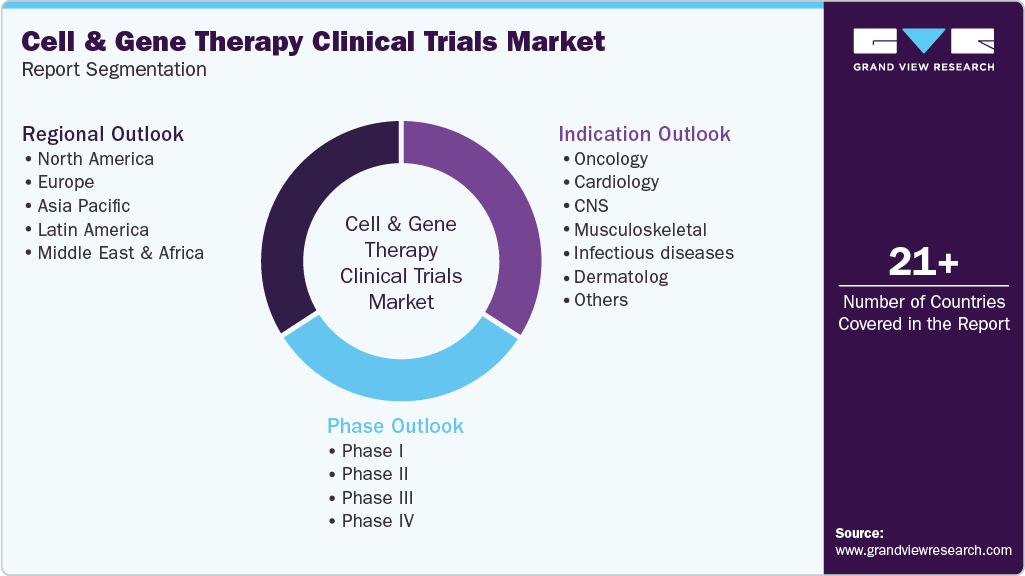
This report forecasts revenue growth at the global, regional, and country levels and provides an analysis of the latest industry trends in each of the sub-segments from 2021 to 2033. For this study, Grand View Research has segmented the global cell and gene therapy clinical trials market report based on phase, indication, and region:
 To learn more about this report, Download Free Sample Report
-
Phase Outlook (Revenue, USD Million, 2021 - 2033)
-
Phase I
-
Phase II
-
Phase III
-
Phase IV
-
-
Indication Outlook (Revenue, USD Million, 2021 - 2033)
-
Oncology
-
Cardiology
-
CNS
-
Musculoskeletal
-
Infectious diseases
-
Dermatology
-
Endocrine, metabolic, genetic
-
Immunology & inflammation
-
Ophthalmology
-
Hematology
-
Gastroenterology
-
Others
-
-
Regional Outlook (Revenue, USD Million, 2021 - 2033)
-
North America
-
U.S.
-
Canada
-
Mexico
-
-
Europe
-
UK
-
Germany
-
France
-
Italy
-
Spain
-
Denmark
-
Norway
-
Sweden
-
Russia
-
Iceland
-
Finland
-
-
Asia Pacific
-
Japan
-
China
-
India
-
Australia
-
South Korea
-
Thailand
-
Singapore
-
-
Latin America
-
Brazil
-
Argentina
-
-
Middle East and Africa (MEA)
-
South Africa
-
Saudi Arabia
-
UAE
-
Kuwait
-
Israel
-
-
Research Methodology
Segment Definition
Segment - Phase
Definition
Phase I
Revenue generated from first-in-human studies focused on safety, tolerability, dose escalation, pharmacokinetics, and preliminary efficacy assessment of cell and gene therapies. Includes trial design, site management, patient recruitment, biomarker testing, and regulatory support services.
Phase II
Revenue generated from proof-of-concept and dose optimization studies evaluating therapeutic efficacy and safety in larger patient populations. Captures spending on clinical operations, patient monitoring, laboratory testing, data management, and endpoint analysis.
Phase III
Revenue generated from large-scale pivotal trials conducted to validate efficacy and safety for regulatory approval. Includes multicenter trial management, global patient recruitment, statistical analysis, pharmacovigilance, and regulatory submission support.
Phase IV
Revenue generated from post-marketing and long-term follow-up studies assessing real-world effectiveness, durability, and long-term safety of approved therapies. Includes patient registries, observational studies, and post-approval surveillance programs.
Segment - Indication
Definition
Oncology
Revenue from CGT clinical trials targeting hematologic malignancies and solid tumors, including CAR-T, TCR-T, tumor-infiltrating lymphocyte (TIL), and gene-edited cancer therapies.
Cardiology
Revenue from trials evaluating gene therapies, regenerative cell therapies, and stem cell-based interventions for heart failure, myocardial infarction, cardiomyopathies, and other cardiovascular disorders.
CNS (Central Nervous System)
Revenue from trials focused on neurological and neurodegenerative disorders such as Parkinson’s disease, Alzheimer’s disease, ALS, spinal muscular atrophy, and other CNS conditions.
Musculoskeletal
Revenue from clinical studies investigating regenerative therapies, stem-cell therapies, and gene therapies for orthopedic, bone, cartilage, muscle, and connective tissue disorders.
Infectious Diseases
Revenue generated from CGT trials aimed at treating viral, bacterial, and chronic infectious diseases through gene-modified immune therapies, vaccines, and novel cell-based approaches.
Dermatology
Revenue from trials targeting inherited and acquired skin disorders using gene replacement, gene editing, and regenerative cell therapies.
Endocrine, Metabolic & Genetic Disorders
Revenue from studies addressing inherited metabolic disorders, endocrine diseases, and monogenic genetic conditions through gene replacement, gene editing, and cell-based therapeutic approaches.
Immunology & Inflammation
Revenue generated from CGT trials focused on autoimmune diseases, inflammatory disorders, and immune-mediated conditions utilizing engineered immune cells and gene-modified therapies.
Ophthalmology
Revenue from trials investigating gene and cell therapies for inherited retinal diseases, retinal degeneration, vision loss, and other ocular disorders.
Hematology
Revenue from studies targeting blood disorders such as sickle cell disease, beta-thalassemia, hemophilia, and other hematological conditions through genetic modification and cell-based interventions.
Gastroenterology
Revenue generated from trials focused on gastrointestinal diseases, liver disorders, inflammatory bowel disease, and related conditions using advanced gene and cell therapies.
Others
Revenue from CGT trials conducted across less-established therapeutic areas not separately classified, including respiratory, renal, reproductive, and rare disease indications.
Phase-wise Market Sizing Logic & Estimation Steps
Phase
Key Sizing Parameter
Revenue Weighting Logic
Phase I
Number of first-in-human CGT trials
Lower patient numbers but high complexity and specialized monitoring requirements
Phase II
Number of proof-of-concept studies
Moderate patient enrollment with increasing efficacy assessments
Phase III
Number of pivotal studies
Highest revenue contributor due to large patient populations, global sites, and regulatory requirements
Phase IV
Post-marketing studies
Lower trial volume but recurring long-term follow-up revenues
Step 1
Identify total active CGT trials globally.
Step 2
Split trials by phase using sources such as ClinicalTrials.gov, WHO ICTRP, company pipelines, and annual reports.
Step 3
Apply average cost per trial
Step 4
Adjust for outsourcing rates
Step 5
Calculate phase revenues and reconcile with total market size
Delivered Customizations
This report has been delivered with the following In-depth customizations
Client Request
Customization Delivered
Value Adds
Cell & Gene Therapy Clinical Trials Market Trends & Opportunity Assessment
Focused assessment of clinical trial activity by phase, indication, therapy type, gene-editing technologies, CGT pipelines, outsourcing trends, sponsor activity, patient recruitment dynamics, and regional opportunities.
Identifies high-growth therapeutic segments, emerging technologies, investment hotspots, unmet needs, and commercialization opportunities.
Competitive Landscape & Market Share Assessment
Analysis of established and emerging CROs, trial service providers, and specialized CGT partners based on capabilities, geographic presence, technology platforms, partnerships, regulatory expertise, and market positioning.
Highlights competitive intensity, white-space opportunities, differentiation strategies, partnership potential, and growth pathways.
Technology, Innovation & Regulatory Landscape Review
Evaluation of CRISPR, base editing, prime editing, viral/non-viral vectors, decentralized trials, AI-enabled trial management, manufacturing innovations, FDA/EMA pathways, RMAT designations, and evolving regulatory requirements.
Supports investment prioritization, technology roadmap development, regulatory preparedness, and long-term strategic planning.
Frequently Asked Questions About This Report
The global cell and gene therapy clinical trials market size was valued at USD 12.3 billion in 2025 and is estimated at USD 14.2 billion for 2026.
The oncology segment led with a 48.3% revenue share in 2025 and cardiology segment is the fastest-growing segment.
Key players include IQVIA, ICON Plc, LabCorp, Charles River Laboratories, PAREXEL International Corp., Syneos Health, Medpace, Thermo Fisher Scientific, Inc., Novotech, and Veristat, LLC.
The global cell and gene therapy clinical trials market is expected to grow at a CAGR of 15.6% from 2026 to 2033, reaching USD 39.4 billion.
Asia Pacific is the fastest-growing region over the forecast period.
The phase III segment led with a 54.6% revenue share in 2025, while phase I segment is the fastest-growing segment.
North America dominated with a 50.7% revenue share in 2025.
Key factors include an increase in R&D funding, rising patient demand for innovative therapies, growing interest in cell and gene therapies for cancer treatment, and a favorable regulatory environment. Advancements in genome editing technologies such as CRISPR, as well as breakthroughs in viral and non-viral vector delivery systems, have enabled researchers to develop highly targeted therapeutic candidates for rare genetic disorders, cancers, and autoimmune diseases.
About the Author(s)
Medical Devices Research Team
Healthcare · Medical DevicesThis report was authored by the medical devices research team at Grand View Research - comprising two research analysts, one senior research analyst, and one industry expert - with specialized expertise in the medical devices segment of the healthcare industry. All findings are based on proprietary healthcare databases, executive interviews, and regulatory analysis, subject to internal peer review prior to publication.
Last Updated:
Speak to Analyst

Customize this report to your needs - add regions, segments, or data points, with 20% free customization.
Or view our licence options:


ISO 9001:2015 & 27001:2022 Certified
We are GDPR and CCPA compliant! Your transaction & personal information is safe and secure. For more details, please read our privacy policy.


