
- Home
- »
- Biotechnology
- »
-
Cell Line Development Services Market Size Report, 2033GVR Report cover

Cell Line Development Services Market (2026 - 2033)
Size, Share & Trends Analysis Report By Service (Cell Line Characterization & Stability Testing), By Source, By Application, By End Use, By Region, And Segment Forecasts
Market Size, 2025
$1.3BMarket Estimate, 2026
$1.4BMarket Forecast, 2033
$2.9BCAGR, 2026–2033
10.9%Cell Line Development Services Market Summary
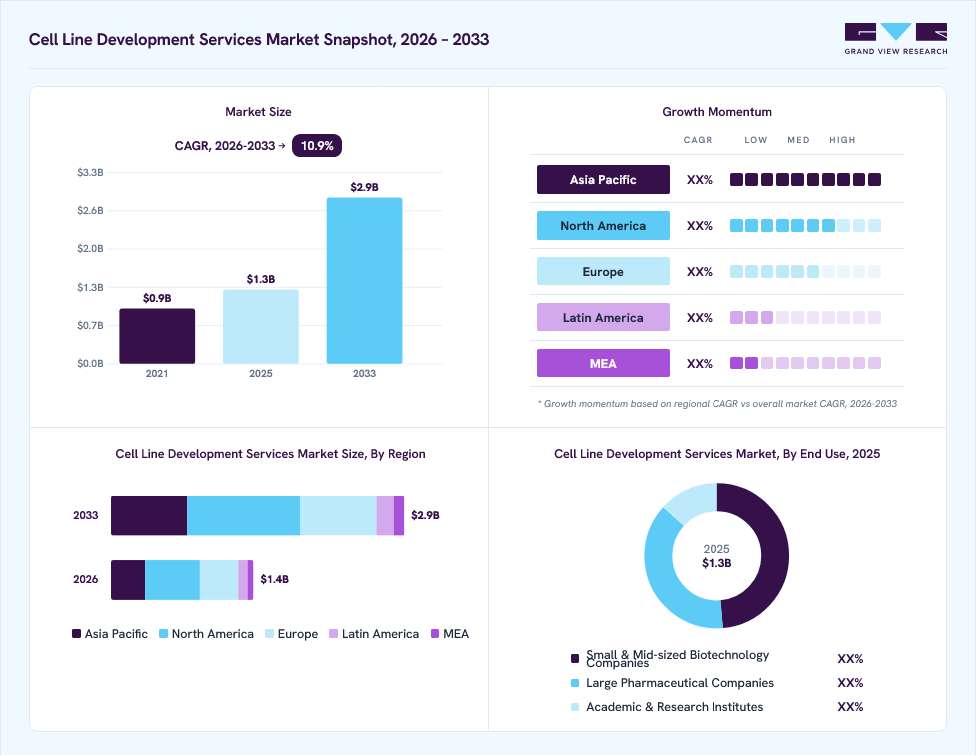
The global cell line development services market size was valued at USD 1.3 billion in 2025 and is projected to grow from USD 1.4 billion in 2026 to USD 2.9 billion by 2033, at a CAGR of 10.9% from 2026 to 2033. North America dominated the market, accounting for the revenue share of 38.4% in 2025. The market growth is driven by increasing demand for biologics and biosimilars, growing adoption of cell-based assays and advanced cell lines in drug discovery, rising outsourcing of cell line development to specialized service providers, and advancements in gene editing, high-throughput screening, and automated cell line development technologies.
 Source: Grand View Research, IR Documents, Primary Interviews, Paid DatabasesTo learn more about this report,
 Download Free Sample Report
Key Market Trends & Insights
- By service: The stable cell line development segment held the largest market share of 50.9% in 2025.
- By source: The mammalian cell line segment accounted for the largest market revenue share of 85.5% in 2025.
- By application: The monoclonal antibodies segment dominated the market with the largest revenue share of 43.6% in 2025.
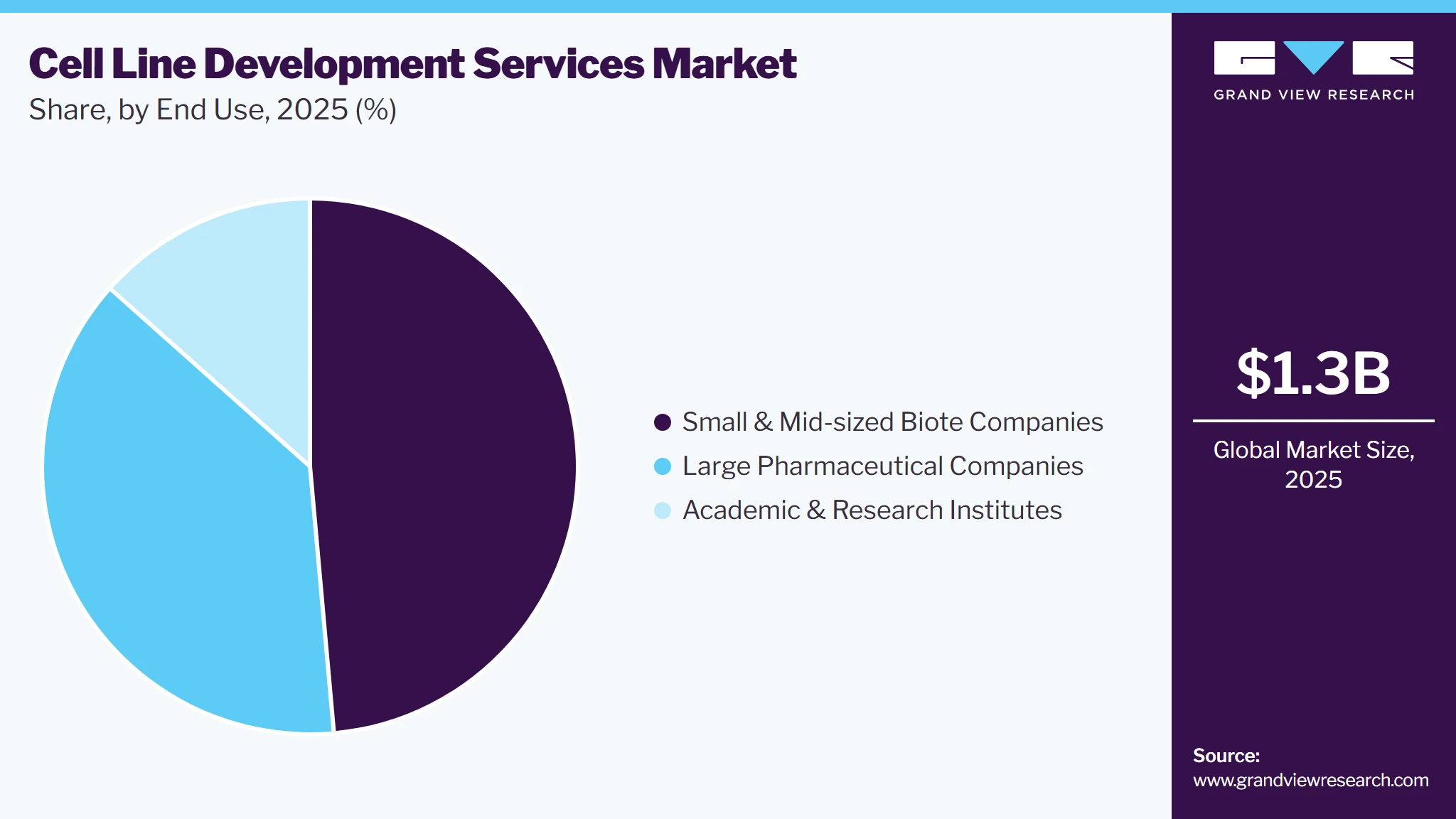
- By end use: The small & mid-sized biotechnology companies segment held the largest market share of 48.6% in 2025.
Regional Highlights
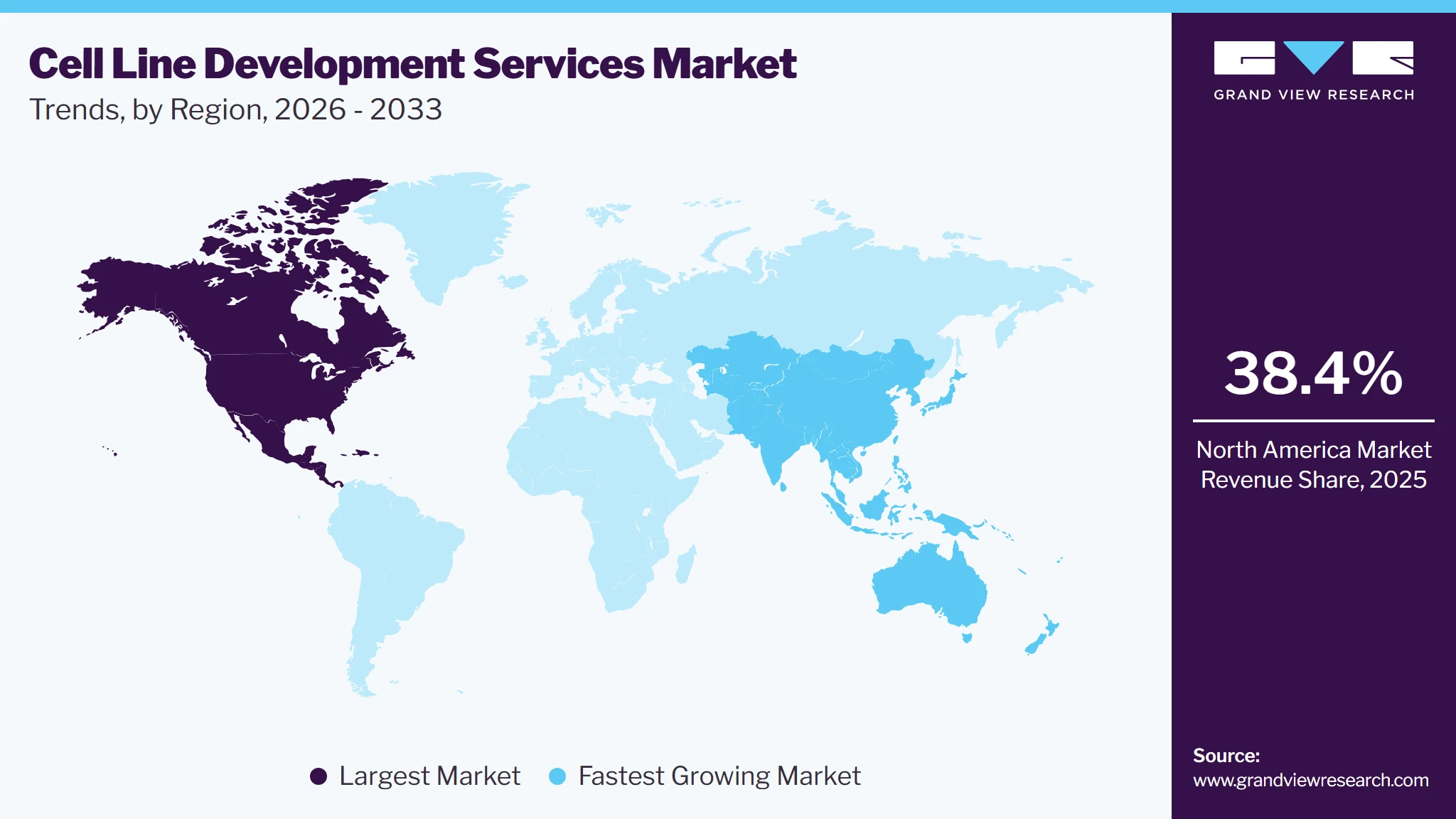
- Largest regional market: North America (38.4% revenue share, 2025)
- Fastest-growing regional market: Asia Pacific (highest CAGR, 2026-2033)
- By country: The U.S. dominated North America with the largest revenue share in 2025
Market Size & Forecast
- Market size in 2025: USD 1.3 Billion
- Estimated market size in 2026: USD 1.4 Billion
- Projected market size by 2033: USD 2.9 Billion
- CAGR (2026-2033): 10.9%
Prism AI by Grand View Research Free to tryAsk a question about the cell line development services marketTry asking✓Every figure cited from GVR research Prefer the report? Download free sample →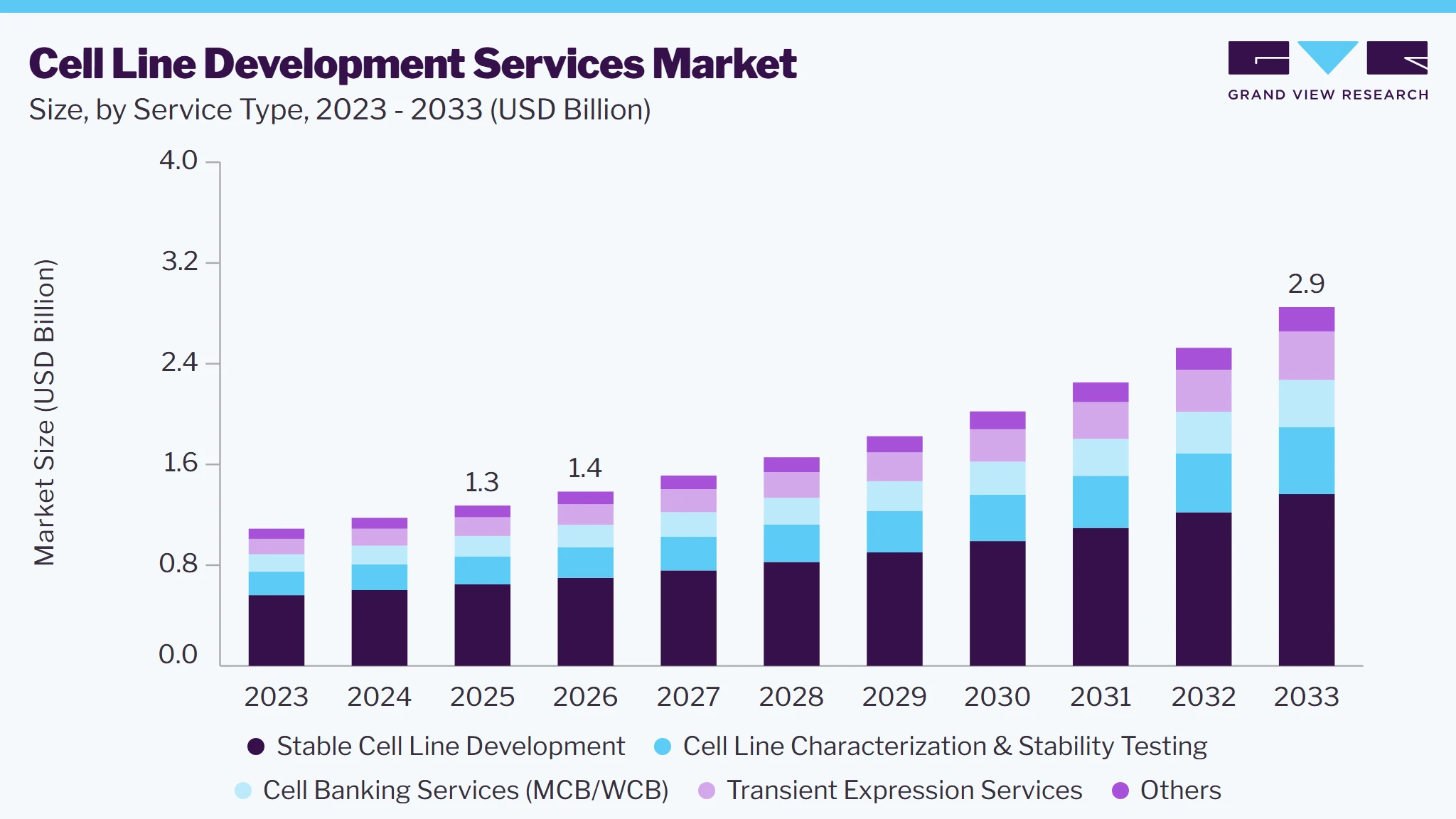 To learn more about this report, Download Free Sample Report
Market Dynamics
The cell line development services industry is experiencing significant growth, driven by rising demand for biologics and biosimilars, the expansion of biopharmaceutical research and development, the increasing outsourcing of cell line development to specialized service providers, and advancements in cell engineering technologies. Rising adoption of cell-based assays and complex biologics, coupled with increasing demand for stable, high-producing, and reproducible cell lines, is expected to accelerate the use of specialized development services and create new opportunities for market growth.
The increasing adoption of automated, high-throughput cell line development platforms is driving market growth by enabling faster clone generation, screening, selection, and characterization while reducing manual intervention and variability. Conventional cell line development requires screening large numbers of clones to identify candidates with desirable productivity, growth, stability, and product quality. Automation integrates liquid handling, imaging, cell expansion, and analytical workflows, enabling service providers to process more candidates in shorter development timelines.
The increasing integration of automation across cell line development workflows is illustrated by the range of processes that can be automated, as presented below:
Key Automation Parameters in Cell Line Development
Parameter
Description
Cell Culture Duration
1-6 weeks of continuous culturing, reformatting, expansion, and incubation
Cell Line Development Processes
Cell seeding, maintenance, incubation, confluence measurement, clone selection, transfection, and expansion
Transfection Methods
Chemical and viral transfection
Automation System Components
Robotic plate handlers, microplate stores, incubators, laboratory instruments, and scheduling software
Process Optimization Outcomes
Faster workflows, reduced manual intervention, lower potential for human error, and improved reproducibility
Source: Secondary Research, Primary Research Analysis, Grand View Research Analysis
The integration of automation across multiple stages supports the transition from labor-intensive conventional workflows to standardized, high-throughput cell line development processes. This trend is expected to support demand for technology-enabled cell line development services as biopharmaceutical companies and service providers seek to improve development efficiency and shorten timelines.
For instance, in November 2025, Bristol Myers Squibb reported developing an automated, high-throughput, stable CHO cell platform that integrates Leap-In transposase technology, automation, and engineered host cell lines to accelerate biologics cell line optimization. Such advancements are encouraging the adoption of automated platforms across cell line development workflows and are expected to increase demand for technology-enabled cell line development services.
Genetic modification and clone selection are technically complex stages of cell line development because genetic changes can result in variable transgene integration, genetic instability, inconsistent expression, and differences in productivity and product quality among clones. Identifying suitable clones requires extensive screening and characterization to assess clonality, expression levels, growth characteristics, genetic stability, and product quality. These requirements can extend development timelines and increase analytical workload and service costs.
For instance, in March 2025, advancements in automated imaging, single-cell isolation, and next-generation sequencing (NGS) supported improvements in clone selection and characterization workflows. These approaches enable more comprehensive assessment of clonality and genetic attributes at earlier stages, helping service providers identify suitable clones more efficiently. However, integrating multiple screening and analytical technologies into cell line development workflows continues to add technical complexity and resource requirements, thereby restraining market growth.
The expansion of biologics and biosimilar pipelines is creating significant opportunities for the cell line development services industry, as these products require stable, high-yielding, and well-characterized production cell lines for development and manufacturing. Increasing development of monoclonal antibodies, recombinant proteins, and other complex biologics is generating demand for services covering cell line generation, clone selection, optimization, and characterization. The growing complexity of biologic molecules is also encouraging biopharmaceutical companies to outsource cell line development activities to specialized service providers with established platforms and technical expertise.
For instance, in May 2025, ProBioGen entered into an agreement with Polpharma Biologics to provide high-performance cell line development services for a biosimilar candidate. The collaboration uses ProBioGen’s CHO.RiGHT platform and DirectedLuck transposase technology to generate a robust, high-yielding production cell line aligned with the biosimilar’s critical quality attributes. Such collaborations demonstrate the growing use of specialized cell line development services to support the expansion of biosimilar pipelines and accelerate development timelines.
Partnering with a reliable CDMO to support our expanding capacity needs was crucial. ProBioGen's track record, proven expertise, agility, and dedication to high-standard services were key factors in our decision to collaborate. This partnership reflects the growing demand for biosimilars and reinforces our commitment to improving patient access and reducing healthcare costs by leveraging high-expressing production cell lines.- Dr. Konstantin Matentzoglu, Supervisory Board Member from Polpharma BiologicsMarket Concentration & Characteristics
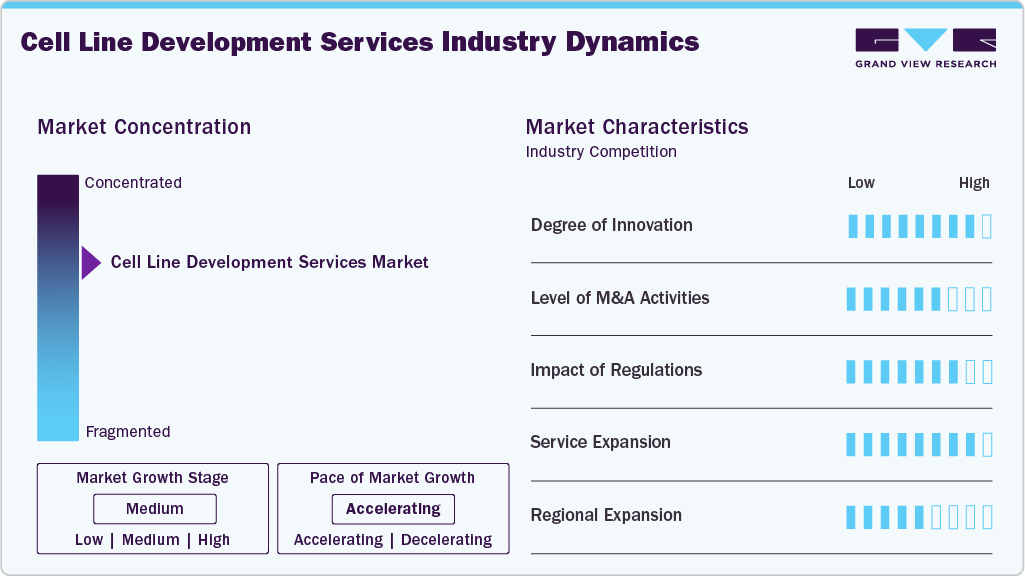
The cell line development services industry is highly innovative, driven by advances in engineered host-cell lines, gene-editing technologies, single-cell cloning, AI/ML-based clone selection, and data-driven development workflows. Service providers are increasingly integrating these technologies to improve clone productivity, stability, and development timelines. For instance, in March 2026, Sartorius introduced a genetically engineered CHO host cell line developed using proteomic profiling and CRISPR-mediated gene editing, reporting higher titer and cell-specific productivity across different protein types.
"To the best of our knowledge, this is the first engineered CHO host cell line to deliver performance at this exceptional level in the CLD market.”
- Oscar Reif, Head of Corporate Research and CTO at Sartorius
The global market is experiencing moderate M&A activity, with companies increasingly strengthening cell line development capabilities through technology integration and partnerships rather than relying solely on acquisitions. These activities support access to specialized host-cell technologies, development platforms, and complementary biologics capabilities. For instance, in August 2025, Asimov partnered with Ottimo Pharma to develop a high-titer, stable CHO cell line using its CHO Edge platform for a dual-pathway antibody program.
 To learn more about this report, Download Free Sample Report
“Asimov has been an exceptional partner throughout this process, not only delivering a high-performance cell line for a novel therapeutic architecture on an accelerated timeline, but also supporting tech-transfer into GMP manufacturing. We've been so impressed with Asimov's capabilities and collaborative approach that we see this as the foundation for a long-term partnership should we advance additional assets that can leverage their CHO Edge system.”
- Spencer Fisk, Chief Technical & Quality Officer at Ottimo Pharma
The cell line development services market is significantly influenced by regulatory and quality requirements governing cell line identity, clonality, genetic stability, characterization, and suitability for biopharmaceutical manufacturing. Service providers are increasingly incorporating regulatory support and standardized characterization into development programs to facilitate regulatory submissions and downstream manufacturing activities. For instance, in July 2024, Samsung Biologics highlighted its regulatory support capabilities for biopharmaceutical development, including assistance with IND and CMC filings, demonstrating the integration of regulatory expertise with development services.
The market is experiencing rapid expansion, with providers broadening their offerings across host-cell platforms, molecule types, and development stages. Expansion increasingly includes CHO and HEK293 systems, complex proteins, biosimilars, and integrated DNA-to-clinical-supply programs. For instance, in January 2026, Aragen launched its CHOMax platform, integrating cell line development, process development, analytics, and GMP drug substance capabilities to support an accelerated path toward IND-enabling clinical supply.
The industry is experiencing moderate to high regional expansion, driven by growth in biopharmaceutical R&D and outsourcing capabilities in Asia and other emerging markets. Service providers are expanding geographically to provide localized access to cell line development and integrated biologics services. For instance, in March 2024, Aragen operationalized the first phase of its biologics manufacturing facility in Bengaluru, India, complementing its U.S.-based capabilities in cell line development and biologics R&D and strengthening its integrated gene-to-GMP service offering.
Analyst Perspective
The cell line development services market is expected to grow significantly, driven by increasing demand for reliable, scalable cell lines in biopharmaceutical research and biologics manufacturing. Rising development of monoclonal antibodies, recombinant proteins, vaccines, and other biologics is increasing demand for efficient cell line generation, screening, optimization, and characterization services. Advancements in gene editing, high-throughput screening, and automation are further improving cell line development workflows and accelerating development timelines.
Service Insights
The stable cell line development segment led the market with the largest revenue share of 50.9% in 2025, driven by increasing use of stable, high-producing cell lines for biologics and biosimilar production, particularly monoclonal antibodies and recombinant proteins. Growing demand for consistent product quality, genetic stability, and reproducible production performance is further supporting segment growth. For instance, in September 2025, WuXi Biologics launched its TrueSite TI CHO cell line platform, which uses targeted integration to improve expression stability and accelerate clone screening for biologics development.
The transient expression services segment is expected to grow at the fastest CAGR over the forecast period, driven by increasing demand for rapid protein production during early-stage biologics development, candidate screening, and proof-of-concept studies. Transient expression enables researchers to generate recombinant proteins and antibodies within shorter timelines, supporting rapid evaluation of therapeutic candidates and reducing delays in early development. For instance, in August 2024, ATUM launched its discoCHO cell line for rapid transient production of biologics, supporting faster protein production and early-stage development workflows.
Source Insights
The mammalian cell line segment led the market with the largest revenue share of 85.5% in 2025, driven by the global use of mammalian hosts, particularly Chinese hamster ovary (CHO) cells, for producing complex biologics such as monoclonal antibodies and recombinant proteins. Their established manufacturing track record, ability to support appropriate protein folding and post-translational modifications, and suitability for commercial biopharmaceutical production continue to support segment demand.
The non-mammalian cell line segment is anticipated to grow at the fastest CAGR over the forecast period, driven by the increasing adoption of microbial expression systems for recombinant proteins, vaccines, and other biologics that require rapid, scalable production. Advances in host-cell engineering and microbial expression technologies are further expanding the use of non-mammalian systems in biopharmaceutical development. For instance, in June 2025, WuXi Biologics began construction of a microbial manufacturing facility in Chengdu featuring its EffiX microbial expression platform, expanding microbial-based biologics development and manufacturing capabilities.
Application Insights
The monoclonal antibodies segment led the market with the largest revenue share of 43.6% in 2025, driven by the broad applications of monoclonal antibodies across oncology, autoimmune, inflammatory, and infectious diseases, as well as the continued expansion of antibody-based therapeutic pipelines. The increasing development of high-productivity cell lines specifically optimized for antibody production is further supporting demand for specialized cell line development services. For instance, in August 2025, CHO Plus entered into an agreement with BARDA’s BioMaP Consortium to develop high-productivity CHO cell lines to produce filovirus monoclonal antibodies.
The cell & gene therapy segment is projected to grow at the fastest CAGR over the forecast period, driven by the rapid expansion of advanced therapy pipelines and the increasing adoption of gene-editing, viral-vector, and engineered cell-based approaches. The complexity of these therapies is increasing demand for specialized cell engineering and development capabilities, including customized cell generation, gene modification, cell banking, and characterization. The growing number of CDMO and specialized service providers offering integrated cell and gene therapy development capabilities is further supporting segment growth.
End Use Insights
The small & mid-sized biotechnology companies segment led the market with the largest revenue share of 48.6% in 2025 and is expected to grow at the fastest CAGR during the forecast period, driven by increasing outsourcing of specialized cell line development activities to access technical expertise, advanced platforms, and infrastructure without significant in-house investment. Growing reliance on external providers for clone screening, optimization, and characterization is further supporting segment growth.
 To learn more about this report, Download Free Sample Report
The academic & research institutes segment is expected to grow at a significant CAGR over the forecast period, driven by increasing research in disease modeling, functional genomics, and drug discovery, all of which require specialized, application-specific cell lines. Growing adoption of gene-edited and engineered cell models for translational and preclinical research is further supporting demand for cell line development services.
Regional Insights
The North America cell line development services market held the largest revenue share of 38.4% in 2025, supported by a mature biopharmaceutical ecosystem, high outsourcing activity, and established biologics development infrastructure. The region also benefits from specialized platforms spanning cell engineering, clone development, and process scale-up. For instance, in March 2025, Asimov and LOTTE BIOLOGICS announced a strategic partnership to integrate Asimov’s CHO Edge cell line development platform with LOTTE BIOLOGICS’ GMP manufacturing capabilities, strengthening the region’s end-to-end biologics development ecosystem.
 To learn more about this report, Download Free Sample Report
“We’re delighted to be directly integrating with LOTTE BIOLOGICS’ established manufacturing capabilities, meaning our customers can now transition seamlessly from cell line development to large-scale GMP production, and drastically shorten their development cycles.”
- Alec Nielsen, Asimov co-founder and CEO
U.S. Cell Line Development Services Market Trends
The cell line development services market in the U.S. accounted for the largest market revenue share in North America in 2025, supported by a large concentration of biotechnology companies, extensive biologics pipelines, and specialized cell line development providers. Increasing demand for well-characterized production cell lines is further supporting market growth, particularly for complex therapeutic modalities and accelerated biologics development. According to an article published by NIH in April 2025, AstraZeneca researchers highlighted the application of next-generation sequencing (NGS) for cell line characterization, supporting clonality verification, genetic stability assessment, and optimization of recombinant cell lines for biologics production.
Europe Cell Line Development Services Market Trends
The cell line development services market in Europe was identified as a lucrative region in this industry, supported by established biologics research capabilities and a strong network of biotechnology companies and CDMOs offering integrated development services. Increasing investment in manufacturing capacity is further strengthening demand for cell line development capabilities. For instance, in January 2025, ProBioGen expanded protein manufacturing at its Berlin headquarters with an additional 1,000-L GMP production line and highlighted its ability to support partners from cell line development through commercial manufacturing.
The UK cell line development services market is driven by advanced biologics research, established CDMO infrastructure, and strong academic-industry collaboration, which together fuel demand for specialized cell line development and integrated biologics services. For instance, in October 2025, Abzena highlighted the expansion of its AbZelectPRO mammalian cell line development platform at its Cambridge R&D site, designed to accelerate development from DNA to research cell bank for therapeutic antibodies and difficult-to-express proteins. The platform integrates CHO-K1 and GS knockout expression systems with advanced vector technologies, strengthening the UK's capabilities in next-generation cell line development.
The cell line development services market in Germany is anticipated to grow significantly over the forecast period, supported by specialized CDMOs, pharmaceutical companies, biotechnology firms, and research organizations. The country’s strong capabilities in biologics research, cell engineering, process development, and analytical characterization are supporting demand for outsourced cell line development services. The ongoing development of complex biologics and biosimilars is expected to further strengthen the need for specialized, scalable cell line development capabilities.
Asia Pacific Cell Line Development Services Market Trends
The cell line development services market in the Asia-Pacific is expected to grow at the fastest CAGR of 12.2% during the forecast period, supported by expanding biopharmaceutical manufacturing, increasing outsourcing of biologics development activities, and growing demand for advanced cell line characterization and analytical services. The region is also strengthening localized capabilities to support faster development and commercialization of biologics. For instance, in June 2024, MYCENAX and CHITOSE entered into an agreement to scale up production and commercialize the Supercell CHO-MK host cell line, with MYCENAX reproducing a high-yield production process of 5-10 g/L and planning to scale up to 50 L. The collaboration highlights the expansion of advanced cell line development and biopharmaceutical manufacturing capabilities in the Asia-Pacific region.
The China cell line development services market is supported by expanding biologics R&D, growing CDMO capabilities, and increasing investment in integrated development and manufacturing infrastructure. For instance, in July 2026, AsymBio commenced construction of an R&D facility at its Shanghai Fengxian site, expanding its capabilities in cell line development, upstream and downstream process development, and analytical development for biologics. The facility is designed to operate alongside existing antibody and ADC manufacturing facilities, strengthening China’s integrated biologics development capabilities and supporting demand for cell line development services.
The cell line development services market in Japan is expected to grow steadily, supported by established pharmaceutical and biotechnology R&D capabilities, a strong research infrastructure, and a growing focus on biopharmaceutical development. Increasing demand for advanced cell engineering, CHO cell-based production systems, and outsourced development capabilities is supporting the adoption of cell line development services in the country.
Latin America Cell Line Development Services Market Trends
The cell line development services market in Latin America is expected to grow gradually, supported by increasing biopharmaceutical development activities, strengthening local CDMO capabilities, and the growing availability of specialized cell line engineering services. Brazil is emerging as a regional hub for biopharmaceutical development, with local providers expanding their capabilities in mammalian cell line engineering, clone selection, and cell banking.
Middle East & Africa Cell Line Development Services Market Trends
The cell line development services market in the Middle East & Africa is expected to grow steadily, driven by the increasing localization of biologics manufacturing, government-led biotechnology initiatives, expanding biopharmaceutical research capabilities, and rising demand for outsourced cell line development and characterization services.
Key Cell Line Development Services Company Insights
Several well-established companies operate in the cell line development services industry, supported by their capabilities in cell line generation, clone selection, characterization, stability testing, cell banking, and transient expression. Leading players such as WuXi Biologics, Lonza, Samsung Biologics, Sartorius AG, Thermo Fisher Scientific Inc., Charles River Laboratories, Evotec, FUJIFILM Biotechnologies, AGC Biologics, Catalent, Inc, Selexis SA (acquired by JSR Life Sciences, LLC), and ProBio (a subsidiary of GenScript) maintain a strong market presence through technology advancements, expansion of development capabilities, strategic collaborations, and investments focused on accelerating cell line development and supporting the growing demand for biologics and advanced therapies. Some prominent players in the cell line development services market include.
Key Cell Line Development Services Companies
The following key companies have been profiled for this study on the cell line development services market.
-
WuXi Biologics
-
Lonza
-
Samsung Biologics
-
Sartorius AG
-
Thermo Fisher Scientific Inc.
-
Charles River Laboratories
-
Evotec
-
FUJIFILM Biotechnologies
-
AGC Biologics
-
Catalent, Inc
-
Selexis SA (acquired by JSR Life Sciences, LLC)
-
ProBio (a subsidiary of GenScript)
Competitive Benchmarking
Category
Operating Strategies
Competitive Edge
Weakness
Established Players (WuXi Biologics, Lonza, Samsung Biologics, Sartorius AG, Thermo Fisher Scientific Inc., Charles River Laboratories, FUJIFILM Biotechnologies, AGC Biologics, Catalent, Inc, etc.)
Focus on providing end-to-end cell line development services, covering cell engineering, clone selection, characterization, and process development for biologics manufacturing.
Strong global infrastructure, advanced cell line development platforms, and established relationships with pharmaceutical and biotechnology companies.
High operational and infrastructure costs associated with maintaining advanced development and manufacturing facilities.
Emerging Players (Evotec, Selexis SA (acquired by JSR Life Sciences, LLC), ProBio (a subsidiary of GenScript))
Strengthen market presence through technology-driven development, strategic collaborations, and integrated solutions supporting early-stage drug development.
Specialized expertise in cell line engineering, screening, and optimization enables customized solutions for specific biologics programs.
Greater dependence on individual technology platforms, collaborations, and biopharmaceutical project pipelines.
Recent Developments
-
In June 2026, Lonza introduced GS Ori-Go, integrating vector technology with clonal cell-line development to accelerate generation of stable, high-producing cell lines and streamline biologics development timelines for clients.
-
In December 2025, AGC Biologics partnered with ATUM to integrate Leap-In Transposase technology, expanding cell line development services for complex biologics and accelerating development timelines.
-
In August 2025, Catalent expanded its GPEx Lightning platform to include HEK cell lines, enabling rapid development of scalable, high-expressing cell lines for complex biologics and reducing development timelines through nonviral gene insertion technology.
-
In August 2025, WuXi Biologics launched the WuXia293Stable HEK293 cell line platform, enabling the development and manufacturing of difficult-to-express molecules through enhanced stability, productivity, and scalability.
Cell Line Development Services Market Report Scope Table
Report Attribute
Details
Market size in 2025
USD 1.3 billion
Estimated market size in 2026
USD 1.4 billion
Projected market size by 2033
USD 2.9 billion
Growth rate
CAGR of 10.9% from 2026 to 2033
Base year for estimation
2025
Historical data
2021 - 2024
Forecast period
2026 - 2033
Quantitative units
Revenue in USD billion, and CAGR from 2026 to 2033
Report coverage
Revenue forecast, company ranking, competitive landscape, growth factors, and trends
Segments covered
Service , source, application, end use, region
Regional scope
North America; Europe; Asia Pacific; Latin America; Middle East & Africa
Country scope
U.S.; Canada; Mexico; UK; Germany; France; Italy; Spain; Norway; Denmark; Sweden; China; Japan; India; South Korea; Australia; Thailand; Brazil; Argentina; Saudi Arabia; South Africa; UAE; Kuwait
Key companies profiled
WuXi Biologics; Lonza; Samsung Biologics; Sartorius AG; Thermo Fisher Scientific Inc.; Charles River Laboratories; Evotec; FUJIFILM Biotechnologies; AGC Biologics; Catalent, Inc; Selexis SA (acquired by JSR Life Sciences, LLC); ProBio (a subsidiary of GenScript)
Customization scope
Free report customization (equivalent up to 8 analysts' working days) with purchase. Addition or alteration to country, regional & segment scope.
Pricing and purchase options
Avail customized purchase options to meet your exact research needs. Explore purchase options
Global Cell Line Development Services Market Report Segmentation
This report forecasts revenue growth and provides an analysis on the latest trends in each of the sub-segments from 2021 to 2033. For this report, Grand View Research has segmented the global cell line development services market report based on the service, source, application, end use, and region
-
Service Outlook (Revenue, USD Billion, 2021 - 2033)
-
Stable Cell Line Development
-
Cell Line Characterization & Stability Testing
-
Cell Banking Services (MCB/WCB)
-
Transient Expression Services
-
Others
-
-
Source Outlook (Revenue, USD Billion, 2021 - 2033)
-
Mammalian Cell Line
-
CHO Cell Lines
-
HEK293 Cell Lines
-
Other Mammalian (NS0, Sp2/0, PER.C6 etc.)
-
-
Non-mammalian Cell Line
-
Microbial & Yeast
-
Insect Cell Lines
-
-
-
Application Outlook (Revenue, USD Billion, 2021 - 2033)
-
Monoclonal Antibodies
-
Recombinant Proteins
-
Cell & Gene Therapy
-
Vaccines
-
Others
-
-
End Use Outlook (Revenue, USD Billion, 2021 - 2033)
-
Small & Mid-sized Biotechnology Companies
-
Large Pharmaceutical Companies
-
Academic & Research Institutes
-
-
Regional Outlook (Revenue, USD Billion, 2021 - 2033)
-
North America
-
U.S.
-
Canada
-
Mexico
-
-
Europe
-
UK
-
Germany
-
France
-
Italy
-
Spain
-
Denmark
-
Sweden
-
Norway
-
-
Asia Pacific
-
Japan
-
China
-
India
-
Australia
-
Thailand
-
South Korea
-
-
Latin America
-
Brazil
-
Argentina
-
-
Middle East and Africa (MEA)
-
South Africa
-
Saudi Arabia
-
UAE
-
Kuwait
-
-
Research Methodology
The cell line development services marketfigures in this report are based on a proven research process that combines executive interviews with secondary research from proprietary databases, company filings, and recognized regulatory and institutional sources. Market size is built through value-chain sizing-reconciling supply-side and demand-side estimates-and triangulated with bottom-up and top-down approaches. Every estimate passes multiple levels of expert validation before publication, with eachcell line development services segment quantified using the revenue-capture definitions in the table below.
Segment Definition
Service
Revenue Capture Definition
Stable Cell Line Development
Revenue generated from services involved in creating and selecting genetically stable cell lines that consistently express a desired gene or protein over extended culture periods. These services encompass transfection, clone generation, screening, selection, and optimization for applications such as biologics manufacturing, recombinant protein production, and therapeutic development.
Cell Line Characterization & Stability Testing
This segment captures income from analytical services used to evaluate the identity, purity, genetic characteristics, productivity, and long-term stability of developed cell lines. Such services support quality assessment, regulatory compliance, and confirmation of consistent cell line performance throughout development and manufacturing.
Cell Banking Services (MCB/WCB)
Market value in this category stems from services for establishing, characterizing, storing, and maintaining master cell banks (MCBs) and working cell banks (WCBs). These services provide standardized and traceable cell sources for research, process development, clinical manufacturing, and commercial production.
Transient Expression Services
Revenue originates from services that enable the temporary expression of recombinant proteins or other biological molecules without establishing a permanently integrated cell line. These services are commonly used for rapid protein production, feasibility studies, assay development, early-stage biologics research, and preclinical investigations.
Others
Includes revenue from complementary cell line development services not classified under the primary categories, including clone screening, cell line optimization, expression enhancement, process support, and other specialized services associated with development and characterization workflows.
Source
Revenue Capture Definition
Mammalian Cell Line
Revenue derived from cell line development services using mammalian host cells selected for their ability to produce complex proteins with appropriate folding and post-translational modifications. This segment includes services based on CHO, HEK293, and other mammalian cell lines, such as NS0, Sp2/0, and PER.C6, to support biologics, recombinant proteins, vaccines, and advanced therapeutic development.
Non-mammalian Cell Line
This segment reflects income from cell line development services employing non-mammalian hosts for recombinant protein and biologic production. The category encompasses microbial and yeast systems, as well as insect cell lines, which are used for applications requiring scalable, rapid, or specialized protein expression.
Application
Revenue Capture Definition
Monoclonal Antibodies
Revenue generated from cell line development services supporting the generation, screening, optimization, characterization, and production of cell lines expressing monoclonal antibodies. These services facilitate the development of antibody-based therapeutics, diagnostics, and research products.
Recombinant Proteins
This segment captures income from cell line development services used to establish host cells capable of producing recombinant proteins with desired expression levels, quality characteristics, and scalability for research, therapeutic, diagnostic, and commercial applications.
Cell & Gene Therapy
Market value in this category stems from cell line development services supporting the production and characterization of cells, viral vectors, recombinant proteins, and other biological components required for cell and gene therapy development and manufacturing.
Vaccines
Revenue originates from cell line development services used to establish and optimize host cells for the production of vaccine antigens, viruses, or other biological components. These services support vaccine research, process development, preclinical studies, and manufacturing activities.
Others
Includes revenue from cell line development services supporting applications outside the primary categories, such as diagnostics, research reagents, protein engineering, and other specialized biotechnology workflows.
End Use
Revenue Capture Definition
Small & Mid-sized Biotechnology Companies
Revenue generated from cell line development services outsourced by emerging and mid-sized biotechnology companies seeking specialized expertise for cell line generation, optimization, characterization, banking, and production support without maintaining equivalent internal capabilities.
Large Pharmaceutical Companies
This segment captures income from cell line development services utilized by large pharmaceutical organizations for biologics research, process development, clinical manufacturing, commercial production, and regulatory support across extensive therapeutic pipelines.
Academic & Research Institutes
Revenue in this category stems from cell line development services used by universities, research institutions, and other academic organizations for basic and translational research, disease modeling, protein expression, assay development, and experimental therapeutic studies.
Estimation Model
Analysis Approach
Description
Top-Down
Commodity Flow Analysis
Market size was estimated by analyzing revenues generated by key cell line development service providers, supported by company annual reports, investor presentations, service portfolios, industry databases, and primary research. Revenue contributions from private and regional service providers were assessed and validated to derive the overall market value.Parent Market
Parent Market & Penetration-Based Analysis
The cell line development services market was evaluated based on the broader cell line development market. The penetration of outsourced cell line development activities, demand for stable and high-producing cell lines, increasing development, and adoption of external development services by pharmaceutical and biotechnology companies were assessed to estimate the addressable services market.Segmentation
Country-Level Segment Share Modeling
Market shares for service type, source, application, and end use segments were derived using country-specific biopharmaceutical R&D expenditure, biologics pipeline activity, pharmaceutical manufacturing capacity, outsourcing trends, and biotechnology infrastructure. Weighted average calculations were applied to determine regional and global segment distributions.Validation
Data Triangulation & Validation Model
Market estimates were validated through triangulation of secondary research, primary interviews, service-provider revenue assessments, project volume analysis, outsourcing penetration, and end-user demand to ensure consistency and accuracy across service segments and geographies.Forecasting
Forecasting & CAGR Modeling
Market forecasts were developed using historical outsourcing trends, growth in biologics and biosimilar development, expansion of pharmaceutical and biotechnology pipelines, increasing demand for high-producing cell lines, technological advancements in cell line engineering, and rising adoption of contract development services. Regression-based analysis and trend modeling were applied to project future market growth and CAGR.Delivered Customizations
This report has been delivered with the following In-depth customizations
Client Request
Customization Delivered
Value Adds
Cell Line Platform & Technology Assessment
Comparative assessment of CHO, HEK293, hybridoma, microbial, and other expression platforms based on productivity, scalability, product quality, development complexity, regulatory suitability, and application across monoclonal antibodies, recombinant proteins, vaccines, and other biologics.
Enables clients to identify suitable host-cell platforms, evaluate technology trade-offs, and align cell line selection with product-specific development and manufacturing requirements.
Cell Line Development Service Provider Benchmarking
Comparative assessment of major service providers based on service portfolio, cell line technologies, development capabilities, geographic presence, turnaround time, biologics expertise, and partnerships across research and commercial applications.
Helps clients benchmark competitors, identify capability gaps, evaluate potential outsourcing partners, and support vendor selection and partnership strategies.
Gene-Edited Cell Line Technology Assessment
Evaluation of CRISPR-based editing, transposase systems, targeted integration, gene amplification, and other cell engineering technologies based on editing efficiency, expression stability, clonality, scalability, and application suitability.
Helps clients assess emerging cell-engineering technologies, identify suitable platforms, and evaluate their potential to improve cell-line productivity and development efficiency.
About the Author(s)
Biotechnology Research Team
Healthcare · BiotechnologyThis report was authored by the biotechnology research team at Grand View Research - comprising two research analysts, one senior research analyst, and one industry expert - with specialized expertise in the biotechnology segment of the healthcare industry. All findings are based on proprietary healthcare databases, executive interviews, and regulatory analysis, subject to internal peer review prior to publication.
Last Updated:
Speak to Analyst

Customize this report to your needs - add regions, segments, or data points, with 20% free customization.
Or view our licence options:


ISO 9001:2015 & 27001:2022 Certified
We are GDPR and CCPA compliant! Your transaction & personal information is safe and secure. For more details, please read our privacy policy.


