
- Home
- »
- Advanced Interior Materials
- »
-
Cellular Concrete Market Size And Share Report, 2026-2033GVR Report cover

Cellular Concrete Market (2026 - 2033)
Size, Share & Trends Analysis Report By Product Type (Aerated Concrete, Foam Concrete), End Use (Residential, Commercial, Industrial, Infrastructure), By Region (North America, Europe, Asia Pacific, Latin America), And Segment Forecasts
Market Size, 2025
$2.3BMarket Estimate, 2026
$2.4BMarket Forecast, 2033
$3.7BCAGR, 2026–2033
6.1%Cellular Concrete Market Summary
The global cellular concrete market size was valued at USD 2.3 billion in 2025 and is projected to grow from USD 2.4 billion in 2026 to USD 3.7 billion by 2033, at a CAGR of 6.1% from 2026 to 2033. Asia Pacific dominated the cellular concrete market with the largest revenue share of 43.0% in 2025. With increasing government investments in public infrastructure, including roads, bridges, tunnels, and public housing projects, the demand for lightweight, durable, and cost-effective construction materials is rising, thus driving the market.
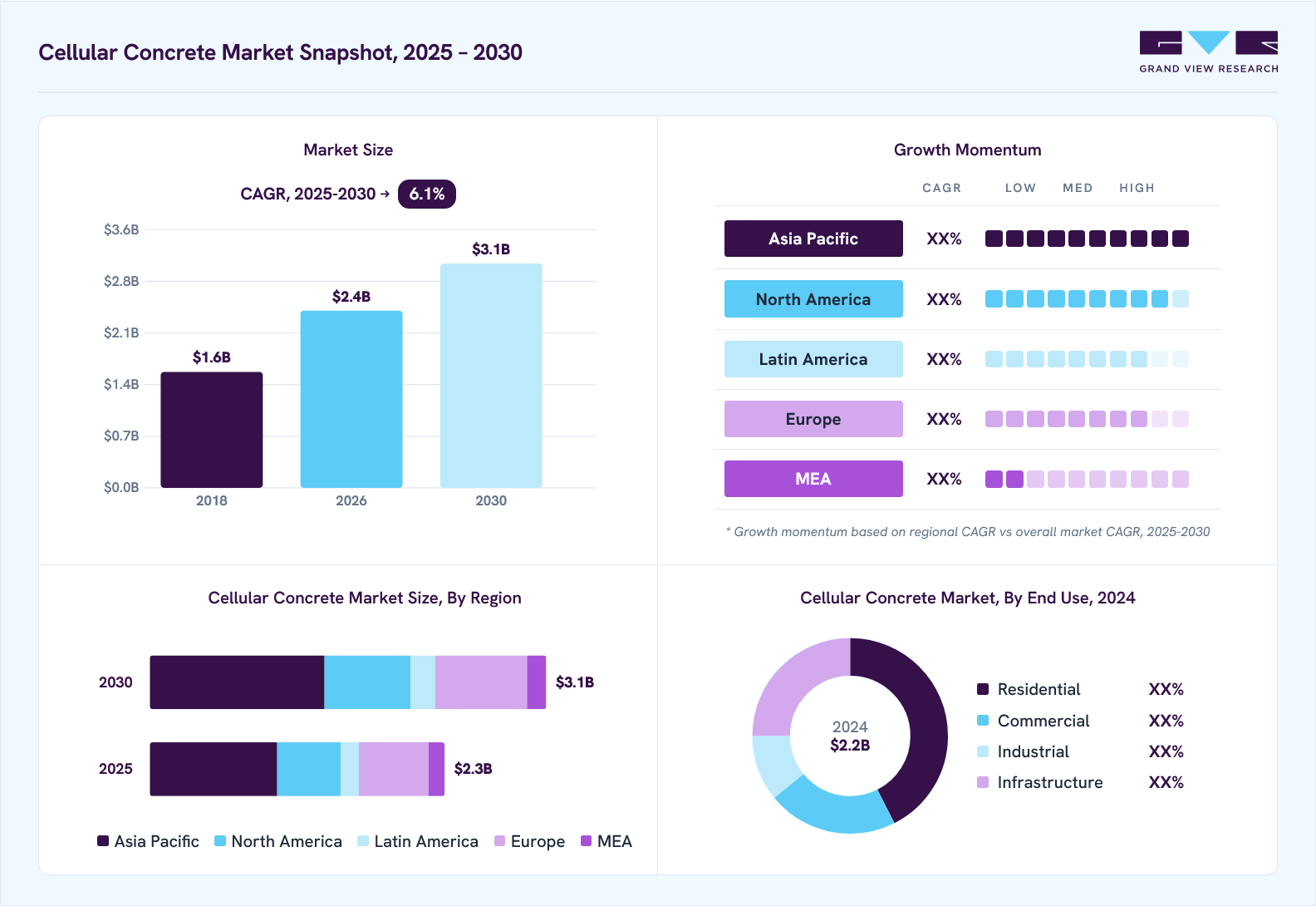 Source: Grand View Research, IR Documents, Primary Interviews, Paid DatabasesTo learn more about this report,
 Download Free Sample Report
 Key Market Trends & Insights
- By product type: Aerated concrete segment held the largest market share of 65.7% in 2025.
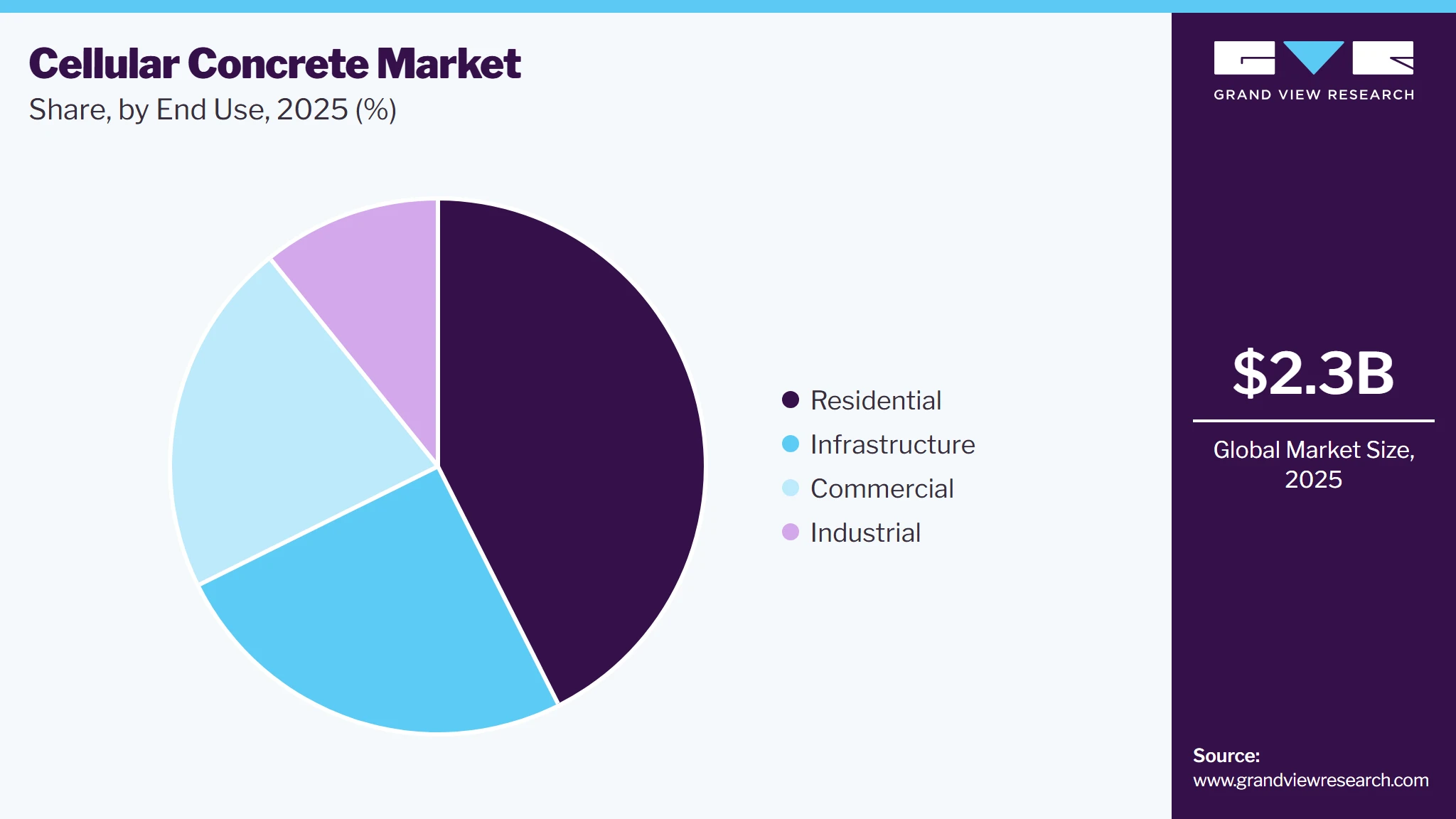
- By end use: Residential segment held the largest market share of 42.5% in 2025.
Regional Highlights
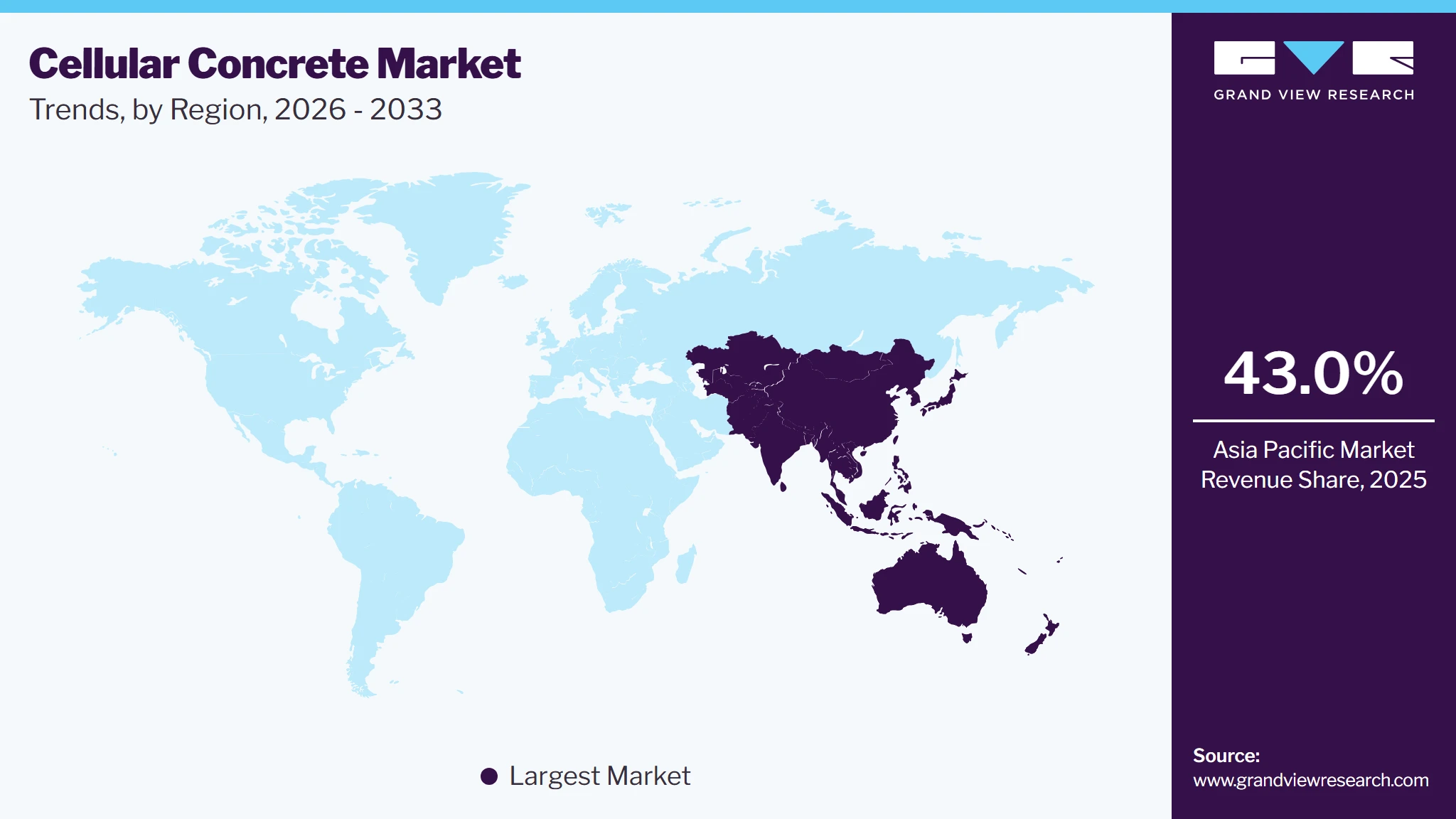
- Largest regional market: Asia Pacific (43.0% revenue share, 2025)
- By country: China held the largest market share in 2025
Market Size & Forecast
- Market size in 2025: USD 2.3 Billion
- Estimated market size in 2026: USD 2.4 Billion
- Projected market size by 2033: USD 3.7 Billion
- CAGR (2026-2033): 6.1%
Three ways to get this report
Buy it, customize it, or ask a question.Ask an Analyst
Analyst response in 1 business day
- AccessReport author, directly
- Reply timeWithin 1 working day
- No sales callDirect answer only
- FormatEmail reply
- CostFree, no cost
Get the Full Report
What the study covers
- FormatsPDF · Excel · Dashboard
- Timeline2026–2033 annual, 2025 base
- Coverage20+ countries, 5 regions
- Companies10+ key players profiled
Customize the Report
20% free customization
- IncludeCountries, segments, points
- TailorTo your product definition
- ExtendDeeper competitor detail
- OrA fully bespoke study
- Turnaround5–10 working days
Cellular concrete, with its superior insulation properties and ease of handling, is becoming a material of choice in such projects. Its use in infrastructure segments like road sub-bases, void filling, and geotechnical applications is particularly notable, as it reduces dead load while improving stability and reducing labor costs. The growing emphasis on sustainable and energy-efficient building materials has significantly propelled the adoption of aerated and foam concrete. Aerated concrete blocks offer excellent thermal and acoustic insulation, which aligns with evolving consumer preferences for green building materials and energy-efficient homes. Moreover, rising housing demand in high-density urban centers has led to increased construction activity, where builders prefer materials like cellular concrete for their lightweight, faster installation, and reduced environmental impact, making them ideal for mass housing development.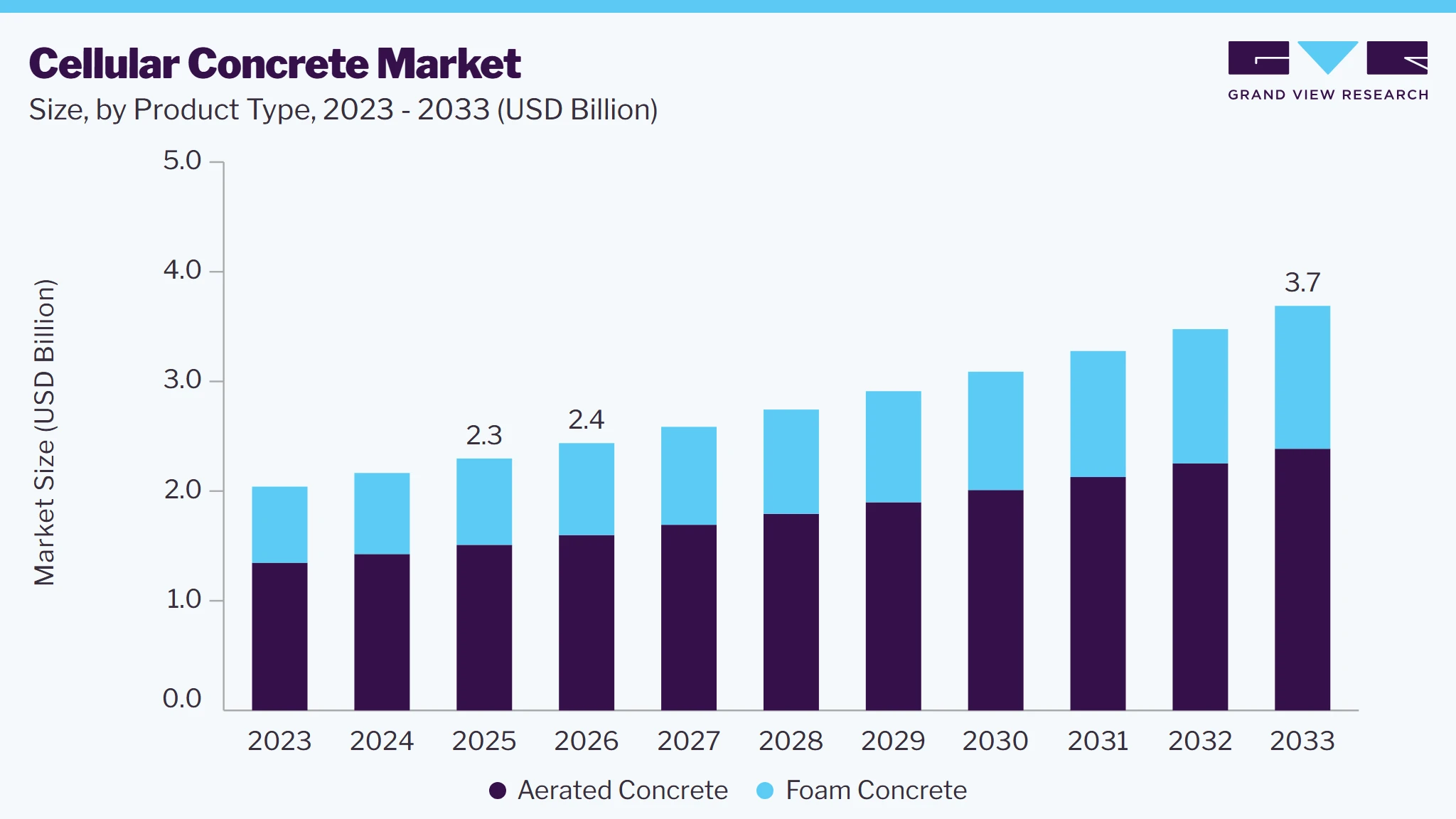 To learn more about this report, Download Free Sample Report
 The commercial and industrial sectors are also playing a significant role in boosting cellular concrete demand. Commercial real estate developments, including shopping complexes, office buildings, and institutional facilities, are increasingly incorporating cellular concrete for non-load-bearing walls, partition panels, and insulation layers. The material's fire resistance, low density, and adaptability to prefabricated systems make it suitable for modern commercial construction. In industrial applications, especially in manufacturing plants and warehouses, foam concrete's ease of shaping and fast-setting nature make it ideal for floor leveling and void filling.
The increasing focus on sustainable construction practices and regulations promoting eco-friendly materials is a crucial growth driver. Both aerated and foam concrete have a low carbon footprint and can be produced using industrial waste materials such as fly ash, contributing to circular economy goals. Additionally, advancements in production technology and automation have led to better quality control, reduced costs, and scalability, making cellular concrete more competitive than traditional alternatives. As global climate policies tighten and green certifications become more desirable, demand for such materials across all segments-residential, commercial, industrial, and infrastructure-is expected to rise steadily.
Market Dynamics
The cellular concrete market is experiencing steady growth owing to the increasing demand for lightweight, flowable, and cost-efficient construction materials across residential, commercial, industrial, and infrastructure projects. Cellular concrete offers several engineering advantages, including low density, high flowability, excellent thermal insulation, reduced dead load, and ease of placement, making it suitable for applications such as trench backfilling, void filling, roof insulation, bridge approaches, embankments, and ground stabilization. Rising investments in transportation infrastructure, urban development, and sustainable construction practices are further supporting market expansion.
The growing use of cellular concrete in infrastructure and geotechnical engineering projects is a major factor driving market growth. Civil engineers and contractors are increasingly adopting cellular concrete for applications such as bridge approach fills, road and railway embankments, utility trench reinstatement, tunnel backfilling, slope stabilization, and abandoned pipeline filling due to its lightweight nature, self-compacting characteristics, and ability to minimize settlement. Compared to conventional fill materials, cellular concrete reduces structural loads, shortens construction timelines, and improves long-term ground stability, making it particularly suitable for projects involving weak soils and complex site conditions. As governments continue to increase investments in transportation networks, smart city developments, and utility infrastructure, the demand for cellular concrete is expected to grow steadily.
The cellular concrete market faces challenges due to the requirement for specialized foaming equipment, precise mix design, and skilled workmanship to achieve consistent density and performance. Variations in foam quality, water-cement ratio, and production techniques can significantly impact the strength, durability, and overall quality of the final product. In addition, limited awareness among contractors and developers, along with the relatively low availability of specialized production facilities in certain regions, can restrict market adoption. These factors may increase project costs and limit the widespread use of cellular concrete, particularly in price-sensitive markets.
The transition toward low-carbon construction materials presents significant opportunities for the cellular concrete market. Manufacturers are increasingly incorporating supplementary cementitious materials (SCMs), recycled industrial by-products, and alternative binders to reduce the carbon footprint of cellular concrete while maintaining mechanical performance. At the same time, the adoption of automated mixing systems, digital quality monitoring, and prefabricated construction techniques is improving production consistency and enabling wider commercial adoption. Growing investments in net-zero buildings, resilient infrastructure, and industrial decarbonization initiatives are expected to accelerate the use of advanced cellular concrete solutions, creating new opportunities for manufacturers offering high-performance, sustainable, and technologically advanced products.
Market Concentration & Characteristics
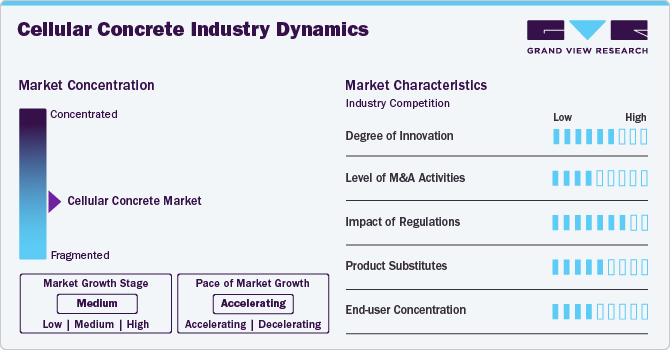
Innovation in the market is moderate but steadily growing, driven by the increasing demand for sustainable and high-performance construction materials. While the basic technology behind aerated and foam concrete has remained largely unchanged for decades, recent advancements focus on material optimization, automation in manufacturing, and eco-friendly formulations using industrial by-products like fly ash and slag.
The push for greener construction practices and stringent environmental regulations encourages manufacturers to invest in R&D to enhance insulation, fire resistance, and load-bearing capabilities. Additionally, innovations in prefabrication techniques and 3D printing open new possibilities for customized and efficient construction. However, compared to high-tech sectors, the pace of innovation is still constrained by conservative construction practices, cost sensitivity, and limited awareness in developing regions. Nonetheless, with rising urbanization and climate-conscious infrastructure planning, the innovation trajectory is expected to accelerate in the forecasted period.
 To learn more about this report, Download Free Sample Report
 The cellular concrete industry is fragmented, with key players striving to differentiate themselves through technological advancements, green certifications, and customized product offerings. Additionally, new entrants are attracted by growing demand, especially in developing economies undergoing infrastructure booms. Established companies are maintaining their competitive edge by investing in automation, research and development, and forming strategic partnerships to scale operations and enhance profitability. As awareness and demand for eco-friendly building materials grow, the competition is expected to become more innovation-driven and globally integrated.
Analyst Perspective
The cellular concrete market is evolving from a niche lightweight construction material into a strategic solution for improving construction efficiency, sustainability, and lifecycle performance. Growing demand for faster project execution, reduced structural loads, and lower embodied carbon is driving adoption across building construction and civil infrastructure applications. Competitive advantage will increasingly depend on the ability to deliver engineered cellular concrete solutions with controlled density, predictable strength, dimensional stability, and application-specific performance. Manufacturers with advanced production technologies, strong quality assurance, optimized mix designs, and technical support capabilities will be better positioned to meet evolving engineering specifications, sustainability requirements, and demand from infrastructure and green building projects.
Product Insights
Based on product type, the aerated concrete segment led the market with the largest revenue share of 65.7% in 2025 and is expected to grow at the CAGR 5.9% over the forecast period. This is due to its superior thermal insulation, lightweight properties, and energy efficiency, making it ideal for residential and commercial construction. As building regulations tighten around energy efficiency and carbon reduction, autoclaved aerated concrete (AAC) is gaining traction as a sustainable alternative to traditional building materials. Its ease of use, fire resistance, and excellent soundproofing capabilities also contribute to faster construction times and lower overall costs, particularly in multi-story and urban housing projects. These benefits align well with global green building practices and urban development trends, further driving its adoption.
Foam Concrete is also favored for its versatility and cost-effectiveness in infrastructure and geotechnical applications such as roadbeds, void filling, and trench backfilling. The material’s low density and flowability make it especially useful in projects where reducing structural load is critical or access is limited. Additionally, growing infrastructure investment across emerging economies, combined with the push for sustainable and adaptable construction solutions, has heightened interest in foam concrete. Its ability to incorporate industrial byproducts like fly ash also supports circular economy initiatives, enhancing its appeal in environmentally conscious markets.
End Use Insights
Based on end use, the residential segment led the market with the largest revenue share of 42.5% in 2025 and is expected to grow at the CAGR 6.2% over the forecast period. This demand is driven by strong alignment with key housing construction needs such as energy efficiency, cost-effectiveness, and structural flexibility. With growing urban populations and a global push for affordable housing, builders increasingly turn to lightweight and easy-to-install materials like cellular concrete to speed up construction timelines without compromising quality. Its excellent thermal insulation properties make it ideal for energy-efficient homes, reducing heating and cooling costs for homeowners. Additionally, the material’s soundproofing and fire-resistant characteristics enhance the safety and comfort of residential spaces. The ability to mold cellular concrete into blocks, panels, and insulation layers further adds to its appeal in residential architecture, making it a preferred choice for new developments and green retrofitting projects.
 To learn more about this report, Download Free Sample Report
 The infrastructure sector is one of the fastest growing segments due to its lightweight nature, cost-effectiveness, and adaptability to complex construction needs. As urbanization accelerates globally, there is a growing demand for materials that reduce structural load without compromising durability. Cellular concrete meets this demand through its excellent flowability, thermal insulation, and ability to efficiently fill voids, making it ideal for road sub-bases, trench backfills, and bridge abutments. Technological advancements have enhanced its performance and consistency, enabling its use in large-scale projects while reducing construction time and costs. Additionally, its environmentally friendly profile-with lower energy consumption and carbon emissions, aligns with the increasing focus on sustainable infrastructure development, solidifying its role in modern construction.
Regional Insights
In North America, the cellular concrete market is experiencing notable growth, driven by a combination of sustainability initiatives, innovative construction practices, and increasing demand for energy-efficient buildings. Countries like the U.S. and Canada focus on reducing carbon footprints in construction, and cellular concrete, with its superior insulation properties, is preferred for residential and commercial projects. The growing adoption of green building certifications and the increasing emphasis on climate-resilient infrastructure fuel demand for materials that provide fire resistance, soundproofing, and thermal efficiency. Additionally, the rise of prefabrication and modular construction methods in North America is boosting the popularity of cellular concrete due to its ease of handling and faster installation.
The U.S. cellular concrete market is supported by an increasing emphasis on resilient infrastructure, energy conservation, and innovative construction methods. Demand is particularly notable in infrastructure and commercial applications, where foam concrete is used for void filling, trench backfilling, and geotechnical uses due to its lightweight and flowable properties. Moreover, the push for disaster-resistant building materials, especially in areas prone to hurricanes and earthquakes, has raised interest in cellular concrete for its fire resistance and structural advantages. As green construction continues gaining traction, the material is seeing wider acceptance in public and private sector projects.
Asia Pacific Cellular Concrete Market Trends
Asia Pacific dominated the cellular concrete market with the largest revenue share of 43.0% in 2025. This growth is driven by rapid urbanization, massive infrastructure development, and rising demand for affordable, sustainable construction materials. Countries like China, India, and some nations in the Southeast Asia are experiencing a construction boom, supported by government initiatives focused on smart cities, housing for all, and green infrastructure. The availability of low-cost raw materials, labor advantages, and increasing foreign investment in the construction sector further fuel market growth in the region. Additionally, growing awareness about energy-efficient building materials and stricter environmental regulations are pushing builders to adopt aerated and foam concrete. Technological advancements and capacity expansions by regional manufacturers also contribute to APAC's stronghold, making it a hub for innovation and large-scale production in the cellular concrete industry.
 To learn more about this report, Download Free Sample Report
 The cellular concrete market in the China held the largest share in the Asia Pacific region in 2025. China's cellular concrete market is experiencing accelerated growth due to the country’s strong emphasis on large-scale construction and sustainable development. The government’s push for eco-friendly infrastructure has created a favorable environment for adopting lightweight and energy-efficient materials like aerated and foam concrete. As urbanization continues to rise, especially in second and third-tier cities, the demand for faster, more cost-effective building solutions is increasing, making cellular concrete an ideal choice. Its advantages, such as superior thermal insulation, reduced structural load, and fire resistance, align well with the country’s green building standards and long-term sustainability goals. Additionally, the expansion of prefabricated and modular construction methods in China is boosting demand for materials that are easy to mold and install, further reinforcing the market’s growth momentum. Local manufacturers are also scaling up production capabilities and adopting automation to meet rising domestic demand and stay competitive in the global market.
Europe Cellular Concrete Market Trends
In Europe, the growth of the cellular concrete market is gaining momentum, driven by the region’s strong commitment to sustainable construction and energy efficiency. With stringent environmental regulations and widespread adoption of green building standards, there is a growing preference for materials that reduce carbon footprints and enhance thermal performance, making cellular concrete an attractive option. The market benefits from a mature construction industry increasingly adopting lightweight, durable, and recyclable materials to meet evolving building codes and climate goals. Demand is particularly strong in renovation and retrofitting projects, where aerated and foam concrete improve insulation and reduce overall building weight. Additionally, the push for net-zero buildings and circular economy practices encourages greater use of eco-friendly materials, including cellular concrete. Well-established infrastructure, advanced manufacturing technologies, and active R&D initiatives across the region also support product innovation and market expansion.
The Germany cellular concrete market is advancing steadily, driven by its leadership in green building practices and energy-efficient construction standards. With a strong focus on sustainability, the demand for environmentally friendly materials like aerated concrete is high, particularly in residential and commercial developments. Government initiatives supporting low-carbon construction and the retrofitting of aging infrastructure have further fueled adoption. Additionally, Germany’s well-established prefabrication and modular construction sector benefits from cellular concrete’s lightweight, precision-moldable nature, making it a key material in the transition to more sustainable urban development.
Latin America Cellular Concrete Market Trends
The cellular concrete market in Latin America is expanding, driven by urban growth, affordable housing initiatives, and increasing awareness of sustainable building practices. Governments across the region are investing in housing and infrastructure to address rapid urbanization, and lightweight, cost-effective materials like foam and aerated concrete are gaining preference. Though the market is still emerging, the material’s suitability for low-cost, energy-efficient construction makes it a strong candidate for widespread adoption. Additionally, local producers are beginning to invest in better manufacturing capabilities, signaling long-term growth potential as awareness and regulatory support improve.
Middle East & Africa Cellular Concrete Market Trends
The Middle East & Africa region is growing due to the focus on sustainable building in harsh climatic conditions. The material’s thermal insulation properties are particularly valuable in reducing cooling loads in residential and commercial buildings. Its affordability and ease of application make it an appealing choice for mass housing and infrastructure projects in urban and rural areas. High-profile infrastructure projects and smart city developments, especially in countries like the UAE and Saudi Arabia, create innovative and sustainable materials opportunities. Cellular concrete's lightweight nature and resistance to fire and humidity make it well-suited for this environment, and its use is being supported by a shift toward greener construction practices aligned with national vision strategies.
Key Cellular Concrete Company Insights
Some key players operating in the market include Aerix Industries and Xella International.
-
Established in 1942, Aerix Industries is a key player in the cellular concrete market. It specializes in the production of low-density cellular concrete (LDCC) through its proprietary foam technology and provides a range of foaming agents used in cellular concrete applications across industries such as construction, geotechnical engineering, and mining.
-
Xella International was formed in 1929. It is a prominent global manufacturer specializing in autoclaved aerated concrete (AAC), a lightweight and energy-efficient building material. The company's AAC solutions are recognized for their excellent thermal insulation, fire resistance, and soundproofing properties, contributing to sustainable and energy-efficient buildings. With a strong presence in over 20 countries and a commitment to innovation and sustainability, Xella continues to lead in the development and application of AAC technology worldwide.
Cematrix and Bauroc AS are some of the emerging market participants in the cellular concrete market.
-
CEMATRIX Corporation is a North American company specializing in the production and installation of cellular concrete, a lightweight, flowable material used in various construction applications. Established in 1999 and headquartered in Calgary, Alberta, CEMATRIX offers engineered solutions for infrastructure, commercial, and industrial projects across Canada and the United States. The company collaborates with industry partners and academic institutions to advance the use of cellular concrete in sustainable construction practices.
-
Bauroc AS is the largest producer of autoclaved aerated concrete (AAC), also known as aircrete, in Northern Europe. Established in 2001, the company operates state-of-the-art AAC manufacturing facilities in Estonia, Latvia, and Lithuania, producing a wide range of AAC products under the "bauroc" and "roclite" brand names. Its products are natural raw materials such as sand, cement, lime, gypsum, and water combined with an aerating agent, typically aluminum powder. The company's product portfolio includes a variety of AAC solutions, such as monolithic walls, reinforced lintels, roof and wall panels, and dry mixes.
Key Cellular Concrete Companies
The following are the leading companies in the cellular concrete market.
- Aerix Industries
- Cemex
- Sika AG
- GEOFILL LLC
- Cellular Concrete Technologies
- Cematrix
- Gulf Precast
- AIRCRETE EUROPE
- Xella International
- Bauroc AS
- Knauf Digital GmbH
- Tarmac
Recent Developments
- In April 2025, Aerix Industries introduced Aerlite-iX 2.0, an advanced foaming agent for producing low-density cellular concrete (LDCC). This enhanced version offers improved bubble stability, allowing for higher fly ash content and greater flexibility in the slump range, making it ideal for various construction applications. Additionally, AERLITE-iX 2.0 is optimized for Type IL cements, helping meet sustainability goals while providing customizable density and compressive strength to suit specific project requirements. This innovation enhances the versatility and efficiency of cellular concrete, particularly in complex and large-scale applications.
Cellular Concrete Market Report Scope
Report Attribute
Details
Market size in 2025
USD 2.3 billion
Estimated market size in 2026
USD 2.4 billion
Projected market size by 2033
USD 3.7 billion
Growth rate
CAGR of 6.1% from 2026 to 2033
Base year for estimation
2025
Historical data
2021 - 2024
Forecast period
2026 - 2033
Quantitative units
Revenue in USD million/billion and CAGR from 2026 to 2033
Report coverage
Revenue forecast, company ranking, competitive landscape, growth factors, and trends
Segments covered
Product type, end use, region
Regional scope
North America; Europe; Asia Pacific; Latin America; MEA
Country scope
U.S.; Canada; Mexico; UK; Germany; France; Italy, Spain; China; India; Japan; Australia
Key companies profiled
Aerix Industries; Cemex; Sika AG; GEOFILL LLC; Cellular Concrete Technologies; Cematrix; Gulf Precast; AIRCRETE EUROPE; Xella International; Bauroc AS; Knauf Digital GmbH; Tarmac
Customization scope
Free report customization (equivalent up to 8 analysts' working days) with purchase. Addition or alteration to country, regional & segment scope.
Pricing and purchase options
Avail customized purchase options to meet your exact research needs. Explore purchase options
Global Cellular Concrete Market Report Segmentation
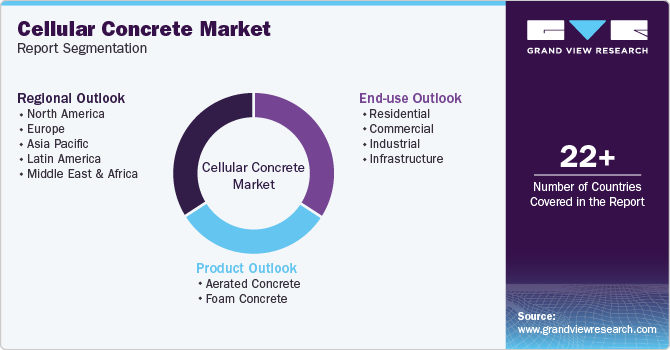
This report forecasts revenue growth at global, regional, and country levels and provides an analysis of the latest industry trends in each of the sub-segments from 2021 to 2033. For this study, Grand View Research has segmented the global cellular concrete market report based on product, end use, and region.
 To learn more about this report, Download Free Sample Report
 -
Product Outlook (Revenue, USD Million; 2021 - 2033)
-
Aerated Concrete
-
Foam Concrete
-
-
End Use Outlook (Revenue, USD Million; 2021 - 2033)
-
Residential
-
Commercial
-
Industrial
-
Infrastructure
-
-
Regional Outlook (Revenue, USD Million; 2021 - 2033)
-
North America
-
U.S.
-
Canada
-
Mexico
-
-
Europe
-
Germany
-
UK
-
France
-
Italy
-
Spain
-
-
Asia Pacific
-
China
-
India
-
Japan
-
South Korea
-
-
Latin America
-
Middle East & Africa
-
Research Methodology
The Cellular Concrete market figures in this report are based on a proven research process that combines executive interviews with secondary research from proprietary databases, company filings, and recognized regulatory and institutional sources. Market size is built through value-chain sizing - reconciling supply-side and demand-side estimates - and triangulated with bottom-up and top-down approaches. Every estimate passes multiple levels of expert validation before publication, with each Cellular Concrete segment quantified using the revenue-capture definitions in the table below.
Segment Definition
Product Type
Revenue Capture Definition
Aerated Concrete
Revenue generated from the production and sale of aerated concrete used across residential, commercial, industrial, and infrastructure construction applications. This segment includes revenues from autoclaved and non-autoclaved aerated concrete products utilized for wall panels, blocks, floor and roof systems, insulation, and other lightweight structural and non-structural building applications.
Foam Concrete
Revenue generated from the production and sale of foam concrete used across residential, commercial, industrial, and infrastructure construction applications. This segment includes revenues from foam concrete utilized for void filling, trench reinstatement, roof insulation, floor screeds, lightweight backfill, embankments, foundation stabilization, and other applications requiring low-density, self-leveling concrete.
End Use
Revenue Capture Definition
Residential
Revenue generated from the use of cellular concrete in residential construction, including single-family homes, multi-family residential buildings, apartments, villas, and affordable housing projects. This segment includes revenues from applications such as wall systems, floor and roof insulation, lightweight fills, foundation works, and other structural and non-structural construction applications.
Commercial
Revenue generated from the use of cellular concrete in commercial buildings, including offices, retail complexes, shopping malls, hotels, healthcare facilities, educational institutions, and mixed-use developments. This segment includes revenues from wall panels, roof insulation, floor leveling, thermal insulation, lightweight fills, and other commercial construction applications.
Industrial
Revenue generated from the use of cellular concrete in industrial facilities, including manufacturing plants, warehouses, logistics centers, processing facilities, and utility buildings. This segment includes revenues from floor systems, equipment foundations, trench backfilling, thermal insulation, lightweight fills, and other industrial construction applications requiring durable and lightweight concrete solutions.
Infrastructure
Revenue generated from the use of cellular concrete in infrastructure and civil engineering projects, including roads, highways, bridges, railways, airports, ports, tunnels, embankments, pipelines, and utility networks. This segment includes revenues from applications such as lightweight embankment fills, bridge approach stabilization, geotechnical fills, trench reinstatement, void filling, ground improvement, and other infrastructure construction activities.
Estimation Model
Layer Name
Key Question
Description
Global Concrete Market
What is the total market size for concrete used across construction applications globally?
This layer represents the broader concrete market used across residential, commercial, industrial, and infrastructure projects. It includes ready-mix concrete, precast concrete, site-mixed concrete, high-performance concrete, self-compacting concrete, lightweight concrete, and other concrete products used for structural and non-structural construction applications.
Lightweight Concrete Market
What portion of the global concrete market consists of lightweight concrete products?
This layer narrows the focus to lightweight concrete materials designed to reduce structural loads while improving thermal insulation, fire resistance, and construction efficiency. It includes cellular concrete, lightweight aggregate concrete, pervious lightweight concrete, insulating concrete, and other lightweight concrete solutions used across residential, commercial, industrial, and infrastructure applications.
Cellular Concrete Market
What share of the lightweight concrete market is represented by cellular concrete products?
This layer focuses specifically on cellular concrete, a lightweight cementitious material characterized by uniformly distributed air voids. It includes both aerated concreteand foam concrete, which are widely used in wall systems, floor and roof insulation, void filling, trench reinstatement, geotechnical applications, lightweight backfill, foundation stabilization, embankments, and other structural and non-structural construction applications.
Global Cellular Concrete Market
What is the market value of cellular concrete across major construction applications?
This final layer represents revenues generated from the production and sale of cellular concrete, including aerated concrete and foam concrete, for residential, commercial, industrial, and infrastructure projects. The market encompasses applications such as wall blocks and panels, roof and floor insulation, lightweight fills, void filling, trench backfilling, geotechnical stabilization, bridge approaches, embankments, and other construction applications where lightweight, thermally efficient, and durable concrete solutions are required.
Frequently Asked Questions About This Report
Asia Pacific dominated the cellular concrete market with a 43.2% revenue share in 2025.
Asia Pacific is the fastest-growing region in the cellular concrete market, with a CAGR of 6.5% over the forecast period
The residential segment led the cellular concrete market with a 42.5% revenue share in 2025.
Foam concrete is the fastest-growing product segment in the cellular concrete market, with a CAGR of 6.5% over the forecast period
The global cellular concrete market size was estimated at USD 2.3 billion in 2025 and is expected to reach USD 2.4 billion in 2026.
The global cellular concrete market is expected to grow at a compound annual growth rate of 6.1% from 2026 to 2033 to reach USD 3.7 billion by 2033.
The aerated concrete segment led the market and accounted for the largest revenue share of 65.7% in 2025, driven due to its superior thermal insulation, lightweight structure, and high demand in energy-efficient residential construction.
Some of the key players operating in the cellular concrete Market include Aerix Industries, Cemex, Sika AG, GEOFILL LLC, Cellular Concrete Technologies, Cematrix, Gulf Precast, AIRCRETE EUROPE, Xella International, Bauroc AS, Knauf Digital GmbH, Tarmac.
The key factor driving the cellular concrete market is the growing need for sustainable, lightweight, and energy-efficient construction materials.
About the Author(s)
Advanced Interior Materials Research Team
Advanced Materials · Advanced Interior MaterialsThis report was authored by the advanced interior materials research team at Grand View Research - comprising two research analysts, one senior research analyst, and one industry expert - with specialized expertise in the advanced interior materials segment of the advanced materials industry. All findings are based on proprietary advanced materials databases, executive interviews, and regulatory analysis, subject to internal peer review prior to publication.
Last Updated:
Speak to Analyst

Customize this report to your needs - add regions, segments, or data points, with 20% free customization.
Or view our licence options:


ISO 9001:2015 & 27001:2022 Certified
We are GDPR and CCPA compliant! Your transaction & personal information is safe and secure. For more details, please read our privacy policy.


