
- Home
- »
- Nutraceuticals & Functional Foods
- »
-
Central & South America Liquid Dietary Supplements Market Report, 2033GVR Report cover

Central & South America Liquid Dietary Supplements Market (2026 - 2033)
Size, Share & Trends Analysis Report By Ingredients (Vitamin, Botanicals, Minerals, Proteins & Amino Acids), By End User, By Type, By Application, By Distribution Channel, By Country And Segment Forecasts
Market Size, 2025
$449.5MMarket Estimate, 2026
$493.9MMarket Forecast, 2033
$905.8MCAGR, 2026–2033
9.1%Central & South America Liquid Dietary Supplements Market Summary
The Central & South America liquid dietary supplements market size was valued at USD 449.5 million in 2025 and is projected to grow from USD 493.9 million in 2026 to USD 905.8 million in 2033, at a CAGR of 9.1% from 2026 to 2033. The market growth can be attributed to the region’s shifting consumer preferences from plant-based and herbal remedies towards science-based products, rising health consciousness and preventive healthcare, convenience and ease of consumption, and the expansion of e-commerce platforms.
Key Market Trends & Insights
- By ingredient: Botanicals segment led the market, accounting for 30.8% in 2025.
- By type: OTC segment led the market, accounting for 76.9% in 2025.
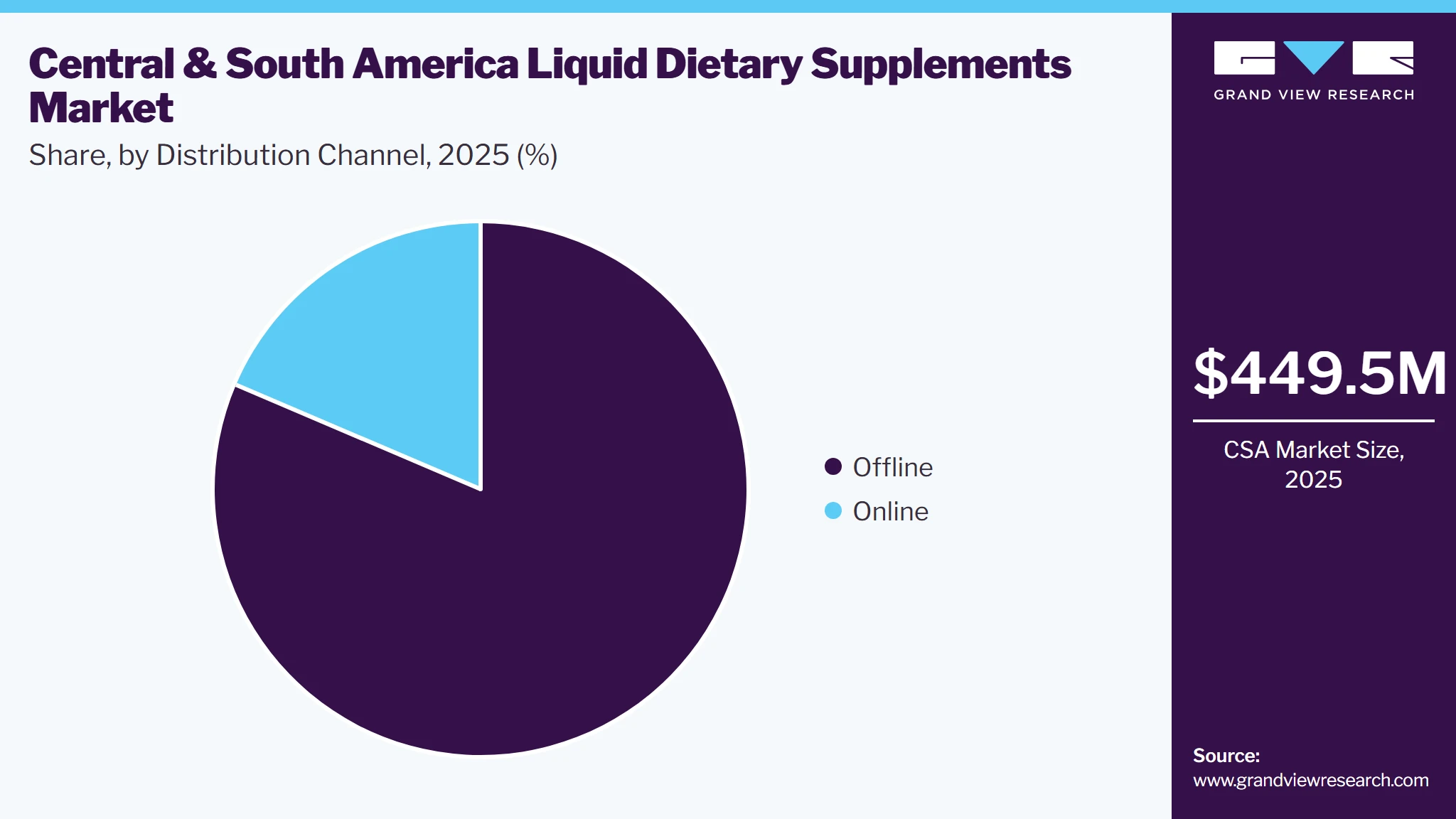
- By distribution channel: Offline segment led the market, accounting for 82.7% in 2025.
Market Size & Forecast
- Market size in 2025: USD 449.5 Million
- Estimated market size in 2026: USD 493.9 Million
- Projected market size by 2033: USD 905.8 Million
- CAGR (2026-2033): 9.1%
Prism AI by Grand View Research Free to tryAsk a question about the central & south america liquid dietary supplements marketTry asking✓Every figure cited from GVR research Prefer the report? Download free sample →
Rising health awareness is driving demand for supplements that support immunity, energy, digestion, healthy aging, and nutritional needs, while growing participation in fitness is creating additional demand for liquid protein, amino acids, and performance-oriented formulations.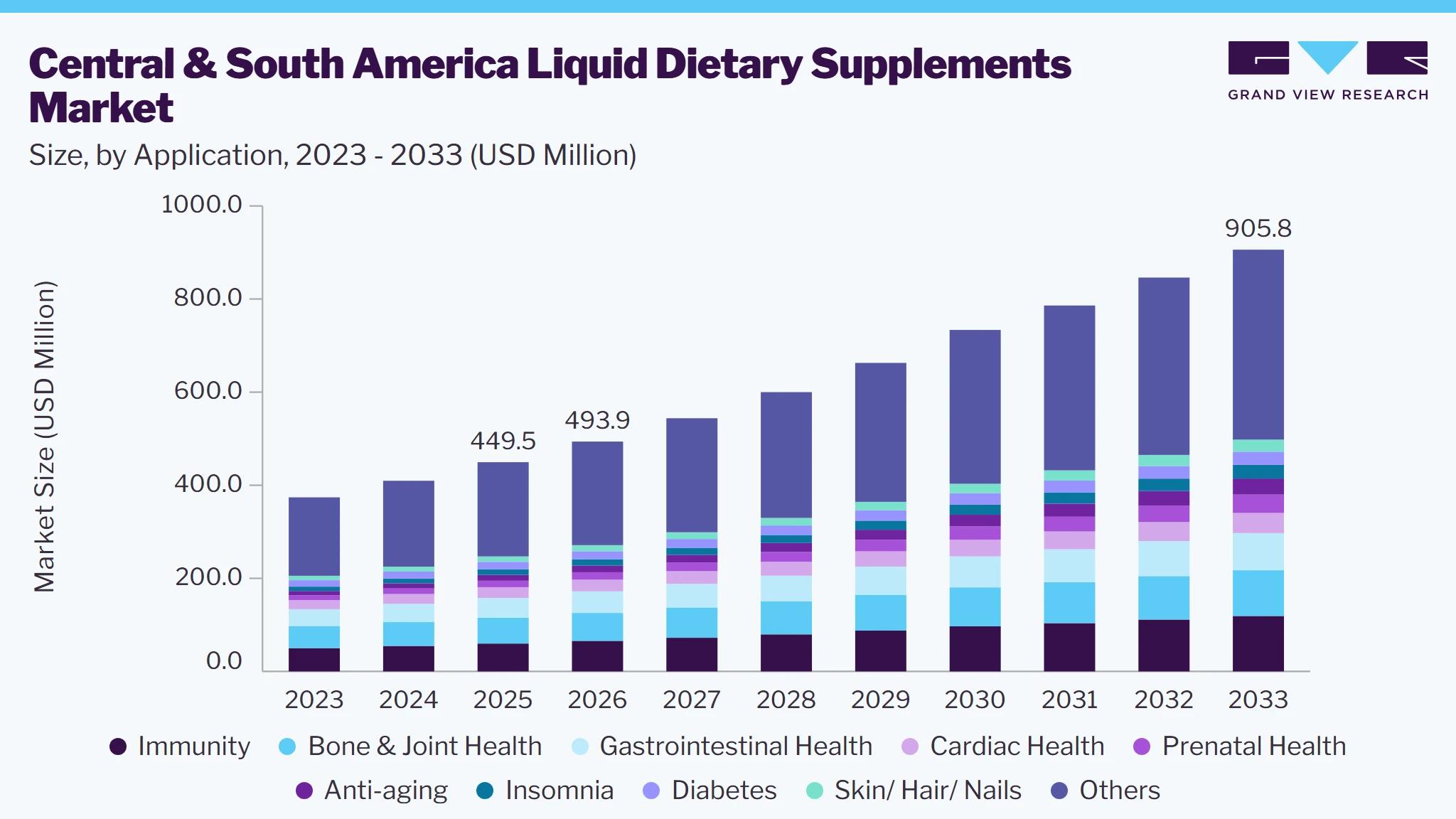 Source: Grand View Research, IR Documents, Primary Interviews, Paid DatabasesTo learn more about this report,
 Download Free Sample Report
The shift in consumer preferences from traditional plant-derived remedies to science-backed health and wellness products is driving market growth. Considering this, companies are incorporating local natural ingredients into their products to serve consumers seeking clean-label products. To promote transparency, the local government is also undertaking initiatives to ensure consumer safety. For instance, in February 2026, Brazil’s National Health Surveillance Agency (Anvisa) published new documents supporting the simplified registration of herbal medicines, including seven monographs and seven scientific assessment reports covering plant-based active ingredients. The initiative forms part of the new herbal-medicine regulatory framework approved in December 2025 and strengthens the use of standardized scientific evidence to establish the safety and efficacy of plant-derived products.
Market Dynamics
Convenience and ease of consumption are key market drivers in Central & South America, as consumers increasingly seek nutritional products that can be incorporated into everyday routines without having to swallow tablets or capsules. Liquid formats such as drops, syrups, shots, and ready-to-consume supplements are particularly suitable for children, older adults, and consumers seeking quick and simple supplementation. The format also enables manufacturers to develop products for specific nutritional needs while offering flexible serving sizes and easier administration. For instance, on November 5, 2025, JBS announced the launch of Mamba Water Protein, described as Brazil's first canned protein water. The product combines 20 g of collagen protein with BCAA in a ready-to-consume format and contains zero carbohydrates, zero sugar, and zero gluten.
Stringent regulatory requirements are restraining market growth by increasing the compliance burden associated with product formulation, quality testing, labeling, and marketing. Manufacturers must ensure that ingredients are authorized, formulations meet permitted composition levels, and health claims are scientifically supported and approved by regulatory authorities. These requirements can increase product-development costs and delay commercialization, particularly for smaller manufacturers seeking to introduce innovative liquid formulations.
For instance, in November 2025, Brazil’s National Health Surveillance Agency (Anvisa) ordered the recall and suspension of Power Honey, a liquid dietary supplement, after identifying unauthorized therapeutic claims and excessive levels of preservatives, including sodium benzoate and potassium sorbate. The action demonstrates how noncompliance with ingredient limits and approved health-claim requirements can result in liquid supplements being removed from the market, thereby increasing regulatory and quality-control pressures on manufacturers.
The development of ready-to-drink functional supplements presents an opportunity for manufacturers to expand the market beyond conventional drops, syrups, and concentrated formulations. RTD products can combine protein, vitamins, minerals, amino acids, collagen, and other functional ingredients in formats that require no preparation, creating convenient consumption occasions for work, travel, exercise, and everyday routines. This format is particularly relevant among younger, more active consumers who increasingly seek nutritional products that combine functionality with familiar beverage experiences. Manufacturers can also differentiate RTD supplements through flavors, nutritional profiles, and targeted benefits such as energy, recovery, hydration, and healthy aging. For instance, in May 2026, Nestlé Brazil launched NESCAU Protein in a ready-to-drink 250 ml format containing 15 g of protein per serving, with zero added sugar and zero lactose. The company positioned the product specifically for adolescents and young adults with busy schedules, emphasizing practicality and functionality.
Analyst Perspective
The market is positioned at the intersection of rising adoption of preventive health, traditional herbal consumption, and a growing preference for convenient supplementation formats, but its competitive advantage will not come from simply expanding liquid portfolios. The stronger opportunity lies with companies that can combine clinically credible formulations, locally relevant ingredients, dosage convenience, and accessible pricing to overcome the region’s fragmented consumer preferences and uneven purchasing power. In view of this, players that build trust through quality, efficacy, traceability, and formulation transparency, while using pharmacies and digital commerce to broaden access, will be better positioned to convert occasional supplement users into recurring consumers.
Consumer Insights
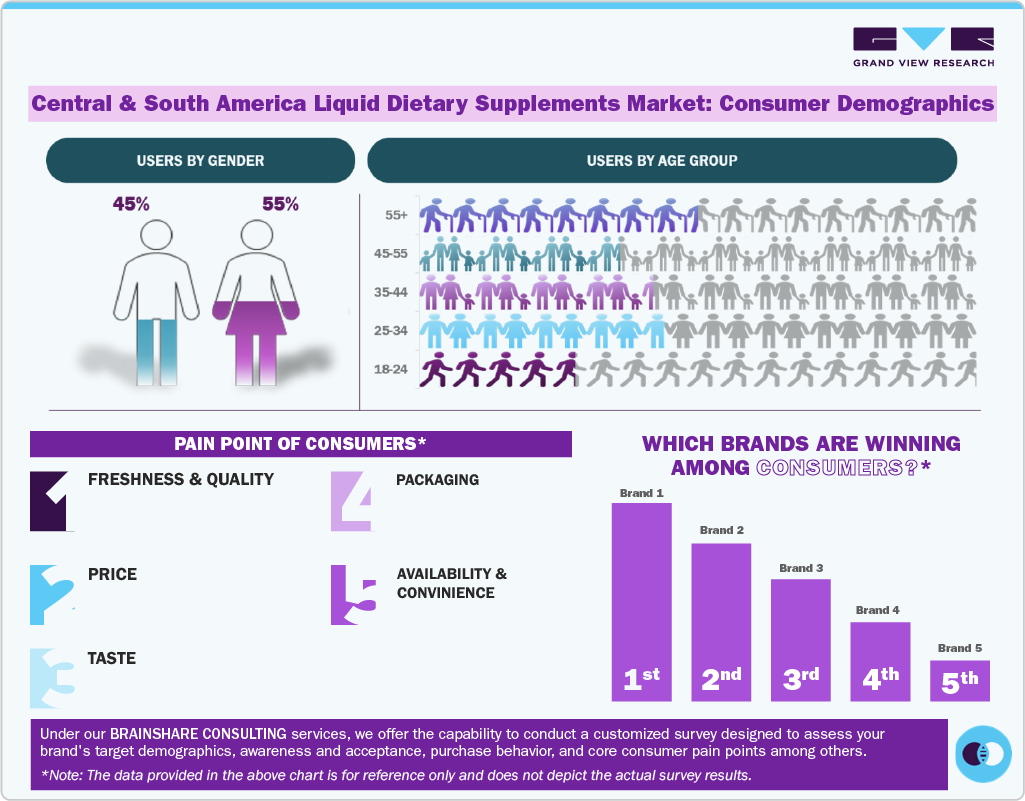
Consumer adoption of liquid dietary supplements across CSA is being supported by growing preference for convenient, portable, and easier-to-consume supplement formats. Kerry's 2026 findings identify liquid shots as one of the leading new and trending supplement delivery formats in the region, alongside gummies and effervescent formats, with the shift attributed to pill fatigue and the need for portability. This growing acceptance is encouraging consumers to incorporate supplementation into more frequent and varied consumption occasions, including daily nutritional support, exercise and recovery, immunity, energy, and beauty-focused routines. Liquid formats can also make supplementation more approachable for consumers who are reluctant to use conventional tablets or capsules, particularly when products offer familiar flavors, smaller serving sizes, and clearly defined functional benefits. As a result, manufacturers in CSA are increasingly able to position liquid supplements as convenient lifestyle products rather than solely as traditional health-maintenance products, supporting broader consumer trial and repeat usage across different wellness needs.
 To learn more about this report, Download Free Sample Report
Application Insights
The immunity segment accounted for 13.3% of revenue in 2025. The segment's growth can be attributed to rising consumer spending on liquid supplements containing vitamins C, D, and zinc to support immune function. Besides, the prevalence of chronic diseases, including diabetes and hypertension, in CSA has increased significantly in the past few years. According to the International Diabetes Federation (IDF), the number of adults between the ages of 20 and 79 having diabetes in CSA has increased from 25.1 million in 2011 to 35.4 million in 2024. Thus, the incorporation of liquid dietary supplements for the treatment of chronic diseases has become a major driving factor for the market
The prenatal health sector is expected to grow at a CAGR of 13.7% from 2026 to 2033. The segment's growth is fueled by the increasing awareness among women in CSA regarding the importance of proper nutrition during pregnancy. Besides, the shortage of essential micronutrients such as iron, folic acid, and calcium has further encouraged the consumption of prenatal supplements. Furthermore, governments in CSA countries are introducing various health policies and schemes to improve maternal health and promote the use of prenatal supplements. Regional governments have also implemented initiatives to provide prenatal vitamins and educate women about their advantages. These efforts are leading to a higher acceptance of liquid dietary supplements for prenatal health in the region.
Ingredients Insights
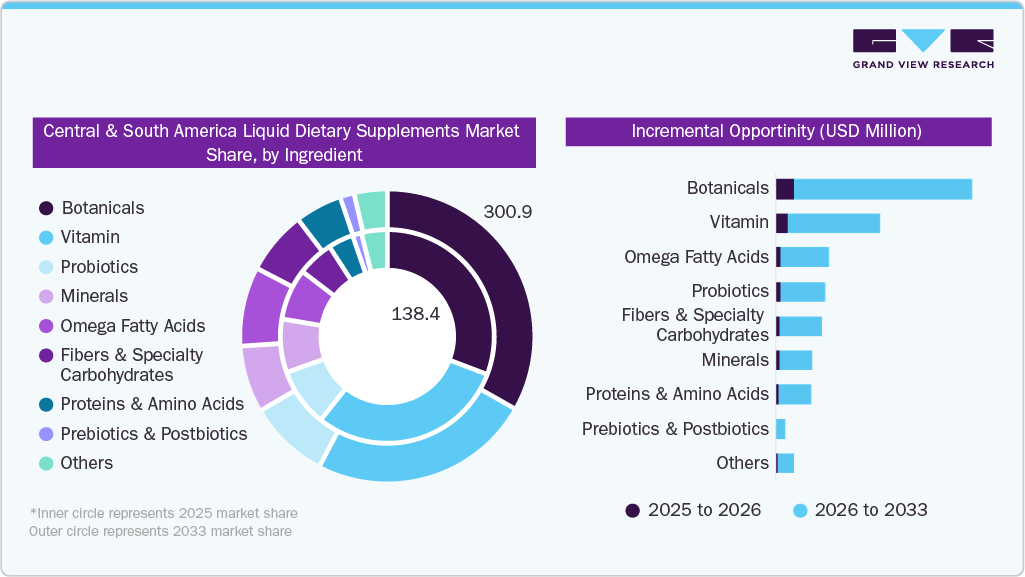
The botanicals segment dominated the CSA liquid dietary supplements industry, accounting for 30.8% of revenue in 2025, driven by consumers’ growing preference for plant-derived, natural, and multifunctional ingredients that can be incorporated into preventive health and everyday wellness routines. Demand is shifting toward science-backed botanical formulations, with consumers seeking plant-based ingredients for specific benefits such as energy, stress management, immunity, digestion, and healthy aging. This trend is reinforced by Brazil’s expanding dietary-supplement market and growing interest in natural wellness.
 To learn more about this report, Download Free Sample Report
The proteins & amino acids segment is expected to witness the fastest CAGR of 13.1% from 2026 to 2033, driven by the expansion of fitness-oriented lifestyles and the broader adoption of protein in everyday nutrition. Demand is moving beyond traditional athletes toward consumers seeking muscle recovery, weight management, healthy aging, satiety, and general nutritional support. The regional protein market is also benefiting from growing interest in plant-based, clean-label, and convenient protein sources, while liquid formulations provide an opportunity to deliver protein and amino acids in ready-to-consume formats.
Type Insights
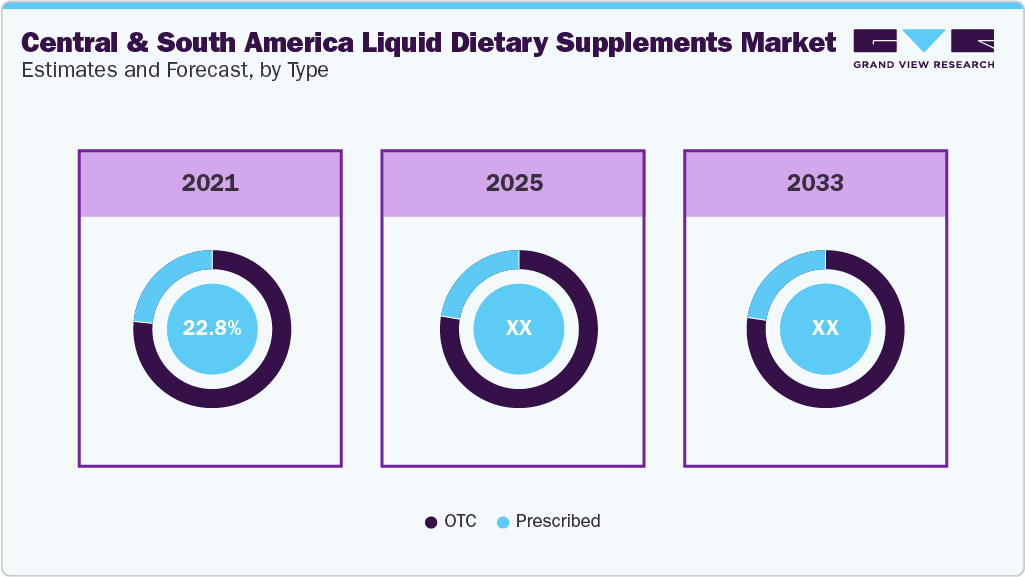
The OTC segment accounted for the largest revenue share of 76.9% in 2025. A growing trend in CSA towards self-care and preventive health management, particularly in urban areas, is contributing to the segment's growth. Consumers are actively addressing minor health issues such as fatigue, digestive problems, or immunity by buying OTC liquid supplements without a doctor's prescription. This trend is driven by easily accessible health information online and the widespread availability of OTC products in pharmacies, supermarkets, and online shopping sites. Moreover, the growth of retail chains and online marketplaces has increased the availability of OTC liquid supplements to a wider audience. Consumers in urban and semi-urban regions conveniently purchase various supplements, influenced by advertisements or peer recommendations.
 To learn more about this report, Download Free Sample Report
The prescribed liquid dietary supplements are expected to grow at the fastest CAGR of 9.6% from 2026 to 2033. Prescribed liquid dietary supplements are frequently suggested by healthcare practitioners to address clinical deficiencies or to manage issues such as anemia, malnutrition, and nutrient requirements during pregnancy. Doctors often favor liquid medications due to their quick absorption, particularly for pediatric, geriatric, and post-surgical patients who may struggle to swallow pills or need immediate nutritional support. In several CSA countries, public health agencies include recommended supplements in nutritional care initiatives, especially for at-risk populations such as pregnant women, infants, and seniors. Liquid formulations are frequently provided through public clinics due to their effectiveness and patient compliance, thereby strengthening their position in organized medical treatment.
End User Insights
The adult segment accounted for the largest revenue share of 62.4% in 2025. This demographic favors liquid dietary supplements as they are easy to consume and offer quicker absorption than pills. The increase in sedentary and stressful lifestyles in urban areas of the CSA has encouraged adults to seek nutritional support to maintain energy, immunity, and overall health. The growing health issues have raised awareness of preventive nutrition, turning liquid supplements into a convenient and attractive daily wellness option.
The infant segment is expected to grow at a CAGR of 10.3% from 2026 to 2033. Infants have specific nutritional requirements that are essential for proper growth and development. In many CSA countries, parents are increasingly recognizing the importance of early nutrition, boosting demand for liquid supplements enriched with iron, vitamin D, and DHA. These supplements are commonly used to ensure proper nutrient absorption from breast milk or formula, promoting optimal immune and cognitive development during early childhood. Pediatricians and healthcare practitioners in CSA often advise liquid dietary supplements for infants who are premature, low birth weight, or at risk of nutrient shortages. Liquid supplements are commonly preferred in clinical and home care environments due to their ease of administration and digestion. This increases the trust among parents and caregivers, thus increasing the adoption of liquid supplements for infant nutrition throughout the region.
Distribution Channel Insights
The offline distribution segment held the largest revenue share of 82.7% in 2025. Traditional purchasing habits are firmly established in various countries in the region, mainly in rural and semi-urban areas. Shoppers prefer to examine items in person, review labels, and interact with store staff before making a purchase. This conventional inclination favors personal engagement and physical experiences, resulting in significant foot traffic at retail establishments such as supermarkets, specialty stores, and pharmacies, underscoring the importance of offline stores in the region.
 To learn more about this report, Download Free Sample Report
The online distribution segment is projected to grow 8.2% from 2026 to 2033. The proliferation of internet access and smartphone use throughout CSA has greatly influenced the uptake of e-commerce platforms. Urban shoppers are increasingly opting for online purchasing due to convenience and a wider selection of products. According to the International Trade Administration, Argentina and Brazil are expected to grow at a CAGR of over 13.6% between 2023 and 2027. E-commerce platforms such as Mercado Libre and Amazon, as well as dedicated brand websites, have increased the availability of liquid dietary supplements to a wider audience. Online platforms offer a wide variety of liquid dietary supplements, along with comprehensive information and customer feedback to help shoppers make more informed choices. Furthermore, the ease of home delivery and the access to compare prices are leading to an increasing preference for online shopping of liquid dietary supplements throughout the region.
Country Insights
Brazil Liquid Dietary Supplements Market Trends
Brazil liquid dietary supplements market dominated the regional market with the largest market share of 55.1% in 2025. Brazil's aging population drives demand for liquid dietary supplements among older adults. Liquid form is a preferred mode of consuming supplements within this age demographic, which often faces difficulty in swallowing pills, thus offering an easier alternative to meet nutritional needs. Additionally, Brazilian consumers are getting increasingly aware of the significance of health and wellness. This, coupled with the shift towards preventive healthcare, is driving the popularity of liquid supplements in the country.
Argentina Liquid Dietary Supplements Market Trends
The liquid dietary supplements market in Argentina is growing due to a strong sports culture, particularly in football, has often encouraged participants to improve their fitness and athletic performance. This growing emphasis on sports drives the demand for sports nutrition products, including liquid dietary supplements, among athletes to support energy, recovery, and overall performance. In addition, the proliferation of gyms and fitness centers nationwide has fueled this trend as individuals seek supplements that offer faster absorption and complement their active lifestyles. All such factors drive the demand for liquid dietary supplements in the country.
Chile Liquid Dietary Supplements Market Trends
The liquid dietary supplements market in Chile has a highly urbanized and digitally connected consumer base is creating favorable conditions, as wellness, specialized healthcare, boutique gyms, sports medicine, and fitness-related services continue to gain traction. The country’s growing emphasis on healthy lifestyles and quality-focused consumption is encouraging consumers to incorporate nutritional products into their regular routines, while the expansion of e-commerce is making supplements more accessible beyond traditional health and pharmacy channels.
Key Central & South America Liquid Dietary Supplements Company Insights
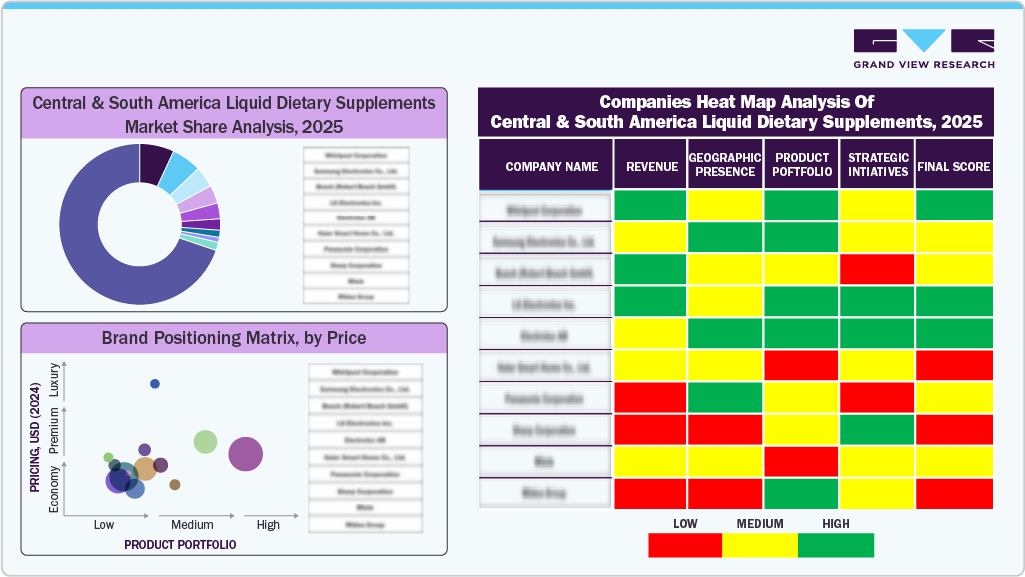
The CSA market remains fragmented, with competition shaped by portfolio breadth, liquid-format capabilities, distribution reach, ingredient expertise, and brand trust rather than dependence on a single product category. Leading players are broadening their offerings across vitamins, botanicals, minerals, proteins, amino acids, and specialized nutritional formulations, while increasingly developing products around convenience, preventive health, sports nutrition, healthy aging, and targeted wellness needs. Companies are also using liquid formats such as drops, shots, syrups, and ready-to-consume formulations to differentiate products and address consumers seeking easier supplementation.
 To learn more about this report, Download Free Sample Report
Key Central & South America Liquid Dietary Supplements Companies
-
Herbalife International of America, Inc.
-
Grupo Omnilife, S.A. de C.V.
-
Vitafor Nutritional Products Ltda.
-
Althaia S.A. Indústria Farmacêutica
-
Cimed & Co. S.A.
-
Hypera S.A.
-
Eurofarma Laboratórios S.A.
-
Supley Laboratório de Alimentos Ltda.
-
Flora Nativa do Brasil Ltda.
-
Ocean Drop Comércio de Produtos Naturais Ltda.
Competitive Benchmarking
Category
Operating Strategies
Competitive Edge
Weakness
Established Players (Herbalife International of America, Inc.; Grupo Omnilife, S.A. de C.V.; Vitafor Nutritional Products Ltda.; Althaia S.A. Indústria Farmacêutica; Cimed & Co. S.A.; Hypera S.A.; Eurofarma Laboratórios S.A.)
- Leverage established supplement portfolios, regulatory capability, and broad pharmacy, direct-selling, supermarket, specialty-store, and e-commerce access.
- Expand liquid formats including vitamin/mineral drops, botanical liquids, melatonin drops, protein beverages, and wellness drinks across targeted consumer needs.
- High brand awareness, established consumer trust, extensive distribution, stronger formulation/R&D resources, and the ability to cross-sell across multiple supplement categories.
- Larger organizations can be slower in responding to niche liquid-format trends; broader portfolios and compliance processes may increase launch timelines and pricing complexity.
Emerging Players (Supley Laboratório de Alimentos Ltda.; Flora Nativa do Brasil Ltda.; Ocean Drop Comércio de Produtos Naturais Ltda.)
- Focus on specialized liquid formulations, digital-first sales, direct-to-consumer engagement, convenient drops and ready-to-drink formats, and targeted wellness positioning.
- Use social media, influencers, online subscriptions, and marketplace channels to build consumer awareness and drive repeat purchases.
- Greater agility in product innovation, faster response to ingredient and format trends, focused brand positioning, and stronger ability to tailor products to local consumer preferences.
- Comparatively narrower offline distribution, lower brand recognition outside core markets, and limited resources for large-scale marketing, regulatory expansion, and regional distribution.
Recent Developments
-
In May 2026, Nestlé Health Science launched Nutren Protein 15g Collagen as an extension of the Nutren Protein range. The product is a liquid nutritional supplement that combines protein, collagen, vitamins, and minerals.
-
In May 2025, Brazil's health agency ANVISA released Instruction No. 361, revising its rules on dietary supplements. The updated framework established more rigorous rules regarding formulation, labeling, and health assertions.
Central & South America Liquid Dietary Supplements Market Report Scope
Report Attribute
Details
Market size in 2025
USD 449.5 million
Estimated market size in 2026
USD 493.9 million
Projected market size by 2033
USD 905.8 million
Growth rate
CAGR of 9.1% from 2026 to 2033
Historical data
2021 - 2025
Forecast period
2026 - 2033
Quantitative units
Revenue in USD million and CAGR from 2026 to 2033
Report coverage
Revenue forecast, company ranking, competitive landscape, growth factors, trends
Segments covered
Ingredients, type, application, end user, distribution channel, country
Country scope
Brazil; Argentina; Chile
Key companies profiled
Herbalife International of America, Inc.; Grupo Omnilife, S.A. de C.V.; Vitafor Nutritional Products Ltda.; Althaia S.A. Indústria Farmacêutica; Cimed & Co. S.A.; Hypera S.A.; Eurofarma Laboratórios S.A.; Supley Laboratório de Alimentos Ltda.; Flora Nativa do Brasil Ltda.; Ocean Drop Comércio de Produtos Naturais Ltda.
Customization scope
Free report customization (equivalent up to 8 analysts working days) with purchase. Addition or alteration to country, regional & segment scope.
Pricing and purchase options
Avail customized purchase options to meet your exact research needs. Explore purchase options
Central & South America Liquid Dietary Supplements Market Report Summary
This report forecasts revenue growth at the country level and provides an analysis of the latest industry trends in each of the sub-segments from 2021 to 2033. For this study, Grand View Research has segmented the Central & South America liquid dietary supplements market report based on ingredients, type, application, end user, distribution channel, and country:
-
Ingredients Outlook (Revenue, USD Million, 2021 - 2033)
-
Vitamin
-
Multivitamin
-
Vitamin A
-
Vitamin B
-
Vitamin C
-
Vitamin D
-
Vitamin K
-
Vitamin E
-
-
Botanicals
-
Minerals
-
Calcium
-
Potassium
-
Magnesium
-
Iron
-
Zinc
-
Others
-
-
Proteins & Amino Acids
-
Collagen
-
Others
-
-
Fibers & Specialty Carbohydrates
-
Omega Fatty Acids
-
Probiotics
-
Prebiotics & Postbiotics
-
Others
-
-
Application Outlook (Revenue, USD Million, 2021 - 2033)
-
Bone & Joint Health
-
Gastrointestinal Health
-
Immunity
-
Cardiac Health
-
Diabetes
-
Anti-cancer
-
Lungs Detox/Cleanse
-
Skin/Hair/Nails
-
Sexual Health
-
Brain/Mental Health
-
Insomnia
-
Menopause
-
Anti-aging
-
Prenatal Health
-
Others
-
-
Type Outlook (Revenue, USD Million, 2021 - 2033)
-
OTC
-
Prescribed
-
-
End User Outlook (Revenue, USD Million, 2021 - 2033)
-
Adults
-
Millennials
-
Male
-
Female
-
Pregnant Women
-
Non-pregnant Women
-
-
-
Gen X
-
Male
-
Female
-
Pregnant Women
-
Non-pregnant Women
-
-
-
Gen Z
-
Male
-
Female
-
Pregnant Women
-
Non-pregnant Women
-
-
-
Boomers
-
Male
-
Female
-
-
-
Geriatric
-
Children
-
Infants
-
-
Distribution Channel Outlook (Revenue, USD Million, 2021 - 2033)
-
Offline
-
Hypermarkets/Supermarkets
-
Pharmacies
-
Specialty Stores
-
Practitioner
-
Others
-
-
Online
-
Amazon
-
Other Online Retail Stores
-
-
-
Regional Outlook (Revenue, USD Million, 2021 - 2033)
-
CSA
-
Brazil
-
Argentina
-
Chile
-
-
Research Methodology
The CSA liquid dietary supplements market figures in this report are based on a proven research process that combines executive interviews with secondary research from proprietary databases, company filings, and recognized regulatory and institutional sources. Market size is built through value-chain sizing-reconciling supply-side and demand-side estimates-and triangulated with bottom-up and top-down approaches. Every estimate passes multiple levels of expert validation before publication, with each CSA liquid dietary supplements segment quantified using the revenue-capture definitions in the table below.
Segment Definition
Segment - Distribution Channel
Revenue capture definition
Online
This segment includes sales of liquid dietary supplements through digital channels such as brand websites, online marketplaces, and e-commerce platforms. Revenue is generated through direct-to-consumer websites, online retail stores, and marketplace purchases.
Offline
This segment includes sales of liquid dietary supplements through physical retail and healthcare channels such as hypermarkets/supermarkets, pharmacies, specialty stores, practitioner channels, and other retail outlets. Revenue is generated through in-store purchases, with consumers benefiting from physical product access.
Segment - Type
Revenue capture definition
OTC
This segment includes the sales of liquid dietary supplements available directly through pharmacies, retail stores, and online channels. Revenue is generated through products targeting general nutritional support, immunity, energy, and wellness needs.
Prescribed
This segment includes the sales of liquid dietary supplements recommended or prescribed by healthcare professionals for specific nutritional requirements. Revenue is generated through clinically guided supplementation for targeted deficiencies and health-related needs.
Estimation Model
Population Layer
Reachable Consumer Layer
Adoption Layer
Revenue Generation Layer
Who has a relevant nutritional need?
Who can be reached through supplement channels?
Who actively purchases liquid supplements?
How is market revenue generated?
Identify the CSA population with nutritional deficiencies, preventive health needs, fitness goals, and age-related supplementation requirements to define the addressable consumer pool.
Apply population-specific healthcare access, retail availability, internet penetration, and e-commerce adoption rates to estimate the commercially reachable consumer base.
Apply liquid-supplement usage and purchase rates across adults, children, geriatric consumers, and health-focused groups to convert reachable consumers into active users.
Multiply active users by average annual spending on liquid dietary supplements across OTC and prescribed products, incorporating retail, pharmacy, specialty-store, and online sales.
Customization Table
Client Request
Customization Delivered
Value Adds
CSA Liquid Dietary Supplements Consumer & Preference Landscape
Assessed consumer preferences across liquid supplement formats, functional benefits, ingredient choices, dosage preferences, flavor profiles, and usage occasions across key Central and South American markets.
Helps identify high-demand benefits and product attributes, enabling targeted portfolio and consumer-segment strategies.
CSA Liquid Dietary Supplements Product & Format Assessment
Evaluated liquid supplement formats, including liquid tonics, oral drops, syrups, shots, and other ready-to-consume formats, with emphasis on product positioning and formulation trends.
Supports format prioritization, portfolio optimization, and identification of emerging product-development opportunities.
CSA Liquid Dietary Supplements Pricing & Premiumization Landscape
Analyzed pricing structures, premium versus mass-market positioning, ingredient-led differentiation, and value propositions across major CSA markets and distribution channels.
Enables market-specific pricing strategies, premiumization opportunities, and stronger differentiation across consumer segments.
Frequently Asked Questions About This Report
Key players include Amway CSA Enterprises Pvt. Ltd, BASF SE, Bayer AG, DSM Nutritional Products, Glanbia Public Limited Company (Glanbia PLC), GSK plc, Herbalife International of America, Inc., Liquid Health Inc., Medcell, Nestle Health Science S.A.
Rising health awareness is encouraging demand for supplements addressing immunity, energy, digestion, healthy aging, and nutritional deficiencies, while growing fitness participation is creating additional demand for liquid proteins, amino acids, and performance-oriented formulations.
The OTC type segment accounted for the largest market share of 76.9% in 2025.
Proteins & Amino Acids Ingredient is the fastest growing segment with a CAGR of 13.1% from 2026 to 2033.
By application, immunity segment dominated the market with a share of 13.3% in 2025.
The Central & South America liquid dietary supplements market size valued at USD 449.5 million in 2025 & is estimated at USD 493.9 million for 2026.
The Central & South America liquid dietary supplements market is expected to grow at a CAGR of 9.1% from 2026 to 2033, reaching USD 905.8 million in 2033.
By end-user, adults dominated the market with a market share of 62.4% in 2025.
Offline distribution channel is the fastest growing channel in Central & South America Liquid Dietary Supplements market with a CAGR of 9.2% from 2026 to 2033.
About the Author(s)
Nutraceuticals & Functional Foods Research Team
Consumer Goods · Nutraceuticals & Functional FoodsThis report was authored by the nutraceuticals & functional foods research team at Grand View Research - comprising two research analysts, one senior research analyst, and one industry expert - with specialized expertise in the nutraceuticals & functional foods segment of the consumer goods industry. All findings are based on proprietary consumer goods databases, executive interviews, and regulatory analysis, subject to internal peer review prior to publication.
Last Updated:
Speak to Analyst

Customize this report to your needs - add regions, segments, or data points, with 20% free customization.
Or view our licence options:


ISO 9001:2015 & 27001:2022 Certified
We are GDPR and CCPA compliant! Your transaction & personal information is safe and secure. For more details, please read our privacy policy.


