
- Home
- »
- Nutraceuticals & Functional Foods
- »
-
Liquid Dietary Supplements Market Size Report, 2026-2033GVR Report cover

Liquid Dietary Supplements Market (2026 - 2033)
Size, Share & Trends Analysis Report By Ingredient (Vitamins, Botanicals, Minerals, Protein & Amino Acids, Omega fatty Acids), By Application, By End-user, By Type, By Distribution Channel, By Region, And Segment Forecasts
Market Size, 2025
$26.6BMarket Estimate, 2026
$29.6BMarket Forecast, 2033
$58.9BCAGR, 2026–2033
10.4%Liquid Dietary Supplements Market Summary
The global liquid dietary supplements market size was valued at USD 26.6 billion in 2025 and is projected to grow from USD 29.6 billion in 2026 to USD 58.9 billion by 2033, at a CAGR of 10.4% from 2026 to 2033. North America dominated the market, accounting for a revenue share of 35.1% in 2025. Increasing consumer awareness regarding health & wellness, demand for convenient and easy-to-consume nutritional products and rise in the aging population are the major factors contributing to the market growth.
 Source: Grand View Research, IR Documents, Primary Interviews, Paid DatabasesTo learn more about this report,
 Download Free Sample Report
 Key Market Trends & Insights
- By ingredient: Botanicals segment led the market with the largest revenue share of 25.1% in 2025.
- By applications: Energy & weight management segment led the market with the largest revenue share of 22.2% in 2025.
- By end users: Geriatric population led the market with the largest revenue share of 32.9% in 2025.
- By type: Prescribed segment is growing at the fastest CAGR of 11.2% over the forecast period from 2026 to 2033.
- By distribution channel: Sales through online channels are growing at the fastest CAGR of 11.4% over the forecast period from 2026 to 2033.
Regional Highlights
- Largest regional market: North America (35.1% revenue share, 2025)
- By country: The U.S. held the largest market share in 2025.
Market Size & Forecast
- Market size in 2025: USD 26.6 Billion
- Estimated market size in 2026: USD 29.6 Billion
- Projected market size by 2033: USD 58.9 Billion
- CAGR (2026-2033): 10.4%
Three ways to get this report
Buy it, customize it, or ask a question.Ask an Analyst
Analyst response in 1 business day
- AccessReport author, directly
- Reply timeWithin 1 working day
- No sales callDirect answer only
- FormatEmail reply
- CostFree, no cost
Get the Full Report
What the study covers
- FormatsPDF · Excel · Dashboard
- Timeline2026–2033 annual, 2025 base
- Coverage20+ countries, 5 regions
- Companies10+ key players profiled
Customize the Report
20% free customization
- IncludeCountries, segments, points
- TailorTo your product definition
- ExtendDeeper competitor detail
- OrA fully bespoke study
- Turnaround5–10 working days
According to the World Social Report 2023, the number of people aged 65 years or older worldwide is projected to more than double, from 771 million in 2022 to 1.6 billion in 2050. Moreover, the number of people aged 80 years or older is growing even faster. The rising prevalence of chronic diseases such as obesity, diabetes, and cardiovascular diseasesis anticipated to be a key driver for the increased demand for liquid supplements. These health issues have led to a growing awareness among consumers about the importance of maintaining a healthy diet and taking nutritional supplements to support their overall well-being. Liquid dietary supplements provide an easy and convenient way to meet the recommended daily intake of essential vitamins and minerals, making them a popular choice among consumers. To learn more about this report, Download Free Sample Report
 With advancements in technology and the availability of personalized health data, consumers are now more aware of their unique nutritional needs. This has led to a rise in demand for customized supplements that cater to specific health concerns or deficiencies. Ready-to-drink (RTD) dietary supplements offer the flexibility to adjust the dosage as per individual requirements, making them a preferred choice for personalized nutrition. Besides, liquid food supplements, made from natural ingredients and free from artificial additives, are perceived as a healthier alternative to traditional supplements. This has led to a shift in consumer preferences towards liquid dietary supplements, further driving market growth.
Market Dynamics
The liquid dietary supplements market is experiencing strong growth due to increasing consumer focus on preventive healthcare, nutritional wellness, and convenient supplement consumption. Liquid dietary supplements offer vitamins, minerals, herbal extracts, amino acids, probiotics, and other functional ingredients in an easily consumable format that supports faster absorption and improved bioavailability compared to some traditional dosage forms. Growing awareness regarding immunity, digestive health, energy management, and overall wellness is encouraging consumers to incorporate dietary supplements into their daily routines. In addition, the rising aging population, increasing prevalence of nutritional deficiencies, and expanding availability of innovative supplement formulations are contributing to market expansion.
The growing emphasis on preventive healthcare is a major driver of the liquid dietary supplements market. Consumers are increasingly seeking products that help maintain overall health, strengthen immunity, improve energy levels, support cognitive function, and address nutritional gaps caused by modern lifestyles. Rising incidences of lifestyle-related conditions, coupled with increasing awareness of the importance of balanced nutrition, have significantly boosted demand for dietary supplements.
Liquid supplements are particularly attractive to children, older adults, and individuals who experience difficulty swallowing tablets or capsules. Furthermore, growing consumer preference for convenient and fast-absorbing nutritional products is accelerating the adoption of liquid formulations. The increased use of vitamins, minerals, omega-3 fatty acids, herbal extracts, and immunity-supporting ingredients following heightened health awareness worldwide continues to drive market growth. Expanding healthcare education and greater accessibility through pharmacies, supermarkets, specialty stores, and online platforms are further supporting demand.
Regulatory requirements and formulation-related challenges remain significant restraints for the liquid dietary supplements market. Dietary supplement manufacturers must comply with varying regulations, labeling requirements, ingredient approvals, and quality standards across different countries and regions. These regulatory complexities can increase product development costs and create barriers to market entry.
In addition, liquid formulations are often more susceptible to degradation, contamination, and reduced shelf life compared to solid dosage forms. Maintaining ingredient stability, flavor consistency, and product efficacy throughout storage and transportation can be challenging, particularly for formulations containing sensitive vitamins, probiotics, and botanical extracts. Furthermore, concerns regarding misleading health claims, product quality inconsistencies, and counterfeit supplements may affect consumer trust and hinder market growth in certain regions.
The growing trend toward personalized nutrition and targeted health solutions presents substantial opportunities for the liquid dietary supplements market. Consumers are increasingly seeking customized products designed to address specific health concerns such as immunity enhancement, digestive wellness, cognitive support, sports nutrition, healthy aging, stress management, and sleep improvement. This shift is encouraging manufacturers to develop specialized liquid formulations tailored to individual health needs and demographic groups.
Technological advancements in nutrition science, ingredient delivery systems, and health monitoring are further supporting market innovation. Manufacturers are introducing functional liquid supplements containing probiotics, adaptogens, collagen peptides, plant-based proteins, antioxidants, and other bioactive ingredients that provide benefits beyond basic nutrition. In addition, the growing popularity of clean-label, organic, sugar-free, vegan, and naturally flavored products is creating new growth opportunities. The expansion of e-commerce platforms, subscription-based wellness programs, and direct-to-consumer distribution channels is expected to improve accessibility and accelerate long-term growth in the liquid dietary supplements market.
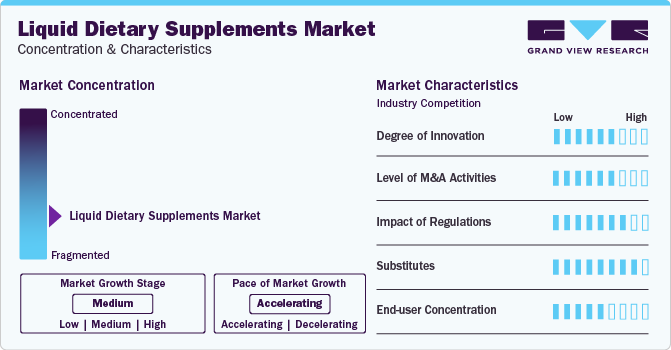
Market Concentration & Characteristics
The global liquid dietary supplements market is characterized by a high degree of innovation, with manufacturers continuously investing in research and development (R&D) to introduce new and innovative products to meet changing consumer needs. These innovations include the use of new ingredients, flavors, and packaging to make the supplements more appealing and convenient for consumers.
The liquid dietary supplements industry has witnessed a significant increase in mergers and acquisitions (M&A) activities in recent years. These activities are driven by the need for companies to expand their product portfolios, increase their market share, and reach new consumer segments.
 To learn more about this report, Download Free Sample Report
 Companies are required to adhere to various laws and regulations governing the manufacturing, labeling, and marketing of these products. For instance, the U.S. Food and Drug Administration (FDA) has strict regulations for dietary supplements, requiring manufacturers to ensure the safety and quality of their products.
Liquid dietary supplements face competition from various product substitutes, such as tablets, capsules, and powders. These substitutes offer similar benefits and are often considered more cost-effective and convenient by consumers. In addition, the rise of personalized nutrition and the availability of tailored supplements are also posing a threat to the market growth.
Analyst Perspective
The liquid dietary supplements market is benefiting from a broader shift toward preventive healthcare, personalized nutrition, and convenient wellness solutions. Consumers increasingly favor liquid formats due to their ease of consumption, faster absorption perception, flexible dosing, and suitability for children, older adults, and individuals with swallowing difficulties. Rising awareness of immunity support, digestive health, healthy aging, and overall wellness continues to expand the consumer base for liquid supplement products. The market's strongest competitive moat will likely be built around scientific credibility, formulation innovation, and consumer trust. As buyers become more informed about ingredient quality, bioavailability, and health outcomes, companies that combine clinically supported formulations with transparent labeling and superior user experience will be best positioned to gain market share. Furthermore, advancements in personalized nutrition, functional ingredients, and targeted wellness solutions are expected to drive premiumization, while digital health ecosystems and direct-to-consumer models will increasingly influence purchasing behavior. Companies capable of integrating science-backed innovation with convenient delivery formats and strong brand authority are expected to emerge as long-term leaders in the liquid dietary supplements market.
Ingredient Insights
Based on ingredient, the botanicals segment led the market with the largest revenue share of 25.1% in 2025. The dominance can be attributed to the increasing consumer health consciousness and demand for natural and organic products. Unlike traditional supplements in pill or capsule form, liquid herbs and extracts are easy to swallow and can be added to functional beverages, or pharmaceutical formulations. Moreover, the rising prevalence of chronic diseases such as arthritis, cardiovascular problems, and diabetes among the geriatric populace is anticipated to boost the product adoption rate.
The proteins & amino acid-based liquid supplements are anticipated to witness a CAGR of 13.4% from 2024 to 2030. They are essential nutrients that play a crucial role in maintaining overall health and well-being. Unlike protein powders or solid food sources, these liquid supplements can be quickly consumed on the go, making them a popular choice for people with busy lifestyles. According to the World Health Organization (WHO), North Americans consume over twice the protein intake suggested by the Dietary Recommended Intake (DRI). A study titled ‘Protein Fever’ found that over 25% of North Americans are willing to pay more for protein-rich diets.
Applications Insights
Based on applications, the energy & weight management segment led the market with the largest revenue share of 22.2% in 2025. Rising awareness of the benefits of fiber for weight management is attracting sports enthusiasts and fitness professionals towards easy-to-consume formulations. Moreover, liquid pre-workout supplements containing ingredients like caffeine, B vitamins, proteins, and creatine are gaining popularity for their perceived ability to enhance energy, focus, and performance during workouts. Besides, rising awareness regarding weight management among working professionals, on account of increasing concerns over obesity disorders, is projected to amplify the utilization of easy-to-absorb health supplements.
 To learn more about this report, Download Free Sample Report
 The anti-aging application for liquid dietary supplements is estimated to grow at a CAGR of 15.3% from 2024 to 2030. Increasing demand for anti-aging products, driven by age-related skin problems, such as fine lines, wrinkles, and dullness has resulted in demand for effective nutraceutical products. Moreover, a rise in the spending power of consumers on supplements that help them maintain youthful skin will stimulate the liquid dietary supplements industry size. According to the Population Reference Bureau (PRB), the number of Americans ages 65 and older is projected to increase from 58 million in 2022 to 82 million by 2050.
End-user Insights
Based on end users, the geriatric population led the market with the largest revenue share of 32.9% in 2025. Rising prevalence of cardiovascular diseases (CVD) among the geriatric populace has resulted in an increasing intake of health supplements for maintaining their health and well-being. Liquid dietary supplements have become a popular option for older adults due to their ease of consumption and potential health benefits. According to the American Heart Association (AHA), the incidence of CVD in the U.S. men and women is around 40% from 40 to 59 years, around 75% from 60 to 79 years, and around 86% in those above the age of 80.
The liquid dietary supplements for children are estimated to grow at a CAGR of 13.2% from 2024 to 2030. Factors such as rising awareness of the importance of nutrition for children's growth and development, as well as the convenience and ease of use of liquid supplements are driving the segment growth. With busy schedules and hectic lifestyles, many parents struggle to provide their children with a balanced and nutritious diet. According to the World Health Organization, childhood obesity has more than doubled in the past 20 years, with around 38.9 million children under the age of five being overweight or obese. As a result, parents are turning to liquid supplements as a convenient and effective way to ensure their child is getting the necessary nutrients for optimal growth and development.
Type Insights
Based on type, the prescribed segment is growing at the fastest CAGR of 11.2% over the forecast period from 2026 to 2033. OTC type offers benefits such as wider distribution of products, making them easily available to consumers in pharmacies, supermarkets, and online retailers. This accessibility, coupled with the rising trend of self-care and self-medication, has led to a significant increase in sales of liquid nutraceuticals through OTC channels. Besides, initiatives related to healthcare infrastructural development along with the introduction of favorable policies by local governments are likely to enhance the popularity and expansion of dietary supplements through OTC channels.
The prescribed segment is estimated to grow at a CAGR of 12.7% from 2024 to 2030. Growing awareness of nutritional deficiencies and the benefits of personalized medicine could drive interest in prescribed products as a potential solution. Hospitals and nursing homes are increasingly incorporating food supplements into their patient care plans, as these nutraceuticals are easy to administer and provide necessary nutrition to patients who are unable to consume solid food.Lower awareness among many individuals about self-medication will further boost the medical practitioners' prescribed products segment growth.
Distribution Channel Insights
Based on the distribution channel, the sales through online channels are growing at the fastest CAGR of 11.4% over the forecast period from 2026 to 2033. Offline channels offer wider accessibility, especially in regions with limited internet penetration or for demographics less comfortable with online shopping. They also offer personalized shopping experience for consumers, with the opportunity to speak with knowledgeable staff and receive recommendations tailored to their specific needs. Easy availability of these products in supermarkets & hypermarkets, pharmacies, and specialty stores will further contribute to segment dominance over the coming years.
The sales of liquid dietary supplements through online channels are expected to grow at a CAGR of 12.7% from 2024 to 2030. Factors such as increasing number of internet users, ease of access to a number of brands, fast-paced lifestyle of the masses, 24/7 availability of products, convenience of shopping, and a wide range of products offered are contributing to segment growth. Moreover, the presence of different discussion portals, discounts and offers, easy payment options, and various promotion strategies are projected to further drive sales through online channels.
Regional Insights
North America dominated the liquid dietary supplements market with the largest revenue share of 35.1% in 2025. North America has a vast population facing increased obesity levels and lifestyle-related diseases on account of their dietary habits, and availability of several processed & ready-to-eat foods, which are not necessarily good for consumer health. However, increasing consumer awareness about the benefits of dietary supplements, growth in aging population, and the rise of health and wellness trends are contributing to an increase in the adoption of food supplements and nutraceuticals among consumers in the region.
 To learn more about this report, Download Free Sample Report
 U.S. Liquid Dietary Supplements Market Trends
The liquid dietary supplements market in the U.S. held the largest share in the North America region in 2025, owing to the increasing health consciousness and a rise in the aging population, the demand for liquid dietary supplements has surged, leading to a booming market for these products in the U.S. Moreover, rising awareness about the importance of maintaining a healthy lifestyle has created potential growth opportunities for the U.S. market. People are becoming more conscious of their diet and are actively seeking ways to improve their overall health and well-being. This has led to a shift towards preventive healthcare, with more and more individuals opting for dietary supplements to fill any nutritional gaps in their diet.
Asia Pacific Liquid Dietary Supplements Market Trends
The liquid dietary supplements market in Asia Pacific is set to grow at a CAGR of about 14.0% from 2024 to 2030. Increasing awareness of preventive healthcare and chronic disease management is driving demand for nutritional supplements. Moreover, with the rise in disposable income and urbanization, there has been a significant shift towards healthier lifestyles,especially among the younger generation. China, Japan, and India are among the largest markets in the Asia Pacific owing to the presence of a large geriatric population and the prevalence of lifestyle diseases such as obesity and diabetes. Furthermore, the busy lifestyle of people in the region has led to a rise in demand for convenient and on-the-go nutritional products.
Key Liquid Dietary Supplements Company Insights
The global liquid dietary supplements market is characterized by intense competition. Brand share analysis indicates that key market players are focusing on strategies such as new product launches, partnerships, mergers & acquisitions, global expansion, and others. Public companies have been proactive in initiating strategies to gain a competitive advantage in the market. In the near term, privately held market participants are expected to follow suit, given the increasing number of players within the industry.
Key Liquid Dietary Supplements Companies
The following key companies have been profiled for this study on the liquid dietary dupplements market.
-
Amway
-
Nestlé
-
Herbalife Nutrition
-
Nature's Bounty
-
Abbott Laboratories
-
DuoLife S.A.
-
Pfizer Inc.
-
BASF
-
Arkopharma
-
Bayer
Competitive Benchmarking
Category
Operating Strategies
Competitive Edge
Weakness
Established Players (Amway, Nestlé, Herbalife Nutrition, Abbott Laboratories, Pfizer Inc., BASF, Bayer)
- Expand liquid supplement portfolios through innovations in vitamins, minerals, immunity support, sports nutrition, and condition-specific formulations
- Invest in clinical research, product development, strategic partnerships, and omnichannel distribution networks to strengthen market penetration and consumer trust
- Strong brand recognition, extensive global distribution capabilities, and significant investment capacity in research and development
- Strong regulatory expertise, scientific validation, and diversified product portfolios enable broad consumer reach and premium positioning
- High compliance and quality assurance costs due to stringent regulations across multiple regions
- Large organizational structures can slow product development cycles and responsiveness to emerging consumer trends
Emerging Players (Nature's Bounty, DuoLife S.A., Arkopharma)
- Focus on natural, plant-based, organic, and targeted wellness formulations addressing immunity, digestive health, beauty, and healthy aging
- Utilize digital marketing, direct-to-consumer channels, and personalized nutrition strategies to build customer engagement and brand differentiation
- Greater flexibility in responding to rapidly evolving consumer preferences and wellness trends
- Strong positioning in niche health segments through specialized formulations and natural ingredient claims
- Limited global reach and lower marketing budgets compared to multinational healthcare and nutrition companies
- Challenges in scaling operations, expanding distribution, and competing with established brands on scientific credibility
Recent Developments
-
In May 2023, ChildLife Essentials launched a new organic liquid elderberry supplement for kids' immune health. This powerful formula is specifically designed to support kids' immune health and promote overall wellness.
-
In May 2022, Vantage Nutrition acquired Philadelphia-based AquaCap, an asset of Nestlé Health Science. The company specializes in the contract manufacturing of liquid-filled dietary supplement capsules, and its novel liquid delivery technology allows for the liquid filling of hard gelatin and vegetarian capsules.
-
In March 2020, Unilever signed an agreement to acquire Liquid I.V., a California-based nutrition and Wellness Company specializing in powdered drink mixes that utilize the company’s patented Cellular Transport Technology.
Liquid Dietary Supplements Market Report Scope
Report Attribute
Details
Market size in 2025
USD 26.6 billion
Estimated market size in 2026
USD 29.6 billion
Projected market size by 2033
USD 58.9 billion
Growth rate
CAGR of 10.4% from 2026 to 2033
Base year for estimation
2025
Historical data
2021 - 2024
Forecast period
2026 - 2033
Quantitative units
Revenue in USD million/billion and CAGR from 2026 to 2033
Report coverage
Revenue forecast, company ranking, competitive landscape, growth factors, and trends
Segments covered
Ingredients, applications, end users, type, distribution channel, region
Regional scope
North America; Europe; Asia Pacific; Central & South America; Middle East & Africa
Country scope
U.S.; Canada; Mexico; Germany; UK; France; Italy; Spain; China; Japan; India; South Korea; Australia & New Zealand; Brazil; Argentina; South Africa; UAE
Key companies profiled
Amway; Nestlé; Herbalife Nutrition; Nature's Bounty; Abbott Laboratories; DuoLife S.A.; Pfizer Inc.; BASF; Arkopharma; and Bayer.
Customization scope
Free report customization (equivalent up to 8 analysts' working days) with purchase. Addition or alteration to country, regional & segment scope.
Pricing and purchase options
Avail customized purchase options to meet your exact research needs. Explore purchase options
Global Liquid Dietary Supplements Market Report Segmentation
This report forecasts revenue growth at global, regional & country levels and provides an analysis on the industry trends in each of the sub-segments from 2021 to 2033. For this study, Grand View Research has segmented the global liquid dietary supplements market report based on ingredient, application, end-user, type, distribution channel, and region:
-
Ingredient Outlook (Revenue in USD Million, 2021 - 2033)
-
Vitamins
-
Botanicals
-
Minerals
-
Proteins & Amino Acids
-
Fibers & Specialty Carbohydrates
-
Omega Fatty Acids
-
Probiotics
-
Prebiotics & Postbiotics
-
Others
-
-
Application Outlook (Revenue, USD Million, 2021 - 2033)
-
Energy & Weight Management
-
General Health
-
Bone & Joint Health
-
Gastrointestinal Health
-
Immunity
-
Cardiac Health
-
Diabetes
-
Anti-cancer
-
Lungs Detox/Cleanse
-
Skin/Hair/Nails
-
Sexual Health
-
Brain/Mental Health
-
Insomnia
-
Menopause
-
Anti-aging
-
Prenatal Health
-
Others
-
-
End-users Outlook (Revenue, USD Million, 2021 - 2033)
-
Adults
-
Geriatric
-
Pregnant Women
-
Children
-
Infants
-
-
Type Outlook (Revenue, USD Million, 2021 - 2033)
-
OTC
-
Prescribed
-
-
Distribution Channel Outlook (Revenue, USD Million, 2021 - 2033)
-
Offline
-
Hypermarkets/Supermarkets
-
Pharmacies
-
Specialty Stores
-
Practitioner
-
Others
-
-
Online
-
-
Regional Outlook (Revenue, USD Million, 2021 - 2033)
-
North America
-
U.S.
-
Canada
-
Mexico
-
-
Europe
-
UK
-
Germany
-
France
-
Italy
-
Spain
-
-
Asia Pacific
-
China
-
Japan
-
India
-
Australia & New Zealand
-
South Korea
-
-
Central & South America
-
Brazil
-
-
Middle East & Africa
-
South Africa
-
-
Research Methodology
The liquid dietary supplements market figures in this report are based on a proven research process that combines executive interviews with secondary research from proprietary databases, company filings, and recognized regulatory and institutional sources. Market size is built through value-chain sizing - reconciling supply-side and demand-side estimates - and triangulated with bottom-up and top-down approaches. Every estimate passes multiple levels of expert validation before publication, with each liquid dietary supplements segment quantified using the revenue-capture definitions in the table below.
Segment Definition
Segment - Applications
Revenue capture definition
Energy & Weight Management
This segment includes the sales of liquid supplements supporting energy enhancement and weight control.
General Health
This segment includes the sales of liquid supplements promoting overall wellness and nutritional balance.
Bone & Joint Health
This segment includes the sales of liquid supplements supporting bone strength and joint function.
Gastrointestinal Health
This segment includes the sales of liquid supplements promoting digestive health and gut balance.
Immunity
This segment includes the sales of liquid supplements formulated to support immune system function.
Cardiac Health
This segment includes the sales of liquid supplements supporting heart health and circulation.
Diabetes
This segment includes the sales of liquid supplements designed to support healthy blood sugar management.
Anti-cancer
This segment includes the sales of liquid supplements containing ingredients associated with anti-cancer.
Lungs Detox/Cleanse
This segment includes the sales of liquid supplements supporting respiratory wellness and lung cleansing.
Skin/Hair/Nails
This segment includes the sales of liquid supplements promoting healthy skin, hair, and nails.
Sexual Health
This segment includes the sales of liquid supplements supporting sexual wellness and reproductive health.
Brain/Mental Health
This segment includes the sales of liquid supplements supporting cognitive function and mental well-being.
Insomnia
This segment includes the sales of liquid supplements formulated to support sleep quality and relaxation.
Menopause
This segment includes the sales of liquid supplements helping manage menopause-related symptoms and wellness.
Anti-aging
This segment includes the sales of liquid supplements supporting healthy aging and cellular wellness.
Prenatal Health
This segment includes the sales of liquid supplements supporting maternal nutrition during pregnancy.
Others
This segment includes the sales of liquid supplements addressing specialized health, wellness needs, and other applications such as nervous system, etc.
Estimation Model
Health & Nutrition Consumer Layer
Market Access Layer
Liquid Supplement Adoption Layer
Monetisation Layer
Who seeks nutritional supplementation and wellness support?
Who can access liquid dietary supplement products?
Who actively purchases liquid dietary supplements?
How much revenue is generated?
Identify consumers interested in improving overall health, immunity, energy levels, digestive health, sports performance, and preventive healthcare. Analyze health awareness, aging populations, lifestyle-related health concerns, and demand for nutritional products to define the potential consumer pool for liquid dietary supplements.
Apply region-specific availability through pharmacies, supermarkets, health stores, specialty nutrition retailers, healthcare practitioners, and e-commerce platforms to the eligible consumer base to estimate the addressable liquid dietary supplements market.
Apply liquid dietary supplement penetration rates and consumer preferences for vitamins, minerals, herbal extracts, protein supplements, immune health products, and functional nutrition solutions. Factor in demand from older adults, athletes, health-conscious consumers, children, and individuals seeking convenient and fast-absorbing nutritional products to convert the addressable population into active buyers.
Multiply active liquid dietary supplement consumers by average annual purchase frequency and spending per consumer. Add revenue contributions from pharmacies, online retailers, specialty nutrition stores, healthcare channels, supermarkets, and premium supplement offerings to estimate total market revenue.
Delivered Customizations
This report has been delivered with the following In-depth customizations
Client Request
Customization Delivered
Value Adds
Nutritional Supplementation Trends & Consumer Preference Analysis
Conducted a focused analysis of liquid dietary supplement consumption across vitamins, minerals, herbal supplements, protein formulations, immune health products, and specialty nutrition categories, covering changing health habits, preventive healthcare adoption, and demand for convenient nutritional solutions.
Helps stakeholders identify high-growth product categories, evaluate evolving consumer preferences, and assess commercialization opportunities in the expanding nutritional supplements industry.
Health, Wellness & Functional Nutrition Trends
Evaluated adoption trends for immune-support supplements, digestive health formulations, energy boosters, sports nutrition products, healthy aging solutions, and clean-label liquid supplements, including consumer purchasing behavior, wellness awareness, and demand for highly bioavailable nutrient delivery formats.
Provides insights into emerging health and wellness trends, unmet consumer needs, and commercially attractive product segments to support product innovation, portfolio diversification, and brand positioning strategies.
Distribution Expansion, Product Innovation & Market Opportunity Assessment
Assessed demand across pharmacies, drug stores, supermarkets, specialty nutrition retailers, healthcare channels, direct-to-consumer platforms, and e-commerce channels, along with trends in personalized nutrition, sugar-free formulations, plant-based ingredients, innovative packaging, and functional ingredient development.
Supports investment and expansion strategies by identifying high-potential distribution channels, evaluating consumer acceptance of innovative liquid supplement products, and strengthening long-term growth opportunities in the global dietary supplements market.
Frequently Asked Questions About This Report
North America dominated with a 35.1% revenue share in 2025.
Asia Pacific is the fastest growing region in the liquid dietary supplements market.
Based on applications, the energy & weight management segment led the market with the largest revenue share of 22.2% in 2025.
The global liquid dietary supplements market size was valued at USD 26.6 billion in 2025 and is estimated at USD 58.9 billion for 2033.
Based on ingredient, the botanicals segment led the market with the largest revenue share of 25.1% in 2025.
Some key players operating in the liquid dietary supplements market include Amway; Nestlé; Herbalife Nutrition; Nature's Bounty; Abbott Laboratories; DuoLife S.A.; Pfizer Inc.; BASF; Arkopharma; and Bayer.
Increasing consumer awareness regarding health & wellness, demand for convenient and easy-to-consume nutritional products and rise in the aging population are the major factors contributing to the market growth.
The global liquid dietary supplements market is expected to grow at a CAGR of 10.4% from 2026 to 2033, reaching USD 58.9 billion by 2033.
About the Author(s)
Nutraceuticals & Functional Foods Research Team
Consumer Goods · Nutraceuticals & Functional FoodsThis report was authored by the nutraceuticals & functional foods research team at Grand View Research - comprising two research analysts, one senior research analyst, and one industry expert - with specialized expertise in the nutraceuticals & functional foods segment of the consumer goods industry. All findings are based on proprietary consumer goods databases, executive interviews, and regulatory analysis, subject to internal peer review prior to publication.
Last Updated:
Speak to Analyst

Customize this report to your needs - add regions, segments, or data points, with 20% free customization.
Or view our licence options:


ISO 9001:2015 & 27001:2022 Certified
We are GDPR and CCPA compliant! Your transaction & personal information is safe and secure. For more details, please read our privacy policy.


