
- Home
- »
- Food Additives & Nutricosmetics
- »
-
Vitamin C Market Size, Share And Trends Report, 2026-2033GVR Report cover

Vitamin C Market (2026 - 2033)
Size, Share & Trends Analysis Report By Grade (Regular, Medium), By Distribution Channel (Offline, Online), By End-use (Animal Feed, Food & Beverage, Personal Care & Cosmetics, Pharmaceuticals), By Region, And Segment Forecasts
Market Size, 2025
$2.1BMarket Estimate, 2026
$2.2BMarket Forecast, 2033
$3.0BCAGR, 2026–2033
4.6%Vitamin C Market Summary
The global vitamin C market size was valued at USD 2.1 billion in 2025 and is projected to grow from USD 2.2 billion in 2026 to USD 3.0 billion by 2033, at a CAGR of 4.6% from 2026 to 2033. Asia Pacific dominated the market, accounting for a revenue share of 39.3% in 2025. Vitamin C, also known as ascorbic acid, has the ability to promote collagen synthesis, which enhances skin elasticity and diminishes the appearance of fine lines and wrinkles.
 Source: Grand View Research, IR Documents, Primary Interviews, Paid DatabasesTo learn more about this report,
 Download Free Sample Report
 Key Market Trends & Insights
- By grade: Premium segment dominated the market, with a revenue share of 73.8% in 2025.
- By distribution channel: Offline segment held the largest market share of 82.5% in 2025.
- By end use: Pharmaceuticals segment held the largest revenue share of 61.8% in 2025.
Regional Highlights
- Largest regional market: Asia Pacific (39.3% revenue share, 2025)
- By country: China held the largest market share in 2025.
Market Size & Forecast
- Market size in 2025: USD 2.1 Billion
- Estimated market size in 2026: USD 2.2 Billion
- Projected market size by 2033: USD 3.0 Billion
- CAGR (2026-2033): 4.6%
Three ways to get this report
Buy it, customize it, or ask a question.Ask an Analyst
Analyst response in 1 business day
- AccessReport author, directly
- Reply timeWithin 1 working day
- No sales callDirect answer only
- FormatEmail reply
- CostFree, no cost
Get the Full Report
What the study covers
- FormatsPDF · Excel · Dashboard
- Timeline2026–2033 annual, 2025 base
- Coverage20+ countries, 5 regions
- Companies10+ key players profiled
Customize the Report
20% free customization
- IncludeCountries, segments, points
- TailorTo your product definition
- ExtendDeeper competitor detail
- OrA fully bespoke study
- Turnaround5–10 working days
Consequently, products such as serums, creams, and lotions that incorporate ascorbic acid have become immensely popular for achieving a more youthful and radiant complexion. The growing awareness regarding the health benefits associated with consuming products fortified with ascorbic acid is anticipated to trigger the market over the forecast period. The U.S. has a well-established personal care and cosmetics industry, which is a key application for ascorbic acid. It is home to key players in the cosmetics industry, such as Procter & Gamble, Estee Lauder, L’Oréal, and others. An increasing number of customers are looking for personal care products with eco-friendly credentials or natural ingredients. This forms a significant driver for vitamin C, which is used as an antioxidant and a shield against suspended pollutants in the air.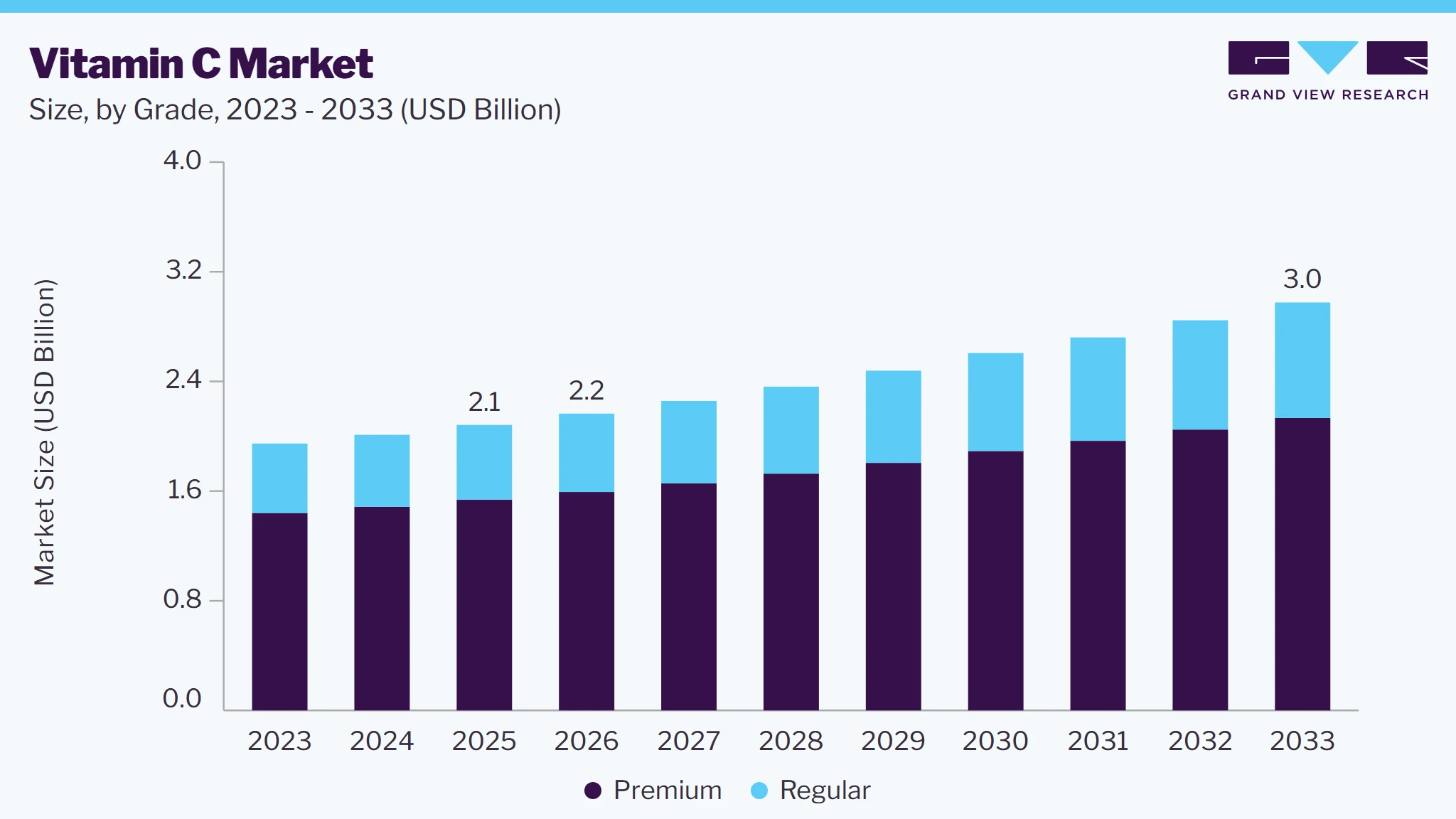 To learn more about this report, Download Free Sample Report
 The rise of e-commerce platforms and online retail has revolutionized the vitamin market. Consumers now have easy access to a wide range of vitamin products, often with detailed product descriptions, customer reviews, and personalized recommendations. The convenience and variety offered by online retailers have contributed to the surge in demand for vitamins, as consumers can now select and purchase products that align with their specific needs and preferences from the comfort of their homes.
Ascorbic acid faces several industry challenges due to its high instability and reactivity. One of the main challenges is its high instability as ascorbic acid is easily oxidized, leading to the loss of its beneficial properties. This instability poses a significant hurdle for the industry, in terms of manufacturing and formulating products that contain ascorbic acid.
Market Dynamics
The vitamin C market is expanding because consumers are paying closer attention to daily nutrition and preventive healthcare. Regular intake of vitamin C supplements has increased as people seek to maintain immune function and overall wellness. Demand is also rising from food and beverage manufacturers that fortify products with essential vitamins to improve nutritional value. Pharmaceutical companies continue to use vitamin C in various formulations, while skincare brands incorporate it into cosmetic products. Wider product availability and increasing health awareness across developing and developed economies continue to strengthen market demand.
Consumers are increasingly choosing preventive healthcare practices to reduce the risk of nutritional deficiencies and support long term wellness. Vitamin C has become a preferred dietary supplement because it contributes to immune function, collagen synthesis, antioxidant protection, and normal metabolic processes. Growing awareness of balanced nutrition has encouraged people to include vitamin C in their daily routines through tablets, capsules, powders, gummies, and fortified beverages. This shift in consumer behavior has created consistent demand across different age groups, including children, adults, and older individuals seeking regular nutritional support.
Healthcare providers and nutrition experts continue to recommend adequate vitamin intake as part of a healthy lifestyle, encouraging routine consumption rather than occasional use. Rising participation in fitness activities, increasing interest in healthy aging, and expanding availability of vitamin C products through pharmacies, supermarkets, and online retail platforms have strengthened purchasing frequency. Stable consumer demand has encouraged manufacturers to introduce new formulations and convenient dosage formats, supporting sustained growth across the global vitamin C market.
Strict regulations governing dietary supplements, pharmaceutical ingredients, and fortified food products restrict the growth of the vitamin C market by increasing compliance costs and extending approval timelines. Manufacturers must meet detailed standards related to product quality, ingredient sourcing, labeling, manufacturing practices, and safety documentation before products reach commercial markets. Regulatory requirements differ across countries, making international expansion more complex and expensive. Companies with limited financial and regulatory resources often face difficulties obtaining approvals or maintaining compliance with changing standards. These legal obligations reduce the speed of product introductions, increase operational expenses, and discourage new market entrants, limiting overall market expansion in highly regulated regions.
Growing consumer preference for nutritious foods and beverages offers significant opportunities for vitamin C manufacturers to expand their ingredient supply business. Food producers are increasing the use of vitamin C in juices, dairy products, bakery items, nutritional snacks, confectionery, and functional beverages to improve nutritional content and product appeal. Manufacturers can develop customized vitamin C formulations with better stability, taste compatibility, and shelf life to meet the requirements of different food applications. Long term partnerships with food and beverage companies can strengthen sales volumes while supporting continuous product innovation. Expanding into functional food ingredients enables manufacturers to diversify revenue sources, increase production capacity utilization, and strengthen their competitive position in the global nutrition industry.
Analyst Perspective
The vitamin C market continues to demonstrate stable growth, supported by sustained demand from dietary supplements, pharmaceuticals, fortified foods, and personal care products. Consumer preference for preventive nutrition is encouraging consistent purchasing across developed and emerging economies. Manufacturers are expanding product portfolios with premium and application specific formulations to strengthen market positioning. Regulatory compliance and quality assurance remain essential for maintaining access to international markets. Companies that diversify end use applications and strengthen customer partnerships are expected to achieve stronger long term revenue growth.
Grade Insights
The premium segment accounted for the largest share of the vitamin C market, representing 73.8% of total revenue in 2025. This is attributed to its usage in niche applications in key industries such as pharmaceuticals, personal care products & cosmetics, food & beverage, and biotechnology. It is also used in research activities and other specialized applications. The food & beverages industry uses ascorbic acid to manufacture high-quality customized vitamin C supplements. The maintenance of the highest level of quality in ascorbic acid ensures that it can be used for medicinal purposes.
Regular grade is another major type of vitamin C with extensive applications in the food & beverages industry for the cost-effective addition of vitamin C to food products & beverages. This acid is also used as a dough conditioner in bread making. It is utilized for fortifying bakery products as well. Ascorbic acid has an innate quality to neutralize chlorine which makes it an important ingredient in water treatment processes.
Distribution Channel Insights
The offline segment accounted for the largest share of the vitamin C market, representing 82.5% of total revenue in 2025. This is attributed to the offline distribution of ascorbic acid comprises a network of manufacturers that produce this acid in powder or liquid forms, as well as its subsequent suppliers acting as intermediaries between manufacturers and end-use industries. Ascorbic acid is primarily supplied in the form of water-soluble white crystalline powder by manufacturers.
The online distribution channel segment witnessed significant growth in the last few years supported by the increasing digitalization of businesses and surging international trade activities. The growth of global e-commerce platforms such as Amazon and Alibaba has created a global marketplace for ascorbic acid. The convenience and variety offered by online distribution channels in terms of manufacturers, suppliers, quality, and quantity of ascorbic acid have led consumers to increasingly prefer them over traditional or brick-and-mortar modes of purchase.
End-use Insights
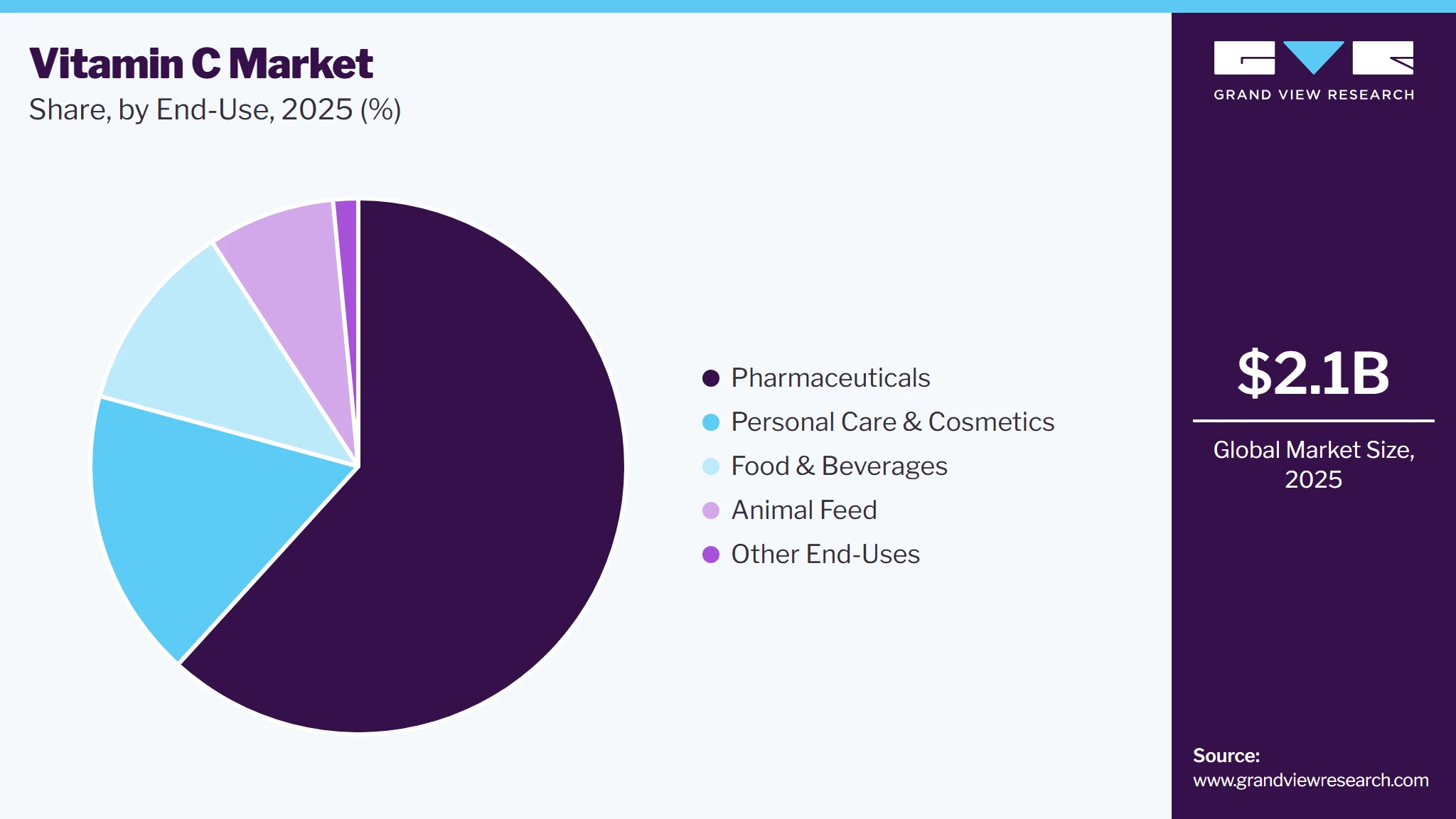
The pharmaceuticals segment accounted for the largest revenue share of 61.8% in 2025. This is attributed to its rising applications as an ingredient in tablets or capsules used to prevent or treat low levels of vitamin C, which can result in scurvy, causing symptoms such as joint pain, weakness, tiredness, rashes, or tooth loss. It is also used as an antioxidant, helping the body to heal wounds, enhance the absorption of iron content from plant foods, and support the immune system.
 To learn more about this report, Download Free Sample Report
 Personal care and cosmetics is another major end-user industry for vitamin C (ascorbic acid), where it is used as an ingredient in the manufacturing process. Vitamin C acts as a potent antioxidant drug and hence is used in dermatology to prevent and treat changes associated with the phenomenon of photoaging. It is also used for treating other skin problems, such as hyperpigmentation. It has an innate quality to fight free radicals or toxins that may come into contact with human skin through air pollution.
Ascorbic acid is often added to cereals, fruit juices, dried fruits, frozen fruits, and fruit-flavored candies to add or fortify a citrus flavor. It also acts as a preservative to prevent spoiling of food such as cured meats, jams, jellies, and bread. Growing awareness regarding the importance of nutritious and fortified food for a healthy lifestyle has led to a surge in demand for nutrient-enriched food along with adequate flavor, which has increased the consumption of vitamin C.
Regional Insights
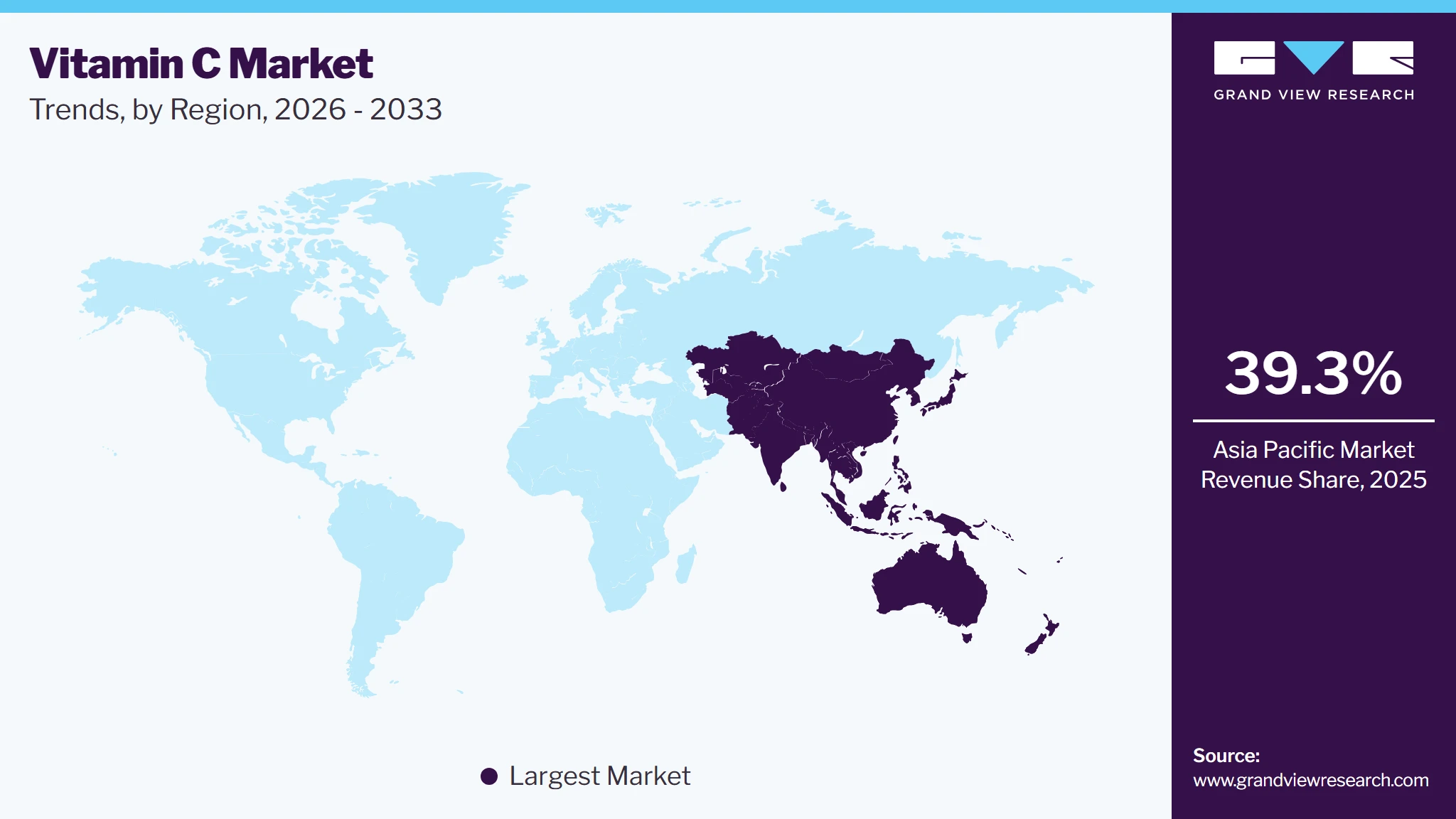
Asia Pacific accounted for 39.3% of the vitamin C market revenue in 2025, making it the largest regional market. This is attributed to presence of large-scale pharmaceutical companies along with major consumptions in other sectors such as animal feed and cosmetics. Asia Pacific leads the world in animal feed production, producing a total of 465.54 million metric tons in 2022, down from 467.92 million metric tons in 2021. Asia Pacific is also one of the largest pharmaceutical industries in the world, with countries such as Japan, India, and China leading the way in different fields, such as vaccine production, generic drugs, and other services.
 To learn more about this report, Download Free Sample Report
 China Vitamin C Market Trends
China maintained a leading position in the Asia Pacific vitamin C market. China’s vitamin C market is increasingly driven by growing demand for vitamin C-fortified functional foods, beverages, and dietary supplements, supported by consumer interest in preventive health and nutritional products. Growing adoption of premium and pharmaceutical-grade vitamin C is also creating demand for higher-purity ingredients and specialized formulations. Additionally, China’s strong domestic production base and export-oriented supply chain continue to shape market pricing and availability.
Europe Vitamin C Market Trends
Europe holds a significant position in the market, with countries such as Germany, UK, and France driving its growth. The growth can be attributed to growth in the pharmaceutical industry in Europe. In addition, Europe has a robust research and development foundation in the pharmaceutical industry with various universities, research centers, and biotech companies contributing to innovation and development of new drugs. These factors collectively contribute to the expansion of the pharmaceutical industry, driving the demand for the ascorbic acid market.
Key Vitamin C Company Insights
Majority of the manufacturing companies and suppliers are based in the Asia Pacific region especially, in China. Abundant availability of raw materials, cheap labor, rapid industrialization, and economic progress contribute to market growth in the region. Companies are focusing on new product development to meet consumer needs for vitamin C.Notably, the global market is currently dominated by key industry leaders such as Spectrum Chemical, Sinofi Ingredients, and Botanic Healthcare.
Numerous manufacturing companies are now-a-days adopting a number of strategies like new product launches, partnerships, expansion, and mergers & acquisitions, to name a few. For instance, in June 2023, DSM-Firmenich, a leading company in vitamin industry, announced the reconstruction of its vitamin business. This decision was undertaken considering the current market trends, conditions, and a notable weakening of the overall vitamin markets globally.
Key Vitamin C Companies
The following key companies have been profiled for this study on the vitamin C market.
-
Spectrum Chemical
-
Sinofi Ingredients
-
DSM Jiangshan Pharmaceutical (Jiangsu) Co., Ltd
-
Fengchen Group Co., Ltd
-
Fooding
-
Northeast Pharmaceutical Group Co., Ltd (NEPG)
-
Botanic Healthcare
-
CSPC Pharmaceutical Group Limited
-
Foodchem International Corporation
-
Global Calcium PVT LTD
-
JOSHI AGRO
-
M.C. Biotec Inc.
-
Pharmavit
-
NAGASE & CO., LTD.
-
Reckon Organics Private Ltd.
-
RX MARINE INTERNATIONAL
-
Shandong Luwei Pharmaceutical Co., Ltd.
-
VATJAT PHARMA FOODS PRIVATE LIMITED
-
VCos Cosmetics Pvt Ltd.
-
Honson Pharmatech Group.
-
Anhui BBCA Group
Competitive Benchmarking
Category
Operating Strategies
Competitive Edge
Weakness
Established Players (DSM-Firmenich, BASF, Northeast Pharmaceutical Group (NCPC), CSPC Pharmaceutical Group, Shandong Luwei Pharmaceutical Co. Ltd., Anhui Tiger Biotech Co. Ltd., Merck KGaA, Glanbia Nutritionals)
- These companies operate large scale production facilities with integrated manufacturing processes to maintain consistent supply across pharmaceutical, food, and nutrition industries. They prioritize long term contracts with multinational customers and global distributors.
- They maintain broad international distribution networks while investing in quality certifications, production efficiency, and regulatory compliance to strengthen their presence across multiple regional markets.
- Large production capacities enable stable product availability and competitive manufacturing costs. Their extensive experience supports reliable quality standards for pharmaceutical and food grade vitamin C production.
- Strong regulatory expertise and established relationships with multinational customers allow these companies to secure recurring supply agreements across diverse end use industries.
- Large manufacturing operations require significant capital investment and high operating costs, reducing flexibility during periods of declining prices or weaker market demand.
- Dependence on bulk commodity sales exposes profitability to pricing pressure from global competitors and fluctuations in raw material and energy costs.
Emerging Players (Foodchem International Corporation, Jiangsu Jiangshan Pharmaceutical Co. Ltd., Ningxia Qiyuan Pharmaceutical Co. Ltd., Hebei Welcome Pharmaceutical Co. Ltd., Xinfa Pharmaceutical Co. Ltd., Muby Chemicals, Zhejiang NHU Co. Ltd., Beijing Gingko Group)
- These companies focus on specialized customer requirements by supplying vitamin C for nutraceuticals, cosmetics, pharmaceutical formulations, and customized ingredient applications across regional and international markets.
- They expand market presence through flexible production, distributor partnerships, contract manufacturing, and product customization for small and medium sized customers.
- Flexible manufacturing capabilities allow faster response to changing customer specifications and niche application requirements across multiple end use industries.
- Their ability to provide customized formulations, responsive customer service, and regional market expertise supports business expansion in specialized market segments.
- Limited production capacity compared with global manufacturers can restrict their ability to secure large volume supply agreements with multinational customers.
- Lower international brand recognition and smaller distribution networks reduce competitiveness in highly regulated and price sensitive global vitamin C markets.
Vitamin C Market Report Scope
Report Attribute
Details
Market size in 2025
USD 2.1 billion
Estimated market size in 2026
USD 2.2 billion
Projected market size by 2033
USD 3.0 billion
Growth rate
CAGR of 4.6% from 2026 to 2033
Base year for estimation
2025
Historical data
2021 - 2024
Forecast period
2026 - 2033
Quantitative units
Revenue in USD million/billion and CAGR from 2026 to 2033
Report coverage
Revenue forecast, company ranking, competitive landscape, growth factors, and trends
Segments covered
Grade, distribution channel, end use, region
Regional scope
North America; Europe; Asia Pacific; Latin America; MEA
Country scope
U.S.; Canada; Mexico; Germany; UK; France; Italy; Spain; China; Japan; India; South Korea; Thailand; Brazil; Argentina; Saudi Arabia; South Africa;
Key companies profiled
Spectrum Chemical; Sinofi Ingredients; DSM Jiangshan Pharmaceutical (Jiangsu) Co., Ltd; Fengchen Group Co., Ltd; Fooding, Northeast Pharmaceutical Group Co., Ltd (NEPG); Botanic Healthcare; CSPC Pharmaceutical Group Limited; Foodchem International Corporation; Global Calcium PVT LTD; JOSHI AGRO; M.C. Biotec Inc.; Pharmavit; NAGASE & CO., LTD.; Reckon Organics Private Ltd.; RX MARINE INTERNATIONAL; Shandong Luwei Pharmaceutical Co., Ltd.; VATJAT PHARMA FOODS PRIVATE LIMITED; VCos Cosmetics Pvt Ltd.; Honson Pharmatech Group.; Anhui BBCA Group
Customization scope
Free report customization (equivalent up to 8 analysts' working days) with purchase. Addition or alteration to country, regional & segment scope.
Pricing and purchase options
Avail customized purchase options to meet your exact research needs. Explore purchase options
Global Vitamin C Market Report Segmentation
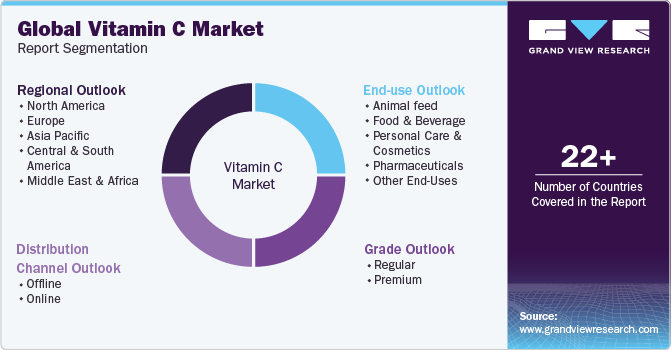
This report forecasts revenue growth at global, regional, and country levels and provides an analysis of the latest industry trends in each of the sub-segments from 2021 to 2033. For this study, Grand View Research has segmented the global vitamin C market report based on grade, end-use, distribution channel and region:
 To learn more about this report, Download Free Sample Report
 -
Grade Outlook (Volume, Kilotons; Revenue, USD Million, 2021 - 2033)
-
Regular
-
Premium
-
-
End-use Outlook (Volume, Kilotons; Revenue, USD Million, 2021 - 2033)
-
Animal feed
-
Food & Beverage
-
Personal Care & Cosmetics
-
Pharmaceuticals
-
Other End-Uses
-
-
Distribution Channel Outlook (Volume, Kilotons; Revenue, USD Million, 2021 - 2033)
-
Offline
-
Online
-
-
Regional Outlook (Volume, Kilotons; Revenue, USD Million, 2021 - 2033)
-
North America
-
U.S.
-
Canada
-
Mexico
-
-
Europe
-
Germany
-
UK
-
France
-
Italy
-
Spain
-
-
Asia Pacific
-
China
-
India
-
Japan
-
South Korea
-
Thailand
-
-
Central & South America
-
Brazil
-
Argentina
-
-
Middle East & Africa
-
Saudi Arabia
-
South Africa
-
-
Research Methodology
The vitamin C market figures in this report are based on a proven research process that combines executive interviews with secondary research from proprietary databases, company filings, and recognized regulatory and institutional sources. Market size is built through value-chain sizing - reconciling supply-side and demand-side estimates - and triangulated with bottom-up and top-down approaches. Every estimate passes multiple levels of expert validation before publication, with each vitamin C segment quantified using the revenue-capture definitions in the table below.
Segment Definition
Segment
Revenue Capture Definition
Regular
Revenue is generated through the sale of standard vitamin C products intended for routine supplementation, food fortification, and general pharmaceutical applications. Income is supported by high volume purchases from food manufacturers, supplement producers, pharmaceutical companies, wholesalers, and retail distributors seeking cost effective ingredients for everyday consumer products.
Premium
Revenue is captured through the sale of high purity, specialty, and branded vitamin C formulations designed for premium dietary supplements, advanced skincare products, and specialized pharmaceutical applications. Manufacturers generate higher margins by supplying value added products with enhanced quality standards, improved stability, and premium positioning for health conscious consumers and professional markets.
Segment
Revenue Capture Definition
Animal Feed
Revenue is generated through the supply of vitamin C formulations used in livestock, poultry, aquaculture, and pet nutrition to support growth, immunity, and overall animal health. Income is driven by recurring purchases from feed manufacturers and commercial farming operations requiring nutritional additives.
Food & Beverages
Revenue is captured through the sale of vitamin C used for food fortification, nutritional enhancement, and antioxidant preservation in beverages, dairy products, bakery products, confectionery, cereals, and processed foods. Manufacturers generate recurring revenue from long term supply agreements with food and beverage producers.
Personal Care & Cosmetics
Revenue is generated through the supply of vitamin C ingredients incorporated into skincare, anti aging, brightening, and cosmetic formulations. Cosmetic manufacturers purchase specialized vitamin C derivatives and stabilized formulations to improve product performance and meet growing consumer demand for functional beauty products.
Pharmaceuticals
Revenue is captured through the sale of pharmaceutical grade vitamin C used in tablets, capsules, injectable products, powders, and other medicinal formulations. Demand is supported by pharmaceutical manufacturers producing products for nutritional supplementation, deficiency management, and clinical healthcare applications.
Other End Uses
Revenue is generated through the supply of vitamin C for applications including dietary ingredient manufacturing, nutraceutical research, laboratory use, and specialty industrial formulations. Income is supported by customized product requirements and supply contracts across niche commercial sectors.
Segment
Revenue Capture Definition
Offline
Revenue is generated through sales of vitamin C products distributed via pharmacies, supermarkets, hypermarkets, health stores, hospitals, clinics, and wholesale distributors. Manufacturers benefit from established retail networks, institutional procurement, and recurring replenishment orders from physical sales channels.
Online
Revenue is captured through the sale of vitamin C products via e commerce platforms, brand websites, and online pharmacies. Manufacturers increase sales by reaching a broader consumer base, offering direct purchasing options, and expanding product visibility through digital retail channels.
Estimation Model
Layer Name
Key Question
Content
Demand Base Layer
What forms the demand base?
Identify the global consumption of vitamin C across dietary supplements, pharmaceuticals, food and beverages, personal care and cosmetics, animal feed, and other industrial applications. This layer establishes the total addressable demand generated by consumers and commercial manufacturers across major geographic regions.
Application Penetration Layer
Where is vitamin C consumed?
Estimate the adoption of vitamin C across key end use industries including dietary supplements, pharmaceutical formulations, fortified foods and beverages, cosmetic products, animal nutrition, and specialty applications. Demand is evaluated based on product penetration, formulation trends, and regional consumption patterns.
Consumption Intensity Layer
How much vitamin C is used?
Analyze the average quantity of vitamin C consumed across different product categories by considering formulation requirements, dosage levels, product type, quality grade, and regulatory standards. Consumption intensity varies according to application, manufacturing specifications, and consumer preferences.
Revenue Layer
How is market revenue generated?
Market revenue is quantified through the sale of vitamin C ingredients, pharmaceutical grade formulations, dietary supplements, fortified food ingredients, cosmetic active ingredients, and specialty vitamin C products. Revenue is generated from recurring procurement by pharmaceutical companies, food and beverage manufacturers, dietary supplement producers, cosmetic manufacturers, animal feed companies, wholesalers, retailers, and online distribution channels.
Delivered Customizations
This report has been delivered with the following In-depth customizations
Client Request
Customization Delivered
Value Added
Trade Analysis
Historical evaluation of global import and export value and volume for HS Code 293627, covering the period from 2021 to 2025. The analysis includes country level shipment trends, regional demand patterns, import dependence, export competitiveness, and year over year movement in trade value and volume.
Enables businesses to identify high demand importing countries, evaluate regional consumption trends, monitor changes in international market activity, and support sourcing, expansion, and market entry decisions using verified historical trade data.
Competitive Benchmarking
Comparative assessment of leading vitamin C manufacturers based on product portfolio breadth, application coverage, geographic presence, distribution reach, quality certifications, regulatory compliance, research capabilities, and strategic business initiatives.
Helps stakeholders evaluate competitor positioning, identify market leaders across application segments, compare business strengths, and support strategic partnership, supplier selection, and competitive intelligence decisions.
Opportunity Assessment
Comprehensive assessment of future growth opportunities across dietary supplements, fortified foods and beverages, pharmaceutical formulations, personal care products, animal nutrition, and emerging wellness applications, with regional demand evaluation and consumer adoption trends.
Assists companies in identifying high growth application segments, prioritizing investment opportunities, expanding customer portfolios, and developing long term business strategies aligned with evolving consumer health and nutrition preferences.
Frequently Asked Questions About This Report
Asia Pacific accounted for 39.3% of the vitamin C market revenue in 2025, making it the largest regional market.
Key players include Spectrum Chemical; Sinofi Ingredients; DSM Jiangshan Pharmaceutical (Jiangsu) Co., Ltd; Fengchen Group Co., Ltd; Fooding, Northeast Pharmaceutical Group Co., Ltd (NEPG); Botanic Healthcare; CSPC Pharmaceutical Group Limited; Foodchem International Corporation; Global Calcium PVT LTD; JOSHI AGRO; M.C. Biotec Inc.; Pharmavit; NAGASE & CO., LTD.; Reckon Organics Private Ltd.; RX MARINE INTERNATIONAL; Shandong Luwei Pharmaceutical Co., Ltd.; VATJAT PHARMA FOODS PRIVATE LIMITED; VCos Cosmetics Pvt Ltd.; Honson Pharmatech Group.; Anhui BBCA Group
Vitamin C, also known as ascorbic acid, has the ability to promote collagen synthesis, which enhances skin elasticity and diminishes the appearance of fine lines and wrinkles.
China dominated the vitamin C market due to its extensive production capacity, cost competitive manufacturing, strong export capabilities, well established supply chain, and significant presence in pharmaceutical, food, and nutraceutical ingredient manufacturing.
The premium segment dominated the vitamin C market, accounting for 73.8% of total revenue in 2025, driven by rising demand for high purity formulations used in pharmaceuticals, dietary supplements, and premium personal care products.
The offline segment dominated the vitamin C market, accounting for 82.5% of total revenue in 2025 while online distribution channel segment is second fastest growing market
The pharmaceuticals segment dominated the vitamin C market, accounting for 61.8% of total revenue in 2025.
The global vitamin c market size was valued at USD 2.1 billion in 2025 and is estimated at USD 2.2 billion for 2026.
The global vitamin c market is expected to grow at a CAGR of 4.6% from 2025 to 2033, reaching USD 3.0 billion by 2033
About the Author(s)
Food Additives & Nutricosmetics Research Team
Specialty & Chemicals · Food Additives & NutricosmeticsThis report was authored by the food additives & nutricosmetics research team at Grand View Research - comprising two research analysts, one senior research analyst, and one industry expert - with specialized expertise in the food additives & nutricosmetics segment of the specialty & chemicals industry. All findings are based on proprietary specialty & chemicals databases, executive interviews, and regulatory analysis, subject to internal peer review prior to publication.
Last Updated:
Speak to Analyst

Customize this report to your needs - add regions, segments, or data points, with 20% free customization.
Or view our licence options:


ISO 9001:2015 & 27001:2022 Certified
We are GDPR and CCPA compliant! Your transaction & personal information is safe and secure. For more details, please read our privacy policy.


