
- Home
- »
- Medical Devices
- »
-
CGM For Non-Insulin-Treated Type 2 Diabetes Market Report, 2033GVR Report cover

CGM For Non-Insulin-Treated Type 2 Diabetes Market (2026 - 2033)
Size, Share & Trends Analysis Report By Product (Sensor, Applicator), By Application, By Connectivity, By Distribution Channel, By Region, And Segment Forecasts
Market Size, 2025
$1.4BMarket Estimate, 2026
$1.6BMarket Forecast, 2033
$3.5BCAGR, 2026–2033
10.2%CGM For Non-Insulin-Treated Type 2 Diabetes Market Summary
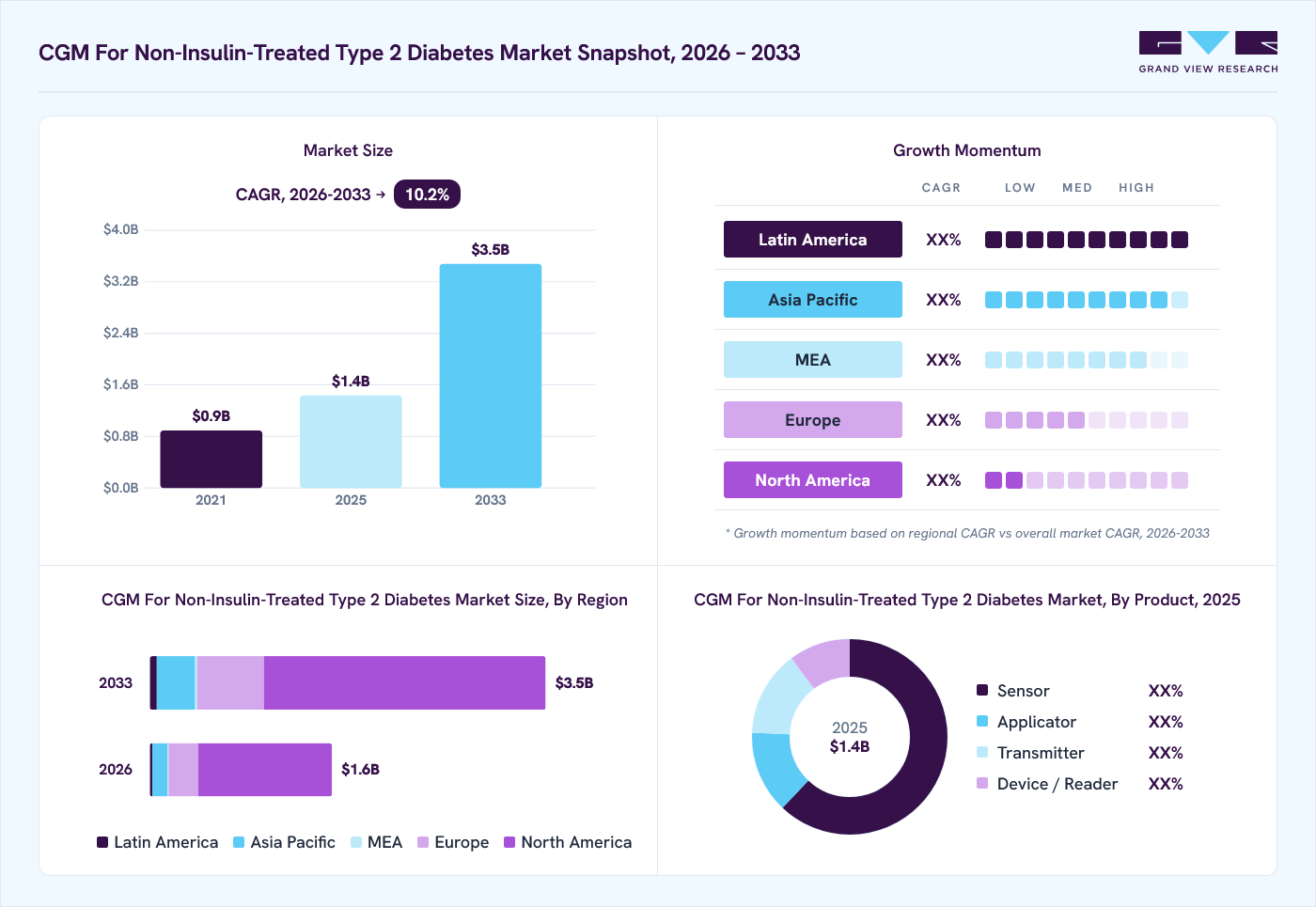
The global CGM for non-insulin-treated Type 2 diabetes market size was valued at USD 1.4 billion in 2025 and is projected to grow from USD 1.6 billion in 2026 to USD 3.5 billion by 2033, at a CAGR of 10.2% from 2026 to 2033. North America dominated the market, accounting for the largest revenue share of 73.7% in 2025. The global CGM for non-insulin-treated Type 2 diabetes market is experiencing strong growth, driven by rising prevalence of Type 2 diabetes, growing clinical evidence supporting CGM use among non-insulin-treated patients, expanding guideline recognition, increasing adoption of over-the-counter (OTC) CGM systems, and greater consumer awareness of continuous glucose monitoring insights.
 Source: Grand View Research, IR Documents, Primary Interviews, Paid DatabasesTo learn more about this report,
 Download Free Sample Report
Key Market Trends & Insights
- By product: The sensor segment held the highest market revenue share of 62.0% in 2025.
- By application: The glucose/diabetes management segment held a leading market share of 61.3% in 2025.
- By connectivity: The bluetooth segment held a leading market share in 2025.
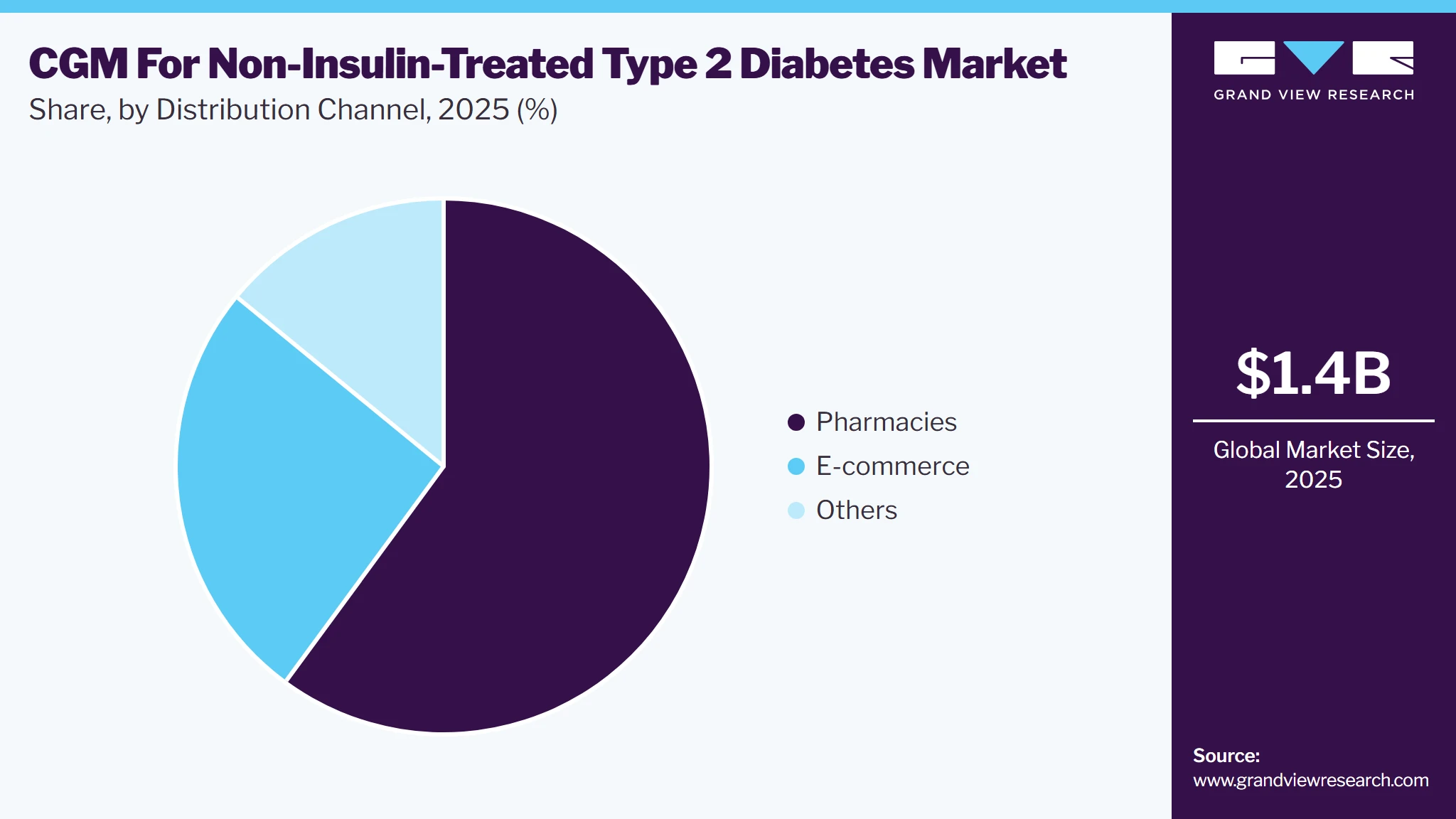
- By distribution channel: The pharmacies segment held a leading market share of 60.1% in 2025.
Regional Highlights
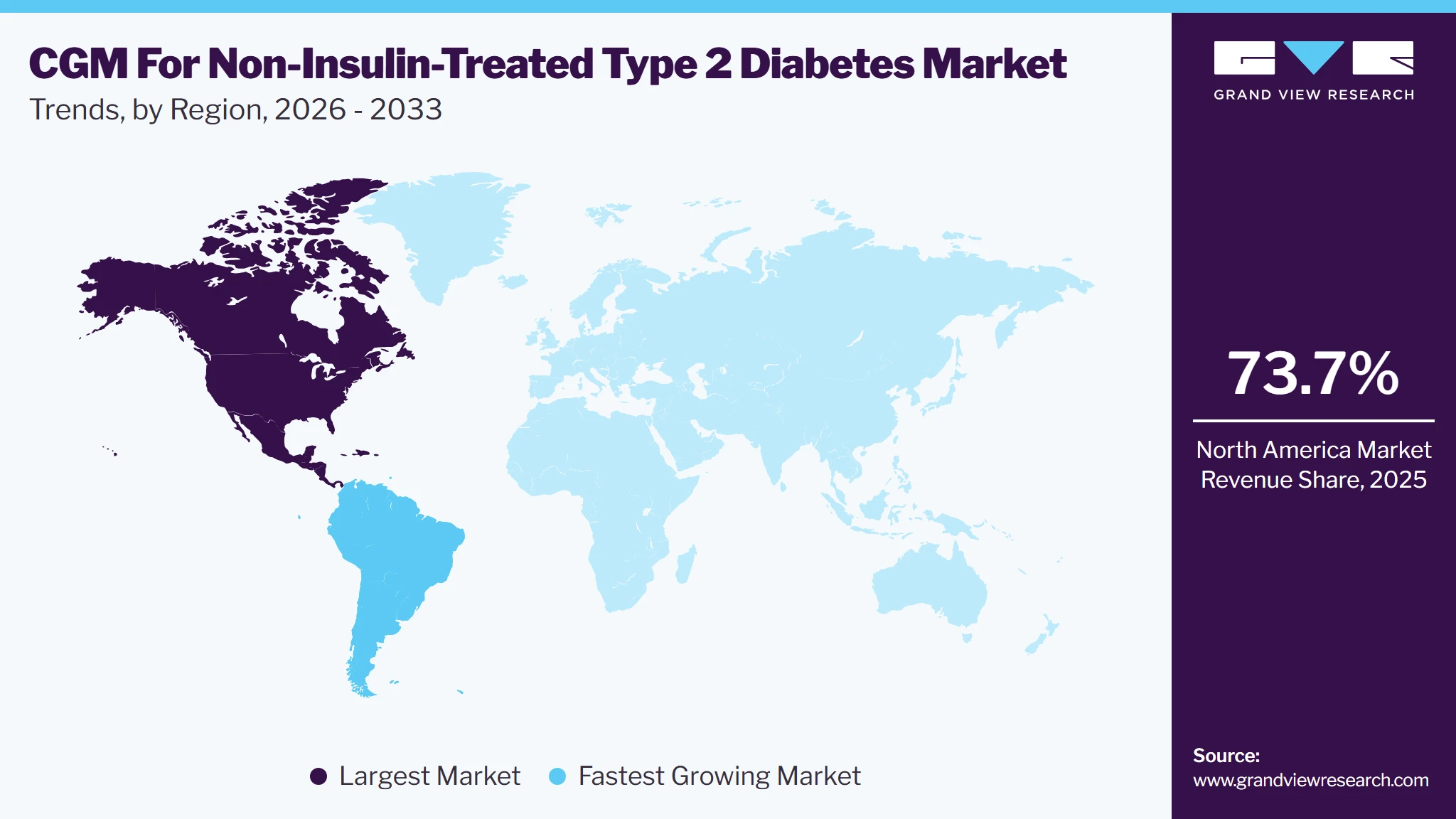
- Largest regional market: North America (73.7% revenue share, 2025)
- Fastest-growing regional market: Latin America (highest CAGR, 2026-2033)
- By country: The U.S. held the largest market share in 2025.
Market Size & Forecast
- Market size in 2025: USD 1.4 billion
- Estimated market size in 2026: USD 1.6 billion
- Projected market size by 2033: USD 3.5 billion
- CAGR (2026-2033): 10.2%
Prism AI by Grand View Research Free to tryAsk a question about the CGM for Non-Insulin-Treated type 2 diabetes marketTry asking✓Every figure cited from GVR research Prefer the report? Download free sample →
Recent evidence shows that CGM can improve HbA1c and time in range in non-insulin-treated patients, while the 2025 ADA Standards of Care expanded consideration of CGM for adults using non-insulin therapies. The emergence of OTC platforms is also lowering access barriers and broadening CGM beyond traditional prescription-based diabetes management toward lifestyle, nutrition, fitness, and metabolic-health monitoring.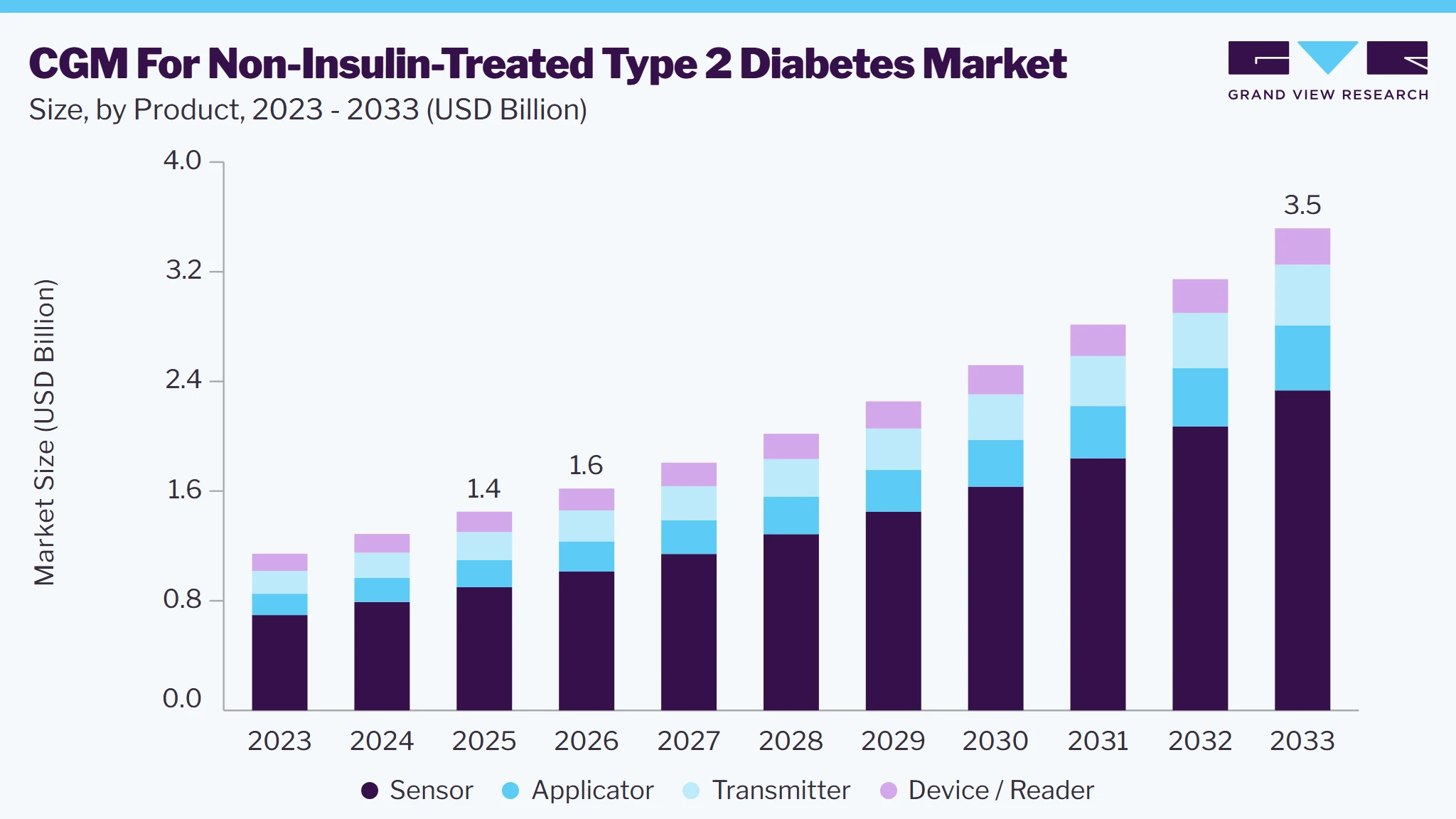 To learn more about this report, Download Free Sample Report
The role of continuous glucose monitoring (CGM) is expanding beyond insulin-treated diabetes, with emerging clinical evidence supporting its use among adults with type 2 diabetes (T2D) who are not using insulin. New findings presented at the American Diabetes Association (ADA) 2026 Scientific Sessions indicate that CGM can significantly improve glycemic control in this population, strengthening the clinical rationale for broader adoption of CGM in primary care.
The CONNECT randomized controlled trial evaluated 283 adults with non-insulin-treated T2D across 22 U.S. primary care practices over 26 weeks. Participants had a mean baseline A1C of 8.8%, with nearly one-third having A1C levels of at least 9%. Patients were randomized to use the Dexcom G7 CGM or receive routine care using standard blood glucose meter testing. The study found that 82% of adults using CGM improved their blood glucose levels, while CGM use produced a 0.9 percentage-point greater reduction in A1C compared with routine care. Participants also spent approximately five additional hours per day within the target glucose range of 70–180 mg/dL.
Key Findings from the CONNECT Trial
Metric
CONNECT Trial Finding
Market Significance
Study population
283 adults with non-insulin-treated T2D
Demonstrates relevance to a large underserved patient population
Primary care practices
22 U.S. practices
Supports adoption through primary care channels
Study duration
26 weeks
Provides medium-term evidence of CGM benefit
Baseline mean A1C
8.80%
Indicates substantial glycemic management needs
Patients with A1C ≥9%
31%
Highlights potential value in poorly controlled T2D
Greater A1C reduction with CGM
0.9 percentage points
Supports measurable clinical effectiveness
Additional time in target range
~5 hours/day
Demonstrates improved day-to-day glucose management
Monitoring device
Dexcom G7
Supports commercial visibility of CGM products in non-insulin T2D
Patient experience
Higher satisfaction and lower diabetes-related distress
May improve willingness to adopt CGM
The findings are particularly important because CGM has historically been associated primarily with insulin-dependent diabetes. While evidence supporting CGM among people using insulin is well established, the evidence base for non-insulin-treated T2D has been comparatively limited. The CONNECT results therefore, provide an important clinical foundation for expanding CGM into a broader patient population.
Additional real-world evidence presented at the Advanced Technologies & Treatments for Diabetes (ATTD) 2026 conference further supports this trend. A prospective registry involving 318 adults with non-insulin-treated T2D across 10 U.S. primary care centers found that Dexcom CGM use was associated with a 0.7% reduction in HbA1c over approximately one year. Among participants included in the primary analysis, 75% wore the CGM device at least 70% of the time, suggesting relatively strong engagement with the technology.
From a market perspective, these findings could accelerate the transition of CGM from a predominantly insulin-focused technology toward a broader diabetes-management platform. Millions of adults with T2D are managed using oral medications or non-insulin injectable therapies, particularly in primary care. Demonstrating that CGM can improve A1C and time in range provides clinicians with a stronger basis for considering CGM for these patients.
The findings may also encourage manufacturers to develop lower-cost, simplified CGM products specifically for non-insulin-treated T2D and metabolic-health users. Products designed for easier access, shorter commitment periods, consumer purchasing, and simplified data interpretation could help address barriers that have historically limited CGM adoption outside insulin-treated populations.
Market Dynamics:
The CGM for Non-Insulin-Treated Type 2 Diabetes Market is experiencing strong growth as continuous glucose monitoring expands beyond insulin-dependent diabetes to encompass broader applications in Type 2 diabetes management, lifestyle monitoring, and metabolic health. The market is driven by the rising global burden of Type 2 diabetes, growing clinical evidence supporting CGM use in non-insulin-treated patients, increasing recognition of CGM in diabetes management guidelines, expanding availability of over-the-counter (OTC) CGM systems, and rising patient awareness of continuous glucose monitoring insights. The market comprises a range of CGM products and technologies, including sensors, applicators, transmitters, readers/devices, smartphone-connected CGM systems, and OTC CGM platforms. These technologies are increasingly being used to provide real-time glucose trends, identify postprandial glucose excursions, support dietary and physical-activity modifications, and improve patient engagement. The emergence of lower-cost and OTC CGM systems is expected to reduce access barriers, broaden the consumer base, and support wider adoption among people with Type 2 diabetes who do not use insulin.
One of the most important underlying drivers is the increasing global prevalence of Type 2 diabetes. According to the International Diabetes Federation (IDF), approximately 589 million adults aged 20–79 were living with diabetes in 2024, representing 11.1% of the global adult population, with the number projected to reach approximately 853 million by 2050. The majority of diabetes cases are Type 2 diabetes, creating a substantial underlying population that could potentially benefit from glucose-monitoring technologies.
The clinical evidence supporting CGM among non-insulin-treated Type 2 diabetes patients is also expanding. A 2024 systematic review and meta-analysis of randomized controlled trials found that CGM use was associated with an approximately 0.31-percentage-point reduction in HbA1c and an 8.63-percentage-point improvement in time in range compared with conventional glucose monitoring. More recent evidence has reported similar or somewhat greater improvements, strengthening the clinical rationale for CGM adoption in this population. This creates an increasingly important patient funnel:
Global diabetes population → Type 2 diabetes population → diagnosed Type 2 diabetes → non-insulin-treated patients → clinically appropriate CGM candidates → accessible/willing patients → CGM users.
The expansion of clinical evidence is particularly important because CGM historically focused primarily on insulin-treated diabetes. As physicians and patients increasingly recognize the value of continuous glucose patterns for diet, exercise, medication response, and overall glucose management, the addressable market for CGM is expanding beyond traditional insulin-dependent users.
High recurring costs and inconsistent reimbursement coverage remain significant restraints for the CGM for Non-Insulin-Treated Type 2 Diabetes Market, particularly across emerging markets and among patients who do not use insulin. Unlike traditional glucose meters, CGM systems require recurring sensor replacement, while some platforms also require transmitters, applicators, or compatible devices. These recurring expenses can make long-term CGM use difficult for price-sensitive patients.
Although reimbursement and access have expanded in several developed markets, coverage can vary substantially according to country, payer, treatment status, insulin use, clinical indication, device type, and local reimbursement policies. Patients with non-insulin-treated Type 2 diabetes may therefore face higher out-of-pocket costs than insulin-treated patients.
Cost remains particularly important in emerging markets where diabetes prevalence is increasing, but healthcare expenditure per patient is comparatively lower. Limited reimbursement can discourage patients from maintaining continuous sensor use and may restrict adoption to higher-income consumers and private healthcare settings.
In addition, CGM adoption requires adequate digital infrastructure, smartphone access, patient education, physician familiarity, and willingness to continuously wear a sensor. Patients may also experience skin irritation or discomfort associated with sensor placement, while excessive glucose data can create confusion without appropriate interpretation and education.
Consequently, manufacturers need to demonstrate not only improvements in glucose metrics but also clinical value, patient engagement, affordability, cost-effectiveness, and long-term adherence. The development of lower-cost sensors, simplified OTC purchasing models, longer sensor wear durations, smartphone-based platforms, and personalized digital coaching is therefore expected to be important in overcoming these barriers and supporting broader adoption among non-insulin-treated patients with Type 2 diabetes.
Market Concentration & Characteristics:
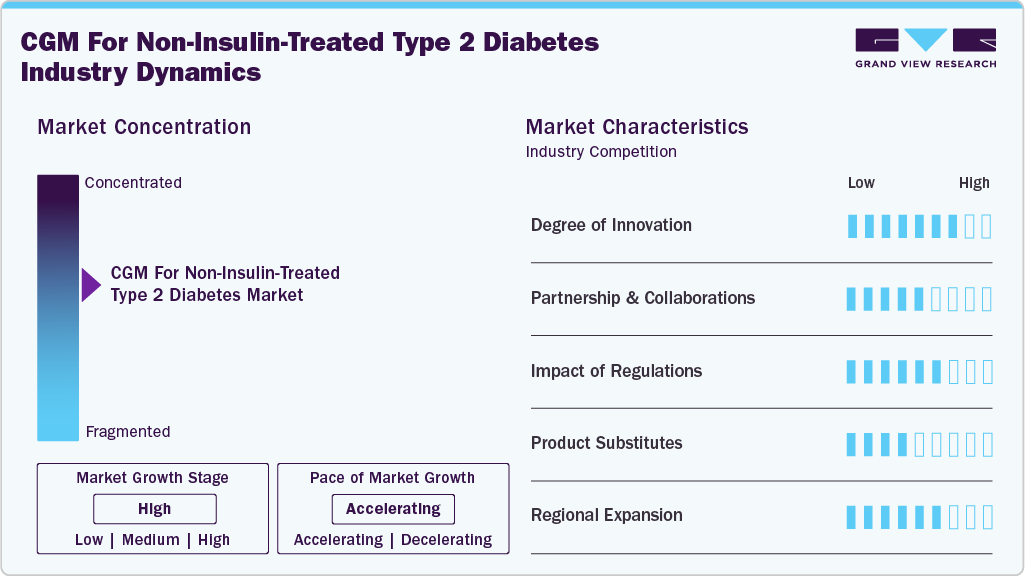
The CGM for Non-Insulin-Treated Type 2 Diabetes Market is moderately concentrated, with leading companies such as Dexcom, Abbott Laboratories, and other established CGM manufacturers competing across sensor-based glucose monitoring, connected mobile applications, and digital diabetes-management platforms. Competition is increasingly shifting toward over-the-counter (OTC), lower-cost, simplified CGM systems specifically designed for people with Type 2 diabetes who do not use insulin, as well as broader metabolic-health and preventive-care applications. Dexcom's Stelo and Abbott's Lingo and Libre Rio have expanded the addressable population beyond traditional prescription CGM users. The 2026 ADA Standards of Care recognize Stelo and Lingo as OTC CGM systems, highlighting the increasing commercialization of CGM for non-intensive glucose management.
The CGM for Non-Insulin-Treated Type 2 Diabetes Market is characterized by rapid technological innovation focused on improving sensor accuracy, extending wear duration, simplifying device use, reducing cost, and converting continuous glucose data into actionable insights for people who are not using insulin. Innovation is increasingly centered on OTC CGM systems, smaller and longer-wearing sensors, smartphone-based monitoring, AI-enabled pattern recognition, personalized coaching, and integration with nutrition and lifestyle-management platforms. Dexcom's Stelo has become a key example of this shift: the system was initially FDA-cleared in March 2024 as the first OTC CGM for adults who do not use insulin, and in June 2026 the FDA cleared Stelo for people aged 2 years and older who do not use insulin.
 To learn more about this report, Download Free Sample Report
Innovation is also moving beyond glucose measurement toward interpretation and behavioral intervention. In 2026, Dexcom introduced a redesigned Stelo app incorporating pattern recognition, proactive AI coaching, and personalized daily and weekly summaries, while its CONNECT randomized controlled trial generated clinical evidence specifically in adults with Type 2 diabetes not using insulin. Abbott has similarly expanded its portfolio with Lingo and Libre Rio, both FDA-cleared OTC systems, enabling CGM technology to address consumers with and without diabetes.
Partnerships and collaborations are becoming increasingly important in the CGM for Non-Insulin-Treated Type 2 Diabetes Market by supporting clinical validation, digital-health integration, personalized coaching, nutrition management, distribution, and expansion into consumer healthcare. Manufacturers are increasingly working with healthcare providers, diabetes specialists, digital-health companies, nutrition platforms, and research organizations to demonstrate that CGM can provide measurable benefits even when patients are not using insulin. For example, Dexcom's 2026 strategy included the acquisition of Nutrisense, strengthening its personalized nutrition education and coaching capabilities around CGM-derived glucose insights. Dexcom has also been generating clinical evidence specifically for the non-insulin-treated Type 2 diabetes population through its CONNECT randomized controlled trial. In addition, large-scale real-world evidence presented at the 2026 American Diabetes Association Scientific Sessions evaluated Stelo use among 12,000 people with non-insulin-treated Type 2 diabetes, supporting the industry's movement toward evidence-based expansion of CGM into earlier-stage diabetes management.
Regulatory requirements have a significant impact on the CGM for Non-Insulin-Treated Type 2 Diabetes Market because manufacturers must demonstrate the safety, accuracy, reliability, cybersecurity, and performance of glucose-sensing systems before commercialization. Regulatory agencies such as the U.S. Food and Drug Administration (FDA) play a particularly important role because OTC clearance can substantially expand the addressable market by allowing consumers to obtain CGM systems without a conventional prescription.
The FDA's March 2024 clearance of Dexcom Stelo as the first OTC CGM for adults who do not use insulin represented a major regulatory milestone for the market. This was followed by FDA clearance of Abbott's Lingo and Libre Rio in 2024. More recently, in June 2026, the FDA expanded Stelo's OTC indication to children aged two years and older who do not use insulin, further broadening the potential population for non-intensive glucose monitoring. Regulation can therefore create significant competitive advantages for companies that obtain early OTC or expanded indications, while clinical evidence, quality-system requirements, manufacturing controls, and post-market surveillance can increase development costs and influence commercialization timelines. The FDA's classification of OTC CGMs for non-intensive glucose management establishes a specific regulatory framework for systems intended for people who are not on insulin and do not have a significant risk of problematic hypoglycemia.
The CGM for Non-Insulin-Treated Type 2 Diabetes Market faces substitution by traditional blood glucose meters (BGMs), fingerstick glucose testing, periodic laboratory HbA1c testing, and self-monitoring approaches based on intermittent glucose measurements. These alternatives remain widely used because they generally have lower upfront costs and are familiar to patients and healthcare providers. For people with relatively stable Type 2 diabetes who are not using insulin, periodic glucose testing and HbA1c monitoring can provide sufficient information for routine disease management.
However, CGM maintains a distinct position because it provides continuous or frequent glucose measurements, glucose trends, time-in-range information, and behavioral feedback rather than isolated measurements. This is particularly relevant for non-insulin-treated patients seeking to understand how meals, exercise, sleep, stress, and other lifestyle factors affect glucose levels. OTC availability is also reducing one of the traditional barriers to adoption by allowing eligible consumers to purchase CGM systems without a healthcare provider's prescription. The FDA specifically described Stelo's OTC clearance as expanding access by allowing individuals to purchase CGM without provider involvement.
Regional expansion in the CGM for Non-Insulin-Treated Type 2 Diabetes Market is being supported by the growing prevalence of Type 2 diabetes, increasing diabetes diagnosis and screening, rising consumer interest in metabolic health, improvements in smartphone connectivity, and increasing availability of lower-cost and OTC CGM systems. North America, particularly the U.S., remains the most strategically advanced market because of its established CGM infrastructure, high technology adoption, strong presence of leading manufacturers, and rapid development of OTC products. The U.S. market has progressed from prescription-oriented CGM toward consumer-accessible systems such as Stelo, Lingo, and Libre Rio.
Analyst Perspective
The CGM for Non-Insulin-Treated Type 2 Diabetes Market presents a strong growth outlook, supported by increasing diabetes prevalence, rising awareness of glucose monitoring, and expanding acceptance of CGM beyond insulin-treated populations. From an analyst perspective, the market is transitioning toward more affordable, consumer-friendly, and over-the-counter CGM solutions, creating opportunities for recurring sensor revenue and broader patient adoption. Recent launches such as Dexcom Stelo and Abbott Lingo are strengthening access among non-insulin-treated users and wellness-focused consumers. Growth is also supported by digital health integration, smartphone connectivity, pharmacy distribution, and weight-management applications. However, affordability, reimbursement limitations, patient adherence, and consumer awareness remain key constraints to market penetration.
Product Insights
The sensors segment is the fastest & dominated the Market in 2025, accounting for approximately 62.0% of overall market revenue. Its leading position is primarily attributed to the recurring nature of sensor purchases, as sensors require regular replacement based on their wear duration. The increasing adoption of CGM among non-insulin-treated patients with Type 2 diabetes is further supporting sensor demand. The expansion of over-the-counter and consumer-focused CGM solutions, including products designed for glucose awareness, nutrition, fitness, and weight management, is also broadening the addressable user base. Continued improvements in sensor accuracy, wear duration, connectivity, and affordability are expected to sustain strong segment growth.
The applicator segment is expected to witness steady growth in the CGM for Non-Insulin-Treated Type 2 Diabetes Market, supported by increasing adoption of sensor-based glucose monitoring and the recurring requirement for sensor insertion devices. Applicators simplify CGM placement and improve ease of use, making them particularly relevant as CGM adoption expands among non-insulin-treated patients and wellness-focused consumers. Growth is further supported by the increasing availability of user-friendly, minimally invasive, and simplified CGM systems designed for home and self-application. Expansion of over-the-counter CGM products, pharmacy distribution, and e-commerce channels is expected to improve accessibility. However, bundled pricing and integrated sensor-applicator designs may limit standalone revenue growth.
Application Insights
The glucose/diabetes management segment dominated the CGM for Non-Insulin-Treated Type 2 Diabetes Market in 2025, supported by the primary use of continuous glucose monitoring for tracking glucose levels and supporting diabetes management. Increasing diagnosis of Type 2 diabetes, growing awareness of glycemic control, and rising adoption of CGM among patients not using insulin are strengthening demand for diabetes-focused monitoring solutions. Healthcare providers are also increasingly recognizing CGM as a tool for identifying glucose patterns and supporting lifestyle and treatment decisions. In addition, improved sensor accuracy, smartphone connectivity, longer wear durations, and expanding access to affordable CGM systems are supporting adoption. The segment is expected to maintain its leading position.
The diet & nutrition monitoring segment is expected to witness steady growth in the CGM for Non-Insulin-Treated Type 2 Diabetes Market, driven by increasing consumer interest in understanding how food intake affects glucose levels. CGM systems enable users to observe glucose responses to specific meals, carbohydrates, meal timing, and dietary patterns, supporting more personalized nutrition decisions. Growing awareness of metabolic health and preventive wellness is further encouraging adoption among non-insulin-treated Type 2 diabetes patients and health-conscious consumers. Integration with smartphone applications, nutrition platforms, and digital health tools is enhancing the value of CGM-generated data. Increasing availability of consumer-oriented CGM products and direct-to-consumer distribution is expected to further support segment expansion.
Connectivity Insights
The bluetooth segment dominated the market in 2025, supported by widespread integration of Bluetooth connectivity across modern continuous glucose monitoring systems. Bluetooth enables real-time transmission of glucose data from sensors or transmitters to smartphones, dedicated readers, and connected digital health applications, improving convenience and accessibility for users. Its ability to support continuous data synchronization, alerts, remote monitoring, and mobile-based glucose visualization has strengthened adoption among non-insulin-treated Type 2 diabetes patients. Growing smartphone penetration and increasing consumer preference for connected healthcare devices are further supporting demand. In addition, Bluetooth-based CGM systems facilitate integration with fitness, nutrition, and wellness applications, expanding their relevance beyond traditional diabetes management.
The NFC (Near Field Communication) segment is expected to witness the fastest growth in the market, supported by increasing adoption of scan-based and connected glucose monitoring solutions. NFC enables convenient short-range communication between CGM sensors and compatible smartphones or readers, allowing users to retrieve and review glucose data with minimal setup. Growing consumer preference for simple, affordable, and smartphone-compatible monitoring technologies is supporting demand for NFC-enabled systems. The technology is particularly relevant to non-insulin-treated users seeking convenient glucose awareness for diabetes management, nutrition, fitness, and lifestyle monitoring. Expanding consumer-focused CGM products and increasing digital health adoption are expected to further accelerate NFC segment growth.
Distribution Channel Insights
The pharmacies segment held the largest revenue share of the market in 2025, supported by the increasing availability of CGM products through retail, specialty, and online pharmacy networks. Pharmacies provide convenient access to sensors, applicators, transmitters, readers, and replacement supplies, making them an important distribution channel for recurring CGM purchases. Growing adoption of consumer-focused and over-the-counter CGM systems is further strengthening pharmacy-based sales, particularly among non-insulin-treated Type 2 diabetes patients and wellness-oriented users. Expansion of pharmacy networks, improved product accessibility, and increasing consumer awareness of glucose monitoring are expected to support continued growth. However, e-commerce and direct-to-consumer channels are intensifying competition.
 To learn more about this report, Download Free Sample Report
The E-commerce segment is expected to witness fastest growth over the forecast period, supported by the increasing shift toward outpatient ophthalmic procedures and the growing adoption of minimally invasive corneal treatments. CXL procedures generally do not require prolonged hospitalization, making ASCs an attractive setting for efficient treatment and same-day patient discharge. Increasing availability of specialized ophthalmic equipment, improvements in accelerated CXL protocols, and growing demand for convenient and cost-effective eye-care services are further supporting segment expansion. In addition, rising diagnosis of keratoconus and corneal ectasia is increasing the number of patients requiring intervention. The adoption of epithelium-on CXL technologies, which may offer improved patient comfort and recovery, could further encourage treatment delivery through ASCs.
Regional Insights
The North America CGM for non-insulin-treated type 2 diabetes market accounted for the largest revenue share of 73.1% in 2025, supported by high diabetes prevalence, strong CGM awareness, advanced digital-health infrastructure, high smartphone penetration, and the presence of leading manufacturers such as Dexcom and Abbott. The region is entering an important new phase of market development as CGM moves beyond traditional insulin-dependent diabetes management toward OTC and consumer-oriented glucose monitoring. In the U.S., the FDA's clearance of Dexcom Stelo in March 2024 as the first OTC CGM for adults who do not use insulin established a major commercial pathway for this population, while Abbott subsequently introduced Lingo and Libre Rio.
 To learn more about this report, Download Free Sample Report
U.S. CGM for Non-Insulin-Treated Type 2 Diabetes Market Trends
The U.S. market is experiencing strong growth as increasing awareness of Type 2 diabetes, rising interest in metabolic health, and expanding consumer access to CGM support adoption. Stelo has been particularly important because it was specifically designed for adults who do not use insulin and can be obtained without a prescription. In June 2026, the FDA further expanded Stelo's OTC indication to people aged 2 years and older who do not use insulin, broadening the potential addressable population. Dexcom has also continued to strengthen the clinical positioning of CGM in non-insulin-treated Type 2 diabetes through its CONNECT randomized controlled trial and real-world evidence presented at the 2026 American Diabetes Association Scientific Sessions.
Europe CGM for Non-Insulin-Treated Type 2 Diabetes Market Trends
The Europe CGM for non-insulin-treated type 2 diabetes marketis supported by a large diagnosed diabetes population, established diabetes-care systems, increasing digital health adoption, and growing physician awareness of the benefits of continuous glucose monitoring data. Adoption remains more heterogeneous than in the U.S. because reimbursement, prescription requirements, healthcare budgets, and access to CGM differ substantially across European countries. Nevertheless, the increasing emphasis on personalized diabetes management, lifestyle modification, and earlier intervention is creating opportunities for CGM among Type 2 diabetes patients who do not use insulin. The availability of consumer-oriented CGM products is also expected to gradually broaden the market beyond traditional intensive insulin users.
The UK CGM for non-insulin-treated type 2 diabetes market is supported by the country's established diabetes-care infrastructure, high digital-health adoption, and strong utilization of remote monitoring technologies. CGM has historically been concentrated among patients requiring insulin, but the market is gradually expanding to encompass broader Type 2 diabetes management as clinical evidence supporting glucose monitoring for lifestyle and treatment optimization grows. The country's established NHS digital health ecosystem and specialist diabetes services provide a favorable environment for integrating CGM data into patient management pathways. Over the forecast period, lower-cost sensors, simplified user interfaces, and consumer-oriented monitoring models are expected to create additional opportunities among non-insulin-treated patients.
The Germany CGM for non-insulin-treated type 2 diabetes market is characterized by a mature healthcare system, strong diabetes specialist networks, advanced medical-technology adoption, and increasing interest in digital disease management. CGM adoption has traditionally been concentrated among patients with greater glucose-management needs, but growing clinical evidence and the availability of simplified systems are supporting expansion into broader Type 2 diabetes populations. Germany's strong healthcare infrastructure and physicians' familiarity with connected glucose-monitoring technologies provide a favorable environment for adoption. Increasing use of CGM-derived glucose patterns to support dietary and behavioral interventions is expected to become an additional growth driver.
The Spain CGM for non-insulin-treated type 2 diabetes marketis benefiting from increasing diabetes awareness, improvements in digital healthcare, and growing access to glucose-monitoring technologies. Major metropolitan areas and established diabetes centers provide infrastructure for CGM adoption, while increasing consumer interest in preventive health and metabolic monitoring is expanding the potential user base. The market remains influenced by reimbursement and regional healthcare policies, but simplified CGM systems and lower-cost offerings are expected to improve accessibility. The growing emphasis on lifestyle modification among people with Type 2 diabetes is also creating opportunities for CGM systems that provide actionable information on the effects of food and physical activity.
Asia Pacific CGM for Non-Insulin-Treated Type 2 Diabetes Market Trends
The Asia Pacific CGM for non-insulin-treated type 2 diabetes marketis expected to be among the fastest-growing regional markets, supported by the region's very large Type 2 diabetes population, rising diabetes diagnoses, expanding healthcare infrastructure, rising smartphone adoption, and growing awareness of digital diabetes management. The region offers substantial long-term potential because a large proportion of diabetes patients are managed without intensive insulin therapy, creating a significant addressable population for lower-cost and simplified CGM systems. Increasing availability of locally distributed CGM products and greater physician familiarity with sensor-based glucose monitoring are expected to support market penetration.
The China CGM for non-insulin-treated type 2 diabetes marketis expanding alongside the country's large diabetes burden, improving diabetes screening, increasing healthcare expenditure, and rapid development of digital-health infrastructure. The country's large population creates a substantial addressable base of Type 2 diabetes patients who do not require insulin. CGM adoption is also being supported by increasing awareness of glucose variability and the benefits of continuous monitoring compared with periodic finger-stick measurements. The development of domestic CGM manufacturers and increasingly competitive pricing may further improve affordability and access. As consumer-oriented CGM systems become more widely available, China is expected to become an increasingly important market for non-insulin-treated Type 2 diabetes applications.
The Japan CGM for non-insulin-treated type 2 diabetes market is supported by a highly developed healthcare system, advanced medical-device infrastructure, high technology adoption, and an aging population with substantial diabetes-management needs. The market places strong emphasis on device accuracy, reliability, ease of use, and clinical evidence. Although CGM adoption has historically been concentrated among patients requiring intensive glucose management, simplified and lower-burden systems can expand usage among non-insulin-treated Type 2 diabetes patients. Integration of CGM with smartphones, digital coaching, and lifestyle-management applications is expected to provide additional growth opportunities as Japan's healthcare system increasingly emphasizes prevention and efficient chronic-disease management.
Latin America CGM for Non-Insulin-Treated Type 2 Diabetes Market Trends
The Latin America CGM for non-insulin-treated type 2 diabetes market is expected to expand as the regional diabetes burden increases, diagnosis improves, and access to connected healthcare technologies develops. Brazil, Mexico, and Argentina are important markets due to their large diabetes populations and expanding specialist healthcare networks. CGM penetration remains below that of North American and several European markets, primarily due to affordability, reimbursement limitations, healthcare access disparities, and relatively high out-of-pocket costs. However, lower-cost sensors, pharmacy and e-commerce distribution, and consumer-oriented CGM models are creating opportunities to expand beyond traditional prescription-based users.
The Brazil CGM for non-insulin-treated type 2 diabetes marketis supported by its large Type 2 diabetes population, established private healthcare sector, expanding diabetes-specialist network, and growing adoption of digital health technologies. Major urban centers have increasing access to CGM systems and specialist diabetes services, while rising awareness of glucose monitoring is supporting consumer interest. The presence of multinational CGM manufacturers and the increasing availability of connected sensors are improving product visibility. However, affordability and differences in access between private and public healthcare remain important constraints. Lower-priced products and self-pay models are therefore expected to play an increasingly important role in expanding CGM use among non-insulin-treated patients.
Middle East & Africa CGM for Non-Insulin-Treated Type 2 Diabetes Market Trends
The Middle East & Africa (MEA) CGM for non-insulin-treated type 2 diabetes market presents a developing opportunity supported by a high and growing diabetes burden, increasing healthcare investment, improving specialist infrastructure, and rising awareness of digital glucose monitoring. Adoption remains concentrated in relatively developed healthcare markets because CGM systems can carry high out-of-pocket costs, and specialist access varies considerably across countries. Saudi Arabia, the United Arab Emirates, and South Africa represent important markets because of their relatively developed healthcare infrastructure and growing investment in chronic-disease management. The increasing availability of lower-cost sensors and digital health platforms is expected to gradually broaden the addressable population.
The Saudi Arabia CGM for non-insulin-treated type 2 diabetes market is supported by the country's high diabetes burden, continued healthcare-sector investment, development of specialized diabetes centers, and increasing adoption of advanced medical technologies. Major hospitals and private healthcare providers are increasingly incorporating connected glucose-monitoring technologies into diabetes management. The country's growing emphasis on chronic-disease prevention and digital healthcare provides a favorable environment for CGM expansion beyond insulin-treated patients. Over the forecast period, greater physician awareness, consumer education, and the introduction of more affordable CGM systems are expected to support adoption among patients with non-insulin-treated Type 2 diabetes.
Key CGM for Non-Insulin-Treated Type 2 Diabetes Company Insights
The CGM for non-insulin-treated type 2 diabetes market is highly competitive, with major players such as Dexcom & Abbott Laboratories expanding their presence through affordable, user-friendly, and connected CGM solutions. Competition is increasingly focused on reducing device costs, extending sensor wear duration, improving accuracy, simplifying insertion, and enabling smartphone-based glucose monitoring. Recent launches such as Dexcom Stelo and Abbott Lingo are expanding CGM access beyond insulin-treated populations, while partnerships, pharmacy distribution, and direct-to-consumer models are strengthening market penetration.
Key CGM for Non-Insulin-Treated Type 2 Diabetes Companies:
The following key companies have been profiled for this study on the CGM for non-insulin-treated type 2 diabetes market.
-
Dexcom
-
Abbott Laboratories
-
Medtronic plc
-
Sinocare, Inc. (iCan CGM)
-
GlucoRx Limited (AiDEX, Vixxa)
-
Bionime (RIGHTEST iFree CGM)
-
Nemaura
-
i-SENS, Inc.
Competitive Benchmarking
Category
Operating Strategies
Competitive Edge
Weakness
Established Players (Dexcom, Abbott Laboratories)
Established CGM companies focus on expanding CGM adoption among non-insulin-treated Type 2 diabetes patients through affordable sensor platforms, OTC availability, smartphone connectivity, pharmacy and e-commerce distribution, physician partnerships, clinical evidence, and integration with digital health and wellness platforms.
Strong brand recognition, extensive CGM user bases, established regulatory expertise, broad distribution networks, advanced sensor technology, strong R&D capabilities, clinical evidence, and established relationships with healthcare providers and consumers enable these companies to capture recurring sensor revenue.
Higher product costs compared with conventional glucose-monitoring methods, dependence on consumer willingness to pay, reimbursement limitations for non-insulin users, regulatory requirements, and ongoing R&D investment can constrain expansion. Large organizations may also face challenges adapting rapidly to emerging low-cost competitors.
Emerging Players (Medtronic plc, Sinocare, Inc. (iCan CGM), GlucoRx Limited (AiDEX, Vixxa), Bionime, (RIGHTEST iFree CGM), Nemaura, i-SENS, Inc.)
Emerging companies focus on affordable CGM platforms, simplified sensor designs, longer wear durations, connected monitoring, consumer-oriented applications, and expansion into underserved markets. They emphasize competitive pricing, regional partnerships, pharmacy and digital distribution, and differentiated technologies to increase adoption among non-insulin-treated and wellness-focused users.
Competitive pricing, flexible product development, regional market expertise, differentiated sensor technologies, simplified user experiences, and ability to target price-sensitive or underserved patient populations provide opportunities to gain market share.
Smaller global distribution networks, lower brand recognition, limited clinical and financial resources compared with leading players, regulatory barriers, and dependence on physician and consumer adoption can constrain expansion. Competition from established CGM manufacturers with strong OTC and digital-health ecosystems may further limit market penetration.
Recent Development:
- In July 2026, Glaukos received a permanent J-code for Epioxa, strengthening its U.S. reimbursement pathway and supporting adoption of epi-on corneal cross-linking.
“The assignment of a product-specific J-code for Epioxa represents an important milestone, supporting our market access initiatives to increase access and expand coverage for patients suffering from keratoconus, Once effective, this new J-code is expected to enable more streamlined and consistent coverage and payment for Epioxa over time, strengthening the foundation for our commercial launch and enabling broader patient access.”
- Chairman and Chief Executive Officer of Glaukos
“Keratoconus is currently an underdiagnosed and undertreated disease. For keratoconus patients who are fortunate enough to be diagnosed, the current standard-of-care requires removal of the epithelium, the top layer of the cornea. The pain and extended healing time associated with the current surgical procedure are major barriers to adoption, as an incision-free treatment that does not require removal of the epithelium, I expect the newly approved Epioxa treatment to address both of these major concerns.”
- Corneal Specialist at Eye Consultants of Atlanta and President of the Cornea Society
CGM for Non-Insulin-Treated Type 2 Diabetes Market Report Scope
Report Attribute
Details
Market size in 2025
USD 1.4 billion
Estimated market size in 2026
USD 1.6 billion
Projected market size by 2033
USD 3.5 billion
Growth rate
CAGR of 10.2% from 2026 to 2033
Base year for estimation
2025
Historical data
2021 - 2024
Forecast period
2026 - 2033
Quantitative units
Revenue in USD million and CAGR from 2026 to 2033
Report coverage
Revenue forecast, company ranking, competitive landscape, growth factors, and trends
Segments covered
Product, application, connectivity, distribution channel, and region
Regional scope
North America; Europe; Asia Pacific; Latin America; MEA
Country scope
U.S.; Canada; Mexico; UK; Germany; France; Italy; Spain; Denmark; Sweden; Norway; Russia; Japan; China; India; Australia; Thailand; South Korea; Singapore; Malaysia; Taiwan; Vietnam; Philippines; Brazil; Argentina; South Africa; Saudi Arabia; UAE; Kuwait
Key companies profiled
Dexcom; Abbott Laboratories; Medtronic plc; Sinocare, Inc. (iCan CGM); GlucoRx Limited (AiDEX, Vixxa); Bionime (RIGHTEST iFree CGM); Nemaura; i-SENS, Inc.
Customization scope
Free report customization (equivalent up to 8 analyst’s working days) with purchase. Addition or alteration to country, regional, and segment scope
Pricing and purchase options
Avail customized purchase options to meet your exact research needs. Explore purchase options
Global CGM for Non-Insulin-Treated Type 2 Diabetes Market Report Segmentation
This report forecasts revenue growth at global, regional, and country levels and provides an analysis of the latest industry trends in each of the sub-segments from 2021 to 2033. For the purpose of this study, Grand View Research has segmented the global CGM for non-insulin-treated Type 2 diabetes market report based on product, application, connectivity, distribution channel, and region:
-
Product Outlook (Revenue, USD Billion, 2021 - 2033)
-
Sensor
-
Applicator
-
Transmitter
-
Device / Reader
-
-
Application Outlook (Revenue, USD Billion, 2021 - 2033)
-
Glucose / Diabetes Management
-
Lifestyle Monitoring
-
Diet & Nutrition Monitoring
-
Physical Activity & Fitness Monitoring
-
Weight Management
-
-
Connectivity Outlook (Revenue, USD Billion, 2021 - 2033)
-
Bluetooth
-
4G / Cellular
-
NFC
-
-
Distribution Channel Outlook (Revenue, USD Billion, 2021 - 2033)
-
Pharmacies
-
E-commerce
-
Others
-
-
Region Outlook (Revenue, USD Billion, 2021 - 2033)
-
North America
-
U.S.
-
Canada
-
Mexico
-
-
Europe
-
UK
-
Germany
-
France
-
Italy
-
Spain
-
Russia
-
Denmark
-
Sweden
-
Norway
-
-
Asia Pacific
-
China
-
Japan
-
South Korea
-
India
-
Australia
-
Thailand
-
Singapore
-
Malaysia
-
Taiwan
-
Vietnam
-
Philippines
-
-
Latin America
-
Brazil
-
Argentina
-
-
MEA
-
Saudi Arabia
-
South Africa
-
UAE
-
Kuwait
-
-
Research Methodology
The CGM for non-insulin-treated type 2 diabetes market figures in this report are based on a proven research process that combines executive interviews with secondary research from proprietary databases, company filings, and recognized regulatory and institutional sources. Market size is built through value-chain sizing—reconciling supply-side and demand-side estimates—and triangulated with bottom-up and top-down approaches. Every estimate passes multiple levels of expert validation before publication, with each CGM for non-insulin-treated type 2 diabetes segment quantified using the revenue-capture definitions in the table below.
Segment Definition
Segment – Product
Revenue capture definition
Sensor
Revenue generated from disposable CGM sensors used to continuously measure interstitial glucose levels. Includes recurring sensor purchases based on the wear period and replacement frequency.
Applicator
Revenue generated from single-use or reusable applicator devices used to insert and position CGM sensors on the body. Captures device revenue associated with sensor insertion and deployment.
Transmitter
Revenue generated from transmitters that collect sensor signals and transmit glucose data to compatible smartphones, receivers, or other connected devices. Includes standalone or bundled transmitter sales.
Device / Reader
Revenue generated from dedicated CGM readers or receiver devices used to display, store, and interpret glucose readings. Includes standalone reader purchases and replacement devices.
Segment - Application
Revenue capture definition
Glucose / Diabetes Management
Revenue attributable to CGM use for monitoring glucose levels and supporting diabetes management, including treatment decisions and glycemic control. Represents the core medical application of CGM technology.
Lifestyle Monitoring
Revenue generated from CGM use by consumers seeking greater awareness of glucose patterns without primarily using the system for clinical diabetes treatment. Includes general wellness and metabolic-health monitoring.
Diet & Nutrition Monitoring
Revenue associated with CGM use to understand glucose responses to meals, foods, carbohydrates, and dietary patterns. Includes consumer applications focused on personalized nutrition and dietary optimization.
Physical Activity & Fitness Monitoring
Revenue generated from CGM use for tracking relationships between glucose levels, exercise, workouts, and physical activity. Includes fitness-oriented glucose monitoring and performance optimization.
Weight Management
Revenue attributable to CGM applications supporting weight-loss and weight-management programs through glucose and metabolic monitoring. Includes use alongside diet, exercise, and behavioral interventions.
Segment – Connectivity
Revenue capture definition
Bluetooth
Revenue associated with CGM products using Bluetooth connectivity to transmit glucose data from sensors or transmitters to smartphones, readers, and connected platforms.
4G / Cellular
Revenue associated with CGM systems incorporating cellular connectivity for direct transmission of glucose data without requiring a smartphone or local Bluetooth connection.
NFC
Revenue associated with CGM systems using near-field communication for short-range data transfer, including sensor scanning and glucose-data retrieval through compatible devices.
Segment – Distribution Channel
Revenue capture definition
Pharmacies
Revenue generated through retail, specialty, and online pharmacy channels selling CGM sensors, transmitters, applicators, readers, and related products.
E-commerce
Revenue generated through online marketplaces, manufacturer websites, and digital commerce platforms selling CGM products directly to consumers or through online retailers.
Others
Revenue generated through remaining distribution channels, including hospitals, clinics, physician offices, diabetes centers, distributors, and other institutional or specialized channels.
Delivered Customizations
This report has been delivered with the following In-depth customizations
CLIENT REQUEST
CUSTOMIZATION DELIVERED
VALUE ADDS
Competitive Landscape Analysis
Conducted a comprehensive assessment of the global corneal cross-linking devices market, evaluating manufacturers based on UVA delivery systems, riboflavin solutions, CXL protocols, regulatory approvals, clinical evidence, pricing strategies, product portfolios, distribution networks, and technological innovations.
Enables stakeholders to understand competitive positioning, technology leadership, product differentiation, regulatory status, and commercialization strategies shaping the global CXL market. Supports supplier benchmarking, partnership evaluation, and investment planning.
Segment by Product & Application Analysis
Conducted a detailed assessment across UVA delivery systems and riboflavin solutions, with applications spanning keratoconus, pellucid marginal degeneration, post-refractive surgery ectasia, infectious keratitis, and bullous keratopathy. The analysis evaluates procedure volumes, product utilization, treatment protocols, and emerging clinical applications.
Enables stakeholders to identify high-growth applications, assess recurring consumable opportunities, optimize product portfolios, and align technology development with evolving corneal treatment practices.
Macroeconomic Analysis
Conducted an in-depth assessment of keratoconus prevalence, corneal disease diagnosis, ophthalmic healthcare expenditure, availability of corneal specialists, reimbursement policies, ophthalmic infrastructure, regulatory developments, and adoption of advanced corneal treatment technologies.
Enables stakeholders to understand the demographic, clinical, regulatory, and healthcare infrastructure factors influencing demand within the global corneal cross-linking devices market. The analysis supports long-term forecasting, regional expansion, pricing strategy, manufacturing planning, and investment prioritization.
Frequently Asked Questions About This Report
The global CGM for non-insulin-treated Type 2 diabetes market size was valued at USD 1.4 billion in 2025 and is estimated at USD 1.6 billion for 2026.
The global CGM for non-insulin-treated Type 2 diabetes market is expected to grow at a CAGR of 10.2% from 2026 to 2033, reaching USD 3.5 billion by 2033.
By product, the sensor segment held the highest market share of 62.0% in 2025.
North America CGM for non-insulin-treated Type 2 diabetes market held the largest share of 73.7% of the global market in 2025.
The global CGM for non-insulin- treated Type 2 diabetes market is experiencing strong growth, driven by rising Type 2 diabetes prevalence, increasing clinical evidence supporting CGM use among non- insulin-treated patients, expanding guideline recognition, growing adoption of over-the- counter (OTC) CGM systems, and greater consumer awareness of continuous glucose insights.
Some key players operating in the scleral lens market include Dexcom, Abbott Laboratories, Medtronic plc, Sinocare, Inc. (iCan CGM), GlucoRx Limited (AiDEX, Vixxa), Bionime (RIGHTEST iFree CGM), Nemaura, i-SENS, Inc.
Latin America is the fastest-growing region over the forecast period.
About the Author(s)
Medical Devices Research Team
Healthcare · Medical DevicesThis report was authored by the medical devices research team at Grand View Research - comprising two research analysts, one senior research analyst, and one industry expert - with specialized expertise in the medical devices segment of the healthcare industry. All findings are based on proprietary healthcare databases, executive interviews, and regulatory analysis, subject to internal peer review prior to publication.
Last Updated:
Speak to Analyst

Customize this report to your needs - add regions, segments, or data points, with 20% free customization.
Or view our licence options:


ISO 9001:2015 & 27001:2022 Certified
We are GDPR and CCPA compliant! Your transaction & personal information is safe and secure. For more details, please read our privacy policy.


