
- Home
- »
- Nutraceuticals & Functional Foods
- »
-
Collagen Supplements Market Size And Share Report, 2033GVR Report cover

Collagen Supplements Market (2026 - 2033)
Size, Share & Trends Analysis Report By Form (Pills & Gummies, Powder, Liquid/Drinks), By Distribution Channel (Pharmacy, Online Store, Specialty Store), By Region, And Segment Forecasts
Market Size, 2025
$2.4BMarket Estimate, 2026
$2.6BMarket Forecast, 2033
$4.0BCAGR, 2026–2033
6.5%Collagen Supplements Market Summary
The global collagen supplements market size was valued at USD 2.4 billion in 2025 and is projected to grow from USD 2.6 billion in 2026 to USD 4.0 billion by 2033, at a CAGR of 6.5% from 2026 to 2033. North America dominated the market, accounting for the largest revenue share of 31.9% in 2025. Some of the primary factors driving the market are the growing demand for functional ingredients, rising consumer interest in supplement solutions, and the increasing application of collagen in skincare.
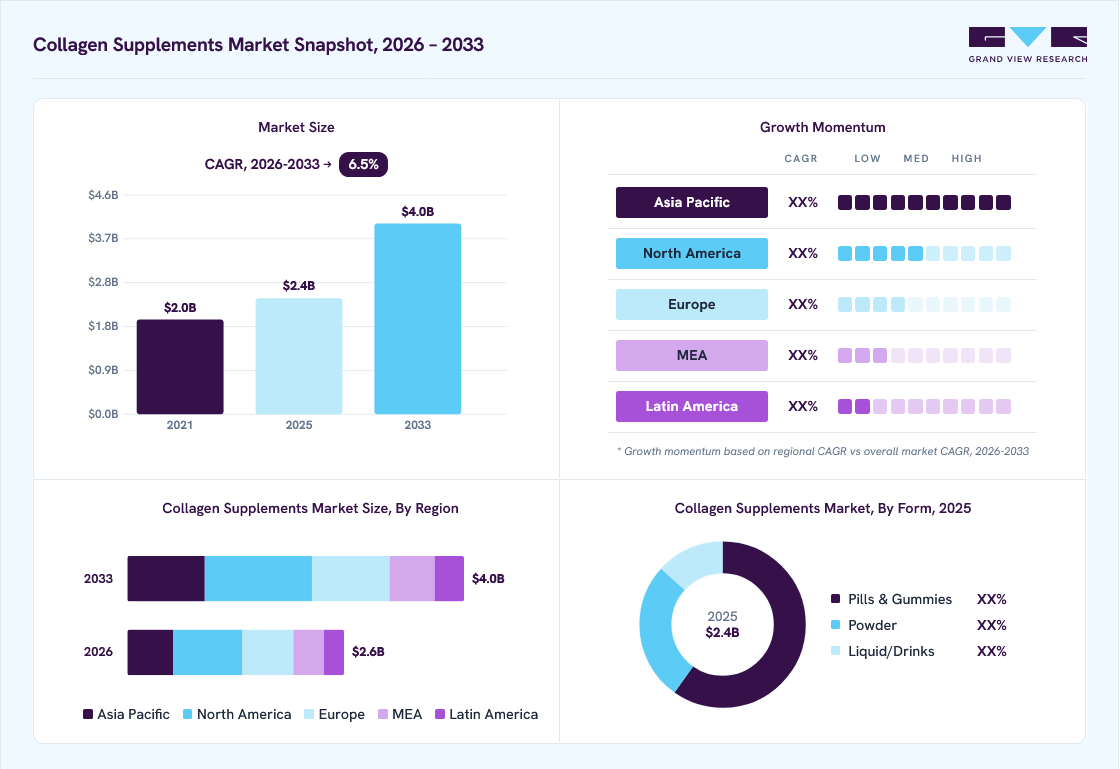 Source: Grand View Research, IR Documents, Primary Interviews, Paid DatabasesTo learn more about this report,
 Download Free Sample Report
Key Market Trends & Insights
- By form: Pills & gummies led the market and accounted for a share of 59.7% in 2025.
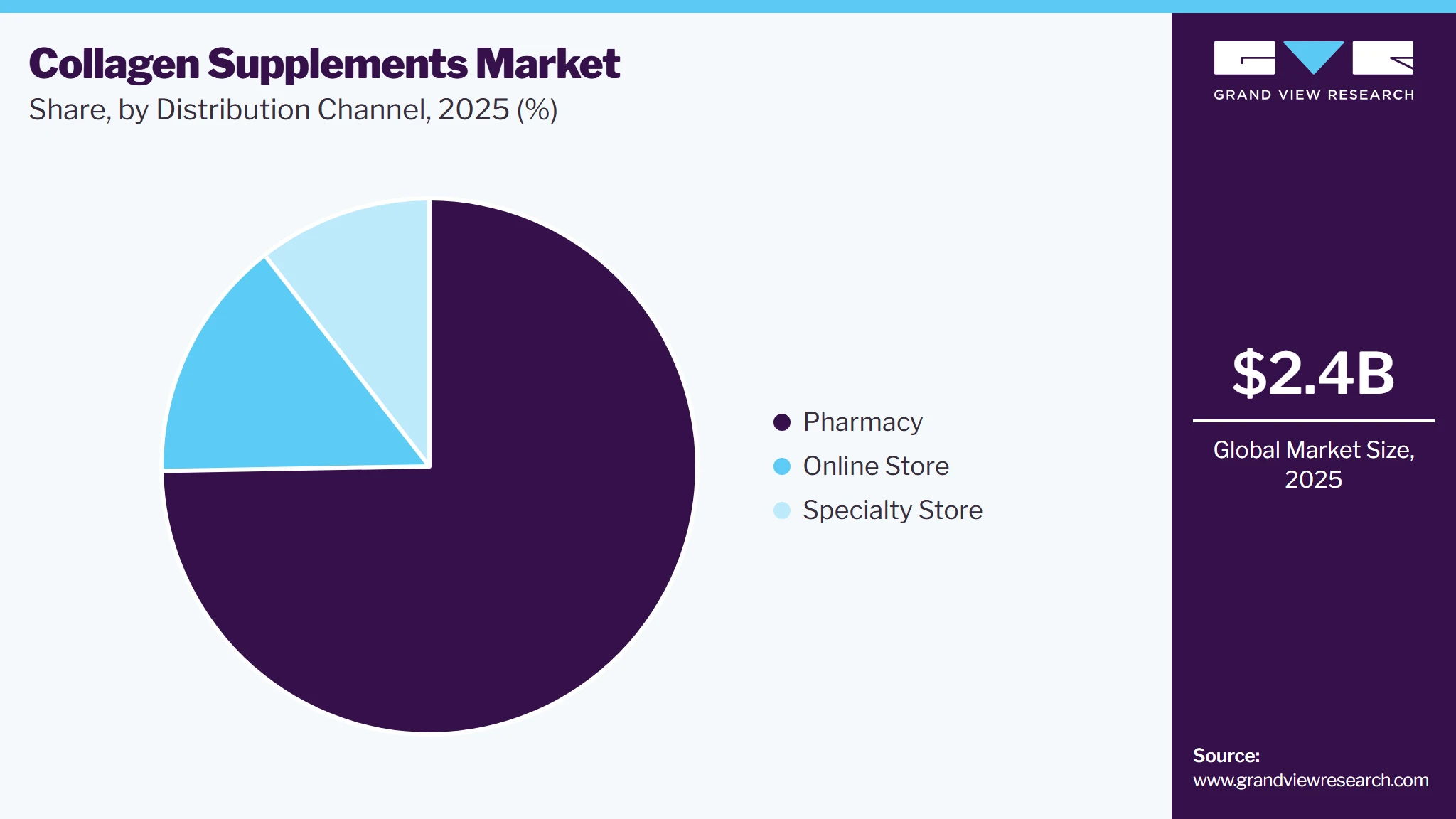
- By distribution channel: Pharmacy led the market and accounted for a share of 74.7% in 2025.
Regional Highlights
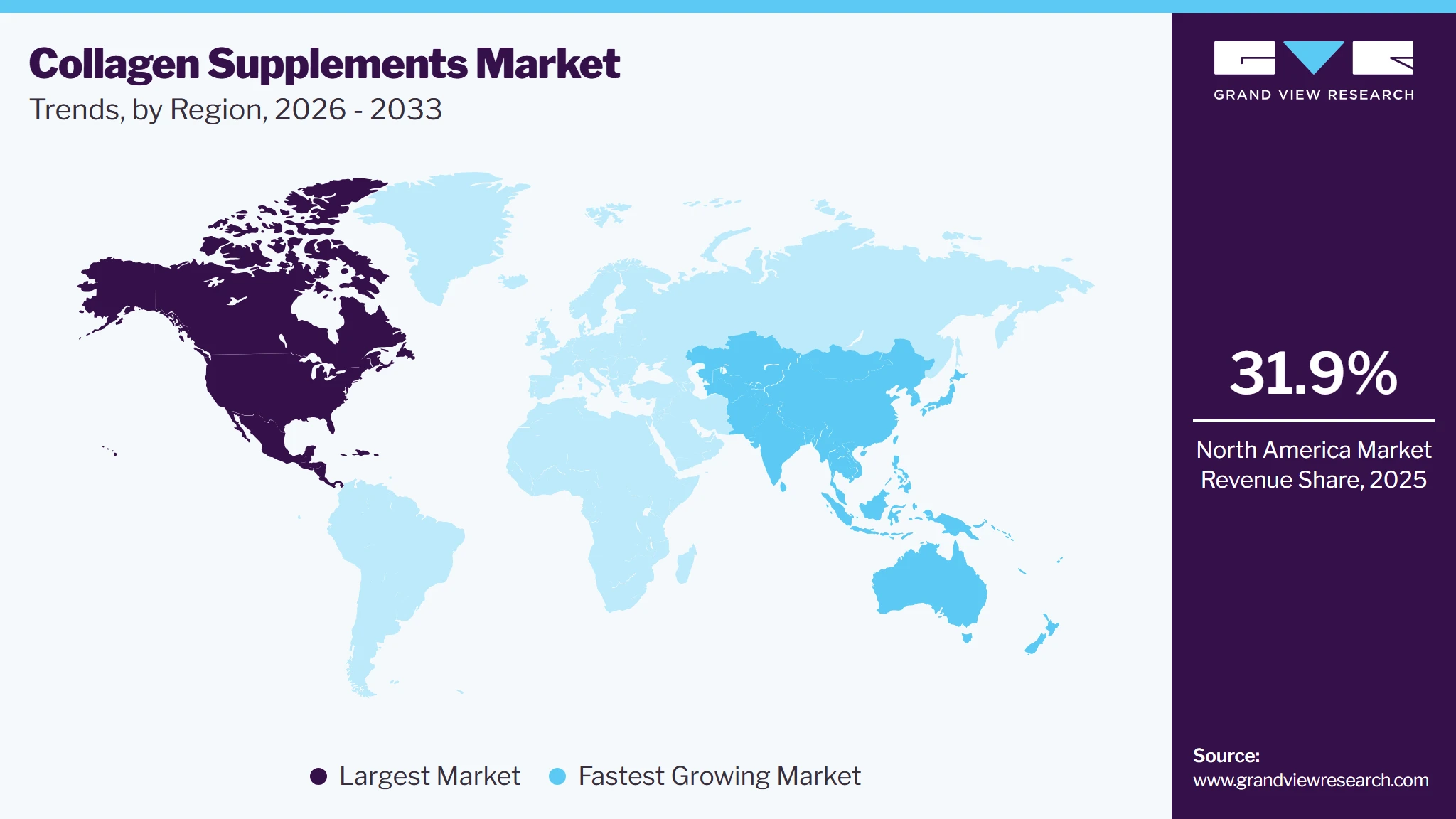
- Largest regional market: North America (31.9% revenue share, 2025)
- Fastest-growing regional market: Asia Pacific (highest CAGR, 2026-2033)
- By country: The U.S. held the largest market share in 2025.
Market Size & Forecast
- Market size in 2025: USD 2.4 Billion
- Estimated market size in 2026: USD 2.6 Billion
- Projected market size by 2033: USD 4.0 Billion
- CAGR (2026-2033): 6.5%
Three ways to get this report
Buy it, customize it, or ask a question.Ask an Analyst
Analyst response in 1 business day
- AccessReport author, directly
- Reply timeWithin 1 working day
- No sales callDirect answer only
- FormatEmail reply
- CostFree, no cost
Get the Full Report
What the study covers
- FormatsPDF · Excel · Dashboard
- Timeline2026–2033 annual, 2025 base
- Coverage20+ countries, 5 regions
- Companies10+ key players profiled
Customize the Report
20% free customization
- IncludeCountries, segments, points
- TailorTo your product definition
- ExtendDeeper competitor detail
- OrA fully bespoke study
- Turnaround5–10 working days
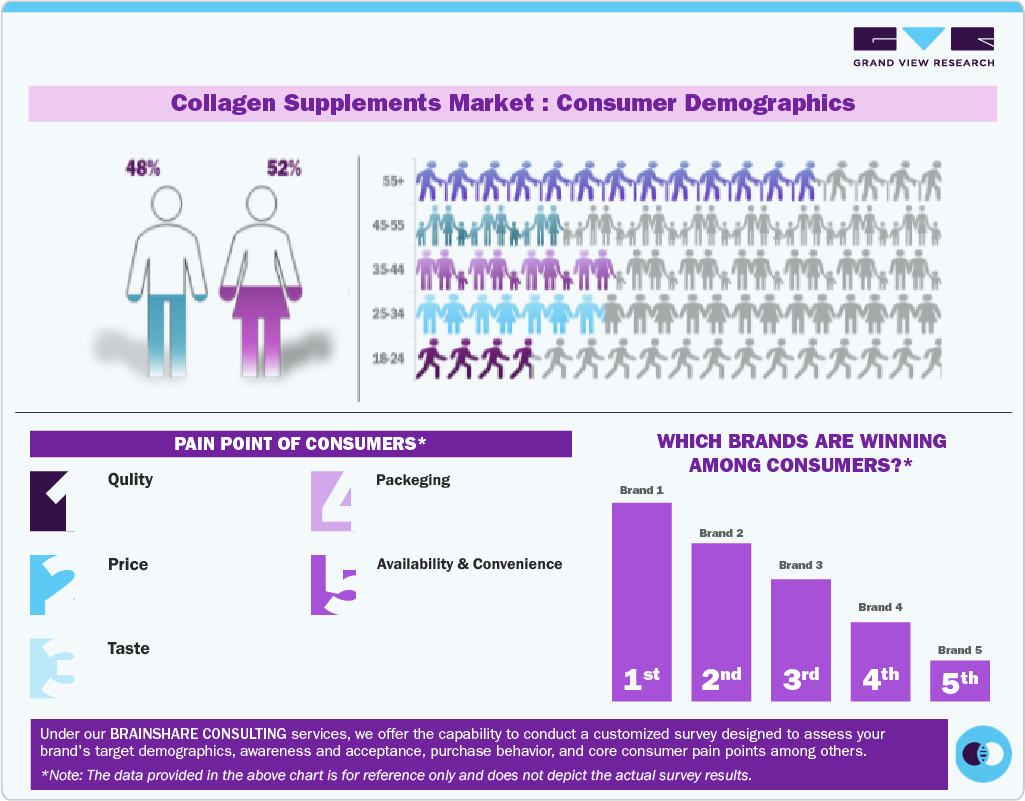
The additional benefits of collagen blends with active ingredients such as hyaluronic acid, niacinamide, and vitamin C are projected to further drive consumer interest in collagen supplements. The increasing prevalence of various diseases such as arthritis, inflammatory bone diseases, and other rheumatoid arthritis has encouraged people to inculcate collagen supplements to keep themselves healthy and away from such diseases. Furthermore, the age group and income level plays important role in determining the purchase of collagen supplements.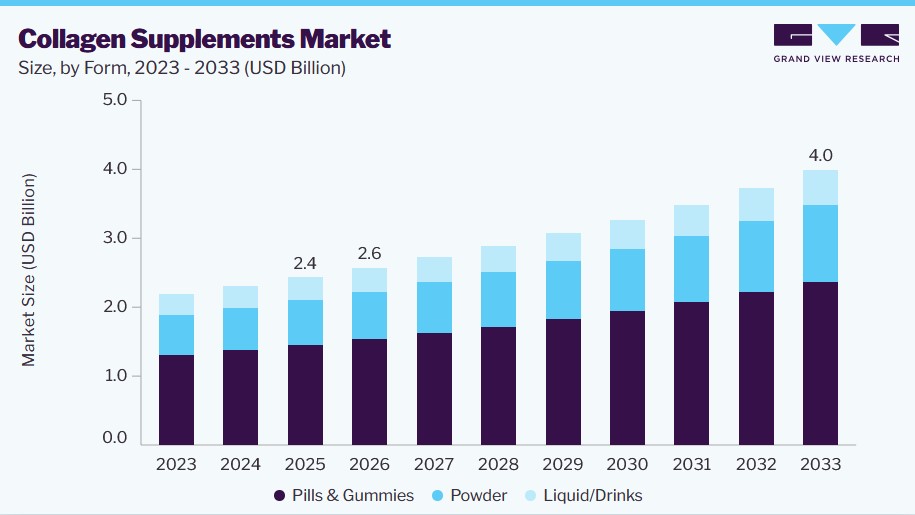 To learn more about this report, Download Free Sample Report
The collagen supplements industry is evolving from a beauty-focused category into a broader functional nutrition segment, with manufacturers expanding formulations across skin, joint, bone, hair, and overall wellness applications. Product development is increasingly centered on hydrolyzed collagen peptides, differentiated collagen sources, combination formulations, and higher-value delivery formats, enabling companies to address multiple health applications within a single product. The market is also witnessing greater integration of collagen with complementary ingredients such as hyaluronic acid, vitamin C, antioxidants, and protein. For instance, in March 2025, Elysium Health launched COFACTOR, combining grass-fed collagen peptides with nicotinamide riboside, hyaluronic acid, and vitamin C to target multiple factors associated with collagen decline. Such developments are broadening the competitive landscape beyond conventional collagen-only supplements.
Market Dynamics
Collagen supplements manufacturers are expanding beyond conventional powders and capsules into ready-to-drink beverages, shots, sachets, gummies, and other convenient formats. This broadens the addressable market by creating products suitable for different consumption occasions while enabling brands to differentiate through portability, formulation, and ease of integration into existing supplement portfolios.
In August 2025, Vital Proteins introduced its first Collagen & Protein Shake, combining 30 grams of protein with 10 grams of collagen peptides in a ready-to-drink format. The launch represents a shift from traditional collagen powder to a finished beverage that combines collagen with another high-value nutritional component.
The collagen supplements industry remains largely dependent on animal-derived raw materials, with bovine, porcine, marine, and poultry sources forming the primary base for collagen peptide production. This dependence can narrow the addressable consumer base because source selection may conflict with dietary restrictions, allergies, religious considerations, or plant-based preferences. It also places greater importance on traceability, sourcing standards, processing controls, and consistency of raw materials. The absence of a naturally occurring plant-based equivalent to collagen further limits manufacturers' ability to offer a directly comparable alternative for consumers seeking non-animal formulations.
For instance, in January 2025, GNC's Premier Collagen range used both marine and bovine collagen peptides, demonstrating the industry's continued reliance on animal-derived sources while diversifying between fish- and cattle-based raw materials.
Manufacturers have an opportunity to address the dependence on bovine, porcine, and marine collagen by developing animal-free collagen ingredients specifically for oral supplementation. This can open the category to vegetarian and vegan consumers while giving companies scope to differentiate through biotechnology, precision fermentation, and novel collagen structures. The opportunity is particularly relevant as manufacturers seek alternatives that retain the functional positioning of conventional collagen without relying on animal-derived raw materials.
In April 2026, TOSLA and Geltor launched the Signaling Collagen Shot, a ready-to-drink vegan collagen supplement containing Geltor’s PrimaColl, a biomimetic Type 21 signaling collagen polypeptide produced through biotechnology. This provides a direct example of how manufacturers are bringing animal-free collagen into the ingestible supplement category, rather than limiting innovation in vegan collagen to topical applications.
Analyst Perspective
The collagen supplements industry is moving beyond a single beauty-led proposition toward a broader healthy-aging and functional wellness platform, with the strongest commercial potential sitting at the intersection of skin, joint, bone, muscle, and healthy-aging benefits. The critical competitive question is no longer simply who can sell collagen, but who can differentiate efficacy, collagen source, peptide quality, dosage, and formulation while making benefits tangible to consumers. Brands able to combine clinically substantiated collagen peptides with convenient formats and targeted benefit positioning should have greater pricing power, while undifferentiated commodity collagen products will face increasing pressure from private labels and low-cost alternatives.
Consumer Insights
Collagen supplementation is increasingly being incorporated into broader wellness routines rather than treated solely as a beauty product. Consumers are connecting skin, hair, nails, joints, bones, and healthy aging, creating demand for products that address multiple needs with a single daily serving. This is also widening the category’s appeal across age groups, with younger consumers approaching collagen through beauty and preventive wellness, while older consumers are more likely to associate it with mobility and healthy aging. For instance, in September 2025, O Positiv launched MENO Healthy Aging Collagen & Protein Powder, a chocolate-flavored supplement formulated specifically for women aged 40 and above, combining collagen and protein with more than 10 superfood ingredients to support bone, joint, muscle, and skin health. The launch reflects how collagen products are being tailored around specific age groups and broader wellness requirements, rather than being positioned solely as beauty supplements.
 To learn more about this report, Download Free Sample Report
Convenience is another clear consideration, as consumers are moving toward formats that require less preparation than traditional powders. For instance, in April 2026, Shaklee launched Liquid BioCell Life+, a liquid collagen supplement positioned around healthy aging and longevity. The product uses BioCell Collagen in a ready-to-consume liquid format, illustrating how manufacturers are shifting collagen supplementation toward simpler, daily liquid consumption.These developments indicate that convenience, multifunctionality, and format variety are becoming increasingly important in collagen purchasing decisions.
Form Insights
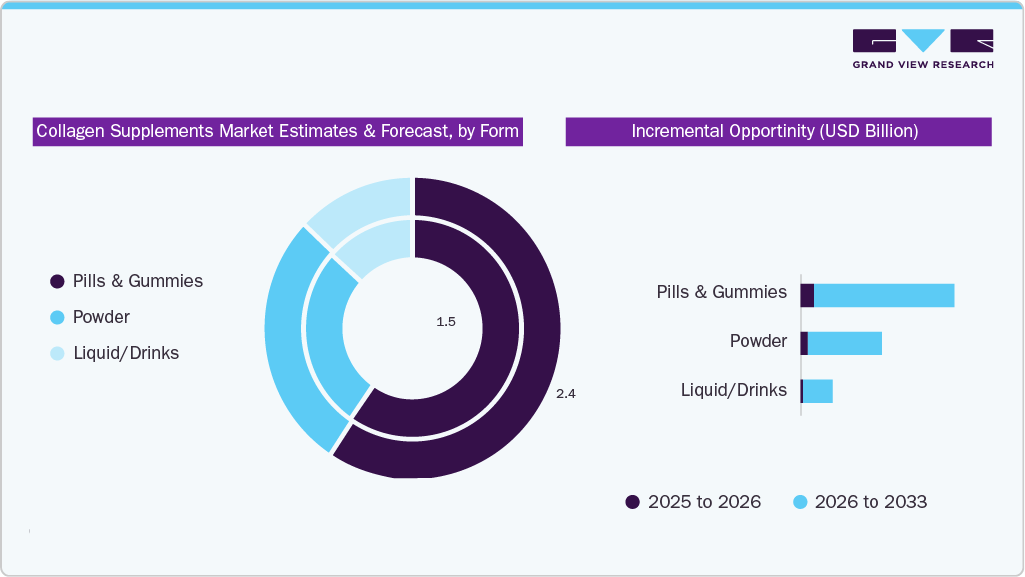
Sales of collagen supplements in the pills & gummies form accounted for a revenue share of 59.7% in 2025 as they provide pre-measured servings, portability, and straightforward daily consumption without the preparation required by powders. Gummies add another layer of differentiation through flavor, texture, and multi-ingredient formulations, making the format increasingly relevant for beauty and wellness applications. Manufacturers are also improving gummy formulations by incorporating collagen with complementary nutrients while reducing sugar and simplifying ingredient profiles. For instance, in August 2025, Bestural launched Collagen Gummies with DHC in Kyoho grape flavor, specifically highlighting a no-added-sugar formulation alongside taste and convenience.
 To learn more about this report, Download Free Sample Report
Sales of collagen supplements in the powder format is expected to grow at a fastest CAGR of 6.9% from 2026 to 2033 as it offers greater flexibility in dosage and can be incorporated into everyday foods and beverages such as coffee, smoothies, yogurt, and breakfast dishes. Unlike fixed-dose formats, powders also give manufacturers room to develop products around different collagen concentrations and combine peptides with complementary functional ingredients. The format is increasingly being positioned as a versatile nutritional ingredient, rather than simply a standalone supplement. For instance, in June 2026, Zinzino launched Collagen Boozt Flex, a berry-flavored marine collagen powder containing 8 grams of hydrolyzed collagen peptides, along with hyaluronic acid, vitamin C, biotin, zinc, ceramides, postbiotics, and amino acids. The product can be mixed with water, blended into smoothies, or added to breakfast, demonstrating the flexibility manufacturers are building into powder formulations.
Distribution Channel Insights
The sales of collagen supplements through pharmacy account for the largest revenue share of 74.7% in 2025 as they combine product availability with professional guidance, particularly when consumers are selecting supplements alongside medicines, vitamins, and other wellness products. Their established retail networks also provide manufacturers with broad physical reach, while pharmacy websites and delivery services extend access beyond store locations. For manufacturers, pharmacy distribution can strengthen product credibility and create opportunities for pharmacist-led recommendations, promotional programs, and regional expansion. The channel is also evolving as pharmacy operators broaden their health-and-wellness assortments and supplement brands seek a stronger presence across organized healthcare retail.
 To learn more about this report, Download Free Sample Report
The sales through online stores are expected to grow with the fastest CAGR of 7.1% from 2026 to 2033. Digital platforms allow brands to present detailed ingredient information, product comparisons, customer reviews, subscriptions, and multiple collagen formats in one place. Direct-to-consumer websites and major marketplaces further support product launches by enabling manufacturers to test new formulations and build visibility quickly. For instance, in May 2025, ArcticCollagen announced its launch on Amazon.com, offering single-use marine collagen sachets containing 8,000 mg of hydrolyzed collagen along with protein, hyaluronic acid, and vitamin C. The company subsequently expanded to Walmart.com in June 2025, demonstrating how collagen brands are using major e-commerce platforms to rapidly broaden market access.
Regional Insights
North America holds the largest revenue share of 31.9% for the collagen supplements industry driven by strong product availability, established supplement retail networks, and continued innovation across beauty and healthy-aging formulations. The U.S. is particularly important, with manufacturers increasingly introducing collagen products that extend beyond conventional powders and capsules into ready-to-consume and multifunctional formats. In March 2026, Vital Proteins launched Collagen Sparkling Water in the U.S., combining VERISOL collagen peptides with vitamin C in a zero-sugar beverage format, with distribution planned through Walmart, Amazon, its website, and TikTok Shop. The region is also attracting international collagen brands; in November 2025, Germany-based QUIRIS Healthcare introduced ELASTEN in the U.S., offering collagen through once-daily drinking ampoules sold via Amazon. These developments reflect North America's growing emphasis on premiumization, format innovation, and beauty-from-within positioning.
 To learn more about this report, Download Free Sample Report
U.S Collagen Supplements Market Trends
The collagen supplements industry in the U.S holds the largest share of 78.5% in 2025, driven by the increasing awareness of the various health and beauty benefits associated with collagen. These supplements have been known to result in healthier skin by reducing wrinkles and dryness, increase muscle concentration, enhance bone density, and reduce joint pain. Additionally, the growing incidence of conditions like arthritis and rheumatoid arthritis has led people to seek out supplements to help maintain their mobility. The market is also seeing greater integration of collagen with broader wellness applications. In March 2026, Amare Global introduced NeuCollagen, formulated to address joint mobility, muscle health, skin, hair, nails, and cognitive well-being within one product.
Europe Collagen Supplements Market Trends
The collagen supplements market in Europe is expected to grow with a CAGR of 6.2% from 2026 to 2033, supported by premium product positioning, pharmacy-led distribution, and demand for scientifically positioned formulations. Germany remains an important market, while the UK is gaining momentum through expanding specialist retail and digital availability. In October 2025, Glanbia’s Isopure entered the UK with its collagen range, containing Type I collagen and vitamin C, and secured distribution across Holland & Barrett, Boots, Amazon, Sainsbury’s, and Ocado, highlighting the growing emphasis on broad retail coverage and differentiated collagen formulations across the European market.
The collagen supplements industry in Germany accounts for a significant market share of 20.1% in 2025, supported by premium formulations, beauty-from-within positioning, and convenient product formats. The market is also seeing greater integration of collagen into everyday foods and beverages, expanding its appeal beyond traditional supplement formats. In 2025, Vital Proteins introduced Collagen Peptides Kakao in Germany, combining collagen with cocoa and positioning the product for use in waffles, bowls, and smoothies. The supplement became available through the brand’s website, Amazon Germany, beauty and wellness platforms, and pharmacy e-commerce from March 2025.
Asia Pacific Collagen Supplements Market Trends
The collagen supplements market in the Asia Pacific is expected to grow with a CAGR of 7.7% from 2026 to 2033, supported by the region’s aging demographics and rising focus on maintaining skin, bone, and joint health. As the population of older adults expands in countries such as Japan, South Korea, and Australia, demand is shifting toward supplements focused on mobility, healthy aging, and age-related changes in skin appearance. Collagen’s association with skin elasticity, hydration, and joint support continues to strengthen its relevance within these wellness routines.
The collagen supplements market in China accounts for the largest revenue share of 39.8% in 2025, supported by strong beauty-from-within adoption, growing interest in healthy aging, and increasing awareness of collagen’s applications beyond skin care. Demand is extending toward products positioned for joint, bone, and mobility support as China’s older population expands, creating opportunities for brands to communicate collagen’s broader functional benefits. Product innovation is also moving toward multifunctional and convenient formats. In July 2026, Foodmate showcased collagen-based functional gummy formulations at Hi&Fi Asia-China, highlighting the use of collagen in convenient, ready-to-consume formats and broader functional nutrition applications.
Central & South America Collagen Supplements Market Trends
The collagen supplements industry in CSA is expected to grow with a CAGR of 5.6% from 2026 to 2033 as consumers place greater emphasis on preventive nutrition, personal wellness, and maintaining physical well-being. Rising awareness of collagen’s nutritional role is encouraging consumers to consider supplementation as part of regular health routines rather than limiting its use to beauty applications. The region’s expanding digital ecosystem is also improving access to information about collagen, allowing consumers to compare formulations, ingredients, dosage formats, and intended benefits before purchasing.
MEA Collagen Supplements Market Trends
The collagen supplements market in MEA is expected to grow with a CAGR of 5.7% from 2026 to 2033, driven by the ability to improve the health of hair, skin, and nails, making them one of the top-selling supplements in the region. Women are purchasing these supplements to prevent signs of premature aging, such as dry skin, wrinkles, and hyperpigmentation.
In addition, with the increased availability of health and nutrition information through various media channels, consumers are now more aware of the benefits of collagen. To improve customer reach, companies are partnering with social media influencers to promote their products. Celebrity endorsements are also a popular marketing strategy for companies to gain customer traction.
Key Collagen Supplements Company Insights
Companies' focus is on innovating new forms to meet the increasing demand for collagen supplements. New players are entering the market owing to low market entry barriers and higher market potential. The increasing demand for collagen supplements presents an opportunity for product development in high-demand regions.
Key Collagen Supplements Companies:
The following key companies have been profiled for this study on the collagen supplements market.
-
Optimum Nutrition, Inc
-
BioTechUSA
-
TCI CO., LTD
-
Further Food
-
Vital Proteins LLC
-
Hunter & Gather
-
Shiseido Co. Ltd
-
The Clorox Company
-
THE BOUNTIFUL COMPANY.
-
Codeage LLC
-
Everest NeoCell LLC
Competitive Benchmarking
Category
Operating Strategies
Competitive Edge
Weakness
Established Players (Optimum Nutrition, Inc.; BioTechUSA; TCI CO., LTD; Vital Proteins LLC; Shiseido Co. Ltd; The Clorox Company; THE BOUNTIFUL COMPANY.; Everest NeoCell LLC)
- Mature players focus on broadening collagen portfolios across beauty, sports nutrition, healthy aging, and wellness, while leveraging established distribution, R&D capabilities, and brand portfolios to strengthen market reach.
- Established brand recognition, extensive distribution networks, product-development capabilities, and access to large consumer bases provide strong positioning across multiple collagen applications.
- Broad portfolios can increase operational complexity, while premium positioning and competition from specialized collagen brands can create pressure on pricing and differentiation.
Emerging Players (Further Food; Hunter & Gather; Codeage LLC)
- Emerging players pursue focused product positioning, digital-first distribution, clean-label formulations, and targeted collagen products to build traction among wellness-oriented consumers.
- Greater agility enables faster product innovation, niche targeting, direct consumer engagement, and differentiated positioning around functional benefits and formulation attributes.
- Smaller scale, narrower distribution reach, and lower brand recognition can limit retail penetration and make customer acquisition more costly than established competitors.
Recent Developments
-
In August 2025, Vital Proteins introduced its first Collagen & Protein Shake, combining 30 grams of protein with 10 grams of collagen peptides in a ready-to-drink format.
-
In June 2025, MegaFood introduced Collagen Peptides with Hyaluronic Acid & Vitamin C, reflecting the industry's shift toward multifunctional formulations.
-
In March 2025, Elysium Health launched COFACTOR, combining grass-fed collagen peptides with nicotinamide riboside, hyaluronic acid, and vitamin C to target multiple factors associated with collagen decline.
Collagen Supplements Market Report Scope
Report Attribute
Details
Market size in 2025
USD 2.4 billion
Estimated market size in 2026
USD 2.6 billion
Projected market size by 2033
USD 4.0 billion
Growth rate
CAGR of 6.5% from 2026 to 2033
Actual data
2021 - 2025
Forecast data
2026 - 2033
Quantitative units
Revenue in USD billion/million and CAGR from 2026 to 2033
Report coverage
Revenue forecast, company ranking, competitive landscape, growth factors, trends
Segments covered
Form, distribution channel, region
Regional scope
North America; Europe; Asia Pacific; Central & South America; Middle East & Africa
Country scope
U.S.; Canada; Mexico; Brazil; Germany; UK; France; Italy; Spain; China; India; Australia & New Zealand; Japan; Brazil; South Africa
Key companies profiled
Optimum Nutrition, Inc; BioTechUSA; TCI CO., LTD; Further Food; Vital Proteins LLC; Hunter & Gather; Shiseido Co. Ltd; The Clorox Company; THE BOUNTIFUL COMPANY.; Codeage LLC; Everest NeoCell LLC
Customization scope
Free report customization (equivalent up to 8 analysts working days) with purchase. Addition or alteration to country, regional & segment scope.
Pricing and purchase options
Avail customized purchase options to meet your exact research needs. Explore purchase options
Global Collagen Supplements Market Report Segmentation
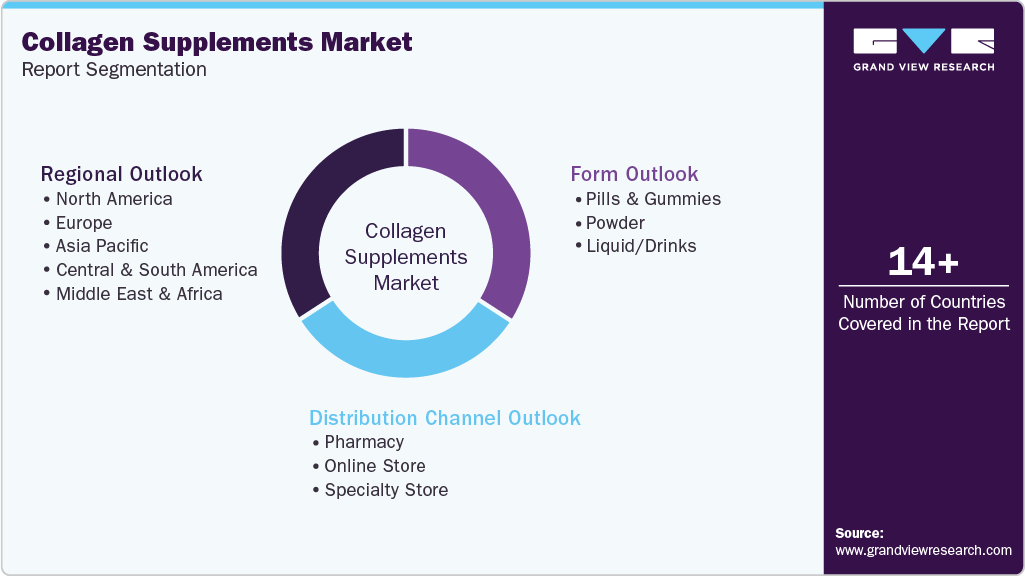
This report forecasts revenue growth at the country level and provides an analysis of the latest industry trends in each of the sub-segments from 2021 to 2033. For this study, Grand View Research has segmented the global collagen supplements market report based on form, and distribution channel:
 To learn more about this report, Download Free Sample Report
-
Form Outlook (Revenue, USD Billion, 2021 - 2033)
-
Pills & Gummies
-
Powder
-
Liquid/Drinks
-
-
Distribution Channel Outlook (Revenue, USD Billion, 2021 - 2033)
-
Pharmacy
-
Online Store
-
Specialty Store
-
-
Regional Outlook (Revenue, USD Billion, 2021 - 2033)
-
North America
-
U.S.
-
Canada
-
Mexico
-
-
Europe
-
Germany
-
UK
-
France
-
Italy
-
Spain
-
-
Asia Pacific
-
China
-
Japan
-
India
-
Australia & New Zealand
-
-
Central & South America
-
Brazil
-
-
Middle East & Africa
-
South Africa
-
-
Research Methodology
The collagen supplements market figures in this report are based on a proven research process that combines executive interviews with secondary research from proprietary databases, company filings, and recognized regulatory and institutional sources. Market size is built through value-chain sizing-reconciling supply-side and demand-side estimates-and triangulated with bottom-up and top-down approaches. Every estimate passes multiple levels of expert validation before publication, with each collagen supplements segment quantified using the revenue-capture definitions in the table below.
Segment Definition
Segment - Distribution Channel
Revenue capture definition
Pharmacy
This segment includes the sales of collagen supplements through pharmacies and drugstores. Revenue is generated through over-the-counter products available for beauty, joint, bone, and overall wellness applications.
Online Store
This segment includes the sales of collagen supplements through brand websites, e-commerce platforms, and online marketplaces. Revenue is generated through direct purchases, subscriptions, and digitally marketed products offering convenience and broad product accessibility.
Specialty Store
This segment includes the sales of collagen supplements through health, wellness, nutrition, and beauty-focused specialty retailers. Revenue is generated through products supported by category-specific product selection, in-store guidance, and targeted consumer engagement.
Segment - Form
Revenue capture definition
Pills & Gummies
This segment includes the sales of collagen supplements in pill, capsule, and gummy formats designed for convenient daily consumption. Revenue is generated through easy-to-use products offering standardized collagen intake and portability.
Powder
This segment includes the sales of collagen supplements in powdered form, typically mixed with water, beverages, smoothies, or food. Revenue is generated through standalone collagen powders and flavored or functional formulations.
Liquid/Drinks
This segment includes the sales of collagen supplements in ready-to-drink beverages, liquid shots, and concentrates. Revenue is generated through convenient, pre-measured formulations that support on-the-go consumption.
Estimation Model
Layer
Key Question
Description
Consumer Pool Layer
Who has a relevant health or wellness need?
Identify consumer groups seeking support for skin health, joint mobility, healthy aging, hair and nail health, and sports recovery to establish the relevant collagen-supplement population.
Awareness & Access Layer
Who can be reached through supplement channels?
Apply age-, income-, and geography-specific supplement participation and collagen awareness rates to narrow the addressable consumer base.
Adoption Layer
Who actively uses collagen supplements?
Apply collagen usage and purchase rates across relevant consumer cohorts, accounting for product formats, consumption frequency, and preference for beauty, joint, or performance benefits.
Monetisation Layer
How is market revenue generated?
Multiply active users by annual consumption and supplement spending, incorporating average selling prices across powders, capsules, gummies, and liquid formats and accounting for B2C and commercial sales.
Delivered Customizations
This report has been delivered with the following In-depth customizations
Client Request
Customization Delivered
Value Adds
Global Collagen Supplements Product & Format Assessment
Evaluated product formats such as powders, capsules/tablets, gummies, ready-to-drink products, and functional blends, alongside formulation trends including hydrolyzed collagen, peptides, and multi-ingredient combinations.
Supports portfolio optimization, format selection, and identification of whitespace for differentiated product development.
Global Collagen Supplements Innovation & Competitive Positioning Assessment
Analyzed e-commerce, specialty nutrition stores, pharmacies, supermarkets, and other retail channels based on accessibility, consumer engagement, and product discovery patterns.
Supports channel prioritization, route-to-market planning, and identification of high-potential distribution opportunities.
Global Collagen Supplements Distribution & Channel Opportunity Assessment
Mapped emerging product concepts, ingredient combinations, delivery formats, sustainability attributes, and brand positioning strategies adopted by leading and emerging players.
Helps identify innovation gaps, benchmark competitors, and develop differentiated product propositions.
Frequently Asked Questions About This Report
The global collagen supplements market size was estimated at USD 1.99 billion in 2021 and is expected to reach USD 2.08 billion in 2022.
The global collagen supplements market is expected to grow at a compound annual growth rate of 5.5% from 2022 to 2028 to reach USD 2.88 billion by 2028
North America dominated the collagen supplements market with a share of 31.96% in 2021. This is attributable to growing awareness among the consumers regarding the health benefits along with the increasing demand for collagen supplements from the sports nutrition industry.
Some key players operating in the collagen supplements market include Optimum Nutrition, Inc.; BIoTechUSA; TCI CO., LTD; Further Food; Vital Proteins LLC; Hunter&Gather; Shiseido Co. Ltd.; The Clorox Company; THE BOUNTIFUL COMPANY.; Codeage LLC; and Everest NeoCell LLC
Key factors that are driving the collagen supplements market growth include increasing focus on a healthy lifestyle, a growing middle-class population, and rising import demand for collagen.
About the Author(s)
Nutraceuticals & Functional Foods Research Team
Consumer Goods · Nutraceuticals & Functional FoodsThis report was authored by the nutraceuticals & functional foods research team at Grand View Research - comprising two research analysts, one senior research analyst, and one industry expert - with specialized expertise in the nutraceuticals & functional foods segment of the consumer goods industry. All findings are based on proprietary consumer goods databases, executive interviews, and regulatory analysis, subject to internal peer review prior to publication.
Last Updated:
Speak to Analyst

Customize this report to your needs - add regions, segments, or data points, with 20% free customization.
Or view our licence options:


ISO 9001:2015 & 27001:2022 Certified
We are GDPR and CCPA compliant! Your transaction & personal information is safe and secure. For more details, please read our privacy policy.


