
- Home
- »
- Medical Devices
- »
-
Conical Dental Implant Market Size, Industry Report, 2033GVR Report cover
![Conical Dental Implant Market Size, Share & Trends Report]()
Conical Dental Implant Market (2026 - 2033) Size, Share & Trends Analysis Report By Material Type (Titanium, Zirconia), By Surface Treatment Type (SLA And SLActive, Anodized Surfaces, Nano-Textured Surfaces), By Design (Two-piece, One-Piece), By Connection, By Region, And Segment Forecasts
- Report ID: GVR-4-68040-886-3
- Number of Report Pages: 150
- Format: PDF
- Historical Range: 2021 - 2025
- Forecast Period: 2026 - 2033
- Industry: Healthcare
- Report Summary
- Table of Contents
- Segmentation
- Methodology
- Download FREE Sample
-
 Download Sample Report
Conical Dental Implant Market Summary
The global conical dental implant market size was estimated at USD 3.89 billion in 2025 and is projected to reach USD 7.67 billion by 2033, growing at a CAGR of 8.98% from 2026 to 2033. The market is growing due to increasing demand for reliable, long-lasting, and aesthetically advanced tooth-replacement solutions.
Key Market Trends & Insights
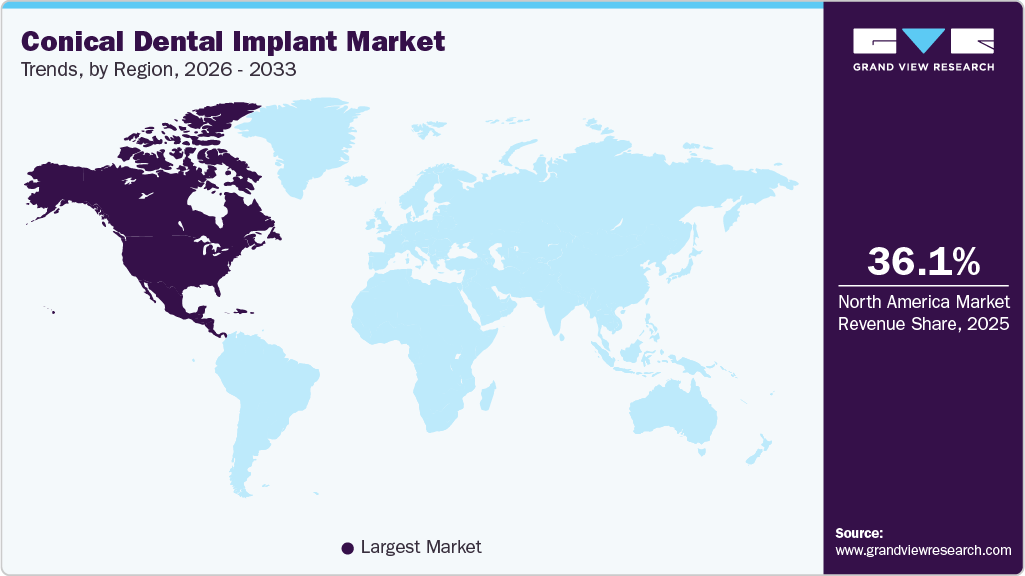
- North America dominated the conical dental implant market with 36.05% of revenue share in 2025.
- The U.S. conical dental implant industry accounted for the largest revenue share of North America in 2025.
- By material type, the titanium segment led the market with the largest revenue share in 2025.
- By surface treatment type, the SLA and SLActive segments led the market with the largest revenue share in 2025.
Market Size & Forecast
- 2025 Market Size: USD 3.89 Billion
- 2033 Projected Market Size: USD 7.67 Billion
- CAGR (2026-2033): 8.98%
- North America: Largest market in 2025
The rising prevalence of periodontal disease and tooth loss is a major factor contributing to market expansion, as more patients seek effective restorative treatments. Conical implants are gaining strong preference among dental professionals due to their tapered design, which provides enhanced primary stability, improved load distribution, and better sealing, reducing the risk of complications. In addition, the growing adoption of cosmetic dentistry and patients' inclination toward natural-looking outcomes are further supporting the growth of the conical dental implant industry.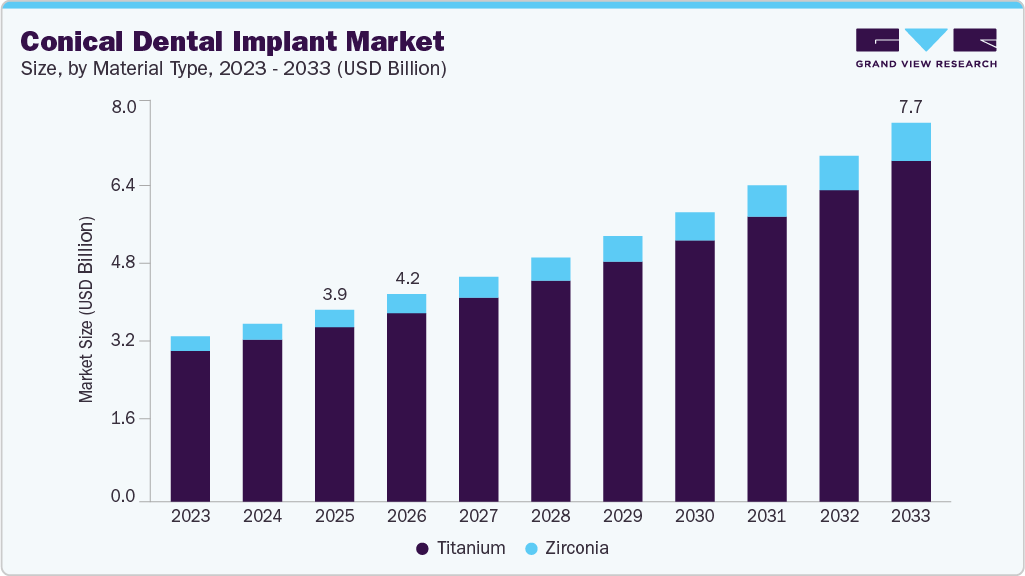
The rising prevalence of periodontal disease is the driving growth of the conical dental implant market, as it remains a leading cause of tooth loss globally. As the incidence of periodontal disease continues to increase, particularly in aging populations and individuals with chronic conditions, the number of patients experiencing tooth loss is also rising. This directly increases demand for effective, long-term restorative solutions, such as dental implants. According to the WHO, in March 2025, the estimated global average prevalence of complete tooth loss is almost 7% among people aged 20 years or older. For people aged 60 years or older, a much higher global prevalence of 23% has been estimated.
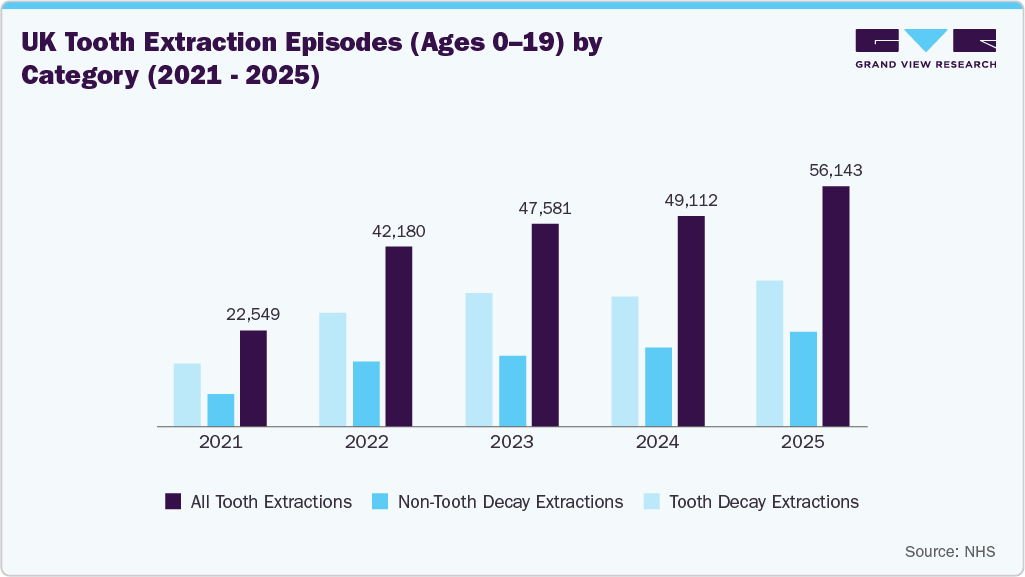
The number of tooth extractions is growing in the conical dental implant industry. The increasing prevalence of dental caries, periodontal diseases, trauma-related tooth loss, and aging populations has led to a higher volume of extractions globally. As patients and clinicians prefer permanent, aesthetically superior solutions over removable dentures or bridges, conical dental implants are gaining traction for their stability, enhanced primary fixation, and suitability for immediate placement following extraction. Their tapered design closely mimics the natural tooth root, enabling better adaptation to extraction sockets and preserving bone structure. The graph below shows the number of tooth extraction episodes in the UK between 2021 and 2025.
Conical dental implants are preferred in such cases due to their tapered design, which provides superior stability and better performance in compromised bone conditions often associated with periodontal disease. In addition, their ability to reduce bacterial infiltration makes them well-suited for patients with a history of gum disease. The growing burden of periodontal disease is directly driving the adoption of conical dental implants, thereby accelerating overall market growth.
The expanding geriatric population is growing in the conical dental implant market, as older individuals are more susceptible to tooth loss due to age-related conditions such as Periodontal disease, bone resorption, and long-term dental wear. As the global elderly population continues to grow, demand for effective, permanent tooth replacement solutions is also rising. This demographic shift is directly contributing to higher adoption of dental implants.
According to the WHO, in 2025, globally, life expectancy at birth reached 73.3 years in 2024, an increase of 8.4 years since 1995. The number of people aged 60 and older worldwide is projected to increase from 1.1 billion in 2023 to 1.4 billion by 2030. This trend is particularly evident and rapid in developing regions.
Conical dental implants are gaining traction among this age group due to their tapered design, which provides enhanced stability and reliable performance even in patients with reduced bone density. In addition, elderly patients prefer fixed, durable, and aesthetically pleasing solutions over removable dentures. The growing geriatric population is actively driving the demand for conical dental implants, thereby accelerating overall market growth.
The growing adoption of digital dentistry, particularly CAD/CAM systems and guided implant surgery, is significantly driving the market growth by enhancing the accuracy, efficiency, and predictability of implant procedures. Digital workflows enable precise treatment planning, improved visualization of bone structures, and customized implant placement, thereby reducing surgical errors and improving overall clinical outcomes. According to a 2025 study published by the National Library of Medicine, the findings indicate that the adoption of digital technologies in dentistry is strongly influenced by technology readiness, practice size, and professional engagement. Clinics with higher TRI scores and larger setups demonstrate greater digital integration, while younger dentists and those actively involved in continuous professional development are more inclined to adopt advanced tools.
This is especially beneficial for conical dental implants, as their design relies on accurate positioning to achieve optimal stability and long-term success. In addition, guided implant surgery allows clinicians to perform minimally invasive procedures with reduced chair time and faster recovery, making implants more attractive to both dentists and patients. The integration of digital tools also supports better prosthetic design and fit, leading to improved aesthetics and patient satisfaction.
Market Concentration & Characteristics
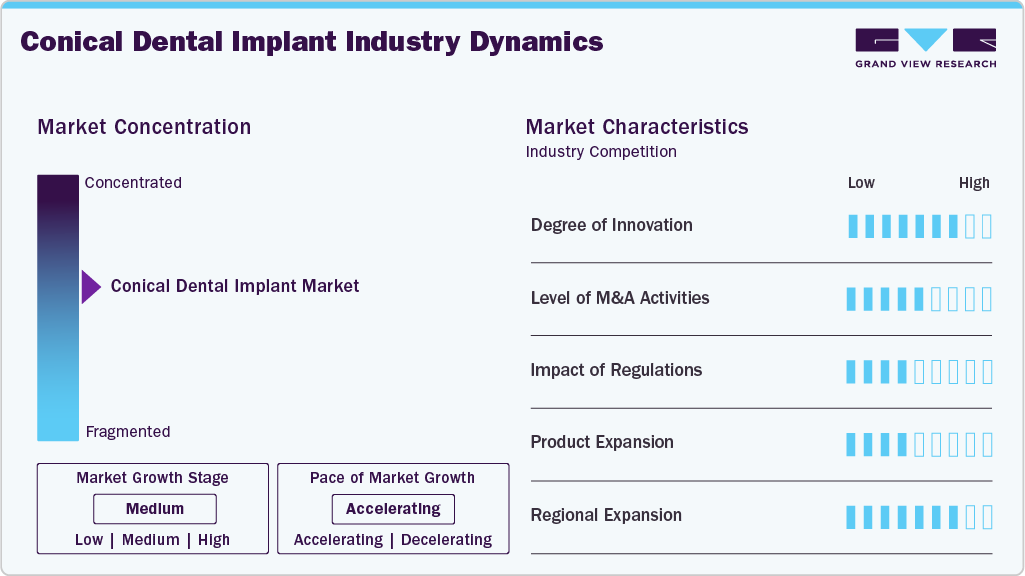
The conical dental implant market is growing, with global players accounting for a significant share, supported by strong product portfolios, ongoing research and development, and extensive distribution networks. The market is highly innovation-driven, with a strong focus on advanced surface technologies, digital dentistry integration, and improved biomaterials to enhance clinical performance and patient outcomes. Strategic initiatives such as partnerships, acquisitions, and professional training programs are widely adopted to expand market presence and strengthen competitiveness. In addition, high entry barriers, including stringent regulatory requirements, advanced manufacturing capabilities, and substantial capital investment, limit the entry of new participants. At the same time, the presence of regional and cost-effective manufacturers intensifies competition, particularly in emerging markets.
The increasing degree of innovation is growing the conical dental implant market by enhancing the performance, reliability, and clinical outcomes of implant procedures. Continuous advancements in implant design, improved tapered geometries, and surface modifications are enabling better osseointegration and long-term stability. Innovations in biomaterials, including advanced titanium treatments and zirconia-based implants, are further improving biocompatibility and durability. In addition, integrating digital dentistry technologies, such as CAD/CAM systems, 3D imaging, and guided implant surgery, enables more precise planning and minimally invasive procedures, resulting in higher success rates and faster recovery. These technological developments are increasing clinician confidence and patient acceptance, thereby accelerating the adoption of conical dental implants. Thus, ongoing innovation is playing a crucial role in expanding the market by driving demand for more efficient, predictable, and aesthetically superior implant solutions.
In March 2025, the Straumann iExcel Implant Performance System marked a significant advancement in implantology. This system integrates multiple implant designs into a single platform, enhancing clinical flexibility and efficiency, while incorporating high-performance materials to improve treatment outcomes.
Regulations play a critical role in the conical dental implant industry, as manufacturers must comply with strict standards to ensure product safety, quality, and clinical effectiveness. In the United States, conical dental implants are regulated by the U.S. Food and Drug Administration under the medical device framework, typically requiring 510(k) clearance or Premarket Approval (PMA) depending on the device classification. In Europe, manufacturers must adhere to the Medical Device Regulation (MDR), which mandates comprehensive clinical evaluation, risk assessment, and CE marking before commercialization. Globally, compliance with quality management standards such as ISO 13485 and ISO 10993 is essential to ensure that implant materials are safe for human use. In addition, manufacturers must follow Good Manufacturing Practices (GMP) and conduct rigorous clinical testing to demonstrate safety and performance. Post-market surveillance requirements are also increasingly important, requiring companies to monitor implant performance and report adverse events.
In November 2025, Neocis announced the launch and U.S. Food and Drug Administration approval of its next-generation robotic dental implant system, Yomi S, along with the YomiPlan AI platform. The system is designed to enhance precision, efficiency, and accessibility in dental implant procedures through AI-powered planning and robotic-assisted surgery. It enables single-operator workflows, improves surgical accuracy, and supports minimally invasive procedures, ultimately enhancing patient outcomes and expanding access to advanced dental implant treatments.
Mergers and acquisitions (M&A) play a vital role in driving growth in the conical dental implant market by enabling companies to enhance technological capabilities, expand product portfolios, and strengthen global presence. Through these strategic activities, companies can integrate advanced implant designs, biomaterials, and digital dentistry solutions, improving the performance and adoption of conical implant systems. M&A also provides access to greater financial resources and specialized expertise, supporting increased investment in research and development, manufacturing efficiency, and innovation. In addition, consolidation through acquisitions allows companies to achieve economies of scale, streamline operations, and improve distribution networks, particularly in emerging markets. Overall, M&A activity accelerates innovation, enhances competitiveness, and supports the sustained market expansion.
In July 2025, the company Straumann further strengthened its innovation capabilities by acquiring full ownership of maxon dental GmbH, enhancing its expertise in ceramic implant technology and supporting long-term advancements in implant design and manufacturing.
Regional expansion in the conical dental implant market is primarily driven by increasing access to dental care, rising awareness of oral health and aesthetic treatments, and improving healthcare infrastructure across multiple geographies. Growing disposable incomes and a larger middle-class population are encouraging patients to opt for advanced restorative procedures, including dental implants. In addition, the expansion of private dental clinics and corporate dental chains is improving service availability and patient reach. Companies are also investing in localized manufacturing and strengthening distribution networks to reduce costs and enhance product accessibility. Furthermore, the adoption of digital dentistry technologies, along with increased training and education programs for dental professionals, is supporting the wider acceptance of conical implant systems.
In January 2025, Neodent hosted its first large-scale event, the International Neodent APAC 2025, held on January 16 and 17 in Bangkok, bringing together over 650 participants from across the region. Representatives from India, Japan, Indonesia, Malaysia, Singapore, Vietnam, Australia, and New Zealand participated, underscoring the company’s strong expansion across Asia-Pacific. The event was opened by Thomas Ukelo, VP of Marketing and Education, along with Patrick Loh, Head of Sales APAC, reflecting Neodent’s vision of combining innovation, quality, and agility to strengthen its regional presence and advance dental implant solutions.
"The APAC region presents a tremendous opportunity for Neodent to provide access to high-quality dental care at affordable prices. By expanding our presence in this rapidly growing market, we aim to empower dental professionals to deliver effective treatments through our comprehensive portfolio of solutions, ultimately enhancing the oral health and improving the quality of life for patients.” - Thomas Ukelo, VP Marketing & Education.
Material Type Insights
Titanium segment accounted for 90.99% of revenue in 2025, making it the dominant segment in the conical dental implant market. This dominance is primarily due to titanium’s superior biocompatibility, high strength, and excellent osseointegration, which enable strong, long-lasting bonding with surrounding bones. In addition, titanium implants have a long history of clinical success, making them the preferred choice among dental professionals. Their durability, corrosion resistance, and cost-effectiveness further support widespread adoption, especially in complex dental procedures and long-term restorative treatments.
Zirconia implants, on the other hand, are expected to grow at the fastest CAGR due to growing demand for metal-free, aesthetically superior dental solutions. Zirconia’s tooth-like color makes it highly desirable for patients seeking natural-looking restorations, particularly in visible areas. Moreover, increasing concerns regarding metal sensitivity and allergies are encouraging the shift toward zirconia-based implants. Advancements in material technology and improvements in mechanical strength are also enhancing their reliability, making them an emerging choice for cosmetic and premium dental implant procedures.
Surface Treatment Type Insights
The SLA and SLActive segments led the conical dental implant industry, accounting for 37.75% share in 2025. This dominance is attributed to their proven ability to enhance osseointegration through optimized surface roughness and improved bone-to-implant contact. These surface treatments accelerate healing time and increase implant stability, making them highly preferred by dental professionals for predictable clinical outcomes. In addition, their strong track record of success, along with widespread adoption in both routine and complex implant procedures, continues to support their leading position in the market.
Nano-textured surfaces are expected to witness the fastest CAGR during the forecast period, driven by their advanced ability to promote cellular responses and accelerate bone regeneration at the microscopic level. These surfaces enhance protein interaction and osteoblast activity, leading to improved integration and reduced healing periods. The growing demand for advanced, high-performance dental implants, along with continuous innovations in nanotechnology, is driving their adoption. Furthermore, increasing focus on improving long-term success rates and patient outcomes is encouraging manufacturers to invest in nano-surface technologies, positioning this segment as a rapidly emerging area in the market.
Design Insights
Two-piece segment is expected to dominate the conical dental implant market in 2025. This dominance is primarily due to its structural flexibility, which allows the separate placement of the implant fixture and abutment, providing better prosthetic customization and easier adjustment. Dental professionals widely prefer two-piece implants as they support a variety of clinical situations, including complex restorations and angled placements. In addition, their strong clinical track record, ease of maintenance, and ability to achieve optimal aesthetic and functional outcomes contribute to their widespread adoption.
One-piece implants are expected to witness the fastest CAGR over the forecast period, driven by their simplified design and minimally invasive placement procedures. These implants combine the fixture and abutment into a single unit, reducing treatment time, eliminating micro-gaps, and lowering the risk of bacterial infection. The growing demand for faster procedures, cost-effective solutions, and immediate loading techniques is driving their adoption, particularly in straightforward cases with adequate bone structure. In addition, advancements in implant design and the growing preference for streamlined dental procedures are driving rapid growth in the one-piece segment.
Connection Insights
The Internal Hex (IH) segment is expected to dominate the conical dental implant market in 2025. This dominance is attributed to its widespread clinical acceptance, ease of use, and compatibility with a broad range of prosthetic components. The Internal Hex connection provides reliable anti-rotational stability and allows for straightforward prosthetic handling, making it a preferred choice among dental professionals. In addition, its long-standing market presence, cost-effectiveness, and versatility across various implant procedures further support its leading position.
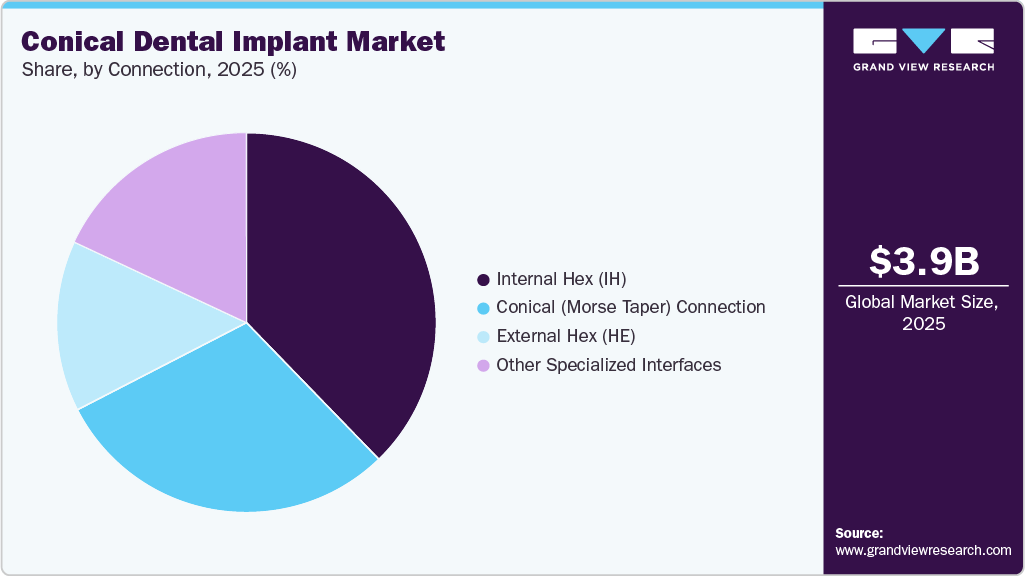
The conical (Morse Taper) connection is expected to witness the fastest CAGR during the forecast period, due to its superior mechanical stability and enhanced sealing capability, which minimizes micro-movements and bacterial infiltration at the implant-abutment interface. This connection type offers better load distribution and long-term durability, making it increasingly popular for achieving improved clinical outcomes. The growing demand for advanced implant systems with higher precision, along with an increasing focus on reducing complications and improving implant longevity, is driving rapid adoption of conical (Morse taper) connections in the dental implant market.
Regional Insights
North America dominated the conical dental implant market, accounting for 36.05% in 2025, driven by strong adoption of advanced dental technologies and a well-established clinical ecosystem. The region has seen increasing use of digital workflows, including 3D imaging, guided surgery, and CAD/CAM-based restorations, which enhance precision and support the effectiveness of conical implant designs. A high level of awareness regarding oral health and cosmetic dentistry has encouraged more patients to opt for long-term restorative solutions. In addition, the presence of skilled dental professionals and ongoing professional development supports the integration of innovative implant systems into routine practice. Rising cases of tooth loss and periodontal conditions, along with an aging population, are further expanding the patient pool. Combined with higher healthcare spending and accessibility to advanced treatments, these factors are accelerating the adoption of conical dental implants across the region.
U.S. Conical Dental Implant Market Trends
The U.S. conical dental implant industry is growing due to increasing demand for advanced, long-lasting tooth replacement solutions, supported by an aging population and a higher prevalence of tooth loss. Growing awareness of aesthetic dentistry and preference for natural-looking restorations are further encouraging the adoption of conical dental implants. According to data published by Northwest Oral Surgeons in 2025, in the U.S., complete tooth loss among older adults has declined from 16% in 2012 to around 13% in 2020, reflecting improvements in dental care and preventive practices. However, edentulism remains a significant concern, affecting 11-12% of individuals aged 65-74 and rising to nearly 20% among those aged 75 and older. This highlights that despite overall progress, the burden of tooth loss continues to increase with age, emphasizing the ongoing need for effective restorative solutions and geriatric oral healthcare.
The rapid integration of digital dentistry technologies, including 3D imaging, CAD/CAM systems, and guided implant procedures, is enhancing precision and clinical outcomes, thereby boosting acceptance among both patients and practitioners. In addition, the presence of skilled dental professionals, continuous innovation in implant materials, and higher healthcare spending are collectively driving the market expansion.
Europe Conical Dental Implant Market Trends
The growth of the Europe conical dental implant industry is driven by rising demand for advanced and aesthetic dental treatments, supported by an aging population and a high incidence of tooth loss. Greater awareness of oral health and a shift toward long-lasting, minimally invasive restorative solutions are encouraging the adoption of conical implant systems.
According to the European Federation of Periodontology, in 2025, data show that oral health issues remain highly prevalent among both adolescents and adults in Europe, driven by behavioral and physiological factors. A significant 77% of adolescents are affected by dental caries, with the highest burden observed among those aged 16-19, while 73% experience gingival bleeding, indicating widespread early-stage gum issues. This trend continues into adulthood, where 40% to 90% of individuals aged 20-59 are affected by dental caries. Overall, these findings underscore a persistent and widespread burden of oral diseases, emphasizing the need for improved preventive care, early intervention, and increased adoption of restorative dental solutions across all age groups.
The region is also witnessing strong integration of digital dentistry technologies, which improves treatment accuracy and efficiency. In addition, the growth of dental tourism in several countries is increasing procedure volumes, while well-established healthcare systems and skilled dental professionals support widespread clinical adoption.
The UK conical dental implant market is growing due to increasing demand for advanced dental treatments, a rising backlog of untreated cases, and the high prevalence of tooth decay and tooth extraction, which is driving the need for effective tooth replacement solutions such as conical dental implants.
According to data published by the UK Government in 2026, there were 33,976 episodes of tooth extraction with a primary diagnosis of tooth decay among 0- to 19-year-olds in 2025, an increase of 11% from the previous year. Tooth extractions due to tooth decay account for 60.5% of all tooth extractions in this age group.
Growing awareness of oral health and a strong preference for aesthetic, long-lasting restorations are further supporting market expansion, alongside the rapid adoption of digital dentistry technologies and guided implant procedures. In addition, an aging population and the rising incidence of dental caries are driving a higher number of extraction procedures, further boosting demand for implant-based restorations. Advancements in implant materials, improved clinical workflows, and expanding access to private dental care are collectively accelerating the adoption of conical dental implants.
The conical dental implant market in Germany is growing due to increasing demand for advanced dental treatments, supported by a high prevalence of tooth decay and tooth extractions, which drive the need for long-term restorative solutions such as conical dental implants. Rising awareness of oral health and a strong preference for aesthetic and durable tooth replacement options are encouraging greater adoption among patients. According to the National Library of Medicine, in 2025, a key finding of the study was the continued significant decline in the prevalence of complete edentulism among seniors, suggesting a further reduction, with estimates reaching around 4% by 2030. The study also observed a shift in primary prosthetic care from removable to fixed prostheses, along with an increasing prevalence of implant placements, indicating positive developments in dental treatment trends.
The country also benefits from a well-established healthcare system and a large base of skilled dental professionals, enabling efficient delivery of implant procedures. In addition, the adoption of digital dentistry technologies and guided implant procedures is improving precision and clinical outcomes. An aging population further contributes to demand, while continuous innovation in implant materials and techniques is supporting the steady market expansion.
Asia Pacific Conical Dental Implant Market Trends
The Asia Pacific conical dental implant industry is growing due to increasing access to dental care, rising disposable incomes, and a large population base with unmet dental needs. The high prevalence of tooth decay and tooth extraction is driving demand for long-term restorative solutions such as conical dental implants. Growing awareness of oral health and aesthetic dentistry is encouraging more patients to choose advanced treatments. In addition, the expansion of private dental clinics and corporate dental chains is improving service availability across urban and semi-urban areas. The region is also witnessing rapid adoption of digital dentistry technologies and increased investment in training and education for dental professionals, which is enhancing clinical outcomes and boosting adoption. Overall, these factors are collectively accelerating the market growth.
The India conical dental implant market is growing due to the high prevalence of dental disorders, particularly tooth decay, periodontal disease, and tooth loss, which are driving demand for restorative solutions such as conical dental implants. A large portion of the population suffers from untreated dental caries and gum diseases, often leading to tooth extraction and increasing the need for permanent tooth replacement options. Rising awareness of oral health, along with rising disposable incomes, is encouraging patients to seek advanced, long-lasting treatments. The expansion of private dental clinics and corporate dental chains is further improving access to implant procedures across urban and semi-urban areas. In addition, the growing acceptance of aesthetic dentistry, the rise in dental tourism, and ongoing training for dental professionals are driving greater adoption of treatments. Overall, the high disease burden, combined with improved access to care, is significantly contributing to the market growth.
According to the data published by the International Journal of Community Medicine and Public Health in 2025, Gingivitis affected 46.6% of the population, and periodontitis was 51% (≥15 years). Partial edentulism ranged from 13.4% to 100%, and complete edentulism ranged from 5.3% to 90.5%, with national estimates of 61.9% and 7.2% (≥45 years), respectively.
The conical dental implant market in Japan is growing due to its rapidly expanding aging population, which is one of the highest globally, significantly increasing the prevalence of tooth loss and the need for long-term restorative solutions such as conical dental implants. A large proportion of the elderly population experiences age-related dental conditions, including periodontal disease and edentulism, driving demand for durable, functional tooth-replacement options. In 2025, according to the World Economic Forum, Japan's Ministry of Internal Affairs and Communications reported that, as of 2024, the country had a record 36.25 million people aged 65 and over, accounting for 29.3% of the total population. This share is projected to rise to 34.8% in 2040 and 36.3% in 2045. Japan's proportion of elderly residents is already far higher than second-ranked Martinique (25.3%), making it the world's most aged society.
Strong awareness of oral health and a preference for high-quality, aesthetic restorations further support adoption among older patients. In addition, Japan’s advanced healthcare infrastructure and the availability of skilled dental professionals enable efficient, precise implant procedures. Continuous innovation in implant materials and minimally invasive techniques is also improving clinical outcomes and patient comfort.
Latin America Conical Dental Implant Market Trends
The Latin America market is growing due to the rising prevalence of tooth decay, periodontal disease, and tooth loss, and driving demand for effective restorative solutions such as conical dental implants. Rising awareness of oral health and aesthetic dentistry is encouraging more patients to choose long-term tooth-replacement options. Improving access to dental care, supported by the expansion of private clinics and dental service organizations, is further boosting procedure volumes. In addition, growing disposable incomes and a rising middle-class population are making advanced dental treatments more affordable. The region is also benefiting from increasing dental tourism, as several countries offer cost-effective implant procedures with improved quality standards. Continuous advancements in implant technologies and increasing training initiatives for dental professionals are further supporting the steady regional market growth.
According to the National Library of Medicine in 2025, the findings from a cross-sectional, population-based study conducted among 112 older adults aged 60 years and above in Boraceia indicate that impaired oral health-related quality of life was more prevalent among individuals aged 60-74 years (28.77%) compared to those aged 75 years and older (20.51%). In addition, similar prevalence rates were observed between women (25.84%) and men (26.09%), suggesting a consistent impact across genders. Overall, the results demonstrate that tooth loss and related oral health conditions significantly affect quality of life among older adults in the region, highlighting the importance of targeted dental care and restorative interventions.
MEA Conical Dental Implant Market Trends
The Middle East & Africa conical dental implant industry is growing due to the increasing prevalence of tooth decay, periodontal diseases, and tooth loss, which is driving demand for restorative solutions such as conical dental implants. Rising awareness of oral health and aesthetic dentistry is encouraging more patients to seek advanced and long-lasting treatment options. Improving healthcare infrastructure and expanding private dental clinics are enhancing access to implant procedures across the region. In addition, supportive government initiatives such as investments in healthcare infrastructure, public oral health programs, and efforts to expand access to dental services are playing a key role in strengthening the market. For instance, the Vision 2030 initiative aims to improve healthcare services, including oral health, resulting in increased investments in healthcare infrastructure and awareness campaigns on oral hygiene. The region is witnessing increased investment in dental education and professional training, enabling wider use of modern implant techniques. Furthermore, the rise of dental tourism in select countries is attracting international patients seeking cost-effective care, collectively driving the market growth.
Key Conical Dental Implant Company Insights
The conical dental implant market is highly competitive, with key players holding significant market share. Major companies are pursuing a range of organic and inorganic strategies, including new product development, collaborations, acquisitions, mergers, and regional expansion, to address unmet customer needs.
Key Conical Dental Implant Companies:
The following key companies have been profiled for this study on the conical dental implant market.
- Institut Straumann AG.
- Envista Holdings Corporation
- Dentsply Sirona
- BioHorizons
- Osstem
- Zimmer Biomet
- DENTIS
- DENTIUM CO., LTD
- T-PLUS IMPLANT TECH CO., LTD
- DOUBLE MEDICAL TECHNOLOGY INC
Recent Developments
-
In February 2026, Nobel Biocare announced the acquisition of Versah to strengthen its capabilities in implant site preparation and regenerative solutions. Versah was known for its innovative bone densification technology, which enhanced bone quality and improved implant stability, particularly beneficial for procedures involving conical dental implants. This acquisition expanded Nobel Biocare’s implant portfolio and enabled more predictable, efficient clinical outcomes.
-
August 2025, 3Shape introduced the TRIOS 6 intraoral scanner along with AI-assisted Dx Plus diagnostic software, transforming dental diagnostics through enhanced precision, consistency, and efficiency.
-
June 2025, Nobel Biocare entered a strategic distribution partnership with 3Shape to distribute TRIOS intraoral scanners and expand its digital dentistry capabilities. This collaboration aimed to enhance digital workflows by enabling more accurate scanning, improved treatment planning, and seamless integration with implant procedures. The partnership strengthened access to advanced digital solutions, supporting more precise and efficient implant treatments.
Conical Dental Implant Market Report Scope
Report Attribute
Details
Market size value in 2026
USD 4.2 billion
Revenue forecast in 2033
USD 7.67 billion
Growth rate
CAGR of 8.98% from 2026 to 2033
Actual data
2021 - 2025
Forecast period
2026 - 2033
Quantitative units
Revenue in USD million/billion and CAGR from 2026 to 2033
Report coverage
Revenue forecast, company ranking, competitive landscape, growth factors, and trends
Segments covered
Material, surface treatment type, design, connection, and region
Regional scope
North America; Europe; Asia Pacific; Latin America; MEA
Country scope
U.S.; Canada; Mexico; UK; Germany; France; Italy; Spain; Denmark; Sweden; Norway; Japan; China; India; Australia; Thailand; South Korea; Brazil; Argentina; South Africa; Saudi Arabia; UAE; Kuwait
Key companies profiled
Institut Straumann AG; Envista Holdings
Corporation; Dentsply Sirona; BioHorizons; Osstem; Zimmer Biomet; DENTIS; DENTIUM CO., LTD; T-PLUS IMPLANT TECH CO., LTD; DOUBLE MEDICAL TECHNOLOGY INC.
Customization scope
Free report customization (equivalent to up to 8 analysts working days) with purchase. Addition or alteration to country, regional & segment scope.
Pricing and purchase options
Avail customized purchase options to meet your exact research needs. Explore purchase options
Global Conical Dental Implant Market Report Segmentation
This report forecasts revenue growth at the global, regional & country levels and analyzes the latest industry trends and opportunities across sub-segments from 2021 to 2033. For this study, Grand View Research has segmented the Conical Dental Implant market report based on material type, surface treatment type, design, connection, and region:
-
Material Type Outlook (Revenue, USD Million, 2021 - 2033)
-
Titanium
-
Commercially Pure Titanium (cpTi)
-
Titanium Alloy (Ti-6Al-4V)
-
Titanium-Zirconium Alloy (Ti-Zr)
-
-
Zirconia
-
Y-TZP Zirconia
-
Alumina-Toughened Zirconia (ATZ)
-
-
-
Surface Treatment Type Outlook (Revenue, USD Million, 2021 - 2033)
-
SLA and SLActive
-
Anodized Surfaces
-
Nano-Textured Surfaces
-
Others
-
-
Design Outlook (Revenue, USD Million, 2021 - 2033)
-
Two-piece
-
One-Piece
-
-
Connection Outlook (Revenue, USD Million, 2021 - 2033)
-
Conical (Morse Taper) Connection
-
CM 11.5° (Classic Morse Taper)
-
CM 16° (Modern/Grand Morse)
-
-
External Hex (HE)
-
Internal Hex (IH)
-
Other Specialized Interfaces (Tri-Channel, Internal Octagon, No Connection (One Piece), among others)
-
-
Regional Outlook (Revenue, USD Million, 2021 - 2033)
-
North America
-
U.S.
-
Canada
-
Mexico
-
-
Europe
-
UK
-
Germany
-
France
-
Italy
-
Spain
-
Denmark
-
Sweden
-
Norway
-
-
Asia Pacific
-
Japan
-
China
-
India
-
Australia
-
South Korea
-
Thailand
-
-
Latin America
-
Brazil
-
Argentina
-
-
Middle East & Africa
-
South Africa
-
Saudi Arabia
-
UAE
-
Kuwait
-
-


Share this report with your colleague or friend.
Need a Tailored Report?
Customize this report to your needs — add regions, segments, or data points, with 20% free customization.


ISO 9001:2015 & 27001:2022 Certified
We are GDPR and CCPA compliant! Your transaction & personal information is safe and secure. For more details, please read our privacy policy.
Trusted market insights - try a free sample
See how our reports are structured and why industry leaders rely on Grand View Research. Get a free sample or ask us to tailor this report to your needs.













