
- Home
- »
- Medical Devices
- »
-
Cryo-electron Microscopy Market Size, Share Report, 2033GVR Report cover

Cryo-electron Microscopy Market (2026 - 2033)
Size, Share & Trends Analysis Report By Offerings (Instruments, Software), By Technology (Single Particle Analysis), By Voltage, By Application, By Region, And Segment Forecasts
Market Size, 2025
$1.9BMarket Estimate, 2026
$2.0BMarket Forecast, 2033
$3.5BCAGR, 2026–2033
8.1%Cryo-electron Microscopy Market Summary
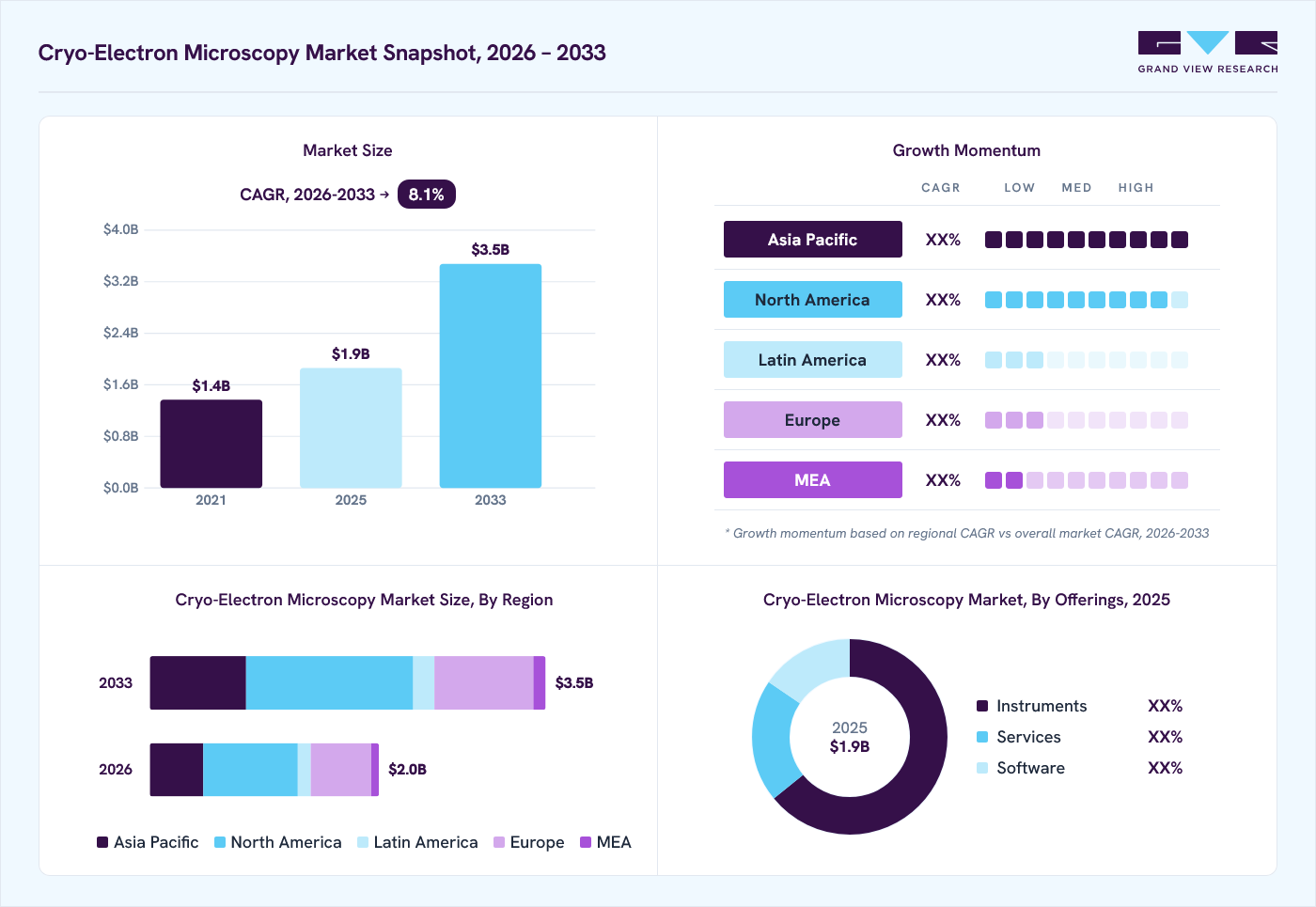
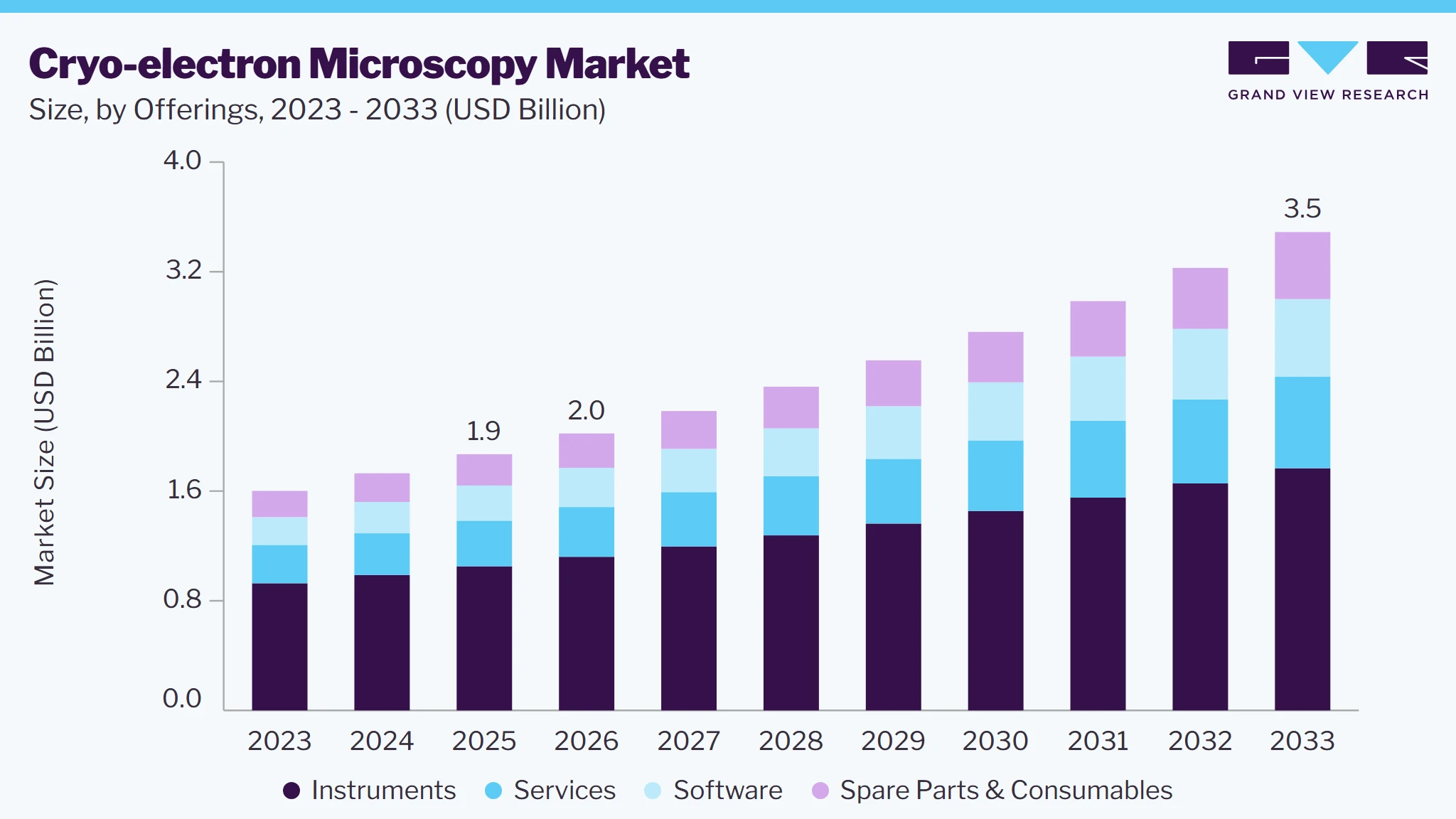
The global cryo-electron microscopy market size was valued at USD 1.9 billion in 2025 and is projected to grow from USD 2.0 billion in 2026 to USD 3.5 billion by 2033, at a CAGR of 8.1% from 2026 to 2033. North America dominated the market, accounting for a revenue share of 41.1% in 2025. This growth is attributed to growing investments in life sciences research, drug discovery, and biotechnology.
 Source: Grand View Research, IR Documents, Primary Interviews, Paid DatabasesTo learn more about this report,
 Download Free Sample Report
Key Market Trends & Insights
- By offerings: Instruments segment held the largest revenue share of 56.3% in 2025.
- By technology: Single particle analysis segment held the largest revenue share of 59.2% in 2025.
- By voltage: 300 kV segment held the largest revenue share of 50.1% in 2025.
- By application: Life science research segment held the largest revenue share of 66.9% in 2025.
Regional Highlights
- Largest regional market: North America (41.1% revenue share, 2025)
- Fastest-growing regional market: Asia Pacific (highest CAGR, 2026-2033)
- By country: The U.S. held the largest market share in 2025.
Market Size & Forecast
- Market size in 2025: USD 1.9 Billion
- Estimated market size in 2026: USD 2.0 billion
- 2033 Projected Market Size: USD 3.5 Billion
- CAGR (2026-2033): 8.1%
Prism AI by Grand View Research Free to tryAsk a question about the cryo-electron microscopy marketTry asking✓Every figure cited from GVR research Prefer the report? Download free sample →Increasing demand for high-resolution protein analysis, rising research into complex diseases, and the development of biologics are supporting adoption. Furthermore, advancements in imaging technologies, AI-based image processing, and government funding for research infrastructure are expanding the applications of cryo-EM across academic and pharmaceutical research.
 To learn more about this report, Download Free Sample Report
Market Dynamics
The market is driven by rising demand for high-resolution structural analysis, increasing investments in drug discovery, and growing applications in biotechnology and pharmaceutical research. Advancements in direct electron detectors, automation, and AI-based image processing are improving imaging capabilities and research efficiency. However, high equipment costs, complex sample preparation, specialized infrastructure requirements, and a shortage of skilled professionals restrain market growth. Increasing funding for life sciences research and expanding applications in biologics and structure-based drug design are creating new growth opportunities.
The growing emphasis on understanding the three-dimensional structures of proteins, enzymes, viruses, and other complex biomolecules is driving the cryo-electron microscopy (cryo-EM) market. Cryo-EM enables researchers to visualize biological structures at near-atomic resolution, often without requiring crystallization, making it particularly valuable for studying complex molecular targets and supporting structure-based drug discovery. These structural insights help pharmaceutical and biotechnology companies identify drug-binding sites, understand disease mechanisms, validate therapeutic targets, and advance the development of biologics and small-molecule drugs.
For instance, researchers at Penn Medicine used cryogenic electron microscopy (cryo-EM) and cryo-electron tomography (cryo-ET) to investigate the ribonucleoprotein complex responsible for influenza virus RNA replication and transcription. By imaging thousands of these complexes, the researchers reconstructed their structural organization and examined how the viral polymerase moves along the RNA to produce messenger RNA. The study revealed a potential small-molecule binding pocket within the complex that could be targeted to interfere with viral replication. Subsequent compound screening identified multiple candidate molecules capable of blocking this process. The research demonstrates how cryo-EM provide detailed structural insights into disease mechanisms and help identify potential therapeutic targets, strengthening its role in early-stage drug discovery and supporting demand for advanced cryo-EM instruments and associated analytical technologies.
Similarly, in March 2026, Thermo Fisher Scientific introduced its Cryo-EM Drug Discovery Center in South San Francisco, providing pharmaceutical and biotechnology companies with access to advanced cryo-EM technology and specialized expertise for studying therapeutic targets. Such investments highlight the growing integration of cryo-EM into pharmaceutical research and development workflows. As drug discovery increasingly depends on detailed molecular characterization and structure-guided approaches, demand for cryo-EM instruments, sample preparation systems, data-processing software, and specialized research services is expected to increase across pharmaceutical companies, biotechnology firms, and academic research institutions.
“The opening of our Cryo-EM Drug Discovery Center creates a collaborative environment where scientists can directly harness the power of Cryo-EM to better understand disease at the molecular level and accelerate therapeutic development,”
-Glyn Davies, president of materials and structural analysis, Thermo Fisher.
Cryo-EM systems require substantial capital investment, specialized laboratory infrastructure, trained operators, sample-preparation equipment, and high-performance computing resources, which limit adoption by individual laboratories. Shared facilities and national research centers address these barriers by providing access to high-end microscopes, technical expertise, sample preparation, data processing, and researcher training through centralized or fee-based services. As a result, more research groups use cryo-EM without purchasing and maintaining their own systems, expanding the potential customer base. The establishment of new facilities also creates demand for microscope installations, detector upgrades, consumables, software, technical support, and maintenance, supporting growth in the overall market.
Date
Institution / Location
Development
Relevance to Market
March 2026
University of Notre Dame, U.S.
Acquired a Thermo Fisher Glacios 2 cryo-TEM and developed a dedicated facility.
Supports demand for cryo-EM instruments and dedicated research infrastructure.
September 2025
UC Santa Cruz, U.S.
Expanded access to its Biomolecular CryoEM Facility through collaborations with other universities.
Enables researchers without their own instruments to access cryo-EM data collection and processing services.
October 2025
University of Alberta, Canada
Unveiled an USD 8.98 million Thermo Fisher Titan Krios G4 microscope within its Alberta Cryo-EM Facility.
Demonstrates investment in high-end microscopy equipment and specialized research capacity.
September 2025
Birkbeck, University of London, U.K.
Secured USD 2.13 million to expand its electron microscopy facility, including cryo-focused ion beam capabilities.
Increase access to advanced sample preparation and cryo-EM workflows.
November 2025
EMPower, Netherlands
Received a USD 37.04 million investment to develop electron microscopy infrastructure across universities and medical centers.
Supports shared infrastructure, equipment procurement, and collaborative research access.
March 2024
IIT Kanpur, India
Inaugurated a National Cryo-EM Facility with a 300 kV microscope and supporting computational infrastructure.
Expands domestic access to cryo-EM and supports adoption by academic and research institutions.
Source: Secondary Research, Grand View Research
Cryo-electron microscopy systems require substantial capital investment, specialized infrastructure, skilled personnel, and ongoing maintenance. These financial requirements can limit adoption among smaller research institutions, universities, and biotechnology companies with restricted budgets. For instance, the Government of India's Department of Science and Technology highlighted significant investment requirements for developing cryo-EM research infrastructure, with approximately USD 3.01 million required per facility over five years. Similarly, Harvard Medical School's Cryo-EM Center lists external academic access to its Titan Krios microscope at USD 2,400 per day for FY2027, excluding separately charged consumables. These examples illustrate the high costs associated with establishing and accessing advanced cryo-EM capabilities, potentially encouraging budget-constrained institutions to rely on shared facilities instead of acquiring dedicated systems.
Traditionally, high equipment costs, specialized infrastructure, and the need for experienced operators have limited cryo-EM adoption to well-funded research institutions and large pharmaceutical companies. The development of compact, automated, and easier-to-operate systems, alongside shared research facilities and cryo-EM service centers, is expected to expand access among universities, biotechnology startups, and smaller research laboratories. Greater accessibility would enable a broader range of researchers to use cryo-EM for protein structure determination, biologics research, and drug discovery, thereby supporting wider market penetration.
The high capital investment required to establish and maintain cryo-EM facilities limit adoption among smaller universities, research centers, and biotechnology companies, particularly in developing economies. In addition, the concentration of advanced cryo-EM infrastructure within well-funded academic institutions and major pharmaceutical research hubs can restrict access for researchers with limited resources, slowing the broader integration of the technology into biomedical research and drug discovery.
Market Concentration & Characteristics
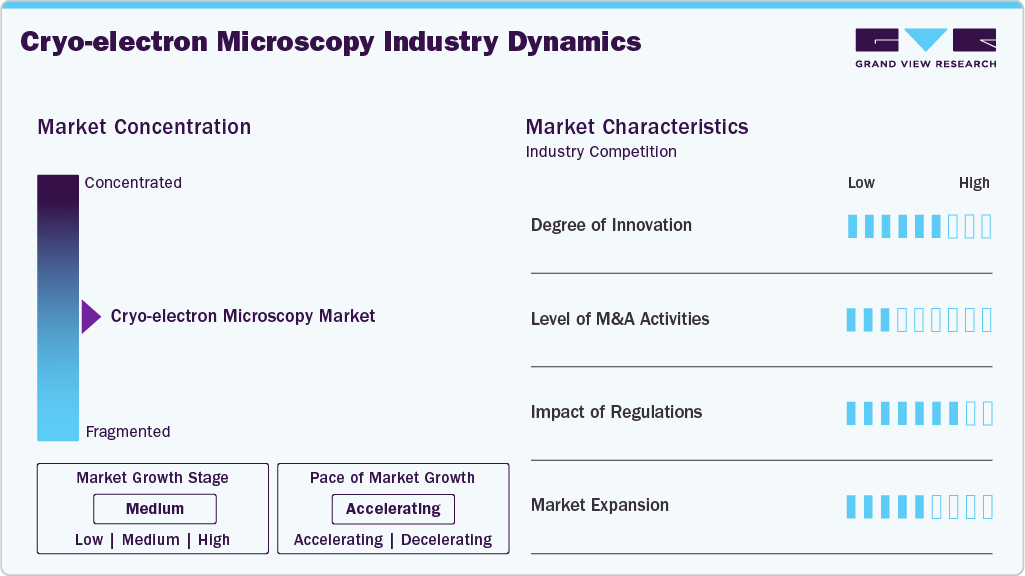
The chart below represents the relationship between industry concentration, industry characteristics, and industry participants. The industry fragmented with various small and few large manufacturers entering the market. There is a high degree of innovation, moderate level of merger & acquisitions activities, high impact of regulations, and moderate high expansion of industry.
The market is witnessing a high degree of innovation, driven by advancements in direct electron detectors, automated sample preparation, AI-assisted image processing, and high-resolution imaging systems. These developments aim to improve structural resolution, increase throughput, and simplify complex workflows. For instance, in June 2026, the European Molecular Biology Laboratory (EMBL) reported the development of EasyGrid and EasyGrid Control, automated instruments designed to improve cryo-EM sample preparation and quality control, with plans for commercialization.
 To learn more about this report, Download Free Sample Report
The level of mergers and acquisitions (M&A) and strategic partnership activity is moderate, as companies seek to combine cryo-EM imaging capabilities with complementary technologies and services instead of relying solely on standalone instrument development. For instance, in January 2025, NanoImaging Services acquired Proteos, a protein production and analysis services provider. The acquisition integrated protein production capabilities with cryo-EM services, strengthening support for structure-based drug discovery and creating a more comprehensive offering for pharmaceutical and biotechnology customers.
"We are pleased to have found a strong partner in NIS that is similarly customer-focused and scientifically driven, and we see a perfect fit between the companies' protein production and cryo-EM capabilities. Importantly, this partnership will provide Proteos with additional resources to enhance our services and solutions for our customers. We are thrilled to join forces with NIS to advance innovation and excellence in structural biology, setting a new standard in the industry."
- Proteos CEO Mary Shuck.
The impact of regulations and institutional safety requirements is moderate, as cryo-EM systems used in research must operate within applicable laboratory safety, equipment-handling, cryogenic safety, and institutional access protocols. Compliance with these requirements can increase facility setup costs, staff training needs, and operational complexity, particularly for institutions establishing new laboratories. For instance, Nanyang Technological University (NTU), Singapore, maintains dedicated cryo-EM facility guidelines covering user access, facility utilization, and operational safety, illustrating the importance of structured procedures in managing specialized microscopy infrastructure.
Market expansion is supported by increasing investment in national research infrastructure, the establishment of shared microscopy facilities, and growing demand for advanced structural biology capabilities. These developments allow more academic institutions, biotechnology companies, and pharmaceutical researchers to access cryo-EM for disease research and drug discovery. For instance, in October 2025, the University of Alberta inaugurated its Alberta Cryo-EM Facility, featuring an approximately USD 8 million Thermo Fisher Titan Krios G4 microscope within a USD 20 million facility supported by the Government of Alberta. The investment demonstrates how public funding and specialized research infrastructure expands access to high-resolution cryo-EM technology.
Analyst Perspective
The market is witnessing growth, driven by increasing demand for high-resolution structural analysis in life sciences, pharmaceutical research, biotechnology, and disease investigation. Growing investments in drug discovery, biologics development, and protein structure characterization are encouraging research institutions and pharmaceutical companies to adopt advanced cryo-EM systems. In addition, technological advancements in direct electron detectors, automated sample preparation, artificial intelligence (AI)-enabled image processing, and cryo-electron tomography are improving imaging capabilities and workflow efficiency. The growing establishment of shared research facilities and collaborative scientific infrastructure is also helping expand access to these sophisticated technologies.
Offering Insights
The instruments segment accounted for the largest market revenue share of 56.3% in 2025 due to the high capital cost of cryo-electron microscopes, advanced electron detectors, cryogenic sample-handling systems, and associated hardware required to obtain high-resolution structural information. Pharmaceutical and biotechnology companies, academic institutions, and research laboratories rely on these systems to investigate biomolecular structures and support drug discovery. Continuous hardware innovation, including improvements in detector sensitivity, automation, imaging throughput, and low-voltage microscopy, is also encouraging investments in advanced platforms and upgrades to existing equipment. For instance, a July 2026 review published in IUCrJ highlighted advances in direct electron detectors, energy filters, and lower-energy cryo-EM systems aimed at improving image quality and structural analysis. These developments reinforce the importance of instruments as the core revenue-generating component of the market.
The software segment is expected to grow at the fastest CAGR over the forecast period driven by increasing demand for automated image acquisition, AI-enabled particle identification, image reconstruction, data interpretation, and high-throughput cryo-EM workflows. As cryo-EM experiments generate large volumes of complex image data, researchers increasingly require software that reduces manual intervention, accelerates processing, and improves the consistency of structural analysis. For instance, Thermo Fisher Scientific's Smart EPU software integrates AI-based grid screening, automated hole selection, ice-thickness prediction, and image-quality monitoring to streamline data acquisition. In October 2026, Thermo Fisher also reported that AI-enabled capabilities embedded in its Krios 5 and Glacios 3 cryo-electron microscopes had reduced manual setup time by approximately 90%, illustrating the potential operational benefits of software-led automatios.
Technology Insights
The single particle analysis segment accounted for the largest market revenue share of 59.2% in 2025. The is driven by its widespread application in determining high-resolution three-dimensional structures of purified proteins, protein complexes, antibodies, and other biomolecules. SPA enables researchers to analyze large numbers of individual molecular images and combine them computationally to reconstruct detailed structures, supporting target characterization, biologics development, and structure-based drug discovery. A September 2025 review published in Current Opinion in Structural Biology highlighted that cryo-EM was poised to surpass X-ray crystallography as the most widely used method for experimentally determining new molecular structures, reflecting the growing importance of SPA in structural biology.
The cryo-electron tomography is expected to grow at the fastest CAGR over the forecast period. This is driven by the increasing demand for in situ structural analysis, which enables researchers to visualize molecular complexes within their native cellular environments rather than studying isolated, purified proteins. This capability is particularly valuable for understanding disease mechanisms, protein interactions, viral infections, and potential therapeutic targets. A notable development is a May 2026 review in Current Opinion in Structural Biology, authored by researchers affiliated with AstraZeneca and the MRC Laboratory of Molecular Biology, which highlighted cryo-ET's growing role in disease research and drug discovery.
Voltage Insights
The 300 kV segment accounted for the largest market revenue share of 50.1% in 2025. This is driven by its ability to support high-resolution structural analysis of complex biological macromolecules, including proteins, viruses, and large molecular assemblies. These systems are particularly valuable for pharmaceutical and biotechnology research, where detailed structural information supports target characterization and structure-based drug discovery. For instance, in April 2025, Thermo Fisher Scientific introduced the Krios 5 Cryo-TEM, a 300 kV platform designed to improve imaging throughput by up to 25% compared with previous models. The continued development of flagship high-voltage systems, alongside their established role in demanding structural biology workflows, supports the segment's leading revenue position.
The 120 kV segment is expected to grow at the fastest CAGR over the forecast period. This is attributed to the increasing interest in more accessible, compact, and cost-effective electron microscopy systems. Lower-voltage platforms can help research institutions expand imaging capabilities without always requiring the infrastructure and investment associated with high-voltage instruments, particularly for routine imaging, screening, and selected cryogenic sample workflows. Recent technical advances are also challenging the perception that lower-voltage microscopy is suitable only for preliminary analysis.
Application Insights
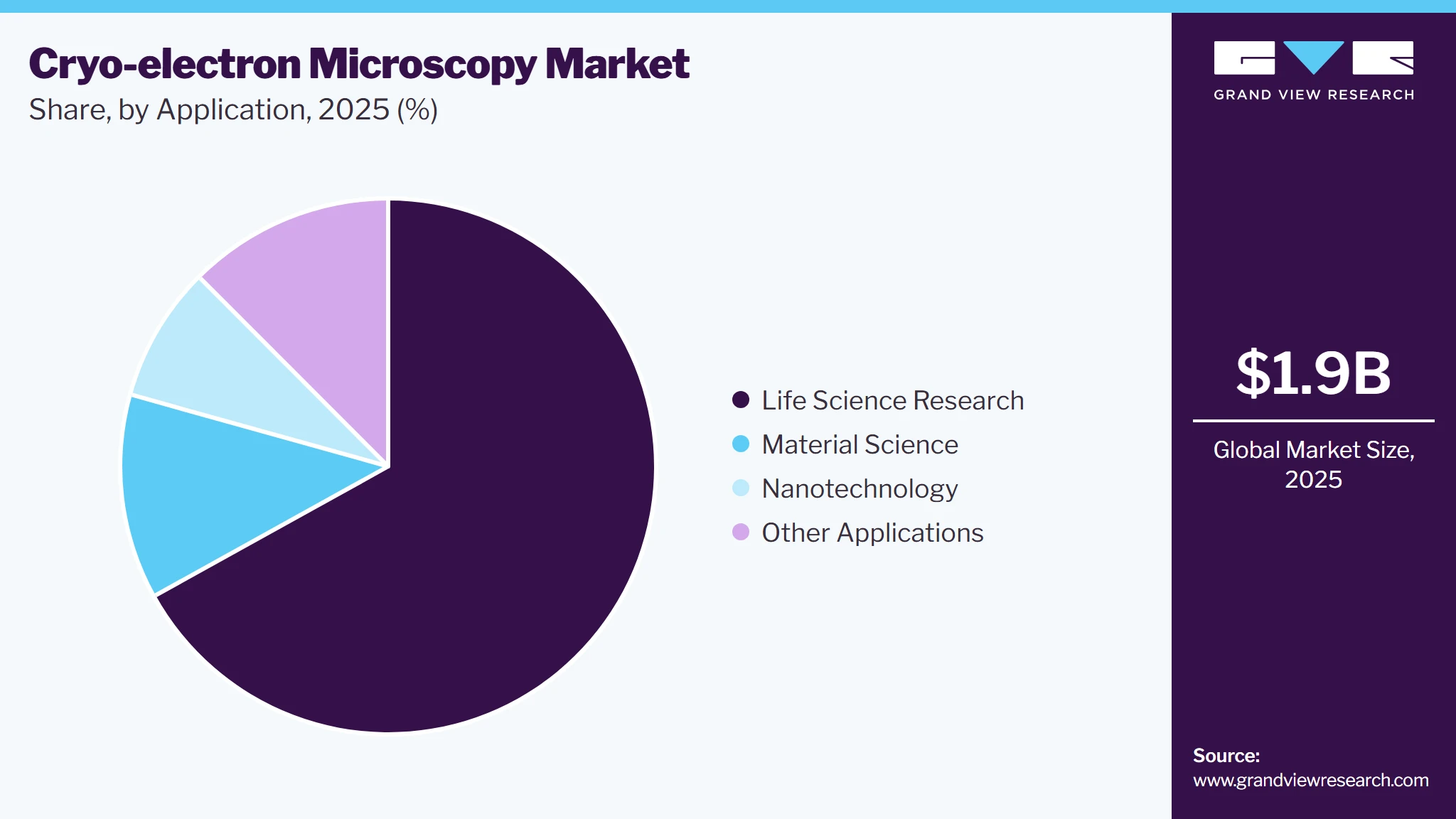
The life science research segment accounted for the largest market revenue share of 66.9% in 2025 primarily due to the extensive use of cryo-electron microscopy in protein structure determination, molecular interaction analysis, and the investigation of complex biological systems. Pharmaceutical and biotechnology companies increasingly rely on cryo-EM to characterize drug targets that may be difficult to analyze using conventional structural techniques, supporting research into biologics, vaccines, and targeted therapies.
 To learn more about this report, Download Free Sample Report
The material science segment is expected to grow at the fastest CAGR over the forecast period. This is due to increasing use of cryo-electron microscopy (cryo-EM) to characterize beam-sensitive materials, battery electrodes, electrode-electrolyte interfaces, and advanced nanomaterials at the atomic scale. Conventional electron microscopy alters or damage sensitive materials during imaging, whereas cryogenic techniques help preserve their structures and chemical characteristics for more reliable analysis.
Regional Insights
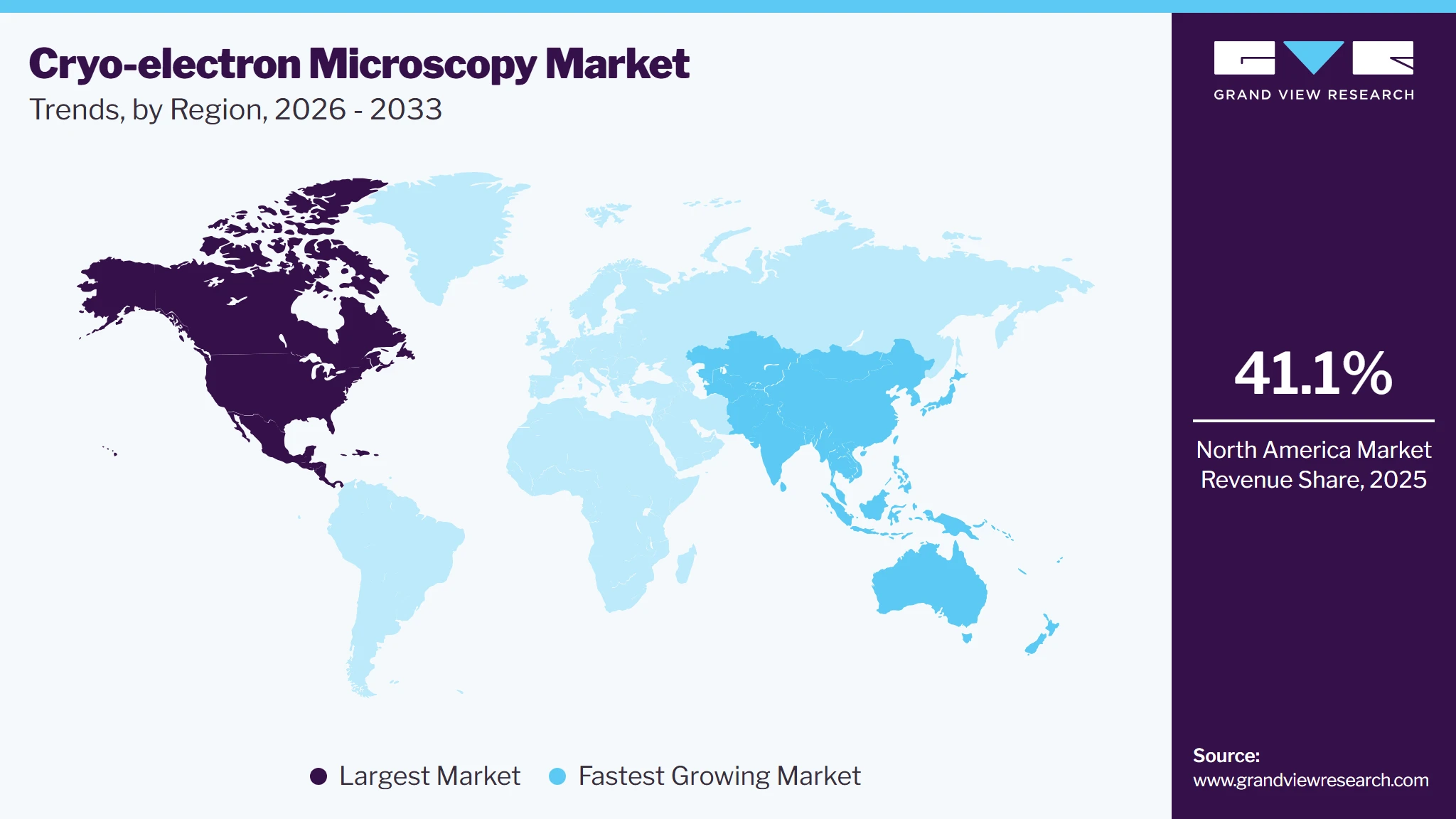
North America dominated the market with a revenue share of 41.1% in 2025 supported by strong biomedical research funding, established pharmaceutical and biotechnology industries, advanced research infrastructure, and the presence of major technology developers. Increasing applications in structural biology, protein characterization, and drug discovery are supporting demand for high-resolution imaging systems. For instance, the U.S. National Institutes of Health (NIH) supports structural biology research through funding programs that enable researchers to investigate biomolecular structures and disease mechanisms.
 To learn more about this report, Download Free Sample Report
The U.S. cryo-electron microscopy market is driven by technological advancements that improve imaging resolution and expand the range of biological structures that is analyzed for drug discovery. In June 2026, researchers at the University of California, Berkeley, in collaboration with Biohub, demonstrated a laser phase plate technology that enhances image contrast in cryo-EM, helping researchers visualize smaller proteins and examine molecular interactions within cells. The technology could enable scientists to investigate previously difficult-to-detect proteins, identify potential therapeutic targets, and better understand disease mechanisms, supporting demand for advanced cryo-EM systems and related research capabilities in the U.S.
Europe Cryo-electron Microscopy Market Trends
Europe is witnessing increasing adoption of cryo-electron microscopy due to collaborative scientific research, public funding for advanced imaging infrastructure, and growing demand for structural analysis in pharmaceutical and biotechnology research. Shared research facilities and cross-border collaborations also improve access to sophisticated microscopy systems. For instance, the European Molecular Biology Laboratory (EMBL) operates advanced cryo-EM facilities that support structural biology research by scientists from multiple institutions.
The Germany cryo-electron microscopy market is supported by the country's strong scientific research ecosystem, established pharmaceutical industry, and investment in advanced microscopy technologies. Universities and public research organizations use cryo-EM to investigate molecular structures and biological processes. For instance, the Max Planck Institute of Biochemistry in Martinsried conducts structural biology research using advanced electron microscopy to study macromolecular complexes.
The UK cryo-electron microscopy market is driven primarily by investments in biomedical research, academic-industry collaborations, and the expansion of structural biology capabilities. The availability of specialized research facilities supports applications in disease research and drug discovery. For instance, the UK's eBIC (electron Bio-Imaging Centre) at Diamond Light Source provides access to advanced cryo-electron microscopy infrastructure for academic and industrial researchers.
Asia Pacific Cryo-electron Microscopy Market Trends
Asia Pacific is expected to experience strong growth, supported by supported by increasing investments in biotechnology research, expanding pharmaceutical R&D activities, and the development of advanced scientific infrastructure. Growing interest in protein structure analysis, disease research, and biologics development is encouraging research institutions to establish specialized cryo-EM facilities.
The China cryo-electron microscopy market is supported by investments in life sciences research, the expansion of university-based research infrastructure, and efforts to strengthen domestic capabilities in structural biology. For instance, Huazhong University of Science and Technology inaugurated its Center for Biological Cryo-EM in May 2025, strengthening the country's research infrastructure for life sciences and medicine
The India cryo-electron microscopy market is driven by growing government support for scientific research, the expansion of national research facilities, and increasing demand for advanced tools in drug discovery and molecular biology. For instance, the Anusandhan National Research Foundation's national cryo-EM facility at IIT Madras provides researchers from multiple institutions access to advanced imaging capabilities, supporting broader adoption of the technology in India's research ecosystem.
North America Cryo-electron Microscopy Market Trends
The Latin America market is primarily driven by efforts to strengthen scientific infrastructure, expand biomedical research capabilities, and improve access to advanced microscopy technologies. Public research institutions and shared laboratory facilities can support adoption by enabling researchers to access specialized equipment without independently establishing high-cost facilities. For instance, Brazil's Brazilian Center for Research in Energy and Materials (CNPEM) opened a call for research proposals in 2026 that included access to its cryogenic transmission electron microscopy laboratory, with selected research projects scheduled to begin in February 2027.
The Brazil cryo-electron microscopy market is expected to benefit from public investment in scientific infrastructure and collaborative research programs. The availability of shared facilities can support universities, public laboratories, and biotechnology researchers conducting advanced biological and materials research. For instance, CNPEM's 2026 facility-access program included a dedicated cryo-EM laboratory, providing an opportunity for researchers across Brazil to access specialized microscopy resources.
The Middle East & Africa cryo-electron microscopy market
The Middle East & Africa market is supported by gradual investments in research infrastructure, university laboratories, and biotechnology capabilities. Market development is likely to vary across countries depending on research funding, access to specialized scientific expertise, and the availability of advanced imaging facilities. For instance, the University of Cape Town's Electron Microscope Unit is listed among the region's electron microscopy service centers, reflecting the presence of established microscopy infrastructure in South Africa.
The UAE cryo-electron microscopy market benefits from the country's efforts to strengthen advanced research capabilities, develop university-based scientific infrastructure, and expand collaboration between academic institutions and external researchers. For instance, Khalifa University's Electron Microscopy Facility provides advanced electron microscopy equipment and permits external users to access its facilities under established training and payment arrangements. While this demonstrates the availability of advanced microscopy infrastructure, it does not independently confirm the availability of cryo-EM systems at the facility.
Key Cryo-electron Microscopy Company Insights
The cryo-electron microscopy market players are focusing on devising innovative business growth strategies in the form of product portfolio expansions, partnerships & collaborations, mergers & acquisitions, and business footprint expansions.
Key Cryo-electron Microscopy Companies:
The following key companies have been profiled for this study on the cryo-electron microscopy market.
-
Thermo Fisher Scientific Inc.
-
Oxford Instruments
-
Carl Zeiss AG
-
Hitachi High-Tech Corporation
-
JEOL Ltd.
-
TESCAN GROUP, a.s.
-
Leica Microsystems GmbH (Danaher Corporation)
-
Gatan, Inc. (AMETEK, Inc.)
-
Direct Electron
-
CryoSol
Competitive Benchmarking
Category
Operating Strategies
Competitive Edge
Weakness
Established Players (e.g., Thermo Fisher Scientific, JEOL Ltd., Hitachi High-Tech, Carl Zeiss AG)
- Invest in next-generation cryo-EM systems, enhanced imaging resolution, automated sample handling, direct electron detection, and AI-enabled image processing. Expand integrated workflows covering microscopy, sample preparation, software, installation, maintenance, and application support.
- Strong brand recognition, established global distribution and service networks, extensive electron microscopy expertise, broad product portfolios, and strong relationships with pharmaceutical companies, biotechnology firms, universities, and research institutions.
- High instrument development and maintenance costs, complex product portfolios, and dependence on specialized technical expertise. Premium pricing and substantial facility requirements can limit adoption among smaller laboratories and institutions with constrained research budgets.
Emerging and Specialized Players (e.g., Direct Electron, SPT Labtech, Structura Biotechnology, Protochips)
- Focus on specialized components, automated sample preparation, cryogenic workflow solutions, detectors, and computational tools. Develop targeted innovations and collaborate with established microscope manufacturers, research laboratories, and biotechnology companies to address specific workflow needs.
- Specialized technological expertise, focused product development, flexibility in addressing niche research requirements, and opportunities to improve imaging efficiency, sample quality, and data analysis through complementary technologies.
- Smaller scale, narrower product portfolios, and comparatively limited financial resources and global service coverage. Dependence on partnerships or compatibility with established microscopy platforms may constrain market reach and reduce control over integrated customer workflows.
Recent Developments
-
In August 2026, JEOL Ltd. announced the launch of its CRYO ARM 300S and CRYO ARM 200S cryo-electron microscopes, operating at 300 kV and 200 kV, respectively. The systems integrate single-particle analysis (SPA), cryo-electron tomography (cryo-ET), and three-dimensional electron diffraction/microcrystal electron diffraction (3DED/MicroED) within a single automated instrument. The development addresses laboratory requirements for high-resolution structural analysis, improved throughput, reduced instrument downtime, and simplified operation.
-
In March 2025, Thermo Fisher Scientific entered a technology alliance with the Chan Zuckerberg Institute for Advanced Biological Imaging to advance laser phase plate technology for cryo-electron microscopy. The collaboration focuses on improving image contrast and resolution, helping researchers visualize smaller biological structures and examine cellular components in three dimensions.
“At the Imaging Institute, we’re focused on innovating breakthrough imaging technologies to enable scientists to see and measure what is currently invisible within our cells and gain deeper insights into the biological mechanisms of human health and disease. We want to advance not only the experimental side of imaging science but also deliver solutions to the community. Technology alliances with industry partners like Thermo Fisher allow us to accelerate and scale technology development and share these advances with scientists worldwide more rapidly.”
- Matthias Haury, acting executive director and chief operating officer of the CZ Imaging Institute
Cryo-electron Microscopy Market Report Scope
Report Attribute
Details
Market size in 2025
USD 1.9 billion
Estimated market size in 2026
USD 2.0 billion
Projected market size by 2033
USD 3.5 billion
Growth Rate
CAGR of 8.1% from 2026 to 2033
Actual Data
2021 - 2025
Forecast Data
2026 - 2033
Quantitative units
Revenue in USD million/billion, and CAGR from 2026 to 2033
Report coverage
Revenue forecast, company ranking, competitive landscape, growth factors, and trends
Segments covered
Offerings, technology, voltage, application. region
Regional scope
North America, Europe, Asia Pacific, Latin America, MEA
Country scope
U.S., Canada, Mexico, UK, Germany, France, Italy, Spain, Denmark, Norway, Sweden, China, India, Japan, Australia, Thailand, South Korea, Brazil, Argentina, South Africa, Saudi Arabia, UAE, Kuwait
Key companies profiled
Thermo Fisher Scientific Inc., Oxford Instruments, Carl Zeiss AG, Hitachi High-Tech Corporation, JEOL Ltd., TESCAN GROUP, a.s., Leica Microsystems GmbH (Danaher Corporation), Gatan, Inc. (AMETEK, Inc.), Direct Electron, CryoSol
Customization scope
Free report customization (equivalent up to 8 analysts working days) with purchase. Addition or alteration to country, regional & segment scope.
Pricing and purchase options
Avail customized purchase options to meet your exact research needs. Explore purchase options
Global Cryo-electron Microscopy Market Report Segmentation
This report forecasts revenue growth at global, regional, and country levels and provides an analysis on industry trends in each of the segments from 2021 to 2033. For the purpose of this study, Grand View Research, Inc. has segmented the cryo-electron microscopy market report on the basis of offerings, technology, voltage, application and region:
-
Offerings Outlook (Revenue in USD Million, 2021 - 2033)
-
Instruments
-
Fully Automated Instruments
-
Semi-automated Instruments
-
Cryogenic Sample Preparation Equipment
-
-
Software
-
Services
-
Maintenance & Support Services
-
Imaging & Data Analysis Services
-
Other Services
-
-
Spare Parts & Consumables
-
-
Technology Outlook (Revenue in USD Million, 2021 - 2033)
-
Single Particle Analysis
-
Cryo-electron Tomography
-
Electron Crystallography / MicroED
-
Other Technologies
-
-
Voltage Outlook (Revenue in USD Million, 2021 - 2033)
-
300 kV
-
200 kV
-
120 kV
-
100 kV
-
Other Voltages
-
-
Application Outlook (Revenue in USD Million, 2021 - 2033)
-
Life Science Research
-
Pharmaceutical & Biotechnology Research
-
Medical & Disease Research
-
Material Science
-
Nanotechnology
-
Other Applications
-
-
Regional Outlook (Revenue in USD Million, 2021 - 2033)
-
North America
-
U.S.
-
Canada
-
Mexico
-
-
Europe
-
UK
-
Germany
-
France
-
Italy
-
Spain
-
Sweden
-
Denmark
-
Norway
-
-
Asia Pacific
-
China
-
India
-
Japan
-
Australia
-
South Korea
-
Thailand
-
-
Latin America
-
Brazil
-
Argentina
-
-
MEA
-
South Africa
-
Saudi Arabia
-
Kuwait
-
UAE
-
-
Research Methodology
The cryo-electron microscopy market figures in this report are based on a proven research process that combines executive interviews with secondary research from proprietary databases, company filings, and recognized regulatory and institutional sources. Market size is built through value-chain sizing-reconciling supply-side and demand-side estimates-and triangulated with bottom-up and top-down approaches. Every estimate passes multiple levels of expert validation before publication, with each cryo-electron microscopy segment quantified using the revenue-capture definitions in the table below.
Segment Definition
Segment - Offerings
Revenue capture definition
Instruments
Includes cryo-electron microscopy systems and associated hardware used to visualize biological specimens and other materials at high resolution under cryogenic conditions.
Fully Automated Instruments
Includes cryo-EM systems that automate processes such as sample loading, data acquisition, focusing, and image collection to improve efficiency and reduce manual intervention.
Semi-automated Instruments
Includes cryo-EM systems that automate selected imaging and acquisition functions while requiring operator involvement in sample handling, alignment, or experimental setup.
Cryogenic Sample Preparation Equipment
Includes plunge freezers, vitrification systems, and cryogenic storage devices used to prepare, preserve, and transfer samples under cryogenic conditions.
Software
Includes software used for microscope control, image acquisition, image processing, three-dimensional reconstruction, and structural analysis of cryo-EM data.
Services
Includes specialized services supporting the installation, operation, maintenance, and effective utilization of cryo-EM systems and related technologies.
By Technology
Revenue capture definition
Single Particle Analysis (SPA)
A cryo-EM technique that combines images of thousands to millions of identical biomolecules captured in different orientations to reconstruct high-resolution 3D structures. It is widely used for protein characterization, structural biology, and drug discovery.
Cryo-electron Tomography (Cryo-ET)
A technique that captures multiple images of a frozen biological sample at different tilt angles to reconstruct its 3D structure. It enables researchers to study cellular structures, molecular interactions, and biological processes in near-native environments.
Electron Crystallography / MicroED
A technique that uses electron diffraction from very small crystals to determine the atomic structures of molecules, including proteins and small-molecule compounds. It supports structural analysis when suitable large crystals for conventional X-ray crystallography are difficult to obtain.
Other Technologies
This category includes additional cryo-EM approaches and specialized imaging methods that do not fall under the three primary categories above. These methods support applications such as structural characterization, sample analysis, and investigation of complex biological specimens.
By Voltage -
Revenue capture definition
300 kV
High-voltage electron microscopy systems used for high-resolution structural analysis of large biomolecular complexes, viruses, and challenging biological specimens. They are commonly deployed in advanced structural biology and pharmaceutical research facilities.
200 kV
Intermediate-voltage systems used for routine cryo-EM applications, including protein structure determination and biological sample analysis, offering a balance between performance, accessibility, and operating requirements.
120 kV
Lower-voltage systems primarily suited to routine imaging, screening, and selected cryogenic sample analysis, particularly in compact or specialized laboratory setups.
100 kV
Compact, lower-voltage electron microscopy systems used for accessible imaging, sample screening, and selected structural biology applications, with capabilities dependent on system design and specimen requirements.
Other Voltages
Includes cryo-EM systems operating at voltages other than 100, 120, 200, or 300 kV, designed for specialized imaging, research, or application-specific requirements.
Application -
Revenue capture definition
Life Science Research
Cryo-electron microscopy is used to visualize biological molecules, proteins, viruses, and cellular structures in near-native states. It helps researchers understand molecular architecture and biological processes at high resolution.
Pharmaceutical & Biotechnology Research
Cryo-EM supports drug discovery and biologics development by revealing the structures of drug targets, protein complexes, and therapeutic molecules. It facilitates structure-based drug design and the evaluation of molecular interactions.
Medical & Disease Research
Cryo-EM enables researchers to investigate disease-associated proteins, pathogens, and molecular mechanisms underlying various disorders. It supports the identification of potential therapeutic targets and the development of targeted treatments.
Material Science
Cryo-EM is used to examine the structures and properties of sensitive materials, including polymers, catalysts, and nanoscale materials. Cryogenic imaging helps preserve structural features that may otherwise change under conventional preparation conditions.
Nanotechnology
Cryo-EM enables high-resolution visualization and structural characterization of nanoparticles, nanostructures, and nanomaterials in frozen or hydrated conditions. It helps researchers assess particle morphology, organization, and structural stability.
Other Applications
Cryo-EM is applied in environmental science, food science, energy research, and other specialized fields requiring nanoscale structural analysis. These applications use cryogenic imaging to study samples whose structures may be altered by conventional preparation methods.
Estimation Model
Section
Key Summary
1.1 Research Approach
A hybrid research approach combining secondary and primary research methodologies is used to assess the cryo-electron microscopy market. The assessment considers cryo-EM system revenues, equipment installations, system pricing, utilization, service revenues, application demand, replacement cycles, and technological advancements. Insights from equipment manufacturers, research institutions, pharmaceutical and biotechnology companies, distributors, laboratory service providers, and industry experts are used to validate market estimates.
1.2 Market Estimation Framework
Market size is estimated using three approaches: (1) equipment sales and installation model, (2) installed base and utilization model, and (3) key vendor revenue validation model. These approaches are triangulated to estimate the overall market size and develop forecast projections.
1.2.1 Demand Model
Estimates market demand based on cryo-EM system installations, research laboratory capacity, institutional procurement, equipment replacement demand, research funding, and adoption across life sciences, pharmaceutical and biotechnology research, medical and disease research, material science, and nanotechnology. Demand from academic institutions, pharmaceutical companies, biotechnology firms, and public research laboratories is also considered.
1.2.2 Revenue Model
Market value is calculated based on the number of cryo-EM systems sold, average selling prices, system configurations, detector and automation technologies, installation and maintenance services, software solutions, and related service revenues. Variations in demand for high-throughput systems, specialized cryo-EM platforms, upgrades, and supporting infrastructure are also considered.
1.2.3 Vendor Model
Market estimates are validated using revenues from key cryo-EM equipment manufacturers, product portfolios, system shipments, installation activity, service contracts, technological launches, geographic expansion, strategic partnerships, and financial disclosures. Revenue contributions from major system suppliers and associated equipment and service providers are assessed to support market-size validation.
1.3 Forecast Development
Forecast projections are developed by analyzing growth in structural biology research, pharmaceutical and biotechnology R&D, biologics and drug discovery, public and private research funding, expansion of cryo-EM facilities, and demand for high-resolution molecular imaging. Technological advancements in automation, image processing, detector performance, and artificial intelligence, alongside equipment replacement and emerging research applications, are also considered.
1.4 Segmentation Method
Market segmentation is determined using weighted analysis of equipment demand, system pricing, installation volumes, application-specific adoption, research expenditure, end-user procurement, technological capabilities, and regional research infrastructure. Segmentation considers product or system type, application, end user, and geographic region, with variations in adoption across academic institutions, pharmaceutical and biotechnology companies, research laboratories, and other users.
1.5 Scope & Assumptions
The market is measured in USD based on revenues generated from cryo-electron microscopy systems and the associated products and services included within the defined market scope. Estimates incorporate equipment sales, system configurations, detectors and related components, software, installation, maintenance, upgrades, and service revenues where applicable. Regional variations in equipment pricing, research funding, installed infrastructure, adoption rates, and replacement demand are also considered. Rental revenues and outsourced cryo-EM services are included only where explicitly covered by the market definition, avoiding double counting of equipment and service revenues.
Delivered Customizations
This report has been delivered with the following In-depth customizations
CLIENT REQUEST
CUSTOMIZATION DELIVERED
VALUE ADDS
Cryo-EM System Pricing & Product Tier Analysis
Analysis of cryo-EM systems across high-throughput, mid-range, and advanced research configurations, including instrument capabilities, resolution, automation, detector technologies, and typical applications.
Supports pricing comparisons, product positioning, technology assessment, and identification of suitable systems for different research requirements and budgets.
Application × Equipment Opportunity Matrix
Mapping of cryo-EM systems and related technologies against applications such as structural biology, pharmaceutical and biotechnology research, medical and disease research, materials science, and nanotechnology.
Identifies high-potential applications, technology gaps, emerging research needs, and opportunities for equipment adoption across end-user segments.
Cryo-EM Services & Recurring Revenue Analysis
Assessment of revenue opportunities from equipment installation, maintenance, software subscriptions, upgrades, sample preparation, technical support, training, and contract-based servicing.
Helps manufacturers identify recurring revenue streams, strengthen customer relationships, and expand integrated service and software offerings.
Cryo-EM Facility Capacity & Utilization Analysis
Assessment of installed cryo-EM infrastructure, instrument utilization, sample throughput, operating efficiency, access models, and expansion requirements across academic institutions, research laboratories, and pharmaceutical companies.
Supports evaluation of equipment demand, facility utilization, shared-infrastructure opportunities, capacity expansion, and future replacement requirements.
About the Author(s)
Medical Devices Research Team
Healthcare · Medical DevicesThis report was authored by the medical devices research team at Grand View Research - comprising two research analysts, one senior research analyst, and one industry expert - with specialized expertise in the medical devices segment of the healthcare industry. All findings are based on proprietary healthcare databases, executive interviews, and regulatory analysis, subject to internal peer review prior to publication.
Last Updated:
Speak to Analyst

Customize this report to your needs - add regions, segments, or data points, with 20% free customization.
Or view our licence options:


ISO 9001:2015 & 27001:2022 Certified
We are GDPR and CCPA compliant! Your transaction & personal information is safe and secure. For more details, please read our privacy policy.


