
- Home
- »
- Medical Devices
- »
-
Custom Procedure Kits Market Size And Share Report, 2033GVR Report cover

Custom Procedure Kits Market (2026 - 2033)
Size, Share & Trends Analysis Report By Product (Disposable, Reusable), By Procedure (Colorectal, Thoracic, Orthopedic, Ophthalmology), By End Use, By Region, And Segment Forecasts
Market Size, 2025
$9.1BMarket Estimate, 2026
$10.1BMarket Forecast, 2033
$20.9BCAGR, 2026–2033
11.0%Custom Procedure Kits Market Summary
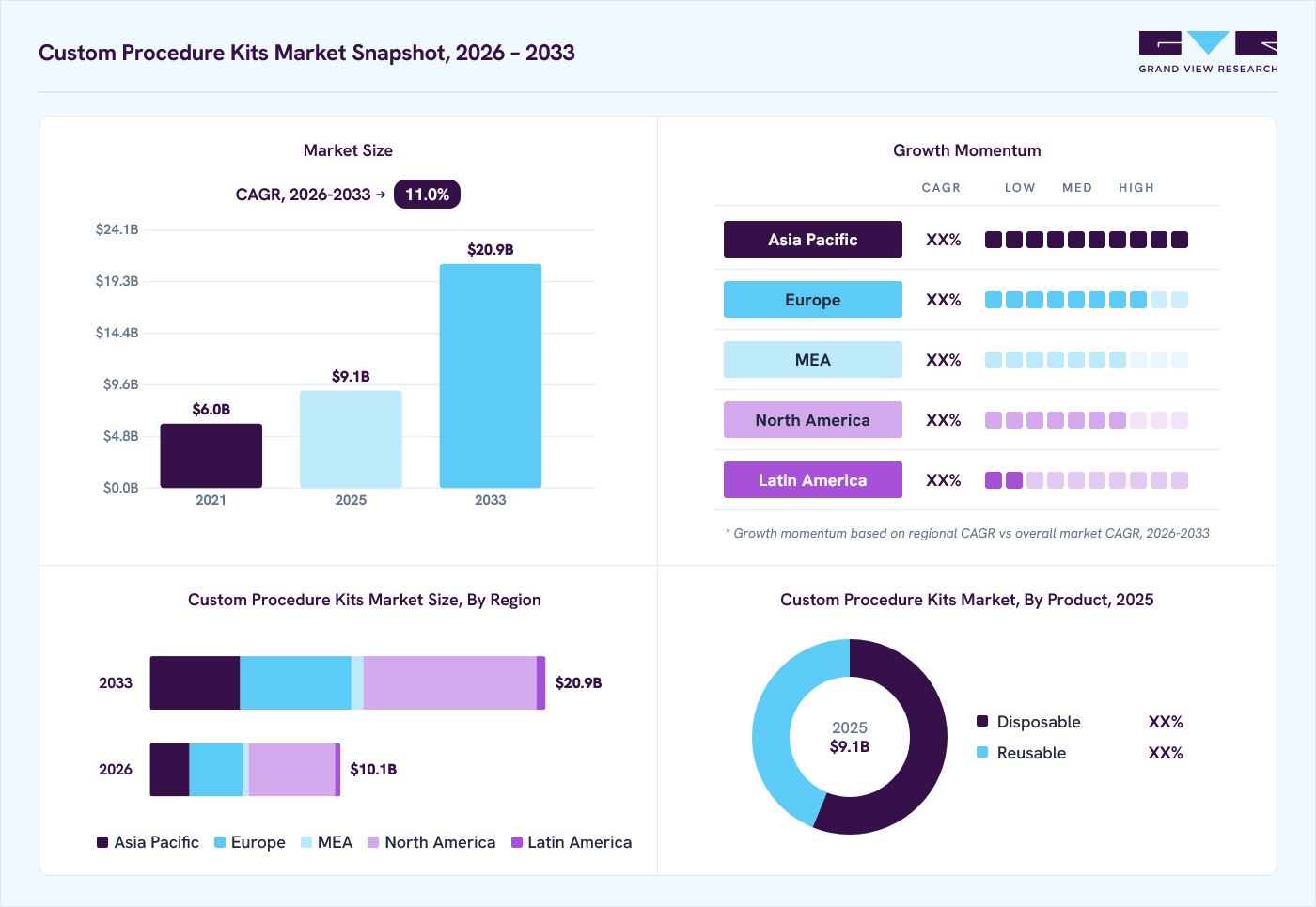
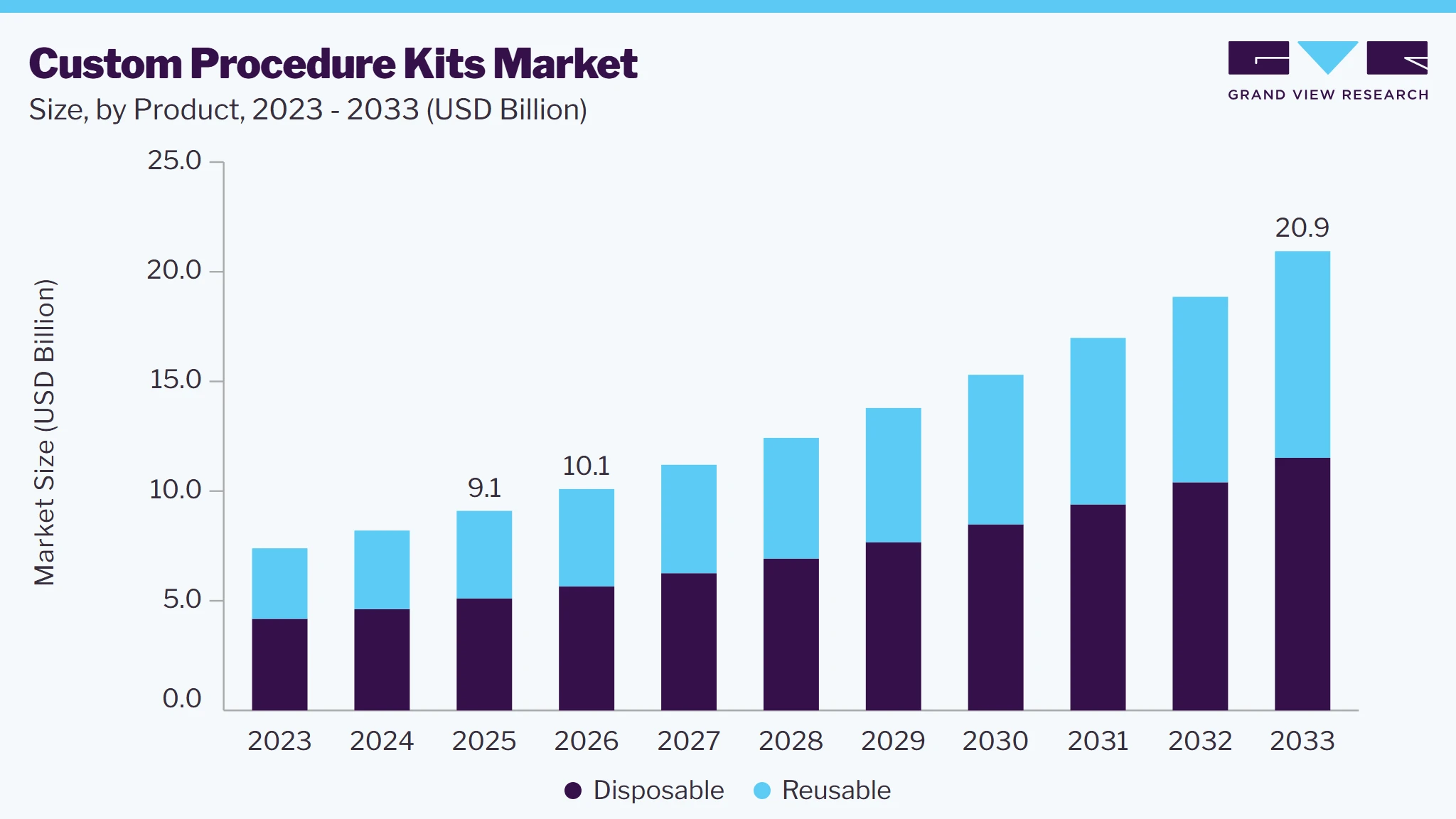
The global custom procedure kits market size was valued at USD 9.1 billion in 2025 and is projected to grow from USD 10.1 billion in 2026 to USD 20.9 billion by 2033, at a CAGR of 11.0% from 2026 to 2033. North America dominated the market, accounting for a revenue share of 45.4% in 2025. The market growth is supported by increasing use of customized procedure kits across hospitals, ambulatory surgical centers, and specialty facilities to standardize supplies, simplify procedure preparation, and streamline perioperative workflows, as demonstrated by Owens & Minor’s launch of Halyard Kitting in May 2026 to expand medical procedure tray manufacturing capabilities for acute and non-acute care settings.
 Source: Grand View Research, IR Documents, Primary Interviews, Paid DatabasesTo learn more about this report,
 Download Free Sample Report
Key Market Trends & Insights
- By product: Disposable segment led the market with a share of 56.2% in 2025.
- By procedure: Orthopedic segment held the largest revenue share of 19.6% in 2025.
- By end use: Hospitals dominated the market with a revenue share of 45.2% in 2025.
Regional Highlights
- Largest regional market: North America (45.4% revenue share, 2025)
- Fastest-growing regional market: Asia Pacific (highest CAGR, 2026-2033)
- By country: The U.S. held the largest market share in 2025
Market Size & Forecast
- Market size in 2025: USD 9.1 Billion
- Estimated market size in 2026: USD 10.1 Billion
- Projected market size by 2033: USD 20.9 billion
- CAGR (2026-2033): 11.0%
Three ways to get this report
Buy it, customize it, or ask a question.Ask an Analyst
Analyst response in 1 business day
- AccessReport author, directly
- Reply timeWithin 1 working day
- No sales callDirect answer only
- FormatEmail reply
- CostFree, no cost
Get the Full Report
What the study covers
- FormatsPDF · Excel · Dashboard
- Timeline2026–2033 annual, 2025 base
- Coverage20+ countries, 5 regions
- Companies10+ key players profiled
Customize the Report
20% free customization
- IncludeCountries, segments, points
- TailorTo your product definition
- ExtendDeeper competitor detail
- OrA fully bespoke study
- Turnaround5–10 working days
Custom procedure kits consolidate procedure-specific medical supplies and consumables into a single sterile package, helping surgical teams simplify preparation, standardize setup, and manage components more efficiently. Demand is further supported by rising procedure volumes and the need to streamline operating room workflows while maintaining consistent infection-control practices. Customized kits allow healthcare facilities to select components according to specific procedural requirements, reducing the need to gather individually packaged items. In January 2026, Mölnlycke reported producing 100 million ProcedurePak trays and stated that customized trays can reduce surgical preparation time by up to 40%, highlighting their potential to improve operating room efficiency.
 To learn more about this report, Download Free Sample Report
“Reaching 100 million trays is far more than a production milestone. It represents a meaningful contribution to many billions of procedures in operating rooms worldwide. We are incredibly proud of the role we play in supporting healthcare systems and improving patient outcomes every single day.”
Fredrik Wallefors, Executive Vice President, Operating Room Solutions, Mölnlycke Health Care.
Healthcare providers are focused on supply utilization, operating room efficiency, and procedure-specific standardization, supporting demand for custom procedure kits. By consolidating required components, these kits can simplify pre-procedure preparation and promote consistent operating room setup, particularly in high-volume surgical environments. Manufacturers are also expanding their capabilities and portfolios to address the diverse requirements of hospitals and surgical centers. For instance, in April 2025, Lohmann & Rauscher acquired Unisurge International, a UK supplier of Custom Procedure Packs, disposable surgical products, and instruments. L&R stated that the acquisition would expand its access to the UK hospital and operating room products market and form part of its strategic M&A-led growth strategy.
Healthcare providers use custom procedure kits as they consolidate procedure-specific medical supplies and consumables into a pre-assembled format. By combining required components in a single kit, these solutions reduce the time and effort needed to collect individual items before a procedure and maintain consistent operating room setups. Customized configurations also allow hospitals and ambulatory surgical centers to select components according to specific clinical and procedural requirements. This is particularly relevant for facilities that manage diverse, high-volume procedures, where the availability of supplies, preparation time, and workflow consistency directly affect operating efficiency.
Market Dynamics
The custom procedure kits market is expanding as healthcare providers seek procedure-specific solutions that improve surgical workflow efficiency and supply management. These kits combine selected instruments, medical supplies, and consumables required for individual procedures, reducing the time spent gathering and preparing components separately. The ongoing volume of surgical procedures across specialties such as orthopedics, cardiovascular surgery, gynecology, ophthalmology, and urology also supports demand. Hospitals and ambulatory surgical centers are using customized procedure kits to standardize preparation, improve supply availability, and limit unnecessary product handling and waste. The emphasis on operating room efficiency and streamlined workflows is expected to support market growth over the forecast period.
The growing volume and diversity of surgical procedures are increasing the need for medical supplies arranged according to specific procedural requirements. Hospitals and ambulatory surgical centers manage multiple specialties, with each intervention requiring different combinations of instruments, drapes, gowns, and consumables. Custom procedure kits group these components into a single sterile package, reducing the need for clinical staff to identify, retrieve, and arrange individual products before each procedure. This becomes particularly valuable in high-volume surgical settings, where repeated preparation of individually packaged supplies can increase staff workload and lengthen operating room turnover.
The focus on operating room efficiency is further strengthening the adoption of customized procedure kits, as healthcare providers seek to standardize preparation and make better use of available staff and resources. A multinational hospital case study found that customized procedure trays reduced time spent across the single-use material process by 40% to 59%, with the largest savings observed during surgical preparation and cleanup.
The highly customized nature of procedure kits can increase procurement complexity and costs for healthcare providers. Hospitals may require different configurations across specialties, surgeons, and procedures, requiring continuous coordination to maintain accurate component specifications, inventory levels, and kit configurations. Effective custom procedure tray programs require detailed collaboration between healthcare providers, clinicians, and manufacturers to align kits with specific procedural requirements.
Customization can also increase costs when kits include specialized or higher-value components, making individual procurement more attractive for facilities with constrained budgets or established purchasing systems. Frequent changes in procedural requirements may further require kit modifications, adding to management and procurement efforts. These factors can limit the adoption of custom procedure kits, particularly where healthcare providers prioritize purchasing flexibility, cost control, and simpler inventory management.
The expansion into specialized surgical applications creates opportunities for manufacturers to develop more procedure-specific configurations tailored to the workflows of individual specialties and healthcare facilities. Laparoscopic procedures, for instance, can require different instrument types and sizes depending on the intervention, supporting demand for customized trays designed around specific procedures rather than generic surgical requirements. As hospitals seek to standardize complex procedures while reducing preparation time, handling requirements, and unnecessary components, manufacturers with broader specialty-specific portfolios can expand the addressable use of custom procedure kits across operating rooms.
Maintaining consistent quality across customized configurations is a challenge in the custom procedure kits market because manufacturers must manage different combinations of medical devices, consumables, packaging formats, and procedural components within individual kits. Each configuration requires appropriate component selection, assembly controls, sterilization validation, packaging integrity checks, and traceability. Changes in component specifications or customer-specific requirements also require additional quality checks and documentation.
Market Concentration & Characteristics
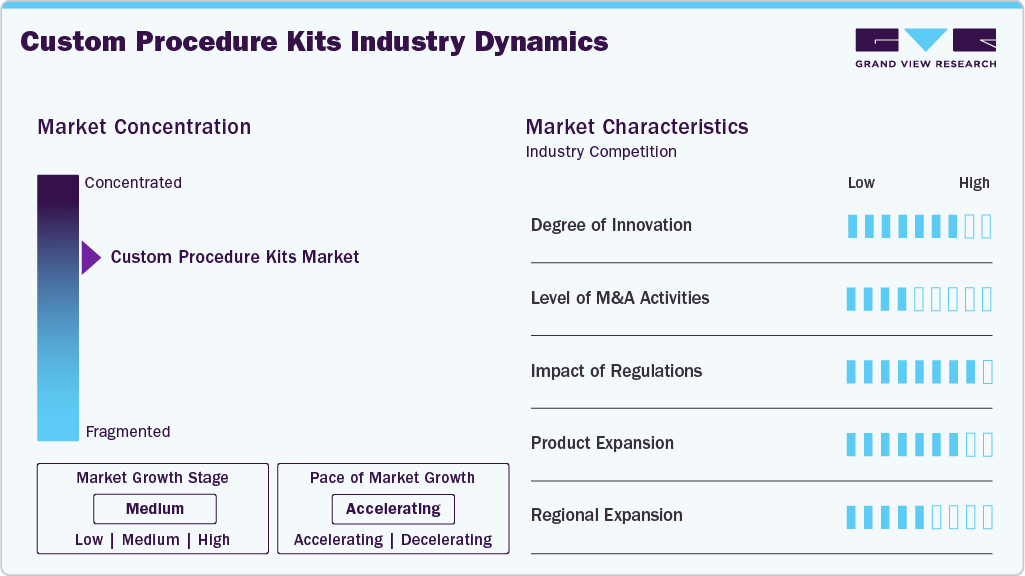
The custom procedure kits market is characterized by increasing customization of procedure-specific medical supplies, with manufacturers developing trays that combine instruments, consumables, drapes, and other required components into ready-to-use configurations. Innovation is focused on adapting kits to specific procedures and operating room workflows rather than relying solely on standardized packs. For instance, in May 2026, Owens & Minor launched Halyard Kitting, a new approach to medical procedure tray manufacturing for acute and non-acute care settings, including operating rooms. The company stated that the trays can contain nearly all instruments, supplies, and medical devices required for a given procedure, packaged as a ready-to-use unit.
M&A activity in the custom procedure kits market is supporting portfolio expansion and broader access to surgical supply and procedure-pack capabilities. Acquisitions can allow manufacturers to strengthen their presence in specific geographic markets while adding complementary disposable surgical products, instruments, and operating room solutions. In April 2025, Lohmann & Rauscher announced the acquisition of Unisurge International, a UK manufacturer and supplier of Custom Procedure Packs, disposable surgical products, surgical instruments, and other operating room products. L&R stated that the acquisition would secure access to the UK hospital sector and surgical products market and form part of its broader strategic M&A growth approach.
 To learn more about this report, Download Free Sample Report
Regulatory requirements have a direct impact on the development, packaging, sterilization, labeling, and commercialization of custom procedure kits containing medical devices. In the U.S., the FDA's guidance on sterilized convenience kits addresses issues such as the effects of sterilization on individual device components, sterilant residues, validated storage conditions, expiration dating, labeling, and whether additional regulatory submissions may be required. The FDA provides specific requirements and guidance for convenience kits in the U.S., including component identification, labeling, sterilization, and quality control.
Custom procedure kits compete with standardized procedure packs and the procurement of individual medical supplies. Standardized kits can be suitable for frequently performed procedures with relatively consistent supply requirements, while individually sourced components allow hospitals and surgeons greater flexibility in selecting specific products, brands, sizes, and quantities. However, customized kits can provide greater value when procedures require a distinct combination of components or when facilities seek to standardize preparation across recurring procedures. The availability and suitability of these alternatives, therefore, depend on the complexity of procedures, clinical preferences, purchasing practices, and the extent of required customization.
Demand for custom procedure kits is concentrated among hospitals, ambulatory surgical centers, specialty clinics, and other healthcare facilities performing surgical and procedural interventions. Hospitals and surgical centers represent key users as customized kits can support multiple specialties while simplifying supply preparation and inventory management. Furthermore, such procedure-specific kits are used across areas such as anesthesia, cardiovascular procedures, orthopedics, and general surgery, supporting demand across diverse clinical settings.
Analyst Perspective
The custom procedure kits market is growing as healthcare providers seek solutions that simplify workflows and improve supply management. Hospitals and surgical centers increasingly adopt tailored kits for specific procedures, specialties, and preferences, helping standardize supplies, reduce prep time, and limit inventory. This demand is driven by more minimally invasive procedures and increased procedure volumes. Manufacturers respond by expanding customization, strengthening supply chains, and tailoring components. Healthcare providers focus on cost control, supply continuity, and inventory efficiency. Long term, competitive advantage likely to depend on flexibility, scalability, component availability, and integration with supply chain strategies.
Product Insights
The disposable segment dominated the custom procedure kits market, accounting for 56.2% in 2025, driven by a strong preference for sterile, single-unit components in procedures where contamination control and consistent product quality are critical. Disposable kits reduced the need for post-procedure cleaning and sterilization of individual components, showcasing their suitability for healthcare facilities performing a high volume of procedures. Furthermore, the demand is driven by the availability of procedure-specific arrangements for surgical and interventional applications, enabling healthcare providers to select kits tailored to individual procedural requirements.
The reusable segment in the custom procedure kits market is expected to grow at the fastest CAGR from 2026 to 2033, due to increasing efforts to reduce medical waste and the recurring cost associated with single-use medical products. Reusable components are sterilized and used across multiple procedures, making them attractive for healthcare facilities seeking to extend product utilization due to multiple treatment cycles. Such sustainability is expected to focus procurement on increasing interest in reusable alternatives. For instance, in September 2025, NHS Supply Chain launched a framework for reusable medical hollowware, including instrument trays and containers, providing healthcare providers with expanded access to reusable products and supporting efforts to reduce waste generated by single-use alternatives.
Procedure Insights
The orthopedic segment dominated the custom procedure kits market, accounting for 19.6% in 2025, driven by rising demand for high-volume joint replacement, fracture fixation, and trauma procedures requiring specialized combinations of instruments and surgical supplies. Increasing variation in orthopedic techniques and implant systems is also encouraging healthcare providers to use procedure-specific kits tailored to different surgical approaches. For instance, in February 2026, Medline expanded its Ankle Fracture and Foot Reconstruction Plating Systems with optimized trays and a wider range of instruments to accommodate different fracture patterns, anatomical requirements, and surgical techniques. Furthermore, this expansion of tools is expected to meet the growing need for specialized procedural configurations in orthopedic care.
The cardiac surgery segment in the custom procedure kits market is expected to grow at a significant CAGR from 2026 to 2033, driven by the increasing complexity of cardiovascular procedures and the need for procedure-specific combinations of sterile supplies and surgical components. Cardiac interventions such as coronary artery bypass grafting, open-heart surgery, vascular procedures, and cardiac catheterization require specialized configurations, creating greater demand for customized kits. For instance, in February 2025, Cardinal Health states that its Global Medical Products and Distribution business supports more than 30 billion surgical procedures annually with tailored Presource procedure kits, and the demand for customized surgical solutions is increasing across complex hospital procedures.
End Use Insights
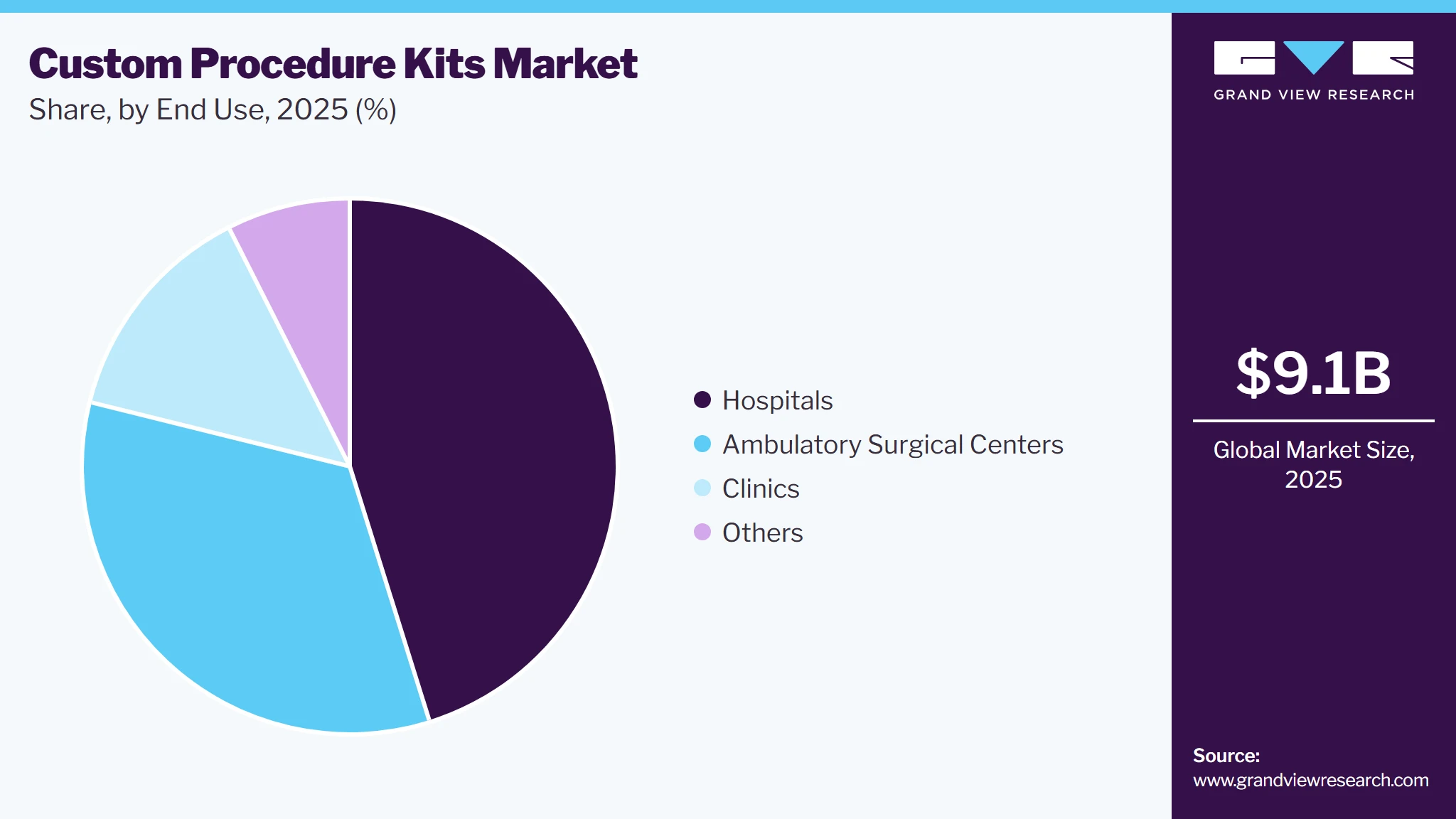
The hospitals segment dominated the market, accounting for 45.2% in 2025, supported by a broad range of surgical specialties and higher procedural volumes across inpatient and specialized care departments. Their diverse clinical requirements create sustained demand for customized kits that combine supplies tailored to specific procedures and physician preferences. The concentration of complex interventions within hospital settings further supports adoption across multiple specialties. For instance, in March 2026, Medline announced a Prime Vendor agreement with LifeBridge Health covering five hospitals, providing access to its medical-surgical portfolio, including custom surgical instrument trays and custom surgical packs.
 To learn more about this report, Download Free Sample Report
Ambulatory surgical centers are projected to exhibit the fastest CAGR in the forecast period, which can be attributed to their advantages such as shortened hospital stays. Moreover, various government initiatives are being undertaken to spread awareness about the benefits of surgical treatments in these centers, such as early mobilization of patients, low risk of hospital-acquired infections, and rapid recovery. The growing number of new ASCs and strategic initiatives is creating opportunities for customized kit suppliers to support newly extended facilities. For instance, in August 2026, Medline expanded a Prime Vendor agreement with Doctors Outpatient Surgery Center, providing the multi-specialty ASC with access to procedure packs and other medical-surgical products.
Regional Insights
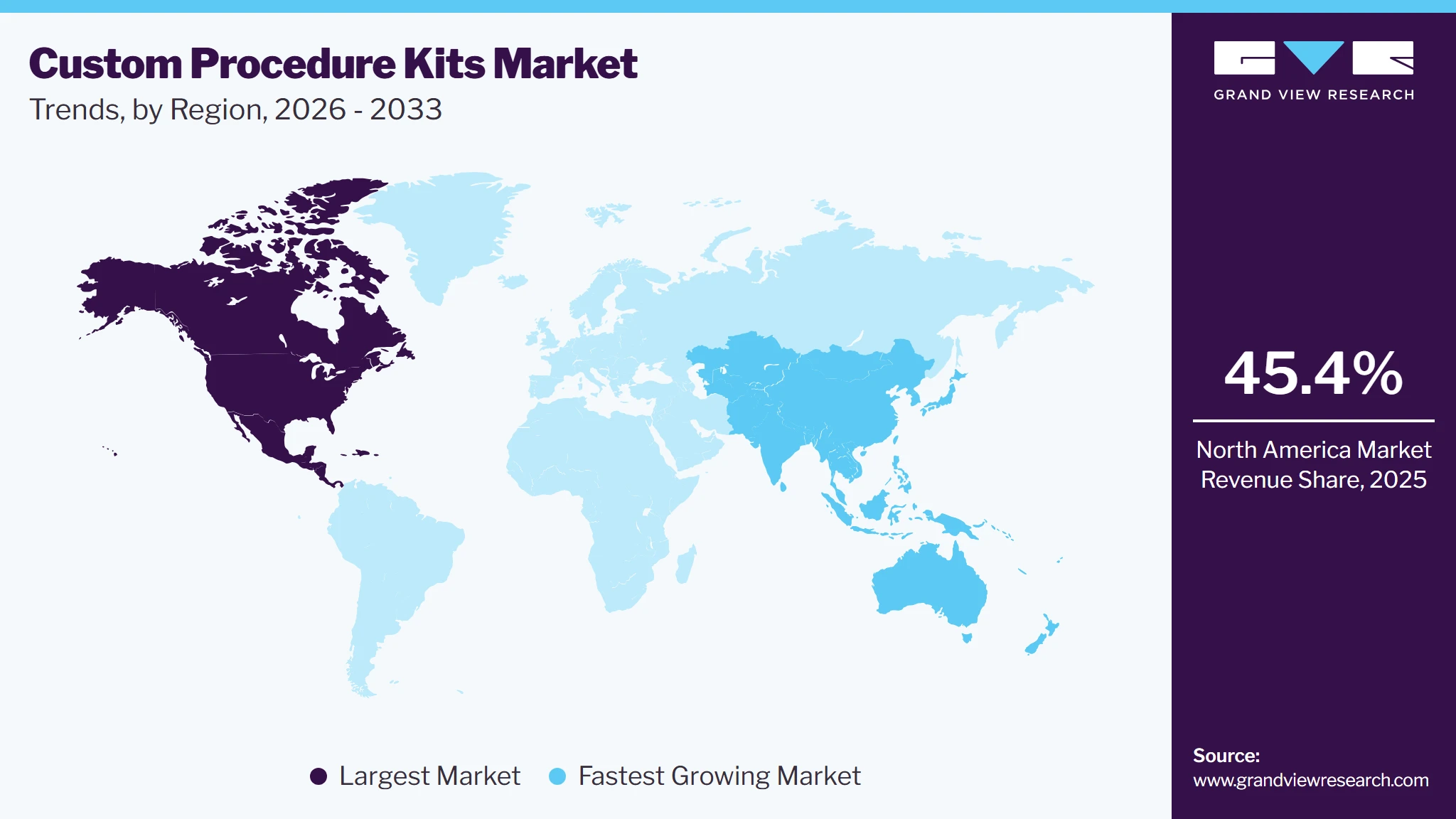
North America custom procedure kits market accounted for the largest share of the global custom procedure kits market in 2025, at 45.4%. The region benefits from a mature hospital infrastructure, extensive surgical activity, established medical-supply manufacturers, and organized procurement across integrated healthcare networks. Healthcare systems are also placing greater emphasis on product standardization, inventory visibility, and supply-chain efficiency, creating a favorable environment for sterile procedure trays and customized surgical packs. For instance, in June 2025, Medline entered a multi-year Prime Vendor agreement with Powers Health covering four hospitals and 115 clinics across northwest Indiana. The agreement included the distribution of medical-surgical supplies, such as sterile procedure trays, and access to supply-chain analytics to support inventory management and product standardization.
 To learn more about this report, Download Free Sample Report
U.S. Custom Procedure Kits Market Trends
A large and diverse base of procedural care, extensive hospital networks, and the increasing professionalization of the healthcare supply chain management support the U.S. custom procedure kits market. Large provider systems are seeking to standardize medical-surgical products across affiliated hospitals and outpatient facilities while maintaining flexibility for specialty-specific requirements. This creates opportunities for manufacturers to combine customized procedure packs with distribution, inventory management, and supply chain services.
Recent supplier agreements illustrate this shift toward system-level procurement. In June 2025, Medline announced a Prime Vendor agreement with Santiam Hospital and Clinics that included plans to prioritize standardization of sterile procedure trays across its 11 locations. Meanwhile, the growing availability of dedicated kitting capabilities is expanding the range of procedure-specific configurations that can be supplied to hospitals and ambulatory facilities. Continued investment in surgical services, outpatient procedures, and healthcare infrastructure is expected to sustain demand for customized surgical packs during the forecast period.
Europe Custom Procedure Kits Market Trends
The Europe custom procedure kits market held a 27.9% market share in 2025, driven by established healthcare systems, stringent medical-device requirements, and manufacturers with extensive portfolios of procedure packs. Unlike a purely volume-driven market, European adoption is also influenced by efforts to manage operating-room resources, reduce unnecessary components, and align procedure packs with clinical workflows.
Regulatory requirements add another layer of importance to kit design and commercialization. Under the EU Medical Device Regulation, organizations placing systems or procedure packs on the market must meet specific requirements when combining CE-marked devices and other products, including compatibility, documentation, and identification obligations. At the provider level, however, the value of customization is being reassessed in some markets. A March 2026 NHS Supply Chain case study in the UK found that one hospital trust moved away from fully bespoke packs after identifying unused components, duplicated inventory, storage challenges, and procurement costs. This highlights an important European market trend: future growth is likely to favor optimized customization, rather than simply increasing the number of bespoke configurations.
The UK custom procedure kits market is closely connected to NHS procurement practices, clinical standardization, and the use of procedure packs across hospital operating theatres. NHS Supply Chain identifies procedure packs as part of its medical and surgical consumables portfolio, while healthcare trusts evaluate pack contents based on clinical use, waste, inventory requirements, and procurement efficiency. For instance, in March 2026, NHS Supply Chain highlighted a bespoke procedure pack transformation at United Lincolnshire Teaching Hospitals NHS Trust, for four hospital sites, which is expected to improve the use and design of custom surgical packs. It subsequently introduced standardized minor- and major-procedure starter packs, supplemented by individually sourced items according to surgeon or procedure requirements.
Asia Pacific Custom Procedure Kits Market Trends
Asia Pacific is the fastest growing region in the global market as healthcare infrastructure expands, surgical capabilities improve, and medical-device manufacturers strengthen regional production and distribution networks. The opportunity for custom procedure kits is particularly relevant in markets where hospitals are adding specialized surgical services and seeking more reliable access to procedure-specific supplies. In addition, localized manufacturing can reduce lead times and improve suppliers' ability to respond to country-specific requirements. For instance, in October 2025, Mölnlycke began local production of its customized ProcedurePak trays at its Amata plant in Thailand to serve the Asia Pacific market better, strengthen supply resilience, and support its regional growth. The company reported that the project reduced lead times, improved supply resilience, and involved new quality systems, sterilization validation, and more than 200 import registrations. The development indicates that regional expansion is being supported by localized manufacturing rather than relying solely on imported customized trays.
Custom procedure kits market in China is supported by expanding surgical care capacity, growing demand for specialized procedures, and the development of domestic medical-device manufacturing capabilities. The expansion of advanced surgical services is driving demand for procedure-specific combinations of medical supplies across hospitals and specialty care settings. Government initiatives supporting domestic medical-device manufacturing and the availability of higher-value healthcare products are also creating opportunities for customized kit suppliers. The adoption of modern surgical techniques and continued investment in healthcare infrastructure are supporting the demand for customized procedural solutions. From a regulatory perspective, medical devices in China are overseen by the National Medical Products Administration (NMPA), with registration, filing, manufacturing, quality management, and distribution requirements applying according to device classification.
Latin America Custom Procedure Kits Market Trends
The Latin America custom procedure kits market is developing alongside improvements in private healthcare networks, surgical infrastructure, and access to specialized procedures. Brazil and Argentina represent important markets due to their relatively large healthcare systems and expanding private hospital sectors, while other countries present opportunities linked to specialty hospitals and higher-acuity procedures. For providers operating multiple facilities, procedure kits can help organize frequently used surgical supplies and improve consistency in operating-room preparation. Regulatory requirements for medical devices and surgical materials vary across countries, with agencies such as Brazil’s Agência Nacional de Vigilância Sanitária (ANVISA), Argentina’s Administración Nacional de Medicamentos, Alimentosy Tecnología Médica (ANMAT), and Colombia’s Instituto Nacional de Vigilancia de Medicamentos y Alimentos (INVIMA) overseeing applicable requirements.
Cost and supply availability remain important considerations in the region. Customized configurations can require closer coordination with manufacturers and more inventory planning than standard packs, making the economics of customization particularly important for price-sensitive healthcare providers. Consequently, opportunities are likely to be strongest where hospitals perform sufficient procedure volumes to justify customized packs or where suppliers can combine kitting with reliable distribution and inventory-management services.
MEA Custom Procedure Kits Market Trends
The Middle East & Africa custom procedure kits market is supported by the development of specialized healthcare centers, expansion of surgical capacity, and the emergence of internationally oriented medical hubs, particularly in the Gulf countries. The UAE government describes the country as a regional hub for medical and cosmetic treatments, with healthcare cities and medical tourism infrastructure supporting a broad range of specialized and elective procedures. Similarly, Saudi Arabia is also expanding advanced surgical capabilities as part of its healthcare transformation program. In 2025, the Saudi Ministry of Health reported that surgical capacity within health clusters had nearly doubled to an average of 12,000 surgeries per week.
Key Custom Procedure Kits Company Insights
The market players operating in the custom procedure kits market are expanding their product portfolios and strengthening capabilities across a wider range of surgical and medical specialties. Key players are pursuing product launches, portfolio extensions, strategic collaborations, acquisitions, and manufacturing investments to address evolving procedural requirements. The focus is also shifting toward procedure-specific configurations, supply continuity, and operating-room efficiency, encouraging manufacturers to develop customized surgical kits that align more closely with hospital workflows and specialty-specific needs. Recent initiatives, including investments in kitting capabilities and acquisitions involving custom procedure pack suppliers, indicate continued efforts to broaden product offerings and strengthen market presence.
Key Custom Procedure Kits Companies
The following key companies have been profiled for this study on the custom procedure kits market.
-
B. Braun SE
-
Cardinal Health
-
Ivor Shaw T/A Pennine Healthcare
-
Kimal
-
Lohmann & Rauscher GmbH & Co. KG
-
Medline Industries, Inc.
-
Medtronic
-
Merck KGaA
-
Merit Medical Systems
-
Mölnlycke Health Care AB
-
Owens & Minor
-
PAUL HARTMANN AG
-
STERIS
-
Teleflex Incorporated
-
Unisurge International Limited
Competitive Benchmarking
Category
Operating Strategies
Competitive Edge
Weakness
Established Players (Mölnlycke Health Care, Medline Industries, Teleflex Incorporated, Owens & Minor, Medtronic, Cardinal Health, McKesson Corporation)
Expand customized procedure kits and surgical packs across specialties, with emphasis on OR efficiency, supply continuity, and inventory optimization.
Broad product portfolios, established healthcare relationships, extensive distribution networks, and strong procedure-specific kitting capabilities.
Large-scale operations can increase manufacturing and customization complexity, potentially limiting flexibility for highly specialized or frequently changing kit configurations.
Emerging Players (Kimal,
Ivor Shaw T/A
Pennine Healthcare,
Unisurge
International Limited)
Focus on procedure-specific solutions and specialized applications while expanding customized configurations around core product portfolios.
Strong clinical specialization and the ability to integrate procedure-specific components with existing medical-device portfolios.
More focused specialty coverage may limit addressable opportunities and require additional investment to expand across surgical specialties, manufacturing, and distribution.
Recent Developments
-
In May 2026, NHS Wales awarded a GBP 4.5 million framework for standard and custom procedure packs covering surgical, radiology, and cardiology, spinal, anesthesia, and critical-care applications. The agreement demonstrates continued institutional adoption of procedure-specific packs across hospital settings.
-
In May 2026, Forté Health’s custom procedure pack project received its Sustainability and Overall Winner awards, following its 2025 partnership with Multigate. The initiative delivered an estimated 2,456 kg CO₂e reduction and a 36% improvement in inventory turnover through locally supplied, customized packs.
-
In February 2025, Mölnlycke Health Care and Tamer Group inaugurated Tamer Mölnlycke Care in Saudi Arabia, where manufacturing of customized surgical procedure trays had begun the previous month. The local facility supports the supply of ProcedurePak trays and other surgical products across Saudi Arabia and surrounding markets.
Custom Procedure Kits Market Report Scope
Report Attribute
Details
Market size in 2025
USD 9.1 billion
Estimated market size in 2026
USD 10.1 billion
Projected market size by 2033
USD 20.9 billion
Growth rate
CAGR of 11.0% from 2026 to 2033
Base year for estimation
2025
Actual estimates/Historical data
2021 - 2024
Forecast period
2026 - 2033
Quantitative units
Revenue in USD billion and CAGR from 2026 to 2033
Report coverage
Revenue forecast, company ranking, competitive landscape, growth factors, and trends
Segments covered
Product, procedure, end use, region
Regional scope
North America; Europe; Asia Pacific; Latin America; Middle East & Africa
Country scope
U.S.; Canada; Mexico; UK; Germany; France; Italy; Spain; Denmark; Sweden; Norway; Japan; China; India; Thailand; Australia; South Korea; Brazil; Argentina; South Africa; Saudi Arabia; UAE; Kuwait
Key companies profiled
Medline Industries, Inc.; Cardinal Health; Owens & Minor; Mölnlycke Health Care AB; B. Braun SE; Merck KGaA; Merit Medical Systems; Medtronic; STERIS; PAUL HARTMANN AG; Lohmann & Rauscher GmbH & Co. KG; Kimal; Ivor Shaw T/A Pennine Healthcare; Unisurge International Limited; Teleflex Incorporated
Customization scope
Free report customization (equivalent up to 8 analyst’s working days) with purchase. Addition or alteration to country, regional & segment scope
Pricing and purchase options
Avail customized purchase options to meet your exact research needs. Explore purchase options
Global Custom Procedure Kits Market Report Segmentation
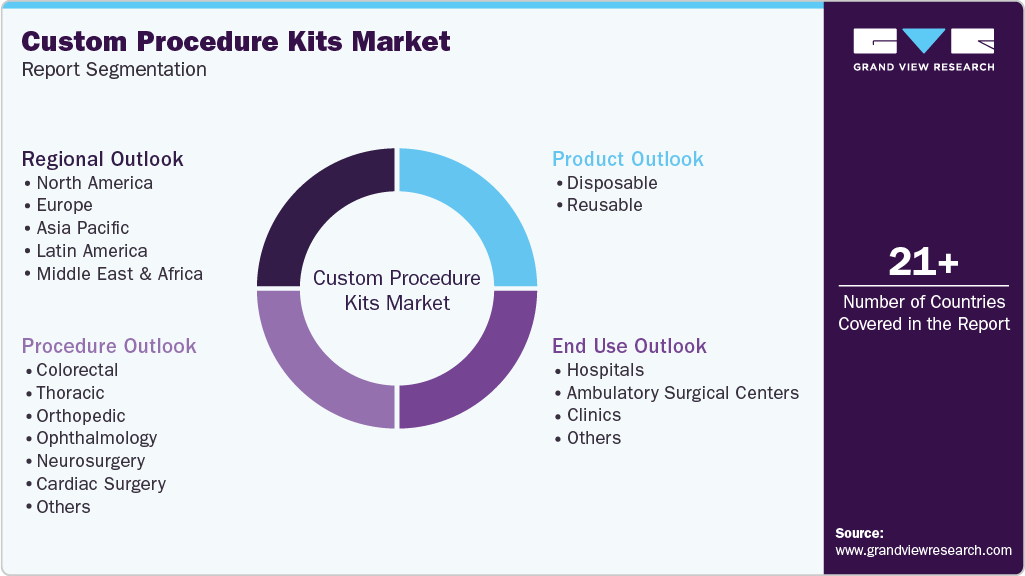
This report forecasts revenue growth at global, regional & country levels and provides an analysis of the latest industry trends in each of the sub-segments from 2021 to 2033. For this study, Grand View Research has segmented the global custom procedure kits market report based on product, procedure, end use, and region:
 To learn more about this report, Download Free Sample Report
-
Product Outlook (Revenue, USD Billion, 2021 - 2033)
-
Disposable
-
Reusable
-
-
Procedure Outlook (Revenue, USD Billion, 2021 - 2033)
-
Colorectal
-
Thoracic
-
Orthopedic
-
Ophthalmology
-
Neurosurgery
-
Cardiac Surgery
-
Gynecology
-
General Surgery
-
Urology
-
Others
-
-
End Use Outlook (Revenue, USD Billion, 2021 - 2033)
-
Hospitals
-
Ambulatory Surgical Centers
-
Clinics
-
Others
-
-
Regional Outlook (Revenue, USD Billion, 2021-2033)
-
North America
-
U.S.
-
Canada
-
Mexico
-
-
Europe
-
UK
-
Germany
-
France
-
Italy
-
Spain
-
Denmark
-
Sweden
-
Norway
-
-
Asia Pacific
-
Japan
-
China
-
India
-
Thailand
-
Australia
-
South Korea
-
-
Latin America
-
Brazil
-
Argentina
-
-
Middle East & Africa
-
South Africa
-
Saudi Arabia
-
UAE
-
Kuwait
-
-
Research Methodology
The custom procedure kits market figures in this report are based on a proven research process that combines executive interviews with secondary research from proprietary databases, company filings, and recognized regulatory and institutional sources. Market size is built through value-chain sizing-reconciling supply-side and demand-side estimates-and triangulated with bottom-up and top-down approaches. Every estimate passes multiple levels of expert validation before publication, with each custom procedure kits segment quantified using the revenue-capture definitions in the table below.
Segment Definition
Product
Revenue capture definition
Disposable
Revenue generated from single-use custom procedure kits designed to provide preassembled, procedure-specific instruments, supplies, and components for individual surgical procedures. These kits are discarded after use and are intended to support infection control, procedural efficiency, and standardized operating-room workflows across different surgical specialties.
Reusable
Revenue generated from custom procedure kits incorporating reusable instruments and components that can be sterilized and used across multiple procedures. These kits are configured to meet procedural requirements and are used by healthcare providers seeking to reduce recurring disposable use while maintaining standardized instrument availability and procedural efficiency.
Procedure
Revenue capture definition
Colorectal
Revenue generated from custom procedure kits configured for colorectal surgical procedures, including procedures involving the colon, rectum, and associated gastrointestinal structures. Kits may include procedure-specific instruments, drapes, suction components, surgical accessories, and other supplies required for colorectal interventions.
Thoracic
Revenue generated from custom procedure kits designed for thoracic surgical procedures involving the chest, lungs, and related structures. These kits are configured with instruments and consumable components required for open or minimally invasive thoracic procedures.
Orthopedic
Revenue generated from custom procedure kits configured for orthopedic procedures involving bones, joints, muscles, ligaments, and associated structures. Kits may incorporate procedure-specific instruments, drapes, fixation-related components, and other surgical supplies used in orthopedic interventions.
Ophthalmology
Revenue generated from custom procedure kits designed for ophthalmic surgical procedures involving the eye and surrounding structures. These kits are configured with specialized instruments, surgical accessories, fluids, drapes, and other components required for procedures such as cataract, retinal, corneal, and other ophthalmic surgeries.
Neurosurgery
Revenue generated from custom procedure kits configured for neurosurgical procedures involving the brain, spinal cord, peripheral nerves, and associated structures. Kits may contain specialized surgical instruments, drapes, suction and irrigation components, and other procedure-specific supplies.
Cardiac Surgery
Revenue generated from custom procedure kits designed for cardiac surgical procedures involving the heart and associated cardiovascular structures. These kits are configured with procedure-specific instruments, surgical accessories, drapes, tubing, and other components used during cardiac interventions.
Gynecology
Revenue generated from custom procedure kits configured for gynecological surgical procedures involving the female reproductive system. Kits may include specialized instruments, drapes, collection and suction components, and other supplies required for gynecological procedures, including minimally invasive interventions.
General Surgery
Revenue generated from custom procedure kits designed for general surgical procedures involving abdominal, gastrointestinal, soft-tissue, and other commonly treated anatomical areas. These kits are configured to meet individual procedural requirements and may include surgical instruments, drapes, consumables, and ancillary components.
Urology
Revenue generated from custom procedure kits configured for urological procedures involving the urinary tract and male reproductive system. Kits may include procedure-specific instruments, catheters, tubing, drapes, collection components, and other supplies required for urological surgical interventions.
Others
Revenue generated from custom procedure kits designed for surgical specialties and procedures not specifically covered under the defined categories, including selected procedures across specialties such as vascular surgery, otolaryngology, plastic surgery, and other specialized surgical applications.
End Use
Revenue capture definition
Hospitals
Revenue generated from custom procedure kits supplied to hospitals for use across operating rooms, surgical departments, and specialty procedure units. Hospitals use these kits to standardize procedure-specific supplies, streamline operating-room preparation, and improve the availability and organization of required surgical components.
Ambulatory Surgical Centers
Revenue generated from custom procedure kits supplied to ambulatory surgical centers for same-day and outpatient surgical procedures. These facilities use customized kits to support efficient procedure setup, standardized supply requirements, and streamlined turnover between cases.
Clinics
Revenue generated from custom procedure kits supplied to clinics and specialty healthcare facilities performing surgical or procedural interventions. Kits are configured to meet the requirements of procedures conducted in smaller-scale clinical settings, including specialty and outpatient procedures.
Others
Revenue generated from custom procedure kits supplied to other healthcare and procedural facilities not classified as hospitals, ambulatory surgical centers, or clinics. This may include specialty surgical centers, physicians' offices performing procedures, and other healthcare facilities that require procedure-specific kits.
Estimation Model
Approach
Description
Bottom-Up Modeling
Estimate market value from procedure volumes by specialty (Cardiac, Thoracic, Orthopedic, Ophthalmology, Neurosurgery, Cardiac Surgery, Gynecology, General Surgery, Urology, Others). Analyze kits used per procedure, kit ASP, utilization rates, replacement rates, and average selling prices (ASP) to derive total market revenue.
Top-Down Revenue Translation
Start with total surgical/procedure supply and custom kit expenditure pools. Derive the share attributable to custom procedure kits using manufacturer/distributor shares, tender procurement data, and other sources. Review replacement rates (disposable vs. reusable), procedure volumes, and ASPs to estimate total market size.
Demand-Side Modeling
Assess demand by procedure specialty and care setting using primary data on operating-room utilization, kit adoption rates, customization preferences, sterilization practices, and disposables vs. reusables. Incorporate growth trends, demographics, and physician adoption rates to estimate demand.
Supply-Side Modeling
Evaluate manufacturers’ production capacity, utilization rates, component consumption/sterilization, inventory optimization, and supply-side ASPs. Review available kit supply and ASPs by specialty and procedure type to derive total revenue potential.
Data Triangulation
Integrate primary research (surgeon, OR manager, procurement manager, sterile processing staff, manufacturer interviews), secondary research (company reports, investor filings, industry publications), and other data sources to reconcile estimates and finalize market size, value, and trend analysis.
Delivered Customizations
This report has been delivered with the following In-depth customizations
Client Request
Customization Delivered
Value Adds
Procedure-Specific Kit & Specialty Assessment
Evaluated custom procedure kits across specialties, including surgical, cardiovascular, orthopedic, and wound care applications, with assessment of kit configurations, component requirements, and customization trends.
Helps manufacturers identify high-demand procedure areas, optimize kit configurations, and prioritize specialty-specific product development opportunities.
Hospital Procurement & Utilization Analysis
Assessed adoption and utilization of customized procedure kits across hospitals, ambulatory surgical centers, and other healthcare facilities, including purchasing preferences, inventory practices, and factors influencing kit adoption.
Supports commercial planning, customer targeting, and development of customized offerings aligned with healthcare provider requirements.
Competitive Benchmarking & Capability Assessment
Benchmarked major market participants based on customization capabilities, product breadth, manufacturing capacity, specialty coverage, supply-chain capabilities, and strategic initiatives such as partnerships and portfolio expansion.
Provides actionable insights into competitive positioning, product differentiation, customization strategies, and opportunities for geographic and specialty expansion.
Frequently Asked Questions About This Report
North America dominated with a revenue share of 45.4% in 2025.
Key factors that are driving the market growth are favorable government regulations for prevention and control of Healthcare-Associated Infections (HCAI), the constant increase in the number of surgeries being performed worldwide, and benefits of customization.
Asia Pacific is the fastest-growing region over the forecast period.
Disposable segment led the market with a share of 56.2% in 2025 while reusable segment is expected to be the fastest-growing market.
The global custom procedure kits market size was valued at USD 9.1 billion in 2025 and is estimated at USD 10.1 billion for 2026.
The global custom procedure kits market is expected to grow at a CAGR of 11.0% from 2026 to 2033, reaching USD 20.9 billion by 2033.
Some of the players operating in the market are Medline Industries, Inc., Cardinal Health, Owens & Minor, Mölnlycke Health Care AB, B. Braun SE, Merck KGaA, Merit Medical Systems, Medtronic, STERIS, PAUL HARTMANN AG, Lohmann & Rauscher GmbH & Co. KG, Kimal, Ivor Shaw T/A Pennine Healthcare, Unisurge International Limited, Teleflex Incorporated, among others.
The orthopedic segment dominated the custom procedure kits market, accounting for 19.6% in 2025, driven by rising demand for high-volume joint replacement, fracture fixation, and trauma procedures requiring specialized combinations of instruments and surgical supplies.
The hospitals segment dominated the market, accounting for 45.2% in 2025 while ambulatory surgical centers segment is expected to be the fastest-growing market.
About the Author(s)
Medical Devices Research Team
Healthcare · Medical DevicesThis report was authored by the medical devices research team at Grand View Research - comprising two research analysts, one senior research analyst, and one industry expert - with specialized expertise in the medical devices segment of the healthcare industry. All findings are based on proprietary healthcare databases, executive interviews, and regulatory analysis, subject to internal peer review prior to publication.
Last Updated:
Speak to Analyst

Customize this report to your needs - add regions, segments, or data points, with 20% free customization.
Or view our licence options:


ISO 9001:2015 & 27001:2022 Certified
We are GDPR and CCPA compliant! Your transaction & personal information is safe and secure. For more details, please read our privacy policy.


