
- Home
- »
- IT Services & Applications
- »
-
Cyber Risk Management Market Size Report, 2026-2033GVR Report cover

Cyber Risk Management Market (2026 - 2033)
Size, Share & Trend Analysis Report By Component (Solutions, Services), By Deployment (On-Premises, Cloud), By Enterprise Size (Large Size Enterprise), By End Use, By Region, And Segment Forecasts
Market Size, 2025
$3.2BMarket Estimate, 2026
$3.7BMarket Forecast, 2033
$10.5BCAGR, 2026–2033
16.1%Cyber Risk Management Market Summary
The global cyber risk management market size was valued at USD 3.2 billion in 2025 and is projected to grow from USD 3.7 billion in 2026 to USD 10.5 billion by 2033, at a CAGR of 16.1% from 2026 to 2033. The market in North America dominated with a revenue share of 39.7% in 2025. The market is witnessing strong expansion, driven by the escalating frequency and sophistication of cyberattacks across industries.
 Source: Grand View Research, IR Documents, Primary Interviews, Paid DatabasesTo learn more about this report,
 Download Free Sample Report
Key Market Trends & Insights
- By component: Solutions segment held the largest market share of 82.8% in 2025.
- By deployment: Cloud segment held the largest market share of 62.1% in 2025.
- By enterprise size: Large enterprise segment held the largest market share in 2025.
- By end use: BFSI segment held the largest market share of 29.6% in 2025.
Regional Highlights
- Largest regional market: North America (39.7% revenue share, 2025)
- Fastest-growing regional market: Asia Pacific (highest CAGR, 2026-2033)
- By country: The U.S. held the largest market share in 2025
Market Size & Forecast
- Market size in 2025: USD 3.2 Billion
- Estimated market size in 2026: USD 3.7 Billion
- Projected market size by 2033: USD 10.5 Billion
- CAGR (2026-2033): 16.1%
Three ways to get this report
Buy it, customize it, or ask a question.Ask an Analyst
Analyst response in 1 business day
- AccessReport author, directly
- Reply timeWithin 1 working day
- No sales callDirect answer only
- FormatEmail reply
- CostFree, no cost
Get the Full Report
What the study covers
- FormatsPDF · Excel · Dashboard
- Timeline2026–2033 annual, 2025 base
- Coverage20+ countries, 5 regions
- Companies10+ key players profiled
Customize the Report
20% free customization
- IncludeCountries, segments, points
- TailorTo your product definition
- ExtendDeeper competitor detail
- OrA fully bespoke study
- Turnaround5–10 working days
Organizations are increasingly prioritizing proactive risk identification, assessment, and mitigation as digital transformation accelerates cloud adoption, remote operations, and interconnected enterprise ecosystems. The rising financial and reputational impact of cyber incidents is pushing enterprises to move beyond traditional security tools toward integrated cyber risk management frameworks that provide real-time visibility and predictive risk insights. Another key trend shaping the market is the rapid adoption of AI- and analytics-driven risk assessment and monitoring solutions, which enable organizations to continuously evaluate vulnerabilities and respond to threats in real time. Cloud-based deployment is gaining significant traction due to its scalability, cost efficiency, and ease of integration with modern security architectures. Additionally, the growing importance of regulatory compliance, such as GDPR, NIS2, and other data protection mandates, is driving demand for advanced risk reporting and governance capabilities across enterprises.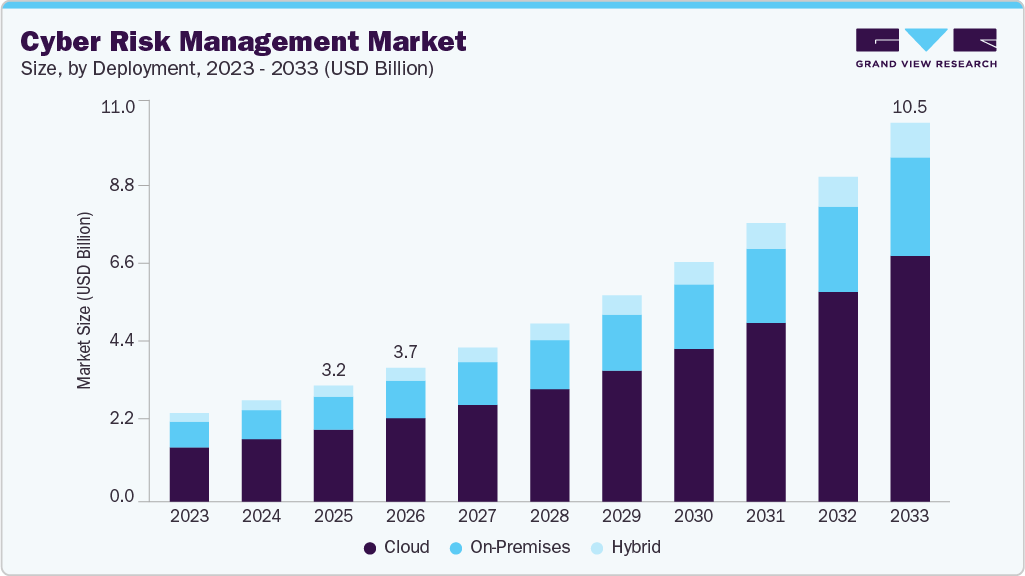 To learn more about this report, Download Free Sample Report
From an industry perspective, sectors such as BFSI, IT & telecom, and healthcare remain the primary adopters, given their high exposure to sensitive data, network security concerns, and critical infrastructure risks. However, emerging sectors such as retail, e-commerce, and manufacturing are increasingly investing in cyber risk solutions as digital transactions and connected systems expand their attack surfaces. The increasing convergence of operational technology (OT) and information technology (IT) environments is further intensifying risk exposure across industrial sectors.
Consequently, the market is being shaped by a shift from reactive cybersecurity approaches to continuous, intelligence-driven risk management strategies. As cyber threats become more complex and regulatory pressures intensify, organizations are expected to increasingly adopt unified platforms that integrate risk assessment, monitoring, and reporting. This transformation is expected to sustain strong double-digit growth in the cyber risk management market over the forecast period.
Market Dynamics
The growing frequency and sophistication of cyberattacks, ransomware incidents, phishing campaigns, and data breaches are major factors driving the growth of the cyber risk management market. Organizations are adopting cyber risk management solutions to identify vulnerabilities, assess risk exposure, strengthen cybersecurity frameworks, and ensure business continuity in an evolving threat landscape. The rapid digital transformation of enterprises, rising cloud adoption, remote work environments, and increasing dependence on interconnected IT infrastructure are further accelerating the need for proactive cyber risk assessment and mitigation strategies.
For instance, in April 2025, the FBI Internet Crime Complaint Center (IC3) reported that cybercrime-related losses in the U.S. exceeded USD 16 billion in 2024, reflecting a significant increase in ransomware, phishing, and business email compromise (BEC) attacks targeting enterprises and critical infrastructure organizations. The rising financial and operational impact of cyber incidents has compelled businesses to invest in advanced cyber risk management platforms, threat intelligence solutions, and continuous security monitoring systems to strengthen resilience against evolving cyber threats. Therefore, the growing emphasis on cybersecurity preparedness, operational resilience, and regulatory compliance is significantly contributing to the growth of the cyber risk management market.
The shortage of skilled cybersecurity professionals and the growing talent gap are key factors restraining the growth of the cyber risk management market. As cyber threats become more advanced and AI-driven, organizations are struggling to recruit and retain professionals with expertise in threat intelligence, risk assessment, cloud security, compliance management, and AI-enabled cybersecurity operations. The lack of skilled personnel limits the effective deployment, monitoring, and management of cyber risk platforms, particularly among small and medium-sized enterprises with limited cybersecurity resources.
For instance, in October 2024, the ISC2 Cybersecurity Workforce Study reported that 67% of organizations faced cybersecurity staffing shortages, while 90% reported skills gaps within their cybersecurity teams. The study further highlighted that more than one-third of respondents identified AI-related expertise as the biggest skills shortfall, emphasizing the growing challenge of managing increasingly complex cyber risks in AI-driven environments. Additionally, rising workforce burnout, budget constraints, and increasing competition for cybersecurity talent are making it difficult for organizations to build mature cyber risk management capabilities. As a result, limited access to skilled professionals and specialized expertise continues to hinder the large-scale adoption and effective implementation of cyber risk management solutions globally.
Market Concentration & Characteristics
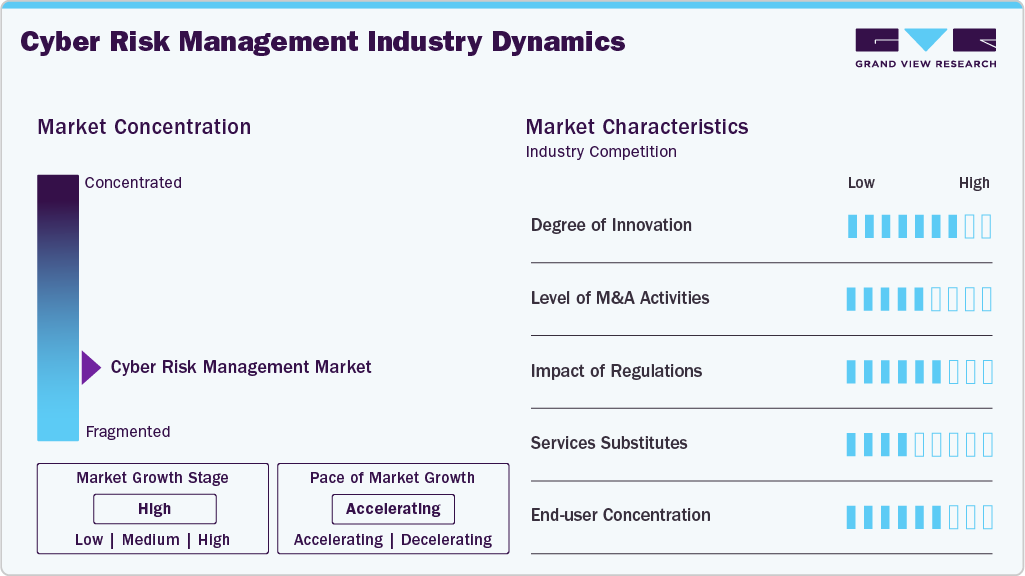
The cyber risk management market is moderately fragmented, with the presence of large global cybersecurity vendors, consulting firms, cloud security providers, and specialized risk management companies competing across the ecosystem. Major players such as IBM, Microsoft, Palo Alto Networks, Cisco, RSA, and CrowdStrike hold significant market positions due to their broad cybersecurity portfolios, global enterprise presence, and integrated risk management capabilities. However, the market also includes numerous niche and emerging vendors offering specialized solutions for threat intelligence, third-party risk management, AI-driven risk analytics, and regulatory compliance, contributing to competitive fragmentation.
 To learn more about this report, Download Free Sample Report
In terms of characteristics, the market demonstrates a high degree of innovation, driven by the increasing integration of AI, ML, predictive analytics, automation, and cloud-native security technologies into cyber risk management platforms. The industry is also witnessing moderate-to-high M&A activity, as large cybersecurity and enterprise software companies continue to acquire niche risk analytics and cloud security firms to strengthen their capabilities and expand their service offerings. Regulatory impact is significant, with evolving data privacy and cybersecurity regulations such as GDPR, CCPA, NIS2, SEC cybersecurity disclosure rules, and industry-specific compliance mandates driving enterprise adoption of cyber risk management solutions. Service substitutes remain relatively limited, as organizations increasingly require integrated and continuous cyber risk monitoring frameworks rather than traditional reactive security approaches. In addition, the market exhibits high-end-user concentration among large enterprises, BFSI organizations, healthcare providers, government agencies, and critical infrastructure sectors due to their elevated cybersecurity exposure and stringent compliance requirements.
Component Insights
The solutions segment accounted for the largest revenue share of 82.8% in the global cyber risk management market in 2025, driven by the increasing need for enterprises to adopt integrated platforms that enable continuous identification, assessment, and mitigation of cyber risks across increasingly complex digital environments. A key trend driving this dominance is the shift from fragmented security tools toward unified, end-to-end cyber risk management solutions that combine risk analytics, monitoring, and governance capabilities within a single framework, improving visibility and decision-making efficiency. Another important trend is the rising adoption of advanced, scalable platforms that leverage automation and analytics to support real-time risk detection, regulatory compliance, and enterprise-wide risk alignment across hybrid and cloud infrastructures. For instance, in July 2025, Clearwater launched its Enterprise Cyber Risk Management (ECRM) solution designed to help healthcare organizations reduce cyber risk, strengthen compliance, and enhance boardroom confidence through integrated risk assessment and maturity evaluation capabilities, highlighting the growing demand for comprehensive solution-based offerings. Consequently, the strong dominance of the solutions segment reflects the industry’s broader transition toward centralized, intelligence-driven cyber risk management platforms that enable proactive risk mitigation and strategic security governance.
The services segment is expected to register a significant CAGR during the forecast period, due to the increasing reliance of organizations on external expertise for managing complex cyber risk environments, including risk assessment, continuous monitoring, compliance support, and incident response. A key trend driving this growth is the rising adoption of managed and professional cyber risk services as enterprises face a shortage of in-house cybersecurity talent and the growing sophistication of cyber threats. Additionally, organizations are increasingly outsourcing risk governance functions to specialized service providers to improve scalability, reduce operational burden, and ensure alignment with evolving regulatory frameworks across industries. In conclusion, the expanding complexity of cyber threats and the need for continuous, expert-led risk oversight are expected to strongly support the growth of the services segment.
Deployment Insights
The cloud segment accounted for the largest market share in the global cyber risk management market in 2025, driven by the rapid shift of enterprises toward cloud-native infrastructures, hybrid cloud adoption, and the need for continuous risk management. A key trend supporting this dominance is the increasing reliance on cloud-based risk management platforms that provide real-time monitoring, AI-driven threat intelligence, and automated risk prioritization across multi-cloud ecosystems. Additionally, the growing complexity of cloud attack surfaces, where misconfigurations, identity risks, and API exposures require advanced, scalable risk management capabilities embedded directly within cloud environments. For instance, in March 2026, CrowdStrike introduced new Falcon Cloud Security innovations featuring adversary-informed cloud risk prioritization designed to identify the exposures most likely to be exploited by AI-powered attackers, enabling organizations to move from static risk detection to context-aware, real-time remediation of critical cloud vulnerabilities. Therefore, the strong dominance of the cloud segment reflects the enterprise transition to cloud-first architectures and the increasing need for intelligent, integrated cyber risk management solutions to secure highly dynamic, distributed digital infrastructures.
The hybrid segment is expected to witness substantial growth during the forecast period due to the increasing need for organizations to manage cyber risks across both on-premises and cloud environments, enabling greater flexibility, data control, and resilience. A key trend driving this growth is the rising adoption of hybrid IT architectures, in which enterprises balance legacy systems with cloud platforms to meet regulatory, security, and operational requirements. Another important trend is the growing demand for unified cyber resilience solutions that can seamlessly protect, monitor, and recover data across multi-cloud and on-premise infrastructures. For instance, in April 2026, Commvault extended its next-generation cyber resilience platform to Google Cloud, enabling enterprises to enhance data protection, security, and recovery capabilities across hybrid environments while addressing evolving cybersecurity challenges and compliance needs, highlighting the increasing focus on integrated hybrid risk management strategies. Subsequently, the strong growth of the hybrid segment reflects the enterprise shift toward flexible, multi-environment security frameworks that ensure continuous protection and resilience in increasingly complex digital ecosystems.
Enterprise Size Insights
The large enterprise segment accounted for the largest market share in 2025, primarily due to the high volume of sensitive data, complex IT infrastructures, and stringent regulatory requirements that require advanced, continuous cyber risk management capabilities. A key trend driving this dominance is the increasing investment by large organizations in comprehensive cyber governance, risk, and compliance (GRC) frameworks to manage risks across multi-cloud, on-premises, and global operational environments. Another important trend is the growing reliance on long-term partnerships with specialized cybersecurity providers to ensure continuous monitoring, compliance management, and enterprise-wide risk visibility. For instance, in January 2026, Telos Corporation renewed a USD 5.4 million cyber GRC engagement with a Fortune 100 global technology company to deliver ongoing risk, compliance, and security operations support across large-scale cloud environments, highlighting the sustained demand for advanced cyber risk management solutions among large enterprises. Subsequently, the strong dominance of the large enterprise segment reflects their greater financial capacity, higher risk exposure, and strategic focus on implementing robust, scalable cyber risk management frameworks.
The Small and Medium-Sized Enterprise (SMEs) segment is expected to grow at the fastest CAGR during the forecast period due to the increasing recognition among smaller organizations of the critical need to strengthen cyber resilience amid rising cyber threats and expanding digital adoption. A key trend driving this growth is the growing reliance on external cyber risk management solutions and services, as SMEs often lack in-house expertise and resources to manage complex cybersecurity environments. Another important trend is the growing support from governments and regulatory bodies to improve SME cybersecurity posture through funding, awareness programs, and standardized security frameworks. For instance, in April 2026, the UK government pledged £90 million to enhance cyber resilience among SMEs as part of a broader national cybersecurity strategy, emphasizing board-level accountability, the adoption of baseline security standards, and improved threat monitoring capabilities, highlighting the increasing institutional push to strengthen SME cyber risk management capabilities. Thus, the rapid digitalization of SMEs, combined with rising external support and escalating threat exposure, is expected to significantly drive the growth of this segment.
End Use Insights
The BFSI segment accounted for the largest market share in the global cyber risk management market in 2025, driven by the sector’s critical need to protect highly sensitive financial data, ensure regulatory compliance, and maintain operational resilience against increasingly sophisticated cyber threats. A key trend supporting this dominance is the growing integration of advanced technologies, such as AI, into financial services, which is simultaneously enhancing innovation while introducing new categories of cyber and operational risks that require robust management frameworks. Another important trend is the rising collaboration between financial institutions, regulators, and government bodies to establish standardized risk management practices and strengthen sector-wide cybersecurity resilience. For instance, in February 2026, the U.S. Department of the Treasury announced a public-private initiative to strengthen cybersecurity and risk management for artificial intelligence in the financial services sector, introducing practical tools and frameworks to help institutions securely adopt AI while addressing governance, fraud, and data risks, highlighting the increasing regulatory and industry-wide focus on cyber risk management in BFSI. Overall, the dominance of the BFSI segment reflects its high-risk exposure, strict regulatory environment, and continuous investment in advanced cyber risk management solutions to safeguard financial systems and customer data.
 To learn more about this report, Download Free Sample Report
The retail & e-commerce segment is expected to register the fastest CAGR during the forecast period, fueled by the rapid growth of digital commerce, increasing online transactions, and the rising sophistication of fraud, bot attacks, and account takeover risks. A key trend driving this growth is the emergence of AI-driven shopping ecosystems, where consumers increasingly rely on AI tools and agents for product discovery, price comparison, and transactions, significantly expanding the attack surface and complexity of risk management. Another important trend is the growing need for advanced, real-time fraud prevention and trust frameworks to manage risks associated with automated transactions and evolving digital commerce models. For instance, in August 2025, Riskified partnered with HUMAN Security to introduce a unified framework for securing AI-driven shopping agent commerce, enabling merchants to gain visibility, enforce trust policies, and mitigate risks such as fraudulent transactions, inventory manipulation, and revenue loss caused by AI-powered interactions, highlighting the increasing demand for advanced cyber risk management in the retail and e-commerce sector. In conclusion, the rapid adoption of AI-enabled commerce, coupled with escalating fraud risks and the need for secure, seamless digital transactions, is expected to significantly drive the growth of cyber risk management solutions in the retail and e-commerce segment.
Regional Insights
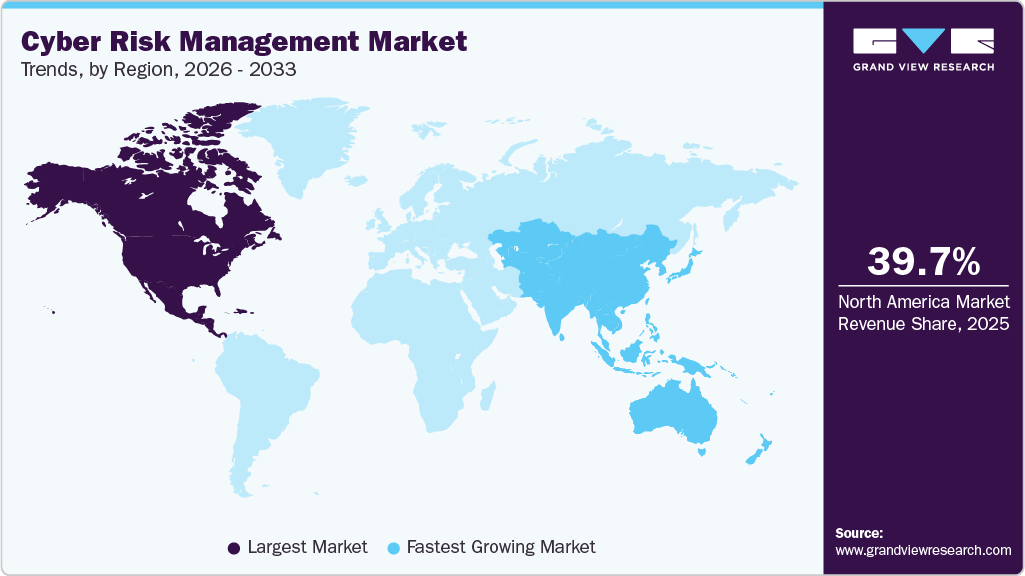
North America cyber risk management industry accounted for the largest market share of 39.7% in 2025, driven by the early adoption of integrated cyber risk platforms across enterprises and the strong presence of advanced cybersecurity vendors offering AI-driven risk analytics, network security, and continuous monitoring solutions. A highly specific trend shaping the region is the rapid integration of cyber risk management with enterprise GRC frameworks, enabling real-time risk quantification and board-level reporting aligned with financial impact metrics. Another key trend is the increasing enforcement of sector-specific cybersecurity regulations and guidelines, which is pushing organizations to adopt automated compliance mapping and continuous risk assessment tools. Additionally, the widespread adoption of zero trust architectures and identity-centric security models is driving demand for solutions that can continuously evaluate user, device, and application risk across hybrid environments. Overall, North America’s leadership is reinforced by its mature digital ecosystem, high cybersecurity spending, and strong alignment between regulatory mandates and enterprise risk management strategies.
 To learn more about this report, Download Free Sample Report
U.S. Cyber Risk Management Market Trends
The cyber risk management industry in the U.S. is characterized by the rapid convergence of cybersecurity and enterprise risk management, with organizations increasingly adopting platforms that quantify cyber risk in financial terms to support board-level decision-making and regulatory reporting. A key trend is the strong alignment with evolving federal cybersecurity mandates and frameworks, driving enterprises to implement continuous monitoring, automated compliance mapping, and zero trust architectures across both public and private sectors. Another notable trend is the growing integration of AI-driven threat intelligence and adversary simulation tools to proactively identify vulnerabilities and prioritize remediation based on real-world attack patterns. Additionally, the increasing frequency of ransomware attacks and supply chain breaches is pushing organizations to strengthen third-party risk management and cyber resilience strategies, including incident response orchestration and recovery planning. Overall, the U.S. market is defined by its focus on proactive, intelligence-led risk management approaches supported by advanced technologies and stringent regulatory oversight.
Europe Cyber Risk Management Market Trends
The cyber risk management industry in Europe is anticipated to register significant growth from 2026 to 2033, driven by the region’s increasingly stringent and evolving regulatory landscape, particularly with frameworks such as GDPR, NIS2, and DORA pushing organizations toward continuous risk assessment, reporting, and compliance automation. A key trend is the growing adoption of integrated cyber risk and governance platforms that enable enterprises to map regulatory requirements in real time and maintain audit-ready security postures across multi-country operations. Another important trend is the rising focus on operational resilience, especially within critical sectors like BFSI, energy, and healthcare, where organizations are investing in advanced risk monitoring, incident response, and recovery capabilities. Additionally, the increasing emphasis on data sovereignty and cross-border data protection is encouraging the deployment of region-specific, secure cloud and hybrid infrastructures with embedded risk management controls. Overall, Europe’s market growth is being shaped by strong regulatory enforcement, heightened risk awareness, and the need for unified, compliance-driven cyber risk management strategies.
The UK cyber risk management industry is gaining strong momentum, driven by the country’s proactive regulatory environment and increasing emphasis on national cyber resilience across both public and private sectors. A key trend is the strong push from regulators and government bodies toward board-level accountability for cyber risk, leading organizations to adopt integrated risk management platforms that provide real-time visibility and compliance reporting. Another notable trend is the growing investment in strengthening SME cybersecurity capabilities through funding programs and standardized security frameworks, expanding adoption beyond large enterprises. Additionally, the rising frequency of ransomware attacks and supply chain breaches is accelerating demand for continuous risk monitoring, third-party risk management, and incident response solutions. Overall, the UK market is being shaped by a combination of regulatory pressure, government-backed initiatives, and increasing enterprise focus on proactive cyber risk governance.
The cyber risk management industry in Germany is expanding rapidly, driven by the country’s strong regulatory enforcement and strict adherence to data protection and cybersecurity standards, particularly under frameworks such as GDPR and the national IT Security Act. A key trend is the increasing adoption of structured risk governance models by enterprises, especially in manufacturing, automotive, and industrial sectors, where operational technology (OT) and IT convergence is significantly expanding the cyber risk surface. Another important trend is the growing focus on critical infrastructure protection, with organizations investing in continuous risk monitoring, threat intelligence, and resilience planning to safeguard energy grids, transportation systems, and industrial networks. Additionally, the shift toward Industry 4.0 and smart factory ecosystems is accelerating demand for integrated cyber risk management solutions that can secure highly automated and interconnected environments. Overall, Germany’s market growth is being driven by regulatory rigor, industrial digitalization, and the need for advanced risk governance across complex industrial ecosystems.
Asia Pacific Cyber Risk Management Market Trends
The cyber risk management industry in the Asia Pacific is expected to register the fastest CAGR from 2026 to 2033, driven by the rapid pace of digital transformation across emerging economies and the large-scale adoption of cloud computing, AI, and connected enterprise ecosystems. A key trend is the increasing frequency and sophistication of cyberattacks targeting fast-growing digital economies such as India, China, and Southeast Asian nations, prompting organizations to invest heavily in proactive cyber risk identification and monitoring solutions. Another important trend is the rising adoption of cloud-first and mobile-first business models, which are significantly expanding the attack surface and accelerating demand for integrated cyber risk management platforms. Additionally, government-led cybersecurity initiatives, stricter data protection regulations, and growing awareness among enterprises about financial and operational risks are further supporting market expansion. Overall, Asia Pacific’s rapid growth is being fueled by expanding digital infrastructure, increasing cyber threat exposure, and accelerating enterprise adoption of advanced risk governance solutions.
The Japan cyber risk management industry is poised for robust growth from 2026 to 2033, driven by the country’s accelerating digital transformation initiatives and increasing adoption of cloud-based enterprise systems across industries such as manufacturing, BFSI, and telecommunications. A key trend is the growing focus on strengthening national cybersecurity resilience in response to rising threats targeting critical infrastructure and industrial control systems, particularly as Japan advances its Society 5.0 vision. Another important trend is the increasing integration of cyber risk management into enterprise-wide digital governance frameworks, enabling organizations to achieve real-time risk visibility, regulatory compliance, and operational continuity. Additionally, the shortage of advanced cybersecurity talent is pushing enterprises to adopt automated risk assessment, AI-driven threat intelligence, and managed security services. Thus, Japan’s market growth is being supported by industrial digitization, heightened threat awareness, and a strong emphasis on resilient and technology-enabled risk management strategies.
The cyber risk management industry in India is poised for rapid expansion from 2026 to 2033, propelled by the country’s accelerating digital economy, large-scale cloud adoption, and widespread digitization of financial services, government platforms, and enterprise operations. A key trend is the increasing exposure of organizations to cyber threats due to the rapid growth of UPI-based digital payments, fintech ecosystems, and e-commerce platforms, which is driving demand for real-time risk monitoring and fraud detection capabilities. Another important trend is the strengthening regulatory landscape, with evolving data protection requirements and cybersecurity guidelines pushing enterprises to adopt structured cyber risk governance frameworks and to monitor compliance continuously. Besides, the rapid adoption of cloud-first strategies and expanding use of AI and IoT across industries are significantly increasing the attack surface, further accelerating demand for advanced cyber risk management solutions. Overall, India’s market growth is being fueled by digital transformation at scale, rising cyber threat intensity, and increasing regulatory and enterprise focus on proactive risk mitigation.
Key Cyber Risk Management Company Insights
Key players operating in the cyber risk management industry are Accenture, Cisco, CrowdStrike, Deloitte, EY, and others. Companies are focusing on various strategic initiatives, including new product development, partnerships & collaborations, and agreements to gain a competitive advantage over their rivals. The following are some instances of such initiatives.
-
In November 2025, Fortinet launched the Secure AI Data Center solution, an end-to-end framework to protect AI infrastructures from cyber risks like data leakage, prompt injection, malicious inputs, and threats to LLMs and GPU clusters. It integrates ASIC-powered firewalls, zero-trust segmentation, encrypted traffic inspection, and AI runtime defenses to enable secure, high-performance AI scaling while ensuring compliance.
-
In February 2025, Accenture acquired CyberCX, its largest cybersecurity deal to date, adding 1,400 experts and AI-powered platforms to enhance cyber risk management in the Asia Pacific. This bolsters capabilities in threat detection, response, crisis management, and resilience against evolving cyber threats and regulatory challenges.
Key Cyber Risk Management Companies:
The following key companies have been profiled for this study on the cyber risk management market.
- Accenture
- Cisco
- CrowdStrike
- Deloitte
- EY
- Fortinet
- IBM
- KPMG
- McAfee
- Palo Alto Networks
- PwC
- Qualys
- Rapid7
- Splunk
- Tenable
Competitive Benchmarking
Operating Strategies
Competitive Edge
Weakness
Mature Players: Deloitte; Accenture; PwC; EY; KPMG; IBM; Cisco; Fortinet; Palo Alto Networks; McAfee
- Bundling cyber risk into broader ESG, financial, and operational risk management programs to ensure "boardroom-level" visibility.
- Leveraging legal and compliance teams to automate the mapping of security controls to shifting global mandates.
- Providing "Virtual CISO" services to help organizations design long-term risk roadmaps without the need for high-cost internal executive hires.
- Strong relationships with CEOs and Boards of Directors, making them the first call for strategic risk planning and crisis management.
- The ability to deploy thousands of consultants globally for manual risk assessments, policy writing, and complex post-breach remediation.
- Proven expertise in securing "high-consequence" traditional infrastructure that many startups overlook.
- The shift from "advisory" to "technical execution" can be slow, often requiring multiple subcontractors or disparate software tools.
- Their reliance on billable hours can make their services cost-prohibitive for mid-market firms looking for automated solutions.
- Large conglomerates struggle to integrate their various acquired security tools into a truly unified risk dashboard.
Emerging Players: CrowdStrike; Qualys; Tenable; Rapid7; Splunk
- Moving away from static "once-a-year" audits toward real-time, automated scanning of the entire attack surface.
- Using machine learning to assign a "dollar value" or "TruRisk" score to vulnerabilities, allowing IT teams to prioritize what to fix first.
- Aggressively expanding into adjacent markets to own the entire data-risk lifecycle.
- Ability to identify and quantify "Zero-Day" risks in cloud and container environments significantly faster than manual advisory processes.
- Providing high-fidelity risk data with minimal human intervention, allowing lean security teams to manage massive, complex digital footprints.
- Leveraging millions of global sensors to provide "community immunity" warning client about a risk discovered at another in real-time.
- They lack the expertise to handle the "Human/Legal" side of risk, such as culture change or legal liability.
- Their risk scores are often proprietary to their platform, making it difficult for clients to compare "risk" across different security vendors.
- The high volume of automated data can overwhelm organizations that lack the mature operational processes to act on the insights provided.
Cyber Risk Management Market Report Scope
Report Attribute
Details
Market size in 2025
USD 3.2 billion
Estimated market size in 2026
USD 3.7 billion
Projected market size by 2033
USD 10.5 billion
Growth rate
CAGR of 16.1% from 2026 to 2033
Actual data
2021 - 2025
Forecast period
2026 - 2033
Quantitative units
Revenue in USD million and CAGR from 2026 to 2033
Report Coverage
Revenue forecast, company share, competitive landscape, growth factors, and trends
Segments covered
Component, deployment, enterprise size, end use, region
Regional scope
North America; Europe; Asia Pacific; Latin America; MEA
Country scope
U.S.; Canada; Mexico; UK; Germany; France; China; India; Japan; Australia; South Korea; Brazil; UAE; Kingdom of Saudi Arabia; South Africa
Key companies profiled
Accenture; Cisco; CrowdStrike; Deloitte; EY; Fortinet; IBM; KPMG; McAfee; Palo Alto Networks; PwC; Qualys; Rapid7; Splunk; Tenable
Customization scope
Free report customization (equivalent to 8 analysts working days) with purchase. Addition or alteration to country, regional & segment scope.
Pricing and purchase options
Avail customized purchase options to meet your exact research needs. Explore purchase options
Global Cyber Risk Management Market Report Segmentation
This report forecasts revenue growth at global, regional, and country levels and provides an analysis of the latest industry trends in each of the sub-segments from 2021 to 2033. For this study, Grand View Research has segmented the global cyber risk management market report based on component, deployment, enterprise size, end use, and region:
-
Component Outlook (Revenue, USD Million, 2021 - 2033)
-
Solutions
-
Risk Assessment & Analysis
-
Risk Control & Monitoring
-
Risk Reporting & Analytics
-
Others
-
-
Services
-
Professional Services
-
Managed Services
-
-
-
Deployment Outlook (Revenue, USD Million, 2021 - 2033)
-
On-Premises
-
Cloud
-
Hybrid
-
-
Enterprise Size Outlook (Revenue, USD Million, 2021 - 2033)
-
Large Size Enterprise
-
Small and Medium Sized Enterprise (SMEs)
-
-
End Use Outlook (Revenue, USD Million, 2021 - 2033)
-
BFSI
-
IT & Telecom
-
Healthcare
-
Government & Defense
-
Retail & E-commerce
-
Energy & Utilities
-
Manufacturing
-
Others
-
-
Regional Outlook (Revenue, USD Million, 2021 - 2033)
-
North America
-
U.S.
-
Canada
-
Mexico
-
-
Europe
-
UK
-
Germany
-
France
-
-
Asia Pacific
-
China
-
India
-
Japan
-
South Korea
-
Australia
-
-
Latin America
-
Brazil
-
-
Middle East & Africa
-
UAE
-
Saudi Arabia
-
South Africa
-
-
Delivered Customization
This report has been delivered with the following In-depth customizations
Client Request
Customization Delivered
Value Adds
Cyber risk exposure assessment for a BFSI organization
Analysis of ransomware, phishing, and third-party risk exposure across banking operations
Evaluation of cyber risk management adoption trends and compliance requirements
Identified high-risk operational areas requiring enhanced security controls
Supported strategic cyber resilience and compliance planning
Regional cyber risk management adoption analysis for a cloud security company
Assessment of adoption trends across North America, Europe, Asia Pacific, and the Middle East
Analysis of regulatory impact and enterprise cybersecurity spending patterns
Identified high-growth regional opportunities
Supported expansion and investment prioritization strategy
Third-party and supply chain cyber risk assessment for an enterprise client
Evaluation of third-party cybersecurity vulnerabilities and vendor risk management practices
Analysis of supply chain attack trends and mitigation strategies
Improved understanding of external cyber risk exposure
Supported development of proactive vendor risk governance frameworks
Frequently Asked Questions About This Report
Asia Pacific is the fastest-growing region over the forecast period.
The solutions segment accounted for the largest share of 82.8% in 2025, while services is growing significantly.
The cloud segment held the highest market share of 62.1% in 2025, while hybrid is growing significantly.
The large enterprise segment held the highest market share in 2025, while small and medium-sized Enterprise is the fastest-growing segment.
The BFSI segment led with a 29.6%revenue share in 2025, while retail & e-commerce is the fastest-growing segment.
The global cyber risk management market size was estimated at USD 3,207.0 million in 2025 and is expected to reach USD 3,690.0 million in 2026.
The global cyber risk management is expected to grow at a compound annual growth rate of 16.1% from 2026 to 2033 to reach USD 10,466.7 million by 2033.
North America dominated with a 39.7% revenue share in 2025.
Some key players operating in the market include Accenture, Cisco, CrowdStrike, Deloitte, EY, Fortinet, IBM, KPMG, McAfee, Palo Alto Networks, PwC, Qualys, Rapid7, Splunk, Tenable, and Others.
Key factors include the rising frequency and sophistication of cyberattacks, including ransomware and phishing incidents, and increasing adoption of cloud computing, remote work, and digital transformation initiatives play a key role in accelerating the cyber risk management market.
About the Author(s)
IT Services & Applications Research Team
Technology · IT Services & ApplicationsThis report was authored by the it services & applications research team at Grand View Research - comprising two research analysts, one senior research analyst, and one industry expert - with specialized expertise in the it services & applications segment of the technology industry. All findings are based on proprietary technology databases, executive interviews, and regulatory analysis, subject to internal peer review prior to publication.
Last Updated:
Speak to Analyst

Customize this report to your needs - add regions, segments, or data points, with 20% free customization.
Or view our licence options:


ISO 9001:2015 & 27001:2022 Certified
We are GDPR and CCPA compliant! Your transaction & personal information is safe and secure. For more details, please read our privacy policy.


