
- Home
- »
- Pharmaceuticals
- »
-
Dementia Treatment Market Size & Share Report, 2026-2033GVR Report cover

Dementia Treatment Market (2026 - 2033)
Size, Share & Trends Analysis Report By Indication, By Drug Class, By Route Of Administration (Oral, Transdermal Patch, Injectable), By Distribution Channel, By Region, And Segment Forecasts
Market Size, 2025
$19.1BMarket Estimate, 2026
$20.3BMarket Forecast, 2033
$34.0BCAGR, 2026–2033
7.6%Dementia Treatment Market Summary
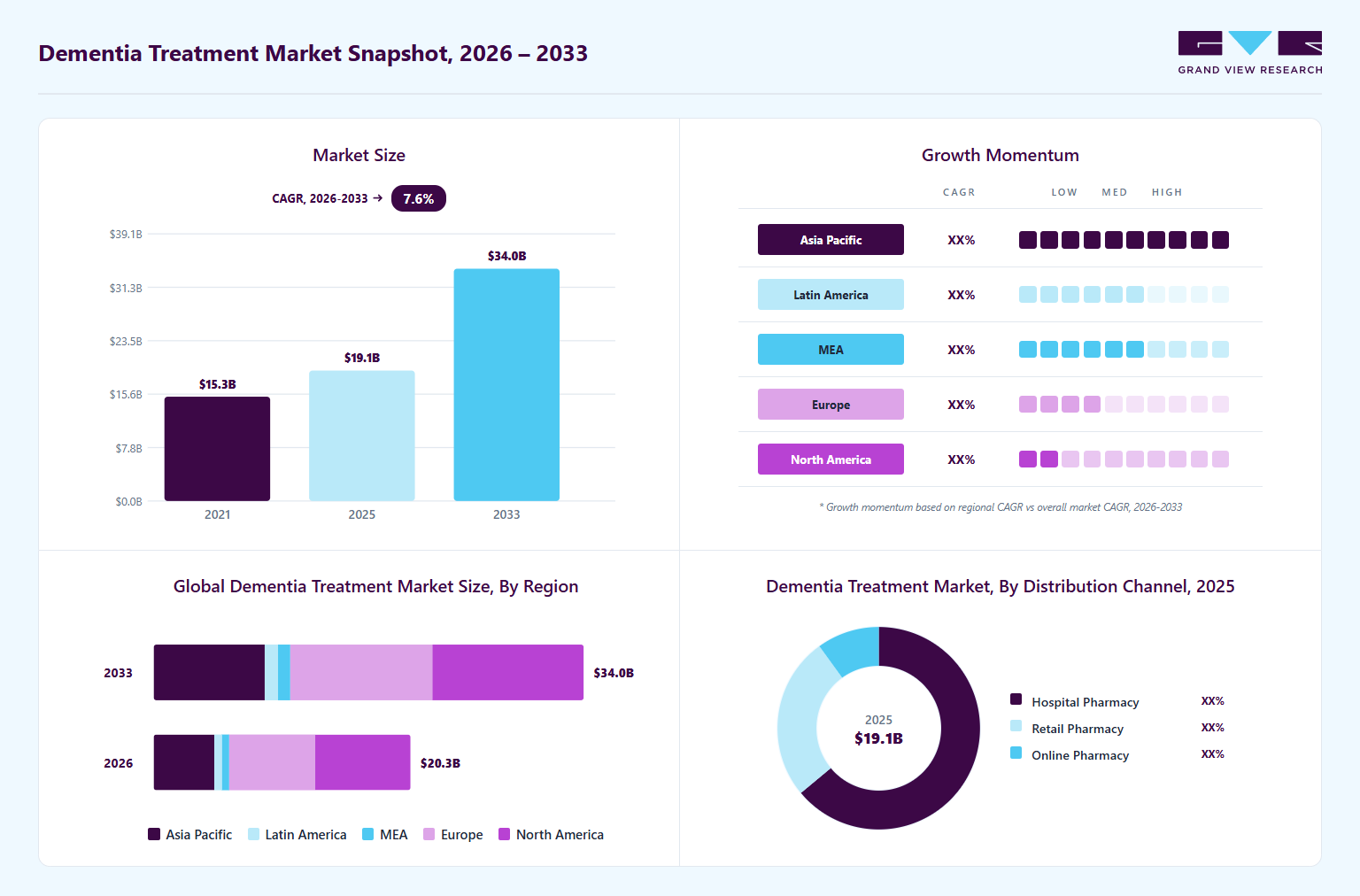
The global dementia treatment market size was valued at USD 19.1 billion in 2025 and is projected to grow from USD 20.3 billion in 2026 to USD 34.0 billion by 2033, growing at a CAGR of 7.6% from 2026 to 2033. North America dominated the market with the largest revenue share of 37.4% in 2025. The market growth is attributed to the high disease prevalence, rising geriatric population, introduction of novel therapeutic products, and increasing R&D activities in the market.
 Source: Grand View Research, IR Documents, Primary Interviews, Paid DatabasesTo learn more about this report,
 Download Free Sample Report
Key Market Trends & Insights
- By indication: Alzheimer’s disease dementia segment led the market with the largest revenue share of 59.6% in 2025.
- By drug class: Cholinesterase inhibitors segment led the market with the largest revenue share of 44.0% in 2025.
- By route of administration: Oral segment led the market with the largest revenue share of 54.0% in 2025.
- By distribution channel: Hospital pharmacy segment led the market with the largest revenue share of 64.0% in 2025.
Regional Highlights
- Largest regional market: North America (37.4% revenue share, 2025)
- By country: The U.S. held the largest market share in 2025.
Market Size & Forecast
- Market size in 2025: USD 19.1 Billion
- Estimated market size in 2026: USD 20.3 Billion
- Projected market size by 2033: USD 34.0 Billion
- CAGR (2026-2033): 7.6%
Three ways to get this report
Buy it, customize it, or ask a question.Ask an Analyst
Analyst response in 1 business day
- AccessReport author, directly
- Reply timeWithin 1 working day
- No sales callDirect answer only
- FormatEmail reply
- CostFree, no cost
Get the Full Report
What the study covers
- FormatsPDF · Excel · Dashboard
- Timeline2026–2033 annual, 2025 base
- Coverage20+ countries, 5 regions
- Companies10+ key players profiled
Customize the Report
20% free customization
- IncludeCountries, segments, points
- TailorTo your product definition
- ExtendDeeper competitor detail
- OrA fully bespoke study
- Turnaround5–10 working days
For instance, according to the NCBI, in 2023, in the U.S., around 6.7 million people aged 65 years and above had Alzheimer’s disease dementia and it is estimated to reach around 13.8 million by 2060. Moreover, increasing supportive government initiatives and growing awareness programs to educate people about the disease are further anticipated to drive market growth. The increasing prevalence of dementia is one of the major factors driving market growth.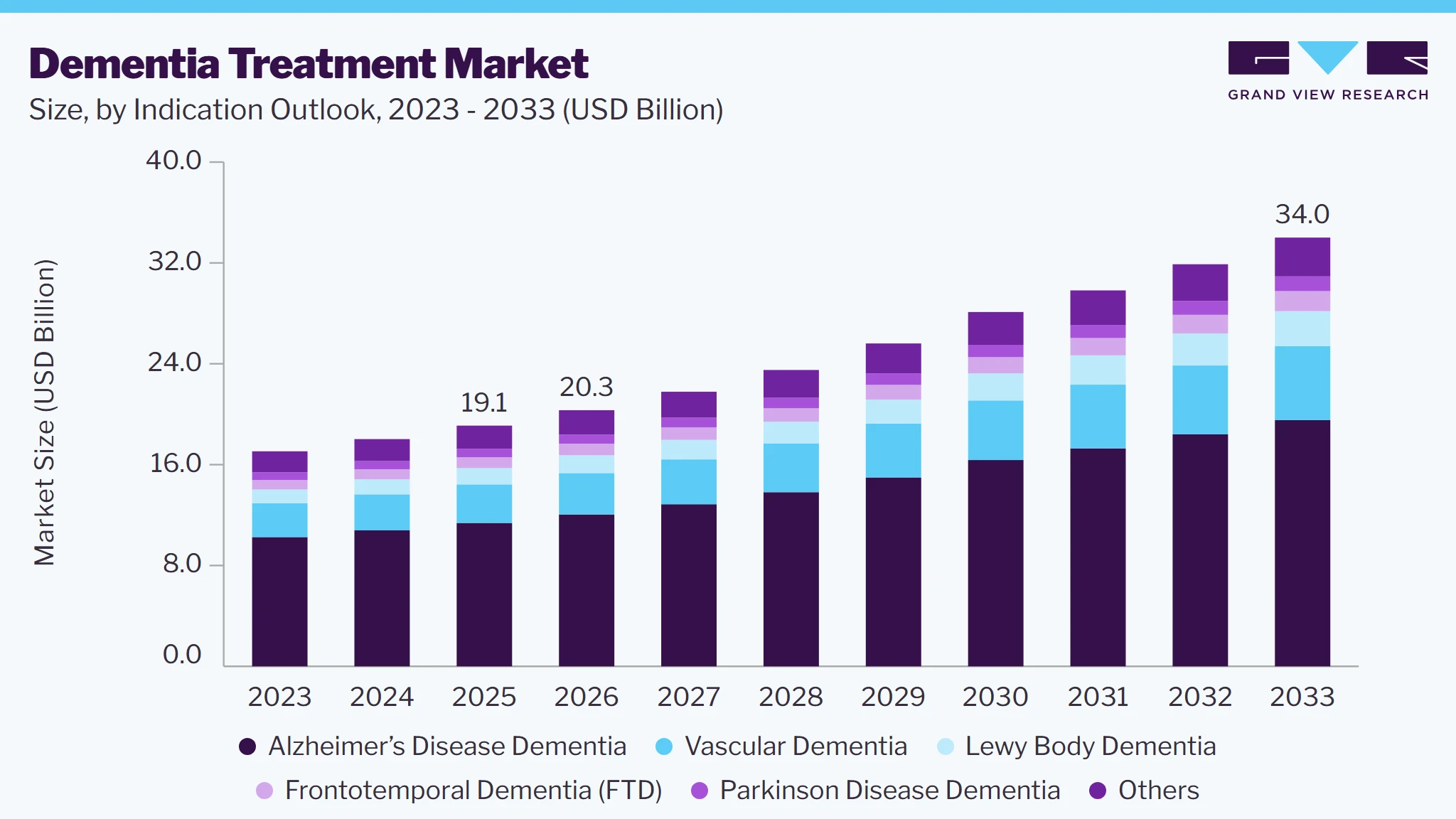 To learn more about this report, Download Free Sample Report
According to the WHO data published in March 2023, more than 55 million people suffer from dementia worldwide and it is predicted to reach 78 million and 139 million by 2030 and 2050, respectively. Moreover, around 10 million new cases of the disease are reported every year. The prevalence of the disease is comparatively higher in developing economies, such as China, India, and Brazil. The introduction and development of novel therapeutic products for different types of dementia is expected to support the growth. In November 2023, Eisai Co., Ltd. announced the launch of Leqembi in the U.S. market and the company aimed that the drug would be prescribed to 10,000 patients by the end of March 2024. Leqembi received approval from the U.S. FDA in July 2023.
Favorable initiatives are being undertaken by government and non-government bodies to improve the overall healthcare services for patients and spread awareness among people. In December 2023, the U.S. Department of Health & Human Services (HHS) released a roadmap of strategies to support research activities, increase treatment rates, improve health services to support dementia patients, and encourage action to reduce risk factors associated with the disease. Similarly, in September 2022, Corium, Inc. announced the availability of Adlarity (donepezil transdermal system) for prescription in the U.S. for the treatment of mild, moderate, or severe dementia related to Alzheimer’s disease. In March 2022, the U.S. FDA approved Adlarity for the treatment of Alzheimer’s disease dementia.
Moreover, government bodies are providing financial aid to accelerate clinical research to develop novel drugs for the targeted disease. For instance, in November 2023, the National Institutes of Health announced a funding opportunity for the development of novel therapeutic drugs for Alzheimer’s disease and related dementia. The funding will be provided to support phase 1 and 2 clinical trials to accelerate the evaluation of promising drug candidates. The presence of strong pipeline candidates under clinical trials for dementia is expected to boost market expansion. As of January 2023, there were 36 drugs in phase-3, 87 drugs in phase-2, and 31 drugs in phase-1 clinical trials.
Increasing R&D activities to develop novel biological and other drug classes are anticipated to fuel market growth. Clinical studies related to anti-amyloid antibodies show promising results in clinical trials. For instance, lecanemab and donanemab drug candidates showed cognitive decline by 27% at 18 months of treatment and about 35% at 18 months of treatment, respectively. Moreover, amyloid clearance was observed in 68% of participants in the phase-3 trial of lecanemab and 80% in the donanemab phase-3 trial.
Market Dynamics
The Dementia Treatment Market is experiencing steady growth driven by the rising prevalence of dementia disorders and the increasing aging population worldwide. Growing awareness of early diagnosis and disease management is supporting demand for pharmacological therapies and supportive care solutions. Healthcare systems are focusing on improving access to treatment options as the economic and social burden of dementia continues to increase. For instance, in 2025, healthcare providers and pharmaceutical companies expanded efforts to integrate newly approved disease modifying therapies for Alzheimer’s disease into clinical practice, reflecting a shift toward treatments that target underlying disease mechanisms rather than symptom management alone. Ongoing investments in neurological research, biomarker-based diagnostics, and personalized treatment approaches are further strengthening market development. At the same time, challenges related to high treatment costs, limited curative options, and reimbursement complexities continue to influence adoption rates. Increasing collaboration between healthcare organizations, research institutions, and drug manufacturers is expected to support innovation and improve long term treatment outcomes across the dementia care landscape.
The Dementia Treatment Market is being driven by the increasing adoption of disease modifying therapies that address the underlying pathology of Alzheimer’s disease. Healthcare providers are emphasizing early diagnosis and intervention to improve patient outcomes and slow disease progression. Advances in biomarker testing, neuroimaging technologies, and clinical assessment tools help identify eligible patients at earlier stages of disease development. At the same time, pharmaceutical companies are expanding investments in neurological research to develop therapies that offer benefits beyond symptom management. These factors encourage healthcare systems to strengthen dementia care infrastructure and support broader access to innovative treatments. For instance, in July 2024, the U.S. Food and Drug Administration approved Kisunla (donanemab) for adults with early symptomatic Alzheimer’s disease. The approval was supported by a Phase III clinical trial involving 1,736 patients across 277 study sites in 8 countries, with participants receiving treatment for up to 72 weeks. The approval strengthened confidence in disease modifying approaches and supported the expansion of advanced dementia treatment adoption across major healthcare markets.
The high economic burden associated with dementia care remains a significant challenge for market growth. Patients often require continuous medical monitoring, cognitive evaluations, medication management, long term support services, and caregiver assistance, leading to substantial healthcare expenditures over time. The introduction of advanced therapies has improved treatment possibilities but has also increased overall care costs, creating affordability concerns for healthcare systems and families. Limited reimbursement coverage in several regions further restricts patient access to innovative therapies. These financial challenges can delay treatment initiation and reduce adoption rates despite growing clinical demand. For instance, in May 2024, Alzheimer’s Society reported that the annual cost of dementia in the United Kingdom had reached £42 billion, equivalent to approximately USD 53 billion. The report found that families carried 63% of the total dementia related financial burden, while only 1.4% of dementia healthcare spending was directed toward diagnosis and treatment. The study, based on records from 26,000 individuals, also projected that annual costs could increase to approximately USD 114 billion, by 2040 if current trends continued.
The expanding clinical development pipeline presents a significant opportunity for the Dementia Treatment Market. Growing scientific understanding of neurodegenerative diseases is supporting the development of therapies targeting amyloid plaques, tau proteins, neuroinflammation, and other disease pathways. Pharmaceutical and biotechnology companies are increasing research investments to address unmet clinical needs and improve treatment effectiveness. Improvements in biomarker technologies and patient identification methods are also enhancing clinical trial efficiency and accelerating therapeutic development. As more candidates progress through clinical stages, the likelihood of future approvals increases, creating opportunities for market expansion and improved patient outcomes. For instance, in January 2026, the Alzheimer’s Association reported that the Alzheimer’s disease drug development pipeline included 192 active clinical trials evaluating 158 investigational drugs. The pipeline consisted of 54 Phase III trials assessing 36 drugs, 89 Phase II trials assessing 84 drugs, and 49 Phase I trials assessing 45 drugs. The report further noted that 54,728 participants were required across active studies, including 38,417 participants in Phase III trials, highlighting the substantial scale of investment and future commercialization opportunities within dementia therapeutics.
Analyst Perspective
The Dementia Treatment Market is undergoing a transition from symptomatic management toward disease modifying therapeutic approaches, creating new growth opportunities across the neurological care landscape. Increasing prevalence of Alzheimer’s disease and other dementia disorders, combined with a rapidly aging global population, continues to drive treatment demand. Recent approvals of anti-amyloid therapies have strengthened industry focus on early diagnosis, biomarker testing, and precision medicine. At the same time, affordability concerns, reimbursement challenges, and complex clinical development pathways remain important market constraints. Continued investment in neuroscience research and expanding therapeutic pipelines are expected to support innovation and long-term market expansion.
Indication Insights
Based on indication, the alzheimer’s disease dementia segment led the market with the largest revenue share of 59.6% in 2025, owing to the high number of disease cases associated with AD, high treatment rates, and increased awareness among people. According to the WHO, Alzheimer’s disease is the most common form of the disease, which contributes to 60%-70% of all dementia cases. Moreover, increasing approval of novel therapeutic drugs for the treatment is expected to drive segment growth. For instance, in September 2023, Eisai Co., Ltd. received market approval from the Ministry of Health, Labor and Welfare for lecanemab to treat dementia due to AD in Japan.
The Lewy body dementia (LBD) segment is anticipated to grow at the fastest CAGR of 10.6% from 2025 to 2030 owing to the increasing cases and severity of this health condition. It is more rapid than other types of dementia and patients can experience more symptoms and sudden decline. According to the Lewy Body Society, LBD accounts for 15% of all types of disease forms and it is expected to increase in the coming years.
Drug Class Insights
Based on drug class, the cholinesterase inhibitors segment led the market with the largest revenue share of 44.0% in 2025. High prescription rates of donepezil, rivastigmine, and galantamine and better results are some of the key factors supporting market growth. Moreover, the increasing adoption of transdermal cholinesterase inhibitors and their high safety & effectiveness are further supporting market growth. For instance, in July 2024, the US FDA approved Alpha Cognition Inc.’s ALPHA-1062 (Zunveyl), an Acetylcholinesterase (AChE) inhibitor, for treating mild-to-moderate Alzheimer’s disease in the U.S.
Combination drugs are projected to grow at the fastest rate of 10.2% over the forecast period. Increasing adoption of combination therapy due to its better results and increasing introduction of novel combination drugs are key factors driving market growth. For instance, in January 2025, Amneal Pharmaceuticals LLC received U.S. FDA approval for memantine/donepezil, indicated for moderate to severe Alzheimer’s dementia, granting 180-day exclusivity within the U.S. Increasing approval of cholinesterase inhibitors and NMDA receptor antagonist combinations across the globe is boosting segment growth.
Route of Administration Insights
Based on route of administration, the oral segment led the market with the largest revenue share of 54.0% in 2025. High market penetration of oral drugs, such as memantine, donepezil, rivastigmine, galantamine, and others, a large number of pharmaceutical companies offering these oral drugs, and increasing approval of oral drugs are the key factors driving the segment expansion. For instance, in December 2024, Cognition Therapeutics announced positive topline results from its Phase 2 SHIMMER study in the U.S., demonstrating CT1812’s therapeutic potential for treating dementia with Lewy bodies across multiple measures, including behavior and cognition.
Injectable drugs are expected to experience the fastest growth of 9.6% over the forecast period. Increasing R&D activities to develop novel biological therapeutics, approval of injectable drugs, and improved results in treating dementia are some major factors anticipated to drive segment growth. For instance, in January 2024, Eisai and Biogen announced the approval of LEQEMBI (lecanemab) in China for treating mild cognitive impairment and mild Alzheimer’s disease dementia, with launch preparations underway. The increasing introduction of novel injectable drugs is expected to propel the segment growth significantly.
Distribution Channel Insights
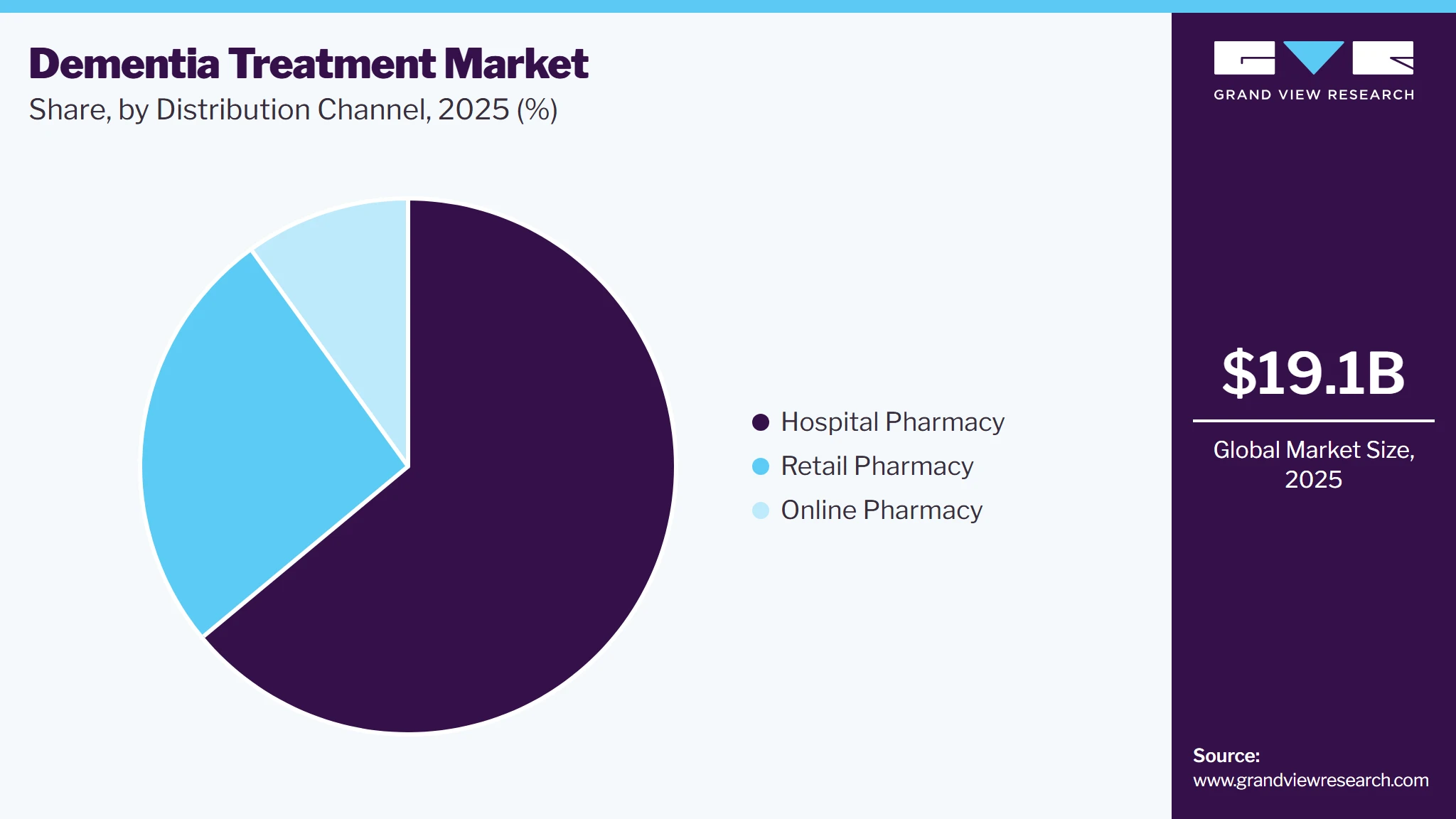
Based on distribution channel, the hospital pharmacy segment led the market with the largest revenue share of 64.0% in 2025. The increasing hospitalization rate due to dementia among the geriatric population is supporting the segment’s growth. According to the Alzheimer’s Association Report 2023, there were 518 hospitalizations per 1,000 Medicare beneficiaries aged 65 years and older having Alzheimer’s or other types of dementia as compared to only 234 hospitalizations per 1,000 Medicare beneficiaries without these conditions.
 To learn more about this report, Download Free Sample Report
Online pharmacies are projected to grow at the fastest CAGR of 10.6% over the forecast period. Increased user base of internet & smartphone, ease of ordering medications through an e-commerce platform, and increasing e-commerce services offering medicinal products globally are expected to fuel segment growth in the coming years. Moreover, increasing adoption of telemedicine to manage mental health is further anticipated to support segment growth in the coming years.
Regional Insights
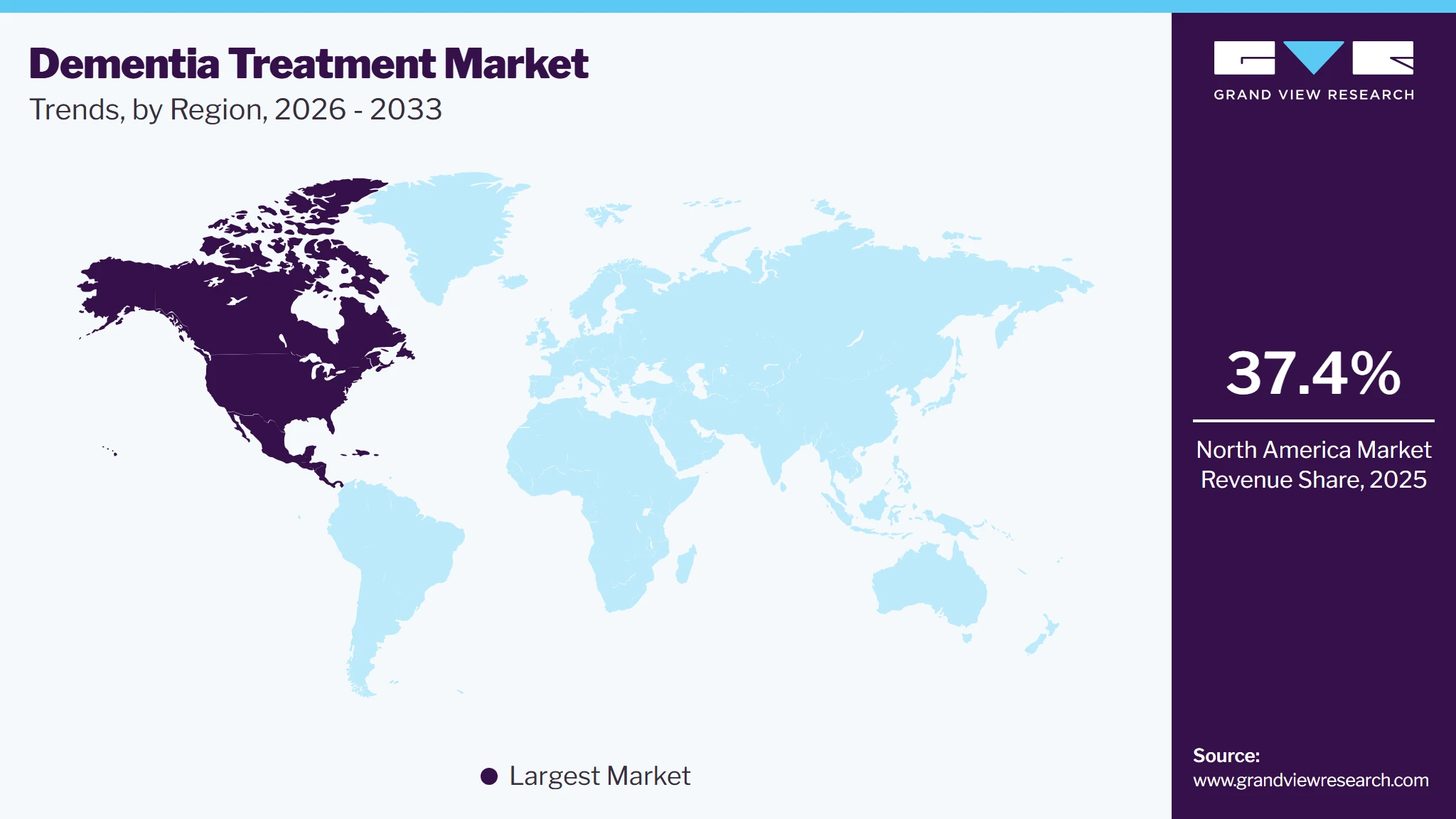
North America dominated the dementia treatment market with the largest revenue share of 37.4% in 2025. High disease prevalence, presence of key pharmaceutical companies involved in the marketing & development of novel dementia drugs, and favorable government initiatives are some of the key factors supporting market growth. For instance, in January 2024, Health Canada approved REXULTI (brexpiprazole), co-developed by Otsuka and Lundbeck to managing agitation associated with Alzheimer’s dementia.
 To learn more about this report, Download Free Sample Report
U.S. Dementia Treatment Market Trends
The dementia treatment market in the U.S. held the largest share in the North America region in 2025, aided by a strong presence of key players, better reimbursement policies, improved healthcare infrastructure, and favorable initiatives undertaken by government & non-government bodies to improve the healthcare services for dementia patients. For instance, in October 2023, U.S.-based CuraSen Therapeutics announced the initiation of a human clinical trial with a new neurodegenerative disease drug, CST-3056 in the 4th quarter of 2024. The company has received funding of USD 5.8 million from the Alzheimer’s Drug Discovery Foundation.
Europe Dementia Treatment Market Trends
Europe dementia treatment market held substantial market share in 2024. According to the Alzheimer Europe Dementia in the Europe Yearbook 2024, the number of cases with dementia in the European Union is estimated to be 7,853,705, and in the broader European region, 9,780,678. These numbers are expected to increase significantly in the coming years. Europe’s aging population and increasing life expectancy has led to a significant rise in cases of dementia.
The dementia treatment market in Germany is expected to grow rapidly in the forecast period. Germany has made significant progress in addressing dementia, with research and funding playing a crucial role. For instance, In September 2023, a study by the Robert Koch Institute in Germany predicted a rise in dementia cases from 1.7 million in 2023 to 3.0 million cases by 2070 in Germany. The German Federal Ministry of Education and Research has been at the forefront of dementia research, while the EU Joint Programme - Neurodegenerative Disease Research (JPND) has launched a transnational call for health and social care research. Notably, Germany contributed to global efforts, aiming to find a treatment for Alzheimer’s by 2025. This commitment is demonstrated by conferences such as ISAD-2025 in Berlin, which highlights the nation’s focus on dementia treatment.
Asia Pacific Dementia Treatment Market Trends
Asia Pacific dementia treatment market is expected to register the fastest CAGR of 9.5% in the forecast period. The presence of a large target population, high unmet clinical needs, and developing healthcare is anticipated to provide high growth potential for the regional market. It is expected that more than 75% of Alzheimer’s disease and related dementias to occur in low- and middle-income countries by 2050. Developing countries, such as China and India, have a large patient base with high unmet medical needs that create market opportunities for key players in the region.
The dementia treatment market in India is anticipated to grow at the fastest rate over the forecast period. Market growth in the country is supported by large target population, high unmet clinical needs, developing healthcare infrastructure, and a rising geriatric population. Ongoing research in India encompasses synaptic plasticity therapies, novel molecule synthesis, and digital media innovations to enhance dementia care and explore stem cell treatments. In October 2024, according to the Government of India, scientists from the Agharkar Research Institute, Pune, designed novel molecules for Alzheimer’s treatment, developing non-toxic molecules and used them to create selective cholinesterase inhibitors for potential application in India.
Key Dementia Treatment Company Insights
Some leading players operating in the market include Eisai Co., Ltd. Lilly, Daiichi Sankyo Company, Ltd., and Biogen. Key companies are adopting different strategies, such as new product development, collaboration, and partnership, to increase their industry footprint. Emerging companies are focusing on achieving funding support from government bodies and healthcare organizations to support their research activities related to the development of novel treatments for dementia. For instance, in October 2024, AbbVie Inc. announced the acquisition of Aliada Therapeutics. This strengthens their focus on Alzheimer’s research in North America, with the lead compound, ALIA-1758, showing promise. The acquisition leverages novel blood-brain barrier technology.
-
Biogen, a leader in neurology, is developing treatments for Alzheimer’s, focusing on therapies targeting Alzheimer’s pathology, including early-stage disease. They are working on novel therapies and drugs.
-
Lundbeck is developing treatments for brain disorders. They are pioneering treatments for Alzheimer’s and have treatments for this disease, including dealing with symptoms of Alzheimer’s disease. They are working on improving the quality of life for patients.
Key Dementia Treatment Companies:
The following key companies have been profiled for this study on the dementia treatment market.
-
Eisai Co., Ltd.
-
Eli Lilly and Company
-
Novartis AG
-
DAIICHI SANKYO COMPANY, LIMITED
-
AbbVie Inc.
-
Lundbeck
-
Biogen
-
Cipla
-
Sun Pharmaceutical Industries Ltd.
-
Viatris Inc.
Competitive Benchmarking
Category
Operating Strategies
Competitive Edge
Weakness
Established Players (Eisai Co., Ltd., Eli Lilly and Company, Novartis AG, AbbVie Inc., Lundbeck, Biogen)
- Focus on expanding dementia treatment portfolios through the development and commercialization of disease modifying therapies, cognitive enhancement drugs, and next generation neurodegenerative disease treatments. Invest heavily in clinical trials, biomarker research, precision medicine approaches, and strategic collaborations with academic institutions and healthcare organizations. Strengthen market presence through regulatory approvals, label expansions, and integration of diagnostic and therapeutic solutions for early stage dementia management.
- Strong research and development capabilities supported by substantial financial resources and extensive neuroscience expertise. Established global commercial infrastructure, broad regulatory experience, and long standing relationships with healthcare providers, hospitals, and reimbursement agencies support rapid product adoption and market access.
- High research and development expenditure associated with lengthy clinical development timelines and elevated failure rates in neurodegenerative disease programs. Dependence on regulatory approvals and reimbursement decisions can delay commercialization and limit revenue realization from innovative therapies.
Emerging and Generic Focused Players (DAIICHI SANKYO COMPANY, LIMITED, Cipla, Sun Pharmaceutical Industries Ltd., Viatris Inc.)
- Focus on expanding access to dementia therapies through generic formulations, cost effective treatment alternatives, and strategic participation in neurology focused drug development programs. Emphasize regional market expansion, licensing agreements, contract manufacturing, and portfolio diversification to strengthen presence in cognitive disorder treatment markets. Pursue opportunities in emerging economies with growing elderly populations and increasing dementia diagnosis rates.
- Competitive manufacturing capabilities and cost-efficient production models enable broad market reach and affordability. Strong presence in emerging markets and established distribution networks support penetration into regions with rising demand for dementia therapies and healthcare access improvements.
- Limited presence in innovative disease modifying therapy development compared with leading neuroscience focused companies. Greater exposure to pricing pressure, generic competition, and lower profit margins may restrict investment capacity for advanced dementia research and large-scale clinical programs.
Recent Developments
-
In February 2025, the University of Edinburgh, UK, initiated a BHF-funded project led by Dr. Jing Qiu. The study explores Nrf2’s role in vascular dementia by targeting endothelial cells in the brain. It aims to identify therapeutic strategies and involves collaborative efforts.
-
In July 2024, the FDA approved Alpha Cognition’s oral therapy ZUNVEYL for treating Alzheimer’s disease in the US, offering a novel dual mechanism of action and improved tolerability.
-
In July 2024, the FDA approved Lilly’s Kisunla (donanemab-azbt) in the US. The Alzheimer’s treatment demonstrated up to 35% slower cognitive decline and was the first amyloid plaque-targeting therapy with a limited treatment duration.
-
In February 2024, the FDA granted Breakthrough Therapy Designation to latozinemab in the U.S. Alector and GSK announced this, marking the drug’s potential for treating frontotemporal dementia due to a progranulin gene mutation (FTD-GRN).
Dementia Treatment Market Report Scope
Report Attribute
Details
Market size in 2025
USD 19.1 billion
Estimated market size in 2026
USD 20.3 billion
Projected market size by 2033
USD 34.0 billion
Growth rate
CAGR of 7.6% from 2026 to 2033
Historical data
2021 - 2024
Forecast period
2026 - 2033
Quantitative units
Revenue in USD million/billion and CAGR from 2026 to 2033
Report coverage
Revenue forecast, company ranking, competitive landscape, growth factors, and trends
Segments covered
Indication, drug class, route of administration, distribution channel, region
Regional scope
North America; Europe; Asia Pacific; Latin America; MEA
Country scope
U.S.; Canada; Mexico; Germany; UK; France; Italy; Spain; Norway; Denmark; Sweden; Russia; Iceland; Finland; China; Japan; India; South Korea; Australia; Thailand; Singapore; Brazil; Argentina; Saudi Arabia; South Africa; UAE; Kuwait; Israel
Key companies profiled
Eisai Co., Ltd.; Eli Lilly and Company; Novartis AG; DAIICHI SANKYO COMPANY, LIMITED; AbbVie Inc.; Lundbeck; Biogen; Cipla; Sun Pharmaceutical Industries Ltd.; Viatris Inc.
Customization scope
Free report customization (equivalent up to 8 analysts' working days) with purchase. Addition or alteration to country, regional & segment scope.
Pricing and purchase options
Avail customized purchase options to meet your exact research needs. Explore purchase options
Global Dementia Treatment Market Report Segmentation
This report forecasts revenue growth at global, regional, and country levels and provides an analysis of the latest industry trends in each of the sub-segments from 2021 to 2033. For this study, Grand View Research has segmented the global dementia treatment market report based on indication, drug class, route of administration, distribution channel, and region:
-
Indication Outlook (Revenue, USD Million, 2021 - 2033)
-
Alzheimer’s Disease Dementia
-
Vascular Dementia
-
Lewy Body Dementia
-
Frontotemporal Dementia (FTD)
-
Parkinson Disease Dementia
-
Others
-
-
Drug Class Outlook (Revenue, USD Million, 2021 - 2033)
-
Cholinesterase Inhibitors
-
NMDA Receptor Antagonist
-
MAO Inhibitors
-
Combination Drug
-
Others
-
-
Route of Administration Outlook (Revenue, USD Million, 2021 - 2033)
-
Oral
-
Transdermal Patch
-
Injectable
-
-
Distribution Channel Outlook (Revenue, USD Million, 2021 - 2033)
-
Hospital Pharmacy
-
Retail Pharmacy
-
Online Pharmacy
-
-
Regional Outlook (Revenue, USD Million, 2021 - 2033)
-
North America
-
U.S.
-
Canada
-
Mexico
-
-
Europe
-
Germany
-
UK
-
France
-
Italy
-
Spain
-
Denmark
-
Sweden
-
Norway
-
-
Asia Pacific
-
China
-
Japan
-
India
-
South Korea
-
Australia
-
Thailand
-
-
Latin America
-
Brazil
-
Argentina
-
-
Middle East and Africa
-
South Africa
-
Saudi Arabia
-
UAE
-
Kuwait
-
-
Research Methodology
The dementia treatment market figures in this report are based on a proven research process that combines executive interviews with secondary research from proprietary databases, company filings, and recognized regulatory and institutional sources. Market size is built through value-chain sizing - reconciling supply-side and demand-side estimates - and triangulated with bottom-up and top-down approaches. Every estimate passes multiple levels of expert validation before publication, with each dementia treatment segment quantified using the revenue-capture definitions in the table below.
Segment Definition
Segment - Indication
Revenue capture definition
Alzheimer’s Disease Dementia
Revenue generated from pharmaceutical products prescribed for the treatment and management of Alzheimer’s disease dementia. This includes cholinesterase inhibitors, NMDA receptor antagonists, anti-amyloid therapies, combination therapies, and other approved or prescribed medications used across mild, moderate, and severe stages of Alzheimer’s disease. All revenue associated with Alzheimer’s disease dementia treatment is assigned exclusively to this segment irrespective of drug class, route of administration, or treatment setting.
Vascular Dementia
Revenue generated from therapies prescribed for vascular dementia, including medications used to manage cognitive impairment, behavioral symptoms, and underlying vascular risk factors contributing to disease progression. Revenue from treatments specifically prescribed for vascular dementia is classified solely within this segment and excluded from all other dementia indications.
Lewy Body Dementia
Revenue generated from therapies used in the treatment and management of Lewy body dementia, including cognitive enhancers, symptomatic treatments, and supportive pharmacological interventions. All revenue associated with Lewy body dementia patients is attributed exclusively to this segment regardless of treatment stage or care setting.
Frontotemporal Dementia (FTD)
Revenue generated from medications prescribed for frontotemporal dementia, including therapies used to manage behavioral symptoms, mood disturbances, and cognitive decline associated with FTD. Revenue from all pharmaceutical treatments utilized specifically for frontotemporal dementia is reported solely within this segment.
Parkinson Disease Dementia
Revenue generated from therapies used for Parkinson disease dementia, including cognitive enhancement medications and treatments addressing associated neuropsychiatric symptoms. Revenue attributable to pharmaceutical products prescribed for Parkinson disease dementia is assigned exclusively to this category.
Others
Revenue generated from treatments used for all other dementia indications not separately categorized above. This includes mixed dementia, alcohol related dementia, Huntington disease associated dementia, Creutzfeldt Jakob disease related dementia, and other rare or emerging dementia conditions. Revenue is allocated to this segment only when it does not belong to the predefined indication categories.
Segment - Drug Class
Revenue capture definition
Cholinesterase Inhibitors
Revenue generated from dementia therapies belonging to the cholinesterase inhibitor class, including donepezil, rivastigmine, galantamine, and related products. These therapies function by increasing acetylcholine availability to support cognitive function. Revenue from all cholinesterase inhibitor-based products is assigned exclusively to this segment.
NMDA Receptor Antagonist
Revenue generated from dementia therapies utilizing NMDA receptor antagonist mechanisms, primarily memantine and related products. These medications regulate glutamate activity to help manage cognitive symptoms in moderate to severe dementia. Revenue from all NMDA receptor antagonist therapies is classified solely within this segment.
MAO Inhibitors
Revenue generated from monoamine oxidase inhibitor therapies prescribed in dementia management, particularly where treatment is directed toward Parkinson disease dementia and associated neurological symptoms. Revenue from all MAO inhibitor products used within dementia treatment pathways is attributed exclusively to this segment.
Combination Drug
Revenue generated from combination therapies containing two or more active pharmaceutical ingredients approved for dementia treatment. This includes products such as memantine and donepezil combination formulations as well as future combination therapies introduced into the market. Revenue from these products is assigned solely to this segment.
Others
Revenue generated from dementia therapies not included within the above drug classes. This includes anti amyloid monoclonal antibodies, anti tau therapies, neuroprotective agents, symptomatic behavioral management drugs, investigational disease modifying therapies that have reached commercialization, and other emerging pharmaceutical classes. Revenue is allocated here only when it does not belong to the predefined drug class categories.
Segment - Route of Administration
Revenue capture definition
Oral
Revenue generated from dementia treatment products administered orally, including tablets, capsules, oral solutions, and other ingestible formulations. This segment includes cholinesterase inhibitors, NMDA receptor antagonists, combination therapies, and other oral medications prescribed for dementia management. Revenue is attributed to this segment when the product's primary route of administration is oral.
Transdermal Patch
Revenue generated from dementia therapies delivered through transdermal patch systems. This includes products designed to provide continuous drug delivery through the skin over a specified period. Revenue from all transdermal dementia treatment products is assigned exclusively to this segment.
Injectable
Revenue generated from dementia therapies administered through injectable routes, including intravenous infusions, subcutaneous injections, and other parenteral formulations. This segment primarily includes monoclonal antibodies, biologics, and emerging disease modifying therapies commercialized for dementia treatment. Revenue is attributed solely to this segment when the therapy is administered via injection or infusion.
Segment - Distribution Channel
Revenue capture definition
Hospital Pharmacy
Revenue generated from dementia treatment products dispensed, administered, and billed through hospital pharmacies and hospital affiliated neurology departments. This includes inpatient and outpatient administration of oral therapies, injectable biologics, infusion based treatments, and other dementia medications managed within hospital settings. Revenue is assigned to this segment when the product is distributed through a hospital pharmacy channel.
Retail Pharmacy
Revenue generated from dementia treatment products dispensed through retail pharmacy networks, including chain pharmacies, independent pharmacies, community pharmacies, and drug stores. This segment includes prescription fulfillment for oral medications, transdermal patches, and other approved dementia therapies obtained through retail outlets. Revenue is attributed to this segment when products are distributed via retail pharmacy channels.
Online Pharmacy
Revenue generated from dementia treatment products dispensed through licensed online pharmacies and digital pharmaceutical distribution platforms. This includes home delivery services, electronic prescription fulfillment, and internet based pharmacy operations supplying dementia medications directly to patients or caregivers. Revenue is classified within this segment when the product is purchased and distributed through an online pharmacy channel.
Estimation Model
The Dementia Treatment Market size is calculated through a combination of secondary research, primary research, and data triangulation techniques. The process begins with extensive secondary research using sources such as annual reports of pharmaceutical companies, regulatory agency databases, healthcare organization publications, scientific journals, clinical trial registries, investor presentations, and government health statistics. Epidemiological data related to Alzheimer's disease dementia, vascular dementia, Lewy body dementia, frontotemporal dementia, Parkinson disease dementia, and other dementia types are collected to establish the patient population. Information on approved drugs, treatment guidelines, prescription volumes, pricing trends, reimbursement policies, and healthcare expenditure is also analyzed across major regions.
The market estimation utilizes both bottom up and top-down approaches. In the bottom-up approach, revenues generated from dementia treatment products including cholinesterase inhibitors, NMDA receptor antagonists, combination therapies, anti-amyloid monoclonal antibodies, and other emerging treatments are aggregated at the company level. Sales data are mapped across indications, drug classes, routes of administration, and distribution channels. Patient treatment rates, diagnosis rates, average annual therapy costs, and regional drug utilization patterns are incorporated to estimate segment level revenues. The top down approach validates these findings by assessing neurology pharmaceutical spending, dementia related healthcare expenditure, aging population trends, and market penetration rates across North America, Europe, Asia Pacific, Latin America, and the Middle East & Africa.
Primary research is conducted through interviews with neurologists, geriatric specialists, hospital pharmacists, dementia care providers, pharmaceutical executives, distributors, reimbursement experts, and key opinion leaders. Insights gathered are used to validate assumptions related to adoption of treatment, prescribing behavior, pricing dynamics, and future market trends. Data triangulation is then applied to reconcile findings from multiple sources and ensure accuracy. The final market forecasts incorporate factors such as increasing dementia prevalence, expanding elderly populations, new product approvals, clinical pipeline advancements, reimbursement developments, healthcare infrastructure improvements, and the growing adoption of disease modifying therapies, resulting in a comprehensive assessment of the global Dementia Treatment Market.
Delivered Customizations
This report has been delivered with the following In-depth customizations
Client Request
Customization Delivered
Value Adds
Dementia Treatment Competitive Landscape & Pipeline Assessment
Conducted a targeted assessment of the global dementia treatment landscape, evaluating approved therapies, late-stage pipeline candidates, disease modifying treatments, symptomatic therapies, biomarker driven approaches, and clinical development trends. The study analyzed key participants including Eisai, Eli Lilly, Biogen, Lundbeck, AbbVie, Novartis, Daiichi Sankyo, and emerging biotechnology companies developing therapies for Alzheimer’s disease, vascular dementia, Lewy body dementia, and other neurodegenerative disorders.
Helped the client identify high potential therapeutic areas, evaluate competitive positioning of pipeline assets, benchmark innovation strategies, and prioritize licensing, acquisition, and partnership opportunities within the evolving dementia treatment ecosystem.
Dementia Therapeutics & Innovation Benchmarking Study
Delivered a comprehensive benchmarking analysis of dementia treatment technologies, focusing on disease modifying therapies, anti amyloid monoclonal antibodies, anti tau therapies, neuroprotective agents, biomarker guided treatment approaches, and next generation neurological drug platforms. The assessment compared clinical performance, regulatory progress, commercialization readiness, intellectual property positioning, and differentiation strategies across leading developers.
Enabled the client to assess technology competitiveness, identify emerging treatment platforms, benchmark clinical development strategies, and prioritize investments in innovative dementia treatment programs and neurological research initiatives.
Dementia Treatment Market Access & Commercialization Feasibility Assessment
Conducted a strategic evaluation of the dementia treatment commercialization landscape, assessing healthcare infrastructure, diagnostic capabilities, reimbursement frameworks, treatment accessibility, physician adoption patterns, distribution networks, and regional regulatory environments. The study also analyzed infusion center readiness, biomarker testing availability, patient identification pathways, and healthcare system preparedness for advanced dementia therapies.
Supported strategic commercialization planning by identifying market entry opportunities, reimbursement challenges, healthcare system readiness factors, and regional growth prospects, thereby strengthening launch preparedness and long-term market penetration strategies across global dementia treatment markets.
Frequently Asked Questions About This Report
Some key players operating in the dementia treatment market include Eisai Co., Ltd., Lilly, Novartis AG, DAIICHI SANKYO COMPANY, LIMITED, AbbVie Inc., H. Lundbeck A/S, Biogen, Cipla Inc., Sun Pharmaceutical Industries Ltd., Viatris Inc.
Key factors that are driving the market growth include increasing prevalence of dementia coupled with growing geriatric population, introduction of novel therapeutic products, and increasing research & development activities in the market
The global dementia treatment market size was valued at USD 19.1 billion in 2025 and is projected to grow from USD 20.3 billion in 2026
North America dominated the market with the largest revenue share of 37.4% in 2025.
Cholinesterase inhibitors segment led the market with the largest revenue share of 44.0% in 2025.
Oral segment led the market with the largest revenue share of 54.0% in 2025.
The hospital pharmacy segment led the market with the largest revenue share of 64.0% in 2025.
The global dementia treatment market is expected to grow at a compound annual growth rate of 7.6% from 2026 to 2033 to reach USD 34.0 billion by 2033.
Alzheimer’s disease dementia segment led the market with the largest revenue share of 59.6% in 2025.
About the Author(s)
Pharmaceuticals Research Team
Healthcare · PharmaceuticalsThis report was authored by the pharmaceuticals research team at Grand View Research - comprising two research analysts, one senior research analyst, and one industry expert - with specialized expertise in the pharmaceuticals segment of the healthcare industry. All findings are based on proprietary healthcare databases, executive interviews, and regulatory analysis, subject to internal peer review prior to publication.
Last Updated:
Speak to Analyst

Customize this report to your needs - add regions, segments, or data points, with 20% free customization.
Or view our licence options:


ISO 9001:2015 & 27001:2022 Certified
We are GDPR and CCPA compliant! Your transaction & personal information is safe and secure. For more details, please read our privacy policy.


