
- Home
- »
- Nutraceuticals & Functional Foods
- »
-
Denmark Dietary Supplements Market Report, 2026-2033GVR Report cover

Denmark Dietary Supplements Market (2026 - 2033)
Size, Share & Trends Analysis Report By Ingredients (Vitamins, Botanicals, Minerals, Protein & Amino Acids, Fibers & Specialty Carbohydrates), By Form, By Type, By Application, By End Use, By Distribution Channel, And Segment Forecasts
Market Size, 2025
$1.3BMarket Estimate, 2026
$1.4BMarket Forecast, 2033
$2.0BCAGR, 2026–2033
5.5%Denmark Dietary Supplements Market Summary
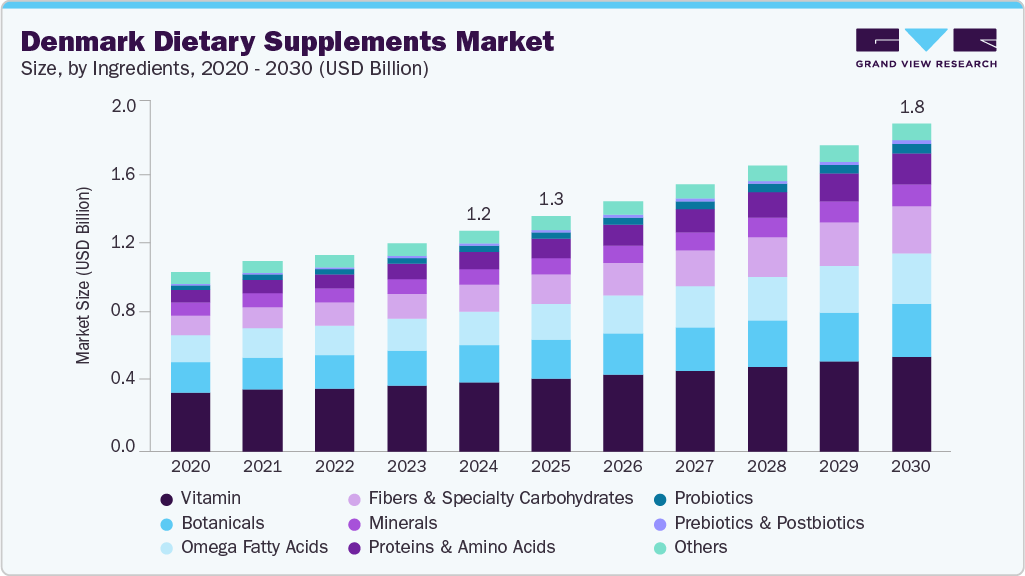
The Denmark dietary supplements market size was valued at USD 1.3 billion in 2025 and is projected to grow from USD 1.4 billion in 2026 to USD 2.0 billion by 2033, at a CAGR of 5.5% from 2026 to 2033. Increasing health consciousness among consumers has led to a higher demand for supplements that support overall well-being. People are becoming more proactive in managing their health, particularly amid rising rates of chronic disease, an aging population, and lifestyle-related health concerns. This trend has fueled interest in vitamins, minerals, probiotics, and herbal supplements to boost immunity, digestion, and mental health.
Key Market Trends & Insights
- By ingredient: Vitamins led the Denmark dietary supplements market and accounted for a share of 30.9% in 2025.
- By form: Gummies are expected to grow at the fastest CAGR for 6.5% from 2026 to 2033.
- By type: Prescribed led the market and accounted for a revenue share of 55.6% in 2025.
- By application: Prenatal health is projected to grow at the fastest CAGR for 8.7% from 2026 to 2033.
- By end user: Adult led the market and accounted for a revenue share of 62.1% in 2025.
- By distribution channel: Online channel is projected to grow at the fastest CAGR for 6.5% from 2026 to 2033.
Key Market Trends & Insights
- Market size in 2025: USD 1.3 Billion
- Estimated market size in 2026: USD 1.4 Billion
- Projected market size by 2033: USD 2.0 Billion
- CAGR (2026-2033): 5.5%
Prism AI by Grand View Research Free to tryAsk a question about the denmark dietary supplements marketTry asking✓Every figure cited from GVR research Prefer the report? Download free sample →Government initiatives and favorable regulations have further contributed to market expansion. Danish authorities promote awareness of nutrition and wellness, encouraging consumers to adopt preventive healthcare measures. In July 2024, the Ministry of Food, Agriculture, and Fisheries (Denmark) published guidelines for retailers, importers, and manufacturers to clarify the legislation on food supplements.
 Source: Grand View Research, IR Documents, Primary Interviews, Paid DatabasesTo learn more about this report,
 Download Free Sample Report
Rising disposable income and changing dietary habits are also significant drivers. As individuals have more spending power, they are willing to invest in high-quality, premium supplements. Moreover, busy lifestyles and convenience-oriented consumption patterns have led to an increased preference for supplements over traditional sources of nutrients. The influence of e-commerce and digital marketing has reshaped consumer purchasing behaviors. Online platforms provide easy access to a wide range of dietary supplements, enabling informed purchasing decisions through detailed product descriptions, reviews, and expert recommendations. The convenience of subscription-based models and direct-to-consumer brands has further accelerated market penetration.
Market Dynamics
Denmark has a well-established culture of dietary supplement consumption, with more than half of the population reported to use supplements. Consumers commonly use vitamins, minerals, fish oil, and other nutritional products to supplement their regular diet. High awareness of nutrition and preventive health supports regular and repeat purchases across different consumer groups. The availability of supplements through pharmacies, retail stores, and online channels also makes products easily accessible. Growing interest in maintaining general wellness is supporting demand for products with specific nutritional benefits. This strong level of consumer acceptance provides a stable base for continued market growth.
Regulatory compliance remains an important restraint for dietary supplement companies operating in Denmark. All supplements marketed in the country must be registered with the Danish Veterinary and Food Administration before or at the time of marketing. Companies must also comply with requirements covering product composition, vitamin and mineral levels, safety assessment, labeling, and permitted ingredients. Products containing levels above the Danish guidance values may require additional safety documentation. Specific labeling requirements, including information on dosage, ingredients, and warnings, further increase compliance requirements. These regulations can raise product development costs and create additional challenges for new market entrants.
Increasing consumer knowledge about health and nutrition is creating opportunities for more targeted dietary supplement products in Denmark. Companies can develop products focused on specific needs such as skin health, healthy aging, immunity, energy, digestive health, and nutritional support. Products combining vitamins, minerals, botanicals, or other functional ingredients can provide additional differentiation. Convenient formats and clear product positioning can further support consumer adoption. This creates opportunities for premium and specialized supplements rather than only traditional multivitamin products.
Analyst Perspective
The Denmark dietary supplements market is supported by high consumer awareness of health and wellness, with more than half of the Danish population reported to use dietary supplements. Demand is particularly supported by vitamins and minerals, probiotics, omega-3, botanicals, and products positioned around immunity, digestion, energy, and healthy aging. Vitamin D remains an important growth area, while personalized multivitamins and inner-beauty supplements are creating opportunities for product innovation. Online sales are also gaining importance as consumers increasingly compare products and prices across digital channels. However, the market operates under strict food-supplement requirements, including product registration, safety controls, ingredient restrictions, and specific labeling and health-claim requirements, which can increase compliance requirements for manufacturers and importers.
Consumer Insights
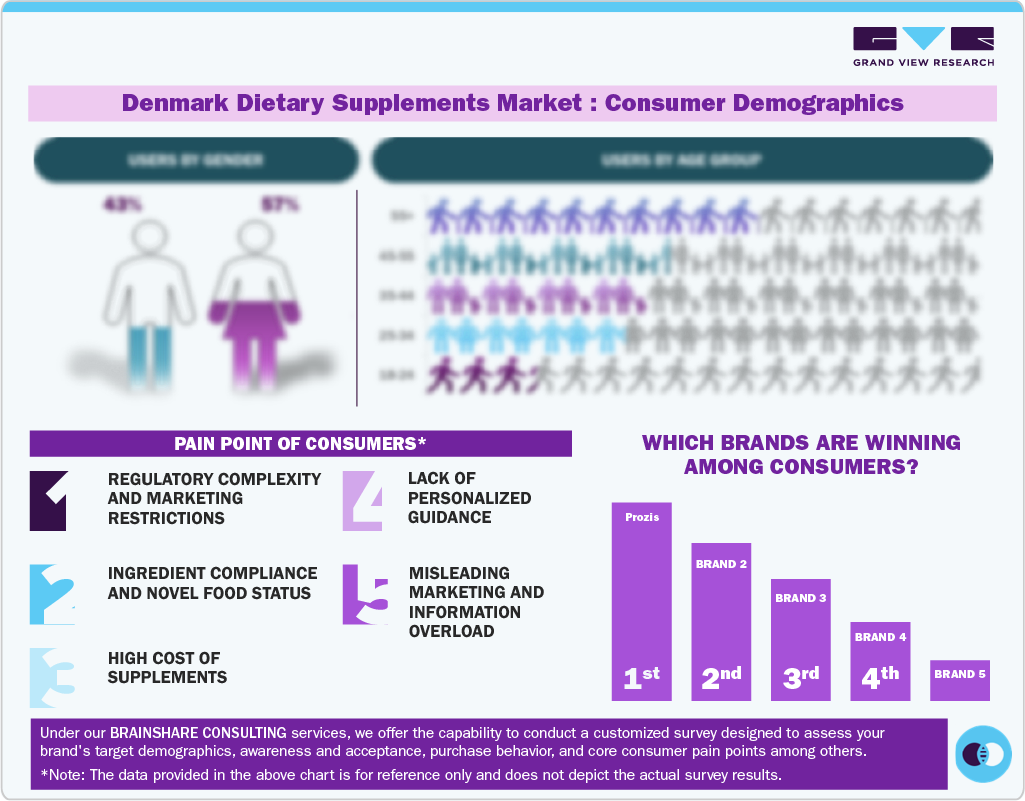
Danish consumers show a strong, established interest in dietary supplements, with more than half of the population reporting that they use them. Vitamins and minerals remain the core categories, supported by consumers’ focus on maintaining general health and addressing nutritional gaps. According to the YouGov food & health report 2024, consumer research indicates that 58% of Danish consumers take vitamins at least monthly and 36% take minerals, while usage of proteins/amino acids and probiotics is comparatively lower. Consumers are looking for supplements that offer clear functional benefits, such as immune support, bone health, energy, and healthy aging. Product quality, safety, and transparent ingredient information are also important factors influencing purchase decisions.
 To learn more about this report, Download Free Sample Report
Consumer preferences are also shifting toward trusted brands, convenient purchasing options, and products linked to specific health and wellness needs. Online purchasing is gaining importance as consumers compare prices and seek convenience, while vitamin D, vitamin C, personalized multivitamins, and inner-beauty products present areas of growing consumer interest. Women and older consumers are particularly relevant segments for targeted supplementation, while younger consumers provide opportunities for products positioned around fitness, lifestyle, and preventive health.
Ingredients Insights
Vitamins dominated the Denmark dietary supplement market, accounting for 30.1% in 2025, owing to the rising prevalence of lifestyle-related health conditions, such as deficiencies and immune disorders, which have further increased demand for vitamin supplements. In addition, the aging population, which requires higher nutritional support, has played a key role in market expansion. Moreover, digital health platforms and influencer marketing strategies have influenced consumer preferences, particularly among younger demographics, further boosting vitamin sales across Denmark.
 To learn more about this report, Download Free Sample Report
The proteins & amino acids segment is expected to experience the fastest CAGR, at 7.7%, from 2026 to 2033. With rising awareness of protein’s role in maintaining muscle mass, especially among aging populations, demand for high-quality protein supplements continues to expand. Additionally, digital health platforms and influencer marketing have contributed to the surge in protein consumption, particularly among younger consumers seeking athletic performance and wellness benefits. In November 2024, Arla Foods Ingredients launched Lacprodan DI-3092, a whey protein hydrolysate. It has minimal bitterness, thereby overcoming a challenge in medical nutrition. Overall, the proteins and amino acids segment is positioned for strong growth, driven by healthy aging, sports nutrition, wellness trends, and continued innovation in high-quality protein formulations.
Form Insights
Tablets dominated the market, accounting for 31.1% of the market share in 2025, owing to their ease of consumption, precise dosing, and longer shelf life compared to other supplement formats. Consumers favor tablets due to their affordability, convenience, and availability, making them a widely accessible choice. Additionally, advancements in formulation technologies have improved tablet efficiency, enhancing bioavailability and absorption rates. Healthcare professionals often recommend tablets for standardized dosages, boosting their credibility among consumers.
The gummies segment is expected to experience the fastest CAGR, at 6.5%, from 2026 to 2033. Gummies offer an attractive alternative to traditional tablets and capsules, particularly among younger consumers and those who may find conventional formats less convenient. Demand is supported by growing interest in immunity, vitamins, beauty, energy, and general wellness products, as manufacturers expand flavor and formulation options to enhance consumer appeal. The segment also benefits from strong retail and online availability, while clean-label ingredients, reduced sugar, and products with clear functional benefits are expected to support further adoption.
Type Insights
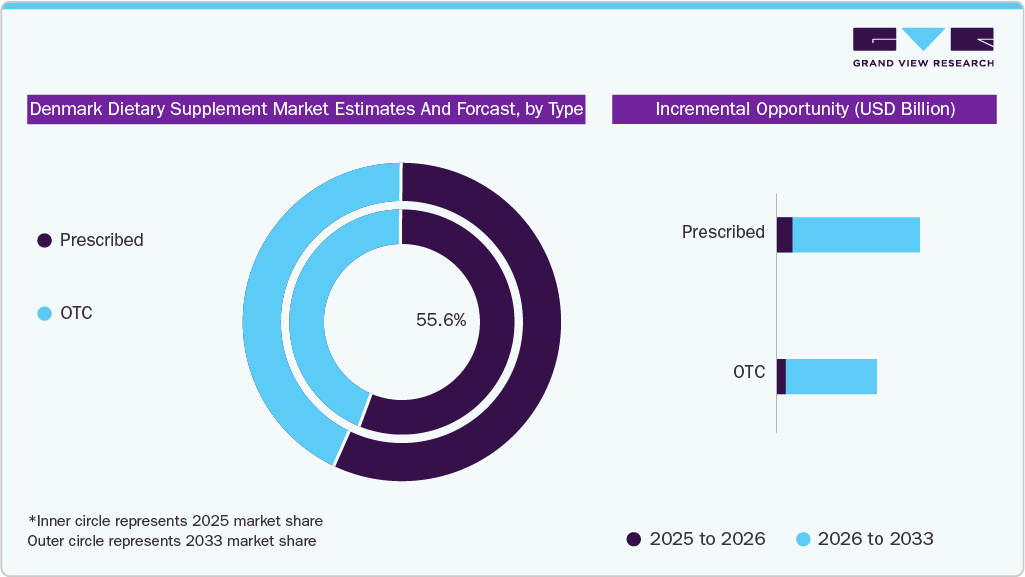
Prescribed supplements dominated the market, accounting for 55.6% of the market share in 2025, owing to rising healthcare awareness and physician recommendations for managing chronic conditions, deficiencies, and overall wellness. Consumers increasingly rely on medical guidance for supplement intake, ensuring safe and effective usage. Additionally, an aging population and higher incidence of lifestyle-related diseases have driven demand for doctor-prescribed vitamins, minerals, and therapeutic formulations.
 To learn more about this report, Download Free Sample Report
The OTC segment is expected to experience a significant CAGR at 5.2% from 2026 to 2033. With rising health awareness, individuals are opting for easily accessible, non-prescription supplements to address nutritional deficiencies, support immunity, and promote overall wellness. The expansion of e-commerce platforms has further fueled market penetration, allowing consumers to conveniently purchase OTC supplements with detailed product insights and expert recommendations.
Application Insights
The immunity segment dominated the market, accounting for 14.4% of the market share in 2025. This dominance is driven by increasing consumer awareness of preventive healthcare, with a growing emphasis on strengthening immune function against seasonal illnesses and chronic conditions. The aging population and rising concerns over lifestyle-related declines in immunity fueled demand for immune-boosting supplements, particularly those containing vitamins C and D, zinc, and probiotics. Additionally, the shift toward natural and science-backed formulations has reinforced consumer confidence.
The prenatal health segment is expected to experience the fastest CAGR at 8.7% from 2026 to 2033, driven by increasing awareness of maternal nutrition and fetal development. Expectant mothers are emphasizing essential nutrients such as folic acid, iron, calcium, and omega-3 fatty acids, which support pregnancy health and reduce the risk of complications. The rise in healthcare initiatives promoting prenatal wellness, physician recommendations, and government-supported awareness campaigns has contributed to this surge in demand.
End Use Insights
The adults segment dominated the market, accounting for 62.1% in 2025, owing to growing health awareness among adults seeking preventive healthcare solutions for lifestyle-related concerns, including stress, nutritional deficiencies, and chronic conditions. The aging population has further boosted demand for supplements that support bone health, immunity, and cognitive function. Additionally, busy lifestyles and convenience-oriented consumption patterns have fueled reliance on multivitamins and functional supplements. The expansion of digital health platforms, influencer-driven marketing, and personalized nutrition offerings has strengthened consumer engagement, reinforcing the adult segment’s market leadership in Denmark.
The infants segment is expected to experience the fastest CAGR, at 6.6%, from 2026 to 2033. Dietary supplements play a vital role in infants' growth during the early life stage. They are considered suitable for infants because of the rich nutrients in their formulations and the availability of products in various forms, including liquid and powder. Supplements help parents address nutritional gaps while ensuring that food specially formulated for the infant stage is provided.
Distribution Channel Insights
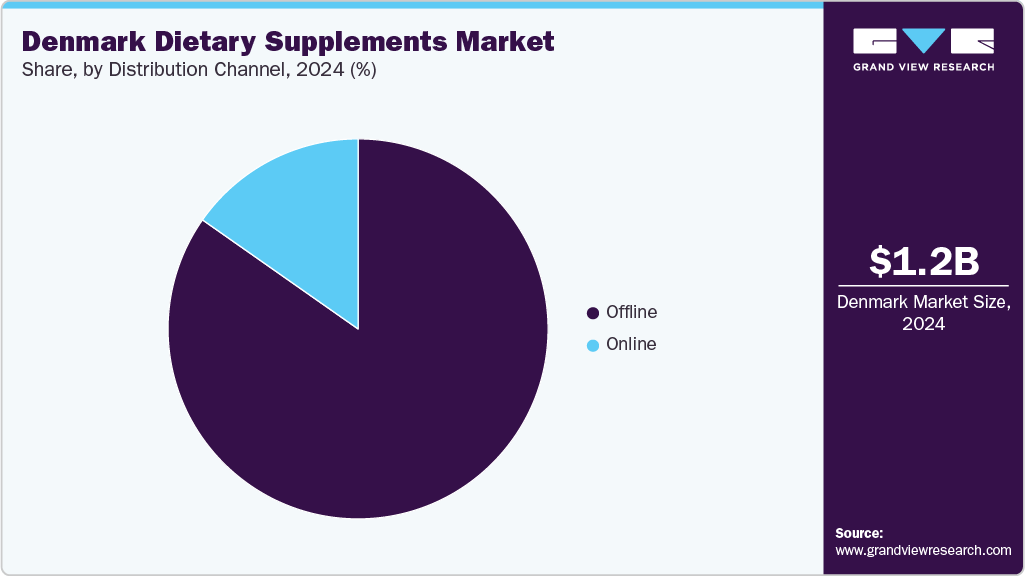
The offline segment dominated the dietary supplements industry, accounting for 84.5% of the market in 2025. This dominance is driven by consumer preference for direct interaction, expert guidance, and trust in brick-and-mortar pharmacies, health stores, and supermarkets. Many consumers rely on healthcare professionals’ recommendations and prefer physical retail experiences for product verification and consultation. Additionally, Denmark’s strong pharmacy network and well-established retail chains continue to support offline sales. While e-commerce is growing, the demand for in-store purchases, personalized advice, and immediate product availability remains a key factor in maintaining offline market leadership.
 To learn more about this report, Download Free Sample Report
The online channel is expected to experience the fastest CAGR at 6.5% from 2026 to 2033. The rise of e-commerce platforms and direct-to-consumer brands has expanded product availability, offering a wide range of supplements with detailed descriptions, expert recommendations, and customer reviews. Additionally, the growth of subscription-based models and influencer marketing has strengthened consumer engagement, making online purchasing more appealing. Advancements in AI-driven health assessments and personalized nutrition plans further enhance the digital shopping experience, fueling the rapid expansion of the online segment.
Key Denmark Dietary Supplements Company Insights
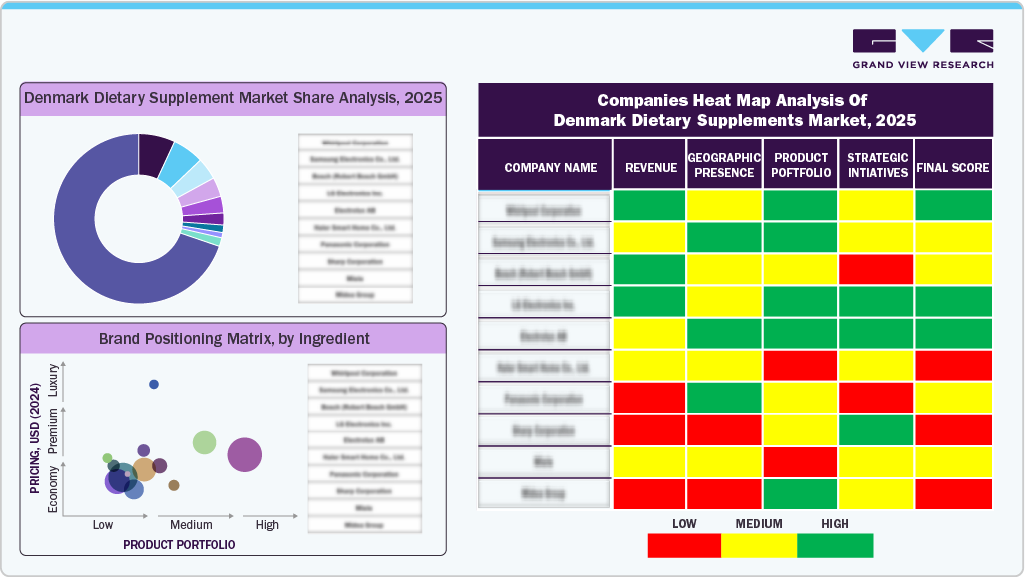
The Denmark dietary supplements industry is well established and competitive, with international brands, Nordic companies, and local players competing across vitamins, minerals, probiotics, botanicals, sports nutrition, and specialized wellness products. Companies are strengthening their market presence through product innovation, health-focused positioning, convenient dosage formats, and expansion across pharmacies, health stores, supermarkets, and online channels.
Strategic partnerships, new product launches, and targeted marketing are helping companies strengthen brand visibility and consumer trust. Players are increasingly focusing on products for immunity, healthy ageing, gut health, energy, beauty, and preventive wellness, while personalized nutrition and convenient formats such as gummies, powders, and functional drinks are gaining attention. However, strong consumer expectations for product quality, transparent labeling, safety, and sustainability make regulatory compliance and trusted brand positioning increasingly important in the Danish market.
 To learn more about this report, Download Free Sample Report
Key Denmark Dietary Supplements Companies:
-
Glanbia PLC
-
Herbalife International of America, Inc.
-
Nestlé
-
Amway Corp.
-
Bayer AG
-
Prozis
-
New Nordic Ltd.
-
Orkla Care A/S
-
Pharma Nord ApS
-
Biosym A/S
Competitive Benchmarking
Category
Operating Strategies
Competitive Edge
Weakness
Established Players (Nestlé, Bayer AG, Herbalife International of America, Inc.)
- Maintain broad supplement portfolios, strengthen pharmacy, health-store, direct-selling and online networks, and focus on trusted brands, product quality, and science-backed formulations.
- Strong brand recognition, extensive product ranges, established distribution networks, strong consumer trust, and greater resources for product development and marketing.
- Higher operating and marketing costs, relatively higher product prices, complex product portfolios, and less flexibility than smaller specialized companies in responding to niche consumer trends.
Emerging Players (Prozis, Biosym A/S )
- Focus on sports nutrition, functional wellness, beauty, vitamins, minerals, and targeted health products while expanding through e-commerce, specialty retail, and selected pharmacy channels.
- Strong category specialization, innovative formulations, digital-first marketing, attractive product formats, and ability to target specific consumer groups such as fitness users and wellness-focused consumers.
- Lower overall market reach than the largest multinational companies, greater dependence on specific product categories, and comparatively smaller physical retail networks in Denmark.
Recent Developments
-
In July 2026, New Nordic launched its Longevity range through Danish retailer Matas. The range comprises four targeted supplements containing combinations of vitamins, minerals, botanical extracts and newer functional ingredients, reflecting the company's expansion into healthy ageing and longevity-focused supplementation.
-
In December 2025, New Nordic announced plans to introduce new longevity supplements containing ergothioneine and creatine during the first half of 2026, alongside GLP-1-related products featuring berberine, probiotics, and dietary fiber.
Denmark Dietary Supplements Market Report Scope
Report Attribute
Details
Market size in 2025
USD 1.3 billion
Estimated market size in 2026
USD 1.4 billion
Projected market size by 2033
USD 2.0 billion
Growth rate
CAGR of 5.5% from 2026 to 2033
Actual data
2021 - 2025
Forecast period
2026 - 2033
Quantitative units
Revenue in USD Billion and CAGR from 2026 to 2033
Report coverage
Revenue forecast, company ranking, competitive landscape, growth factors, trends
Segments covered
Ingredients, form, type, application, end use, distribution channel
Key companies profiled
Glanbia PLC; Herbalife International of America, Inc.; Nestlé; Amway Corp.; Bayer AG; Prozis; New Nordic Ltd., Orkla Care A/S, Pharma Nord ApS, Biosym A/S
Customization scope
Free report customization (equivalent up to 8 analysts working days) with purchase. Addition or alteration to country, regional & segment scope.
Pricing and purchase options
Avail customized purchase options to meet your exact research needs. Explore purchase options
Denmark Dietary Supplements Market Report Segmentation
This report forecasts revenue growth at the country level and provides an analysis of the latest industry trends in each of the sub-segments from 2021 to 2033. For this study, Grand View Research has segmented the Denmark dietary supplements market report based on ingredients, form, type, application, end use, and distribution channel:
-
Ingredients Outlook (Revenue, USD Billion, 2021 - 2033)
-
Vitamin
-
Multivitamin
-
Vitamin A
-
Vitamin B
-
Vitamin C
-
Vitamin D
-
Vitamin K
-
Vitamin E
-
-
Botanicals
-
Minerals
-
Calcium
-
Potassium
-
Magnesium
-
Iron
-
Zinc
-
Others (Selenium, Chromium, Copper)
-
-
Proteins & Amino Acids
-
Collagen
-
Others
-
-
Fibers & Specialty Carbohydrates
-
Omega Fatty Acids
-
Probiotics
-
Prebiotics & Postbiotics
-
Others
-
-
Form Outlook (Revenue, USD Billion, 2021 - 2033)
-
Tablets
-
Capsules
-
Soft Gels
-
Powders
-
Gummies
-
Liquid
-
Others
-
-
Type Outlook (Revenue, USD Billion, 2021 - 2033)
-
OTC
-
Prescribed
-
-
Application Outlook (Revenue, USD Billion, 2021 - 2033)
-
Bone & Joint Health
-
Gastrointestinal Health
-
Immunity
-
Cardiac Health
-
Diabetes
-
Anti-cancer
-
Lungs Detox/Cleanse
-
Skin/ Hair/ Nails
-
Sexual Health
-
Brain/Mental Health
-
Insomnia
-
Menopause
-
Anti-aging
-
Prenatal Health
-
Others
-
-
End Use Outlook (Revenue, USD Billion, 2021 - 2033)
-
Adults
-
Millennials
-
Male
-
Female
-
Pregnant Women
-
Non-pregnant Women
-
-
-
Gen X
-
Male
-
Female
-
Pregnant Women
-
Non-pregnant Women
-
-
-
Gen Z
-
Male
-
Female
-
Pregnant Women
-
Non-pregnant Women
-
-
-
Boomers
-
Male
-
Female
-
-
-
Geriatric
-
Children
-
Infants
-
-
Distribution Channel Outlook (Revenue, USD Billion, 2021 - 2033)
-
Offline
-
Hypermarkets/Supermarkets
-
Pharmacies
-
Specialty Stores
-
Practitioner
-
Others (Direct to Consumer, MLM)
-
-
Online
-
Amazon
-
Other Online Retail Stores
-
-
Research Methodology
The Denmark dietary supplements market figures in this report are based on a proven research process that combines executive interviews with secondary research from proprietary databases, company filings, and recognized regulatory and institutional sources. Market size is built through value-chain sizing-reconciling supply-side and demand-side estimates-and triangulated with bottom-up and top-down approaches. Every estimate passes multiple levels of expert validation before publication, with each Denmark dietary supplements segment quantified using the revenue-capture definitions in the table below.
Segment Definition
Segment - Ingredient
Revenue capture definition
Vitamins
Products formulated to provide essential vitamins that may support normal body functions and help address dietary deficiencies. Common products include vitamin D, C, B-complex, and multivitamin supplements. In Denmark, these products are widely positioned around immunity, energy, bone health, and general wellbeing.
Botanicals
Supplements made using herbs, plants, roots, flowers, seeds, or concentrated plant extracts. These products are generally positioned for specific wellness needs, including digestion, relaxation, sleep, immunity, and healthy ageing. Botanical supplements can be available as capsules, tablets, liquids, teas, and other formats.
Minerals
Products providing essential minerals required for functions such as bone development, muscle activity, energy production, and normal immune function. Key ingredients include magnesium, calcium, zinc, iron, and selenium. Products may be sold individually or combined with vitamins in multinutrient formulations.
Protein & Amino Acids
Supplements designed to provide protein or specific amino acids that contribute to muscle maintenance, recovery, and physical performance. The segment includes protein powders, protein drinks, amino acid blends, and other sports nutrition products. Demand is supported by fitness activities as well as growing interest in maintaining muscle health among adults and older consumers.
Fibers & Specialty Carbohydrates
Products containing dietary fiber or functional carbohydrate ingredients intended to support digestive and nutritional needs. These may include soluble fiber, resistant starch, and other specialized carbohydrate ingredients. They are commonly positioned around digestive regularity, gut health, satiety, and metabolic wellness.
Omega Fatty Acids
Supplements providing specific fatty acids, particularly omega-3 fatty acids such as EPA and DHA. These products are commonly associated with cardiovascular, brain, eye, and general health support. Fish oil, algae oil, and other marine or plant-based sources are used in different formulations.
Probiotics
Products containing selected live microorganisms intended to provide health benefits when consumed in adequate amounts. They are mainly associated with maintaining a healthy balance of gut microorganisms and supporting digestive wellbeing. Products may contain single or multiple bacterial strains and are available in capsules, powders, tablets, and other formats.
Prebiotics & Postbiotics
Prebiotic products contain specific substances that can be utilized by beneficial microorganisms in the digestive system, while postbiotic products contain preparations derived from inactivated microorganisms or their components. These products are increasingly linked with broader gut health and wellness positioning. The segment complements traditional probiotic products and provides manufacturers with opportunities to develop differentiated digestive health formulations.
Others
This category includes products containing enzymes, specialty nutrients, collagen, coenzyme Q10, electrolytes, and other functional ingredients. Such products are generally developed for targeted needs such as beauty, joint health, energy, recovery, or specialized wellness.
Estimation Model
Consumer Base Layer
Retail Access Layer
Purchase Behaviour Layer
Monetisation Layer
Who consumes supplements?
Where are they sold?
How do brands differentiate?
How do companies generate value from the market?
Denmark's supplement user pool is established, with more than half of the population reported to use dietary supplements.
Consumers can be reached through pharmacies, health and specialty stores, supermarkets, and e-commerce platforms.
The addressable consumer pool is narrowed by applying assumptions for supplement usage frequency, category participation, purchasing frequency, and consumer conversion.
Revenue is estimated by applying average annual spending or average selling price to the converted consumer base.
Delivered Customizations
This report has been delivered with the following In-depth customizations
CLIENT REQUEST
CUSTOMIZATION DELIVERED
VALUE ADDS
Customized Consumer and Demographic Analysis
Estimated consumer distribution by gender and age group, along with key consumer needs such as immunity, healthy ageing, digestion, energy, beauty, and general wellness.
Helps identify priority consumer groups and understand differences in supplement usage, product preferences, and purchasing behavior.
Denmark-Specific Market Dynamics
Analysis of local market drivers, restraints, opportunities, product categories, formulations, and distribution channels, including pharmacies, health stores, supermarkets, and online platforms.
Provides a market view tailored to Denmark’s health-conscious consumers, established retail structure, and growing preference for convenient online purchasing.
Regulatory and Compliance Assessment
Assessment of Denmark-specific requirements covering product registration, ingredient safety, vitamin and mineral levels, labelling, health claims, and requirements for novel or other substances.
Helps companies understand market-entry and compliance requirements and reduce regulatory risks when introducing or modifying supplement products.
Frequently Asked Questions About This Report
Tablets accounted for the largest share of 31.1% share in 2025.
Prescribed are accounted for the 55.6% share in 2025.
Bone & Joint Health supplements lead the Denmark dietary supplements market in 2025, while prenatal health is the fastest growing application.
By end user adults dominated the Denmark dietary supplements market in 2025, while infants is the fastest growing end-user.
The Denmark dietary supplements market is projected to grow at a compound annual growth rate (CAGR) of 5.5% from 2026 to 2033, reaching USD 2.0 billion by 2033.
Vitamins dominated the market and accounted for a share of 30.9% in 2025.
The Denmark dietary supplements market size was valued at USD 1.3 billion in 2025 and is estimated to reach USD 1.4 billion in 2026.
Some prominent players in the Denmark dietary supplements market include Glanbia PLC; Herbalife International of America, Inc.; Nestlé; Amway Corp.; Bayer AG; Prozis; New Nordic Ltd.
Increasing health consciousness among consumers has led to a higher demand for supplements that support overall well-being. People are becoming more proactive in managing their health, particularly with the rise in chronic diseases, aging populations, and lifestyle-related health concerns. This trend has fueled interest in vitamins, minerals, probiotics, and herbal supplements to boost immunity, digestion, and mental health.
About the Author(s)
Nutraceuticals & Functional Foods Research Team
Consumer Goods · Nutraceuticals & Functional FoodsThis report was authored by the nutraceuticals & functional foods research team at Grand View Research - comprising two research analysts, one senior research analyst, and one industry expert - with specialized expertise in the nutraceuticals & functional foods segment of the consumer goods industry. All findings are based on proprietary consumer goods databases, executive interviews, and regulatory analysis, subject to internal peer review prior to publication.
Last Updated:
Speak to Analyst

Customize this report to your needs - add regions, segments, or data points, with 20% free customization.
Or view our licence options:


ISO 9001:2015 & 27001:2022 Certified
We are GDPR and CCPA compliant! Your transaction & personal information is safe and secure. For more details, please read our privacy policy.


