
- Home
- »
- Medical Devices
- »
-
Dental Crown Remover Market Size, Share Report 2026-2033GVR Report cover

Dental Crown Remover Market (2026 - 2033)
Size, Share & Trends Analysis Report By Product Type (Crown Remover (Manual Crown Removers, Automatic Crown Removers), Consumables), By End User (Dental Clinics, Hospitals), By Region, And Segment Forecasts
Market Size, 2025
$73.2MMarket Estimate, 2026
$75.5MMarket Forecast, 2033
$99.3MCAGR, 2026–2033
4.0%Dental Crown Remover Market Summary
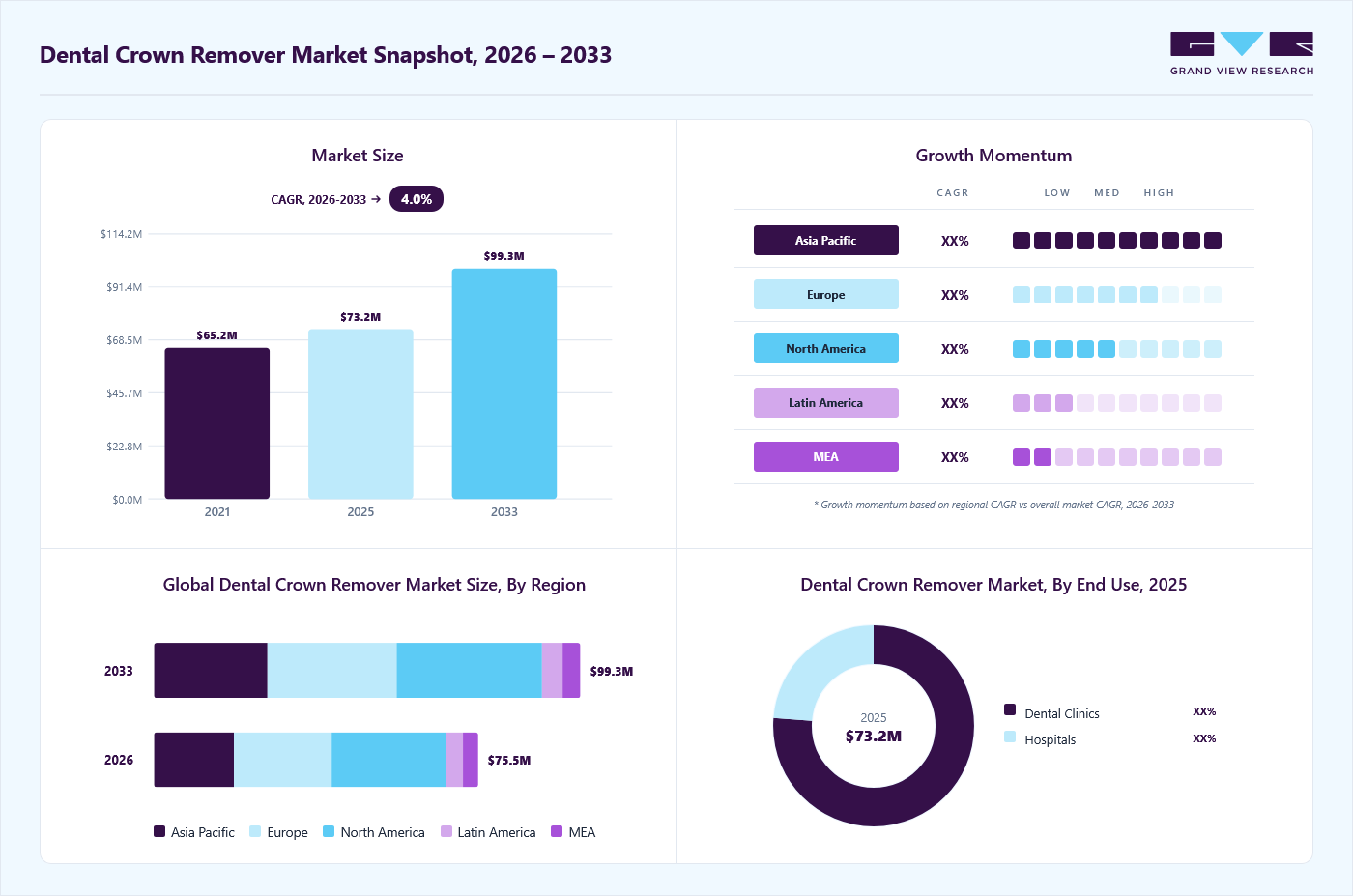
The global dental crown remover market size was valued at USD 73.2 million in 2025 and is projected to grow from USD 75.5 million in 2026 to USD 99.3 million by 2033, at a CAGR of 4.0% from 2026 to 2033. North America held the largest revenue share of 35.4% in 2025. The growth of the dental crown remover industry is driven by the increasing number of dental crown restorative and replacement procedures performed globally.
 Source: Grand View Research, IR Documents, Primary Interviews, Paid DatabasesTo learn more about this report,
 Download Free Sample Report
Key Market Trends & Insights
- By product type: Consumables held the largest revenue share of 54.3% in 2025
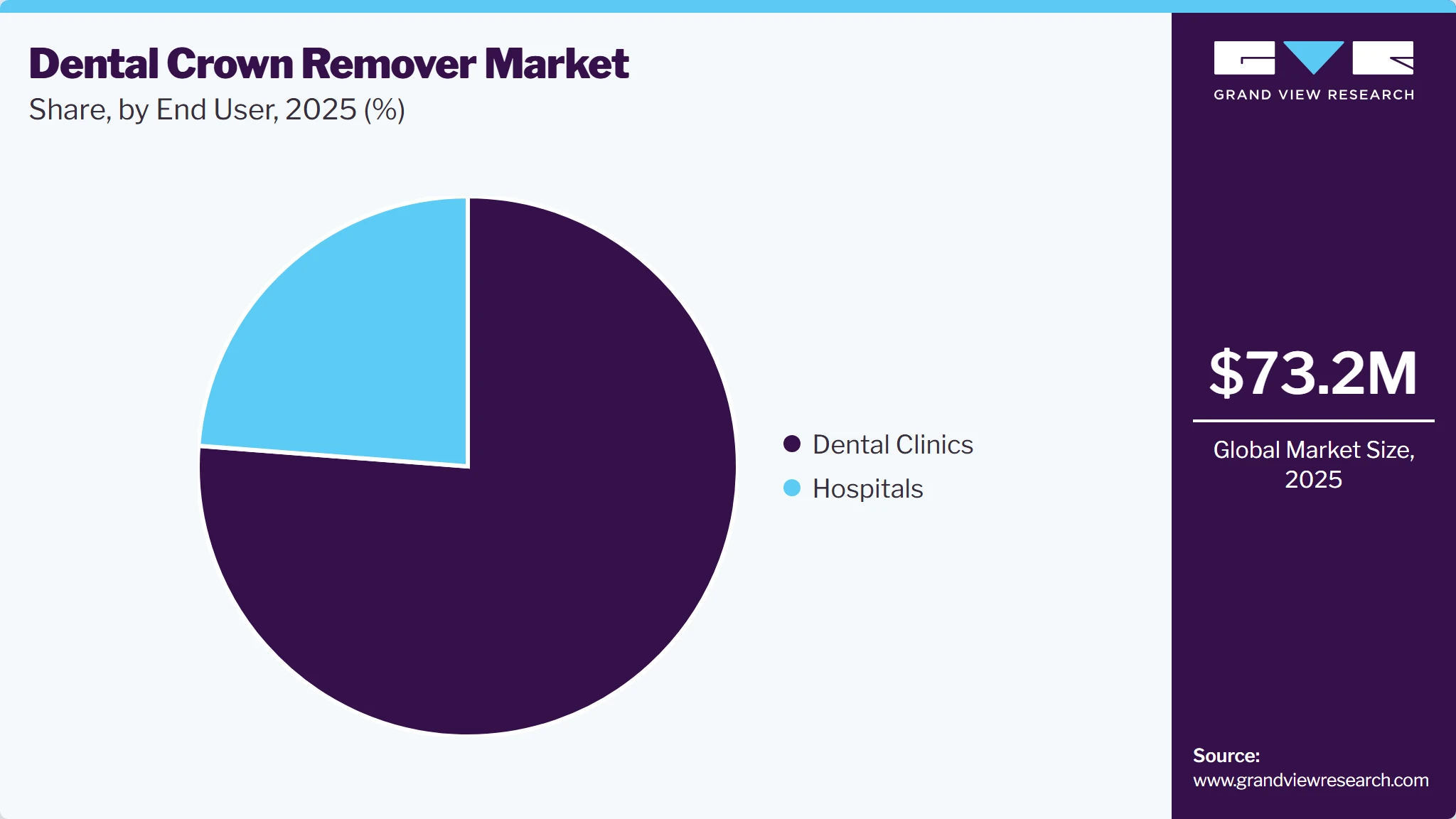
- By end user: Dental clinics held the largest revenue share of 76.2% in 2025
Regional Highlights
- Largest regional market: North America (35.4% revenue share, 2025)
- Fastest-growing regional market: Asia Pacific (fastest CAGR, 2026-2033)
- By country: The U.S. held the largest share in 2025
Market Size & Forecast
- Market size in 2025: USD 73.2 Million
- Estimated market size in 2026: USD 75.5 Million
- Projected market size by 2033: USD 99.3 Million
- CAGR (2026-2033): 4.0%
Prism AI by Grand View Research Free to tryAsk a question about the dental crown remover marketTry asking✓Every figure cited from GVR research Prefer the report? Download free sample →
As more patients receive dental crowns for the treatment of tooth decay, fractures, and cosmetic corrections, the need to safely remove and replace existing crowns is also rising. Dental crowns are widely used to restore damaged, decayed, or weakened teeth and are among the most common restorative treatments in modern dentistry. Although crowns are designed to be durable, they are not permanent and typically have a lifespan of 5 to 15 years, depending on factors such as oral hygiene, material type, chewing habits, and overall dental health. Over time, crowns may become worn, fractured, loose, or damaged due to normal usage and mechanical stress. In addition, issues such as marginal leakage, secondary tooth decay beneath the crown, gum recession, or poor fit can compromise the effectiveness of an existing restoration. Growing demand for aesthetic dentistry is also prompting many patients to replace older metal crowns with newer ceramic or zirconia alternatives that offer improved appearance and functionality.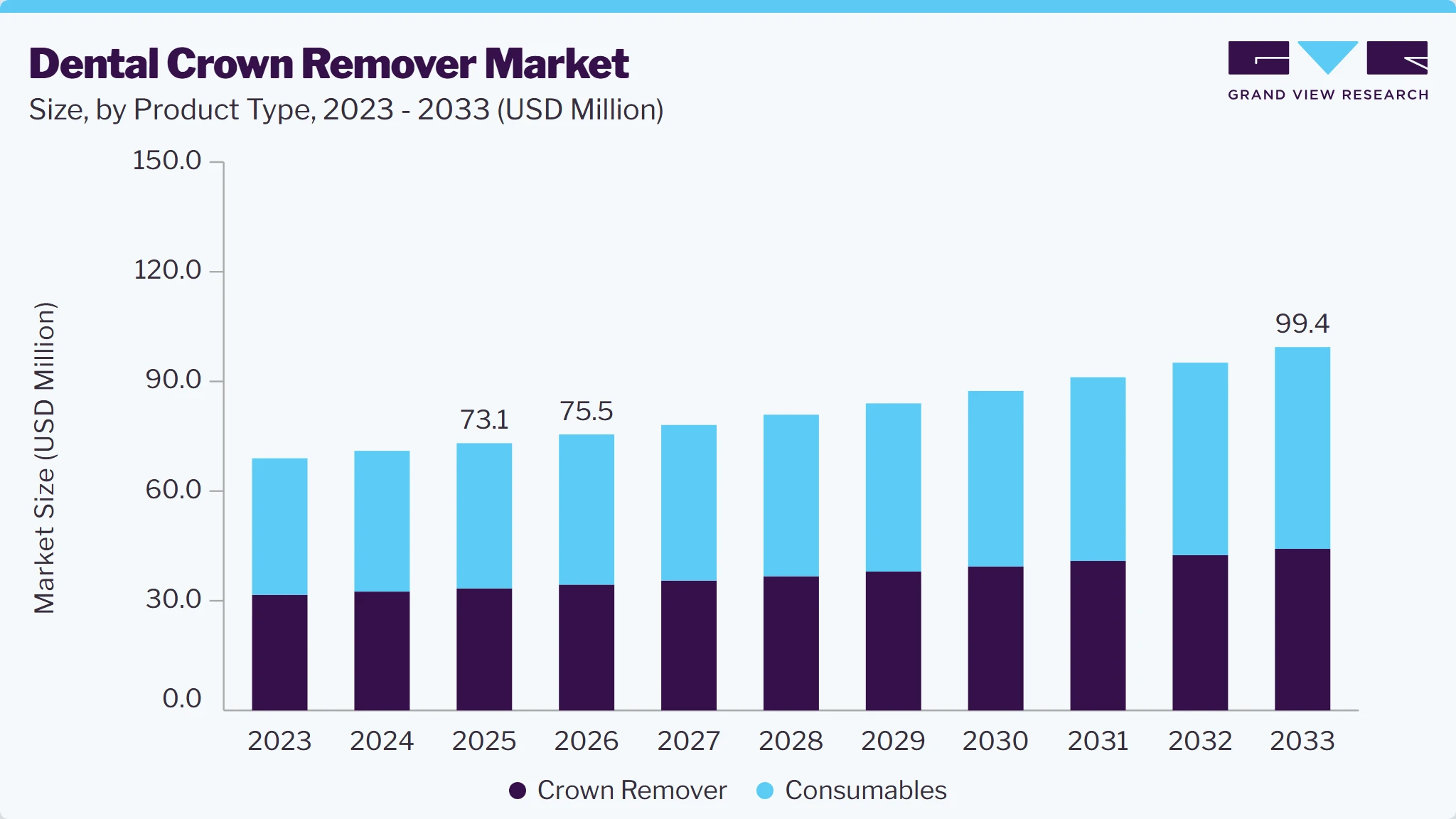 To learn more about this report, Download Free Sample Report
In addition, this growth is driven by the expansion of cost-effective dental care services and the rising popularity of dental tourism, particularly in countries offering affordable restorative and prosthetic dental treatments. Patients traveling for procedures such as dental restorations, implant-supported crowns, and full-mouth rehabilitation often require the removal of existing or damaged crowns before new restorations can be placed. In countries such as India, where dental treatment costs are significantly lower than in developed nations, the increasing influx of international patients is driving the volume of restorative dental procedures. As a result, dental clinics and hospitals are investing in efficient crown removal instruments to ensure safe, quick, and minimally invasive crown removal while preserving the underlying tooth structure. The growing number of restorative procedures and crown replacement associated with dental tourism is therefore contributing to the rising demand for dental crown removers across dental practices.
Cost comparison of dental procedures: India, the U.S., the UK, Australia, and the UAE:
Dental Treatment
India (USD)
U.S. (USD)
UK (USD)
Australia (USD)
UAE (USD)
Dental Implants (per tooth)
USD 240
USD 3,000 - 5,000
USD 2,200 - 4,400
USD 1,950 onwards
USD 1,900 - 3,270
Dental Crowns
USD 108
USD 1,200 - 1,500
USD 660 - 1,320
USD 975 onwards
USD 220 - 1,090
Dental Bridges
USD 274
USD 2,500
USD 1,650
USD 2,275
USD 820 onwards
Root Canal Treatment
USD 88
USD 500 onwards
USD 660 onwards
USD 585 - 1,625
USD 355 - 1,360
Complete Dentures
USD 329
USD 3,000
USD 2,200 onwards
USD 2,600
USD 955 onwards
Cosmetic Dentistry
USD 548
USD 5,000
USD 3,850 onwards
USD 3,900
USD 1,360 onwards
Full Mouth Rehabilitation
USD 2,190
USD 20,000 - 80,000
USD 22,000 onwards
USD 3,250 - 39,000
USD 9,530 onwards
Source: Dezy
Growth Opportunities in the Dental Crown Remover Market
Rising awareness of oral health and increasing demand for preventive, restorative, and cosmetic dental procedures are supporting the adoption of dental mirrors across clinics and hospitals. Technological advancements, including anti-fog coatings, LED illumination, and enhanced reflectivity, are creating opportunities for manufacturers to introduce premium products that improve diagnostic accuracy and clinical efficiency. The growing focus on infection control is also increasing the demand for disposable and sterilization-friendly dental mirrors. In addition, the expansion of dental tourism is encouraging dental facilities to invest in high-quality diagnostic instruments to meet international treatment standards. Emerging economies in Asia Pacific, Latin America, and the Middle East offer strong growth potential due to improving healthcare infrastructure, increasing dental expenditures, and greater access to oral healthcare services.
Competitive Pricing Analysis of Dental Crown Removers (2026)
The table shows that dental crown remover prices vary based on product type, functionality, and brand positioning. Hu-Friedy's manual crown removers are priced in the premium range, while Medesy's automatic crown removers command the highest prices due to their spring-loaded removal mechanisms and ease of use. In contrast, GDC Dental offers a more affordable automatic crown remover, targeting cost-conscious dental practices. Overall, automatic crown removers generally achieve higher pricing than manual alternatives.
Company
Brand / Product
Key Features
Price
Hu-Friedy Mfg. Co., LLC
Straight Goldstein Crown Remover (GCR0)
Used for permanent removal of anterior crowns by breaking the seal between the tooth and crown after sectioning with a bur; features a 4.0 mm working end.
~USD 94
Hu-Friedy Mfg. Co., LLC
Christensen Crown Remover (Straight/90°)
Used for permanent removal of posterior crowns by breaking the seal between the tooth and crown after sectioning with a bur; features a 3.0 mm working end.
~USD 121
Medesy Srl
Automatic Crown Remover 4569
Removes temporary and most permanent restorations easily by generating a quick spring impulse that breaks cement seals painlessly without anesthesia.
~USD 195
Medesy Srl
Automatic Crown Remover 4572
Automatic crown remover with a spring-loaded mechanism for fast and atraumatic crown removal.
~USD197
GDC Dental
Automatic Crown Remover Standard (CRS)
A spring-loaded mechanical device that removes bonded crowns and bridges by delivering an intensive impulse impact stress to break the cement layer for easy crown removal.
~USD 42
Source: Company Site, Grand View Research Analysis
Market Dynamics
Dental crown removers are gaining significant importance across the global dental industry as they play a crucial role in the safe and efficient removal of temporary and permanent dental crowns, bridges, and other restorative prosthetics. These instruments enable dentists to remove crowns with minimal damage to the underlying tooth structure, facilitating replacement, repair, or further dental treatment. Dental crown removers offer several advantages, including improved procedural efficiency, enhanced patient comfort, reduced risk of tooth damage, and better preservation of existing restorations when possible. These benefits make them essential tools in restorative, prosthodontic, and general dental procedures.
Conditions such as dental caries, cracked teeth, failed restorations, and periodontal diseases often require restorative treatments, including dental crowns. Over time, these crowns may become damaged or loose, or require replacement due to recurrent decay or treatment failure. In such cases, dental crown removers are essential for safely removing existing crowns while preserving the underlying tooth structure. Furthermore, the rising global burden of oral diseases is increasing the number of restorative and replacement procedures performed by dental professionals, directly supporting demand for crown removal instruments.
The availability of alternative crown-removal methods and instruments is a significant restraint on the dental crown remover market. Dentists can use various techniques, including crown-sectioning burs, ultrasonic devices, dental handpieces, crown splitters, and other restorative tools, to remove damaged or defective crowns. The choice of method often depends on the type of restoration, the clinical condition, and the practitioner's preference. Since these alternatives can effectively perform crown removal procedures, reliance on dedicated crown removers has decreased in some dental practices. Further, many dentists continue to use familiar conventional techniques rather than investing in specialized crown-removal instruments, which can limit market growth and put manufacturers under competitive pressure.
Increasing consumer awareness of dental appearance, smile enhancement, and advanced restorative treatments is driving the replacement of old, damaged, or aesthetically outdated crowns with newer and more natural-looking restorations. Procedures such as smile makeovers, full-mouth rehabilitation, and cosmetic crown replacements often require the safe removal of existing crowns before new restorations can be placed. Dental crown removers help clinicians perform these procedures efficiently while minimizing damage to the underlying tooth structure. As spending on cosmetic dentistry continues to increase globally, the demand for crown removal instruments is expected to grow alongside the volume of crown replacement and restorative procedures.
Market Concentration & Characteristics
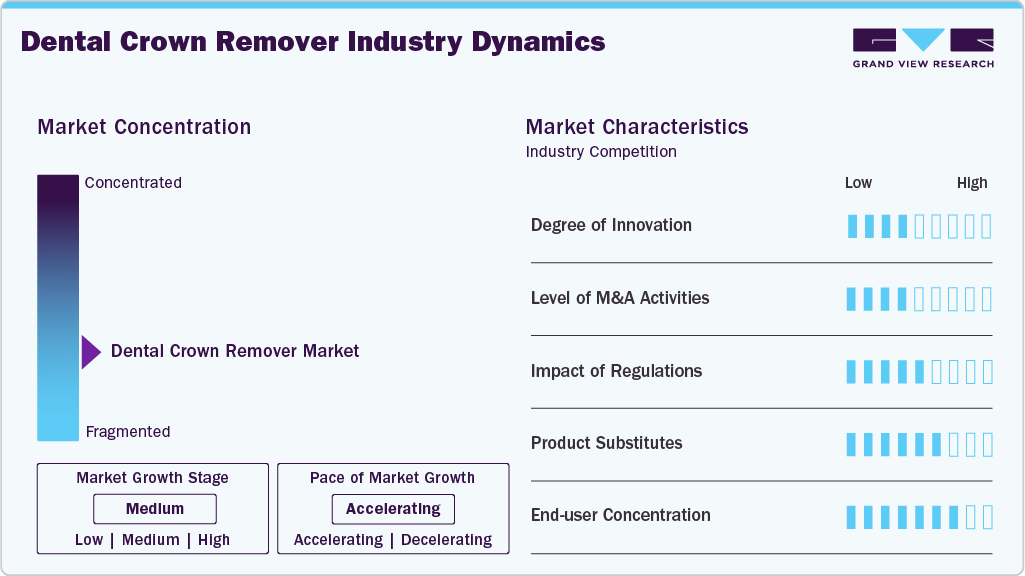
The dental crown remover market is characterized by relatively low to moderate innovation compared to other dental device segments. Most crown removers are manual instruments that have remained functionally similar for many years. Manufacturers primarily focus on improving ergonomics, grip quality, instrument durability, and patient comfort rather than introducing disruptive technologies.
Merger and acquisition activity remains relatively low to moderate in this market because dental crown removers represent a small product category within the broader dental instruments industry. Large dental companies typically prioritize investments in high-growth segments such as dental implants, digital dentistry systems, and imaging technologies. As a result, market consolidation is limited, allowing numerous regional and specialized manufacturers to maintain their presence and compete effectively.
 To learn more about this report, Download Free Sample Report
Dental crown removers are regulated as medical or dental instruments and must comply with quality, sterilization, labeling, and safety standards established by regulatory authorities. Although these requirements increase manufacturing and compliance costs, crown removers are generally classified as lower-risk devices compared to advanced dental equipment. For instance, the European Dental Industry Association (FIDE) classified crown/inlay removers under the European Medical Device Regulation (MDR 2017/745) as Class I medical devices according to Rule 5. The classification recognized crown removers as non-invasive dental instruments used for temporary procedures in clinical dentistry. The guidance provided regulatory clarity for manufacturers marketing crown removal instruments across Europe.
The market faces significant competition from alternative crown removal methods and instruments. Dentists may use crown splitters, sectioning burs, ultrasonic devices, dental handpieces, or other restorative tools depending on the clinical situation. The availability of multiple treatment approaches limits dependence on traditional crown removers and increases competitive pressure on manufacturers. High availability of substitutes also limits pricing flexibility and encourages continuous product improvements.
Demand for dental crown removers is highly concentrated within dental clinics, dental hospitals, and specialty restorative dentistry practices. These facilities perform most of the crown replacement, repair, and removal procedures. Market growth is therefore closely linked to trends in restorative dentistry, aging populations, increasing dental treatment volumes, and the expansion of dental care services. Because the customer base is concentrated within a limited number of end-use settings, purchasing decisions by dental professionals significantly influence market dynamics.
Analyst Perspective
The dental crown remover market is moving towards high-precision, automated technologies. This shift is driven by the rise of efficiency-focused Dental Service Organizations (DSOs) and an increasing demand for patient comfort. While the market encounters challenge due to the long replacement cycles of durable, reusable instruments, this is largely balanced by an aging global population needing restorative maintenance and a growing interest in cosmetic dentistry. To ensure long-term growth, manufacturers must look beyond hardware and focus on ergonomic innovations, digital training for practitioners, and expanding into fast-growing emerging markets. In addition, incorporating these tools into the larger digital dentistry ecosystem, such as connecting them with CAD/CAM workflows and smart diagnostic software, will help distinguish market leaders from traditional providers.
Product Type Insights
The consumables segment dominated the dental crown remover industry with the largest revenue share of 54.3% in 2025, driven by the recurring replacement of traction and gripping accessories used during crown removal procedures. Consumables such as wire loops, single-use traction cables, replaceable elastomer/rubber plier pads, adhesive or thermoplastic resin blocks, precision tapping screws, and guide pins are designed for single-patient use or require periodic replacement due to wear, deformation, and infection control requirements. The increasing number of crown replacements, bridge removals, endodontic retreatments, and implant restoration procedures is expected to drive recurring demand for these accessories. For instance, WAM, a leading manufacturer of crown and bridge removal systems, offers the WAMkey Crown & Bridge Remover with individual refill instruments (Sizes small, medium, and large), sold separately as replacement components for clinical use. The availability of dedicated refill products demonstrates the recurring replacement demand associated with crown removal procedures and highlights the growing commercial opportunity for consumables in this market.
The crown remover product type segment is expected to grow at a significant CAGR over the forecast period, driven by its widespread use in routine restorative and prosthodontic procedures, cost-effectiveness, and ease of operation. Manual crown removers provide dentists with superior tactile feedback and precise control during crown removal, minimizing the risk of damaging the underlying tooth structure or surrounding restorations. They are widely preferred in general dental practices because they do not require electricity or compressed air, are easy to sterilize, and involve minimal maintenance costs. Their affordability and versatility make them suitable for both routine and complex restorative procedures across dental clinics and hospitals. For instance, HuFriedyGroup continued to offer an extensive portfolio of manual crown removers, including the Goldstein Crown Remover, Christensen Crown Remover, Trial Crown Remover, and Temporary Crown Remover, all designed to provide controlled crown removal while reducing the risk of tooth fracture and improving clinician control and patient comfort. The broad availability and continued clinical use of these manual instruments by a leading dental instrument manufacturer highlight their dominant position in restorative dentistry.
End User Insights
Dental clinics dominated the dental crown remover market, accounting for 76.2% in 2025, driven by the high volume of restorative and prosthetic dental procedures performed in outpatient settings, where crown removal is a routine part of treatment. Dental clinics are the primary providers of procedures such as crown replacement, root canal retreatment, bridge removal, implant restorations, and repair of damaged or ill-fitting crowns, all of which require specialized crown remover instruments. The growing number of private dental practices, increasing patient preference for minimally invasive outpatient dental care, and rising demand for cosmetic and restorative dentistry have further strengthened the adoption of dental crown removers in clinics. In addition, continuous investments in modern dental equipment and the expansion of organized dental clinic networks have increased procedure volumes and instrument procurement. For instance, in February 2026, Clove Dental launched 48 new dental clinics in a single day, expanding its network to 715 centers across 26 cities in India. This expansion reflects the rapid growth of organized dentistry and supports higher demand for dental crown removers used in routine restorative and prosthodontic procedures.
 To learn more about this report, Download Free Sample Report
The hospitals end user segment is expected to grow strongly during the forecast period due to the increasing number of complex dental and maxillofacial procedures requiring multidisciplinary care, advanced surgical infrastructure, and specialized operating facilities available in hospital settings. Hospitals are expanding oral and maxillofacial surgery (OMS) departments to manage facial trauma, reconstructive surgery, dental implants, corrective jaw surgery, and medically complex patients. These procedures frequently involve the removal and replacement of existing crowns during prosthetic revision or endodontic retreatment, supporting demand for dental crown removers. For instance, in January 2025, Advocate Christ Medical Center (Illinois, U.S.) opened a dedicated Oral & Maxillofacial Head and Neck Associates center with five specialist surgeons to provide advanced treatment for facial injuries, jaw deformities, and complex oral surgical cases. The expansion reflects the growing investment by U.S. hospitals in specialized oral surgery services, which is expected to increase the utilization of dental surgical instruments, including dental crown removers.
Regional Insights
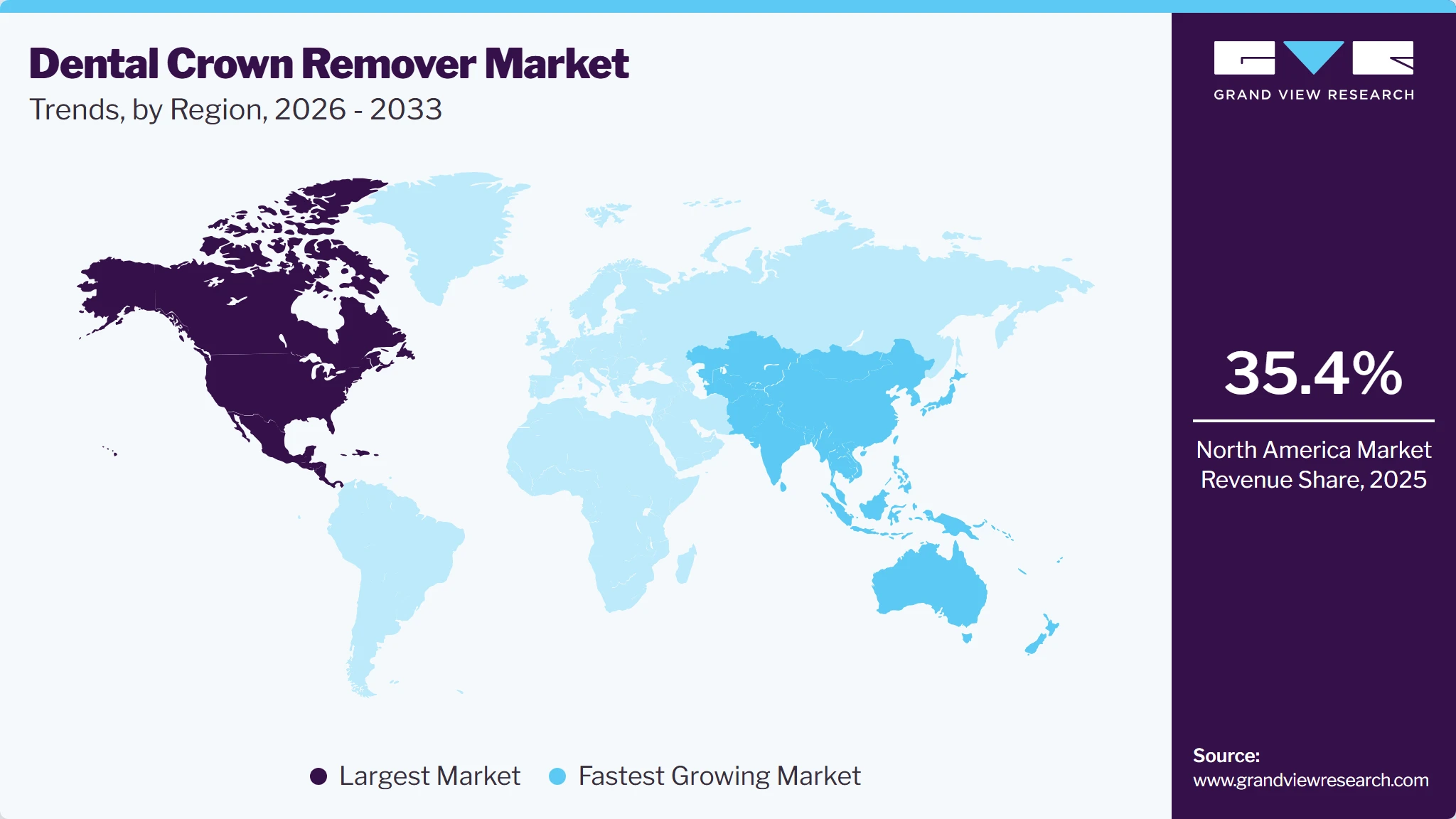
The North America dental crown remover market accounted for the largest share of 35.4% in 2025. The market is growing primarily due to the large number of patients requiring restorative dental treatments in the U.S., Canada, and Mexico. Dental crowns are commonly used to restore teeth affected by severe decay, fractures, and root canal treatment. For instance, in November 2025, published research paper data show that more than 90% of U.S. adults experience dental caries, while 26% have untreated caries, highlighting the substantial demand for restorative dentistry and subsequent crown-related procedures.As a result, the high prevalence of dental caries and the growing volume of restorative dental procedures across the region continue to drive demand for dental crown removers, supporting sustained market growth in North America.
 To learn more about this report, Download Free Sample Report
U.S. Dental Crown Remover Market Trends
The U.S. dental crown remover industry is growing due to the increasing prevalence of restorative dental procedures and the need for safe replacement of existing dental crowns in clinical practice. For instance, in May 2024, according to the CDC, approximately 50% of children aged 6-9 years in the U.S. have experienced cavities in their primary or permanent teeth, while nearly 10% of adolescents aged 12-19 years have at least one untreated cavity. These ongoing dental health challenges are expected to increase the long-term demand for restorative treatments, thereby supporting steady growth in the adoption of dental crown removal instruments across clinical settings in the U.S.
Europe Dental Crown Remover Market Trends
The Europe dental crown remover industry is expected to witness steady growth during the forecast period, supported by advanced dental healthcare infrastructure, high oral health awareness, and the widespread adoption of restorative and cosmetic dentistry procedures across countries such as Germany, the UK, France, Italy, Spain, Denmark, and Norway. The growing number of crown replacement procedures, dental restorations, and CAD/CAM-based prosthetic treatments is increasing the need for efficient crown removal instruments that help dentists safely remove existing crowns while preserving underlying tooth structure.
The UK dental crown remover market is experiencing steady growth, driven by the rising prevalence of tooth decay and periodontal disease, as well as the growing demand for restorative dental procedures. Dental crown removers are essential instruments used during crown replacement, repair, and endodontic retreatment procedures, enabling dentists to remove existing crowns safely while preserving the underlying tooth structure. In December 2025, according to the Adult Oral Health Survey report published by the UK Government, around 41% of adults in England had obvious tooth decay, while 21% had extensive decay affecting the dentine or pulp of the tooth. In addition, nearly two-thirds (64%) of adults showed signs of dental decay under the broader clinical assessment criteria. This growing prevalence of dental conditions is contributing to higher demand for efficient crown removal instruments, thereby supporting the expansion of the UK market.
The dental crown remover market in Italy is experiencing steady growth, driven by rising volumes of restorative and prosthetic dental procedures nationwide. Moreover, Italy’s expanding elderly population is contributing significantly to market growth, as older adults require more frequent restorative and replacement dental procedures. According to OECD and demographic data, individuals aged 65 years and above accounted for approximately 24.7% of Italy’s population in 2025, making Italy one of the oldest populations in Europe. The growing presence of private dental clinics, increasing adoption of advanced dental technologies, and rising patient demand for high-quality dental care are further supporting market expansion. As dentists continue to prioritize minimally invasive, time-efficient treatment approaches, demand for reliable dental crown removal instruments is expected to increase steadily across Italy.
Asia Pacific Dental Crown Remover Market Trends
The Asia Pacific dental crown remover industry is witnessing faster growth, driven by the rapid expansion of dental clinics and organized dental service networks across the region. Countries such as China, India, Japan, South Korea, Australia, and Thailand are investing significantly in dental infrastructure to meet the growing demand for restorative and cosmetic dental treatments. The increasing presence of multi-location dental chains, specialty dental centers, and private clinics is improving patient access to advanced dental procedures, including crown replacement and prosthetic restorations. As dental practitioners perform a higher volume of crown related treatments, the demand for efficient and minimally invasive crown removal instruments continues to rise.
The China dental crown remover market is experiencing steady growth, supported by the government's efforts to strengthen preventive and primary oral healthcare and increase the utilization of dental services. In November 2025, the government established the Oral Health Group under the Primary Healthcare Committee (PHC) to guide the development of oral health and dental care, with a strong focus on prevention, early identification, and timely intervention. This initiative is expected to increase patient visits for preventive and restorative dental treatments, thereby driving demand for dental crown removers across hospitals, dental clinics, and specialty dental care centers in China.
Latin America Dental Crown Remover Market Trends
The Latin America dental crown remover industry is growing steadily, supported by the expansion of dental tourism and increasing investments in private dental care infrastructure across the region. Countries such as Brazil and Argentina have emerged as popular destinations for affordable, high-quality dental treatments, attracting patients from North America and Europe for restorative and cosmetic procedures, including crown replacements and bridge restorations. This trend has encouraged dental clinics to adopt advanced instruments that improve procedural efficiency and patient comfort, and drive demand for dental crown removers.
MEA Dental Crown Remover Market Trends
The Middle East and Africa dental crown remover industry is experiencing steady growth, driven by increasing investments in healthcare infrastructure and the modernization of dental facilities across the region. Countries such as Saudi Arabia, the UAE, and South Africa are expanding healthcare capacity through government initiatives and private sector participation, resulting in the establishment of advanced dental clinics and specialty dental centers. Saudi Arabia, under its Vision 2030 healthcare transformation program, continues to attract significant healthcare investments, supporting the adoption of modern dental equipment and instruments used in restorative and prosthetic procedures.
Key Dental Crown Remover Company Insights
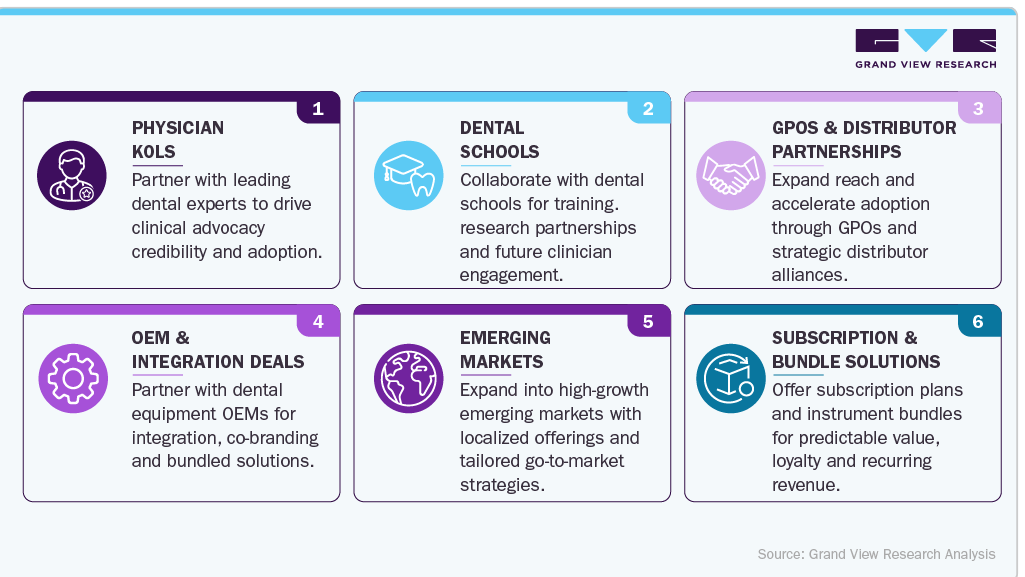
The major players in the dental crown remover market are driving growth mainly through product innovation and strategic partnerships that focus on reducing patient discomfort and chair time. Companies are investing heavily in the research and development of ergonomic and automated crown removers, such as pneumatic and ultrasonic devices. These tools lower the risk of tooth fractures and soft tissue damage compared to traditional manual instruments. In addition, manufacturers are expanding their global reach by partnering with dental clinics, dental service organizations (DSOs), and distribution networks in emerging markets.
Key Dental Crown Remover Companies
The following key companies have been profiled for this study of the dental crown remover market.
-
Komet Dental
-
Hu-Friedy Mfg. Co., LLC
-
Brasseler USA
-
Medesy Srl
-
Helmut Zepf Medizintechnik GmbH
-
Waldent
-
Carl Martin GmbH
-
Nordent Manufacturing Inc.
-
J & J Instruments, Inc.
-
B. Braun Melsungen AG (Aesculap Inc.)
-
Institut Straumann AG (Anthogyr)
-
Kentzler-Kaschner Dental
-
GDC Dental
-
WAM
 To learn more about this report, Download Free Sample Report
Recent Developments
-
In June 2026, ArtCraft Dental highlighted the success of its TempOff Temporary Crown Remover. The device was designed to simplify temporary crown removal, reducing procedure time to as little as 3-5 seconds. Its unique 4-point contact tip provided a secure, non-slip grip, offering a faster and more efficient alternative to traditional techniques such as hemostats and rubber-tipped instruments.
“Temporary crown removal should not be this difficult,” said Dr. Fyffe. “I created TempOff because I was frustrated with instruments that constantly slipped or failed to grip the temporary properly.”
-
In June 2026, Max Crown Spreader was designed as a new dental crown removal instrument to improve the efficiency and predictability of crown removal procedures. The device utilized precision-engineered tines that aligned with grooves created by the Metal Buster Bur, enabling controlled force application and effective cement breakage. The innovation aimed to reduce procedure time and minimize the need for excessive force or multiple instruments during crown removal.
“This system is built for speed and predictability,” said Dr. David Fyffe. “Once you make your slot, the crown comes off in seconds.”
Dental Crown Remover Market Report Scope
Report Attribute
Details
Market size value in 2025
USD 73.2 million
Estimated market size in 2026
USD 75.5 million
Projected market size by 2033
USD 99.3 million
Growth rate
CAGR of 4.0% from 2026 to 2033
Base year for estimation
2025
Actual estimates/Historical data
2021 - 2024
Forecast period
2026 - 2033
Quantitative units
Revenue in USD million and CAGR from 2026 to 2033
Report coverage
Revenue forecast, company ranking, competitive landscape, growth factors, and trends
Segments covered
Product type, end user, region
Regional scope
North America; Europe; Asia Pacific; Latin America; Middle East & Africa
Country scope
U.S.; Canada; Mexico; UK; Germany; France; Italy; Spain; Denmark; Sweden; Norway; Japan; China; India; Thailand; Australia; South Korea; Brazil; Argentina; South Africa; Saudi Arabia; UAE; Kuwait
Key companies profiled
Komet Dental; Hu-Friedy Mfg. Co., LLC; Brasseler USA; Medesy Srl; Helmut Zepf Medizintechnik GmbH; Waldent; Carl Martin GmbH; Nordent Manufacturing Inc.; J & J Instruments, Inc.; B. Braun Melsungen AG (Aesculap Inc.); Institut Straumann AG (Anthogyr); Kentzler-Kaschner Dental; GDC Dental; WAM
Customization scope
Free report customization (equivalent up to 8 analyst’s working days) with purchase. Addition or alteration to country, regional & segment scope
Pricing and purchase options
Avail customized purchase options to meet your exact research needs. Explore purchase options
Global Dental Crown Remover Market Report Segmentation
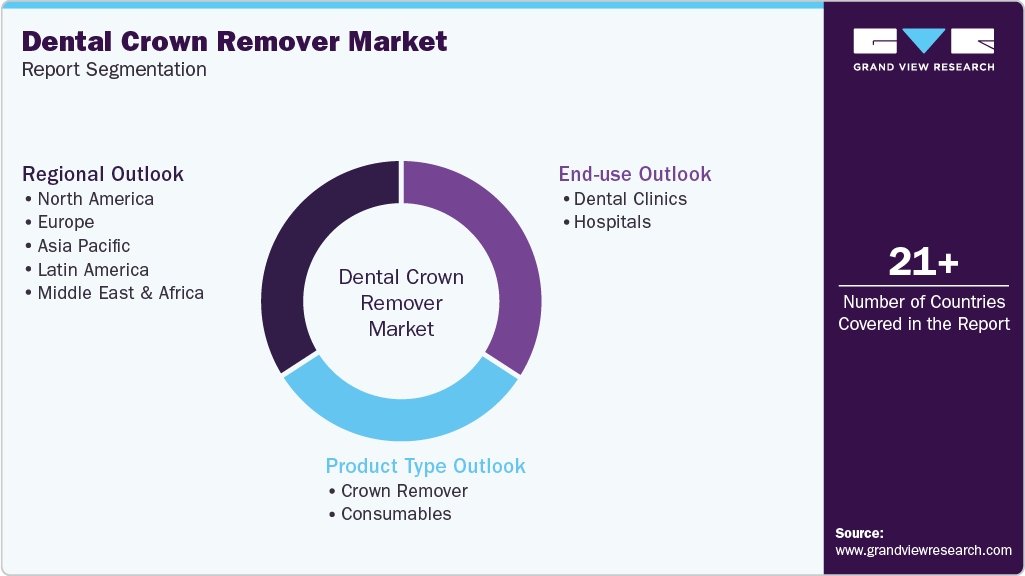
This report forecasts revenue growth at the global, regional & country levels and provides an analysis of the latest industry trends in each of the sub-segments from 2021 to 2033. For this study, Grand View Research has segmented the global dental crown remover market report based on product type, end user, and region:
 To learn more about this report, Download Free Sample Report
-
Product Type Outlook (Revenue, USD Million, 2021 - 2033)
-
Crown Remover
-
Manual Crown Removers
-
Automatic Crown Removers
-
Pneumatic Crown Removers
-
Electromechanical Crown Removers
-
-
- Consumables
-
-
End User Outlook (Revenue, USD Million, 2021 - 2033)
-
Dental Clinics
-
Hospitals
-
-
Regional Outlook (Revenue, USD Million, 2021 - 2033)
-
North America
-
U.S.
-
Canada
-
Mexico
-
-
Europe
-
UK
-
Germany
-
France
-
Italy
-
Spain
-
Denmark
-
Sweden
-
Norway
-
-
Asia Pacific
-
Japan
-
China
-
India
-
Thailand
-
Australia
-
South Korea
-
-
Latin America
-
Brazil
-
Argentina
-
-
Middle East & Africa
-
South Africa
-
Saudi Arabia
-
UAE
-
Kuwait
-
-
Research Methodology
The dental crown remover market figures in this report are based on a proven research process that combines executive interviews with secondary research from proprietary databases, company filings, and recognized regulatory and institutional sources. Market size is built through value-chain sizing-reconciling supply-side and demand-side estimates-and triangulated with bottom-up and top-down approaches. Every estimate passes multiple levels of expert validation before publication, with each dental crown remover segment quantified using the revenue-capture definitions in the table below.
Segment Definition
Segment - Product Type
Revenue capture definition
Crown Remover
Revenue generated from the sale of manually operated dental crown removal instruments that rely on hand-applied mechanical force to remove temporary or permanently cemented crowns and bridges. This segment includes sliding hammer, spring-loaded, lever-type, forceps-based, and other hand-operated crown removal devices.
Consumables
Revenue generated from the sale of disposable or replaceable accessories used with dental crown removal systems. This includes traction & gripping consumables such as wire loops, single-use cables, and replaceable elastomer/rubber plier pads, as well as other consumables including adhesive/thermoplastic resin blocks, precision tapping screws, guide pins, and related access and repair components used during crown removal procedures.
Estimation Model
Approach
Description
Bottom-Up Estimation
Revenue is estimated by aggregating sales of dental crown remover products across dental clinics, hospitals, and dental laboratories at country, regional, and global levels. Procedure volumes involving crown removal, replacement, and restorative dentistry are analyzed to assess product utilization rates. Average selling prices (ASPs) of manual crown removers, ultrasonic devices, and accessory kits are mapped to determine demand.
Top-Down Approach
The overall dental consumables or dental surgical instruments market is identified first, and the share attributable to crown removal tools is estimated using secondary research and expert validation. Factors such as restorative dentistry demand, replacement of dental crowns, and retreatment rates are analyzed to define category contribution. Market size is derived by applying validated penetration assumptions across major regions and dental care systems.
Supply-Side Analysis
This approach evaluates total production and sales of dental crown remover devices by manufacturers, including OEMs and dental instrument suppliers. Key parameters include manufacturing capacity, shipment volumes, pricing structures, and distribution networks across dental distributors and procurement channels. Revenue estimates are validated using company financial disclosures, trade data, and import-export statistics.
Delivered Customizations
This report has been delivered with the following In-depth customizations
Client Request
Customization Delivered
Value Adds
Dental Crown Remover Product Category & Adoption Analysis
Conducted a focused assessment of dental crown remover devices and related restorative dentistry tools including manual crown removers, ultrasonic crown removal systems, and adjacent dental instruments. Evaluated adoption trends among dental clinics, endodontists, and oral surgeons, along with procedural preferences and clinical demand patterns for traumatic crown removal.
Helps stakeholders identify high-growth segments in restorative dentistry, understand clinician preferences for minimally invasive crown removal techniques, and assess unmet needs across dental restoration workflows.
Distribution Channel & Dental Practice Landscape Analysis
Analyzed sales performance across dental hospitals, private dental clinics, dental service organizations (DSOs), and online dental supply distributors. Assessed procurement behavior, tender-based purchasing, and channel-wise adoption of crown removal tools and consumables.
Enables companies to optimize go-to-market strategies, strengthen institutional sales penetration, and identify the most effective procurement channels for recurring revenue and equipment adoption.
Competitive Benchmarking & Product Innovation Assessment
Evaluated leading manufacturers of dental crown removal tools based on product portfolio depth, ergonomic design, clinical efficiency, pricing strategy, innovation in atraumatic removal technologies, and geographic presence. Assessed new product launches and differentiation strategies in restorative and prosthodontic toolkits.
Supports benchmarking of competitive positioning, identification of innovation gaps (e.g., patient comfort, speed, precision), and development of strategies to improve clinician adoption and brand differentiation in dental equipment markets.
About the Author(s)
Medical Devices Research Team
Healthcare · Medical DevicesThis report was authored by the medical devices research team at Grand View Research - comprising two research analysts, one senior research analyst, and one industry expert - with specialized expertise in the medical devices segment of the healthcare industry. All findings are based on proprietary healthcare databases, executive interviews, and regulatory analysis, subject to internal peer review prior to publication.
Last Updated:
Speak to Analyst

Customize this report to your needs - add regions, segments, or data points, with 20% free customization.
Or view our licence options:


ISO 9001:2015 & 27001:2022 Certified
We are GDPR and CCPA compliant! Your transaction & personal information is safe and secure. For more details, please read our privacy policy.


