
- Home
- »
- Medical Devices
- »
-
Dental Handpieces Market Size & Share Report, 2026-2033GVR Report cover

Dental Handpieces Market (2026 - 2033)
Size, Share & Trends Analysis Report By Product (Air-Driven Handpieces, Electric-Driven Handpieces), By Speed, By Application, By End Use, By Distribution Channel, By Region, And Segment Forecasts
Market Size, 2025
$1.5BMarket Estimate, 2026
$1.6BMarket Forecast, 2033
$2.3BCAGR, 2026–2033
5.2%Dental Handpieces Market Summary
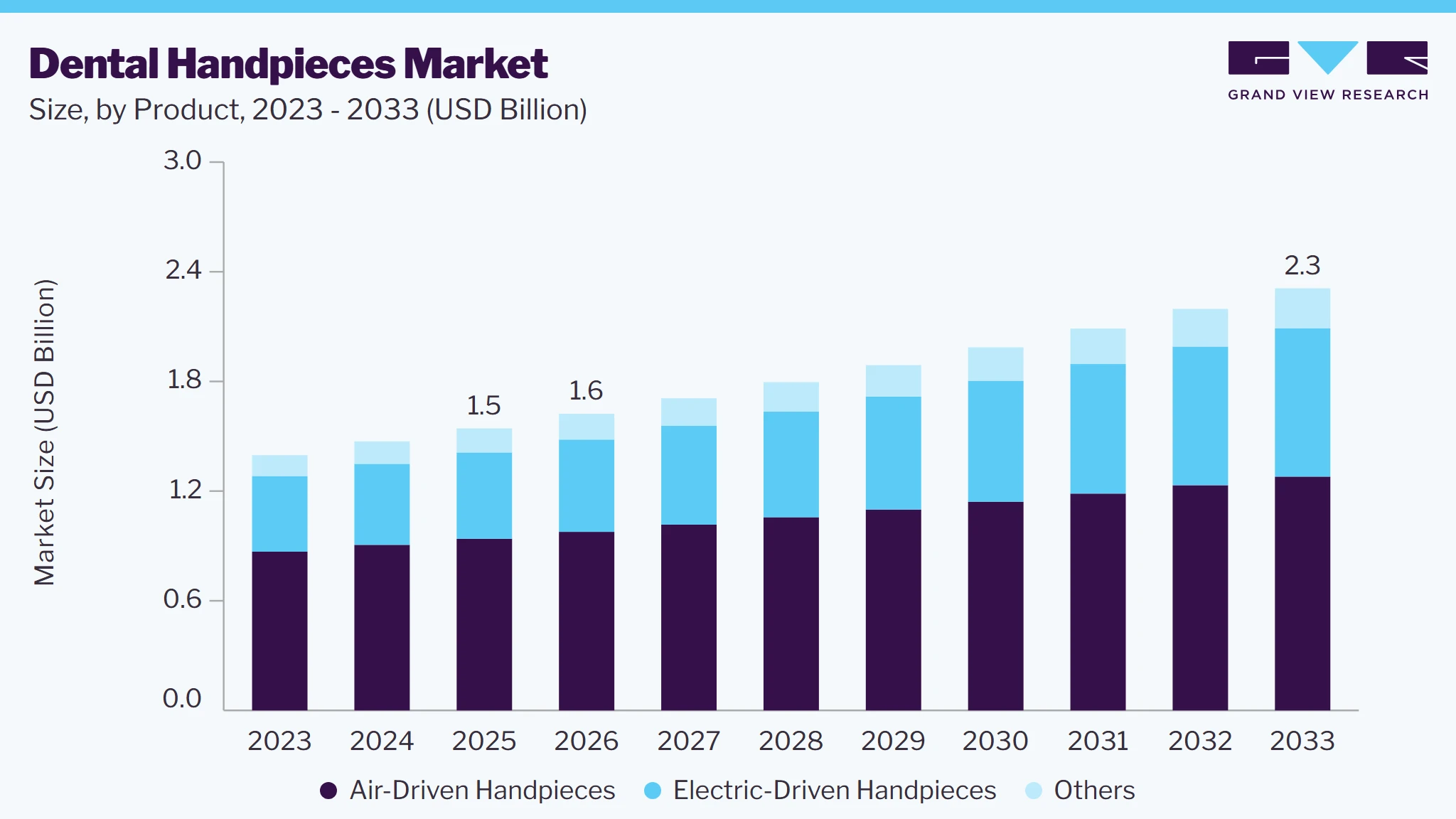
The global dental handpieces market size was valued at USD 1.5 billion in 2025 and is projected to grow from USD 1.6 billion in 2026 to USD 2.3 billion by 2033, at a CAGR of 5.2% from 2026 to 2033. The market in North America dominated with a revenue share of 38.2% in 2025. The growth of the global market is driven by the increasing number of dental procedures, rising prevalence of dental diseases, growing demand for cosmetic and restorative dentistry, and increasing adoption of advanced electric and air-driven dental handpieces.
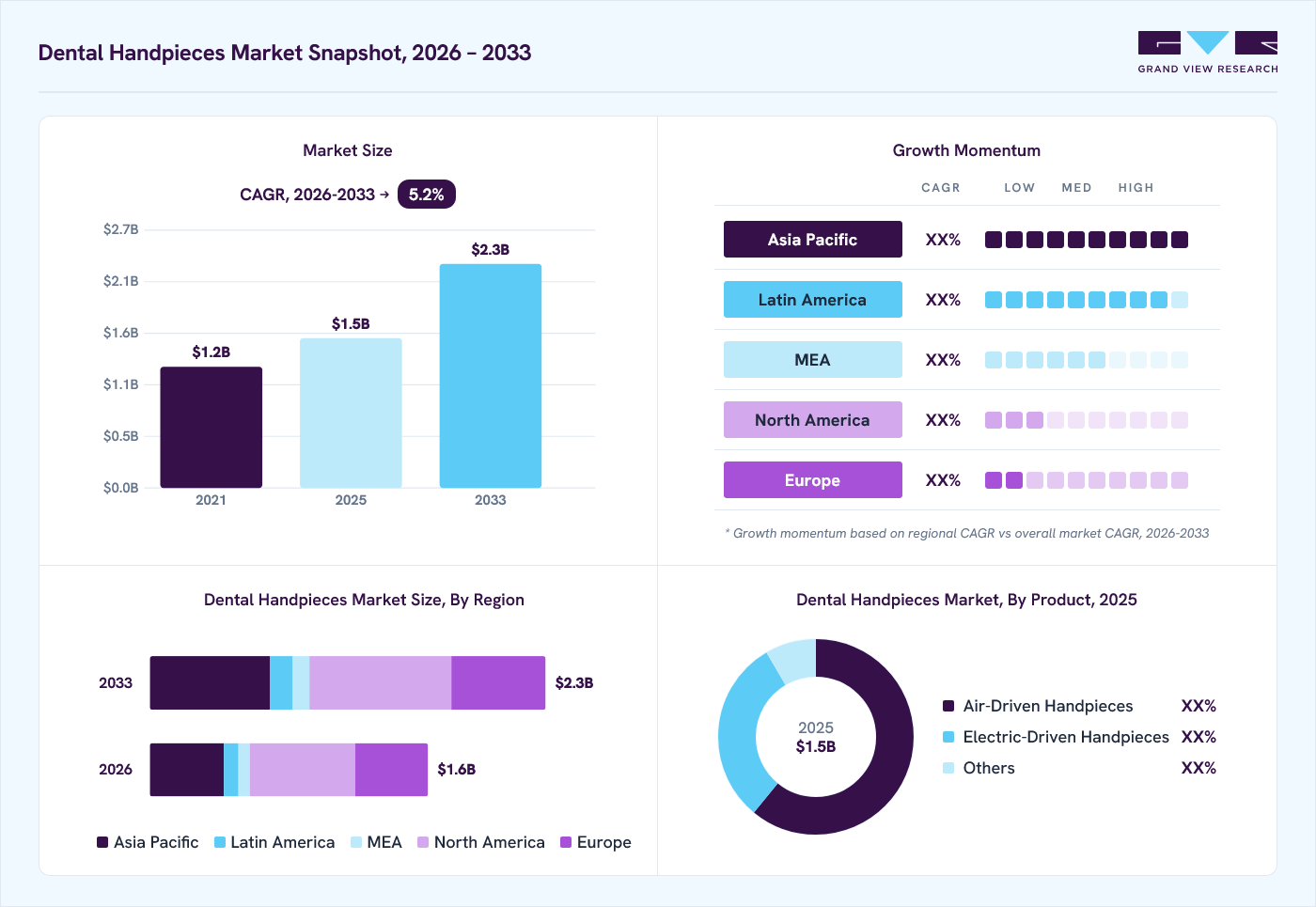 Source: Grand View Research, IR Documents, Primary Interviews, Paid DatabasesTo learn more about this report,
 Download Free Sample Report
Key Market Trends & Insights
- By product: Air-driven handpieces segment held the largest market share of 60.9% in 2025.
- By speed: High-speed handpieces segment held the largest market share of 56.7% in 2025.
- By application: Restorative/general dentistry segment held the largest market share of 45.9% in 2025.
- By end use: Dental clinics segment held the largest market share of 75.2% in 2025.
- By distribution channel: Dealers and distributors segment held the largest market share of 66.7% in 2025.
Regional Highlights
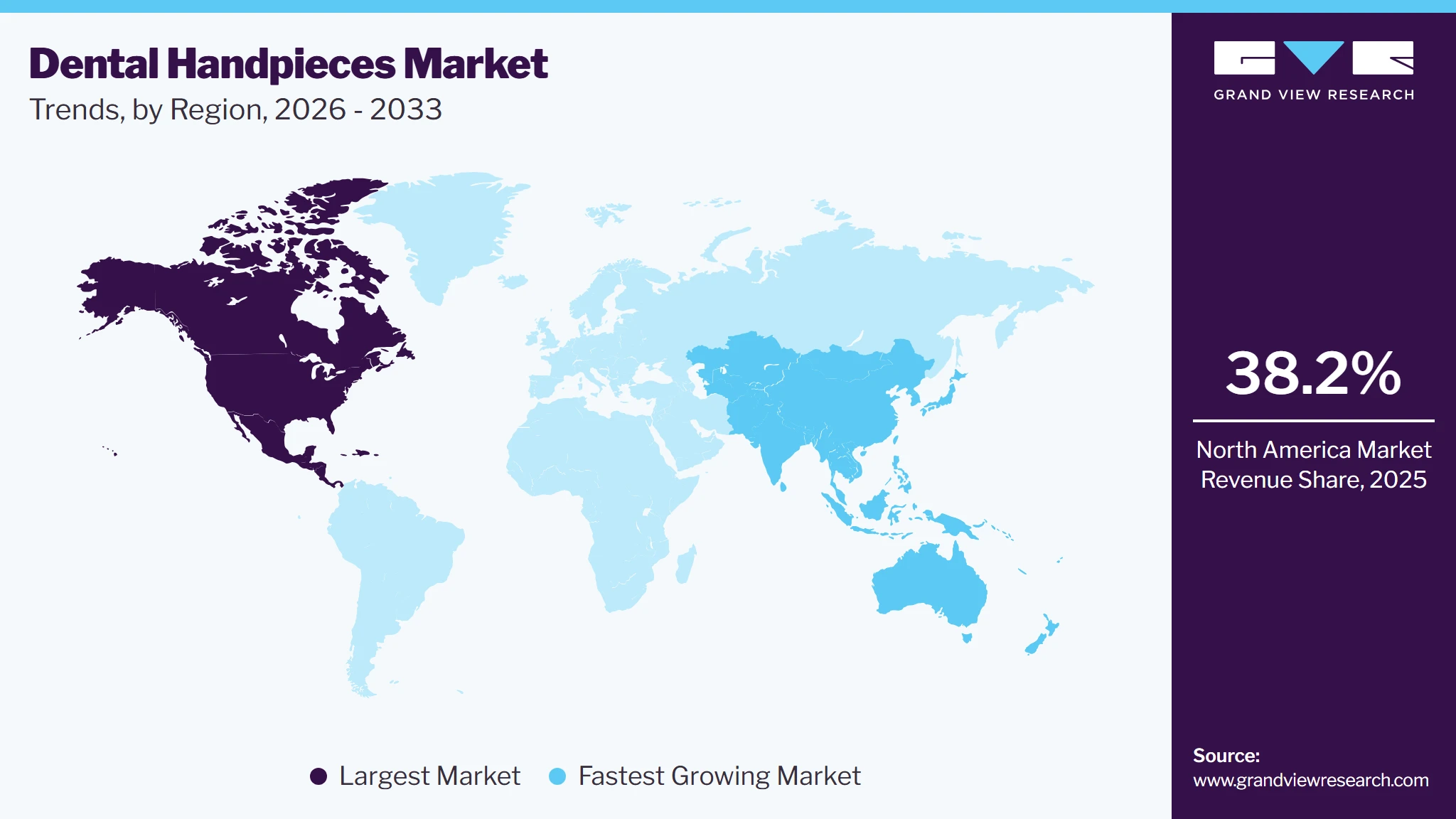
- Largest regional market: North America (38.2% revenue share, 2025)
- Fastest-growing regional market: Asia Pacific (highest CAGR, 2026-2033)
- By country: The U.S. held the largest market share in 2025
Market Size & Forecast
- Market size in 2025: USD 1.5 Billion
- Estimated market size in 2026: USD 1.6 Billion
- Projected market size by 2033: USD 2.3 Billion
- CAGR (2026-2033): 5.2%
Prism AI by Grand View Research Free to tryAsk a question about the dental handpieces marketTry asking✓Every figure cited from GVR research Prefer the report? Download free sample →Technological advancements in dental handpieces are supporting market growth by improving efficiency, procedural precision, operator comfort, and patient safety. Manufacturers focus on lightweight designs, enhanced torque, reduced vibration, improved cooling mechanisms, and advanced bearing technologies to improve clinical performance. The development of electric handpieces with programmable speed and torque settings is also gaining attention, particularly for restorative and endodontic procedures that require consistent cutting performance and greater operational control. In addition, improvements in anti-retraction mechanisms and sterilization-compatible components are supporting infection prevention and extending device service life. These developments are encouraging dental professionals to upgrade conventional handpieces with technologically advanced alternatives, supporting product replacement demand and market expansion.
 To learn more about this report, Download Free Sample Report
For instance, in July 2025, J. MORITA introduced the TwinPower Turbine G-Series air-driven handpiece in the U.S. market. The product featured a redesigned rotor capable of delivering 47 W of cutting power, a tapered head for improved intraoral access, and a four-port water spray system for effective cooling. The launch addressed the demand for high-performance air-driven handpieces used in restorative procedures and tooth preparation.
Growing demand for ergonomic and integrated electric handpieces:
The increasing focus on clinician ergonomics and procedural efficiency is supporting demand for lightweight and integrated electric dental handpiece systems. Dental professionals frequently perform repetitive procedures requiring sustained hand control, making device weight, grip design, vibration, and operating stability important purchasing considerations. Electric handpieces offer controlled speed and torque, supporting consistent performance during restorative preparations and endodontic procedures. For instance, in February 2026, DENTALEZ launched the Star E900 Electric Handpiece System and Star 440 Air-Driven Handpieces. The Star E900 featured three factory presets for endodontic and tooth preparation procedures, integrated RFID technology for equipment usage tracking, and temperature monitoring to improve operational safety. Its handpiece attachments were designed to be 15% lighter than competing attachments, addressing clinician fatigue and supporting longer procedures.
“We reimagined what an electric handpiece system could be”, says Michelle Gray, Senior Product Manager. “This system brings together intelligent features, uncompromising safety, and powerful, consistent performance to help clinicians work smarter, not harder-every procedure, every day.”
Consumer preference and perception:
Consumer preferences are influenced by product performance, operational efficiency, ergonomics, durability, and infection control. Dental professionals, who represent the primary purchasing group, generally prefer handpieces that offer consistent rotational speed, adequate torque, low noise, reduced vibration, and efficient cooling during clinical procedures. Lightweight designs and ergonomic grips are gaining attention as dentists seek to minimize hand fatigue during prolonged treatments.
Key consumer preferences and purchasing considerations:
-
Performance and precision: Preference for handpieces offering consistent rotational speed, high torque, efficient cutting, and reliable performance across restorative and surgical procedures.
-
Ergonomics and user comfort: Demand for lightweight construction, balanced handpiece designs, comfortable grips, and reduced vibration to minimize clinician fatigue.
-
Infection prevention: Greater consideration of anti-retraction valves, sterilization compatibility, autoclavable designs, and effective contamination-control mechanisms.
-
Noise and vibration reduction: Preference for quieter handpieces with minimal vibration to improve clinician comfort and the patient treatment experience.
-
Durability and maintenance: Purchasing decisions are influenced by bearing quality, product lifespan, repair requirements, replacement-part availability, and maintenance costs.
-
Price and value proposition: Smaller dental clinics and independent practitioners often consider initial purchase price, servicing expenses, and long-term operating costs when selecting handpieces.
- Brand reputation and after-sales support: Established manufacturer reputation, warranty coverage, product reliability, technical assistance, and distributor networks influence purchasing confidence.
Market Dynamics
The market is experiencing continuous growth, driven by the increasing burden of oral diseases, rising volume of dental procedures, and growing demand for efficient and reliable dental instruments. Dental handpieces are essential tools used in restorative dentistry, endodontics, prosthodontics, periodontics, and oral surgery for tooth preparation, cavity treatment, polishing, and other clinical procedures. The market is further supported by the increasing focus on infection prevention, sterilization-compatible instruments, and improvements in handpiece ergonomics and mechanical performance. Technological advancements in electric handpieces, including programmable speed and torque settings, improved bearing systems, lightweight attachments, and integrated temperature monitoring, are creating opportunities for product upgrades.
The increasing prevalence of oral diseases is generating demand for restorative and surgical dental procedures, supporting the utilization of dental handpieces across dental clinics and hospitals. According to the WHO, in March 2025, nearly 3.7 billion people worldwide were affected by oral diseases, with untreated dental caries identified as the most common health condition. This substantial disease burden highlights the increasing need for cavity preparation, dental restorations, tooth extractions, root canal treatments, and periodontal procedures, generating demand for high-speed and low-speed handpieces.
The high cost of dental treatment and limited insurance coverage in several countries restrict access to restorative and specialized dental procedures, indirectly affecting demand for dental handpieces. According to the WHO, oral healthcare remains expensive and is generally excluded from national universal health coverage benefit packages in many countries. Most low- and middle-income countries also lack sufficient services for oral disease prevention and treatment. These financial barriers can reduce patient visits for elective and restorative procedures, limiting treatment volumes and equipment utilization across dental facilities.
The growing demand for advanced dental procedures and improved clinical efficiency creates opportunities for manufacturers to develop advanced electric handpieces with programmable speed and torque settings, integrated temperature monitoring, lightweight attachments, and procedure-specific operating modes. These systems can support consistent cutting performance during restorative and endodontic procedures while improving clinician control and comfort. The introduction of integrated electric handpiece platforms with equipment tracking and programmable settings also creates opportunities for manufacturers to differentiate their portfolios through smart features and improved operatory efficiency.
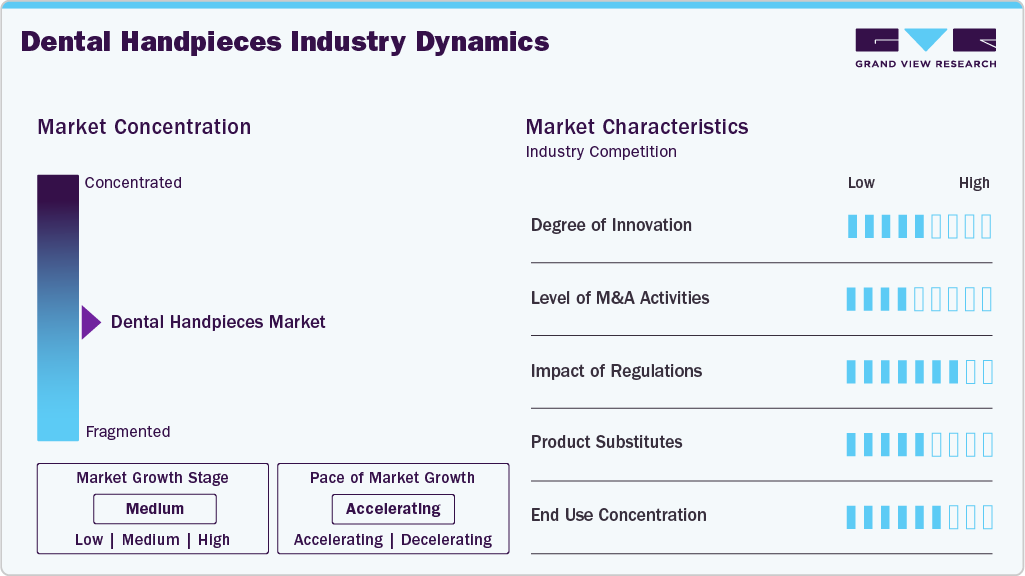
Market Concentration & Characteristics
- Degree of Innovation: The market is characterized by continuous product innovation, driven by advancements in electric motor technology, turbine design, bearing systems, ergonomics, and infection-control mechanisms. Manufacturers are introducing handpieces with improved torque, adjustable rotational speeds, reduced vibration, lightweight attachments, integrated LED lighting, and enhanced cooling systems. In September 2024, Dentsply Sirona introduced its Midwest Energo portfolio of electric handpieces in Canada, comprising T1 Energo and T2 Energo models in standard, short, and mini-head configurations. The portfolio features compact head designs, quieter operation, reduced heat generation, and enhanced durability to improve treatment visibility, operational efficiency, and patient safety.
 To learn more about this report, Download Free Sample Report
“We are thrilled to officially launch our MidwestEnergo series in Canada,” said Max Milz, Group Vice President Connected Technology Solutions at Dentsply Sirona. “With the new electric handpieces, we have been able to design features such as a smaller head, quieter operation and lower heat generation2 for increased patient safety.”
“Our new range of electric handpieces provides quality in every detail - no matter how big or small,” said Bruce Peatey, GVP, Americas Regional Commercial Organization at Dentsply Sirona. “We have listened to our customers’ needs and developed a modern portfolio of electric-driven handpieces to support them in delivering high-quality care to their patients.”
-
Level of M&A Activities: The dental handpiece market has experienced selective merger and acquisition activity, with strategic consolidation occurring across dental instruments, rotary equipment, and complementary dental technologies. Established manufacturers are expanding their product portfolios and distribution capabilities through acquisitions of specialized dental equipment and instrument businesses.
-
Impact of Regulations: The market is influenced by regulatory requirements governing medical device safety, manufacturing quality, sterilization compatibility, and product performance. In the U.S., dental handpieces are subject to applicable FDA medical device requirements, including relevant classification, registration, listing, and premarket requirements. Manufacturers must also comply with quality management requirements under the FDA Quality Management System Regulation (QMSR), which became effective on February 2, 2026, incorporating ISO 13485:2016 by reference. In Europe, dental handpieces must comply with the Medical Device Regulation (EU) 2017/745, including applicable conformity assessment, technical documentation, and post-market surveillance requirements.
-
Product Substitutes: The market faces competition from alternative dental instruments and technologies, including laser-based dental systems, ultrasonic instruments, air abrasion systems, and specialized rotary instruments. Lasers can substitute for conventional rotary handpieces in selected soft-tissue procedures, cavity preparation, and periodontal treatments, while ultrasonic instruments are used for scaling, endodontic procedures, and certain surgical applications. Air abrasion systems also provide an alternative for selected minimally invasive cavity preparations.
-
End-Use Concentration: Demand for dental handpieces is concentrated among dental clinics, hospitals, academic dental institutions, and specialized dental care centers. Dental clinics represent an important end-use segment because they perform a high volume of restorative, preventive, endodontic, and prosthodontic procedures requiring regular use of high-speed and low-speed handpieces. Hospitals and multispecialty dental centers also require diverse handpiece configurations for oral surgery, periodontal treatments, and complex restorative procedures. Dental colleges and academic institutions contribute to demand through clinical training and equipment procurement.
Analyst Perspective
The global dental handpieces market is expected to witness steady growth, supported by the increasing burden of oral diseases, rising volume of restorative and surgical dental procedures, and growing demand for technologically advanced dental instruments. The market is benefiting from innovations in electric handpieces, improved bearing technologies, lightweight designs, enhanced torque control, and sterilization-compatible components. From an analyst's perspective, manufacturers offering durable, ergonomically designed, and cost-effective handpieces with advanced operational features are better positioned to strengthen their market presence. Future competitiveness will depend on continuous product innovation, regulatory compliance, efficient distribution networks, after-sales support, and expansion across emerging dental markets.
Product Insights
The air-driven handpieces segment dominated the market, accounting for 60.9% of the market in 2025. This dominance is supported by the continued demand for high-speed air-turbine systems that deliver the rotational speed required for cavity preparation, crown preparation, and other restorative procedures. Their established clinical applications, compatibility with conventional dental-unit air connections, and availability across different handpiece configurations support adoption among general dental practitioners. For instance, in January 2026, the U.S. FDA granted 510(k) clearance to Foshan Topmed Dental's high-speed air turbine handpiece, which offered operating speeds of 300,000-400,000 RPM and was indicated for cavity preparation, crown preparation, root canal preparation, and polishing procedures.
The electric-driven handpieces segment is expected to grow at the fastest rate during the forecast period, driven by increasing demand for consistent torque delivery, precise speed control, and reduced operating noise and vibration during dental procedures. Unlike air-driven systems, electric handpieces maintain more consistent rotational speed under load, supporting controlled cutting during restorative treatments, crown preparation, and procedures involving dense restorative materials. Their adjustable speed and torque settings also support specialized applications such as endodontics, implantology, and prosthetic procedures.
Speed Insights
The high-speed handpieces segment dominated the market, accounting for 56.7% of the market in 2025 and is expected to grow at the fastest rate during the forecast period. This dominance is supported by the extensive use of high-speed handpieces for cavity preparation, crown and bridge preparation, tooth sectioning, and removal of old restorations, where rapid material removal shortens chair time. Rising volumes of restorative and cosmetic procedures, together with demand for lighter, ergonomic, and easy-to-service instruments, are further sustaining adoption.
The low-speed handpieces segment is expected to grow at a significant rate during the forecast period due to the increasing use of low-speed handpieces in prophylaxis, caries removal, endodontic preparation, polishing, and finishing procedures, where higher torque and finer control are required, along with the rising focus on preventive dental care and hygiene-led practice models.
Application Insights
The restorative/general dentistry segment dominated the market, accounting for 45.9% of the market in 2025. This dominance is supported by the high burden of dental caries and routine restorative needs, frequent check-ups that identify cavities at an early stage, and sustained demand for fillings, crowns, and bridges, all of which rely on handpieces for cavity preparation and finishing. For instance, according to the U.S. Centers for Disease Control and Prevention's National Center for Health Statistics, 66.7% of U.S. adults aged 18 years and older had a dental exam or cleaning in the past year, based on the 2025 National Health Interview Survey early release. Such high utilization of dental services creates a steady pipeline of restorative procedures and sustains demand for handpieces in general dentistry.
The surgical & implantology segment is expected to grow at the fastest rate during the forecast period due to the rising number of dental implant placements, extractions, bone-grafting, and sinus-lift procedures, the growing population with tooth loss, and the increasing preference for torque-controlled surgical motors that integrate with digital implant-planning workflows. For instance, according to NHSBSA, 2.42 million NHS dental courses of treatment in England were recorded under Band 2b in 2025/26, representing a 7.9% increase from 2024/25. Band 2b includes treatments involving non-molar endodontics or three or more teeth requiring permanent fillings or extractions, indicating increased activity involving complex dental treatment.
End Use Insights
The dental clinics segment dominated the dental handpieces market, accounting for 75.2% in 2025 and is expected to grow at the fastest rate during the forecast period. This dominance is driven by the high concentration of routine restorative, preventive, and prosthetic procedures in private and group practices, the large number of operatories that require multiple handpieces, and the frequent replacement of instruments due to repeated sterilization cycles. Growing affiliation of dentists with group practices is further strengthening procurement volumes. For instance, according to the American Dental Association Health Policy Institute's U.S. Dentist Workforce report published in September 2025, more than one in four dentists up to 10 years out of dental school were affiliated with a dental service organization (DSO) in 2024. As newer dentists join group-managed clinics, centralized equipment purchasing is expected to keep dental clinics the principal end user of handpieces.
The hospitals & ambulatory surgical centers (ASCs) segment is expected to grow at a significant rate during the forecast period. Growth is driven by the increasing number of complex oral and maxillofacial surgeries, trauma cases, and dental procedures under general anesthesia for pediatric and special-needs patients, along with centralized sterile processing and multi-specialty referral pathways that favor higher-specification surgical handpieces. For instance, in August 2026, Hamad Medical Corporation expanded dental services at Al Khor Hospital and Aisha Bint Hamad Al Attiyah Hospital in Qatar, bringing its dental treatment clinics to eight and adding dental treatment under general anesthesia for children and patients with special needs. Such expansion of hospital-based specialist dental services is expected to support steady demand for handpieces in this segment.
Distribution Channel Insights
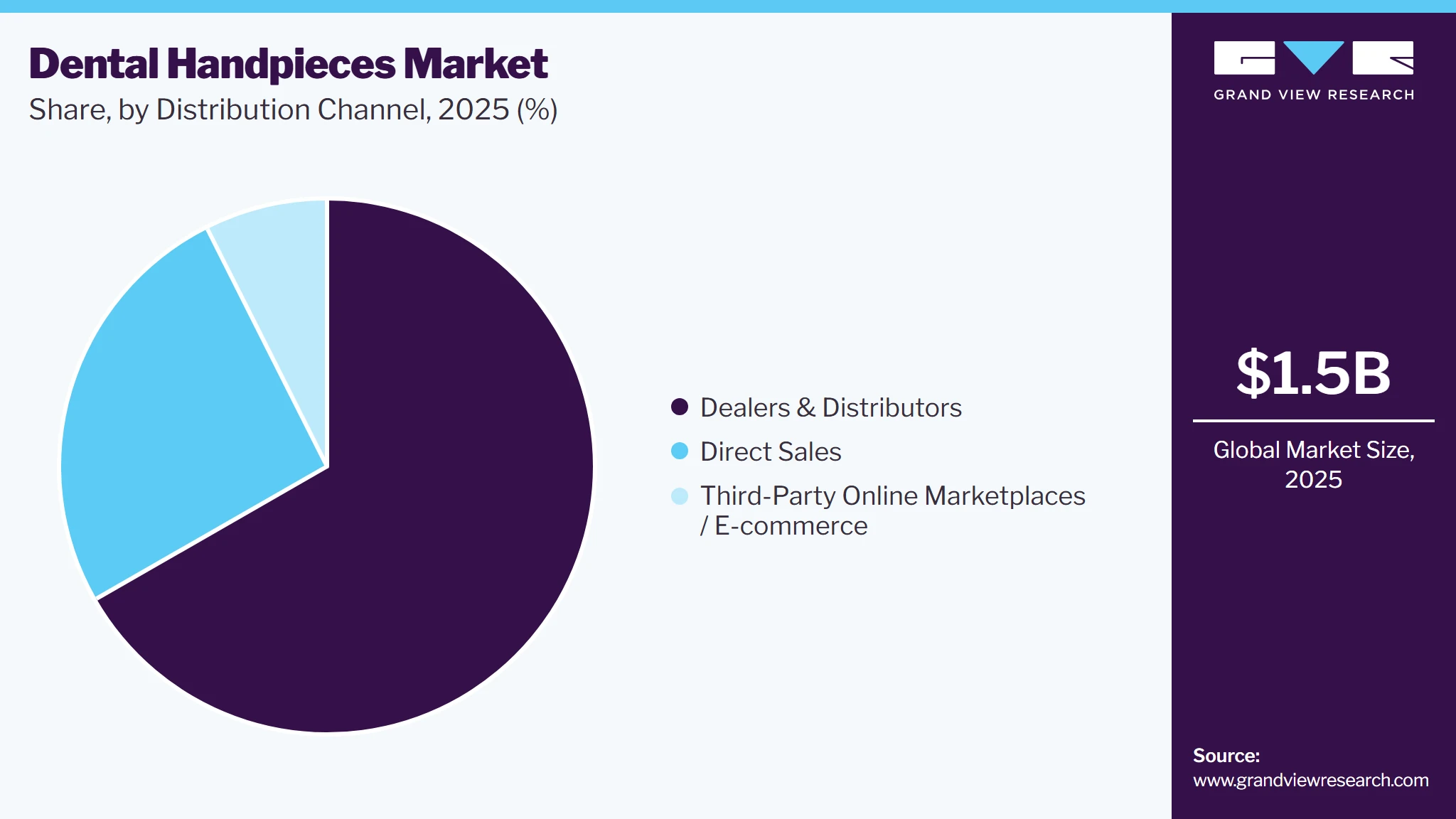
The dealers and distributors segment dominated the market, accounting for 66.7% in 2025. This dominance is driven by the one-stop supply of equipment, consumables, and instruments, bundled offerings that combine financing, installation, and repair services, and long-standing relationships between distributors and dental practices. Consolidation and investment in large distributors are further strengthening their reach and service capabilities. For instance, in April 2025, Patient Square Capital completed its acquisition of Patterson Companies, a leading supplier of products and services to the dental and animal health markets across North America and the U.K. Such investments in distribution scale are expected to keep dealers and distributors the primary route to market for handpieces.
 To learn more about this report, Download Free Sample Report
The third-party online marketplaces /e-commerce segment is expected to grow at the fastest rate during the forecast period. Growth is driven by the convenience of online reordering, price transparency, wider product selection, and the rising digitization of dental practice procurement. For instance, in May 2026, Henry Schein reported that more than 80% of its U.S. dental e-commerce sales were running through its consolidated HenrySchein.com platform, which merges previously separate storefronts and standardizes ordering for dental merchandise, equipment, and specialty products, with full U.S. rollout targeted for August 2026. The shift toward unified digital storefronts is expected to make online purchasing of handpieces and related accessories easier for dental practices.
“We are well advanced in implementation across the U.S.,” Lowery said, with full U.S. rollout targeted for August.
Regional Insights
The North America dental handpieces market held the largest share of 38.2% in 2025, supported by advanced dental care infrastructure, high adoption of digital and electric-driven instruments, a large base of group practices and DSOs, and expanding insurance coverage that is improving access to restorative, surgical, and preventive care. For instance, in November 2025, Health Canada announced that close to six million Canadians were covered under the Canadian Dental Care Plan, widening patient access to dental services. Rising treatment volumes are expected to sustain replacement and upgrade demand for handpieces across the region.
 To learn more about this report, Download Free Sample Report
U.S. Dental Handpieces Market Trends
The U.S. dental handpieces market is witnessing steady growth due to its large and well-established dental workforce, high frequency of dental visits, strong presence of group practices, and continuous replacement of handpieces driven by infection-control protocols. For instance, according to the American Dental Association Health Policy Institute, there were 205,088 professionally active dentists in the U.S. in 2025, equivalent to 60.0 per 100,000 population. This extensive clinical base, combined with ongoing investment in modern clinical equipment, is supporting sustained demand for dental handpieces in the country.
Europe Dental Handpieces Market Trends
The Europe dental handpieces market is projected to witness substantial growth, owing to a strong network of dental practitioners, widespread public and private dental coverage, an ageing population driving restorative and implant procedures, and the presence of established handpiece manufacturers such as W&H, KaVo, and Bien-Air. For instance, in March 2025, the International Dental Show (IDS) in Cologne, Germany, brought together 2,010 exhibitors from 61 countries and 135,267 visitors from 156 countries. The scale of such platforms accelerates the introduction and adoption of new dental instruments across the region.
The UK dental handpieces market is expected to grow steadily, driven by government efforts to improve access to NHS dental care, the ongoing recovery of treatment volumes, and sustained activity in the private dental sector. For instance, according to NHS England dental statistics for 2024/25, about 35 million courses of treatment were delivered, roughly 4% more than in 2023/24, by 24,543 dentists with NHS activity. In addition, the UK Government's February 2025 commitment to deliver 700,000 additional urgent dental appointments a year is expected to further lift clinical activity and instrument demand.
Asia Pacific Dental Handpieces Market Trends
The Asia Pacific dental handpieces market is expected to grow at the fastest rate, owing to rising oral health awareness, an expanding middle-class population, the increasing number of dental clinics, and growing adoption of digital dentistry across India, China, Japan, and South Korea. For instance, in February 2025, Roland DG's dental subsidiary DGSHAPE established DGSHAPE Dental India Private Limited to strengthen local sales and marketing, citing the remarkable growth of Indian dentistry and expecting India's dental market to reach a size similar to Japan's. Such investments by international dental technology companies are expected to deepen market penetration across the region.
The China dental handpieces market is expected to witness significant growth due to government-led oral health promotion, the rising number of dental institutions and private clinics, and increasing consumer spending on restorative and implant treatments. For instance, in December 2025, China's National Health Commission, together with 12 other government departments, launched a five-year action plan on children's health under which maternal and child health institutions would provide oral care for children under six and carry out yearly dental examinations for students to reduce tooth decay. Such preventive programs are expected to expand patient flow and equipment demand in dental facilities.
Latin America Dental Handpieces Market Trends
The Latin America dental handpieces market is expected to grow at a significant rate during the forecast period supported by public oral health programs, expanding private dental clinics, and rising awareness of preventive and aesthetic dentistry. For instance, in September 2025, Brazil's Ministry of Health reported that investment in the ‘Smiling Brazil’ national oral health program rose from ~276.6 USD million to ~792.9 million between 2022 and 2024, with about 33,000 oral health teams in operation and 800 new mobile dental units planned to expand the fleet from 107 to 900 vehicles. Such public investment is expected to widen access to dental care and support demand for handpieces across the region.
MEA Dental Handpieces Market Trends
The MEA dental handpieces market is witnessing strong growth, supported by ongoing healthcare infrastructure investments, the rising number of private dental clinics, and growing awareness of oral health, particularly across Gulf Cooperation Council countries. For instance, in January 2026, Saudi Arabia's Ministry of Health and Ministry of Human Resources and Social Development announced phase two of dental job localization, setting a 55% localization rate for private-sector establishments employing three or more workers in dental specialties. The measure is expected to strengthen the national dental workforce and encourage further investment in clinics and equipment.
Key Companies & Market Share Insights
Some of the key companies in the dental handpieces market include Nakanishi Inc., Dentsply Sirona, Envista Holdings Corporation, Brasseler USA (Henry Schein, Inc), and MK-dent GmbH. Organizations are focusing on increasing customer base to gain a competitive edge in the industry. Therefore, key players are taking several strategic initiatives, such as product launch, and partnerships with other major companies. Some prominent players in the global dental handpieces market include:
Key Dental Handpieces Companies:
The following key companies have been profiled for this study on the dental handpieces market.
-
Nakanishi Inc
-
Dentsply Sirona
-
Envista Holdings Corporation
-
W&H Dentalwerk Bürmoos GmbH
-
Bien-Air Dental SA
-
J. MORITA CORPORATION
-
Guilin Woodpecker
-
Foshan COXO Medical Instrument Co., Ltd.
-
Acteon Group
-
Saeshin Precision
-
Brasseler USA (Henry Schein, Inc)
-
MK-dent GmbH
-
AKOS (Foshan Akos Medical Instrument Co., Ltd.)
Competitive Benchmarking
Category
Operating Strategies
Competitive Edge
Weakness
Established Players (Nakanishi Inc., Dentsply Sirona, Envista Holdings Corporation)
Focus on developing advanced air-driven and electric handpieces with improved rotational speed, torque control, ergonomic designs, quieter operation, integrated LED lighting, and enhanced infection-control features.
Expand global presence through strategic partnerships with dental clinics, hospitals, distributors, dental schools, and service networks.
Strong brand recognition, established customer relationships, specialized engineering capabilities, and extensive global distribution and after-sales service networks.
Product reliability, precision engineering, ergonomic designs, and technical support strengthen their positioning in premium dental practices.
Premium product pricing, higher R&D expenditure, and the costs associated with product development, regulatory compliance, and international service infrastructure limit penetration among smaller and budget-conscious dental practices.
Emerging Players (Guilin Woodpecker, Foshan COXO Medical Instrument Co., Ltd., Acteon Group)
Expand product portfolios across high-speed, low-speed, electric, surgical, and contra-angle handpieces.
Strengthen distribution in emerging markets, offer cost-effective products, improve compatibility with existing dental equipment, and pursue international certifications to support market entry.
Competitive pricing, diversified product offerings, manufacturing flexibility, and the ability to address demand from cost-sensitive dental clinics and distributors.
Regional manufacturing capabilities and focused product development support competition across entry-level and mid-range handpiece categories.
Comparatively lower global brand recognition for some manufacturers, and competition in premium segments may constrain international expansion.
Maintaining consistent product quality, durability, regulatory compliance, and technical support across markets can also be challenging.
Recent Developments
-
In October 2026, AKOS showcased over 100 dental handpiece models at DenTech China 2026, highlighting its newly launched titanium series. The portfolio included lightweight titanium high-speed fiber-optic handpieces and 1:5 speed-increasing and 1:1 speed-decreasing contra-angle handpieces, featuring ceramic bearings, improved durability, corrosion resistance, and enhanced thermal performance.
-
In November 2025, NSK introduced its QuickStop Bearing technology for air turbine dental handpieces to improve operational safety and efficiency. The technology uses a specialized rubber seal to rapidly stop rotor rotation when the air supply is switched off while preventing suck-back contamination.
‘At NSK we are dedicated to both R&D and continual improvement,’ said Takashi Yamaji, Chief Advisor to NSK’s European Industrial Business Unit. ‘We love solving problems and making life easier for our customers. The QuickStop solution is another example of how the expertise of our team, and the high quality of our products, have come together to overcome a common challenge and allow end-users to operate more efficiently and profitably.'
Dental Handpieces Market Report Scope
Report Attribute
Details
Market size in 2025
USD 1.5 billion
Estimated market size in 2026
USD 1.6 billion
Projected market size by 2033
USD 2.3 billion
Growth rate
CAGR of 5.2% from 2026 to 2033
Base year for estimation
2025
Historical data
2021 - 2024
Forecast period
2026 - 2033
Quantitative units
Revenue in USD Billion and CAGR from 2026 to 2033
Report coverage
Revenue forecast, company ranking, competitive landscape, growth factors, and trends
Segments covered
Product, Speed, Application, End Use, Distribution Channel, and region
Regional scope
North America; Europe; Asia Pacific; Latin America; Middle East & Africa
Country scope
U.S.; Canada; Mexico; UK; Germany; France; Italy; Spain; Denmark; Sweden; Norway; Japan; China; India; Thailand; Australia; South Korea; Brazil; Argentina; South Africa; Saudi Arabia; UAE; Kuwait
Key companies profiled
Nakanishi Inc., Dentsply Sirona, Envista Holdings Corporation, W&H Dentalwerk Bürmoos GmbH, Bien-Air Dental SA, J. MORITA CORPORATION, Guilin Woodpecker, Foshan COXO Medical Instrument Co., Ltd., Acteon Group, Saeshin Precision, Brasseler USA (Henry Schein, Inc), AKOS (Foshan Akos Medical Instrument Co., Ltd.), and MK-dent GmbH.
Customization scope
Free report customization (equivalent up to 8 analyst’s working days) with purchase. Addition or alteration to country, regional & segment scope
Pricing and purchase options
Avail customized purchase options to meet your exact research needs. Explore purchase options
Global Dental Handpieces Market Report Segmentation
This report forecasts revenue growth at global, regional & country levels and provides an analysis of the latest industry trends in each of the sub-segments from 2021 to 2033. For this study, Grand View Research has segmented the global dental handpieces market report based on product, speed, application, end use, distribution channel, and region:
-
Product Outlook (Revenue, USD Million, 2021 - 2033)
-
Air-Driven Handpieces
-
Electric-Driven Handpieces
-
Others
-
-
Speed Outlook (Revenue, USD Million, 2021 - 2033)
-
High-Speed Handpieces
-
Low-Speed Handpieces
-
-
Application Outlook (Revenue, USD Million, 2021 - 2033)
-
Restorative / General Dentistry
-
Surgical & Implantology
-
Endodontics
-
Prophylaxis & Hygiene
-
Dental Laboratory & Prosthetics
-
Others
-
-
End Use Outlook (Revenue, USD Million, 2021 - 2033)
-
Dental Clinics
-
Private Clinics
-
DSO-Affiliated Clinics
-
-
Hospitals & Ambulatory Surgical Centers (ASCs)
-
Dental Academic and Research Institutions
-
Dental Laboratories
-
-
Distribution Channel Outlook (Revenue, USD Million, 2021 - 2033)
-
Direct Sales
-
Dealers and Distributors
-
Third-Party Online Marketplaces / E-commerce
-
-
Regional Outlook (Revenue, USD Million, 2021 - 2033)
-
North America
-
U.S.
-
Canada
-
Mexico
-
-
Europe
-
UK
-
Germany
-
France
-
Italy
-
Spain
-
Denmark
-
Sweden
-
Norway
-
-
Asia Pacific
-
Japan
-
China
-
India
-
Thailand
-
Australia
-
South Korea
-
-
Latin America
-
Brazil
-
Argentina
-
-
Middle East & Africa
-
South Africa
-
Saudi Arabia
-
UAE
-
Kuwait
-
-
Research Methodology
The global dental handpieces market figures in this report are based on a proven research process that combines executive interviews with secondary research from proprietary databases, company filings, and recognized regulatory and institutional sources. Market size is built through value-chain sizing-reconciling supply-side and demand-side estimates-and triangulated with bottom-up and top-down approaches. Every estimate passes multiple levels of expert validation before publication, with each dental handpieces segment quantified using the revenue-capture definitions in the table below.
Segment Definition
Speed
Revenue capture definition
High-Speed Handpieces
Revenue generated from dental handpieces operating at rotational speeds exceeding 200,000 RPM, primarily used for tooth preparation, cavity preparation, crown and bridge preparation, and other procedures requiring rapid cutting and precision.
Low-Speed Handpieces
Revenue generated from the sale of dental handpieces designed to operate at lower rotational speeds (<40,000 RPM) generally used for procedures such as polishing, prophylaxis, caries removal, endodontic treatments, finishing, and adjusting dental restorations and prosthetics.
Estimation Model
Stage
Description
Bottom-Up Estimation
The global dental handpieces market is estimated by assessing the annual volume of dental handpieces sold across key product categories, including air-driven handpieces, electric-driven handpieces, and other handpieces, at country, regional, and global levels. The analysis considers sales volumes by speed category, including high-speed and low-speed handpieces, and demand across restorative and general dentistry, surgical and implantology, and endodontics.
Top-Down Approach
The market estimation begins with an assessment of the global dental equipment and dental instruments markets, followed by determining the share attributable to dental handpieces through secondary research and expert validation. The analysis considers key market indicators such as the number of practicing dentists, dental clinics and hospitals, annual dental procedure volumes, prevalence of oral diseases, dental care expenditure, and adoption of advanced dental technologies.
Supply-Side Analysis
The supply-side assessment evaluates manufacturers' annual production capacity, handpiece shipments, product portfolio diversification across air-driven and electric-driven systems, high-speed and low-speed configurations, manufacturing facilities, average selling prices, regulatory clearances, and geographic distribution networks. The analysis also considers product launches, technological advancements, manufacturing capabilities, and distributor partnerships.
Customization Table
Client Request
Customization Delivered
Value Adds
Product Portfolio & Technology Assessment
Conducted a comprehensive assessment of the dental handpieces product portfolio, covering air-driven handpieces, electric-driven handpieces, and other product types. Evaluated product characteristics, including rotational speed, torque, cutting efficiency, ergonomic design, bearing technology, noise levels, cooling mechanisms, integrated LED lighting, and sterilization compatibility. The analysis also compared high-speed and low-speed handpieces, identifying differences in clinical applications, performance requirements, and purchasing preferences.
Helps stakeholders identify attractive product categories, assess technology adoption, understand evolving clinical requirements, and align product development strategies with demand for advanced, durable, and ergonomically designed dental handpieces.
Application & End-user Adoption Analysis
Analyzed dental handpiece adoption across restorative and general dentistry, surgical and implantology procedures, endodontics, prophylaxis and hygiene, dental laboratory and prosthetics, and other applications. Evaluated purchasing and utilization patterns across private dental clinics, DSO-affiliated clinics, hospitals and ASCs, dental academic and research institutions, and dental laboratories. The study also examined procedure volumes, handpiece replacement cycles, and reusable instrument requirements.
Enables manufacturers to identify high-demand clinical applications and end-user groups, understand purchasing priorities, optimize product configurations, and develop targeted commercial strategies based on procedure requirements and institutional procurement patterns.
Distribution Channel & Procurement Landscape Assessment
Evaluated the distribution structure of the dental handpieces market across direct sales, dealers and distributors, and third-party online marketplaces and e-commerce platforms. Assessed channel preferences, distributor relationships, product availability, pricing considerations, after-sales service, warranty support, and technical assistance. The analysis also examined how procurement practices differ between independent dental clinics, DSO-affiliated practices, hospitals, academic institutions, and dental laboratories.
Supports channel optimization, strengthens distributor and customer relationships, identifies opportunities for digital sales expansion, and helps manufacturers improve product accessibility, procurement efficiency, and market penetration across established and emerging regions.
About the Author(s)
Medical Devices Research Team
Healthcare · Medical DevicesThis report was authored by the medical devices research team at Grand View Research - comprising two research analysts, one senior research analyst, and one industry expert - with specialized expertise in the medical devices segment of the healthcare industry. All findings are based on proprietary healthcare databases, executive interviews, and regulatory analysis, subject to internal peer review prior to publication.
Last Updated:
Speak to Analyst

Customize this report to your needs - add regions, segments, or data points, with 20% free customization.
Or view our licence options:


ISO 9001:2015 & 27001:2022 Certified
We are GDPR and CCPA compliant! Your transaction & personal information is safe and secure. For more details, please read our privacy policy.


