
- Home
- »
- Medical Devices
- »
-
Dialysis Disinfectant Market Size Report, 2026-2033GVR Report cover

Dialysis Disinfectant Market (2026 - 2033)
Size, Share & Trends Analysis Report By Active Ingredient (Citric Acid, Peracetic Acid), By Form, By Packaging, By Application (Hemodialysis Machine Disinfection, Water Treatment & Distribution) , By End Use, By Region, And Segment Forecasts
Market Size, 2025
$121.5MMarket Estimate, 2026
$128.6MMarket Forecast, 2033
$194.1MCAGR, 2026–2033
6.0%Dialysis Disinfectant Market Summary
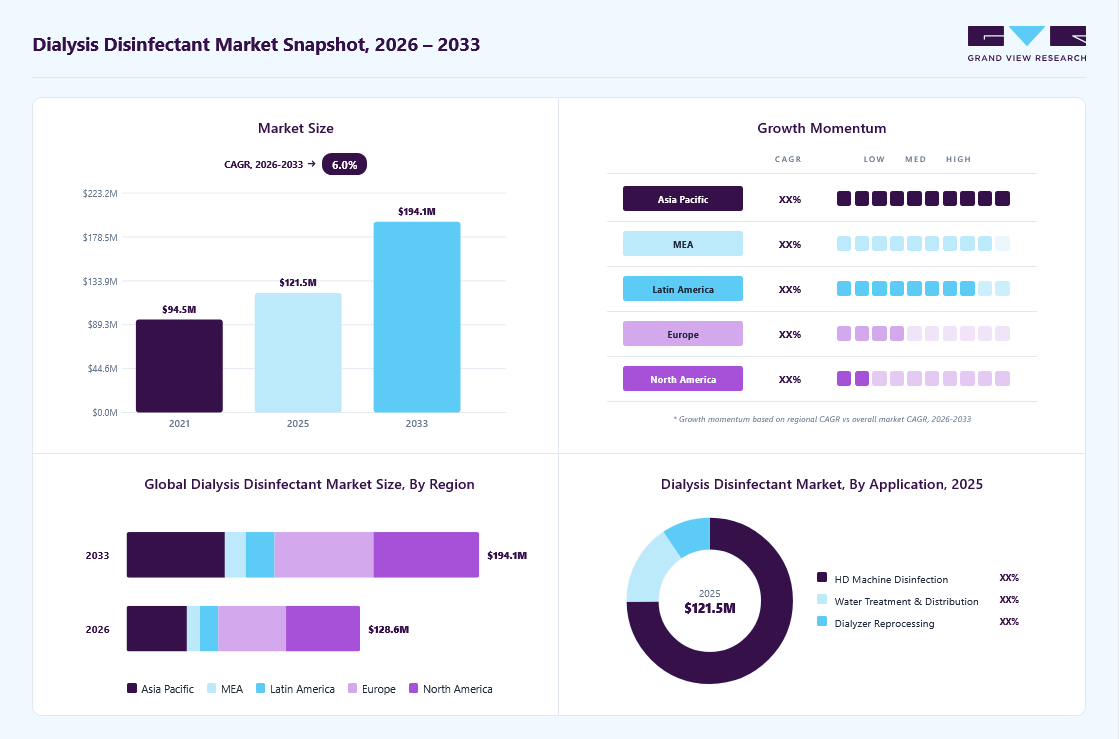
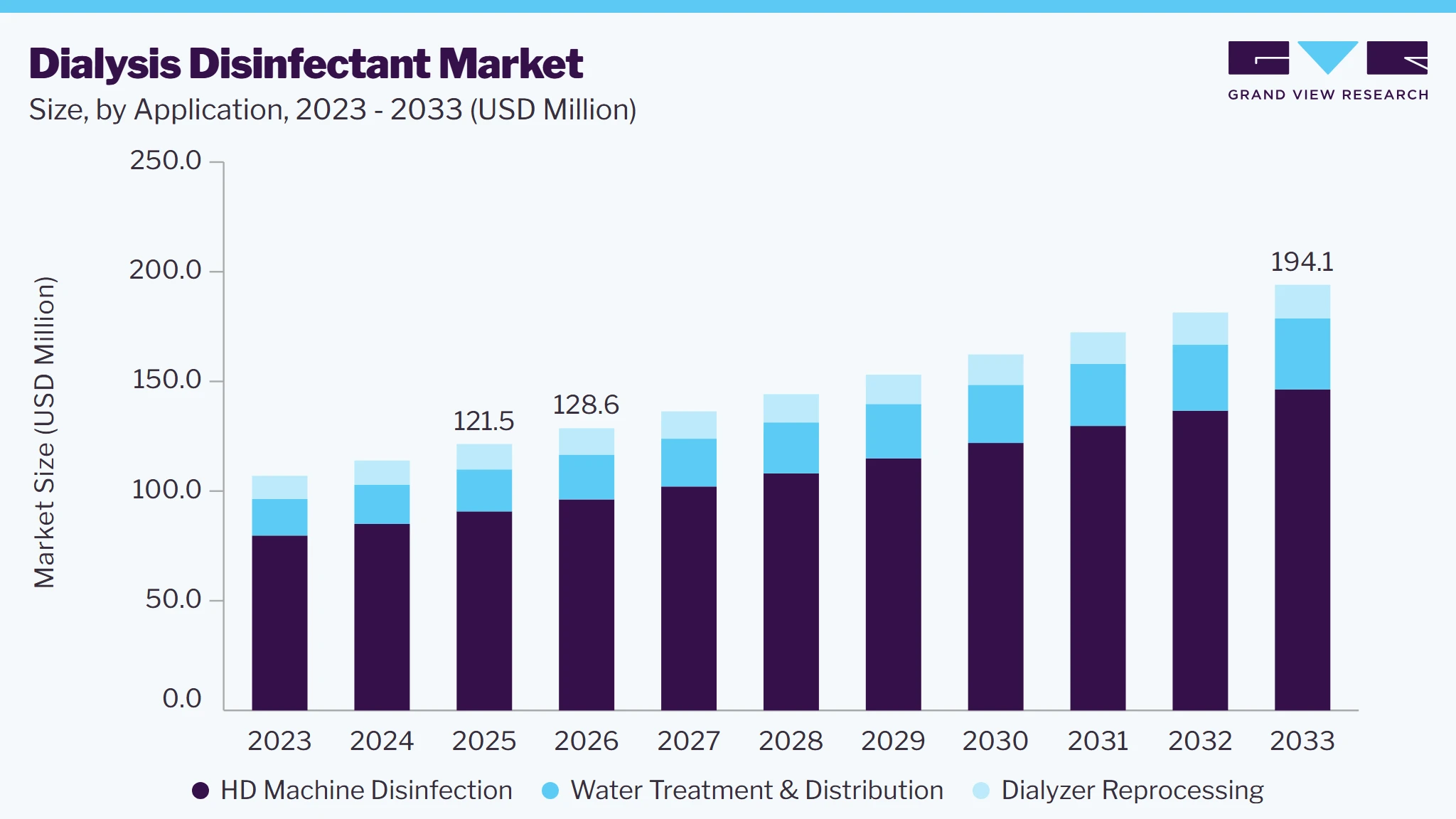
The global dialysis disinfectant market size was valued at USD 121.5 million in 2025 and is projected to grow from USD 128.6 million in 2026 to USD 194.1 million by 2033, at a CAGR of 6.0% from 2026 to 2033. North America dominated the market, accounting for a revenue share of 32.1% in 2025. The industry is driven by the continued use of hemodialysis services and the need to maintain hygienic conditions across dialysis facilities. Products support infection-control practices by reducing bacterial, viral, and biofilm contamination in dialysis water systems and reusable equipment.
 Source: Grand View Research, IR Documents, Primary Interviews, Paid DatabasesTo learn more about this report,
 Download Free Sample Report
 Key Market Trends & Insights
- By active ingredient: Citric acid segment led the market with 58.1% revenue share in 2025.
- By application: Hemodialysis machine disinfection segment led the market with 74.7% revenue share in 2025.
- By form: Liquid segment led the market with the largest revenue share of 89.3% in 2025.
- By packaging: 1-5 L segment led the market with the largest revenue share of 54.0% in 2025.
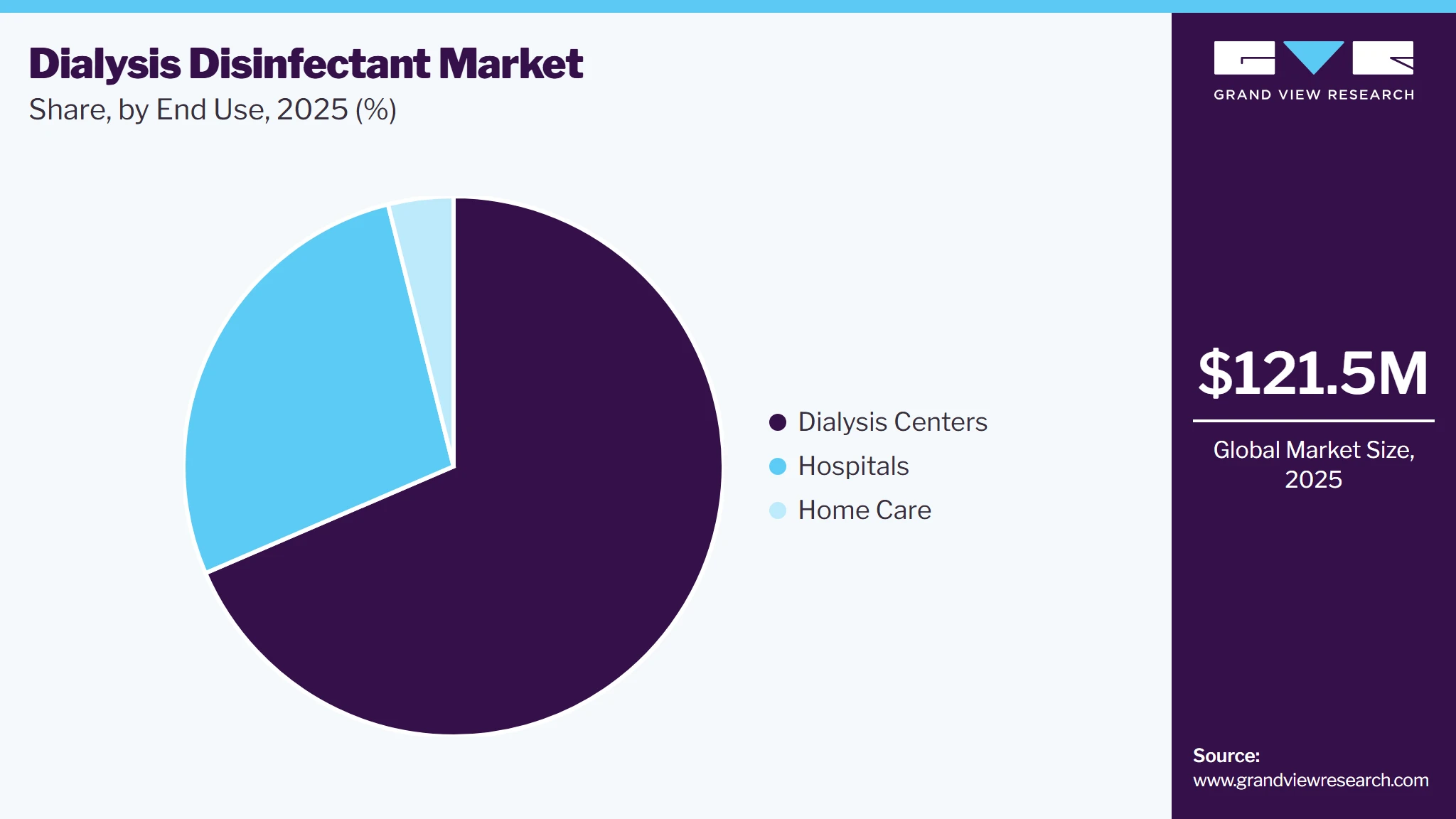
- By end use: Dialysis centers segment led the market with the largest revenue share of 68.5% in 2025.
Regional Highlights
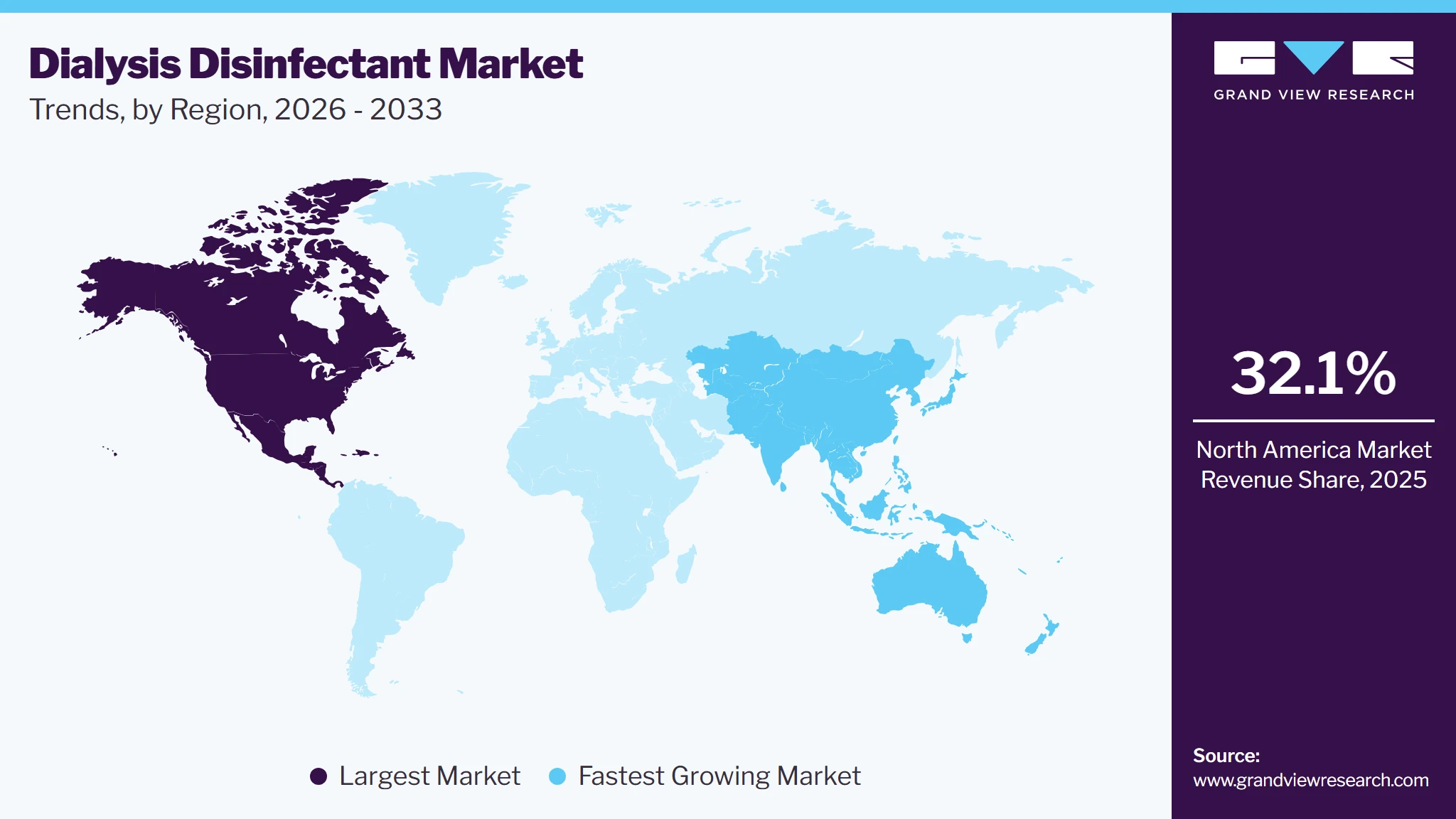
- Largest regional market: North America (32.1% revenue share, 2025)
- Fastest-growing regional market: Asia Pacific (highest CAGR, 2026-2033)
Market Size & Forecast
- Market Size in 2025: USD 121.5 Million
- Estimated Market Size in 2026: USD 128.6 Million
- Projected Market Size by 2033: USD 194.1 Million
- CAGR (2026-2033): 6.0%
Three ways to get this report
Buy it, customize it, or ask a question.Ask an Analyst
A direct answer, usually in 1 working day
- AccessReport author, directly
- Reply timeWithin 1 working day
- No sales callDirect answer only
- FormatEmail reply
- CostFree, no cost
Get the Full Report
What the study covers
- FormatsPDF · Excel · Dashboard
- Timeline2026–2033 annual, 2025 base
- Coverage20+ countries, 5 regions
- Companies10+ key players profiled
Customize the Report
20% free customization
- IncludeCountries, segments, points
- TailorTo your product definition
- ExtendDeeper competitor detail
- OrA fully bespoke study
- Turnaround5–10 working days
The market includes disinfectants formulated for dialysis machines, water distribution systems, and related components, with product selection influenced by compatibility with equipment materials, required contact time, concentration, rinsing requirements, and the type of contamination being controlled.
 To learn more about this report, Download Free Sample Report
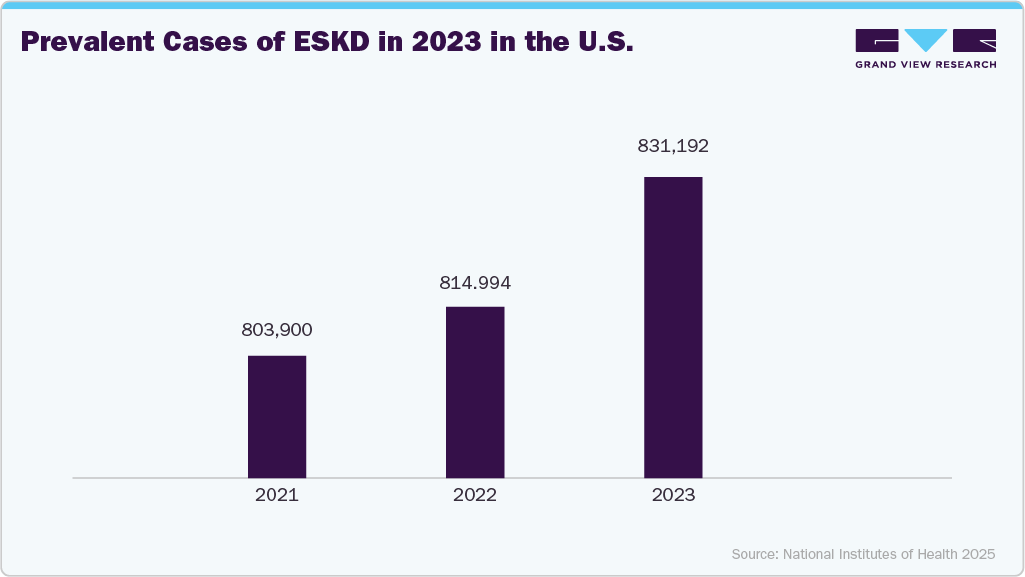
 The rising prevalence of End-stage Kidney Disease (ESKD) is supporting demand for dialysis disinfectants by expanding the population requiring kidney replacement therapy, particularly hemodialysis. Patients with ESKD who undergo hemodialysis require repeated treatment sessions, resulting in regular utilization of dialysis machines, dialysate delivery pathways, water-treatment units, and associated equipment. These systems require routine cleaning and disinfection to control microbial contamination and maintain appropriate hygienic conditions during dialysis treatment. The expansion of the ESKD population also increases the operational workload of dialysis facilities, creating greater requirements for maintaining dialysis equipment and water distribution systems between treatment cycles.
In addition, repeated exposure of equipment and fluid pathways to water and dialysate can create conditions conducive to microbial contamination and biofilm formation if appropriate cleaning and disinfection procedures are not followed. Dialysis disinfectants, therefore, form an important part of routine infection-control and equipment-maintenance practices within dialysis facilities. As healthcare systems expand access to renal replacement therapy and more patients with advanced kidney disease receive ongoing dialysis care, the installed base and utilization of dialysis equipment continue to expand.
 To learn more about this report, Download Free Sample Report
 Characteristics of People with Established ESKD, 2023
Demographic Characteristic
Overall
In-Center HD
Home HD
PD
Transplant
Unknown
Age in years (median)
62
65
56
62
58
64
Age in years (%)
0-17
0.8
0.2
0.1
1
1.7
0.3
18-44
14.4
10.7
21
16.3
20
12.7
45-64
40.8
38.2
48
39.7
45.4
37.9
65-74
25.7
27
19.4
24.1
24.1
24.8
75-84
14.7
18.5
9.4
15.8
8
17.9
85+
3.7
5.5
2.1
3.1
0.8
6.5
Sex (%)
Female
41.2
41.5
37.6
43
40.6
42.9
Male
58.8
58.5
62.5
57
59.5
57.1
Race/Ethnicity (%)
White
41.3
34.4
50.8
46.1
51.6
47.7
Black
29.3
34.3
30
23.4
22.1
25.2
Hispanic
20.2
22.4
12.9
19.2
17.2
16.3
Asian
5.9
5.4
3.6
8.1
6.4
5.8
Native American
1
1.2
0.7
1
0.6
0.8
NH/PI
1.3
1.5
1.3
1.2
0.8
1.6
Other
0.6
0.7
0.6
0.9
0.6
1.2
Unknown
0.4
0.2
0.3
0.1
0.8
1.5
Source: National Institutes of Health 2025
Increasing emphasis on dialysis-associated infection prevention is driving demand for dialysis disinfectants as healthcare providers strengthen procedures to control microbial contamination across dialysis equipment, water systems, and treatment environments. Hemodialysis involves repeated patient contact with dialysis machines, extracorporeal circuits, vascular access sites, and water-based treatment systems, creating multiple points where contamination control is required. Dialysis facilities, therefore, use routine cleaning and disinfection procedures to reduce the risk of contamination and maintain hygienic treatment conditions. Greater attention to infection-control practices also encourages facilities to follow structured disinfection protocols for dialysis machines, water-treatment units, distribution loops, and reusable components. This creates recurring consumption of disinfectant products rather than demand limited to equipment installation or replacement.
For instance, the CDC identifies bloodstream infections as a serious complication of dialysis and promotes proven Core Interventions to reduce them. In addition, CDC guidance published in 2025 for Candida auris specifically recommends thorough cleaning and disinfection of dialysis stations between patient treatments, demonstrating the direct role of disinfection in dialysis infection-control protocols.
Market Dynamics
The expanding need for infection prevention, dialysis water quality management, and routine maintenance of dialysis equipment and water-treatment infrastructure shapes the market. Product selection is based on factors such as antimicrobial effectiveness, material compatibility, contact time, rinsing requirements, residue control, and compatibility with specific dialysis equipment.
Greater adoption of automated disinfection systems is driving growth in the market by integrating disinfection directly into dialysis machines and water-treatment workflows. Automated systems help standardize disinfectant dosing, contact time, and cleaning cycles, reducing dependence on manual preparation and improving consistency across repeated treatment processes. As dialysis facilities adopt equipment with automated or programmable disinfection functions, demand for compatible chemical disinfectants and dedicated disinfectant consumables to operate these systems increases.
- For instance, Dialife’s DIADISINFECT and DIADISINFECT PLUS are designed for automated disinfection of hemodialysis equipment, with the disinfectant automatically pumped by the dialysis machine during the disinfection cycle.
The risk of chemical residues in dialysis systems can constrain the market, as chemical disinfectants used for machine and water-system disinfection must be adequately removed before the equipment is returned to patient treatment. Residual disinfectants entering the dialysate pathway can create patient-safety concerns, making thorough rinsing and residual-level verification essential after chemical disinfection. This requirement adds additional processing steps to dialysis workflows and increases the operational burden associated with chemical disinfectants. Facilities also need to select formulations that can be effectively rinsed from internal pathways without damaging dialysis-system components. These requirements can limit the adoption of certain chemical formulations and encourage dialysis providers to consider alternative disinfection approaches, such as heat-based disinfection, where compatible with the equipment.
The expansion of dialysis infrastructure creates an opportunity by increasing the number of dialysis facilities, treatment stations, dialysis machines, and associated water-treatment systems requiring routine disinfection. New dialysis centers require water purification systems, distribution loops, dialysis equipment, and treatment-area infrastructure, all of which require appropriate cleaning and disinfection procedures before and during operation. Expansion in regions with limited access to renal replacement therapy also creates opportunities for manufacturers to supply disinfectants suited to local dialysis equipment and water-treatment configurations. As facilities add treatment capacity, disinfectant consumption increases due to recurring requirements for machine disinfection, water-system maintenance, and environmental hygiene. For instance, in July 2026, the Government of British Columbia opened a new renal facility at Surrey Memorial Hospital, adding 21 hemodialysis treatment stations and increasing the hospital’s total renal dialysis capacity to 60 stations.
Managing microbial resistance to disinfectants is a challenge because repeated exposure to disinfectants at inadequate concentrations, insufficient contact times, or improper application can reduce disinfection effectiveness and allow microorganisms to persist in dialysis equipment and water-distribution systems. Biofilm formation within fluid pathways and distribution loops adds further complexity, as microorganisms embedded in biofilms are more difficult to eliminate than free-floating organisms. Dialysis facilities, therefore, need to maintain validated disinfectant concentrations, appropriate contact times, regular system cleaning, and effective monitoring procedures.
Market Concentration & Characteristics
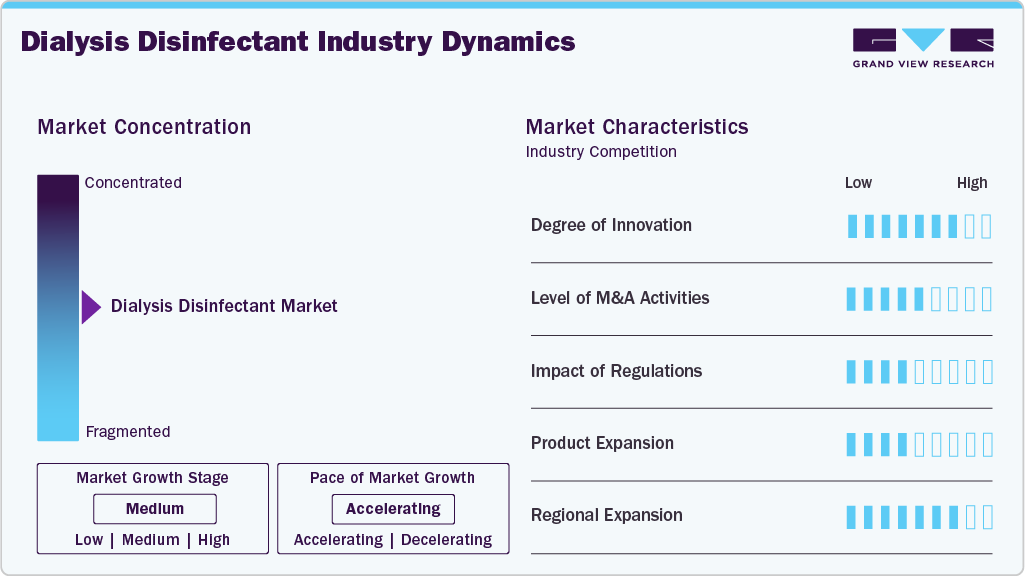
Diverse formulations, application-specific products, and compatibility with different dialysis equipment and water-treatment systems characterize the market. Manufacturers offer disinfectants based on active ingredients such as peracetic acid and citric acid to address microbial contamination, biofilm formation, and routine system sanitation. Products are available in various concentrations, liquid formulations, and packaging configurations to meet specific equipment and facility requirements. Competition is shaped by antimicrobial efficacy, material compatibility, residue control, contact time, ease of use, and compatibility with automated or manual disinfection procedures.
The market demonstrates a moderate level of innovation, primarily in formulation chemistry, disinfection efficiency, equipment compatibility, and application-specific solutions. Manufacturers are developing formulations designed to improve microbial and biofilm control while reducing chemical residues and minimizing material degradation within dialysis machines and water-treatment systems. Innovation also extends to concentrated formulations, ready-to-use solutions, compatibility with automated dosing, and packaging formats that simplify handling and reduce preparation requirements.
 To learn more about this report, Download Free Sample Report
 Merger and acquisition activity in the market focuses on expanding product portfolios, strengthening manufacturing capabilities, improving supply-chain control, and broadening geographic reach. Transactions involve companies operating across dialysis consumables, water treatment, sterilization, and infection-control products, enabling acquirers to combine complementary capabilities and manufacturing resources. M&A activity also supports portfolio diversification by integrating dialysis disinfectants with related products such as dialyzers, bloodlines, concentrates, and water-treatment solutions.
- For instance, in January 2025, Farmasol became part of Pollet Medical Group, expanding the group’s dialysis portfolio to include hemodialysis machine disinfectants and strengthening its in-house manufacturing and product-development capabilities.
Regulation in the market establishes requirements for safety, efficacy, product classification, labeling, quality control, and compatibility with dialysis equipment and water-treatment systems. The U.S. Food and Drug Administration (FDA) regulates disinfectants intended for use in dialysate delivery systems and hemodialysis water-purification systems as accessories to the associated medical devices; these products are subject to applicable Class II medical-device requirements and the 510(k) premarket notification. The ISO 23500 series, particularly ISO 23500-2:2024 for water-treatment equipment and ISO 23500-3:2024 for dialysis water quality, provides requirements relevant to water-treatment systems and water quality used in hemodialysis.
In the European Union, products falling within the biocidal framework are governed by Regulation (EU) No. 528/2012, with the European Commission and the European Chemicals Agency (ECHA) overseeing the approval and authorization of active substances and biocidal products.
The market is concentrated primarily in dialysis centers and hospitals, where multiple dialysis machines operate under established infection-control protocols and require routine disinfection of equipment, fluid pathways, and water systems. These facilities incur recurring disinfectant costs because dialysis treatment is performed on an ongoing basis. Home care represents an expanding area of demand, supported by the broader adoption of home-based dialysis and the need for suitable disinfection solutions for equipment used outside institutional settings.
Analyst Perspective
The market is characterized by competition among manufacturers that differentiate through active ingredients, formulation concentration, antimicrobial efficacy, equipment compatibility, residue control, packaging, and application method. Established manufacturers serve dialysis facilities through specialized portfolios in renal care, infection control, and water treatment. Competition centers on products designed for hemodialysis machines, water-treatment units, distribution loops, fluid pathways, and associated surfaces, with manufacturers offering formulations suited to chemical or automated disinfection procedures. Products based on peracetic acid, hydrogen peroxide, chlorine compounds, citric acid, and other active ingredients address different disinfection requirements.
Active Ingredient Insights
The citric acid segment led the market with the largest revenue share of 58.1% in 2025. It combines disinfection with effective removal of calcium and magnesium deposits from dialysis machine fluid pathways. This dual cleaning and disinfection function supports routine maintenance of hemodialysis equipment and reduces the need for separate descaling procedures. Commercial products from manufacturers use concentrated citric acid formulations specifically for cleaning, decalcification, and heat disinfection of hemodialysis machines.
The peracetic acid segment is projected to record the fastest CAGR as it provides broad-spectrum antimicrobial activity and supports both cold disinfection and combined disinfection-cleaning applications. Peracetic acid formulations are available for hemodialysis machines and, in some products, dialyzer reprocessing and water-treatment equipment. Products demonstrate commercial use of peracetic acid for dialysis applications, with formulations designed for rapid disinfection and removal of organic or mineral residues. The adoption of cold-disinfection processes, compatibility with automated dialysis-machine dosing systems, and demand for formulations that combine disinfection and cleaning functions support the expansion of this segment.
Application Insights
The hemodialysis machine disinfection segment led the market with the largest revenue share of 74.7% in 2025. Every dialysis treatment relies on a functioning, hygienically maintained dialysis machine. Internal fluid pathways and components that come into contact with water or dialysis fluid require routine disinfection to control microbial contamination and reduce the risk of cross-contamination. CDC guidance specifically identifies dialysis machines as components of the hemodialysis system that require regular cleaning and disinfection, with chemical and heat-based methods used according to machine requirements.
The water treatment & distribution segment is projected to record the fastest CAGR, as dialysis providers place greater emphasis on maintaining microbiological quality throughout the water treatment and distribution pathways. Dialysis water systems include treatment equipment, storage components, pipes, and distribution loops that can serve as reservoirs for microbial contamination when inadequately maintained.
Form Insights
The liquid segment led the market with the largest revenue share of 89.3% in 2025. Liquid formulations are widely used for routine disinfection of hemodialysis machines, water-treatment circuits, and dialyzer reprocessing systems. Liquid disinfectants can be directly connected to automated dosing or proportional-mixing systems, allowing controlled delivery during established disinfection cycles. Commercial products are supplied as liquid formulations for disinfection of dialysis machines. The availability of liquid products across different active ingredients and dialysis applications supports their broad utilization in dialysis facilities.
The powder / dry cartridge segment is projected to record the fastest CAGR, as cartridge-based formats offer a compact alternative to conventional liquid disinfectants and simplify machine maintenance. System uses anhydrous sodium carbonate and citric acid powders in dedicated cartridges that work with the dialysis machine's heat-disinfection program. The format reduces liquid chemical handling, requires less storage space, and delivers a predefined quantity of cleaning or decalcification material, supporting standardized use. The adoption of automated dialysis-machine maintenance and the demand for simpler chemical-handling procedures are expected to support the expansion of powder and dry-cartridge formats.
Packaging Insights
The 1-5 L segment led the market with the largest revenue share of 54.0% in 2025. This pack size provides a practical balance between consumption requirements, handling, storage, and replenishment across dialysis facilities. Dialysis machine disinfectants are supplied in 5 L containers by several manufacturers, reflecting the suitability of this volume for routine clinical use and repeated disinfection cycles. Products from manufacturers are available in 5 L formats. The 1-5 L range also supports easier storage and dispensing compared with larger bulk containers, while providing more usable volume than small packs.
The ≤1 L packaging segment is projected to record the fastest CAGR as smaller-volume formats support decentralized dialysis activities, home-based treatment, product testing, and facilities with lower disinfectant consumption. Smaller containers reduce the handling burden associated with chemical disinfectants and facilitate storage in facilities with limited dedicated chemical storage capacity. Product availability also demonstrates that dialysis disinfectants are offered in 1 L formats alongside larger containers, providing manufacturers with packaging options suited to different usage requirements. The expansion of home dialysis and the demand for convenient, manageable disinfectant volumes are expected to drive the adoption of smaller packaging formats.
End Use Insights
The dialysis centers segment dominated the market in 2025, accounting for 68.5% of the revenue. These centers operate multiple dialysis machines and require routine disinfection of equipment, fluid pathways, and water distribution systems. The recurring treatment schedule generates continuous disinfectant consumption, while centralized infection-control procedures support standardized use of approved disinfectants. Higher patient throughput and repeated machine use further increase disinfectant requirements across dialysis centers.
 To learn more about this report, Download Free Sample Report
 The home care segment is projected to register the fastest-growing CAGR as healthcare systems expand home-based dialysis programs and patients seek greater flexibility in treatment delivery. Growth in home dialysis increases demand for disinfection solutions compatible with compact dialysis equipment and household treatment environments. Manufacturers are also developing convenient formulations and delivery formats that simplify disinfection procedures outside clinical facilities. Greater adoption of home-based treatment, improved patient training, and expanded supporting infrastructure are expected to drive disinfectant demand in this segment.
Regional Insights
The North America dialysis disinfectant market dominated with the largest revenue share of 32.1% in 2025, supported by extensive dialysis infrastructure, widespread use of hemodialysis, and established infection-prevention practices. The region has a broad network of hospitals, outpatient dialysis centers, and specialized renal care facilities that require regular disinfection of dialysis machines, water treatment systems, distribution loops, and associated fluid pathways. Established dialysis safety protocols and water-quality requirements also support routine cleaning and disinfection practices. Preventive maintenance programs, adoption of automated disinfection processes, and the need for disinfectant formulations compatible with different dialysis equipment and water-treatment configurations further support demand.
 To learn more about this report, Download Free Sample Report
 U.S. Dialysis Disinfectant Market Trends
The dialysis disinfectant market in the U.S. is supported by the substantial burden of Chronic Kidney Disease (CKD), a broad population receiving kidney replacement therapy, and an established network of dialysis facilities. CKD creates a large patient population at risk of progression to kidney failure, supporting the need for recurring hemodialysis services. Established clinical practices emphasize dialysis water quality, microbiological monitoring, equipment cleaning, and routine system disinfection. The presence of hospitals, outpatient dialysis centers, and specialized renal-care facilities creates diverse end-use requirements for dialysis disinfectant products.
Percentage of U.S. adults aged 18 years and older with CKD by age, sex, and race-ethnicity 2023
Age, Sex, and Race-Ethnicity
Percentage
95% CI
Est. Number (in Millions)
95% CI
18-44
5.6
4.3-7.3
6.4
4.8-8.0
45-64
12.9
11.0-15.0
10.1
8.2-11.9
65+
34.2
31.1-37.6
20.1
18.5-21.6
Men
14.1
12.4-15.9
16.9
14.9-18.9
Women
14.7
12.7-17.0
19.7
17.6-21.8
Non-Hispanic White
13.1
11.6-14.7
23.2
21.0-25.5
Non-Hispanic Black
22
16.5-28.6
6.3
5.0-7.7
Non-Hispanic Asian
16.4
12.6-21.0
2.4
1.7-3.2
Hispanic
12.1
9.3-15.5
4.6
3.6-5.5
Source: CDC 2026
Europe Dialysis Disinfectant Market Trends
The dialysis disinfectant market in Europe is supported by the established renal-care infrastructure and continued demand for hemodialysis services. The region has a broad network of hospitals, outpatient dialysis centers, and specialized renal care facilities that require routine disinfection of dialysis machines, water treatment units, distribution loops, and associated fluid pathways. European dialysis practices place a strong emphasis on infection prevention, water quality, equipment hygiene, and the safe preparation of dialysis fluids, thereby supporting the ongoing demand for appropriate disinfectant products. Regulatory requirements further influence the market through authorities and frameworks, including the European Commission and the European Chemicals Agency (ECHA) under the Biocidal Products Regulation (EU) No. 528/2012, as well as national competent authorities responsible for product authorization and market oversight. These requirements address aspects such as active substances, efficacy, safety, labeling, and appropriate use of disinfectant products across European markets.
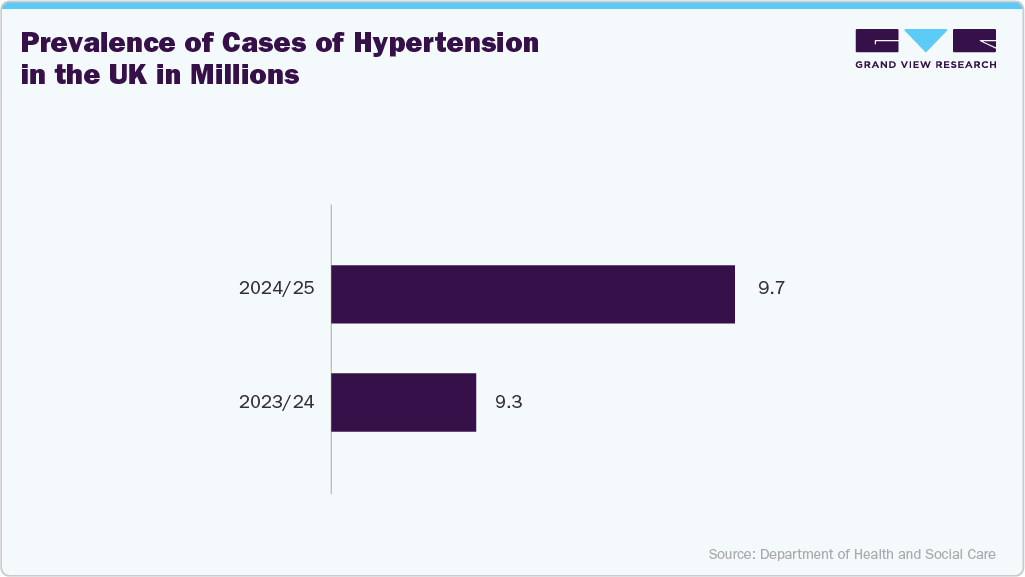
The UK dialysis disinfectant market is growing as hypertension contributes through its association with chronic kidney disease and progression toward kidney failure. Persistent high blood pressure can damage renal blood vessels and impair kidney function, while advanced CKD can also contribute to difficulties in blood-pressure control. As renal function declines, some patients require kidney replacement therapy, including hemodialysis, which creates recurring requirements for dialysis equipment and system maintenance. The relationship between hypertension, renal disease, and dialysis, therefore, supports demand for disinfectants used throughout dialysis infrastructure.
 To learn more about this report, Download Free Sample Report
 Thedialysis disinfectant market in Germany is shaped by the country’s large renal care ecosystem and the need to maintain hygienic conditions during repeated dialysis treatments. The presence of dialysis centers, hospital-based renal units, and outpatient treatment facilities creates demand for products used to disinfect equipment between treatment cycles and maintain dialysis-system hygiene. Germany’s aging population and the prevalence of hypertension, diabetes, and other conditions associated with renal impairment also contribute to the need for long-term kidney-care services.
Asia Pacific Dialysis Disinfectant Market Trends
The dialysis disinfectant market in Asia Pacific is expected to grow at the fastest rate, supported by the expanding reach of renal care services across both developed and developing healthcare systems. Countries such as Japan, Australia, and South Korea have established dialysis networks, while healthcare providers in emerging economies are adding dialysis capacity to improve access to treatment. This expansion creates requirements for disinfecting dialysis machines, water-treatment equipment, distribution systems, and treatment-area surfaces.
The region’s substantial diabetes and hypertension burden also contributes to the need for long-term kidney disease management and dialysis services. Private dialysis operators, hospitals, and government-supported healthcare programs are contributing to the development of additional treatment facilities. Regulatory authorities also shape the regional market, including the Pharmaceuticals and Medical Devices Agency (PMDA) in Japan, the Therapeutic Goods Administration (TGA) in Australia, the Ministry of Food and Drug Safety (MFDS) in South Korea, and the National Medical Products Administration (NMPA). These authorities establish requirements for product classification, safety, efficacy, quality, labeling, and market authorization based on the intended use of disinfectant products.
The India dialysis disinfectant market is supported by the broader access to hemodialysis across public and private healthcare facilities. Expansion of dialysis capacity across metropolitan areas, smaller cities, and district-level healthcare facilities increases the installed base of dialysis machines and associated water-treatment systems. These facilities require regular disinfection as part of routine maintenance and infection-control practices. The growing participation of private dialysis providers alongside government-supported programs also creates additional treatment capacity and recurring requirements for dialysis-system consumables.
The dialysis disinfectant market in Japan is supported by its mature renal-care infrastructure, widespread availability of maintenance hemodialysis, and established practices for dialysis-system hygiene. The country has a large network of dialysis facilities requiring continuous maintenance of dialysis machines, water-treatment equipment, distribution systems, and internal fluid pathways. Japan’s aging population and the prevalence of diabetes, hypertension, and other chronic conditions associated with kidney impairment contribute to long-term demand for renal-care services. The continued management of patients with advanced kidney disease creates recurring dialysis activity and corresponding requirements for equipment cleaning and disinfection.
- According to the World Economic Forum, Japan's Ministry of Internal Affairs and Communications reported that the country had a record 36.25 million people aged 65 and over, accounting for 29.3% of the total population as of 2024. This share is projected to rise to 34.8% in 2040 and 36.3% in 2045. Japan's proportion of elderly residents is already far higher than second-ranked Martinique (25.3%), making it the world's most aged society.
Latin America Dialysis Disinfectant Market Trends
The dialysis disinfectant market in Latin America is supported by the need to maintain dialysis equipment and associated water treatment infrastructure. In Brazil, the public healthcare system continues to support specialized services for chronic kidney disease and renal replacement therapy, while new arrangements for hemodialysis are expanding access to treatment. Brazil’s dialysis infrastructure is supported by the SUS, which provides hemodialysis and peritoneal dialysis through specialized renal-care services. Recent Ministry of Health initiatives, including Agora Tem Especialistas and updated SUS financing for nephrology procedures, further support the expansion and operation of renal replacement therapy services. Argentina is also strengthening its chronic kidney disease care network by improving coordination among hospitals and national renal care programs, thereby supporting access to advanced kidney care services.
Middle East and Africa Dialysis Disinfectant Market Trends
The dialysis disinfectant market in the Middle East & Africa is supported by the development of healthcare infrastructure and the expansion of specialized renal care capacity. Governments and private healthcare providers are investing in hospitals, specialist medical centers, and dialysis facilities, expanding treatment capacity and the installed base of dialysis equipment. Healthcare infrastructure development is also improving access to dialysis services beyond major metropolitan areas. New facilities require supporting infrastructure, such as dialysis machines, water purification systems, distribution loops, and treatment areas, which creates recurring needs for appropriate cleaning and disinfection procedures. Regulatory authorities further influence the market, including the Saudi Food and Drug Authority (SFDA) in Saudi Arabia, the Ministry of Health and Prevention (MOHAP) in the UAE, the Ministry of Health and Kuwait Food and Drug Administration (KFDA) in Kuwait, and the South African Health Products Regulatory Authority (SAHPRA) in South Africa. These authorities oversee applicable requirements for product registration, safety, efficacy, labeling, quality, chemical handling, and compatibility with medical devices, supporting the use of compliant dialysis disinfectant products across healthcare facilities.
- On May 11, 2025, SPA -- With generous support from the King Salman Humanitarian Aid and Relief Center (KSrelief), the Kidney Dialysis Center in the Al-Ghaydah District of Yemen’s Al-Mahrah Governorate continues to provide vital medical services. In April 2025, the center attended to 126 patients. Of these, 54 patients received a total of 471 scheduled dialysis sessions and eight emergency sessions. In addition, 75 patients underwent medical examinations and tests at the kidney disease clinic. Males accounted for 46 percent of the patients, while females comprised 54 percent. Displaced persons accounted for 19 percent of the total, residents for 80 percent, and refugees for 1 percent.
Key Dialysis Disinfectant Companies Insights
Manufacturers are expanding the market by improving formulation chemistry, equipment compatibility, disinfection performance, and application-specific solutions. Manufacturers are developing disinfectants with optimized concentrations, reduced residue, improved material compatibility, and effective control of microbial contamination and biofilm within dialysis machines and water-treatment systems. Established companies leverage their dialysis and infection-control expertise, manufacturing capabilities, and distribution networks to supply products for different dialysis equipment and facility requirements. In addition, the availability of concentrated, ready-to-use formulations accommodates diverse operational preferences, while compatibility with automated disinfection systems facilitates standardized, repeatable disinfection procedures across dialysis facilities.
Key Dialysis Disinfectant Companies
The following key companies have been profiled for the study on the dialysis disinfectant market:
-
B. Braun SE
-
AMTEC Co., Ltd
-
Nipro Medical Corporation
-
Farmasol (Pollet Medical Group)
-
Fresenius Medical Care
-
Schülke & Mayr GmbH
-
Detrox
-
Advin Healthcare
-
Shandong Lircon Medical Technology Co., Ltd.
-
Voda Chemicals Private Limited
-
Sri Ramakrishna's Renomate Medical Device & Hemodialysis Fluid Manufactures
-
GBL
-
Sceptre Medical India Ltd.
-
Vantive (Formerly Baxter Kidney Care)
-
STERIS
-
Saraya Co., Ltd.
Competitive Benchmarking
Category
Operating Strategies
Competitive Edge
Weakness
Established Players (B. Braun SE, Nipro Medical Corporation, Fresenius Medical Care, Schülke & Mayr GmbH, STERIS, Vantive (Formerly Baxter Kidney Care), Saraya Co., Ltd.)
- Integrate dialysis disinfectants with broader renal-care equipment and consumable portfolios to support recurring customer relationships.
- Develop equipment-compatible formulations and automated-use solutions while expanding manufacturing, distribution, and regional market coverage.
- Established dialysis portfolios provide access to dialysis facilities and expertise in compatibility across diverse equipment configurations.
- Broad manufacturing and distribution networks support product availability, customer service, and integration with renal care procurement.
- Equipment-specific compatibility requirements can restrict interoperability across dialysis machines and water-treatment configurations.
- Broad healthcare portfolios can reduce dedicated focus on dialysis disinfectant innovation, customization, and specialized product development.
Emerging Players (AMTEC Co., Ltd, Farmasol (Pollet Medical Group), Detrox, Advin Healthcare, Shandong Lircon Medical Technology Co., Ltd., Voda Chemicals Private Limited)
- Focus on dialysis-specific disinfectant formulations designed for targeted equipment, water-treatment systems, and facility-level applications.
- Expand through regional distribution partnerships, localized manufacturing, and formulations tailored to specific dialysis-system requirements.
- Greater product specialization enables faster adaptation to dialysis equipment, disinfection protocols, and facility operating requirements.
- Flexible manufacturing supports customized concentrations, packaging formats, and application-specific disinfectant solutions.
- Smaller distribution networks can limit access to international dialysis facilities and healthcare procurement channels.
- Limited product portfolios and manufacturing scale can constrain regulatory expansion and supply capacity.
Recent Developments
-
In August 2026, India’s Pradhan Mantri National Dialysis Program reported dialysis services across 751 districts through 1,874 centers equipped with 13,707 hemodialysis machines. The program supports the establishment of dialysis centers through in-house, public-private partnership, and hybrid models, expanding access to hemodialysis services.
-
In June 2025, Saraya Co., Ltd. launched Salativ PA-V, a peracetic acid-based cleaning and disinfecting agent specifically developed for dialysis machines and piping, offering microbial and biofilm removal, calcium carbonate scale removal, enhanced rust removal, and low-corrosion performance.
-
In May 2025, Advin Health Care introduced Hot Disinfectant for dialysis machines, combining heat-assisted disinfection and decalcification with a citric acid, malic acid, and lactic acid formulation.
-
In February 2025, Vantive launched as a standalone vital organ therapy company following the completion of its acquisition from Baxter International by funds managed by Carlyle, strengthening its independent focus on dialysis and other vital organ therapies.
Dialysis Disinfectant Market Report Scope
Report Attribute
Details
Market size in 2025
USD 121.5 million
Estimated market size in 2026
USD 128.6 million
Projected market size by 2033
USD 194.1 million
Growth rate
CAGR of 6.0% from 2026 to 2033
Base year for estimation
2025
Historical data
2021 - 2024
Forecast period
2026 - 2033
Quantitative units
Revenue in USD million and CAGR from 2026 to 2033
Report coverage
Revenue forecast, company ranking, competitive landscape, growth factors, and trends
Segments covered
Active ingredient, application, form, packaging, end use, region
Regional scope
North America; Europe; Asia Pacific; Latin America; MEA
Country scope
U.S.; Canada; Mexico; Germany; UK; France; Italy; Spain; Norway; Denmark; Sweden; China; Japan; India; South Korea; Australia; Thailand; Brazil; Argentina; Saudi Arabia; South Africa; UAE; Kuwait
Key companies profiled
B. Braun SE; AMTEC Co., Ltd; Nipro Medical Corporation; Farmasol (Pollet Medical Group); Fresenius Medical Care; Schülke & Mayr GmbH; Detrox; Advin Healthcare; Shandong Lircon Medical Technology Co., Ltd.; Voda Chemicals Private Limited; Sri Ramakrishna's Renomate Medical Device & Hemodialysis Fluid Manufactures; GBL; Sceptre Medical India Ltd.; Vantive (Formerly Baxter Kidney Care); STERIS; Saraya Co., Ltd.
Customization scope
Free report customization (equivalent up to 8 analysts' working days) with purchase. Addition or alteration to country, regional & segment scope.
Pricing and purchase options
Avail customized purchase options to meet your exact research needs. Explore purchase options
Global Dialysis Disinfectant Market Report Segmentation
This report forecasts revenue growth at the global, regional and country levels and provides an analysis of the latest industry trends & opportunities across each sub-segment from 2021 to 2033. For this study, Grand View Research has segmented the global dialysis disinfectant market report based on active ingredient, application, form, packaging, end use, and region.
-
Active Ingredient Outlook (Revenue, USD Million, 2021 - 2033)
-
Citric Acid
-
Peracetic Acid
-
Sodium Hypochlorite
-
Others
-
-
Dialysis Disinfectant Application Outlook (Revenue, USD Million, 2021 - 2033)
-
Hemodialysis Machine Disinfection
-
Water Treatment & Distribution
-
Dialyzer Reprocessing
-
-
Dialysis Disinfectant Form Outlook (Revenue, USD Million, 2021 - 2033)
-
Liquid
-
Powder / Dry Cartridge
-
-
Dialysis Disinfectant Packaging Outlook (Revenue, USD Million, 2021 - 2033)
-
≤1 L
-
1-5 L
-
5-10 L
-
>10 L
-
-
Dialysis Disinfectant End Use Outlook (Revenue, USD Million, 2021 - 2033)
-
Dialysis Centers
-
Hospitals
-
Home Care
-
-
Regional Outlook (Revenue, USD Million, 2021 - 2033)
-
North America
-
U.S.
-
Canada
-
Mexico
-
-
Europe
-
Germany
-
UK
-
France
-
Italy
-
Spain
-
Sweden
-
Denmark
-
Norway
-
-
Asia Pacific
-
Japan
-
China
-
India
-
Australia
-
South Korea
-
Thailand
-
-
Latin America
-
Brazil
-
Argentina
-
-
Middle East & Africa
-
South Africa
-
Saudi Arabia
-
UAE
-
Kuwait
-
-
Research Methodology
The dialysis disinfectant market figures in this report are based on a proven research process that combines executive interviews with secondary research from proprietary databases, company filings, and recognized regulatory and institutional sources. Market size is built through value-chain sizing - reconciling supply-side and demand-side estimates-and triangulated with bottom-up and top-down approaches. Every estimate passes multiple levels of expert validation before publication, with each dialysis disinfectant segment quantified using the revenue-capture definitions in the table below.
Segment Definition
Application
Revenue capture definition
Hemodialysis Machine Disinfection
Revenue captured under this segment covers chemical disinfectants applied to hemodialysis machines after or between treatment sessions. Products included in this category are used for internal fluid pathways, dialysate circuits, machine components, and connected lines. The segment covers formulations specifically designed for routine machine sanitation, microbial contamination control, biofilm management, and equipment maintenance in dialysis facilities.
Dialyzer Reprocessing
Revenue within this category relates to disinfectants used during the reprocessing of reusable dialyzers following patient treatment. Products are captured when they support chemical disinfection of dialyzer blood and fluid pathways after cleaning procedures. The segment includes formulations intended to prepare reusable dialyzers for subsequent treatment sessions while supporting microbial control and appropriate reprocessing conditions.
Water Treatment & Distribution
This segment encompasses revenue from disinfectants used across dialysis water-treatment and distribution infrastructure. Covered applications include water-treatment units, storage tanks, piping, distribution loops, and associated water-handling components. Products are captured when their primary purpose is to control microbial contamination, biofilm formation, or other hygiene concerns in systems supplying treated water for hemodialysis.
Estimation Model
01 - Bottom-Up Consumption & Unit Volume Modeling
02 - Top-Down Revenue Triangulation
03 - Demand-Side Care-Setting & End-User Modeling
04 - Supply-Side Capacity & Utilization Modeling
05 - Data Triangulation & Market Reconciliation
Estimate the total volume of dialysis disinfectants consumed by calculating the number of dialysis machines across hemodialysis and peritoneal dialysis settings, average disinfectant usage per machine per treatment cycle, and frequency of disinfection (routine and terminal). Multiply by average selling price (ASP) by product type (liquid, chemical concentrates, wipes) to derive market revenue.
Analyze overall dialysis treatment expenditure and infection control budgets from health databases and payer reports. Apply an estimated share of disinfectants within dialysis consumables and infection prevention products to derive the total market value. Cross-validate with manufacturer revenues and segmental splits to ensure alignment with observed market trends.
Assess demand across end users, including in-center dialysis clinics, hospitals, and home care settings, by evaluating the installed base of hemodialysis and peritoneal dialysis machines, treatment frequency, and disinfection protocols. Factor in growth in dialysis patient pool (driven by chronic kidney disease prevalence) and adoption of home dialysis therapies to estimate future demand.
Evaluate global and regional manufacturing capacity for dialysis disinfectants, including production volumes of chemical disinfectants (e.g., peracetic acid, hydrogen peroxide, sodium hypochlorite), concentrates and wipes. Assess capacity utilization rates, regional supply expansions, and the presence of contract manufacturers to estimate the total available supply and potential revenue based on utilization.
Integrate insights from primary research (KOL interviews, manufacturer inputs, distributor checks), secondary sources (company reports, regulatory databases, healthcare statistics) and procedure volume data. Cross-verify estimates using both demand- and supply-side approaches, adjust for pricing variations and regional differences in forecasts, and reconcile forecasts to ensure consistency and accuracy in the final market estimates.
Approach Supported By: Primary Research
Approach Supported By: Hospital & Dialysis Center Databases
Approach Supported By: Government & Regulatory Sources
Approach Supported By: Company Reports & Investor Filings
Approach Supported By: Industry Publications
Customization Table
Client Request
Customization Delivered
Value Adds
ASP and Volume Analysis (Historical & Forecast)
Comprehensive ASP and volume analysis for dialysis disinfectants across the forecast period, segmented by application (hemodialysis machine disinfection, water treatment & distribution, and dialyzer reprocessing), active ingredient (citric acid, peracetic acid, sodium hypochlorite, and others), form (liquid and powder/dry cartridge), packaging (≤1 L, 1-5 L, 5-10 L, and >10 L), end use (dialysis centers, hospitals, and home care), and geography. The analysis incorporates product concentration, pack size, purchasing volumes, disinfection frequency, equipment requirements, consumable usage, and regional pricing differences. Forecasts are developed using dialysis treatment volumes, installed dialysis equipment, water-treatment requirements, dialyzer reprocessing activity, facility expansion, and demand for dialysis-specific disinfectants.
Enables accurate revenue forecasting, pricing strategy development, procurement planning, assessment of liquid versus powder/dry cartridge demand, evaluation of active-ingredient preferences, packaging optimization, identification of high-volume applications, and regional investment decision-making for manufacturers and investors.
Application and Consumption Volume Analysis
Detailed assessment of disinfectant consumption across hemodialysis machine disinfection, water treatment & distribution, and dialyzer reprocessing. The analysis evaluates machine disinfection cycles, dialysis water-system cleaning requirements, distribution-loop disinfection, dialyzer reprocessing practices, disinfectant dosage, treatment frequency, facility-level consumption, and differences between centralized dialysis facilities and home-care settings.
Supports demand forecasting, estimation of addressable disinfectant consumption, identification of high-utilization applications, assessment of facility-level procurement requirements, capacity planning for manufacturers, and evaluation of recurring consumable demand across dialysis settings.
Competitive Benchmarking and Market Share Analysis
Comprehensive competitive assessment of dialysis disinfectant manufacturers, including product portfolio benchmarking, active-ingredient assessment, application coverage, liquid and powder/dry cartridge offerings, packaging configurations, ASP comparison, product specifications, regulatory status, distribution networks, geographic reach, product launches, manufacturing capabilities, and strategic partnerships. Market share analysis is evaluated across major geographic markets and the defined product segments.
Enables competitive positioning, market-gap identification, product and formulation benchmarking, pricing optimization, packaging differentiation, distribution strategy development, partnership and acquisition evaluation, commercialization planning, and geographic expansion assessment for established and emerging manufacturers.
About the Author(s)
Medical Devices Research Team
Healthcare · Medical DevicesThis report was authored by the medical devices research team at Grand View Research - comprising two research analysts, one senior research analyst, and one industry expert - with specialized expertise in the medical devices segment of the healthcare industry. All findings are based on proprietary healthcare databases, executive interviews, and regulatory analysis, subject to internal peer review prior to publication.
Last Updated:
Speak to Analyst

Customize this report to your needs - add regions, segments, or data points, with 20% free customization.
Or view our licence options:


ISO 9001:2015 & 27001:2022 Certified
We are GDPR and CCPA compliant! Your transaction & personal information is safe and secure. For more details, please read our privacy policy.


