
- Home
- »
- Clinical Diagnostics
- »
-
Digital ELISA Market Size, Share & Growth Report, 2033GVR Report cover

Digital ELISA Market (2026 - 2033)
Size, Share & Trends Analysis Report By Product (Instruments & Analyzers, Kits, Reagents & Consumables, Software & Services), By Technology, By Application, By End Use, By Region, And Segment Forecasts
Market Size, 2025
$110.4MMarket Estimate, 2026
$122.6MMarket Forecast, 2033
$271.3MCAGR, 2026–2033
12.0%Digital ELISA Market Summary
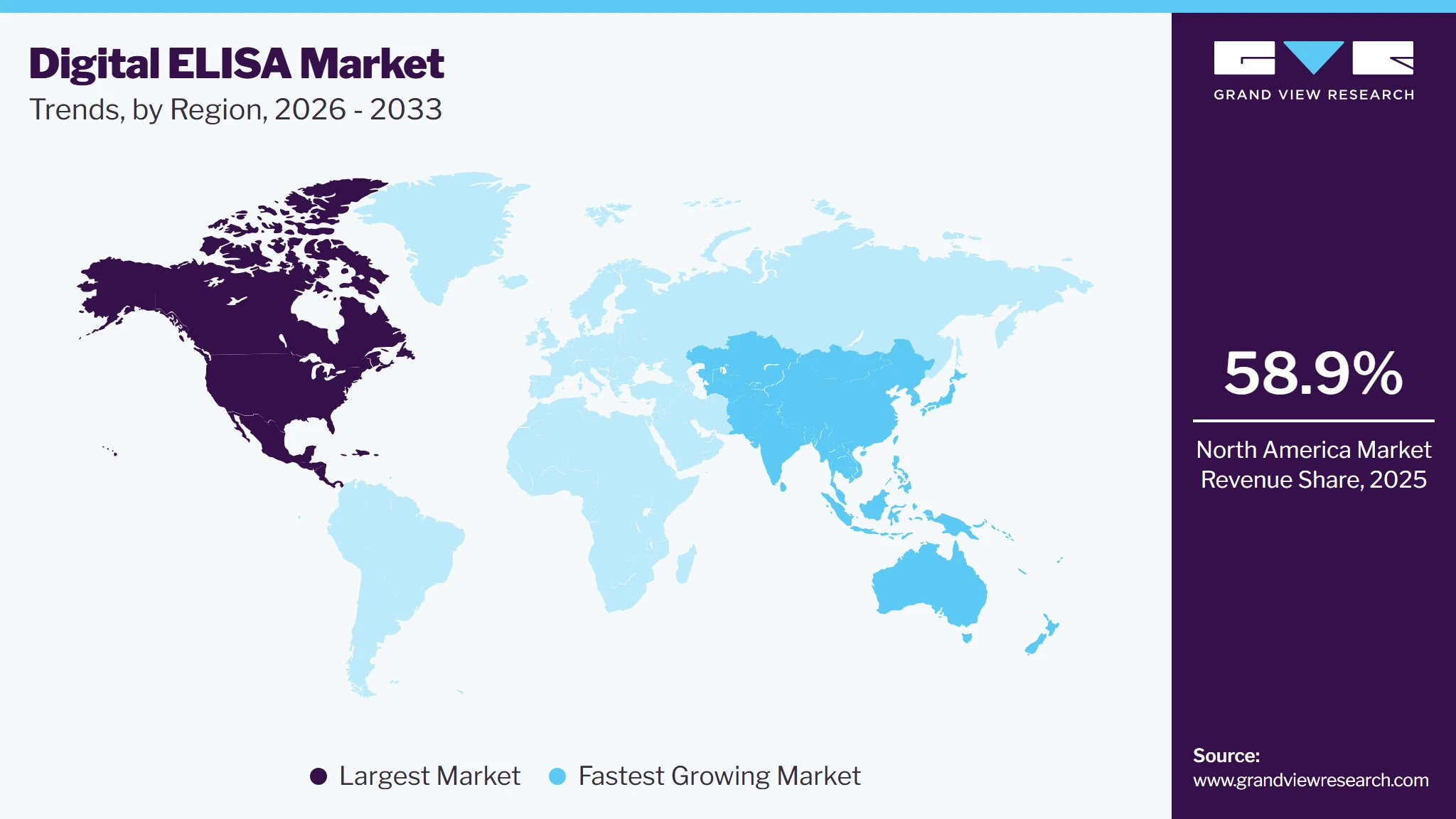
The global digital ELISA market size was valued at USD 110.4 million in 2025 and is projected to grow from USD 122.6 million in 2026 to USD 271.3 million by 2033, at a CAGR of 12.0% from 2026 to 2033. The market in North America dominated with a revenue share of 58.9% in 2025. The market growth is primarily driven by the increasing use of ultra-sensitive protein biomarkers in neurological drug development and the gradual movement of blood-based biomarker testing from research into regulated clinical workflows.
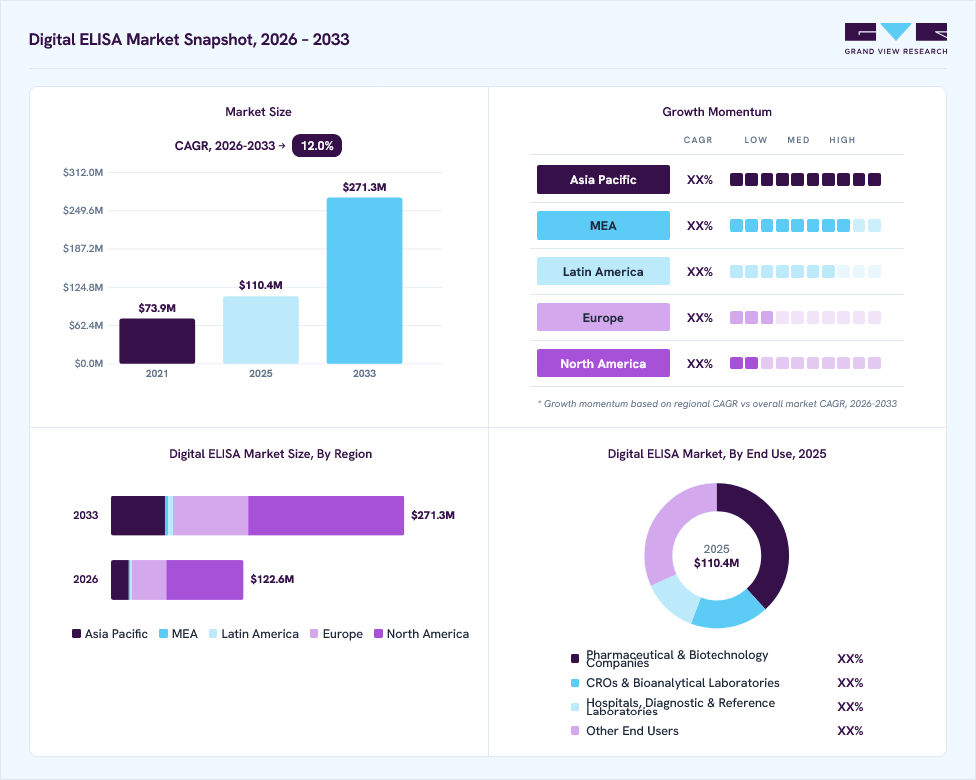 Source: Grand View Research, IR Documents, Primary Interviews, Paid DatabasesTo learn more about this report,
 Download Free Sample Report
Key Market Trends & Insights
- By product: Kits, reagents & consumables segment held the largest market share of 57.4% in 2025.
- By technology: Bead-based digital ELISA segment held the largest market share of 89.7% in 2025.
- By application: Neurology segment held the largest market share in 2025.
- By end use: Pharmaceutical & biotechnology companies segment held the largest market share of 38.2% in 2025.
Regional Highlights
- Largest regional market: North America (58.9% revenue share, 2025)
- Fastest-growing regional market: Asia Pacific (highest CAGR, 2026-2033)
- By country: The U.S. held the largest market share in 2025
Market Size & Forecast
- Market size in 2025: USD 110.4 Million
- Estimated market size in 2026: USD 122.6 Million
- Projected market size by 2033: USD 271.3 Million
- CAGR (2026-2033): 12.0%
Prism AI by Grand View Research Free to tryAsk a question about the digital ELISA marketTry asking✓Every figure cited from GVR research Prefer the report? Download free sample →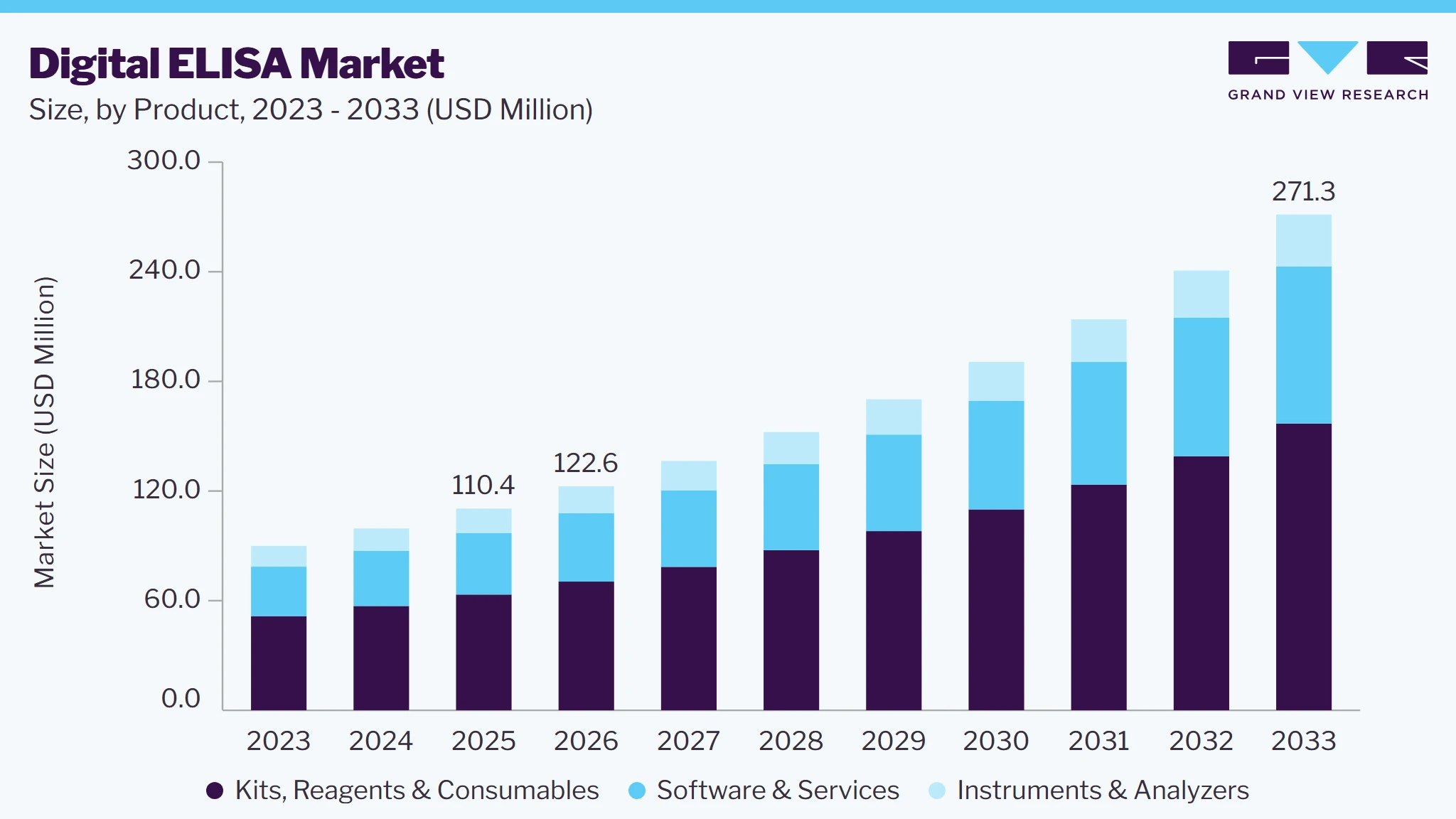 To learn more about this report, Download Free Sample Report
Market Dynamics
The principal market driver is the translation of neurological biomarkers from discovery research into clinical trials and patient-testing workflows. Digital enzyme-linked immunosorbent assay (ELISA) can quantify proteins such as phosphorylated tau, neurofilament light, and GFAP at concentrations that are difficult to measure reliably with conventional immunoassays, making the technology valuable for early disease characterization, patient stratification, pharmacodynamic monitoring, and decentralized sample collection. The World Health Organization reported that 57 million people were living with dementia in 2021 and that nearly 10 million new cases occur annually, creating sustained demand for scalable, minimally invasive biomarker tools. Because Alzheimer’s disease accounts for an estimated 60%-70% of dementia, expansion of disease-modifying therapies and clinical trials is increasing the need for sensitive blood-based measurements across research, biopharmaceutical, and reference-laboratory settings.
The principal restraint is the combination of high capital cost and limited access to regulated clinical markets. Public pricing lists the Quanterix SR-X package at USD 181,500 before validation, maintenance, labor, and recurring consumables, placing ownership beyond the reach of many small laboratories. Clinical use also requires a separate compliance pathway. The U.S. Centers for Medicare & Medicaid Services states that laboratories testing human specimens must meet CLIA quality requirements, while an unapproved or modified test system requires the laboratory to establish performance specifications before reporting patient results. These financial and validation burdens favor large reference laboratories, pharmaceutical sponsors, and well-funded research centers, slow adoption in smaller institutions, and keep much of the current revenue concentrated in research-use products and centralized testing services rather than broad routine diagnostics.
For instance, in May 2025, Quanterix announced an early-access program making Simoa ONE assay kits compatible with more than 20,000 existing flow cytometers. The initiative aimed to reduce customers’ need for dedicated capital equipment; no sale value or ownership percentage was associated with the program. The development remained an early-access activity rather than a commercial launch, and Quanterix’s 2025 annual report later confirmed that the company was still gathering feedback from evaluators. Strategically, the program validates capital intensity as a material barrier to adoption while showing how reagent formats could expand access via laboratories’ existing instruments. Until performance, reproducibility, regulatory status, and commercial availability are established, dedicated digital ELISA analyzers and centralized service laboratories will remain the principal revenue channels.
The leading opportunity is the expansion of ultra-sensitive blood-based biomarkers into reimbursed clinical testing. Research revenue currently dominates the market, but laboratory-developed tests and future cleared assays can add higher-frequency patient testing, standardized workflows, and payer-supported demand. The U.S. Centers for Disease Control and Prevention projects that the number of Americans living with Alzheimer’s disease will rise from 6.9 million in 2020 to nearly 14 million by 2060. This prospective burden, combined with the invasiveness and capacity constraints of cerebrospinal fluid testing and positron-emission tomography, creates a strong economic case for accurate blood tests. Digital ELISA providers can capture this opportunity through clinically validated multi-analyte tests, regulated assay kits, reference-laboratory partnerships, and longitudinal monitoring services, provided that analytical performance, clinical utility, coverage, and reimbursement requirements are met.
For instance, in March 2026, Quanterix reported that the Centers for Medicare & Medicaid Services had established a USD 897 reimbursement rate for its LucentAD Complete laboratory-developed test under the Clinical Laboratory Fee Schedule. It also submitted a 510(k) premarket notification for the multi-analyte Alzheimer’s blood test in January 2026; submission is not equivalent to FDA clearance, and no ownership percentage applied. The reimbursement milestone is completed using a national reference price, while payer coverage decisions remain separate, and the 510(k) review was pending as of the reporting date. Strategically, the rate establishes a commercial benchmark for complex blood-biomarker testing, supports claims submission, and signals a potential shift from episodic research revenue toward repeat clinical testing if clearance, coverage, physician adoption, and real-world performance align.
Market Concentration & Characteristics
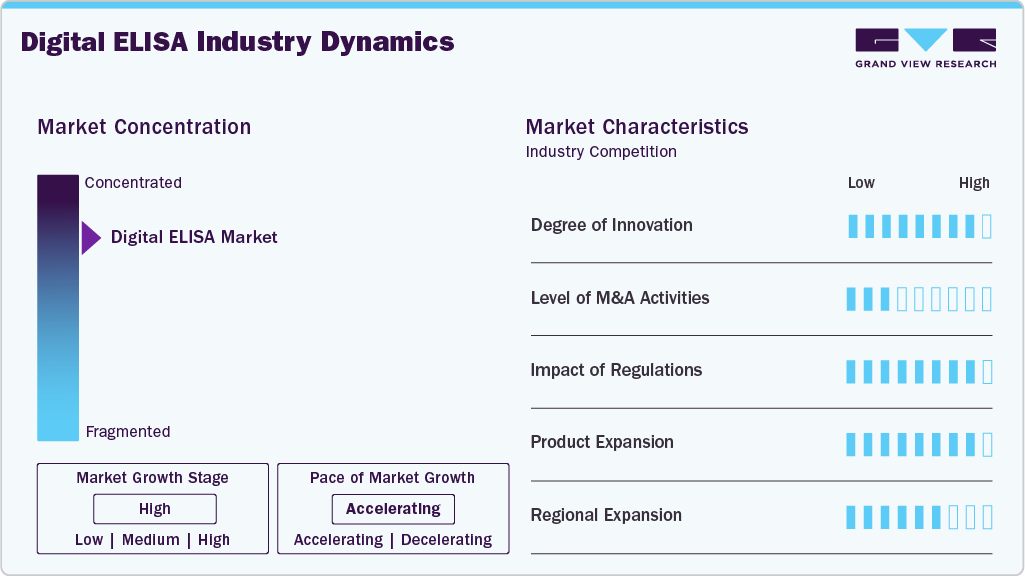
The global market demonstrates a high degree of innovation, driven by single-molecule sensitivity, multiplexed biomarker measurement, alternative sample formats, and workflows that combine protein and nucleic-acid analysis. Innovation is moving beyond lower detection limits toward higher plex, smaller sample volumes, broader instrument compatibility, and manufacturing analytics. For instance, in January 2026, NanoMosaic announced that the FDA’s Center for Biologics Evaluation and Research granted an Advanced Manufacturing Technology designation to its nanoneedle platform for multiplex measurement of AAV vector-genome and capsid titers. The designation covered manufacturing analytics rather than the approval of a patient diagnostic, but it supports enhanced FDA engagement for adopters. NanoMosaic stated that Tessie measures capsid and transgene attributes in a single workflow, demonstrating how in-scope antibody-based single-molecule platforms can extend to gene-therapy process development and quality control.
The digital enzyme-linked immunosorbent assay (ELISA) industry exhibits low M&A activity. Few companies own in-scope platforms, whereas most adjacent proteomics deals involve spatial biology, sequencing, or conventional immunoassays, which fall outside the study's definition. For instance, in January 2025, Quanterix completed its acquisition of Emission, purchasing all issued and outstanding shares for USD 10 million upfront, another USD 10 million contingent on technical milestones, and up to USD 50 million in performance-based earnouts through 2029. Emission-controlled dye-encoded magnetic beads support Quanterix’s future Simoa ONE platform and potential multiplexing expansion, giving the market leader tighter control over a critical reagent input. The transaction strengthens supply security but does not materially broaden the current competitor base.
 To learn more about this report, Download Free Sample Report
Regulations have a significant impact on the market. Research-use platforms enter laboratories without diagnostic clearance, but patient testing is governed by CLIA requirements, while distributed in vitro diagnostics may require FDA premarket authorization, quality-system compliance, labeling controls, and post-market obligations. For instance, in September 2025, the FDA issued a final rule restoring the laboratory-developed-test regulation text that existed before its May 2024 rule, following a district court's March 31, 2025, order vacating the amendment. The action did not eliminate CLIA oversight or voluntary FDA submissions, but it removed the planned federal phaseout of general enforcement discretion under that rule. For digital ELISA suppliers, the reversal reduces near-term mandatory FDA compliance pressure on laboratory-developed tests while preserving uncertainty around future legislation and payer evidence requirements.
Product expansion is strengthening the global market. Suppliers are broadening assay menus, enabling less invasive sample collection, improving multiplexing, and extending platforms from discovery research toward clinical and decentralized workflows. For instance, in April 2025, Quanterix introduced a dried-blood-spot extraction kit for downstream use with Simoa assays in neurodegenerative-disease research. The kit includes extraction buffers and a preparation protocol and was evaluated with the ALZpath p-Tau 217 Simoa assay. Validation with two devices produced correlations of 0.75-0.86 against venous samples in simulated cerebrospinal fluid-spiked matrices. The kit was included in the Simoa assay portfolio but remained research-focused rather than an FDA-cleared diagnostic. Its lower-burden collection format can improve longitudinal sampling, remote study participation, and access to underrepresented populations, thereby supporting kit consumption and contract testing activities.
Regional expansion is broadening the global footprint of the digital ELISA industry. Growth uses direct sales, distributors, contract laboratories, reference partnerships, and collaborations that place platforms closer to customers. This global push is reflected in recent activity. For instance, in May 2026, UK-based Trisk Bio and U.S.-based NanoMosaic announced a partnership to embed the Tessie platform across AAV process development, quality control, and release testing workflows. Trisk had already adopted the system before NanoMosaic received its January 2026 FDA/CBER Advanced Manufacturing Technology designation; financial terms were not disclosed. The collaboration extends a U.S.-developed nanoneedle analytical platform into a European CDMO setting, improves local access for gene-therapy developers, and shows how service partners can accelerate adoption where direct installed-base evidence remains limited.
Analyst Perspective
The digital ELISA market is expected to grow strongly over the forecast period, supported by demand for neurological biomarkers and clinical translation. High innovation intensity is widening assay menus and sample formats, while limited M&A leaves competitive leadership concentrated. Regulation creates a two-speed market: research-use products can scale through installed instruments and services, whereas clinical diagnostics require validation, regulatory strategy, laboratory compliance, and reimbursement evidence. Product expansion should increase recurring consumables and testing-service revenue, and distributor or reference-laboratory partnerships should broaden access outside the United States and Western Europe.
Product Insights
The kits, reagents & consumables segment dominated the market with the largest revenue share of 57.4% in 2025. Its leadership reflects recurring purchases of assays, capture beads, antibodies, calibrators, controls, substrates, plates, cartridges, and other single-use materials required by installed instruments. Utilization, rather than placements alone, drives sales and makes consumables resilient during constrained capital budgets.
The software & services segment is expected to grow at the fastest CAGR of 12.6% over the forecast period. Growth is supported by outsourcing assay development, validation, biomarker testing, instrument maintenance, training, data processing, and reference laboratory services, reducing customers’ need to build specialized workflows internally. The segment also benefits from clinical-trial sponsors seeking standardized testing across sites and from emerging diagnostic laboratories requiring validated methods.
Technology Insights
The bead-based digital ELISA segment accounted for the largest market revenue share in 2025. Its position reflects Simoa’s installed base, assay menu, automated HD-X workflow, benchtop SR-X format, and recurring use of bead-based reagents. Digital bead counting provides femtogram-level sensitivity across neurology, immunology, oncology, cardiology, and infectious disease research. For instance, in January 2025, Emission became a wholly owned subsidiary of Quanterix through a completed acquisition involving USD 10 million upfront, plus contingent technical and performance payments. Emission’s dye-encoded magnetic beads are intended for Simoa ONE and higher-plex applications. Securing this technology strengthens supply control and multiplexing capacity.
The planar-array ultrasensitive immunoassays segment is expected to grow at the fastest CAGR over the forecast period. The segment includes Quanterix SP-X workflows and qualifying NanoMosaic Tessie applications, where capture features support multiplex, low-volume protein measurement. Growth is driven by plex, smaller sample requirements, and interest in integrated protein and nucleic-acid analytics for biopharmaceutical development. For instance, in June 2026, Solid Biosciences and NanoMosaic entered a co-marketing agreement covering Solid’s POLARIS-101 capsid technology and NanoMosaic’s Tessie platform for AAV capsid and transgene analytics. The partnership increases Tessie’s visibility among gene-therapy developers and creates a channel for qualifying protein-immunoassay utilization, supporting growth from a small installed base.
Application Insights
The neurology segment accounted for the largest market revenue share in 2025. Demand is concentrated in Alzheimer’s disease, Parkinson’s disease, multiple sclerosis, traumatic brain injury, and other neurodegenerative conditions, where circulating p-tau, NfL, GFAP, amyloid, and alpha-synuclein often occur at very low concentrations. Digital ELISA, therefore, supports discovery, trial enrichment, target engagement, and longitudinal monitoring from minimally invasive samples. For instance, in June 2025, NSW Health Pathology was publicly identified as having validated neurofilament light for patient testing, thereby extending the use of ultrasensitive biomarkers within a large public pathology service. The organization’s test catalog subsequently listed blood NfL testing at Westmead Hospital. This clinical-laboratory adoption strengthens the pathway from research assays to patient testing and sustains neurology’s central role in overall market expansion.
The oncology segment is expected to grow at the fastest CAGR over the forecast period. Growth is supported by demand for low-abundance cytokines, tumor-associated proteins, pharmacodynamic markers, minimal residual disease research, and immune-oncology monitoring across drug development programs. Digital ELISA can add value where conventional assays lack sensitivity for early-response assessment or for small-volume longitudinal samples. The forecast instead reflects the application’s expanding analytical need and low current revenue base, supporting above-market growth while maintaining a smaller share than neurology.
End Use Insights
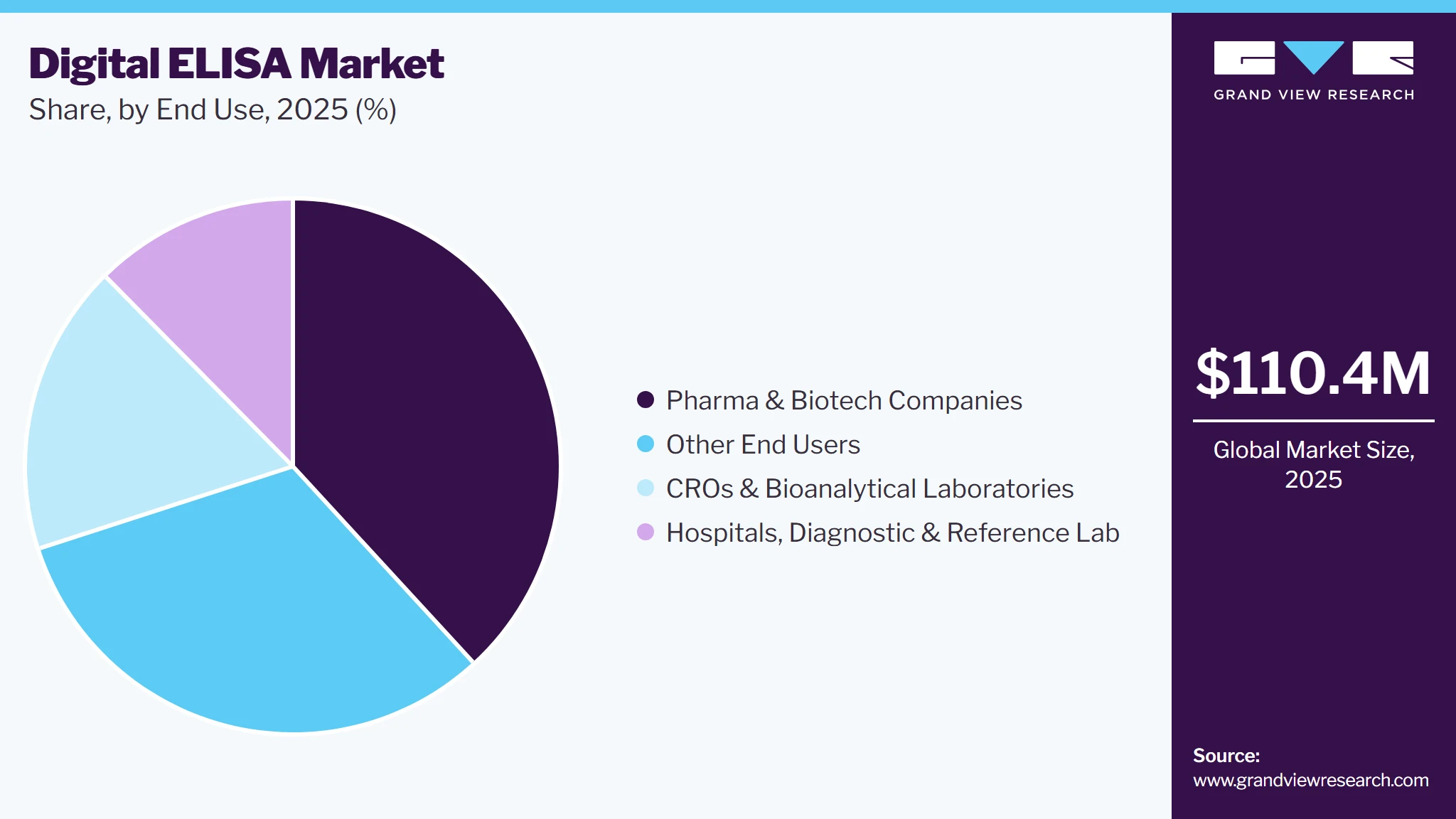
The pharmaceutical & biotechnology companies segment led the market with the largest revenue share of 38.2% in 2025. These customers use ultrasensitive assays for biomarker discovery, patient stratification, pharmacodynamic assessment, trial endpoint support, immunogenicity work, and manufacturing analytics. Their projects generate revenue from instruments, consumables, custom assays, and testing services, while stringent trial timelines favor standardized platforms and specialist laboratories. For instance, in 2026, NanoMosaic released a joint technical white paper with Bristol Myers Squibb evaluating nanoneedle technology for the AAV manufacturing process and product-quality analytics. The work demonstrates pharmaceutical interest in high-sensitivity, multiplex measurement of protein and vector attributes, supporting demand from drug developers and reinforcing this segment’s leading contribution to market revenue.
 To learn more about this report, Download Free Sample Report
The hospitals, diagnostic & reference laboratories segment is expected to grow at the fastest CAGR over the forecast period. The growth is driven by the adoption of blood-based neurological biomarkers, the need for less invasive alternatives to cerebrospinal fluid sampling and imaging, and laboratories' ability to meet validation and regulatory requirements. For instance, in June 2025, South Korea’s Ministry of Food and Drug Safety granted Class 1 medical-device registration to the Quanterix HD-X Simoa Immunoassay Analyzer through regional distributor HS Biosystems. The registration applied to the analyzer and did not approve individual diagnostic claims or assays. Nevertheless, it lowered an equipment-market access barrier and created a clearer path for Korean hospitals and reference laboratories to adopt ultrasensitive testing, supporting the segment’s fastest growth and rising share through 2033.
Regional Insights
The North America digital ELISA market held the largest revenue share of 58.9% in 2025. Growth is supported by the concentration of Quanterix’s installed base, U.S. biopharmaceutical research, specialized reference laboratories, and neurological biomarker programs. The CDC estimated that 6.9 million Americans were living with Alzheimer’s disease in 2020 and projected nearly 14 million by 2060, sustaining demand for sensitive blood-based assays. For instance, in May 2024, the Government of Canada committed CAD 80 million over four years to Brain Canada, with the commitment matched to create CAD 160 million in research investment. Although this funding is broader than digital ELISA, its support for diagnostic and technological solutions strengthens the regional translational research environment and the potential demand for ultrasensitive biomarker testing.
 To learn more about this report, Download Free Sample Report
U.S. Digital ELISA Market Trends
The digital ELISA market in the U.S. accounted for the largest share of the North America in 2025, driven by domestic platform ownership, pharmaceutical R&D, biomarker-rich clinical trials, and reference-laboratory commercialization. The country accounted for the largest share of North American revenue in 2025. CDC mortality data recorded 116,022 U.S. deaths from Alzheimer’s disease in 2024, reinforcing the need for earlier and less invasive disease assessment. For instance, in fiscal 2025, the National Institute on Aging’s budget program continued support for biomarker, multi-omics, diagnostic tool, and Alzheimer’s Disease Research Center infrastructure. The policy support is not product reimbursement or regulatory clearance, but it sustains the research pipeline that purchases high-sensitivity instruments, kits, and testing services, thereby reinforcing U.S. market leadership.
Europe Digital ELISA Market Trends
The digital ELISA market in Europe accounted for a significant market revenue share in 2025, supported by multinational biopharmaceutical research, public neuroscience networks, oncology programs, and established central laboratories. The region accounted for a significant portion of global revenue in 2025, with Germany, the UK, and France forming its largest country markets. The European Commission estimated 2.7 million new cancer diagnoses and 1.3 million cancer deaths in the EU during 2024, supporting demand for sensitive protein-biomarker validation. For instance, in March 2025, the European Health Data Space Regulation entered into force, creating a phased framework for primary and secondary use of electronic health data. The regulation does not approve digital ELISA products, but its research and innovation provisions can facilitate multi-country evidence generation and biomarker validation while increasing governance and interoperability obligations.
The UK digital ELISA market is supported by a strong life sciences sector, dementia research, contract laboratories, and evolving routes for innovative in vitro diagnostics. The UK represented 18.16% of European revenue and 4.73% of global revenue in 2025. Parliamentary data reported an estimated 740,640 people aged 65 years or older living with dementia in England in May 2025, providing a clinical-research base for neurological biomarkers. For instance, in December 2025, the Medicines and Healthcare products Regulatory Agency published its In Vitro Diagnostic Medical Device Roadmap to clarify regulatory reform and access pathways. The roadmap does not confer approval on any digital ELISA product, but clearer requirements may support development planning and future commercialization while retaining evidence, registration, and post-market obligations.
The digital ELISA market in Germany is expected to grow significantly, driven by the pharmaceutical industry, university hospitals, neurodegeneration research centers, and demand for high-sensitivity biomarkers. Germany accounted for 20.61% of European revenue and 5.37% of global revenue in 2025. The Federal Ministry of Health reports that approximately 1.8 million people in Germany live with dementia, supporting continuing research and diagnostic needs. For instance, the ministry’s National Dementia Strategy research program remains the most directly relevant verified federal initiative and funds projects spanning care, prevention, and research; no distinct 2025-2026 German policy specific to digital ELISA or ultrasensitive immunoassays was identified. Consequently, growth rests primarily on research procurement and EU-wide IVD rules rather than a dedicated national reimbursement or approval catalyst.
Asia Pacific Digital ELISA Market Trends
The digital ELISA market in the Asia Pacific is expected to grow at the fastest CAGR during the forecast period, driven by biopharmaceutical R&D, aging populations, and a small installed base that permits growth. The region accounted for 10.27% of global revenue in 2025 and is projected to grow at 16.90% through 2033. WHO reported that its South-East Asia Region carries 289 million people with mental, neurological, or substance-use conditions, indicating unmet analytical and care needs. For instance, in 2025, Australia opened a Medical Research Future Fund dementia, aging, and aged-care grant opportunity of up to AUD 24.3 million.
The China digital ELISA market represents a high-potential growth opportunity, driven by dementia burden, biopharmaceutical development, and policy emphasis on cognitive screening. China accounted for 29.11% of Asia Pacific revenue and 2.99% of global revenue in 2025 and is modeled to grow at 19.96% through 2033. China’s government reported that more than 16 million people had Alzheimer’s disease or dementia in 2021. For instance, in January 2025, the National Health Commission and 14 other bodies issued the National Action Plan for Addressing Senile Dementia, 2024-2030, calling for widespread cognitive screening, earlier intervention, standardized diagnosis, and stronger research. The plan does not mandate an assay, but it expands the clinical and research setting in which blood biomarkers could be adopted.
The digital ELISA market in Japan is important, supported by an aging population, laboratory infrastructure, and established neurodegeneration and oncology. Japan accounted for 24.73% of Asia-Pacific revenue and 2.54% of global revenue in 2025. Japan’s 2025 Annual Report on the Aging Society cited an estimated 4.432 million people aged 65 or older with dementia in 2022 and projected 5.842 million by 2040. For instance, in 2025, the Cabinet Office reaffirmed implementation of measures under the Basic Act on Dementia to promote awareness, coordination, early detection, and response.
Latin America Digital ELISA Market Trends
The digital ELISA market in Latin America is supported by research growth, improving laboratory capacity, and the unmet need for neurological and oncology biomarkers. The region accounted for 0.91% of global revenue in 2025 and is modeled to grow at 14.71% through 2033 from a base. PAHO projects that dementia prevalence in Latin America and the Caribbean will rise from 3.4 million in 2010 to 7.6 million in 2030. For instance, in February 2025, PAHO called on governments to improve access to essential cancer medicines, supplies, and equipment through pooled procurement.
Middle East and Africa Digital ELISA Market Trends
The digital ELISA market in the Middle East & Africa is expected to develop gradually, supported by academic centers, clinical trials, and investment in laboratory capacity. The region accounted for 0.52% of global revenue in 2025 and is projected to grow at 15.38% through 2033 from a small base. WHO’s African Region recorded more than 900,000 new cancer cases and over 580,000 cancer deaths in 2022, demonstrating a need, but not digital ELISA penetration. For instance, in September 2026, African health ministers adopted the Regional Strategy on Regulation of Medical Products, 2026-2035, covering diagnostics and devices.
Key Digital ELISA Company Insights
The market is highly concentrated. Quanterix is the only supplier with a broad portfolio spanning dedicated instruments, recurring assay kits and consumables, software and support, contract biomarker testing, and clinical laboratory services. Merck KGaA/MilliporeSigma provides the principal directly verified alternative through the SMCxPRO single-molecule-counting platform. NanoMosaic contributes qualifying antibody-based Tessie and Nanoplate revenue, while nucleic-acid-only and unrelated multi-omics applications are excluded. Competition is increasingly influenced by imaging performance, clinical workflow integration, product innovation, regulatory compliance, specialist-care adoption, geographic distribution, and the generation of clinical evidence supporting emerging diagnostic technologies.
Key Digital ELISA Companies
The following key companies have been profiled for this study on the digital ELISA market.
-
Quanterix Corporation
-
Merck KGaA
-
NanoMosaic, Inc.
-
RayBiotech Life, Inc.
Competitive Benchmarking
Operating Strategies
Competitive Edge
Weaknesses
Mature Players: Quanterix Corporation
- Expand the Simoa assay portfolio across neurology, oncology, immunology, inflammation, infectious diseases, and cardiology.
- Advance blood-based neurological biomarkers, including p-tau, NfL, GFAP, and amyloid-related assays, from research into clinical-laboratory workflows.
- Develop more accessible formats, including Simoa ONE kits designed for compatible flow cytometers and dried-blood-spot sample preparation.
- Strengthen recurring revenue through assay kits, consumables, maintenance, software, Accelerator Laboratory services, and Lucent Diagnostics testing.
- Broadest in-scope portfolio covering bead-based and planar-array platforms, assay kits, consumables, software, support, and laboratory services.
- Established Simoa installed base of more than 1,000 instruments before the Akoya combination.
- Extensive neurology assay menu and strong adoption in pharmaceutical research and biomarker-rich clinical trials.
- Single-molecule sensitivity enables measurement of low-abundance proteins that may be difficult to quantify using conventional immunoassays.
- A large portion of the assay portfolio remains research-use-only, limiting immediate access to routine clinical-diagnostic revenue.
- Revenue remains sensitive to pharmaceutical research spending, academic funding, instrument placements, and customer utilization.
- Strong exposure to neurology creates application concentration despite expansion into other biomarker areas.
- Clinical expansion depends on regulatory authorization, laboratory validation, reimbursement, physician adoption, and demonstrated clinical utility.
Emerging Players: NanoMosaic, Inc.
- Commercialize the Tessie nanoneedle platform and Nanoplates for ultrasensitive protein and multi-omic measurement.
- Target gene-therapy process development, manufacturing analytics, quality control, and AAV capsid and transgene characterization.
- Use the FDA/CBER Advanced Manufacturing Technology designation to support regulatory engagement with prospective adopters.
- Establish collaborations with gene-therapy developers, capsid-technology companies, CDMOs, and pharmaceutical companies.
- Differentiated nanoneedle-based platform capable of ultrasensitive, multiplex protein measurement using small sample volumes.
- Ability to combine antibody-based protein measurement with nucleic-acid analysis in a single platform.
- FDA/CBER Advanced Manufacturing Technology designation strengthens visibility in gene-therapy manufacturing analytics, although it is not a product approval.
- Early commercial stage with a substantially smaller installed base and revenue contribution than Quanterix.
- Company-specific revenue, instrument placements, utilization, and customer-retention metrics are not publicly disclosed.
- Commercial growth depends on further validation, customer adoption, workflow standardization, and expansion beyond initial gene-therapy applications.
Recent Developments
-
In August 2026, Quanterix Corporation reported the commercial launch of the Simoa NPTX2 Advantage PLUS Assay for neurodegeneration and synaptic-biomarker research. The research-use-only kit supports 96 tests and has a company-reported limit of detection of 0.8646 pg/mL. The assay expands the company’s neurology portfolio for studying synaptic integrity, cognitive resilience, and disease progression.
-
In June 2026, Solid Biosciences Inc. and NanoMosaic, Inc. entered a co-marketing agreement pairing Solid Biosciences’ POLARIS-101 AAV capsid technology with NanoMosaic’s Tessie analytical platform. The collaboration targets gene-therapy delivery and manufacturing analytics, including qualifying antibody-based measurement of AAV capsid attributes.
-
In May 2026, Trisk Bio and NanoMosaic announced a partnership to integrate the Tessie platform into AAV process-development, quality-control, and release-testing workflows. Trisk Bio had already adopted the platform for its UK-based CDMO operations. The collaboration expands European access to NanoMosaic’s qualifying antibody-based nanoneedle immunoassay capabilities.
-
In January 2026, NanoMosaic received an Advanced Manufacturing Technology designation from the FDA’s Center for Biologics Evaluation and Research for its nano needle-based AAV analytics platform. The designated workflow supports multiplex measurement of AAV vector-genome and capsid attributes. The designation facilitates enhanced FDA engagement for manufacturing technology adopters but does not constitute approval of a patient diagnostic test.
-
In July 2025, Quanterix commercially launched the Simoa p-Tau 205 and p-Tau 212 assays for Alzheimer’s disease and neurodegeneration research. The research-use assays became available for use on the Simoa HD-X and SR-X systems and through the company’s Accelerator Laboratory. The launch expanded Quanterix’s portfolio of ultrasensitive blood-based tau biomarkers.
-
In April 2025, Quanterix introduced a dried-blood-spot extraction kit for use with Simoa assays in neurodegenerative-disease research. The workflow was evaluated with the ALZpath p-Tau 217 Simoa assay and produced company-reported correlations of 0.75-0.86 with venous samples in simulated matrices. The research-use kit supports lower-burden sample collection for longitudinal and geographically distributed studies.
Digital ELISA Market Report Scope
Report Attribute
Details
Market size in 2025
USD 110.4 million
Estimated market size in 2026
USD 122.6 million
Projected market size by 2033
USD 271.3 million
Growth rate
CAGR of 12.0% from 2026 to 2033
Base year for estimation
2025
Historical data
2021 - 2024
Forecast period
2026 - 2033
Quantitative units
Revenue in USD million and CAGR from 2026 to 2033
Report coverage
Revenue forecast, company ranking, competitive landscape, growth factors, and trends
Segments covered
Product, technology, application, end use, region
Regional scope
North America; Europe; Asia Pacific; Latin America; MEA
Country scope
U.S.; Canada; Mexico; UK; Germany; France; Italy; Spain; Norway; Denmark; Sweden; China; Japan; India; Australia; Thailand; South Korea; Brazil; Argentina; South Africa; Saudi Arabia; UAE; Kuwait
Key companies profiled
Quanterix Corporation; Merck KGaA; NanoMosaic, Inc.; RayBiotech Life, Inc.
Customization scope
Free report customization (equivalent up to 8 analyst working days) with purchase. Addition or alteration to country, regional & segment scope.
Pricing and purchase options
Avail customized purchase options to meet your exact research needs. Explore purchase options
Global Digital ELISA Market Report Segmentation
This report forecasts revenue growth at country levels and provides an analysis on the latest industry trends and opportunities in each of the sub-segments from 2021 to 2033. For this study, Grand View Research has segmented the global digital ELISA market report based on the product, technology, application end use and region:
-
Product Outlook (Revenue, USD Million, 2021 - 2033)
-
Instruments & Analyzers
-
Kits, Reagents & Consumables
-
Software & Services
-
-
Technology Outlook (Revenue, USD Million, 2021 - 2033)
-
Bead-Based Digital ELISA
-
Planar-Array Ultrasensitive Immunoassays
-
Elution-Based Single-Molecule-Counting Immunoassays
-
Other Technologies
-
-
Application Outlook (Revenue, USD Million, 2021 - 2033)
-
Neurology
-
Oncology
-
Immunology & Inflammation
-
Infectious Diseases
-
Cardiology
-
Other Applications
-
-
End Use Outlook (Revenue, USD Million, 2021 - 2033)
-
Pharmaceutical & Biotechnology Companies
-
CROs & Bioanalytical Laboratories
-
Hospitals, Diagnostic & Reference Laboratories
-
Diagnostic & Pathology Laboratories
-
Other End Users
-
-
Regional Outlook (Revenue, USD Million, 2021 - 2033)
-
North America
-
U.S.
-
Canada
-
Mexico
-
-
Europe
-
UK
-
Germany
-
France
-
Italy
-
Spain
-
Norway
-
Denmark
-
Sweden
-
-
Asia Pacific
-
Japan
-
China
-
India
-
Australia
-
South Korea
-
Thailand
-
-
Latin America
-
Brazil
-
Argentina
-
-
Middle East & Africa
-
South Africa
-
Saudi Arabia
-
UAE
-
Kuwait
-
-
Research Methodology
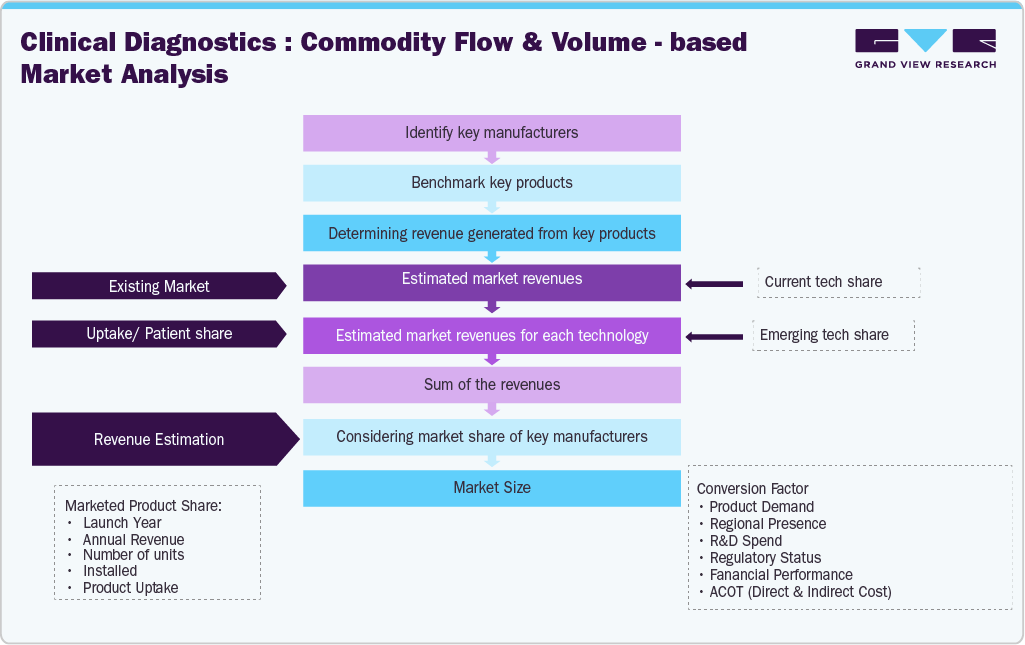
The Digital ELISA market figures in this report are based on a proven research process that combines executive interviews with secondary research from proprietary databases, company filings, and recognized regulatory and institutional sources. Market size is built through value-chain sizing - reconciling supply-side and demand-side estimates - and triangulated with bottom-up and top-down approaches. Every estimate passes multiple levels of expert validation before publication, with each Digital ELISA segment quantified using the revenue-capture definitions in the table below.
Segment Definition
Product
Revenue capture definition
Instruments & Analyzers
Dedicated hardware that performs qualifying digital or single-molecule immunoassays. Revenue flows from manufacturer sales, leases, or placements priced as equipment; conventional ELISA readers and adjacent spatial-biology instruments are excluded.
Kits, Reagents & Consumables
Assay kits, capture beads, antibodies, calibrators, controls, substrates, plates, discs, cartridges, buffers, and other single-use materials consumed in qualifying workflows. Value is captured at manufacturer selling prices.
Software & Services
Platform software, analysis subscriptions, maintenance, warranties, training, custom assay development, and manufacturer-operated biomarker testing. Market value reflects fees directly attributable to in-scope platforms and excludes unrelated consulting and laboratory services.
Technology
Revenue capture definition
Bead-Based Digital ELISA
Assays that isolate immunocomplexes on beads and digitally count enzyme-labeled single-molecule events in wells or equivalent partitions. Sales of compatible instruments, assays, consumables, software, and services are assigned here.
Planar-Array Ultrasensitive Immunoassays
Qualifying antibody-capture assays using fixed planar arrays, imaging surfaces, or nanoneedles for ultrasensitive protein detection. Applicable platform and assay receipts are counted; spatial tissue imaging and nucleic-acid-only analysis are excluded.
Elution-Based Single-Molecule-Counting Immunoassays
Workflows that capture analytes, label immunocomplexes, elute fluorescent detection molecules, and individually count them, including SMCxPRO. Associated equipment, kits, consumables, and directly linked service income are included.
Application
Revenue capture definition
Neurology
Qualifying assays used for neurological and neurodegenerative biomarkers, including p-tau, NfL, GFAP, amyloid-related proteins, and alpha-synuclein. Allocation follows the assay’s primary study or diagnostic purpose, not customer type.
Oncology
In-scope protein assays are primarily used for cancer biomarkers, tumor biology, immune-oncology, treatment response, or oncology trial monitoring. Revenue excludes spatial tissue-imaging platforms and conventional immunoassays.
Immunology & Inflammation
Digital immunoassays primarily measure cytokines, chemokines, immune mediators, or inflammatory proteins in autoimmune, inflammatory, or immune-response research. Receipts are classified by the stated biological objective.
Infectious Diseases
Qualifying assays intended to detect or quantify pathogen antigens, host-response proteins, or infection-related biomarkers. Market value includes platform-dependent products and services but excludes rapid lateral-flow and conventional ELISA tests.
Cardiology
Digital immunoassays primarily applied to cardiovascular injury, stress, inflammation, or risk biomarkers, including ultra-low-concentration proteins used in cardiac research and trials. Revenue is assigned by principal application.
Other Applications
In-scope revenue from applications not classified above, including metabolic, renal, toxicology, gene-therapy manufacturing analytics, and general biomarker discovery. Only qualifying antibody-based single-molecule or digital workflows are counted.
End Use
Revenue capture definition
Pharmaceutical & Biotechnology Companies
Purchases and service fees from drug, biologic, and advanced-therapy developers using qualifying assays for discovery, translational research, clinical trials, pharmacodynamics, immunogenicity, or manufacturing analytics. CRO spending on behalf of sponsors remains under CROs.
CROs & Bioanalytical Laboratories
Income is attributable to contract research, central laboratories, and independent bioanalytical providers that buy platforms or run outsourced studies. Hospital and routine diagnostic laboratory activity is classified separately.
Hospitals, Diagnostic & Reference Laboratories
Sales and testing fees linked to hospitals, health-system laboratories, independent diagnostic laboratories, and clinical reference laboratories performing patient-oriented or clinically validated testing. Academic-only research activity is excluded from this segment.
Other End Users
Revenue from academic and research institutes, government laboratories, nonprofit organizations, biobanks, public-health agencies, and qualifying customers not captured elsewhere. Allocation excludes CRO, commercial diagnostic, and biopharmaceutical company purchases.
Estimation Model
The digital ELISA market size was estimated by identifying key commercial manufacturers, benchmarking qualifying platforms and assay portfolios, and assessing revenues attributable to instruments and analyzers, kits, reagents and consumables, software, maintenance, custom assay development, and biomarker-testing services. Market revenues were validated using installed-base data, instrument placements, realized equipment pricing, recurring consumables utilization, service-contract activity, testing volumes, application-level adoption, and relevant parent-market benchmarks. Supply-side manufacturer revenues were reconciled with demand from pharmaceutical and biotechnology companies, CROs, bioanalytical laboratories, hospitals, diagnostic and reference laboratories, and other research users. The resulting company-, product-, technology-, application-, end-use-, and geography-level values were aggregated and triangulated to determine the global market size.
 To learn more about this report, Download Free Sample Report
Customization Table
Client Request
Customization Delivered
Value Adds
Digital ELISA Market Competitive Landscape & Technology Assessment
Assessed the competitive landscape across bead-based digital ELISA, planar-array ultrasensitive immunoassays, and elution-based single-molecule-counting immunoassays. Evaluated commercial providers based on platform portfolios, assay menus, analytical sensitivity, multiplexing capabilities, installed-base reach, testing services, regulatory positioning, partnerships, clinical validation, and geographic presence.
Enables benchmarking of established platform providers against emerging technology developers, assessment of competitive concentration and technology differentiation, identification of portfolio gaps, and evaluation of positioning across research, biopharmaceutical, and clinical-laboratory applications.
Digital ELISA Product & Technology Benchmarking Analysis
Conducted comparative benchmarking of instruments and analyzers, assay kits, reagents, consumables, software, maintenance, custom assay development, and biomarker-testing services. Products were assessed based on detection principle, sensitivity, multiplexing capacity, sample-volume requirements, throughput, workflow automation, compatible sample types, assay availability, research or clinical status, and intended application.
Supports comparison of digital ELISA platforms and workflows, identification of product and assay-menu gaps, assessment of recurring consumables and service opportunities, and evaluation of technologies suited to neurology, oncology, immunology and inflammation, infectious diseases, cardiology, and other applications.
Digital ELISA Commercialization & Market Entry Assessment
Assessed commercialization strategies, regulatory and clinical-evidence requirements, distribution models, reference-laboratory partnerships, instrument-access barriers, reimbursement considerations, and market-entry conditions across North America, Europe, Asia Pacific, Latin America, and the Middle East & Africa. Evaluated adoption across pharmaceutical and biotechnology companies, CROs, bioanalytical laboratories, hospitals, diagnostic and reference laboratories, and other research users.
Supports market entry and geographic expansion planning by identifying priority customer groups and markets, evaluating regulatory and validation requirements, assessing distributor and laboratory partnership opportunities, and defining commercialization priorities across research-use, biopharmaceutical testing, and emerging clinical diagnostic settings.
Frequently Asked Questions About This Report
The global digital ELISA market size was valued at USD 110.4 million in 2025 and is estimated at USD 122.6 million for 2026.
North America dominated the market with a 58.9% revenue share in 2025, supported by established platform adoption, substantial biopharmaceutical research, and specialized biomarker-testing laboratories.
Asia Pacific is projected to register the fastest CAGR of 17.2% during 2026–2033, driven by expanding biopharmaceutical research, investment in laboratory infrastructure, and increasing adoption of ultrasensitive biomarker testing.
Key drivers include increasing use of neurological protein biomarkers, demand for sensitive blood-based measurements, expanding biomarker applications in drug development, and the gradual translation of research assays into validated clinical-laboratory workflows
Kits, Reagents & Consumables led the market with a 57.4% revenue share in 2025, reflecting recurring demand for assay kits, capture beads, calibrators, controls, and other materials consumed during testing.
Key companies profiled in the report include Quanterix Corporation, Merck KGaA, NanoMosaic, Inc., and RayBiotech Life, Inc. Competition centers on analytical sensitivity, assay breadth, multiplexing capabilities, workflow integration, and geographic reach.
The bead-based digital ELISA segment led with an 89.7% revenue share in 2025.
The neurology segment led with a 58.3% revenue share in 2025.
The global digital ELISA market is expected to grow at a CAGR of 12.0% from 2026 to 2033, reaching USD 271.3 million by 2033.
The U.S. represented the largest country market in 2025, generating USD 61.0 million, supported by domestic platform suppliers, pharmaceutical research, neurological clinical trials, and reference-laboratory commercialization.
About the Author(s)
Clinical Diagnostics Research Team
Healthcare · Clinical DiagnosticsThis report was authored by the clinical diagnostics research team at Grand View Research - comprising two research analysts, one senior research analyst, and one industry expert - with specialized expertise in the clinical diagnostics segment of the healthcare industry. All findings are based on proprietary healthcare databases, executive interviews, and regulatory analysis, subject to internal peer review prior to publication.
Last Updated:
Speak to Analyst

Customize this report to your needs - add regions, segments, or data points, with 20% free customization.
Or view our licence options:


ISO 9001:2015 & 27001:2022 Certified
We are GDPR and CCPA compliant! Your transaction & personal information is safe and secure. For more details, please read our privacy policy.


