
- Home
- »
- Advanced Interior Materials
- »
-
Electric Heating Radiators Market Size Report, 2025-2033GVR Report cover
![Electric Heating Radiators Market (2025 - 2033)Report]()
Electric Heating Radiators Market (2025 - 2033)
Size, Share & Trends Analysis Report By Type (Oil Filled, Dry Thermal, Ceramic), By Technology (Convection, Radiant (Infrared), Inertia), By Application (Residential, Commercial, Industrial), By Region, And Segment Forecasts
Market Size, 2024
$1.9BMarket Estimate, 2026
$2.1BMarket Forecast, 2033
$2.7BCAGR, 2025–2033
3.5%Electric Heating Radiators Market Summary
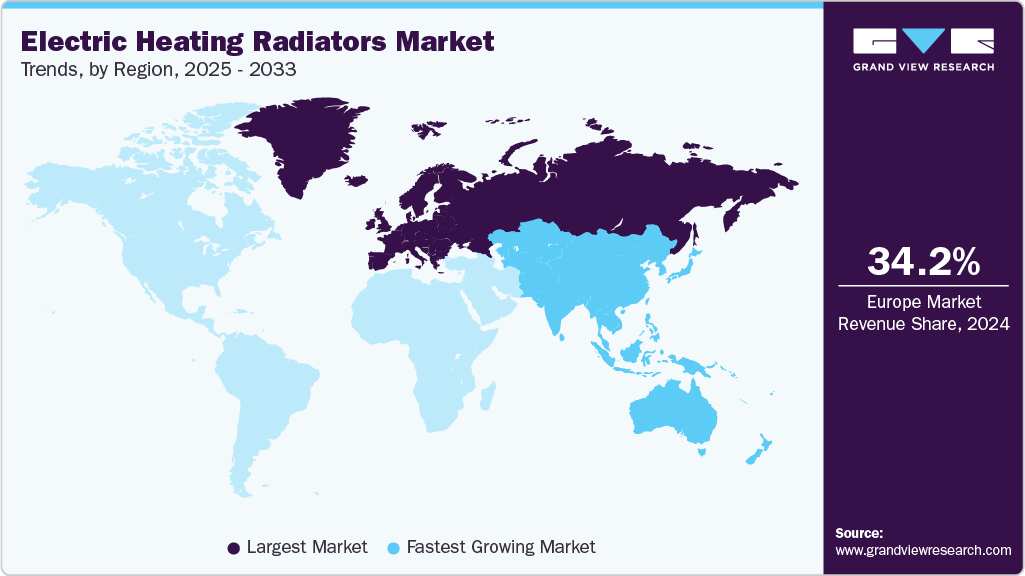
The global electric heating radiators market size was valued at USD 1.9 billion in 2024 and is projected to grow from USD 2.1 billion in 2026 to USD 2.7 billion by 2033, at a CAGR of 3.5% from 2025 to 2033. Europe dominated the market, accounting for a revenue share of 34.2% in 2024. The industry is driven by rising demand for efficient space-heating solutions across residential, commercial, and industrial facilities.

Key Market Trends & Insights
- Europe dominated the electric heating radiator market with the largest revenue share of 34.2% in 2024.
- The electric heating radiator industry in the Asia Pacific is poised to witness the fastest growth over the forecast period.
- By technology, the radiant (infrared) segment is expected to grow at a considerable CAGR of 6.0% from 2025 to 2033 in terms of revenue.
- By type, the ceramic segment is expected to grow at a CAGR of 5.9% from 2025 to 2033 in terms of revenue.
- By application, the residential segment is expected to grow at a CAGR of 3.7 from 2025 to 2033 in terms of revenue.
Market Size & Forecast
- 2024 Market Size: USD 1,960.6 Million
- 2033 Projected Market Size: USD 2,719.4 Million
- CAGR (2025-2033): 3.5%
- Europe: Largest market in 2024
- Asia Pacific: Fastest growing market
Growth in urban housing, renovation activity, and cold-climate construction continues to strengthen the need for compact, reliable, and easy-to-install heating systems. Electric heating radiators are also gaining popularity due to their ability to deliver targeted room-level heating without the need for extensive ducting or infrastructure. The expanding commercial and institutional sectors, particularly offices, hospitality, and healthcare, add to market momentum. Consistent investments in retrofitting, improved building insulation, and refurbishment of older heating systems create sustained demand. Growth in cold-region industrial facilities and temporary or modular heating needs also contributes to steady uptake of electric heating radiators.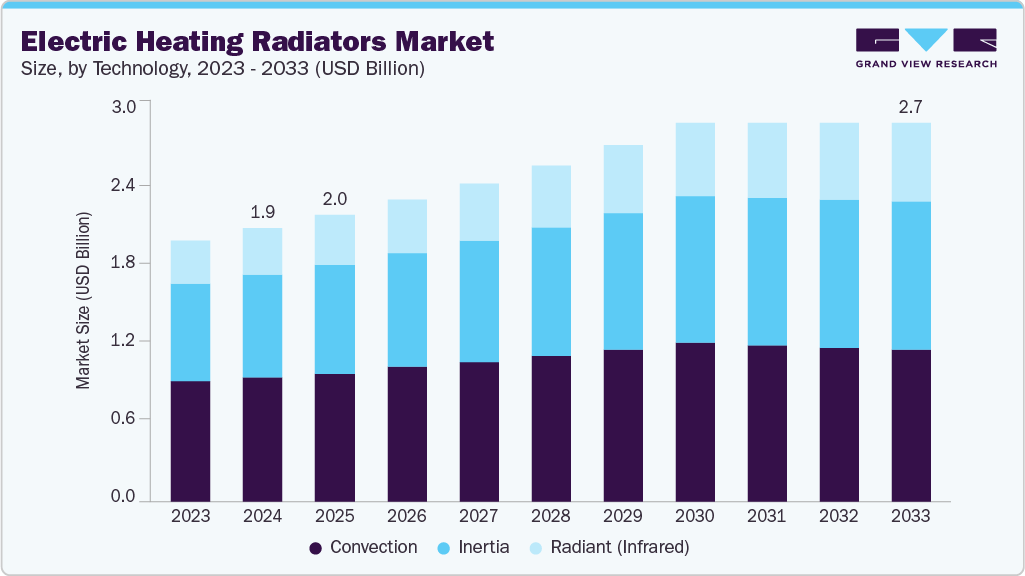
Market Concentration & Characteristics
Market concentration in the electric heating radiator industry remains moderate, with a mix of established multinational manufacturers and regional players. Well-developed brands maintain advantages in distribution, product quality, and technological capability, but the presence of several mid-scale suppliers prevents the market from becoming highly consolidated. Competition is shaped by product differentiation, pricing, and energy-efficiency features rather than by the dominance of a few firms alone.
The threat of alternatives is present but varies by region. In areas with access to low-cost gas, heat pumps, or centralized heating systems, electric radiators face substitution pressure. These alternatives often offer lower long-term operating costs or broader heating capacity. However, electric radiators retain a strong position in small spaces, retrofit applications, and regions where gas infrastructure is limited, allowing them to remain competitive despite the presence of these substitutes.
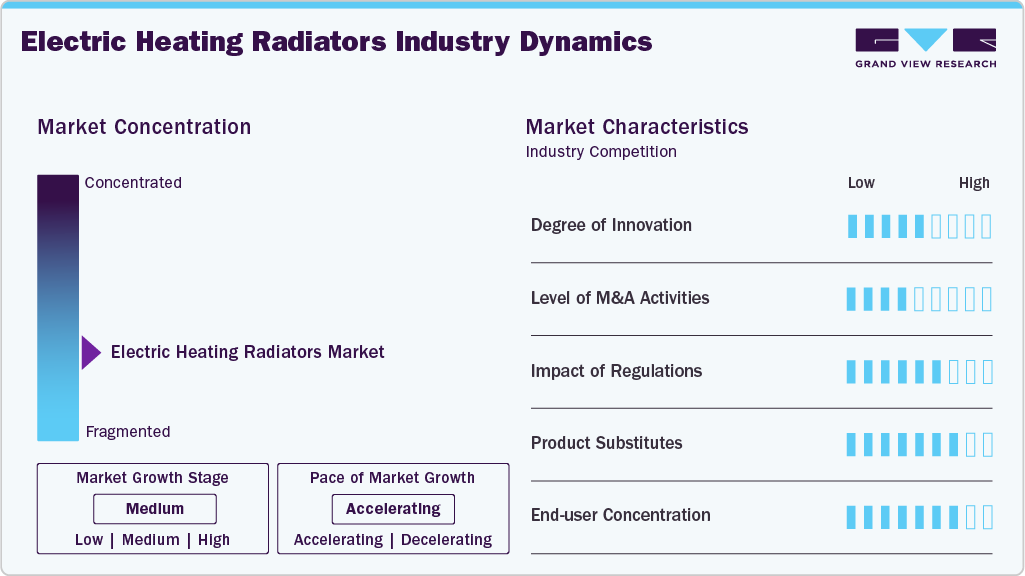
End-user concentration is high, with the residential segment dominating market revenue and representing well over half of total demand. Commercial and industrial applications account for smaller portions, making overall market growth closely tied to household heating needs and investments in the residential sector. This imbalance increases the market’s sensitivity to shifts in residential energy policy, building codes, and household affordability.
Regulatory influence is strong, particularly through energy-efficiency requirements, emission-reduction targets, and building performance standards. These regulations increasingly promote modern, high-efficiency electric radiators while discouraging older, high-consumption technologies. Compliance obligations directly shape product design, purchasing decisions, and replacement cycles, making regulatory alignment a critical factor for both manufacturers and end users.
Drivers, Opportunities & Restraints
Increasing emphasis on energy efficiency is one of the significant market drivers. Regulations promoting low-emission heating, combined with the shift toward high-efficiency and programmable heating solutions, support the adoption of electric radiators. Advancements such as digital thermostats, smart controls, and adaptive heating modes further enhance system performance, fueling market adoption among end users seeking lower operating costs.
Significant opportunities exist in the integration of connected and intelligent heating technologies. Solutions that combine electric radiators with smart home platforms, occupancy-based controls, and energy-management systems offer strong potential in both new installations and replacements. Additionally, regions modernizing outdated heating infrastructure present a growing opportunity for premium, high-efficiency, and digitally enabled radiator models.
The market faces restraints due to the higher operating cost of electricity in several regions compared with gas-based or hybrid heating alternatives. Limited heating capacity for large areas, dependence on a stable electrical supply, and the presence of low-cost conventional heating options also restrict wider adoption. In some markets, regulatory uncertainty and varying energy-efficiency standards may further slow replacement and investment cycles.
Type Insights
Oil-filled radiators held the dominant position in 2024, accounting for 38.7% of the market share due to their reliable, uniform heat distribution and suitability for prolonged heating needs. Their design allows the thermal fluid to retain heat for longer periods, reducing frequent energy draw and delivering steady warmth even after the unit is switched off. This makes them particularly attractive in residential settings where users value comfort, silent operation, and sustained background heating. Although their warm-up time is slower compared with dry thermal systems, their durability, safety profile, and efficiency in continuous-use environments continue to support consistent demand.
The ceramic segment is driven by the need for fast and efficient heating in compact spaces. Ceramic radiators heat up quickly and offer precise temperature control, making them suitable for both residential and light commercial use. Their compact design, lower surface temperatures, and built-in safety features enhance practicality. Meanwhile, they offer more focused heating than oil-filled systems, and their responsiveness and energy-efficient operation support consistent market demand.
Technology Insights
The convection segment dominated the market, accounting for a 45.6% share in 2024, driven by strong demand for heating solutions that provide rapid and efficient warming through natural airflow. Convection radiators operate by drawing in cooler air, heating it internally, and releasing it upward, enabling faster temperature stabilization in small to medium-sized rooms. Their straightforward design, quick heat response, and relatively lower upfront cost make them a practical choice for households and commercial spaces that require immediate, adjustable heating.
The growth of the radiant (infrared) segment is driven by the strength of targeted, energy-efficient heating that warms people and objects directly rather than circulating air. These systems provide quick, silent heat with minimal loss, making them effective in both residential rooms and selected commercial areas. Their slim designs, low maintenance needs, and suitability for spot heating support adoption, although their coverage is narrower than convection-based systems.
Application Insights
The residential segment held the largest share of 55.0% in 2024, driven by the widespread use of electric heating radiators in homes and apartments, where room-specific heating and ease of installation are essential. Growth in single-unit and multi-unit housing, combined with renovation cycles and rising focus on energy-efficient indoor heating, continues to reinforce this segment’s dominance. Residential consumers are increasingly opting for electric radiators due to their flexibility, low maintenance requirements, and compatibility with modern heating controls, making this the most influential end-use category in the overall market.
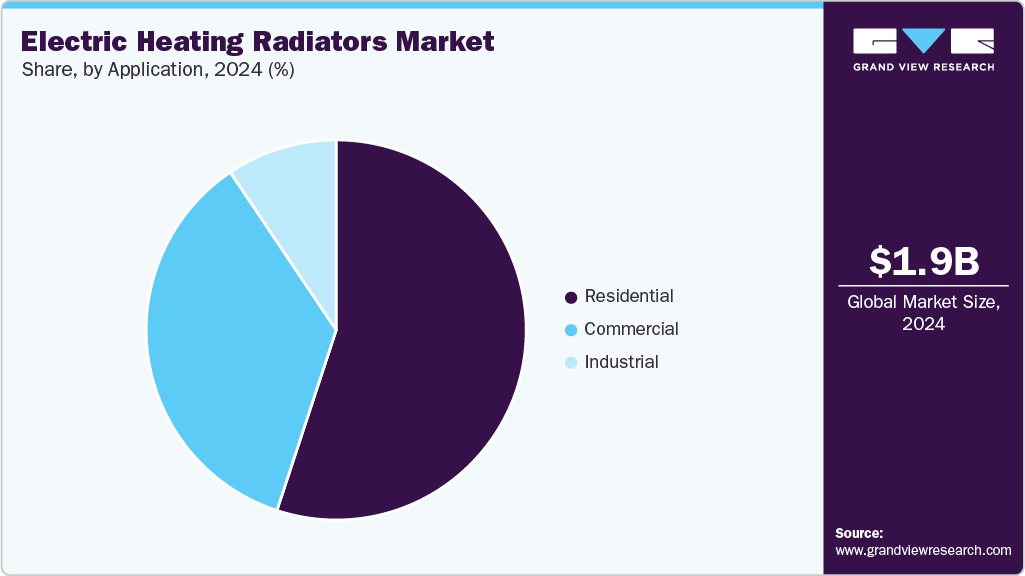
The commercial segment maintains steady demand due to the need for reliable, quickly responsive heating in offices, retail spaces, hospitality facilities, and other service environments. Electric radiators are valued for their ease of installation, flexible placement, and suitability for zone-based heating, which helps manage energy use in frequently occupied areas. While the segment is smaller than residential, ongoing refurbishment activity and efficiency-focused upgrades continue to support commercial adoption.
Regional Insights
The electric heating radiator industry in North America is supported by steady residential replacement demand and continued investment in energy-efficient home heating solutions. Adoption is reinforced by colder climates in Canada and the northern United States, where electric radiators are used as supplemental or zone-based heating. Regulatory emphasis on reduced emissions and higher efficiency also encourages the shift toward modern electric systems.
U.S. Electric Heating Radiators Market Trends
The U.S. electric heating radiator industry is shaped by steady residential replacement activity and the use of electric radiators for supplemental heating in colder regions. Demand is supported by energy-efficiency upgrades, growing adoption of smart heating controls, and preference for zone-based heating in modern homes. Commercial spaces also contribute through refurbishment and targeted heating needs.
Europe Electric Heating Radiators Market Trends
The electric heating radiator industry in Europe dominated the global revenue share in 2024, holding 34.2% share. The regional market is expected to remain strong due to widespread electrification of heating, stringent energy-efficiency standards, and active renovation programs across residential and commercial buildings. Northern and Western Europe exhibit particularly high uptake due to colder weather conditions and policies that discourage fossil-fuel-based heating. Mature distribution channels further support sustained demand.
The Germany electric heating radiators industry maintains stable demand due to stringent energy-efficiency regulations and ongoing building renovation programs. Electric radiators are used for zone heating and as supplementary systems in well-insulated homes. The push toward lower-emission heating alternatives also supports uptake of modern, high-efficiency models.
The electric heating radiators industry in the UK is driven by the widespread use of electric heating in apartments, rental properties, and older buildings where retrofitting central systems is complex. Energy-performance requirements and rising interest in smart, programmable heating support demand. The segment remains strong due to frequent home refurbishments and the need for reliable, quick-response heating.
Asia Pacific Electric Heating Radiators Market Trends
The electric heating radiator industry in the Asia Pacific is poised to witness the fastest growth over the forecast period, driven by expanding urban housing, rising living standards, and increasing acceptance of electric room-heating appliances in colder subregions. Growth in construction activity and the availability of compact, affordable radiator models also support penetration. Markets such as China, Japan, and South Korea contribute significantly to overall regional expansion.
The China electric heating radiators industry shows strong growth driven by expanding urban housing, improving household energy standards, and rising consumer preference for compact electric heating appliances. Adoption is concentrated in colder northern provinces and in urban apartments where electric radiators provide flexible room-level heating. The market benefits from domestic manufacturing strength and competitive pricing.
The electric heating radiators industry in India has observed a seasonal demand concentrated in the northern and hill regions with colder winters. Growth is supported by rising disposable incomes, increased urban apartment living, and a shift toward safe, portable heating options. While overall adoption is modest, awareness and availability of efficient electric models are gradually improving market penetration.
Middle East & Africa Electric Heating Radiators Market Trends
The electric heating radiator industry in the Middle East & Africa remains small but maintains niche demand in high-altitude, cooler regions and in commercial buildings requiring targeted indoor heating. Growth is gradual, supported by expanding urban infrastructure and increased availability of compact electric heating solutions. However, overall demand remains modest due to the region’s predominantly warm climate.
The South Africa electric heating radiators industry remains modest, supported by winter heating needs in cooler inland regions. Residential users prefer electric radiators for their portability and ease of use, whereas commercial demand is more prevalent in offices and hospitality settings. Growth is gradual, influenced by affordability considerations and seasonal heating patterns.
Latin America Electric Heating Radiators Market Trends
The electric heating radiator industry in Latin America exhibits moderate but stable demand, primarily concentrated in the southern countries where colder climates increase seasonal heating needs. Adoption is supported by the affordability and simplicity of electric radiators, particularly in small residential and commercial settings. However, limited cold-weather zones keep overall regional volume relatively constrained..
The Brazil electric heating radiators industry is centered in the southern and southeastern states, where cooler winters create seasonal demand for practical and affordable indoor heating solutions. Electric radiators are commonly used in homes, small offices, and hospitality spaces due to their portability, ease of installation, and suitability for intermittent heating needs. While climatic conditions in much of the country limit overall market size, increasing urbanization and greater awareness of safe, compact heating devices support gradual expansion in regions with defined winter seasons.
Key Electric Heating Radiators Company Insights
Some of the key players operating in the market include Glen Dimplex and De’ Longhi Appliances S.r.l.
-
De’ Longhi is a global group specializing in small domestic appliances, offering a wide portfolio covering coffee machines, kitchen, and home comfort products. The group operates across more than 120 markets with over 10,500 employees, and develops products through several R&D centers and global production plants.
-
Glen Dimplex is a privately owned international manufacturing group headquartered in Ireland, with over 8,000 employees and operations in around 20 countries across the Heating & Ventilation, Precision Cooling, Flame, and Consumer Appliances sectors. The company focuses on offering energy-efficient, low-carbon solutions for homes and businesses, and leverages its broad geographic footprint to serve residential, commercial, and industrial markets.
Key Electric Heating Radiators Companies:
The following are the leading companies in the electric heating radiator market. These companies collectively hold the largest market share and dictate industry trends.
- De’ Longhi Appliances S.r.l.
- Glen Dimplex
- FERROLI S.p.A C.F.
- Purmo Group
- Zehnder Group AG
- Haverland
- Stelrad Limited
- The Radiator Company
- ELNUR S.A.
- Hammam Design Radiator
- FONDITAL S.p.A. Società a unico socio
- GROUPE ATLANTIC
- Ecostrad Ltd
- Fischer Future Heat UK Limited
- Cordivari srl
Recent Developments
-
In November 2025, Rointe introduced a new, advanced range of electric heating solutions featuring its proprietary Smart Adaptive Technology, which learns from user behavior, room conditions and weather patterns to deliver dynamically optimized heating. The range includes upgraded electric radiators, towel-rails, storage heaters and under-floor systems, all WiFi-enabled, with direct connectivity (no hub required) and full integration via the company’s NEXA mobile app.
-
In November 2025, Nuuk launched the HÖT BLOX OFR, an energy-efficient oil-filled radiator positioned as a premium home-heating solution. The model features RapidHeat technology that delivers faster warm-up, improved heat retention, and up to around 20% lower energy consumption compared with older OFR designs. It also offers a clean, modern aesthetic with digital controls, app compatibility, and a silent heating profile, aligning with the growing preference for smart, efficient, and design-oriented electric radiators in the Indian market.
Global Electric Heating Radiators Market Report Scope
Report Attribute
Details
Market size in 2024
USD 1.9 billion
Estimated Market size in 2026
USD 2.1 billion
Projected Market size by 2033
USD 2.7 billion
Growth Rate
CAGR of 3.5% from 2025 to 2033
Historical data
2021 - 2023
Forecast period
2025 - 2033
Quantitative units
Revenue in USD million/billion and CAGR from 2025 to 2033
Report coverage
Revenue forecast, company ranking, competitive landscape, growth factors, and trends
Segments covered
Technology, type, application, region
Regional scope
North America; Europe; Asia Pacific; Latin America; Middle East & Africa
Country scope
U.S.; Canada; Mexico; UK; Germany; France; Spain; Italy; China; Japan; India; Australia; South Korea; Brazil; Argentina; Saudi Arabia; South Africa; UAE
Key companies profiled
De’ Longhi Appliances S.r.l.; Glen Dimplex; FERROLI S.p.A C.F.; Purmo Group; Zehnder Group AG; Haverland; Stelrad Limited; The Radiator Company; ELNUR S.A.; Hammam Design Radiator; FONDITAL S.p.A. Società a unico socio; GROUPE ATLANTIC; Ecostrad Ltd; Fischer Future Heat UK Limited; Cordivari srl.
Customization scope
Free report customization (equivalent up to 8 analysts working days) with purchase. Addition or alteration to country, regional & segment scope.
Pricing and purchase options
Avail customized purchase options to meet your exact research needs. Explore purchase options
Global Electric Heating Radiators Market Report Segmentation
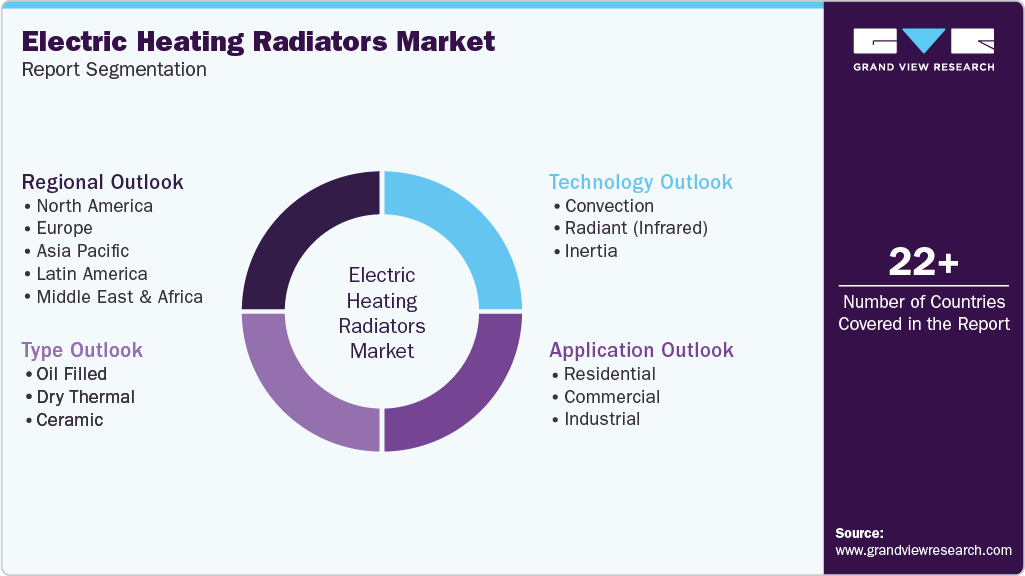
This report forecasts revenue growth at global, regional, and country levels and provides an analysis of the latest industry trends in each of the sub-segments from 2021 to 2033. For this study, Grand View Research has segmented the global electric heating radiator market report based on type, technology, application, and region.
-
Type Outlook (Revenue, USD Million, 2021 - 2033)
-
Oil Filled
-
Dry Thermal
-
Ceramic
-
-
Technology Outlook (Revenue, USD Million, 2021 - 2033)
-
Convection
-
Radiant (Infrared)
-
Inertia
-
-
Application Outlook (Revenue, USD Million, 2021 - 2033)
-
Residential
-
Commercial
-
Industrial
-
-
Regional Outlook (Revenue, USD Million, 2021 - 2033)
-
North America
-
U.S.
-
Canada
-
Mexico
-
-
Europe
-
Germany
-
France
-
Italy
-
Spain
-
UK
-
-
Asia Pacific
-
China
-
India
-
Japan
-
South Korea
-
Australia
-
-
Latin America
-
Brazil
-
Argentina
-
-
Middle East and Africa
-
Saudi Arabia
-
UAE
-
South Africa
-
-
Frequently Asked Questions About This Report
The global electric heating radiators market size was valued at USD 1.9 billion in 2024 and is estimated at USD 2.1 billion for 2026.
The global electric heating radiators market is expected to grow at a CAGR of 3.5% from 2025 to 2033, reaching USD 2.7 billion by 2033.
Europe is a dominant market and accounted for the 34.2% share in 2024, supported by stringent energy-efficiency regulations that encourage low-emission, retrofit-friendly solutions, alongside a strong trend toward smart, connected heating systems and widespread residential renovation activity.
Some of the key players operating in the global electric heating radiator market include De’ Longhi Appliances S.r.l., Glen Dimplex, FERROLI S.p.A C.F., Purmo Group, Zehnder Group AG, Haverland, Stelrad Limited, The Radiator Company, ELNUR S.A., Hammam Design Radiator, FONDITAL S.p.A. Società a unico socio, GROUPE ATLANTIC, Ecostrad Ltd, Fischer Future Heat UK Limited, and Cordivari srl.
The market is driven by rising emphasis on energy-efficient, low-emission heating solutions and growing consumer preference for modern, easy-to-install systems. Increasing adoption of smart home technologies, connectivity features, and app-based control is further boosting demand.
About the Author(s)
Advanced Interior Materials Research Team
Advanced Materials · Advanced Interior MaterialsThis report was authored by the advanced interior materials research team at Grand View Research - comprising two research analysts, one senior research analyst, and one industry expert - with specialized expertise in the advanced interior materials segment of the advanced materials industry. All findings are based on proprietary advanced materials databases, executive interviews, and regulatory analysis, subject to internal peer review prior to publication.
Last Updated:
Speak to Analyst

Need a Tailored Report?
Customize this report to your needs — add regions, segments, or data points, with 20% free customization.
Or view our licence options:


ISO 9001:2015 & 27001:2022 Certified
We are GDPR and CCPA compliant! Your transaction & personal information is safe and secure. For more details, please read our privacy policy.












