
- Home
- »
- Biotechnology
- »
-
Electrocompetent Cells Market Size Report, 2026-2033GVR Report cover

Electrocompetent Cells Market (2026 - 2033)
Size, Share & Trends Analysis Report By Type (Bacterial Electrocompetent Cells, Yeast Electrocompetent Cells), By Strain (Cloning Strains, Expression Strains), By Application, By End Use, By Region, And Segment Forecasts
Market Size, 2025
$761.7MMarket Estimate, 2026
$814.7MMarket Forecast, 2033
$1,669.8MCAGR, 2026–2033
10.8%Electrocompetent Cells Market Summary
The global electrocompetent cells market size was valued at USD 761.7 million in 2025 and is projected to grow from USD 814.7 million in 2026 to USD 1,669.8 million by 2033, at a CAGR of 10.8% from 2026 to 2033. The market in North America dominated with a revenue share of 36.0% in 2025. Industry growth is driven by increasing adoption of electroporation-based transformation in molecular biology and genetic engineering, rising demand for recombinant proteins and biopharmaceuticals, and advancements in synthetic biology, gene editing, high-throughput cloning, and microbial strain engineering.
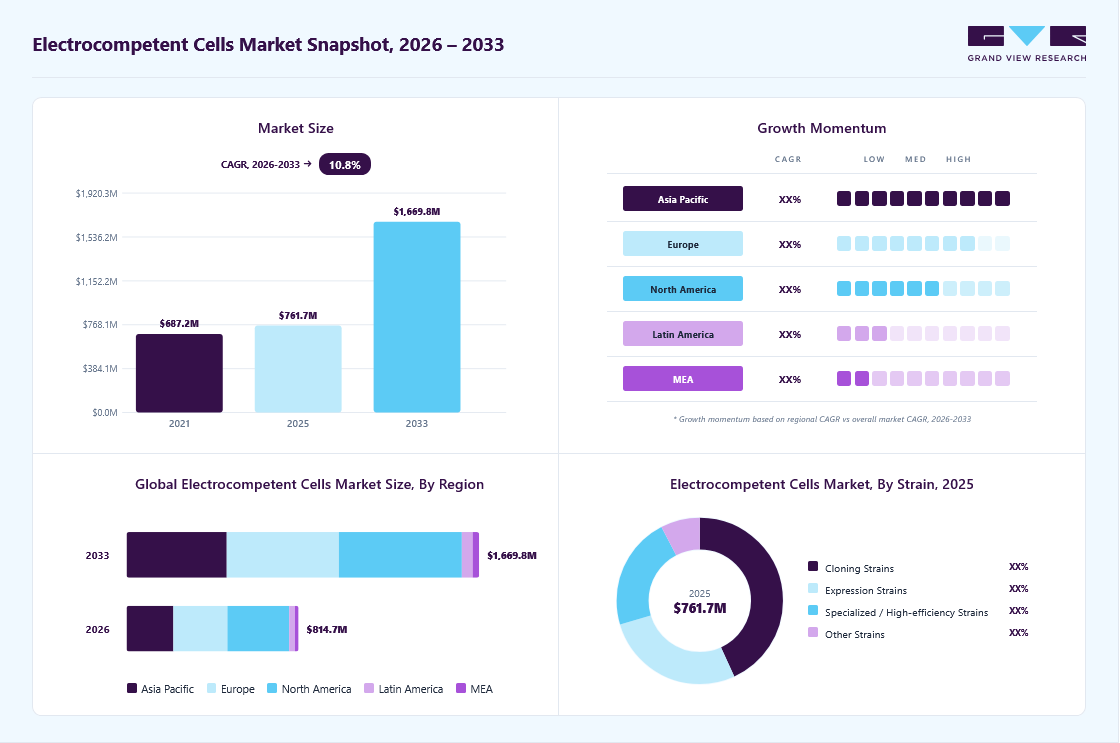 Source: Grand View Research, IR Documents, Primary Interviews, Paid DatabasesTo learn more about this report,
 Download Free Sample Report
Key Market Trends & Insights
- By type: Bacterial electrocompetent cells segment held the largest market share of 89.8% in 2025.
- By strain: Cloning strains segment held the largest market share of 43.1% in 2025.
- By application: Molecular cloning segment held the largest market share of 37.7% in 2025.
- By end use: Academic & research institutes segment held the largest market share of 47.0% in 2025.
Regional Highlights
- Largest regional market: North America (36.0% revenue share, 2025)
- Fastest-growing regional market: Asia Pacific (highest CAGR, 2026-2033)
- By country: The U.S. held the largest market share in 2025
Market Size & Forecast
- Market size in 2025: USD 761.7 Million
- Estimated market size in 2026: USD 814.7 Million
- Projected market size by 2033: USD 1,669.8 Million
- CAGR (2026-2033): 10.8%
Prism AI by Grand View Research Free to tryAsk a question about the electrocompetent cells marketTry asking✓Every figure cited from GVR research Prefer the report? Download free sample →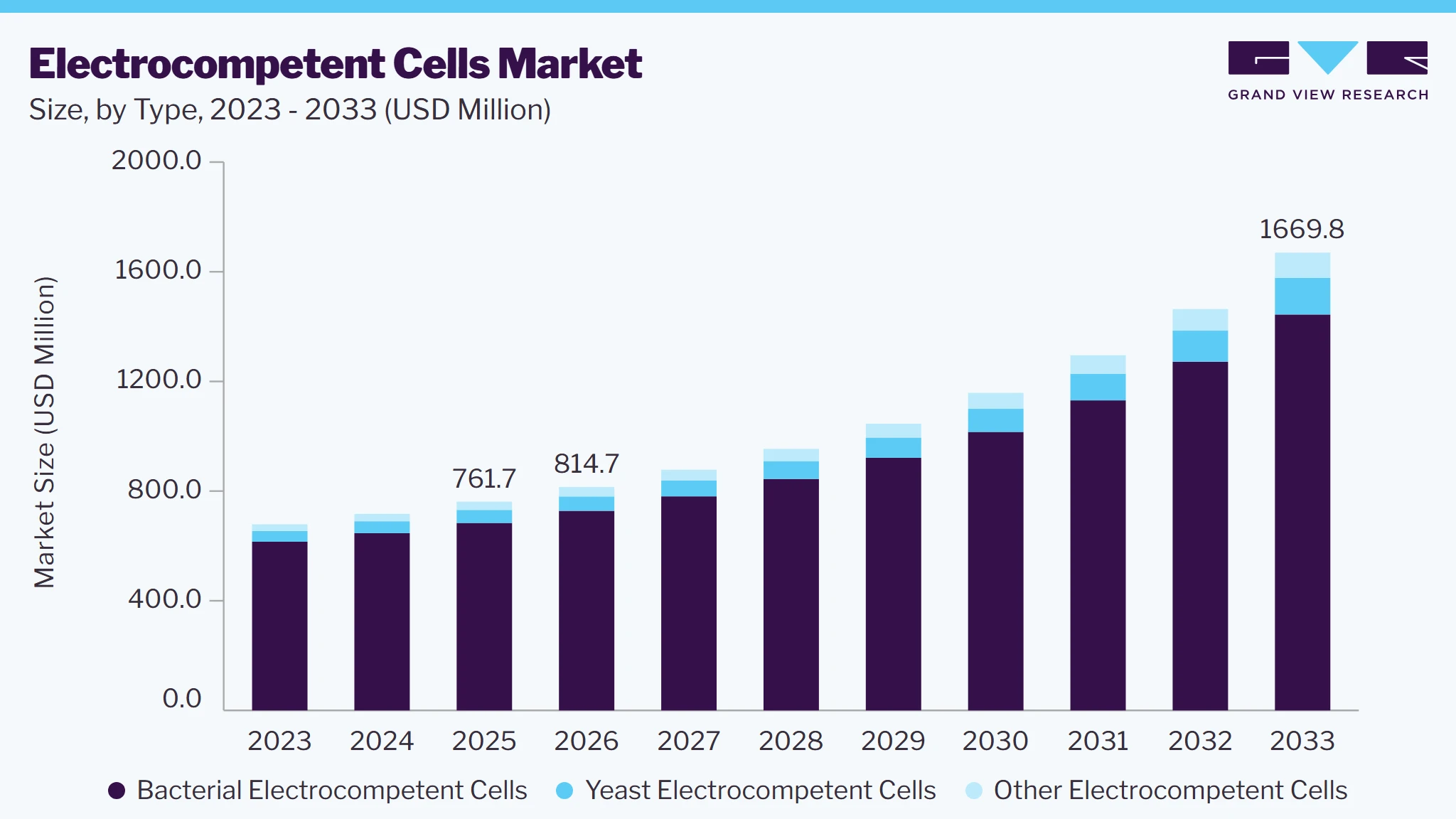 To learn more about this report, Download Free Sample Report
Market Dynamics
The electrocompetent cells market is witnessing significant growth, supported by increasing investments in molecular biology and genetic engineering research, rising adoption of recombinant DNA technologies, and growing demand for efficient tools for cloning, gene expression, and microbial strain development. Expansion of biotechnology R&D, increasing use of engineered microorganisms for biopharmaceutical and industrial applications, and growing demand for high-throughput DNA transformation workflows are expected to broaden the application base of electrocompetent cells, thereby creating new opportunities for market growth.
Advancements in electroporation and cell transformation technologies are improving the efficiency, reliability, and application range of electrocompetent cells. Improvements in transformation efficiency, cell preparation, and specialized strains enable more effective DNA uptake and support applications involving plasmid cloning, large DNA constructs, genomic libraries, and microbial engineering. These developments are increasing the utility of electrocompetent cells across molecular biology, synthetic biology, and genetic engineering workflows.
Recent Technological Developments Supporting the Electrocompetent Cells Market
Company / Organization
Recent Development / Product
Technological Advancement
Market Implications
Thermo Fisher Scientific
TOP10 Electrocomp E. coli Cells
Provides transformation efficiency of up to 1 × 10¹⁰ cfu/μg, supporting high-efficiency cloning and plasmid propagation.
The increasing availability of high-efficiency electrocompetent cells meets the demand for reliable transformation products in molecular biology and genetic engineering.
LGC Biosearch Technologies
E. cloni 10G SUPREME Electrocompetent Cells
Offers transformation efficiency of >4 × 10¹⁰ cfu/μg, supporting cloning, library construction, and large DNA manipulation.
The development of higher-efficiency strains broadens the performance range of commercially available electrocompetent cells and supports complex cloning workflows.
LGC Biosearch Technologies
BAC-Optimised Electrocompetent Cells
Specifically developed to improve transformation efficiency for very large DNA inserts, including bacterial artificial chromosomes (BACs).
Specialized electrocompetent cells broaden market applications beyond routine cloning toward large-construct and genomic library applications.
Source: Secondary Research, Primary Interviews, Grand View Research Analysis
The development of high-efficiency and application-specific electrocompetent cells is enabling researchers to perform increasingly complex DNA transformation workflows with improved productivity. Advancements in transformation efficiency and specialized cell formulations are expanding the capabilities of electrocompetent cells for large DNA constructs and complex cloning workflows. Such product innovations are supporting broader adoption of electrocompetent cells in cloning, library construction, synthetic biology, and microbial strain engineering, thereby contributing to market growth.
Specialized electrocompetent cells often involve higher production and quality-control costs than conventional competent cells due to the need for optimized strain development, stringent cell preparation, high transformation efficiency, and controlled storage conditions. These costs can increase the price of products designed for large DNA constructs, genomic libraries, high-throughput cloning, and specialized genetic engineering workflows, potentially limiting adoption among smaller research laboratories and academic institutions.
In addition, the need for specialized electroporation equipment, validated transformation protocols, and temperature-controlled handling can increase the overall cost of implementing electrocompetent-cell-based workflows. Such cost considerations may encourage price-sensitive users to adopt conventional competent cells or alternative transformation approaches for routine applications, thereby restraining the expansion of the market.
The increasing demand for engineered microbial strains is creating opportunities for the electrocompetent cells market as biotechnology companies and research institutions increasingly modify microorganisms to improve productivity, metabolic capabilities, substrate utilization, and tolerance to industrial conditions. Engineered strains are being developed for applications across biopharmaceutical production, specialty chemicals, sustainable biomanufacturing, food ingredients, and environmental biotechnology, increasing the need for efficient DNA transformation tools during strain development and optimization.
According to an article published by ASC Publication in February 2026, researchers reported an engineered E. coli Nissle 1917 variant with enhanced transformation efficiency and robustness, developed through repeated cycles of electroporation and recovery. Such developments demonstrate the growing integration of electroporation-based transformation with microbial strain engineering and are expected to support demand for electrocompetent cells used in iterative genetic modification and strain optimization workflows.
Market Concentration & Characteristics
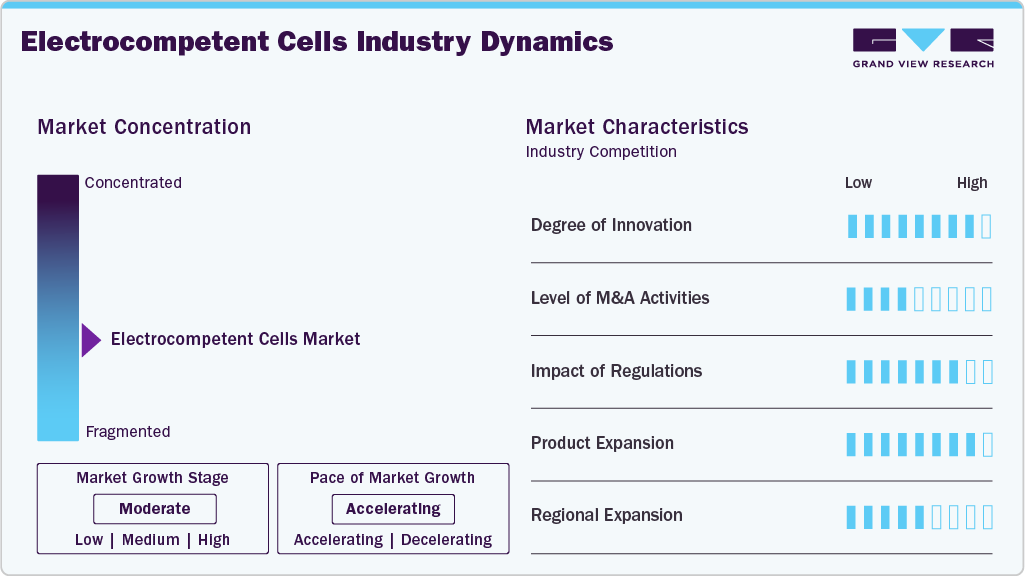
The electrocompetent cells industry is highly innovative, driven by improvements in transformation efficiency, strain characteristics, DNA construct compatibility, and specialized cell formulations. Companies are developing electrocompetent cells for increasingly complex cloning and DNA manipulation workflows. For instance, in July 2026, New England Biolabs launched NEB Stable Electrocompetent E. coli for high-efficiency transformation and isolation of plasmid clones containing repeat and unstable elements, demonstrating continued product innovation for challenging cloning applications.
The industry is experiencing limited M&A activity, with competition primarily centered on product development, strain differentiation, and portfolio expansion rather than direct acquisitions of electrocompetent-cell manufacturers. Established life science companies are strengthening their positions by expanding their competent-cell portfolios and application-specific products, while direct M&A transactions targeting electrocompetent-cell technologies remain relatively limited.
 To learn more about this report, Download Free Sample Report
The market is influenced by biosafety, quality control, and laboratory standards governing microbial strains and genetic engineering workflows. Commercial manufacturers emphasize strain characterization, transformation efficiency, contamination control, product consistency, and appropriate storage conditions. These requirements support the use of standardized manufacturing and quality-control processes for electrocompetent-cell products.
The electrocompetent cells industry is experiencing rapid product expansion, with manufacturers offering electrocompetent cells differentiated by transformation efficiency, strain background, DNA compatibility, and intended application. Product portfolio increasingly includes specialized formulations for routine cloning, DNA library construction, difficult-to-transform constructs, and high-throughput genetic engineering workflows, enabling manufacturers to address diverse research and biotechnological requirements.
The market is experiencing moderate regional expansion, supported by increasing biotechnology R&D, molecular cloning activities, and the adoption of synthetic biology and genetic engineering workflows across emerging and established research markets. Manufacturers are strengthening distribution networks and product availability across regions to address growing demand from academic institutions, biotechnology companies, pharmaceutical R&D, and contract research organizations.
Analyst Perspective
The electrocompetent cells market is expected to grow significantly, driven by the increasing adoption of bacterial transformation techniques across molecular biology, genetic engineering, synthetic biology, and biopharmaceutical research. Growing demand for high-efficiency transformation systems in plasmid construction, recombinant protein production, and gene cloning is supporting market expansion. Advancements in strain engineering and the development of high-efficiency competent cells are further improving transformation performance, while increasing investments in synthetic biology and microbial engineering are creating opportunities for market participants to focus on product innovation, application-specific solutions, and workflow efficiency.
Type Insights
The bacterial electrocompetent cells segment accounted for the largest revenue share of 89.8% in 2025, driven by their extensive use in molecular cloning, plasmid amplification, recombinant protein expression, and microbial strain engineering. Their compatibility with diverse bacterial hosts, high transformation efficiency, and ability to accommodate large or complex DNA constructs support their adoption across academic research, biotechnology, and pharmaceutical R&D. Growing demand for engineered microbial strains and advanced genetic manipulation workflows is further contributing to segment growth.
The yeast electrocompetent cells segment is expected to witness a significant CAGR over the forecast period, driven by their increasing use in yeast genetic engineering, recombinant protein production, metabolic pathway optimization, and synthetic biology applications. The growing development of engineered yeast strains for biopharmaceuticals, enzymes, biofuels, and other high-value biomolecules is further increasing demand for efficient transformation technologies, thereby supporting segment growth.
Strain Insights
The cloning strains segment dominated the market with a 43.1% share in 2025, driven by their global application in plasmid amplification, DNA assembly, and routine molecular cloning workflows. Their consistent transformation characteristics and suitability for the propagation of recombinant DNA make them particularly valuable for constructing and maintaining plasmids across diverse molecular biology applications.
The specialized / high-efficiency strains segment is expected to register the fastest CAGR over the forecast period, driven by the increasing need for enhanced transformation efficiency, improved uptake of large and complex DNA constructs, and reliable performance in demanding genetic engineering workflows. Growing adoption of genomic library construction, synthetic biology, and advanced strain engineering is further supporting demand for these specialized strains.
Application Insights
The molecular cloning segment dominated the market with a 37.7% share in 2025, driven by the growing use of recombinant DNA technologies for plasmid construction, DNA amplification, and vector-based genetic manipulation. Increasing research activity in molecular biology and biotechnology, coupled with the need for efficient DNA transformation, continues to support demand for electrocompetent cells in cloning workflows.
The genome engineering & gene editing segment is expected to exhibit the fastest CAGR over the forecast period, driven by increasing adoption of CRISPR-based technologies, microbial genome modification, and targeted genetic engineering workflows. Rising demand for efficient DNA delivery and transformation methods to construct engineered strains and validate gene-editing systems is further supporting the use of electrocompetent cells in advanced genetic research.
End Use Insights
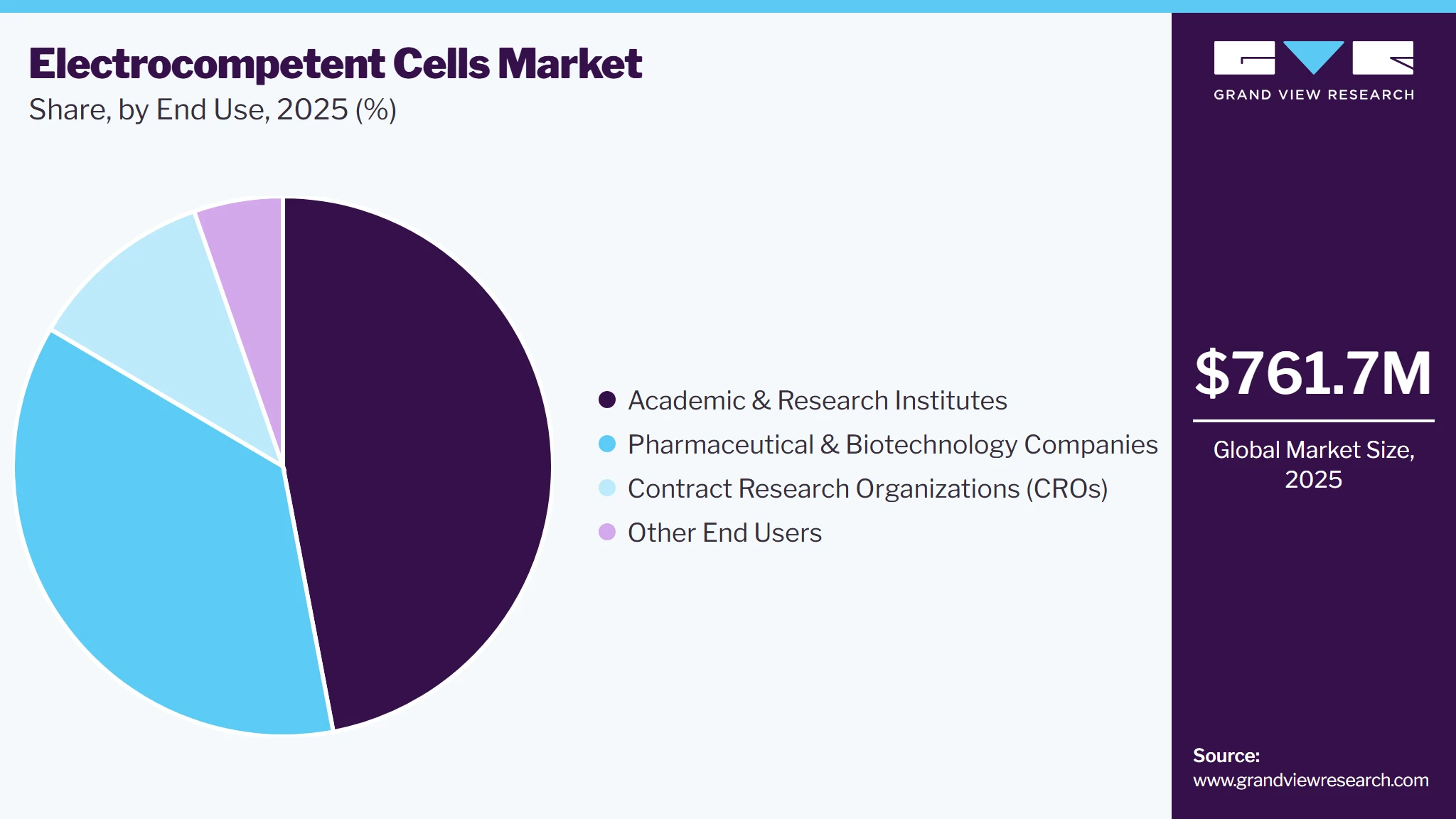
The academic & research institutes segment dominated the market with a share of 47.0% in 2025, driven by the extensive use of electrocompetent cells in molecular biology, genetic engineering, plasmid construction, and microbial strain development. Increasing research activities in synthetic biology and genome engineering are further supporting demand for efficient DNA transformation technologies across academic laboratories.
 To learn more about this report, Download Free Sample Report
The contract research organizations (CROs) segment is projected to witness the fastest CAGR, driven by increasing outsourcing of molecular biology, genetic engineering, and synthetic biology research activities by pharmaceutical and biotechnology companies. Growing demand for specialized transformation workflows, microbial strain development, and plasmid-based research is further expanding the use of electrocompetent cells across CRO facilities.
Regional Insights
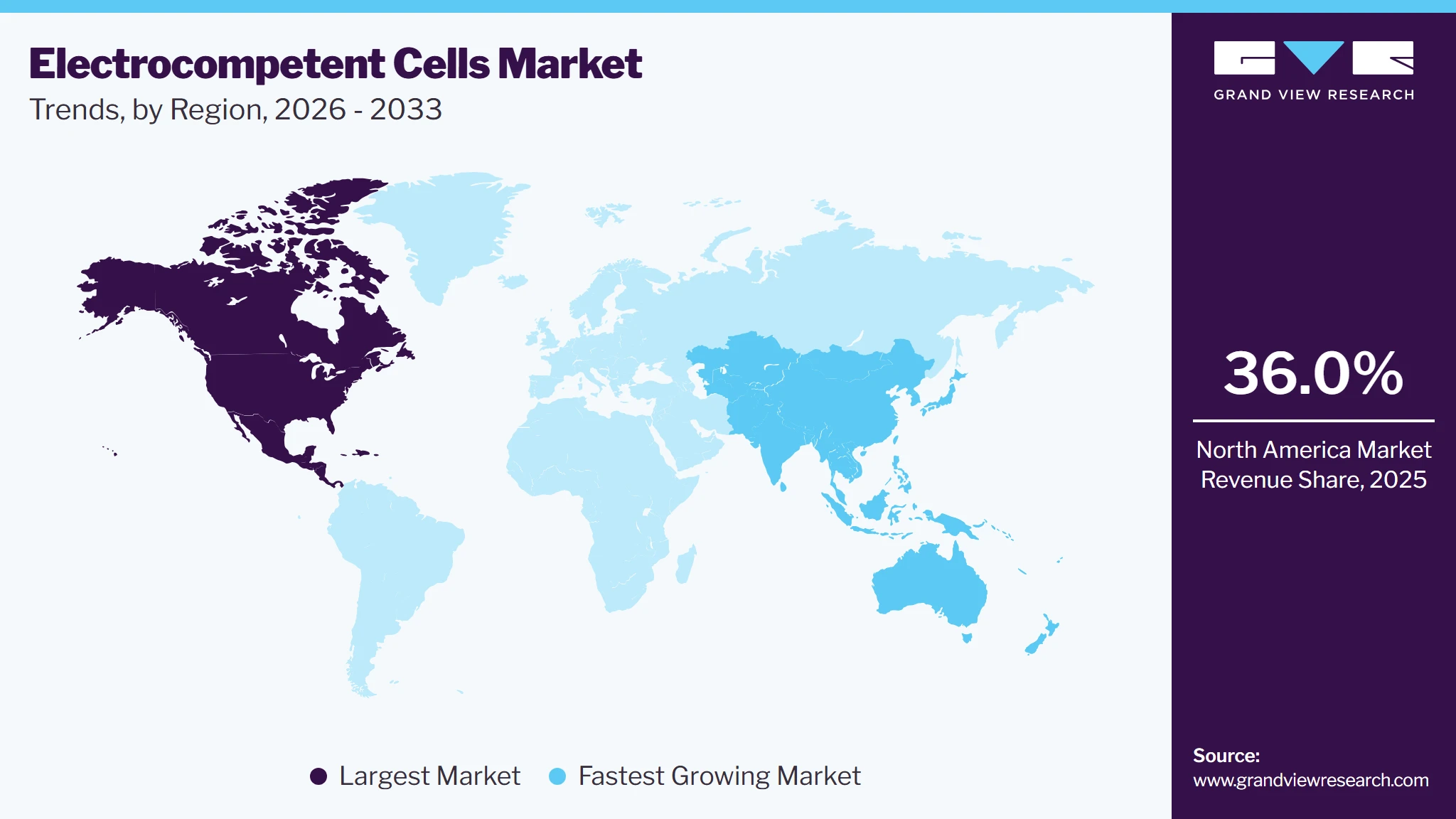
North America dominated the electrocompetent cells industry, accounting for the largest revenue share of 36.0% in 2025, supported by established biotechnology infrastructure, strong molecular biology research, and global adoption of genetic engineering technologies. For instance, in June 2025, the University of British Columbia’s iGEM team prepared and validated electrocompetent CB2A cells for plasmid electroporation, demonstrating continued use of electrocompetent-cell workflows for microbial genetic engineering in the region.
 To learn more about this report, Download Free Sample Report
U.S. Electrocompetent Cells Market Trends
The electrocompetent cells industry in the U.S. is expected to grow over the forecast period, supported by strong molecular biology research, synthetic biology activities, and increasing use of high-efficiency DNA transformation workflows. According to an article published by the NIH in January 2026, researchers at the University of Florida published a protocol for preparing electrocompetent E. coli cells for antibody library construction and phage display applications, underscoring continued demand for specialized electrocompetent cell workflows in advanced genetic engineering research.
Europe Electrocompetent Cells Market Trends
The electrocompetent cells market in Europe is supported by established biotechnology infrastructure, expanding microbial engineering research, and increasing adoption of molecular cloning and synthetic biology workflows. For instance, in September 2025, researchers at Ulm University developed an electroporation protocol to generate electrocompetent cells of Acetobacterium woodii and Eubacterium callanderi, supporting genetic engineering of anaerobic bacteria and highlighting the region’s ongoing development of advanced microbial transformation capabilities.
The UK electrocompetent cells market has gained ground from active microbial biotechnology research and increasing optimization of electroporation workflows for difficult-to-transform organisms. According to an article published by the NIH in May 2026, researchers at the Quadram Institute Bioscience and the University of East Anglia reported a rapid method for preparing electrocompetent Listeria monocytogenes cells, reducing preparation time and improving transformation efficiency.
The electrocompetent cells market in Germany is anticipated to grow significantly over the forecast period, supported by a well-established biotechnology ecosystem, robust molecular biology research, and rising investment in genetic engineering technologies. The country’s extensive biotechnology infrastructure and growing adoption of molecular cloning and microbial engineering workflows are expected to support demand for electrocompetent cells.
Asia Pacific Electrocompetent Cells Market Trends
The electrocompetent cells market in the Asia Pacific is expected to grow at the fastest CAGR of 11.5% during the forecast period, driven by the expanding research base in recombinant DNA technologies, the increasing development of engineered microbial strains, and the rising adoption of high-throughput genetic manipulation methods. The growing presence of biotechnology startups, contract research organizations, and academic research centers is broadening the customer base for specialized transformation products and supporting regional market development.
The China electrocompetent cells market is expected to grow over the forecast period, supported by expanding biotechnology research, increasing adoption of microbial genetic engineering, and rising demand for efficient DNA transformation technologies. For instance, in August 2025, Guangzhou Ubigene Biosciences filed a Chinese patent for electrocompetent E. coli cells engineered to improve CRISPR library plasmid amplification efficiency and reduce plasmid recombination, highlighting the development of specialized transformation solutions for advanced genetic engineering workflows.
The electrocompetent cells market in Japan is expected to grow steadily, supported by a mature life sciences research ecosystem, established pharmaceutical R&D capabilities, and continued development of molecular biology technologies. Increasing demand for reliable DNA transformation tools in recombinant DNA research, plasmid construction, and microbial strain development is expected to support market growth in the country.
Latin America Electrocompetent Cells Market Trends
The electrocompetent cells market in Latin America is expected to grow gradually, driven by increasing biotechnology research, expanding molecular biology capabilities, and greater adoption of recombinant DNA technologies. Rising research activity in microbial engineering and growing investments in life sciences infrastructure are expected to create opportunities for electrocompetent cell suppliers across the region.
MEA Electrocompetent Cells Market Trends
The electrocompetent cells market in the Middle East and Africa is expected to grow steadily, supported by the gradual development of biotechnology research capabilities and increasing adoption of genetic engineering technologies. Expansion of academic and research laboratories, along with rising applications of molecular cloning and microbial strain engineering, is expected to broaden the demand base for electrocompetent cells across the region.
Key Electrocompetent Cells Company Insights
Several well-established companies operate in the electrocompetent cells market, supported by their broad portfolios of competent cells for molecular cloning, protein expression, library construction, and genetic engineering applications. Leading players such as Thermo Fisher Scientific Inc., Merck KGaA, New England Biolabs, and Takara Bio Inc. maintain a strong market presence through product innovation, development of high-efficiency strains, portfolio expansion, application-specific cell formulations, and initiatives focused on improving transformation efficiency and supporting advanced DNA engineering workflows.
Key Electrocompetent Cells Companies
The following key companies have been profiled for this study on the electrocompetent cells market.
-
Thermo Fisher Scientific Inc.
-
Merck KGaA
-
New England Biolabs
-
Takara Bio Inc.
-
Agilent Technologies, Inc.
-
GoldBio
-
Biosearch Technologies
-
Scarab Genomics, LLC
-
Zymo Research Corporation
-
SMOBIO Technology, Inc.
Competitive Benchmarking
Category
Operating Strategies
Competitive Edge
Weakness
Established Players (Thermo Fisher Scientific Inc., Merck KGaA, New England Biolabs, Takara Bio Inc., Agilent Technologies, Inc.)
- Strengthen market presence through global distribution networks, product innovation, and integration of competent cells with broader molecular biology and genetic engineering solutions.
- Advanced strain development, transformation technologies, and established quality-control capabilities supporting high transformation efficiency and reproducible results.
- Higher product and operational costs associated with large-scale manufacturing, quality control, and global distribution.
Emerging Players (GoldBio, Biosearch Technologies, Scarab Genomics, LLC, Zymo Research Corporation, SMOBIO Technology, Inc.)
- Expand market presence through application-specific products, competitive pricing, and targeted distribution to academic, biotechnology, and research laboratories.
- Greater specialization and flexibility in addressing specific transformation requirements and research applications.
- Relatively smaller global distribution networks and financial resources compared with major life science companies.
Recent Developments:
- In February 2026, Scarab Genomics partnered with Bionova to license its Clean Genome E. coli strain for plasmid DNA production, supporting applications requiring genetically stable bacterial strains and reinforcing the broader relevance of engineered bacterial platforms to electrocompetent cell technologies.
“We’re excited to formalize this partnership with Bionova. Their commitment to supporting innovative therapeutics aligns well with Scarab’s mission to provide high-performance microbial platforms that accelerate development and manufacturing for next-generation biologics.”
- Venkat Balakrishnan, PhD, Director of Commercial Operations at Scarab Genomics
- In August 2025, GoldBio validated the performance of its GV3101 Agrobacterium electrocompetent cells, documenting transformation efficiency and quality-control parameters to support reliable genetic transformation workflows for plant biotechnology research applications.
Electrocompetent Cells Market Report Scope
Report Attribute
Details
Market size in 2025
USD 761.7 million
Estimated market size in 2026
USD 814.7 million
Projected market size by 2033
USD 1,669.8 million
Growth rate
CAGR of 10.8% from 2026 to 2033
Historical data
2021 - 2025
Forecast period
2026 - 2033
Quantitative units
Revenue in USD million and CAGR from 2026 to 2033
Report coverage
Revenue forecast, company ranking, competitive landscape, growth factors, and trends
Segments covered
Type, strain, application, end use, region
Regional scope
North America; Europe; Asia Pacific; Latin America; MEA
Country scope
U.S.; Canada; Mexico; UK; Germany; France; Italy; Spain; Norway; Denmark; Sweden; China; Japan; India; South Korea; Australia; Thailand; Brazil; Argentina; Saudi Arabia; South Africa; UAE; and Kuwait
Key companies profiled
Thermo Fisher Scientific Inc.; Merck KGaA; New England Biolabs; Takara Bio Inc.; Agilent Technologies, Inc.; GoldBio; Biosearch Technologies; Scarab Genomics, LLC; Zymo Research Corporation; SMOBIO Technology, Inc.
Customization scope
Free report customization (equivalent up to 8 analysts' working days) with purchase. Addition or alteration to country, regional & segment scope.
Pricing and purchase options
Avail customized purchase options to meet your exact research needs. Explore purchase options
Global Electrocompetent Cells Market Report Segmentation
This report forecasts revenue growth and provides an analysis on the latest trends in each of the sub-segments from 2021 to 2033. For this report, Grand View Research has segmented the global electrocompetent cells market report on the basis of type, strain, application, end use, and region
-
Type Outlook (Revenue, USD Million, 2021 - 2033)
-
Bacterial Electrocompetent Cells
-
Yeast Electrocompetent Cells
-
Other Electrocompetent Cells
-
-
Strain Outlook (Revenue, USD Million, 2021 - 2033)
-
Cloning Strains
-
Expression Strains
-
Specialized / High-efficiency Strains
-
Other Strains
-
-
Application Outlook (Revenue, USD Million, 2021 - 2033)
-
Molecular Cloning
-
Protein Expression
-
Library Construction
-
Genome Engineering & Gene Editing
-
Synthetic Biology
-
Other Applications
-
-
End Use Outlook (Revenue, USD Million, 2021 - 2033)
-
Academic & Research Institutes
-
Pharmaceutical & Biotechnology Companies
-
Contract Research Organizations (CROs)
-
Other End Users
-
-
Regional Outlook (Revenue, USD Million, 2021 - 2033)
-
North America
-
U.S.
-
Canada
-
Mexico
-
-
Europe
-
UK
-
Germany
-
France
-
Italy
-
Spain
-
Denmark
-
Sweden
-
Norway
-
-
Asia Pacific
-
Japan
-
China
-
India
-
Australia
-
Thailand
-
South Korea
-
-
Latin America
-
Brazil
-
Argentina
-
-
Middle East and Africa (MEA)
-
South Africa
-
Saudi Arabia
-
UAE
-
Kuwait
-
-
Research Methodolog
The electrocompetent cells marketfigures in this report are based on a proven research process that combines executive interviews with secondary research from proprietary databases, company filings, and recognized regulatory and institutional sources. Market size is built through value-chain sizing-reconciling supply-side and demand-side estimates-and triangulated with bottom-up and top-down approaches. Every estimate passes multiple levels of expert validation before publication, with eachelectrocompetent cellssegment quantified using the revenue-capture definitions in the table below.
Segment Definition
Type
Revenue Capture Definition
Bacterial Electrocompetent Cells
Revenue generated from bacterial cells treated to achieve high electrical competence for efficient uptake of exogenous DNA through electroporation. These cells are widely used for plasmid transformation, molecular cloning, recombinant protein expression, and genetic engineering workflows.
Yeast Electrocompetent Cells
This segment captures income from yeast cells prepared for DNA introduction through electroporation, supporting genetic transformation, recombinant protein production, metabolic engineering, and functional genomics applications.
Other Electrocompetent Cells
Market value in this category stems from electrocompetent cell types beyond bacterial and yeast systems, including specialized microbial and other host-cell platforms used for genetic transformation and molecular biology applications.
Strain
Revenue Capture Definition
Cloning Strains
Revenue originates from electrocompetent strains optimized for efficient uptake and propagation of recombinant DNA during plasmid construction, DNA assembly, cloning, and routine molecular biology workflows.
Expression Strains
This category reflects income from strains engineered to facilitate high-level production of recombinant proteins following introduction of expression constructs. These cells support protein production, biochemical studies, and development of recombinant biologics.
Specialized / High-efficiency Strains
Revenue derived from electrocompetent strains developed for specialized transformation requirements or enhanced transformation efficiency. These products support challenging DNA constructs, large plasmids, complex genetic engineering workflows, and applications requiring improved DNA uptake.
Other Strains
Includes revenue from electrocompetent strains that do not fall within the primary cloning, expression, or specialized/high-efficiency categories and serve specific research and genetic transformation requirements.
Application
Revenue Capture Definition
Molecular Cloning
Revenue generated from electrocompetent cells used to introduce recombinant DNA into host cells for plasmid propagation, DNA assembly, construct validation, and routine molecular cloning workflows.
Protein Expression
This segment captures income from electrocompetent cells utilized to introduce expression constructs into suitable host systems for recombinant protein production, protein characterization, and biochemical research.
Library Construction
Market value in this category stems from the use of electrocompetent cells to propagate and maintain complex DNA libraries, including genomic, cDNA, and combinatorial libraries used in screening and discovery programs.
Genome Engineering & Gene Editing
Revenue reflects the utilization of electrocompetent cells in workflows involving targeted genetic modification, including delivery of DNA constructs, editing components, and engineered genetic elements for genome manipulation and functional studies.
Synthetic Biology
This segment represents income from electrocompetent cells used to introduce and propagate synthetic DNA constructs, engineered genetic circuits, metabolic pathways, and biological systems developed for synthetic biology research.
Other Applications
Includes revenue from electrocompetent cells employed in specialized molecular biology and genetic engineering applications outside the primary application categories, including functional genomics and microbial engineering studies.
End Use
Revenue Capture Definition
Academic & Research Institutes
Revenue generated from electrocompetent cells purchased by universities, government laboratories, and research institutions for molecular biology, genetic engineering, cloning, protein expression, and fundamental life sciences research.
Pharmaceutical & Biotechnology Companies
This segment captures income from electrocompetent cells utilized by pharmaceutical and biotechnology companies in drug discovery, recombinant protein development, genetic engineering, synthetic biology, and development of biologic and advanced therapeutic products.
Contract Research Organizations (CROs)
Market value in this category stems from electrocompetent cells used by CROs providing outsourced molecular biology, genetic engineering, screening, protein expression, and research services to pharmaceutical, biotechnology, and academic clients.
Other End Users
Revenue comes from other organizations that use electrocompetent cells for specialized research and biotechnology activities, including diagnostic developers, government agencies, industrial biotechnology organizations, and specialized laboratories.
Estimation Model
Stage
Description
Top-Down
Commodity Flow Analysis: Market size was estimated by analyzing revenues generated by key electrocompetent cell manufacturers, supported by company annual reports, investor presentations, product portfolios, distributor insights, and premium databases. Revenue contributions from private and regional players were assessed using industry databases and validated through primary research to derive the overall market value.
Parent Market
Parent Market & Penetration-Based Analysis: The electrocompetent cells market was evaluated within the broader competent cells market by analyzing the adoption and penetration of electrocompetent cells across molecular cloning, plasmid transformation, recombinant DNA research, protein expression, and synthetic biology applications. Product utilization trends and technology adoption rates were assessed to estimate the addressable market and segment-level opportunities.
Segmentation
Country-Level Segment Share Modeling: Market shares for type, strain, application, and end-use segments were derived using country-specific biotechnology R&D activity, academic and pharmaceutical research expenditure, molecular biology workflows, recombinant DNA research intensity, and laboratory infrastructure. Weighted average calculations were applied to determine regional and global segment distributions.
Validation
Data Triangulation & Validation Model: Market estimates were validated through triangulation of secondary research, primary interviews, company-level revenue assessments, product-level analysis, competent cell market benchmarks, and end-user demand analysis to ensure consistency and accuracy across all market segments and geographies.
Forecasting
Forecasting & CAGR Modeling: Market forecasts were developed using historical demand trends, growth in molecular biology and recombinant DNA research, increasing adoption of high-efficiency transformation technologies, expansion of synthetic biology and protein engineering activities, and biopharmaceutical R&D investments. Regression-based analysis and trend modeling were applied to project future market growth and CAGR.
Customization Table
Client Request
Customization Delivered
Value Adds
Electrocompetent Cell Strain & Transformation Efficiency Assessment
Evaluation of commercially available electrocompetent cell strains based on transformation efficiency, cell viability, DNA uptake capability, strain characteristics, and suitability for plasmid cloning, genomic libraries, synthetic biology, and microbial engineering applications.
Help clients identify high-performance cell strains, compare product capabilities, select suitable electrocompetent cells for specific workflows, and optimize transformation outcomes.
Electroporation Workflow & Application Assessment
Comparative assessment of electroporation workflows based on electrical parameters, cell preparation, DNA concentration, recovery conditions, transformation efficiency, and compatibility with different microbial hosts and DNA construct sizes.
Enables clients to identify bottlenecks in transformation, optimize experimental workflows, improve reproducibility, and select appropriate electroporation approaches for research and commercial applications.
Electrocompetent Cells Market Opportunity & Adoption Analysis
Evaluation of adoption trends across academic research, biotechnology companies, pharmaceutical R&D, industrial biotechnology, and contract research organizations, including analysis of application intensity, research activity, and demand for high-efficiency transformation products.
Help clients identify attractive customer groups, prioritize market-entry opportunities, and tailor commercial strategies to end user requirements.
Frequently Asked Questions About This Report
The cloning strains segment led with a 43.1% revenue share in 2025.
The molecular cloning segment led with a 37.7% revenue share in 2025.
Asia Pacific is the fastest-growing region over the forecast period.
The global electrocompetent cells market is expected to grow at a CAGR of 10.8% from 2026 to 2033, reaching USD 1,669.8 million by 2033.
The bacterial electrocompetent cells segment led with a 89.8% revenue share in 2025.
North America dominated with a 36.0% revenue share in 2025.
Market growth is driven by increasing adoption of electroporation-based transformation in molecular biology and genetic engineering, rising demand for recombinant proteins and biopharmaceuticals, and advancements in synthetic biology, gene editing, high-throughput cloning, and microbial strain engineering.
Key players include Thermo Fisher Scientific Inc., Merck KGaA, New England Biolabs, Takara Bio Inc., Agilent Technologies, Inc., GoldBio, Biosearch Technologies, Scarab Genomics, LLC, Zymo Research Corporation, and SMOBIO Technology, Inc.
The global electrocompetent cells market size was valued at USD 761.7 million in 2025 and is estimated at USD 814.7 million for 2026.
Academic & research institutes segment held the largest share (over 47.0%) in 2025, while the contract research organizations (CROs) segment is the fastest-growing.
About the Author(s)
Biotechnology Research Team
Healthcare · BiotechnologyThis report was authored by the biotechnology research team at Grand View Research - comprising two research analysts, one senior research analyst, and one industry expert - with specialized expertise in the biotechnology segment of the healthcare industry. All findings are based on proprietary healthcare databases, executive interviews, and regulatory analysis, subject to internal peer review prior to publication.
Last Updated:
Speak to Analyst

Customize this report to your needs - add regions, segments, or data points, with 20% free customization.
Or view our licence options:


ISO 9001:2015 & 27001:2022 Certified
We are GDPR and CCPA compliant! Your transaction & personal information is safe and secure. For more details, please read our privacy policy.


