
- Home
- »
- Next Generation Technologies
- »
-
Emotion AI Market Size & Share, Industry Report, 2033GVR Report cover

Emotion AI Market (2025 - 2033) Size, Share & Trends Analysis Report By Component (Solution, Services), By Technology (Machine Learning, NLP, Computer Vision), By Application (Customer Experience Monitoring, Human-Computer Interaction), By Region, And Segment Forecasts
Market Size, 2024
$2,137.5MMarket Estimate, 2026
$2,576.4MMarket Forecast, 2033
$13,397.1MCAGR, 2025–2033
22.9%Emotion AI Market Summary
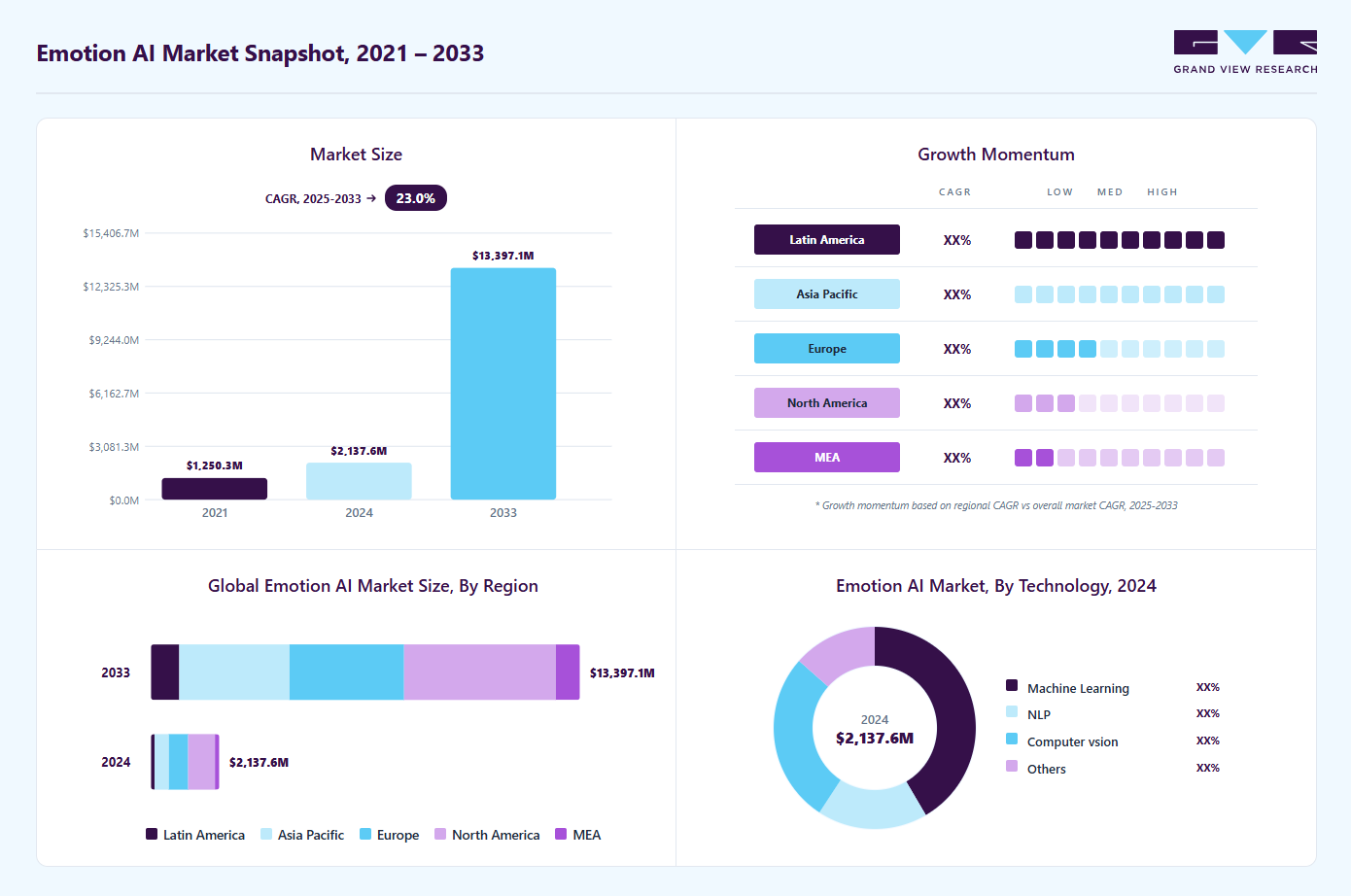
The global emotion AI market size was estimated at USD 2,137.5 million in 2024 and is projected to reach USD 13,397.1 million by 2033, growing at a CAGR of 22.9% from 2025 to 2033. The growing need for AI and machine learning model advancements is anticipated to significantly accelerate market growth. The need for personalized customer experiences drives the market through various channels such as websites, social media, and in-store customer interactions.
 Source: Grand View Research, IR Documents, Primary Interviews, Paid DatabasesTo learn more about this report,
 Download Free Sample Report
 Key Market Trends & Insights
- North America dominated the global emotion AI market with the largest revenue share of 39.2% in 2024.
- The emotion AI market in the U.S. led the North America market and held the largest revenue share in 2024.
- By component, the solution segment led the market, holding the largest revenue share of 57.2% in 2024.
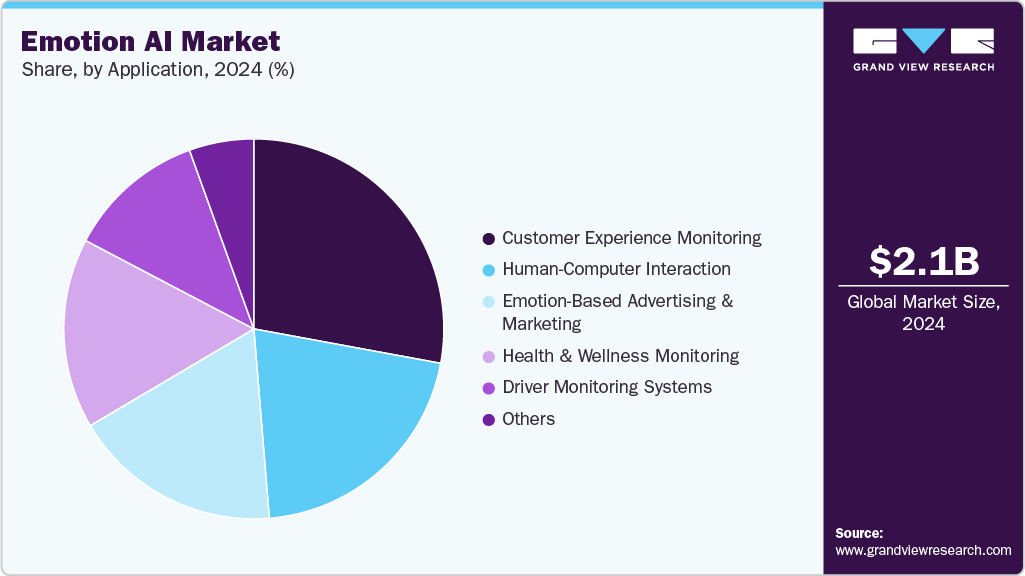
- By application, the customer experience monitoring segment held the dominant position in the market and accounted for the leading revenue share of 27.9% in 2024.
- By application, the driver monitoring systems segment is expected to grow at the fastest CAGR of 26.7% from 2025 to 2033.
Market Size & Forecast
- 2024 Market Size: USD 2,137.5 Million
- 2033 Projected Market Size: USD 13,397.1 Million
- CAGR (2025-2033): 22.9%
- North America: Largest market in 2024
Three ways to get this report
Buy it, customize it, or ask a question.Ask an Analyst
Analyst response in 1 business day
- AccessReport author, directly
- Reply timeWithin 1 working day
- No sales callDirect answer only
- FormatEmail reply
- CostFree, no cost
Get the Full Report
What the study covers
- FormatsPDF · Excel · Dashboard
- Timeline2025–2033 annual, 2024 base
- Coverage20+ countries, 5 regions
- Companies10+ key players profiled
Customize the Report
20% free customization
- IncludeCountries, segments, points
- TailorTo your product definition
- ExtendDeeper competitor detail
- OrA fully bespoke study
- Turnaround5–10 working days
The market is driven as it allows various companies to detect and interpret customer emotions through multiple mediums, including websites, social media platforms, and physical stores for shopping and other activities. Emotion AI helps diverse businesses deliver personalized insights or recommendations, which provides better and improved customer service through targeted marketing campaigns, resulting in brand loyalty and customer satisfaction. Various sectors, such as the retail and e-commerce sectors, are experiencing the benefits of this technology by using Emotion AI to enhance shopping experiences and better understand consumer sentiment while shopping.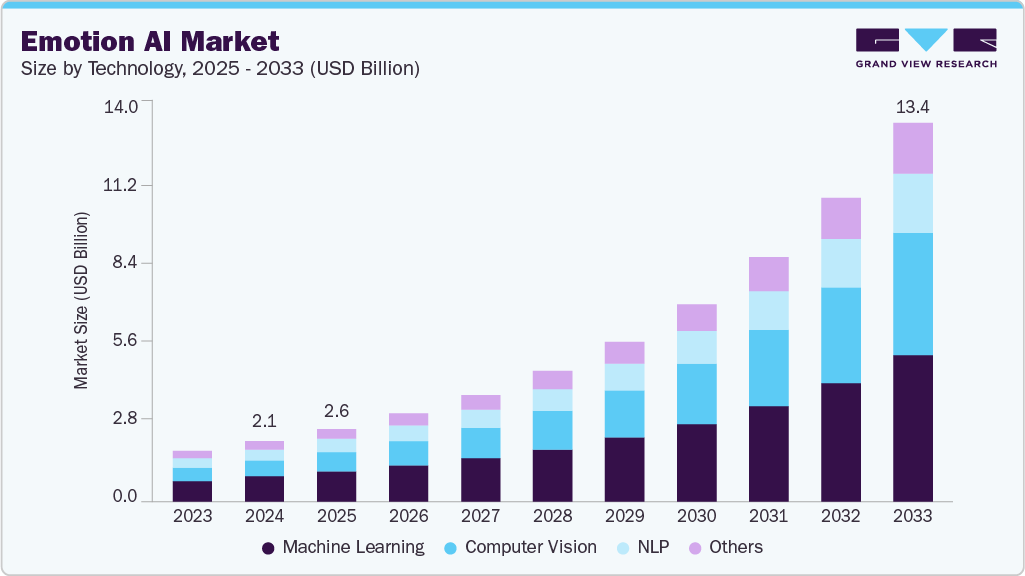 To learn more about this report, Download Free Sample Report
 Other market drivers are the increasing need for advancements in AI algorithms and machine learning techniques that have significantly improved the precise and efficient recognition and analysis of human emotions. As the demand for the emergence of multimodal AI rises, which basically integrates facial expressions, voice recognition, and biometric signals, many more have improved accuracy, offering a clearer and smoother understanding of human emotions to AI. This technology of emotion AI is increasingly being integrated into vehicles to detect signs of driver tiredness, distraction, and stress, which improves overall road safety by reducing any accidents and incidents that might happen. These systems can send alerts or take safety measures to prevent accidents that might occur due to the emotional or cognitive impairment of the driver.
Moreover, factors driving the market are the increasing integration with technologies like augmented and virtual reality (AR and VR), enhancing user experiences by experiencing digital environments in real time based on human emotional responses, resulting in more interactive, engaging, and emotionally immersive experiences. Emotion AI contributes to the development of ethical, empathetic AI that can recognize and respect human emotions, reduce bias, and encourage healthier human-AI interactions. Furthermore, the widespread adoption of wearable devices and IoT sensors capable of detecting physiological and behavioral signals is also anticipated to drive the growth of emotion-aware applications. These technologies enable continuous, real-time emotion monitoring, allowing for more personalized and context-sensitive user experiences.
Component Insights
The solution segment led the market in 2024, accounting for over 57.2% of global revenue. The growth is driven by the various software and platforms used to analyze human emotions, allowing businesses to make better decisions to achieve and enhance their targets and audience. Emotion recognition software uses deep learning and computer vision to understand and analyze facial expressions and identify emotions in real time. It is widely used in security, retail, and healthcare applications. Multimodal emotion analysis platforms aggregate multiple data types, including text, voice, and visual inputs, with the help of complex algorithms and agents, offering a more real-time and context-sensitive emotional analysis.
The services segment is expected to grow at the highest CAGR during the forecast period as it includes integration & customization, emotion data annotation & labeling, model training & optimization, and Emotion AI as a Service (EAIaaS), which is majorly driven by the demand for accurate, context-aware emotional analysis and efficient deployment. Integration & Customization allows businesses to install emotion AI into various applications through secured APIs and SDKs, ensuring the technology works properly with the specific operational needs and enhances user engagement in real time. Emotion data annotation & labeling helps create high-quality training datasets by precise facial expressions, gestures, and emotional context, which are essential for improving model accuracy and performance. Model training & optimization uses these interpreted datasets to enhance AI algorithms, allowing them to better recognize the complex emotional patterns across different data types. Furthermore, EAIaaS provides flexible, cloud-based emotion AI solutions that lower the risk of any threat and are saving, allowing organizations to implement advanced emotion recognition tools that support faster innovation and vast adoption of emotion AI across industries such as healthcare, marketing, and customer service.
Technology Insights
The machine learning segment accounted for the largest market revenue share in 2024, due to its ability to process large, different datasets with diverse data types to identify emotional signals such as facial micro-expressions, voice inflections, and physiological indicators, allowing for accurate and real-time emotion recognition. The deep learning algorithms, such as CNN and transfer learning, predict accurate emotion detection with diverse data types, including facial expressions, body structure, and speech recognition. Integrating machine learning in the business enhances the understanding of complex emotional value, enabling AI systems to respond with greater empathy and awareness in use cases such as healthcare and automotive safety.
The computer vision segment is expected to grow at the highest CAGR over the forecast period, driven by the cutting-edge facial detection and recognition technologies that enable detailed analysis of micro-expressions and emotional indicators. Computer vision accurately classifies emotions by extracting complex facial features such as action units and texture patterns. When combined with behavioral data in multimodal frameworks, emotion recognition becomes stronger, especially in real-time and dynamic scenarios like in-vehicle monitoring to avoid incidents. These advanced capabilities support a wide range of applications, including personalized media, healthcare diagnostics, public safety, and inbuilt human-machine interactions, establishing computer vision as a key component in decoding and responding to human emotions.
Application Insights
The customer experience monitoring segment accounted for the largest market revenue share in 2024, driven by its ability to track and interpret customer emotions in real time across various interaction points such as retail stores and online shopping. This real-time emotional awareness enables easy identification and resolution of issues, allowing businesses to respond quickly based on emotions like frustration or satisfaction of the customers. Emotion AI also provides adaptive interfaces that adjust support and communication in response to the customer’s emotional state, strengthening engagement and loyalty of the customers for the business, such as combining voice rhythm, facial expressions, and text, which provides deep analysis, personalized predictive experience, and strategies for better customer service.
 To learn more about this report, Download Free Sample Report
 The driver monitoring systems segment is anticipated to grow at the highest CAGR during the forecast period, driven by its ability to detect minute emotional and cognitive states of mind in real time, improving both road safety and driver comfort. These systems monitor facial expressions, the motion of eyes, and head movement to identify signs of distraction, drowsiness, or risky behaviors like phone usage or eating while driving. Emotion AI also enables vehicles to deliver personalized responses, such as adjusting cabin settings or sending alerts, to help drivers stay attentive and focused while driving. Moreover, this segment is important in managing transitions in semi-autonomous vehicles by evaluating driver alertness and potential impairment, thereby enhancing the safety and efficiency of vehicle operations in terms of both personal and business needs.
Regional Insights
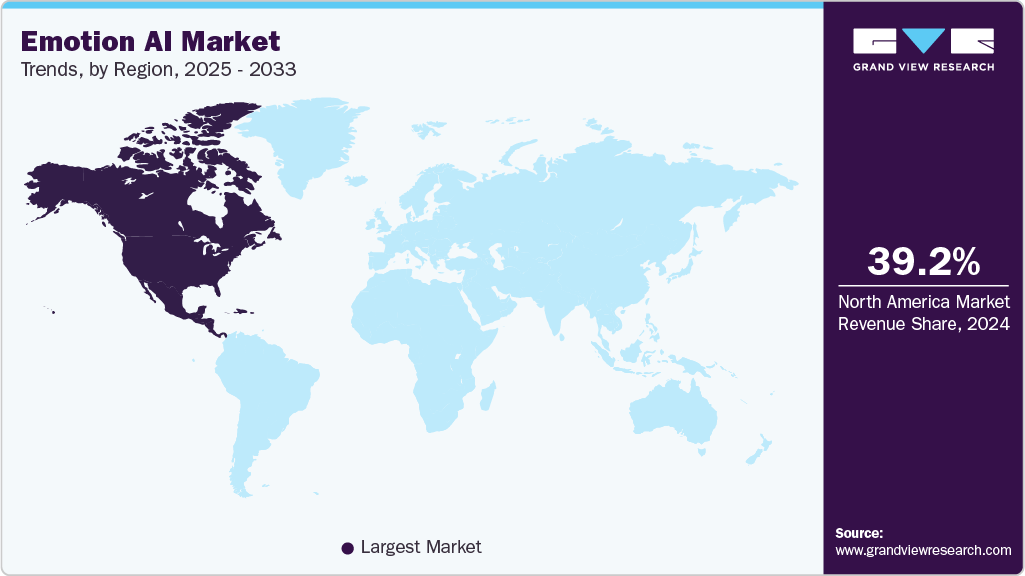
North America dominated the emotion AI industry with a revenue share of over 39.2% in 2024, driven by the advanced technological ecosystem and strong focus on innovation, with significant investments from both the private sector and government initiatives promoting AI development and ethical implementation. The presence of leading AI companies such as Google, IBM, and Microsoft fuels continuous advancements, while widespread adoption across industries like healthcare, automotive, retail, and customer service drives growing demand. North America's early hold of AI, its strong digital infrastructure, and supportive regulatory environment create ideal conditions for the rapid expansion and integration of Emotion AI solutions to enhance customer experiences and operational performance.
 To learn more about this report, Download Free Sample Report
 U.S. Emotion AI Market Trends
The emotion AI market in the U.S. is expected to grow significantly in 2024, driven by its growing use in workplace settings to improve the mental healthcare of employees, where companies aim to boost employee performance, support well-being, and enhance recruitment through emotional data analysis. The U.S. innovation landscape strongly focuses on mental health monitoring and emotional detection. Yet, debates continue over the technology's accuracy and societal implications. These factors contribute to an ongoing advancement for responsible innovation, assessing real-world impacts, and safeguarding individuals’ emotional privacy and autonomy using Emotion AI.
Europe Emotion AI Market Trends
The emotion AI market in Europe is witnessing steady growth over the forecast period, due to the widespread adoption in industries such as retail, e-commerce, and healthcare, where the technology is used to enhance customer engagement and support mental health initiatives. The market is growing in the region due to its expanding online user base and high e-commerce activity, which raises demand for emotion AI solutions. The region also benefits from ongoing automation efforts and strategic data utilization, contributing to improved product quality and operational effectiveness. Furthermore, Europe's commitment to specialized education and training is represented by programs like EMAI4EU, which supports the growth of a skilled workforce in the Emotion AI field.
Asia Pacific Emotion AI Market Trends
The emotion AI market in the Asia Pacific region is anticipated to register the highest CAGR over the forecast period, led by China, India, South Korea, and Japan, where strong government initiatives are increasing the demand of transformation in the AI in emotions field for sectors such as healthcare, defense, and education. For instance, in June 2025, AWS launched an Asian Pacific innovation hub to boost cloud and AI advancements, targeting startups, businesses, and public sector organizations. The hub is designed to offer access to the latest technologies, training programs, and collaborative opportunities to accelerate digital transformation across various industries. This initiative underscores AWS’s dedication to improving a dynamic tech ecosystem in the region, promoting the fast development and implementation of AI-driven solutions.
Key Companies & Market Share Insights
Some key companies in the emotion AI industry include Smart Eye, Realeyes, Microsoft, IBM, and Tobii.
-
Smart Eye operates in Human Insight AI, leveraging cutting-edge technology through its acquisitions of Affectiva and iMotions to transform Emotion AI across various sectors. The company’s solutions use advanced computer vision and machine learning to scientifically analyze human emotions, facial expressions, and behavior. In the automotive industry, Smart Eye’s Emotion AI enhances safety and promotes human-centric mobility, while in fields like media, market research, and behavioral science, it delivers valuable insights into consumer engagement. With over 25 years of expertise and over 300 automotive design wins, Smart Eye offers integrated hardware and software solutions worldwide, driving innovation that connects humans and machines to create safer, more personalized user experiences.
-
Realeyes is an Emotion AI company that utilizes webcam-based computer vision to analyze human identity, attention, and emotions to make digital experiences more emotionally intelligent. Originating from Oxford University, Realeyes supports clients, including top brands, agencies, and media firms, by leveraging the largest culturally diverse AI training dataset. Its facial coding technology allows for real-time emotion tracking in digital content, enhancing advertising performance, wellness applications, and fraud detection.
Key Emotion AI Companies:
The following are the leading companies in the emotion AI market. These companies collectively hold the largest market share and dictate industry trends.
- IBM
- Microsoft
- AWS
- Smart Eye
- Emotient (Apple)
- Realeyes
- Affectiva (Smart Eye Group)
- Tobii
- Cogito Corp
Recent Developments
-
In September 2024, Affectiva introduced a calibration-free eye-tracking feature that streamlines the eye-tracking process by eliminating traditional calibration steps. This innovation greatly enhances user experience in market research by enabling accurate tracking via standard webcams on laptops and mobile devices, no specialized hardware required, thereby minimizing interruptions and reducing survey durations. By combining Affectiva’s Emotion AI with Smart Eye’s technology, the solution delivers comprehensive insights into viewer attention and emotional responses, helping to make a significant step forward in merging eye tracking with Emotion AI, paving the way for wider adoption and deeper analysis of consumer behavior.
-
In January 2024, Smart Eye introduced its Emotion AI Prompt Engine, which combines advanced in-vehicle sensing with LLM to deliver more considerate and engaging driving experiences while improving road safety. The company also featured its interior sensing AI, driver monitoring system software, and a synthetic data generation tool that uses virtual avatars to support AI training. Smart Eye focused its strategic partnerships with major automotive players like Aptiv, Cerence, and Forvia, showcasing cutting-edge human-machine interface innovations.
-
In January 2023, Cogito introduced major upgrades to its Conversation AI platform, enhancing real-time support and coaching for contact center agents. The improved system integrates advanced Emotion AI and sentiment analysis models that recognize over 200 vocal and behavioral cues, delivering instant guidance and resource prompts during live calls. Key additions include a self-service admin portal for managing topics, automatic call transcription with emotional insights, and advanced PCI/PII redaction to ensure data security.
Emotion AI Market Report Scope
Report Attribute
Details
Market size value in 2025
USD 2,576.4 million
Revenue forecast in 2033
USD 13,397.1 million
Growth rate
CAGR of 22.9% from 2025 to 2033
Base year for estimation
2024
Actual data
2021 - 2023
Forecast period
2025 - 2033
Quantitative units
Revenue in USD million/billion & CAGR from 2023 to 2033
Report coverage
Revenue forecast, company ranking, competitive landscape, growth factors, and trends
Segments covered
Component, technology, application, region
Regional scope
North America; Europe; Asia Pacific; Latin America; MEA
Country scope
U.S.; Canada; UK; Germany; France; China; India; Japan; South Korea; Australia; Brazil; Mexico; KSA; UAE; South Africa
Key companies profiled
IBM; Google; Microsoft; AWS; Smart Eye; Emotient (Apple); Realeyes; Affectiva (Smart Eye Group); Tobii; Cogito Corp
Customization scope
Free report customization (equivalent up to 8 analysts working days) with purchase. Addition or alteration to country, regional, and segment scope.
Pricing and purchase options
Avail customized purchase options to meet your exact research needs. Explore purchase options
Global Emotion AI Market Report Segmentation
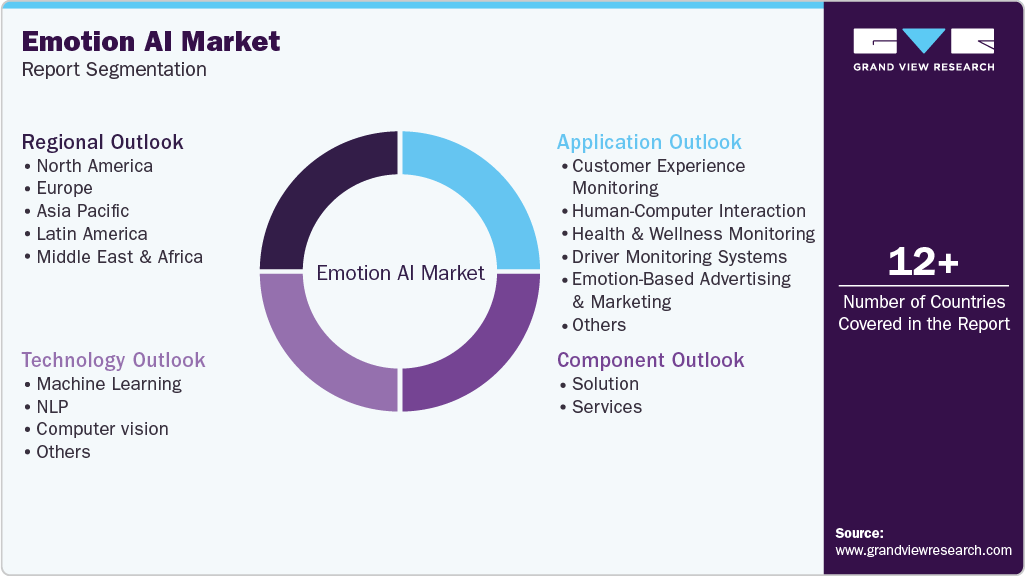
This report forecasts revenue growth on global, regional, and country levels and provides an analysis of the industry trends in each of the sub-segments from 2021 to 2033. For this study, Grand View Research has segmented the global emotion AI market report based on component, technology, application, and region:
 To learn more about this report, Download Free Sample Report
 -
Component Outlook (Revenue, USD Million, 2021 - 2033)
-
Solution
-
Services
-
-
Technology Outlook (Revenue, USD Million, 2021 - 2033)
-
Machine Learning
-
NLP
-
Computer vision
-
Others
-
-
Application Outlook (Revenue, USD Million, 2021 - 2033)
-
Customer Experience Monitoring
-
Human-Computer Interaction
-
Health & Wellness Monitoring
-
Driver Monitoring Systems
-
Emotion-Based Advertising & Marketing
-
Others
-
-
Regional Outlook (Revenue, USD Million, 2021 - 2033)
-
North America
-
U.S.
-
Canada
-
Mexico
-
-
Europe
-
UK
-
Germany
-
France
-
-
Asia Pacific
-
China
-
India
-
Japan
-
South Korea
-
Australia
-
-
Latin America
-
Brazil
-
-
Middle East and Africa
-
KSA
-
UAE
-
South Africa
-
-
Frequently Asked Questions About This Report
The global emotion AI market size was estimated at USD 2,137.5 million in 2024 and is expected to reach USD 2,576.4 million in 2025.
The global emotion AI market is expected to grow at a compound annual growth rate of 22.9% from 2025 to 2033 to reach USD 13,397.1 million by 2033.
North America dominated the emotion AI market with a share of 39.2% in 2024. The presence of leading AI companies such as Google, IBM, and Microsoft fuels continuous advancements, while widespread adoption across industries like healthcare, automotive, retail, and customer service drives growing demand. North America's early hold of AI, along with its strong digital infrastructure and supportive regulatory environment, creates ideal conditions for the rapid expansion and integration of Emotion AI solutions aimed at enhancing customer experiences and operational performance.
Some key players operating in the emotion AI market include IBM; Google; Microsoft; AWS; Smart Eye; Emotient (Apple); Realeyes; Affectiva (Smart Eye Group); Tobii; Cogito Corp
Key factors that are driving the market growth is driven as it allows the various companies to detect and interpret customer emotions through multiple mediums, including websites, social media platforms, and physical stores in the market for shopping and other activities.
About the Author(s)
Next Generation Technologies Research Team
Technology · Next Generation TechnologiesThis report was authored by the next generation technologies research team at Grand View Research - comprising two research analysts, one senior research analyst, and one industry expert - with specialized expertise in the next generation technologies segment of the technology industry. All findings are based on proprietary technology databases, executive interviews, and regulatory analysis, subject to internal peer review prior to publication.
Last Updated:
Speak to Analyst

Customize this report to your needs - add regions, segments, or data points, with 20% free customization.
Or view our licence options:


ISO 9001:2015 & 27001:2022 Certified
We are GDPR and CCPA compliant! Your transaction & personal information is safe and secure. For more details, please read our privacy policy.


