
- Home
- »
- Medical Devices
- »
-
Endobronchial Ultrasound Biopsy Market Report, 2026-2033GVR Report cover

Endobronchial Ultrasound Biopsy Market (2026 - 2033)
Size, Share & Trends Analysis Report By Product (EBUS Scopes, EBUS-TBNA Needles, Ultrasound Processors and Imaging Systems), By Procedures, By End Use (Hospitals, Ambulatory Surgical Centers (ASCs), Specialty Clinics), By Region, And Segment Forecasts
Market Size, 2025
$141.7MMarket Estimate, 2026
$149.9MMarket Forecast, 2033
$214.4MCAGR, 2026–2033
5.3%Endobronchial Ultrasound Biopsy Market Summary
The global endobronchial ultrasound biopsy market size was valued at USD 141.7 million in 2025 and is projected to grow from USD 149.9 million in 2026 to USD 214.4 million by 2033, at a CAGR of 5.3% from 2026 to 2033. The market in Asia Pacific dominated with a revenue share of 43.6% in 2025. This growth can be attributed to the rising prevalence of cancer, increasing technological advancements in endobronchial ultrasound (EBUS) technology, the growing geriatric population, the growing prevalence of respiratory diseases, and the increasing adoption of minimally invasive procedures.
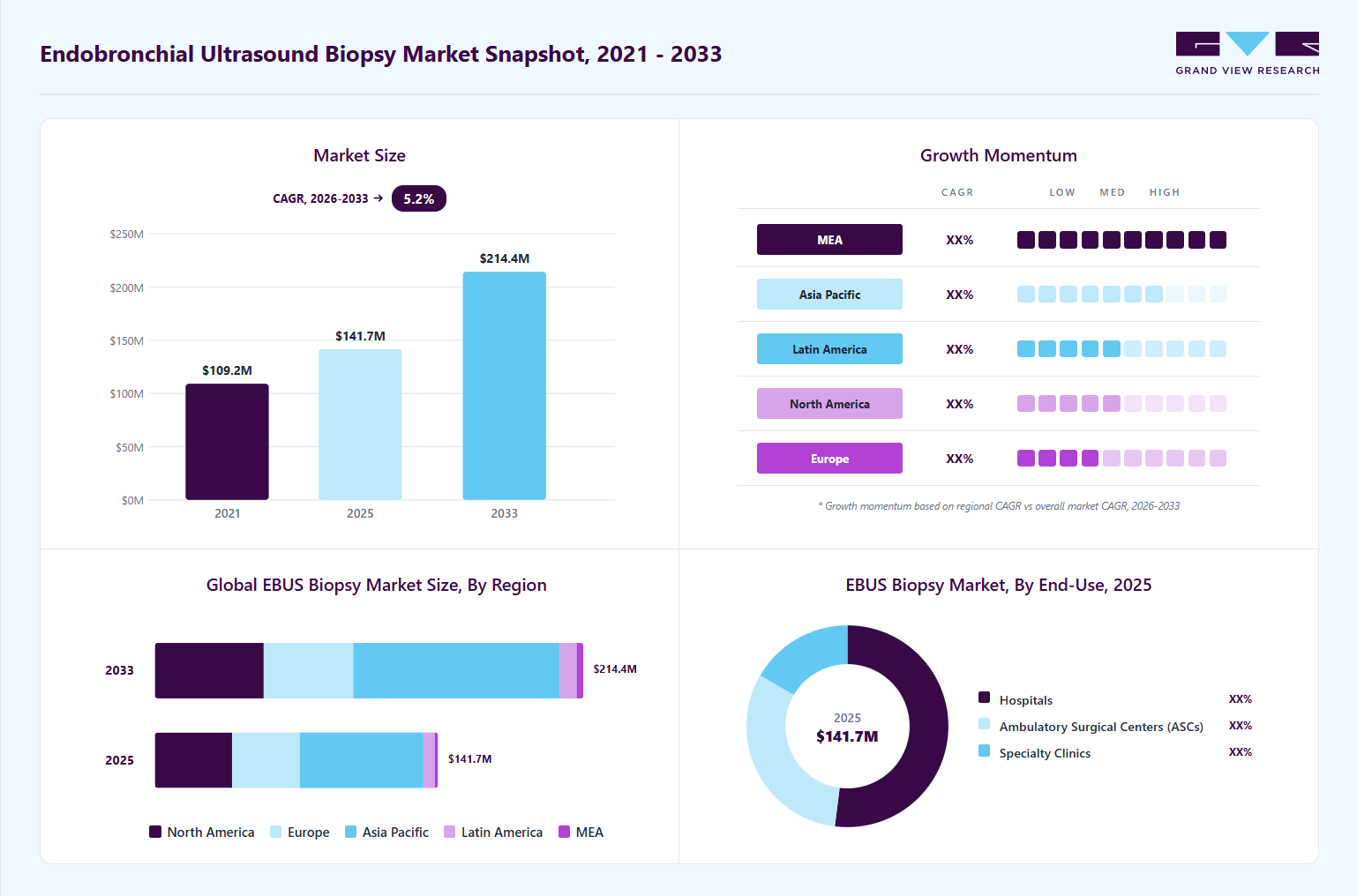 Source: Grand View Research, IR Documents, Primary Interviews, Paid DatabasesTo learn more about this report,
 Download Free Sample Report
Key Market Trends & Insights
- By product: Consumables segment held the largest market share in 2025.
- By procedure: Linear EBUS (CP-EBUS) segment held the largest market share of 92.6% in 2025.
- By end use: Hospitals segment held the largest market share in 2025.
Regional Highlights
- Largest regional market: Asia Pacific (43.6% revenue share, 2025)
- By country: China held notable market share in 2025.
Market Size & Forecast
- Market size in 2025: USD 141.7 Million
- Estimated market size in 2026: USD 149.9 Million
- Projected market size by 2033: USD 214.4 Million
- CAGR (2026-2033): 5.3%
Prism AI by Grand View Research Free to tryAsk a question about the endobronchial ultrasound biopsy marketTry asking✓Every figure cited from GVR research Prefer the report? Download free sample →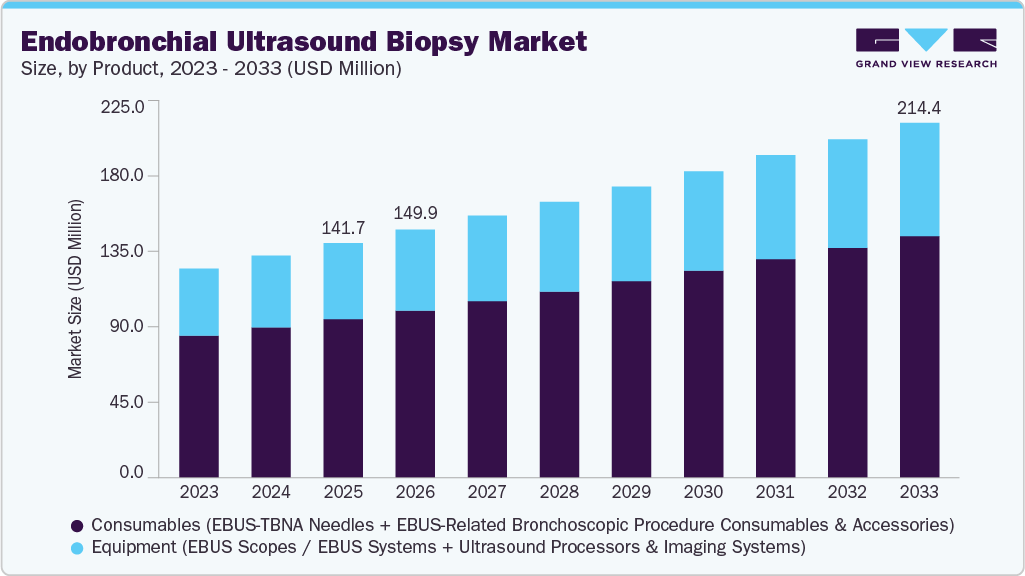 To learn more about this report, Download Free Sample Report
According to the WHO, the global elderly population aged 60 years and above is expected to increase from around 1.1 billion in 2021 to 1.4 billion in 2030.Market Dynamics
The increasing prevalence of lung cancer drives the growth of the endobronchial ultrasound biopsy market as it is one of the leading causes of cancer-related deaths worldwide, with rising incidence rates attributed to factors such as smoking, air pollution, and occupational hazards. For instance, the American Cancer Society projects that in 2025, there will be approximately 226,650 new lung cancer cases in the U.S., with 110,680 cases occurring in men and 115,970 in women. In addition, it is estimated that there will be around 124,730 deaths due to lung cancer, comprising 64,190 men and 60,540 women. As early and accurate diagnosis is critical for improving patient outcomes, there is a growing demand for minimally invasive procedures such as EBUS-guided biopsy. This technique enables precise sampling of lymph nodes and lung lesions, facilitating early-stage detection and staging of lung cancer.
Favorable reimbursement frameworks across several major healthcare systems strongly support the EBUS biopsy market. In the U.S., EBUS procedures, particularly EBUS-guided transbronchial needle aspiration (EBUS-TBNA), are covered by Medicare and most private insurance plans, making the technology financially accessible to both providers and patients. Commonly used CPT codes include 31652 (EBUS-TBNA, single site) and 31653 (multiple sites), with average reimbursements ranging from USD 600 to USD 1,200 per procedure, depending on complexity and setting. While CP-EBUS is more frequently utilized for central airway diagnostics, RPEBUS has gained traction in peripheral pulmonary lesion biopsy and is reimbursed when used in conjunction with bronchoscopy. Countries like Japan and Germany offer structured reimbursement through national health insurance and DRG systems, further reducing the economic barriers to technology adoption.
The high cost of EBUS systems and associated procedures remains a significant barrier to wider adoption, particularly in resource-limited areas and emerging markets. For instance, the cost of an EBUS test can range from around USD 3,250 to USD 8,500 in the U.S. This cost may vary depending upon the location and facility chosen. Smaller hospitals and diagnostic clinics often lack the budget to invest in advanced equipment, limiting access to EBUS in rural or underdeveloped regions.
Market Characteristics
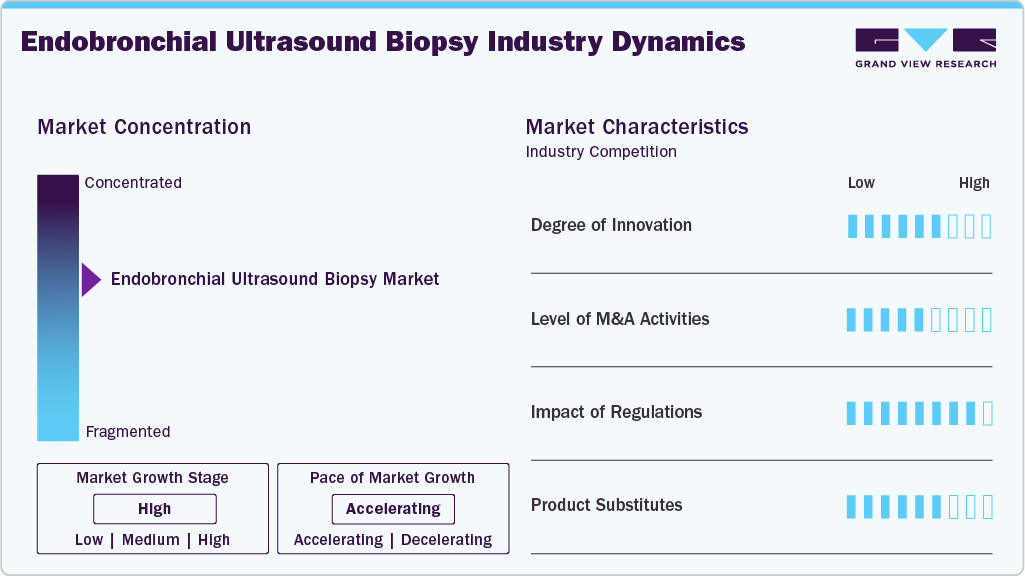
The chart below illustrates the relationship between market concentration, industry characteristics, and industry participants. The x-axis represents the level of industry concentration, ranging from low to high. The y-axis represents various industry characteristics, including industry competition, impact of regulations, level of partnerships & collaborations activities, degree of innovation, and regional expansion. For instance, the endobronchial ultrasound biopsy market is slightly fragmented, with many product & service providers entering the market. The degree of innovation, the level of partnerships & collaboration activities, and the impact of regulations on the industry is high. However, the regional expansion observes moderate growth.
The endobronchial ultrasound (EBUS) biopsy market is witnessing significant innovation as market players introduce advanced products and accessories to meet the increasing demand for effective EBUS procedures and improving patient outcomes. For instance, in September 2023, Broncus Medical launched the BioStar Transbronchial Aspiration Needle (TBNA) for minimally invasive lung cancer diagnostics. It integrates with endobronchial ultrasound procedures, offering various gauge options and an advanced design for reduced tissue disruption and improved accuracy.
 To learn more about this report, Download Free Sample Report
The endobronchial ultrasound (EBUS) biopsy market is expected to witness significant partnership and collaboration activities from companies to enhance technological innovation and expand their market presence. Moreover, collaborations with healthcare providers also drive the adoption by promoting minimally invasive procedures for lung cancer and respiratory disease diagnosis.
Regulations play a critical role in shaping the endobronchial ultrasound biopsy industry, influencing product approvals, market access, and adoption rates. Stringent regulatory requirements from agencies such as the FDA, EMA, and others ensure product safety and efficacy. Compliance with evolving guidelines related to medical device classification, clinical trial requirements, and post-market surveillance is essential for market entry and expansion. However, excessive regulatory burdens can limit competition, potentially driving up costs for healthcare providers.
Traditional diagnostic methods such as conventional bronchoscopy, Transthoracic Needle Aspiration (TTNA), and surgical biopsy serve as potential substitutes for the endobronchial ultrasound biopsy industry. While TTNA offers direct access to peripheral lung lesions, it carries a higher risk of pneumothorax. Similarly, surgical biopsy, including mediastinoscopy, provides a definitive diagnosis but is invasive, costly, and associated with longer recovery times.
The endobronchial ultrasound biopsy industry is witnessing growth across various regions, driven by increasing lung cancer prevalence, advancements in minimally invasive diagnostic techniques, and improved healthcare infrastructure. In addition, favorable regulatory approvals and strategic partnerships between global manufacturers and local distributors are accelerating market penetration.
Moreover, market players are expanding their production capabilities in various regions to meet the increasing demand for these products. For instance, in October 2024, GE Healthcare announced the expansion of its production of medical imaging equipment in Waukesha County, Wisconsin, U.S., including MRI and ultrasound machines, to meet rising demand. The expansion aims to enhance healthcare delivery and innovation, responding to the growing need for advanced tools in hospitals and clinics worldwide.
Case Study
Successful Diagnosis of Peripheral Pulmonary Nodule Using Advanced Radial EBUS-Guided Bronchoscopy:
Overview:
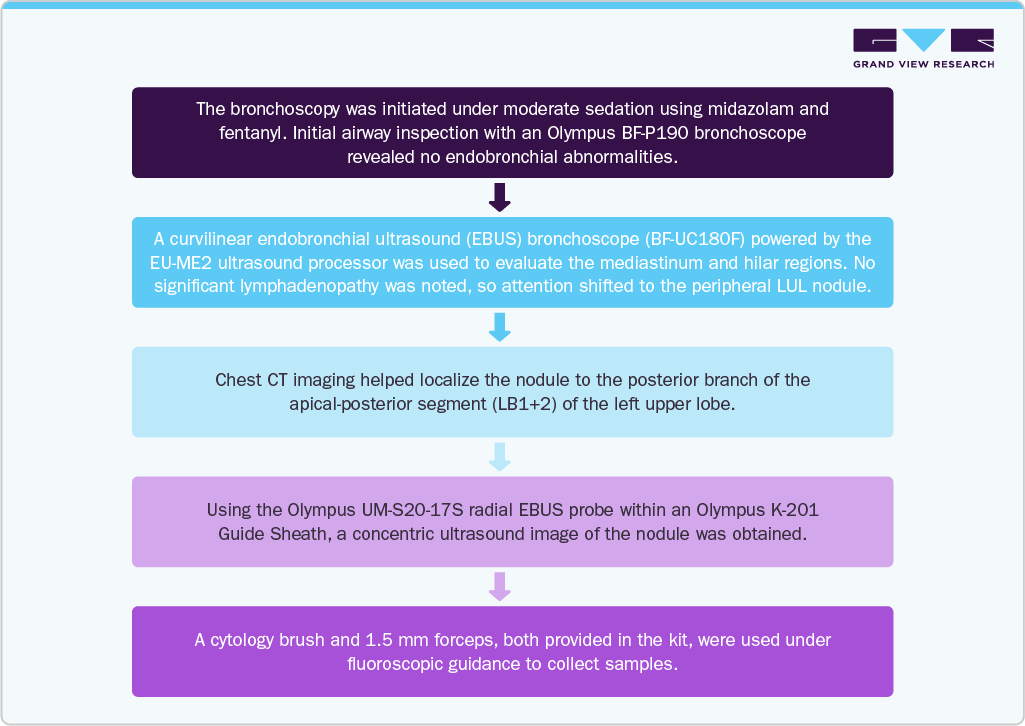
A 74-year-old female was referred for evaluation of a 1.2 cm left upper lobe (LUL) pulmonary nodule discovered during routine imaging surveillance for a suspected thymoma. Thoracic Surgery requested a tissue biopsy prior to considering surgical resection. A PET-CT scan showed no abnormalities apart from the LUL nodule, prompting the scheduling of a bronchoscopy procedure.
 To learn more about this report, Download Free Sample Report
Outcome:
Rapid on-site cytological evaluation (ROSE) of the brushing confirmed non-small cell carcinoma, and subsequent histopathology identified the lesion as squamous cell carcinoma. This case highlights the value of advanced bronchoscopic techniques in safely reaching peripheral pulmonary nodules. The smaller diameter BF-P190 enabled navigation through narrow airways, while the Guide Sheath served as a stable conduit for repeated sampling. The rotation of the bronchoscope's insertion tube also helped reduce operator fatigue, facilitating efficient and accurate biopsy.
Product Insights
Consumables (EBUS-TBNA Needles + EBUS-Related Bronchoscopic Procedure Consumables and Accessories) segment dominated the market in 2025 with the largest revenue share. As healthcare providers prioritize early and accurate diagnosis, the demand for EBUS-guided transbronchial needle aspiration procedures are increasing. Technological advancements, including improved needle design for better sample collection and reduced patient discomfort, are further contributing to the segment growth. Market players are focusing on product innovations, such as flexible and fine-gauge needles, to enhance procedural efficiency and diagnostic capabilities.
Equipment (EBUS Scopes/EBUS Systems + Ultrasound Processors and Imaging Systems) is expected to grow significantly over the forecast period. The growth of this segment is fueled by the increasing global rate of lung cancer, growing clinical guidelines that recommend CP-EBUS for mediastinal staging, and the rising demand for safer, outpatient-friendly diagnostic options. It is widely adopted in tertiary care hospitals, academic medical centers, and specialized pulmonary units across North America, Europe, and the Asia-Pacific region, where CP-EBUS has become an integral part of lung cancer diagnostic pathways.
Procedure Insights
The linear EBUS (CP-EBUS) procedure segment accounted for the largest revenue share, 92.6%, in 2025. This growth is driven by the increasing prevalence of lung cancer, growing preference for minimally invasive diagnostic techniques, and rising utilization of EBUS-guided biopsies in hospitals and specialized pulmonary centers are further support the segment’s dominance. In addition, technological advancements in ultrasound imaging and bronchoscope design have improved procedural efficiency and diagnostic accuracy, contributing to continued market growth.
The Radial Probe EBUS (RP-EBUS) segment is expected to grow at the fastest CAGR over the forecast period. This growth is due to an increase in the diagnosis of peripheral pulmonary lesions and early-stage lung abnormalities. RP-EBUS provides enhanced visualization of small, difficult-to-reach peripheral lung nodules, enabling earlier and more accurate detection of pulmonary diseases. The rising incidence of lung cancer, growing adoption of advanced bronchoscopic procedures, and increasing demand for minimally invasive diagnostic solutions are key factors driving segment growth. Furthermore, ongoing improvements in navigation technologies and integration with guided biopsy systems are expected to expand the clinical applications of RP-EBUS across pulmonary care settings.
End Use Insights
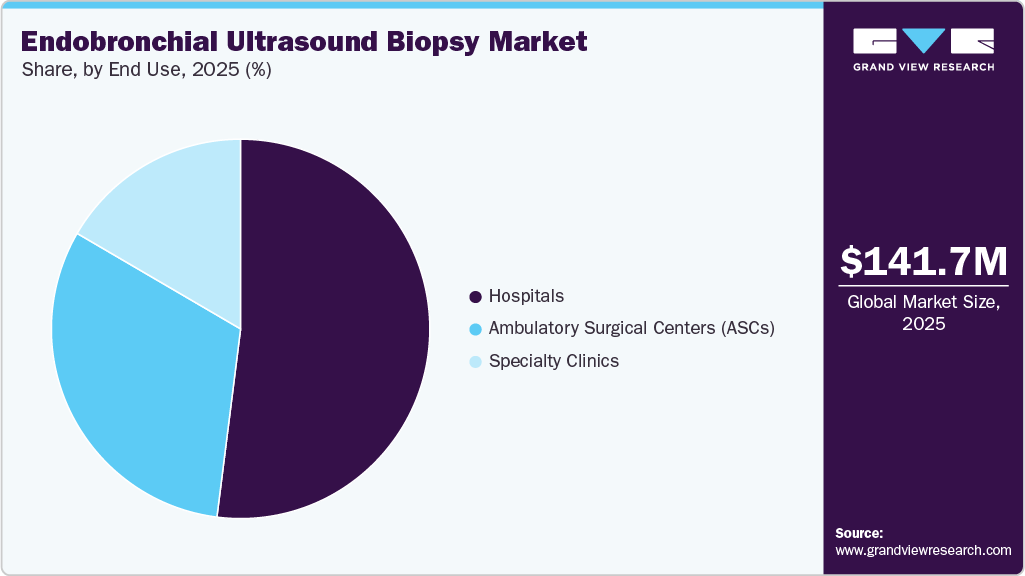
The hospitals segment accounted for the largest revenue share in 2025. Hospitals prioritize EBUS technology due to its high diagnostic accuracy and reduced patient risk compared to traditional biopsy methods. The integration of advanced imaging and robotic-assisted bronchoscopy is further enhancing procedural efficiency. In addition, hospitals benefit from favorable reimbursement policies and government funding for advanced diagnostic technologies, making them the primary adopters of EBUS biopsy systems.
 To learn more about this report, Download Free Sample Report
The ambulatory surgical centers segment is expected to witness the fastest growth over the forecast period. Ambulatory surgical centers offer a lower-cost alternative to hospitals while maintaining high procedural efficiency, making them an attractive option for both patients and payers. Advancements in portable ultrasound technology and improved reimbursement policies for outpatient settings have enabled these facilities to integrate EBUS procedures.
Regional Insights
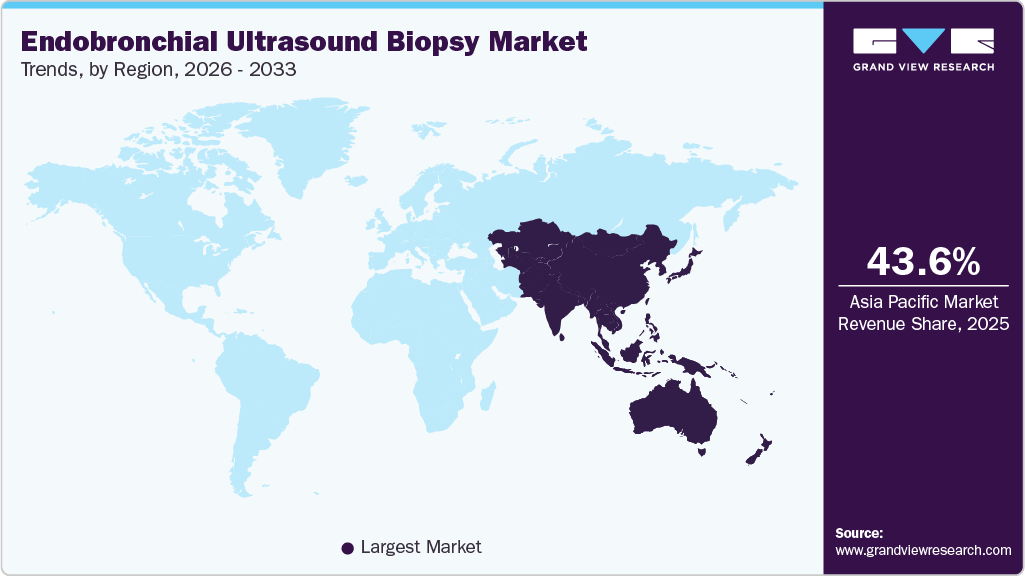
Asia Pacific dominated the endobronchial ultrasound (EBUS) biopsy market with the largest revenue share of 43.6% in 2025, driven by the increasing incidence of lung cancer, greater access to healthcare services, and a rising preference for minimally invasive procedures. Countries such as Japan, Australia, and New Zealand are at the forefront of adopting EBUS technologies, especially Convex Probe EBUS (CP-EBUS) and Radial Probe EBUS (RP-EBUS). Clinicians and healthcare systems are increasingly looking for alternatives to surgical biopsies, with real-world clinical evidence playing a crucial role in shaping adoption trends.
 To learn more about this report, Download Free Sample Report
Japan Endobronchial Ultrasound Biopsy Market Trends
Endobronchial ultrasound (EBUS) biopsy market in Japan is witnessing growth driven by the rising incidence of lung cancer, which remains one of the leading causes of cancer-related deaths in the country. The increasing demand for minimally invasive diagnostic procedures is further driving market expansion, as EBUS offers accurate tissue sampling with reduced patient risk compared to traditional surgical biopsies. In addition, the growing adoption of advanced imaging technologies in hospitals, coupled with government initiatives to strengthen early cancer detection programs, is accelerating the uptake of EBUS systems. Rising healthcare expenditure and the presence of specialized centers are also contributing to sustained market.
Endobronchial ultrasound biopsy market in China is driven by the rising incidence of lung cancer and the country's ongoing healthcare modernization efforts. China's healthcare system is undergoing significant evolution, with increased investments in medical technology and infrastructure. The government has also made efforts to improve access the advanced medical procedures, encouraging the widespread use of diagnostic tools such as EBUS. As more hospitals and medical centers across China integrate EBUS into their lung cancer treatment procedures, the market for endobronchial ultrasound biopsy in China is expected to witness growth over the forecast period.
North America Endobronchial Ultrasound Biopsy Market Trends
North America held the second largest share in the Endobronchial ultrasound biopsy market in 2025, owing to the increasing prevalence of respiratory diseases, such as lung cancer, and the rising demand for minimally invasive diagnostic techniques. Countries in North America have prioritized early detection and staging of lung cancer, supported by clinical guidelines that endorse EBUS-guided procedures, especially Convex Probe EBUS (CP-EBUS), for mediastinal and hilar lymph node evaluation. The widespread use of low-dose CT screening programs in the U.S., coupled with Centers for Medicare & Medicaid Services (CMS) reimbursement policies, has further encouraged hospitals and health systems to adopt EBUS as a standard diagnostic tool.
The growth of the U.S. endobronchial ultrasound biopsy market is being driven by the increasing prevalence of respiratory diseases, which is one of the leading causes of death in the country. According to the Centers for Disease Control and Prevention (CDC), around 4.3% of adults aged 18 and over were estimated to be living with COPD, emphysema, or chronic bronchitis in 2023. As more patients seek early diagnosis and treatment, the demand for minimally invasive procedures such as EBUS is expected to witness growth over the forecast period.
Europe Endobronchial Ultrasound Biopsy Market
Endobronchial Ultrasound (EBUS) biopsy market in Europe is witnessing notable growth, primarily driven by the rising prevalence of lung cancer and increasing demand for minimally invasive diagnostic tools. For instance, according to Eurostat in 2021, 226,500 people died due to lung cancer in Europe resulting to around 19.8% of all deaths by cancer. EBUS has become a preferred diagnostic modality across many European healthcare systems, particularly due to its ability to obtain real-time images and facilitate precise needle aspiration of lymph nodes and masses in the mediastinum and lungs. The aging population and heightened awareness regarding early lung cancer detection are also fueling the demand for such advanced procedures.
Endobronchial ultrasound (EBUS) biopsy market in UK is experiencing steady growth, largely driven by the increasing incidence of lung cancer and the country’s focus on early and accurate diagnosis of thoracic diseases. The National Health Service (NHS) has placed significant emphasis on early detection of lung abnormalities, which has led to the greater adoption of minimally invasive diagnostic techniques like EBUS. Both Convex Probe EBUS (CP-EBUS) and Radial Probe EBUS (RP-EBUS) are now integral tools in tertiary care centers and specialist hospitals for mediastinal staging and diagnosing peripheral lung lesions.
Endobronchial ultrasound (EBUS) biopsy market in Germany is experiencing strong momentum, driven by several converging factors including launch of national low-dose CT (LDCT) lung cancer screening program targeting high-risk individuals, marking a major milestone in early cancer detection in July 2024. The initiative includes double-reading mandatory review of all scans by two radiologists (uses AI support and focuses on individuals aged 50-75 with significant smoking histories. This will naturally increase referrals for diagnostic confirmation via EBUS procedures. In academic and specialized centers across Germany.
Latin America Endobronchial Ultrasound Biopsy Market
Endobronchial ultrasound biopsy market in Latin America is driven by the increasing prevalence of lung cancer and the demand for more advanced diagnostic solutions across the region. Healthcare systems in Latin America are increasingly focused on reducing the costs associated with invasive surgeries and lengthy hospital stays, indicating EBUS as a cost-effective solution. The combination of rising cancer rates, the adoption of advanced medical technologies, and a growing emphasis on early and accurate diagnosis is expected to drive the market growth over the forecast period.
Middle East & Africa Endobronchial Ultrasound Biopsy Market
The growth of endobronchial ultrasound biopsy market of Middle East & Africa is attributed to the development of health amenities and increased funding toward medical research and technology. Further, The GCC countries are new to clinical research, but with technological advancements and increasing digitization, the countries are overcoming the challenges faced on the technological front and are witnessing significant growth.
Key Endobronchial Ultrasound Biopsy Company Insights
The Endobronchial Ultrasound (EBUS) Biopsy market is shifting towards consolidation. Key players such as Olympus Corporation, FUJIFILM Holdings, Boston Scientific, Cook Group, and PENTAX Medical dominate the market with dedicated devices including EBUS-biopsy systems, needles, and imaging platforms. These companies are actively expanding their portfolios through product innovation, clinical collaborations, and expanded distribution networks to strengthen global presence. Meanwhile, emerging firms like Praxis Medical, ACE Medical Devices Pvt. Ltd., and Medi-Globe Technologies are gaining visibility by introducing cost-effective, single-use biopsy tools and motorized needle systems tailored for precision lung diagnostics.
Some of the prominent players in endobronchial ultrasound biopsymarket by product category include:
Notable Market Players
Product Equipment
Product Consumables
EBUS Scopes / EBUS Systems
Ultrasound Processors & Imaging Systems
EBUS-TBNA Needles
EBUS-Related Bronchoscopic Biopsy Consumables
- Olympus America (subsidiary of Olympus Corporation.)
- FUJIFILM Holdings Corporation
- PENTAX Medical (a division of HOYA Group)
- Olympus America (subsidiary of Olympus Corporation.)
- FUJIFILM Holdings Corporation
- PENTAX Medical (a division of HOYA Group)
- Boston Scientific Corporation
- Olympus America (subsidiary of Olympus Corporation.)
- Boston Scientific Corporation
- Cook Group
- Praxis Medical
- Medi-Globe Technologies GmbH
- ACE Medical Devices
- Olympus America (subsidiary of Olympus Corporation.)
- CONMED Corporation
- Medtronic
- KARL STORZ
- Boston Scientific Corporation
- Cook Group
Note: While the market players remain similar across category levels, their market presence and competitive positioning vary significantly across individual markets and regions.
Competitive Benchmarking
Operating Strategies
Competitive Edge
Weaknesses
Mature Players: Olympus America (subsidiary of Olympus Corporation.)
- Maintain strong in-house R&D and integrated manufacturing to support EBUS portfolios.
- Leverage global distribution and hospital relationships for recurring demand.
- Focus on incremental innovation while ensuring regulatory compliance.
- Strong brand credibility supported by extensive clinical validation and physician familiarity.
- Comprehensive product ecosystems (scopes, processors, needles) enabling end-to-end procedural solutions.
- Strong regulatory and reimbursement alignment, especially in the U.S.
- High operational and manufacturing costs due to legacy infrastructure and complex product portfolios.
- Slower innovation cycles and limited agility in responding to niche or rapidly evolving clinical needs.
- Reliance on premium pricing, limiting adoption in cost-sensitive settings.
Emerging Players:
- Focus on niche innovation to differentiate in targeted segments.
- Limited distribution and regulatory capabilities in highly regulated markets.
- Focused innovation in consumables and accessories for targeted differentiation.
Recent Developments
-
In September 2025, Olympus Corporation announced the launch of its latest EBUS bronchoscope, BF-UCP190F, across EMEA and major APAC markets to enhance lung cancer diagnosis and staging. The device features a slimmer 5.9 mm outer diameter, wider upward angulation, and improved maneuverability, enabling physicians to access deeper lung regions and perform more precise real-time tissue sampling.
-
In January 2025, Olympus America acquired the distribution business from Sur Medical SpA in Chile, enabling Olympus Latin America to now directly sell, distribute, and service its full medical technology portfolio in-market through its newly established local subsidiary.
"This strategic acquisition of Surmedical’s well established and successful distribution business for Olympus technologies gives Olympus a very strong foundation for operations in Chile.”
- Jose Gaston, President of Olympus Latin America.
-
In September 2024, FUJIFILM Healthcare Europe GmbH announced the compatibility of its ARIETTA 750 FF ENDO ultrasound system with several ultrasound endoscopes and a linear bronchoscope. This system features advanced technologies such as “eFocusing” for improved image clarity and “Carving Imaging” for enhanced visualization.
-
In September 2022, DCC plc acquired Medi‑Globe Technologies GmbH, intended to expand its footprint in single-use minimally invasive procedures across Europe.
"We are delighted to welcome Medi-Globe into the DCC Group. The synergistic acquisition of Medi-Globe significantly expands and enhances DCC Vital’s position in the medical devices sector. It will create a leading international platform in single-use medical devices for minimally invasive procedures, with strong product development capability.”
Donal Murphy, Chief Executive of DCC plc
Endobronchial Ultrasound Biopsy Market Report Scope
Report Attribute
Details
Market size in 2025
USD 141.7 million
Estimated market size in 2026
USD 149.9 million
Projected market size by 2033
USD 214.4 million
Growth rate
CAGR of 5.3% from 2026 to 2033
Actual data
2021 - 2025
Forecast period
2026 - 2033
Quantitative units
Revenue in USD million/billion
Volume in Thousand Units
Procedure Volume in Thousand Procedure
CAGR from 2026 to 2033
Report coverage
Revenue forecast, company ranking, competitive landscape, growth factors, and trends
Segments covered
Product, procedure, end use, and region
Regional scope
North America; Europe; Asia Pacific; Latin America; MEA
Country scope
U.S.; Canada; Mexico; Germany; UK; France; Italy; Spain; Norway; Denmark; Sweden; China; Japan; India; South Korea; Australia; Thailand; Brazil; Argentina; Saudi Arabia; South Africa; UAE; Kuwait
Key companies profiled
PENTAX Medical (a division of HOYA Group); Boston Scientific Corporation; Olympus America (Subsidiary of Olympus Corporation); Cook Group; FUJIFILM Holdings Corporation; Medi-Globe Technologies GmbH (Acquired by DCC Healthcare in October 2022); ACE Medical Devices Pvt. Ltd.; Praxis Medical; CONMED
Customization scope
Free report customization (equivalent up to 8 analysts working days) with purchase. Addition or alteration to country, regional & segment scope.
Pricing and purchase options
Avail customized purchase options to meet your exact research needs. Explore purchase options
Global Endobronchial Ultrasound Biopsy Market Report Segmentation
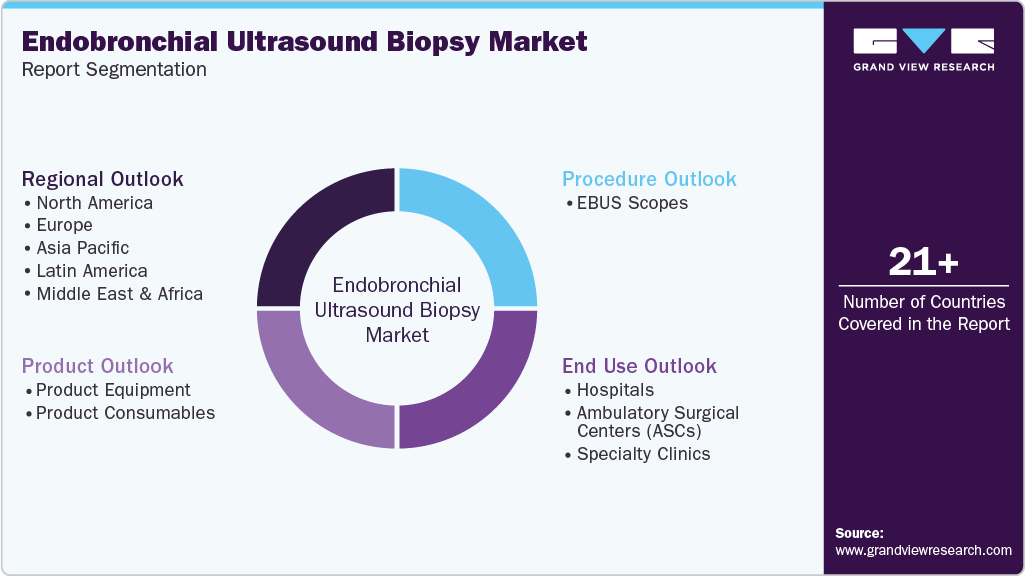
This report forecasts revenue growth at global, regional, and country levels and provides an analysis of the latest industry trends in each of the sub-segments from 2021 to 2033. For this study, Grand View Research has segmented the global endobronchial ultrasound biopsymarket report based on product, procedure, end use, and region.
 To learn more about this report, Download Free Sample Report
-
Product Outlook (Revenue in USD Million, Annual Equipment Sale, Installed Base, 2021 - 2033)
-
Product Equipment
-
EBUS Scopes
-
Convex (CP-EBUS Scope)
-
Radial (RP-EBUS Probe)
-
-
Ultrasound Processors and Imaging Systems
-
-
Product Consumables
-
EBUS-TBNA Needles
-
EBUS-Related Bronchoscopic Procedure Consumables and Accessories
-
Biopsy Forceps
-
Cytology Brushes
-
Cryoprobes
-
Guide Sheaths
-
Accessories (Disposable Suction and Biopsy Valves, Specimen Traps and Collection Accessories, Other Procedure Accessories, etc.)
-
-
-
-
Procedure Outlook (Number of Procedures in Thousand, 2021 - 2033)
-
EBUS Scopes
-
Convex-probe (Linear / CP-EBUS) Scopes
-
By Indication
-
Lung Cancer Staging
-
Sarcoidosis/Others
-
-
-
Radial-probe (RP-EBUS) Scopes
-
-
End Use Outlook (Revenue in USD Million, 2021 - 2033)
-
Hospitals
-
Community Hospitals
-
Academic/Teaching Hospitals
-
Large Multispecialty Hospitals/Networks
-
-
Ambulatory Surgical Centers (ASCs)
-
Independent ASCs
-
Hospital-Affiliated ASCs
-
-
Specialty Clinics
-
-
Regional Outlook (Revenue in USD Million, Annual Equipment Sale, Installed Base, 2021 - 2033)
-
North America
-
U.S.
-
Canada
-
Mexico
-
-
Europe
-
UK
-
Germany
-
France
-
Italy
-
Spain
-
Denmark
-
Sweden
-
Norway
-
-
Asia Pacific
-
China
-
Japan
-
India
-
South Korea
-
Australia
-
Thailand
-
-
Latin America
-
Brazil
-
Argentina
-
-
Middle East and Africa (MEA)
-
South Africa
-
Saudi Arabia
-
UAE
-
Kuwait
-
-
Frequently Asked Questions About This Report
The global endobronchial ultrasound biopsy market size was valued at USD 141.7 million in 2025 and is estimated at USD 149.9 million for 2026.
The global endobronchial ultrasound biopsy market is expected to grow at a CAGR of 5.3% from 2026 to 2033, reaching USD 214.4 million by 2033.
Asia Pacific dominated with a 43.6% revenue share in 2025.
Key players include PENTAX Medical (a division of HOYA Group), Boston Scientific Corporation, Olympus America (Subsidiary of Olympus Corporation), Cook Group, FUJIFILM Holdings Corporation, Medi-Globe Technologies GmbH (Acquired by DCC Healthcare in October 2022), ACE Medical Devices Pvt. Ltd., Praxis Medical, and CONMED
Key factors that are driving the market growth include the rising prevalence of cancer, increasing technological advancements in endobronchial ultrasound (EBUS) technology, the growing prevalence of respiratory diseases, and the increasing adoption of minimally invasive procedures.
The consumables (EBUS-TBNA needles + EBUS-Related bronchoscopic procedure consumables and accessories) segment held the largest revenue share in 2025.
The linear EBUS (CP-EBUS) segment led with a 92.6% revenue share in 2025.
The hospitals segment held the largest revenue share in 2025, while the ambulatory surgical centers segment is the fastest-growing.
About the Author(s)
Medical Devices Research Team
Healthcare · Medical DevicesThis report was authored by the medical devices research team at Grand View Research - comprising two research analysts, one senior research analyst, and one industry expert - with specialized expertise in the medical devices segment of the healthcare industry. All findings are based on proprietary healthcare databases, executive interviews, and regulatory analysis, subject to internal peer review prior to publication.
Last Updated:
Speak to Analyst

Customize this report to your needs - add regions, segments, or data points, with 20% free customization.
Or view our licence options:


ISO 9001:2015 & 27001:2022 Certified
We are GDPR and CCPA compliant! Your transaction & personal information is safe and secure. For more details, please read our privacy policy.


