
- Home
- »
- Pharmaceuticals
- »
-
Epinephrine Market Size And Share, Industry Report, 2033GVR Report cover

Epinephrine Market (2025 - 2033) Size, Share & Trends Analysis Report By Product (Auto-Injectors, Prefilled Syringes & Disposable Injectors), By Distribution Channel (Hospital Pharmacies, Retail Pharmacies, Online Pharmacies), By Region, And Segment Forecasts
Market Size, 2024
$2.9BMarket Estimate, 2026
$3.1BMarket Forecast, 2033
$6.1BCAGR, 2025–2033
8.7%Epinephrine Market Summary
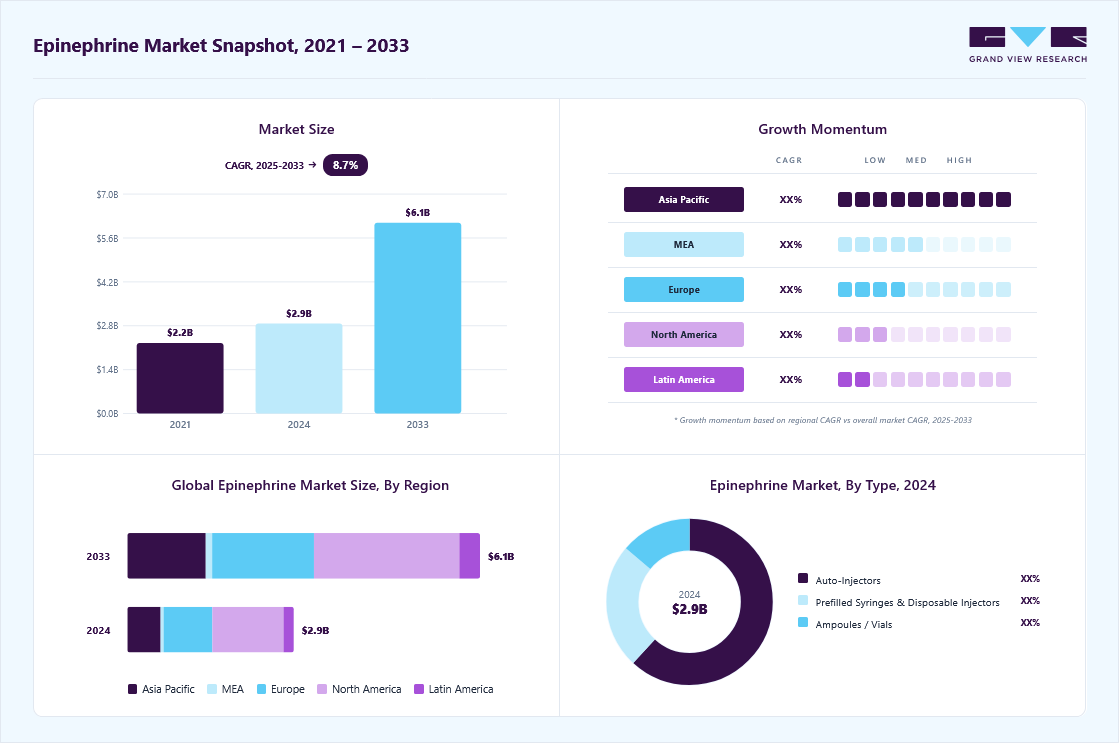
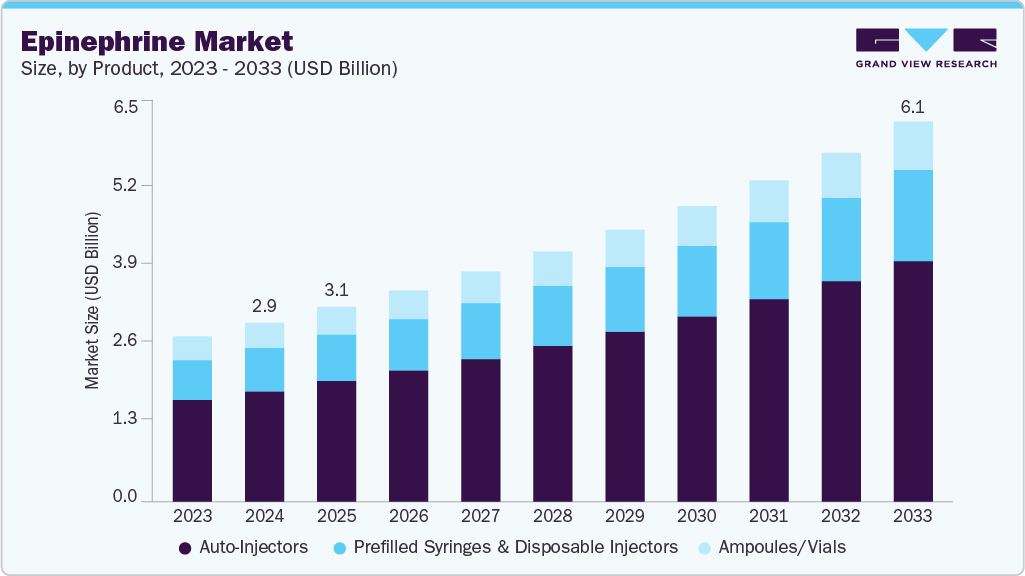
The global epinephrine market size was valued at USD 2.87 billion in 2024 and is projected to reach USD 6.08 billion by 2033, growing at a CAGR of 8.71% from 2025 to 2033. The growth is attributed to rising allergy prevalence, greater public awareness of anaphylaxis, and expanding “stock epinephrine” policies in schools and public venues drive demand.
 Source: Grand View Research, IR Documents, Primary Interviews, Paid DatabasesTo learn more about this report,
 Download Free Sample Report
 Key Market Trends & Insights
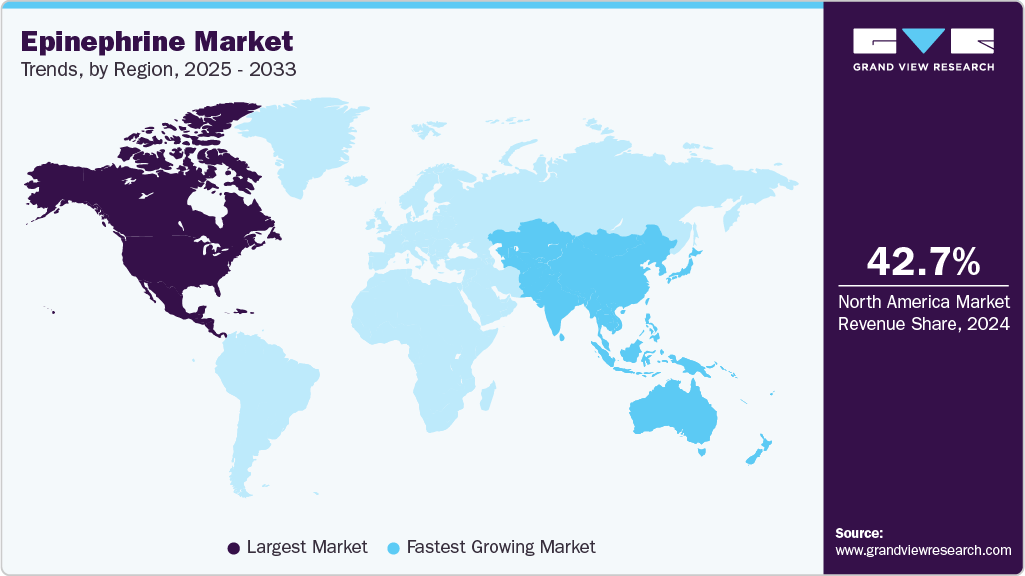
- North America dominated the market with the largest revenue share of 42.73 % in 2024.
- Asia Pacific is expected to grow at the fastest CAGR of 10.0 % over the forecast period.
- By product, the auto-injectors (Epinephrine Auto-Injectors - EAIs) segment accounted for the largest revenue share of 61.76 % in 2024.
- By distribution channel, the retail pharmacies segment accounted for the largest revenue share in 2024.
Market Size & Forecast
- 2024 Market Size: USD 2.87 Billion
- 2033 Projected Market Size: USD 6.08 Billion
- CAGR (2025-2033): 8.71 %
- North America: Largest market in 2024
- Asia Pacific: Fastest growing market
Three ways to get this report
Buy it, customize it, or ask a question.Ask an Analyst
Analyst response in 1 business day
- AccessReport author, directly
- Reply timeWithin 1 working day
- No sales callDirect answer only
- FormatEmail reply
- CostFree, no cost
Get the Full Report
What the study covers
- FormatsPDF · Excel · Dashboard
- Timeline2025–2033 annual, 2024 base
- Coverage20+ countries, 5 regions
- Companies10+ key players profiled
Customize the Report
20% free customization
- IncludeCountries, segments, points
- TailorTo your product definition
- ExtendDeeper competitor detail
- OrA fully bespoke study
- Turnaround5–10 working days
Market trends point toward diversification beyond traditional injectable forms, with strong momentum for needle-free and alternative delivery systems such as intranasal sprays and oral films that promise greater convenience and compliance. Growing awareness of life-threatening anaphylaxis and improvements in healthcare infrastructure are fueling market expansion. In June 2025, a joint report by WHO Europe and the European Respiratory Society estimated that 81.7 million people in the WHO European Region are living with chronic respiratory diseases (CRDs), including asthma and COPD, with many additional cases remaining undiagnosed. This highlights the significant patient population requiring timely intervention.The entry of generics and biosimilar equivalents is intensifying price competition while improving accessibility, prompting branded players to differentiate through smart, connected devices and patient-support programs. Additionally, regional market expansion in emerging economies, strategic partnerships, and supply-chain localization are becoming key focus areas, reflecting an overall trend toward innovation, affordability, and broader public access within the epinephrine segment.
 To learn more about this report, Download Free Sample Report
 Increasing awareness of severe allergic reactions and the rising global prevalence of anaphylaxis are driving demand for epinephrine as a critical emergency treatment. Enhanced education initiatives focusing on recognizing and managing life-threatening allergic episodes have supported this trend.
Market Dynamics
The rising prevalence of severe allergic reactions and anaphylaxis is the key driver fueling market growth. Increasing cases of food allergies, asthma, insect sting allergies, and drug-related hypersensitivity reactions across both children and adults have significantly increased the demand for rapid emergency treatment solutions. Epinephrine is considered the first-line treatment for anaphylaxis because it acts quickly to reduce airway swelling, improve breathing, and stabilize blood pressure during life-threatening allergic episodes. Growing public awareness regarding allergy management, along with recommendations from healthcare organizations for carrying epinephrine auto-injectors, is further supporting market demand. Schools, workplaces, airlines, and public institutions are increasingly stocking emergency epinephrine devices to improve patient safety. Additionally, improved diagnosis rates, expanding healthcare access, and the availability of user-friendly auto-injectors are encouraging wider adoption globally. Supporting this trend, in August 2024, the U.S. FDA approved ARS Pharmaceuticals’ needle-free epinephrine nasal spray “neffy,” the first non-injectable epinephrine treatment for severe allergic reactions, marking a significant innovation in emergency allergy care and improving accessibility for patients with needle anxiety or administration challenges.
High product costs and limited affordability of epinephrine auto-injectors remained a major restraint for the market. The high pricing of branded emergency allergy treatment devices created accessibility challenges, particularly in low- and middle-income countries where healthcare coverage and reimbursement support were limited. Many patients requiring multiple devices for home, school, travel, or workplace use faced financial burdens, reducing consistent adoption and prescription refill rates. In addition, product recalls, supply shortages, and pricing controversies negatively affected consumer confidence and market penetration in several regions. The availability of low-cost generic alternatives remained limited in certain markets due to regulatory complexities and manufacturing challenges. Furthermore, inadequate awareness regarding anaphylaxis treatment in developing economies continued to restrict timely usage of epinephrine products. For instance, in June 2025, GoodRx reported that multiple epinephrine auto-injector products, including EpiPen 0.3 mg and EpiPen Jr 0.15 mg, experienced supply shortages across U.S. pharmacies due to increased seasonal demand and manufacturing constraints, limiting product availability for allergy patients during peak back-to-school purchasing periods.
The growing focus on innovative drug delivery technologies has created significant growth opportunities for the industry. Manufacturers increasingly invested in user-friendly, portable, and needle-free epinephrine administration systems to improve patient convenience, reduce needle anxiety, and enhance emergency treatment accessibility. Rising demand for rapid-response allergy treatments among pediatric and geriatric populations further accelerated the development of advanced delivery formats, including nasal sprays and compact auto-injectors. In addition, increasing awareness regarding anaphylaxis management and expanding regulatory support for innovative therapies encouraged pharmaceutical companies to strengthen their product pipelines. Emerging markets also presented substantial opportunities due to improving healthcare infrastructure and rising allergy diagnosis rates. For instance, in August 2024, ARS Pharmaceuticals announced that the U.S. FDA approved “neffy” 2 mg, the first needle-free epinephrine nasal spray for Type I allergic reactions, including anaphylaxis, for adults and children weighing at least 30 kilograms (66 pounds), significantly expanding treatment accessibility and product innovation in the market.
Market Concentration & Characteristics
The industry is characterized by moderate innovation due to research and development activities. Manufacturers are moving beyond traditional auto-injectors to develop needle-free options such as intranasal sprays and sublingual or dissolving film formulations that simplify administration during emergencies and address needle anxiety, particularly in children. Additionally, companies are exploring miniaturized, temperature-stable devices that extend shelf life and enable easier public stocking in schools, workplaces, and transportation hubs. These innovations are collectively reshaping the competitive landscape, aiming to expand patient access, reduce administration errors, and provide differentiated value in a maturing yet high-impact therapeutic segment.
Epinephrine is a critical, life-saving drug, so regulations around approval, safety, storage, and prescription are stringent. Regulatory compliance is time-consuming, restricting new players and reinforcing existing firms' dominance.
 To learn more about this report, Download Free Sample Report
 While alternatives such as other emergency treatments or generic forms exist, epinephrine remains the treatment choice for anaphylaxis. The limited availability of effective substitutes slightly reduces competitive pressure, but it is not the primary driver of concentration compared to barriers and regulation.
Regional market expansion in emerging economies, strategic partnerships, and supply-chain localization are becoming key focus areas, reflecting an overall trend toward innovation, affordability, and broader public access within the epinephrine segment. In December 2024, Fresenius Kabi expanded its U.S. epinephrine injectable portfolio by launching Epinephrine Injection, USP, 30 mg/30 mL multi-dose vials.
Product Insights
The auto-injectors (Epinephrine Auto-Injectors - EAIs) segment accounted for the largest revenue share of 61.76% in 2024, driven by the increasing focus on convenient and effective drug delivery solutions. In recent years, advancements in syringes and injectors have improved usability, making disposable auto-injectors a preferred choice for patients and caregivers. Epinephrine auto-injectors are essential for treating anaphylaxis, enabling timely administration by non-medical individuals, which can be life-saving by reversing allergic reactions, opening airways, and maintaining blood pressure.
The ampoules/vials (hospital injectables) segment is anticipated to experience significant growth over the forecast period, due to increasing demand for hospital-based treatments and emergency care. Hospitals and healthcare facilities rely on injectable epinephrine in ampoules or vials for precise dosing in acute situations, such as severe allergic reactions, cardiac arrest, and anaphylaxis. This growth is further supported by product advancements, such as the launch of American Regent’s FDA-approved sulfite-free Epinephrine Injection, USP, in March 2023, designed for emergency treatment of allergic reactions, including anaphylaxis, resulting from insect bites/stings, sera, drugs, foods, other allergens, and diagnostic testing substances, and exercise-induced anaphylaxis or idiopathic anaphylaxis.
Distribution Channel Insights
The retail pharmacies distribution channel segment accounted for the largest revenue share of 58.70% in 2024. Retail pharmacies allow patients to easily obtain epinephrine for personal use, particularly for individuals with chronic conditions such as asthma or severe allergies who require immediate access to the drug. The rise in awareness about anaphylaxis and self-administration and the growing adoption of epinephrine auto-injectors for home use drive demand through this channel. In addition, expanding pharmacy networks and supportive government policies promoting accessibility of essential medications further boost growth in the retail pharmacy segment.
 To learn more about this report, Download Free Sample Report
 The online pharmacies segment is estimated to grow at the fastest CAGR over the forecast period. Consumer preference for convenient and contactless access to medications is steadily increasing. The growth of e-commerce platforms, enhanced digital healthcare infrastructure, and greater awareness of emergency treatments like epinephrine encourage more patients to purchase medicines online. In addition, online pharmacies offer competitive pricing, home delivery, and discreet service, making them a preferred choice for patients managing chronic conditions or at risk of severe allergic reactions.
Regional Insights
North America epinephrine market dominated with the largest revenue share of 42.73% in 2024. Strong awareness among patients and healthcare professionals about the timely use of epinephrine auto-injectors continues to drive market growth. In addition, a well-established healthcare infrastructure, favorable reimbursement policies, and the presence of major pharmaceutical players such as Viatris, Glenmark, and Teva Pharmaceuticals improve product availability and accessibility. For instance, in February 2025, Glenmark launched a generic epinephrine injection (10 mg/10 mL, multiple-dose vial) in the U.S., receiving 180 days of exclusivity under the Competitive Generic Therapy (CGT) pathway, further expanding treatment options.
 To learn more about this report, Download Free Sample Report
 U.S. Epinephrine Market Trends
The epinephrine market in the U.S. dominated the regional market in 2024. The high prevalence of anaphylaxis and allergic conditions in the U.S., including asthma and food allergies, is driving strong demand for epinephrine as an emergency treatment. Asthma alone affects approximately 24.9 million Americans, including 20.2 million adults and 4.6 million children, and results in over 94,000 hospital stays and 900,000 emergency visits annually, highlighting the critical need for rapid intervention: well-established healthcare infrastructure, favorable government reimbursement policies, and extensive awareness programs further support market growth.
Europe Epinephrine Market Trends
The epinephrine market in Europe is expected to experience strong growth over the forecast period. The growing number of patients with chronic conditions such as asthma and cardiac arrest is driving demand for epinephrine in Europe, with innovations like nasal sprays complementing traditional injections and supporting wider adoption. Strong government support, rising healthcare expenditure, technological advances in drug delivery, and active R&D initiatives further fuel market growth.
Asia-Pacific Epinephrine Market Trends
The epinephrine market in Asia Pacific is expected to grow at the fastest CAGR of 10.0 % over the forecast period. Urbanization, pollution, and changing dietary habits increase the incidence of allergic and respiratory conditions, amplifying the need for emergency therapeutics. Local manufacturing of low-cost generic epinephrine injectors and advances in delivery systems like nasal sprays and needle-free devices are making emergency treatment safer and more accessible, especially in rural and developing areas.
Middle East & Africa Epinephrine Market Trends
The epinephrine market in the Middle East and Africa is expected to experience growth in the coming years, driven by ongoing improvements in healthcare infrastructure and greater access to essential medicines. Governments, particularly in Gulf Cooperation Council (GCC) countries, are investing heavily in modernizing healthcare facilities, which is increasing the availability and use of emergency treatments like epinephrine.
Key Epinephrine Company Insights
Key players operating in the epinephrine market are undertaking various initiatives to strengthen their presence and increase the reach of their products and services. Strategies such as expansion activities and partnerships are key in propelling the market growth. Some of the key companies in the epinephrine market include Viatris Inc., Kaleo, Inc., Amneal Pharmaceuticals, Inc., Teva Pharmaceutical Industries Ltd., Pfizer Inc., Fresenius Kabi AG, Baxter International Inc., and BPI Labs / Generic Injectables Manufacturers.
-
Viatris Inc. is a global healthcare company that offers a broad portfolio of over 1,400 approved therapeutic molecules, including branded medicines, generics, biosimilars, over-the-counter (OTC) products, and active pharmaceutical ingredients (APIs). In addition, Viatris manufactures and markets a wide range of injectable medications, including emergency-use drugs such as epinephrine.
Key Epinephrine Companies:
The following are the leading companies in the epinephrine market. These companies collectively hold the largest market share and dictate industry trends.
- Viatris Inc.
- Kaleo, Inc.
- Amneal Pharmaceuticals, Inc.
- Teva Pharmaceutical Industries Ltd.
- Pfizer Inc.
- Fresenius Kabi AG
- Baxter International Inc.
- BPI Labs / Generic Injectables Manufacturers
- Kindeva Drug Delivery
- Sandoz (a Novartis Division)
Competitive Benchmarking
Operating Strategies
Competitive Edge
Weaknesses
Mature Player: Pfizer Inc.
- Mature players focused on expanding epinephrine portfolios, strengthening injectable manufacturing capacity, and enhancing global distribution networks.
- They invested in regulatory compliance, product quality, and partnerships with hospitals, pharmacies, and healthcare agencies to maintain long-term market leadership and ensure consistent emergency treatment product availability worldwide.
- Mature companies maintained competitive advantage through strong pharmaceutical infrastructure, established healthcare relationships, diversified emergency medicine portfolios, and extensive regulatory expertise.
- Their large-scale manufacturing capabilities, financial strength, and global supply chain networks enabled reliable product availability and sustained dominance in the epinephrine market globally.
- Mature players faced challenges, including pricing pressure, product recalls, supply shortages, and increasing regulatory scrutiny regarding epinephrine affordability and accessibility.
- Large organizational structures also reduced flexibility and slowed innovation adoption, making it difficult to respond quickly to evolving patient preferences and advanced delivery technologies.
Emerging Player: Kindeva Drug Delivery
- Emerging players prioritized innovation-driven strategies focused on generic epinephrine products, compact auto-injectors, and advanced drug delivery technologies.
- They emphasized rapid product development, licensing agreements, strategic collaborations, and targeted manufacturing investments to strengthen commercialization capabilities and compete with established pharmaceutical companies in global markets.
- Emerging companies gained a competitive advantage through technological innovation, agility, and the development of cost-effective epinephrine delivery solutions.
- Their focus on user-friendly devices, patient convenience, and rapid adoption of advanced delivery technologies enabled stronger positioning in emergency allergy treatment and anaphylaxis management segments worldwide
- Emerging players often faced limited manufacturing capacity, lower brand recognition, restricted distribution networks, and dependency on external funding.
- They also experienced challenges in scaling production, obtaining broad regulatory approvals, and competing against established pharmaceutical companies possessing stronger financial resources and commercial infrastructure.
Recent Developments
-
In July 2025, Kaléo’s AUVI-Q (epinephrine injection, USP) was cleared by Axiom Space for use during its Ax-4 mission to safeguard the crew against allergic emergencies. The device was included in the mission’s medical kit and flight surgeons’ launch and landing kits, reflecting its reliability in critical situations.
-
In February 2025, Glenmark Pharmaceuticals Inc., USA, launched its Epinephrine Injection USP, 10 mg/10 mL (1 mg/mL) Multiple-Dose Vial, a product that is both bioequivalent and therapeutically equivalent to BPI Labs’ reference-listed drug.
Epinephrine Market Report Scope
Report Attribute
Details
Market size value in 2025
USD 3.12 billion
Revenue forecast in 2033
USD 6.08 billion
Growth rate
CAGR 8.71% from 2025 to 2033
Base year for estimation
2024
Historical data
2021 - 2023
Forecast period
2025 - 2033
Quantitative units
Revenue in USD million/billion and CAGR from 2025 to 2033
Report coverage
Revenue forecast, company ranking, competitive landscape, growth factors, trends
Segments covered
Product, distribution channel, region
Regional scope
North America; Europe; Asia Pacific; Latin America; Middle East & Africa
Country scope
U.S.; Canada; Mexico; UK; Germany; France; Italy; Spain; Denmark; Sweden; Norway; China; Japan; India; Australia; South Korea; Thailand; Brazil; Argentina; Saudi Arabia; South Africa; UAE; Kuwait
Key company profiled
Viatris Inc.; Kaleo, Inc.; Amneal Pharmaceuticals, Inc.; Teva Pharmaceutical Industries Ltd.; Pfizer Inc.; Fresenius Kabi AG; Baxter International Inc.; BPI Labs / Generic Injectables Manufacturers; Kindeva Drug Delivery; Sandoz (a Novartis Division)
Customization scope
Free report customization (equivalent up to 8 analysts working days) with purchase. Addition or alteration to country, regional & segment scope.
Pricing and purchase options
Avail customized purchase options to meet your exact research needs. Explore purchase options
Global Epinephrine Market Report Segmentation
This report forecasts revenue growth at global, regional, and country levels and provides an analysis of the latest industry trends in each of the sub-segments from 2021 to 2033. For this study, Grand View Research has segmented the global epinephrine market report based on product, distribution channel, and region:
 To learn more about this report, Download Free Sample Report
 -
Product Outlook (Revenue, USD Billion, 2021 - 2033)
-
Auto-Injectors (Epinephrine Auto-Injectors - EAIs)
-
Prefilled Syringes & Disposable Injectors
-
Ampoules / Vials (Hospital Injectables)
-
- Distribution Channel Outlook (Revenue, USD Billion, 2021 - 2033)
-
Hospital Pharmacies
-
Retail Pharmacies
-
Online Pharmacies
-
-
Regional Outlook (Revenue, USD Billion, 2021 - 2033)
-
North America
-
U.S.
-
Canada
-
Mexico
-
-
Europe
-
UK
-
Germany
-
France
-
Italy
-
Spain
-
Denmark
-
Sweden
-
Norway
-
-
Asia Pacific
-
Japan
-
China
-
India
-
Australia
-
South Korea
-
Thailand
-
-
Latin America
-
Brazil
-
Argentina
-
-
Middle East & Africa
-
South Africa
-
Saudi Arabia
-
UAE
-
Kuwait
-
-
Delivered Customizations
This report has been delivered with the following In-depth customizations
CLIENT REQUEST
CUSTOMIZATION DELIVERED
VALUE ADDS
Epinephrine Auto-Injector Market Expansion Assessment (U.S. & Europe)
Conducted a detailed assessment of epinephrine auto-injector market opportunities across the U.S., Germany, France, Italy, Spain, and the U.K. The study analyzed anaphylaxis prevalence, prescription trends, pricing benchmarks, reimbursement frameworks, retail pharmacy penetration, and competitive positioning of branded and generic epinephrine products.
Helped the client identify high-growth regional markets, optimize pricing and reimbursement strategies, strengthen retail distribution planning, and evaluate competitive positioning against established epinephrine manufacturers across major allergy treatment markets.
Needle-Free Epinephrine Delivery Technology Benchmarking
Delivered a comprehensive benchmarking study on next-generation epinephrine delivery systems, including nasal sprays and compact emergency devices. The assessment covered regulatory pathways, technology innovation, clinical development pipelines, manufacturing scalability, intellectual property positioning, and commercialization potential across emergency allergy treatment applications.
Enabled the client to identify technology licensing opportunities, evaluate innovation-focused partnerships, prioritize investment decisions in advanced epinephrine delivery platforms, and strengthen long-term product differentiation strategies within the emergency allergy treatment market.
Epinephrine Supply Chain & Manufacturing Feasibility Study (Asia-Pacific)
Conducted a regional feasibility assessment for epinephrine manufacturing and supply chain expansion across India, China, Japan, and Southeast Asia. The study analyzed pharmaceutical infrastructure, API sourcing, cold-chain limitations, regulatory compliance requirements, import dependency, and emergency medicine distribution challenges affecting market accessibility.
Supported strategic manufacturing expansion planning by identifying supply chain risks, regional production opportunities, regulatory barriers, and partnership potential to improve epinephrine product accessibility, reduce shortages, and strengthen long-term supply stability across emerging healthcare markets.
About the Author(s)
Pharmaceuticals Research Team
Healthcare · PharmaceuticalsThis report was authored by the pharmaceuticals research team at Grand View Research - comprising two research analysts, one senior research analyst, and one industry expert - with specialized expertise in the pharmaceuticals segment of the healthcare industry. All findings are based on proprietary healthcare databases, executive interviews, and regulatory analysis, subject to internal peer review prior to publication.
Last Updated:
Speak to Analyst

Customize this report to your needs - add regions, segments, or data points, with 20% free customization.
Or view our licence options:


ISO 9001:2015 & 27001:2022 Certified
We are GDPR and CCPA compliant! Your transaction & personal information is safe and secure. For more details, please read our privacy policy.


