
- Home
- »
- Clinical Diagnostics
- »
-
Esoteric Testing Market Size, Share & Trends Report, 2033GVR Report cover

Esoteric Testing Market (2026 - 2033)
Size, Share & Trends Analysis Report By Test Type (Oncology Testing, Infectious Disease Testing, Toxicology Testing, Endocrinology Testing), By Technology, By End-use (Hospital-based Laboratories) By Region, And Segment Forecasts
Market Size, 2025
$27.4BMarket Estimate, 2026
$30.4BMarket Forecast, 2033
$68.6BCAGR, 2026–2033
12.3%Esoteric Testing Market Summary
The global esoteric testing market size was valued at USD 27.4 billion in 2025 and is projected to grow from USD 30.4 billion in 2026 to USD 68.6 billion by 2033, growing at a CAGR of 12.3% from 2026 to 2033. North America dominated the market, accounting for the largest global share of 33.2% in 2025. The market growth can be attributed to the increasing demand for early disease diagnosis and the rising prevalence of cancer, which impels the demand for safer diagnostic options.
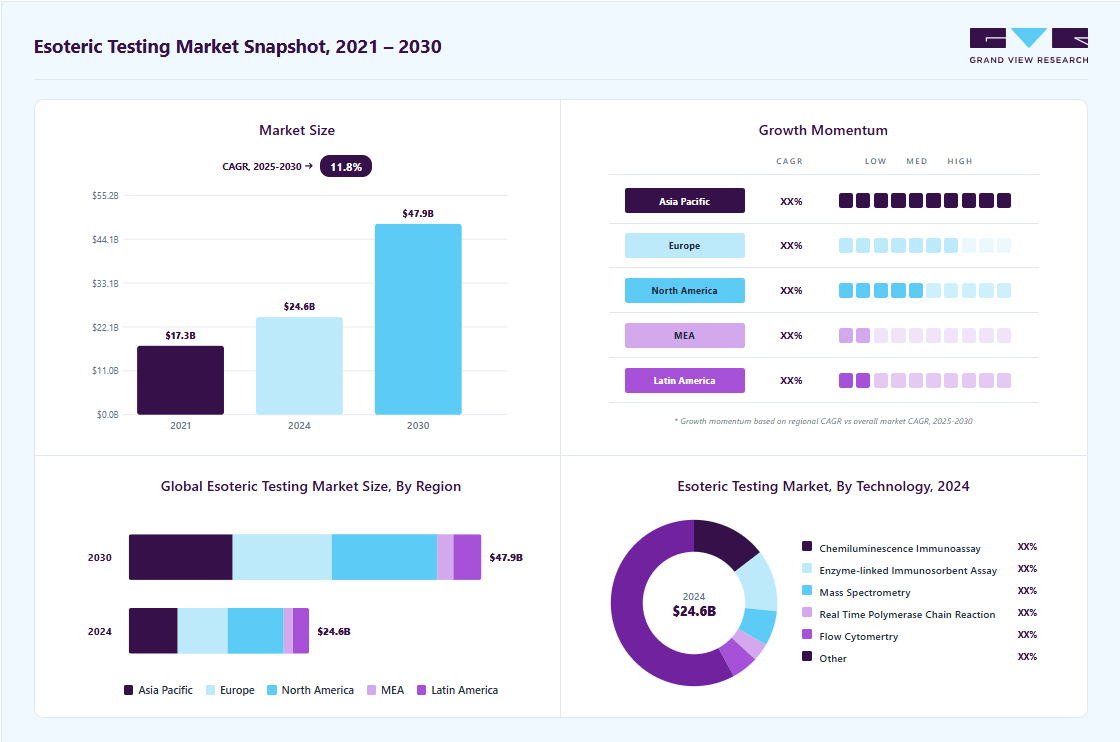 Source: Grand View Research, IR Documents, Primary Interviews, Paid DatabasesTo learn more about this report,
 Download Free Sample Report
 Key Market Trends & Insights
- By test type: Oncology testing segment held the largest revenue share of 28.0% in 2025.
- By technology: Chemiluminescence immunoassay segment held the largest share of 25.2% in 2025.
- By end-use: Independent & reference Laboratories segment held the largest share of 43.6 % in 2025.
Regional Highlights
- Largest regional market: North America (33.2% revenue share, 2025)
- Fastest-growing regional market: Asia Pacific (highest CAGR, 2026-2033)
- By country: The U.S. held the largest share of North America in 2025.
Market Size & Forecast
- Market size in 2025: USD 27.4 Billion
- Estimated market size in 2026: USD 30.5 Billion
- Projected market size by 2033: USD 68.6 Billion
- CAGR (2026-2033): 12.3%
Three ways to get this report
Buy it, customize it, or ask a question.Ask an Analyst
Analyst response in 1 business day
- AccessReport author, directly
- Reply timeWithin 1 working day
- No sales callDirect answer only
- FormatEmail reply
- CostFree, no cost
Get the Full Report
What the study covers
- FormatsPDF · Excel · Dashboard
- Timeline2026–2033 annual, 2025 base
- Coverage20+ countries, 5 regions
- Companies10+ key players profiled
Customize the Report
20% free customization
- IncludeCountries, segments, points
- TailorTo your product definition
- ExtendDeeper competitor detail
- OrA fully bespoke study
- Turnaround5–10 working days
According to the National Center for Biotechnology Information (NCBI), around 2,041,910 cancer cases will be diagnosed, with 618,120 cancer deaths expected in the U.S. in 2025. The lucrative growth potential of currently available esoteric testing options and high demand for technologically advanced and affordable tests are the factors expected to drive the market growth in the coming years. Moreover, the adoption of advanced esoteric testing technologies in independent and reference laboratories is anticipated to drive the esoteric testing industry.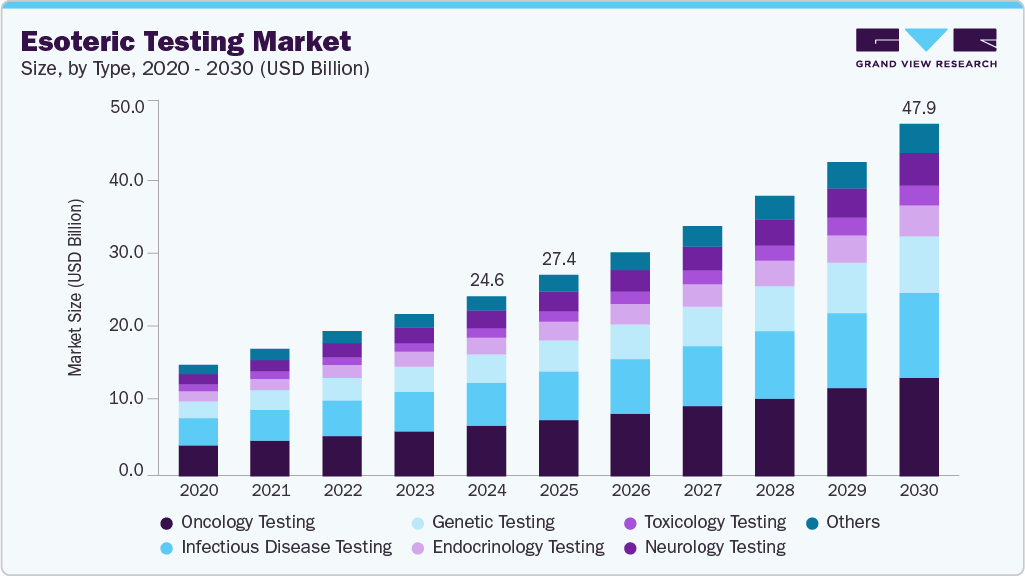 To learn more about this report, Download Free Sample Report
 Esoteric tests are crucial in identifying particular genetic markers and biomarkers to develop personalized treatment plans. For instance, in February 2023, F. Hoffmann-La Roche Ltd announced the extension of its collaboration with Janssen to advance personalized healthcare by focusing on companion diagnostics, further strengthening research and innovation activities. Thus, the rising preference for personalized medicine worldwide is anticipated to boost product demand in the coming years. The growing inclination of surgeons and patients for esoteric tests due to technological advancements, such as real-time Polymerase Chain Reaction (PCR), next-generation sequencing, and others, is anticipated to be a key driver of the rising demand for advanced diagnostics. Examples of esoteric diagnostics are genetic tests for uncommon illnesses, specialized tests for unusual infections, and advanced biomarker assays. In contrast to standard blood or urine testing, esoteric diagnostics are usually outsourced to reference labs equipped with the necessary equipment and personnel. These tests can be beneficial in specific therapeutic settings or scientific investigations owing to their high specificity and effectiveness, even though the demand is usually low due to the high cost.
The growing trend toward personalized treatment has led to a significant increase in the need for esoteric tests. To identify targeted therapies specific to each patient, these specialized tests examine a patient's genetic composition, protein profiles, and biomarkers. With the growing adoption of personalized medicine and precision diagnostics due to increased awareness, targeted and customized testing strategies are becoming increasingly necessary. An increase in initiatives undertaken by the government to provide various facilities, such as reimbursement for diagnostic tests, is another major factor anticipated to drive the market. Many healthcare institutions are working with laboratories to integrate different esoteric tests.
Over the last few years, the coverage for these procedures by policies offered by government and private insurance providers has increased. Hence, supportive reimbursement and regulatory policies also act as key drivers of the market. Medicare and Medicaid have increased reimbursement for various esoteric tests. In addition, private insurers are collaborating with esoteric labs to offer patients affordable tests, which lower out-of-pocket costs for patients and increase access to esoteric tests, thereby driving market growth.
Market Dynamics
The esoteric testing market is driven by the increasing demand for high complexity diagnostic testing to support the diagnosis of rare diseases, cancer, autoimmune disorders, neurological conditions, and complex infectious diseases. Growing adoption of molecular diagnostics, next generation sequencing, and advanced biomarker analysis is expanding the use of specialized laboratory testing across hospitals, reference laboratories, and academic medical centers. Increasing physician preference for precision medicine and personalized treatment planning is further supporting demand for esoteric testing services. Recent portfolio expansion by leading laboratory providers is strengthening testing capabilities. For instance, in May 2025, Labcorp expanded its precision oncology portfolio with new companion diagnostics, advanced genomic assays, and digital pathology capabilities to improve access to specialized cancer testing. Such advancements are expanding access to high complexity diagnostics, improving clinical decision making, and supporting broader adoption of precision medicine across healthcare systems.
The growing adoption of precision medicine and advanced molecular diagnostics is a key driver of the Esoteric Testing Market. Healthcare providers are increasingly utilizing specialized laboratory tests to identify disease specific biomarkers, characterize genetic alterations, and guide targeted therapeutic decisions. The expanding clinical application of genomic profiling, companion diagnostics, and advanced biomarker testing is increasing demand for high complexity laboratory services across oncology, rare diseases, and transplantation. Healthcare organizations are also strengthening access to specialized testing through strategic investments and laboratory network expansion. For instance, in February 2025, Quest Diagnostics announced the acquisition of select Spectra Laboratories assets from Fresenius Medical Care, expanding its specialized laboratory capabilities and strengthening its portfolio of high complexity diagnostic services. Such investments are improving access to specialized testing, enhancing laboratory efficiency, and supporting continued market growth.
The high cost and operational complexity associated with esoteric testing remain significant restraints for the Esoteric Testing Market. Advanced molecular assays, genomic sequencing, and specialized biomarker tests require sophisticated laboratory infrastructure, highly trained personnel, and stringent quality assurance processes. These requirements increase operational expenses and limit adoption among smaller healthcare providers and independent laboratories. Variability in reimbursement policies for complex diagnostic procedures and longer turnaround times for certain specialized tests can further affect utilization. In addition, maintaining compliance with evolving regulatory and accreditation standards increases the administrative burden for testing laboratories. These factors continue to limit broader implementation of esoteric testing services, particularly in resource constrained healthcare systems and regions with limited access to specialized diagnostic laboratories.
The expansion of specialized reference laboratory networks presents a significant opportunity for the esoteric testing market. Healthcare providers are increasingly outsourcing complex diagnostic testing to reference laboratories that offer advanced molecular analysis, specialized biomarker testing, and high complexity clinical services. This approach improves testing efficiency, expands access to specialized expertise, and supports consistent diagnostic quality across healthcare systems. Strategic collaborations between laboratory service providers and healthcare organizations are further strengthening access to esoteric testing. For instance, in February 2025, Quest Diagnostics and Fresenius Medical Care entered a long term laboratory services agreement to provide comprehensive specialized testing services for dialysis centers across the United States. Such collaborations are expected to strengthen specialized laboratory networks, improve patient access to advanced diagnostic services, and create new opportunities for market expansion.
Market Concentration & Characteristics
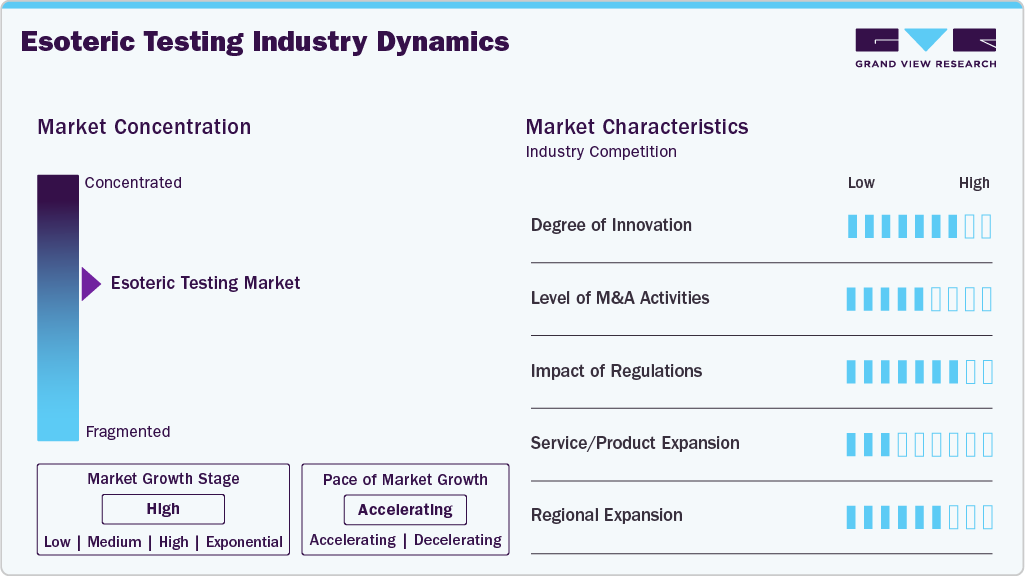
The industry growth stage is high, and the pace of growth is accelerating. The global esoteric testing industry is characterized by a high degree of innovation, with the regular development and introduction of new technologies and methods. It has become a popular option as an esoteric test that provides safe and accurate results. Hence, market players are investing in innovative technologies and procedures to keep up with the rising demand.
The market is also characterized by moderate Merger and Acquisition (M&A) activities undertaken by leading players. Several market players such as Labcorp.; OPKO Health, Inc.; Quest Diagnostics Inc.; and Sonic Healthcare Limited are involved in these activities. Through M&A, these companies can expand their geographic reach and enter new territories.
 To learn more about this report, Download Free Sample Report
 The esoteric testing market is also subject to increasing regulatory scrutiny. Companies invest substantial resources in clinical trials and submissions to obtain regulatory approval for pipeline products, which increases the cost of developing novel testing technologies. As a result, governments worldwide are creating favorable regulations to govern the development and control the cost of testing, significantly impacting the development and adoption of products.
Researchers in the esoteric testing industry are focused on developing diagnostics for conditions such as cancer, which is a rapidly growing health concern. In response to the complex and evolving nature of such diseases, the industry offers a broad spectrum of specialized testing methodologies. These alternative diagnostic solutions are designed to accommodate varying clinical scenarios and patient-specific needs, thereby ensuring high levels of accuracy and personalization in disease detection. The availability of multiple testing options enhances diagnostic precision and supports informed decision-making in treatment planning, underscoring the strategic importance of esoteric testing in advancing precision medicine.
The end-use concentration factor is essential for companies in the esoteric testing market. By recognizing the specific needs of each sector and customizing testing solutions, businesses can better position themselves for success in this dynamic and rapidly evolving industry.
Analyst Perspective
The Esoteric Testing Market is expected to experience steady growth, supported by increasing demand for high complexity diagnostic testing, expanding adoption of precision medicine, and advances in molecular diagnostics and genomic technologies. Growing utilization of specialized tests for oncology, rare diseases, autoimmune disorders, and transplant monitoring is strengthening demand across hospitals and reference laboratories. Laboratory automation, digital pathology, and bioinformatics integration are improving testing efficiency and diagnostic accuracy. The market is also benefiting from increasing laboratory outsourcing and strategic investments by leading reference laboratory providers. Continued innovation in specialized assays and expansion of advanced testing capabilities are expected to support long term market growth and broader clinical adoption.
Test Type Insights
Based on test type, the oncology testing segment led the market with the largest revenue share of 28.0% in 2025. This dominance can be attributed to the rising incidence of cancer and the high demand for esoteric tests for diagnosis. In December 2022, a research paper published by the Indian Council of Medical Research estimated that the number of cancer cases in India is expected to rise from 1.46 million in 2022 to 1.57 million in 2025. Thus, the increasing prevalence is expected to boost the adoption of esoteric testing in cancer patients, thereby driving segment growth. Furthermore, growing awareness about the need for early diagnosis of cancer is expected to impel demand for cancer-related esoteric tests. Several programs and initiatives are being undertaken by private and public organizations for cancer treatment as well as increasing life expectancy.
The genetic testing segment is expected to register the fastest CAGR of 12.6% over the forecast period. The segment's growth can be attributed to improvements in genomic methods, rising awareness of personalized medicine, and increasing demand for genetic tests, aided by the growing awareness of early diagnosis among the population. As per the National Center for Biotechnology statistics for 2023, there were around 76,326 current genetic tests on the Genetic Testing Registry (GTR), where 76,083 were used for clinical and 243 for research purposes in 2022. Thus, rising genetic testing volume is projected to propel segment growth during the forecast period. Moreover, the rising prevalence of genetic disorders and the increasing need for screening are further anticipated to fuel market growth. According to the American Association for Clinical Chemistry, newborn screening programs in the U.S. screen children for over 60 disorders. Such initiatives further propel the demand for effective diagnostics.
Technology Insights
Based on technology, the chemiluminescence immunoassay segment led the market with the largest revenue share of 25.2% in 2025. This dominance is attributable to the high adaptability of the tests in detecting hormones, proteins, antibodies, and nucleic acids. Furthermore, it supports multiplexing, which permits the simultaneous measurement of multiple analytes. In addition, key advantages related to chemiluminescence immunoassays, such as high reagent stability and conjugate stability, full compatibility with immunology assay protocols, quick analytical signal acquisition, and reduced incubation time also drive the segment.
Enzyme-linked Immunosorbent Assay (ELISA) is expected to grow significantly over the forecast period. These assays enable the detection and measurement of particular proteins and antibodies in a sample, making it a commonly used diagnostic tool. Moreover, it is anticipated that the growing availability of technologically advanced tests and analyzers can boost the utilization of these products for a variety of diagnostic applications. The growing need for advanced technologies and automation propels the market for ELISA analyzers. The expanding application of ELISA in infectious disease testing, oncology, and autoimmune disorders supports its continued adoption in centralized laboratories and point-of-care settings.
End Use Insights
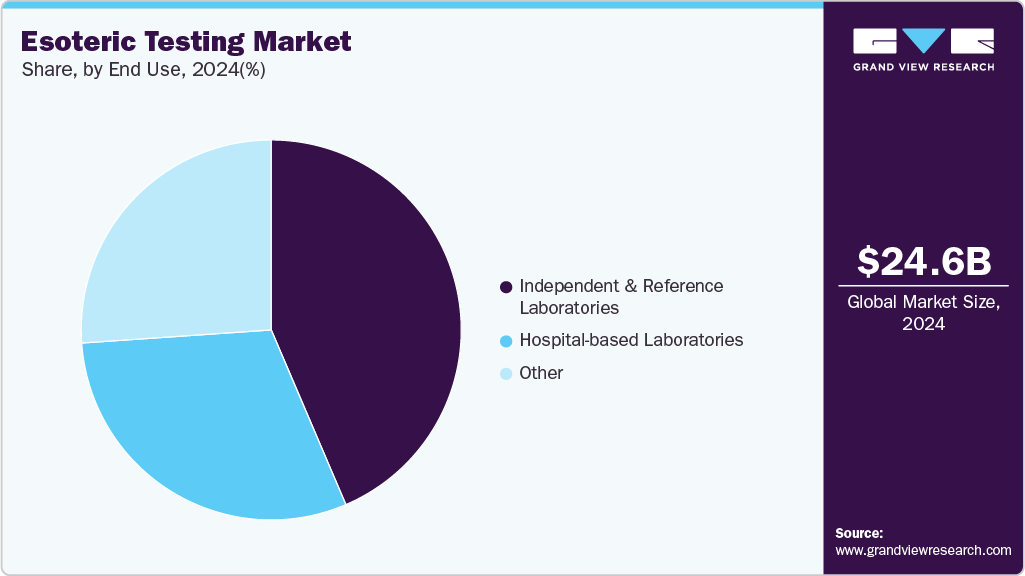
Based on end-use, the independent and reference Laboratories segment led the market with the largest revenue share of 43.6 % in 2025. This dominance can be attributed to the increasing number of independent laboratories, high esoteric testing volumes, and growing laboratory automation. Highly skilled personnel, advanced equipment, and materials are typically needed to perform and analyze the results of esoteric testing. Physicians, office hospitals, and laboratories usually outsource these tests to independent, specialized clinical reference laboratories, as it is a cost-effective alternative.
 To learn more about this report, Download Free Sample Report
 Hospital-based laboratories are expected to witness significant growth during the forecast period, driven by the rising number of hospitalizations due to cancer, infections, and toxicology-related conditions. Esoteric testing plays a crucial role in enabling early diagnosis of these diseases. According to LabFlorida, there are over 200,000 clinical laboratories in the U.S., with hospital-based labs accounting for only about 5% of all laboratories; however, they account for approximately 55% of all testing volume. In addition, the increasing adoption of esoteric testing and the integration of advanced clinical care, R&D capabilities, and comprehensive diagnostic services are expected to further propel market growth.
Regional Insights
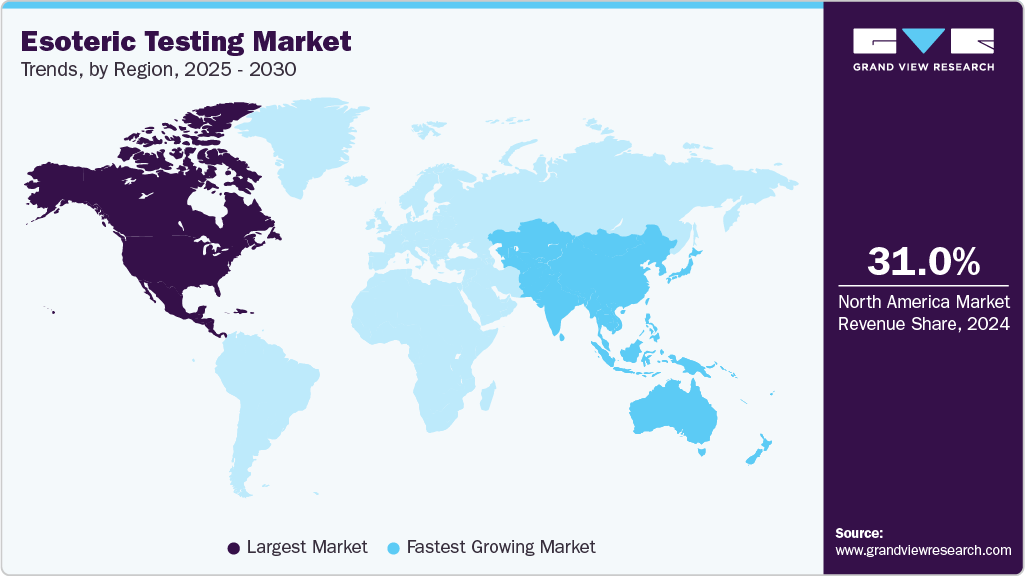
North America dominated the esoteric testing market with the largest revenue share of 33.2% in 2025. This market is driven by the high prevalence of chronic diseases, including cancer and infectious conditions, which require advanced diagnostic solutions. The region benefits from well-established healthcare infrastructure, increasing adoption of personalized medicine, and strong investment in R&D. Leading laboratories in the North American region have expanded their test portfolios to include high-complexity genetic and molecular diagnostics in response to the growing demand for precision-based testing and early disease detection.
 To learn more about this report, Download Free Sample Report
 U.S. Esoteric Testing Market Trends
North America dominated the esoteric testing market with the largest revenue share of 33.2% in 2025, primarily driven by the increasing demand for specialized diagnostic services due to the rise in complex and chronic diseases such as cancer, autoimmune disorders, and infectious conditions. The shift toward precision diagnostics and personalized medicine is further fueling this demand. Technological advancements in molecular diagnostics and immunoassays are improving test accuracy and efficiency. Moreover, the country’s advanced healthcare infrastructure and the presence of major reference laboratories continue to support market expansion.
Europe Esoteric Testing Market Trends
Europe esoteric testing market is projected to grow at a significant CAGR, driven by the rising burden of chronic and rare diseases requiring advanced diagnostics. Increasing adoption of personalized medicine and early disease detection strategies boosts the demand for specialized tests. In addition, strong healthcare infrastructure and growing investments in laboratory innovation support market growth across the region. In December 2024, Sonic Healthcare announced the acquisition of Laboratory Group Dr. Kramer and Colleagues (LADR) in Germanyto strengthen its presence. With strong cultural and operational alignment, the deal offers synergies in procurement, specialized testing, logistics, equipment maintenance, and supply distribution.
Asia Pacific Esoteric Testing Market Trends
The Asia Pacific esoteric testing market is anticipated to grow at the fastest CAGR of 13.8% over the forecast period. This growth can be attributed to the rising patient volume and the growing number of established healthcare providers in developing nations such as China and India. Improving healthcare utilization due to increased government support for the timely diagnosis and treatment of chronic diseases drives the market. Furthermore, a rise in government programs aimed at providing diagnostic services, a sharp rise in the market for ELISA and Reverse Transcription PCR (RT-PCR) tests, and the increase in public awareness about early disease diagnosis are expected to boost the regional market.
China esoteric testing market dominated the Asia Pacific market, primarily driven by the rising burden of chronic and rare diseases, growing demand for early and precise diagnosis, and increased government investment in precision medicine. Rapid advancements in molecular diagnostics and expanding access to specialized lab services contribute to market growth.
Key Esoteric Testing Company Insights
Some key companies operating in the esoteric testing industry include Labcorp. and Quest Diagnostics Incorporated. Major players are driving their growth through innovation in molecular diagnostics and specialized testing while partnering with healthcare providers to expand services. Their investment in lab automation and digital technologies enhances test accuracy and efficiency, improving patient outcomes.
-
Labcorp is a leading global life sciences company offering a comprehensive portfolio of esoteric testing services, including genetic, oncology, and rare disease diagnostics. Through continuous innovation, strategic acquisitions, and a vast laboratory network, Labcorp supports early disease detection and precision medicine.
-
Quest Diagnostics is a major player in the esoteric testing market, known for its advanced capabilities in molecular and specialized diagnostics. The company leverages cutting-edge technology and nationwide laboratory infrastructure to deliver high-quality, accurate testing across complex disease areas.
Key Esoteric Testing Companies
The following key companies have been profiled for this study on the esoteric testing market.
-
Labcorp.
-
OPKO HEALTH, INC.
-
Quest Diagnostics Incorporated
-
Sonic Healthcare Limited
-
H.U. Group Holdings, Inc.
-
Kindstar Globalgene Technology, Inc.
-
Stanford Health Care
-
Mayo Foundation for Medical Education and Research
-
ARUP Laboratories
-
Athena Esoterix
-
ACM Global Laboratories
-
Healius Limited.
Competitive Benchmarking
Category
Operating Strategies
Competitive Edge
Weakness
Well Established Players (Labcorp, Quest Diagnostics Incorporated, Sonic Healthcare Limited, H.U. Group Holdings, Inc., Mayo Foundation for Medical Education and Research, ARUP Laboratories)
- Expand esoteric testing portfolios through molecular diagnostics, genomic testing, oncology diagnostics, rare disease testing, advanced biomarker analysis, and specialized reference laboratory services. Focus on laboratory network expansion, strategic collaborations, acquisitions, automation, digital pathology, and advanced bioinformatics to strengthen global market presence and support precision medicine.
- Extensive specialized testing portfolios, established reference laboratory networks, advanced molecular diagnostic capabilities, strong clinical expertise, broad healthcare provider relationships, and integrated laboratory information systems. Ability to support hospitals, diagnostic laboratories, pharmaceutical companies, and research institutions through comprehensive high complexity testing services and nationwide laboratory infrastructure.
- Large laboratory operations may increase operational complexity and turnaround times for certain specialized tests. High infrastructure investment, premium pricing of advanced testing services, reimbursement variability, and stringent regulatory requirements may limit adoption in cost sensitive healthcare markets.
Emerging and Specialized Players (OPKO HEALTH, INC., Kindstar Globalgene Technology, Inc., Stanford Health Care, Athena Esoterix, ACM Global Laboratories, Healius Limited.)
- Focus on expanding specialized molecular diagnostics, precision oncology, genetic testing, rare disease diagnostics, transplant testing, and laboratory developed tests through technology innovation, strategic partnerships, and regional laboratory expansion. Emphasize workflow optimization, advanced bioinformatics, and customized esoteric testing services for complex clinical applications.
- Strong expertise in niche diagnostic applications, flexible service offerings, rapid adoption of advanced molecular technologies, and specialized clinical interpretation. Ability to address complex diagnostic requirements through application specific testing services, targeted biomarker analysis, and personalized laboratory solutions.
- Comparatively smaller laboratory networks, narrower service portfolios, and lower international presence than leading reference laboratory providers. Dependence on specialized clinical applications, regional customer base, and referral testing volumes may limit competitiveness across the broader esoteric testing market.
Recent Developments
-
In March 2024, Labcorp, a global leader in laboratory services, announced an agreement to acquire select assets of BioReference Health, a subsidiary of OPKO Health, Inc. Through this transaction, it can significantly streamline the laboratory services business while retaining its core operations, positioning BioReference Health for sustained growth and profitability in the market.
-
In July 2023, Thermo Fisher Scientific launched two new Next-generation Sequencing (NGS)-based research tools for Preimplantation Genetic Testing for Aneuploidy (PGT-A). These tools are designed to detect chromosomal abnormalities across all 24 chromosomes (22 autosomes and the X and Y chromosomes), including conditions such as trisomy 21 (Down syndrome) and monosomy X (Turner syndrome).
-
In June 2022, CB Trial Laboratory, the central laboratory co-managed by BML and Labcorp Drug Development, was expanded by Labcorp, enhancing its drug development capabilities and central laboratory presence in Japan. LabCorp intends to enhance its companion diagnostics portfolio through the proposed laboratory expansion, provide more advanced biomarker and esoteric test services, and strengthen its integration with clinical development services.
Esoteric Testing Market Report Scope
Report Attribute
Details
Market size value in 2025
USD 27.4 billion
Market size value in 2026
USD 30.5 billion
Revenue forecast in 2033
USD 68.6 billion
Growth rate
CAGR of 12.3% from 2026 to 2033
Historical data
2021 - 2024
Forecast period
2026 - 2033
Quantitative units
Revenue in USD billion, and CAGR from 2026 to 2033
Report coverage
Revenue forecast, company ranking, competitive landscape, growth factors, and trends
Segments covered
Test type, technology, end-use , regional
Regional scope
North America; Europe; Asia Pacific; Latin America; MEA
Country scope
U.S.; Canada; Mexico; Germany; UK; France; Italy; Spain; Denmark; Sweden; Norway; Japan; China; India; South Korea; Australia; Thailand; Brazil; Argentina; South Africa; Saudi Arabia; UAE; Kuwait
Key companies profiled
Labcorp, OPKO HEALTH, INC., Quest Diagnostics Incorporated, Sonic Healthcare Limited, H.U. Group Holdings, Inc., Kindstar Globalgene Technology, Inc., Stanford Health Care, Mayo Foundation for Medical Education and Research, ARUP Laboratories, Athena Esoterix, ACM Global Laboratories, Healius Limited.
Customization scope
Free report customization (equivalent up to 8 analysts' working days) with purchase. Addition or alteration to country, regional & segment scope.
Pricing and purchase options
Avail customized purchase options to meet your exact research needs. Explore purchase options
Global Esoteric Testing Market Report Segmentation
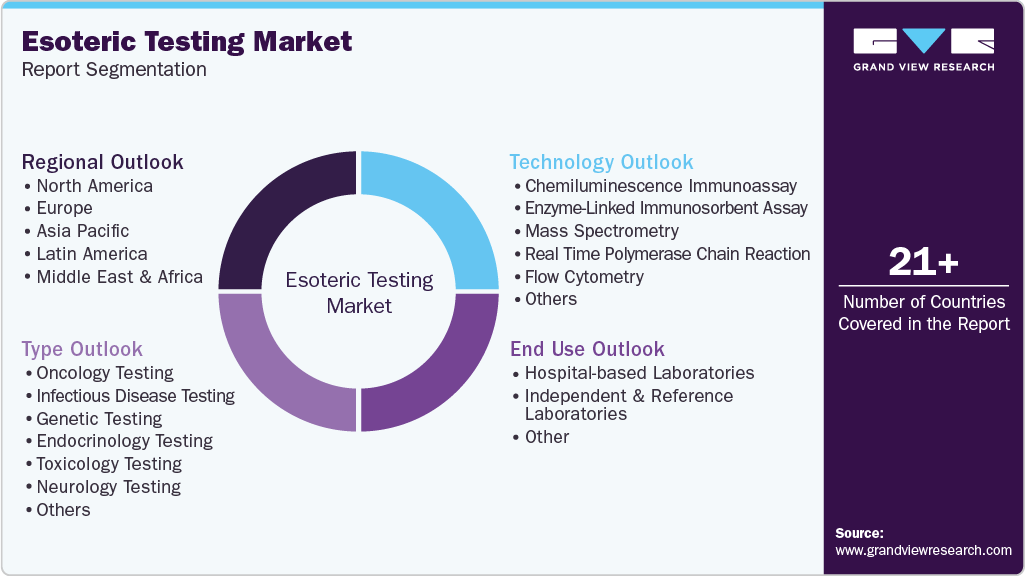
This report forecasts revenue growth at the global, regional, and country levels as well as provides an analysis of the latest trends in each of the sub-segments from 2021 to 2033. For this study, Grand View Research has segmented the esoteric testing market report on the basis of product, technology, and region:
 To learn more about this report, Download Free Sample Report
 -
Type Type Outlook (Revenue, USD Million, 2021 - 2033)
-
Oncology testing
-
Infectious disease testing
-
Genetic testing
-
Endocrinology testing
-
Toxicology testing
-
Neurology testing
-
Others
-
-
Technology Outlook (Revenue, USD Million, 2021 - 2033)
-
Chemiluminescence immunoassay
-
Enzyme-linked immunosorbent assay
-
Mass spectrometry
-
Real time polymerase chain reaction
-
Flow cytometry
-
Others
-
-
End Use Outlook (Revenue, USD Million, 2021 - 2033)
-
Hospital-based laboratories
-
Independent and reference laboratories
-
Other
-
-
Regional Outlook (Revenue, USD Million, 2021 - 2033)
-
North America
-
U.S.
-
Canada
-
Mexico
-
-
Europe
-
UK
-
Germany
-
France
-
Italy
-
Spain
-
Denmark
- Sweden
-
Norway
-
Rest of Europe
-
-
Asia Pacific
-
China
-
Japan
-
India
-
South Korea
-
Australia
-
Thailand
-
Rest of Asia Pacific
-
-
Latin America
-
Brazil
-
Argentina
-
Rest of Latin America
-
-
Middle East & Africa (MEA)
-
South Africa
-
Saudi Arabia
-
UAE
-
Kuwait
-
-
Research Methodology
The Esoteric Testing market figures in this report are based on a proven research process that combines executive interviews with secondary research from proprietary databases, company filings, and recognized regulatory and institutional sources. Market size is built through value-chain sizing - reconciling supply-side and demand-side estimates - and triangulated with bottom-up and top-down approaches. Every estimate passes multiple levels of expert validation before publication, with each Esoteric Testing segment quantified using the revenue-capture definitions in the table below.
Segment Definition
Segment - Test Type
Revenue capture definition
Oncology Testing
Revenue is primarily captured through sales of molecular oncology assays, biomarker panels, next generation sequencing tests, companion diagnostics, immunohistochemistry reagents, bioinformatics analysis, and specialized laboratory services for cancer diagnosis and treatment selection.
Infectious Disease Testing
Revenue flows from molecular diagnostic assays, multiplex PCR panels, serology tests, microbial identification assays, specialized reagents, laboratory consumables, and reference laboratory services used for complex infectious disease diagnosis and monitoring.
Genetic Testing
Revenue is derived from hereditary testing panels, whole exome sequencing, targeted gene assays, chromosomal analysis, bioinformatics interpretation, confirmatory testing, and specialized laboratory services for inherited and rare genetic disorders.
Endocrinology Testing
Revenue is captured through specialized hormone assays, endocrine biomarker panels, immunoassay reagents, laboratory analyzers, reference testing services, and associated consumables used for complex endocrine disorder evaluation.
Toxicology Testing
Revenue flows from toxicology screening panels, therapeutic drug monitoring assays, mass spectrometry based tests, laboratory reagents, analytical instruments, and specialized testing services for drug exposure and poisoning assessment.
Neurology Testing
Revenue is generated through neurological biomarker assays, autoimmune neurology panels, cerebrospinal fluid analysis, molecular diagnostic tests, specialized reagents, and laboratory services supporting neurological disease diagnosis and monitoring.
Others
Revenue is primarily captured through specialized esoteric assays, advanced biomarker tests, immunology panels, allergy diagnostics, transplant monitoring assays, metabolic testing, and other high complexity laboratory services beyond standard diagnostic
Segment - Technology
Revenue capture definition
Chemiluminescence Immunoassay
Revenue is primarily captured through chemiluminescent immunoassay analyzers, assay kits, antibodies, calibrators, controls, reagents, and laboratory consumables used for high sensitivity detection of complex disease biomarkers.
Enzyme Linked Immunosorbent Assay
Revenue flows from ELISA kits, enzyme conjugates, microplates, detection reagents, calibrators, controls, automated ELISA systems, and laboratory consumables used for specialized protein and antibody testing.
Mass Spectrometry
Revenue is derived from mass spectrometry instruments, sample preparation systems, analytical software, assay kits, calibration standards, reagents, and laboratory services used for high complexity molecular and toxicology testing.
Real Time Polymerase Chain Reaction
Revenue is captured through real time PCR instruments, amplification reagents, primers, probes, extraction kits, master mixes, and specialized consumables used for molecular detection of genetic and infectious disease biomarkers.
Flow Cytometry
Revenue flows from flow cytometers, antibodies, fluorescent reagents, cell staining kits, sample preparation products, analytical software, and laboratory consumables used for cellular and immunological analysis.
Others
Revenue is generated through advanced diagnostic technologies including next generation sequencing, digital PCR, fluorescence in situ hybridization, microarrays, bioinformatics software, and specialized laboratory consumables used for complex esoteric testing applications.
Segment - End use
Revenue capture definition
Hospital Based Laboratories
Revenue is primarily captured through high complexity diagnostic testing performed within hospital laboratories using specialized instruments, esoteric assays, molecular testing platforms, reagents, and laboratory services supporting inpatient and outpatient care.
Independent and Reference Laboratories
Revenue flows from specialized testing services, advanced molecular diagnostics, biomarker analysis, genomic testing, laboratory developed tests, high throughput platforms, and associated reagents processed for hospitals, clinics, and healthcare providers.
Others
Revenue is derived from esoteric testing performed by academic research institutions, specialty diagnostic centers, government laboratories, pharmaceutical companies, and contract research organizations utilizing advanced diagnostic technologies and specialized laboratory services.
Estimation Model
The esoteric testing market was estimated using a bottom-up approach by identifying key manufacturers, benchmarking their specialized testing portfolios, and assessing revenues generated from high complexity diagnostic tests and laboratory services. Market revenues were estimated based on test utilization, disease prevalence, laboratory outsourcing trends, and technology adoption across major clinical applications, followed by aggregation of segment revenues and validation using the market share of leading industry participants to determine the overall market size.
Delivered Customizations
This report has been delivered with the following In-depth customizations
Client Request
Customization Delivered
Value Adds
Esoteric Testing Market Competitive Landscape & Technology Assessment
Assessed the global esoteric testing market across molecular diagnostics, genetic testing, oncology diagnostics, endocrinology testing, toxicology testing, neurology testing, advanced biomarker analysis, laboratory automation, and bioinformatics solutions. Evaluated competitive positioning, product portfolios, technology advancements, strategic developments, and adoption trends across hospitals, reference laboratories, academic medical centers, and specialty diagnostic providers.
Helped the client identify technology adoption opportunities, benchmark competitive capabilities, evaluate product differentiation, prioritize strategic investments, and assess market expansion opportunities across specialized laboratory testing, precision diagnostics, and high complexity diagnostic services.
Esoteric Testing Product & Technology Benchmarking Study
Delivered comprehensive benchmarking of esoteric testing platforms including molecular diagnostics, mass spectrometry, flow cytometry, real time polymerase chain reaction, chemiluminescence immunoassays, enzyme linked immunosorbent assays, and advanced genomic testing solutions. Assessed analytical performance, workflow efficiency, automation capabilities, diagnostic accuracy, testing throughput, laboratory integration, and product differentiation among leading market participants.
Enabled the client to evaluate technology competitiveness, identify innovation opportunities, benchmark product development strategies, and prioritize investments in advanced molecular diagnostics, laboratory automation, precision medicine, and specialized reference laboratory technologies.
Esoteric Testing Adoption & Commercialization Assessment
Assessed laboratory outsourcing trends, healthcare infrastructure, precision medicine adoption, reimbursement landscape, regulatory environment, procurement practices, commercialization pathways, and referral testing patterns influencing the adoption of esoteric testing services across major regional markets.
Supported commercialization planning by identifying market entry opportunities, evaluating customer adoption patterns, assessing operational and investment considerations, mitigating commercialization risks, and strengthening long term growth strategies across reference laboratories, healthcare providers, diagnostic companies, and academic research institutions.
Frequently Asked Questions About This Report
The global esoteric testing market size was valued at USD 24.5 billion in 2024 and is estimated at USD 30.5 billion for 2026.
The global esoteric testing market is expected to grow at a CAGR of 12.3% from 2026 to 2033, reaching USD 68.6 billion by 2033.
Some key players operating in the esoteric testing market include Laboratory Corporation of America Holdings; OPKO HEALTH, INC.; Quest Diagnostics Incorporated; Sonic Healthcare Limited; H.U. Group Holdings, Inc., Kindstar Globalgene Technology, Inc.; Stanford Health Care; Mayo Foundation for Medical Education and Research; ARUP Laboratories; Athena Esoterix; ACM Global Laboratories.
Key factors that are driving the market growth include the increasing demand for early disease diagnosis, rising prevalence of cancer aided with high demand for safer diagnostic options.
North America dominated the esoteric testing market with a share of 33.2% in 2025. This is attributable to rising government support for high-quality healthcare, availability of reimbursements, high buying power, and the rising incidence of infections and chronic diseases such as cancer.
The Independent & reference laboratories segment held the largest share of 43.6 % in 2025.
The Asia Pacific esoteric testing market is anticipated to grow at the fastest CAGR of 13.8% over the forecast period. This growth can be attributed to the rising patient volume and the growing number of established healthcare providers in developing nations such as China and India.
Based on test type, the oncology testing segment led the market with the largest revenue share of 28.0% in 2025. This dominance can be attributed to the rising incidence of cancer and the high demand for esoteric tests for diagnosis.
Based on technology, the chemiluminescence immunoassay segment led the market with the largest revenue share of 25.2% in 2025. This dominance is attributable to the high adaptability of the tests in detecting hormones, proteins, antibodies, and nucleic acids.
The expansion of specialized reference laboratory networks presents a significant opportunity for the market. Healthcare providers are increasingly outsourcing complex diagnostic testing to reference laboratories that offer advanced molecular analysis, specialized biomarker testing, and high complexity clinical services.
About the Author(s)
Clinical Diagnostics Research Team
Healthcare · Clinical DiagnosticsThis report was authored by the clinical diagnostics research team at Grand View Research - comprising two research analysts, one senior research analyst, and one industry expert - with specialized expertise in the clinical diagnostics segment of the healthcare industry. All findings are based on proprietary healthcare databases, executive interviews, and regulatory analysis, subject to internal peer review prior to publication.
Last Updated:
Speak to Analyst

Customize this report to your needs - add regions, segments, or data points, with 20% free customization.
Or view our licence options:


ISO 9001:2015 & 27001:2022 Certified
We are GDPR and CCPA compliant! Your transaction & personal information is safe and secure. For more details, please read our privacy policy.


