
- Home
- »
- Pharmaceuticals
- »
-
Europe Astaxanthin Market Size, Industry Report, 2033GVR Report cover
![Europe Astaxanthin Market Size, Share & Trends Report]()
Europe Astaxanthin Market (2025 - 2033) Size, Share & Trends Analysis Report By Source (Natural, Synthetic), By Product (Dried Algae Meal or Biomass, Oil, Softgel, Liquid), By Application, And Segment Forecasts
- Report ID: GVR-4-68040-300-3
- Number of Report Pages: 150
- Format: PDF
- Historical Range: 2021 - 2023
- Forecast Period: 2025 - 2033
- Industry: Healthcare
- Report Summary
- Table of Contents
- Segmentation
- Methodology
- Download FREE Sample
-
 Download Sample Report
Europe Astaxanthin Market Summary
The Europe astaxanthin market size was estimated at USD 552.50 million in 2024 and is projected to reach USD 1,700.55 million by 2033, growing at a CAGR of 13.00% from 2025 to 2033. The increasing demand for natural antioxidants in the health and wellness sector is driving market expansion, as consumers increasingly focus on preventive healthcare and opt for nutritional supplements sourced from nature. Awareness of astaxanthin’s anti-inflammatory and antioxidative properties encourages its use for skin, eye, and cardiovascular health.
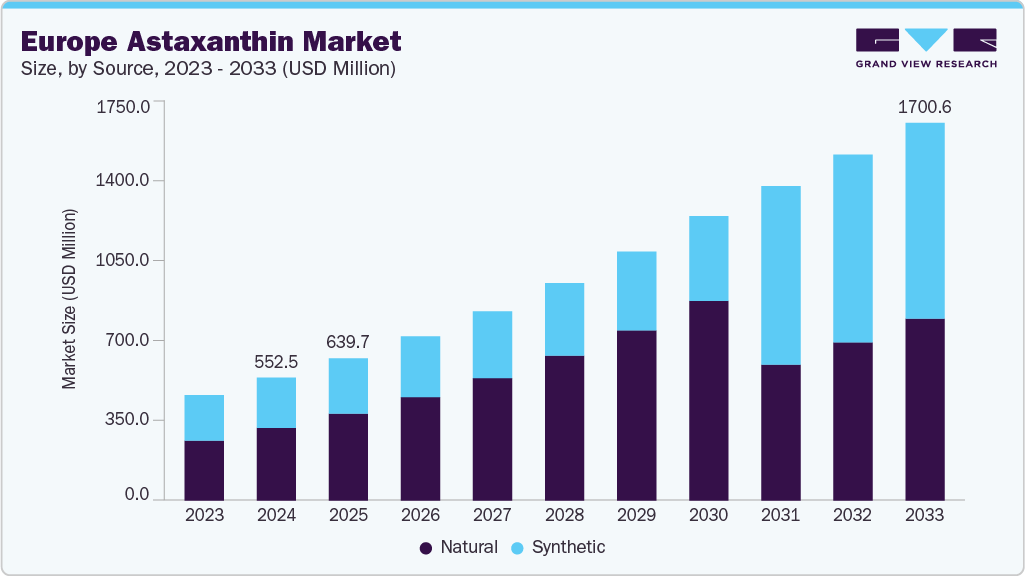
The growing incidence of age-related disorders prompts elderly consumers to include it in their daily routines, while athletes and fitness enthusiasts value its role in muscle recovery and endurance. Clean-label trends are boosting the adoption of microalgae-derived astaxanthin across Europe. At Vitafoods Europe 2024, Divi’s Nutraceuticals launched AstaBead, highly concentrated beadlets (5% astaxanthin) from microalgae oleoresin produced with 100% renewable energy, offering a clean-label, sugar-free, palm-oil-free, and nanoparticle-free solution. The shift toward chemical-free, plant-based nutraceuticals continues to reinforce this growth.
The cosmetics industry contributes significantly to market growth as astaxanthin gains traction as an active ingredient in anti-aging formulations. Skin care brands increasingly incorporate it into serums, creams, and sunscreens because it can combat oxidative stress and support skin elasticity. Consumer preference for beauty-from-within solutions is boosting the demand for ingestible astaxanthin supplements in the nutricosmetics category. Social media campaigns and influencer-driven marketing are accelerating product visibility among young consumers. In late 2023, the EU amended its novel food regulations to permit astaxanthin use in children aged 3-10 and adolescents aged 10-14, reflecting enhanced safety confidence and enabling product innovation targeting younger consumers. Moreover, scientific studies highlighting astaxanthin’s photoprotective and moisturizing effects are strengthening its positioning in premium personal care lines. Key market players are investing in advanced formulations that combine astaxanthin with collagen, hyaluronic acid, and other actives to enhance efficacy, widening the product appeal across various consumer demographics.
Astaxanthin is being introduced into functional products in the food and beverage industry to meet rising demand for health-enhancing ingredients. Producers of dairy, beverages, and confectionery items are formulating fortified versions using astaxanthin to capture health-conscious consumers. The rise of plant-based and clean-label food trends supports the inclusion of microalgae-sourced astaxanthin in both vegan and traditional formats. Technological advances in extraction and formulation enhance bioavailability and enable new delivery formats, including gummies, drinks, and bars. In April 2024, the European Commission officially authorized astaxanthin-rich oleoresin from Haematococcus pluvialis (ranging from 2.5% to 20% astaxanthin) as a novel food, providing clearer parameters for use in fortification and easing market entry barriers across the EU. Strategic partnerships among ingredient suppliers and FMCG companies facilitate wider distribution and retail penetration. These combined factors are propelling the steady market expansion.
Natural vs. Synthetic Astaxanthin, Key Attribute Comparison (Europe, 2024)
Key Attribute
Natural Astaxanthin
Synthetic Astaxanthin
Source
Microalgae, krill, yeast
Petrochemical synthesis
Average Cost/kg (2024)
\~USD 6,800-USD 7,700
\~USD 1,050-USD 1,300
Shelf-life
18-24 months
24-36 months
Bioavailability
Medium-High
Medium
Sustainability
High
Low-Medium
Purity Consistency
Variable
Very high
Natural and synthetic astaxanthin cater to different priorities within the European market, each offering distinct advantages. Natural astaxanthin, sourced from microalgae, krill, and yeast, is often associated with strong sustainability credentials and higher consumer appeal in premium nutraceutical, cosmetic, and wellness products. Its biological origin aligns with the growing demand for clean-label, eco-friendly ingredients, though it is generally considered a high-value option. In contrast, synthetic astaxanthin, manufactured through industrial processes, delivers exceptional purity consistency, extended shelf stability, and cost efficiency. These traits make it ideal for large-scale applications in aquaculture, animal feed, and certain industrial uses where performance and affordability are critical. While health-conscious consumer trends drive natural variants, synthetic options dominate volume-driven markets due to their scalability and uniformity. These two types' distinct sourcing, performance characteristics, and market positioning influence purchasing decisions and shape their respective growth trajectories across Europe’s diverse end-use industries.
Market Concentration & Characteristics
The Europe astaxanthin industry exhibits a high degree of innovation, particularly in extraction techniques and formulation for therapeutic applications. Companies such as AstaReal and VALENSA INTERNATIONAL are investing in clinical validation of astaxanthin’s anti-inflammatory and antioxidant benefits. Natural sources like microalgae and krill are being optimized to enhance bioavailability and therapeutic value. Softgel and oil-based formats are continuously refined to support targeted treatment outcomes in nutraceutical and functional food sectors. This innovation wave supports differentiation and drives consumer confidence in treatment-based products.
Entry into the market is moderately challenging due to high-quality standards and regulatory certifications. New players must secure EFSA-compliant documentation for health claims linked to nutraceutical applications. Significant R&D investment is required for extraction processes from microalgae and yeast to meet purity levels suitable for treatment use. Existing players such as DSM and BASF benefit from long-standing trust and distribution networks, making competition harder. In addition, costly infrastructure for biomass cultivation and encapsulation technologies adds financial pressure.
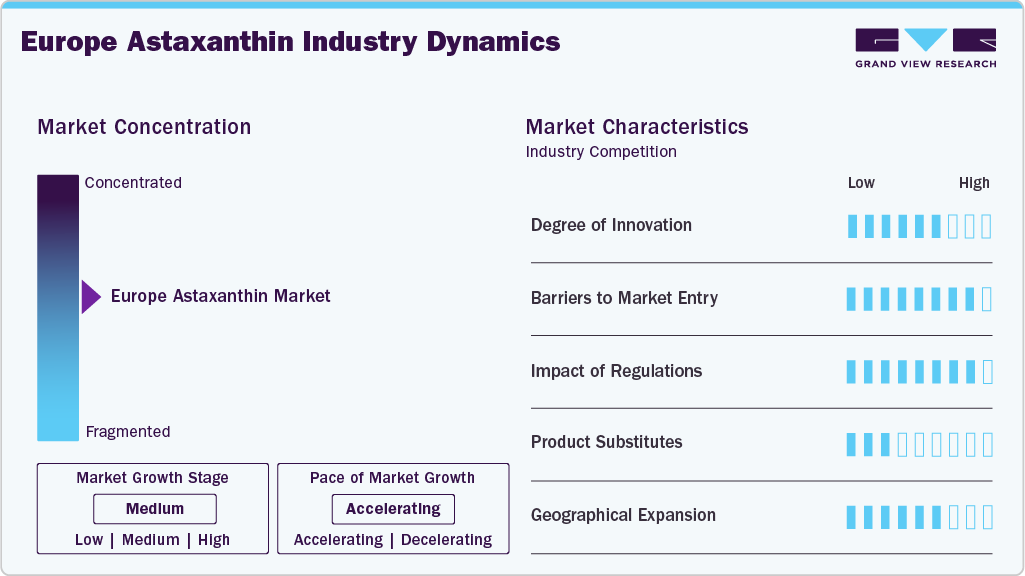
Strict regulatory frameworks in Europe significantly shape the astaxanthin treatment landscape. Authorities demand substantial clinical evidence to approve health claims in food supplements or therapeutic formulations. EFSA guidelines enforce labeling precision, dosage limitations, and ingredient transparency, especially for natural-origin products. This ensures product safety and consumer protection but extends time-to-market for new formulations. Manufacturers like Algalíf Iceland and ALGAMO prioritize regulatory alignment to maintain their presence across EU countries.
Astaxanthin faces a moderate threat from other antioxidants used in treatment, such as vitamin E, lycopene, and coenzyme Q10. However, its superior free radical scavenging ability gives it a unique position in therapeutic nutrition. Substitutes are more widely available but often lack the multi-system support offered by astaxanthin, such as benefits for eye, cardiovascular, and skin health. Market leaders emphasize distinct health benefits through advanced delivery forms to combat substitution risks. Continued clinical backing reinforces astaxanthin’s edge in the treatment segment.
Key players are expanding regionally to meet the rising demand for therapeutic astaxanthin in countries like Germany, France, and the UK. Facilities in Nordic countries, especially Iceland and Germany, are being optimized for natural cultivation and extraction. Companies like Sea & Sun Organic GmbH and Fraunhofer CBP are deepening their presence through partnerships with European nutraceutical brands. Expansion strategies include localized production and distribution to ensure fresh supply and adherence to EU health standards. This enables firms to tailor therapeutic formulations for country-specific preferences and compliance needs.
Source Insights
The natural segment dominated the market with the largest revenue share of 59.17% in 2024, driven by the growing demand for clean-label supplements across Europe. Consumers prioritize naturally derived ingredients in their dietary and therapeutic routines to enhance long-term wellness. Microalgae and krill-based astaxanthin offer high antioxidant efficacy and are increasingly preferred in nutraceutical and functional food formulations. The natural segment benefits from increased R&D in bioavailable extraction processes using Haematococcus pluvialis. In 2024, Algalíf Iceland, one of Europe’s leading producers of sustainable natural astaxanthin from microalgae, announced that its Astalíf astaxanthin products (biomass and oleoresins) have received Vegan certification from the Vegan Society, reflecting the segment’s alignment with plant-based, ethical, and clean-label trends. Leading players are expanding production capacity and focusing on sustainable cultivation methods to strengthen supply chains. Regulatory preference for non-synthetic ingredients in health supplements reinforces this segment's growth.
Synthetic is projected to grow at the fastest CAGR of 17.16% over the forecast period, fueled by its cost-effective production process and scalable manufacturing capabilities. Synthetic astaxanthin accounts for over 95% of the commercially available aquafeed carotenoid supply, while natural sources remain niche due to significantly higher costs, such as USD 1,000/kg for synthetic compared to USD 7,000/kg for algal-based astaxanthin in 2022. It enables a large-volume supply of animal feed and the aquaculture sectors, particularly for pigment enhancement in farmed salmon and shrimp. The segment gains traction among price-sensitive buyers requiring consistent and uniform product characteristics. Ease of formulation and stable shelf-life make it suitable for bulk distribution in veterinary and livestock applications. Companies are also developing refined synthetic blends to meet evolving purity standards across Europe, while increasing adoption in industrial applications further contributes to its projected growth.
Product Insights
The dried algae meal or biomass segment dominated the market with the largest revenue share of 25.19% in 2024, driven by its widespread use in bulk manufacturing for animal nutrition and feed industries. Biomass is a cost-efficient input with high pigment content that supports pigmentation in aquaculture feed products. Feed mills widely utilize it in direct formulation due to its concentrated astaxanthin content and minimal processing requirements. Manufacturers favor dried biomass for its long shelf-life, ease of transport, and compatibility with various feed forms. Continuous improvements in algae cultivation technologies have improved yield consistency across European regions. For instance, a March 2025 study in the International Journal of Biological Macromolecules demonstrated that using an alginate hydrogel membrane (AHM) with cotton gauze for immobilized cultivation of Haematococcus pluvialis increased astaxanthin productivity to 256.3 mg/m²/day, representing a 70.8% improvement over conventional cultivation methods. The segment remains a preferred choice for B2B distribution in high-volume markets.
Softgel is projected to grow at a significant CAGR of 12.36% over the forecast period due to increasing consumer interest in convenient supplement formats. Softgels offer high bioavailability and ensure better absorption of astaxanthin in therapeutic and preventive care routines. Their oxidation-resistant encapsulation enhances product stability, supporting longer shelf-life and potency. For instance, in March 2024, the European Journal of Drug Metabolism and Pharmacokinetics published a comparative pharmacokinetic study that found that a micellar astaxanthin softgel (NovaSOL 400 mg) achieved a peak plasma concentration (Cₘₐₓ) of 7.21 µg/mL at 3.67 hours, compared to 3.86 µg/mL at 8.5 hours for native astaxanthin in capsule form, confirming its faster absorption and enhanced bioavailability in softgel format. Softgels are being actively marketed for cardiovascular, skin, and eye health applications through pharmacy and online wellness channels. Consumers in Germany, France, and the UK are adopting softgel astaxanthin products as part of their daily nutritional regimens, benefiting from the demand for easy-to-consume and fast-acting therapeutic solutions.
Application Insights
The aquaculture and animal feed segment dominated the market with the largest revenue share of 45.94% in 2024, driven by increasing demand for high-quality pigmenting agents in fish and shrimp farming. Astaxanthin is widely used to enhance aquaculture species' coloration, growth performance, and reproductive health. European producers are integrating it into feed to meet end consumers' visual and nutritional expectations. In addition, a 2025 meta-analysis of 64 studies showed dietary astaxanthin significantly enhanced growth performance, survival rates, and immune function across aquaculture species, while reducing the feed conversion ratio. The functional benefits of astaxanthin in improving immune response and stress resistance in farmed species support continued usage. Cost-efficiency and consistent performance of both natural and synthetic variants attract feed manufacturers. Expansion of aquaculture operations in countries like Norway and Spain reinforces segment dominance.
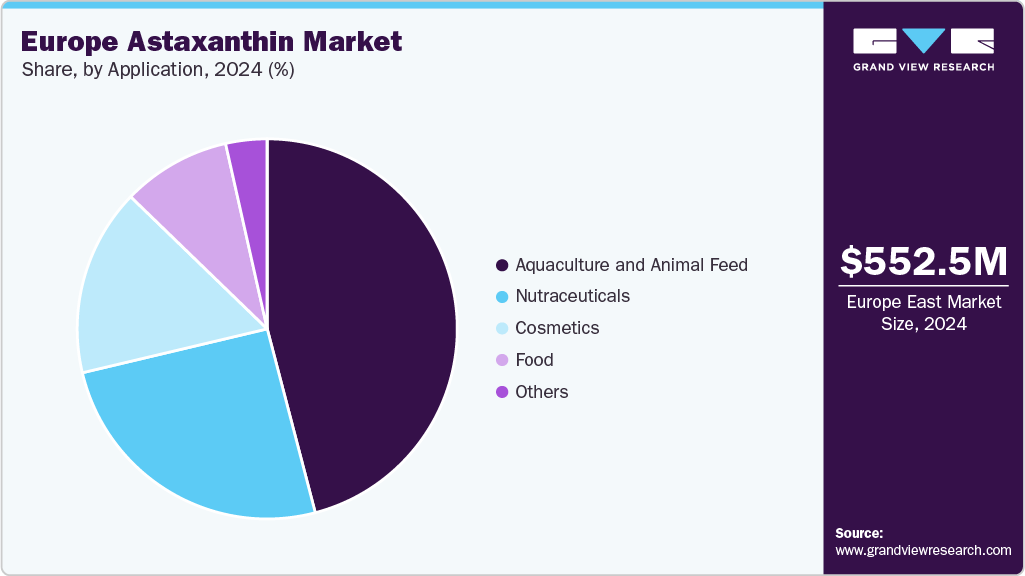
The nutraceuticals segment is projected to grow at the fastest CAGR of 13.92% over the forecast period due to rising awareness of astaxanthin’s therapeutic potential in managing oxidative stress and chronic health conditions. Consumers increasingly incorporate astaxanthin-based supplements into cardiovascular, eye, and joint health routines. A 2022 human trial with 32 participants aged 60-70 showed that a daily dose of 7 mg co-crystallized astaxanthin, combined with dark chocolate, improved oxidative status markers, suggesting its potential in age-related wellness. Scientific validation of anti-inflammatory properties encourages healthcare practitioners to recommend astaxanthin as part of integrative treatment approaches. Softgels, oils, and capsules featuring astaxanthin are gaining shelf space across pharmacies and e-commerce platforms. Key players are launching targeted nutraceutical formulations tailored for aging populations and active lifestyle users. This targeted approach and increasing health consciousness are driving rapid segment growth.
Country Insights
The UK astaxanthin market held a substantial market share in 2024, driven by increasing adoption of antioxidant-rich supplements among health-conscious consumers. Growing awareness regarding age-related eye disorders and skin health concerns has contributed to the demand for natural astaxanthin formulations. Softgel and oil-based nutraceuticals are gaining popularity through pharmacy chains and digital wellness platforms. Key players are strengthening their distribution channels and launching joint and cardiovascular support products. Clinical research from UK-based institutions is reinforcing therapeutic credibility across consumer groups. The expanding preventive healthcare segment supports market penetration in urban and semi-urban regions.
Germany Astaxanthin Market Trends
The astaxanthin market in Germany held a significant revenue share of 19.49 % in 2024, driven by strong demand for natural and microalgae-derived health supplements. The country has a robust presence of domestic and international nutraceutical brands offering certified astaxanthin products. High consumer preference for clinically validated formulations has led to wide acceptance in treatment routines targeting inflammation and oxidative stress. Germany's leading retailers and e-commerce platforms provide broad access to premium-quality softgels and oils. Scientific backing and rising consumer expenditure on therapeutic nutrition are shaping long-term demand. Local producers are also expanding algae cultivation to ensure a consistent supply and quality.
France Astaxanthin Market Trends
The astaxanthin market in France held a substantial market share in 2024, driven by rising interest in natural therapies for cardiovascular and skin health. Consumers are increasingly selecting antioxidant supplements to support beauty-from-within and active aging needs. The popularity of wellness routines featuring marine-based and algae-derived actives is pushing the use of astaxanthin in softgels and functional drinks. French nutraceutical firms invest in product innovation and clean-label branding to appeal to premium buyers. Astaxanthin’s role in improving physical recovery and reducing fatigue is also gaining traction among athletes and active adults. Pharmacies and health food stores are emerging as key sales channels for treatment-oriented offerings.
Spain Astaxanthin Market Trends
The astaxanthin market in Spain is expected to register the highest CAGR of 14.22 % over the forecast period, attributed to increasing consumption of health supplements across younger and middle-aged populations. Rising lifestyle-related health conditions encourage consumers to adopt preventive care regimens featuring natural antioxidants. Spanish manufacturers are promoting the therapeutic use of astaxanthin in products targeting eye health, fatigue, and inflammation. Evolving fitness culture and the popularity of Mediterranean diets create favorable conditions for supplement uptake. Local production of microalgae is also expanding to meet the growing demand for natural sources. The country’s dynamic retail ecosystem is supporting accelerated product penetration.
Italy Astaxanthin Market Trends
The astaxanthin market in Italy held a substantial market share in 2024, driven by strong consumer inclination toward plant-based and marine-derived wellness supplements. The demand is particularly high in the functional food and nutraceutical sectors, where astaxanthin is used for managing oxidative stress. Italian brands emphasize product purity and bioavailability to meet rising expectations from health-focused consumers. Clinical claims supporting skin hydration and visual performance are influencing purchasing behavior. Softgels and liquids featuring astaxanthin are widely available through pharmacies, wellness centers, and specialty stores. The aging population and focus on healthy aging continue to support market expansion.
Denmark Astaxanthin Market Trends
The astaxanthin market in Denmark held a substantial market share in 2024, driven by increasing preference for algae-derived products in therapeutic nutrition. Danish consumers show high awareness of antioxidant benefits, encouraging adoption of astaxanthin supplements for immune and cardiovascular support. The market benefits from transparent labeling standards and widespread trust in locally manufactured health products. Functional beverages and softgel capsules are gaining momentum among individuals focused on daily health maintenance. Ongoing product development by Scandinavian nutraceutical firms is introducing advanced delivery forms for better absorption. Growing interest in personalized nutrition further supports the uptake of treatment-centric formulations.
Sweden Astaxanthin Market Trends
The astaxanthin market in Sweden held a substantial market share in 2024, driven by strong consumer demand for preventive health solutions. The use of astaxanthin in sports nutrition and wellness programs is growing steadily due to its role in reducing muscle fatigue and improving recovery. Leading brands are introducing clean-label formulations using sustainable microalgae sources for therapeutic applications. Softgels, oils, and combination supplements are frequently marketed through pharmacies and digital platforms. Consumer awareness of cellular aging and inflammation management continues to fuel product interest. Sweden’s supportive innovation ecosystem helps companies refine extraction and encapsulation technologies for enhanced efficacy.
Norway Astaxanthin Market Trends
The astaxanthin market in Norway held a substantial market share in 2024, driven by high adoption of marine-based therapeutic products. The country’s established aquaculture industry has enabled cross-utilization of astaxanthin in both feed and human health sectors. Consumers prioritize natural, high-potency supplements to support eye, joint, and immune systems. Norwegian firms are expanding microalgae production to develop a clean and consistent raw material supply for nutraceutical use. The focus on fitness, endurance, and healthy aging shapes product demand across adult age groups. Innovations in oil-based and liquid formats are helping improve absorption and treatment outcomes.
Key Europe Astaxanthin Company Insights
The European market is highly competitive, led by Algalíf Iceland hf., which has strong sustainability practices and regional reach. BASF SE and DSM focus on pharmaceutical-grade formulations and wide distribution in therapeutic sectors. VALENSA INTERNATIONAL and AstaReal drive innovation in softgel delivery for health-specific applications. ALGAMO, Sea & Sun Organic GmbH, and Fraunhofer CBP enhance natural production through advanced algae cultivation. Nutri-Link and The Synergy Company target premium wellness consumers with organic formulations. Competition centers on clinical validation, bioavailability, and regional expansion.
Key Europe Astaxanthin Companies:
- Algalíf Iceland hf.
- ALGAMO
- BASF SE
- DSM (dsm-firmenich)
- Nutri-Link
- The Synergy Company
- Sea & Sun Organic GmbH
- Fraunhofer CBP
- VALENSA INTERNATIONAL
- AstaReal
Recent Developments
-
In April 2024, BGG World reported that BGG had opened a new global headquarters in Basel, Switzerland, to accelerate its international expansion in the market, particularly across Europe and the US.
-
In October 2023, Divi’s Nutraceuticals announced that the European Commission amended the conditions of use for the novel food astaxanthin‑rich oleoresin, originally derived from Haematococcus pluvialis. The revision authorized a daily intake of up to 2.3 mg for children aged 3 to less than 10 years, 5.7 mg for adolescents aged 10 to less than 14 years, while maintaining the 8 mg limit for individuals aged 14 years and above. This change also removed the previous labelling restriction prohibiting use in those under 14, effectively aligning dosage provisions across younger and adult age groups.
-
In January 2024, AstaReal, one of the initial players in the market for human consumption, rolled out a refreshed and rebranded version of its Astaxin supplement for customers in Sweden and Norway.
Europe Astaxanthin Market Report Scope
Report Attribute
Details
Market size value in 2025
USD 639.74 million
Revenue forecast in 2033
USD 1,700.55 million
Growth rate
CAGR of 13.00 % from 2025 to 2033
Base year for estimation
2024
Historical data
2021 - 2023
Forecast period
2025 - 2033
Quantitative units
Revenue in USD million/billion and CAGR from 2025 to 2033
Report coverage
Revenue forecast, company ranking, competitive landscape, growth factors, trends
Segments covered
Source, product, application, country
Key company profiled
Algalíf Iceland hf.; ALGAMO; BASF SE; DSM (dsm-firmenich); Nutri-Link; The Synergy Company; Sea & Sun Organic GmbH; Fraunhofer CBP; VALENSA INTERNATIONAL; AstaReal
Customization scope
Free report customization (equivalent up to 8 analysts working days) with purchase. Addition or alteration to country, regional & segment scope.
Pricing and purchase options
Avail customized purchase options to meet your exact research needs. Explore purchase options
Europe Astaxanthin Market Report Segmentation
This report forecasts revenue growth at country levels and provides an analysis of the latest industry trends in each of the sub-segments from 2021 to 2033. For this study, Grand View Research has segmented the Europe astaxanthin market report based on source, product, application, and country:
-
Source Outlook (Revenue, USD Million, 2021 - 2033)
-
Natural
-
Yeast
-
Krill/Shrimp
-
Microalgae
-
Others
-
-
Synthetic
-
-
Product Outlook (Revenue, USD Million, 2021 - 2033)
-
Dried Algae Meal or Biomass
-
Oil
-
Softgel
-
Liquid
-
Others
-
-
Application Outlook (Revenue, USD Million, 2021 - 2033)
-
Nutraceuticals
-
Cosmetics
-
Aquaculture and Animal Feed
-
Food
-
Functional Foods and Beverages
-
Other Traditional Food Manufacturing Applications
-
-
Others
-


Share this report with your colleague or friend.
Need a Tailored Report?
Customize this report to your needs — add regions, segments, or data points, with 20% free customization.


ISO 9001:2015 & 27001:2022 Certified
We are GDPR and CCPA compliant! Your transaction & personal information is safe and secure. For more details, please read our privacy policy.
Trusted market insights - try a free sample
See how our reports are structured and why industry leaders rely on Grand View Research. Get a free sample or ask us to tailor this report to your needs.













