Market Size & Trends
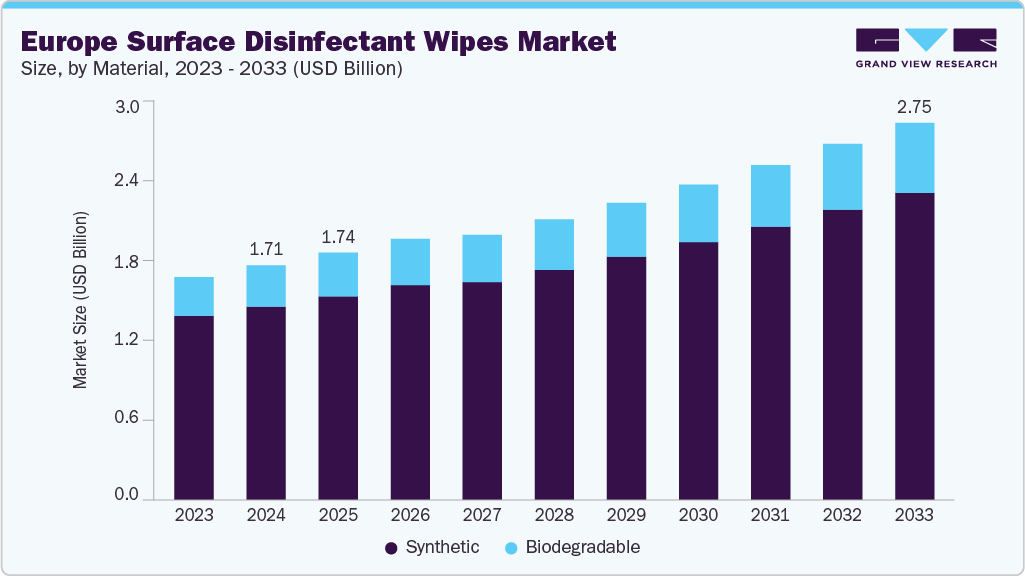
The Europe surface disinfectant wipes market size was valued at USD 1,715.9 million in 2024 and is expected to reach USD 2,757.5 million by 2033, growing at a CAGR of 5.9% from 2025 to 2033. The growth is driven by multiple, interrelated factors that reflect wider health, social, and economic trends. One of the primary growth drivers is the heightened awareness of hygiene and sanitation, particularly following the COVID-19 pandemic. The pandemic experience led to a permanent increase in demand for high-performance disinfectant wipes in households, workplaces, and healthcare institutions, solidifying their role as essential consumables for infection control and general cleanliness.
Europe’s rapidly expanding healthcare sector is another key factor contributing to the market’s growth. The rising number of surgeries, increased frequency of chronic disorders requiring extended hospital stays, and a growing elderly population (who are more susceptible to infections) all demand higher and more frequent use of surface disinfectant wipes in hospitals and clinics. Their convenience and efficacy in minimizing hospital-acquired infections make them highly valued across medical settings in the region.
Government regulations and public health campaigns across Europe have also served as catalysts for market expansion. Stringent health and safety standards, alongside regulatory measures that classify and evaluate hygiene products, have driven both innovation and adoption of multi-component, high-efficacy disinfectant wipes designed to target a broad spectrum of pathogens. These frameworks ensure wipes are safe, effective, and clearly labeled, fostering trust among institutional and individual buyers.
Consumer trends also play a substantial role. There is a notable shift toward convenient, pre-moistened cleaning solutions that cater to modern, fast-paced lifestyles. The ease-of-use and portability of disinfectant wipes increase their popularity-not only in healthcare, but also in commercial spaces, schools, public transport, hospitality, and private homes. Rising disposable incomes and growth in retail and e-commerce channels have further accelerated accessibility and adoption.
A surge in demand for specialty, eco-friendly, and dermatologically tested products is reshaping the European market. Growth is particularly pronounced in alcohol-free and fragrance-free categories. Sustainable packaging and biodegradable materials are increasingly important due to consumer and regulatory concerns over plastic waste and environmental impact. Companies investing in greener formulations are benefiting from this shift in market preference.
Finally, the steady emergence of new infectious diseases, the ongoing threat of pandemics, and regular incidences of seasonal flu maintain an elevated baseline demand for surface disinfectant wipes throughout Europe. Growing public awareness, combined with educational campaigns about infection prevention, continues to expand the market as both organizations and individuals prioritize ongoing cleanliness and proactive hygiene management.
The European market is encountering several significant challenges that may hinder its growth and long-term sustainability. One of the primary concerns is the volatility in raw material prices, particularly for the chemicals and nonwoven substrates used in wipe production. These price fluctuations can directly impact manufacturing costs, erode profit margins, and sometimes force manufacturers to reformulate products with substitute ingredients, potentially affecting product consistency and performance. Additionally, supply chain disruptions-heightened during and after the COVID-19 pandemic-have compounded these cost management challenges.
Stringent and evolving regulations present another major hurdle for the industry. The European Union and national governments continue to introduce strict standards regarding the safety, efficacy, labeling, and allowable chemical compositions of disinfectant wipes. Meeting these requirements requires continual product testing, reformulation, and significant investments in regulatory compliance, which can slow down the introduction of new products and increase operational costs for manufacturers.
Material Insights
Synthetic surface disinfectant wipes dominated the European market, holding a share of over 80% in 2024. Key advantages, including proven efficacy, convenience, and widespread availability, have fueled their growth. Synthetic wipes offer consistent disinfectant application, are compatible with a wide range of surfaces, and provide time-saving benefits, making them especially popular in high-traffic environments such as hospitals, offices, schools, and transportation systems. During periods of heightened public health concern, such as the COVID-19 pandemic, demand surged for solutions that enable quick, reliable disinfection. The dominant factors for growth in this segment are the ongoing need for infection control, the demand for portable and ready-to-use hygiene solutions, and the wipes’ established track record of safety and efficiency.
The market for biodegradable disinfectant wipes is being driven by increasing environmental awareness, regulatory pressures, and shifting consumer preferences. The environmental drawbacks of synthetic wipes-mainly their contribution to landfill waste and microplastic pollution-have grown more prominent, leading consumers, companies, and governments to favor greener alternatives. In response, manufacturers are developing wipes made from plant-based fibers and natural ingredients that break down more easily, addressing consumer concerns about sustainability without compromising product performance. Innovations in materials science have enhanced the efficacy and durability of biodegradable wipes, facilitating their expansion into the home, healthcare, and commercial sectors. Moreover, governments, particularly in Europe and North America, are implementing stricter regulations on single-use plastics and hazardous chemicals, further incentivizing the adoption of biodegradable products. The premium placed on sustainability has contributed to a higher growth rate for this segment-driven not only by environmental advocacy but also by corporations seeking to meet sustainability targets and attract eco-conscious customers.
Pack Size Insights
The 51-75 pcs pack size is the most popular for disinfectant wipes in Europe, accounting for a share of over 31%, due to its optimal balance of convenience, efficiency, and practicality for both households and professional environments. This pack size is large enough to support frequent cleaning and disinfection, making it ideal for moderate-use scenarios such as homes, small businesses, clinics, and offices. At the same time, it is not so large that the wipes risk drying out before their use, which is a common issue with larger packs and diminishes product effectiveness.
Consumers and institutions appreciate that the 51-75 wipes range provides good value for money-large enough for regular use but still affordable and manageable in terms of storage and portability. It minimizes waste and ensures product quality is preserved until the last wipe, aligning with both cost-efficiency and sustainability considerations. This size also matches the typical purchasing patterns and storage capacities in European households and workplaces, where oversized packs can be impractical.
The fastest-growing pack size for surface disinfectant wipes in Europe is the 76-100-piece pack size. This segment is experiencing the most rapid increase in demand, driven by factors such as a shift toward greater value and operational efficiency in professional and institutional settings like hospitals, clinics, and schools. Larger pack sizes reduce the frequency of replacement, minimize packaging waste per wipe, and support increased cleaning frequency due to stricter infection prevention protocols. As a result, these packs are favored for ensuring uninterrupted supply and cost- and sustainability-conscious purchasing.
End Use Insights
Healthcare was the largest end user for disinfectant wipes, accounting for a market revenue of over 29% in 2024. This dominance is driven by the critical need for infection prevention and control, particularly to reduce the risk of healthcare-associated infections (HAIs). The sector’s reliance on disinfectant wipes stems from the need for stringent hygiene standards, high cleaning frequencies, and the convenience these wipes provide for quickly and effectively disinfecting high-touch surfaces. The increase in surgical operations, growing use of medical devices, and strict hospital protocols further amplify demand, making disinfectant wipes indispensable for maintaining sterile environments and safeguarding both patients and staff. Medical environments require products that ensure the elimination of broad-spectrum pathogens, and wipes meet these standards due to their efficacy and ease of use. The aging European population, along with the increasing number of surgeries and treatments for chronic illnesses, necessitates expanded healthcare services, which in turn drive up demand for high-quality disinfectant solutions. Compliance with national and EU-level standards further ensures ongoing, high-volume usage in this sector.
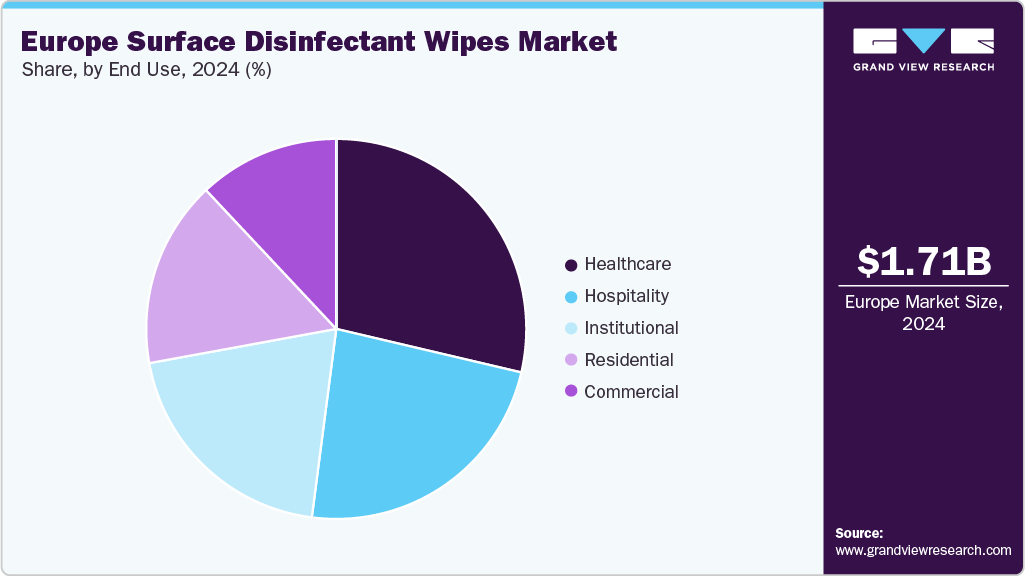
Residential usage of wipes is expected to grow at a CAGR of 6.7% from 2025 to 2033. The surge in household demand is attributed to an increased consumer focus on hygiene and convenience, particularly following the COVID-19 pandemic. Families are seeking accessible, quick, and effective ways to maintain clean living spaces-particularly in homes with children, elderly members, or pets-prompting a shift toward ready-to-use cleaning solutions, such as disinfectant wipes.
The drivers for accelerated household sector growth include the widespread adoption of new cleaning routines and the desire for greater peace of mind regarding surface cleanliness. Consumer education campaigns and a continued focus on personal health have normalized frequent surface sanitation as part of daily life. The convenience, portability, and ease of storage of disinfectant wipe packs also support widespread adoption. Additionally, the proliferation of retail and e-commerce channels has made these products more accessible than ever, further fueling residential uptake. Innovations such as fragrance-free, dermatologically tested, and eco-friendly formats are attracting new users-especially among environmentally conscious consumers-hastening the segment’s rapid expansion.
Country Insights
Germany surface disinfectant wipes market was the largest in 2024, accounting for a revenue of USD 480 million. This dominance is attributable to the country’s robust emphasis on hygiene standards across homes, public settings, and especially within its extensive healthcare sector. Germans have a longstanding cultural emphasis on cleanliness, which is further reinforced by stringent regulatory compliance and rigorous patient safety protocols in hospitals and clinics. Additionally, Germany’s large population, significant elderly demographic, and advanced medical infrastructure contribute to a steady, high-volume demand for disinfectant wipes. The well-developed retail and distribution networks facilitate widespread access to cleaning products, supporting high per capita consumption. German consumers also show a growing preference for innovative and safe hygiene solutions, further solidifying their status as the market leader in Europe.
The surface disinfectant wipes market in the UK is recognized as the fastest-growing market in Europe. This accelerated growth is fueled by heightened public awareness of hygiene, particularly in response to health crises such as the COVID-19 pandemic. British consumers have rapidly adopted disinfectant wipes for both personal and household use, and healthcare institutions have increased their reliance on these products to meet stricter infection control regimes. Additionally, the UK’s dynamic retail scene, including the rapid rise of online and convenience channels, has made disinfectant wipes easily accessible to a wide range of consumers. Ongoing product innovation, the popularity of eco-friendly and specialty variants, and a sustained public focus on cleanliness and environmental health are set to maintain and even amplify the UK's exceptional growth momentum within the European market.
Key Europe Surface Disinfectant Wipe Companies Insights
Key players operating in the Europe surface disinfectant wipes market are undertaking various initiatives to strengthen their presence and increase the reach of their products and services. Strategies such as expansion activities and partnerships are key in propelling the market growth.
Key Europe Surface Disinfectant Wipe Companies:
- Reckitt Benckiser Group
- Procter & Gamble
- 3M
- Ecolab
- The Clorox Company
- Kimberly-Clark
- Johnson & Johnson
- STERIS
- Colgate-Palmolive
- PDI, Inc.
- GOJO Industries
- Diversey
- Cantel Medical
- Medline Industries
- BODE Chemie
Europe Surface Disinfectant Wipes Market Report Scope
|
Report Attribute
|
Details
|
|
Market size value in 2025
|
USD 1,742 million
|
|
Revenue forecast in 2033
|
USD 2,757.5 million
|
|
Growth rate
|
CAGR of 5.9% from 2025 to 2033
|
|
Actuals
|
2021 - 2024
|
|
Forecast period
|
2025 - 2033
|
|
Quantitative units
|
Revenue in USD million/billion, and CAGR from 2025 to 2033
|
|
Report coverage
|
Revenue forecast, company ranking, competitive landscape, growth factors, and trends
|
|
Segments covered
|
Material, end use, pack size, country
|
|
Regional scope
|
Europe
|
|
Country scope
|
Germany; UK; France; Italy; Spain
|
|
Key companies profiled
|
Reckitt Benckiser Group; Procter & Gamble; 3M; Ecolab; The Clorox Company; Kimberly-Clark; Johnson & Johnson; STERIS; Colgate-Palmolive; PDI, Inc.; GOJO Industries; Diversey; Cantel Medical; Medline Industries; BODE Chemie
|
|
Customization scope
|
Free report customization (equivalent up to 8 analysts working days) with purchase. Addition or alteration to country, regional & segment scope.
|
|
Pricing and purchase options
|
Avail customized purchase options to meet your exact research needs. Explore purchase options
|
Europe Surface Disinfectant Wipes Market Report Segmentation
This report forecasts revenue growth at the regional and country level and analyzes the latest industry trends and opportunities in each sub-segment from 2021 to 2030. Grand View Research has segmented the Europe surface disinfectant wipes market report by material, pack size, end use, and country:
-
Material Outlook (Revenue, USD Million, 2021 - 2033)
-
Pack Size Outlook (Revenue, USD Million, 2021 - 2033)
-
< 25 pcs
-
26 - 50 pcs
-
51 - 75 pcs
-
76 - 100 pcs
-
> 100 pcs
-
End Use Outlook (Revenue, USD Million, 2021 - 2033)
-
Residential
-
Synthetic
-
Healthcare
-
Hospitality
-
Institutional
-
Country Outlook (Revenue, USD Million, 2021 - 2033)
-
Europe
-
Germany
-
UK
-
France
-
Italy
-
Spain
Frequently Asked Questions About This Report

 Download Sample Report
















