
- Home
- »
- Advanced Interior Materials
- »
-
Fabric Filter Market Size, Share & Trends Report, 2026-2033GVR Report cover

Fabric Filter Market (2026 - 2033)
Size, Share & Trends Analysis Report By End-use (Food & Beverages, Water & Wastewater, Pharmaceuticals, Chemical, Oil & Gas), By Product (Liquid, Air), By Region (North America, Europe, Asia Pacific, Latin America), And Segment Forecasts
Market Size, 2025
$4.3BMarket Estimate, 2026
$4.5BMarket Forecast, 2033
$6.7BCAGR, 2026–2033
5.7%Fabric Filter Market Size & Trends
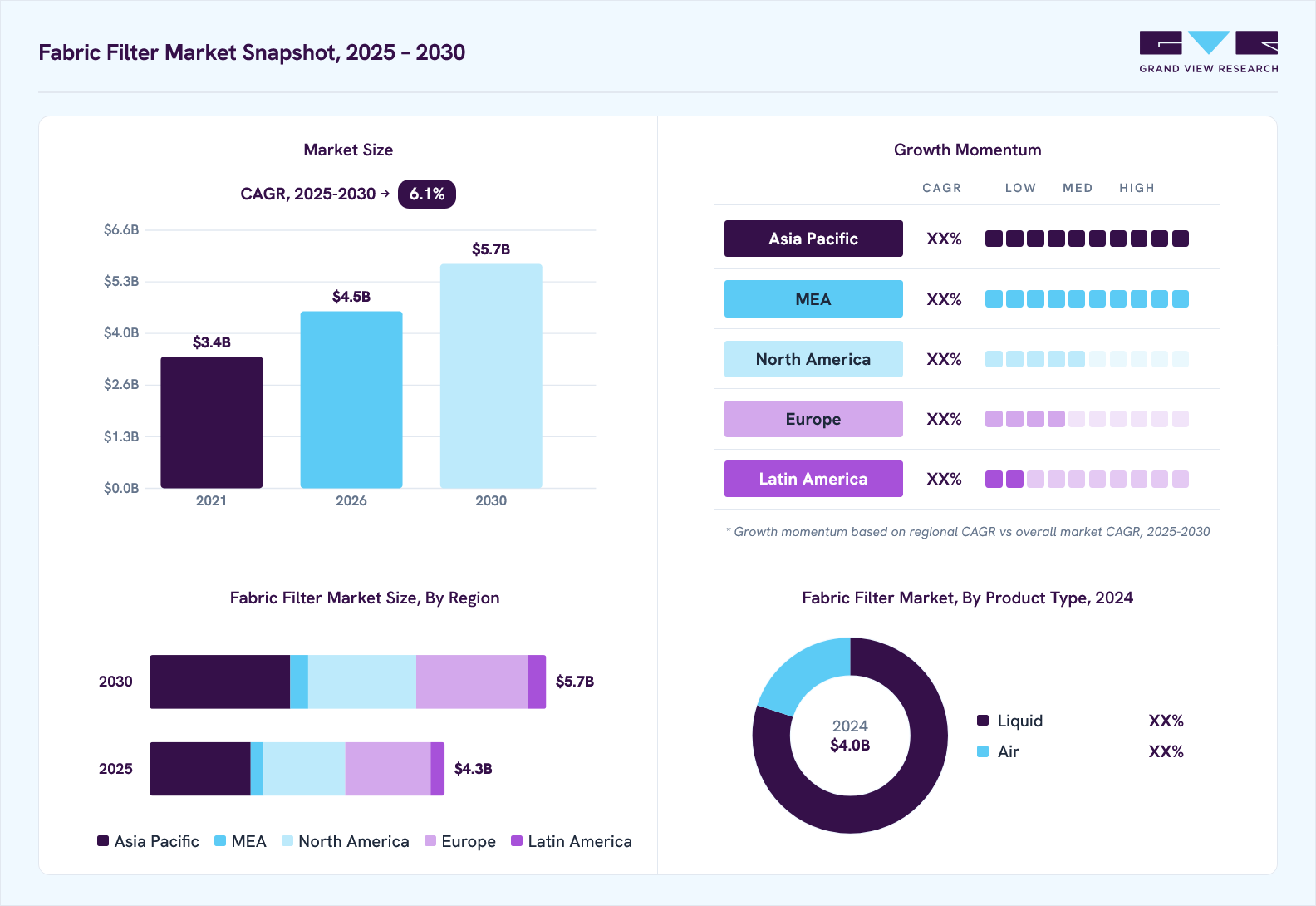
The global fabric filter market size was estimated at USD 4.3 billion in 2025 and is projected to grow from USD 4.5 billion in 2026 to USD 6.7 billion by 2033, growing at a CAGR of 5.7% from 2026 to 2033. Asia Pacific dominated the market, accounting for the largest global share of 34.2% in 2025. Governments worldwide are enforcing stringent air quality standards to mitigate the impact of pollutants released by industries such as power generation, chemicals, and cement manufacturing.
 Source: Grand View Research, IR Documents, Primary Interviews, Paid DatabasesTo learn more about this report,
 Download Free Sample Report
 Key Market Trends & Insights
- By product type: Air segment led the market with the largest revenue share of 64.8% in 2025.
- By end-use: Food & beverages segment led the market with the largest share of 42.7% in 2025.
Regional Highlights
- Largest regional market: Asia Pacific (34.2% revenue share, 2025)
- By country: The China held the largest share of Asia Pacific in 2025.
Market Size & Forecast
- Market size in 2025: USD 4.3 Billion
- Estimated market size in 2026: USD 4.5 Billion
- Projected market size by 2033: USD 6.7 Billion
- CAGR (2026-2033): 5.7%
Three ways to get this report
Buy it, customize it, or ask a question.Ask an Analyst
Analyst response in 1 business day
- AccessReport author, directly
- Reply timeWithin 1 working day
- No sales callDirect answer only
- FormatEmail reply
- CostFree, no cost
Get the Full Report
What the study covers
- FormatsPDF · Excel · Dashboard
- Timeline2026–2033 annual, 2025 base
- Coverage20+ countries, 5 regions
- Companies10+ key players profiled
Customize the Report
20% free customization
- IncludeCountries, segments, points
- TailorTo your product definition
- ExtendDeeper competitor detail
- OrA fully bespoke study
- Turnaround5–10 working days
Regulatory bodies, including the U.S. Environmental Protection Agency (EPA) and the European Environment Agency (EEA), mandate the use of fabric filters in industrial processes to capture particulate matter and other harmful emissions. The rising concerns over air pollution and its adverse effects on human health are prompting industries to invest in advanced filtration solutions. Rapid industrialization, especially in emerging economies such as China, India, and Brazil, has led to increased emissions, necessitating the deployment of fabric filters in various industrial applications. Moreover, advancements in fabric filter technologies, such as the development of high-temperature and chemically resistant filter media, are enhancing efficiency and expanding their application scope across different industries, further supporting market expansion.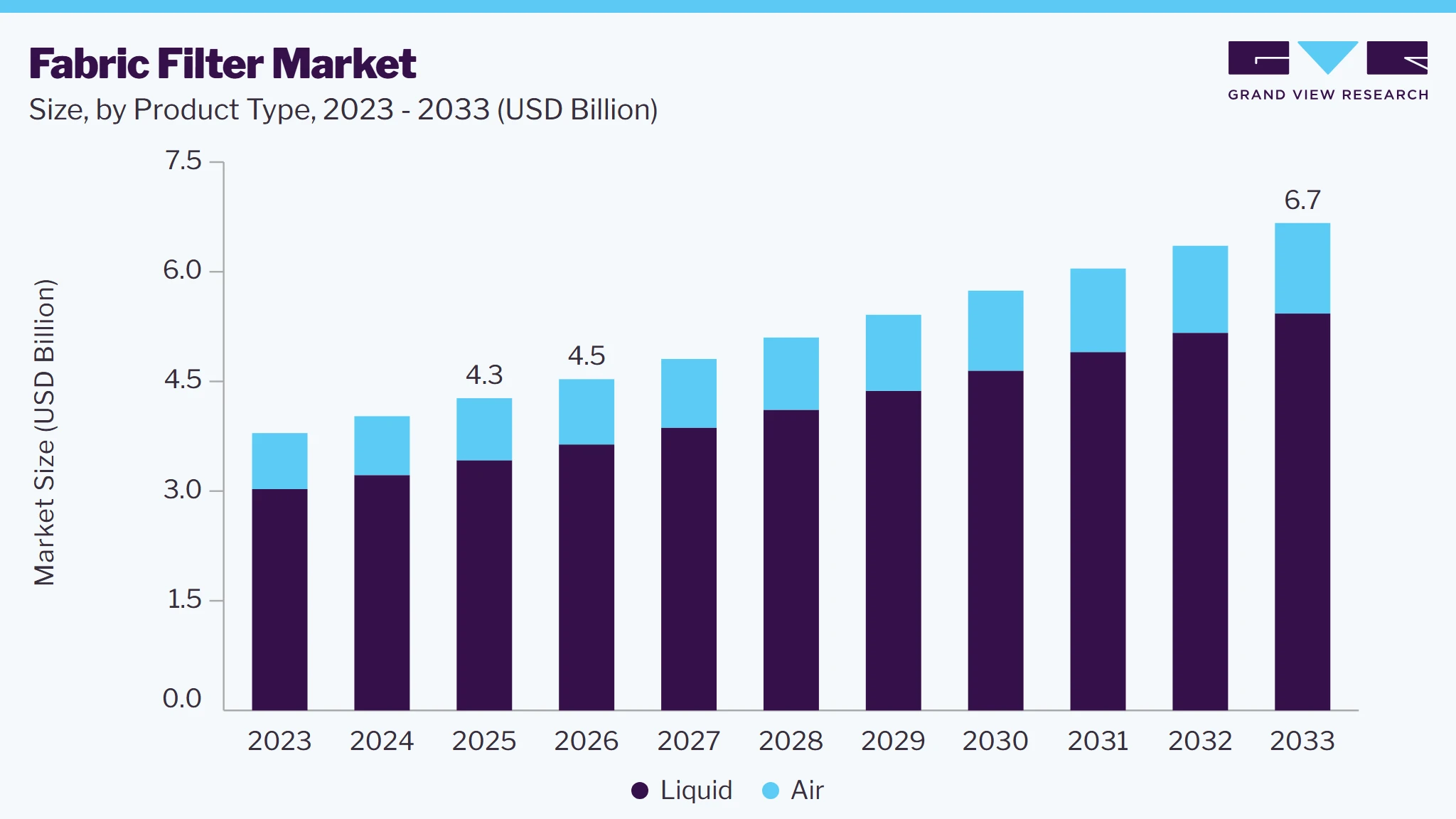 To learn more about this report, Download Free Sample Report
 Another key driver is the growing adoption of fabric filters in power plants and waste incineration facilities. With a global shift toward cleaner energy production, power plants are increasingly incorporating advanced filtration systems to comply with emission standards. Similarly, the waste management sector is integrating fabric filters in incineration plants to minimize the release of hazardous particulate matter into the atmosphere. These trends, coupled with rising investments in infrastructure development and industrial expansion, are expected to sustain the growth of the global fabric filter industry in the coming years.
Market Dynamics
The fabric filter market is influenced by a combination of regulatory, industrial, technological, environmental, and economic factors that collectively shape demand and adoption across end-use industries. Stringent air quality regulations and particulate emission standards remain the primary drivers for the deployment of fabric filtration systems, while the volume and characteristics of industrial dust emissions influence filter media selection and system configuration. Industrial production trends across sectors such as cement, power generation, metals, chemicals, mining, and waste management directly impact equipment installation, replacement, and retrofit activities. Technological advancements in high-performance filter media, pulse-jet cleaning systems, automation, and energy-efficient designs continue to enhance filtration efficiency, operational reliability, and lifecycle performance.
Stringent regulations governing particulate matter emissions remain the primary driver for the fabric filter market. Regulatory agencies across major economies continue to enforce stricter emission limits, compelling industries such as cement, power generation, metals, chemicals, mining, and waste management to deploy high-efficiency dust collection systems.
In parallel, expanding industrial production, capacity additions, and investments in new manufacturing facilities are increasing the demand for reliable particulate control solutions. The ongoing modernization and retrofitting of existing plants to achieve higher environmental compliance and operational efficiency further support market growth.
High capital investment and recurring maintenance requirements remain key restraints for the fabric filter market. The installation of fabric filter systems requires significant expenditure on filtration equipment, ducting, fans, and control systems, while periodic replacement of filter bags and routine maintenance increase lifecycle costs.
In addition, production downtime associated with maintenance activities can affect operational efficiency. These factors may limit adoption, particularly among small and medium-sized industrial facilities operating under budget constraints.
The development of advanced filter media and intelligent filtration technologies presents significant growth opportunities for the fabric filter market. Innovations in high-temperature-resistant, chemically resistant, and nanofiber-based filter fabrics are enhancing dust collection efficiency, extending filter service life, and reducing operating costs.
Furthermore, the integration of IoT-enabled monitoring, predictive maintenance, and automated filtration control systems enables real-time performance optimization, minimizes downtime, and improves energy efficiency. Growing investments in sustainable industrial operations and digital manufacturing are expected to accelerate the adoption of next-generation fabric filtration systems over the forecast period.
Market Concentration & Characteristics
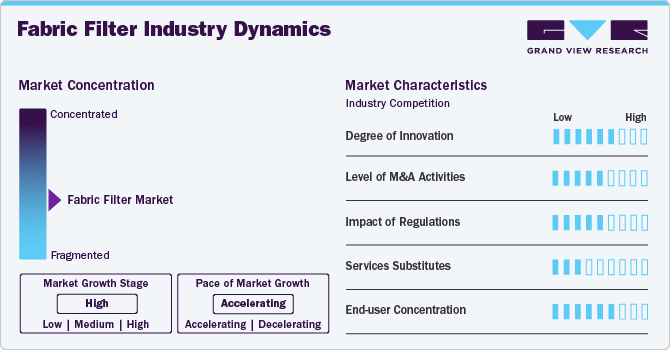
The global fabric filter industry exhibits a moderate to high level of market concentration, with a mix of established multinational players and regional manufacturers catering to diverse industrial needs. The degree of innovation in the market is significant, as advancements in filtration materials, such as polytetrafluoroethylene (PTFE) membranes and nanofiber technology, enhance filtration efficiency and durability. Companies are investing in research and development to improve filter longevity, reduce pressure drops, and enhance energy efficiency. In addition, the market is heavily influenced by stringent environmental regulations, particularly in industrialized economies. Regulatory frameworks such as the U.S. Environmental Protection Agency’s (EPA) Clean Air Act and the European Union’s Industrial Emissions Directive (IED) mandate the reduction of particulate emissions, driving the adoption of fabric filters in power generation, cement, chemicals, and other industries.
 To learn more about this report, Download Free Sample Report
 Service substitutes in the fabric filter industry include electrostatic precipitators, scrubbers, and cartridge filters, which are often chosen based on industry-specific requirements, cost considerations, and filtration efficiency. While these alternatives provide competition, fabric filters remain preferred due to their high particle capture efficiency and adaptability to various industrial applications. End-use concentration is prominent in sectors with high particulate emissions, such as power plants, cement manufacturing, pharmaceuticals, and metals and mining. The demand for fabric filters is also growing in emerging economies due to rapid industrialization and stricter air pollution control measures. As industries focus on sustainability and regulatory compliance, the market is expected to witness steady growth, with continuous technological advancements shaping its future landscape.
Analyst Perspective
The fabric filter market is experiencing steady growth as industries increasingly invest in advanced air pollution control technologies to comply with stringent environmental regulations and improve workplace air quality. Growing industrial activity across cement, power generation, metals & mining, chemicals, and manufacturing sectors is driving demand for high-efficiency particulate filtration solutions capable of handling challenging operating environments. In addition, rising emphasis on sustainable manufacturing, emission reduction, and operational efficiency is accelerating the adoption of advanced filter media with enhanced dust collection performance, longer service life, and lower maintenance requirements. As governments continue to strengthen emission standards and industries modernize pollution control infrastructure, manufacturers offering durable, high-performance, and application-specific fabric filter solutions are expected to benefit from sustained long-term market growth.
End-use Insights
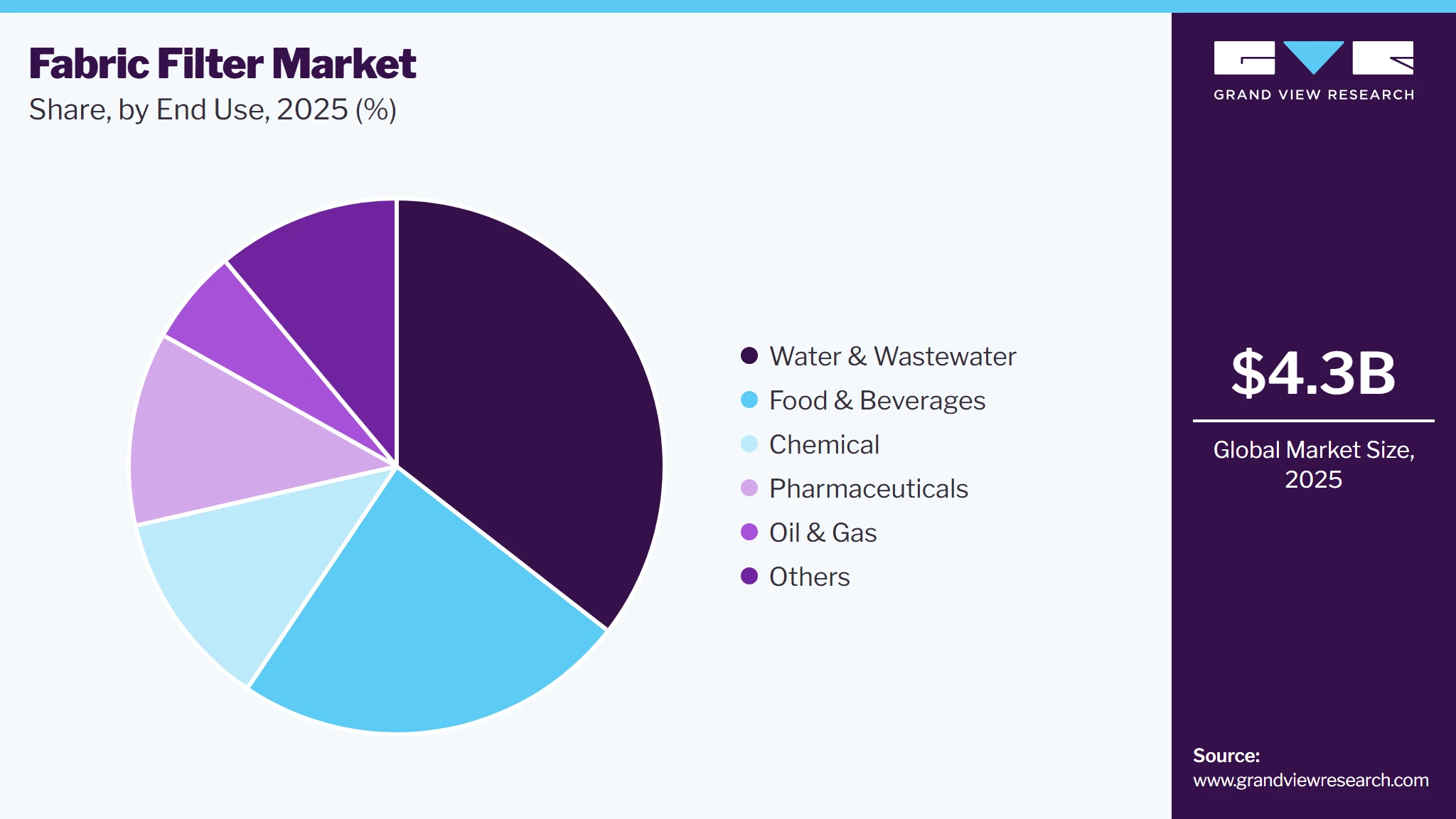
Based on end-use, the food & beverages segment led the market with the largest revenue share of 42.7% in 2025. The water & wastewater segment led the market and held the second largest revenue share in 2025. The increasing global demand for clean water and stringent environmental regulations are key drivers of fabric filter adoption in the water and wastewater treatment sector. Governments worldwide are imposing strict emission and discharge limits on industrial and municipal wastewater facilities, necessitating the use of advanced filtration technologies. Fabric filters offer high-efficiency particulate removal, ensuring compliance with regulatory standards such as the U.S. Clean Water Act and the European Union’s Water Framework Directive. These regulatory pressures are driving utilities and industries to invest in effective filtration solutions, boosting demand for fabric filters.
 To learn more about this report, Download Free Sample Report
 The oil and gas segment is expected to grow significantly at a CAGR of 6.3% over the forecast period. Oil refineries, petrochemical plants, and natural gas processing facilities generate significant particulate emissions from processes like combustion, catalytic cracking, and fluidized bed operations. High-efficiency fabric filters help maintain cleaner air in industrial facilities, preventing the contamination of equipment and improving operational efficiency. By minimizing particulate buildup in pipelines and machinery, fabric filters also reduce maintenance costs and enhance the lifespan of key processing equipment, further incentivizing their adoption.
Product Insights
The liquid segment is expected to grow significantly at a CAGR of 5.9% over the forecast period, driven by increasing demand for efficient filtration solutions across various industries, including water treatment, pharmaceuticals, chemicals, and food & beverages. The need for high-performance filtration systems to remove contaminants, impurities, and solid particulates from liquids is a primary factor fueling the adoption of liquid fabric filters. These filters are widely used in industrial applications where maintaining liquid purity is critical, particularly in sectors such as wastewater treatment and chemical processing, where regulatory compliance and environmental sustainability are key concerns.
Based on product type, the air segment led the market with the largest revenue share of 64.8% in 2025. Technological advancements in fabric filtration media, such as polytetrafluoroethylene (PTFE) membranes, aramid fibers, and nanofiber coatings, are enhancing the efficiency and lifespan of air filtration systems. These innovations offer superior dust-holding capacity, reduced pressure drops, and high-temperature resistance, making them ideal for high-performance applications. The push toward energy-efficient and low-maintenance filtration solutions also encourages industries to upgrade to advanced fabric filter technologies.
Regional Insights
The North America fabric filter industry growth is supported by the technological advancements in filter media and design innovations. The development of high-performance filter materials, such as PTFE membranes, aramid fibers, and nanofiber-coated fabrics, is enhancing the efficiency, durability, and cost-effectiveness of fabric filters. These advancements enable industries to achieve higher filtration efficiency, lower pressure drops, and extended filter life, reducing maintenance costs and improving operational performance. The increasing focus on energy-efficient and sustainable filtration solutions is encouraging industries to upgrade their existing filtration systems with advanced fabric filter technologies.
U.S. Fabric Filter Market Trends
The U.S. fabric filter industry is experiencing steady growth, driven primarily by stringent environmental regulations and increasing industrial emissions control requirements. The Environmental Protection Agency (EPA) has established strict air quality standards under the Clean Air Act (CAA), mandating industries to limit particulate matter (PM) emissions. Compliance with these regulations is prompting industries such as power generation, cement manufacturing, pharmaceuticals, and metal processing to adopt fabric filters as an effective air pollution control solution. In addition, state-level policies and initiatives further reinforce the need for advanced filtration systems, contributing to market expansion.
Asia Pacific Fabric Filter Market Trends
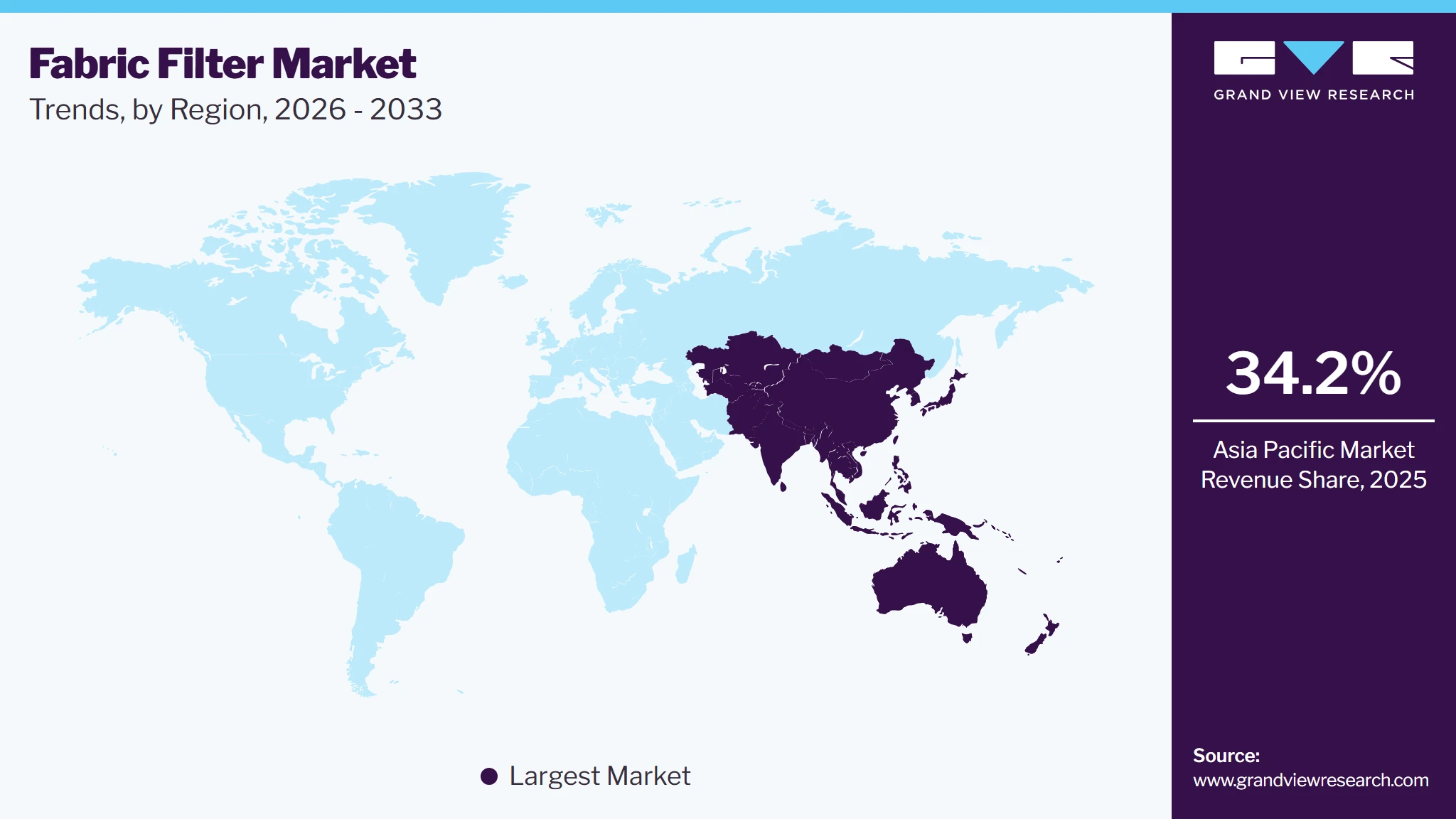
Asia Pacific dominated the fabric filter market with the largest revenue share of 34.2% in 2025, driven by increasing industrialization, urbanization, and stringent environmental regulations aimed at controlling air pollution. Governments across the region, particularly in China, India, Japan, and Australia, are implementing strict emission control policies to combat rising pollution levels. Regulatory bodies such as the Ministry of Ecology and Environment (MEE) of China and the Central Pollution Control Board (CPCB) of India are enforcing stringent emission standards for industries, power plants, and manufacturing units. These regulations are compelling industries to adopt advanced air filtration systems, including fabric filters, to meet compliance requirements and reduce particulate emissions.
 To learn more about this report, Download Free Sample Report
 The fabric filter market in China held the largest share in the Asia Pacific region in 2025. The fabric filter industry in China is experiencing robust growth, driven by stringent environmental regulations and the country's ongoing efforts to combat air pollution. The Chinese government has implemented strict policies under initiatives such as the Air Pollution Prevention and Control Action Plan and the Blue Sky Protection Campaign, which mandate industries to adopt advanced air filtration technologies. These regulations have significantly increased the demand for fabric filters in sectors such as power generation, cement manufacturing, and metal processing, where emission control is a critical requirement. In addition, China’s Five-Year Plans continue to emphasize sustainable industrial practices, further boosting the adoption of high-efficiency air filtration systems.
Europe Fabric Filter Market Trends
The fabric filter industry in Europe is driven by the increasing focus on sustainability and energy efficiency, which is fostering the use of fabric filters. Industries are seeking solutions that not only help them meet regulatory requirements but also reduce energy consumption. Fabric filters, with their ability to provide high dust collection efficiency while minimizing energy use, are becoming an attractive option for companies looking to optimize their operations. The expanding use of fabric filters in waste management and recycling operations is contributing to market growth. The need for proper waste disposal and recycling methods in Europe is rising, and fabric filters are integral in controlling emissions during these processes, further supporting the market's expansion.
The Germany fabric filter industry's growth is attributed to the industrial landscape in Germany that contributes significantly to the growth. With a well-established industrial base, including sectors such as power generation, chemicals, pharmaceuticals, and food processing, there is a consistent demand for reliable air pollution control systems. The expansion and modernization of these industries further escalate the need for efficient filtration systems, as they face increasing pressure to manage emissions effectively. As the demand for cleaner production processes intensifies, fabric filters offer an ideal solution by providing reliable particulate capture capabilities while ensuring compliance with environmental laws.
Latin America Fabric Filter Market Trends
The fabric filter industry in Latin America is driven by the growing public awareness and concern about environmental sustainability. As the global conversation around climate change and environmental health intensifies, there is a growing expectation for industries to adopt cleaner technologies. In many Latin American countries, environmental activism is gaining momentum, and consumers are placing greater pressure on industries to adopt sustainable practices. This societal shift has led to a rise in corporate responsibility initiatives, with many companies investing in pollution control technologies like fabric filters to improve their environmental credentials. As industries strive to meet the expectations of both regulators and the public, the demand for efficient and reliable air pollution control systems, such as fabric filters, continues to rise across the region.
Middle East & Africa Fabric Filter Market Trends
The fabric filter industry in MEA is driven by the pivotal role played by technological advancements in the growth of the market. Innovations in filtration technology, such as the development of more durable filter media and advanced cleaning mechanisms, have significantly improved the efficiency and lifespan of fabric filters. These technological advancements ensure that industries in the MEA region can achieve higher particulate removal rates with lower energy consumption, making fabric filters a more cost-effective and sustainable choice.
Key Fabric Filter Company Insights
Some of the key players operating in the market include Nederman Corporation Inc. and Pall Corporation, among others.
-
Nederman Corporation Inc. is a global player in providing sustainable industrial air filtration solutions, specializing in the design, manufacture, and installation of filtration systems for a variety of industries. The company has a strong presence in the air filtration and emission control market, offering a comprehensive range of products and services aimed at improving air quality and reducing environmental impact. Its product portfolio includes advanced fabric filter systems, dust collectors, mist eliminators, and fume extraction units, which are used across industries such as manufacturing, cement production, and pharmaceuticals.
-
Pall Corporation, a global leader in filtration, separation, and purification technologies, is renowned for its contributions to air filtration systems, including fabric filters. The company provides a wide range of advanced filtration solutions for industries such as healthcare, biotechnology, pharmaceuticals, food and beverage, and industrial manufacturing. Pall’s fabric filter offerings include both dust collection and liquid filtration systems designed to improve air quality and ensure safe, compliant operations.
Siemens AG and Affinia Group are some of the emerging market participants in the fabric filter industry.
-
Siemens’ portfolio includes air pollution control systems that utilize fabric filtration to reduce particulate emissions from industrial processes, such as power generation, manufacturing, and mining. The company’s fabric filter systems are integrated with its state-of-the-art automation technologies, enabling industries to optimize their filtration processes for greater efficiency and lower operational costs.
-
Affinia Group, a leading manufacturer of filtration products, offers a comprehensive range of air filtration solutions that cater to a variety of industries, including automotive, industrial, and heavy equipment markets. The company’s fabric filter offerings are primarily focused on providing high-quality filtration solutions for industrial air cleaning applications. Affinia’s fabric filters are designed to handle dust, smoke, and particulate emissions, helping industries maintain cleaner air environments and comply with regulatory standards.
Key Fabric Filter Companies
The following key companies have been profiled for this study on the fabric filter market.
-
Donaldson Company
-
Nederman
-
Parker-Hannifin Corporation
-
Camfil
-
Babcock & Wilcox
-
FLSmidth
-
Thermax Limited
-
Mitsubishi Power
-
CECO Environmental
-
AAF International
Competitive Benchmarking
Category
Operating Strategies
Competitive Edge
Weakness
Established Players (e.g., Donaldson Company, Nederman, Parker-Hannifin Corporation, Camfil, Babcock & Wilcox, Mitsubishi Power)
- Focus on continuous innovation in high-efficiency fabric filter media and industrial dust collection technologies.
- Expand global presence through strategic acquisitions, partnerships, and strengthening aftermarket service networks.
- Deliver customized filtration solutions for emission-intensive industries, supported by digital monitoring and predictive maintenance capabilities.
- Strong global brand recognition and diversified industrial customer base.
- Extensive product portfolios supported by advanced R&D and proprietary filtration technologies.
- Well-established distribution channels and comprehensive aftermarket service capabilities.
- High manufacturing and operating costs compared to regional suppliers.
- Exposure to cyclical capital investments in heavy industrial sectors.
- Longer product development and commercialization timelines due to complex engineering and regulatory requirements.
Emerging & Regional Players (e.g., FLSmidth, Thermax Limited, CECO Environmental, AAF International, regional players)
- Strengthen regional market penetration through cost-effective and application-specific fabric filtration solutions.
- Focus on engineering customization, retrofit projects, and compliance-driven industrial installations.
- Expand presence in high-growth emerging markets through local manufacturing and strategic partnerships.
- Strong expertise in serving regional industrial sectors and project-based installations.
- Competitive pricing supported by localized manufacturing and engineering capabilities.
- Flexibility in delivering customized solutions for specific industrial applications.
- Limited global market penetration compared to multinational competitors.
- Smaller R&D budgets and narrower product portfolios.
- Greater dependence on regional economic conditions and industrial capital expenditure cycles.
Recent Developments
-
In October 2024, Matter and Paradise Textiles introduced a groundbreaking microfiber filtration system aimed at revolutionizing the fabric filter market. This innovative system leverages advanced microfiber technology to enhance the efficiency and performance of air filtration processes, particularly in industries with high particulate emissions. The collaboration between Matter and Paradise Textiles combines their expertise in textile manufacturing and environmental solutions to create a filtration system that offers superior dust and particulate capture, a longer operational lifespan, and improved energy efficiency.
Fabric Filter Market Report Scope
Report Attribute
Details
Market size value in 2025
USD 4.3 billion
Market size value in 2026
USD 4.5 billion
Revenue forecast in 2033
USD 6.7 billion
Growth rate
CAGR of 5.7% from 2026 to 2033
Base year for estimation
2025
Historical data
2021 - 2024
Forecast period
2026 - 2033
Quantitative units
Revenue in USD billion, and CAGR from 2026 to 2033
Report coverage
Revenue forecast, company ranking, competitive landscape, growth factors, and trends
Segments covered
Product, end-use, region
Regional scope
North America; Europe; Asia Pacific; Latin America; Middle East & Africa
Country scope
U.S.; Canada; Mexico; UK; Germany; France; Italy; Spain; China; India; Japan; Australia
Key companies profiled
Donaldson Company, Nederman, Parker-Hannifin Corporation, Camfil, Babcock & Wilcox, FLSmidth, Thermax Limited, Mitsubishi Power, CECO Environmental, AAF International.
Customization scope
Free report customization (equivalent up to 8 analysts' working days) with purchase. Addition or alteration to country, regional & segment scope.
Pricing and purchase options
Avail customized purchase options to meet your exact research needs. Explore purchase options
Global Fabric Filter Market Report Segmentation
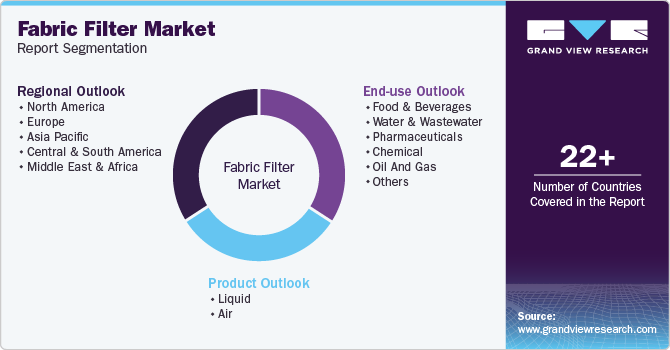
This report forecasts revenue growth at global, regional, and country levels and provides an analysis of the latest industry trends in each of the sub-segments from 2021 to 2033. For this study, Grand View Research has segmented the global fabric filter market report based on end-use, product, and region:
 To learn more about this report, Download Free Sample Report
 -
End-use Outlook (Revenue, USD Million, 2021 - 2033)
-
Food & Beverages
-
Water & Wastewater
-
Pharmaceuticals
-
Chemical
-
Oil and Gas
-
Others
-
-
Product Outlook (Revenue, USD Million, 2021 - 2033)
-
Liquid
-
Air
-
-
Regional Outlook (Revenue, USD Million, 2021 - 2033)
-
North America
-
U.S.
-
Canada
-
Mexico
-
-
Europe
-
Germany
-
UK
-
France
-
Italy
-
Spain
-
-
Asia Pacific
-
China
-
India
-
Japan
-
Australia
-
-
Central & South America
-
Middle East & Africa
-
Research Methodology
The fabric filter market figures in this report are based on a proven research process that combines executive interviews with secondary research from proprietary databases, company filings, and recognized regulatory and institutional sources. Market size is built through value-chain sizing - reconciling supply-side and demand-side estimates - and triangulated with bottom-up and top-down approaches. Every estimate passes multiple levels of expert validation before publication, with each fabric filter segment quantified using the revenue-capture definitions in the table below.
Segment Definition
Segment - Product
Revenue Capture Definition
Liquid
Revenue is generated from the sale of fabric filters designed for industrial liquid filtration applications.
Air
Revenue generated from the sale of fabric filters designed for industrial air filtration, dust collection, and particulate emission control applications.
Segment - End Use
Revenue Capture Definition
Food & Beverages
Revenue generated from the sale of fabric filters for particulate control and dust collection applications in food and beverage manufacturing facilities.
Water & Wastewater
Revenue generated from the sale of fabric filters for particulate control applications in water and wastewater treatment facilities.
Pharmaceuticals
Revenue is generated from the sale of fabric filters for dust collection, powder handling, and air filtration applications in pharmaceutical manufacturing facilities.
Chemical
Revenue generated from the sale of fabric filters for particulate emission control and industrial dust collection applications in chemical and petrochemical processing facilities.
Oil & Gas
Revenue generated from the sale of fabric filters for particulate control applications in refineries, petrochemical complexes, and oil & gas processing facilities.
Others
Revenue generated from the sale of fabric filters for particulate control and dust collection applications across cement, power generation, metals & mining, pulp & paper, waste management, and other industrial sectors.
Estimation Model
Layer Name
Key Question
Description
End-use Demand Base Layer
Which industries represent the addressable market?
Quantify fabric filter demand across food & beverages, water & wastewater, pharmaceuticals, chemicals, oil & gas, and other industrial sectors. Model production facilities, processing capacity, filtration-intensive operations, and installed filtration requirements for both liquid and air applications.
Application & Regulatory Layer
Which applications require fabric filters?
Assess filtration requirements driven by product quality standards, environmental regulations, industrial process requirements, and workplace safety across liquid filtration and air filtration applications. Incorporate regulatory compliance, contamination control, particulate removal, and process-specific filtration requirements.
Product Adoption Layer
What share of filtration demand is served by fabric filters?
Estimate fabric filter adoption by product type (liquid and air), end-use industry, filtration application, and geography. Account for competition from membrane filters, cartridge filters, depth filters, electrostatic precipitators, and other filtration technologies based on application-specific requirements.
Revenue Conversion Layer
How is market revenue generated?
Estimate annual shipments of fabric filters by filter media, product type, application, end-use industry, and region. Quantify revenues generated exclusively from the sale of new fabric filters supplied to industrial facilities, OEMs, EPC contractors, and air pollution control system manufacturers.
Delivered Customizations
This report has been delivered with the following In-depth customizations
Client Request
Customization Delivered
Value Adds
Competitive Benchmarking
Benchmarked leading fabric filter manufacturers based on product portfolio, filtration technology, application expertise across liquid and air filtration, geographic presence, end-use industry focus, and strategic positioning while distinguishing established and emerging market participants.
Provided a comprehensive view of the competitive landscape, enabling the client to assess competitive positioning, identify technology leaders, and evaluate strategic differentiation across key end-use industries.
Regional Segmentation
Refined regional analysis by assessing industrial manufacturing activity, environmental and process filtration requirements, regulatory landscape, end-use industry demand, and filtration technology adoption across North America, Europe, Asia Pacific, Latin America, and the Middle East & Africa.
Enabled identification of high-growth regional markets, demand centers, and investment priorities, supporting regional expansion and market penetration strategies.
Opportunity assessment
Assessed emerging growth opportunities across food & beverages, water & wastewater, pharmaceuticals, chemicals, oil & gas, and other industrial applications, with emphasis on advanced filter media, replacement demand, and high-performance air and liquid filtration solutions.
Identified high-potential revenue opportunities and strategic investment areas by highlighting applications and end-use industries expected to drive long-term market growth and technology adoption.
Frequently Asked Questions About This Report
The global fabric filter market size was valued at USD 4.3 billion in 2025 and is estimated at USD 4.5 billion in 2026.
Some of the key players operating in the fabric filter market include Nederman Corporation Inc., Pall Corporation, Siemens AG., Affinia group, Donaldson Company, Cummins, Clarcor Inc, Parker-Hannifen Corporation
The key factors that are driving the fabric filter market include stringent environmental regulations, technological advancements, industrial growth, rising awareness of environmental sustainability, and the economic efficiency of filtration systems.
Based on product type, the air segment led the market with the largest revenue share of 64.8% in 2025.
The fabric filter market in China held the largest share in the Asia Pacific region in 2025.
Liquid segment is expected to grow at significant CAGR during forecast period in fabric filter market.
Water & wastewater segment by end use is expected to grow at significant CAGR during forecast period.
The global fabric filter market is expected to grow at a compound annual growth rate of 5.7% from 2026 to 2033 to reach USD 6.7 billion by 2033.
Based on end use, the food & beverages segment led the market with the largest revenue share of 42.7% in 2025.
About the Author(s)
Advanced Interior Materials Research Team
Advanced Materials · Advanced Interior MaterialsThis report was authored by the advanced interior materials research team at Grand View Research - comprising two research analysts, one senior research analyst, and one industry expert - with specialized expertise in the advanced interior materials segment of the advanced materials industry. All findings are based on proprietary advanced materials databases, executive interviews, and regulatory analysis, subject to internal peer review prior to publication.
Last Updated:
Speak to Analyst

Customize this report to your needs - add regions, segments, or data points, with 20% free customization.
Or view our licence options:


ISO 9001:2015 & 27001:2022 Certified
We are GDPR and CCPA compliant! Your transaction & personal information is safe and secure. For more details, please read our privacy policy.


