
- Home
- »
- HVAC & Construction
- »
-
Agriculture Equipment Market Size, Share Report, 2026-2033GVR Report cover
![Agriculture Equipment Market (2026 - 2033)Report]()
Agriculture Equipment Market (2026 - 2033)
Size, Share & Trends Analysis Report By Product (Tractors, Harvesters), By Application (Hay & Forage Equipment, Land Development & Seed Bed Preparation), By Region, And Segment Forecasts
Market Size, 2025
$176.0BMarket Estimate, 2026
$183.9BMarket Forecast, 2033
$295.3BCAGR, 2026–2033
7.0%Agriculture Equipment Market Summary
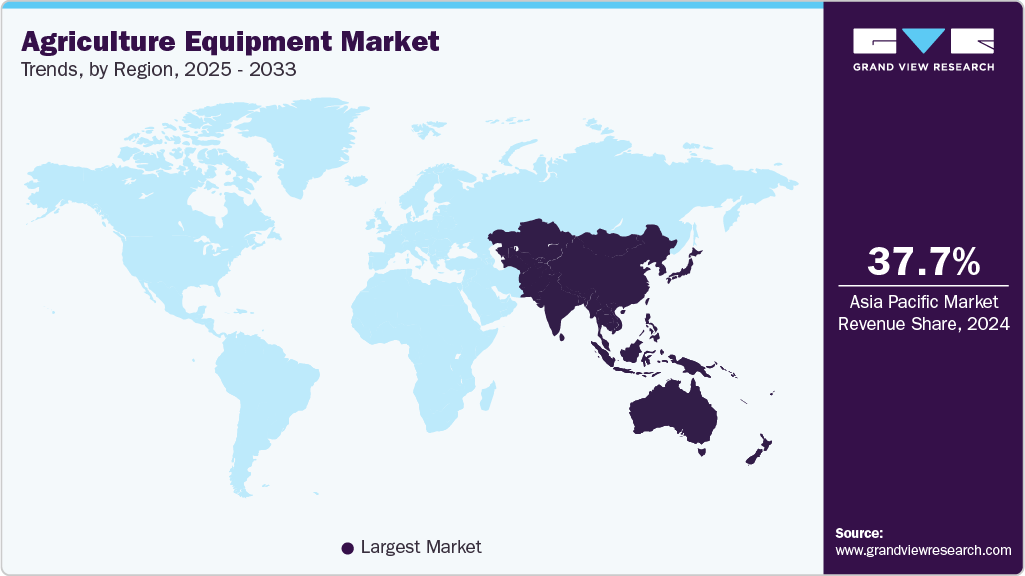
The global agriculture equipment market size was valued at USD 176.0 billion in 2025 and is projected to grow from USD 183.9 billion in 2026 to USD 295.3 billion by 2033, at a CAGR of 7.0% from 2026 to 2033. The market in Asia Pacific dominated with a revenue share of 38.1% in 2025. This growth is driven by the expansion of smart and connected agricultural equipment solutions.

Key Market Trends & Insights
- By product: Tractors segment dominated the market, with a revenue share of 35.2% in 2025.
- By application: Land development & seed bed preparation segment held the largest market share of 24.6% in 2025.
Regional Highlights
- Largest regional market: Asia Pacific (38.1% revenue share, 2025)
- By country: The China held the largest market share in 2025.
Market Size & Forecast
- Market size in 2025: USD 176.0 Billion
- Estimated market size in 2026: USD 183.9 Billion
- Projected market size by 2033: USD 295.3 Billion
- CAGR (2026-2033): 7.0%
Increasing mechanization in the agriculture sector, coupled with a surge in farmers’ income, is expected to be a primary factor driving the market growth. The rise of sustainable agriculture, which is pushing manufacturers to develop eco-friendly and energy-efficient equipment, is accelerating market growth. In response to tightening emissions regulations and climate goals set by international bodies and national governments, there is an increasing push for electric tractors, biofuel-compatible engines, and hybrid farm equipment. These machines not only reduce greenhouse gas emissions but also offer lower operating costs in the long run. European countries are actively promoting low-carbon farming technologies, which has created demand for new products of agricultural machinery designed for minimal environmental impact. The integration of sustainability with profitability is creating a fresh wave of innovation within the industry.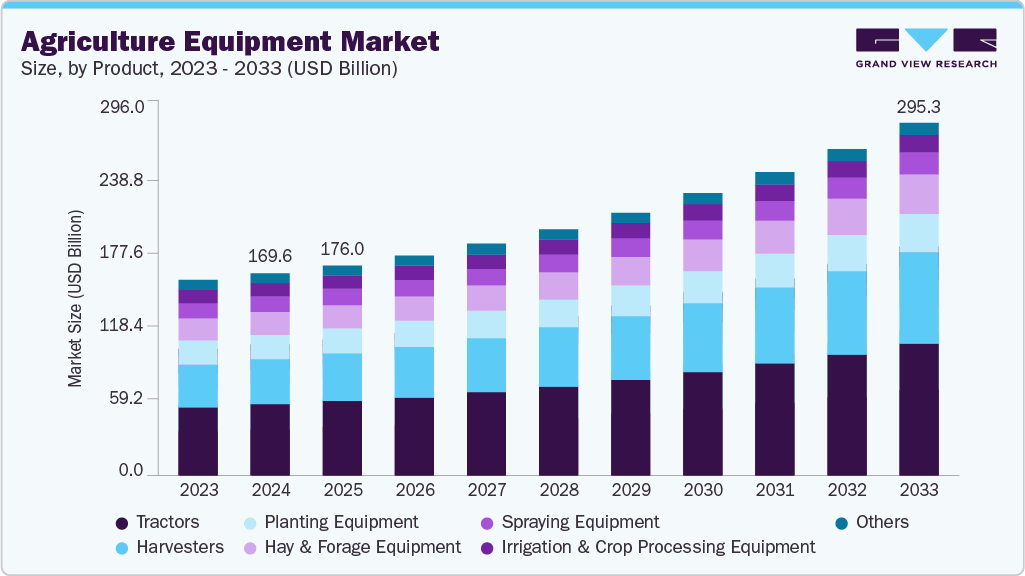
The growth of custom hiring centers and machinery rental services is also expanding access to agriculture equipment, especially in developing markets, where purchasing large machines outright may be financially burdensome. These services allow small-scale farmers to rent modern machinery on a need-based basis, significantly lowering the barriers to mechanization. Governments, cooperatives, and private firms are increasingly investing in shared equipment hubs or pay-per-use platforms, fostering a more inclusive agricultural ecosystem. This trend is not only enabling higher productivity among resource-constrained farmers but also fueling demand for durable, multi-purpose machinery suitable for frequent rental usage.
The rise of contract farming and corporate agriculture is also contributing to the demand for specialized agricultural equipment markets. As multinational agribusiness firms enter into agreements with local farmers to produce specific crops at agreed-upon standards, there is a growing expectation for mechanized consistency and quality. These contracts often include recommendations or even requirements for the use of particular equipments to ensure uniform crop quality, timely delivery, and reduced spoilage. In response, farmers involved in these arrangements are turning to precision seeders, specialized sprayers, and post-harvest machinery that align with the quality and quantity targets set by the contracting companies. This structured form of agriculture is thus promoting a more consistent and predictable demand for equipment tailored to contract-based farming.
In regions with fragmented landholding patterns, especially in South Asia and sub-Saharan Africa, the development of multipurpose and modular agricultural equipment is gaining momentum. These machines are designed to perform multiple functions, such as tilling, sowing, and spraying, within a compact, adaptable format, which makes them ideal for small and irregularly shaped plots. Farmers benefit from cost savings, as one machine can fulfill several roles across the cultivation cycle. Moreover, these modular designs make it easier to perform maintenance or upgrade certain components as technology evolves. This trend addresses a crucial structural challenge in global agriculture: making modern equipment viable and practical for farmers who do not operate on a large scale.
Market Dynamics
The agriculture equipment market is being driven by the growing need to improve farm productivity amid declining agricultural labor availability and increasing pressure to meet global food demand. Farmers are increasingly investing in advanced tractors, harvesters, planting equipment, and irrigation machinery to reduce manual operations and improve operational efficiency. Government subsidies for farm mechanization, rising adoption of precision agriculture practices, and the expansion of commercial farming operations are further supporting equipment demand. However, high upfront equipment costs and fluctuations in farm income continue to influence purchasing decisions, particularly among small and medium-sized farmers.
The expansion of commercial and large-scale farming activities is a major driver of the agriculture equipment market, as large agricultural operations require advanced machinery to manage extensive land areas efficiently and maintain high productivity. As global food demand continues to rise, commercial farms are increasing cultivation areas and adopting mechanized farming practices to improve operational efficiency. Agricultural equipment such as tractors, harvesters, planters, sprayers, and tillage machinery enables farmers to perform large-scale operations faster and with greater precision. This reduces labor dependency and enhances overall farm output. As commercial agriculture expands worldwide, demand for modern agricultural equipment continues to grow significantly.
High initial acquisition costs for advanced agricultural equipment represent a significant restraint on the agriculture equipment market, as modern farming machinery requires substantial capital investment, making it difficult for many farmers to adopt the latest technologies. Advanced equipment such as high-horsepower tractors, combine harvesters, precision seeders, autonomous machinery, and smart irrigation systems often involves significantly higher purchase costs than conventional equipment. Small and medium-sized farmers, particularly in developing regions, frequently face budget constraints that limit their ability to invest in such machinery. This financial barrier slows the pace of farm mechanization and restricts market growth. As a result, equipment affordability remains a key challenge across the agricultural sector.
The rising adoption of vertical farming and urban agriculture is creating significant opportunities for equipment manufacturers. Controlled-environment agriculture facilities located in urban areas require specialized machinery and automation systems for planting, irrigation, harvesting, lighting management, and crop monitoring. These operations rely heavily on technologically advanced equipment to maximize efficiency within limited growing spaces. As urban farming gains popularity due to its proximity to consumers and reduced transportation requirements, demand for greenhouse and CEA equipment continues to increase.
Market Concentration & Characteristics
The agriculture equipment market is moderately consolidated, with a few global manufacturers holding dominant positions alongside several regional and niche equipment providers. Large players such as Deere & Company, CNH Industrial, and AGCO Corporation control a significant share of the market due to their extensive product portfolios, strong dealer networks, and long-standing relationships with large-scale farming enterprises and government procurement programs. These companies benefit from economies of scale, advanced R&D capabilities, and global distribution infrastructures, which make it difficult for smaller players to compete at the same level. The market also includes specialized regional manufacturers that focus on cost-effective or crop-specific equipment, but their influence remains limited compared to global leaders.

In terms of market characteristics, the agriculture equipment industry is highly capital-intensive and technology-driven, with increasing integration of automation, GPS-enabled systems, telematics, and precision farming technologies. The market is also strongly influenced by cyclical demand patterns linked to crop seasons, commodity prices, and farmer income levels, which creates variability in equipment purchasing behavior. High upfront investment costs for advanced machinery act as a key barrier for small farmers. From a competitive standpoint, the agriculture equipment market is characterized by long replacement cycles, strong brand loyalty, and extensive after-sales service requirements, including maintenance, spare parts availability, and technical support.
Analyst Perspective
The agricultural equipment market is transitioning from traditional mechanization to intelligent, automated farming systems, creating new opportunities for equipment manufacturers and technology providers. While established players continue to benefit from strong dealer networks and brand loyalty, future growth will increasingly depend on the ability to offer automation, connectivity, and precision farming capabilities that generate measurable productivity gains. Emerging markets remain a significant growth avenue due to relatively low mechanization rates and ongoing government support for agricultural modernization. Companies that can combine cost-effective equipment offerings with flexible financing models and technology-enabled solutions are likely to strengthen their competitive position as the industry evolves.
Product Insights
Based on product, the tractors segment led the market with the largest revenue share of 35.2% in 2025. The emergence of equipment leasing services and tractor-on-demand platforms is reducing entry barriers for farmers who cannot afford outright purchases. These platforms, often supported by agri-tech startups and cooperatives, allow farmers to rent tractors for specific tasks or seasons. This growing model of shared equipment access is further driving the demand for durable and easy-to-maintain tractors, creating a recurring revenue stream for manufacturers and service providers. As this ecosystem of support services grows around the tractor segment, it enhances the long-term sustainability and accessibility of tractor use, ensuring continued growth in both mature and developing markets.
The harvesters segment is projected to be the fastest-growing segment from 2025 to 2033. The increasing prominence of contract farming and agri-business models is creating institutional demand for harvesters. Large food processing companies, commodity traders, and agri-cooperatives often work directly with farmers to ensure supply chain efficiency and quality control. These entities frequently supply or lease harvesters to partner farmers as part of an integrated value chain approach. This practice ensures crops are harvested at peak maturity with minimal damage, enabling a seamless transition to processing or storage. The integration of harvesters into contract farming models is particularly impactful in emerging economies where smallholder farmers may lack the capital to invest in their machinery. However, it can still benefit from mechanization through collaborative agreements.
Application Insights
Based on application, the land development & seed bed preparation segment led the market with the largest revenue share of 24.6% in 2025. The expansion of commercial and mechanized farming, particularly in countries such as Brazil, the U.S., and India, has significantly contributed to the demand for land preparation equipment. With the consolidation of farmland into larger plots, manual preparation methods are no longer viable for large-scale operations. Farmers increasingly rely on mechanized implements that can quickly prepare extensive tracts of land with minimal effort and labor costs. Moreover, timely land development is becoming even more crucial in areas with shrinking planting windows due to unpredictable weather patterns caused by climate change. In this context, efficient mechanized tools ensure farmers can prepare the soil and sow seeds quickly, minimizing the risk of delays that can affect the entire crop cycle.
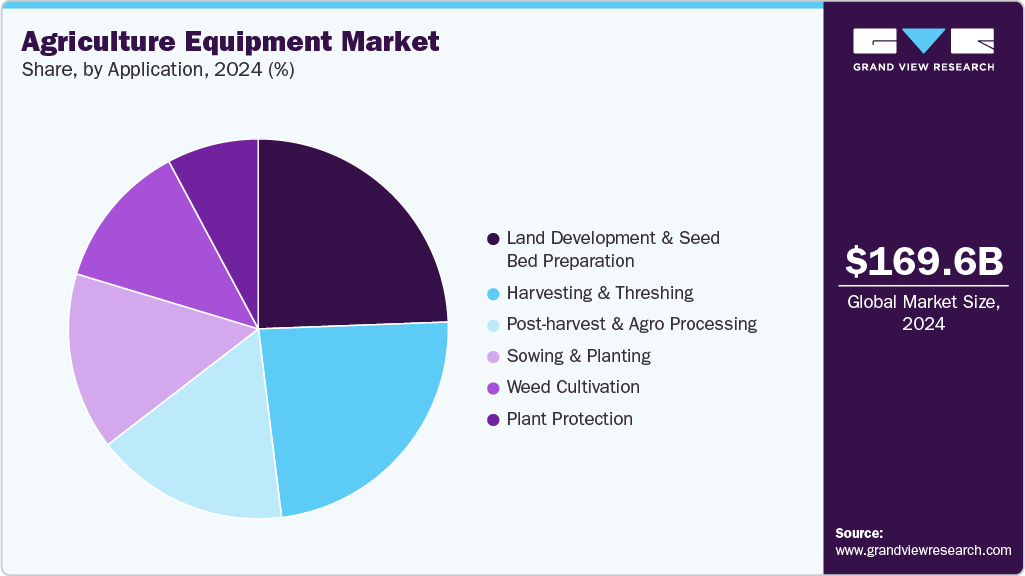
The harvesting & threshing segment is projected to be the fastest-growing segment from 2025 to 2033. The emergence of equipment-as-a-service (EaaS) models is yet another factor accelerating the uptake of harvesting and threshing machinery. Digital platforms and local entrepreneurs are now offering machinery rental services that provide access to high-end equipment without requiring farmers to invest heavily in ownership. These platforms allow flexible, on-demand use of harvesters and threshers, often bundled with operator support and maintenance. This model has proven especially effective in regions like South Asia and East Africa, where smallholder farmers dominate, and capital investment in such machines would otherwise be unfeasible. With EaaS, the benefits of mechanized harvesting and threshing are extending to even the most resource-constrained agricultural communities.
Regional Insights
The North America agriculture equipment industry is expected to grow with a CAGR of 7.2% from 2025 to 2033. North America’s strong aftermarket and equipment servicing infrastructure supports long-term investment in high-end machinery. Farmers are more likely to invest in technologically advanced equipment when they have reliable access to maintenance services, spare parts, and upgrade support. The presence of global and regional manufacturers in the U.S. ensures that innovations reach the market quickly and are adapted to meet local agricultural conditions. The robust dealer and service network across rural North America also facilitates equipment accessibility and training, making it easier for even smaller farmers to participate in the mechanization trend.
U.S. Agriculture Equipment Market Trends
The agriculture equipment industry in the U.S. is expected to grow during the forecast period. The U.S. agriculture sector’s deep integration with data analytics and GPS technologies has accelerated the use of smart equipment. Farmers are increasingly investing in precision agriculture systems that combine sensors, satellite mapping, and real-time data to inform everything from soil preparation to harvest timing. The integration of these digital tools with farm equipment has given rise to a new generation of machines that offer remote monitoring, automated adjustments, and predictive maintenance. As farm profitability becomes more tightly linked to efficiency and resource optimization, equipment that supports data-driven decision-making is quickly becoming a critical asset across farming operations.
Asia Pacific Agriculture Equipment Market Trends
Asia Pacific dominated the global agriculture equipment market with the largest revenue share of 38.1% in 2025. The growing presence of private agritech firms, cooperatives, and machinery rental services has improved access to equipment for smallholder farmers, who dominate the agricultural landscape in Asia Pacific. Through machinery banks, digital platforms, and custom hiring centers, even farmers with limited capital can use advanced equipment during critical phases of the crop cycle. This shift is democratizing access to technology and creating a more inclusive market for agriculture equipment across the region. As rural connectivity and digital literacy continue to improve, such models are expected to scale further, cementing the region's path toward widespread agricultural mechanization.
The agriculture equipment market in the China held the largest share in the Asia Pacific region in 2025. The digital transformation of agriculture in China, particularly through the integration of smart technologies, is playing a transformative role in boosting the demand for high-end, data-enabled farm equipment. Agricultural drones, GPS-guided tractors, and sensor-based irrigation systems are no longer limited to experimental or pilot projects but are gradually entering mainstream use. These technologies help farmers monitor crop health, manage soil conditions, and optimize resource use in real-time, thus reducing costs and enhancing yields. The Chinese government has supported this transition through pilot zones for smart farming and rural broadband expansion, making it easier for farmers to access, operate, and benefit from smart machinery. As awareness of these technologies spreads, the appetite for digital-enabled equipment is expected to grow substantially.
The agriculture equipment industry in India is projected to grow during the forecast period. The diversification of cropping patterns and the increased demand for high-value crops, horticulture, and dairy integration drive the market growth. As farmers shift from traditional staple crops like wheat and rice to fruits, vegetables, pulses, and cash crops, there is a growing need for specialized machinery to suit different soil conditions and crop requirements. Equipment such as transplanters, sprayers, and drip irrigation systems is becoming more prevalent in areas where farmers are intensifying cultivation and adopting modern practices. This shift is especially prominent in states such as Maharashtra, Karnataka, Punjab, and Tamil Nadu, where government and private efforts to promote agribusiness clusters and export-oriented farming are strong.
Europe Agriculture Equipment Market Trends
The agriculture equipment industry in Europe is projected to grow during the forecast period. The rise of agriculture-as-a-service (AaaS) models and the increasing integration of digital platforms in farming are expanding the reach of modern equipment. Startups and cooperatives are offering shared access to high-end machinery via subscription or rental, reducing the financial burden on smaller farms. These platforms often bundle machinery with software for crop planning, weather forecasting, and equipment diagnostics, creating a more holistic ecosystem for farm management. As rural broadband connectivity improves, these digitally enabled solutions are becoming more practical and widespread, enhancing overall market adoption of advanced equipment.
The agriculture equipment industry in the UK is projected to grow during the forecast period. Digital agriculture and data integration are driving the UK market growth. Farmers are increasingly leveraging farm management software, remote sensing, GPS-guided machinery, and data analytics tools to make informed decisions about crop health, irrigation, fertilization, and machinery usage. This digital shift is fueling demand for advanced machinery equipped with sensors, telemetry, and automated controls. In particular, precision farming tools that enable site-specific application of inputs are helping farmers maximize yield while minimizing resource waste. The UK's strong infrastructure and high digital penetration make it an ideal environment for the deployment of such technologically sophisticated equipment.
The agriculture equipment industry in Germany is projected to grow during the forecast period. Germany’s emphasis on export-oriented agriculture and participation in global value chains motivates farmers to maintain high product quality and traceability standards, both of which are supported by modern equipment. The use of advanced machinery enables better control over planting, harvesting, storage, and transport, all of which are critical for meeting international food safety and quality benchmarks. As global demand for sustainably produced, high-quality food continues to rise, German farmers’ reliance on cutting-edge agricultural equipment will remain essential to preserving their competitiveness and fulfilling the country’s agricultural export potential.
Key Agriculture Equipment Company Insights
Some of the key companies operating in the market include AGCO Corporation, CNH Industrial N.V., among others, that are leading participants in the market.
-
AGCO Corporation is engaged in the designing, manufacturing, and distribution of agricultural tractors and replacement parts worldwide. In 1990, the company offered products under the Gleaner and AGCO Allis brands in North America. Currently, it offers its agricultural tractors under the following brand names: Challenger, Fendt, Massey Ferguson, and Valtra. AGCO Corporation offers tractors with higher horsepower for use in large farms for cultivating row crops; utility tractors primarily for livestock, dairy, vineyards, and orchards; and compact tractors for small farms, landscaping, and specialty agricultural industries, as well as for residential use. The company focuses on product innovation and invests in the research & development of High Horsepower (HHP) tractors and advanced harvesting technology platforms.
-
CNH Industrial N.V. is engaged in the designing, production, marketing, sales, and financing of agricultural & construction equipment and commercial vehicles. Additionally, the company offers transmissions, engines, and axles for these vehicles. The company’s subsidiaries include CNH Industrial America LLC, CNH Industrial Asian Holding Limited N.V., CNH Industrial Belgium, CNH Industrial Capital LLC, CNH Industrial Finance S.p.A., CNH Industrial Russia LLC, CNH UK Limited, and CNH Industrial Services S.r.l.
MaterMacc S.p.A and ISEKI & Co., Ltd. are some of the emerging participants in the agriculture equipment industry.
-
MaterMacc S.p.A. is a specialist in precision agricultural machinery focused on enhancing modern farming efficiency. MaterMacc’s product lineup includes pneumatic precision seed drills for cereals, mechanical and pneumatic sowers for vegetables, direct drills, in-row weeders, fertilizer spreaders, and electronic irrigation and seeding control units, underlining its focus on delivering integrated solutions for crop establishment and management.
-
Iseki & Co., Ltd. is a manufacturer of agricultural machinery. The company expanded its offerings into tractors, rice transplanters, combine harvesters, riding and zero‑turn mowers, tillers, diesel engines, and related implements, all reflecting its evolution into a full‑line agricultural equipment provider. Iseki is Japan’s third-largest agricultural machinery maker, with global sales through brands like AGCO, Massey Ferguson, and Bolens.
Key Agriculture Equipment Companies
The following key companies have been profiled for this study on the agriculture equipment market.
-
AGCO Corporation
-
FlieglAgro-Center GmbH
-
APV GmbH
-
Bellota Agrisolutions
-
CLAAS KGaAmbH
-
CNH Industrial N.V.
-
Deere & Company
-
Escorts Limited
-
HORSCH Maschinen GmbH
-
ISEKI & Co., Ltd.
-
J C Bamford Excavators Ltd
-
Quivogne CEE GmbH (Kiwon RUS LLC)
-
Rostselmash
-
KRUKOWIAK
-
KUBOTA Corporation
-
KUHN SAS
-
LEMKEN GmbH & Co. KG
-
Mahindra & Mahindra Ltd.
-
MascarSpA
-
MaschioGaspardo S.p.A
-
MaterMacc S.p.A
-
Morris Equipment Ltd
-
SDF S.p.A.
-
Tractors and Farm Equipment Limited (TAFE)
-
Väderstad AB
-
Valmont Industries, Inc.
Competitive Benchmarking
Category
Operating Strategies
Competitive Edge
Weakness
Established Players (Deere & Company; CNH Industrial; AGCO Corporation; Kubota; Mahindra & Mahindra)
- Mature players in the agricultural equipment market focus on broad product portfolios that cover tractors, harvesters, planting, and spraying equipment. They emphasize mechanization solutions that improve farm productivity and reduce labor dependency. Their strategy includes expanding precision-enabled machinery and connected equipment offerings. They also strengthen market presence through financing programs and extensive dealer networks.
- Mature players benefit from large manufacturing capacity and established distribution channels. Their equipment is recognized for durability, performance, and after-sales support. Strong dealer ecosystems ensure spare part availability and service accessibility. Economies of scale also help maintain competitiveness across global markets.
- Large production facilities expose these companies to fluctuations in raw material prices. Dependence on agricultural cycles can create volatility in demand. Managing diverse product portfolios increases operational complexity. Growth in emerging markets may be constrained by farmers' purchasing power.
Emerging Players (Monarch Tractor; AgXeed; FarmWise; Naïo Technologies; Solectrac)
- Emerging players focus on next-generation equipment powered by automation and electrification. They develop specialized machinery for precision operations and labor-intensive tasks. Their strategy targets sustainable farming and operational efficiency improvements. Many also adopt equipment-as-a-service and subscription-based business models.
- Emerging players offer innovative solutions tailored to modern farming challenges. Their equipment helps reduce fuel consumption and labor requirements. Strong focus on automation improves operational efficiency in the field. They can also respond quickly to evolving farmer needs and technology trends.
- Emerging players have limited production scale and dealer coverage. Their equipment may face adoption barriers due to unfamiliar technologies. High development costs can pressure profitability and expansion plans. Dependence on external funding may affect long-term market competitiveness.
Recent Developments
-
In February 2025, AGCO Corporation signed a supply agreement with SDF to deliver a streamlined portfolio of low- to mid-range horsepower tractors under its renowned Massey Ferguson brand. This strategic partnership enhances Massey Ferguson’s global position in the low- to mid-horsepower tractor market, enabling the brand to offer more farmers reliable, high-quality, and easy-to-use equipment that boosts productivity and maximizes profitability.
-
In December 2024, Fliegl Agrartechnik GmbH partnered with Stapel GmbH to leverage and expand their existing synergies in the areas of liquid manure technology and agricultural semi-trailer tractor units. This collaboration is centered on creating innovative solutions that enhance the efficiency of agricultural tractor unit operations while addressing future demands. Additionally, the alliance is expected to accelerate product development in these sectors.
-
In September 2024, J C Bamford Excavators Ltd expanded its renowned X Series line of tracked excavators with the launch of its new 370X. This robust excavator is set to deliver industry-leading productivity, durability, and reliability in the 35-40-ton category. With the debut of the 370X, JCB continues to advance its mission of offering a complete range of heavy equipment solutions tailored to the needs of the construction sector.
Agriculture Equipment Market Report Scope
Report Attribute
Details
Market size value in 2025
USD 176.0 billion
Estimated market size in 2026
USD 183.9 billion
Projected market size by 2033
USD 295.3 billion
Growth rate
CAGR of 7.0% from 2026 to 2033
Base year for estimation
2025
Historical data
2021 - 2024
Forecast period
2026 - 2033
Quantitative units
Revenue in USD million/billion and CAGR from 2026 to 2033
Report coverage
Revenue forecast, company market share analysis, competitive landscape, growth factors, and trends
Segments covered
Product, application, region
Regional scope
North America; Europe; Asia Pacific; Latin America; MEA
Country scope
U.S.; Canada; Mexico; Germany; UK; France; China; Japan; India; South Korea; Australia; Brazil; Saudi Arabia; South Africa; UAE
Key companies profiled
Deere & Company; Kubota Corporation; CNH Industrial N.V.; AGCO Corporation; Mahindra & Mahindra Ltd; ANDREAS STIHL AG & Co. KG; DJI; Yamaha Motor Corporation; EXEL Industries SA; Buhler Industries Inc.; EcoRobotix SA; ISEKI & Co., Ltd.
Customization scope
Free report customization (equivalent up to 8 analysts' working days) with purchase. Addition or alteration to country, regional & segment scope.
Pricing and purchase options
Avail customized purchase options to meet your exact research needs. Explore purchase options
Global Agriculture Equipment Market Report Segmentation
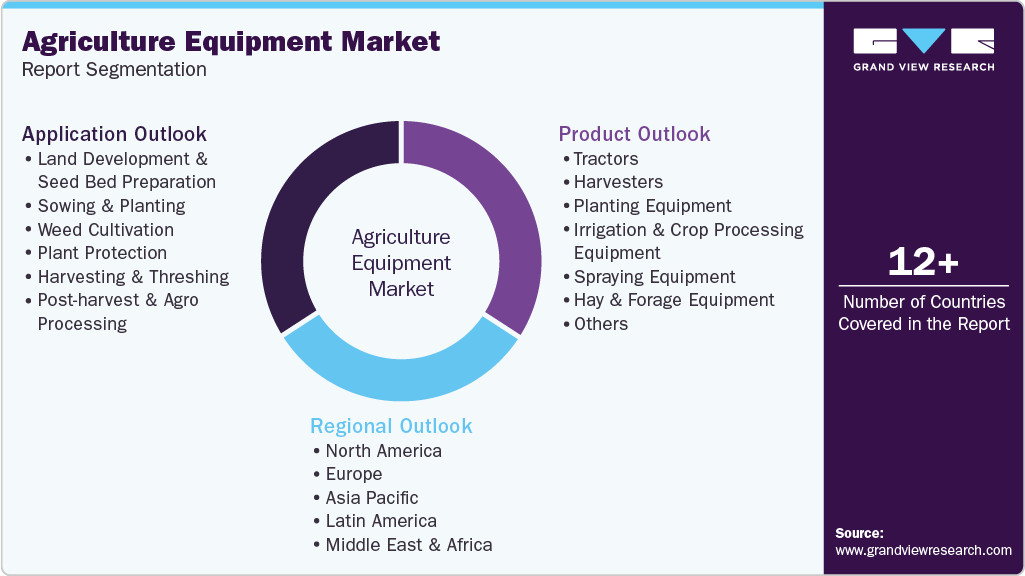
This report forecasts revenue growth at global, regional, and country levels and provides an analysis of the latest industry trends in each of the sub-segments from 2021 to 2033. For this study, Grand View Research has segmented the global agriculture equipment market report based on product, application, and region:
-
Product Outlook (Revenue, USD Billion, 2021 - 2033)
-
Tractors
-
Harvesters
-
Planting Equipment
-
Row Crop Planters
-
Air Seeders
-
Grain Drills
-
Others
-
-
Irrigation & Crop Processing Equipment
-
Spraying Equipment
-
Hay & Forage Equipment
-
Others
-
-
Application Outlook (Revenue, USD Billion, 2021 - 2033)
-
Land Development & Seed Bed Preparation
-
Sowing & Planting
-
Weed Cultivation
-
Plant Protection
-
Harvesting & Threshing
-
Post-harvest & Agro Processing
-
-
Regional Outlook (Revenue, USD Billion, 2021 - 2033)
-
North America
-
U.S.
-
Canada
-
Mexico
-
-
Europe
-
UK
-
Germany
-
France
-
Italy
-
Netherlands
-
Spain
-
Denmark
-
Russia
-
-
Asia Pacific
-
China
-
India
-
Japan
-
South Korea
-
Australia
-
-
Latin America
-
Brazil
-
Argentina
-
-
Middle East & Africa
-
UAE
-
Saudi Arabia
-
South Africa
-
-
Research Methodology
The agriculture equipment market figures in this report are based on a proven research process that combines executive interviews with secondary research from proprietary databases, company filings, and recognized regulatory and institutional sources. Market size is built through value-chain sizing - reconciling supply-side and demand-side estimates - and triangulated with bottom-up and top-down approaches. Every estimate passes multiple levels of expert validation before publication, with each agriculture equipment segment quantified using the revenue-capture definitions in the table below.
Segment Definition
Segment - Product
Revenue capture definition
Tractors
The largest contributor to market value, tractors drive equipment spending through initial vehicle purchases, attachment compatibility, precision guidance upgrades, and replacement cycles. Manufacturers benefit from strong demand across both smallholder and commercial farming operations, while financing and leasing programs further expand market penetration.
Harvesters
Market value is captured through the sale of combine harvesters and specialized harvesting machinery designed to increase harvesting speed and reduce crop losses. Demand is closely tied to labor shortages, rising rates of farm mechanization, and the need for operational efficiency during critical harvesting windows.
Planting Equipment
Revenue opportunities stem from seed drills, planters, transplanters, and precision seeding systems that enhance planting accuracy and seed utilization. Advanced equipment incorporating GPS guidance and variable-rate technology commands premium pricing among growers focused on maximizing crop establishment and yield potential.
Irrigation & Crop Processing Equipment
Economic value is derived from irrigation systems, pumps, filtration units, drying systems, grading machinery, and crop processing equipment. Growing emphasis on water-use efficiency and value-added agricultural production continues to stimulate investment in this equipment category.
Spraying Equipment
Spending is concentrated on boom sprayers, self-propelled sprayers, precision application systems, and smart spraying technologies. Adoption is supported by increasing requirements for efficient agrochemical use, regulatory compliance, and reduced input waste.
Hay & Forage Equipment
Market demand is driven by balers, mowers, rakes, forage harvesters, and feed preparation machinery used in livestock production systems. Equipment suppliers benefit from the growing need for efficient fodder management and improved feed quality across dairy and livestock operations.
Others
This category includes tillage equipment, fertilizer spreaders, loaders, utility vehicles, and specialized machinery for niche crops. Value creation occurs through equipment customization, specialized applications, and technology enhancements designed for unique farming requirements.
Segment - Application
Revenue capture definition
Land Development & Seed Bed Preparation
Equipment demand originates from activities such as plowing, leveling, tilling, and soil conditioning. Market growth is supported by investments in machinery that improve soil structure, enhance field readiness, and enable efficient preparation for subsequent planting operations.
Sowing & Planting
Value is captured through machinery that ensures precise seed placement, optimal spacing, and uniform crop establishment. Increasing adoption of precision agriculture practices has elevated demand for technologically advanced planting solutions that improve productivity and input efficiency.
Weed Cultivation
Spending in this segment is linked to mechanical weed control equipment, inter-row cultivators, and precision cultivation technologies. Farmers increasingly adopt these solutions to reduce reliance on herbicides, support sustainable farming practices, and manage rising input costs.
Plant Protection
Market activity centers on equipment used for pesticide, fungicide, and nutrient application. Growth is fueled by the need for accurate treatment delivery, improved crop protection outcomes, and technologies that minimize environmental impact while maximizing field coverage.
Harvesting & Threshing
This segment highlights significant equipment investment, given the critical role of harvesting machinery in preserving crop quality and minimizing post-maturity losses. Demand is particularly strong in regions facing labor constraints and in regions where commercial-scale farming operations are expanding.
Post-harvest & Agro Processing
Value is generated through machinery supporting cleaning, sorting, drying, grading, storage preparation, and primary processing of agricultural produce. Increasing focus on reducing post-harvest losses, improving product quality, and enhancing farm profitability continues to drive adoption across agricultural value chains.
Estimation Model
Layer
Question
Analysis
Agricultural Operations Layer
Who can benefit from agricultural equipment?
Identify farms, agricultural enterprises, and plantation operators requiring mechanized solutions for crop production and livestock operations to define the addressable market.
Mechanization Accessibility Layer
Who can access agricultural equipment?
Apply mechanization rates, financing availability, distribution network coverage, and infrastructure readiness to determine the reachable market.
Adoption & Utilization Layer
Who actively uses agricultural equipment?
Analyze adoption of tractors, harvesters, irrigation systems, planting equipment, spraying machinery, and other farm equipment to identify active users.
Monetization Layer
How much revenue is generated?
Assess revenue generation potential by analyzing spending on agricultural machinery, implements, replacement parts, maintenance services, and equipment upgrades, while incorporating recurring revenues from aftersales services, leasing, and support contracts.
Delivered Customization
This report has been delivered with the following In-depth customizations
CLIENT REQUEST
CUSTOMIZATION DELIVERED
VALUE ADDS
Farm Mechanization & Equipment Adoption Trends
Conducted a focused analysis of agricultural equipment covering tractors, harvesters, planting equipment, tillage machinery, spraying systems, and irrigation equipment across commercial and small-scale farming operations.
Helps stakeholders identify high-growth equipment categories, evaluate mechanization trends, and assess commercialization opportunities in modern agricultural machinery markets.
Smart Equipment & Precision Agriculture Technology Adoption Trends
Evaluated adoption trends for GPS-guided machinery, autonomous equipment, telematics-enabled systems, precision application technologies, and connected farm equipment platforms, including integration with digital agriculture solutions.
Provides insights into emerging technology requirements, operational efficiency improvements, and commercially attractive equipment segments supporting precision farming initiatives.
Agricultural Machinery Ecosystem & Farm Modernization Opportunity Assessment
Assessed demand for advanced farming equipment, equipment leasing models, aftermarket services, fleet management solutions, and automation technologies, along with challenges related to equipment affordability, maintenance, and farmer adoption.
Supports investment and expansion strategies by identifying underserved farming segments, evaluating mechanization readiness, and strengthening long-term growth opportunities in agricultural modernization and productivity enhancement.
Frequently Asked Questions About This Report
Key factors include the expansion of smart and connected agricultural equipment solutions, the expansion of commercial and large-scale farming activities and rising adoption of vertical farming and urban agriculture.
Asia Pacific dominated with 38.1% revenue share in 2025.
Asia Pacific is the fastest-growing region over the forecast period.
The grain drills segment led with a 29.7% revenue share in 2025, while air seeders segment is the fastest-growing segment.
The land development & seed bed preparation segment held the largest share (over 24%) in 2025, while harvesting & threshing segment is the fastest-growing segment.
The global agriculture equipment market size was estimated at USD 176.0 billion in 2025 and is expected to reach USD 183.9 billion in 2026.
The global agriculture equipment market is expected to grow at a compound annual growth rate of 7.0% from 2026 to 2033 to reach USD 295.3 billion by 2033.
The tractors segment led with a 35.2% revenue share in 2025, while harvesters segment is the fastest-growing segment.
Key players operating in the agriculture equipment market include AGCO Corporation; Fliegl Agro-Center GmbH; Agromaster; APV GmbH; Bellota Agrisolutions; CLAAS KGaA mbH; CNH Industrial N.V.; Deere & Company; Escorts Limited; HORSCH Maschinen GmbH; ISEKI & Co., Ltd.; J C Bamford Excavators Ltd; Quivogne CEE GmbH (Kiwon RUS LLC); Rostselmash; KRUKOWIAK; KUBOTA Corporation; KUHN SAS; LEMKEN GmbH & Co. KG; Mahindra & Mahindra Ltd; Mascar SpA; Maschio Gaspardo S.p.A, MaterMacc S.p.A; Morris Equipment Ltd; SDF S.p.A.; Tractors and Farm Equipment Limited (TAFE); Väderstad AB; Valmont Industries, Inc.
About the Author(s)
HVAC & Construction Research Team
Technology · HVAC & ConstructionThis report was authored by the hvac & construction research team at Grand View Research - comprising two research analysts, one senior research analyst, and one industry expert - with specialized expertise in the hvac & construction segment of the technology industry. All findings are based on proprietary technology databases, executive interviews, and regulatory analysis, subject to internal peer review prior to publication.
Last Updated:
Speak to Analyst


Customize this report to your needs — add regions, segments, or data points, with 20% free customization.
Or view our licence options:


ISO 9001:2015 & 27001:2022 Certified
We are GDPR and CCPA compliant! Your transaction & personal information is safe and secure. For more details, please read our privacy policy.


