
- Home
- »
- Automotive & Transportation
- »
-
Agricultural Tractor Market Size & Share Report, 2026-2033GVR Report cover

Agricultural Tractor Market (2026 - 2033)
Size, Share & Trends Analysis Report By Engine Power (Less than 40 HP, 41 To 100 HP, More Than 100 HP), By Driveline (2WD, 4WD), By Propulsion (Electric, ICE), By Region, And Segment Forecasts
Market Size, 2025
$67.5BMarket Estimate, 2026
$71.2BMarket Forecast, 2033
$105.5BCAGR, 2026–2033
5.8%Agricultural Tractor Market Summary
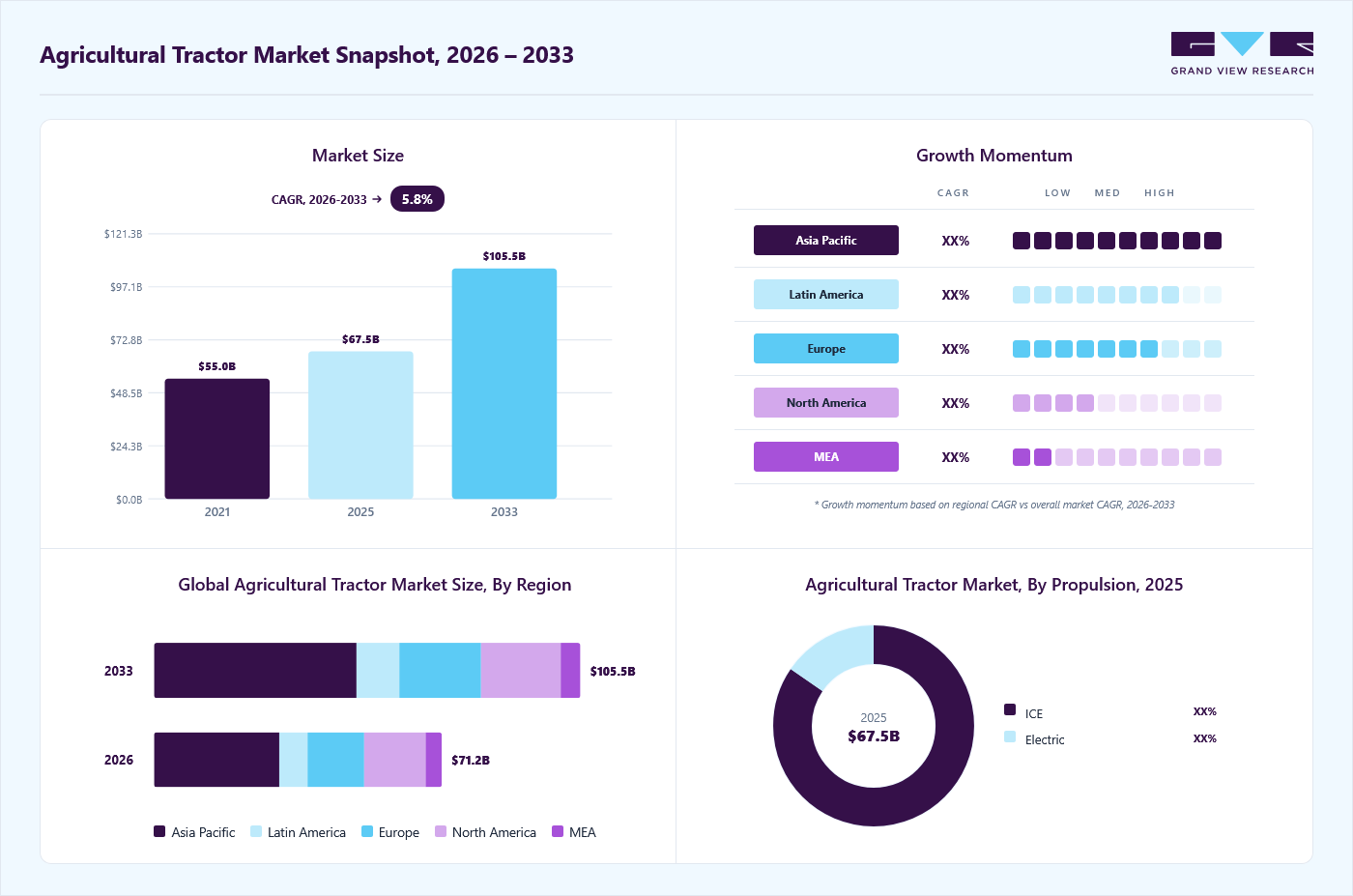
The global agricultural tractor market size was valued at USD 67.5 billion in 2025 and is projected to grow from USD 71.2 billion in 2026 to USD 105.5 billion by 2033, at a CAGR of 5.8% from 2026 to 2033. Asia Pacific dominated the market, accounting for a revenue share of 42.9% in 2025. This growth is driven by the rising demand for high-horsepower tractors for large-scale farming.
 Source: Grand View Research, IR Documents, Primary Interviews, Paid DatabasesTo learn more about this report,
 Download Free Sample Report
Key Market Trends & Insights
- By engine power: Less than 40 HP segment dominated the market, with a revenue share of 41.8% in 2025.
- By driveline: 2WD led the market and accounted for a share of 86.8% in 2025.
- By propulsion: ICE segment held the largest revenue share in 2025.
Regional Highlights
- Largest regional market: Asia Pacific (42.9% revenue share, 2025)
- By country: India held the largest market share in 2025.
Market Size & Forecast
- Market size in 2025: USD 67.5 Billion
- Estimated market size in 2026: USD 71.2 Billion
- Projected market size by 2033: USD 105.5 Billion
- CAGR (2026-2033): 5.8%
Three ways to get this report
Buy it, customize it, or ask a question.Ask an Analyst
Analyst response in 1 business day
- AccessReport author, directly
- Reply timeWithin 1 working day
- No sales callDirect answer only
- FormatEmail reply
- CostFree, no cost
Get the Full Report
What the study covers
- FormatsPDF · Excel · Dashboard
- Timeline2026–2033 annual, 2025 base
- Coverage20+ countries, 5 regions
- Companies10+ key players profiled
Customize the Report
20% free customization
- IncludeCountries, segments, points
- TailorTo your product definition
- ExtendDeeper competitor detail
- OrA fully bespoke study
- Turnaround5–10 working days
Expansion of large-scale and commercial farming operations is expected to drive growth. The agricultural tractor market is primarily driven by the increasing need for farm mechanization to improve productivity and operational efficiency. Agriculture in many regions is transitioning from labor-intensive practices to mechanized operations due to labor shortages and rising wages. Tractors play a central role in mechanization by enabling multiple farming activities such as plowing, tilling, planting, and hauling. They significantly reduce the time and effort required for these tasks compared to manual methods. This allows farmers to cultivate larger areas within shorter timeframes and improve overall farm output. As the pressure to increase agricultural productivity continues, the demand for tractors is steadily rising.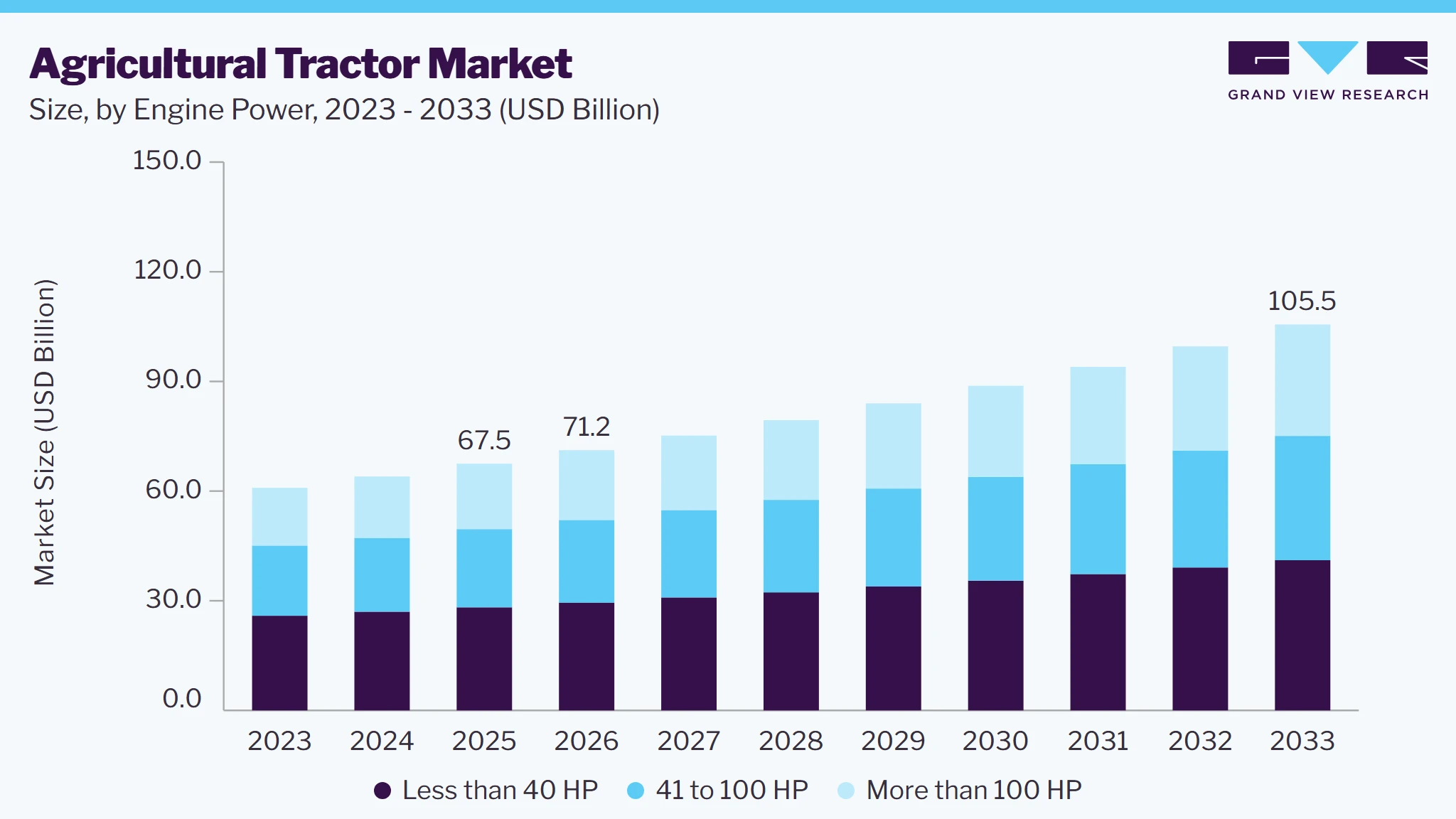 To learn more about this report, Download Free Sample Report
The increasing adoption of advanced technologies in agriculture is also a key driver for the tractor market and the forestry and agricultural tractor market. Modern tractors are being equipped with features such as GPS guidance, automation systems, and smart sensors. These technologies improve accuracy in field operations, reduce input waste, and enable farmers to monitor and control various aspects of farming in real time. The integration of digital technologies enhances productivity, lowers operational costs, and supports precision farming practices. As digital agriculture continues to evolve, the demand for technologically advanced solutions is increasing significantly.
The rising need for time efficiency and operational convenience in farming activities is also contributing to market growth. Farming operations are often highly time-sensitive, particularly during planting and harvesting seasons, and tractors enable faster and more efficient task execution, reducing delays and improving crop yields. These machines also offer versatility, supporting multiple attachments for plowing, sowing, spraying, and harvesting, reducing the need for multiple machines and simplifying farm management. Increasing mechanization across agricultural operations is encouraging farmers to invest in modern tractor solutions that optimize labor and resource utilization. As farmers continue focusing on improving operational efficiency and productivity, the demand for tractors is steadily increasing across both developed and emerging agricultural economies.
The expansion of commercial farming and large-scale agricultural operations is further driving the farm tractor market. Agribusinesses and large farms require high-capacity machinery to efficiently manage extensive land areas and perform heavy-duty agricultural tasks. Tractors play a crucial role in improving operational consistency, handling intensive workloads, and reducing dependency on manual labor. In addition, the growth of contract farming and cooperative farming models is increasing the adoption of shared agricultural machinery, including tractors, among small and medium-scale farmers. As agriculture becomes increasingly commercialized and mechanized worldwide, the agricultural tractor industry is expected to grow steadily over the forecast period.
Market Dynamics
The agricultural tractor market continues to grow as mechanization becomes a priority for improving farm productivity, reducing dependence on manual labor, and increasing operational efficiency across agricultural activities. Tractors serve as the primary power source for a wide range of farm operations, including land preparation, planting, cultivation, harvesting, and material transportation, making them indispensable across diverse farming systems. Growing farm mechanization initiatives, expanding commercial agriculture, and the adoption of precision farming practices are encouraging farmers to invest in tractors with higher efficiency, improved fuel economy, and advanced guidance technologies. In addition, supportive government policies, financing programs, and the replacement of aging machinery fleets are contributing to sustained demand for agricultural tractors worldwide.
The rising need for multi-purpose tractors across diverse farming activities is driving growth in the agricultural tractors market, as producers increasingly seek machinery capable of performing multiple field operations with a single investment. Modern farms require equipment that can efficiently support land preparation, planting, cultivation, spraying, hauling, harvesting assistance, and post-harvest transportation throughout the agricultural calendar. Multi-purpose tractors provide this operational flexibility by accommodating a wide range of implements, allowing farmers to maximize equipment utilization instead of maintaining separate machines for individual tasks. Greater versatility improves operational efficiency while reducing equipment idle time across different farming seasons. The expanding preference for highly adaptable machinery continues to strengthen demand for agricultural tractors.
The high purchase cost of advanced agricultural tractors acts as a major restraint in the agricultural tractors market by limiting the ability of many farming businesses to adopt modern machinery despite its productivity advantages. Contemporary tractors increasingly incorporate precision guidance systems, digital displays, telematics, automated transmission technologies, intelligent hydraulic controls, emission-compliant engines, and advanced operator comfort features, all of which substantially increase acquisition costs. Farmers often evaluate machinery investments in terms of long-term financial sustainability, making expensive equipment purchases difficult to justify when agricultural income remains dependent on seasonal production cycles. Large capital requirements encourage producers to extend the operational life of existing machinery rather than investing in technologically advanced replacements. This hesitation in purchasing slows the overall pace of market expansion.
The expansion of autonomous and driver-assist tractor technologies is creating significant opportunities in the agricultural tractors market by enabling manufacturers to introduce highly intelligent machinery that improves productivity while reducing operator workload. Agricultural producers increasingly seek equipment capable of performing repetitive field operations with greater precision and consistency, allowing farms to optimize resource utilization across planting, cultivation, spraying, and harvesting support activities. Autonomous navigation, automated steering, intelligent headland turning, and adaptive route planning allow tractors to execute field operations with minimal manual intervention. These technological advancements encourage farmers to invest in premium tractor platforms equipped with advanced automation capabilities. The growing transition toward intelligent farming systems contributes to market growth by expanding opportunities for technologically advanced tractors.
Analyst Perspective
The agricultural tractor market is distinguished by its central role within the farm equipment ecosystem, where purchasing decisions often influence subsequent investments in compatible implements and precision farming technologies. Competitive advantage extends beyond engine performance and horsepower, with increasing emphasis on lifecycle operating costs, service availability, resale value, and compatibility with digital farming solutions. Manufacturers that can develop tractors capable of supporting automation, telematics, and precision guidance while maintaining affordability across different farm sizes are expected to strengthen their market position. As agriculture becomes increasingly technology-driven, tractors are evolving from standalone mechanical machines into connected power platforms that serve as the operational hub for modern farming systems.
Engine Power Insights
Based on engine power, the less than 40 HP segment led the market with the largest revenue share of 41.8% in 2025. The high growth can be attributed to the low cost, compact size, and greater convenience offered by tractors with less than 40HP for performing all basic farming operations. This equipment is adopted mainly in the Asia Pacific region, where approximately 85% of farmlands are below 10 hectares and are preferred by most farmers in the region. In addition, the electrification of tractors in the less than 40 HP segment is expected to gain momentum over the next few years.
The more than 100 HP segment is anticipated to grow at the fastest CAGR during the forecast period, driven by the increasing scale of commercial farming and large landholdings. Large farms require high-powered machinery capable of handling extensive acreage efficiently within limited timeframes. Tractors with more than 100 horsepower provide the power to operate heavy implements such as large plows, seeders, and harvest support equipment. This enables farmers to complete field operations faster and with greater consistency. As agriculture becomes more commercialized and productivity-focused, the demand for high-capacity tractors continues to rise. These machines are particularly valuable in regions where large-scale farming dominates, making them a critical component of modern agriculture.
Driveline Insights
Based on driveline, the 2WD segment led the market with the largest revenue share of 86.8% in 2025. The versatility of 2WD tractors across a wide range of basic agricultural applications is driving market growth. These tractors can be used for multiple tasks such as plowing, planting, spraying, and transporting goods within farms. They are compatible with a variety of attachments, making them adaptable to different farming needs. This multi-functionality reduces the need for additional machinery, helping farmers save on costs. Their ease of operation also makes them suitable for farmers with limited technical expertise. As farmers seek practical and versatile solutions, 2WD tractors remain a preferred choice.
The 4WD segment is anticipated to grow at a notable CAGR during the forecast period. The increasing integration of advanced agricultural technologies is a key driver for the 4WD segment. Modern farming equipment often includes precision agriculture tools, GPS guidance systems, and automated controls that require stable and powerful platforms. 4WD tractors provide the necessary stability and performance to support these advanced technologies. They enable accurate field operations and the consistent application of inputs such as seeds, fertilizers, and pesticides. This improves crop yield and reduces wastage. As precision farming becomes more widespread, the adoption of 4WD tractors is rising.
Propulsion Insights
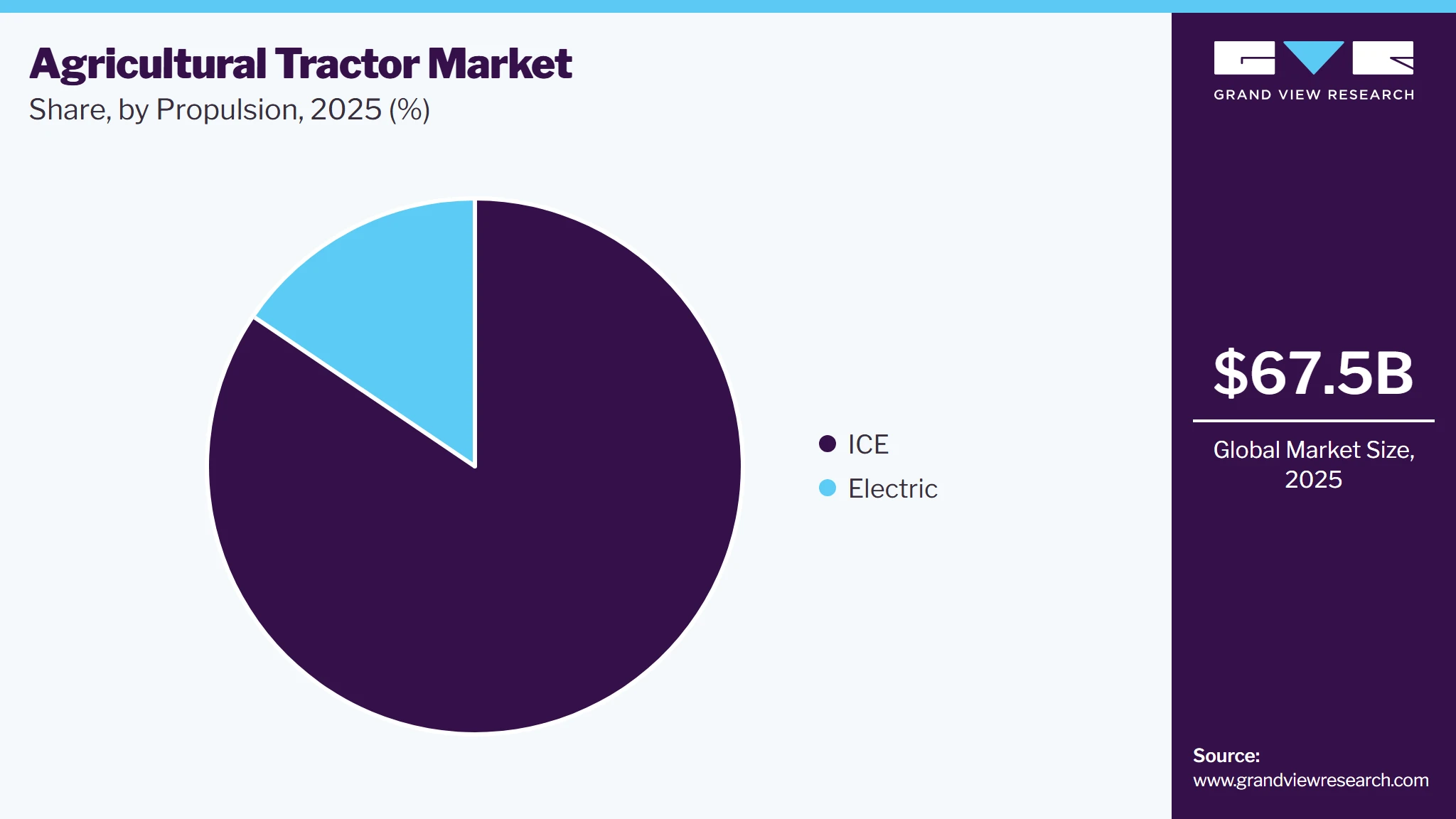
Based on propulsion, the ICE segment led the market with the largest revenue share of 84.5% in 2025. The high power output and operational capability of ICE engines are key drivers supporting the growth of this segment. Agricultural operations often require substantial power to operate heavy implements such as plows, seeders, and harvest support equipment, making ICE tractors highly suitable for demanding farming activities. These tractors deliver consistent high torque, enabling farmers to efficiently manage large-scale agricultural operations and improve field productivity. Their ability to perform effectively under heavy workloads and challenging environmental conditions further strengthens their adoption across commercial farming applications. As farming activities become increasingly intensive and mechanized worldwide, the demand for durable and high-performance equipment in the agricultural tractor machinery market continues to rise steadily.
 To learn more about this report, Download Free Sample Report
The electric segment is anticipated to grow at the fastest CAGR during the forecast period. The growing advancement in battery technology and energy storage systems is a key driver for the electric segment. Improvements in battery capacity, efficiency, and charging speed are making electric tractors more practical for agricultural use. These advancements allow tractors to operate for longer durations and handle more demanding tasks. Enhanced battery performance also reduces downtime associated with charging. As technology continues to evolve, the performance gap between electric and traditional tractors is narrowing. This progress is encouraging more farmers to consider electric options.
Regional Insights
Asia Pacific dominated the global agricultural tractor market with the largest revenue share of 42.9% in 2025, driven by the increasing need for farm mechanization across developing and emerging economies. The agricultural tractor market in the India held the largest share in the Asia Pacific region in 2025. A large portion of the region’s population is engaged in agriculture, yet many farming practices have traditionally been labor-intensive and inefficient. With rising labor costs and migration of rural workers to urban areas, there is a growing need to replace manual labor with machinery. Tractors enable farmers to perform essential activities such as plowing, sowing, and transportation more efficiently. This transition improves productivity and reduces dependency on human labor. As mechanization becomes a necessity rather than an option, the demand for agricultural tractors continues to rise across the region.
 To learn more about this report, Download Free Sample Report
The agricultural tractor industry in China is projected to grow during the forecast period. The expansion of agribusiness and the commercialization of agriculture are driving the demand for tractors in China. Large agribusinesses and contract farming models are becoming more prominent, particularly in regions focused on high-value crops and exports. These operations require efficient machinery to manage large-scale production and meet market demands. Tractors play a critical role in ensuring consistent, timely farming. They also help improve operational efficiency and reduce dependence on manual labor. As agriculture becomes more commercialized, the demand for tractors in China is expected to grow steadily.
The Vietnam agricultural tractor industry is projected to grow during the forecast period, driven by the increasing mechanization of farming activities and rising government support for agricultural modernization. Expanding commercial farming operations, favorable financing schemes for farm equipment, and rising awareness regarding advanced farming practices are supporting the growth of the market across the country.
North America Agricultural Tractor Market Trends
The agricultural tractor industry in the North America region is expected to grow significantly from 2026 to 2033. The market in North America is primarily driven by the presence of large-scale and highly commercialized farming operations across the region, along with the increasing adoption of agricultural driverless tractor technologies. Farms in countries such as the U.S. and Canada are typically large-scale, requiring high-capacity machinery to operate efficiently across extensive agricultural land areas. Tractors play a central role in handling activities such as plowing, planting, spraying, and harvesting, while the growing use of agricultural driverless tractor solutions is improving operational precision and reducing labor dependency. The scale of these operations makes manual labor impractical, increasing reliance on mechanized and autonomous farming equipment. High productivity expectations, rising labor shortages, and growing investments in precision agriculture are further encouraging farmers to adopt advanced and powerful tractors. As large-scale farming continues to dominate the region, the demand for tractors and autonomous agricultural technologies is expected to remain strong throughout the forecast period.
U.S. Agricultural Tractor Market Trends
The U.S. agricultural tractor industry is anticipated to witness significant growth from 2026 to 2033. The increasing focus on efficiency and productivity optimization is also driving U.S. market growth. Farmers are constantly seeking ways to maximize output while minimizing costs and resource use. Tractors enable faster and more efficient execution of farming tasks, allowing farmers to meet tight planting and harvesting schedules. They also support the use of large implements, which improve overall operational efficiency. This is particularly important in a competitive agricultural environment where margins can be tight. As efficiency becomes a key priority, the demand for tractors continues to rise.
Europe Agricultural Tractor Market Trends
The agricultural tractor industry in Europe is expected to grow significantly from 2026 to 2033. The growing trend toward farm consolidation and larger agricultural operations is contributing to market growth. While small farms still exist, there is a gradual shift toward larger and more organized farming structures. These operations require high-capacity tractors to handle extensive land areas and heavy workloads. Tractors enable efficient management of large farms and support the use of advanced implements. This transition enhances productivity and operational efficiency. As farm sizes increase, the demand for powerful and versatile tractors is rising.
The UK agricultural tractor industry is projected to grow significantly from 2026 to 2033. The increasing adoption of digital agriculture and connected farming systems is driving the market in the UK. Farmers are integrating technologies such as GPS, sensors, and data analytics into their operations to improve decision-making. Modern tractors serve as platforms for these technologies, enabling precise and data-driven farming practices. This enhances efficiency, reduces input costs, and improves crop outcomes. The ability to monitor and control operations in real time is becoming increasingly important.
The agricultural tractor industry in Germany is expected to grow significantly from 2026 to 2033, driven by the country’s strong focus on precision farming, agricultural mechanization, and sustainable farming practices. Farmers in Germany are increasingly adopting technologically advanced tractors equipped with GPS guidance, automation systems, telematics, and smart farming capabilities to improve operational efficiency and reduce labor dependency. The presence of large-scale commercial farming operations, along with rising investments in precision agriculture and digital farming technologies, is further supporting the Germany market growth.
Latin America Agricultural Tractor Market Trends
The agricultural tractor industry in Latin America is expected to grow significantly from 2026 to 2033, driven by the expansion of commercial farming activities, rising agricultural exports, and increasing mechanization across the region. Countries such as Brazil and Argentina are experiencing strong demand for advanced farming equipment to improve productivity, reduce labor dependency, and support large-scale cultivation. The Brazil agricultural tractor machinery market is experiencing substantial growth due to increasing investments in precision agriculture, expanding soybean and sugarcane cultivation, and the growing adoption of high-horsepower tractors. In addition, favorable government support programs and improving access to agricultural financing are further accelerating equipment adoption, while the Brazil agricultural tractor machinery market continues to benefit from rising demand for technologically advanced and fuel-efficient tractors across commercial farming operations.
Key Agricultural Tractor Company Insights
Some of the key companies operating in the market include Deere & Company and AGCO Corporation, among others.
-
Deere & Company is engaged in the manufacturing & construction of agricultural and forestry machinery; drivetrains and diesel engines for heavy equipment; and lawn care machinery. Additionally, the company also manufactures and provides other heavy manufacturing equipment. The company serves diverse industries, including agriculture, forestry, construction, landscaping & grounds care, engines & drivetrains, government & military, and sports turf.
-
AGCO Corporation is a U.S.-based agriculture equipment manufacturer. The company develops and sells products and solutions, including tractors, combines, foragers, hay tools, self-propelled sprayers, smart farming technologies, seeding equipment, and tillage equipment.
Key Agricultural Tractor Companies:
The following key companies have been profiled for this study on the agricultural tractor market.
-
AGCO Corporation
-
Antonio Carraro SPA
-
ARGO TRACTORS
-
CLAAS KGaA mbH
-
CNH Industrial N.V.
-
Daedong Corporation
-
Deere & Company
-
Escorts Ltd.
-
Kubota Corporation
-
LS Tractor USA
-
Mahindra & Mahindra Ltd.
-
RK Tractors
-
Sonalika International
-
Tractors and Farm Equipment Ltd.
-
Yanmar Holdings Co., Ltd.
Competitive Benchmarking
Category
Operating Strategies
Competitive Edge
Weakness
Established Players (Deere & Company; CNH Industrial; AGCO Corporation; Kubota Corporation; Mahindra & Mahindra)
- Mature players focus on expanding tractor portfolios across different horsepower categories while integrating precision agriculture technologies, telematics, fuel-efficient engines, and smart fleet management capabilities. They strengthen their market presence through localized manufacturing, extensive dealer networks, financing programs, and continuous product upgrades tailored to regional farming practices.
- These companies benefit from strong brand loyalty, large-scale manufacturing capabilities, and comprehensive sales and service networks that ensure product availability and after-sales support. Their broad product portfolios and investment in advanced technologies enable them to serve diverse agricultural applications ranging from small farms to large commercial operations.
- Maintaining extensive manufacturing facilities and dealer networks requires significant operational investment and exposes companies to fluctuations in raw material costs and agricultural equipment demand. Competition from regional manufacturers and changing government subsidy policies can also affect profitability and market share.
Emerging Players (Monarch Tractor; Solectrac; AutoNxt Automation; Cellestial E-Mobility; Sonalika EV Initiative)
- Emerging players focus on electric, autonomous, and digitally connected tractors that improve operational efficiency while reducing fuel consumption and emissions. They prioritize sustainable propulsion technologies, intelligent automation, and flexible product designs that address evolving environmental regulations and modern precision farming requirements.
- Their innovative technologies offer lower operating costs, reduced environmental impact, and advanced digital capabilities that appeal to technology-driven farming operations. Faster product innovation and specialization in next-generation tractor technologies position them well for the transition toward sustainable agriculture.
- Emerging manufacturers generally have limited production capacity, smaller dealer networks, and lower brand recognition than established competitors. Expanding charging infrastructure, scaling manufacturing operations, and building customer confidence in new tractor technologies remain significant growth challenges.
Recent Developments
-
In March 2026, Escorts Kubota, a subsidiary of Kubota Corporation, launched the Powertrac Shaurya, a new tractor series designed specifically for paddy cultivation. This launch represents the first time the Powertrac brand has rolled out a dedicated range tailored for paddy and wetland farming, targeting the paddy-growing regions of Southern India and reinforcing the company’s position in this important mechanization segment. It features cassette-type sealing in key areas to minimize the risk of water and mud ingress during operation, along with a tight turning radius of 3.1 meters that enhances maneuverability on small- and medium-sized farms.
-
In February 2026, New Holland, a subsidiary of CNH Industrial N.V., launched T7 Standard Wheelbase tractor models to the North American market. While retaining the same wheelbase as other T7 Series tractors, the updated T7 SWB features an increased vehicle weight of 7,257 kg and a higher payload capacity of up to 4,989 kg. The design also enhances day-to-day usability, making operations more straightforward. Implement attachment is quicker and more convenient thanks to the addition of pressure-release levers and a well-organized arrangement of hydraulic, electrical, and pneumatic connections. Furthermore, a new operator interface integrated into the SideWinder armrest allows users to customize controls according to their specific preferences.
-
In February 2025, AGCO Corporation and SDF signed an agreement aimed at expanding AGCO’s Massey Ferguson lineup with a more streamlined range of low- to mid-horsepower tractors. SDF will manufacture specialized tractors with outputs of up to 85 horsepower for distribution across most global markets. This new range will feature multiple powertrain configurations to cater to varying customer requirements and regional demands. AGCO anticipates that the updated Massey Ferguson portfolio will strengthen its position and increase its market share within the sub-85-horsepower tractor segment.
Agricultural Tractor Market Report Scope
Report Attribute
Details
Market size in 2025
USD 67.5 billion
Estimated market size in 2026
USD 71.2 billion
Projected market size by 2033
USD 105.5 billion
Growth rate
CAGR of 5.8% from 2026 to 2033
Base year for estimation
2025
Historical data
2021 - 2024
Forecast period
2026 - 2033
Quantitative units
Revenue in USD million/billion and CAGR from 2026 to 2033
Report coverage
Revenue forecast, company market share analysis, competitive landscape, growth factors, and trends
Segments covered
Engine power, driveline, propulsion, region
Regional scope
North America; Europe; Asia Pacific; Latin America; MEA
Country scope
U.S.; Canada; Mexico; Germany; UK; France; China; Japan; India; South Korea; Australia; Brazil; Saudi Arabia; South Africa; UAE
Key companies profiled
AGCO Corporation; Antonio Carraro SPA; ARGO TRACTORS; CLAAS KGaA mbH; CNH Industrial N.V.; Daedong Corporation; Deere & Company; Escorts Ltd.; Kubota Corporation; LS Tractor USA; Mahindra & Mahindra Ltd.; RK Tractors; Sonalika International; Tractors and Farm Equipment Ltd.; Yanmar Holdings Co., Ltd.
Customization scope
Free report customization (equivalent up to 8 analysts' working days) with purchase. Addition or alteration to country, regional & segment scope.
Pricing and purchase options
Avail customized purchase options to meet your exact research needs. Explore purchase options
Global Agricultural Tractor Market Report Segmentation
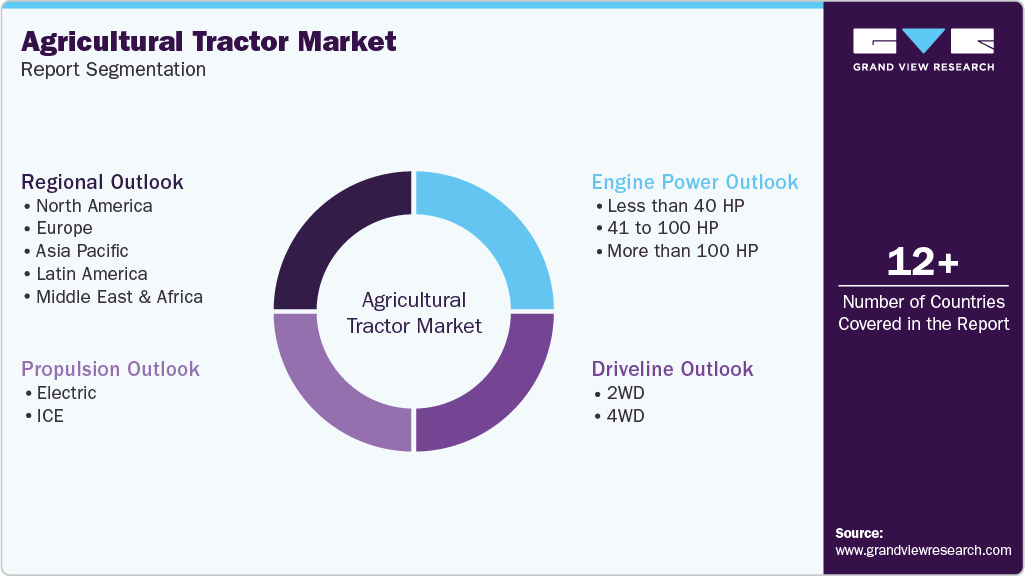
This report forecasts revenue growth at global, regional, and country levels and provides an analysis of the latest industry trends in each of the sub-segments from 2021 to 2033. For this study, Grand View Research has segmented the global agricultural tractor market report based on engine power, driveline, propulsion, and region.
 To learn more about this report, Download Free Sample Report
-
Engine Power Outlook (Revenue, USD Million, 2021 - 2033)
-
Less than 40 HP
-
41 to 100 HP
-
More than 100 HP
-
-
Driveline Outlook (Revenue, USD Million, 2021 - 2033)
-
2WD
-
4WD
-
-
Propulsion Outlook (Revenue, USD Million, 2021 - 2033)
-
Electric
-
ICE
-
-
Regional Outlook (Revenue, USD Million, 2021 - 2033)
-
North America
-
U.S.
-
Canada
-
Mexico
-
-
Europe
-
Germany
-
UK
-
France
-
-
Asia Pacific
-
China
-
India
-
Japan
-
South Korea
-
Australia
-
Vietnam
-
-
Latin America
-
Brazil
-
-
Middle East & Africa
-
UAE
-
Saudi Arabia
-
South Africa
-
-
Research Methodology
The agricultural tractor market figures in this report are based on a proven research process that combines executive interviews with secondary research from proprietary databases, company filings, and recognized regulatory and institutional sources. Market size is built through value-chain sizing - reconciling supply-side and demand-side estimates - and triangulated with bottom-up and top-down approaches. Every estimate passes multiple levels of expert validation before publication, with each agricultural tractor segment quantified using the revenue-capture definitions in the table below.
Segment Definition
Segment - Engine Power
Revenue capture definition
Less than 40 HP
Market value is driven by demand from small farms, orchards, vineyards, horticultural operations, and mixed-crop producers who require compact, economical machinery. Manufacturers benefit from high sales volumes as mechanization expands among smallholder farmers and government-supported farm modernization initiatives.
41 to 100 HP
The largest engine power segment, capturing investment in versatile tractors capable of plowing, planting, cultivation, spraying, hauling, and loader operations across medium and large farms. Buyers prioritize these models for their ability to operate multiple implements efficiently, resulting in higher average selling prices and stronger equipment utilization.
More than 100 HP
Commercial opportunities are concentrated in large-scale farming enterprises, commercial agriculture, plantation farming, and agricultural contracting businesses that require high-horsepower equipment for intensive field operations. Premium pricing is supported by advanced hydraulics, precision farming technologies, autonomous guidance systems, and the ability to handle heavy implements across extensive acreage, making this the highest-value engine-power category on a per-unit basis.
Segment - Type
Revenue capture definition
2WD
Commercial demand is supported by farms operating on relatively level terrain where lower acquisition costs, fuel efficiency, and simplified maintenance remain key purchasing factors. The segment continues to perform well in regions dominated by small and medium-sized agricultural holdings.
4WD
Premium market opportunities arise from tractors designed for heavy-duty field operations, uneven landscapes, and high-traction applications. Agricultural producers invest in four-wheel-drive models to improve operational productivity, maximize pulling capacity, and support intensive farming activities under challenging field conditions.
Segment - Propulsion
Revenue capture definition
Electric
Investment is increasing as manufacturers introduce battery-powered tractors designed for vineyards, orchards, greenhouses, municipalities, and specialty farming. The segment benefits from growing interest in low-emission agriculture, reduced operating expenses, quieter operation, and government incentives promoting sustainable farm equipment.
ICE
The dominant propulsion category continues to capture the majority of industry spending due to its proven performance, extensive refueling infrastructure, and ability to deliver sustained power for demanding agricultural workloads. Continuous technological improvements in engine efficiency and emissions compliance further support its widespread adoption across global farming operations.
Estimation Model
Layer
Question
Analysis
Farm Power Requirement Layer
What farming operations require agricultural tractors?
Identify the agricultural activities that depend on tractors as the primary source of mechanical power, including plowing, tillage, seedbed preparation, planting, cultivation, hauling, harvesting support, and transport of agricultural inputs and produce. This layer defines the market by evaluating the extent to which different farming systems rely on tractors to improve operational efficiency and reduce dependence on manual labor.
Equipment Selection Layer
What influences farmers when choosing agricultural tractors?
Assess the factors affecting tractor selection, including farm size, crop type, terrain, horsepower requirements, implement compatibility, fuel efficiency, transmission type, operator comfort, and total cost of ownership. Purchasing decisions are also shaped by financing availability, government mechanization programs, dealer proximity, and aftersales support, ensuring that the selected tractor aligns with both operational needs and long-term economic viability.
Fleet Productivity Layer
How are tractors utilized throughout the agricultural production cycle?
Analyze the role of tractors as multipurpose machines capable of operating with a wide range of implements across seasonal farming activities. Farmers maximize utilization by deploying tractors for land preparation, planting, spraying, fertilization, harvesting support, transportation, and post-harvest operations, enabling higher equipment productivity and reducing idle time throughout the year.
Equipment Lifecycle Value Layer
How is value generated across the agricultural tractor ecosystem?
Evaluate revenue generation through tractor sales, implement attachments, replacement parts, preventive maintenance, financing services, telematics subscriptions, fleet management solutions, and certified refurbishment programs. Additional value is created through productivity improvements, lower operating costs, enhanced equipment uptime, and long-term customer relationships supported by comprehensive aftermarket and digital service offerings.
Delivered Customizations
This report has been delivered with the following In-depth customizations
Client Request
Customization Delivered
Value Adds
High-Power Farm Machinery & Field Productivity Trends
Conducted a focused analysis of agricultural tractor adoption across row crop farming, grain production, plantation agriculture, and mixed farming operations, covering horsepower requirements, transmission technologies, and field performance for primary and secondary tillage activities.
Helps stakeholders identify high-demand tractor categories, evaluate mechanization trends across farming operations, and assess commercialization opportunities in high-performance agricultural machinery.
Precision Guidance, Connectivity & Operator Assistance Adoption Trends
Evaluated adoption trends for GPS auto-steering, telematics, implement guidance, ISOBUS compatibility, remote diagnostics, and operator assistance technologies integrated into modern tractors for precision field execution.
Provides insights into digital farming requirements, productivity enhancement opportunities, and commercially attractive tractor technologies that improve operational accuracy and equipment utilization.
Farm Fleet Modernization & Equipment Lifecycle Opportunity Assessment
Assessed demand for fleet management platforms, predictive maintenance solutions, fuel efficiency technologies, financing and leasing programs, and aftermarket service networks, along with challenges related to equipment replacement cycles, ownership costs, and skilled operator availability.
Supports investment and expansion strategies by identifying fleet modernization opportunities, evaluating customer purchasing readiness, and strengthening long-term growth potential in connected and efficient agricultural machinery ecosystems.
Frequently Asked Questions About This Report
Some key players operating in the agricultural tractors market include AGCO Corporation; Antonio Carraro SPA; ARGO TRACTORS; CLAAS KGaA mbH; CNH Industrial N.V.; Daedong Corporation; Deere & Company; Escorts Ltd.; Kubota Corporation; LS Tractor USA; Mahindra & Mahindra Ltd.; RK Tractors; Sonalika International; Tractors and Farm Equipment Ltd.; Yanmar Holdings Co., Ltd.
Less than 40 HP segment dominated the market, with a revenue share of 41.8% in 2025.
The ICE segment accounted for the largest market share in 2025.
The global agricultural tractor market was valued at USD 67.5 billion in 2025 and is expected to reach USD 71.2 billion in 2026.
The global agricultural tractors market is expected to grow at a CAGR of 5.8% from 2026 to 2033 to reach USD 105.5 billion by 2033.
Key factors include the rising demand for food products and increasing mechanization in the agriculture industry along with the technological advancements that are revolutionizing the farming and agricultural processes.
Asia Pacific accounted for the largest revenue share of 42.9% of the global market in 2025.
The 2WD segment accounted for the largest share in the agricultural tractor market in 2025.
About the Author(s)
Automotive & Transportation Research Team
Technology · Automotive & TransportationThis report was authored by the automotive & transportation research team at Grand View Research - comprising two research analysts, one senior research analyst, and one industry expert - with specialized expertise in the automotive & transportation segment of the technology industry. All findings are based on proprietary technology databases, executive interviews, and regulatory analysis, subject to internal peer review prior to publication.
Last Updated:
Speak to Analyst

Customize this report to your needs - add regions, segments, or data points, with 20% free customization.
Or view our licence options:


ISO 9001:2015 & 27001:2022 Certified
We are GDPR and CCPA compliant! Your transaction & personal information is safe and secure. For more details, please read our privacy policy.


