
- Home
- »
- Clothing, Footwear & Accessories
- »
-
Fast Fashion Market Size, Share & Trends Report 2026-2035GVR Report cover

Fast Fashion Market (2026 - 2035)
Size, Share & Trends Analysis Report By Product (Apparel, Footwear, Accessories), By Gender (Women, Men, Children), By Distribution Channel (Offline Retail Stores, Online Retail), By Region, And Segment Forecasts
Market Size, 2025
$240.0BMarket Estimate, 2026
$268.1BMarket Forecast, 2035
$725.7BCAGR, 2026–2035
11.7%Fast Fashion Market Summary
The global fast fashion market size was valued at USD 240.0 billion in 2025 and is projected to grow from USD 268.1 billion in 2026 to USD 725.7 billion in 2035, at a CAGR of 11.7% from 2026 to 2035. Europe dominated the market, accounting for the largest revenue share in 2025. The market is witnessing steady growth, driven by rapidly changing fashion trends, increasing consumer preference for affordable and stylish apparel, and the expansion of Omni channel retail strategies.
Key Market Trends & Insights
- By product: The apparel segment held the largest market share in 2025.
- By gender: The women segment held the largest market share in 2025.
- By distribution channel: The brand-owned stores segment accounted for the largest market share in 2025.
Regional Highlights
- Largest regional market: Europe (Largest market share, 2025)
- Fastest-growing regional market: Asia Pacific (highest CAGR, 2026-2035)
Market Size & Forecast
- Market size in 2025: USD 240.0 Billion
- Estimated market size in 2026: USD 268.1 Billion
- Projected market size by 2035: USD 725.7 Billion
- CAGR (2026-2035): 11.7%
Prism AI by Grand View Research Free to tryAsk a question about the fast fashion marketTry asking✓Every figure cited from GVR research Prefer the report? Download free sample →
The growing influence of social media, fashion influencers, and e-commerce platforms has accelerated product launches and reduced fashion cycles, encouraging frequent consumer purchases.Advancements in digital retail technologies, AI-driven demand forecasting, and sustainable material innovations are enabling brands to enhance customer experience, optimize supply chains, and support long-term market growth. The fast fashion industry continues to expand as consumers increasingly seek fashionable clothing at affordable prices with frequent style updates. The growing influence of social media, celebrity endorsements, fashion influencers, and digital marketing has accelerated the pace of fashion trends, encouraging consumers to purchase new collections more frequently.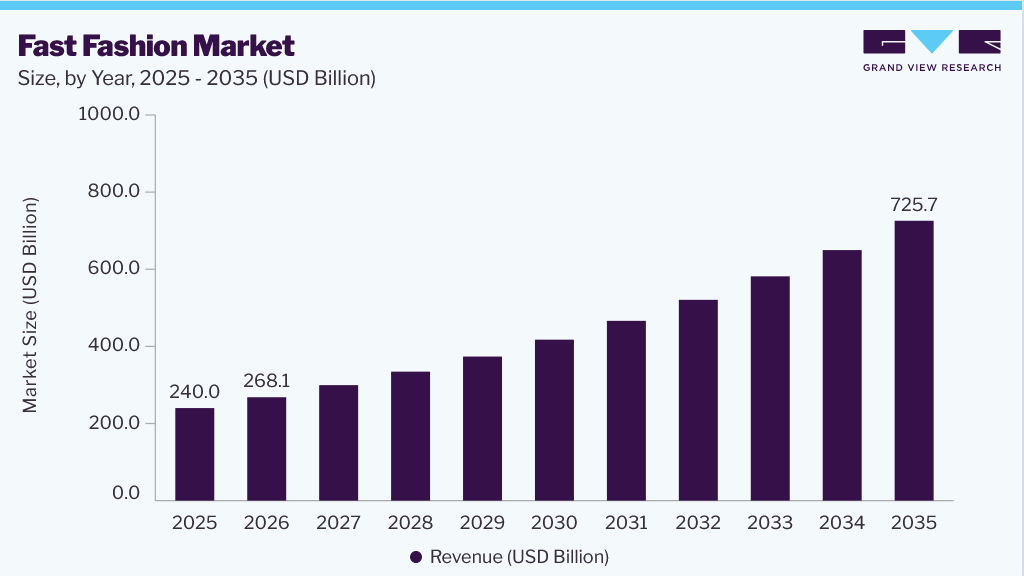 Source: Grand View Research, IR Documents, Primary Interviews, Paid DatabasesTo learn more about this report,
 Download Free Sample Report
In addition, the rapid growth of e-commerce platforms and mobile shopping applications has made fast fashion products more accessible, enabling brands to reach a wider customer base and respond quickly to changing consumer preferences. Continuous improvements in supply chain management and data-driven inventory planning have also helped retailers introduce new collections in shorter timeframes.
Despite its strong growth, the market faces challenges related to environmental sustainability and ethical sourcing. Fast fashion has come under increasing scrutiny due to concerns over textile waste, high resource consumption, and carbon emissions associated with large-scale apparel production. Governments and consumers are also demanding greater transparency regarding labor practices and sustainable manufacturing.
These evolving regulations and changing consumer expectations are encouraging brands to invest in recycled materials, responsible sourcing, and circular fashion initiatives, which may increase operational costs and require significant changes to existing business models. The market offers significant opportunities as companies adopt digital technologies and more sustainable business practices.
AI-driven demand forecasting, virtual fitting tools, and data analytics are helping brands improve customer experiences while reducing excess inventory. Growing demand for eco-friendly collections, resale platforms, clothing rental services, and recycled fabrics is opening new revenue streams for fashion retailers. Furthermore, expanding middle-class populations, rising disposable incomes, and increasing internet penetration in emerging economies are expected to create long-term growth opportunities, enabling fast fashion brands to strengthen their presence in both established and developing markets.
Analyst Perspective
The fast fashion market is undergoing a significant transformation as brands balance speed, affordability, and sustainability to meet evolving consumer expectations. While rapid product launches and digital-first retail strategies continue to fuel growth, companies are accelerating investments in sustainable materials, circular fashion initiatives, and supply chain transparency to address environmental challenges. The rising influence of social media, AI-powered trend forecasting, and omnichannel retail is reshaping how consumers discover and purchase fashion. As emerging markets increasingly adopt affordable fashion and e-commerce continues to expand, brands that effectively integrate innovation, operational agility, and responsible manufacturing are expected to sustain a competitive advantage over the coming years.
Product Insights
The apparel segment held the largest market share in 2025, driven by the continuous introduction of new clothing collections, rapid fashion cycles, and strong consumer demand for affordable and trend-driven apparel. Fast fashion brands frequently launch casual wear, formal wear, active wear, denim, and seasonal collections to keep pace with changing fashion preferences. The widespread availability of apparel through both physical stores and online platforms, combined with competitive pricing and frequent promotional campaigns, has further strengthened demand. In addition, the growing influence of social media, celebrity endorsements, and fashion influencers encourages consumers to purchase new styles more frequently, reinforcing the apparel segment's leading position in the global fast fashion industry.
The accessories segment is expected to register the fastest CAGR during the forecast period, fueled by increasing consumer preference for affordable fashion accessories that complement changing apparel trends without requiring significant spending. Products such as handbags, jewelry, belts, scarves, hats, sunglasses, and fashion watches are witnessing strong demand due to their versatility and ability to refresh personal style. The expansion of online shopping, influencer-driven fashion trends, and impulse buying behavior has further accelerated sales of fashion accessories. Moreover, fast fashion retailers are continuously expanding their accessory portfolios with limited-edition collections and seasonal designs, creating new opportunities for revenue growth and supporting the segment's rapid expansion throughout the forecast period.
Gender Insights
The women segment held the largest market share in 2025. The segment's dominance is attributed to the high frequency of fashion purchases, rapidly changing style preferences, and the extensive availability of apparel, footwear, and accessories designed for women. Fast fashion brands regularly introduce new collections inspired by seasonal trends, celebrity styles, and social media influencers, encouraging repeat purchases. In addition, increasing participation of women in the workforce, rising disposable incomes, and growing demand for affordable yet fashionable clothing have significantly contributed to market growth. The expansion of omnichannel retailing and personalized shopping experiences has further strengthened consumer engagement, reinforcing the women's segment as the largest contributor to the global fast fashion industry .
The men segment is expected to register a notable CAGR during the forecast period. Growth of this segment is primarily driven by increasing fashion awareness among male consumers, changing lifestyle preferences, and the growing acceptance of trend-focused apparel across different age groups. Fast fashion retailers are expanding their men's product portfolios by offering a wider range of casual wear, business attire, active wear, and accessories that combine style with affordability. The influence of digital marketing, social media, celebrity endorsements, and online shopping platforms has also encouraged more frequent purchases among male consumers. Furthermore, the increasing availability of customized collections, premium basics, and sustainable fashion options is expected to support continued growth of the men's segment throughout the forecast period.
Distribution Channel Insights
The offline retail stores segment held the largest market share in 2025. The segment's dominance is driven by consumers' preference for in-store shopping, where they can examine the quality, fit, fabric, and style of products before making a purchase. Brand-owned stores enable fast fashion retailers to deliver a consistent brand experience, showcase the latest collections, and respond quickly to changing fashion trends through frequent inventory updates. These stores also strengthen customer loyalty through personalized services, exclusive product launches, and promotional events.
The continued expansion of flagship stores and outlets in shopping malls and high-footfall commercial locations has helped leading brands maintain strong customer engagement and reinforce the dominance of this segment. In September 2025, UNIQLO announced the opening of its first store in Vietnam's central region at AEON Mall Huế, further expanding its brand-owned retail network. The expansion reflects the company's continued investment in physical retail stores to strengthen customer engagement and enhance its presence in high-growth fashion markets.
The online retail e-commerce marketplaces segment is expected to register the fastest CAGR from 2026 to 2035, driven by the increasing adoption of online shopping, widespread smartphone usage, and the convenience of purchasing fashion products from anywhere at any time. E-commerce marketplaces offer consumers access to a broad selection of brands, competitive pricing, customer reviews, and fast delivery options, making them an attractive shopping channel. The growing influence of social media marketing, live shopping events, personalized product recommendations, and AI-powered shopping experiences has further accelerated online sales.
In addition, flexible payment options, hassle-free return policies, and the continuous expansion of digital retail platforms are expected to support sustained growth of the e-commerce marketplace segment throughout the forecast period. In April 2025, SHEIN and Reliance Retail announced the expansion of their partnership to manufacture and sell SHEIN-branded apparel in India through the SHEIN India Fast Fashion app, strengthening the company's digital retail presence and expanding online access for consumers. The collaboration highlights the growing importance of e-commerce platforms in driving fast fashion sales and reaching a broader customer base.
Regional Insights
The Europe fast fashion industry held the largest market share in 2025. The region's dominance is driven by the presence of globally recognized fast fashion brands, well-established retail infrastructure, and strong consumer demand for affordable, trend-driven apparel. Countries such as Spain, Sweden, the UK, Germany, and France are home to leading fashion retailers that continuously introduce new collections to meet evolving consumer preferences. The widespread adoption of omnichannel retail strategies, extensive store networks, and advanced supply chain capabilities enables brands to respond quickly to changing fashion trends. Increasing consumer interest in sustainable fashion and the growing availability of eco-friendly product lines are encouraging brands to innovate while maintaining their strong presence across the European market.
Asia Pacific Fast Fashion Market Trends
The Asia Pacific fast fashion industry is expected to register the fastest CAGR during the forecast period. The growth of this regional market is fueled by rapid urbanization, rising disposable income, expanding middle-class population, and increasing fashion awareness among younger consumers. The region is witnessing strong growth in online shopping, social commerce, and mobile-based retail platforms, making fashion products more accessible across both developed and emerging economies. Countries such as China, India, Japan, and South Korea continue to experience increasing demand for affordable and trend-focused clothing, supported by expanding e-commerce infrastructure and digital payment adoption. Furthermore, the growing influence of social media, celebrity endorsements, and localized fashion trends is expected to create significant growth opportunities for fast fashion brands throughout the forecast period.
Key Fast Fashion Company Insights
The fast fashion industry is characterized by the presence of global and regional apparel retailers competing through rapid product launches, omnichannel retail expansion, strategic collaborations, and sustainable product innovation. Leading companies are increasingly investing in AI-driven demand forecasting, digital supply chain optimization, data analytics, and e-commerce capabilities to improve operational efficiency and respond quickly to changing consumer preferences. Growing investments in sustainable materials, circular fashion initiatives, and personalized shopping experiences are further strengthening the competitive landscape and supporting long-term market growth.
Key Fast Fashion Companies
The following key companies have been profiled for this study on the fast fashion market
-
Inditex S.A.
-
H & M Hennes & Mauritz AB
-
Fast Retailing Co., Ltd.
-
Mango
-
Gap Inc.
-
Primark Limited
-
NEXT plc
-
BOOHOO
-
ASOS plc
-
SHEIN
Recent Developments
-
In June 2025, H & M Hennes & Mauritz AB signed a multi-year agreement with Circulose to incorporate recycled textile materials into its collections, replacing a significant share of virgin viscose across brands such as H&M, COS, ARKET, and Weekday. The partnership supports the company’s circular fashion strategy and strengthens its sustainable product portfolio.
-
In March 2026, H & M Hennes & Mauritz AB published its Annual and Sustainability Report 2025, highlighting increased use of recycled materials, reduced greenhouse gas emissions, and continued investments in circular fashion initiatives.
-
In June 2026, Mango MNG Holding, S.L.U. announced an investment of approximately USD 76.0 million to open 45 new stores across France by 2028, strengthening its retail footprint in one of Europe's largest fashion markets.
Fast Fashion Market Report Scope
Report Attribute
Details
Market size in 2025
USD 240.0 billion
Estimated market size in 2026
USD 268.1 billion
Projected market size by 2035
USD 725.7 billion
Growth rate
CAGR of 11.7% from 2026 to 2035
Base year for estimation
2025
Actual data
2021 - 2024
Forecast period
2026 - 2035
Quantitative units
Revenue in USD billion and CAGR from 2026 to 2035
Report coverage
Revenue forecast, company ranking, competitive landscape, growth factors, and trends
Segments covered
Product, gender, distribution channel, region
Regional Scope
North America; Europe; Asia Pacific; Latin America; Middle East & Africa
Country Scope
U.S. ; Canada; Mexico; UK ; Germany; France; Italy ; Spain ; China; Japan ; India; Australia ; South Korea; Brazil; Argentina ; South Africa ; Saudi Arabia; UAE
Key companies profiled
Inditex S.A.; H & M Hennes & Mauritz AB; Fast Retailing Co., Ltd.; Mango; Gap Inc.; Primark Limited; NEXT plc; BOOHOO; ASOS plc; SHEIN
Customization scope
Free report customization (equivalent to 8 analyst working days) with purchase. Addition or alteration to country, regional & segment scope.
Pricing and purchase options
Avail of customized purchase options to meet your exact research needs. Explore purchase options
Global Fast Fashion Market Report Segmentation
This report forecasts revenue growth at the global, regional, and country levels and provides an analysis of the latest industry trends and opportunities across each sub-segment from 2021 to 2035. For this study, Grand View Research has segmented the global fast fashion market report based on product, gender, distribution channel, and region:
-
Product Outlook (Revenue, USD Billion, 2021 - 2035)
-
Apparel
-
Footwear
-
Accessories
-
Others
-
-
Gender Outlook (Revenue, USD Billion, 2021 - 2035)
-
Women
-
Men
-
Children
-
-
Distribution Channel Outlook (Revenue, USD Billion, 2021 - 2035)
-
Offline Retail Stores
-
Hypermarkets & Supermarkets
-
Factory Outlets
-
Brand-Owned Stores
-
-
Online Retail
-
Brand-Owned Websites
-
E-commerce Marketplaces
-
Mobile Shopping Applications
-
-
-
Regional Outlook (Revenue, USD Billion, 2021 - 2035)
-
North America
-
U.S.
-
Canada
-
Mexico
-
-
Europe
-
UK
-
Germany
-
France
-
Italy
-
Spain
-
-
Asia Pacific
-
China
-
Japan
-
India
-
Australia
-
South Korea
-
-
Latin America
-
Brazil
-
Argentina
-
-
Middle East and Africa (MEA)
-
South Africa
-
Saudi Arabia
-
UAE
-
-
Frequently Asked Questions About This Report
The global fast fashion market size was valued at USD 240.0 billion in 2025 and is estimated at USD 268.1 billion for 2026.
The global fast fashion market is expected to grow at a CAGR of 11.7% from 2026 to 2035, reaching USD 725.7 billion.
Europe dominated the fast fashion market with the largest revenue share in 2025.
The apparel segment accounted for the largest revenue share in 2025.
Key players in the market include Inditex S.A.; H & M Hennes & Mauritz AB; Fast Retailing Co., Ltd.; Mango; Gap Inc.; Primark Limited; NEXT plc; BOOHOO; ASOS plc; SHEIN
About the Author(s)
Clothing, Footwear & Accessories Research Team
Consumer Goods · Clothing, Footwear & AccessoriesThis report was authored by the clothing, footwear & accessories research team at Grand View Research - comprising two research analysts, one senior research analyst, and one industry expert - with specialized expertise in the clothing, footwear & accessories segment of the consumer goods industry. All findings are based on proprietary consumer goods databases, executive interviews, and regulatory analysis, subject to internal peer review prior to publication.
Last Updated:
Speak to Analyst

Customize this report to your needs - add regions, segments, or data points, with 20% free customization.
Or view our licence options:


ISO 9001:2015 & 27001:2022 Certified
We are GDPR and CCPA compliant! Your transaction & personal information is safe and secure. For more details, please read our privacy policy.


