
- Home
- »
- Next Generation Technologies
- »
-
Flexographic Printing Market Size & Share Report 2026-2033GVR Report cover

Flexographic Printing Market (2026 - 2033)
Size, Share & Trends Analysis Report By Application (Flexible Packaging, Corrugated Packaging, Labels & Tags), By End Use (Pharmaceutical, Food & beverage, Cosmetics), By Region, And Segment Forecasts
Market Size, 2025
$9.2BMarket Estimate, 2026
$9.5BMarket Forecast, 2033
$14.3BCAGR, 2026–2033
6.0%Flexographic Printing Market Summary
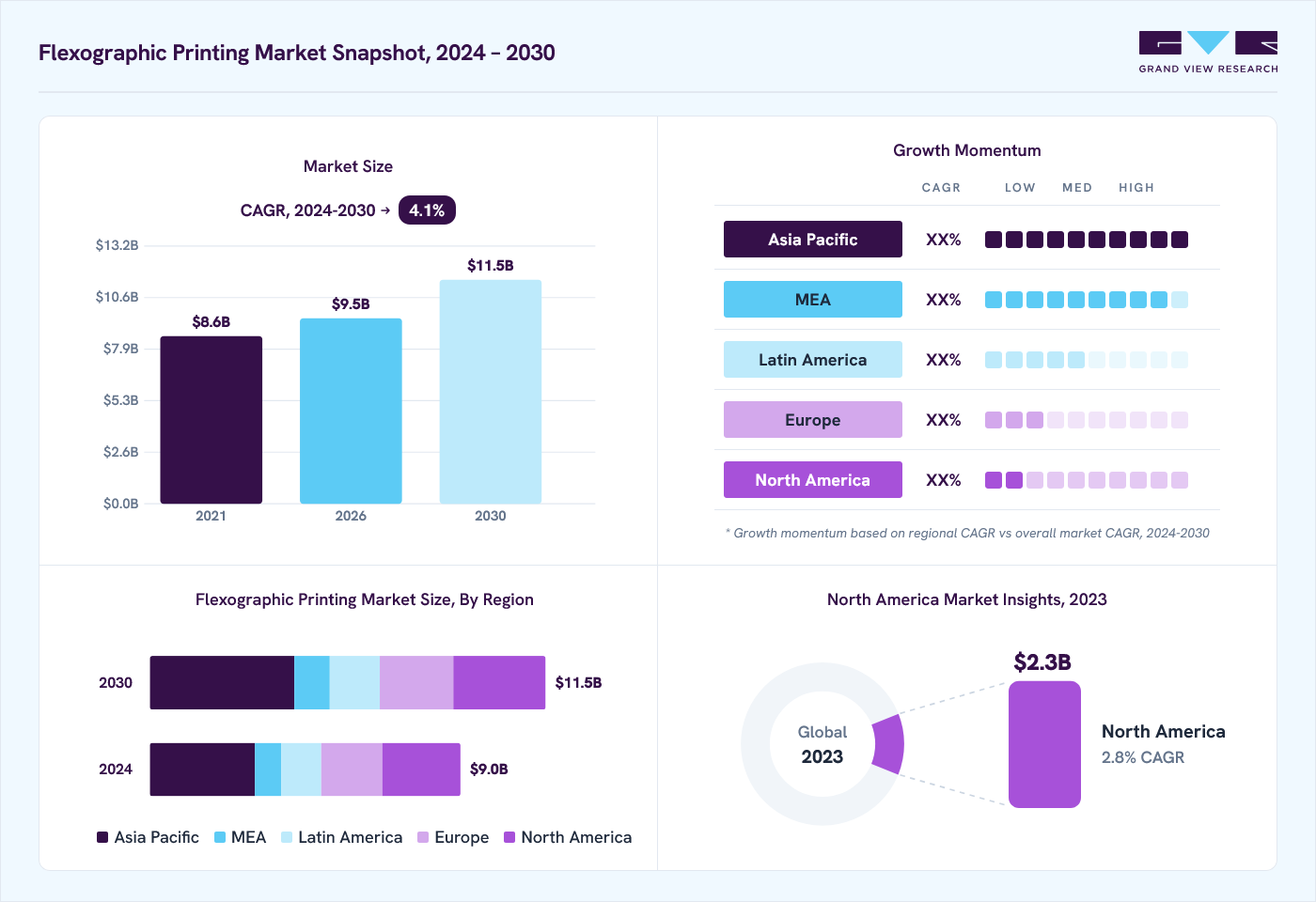
The global flexographic printing market size was valued at USD 9.2 billion in 2025 and is projected to grow from USD 9.5 billion in 2026 to USD 14.3 billion by 2033, at a CAGR of 6.0% from 2026 to 2033. Asia Pacific dominated the market, accounting for the largest revenue share of 34.3% in 2025. Flexographic printing, also known as flexo printing, is a versatile and widely used printing method that has been gaining increasing popularity due to several key advantages it offers over other printing techniques.
 Source: Grand View Research, IR Documents, Primary Interviews, Paid DatabasesTo learn more about this report,
 Download Free Sample Report
 Key Market Trends & Insights
- By Application: Flexible packaging segment dominated the market, with a revenue share of 43.3% in 2025
- By End Use: Food & Beverages segment held the largest market share of 34.7% in 2025
Regional Highlights
- Largest regional market: Asia Pacific (34.3% revenue share, 2025)
- By country: The U.S. held the largest market share in 2025.
Market Size & Forecast
- Market size in 2025: USD 9.2 Billion
- Estimated market size in 2026: USD 9.5 Billion
- Projected market size by 2033: USD 14.3 Billion
- CAGR (2026-2033): 6.0%
Three ways to get this report
Buy it, customize it, or ask a question.Ask an Analyst
Analyst response in 1 business day
- AccessReport author, directly
- Reply timeWithin 1 working day
- No sales callDirect answer only
- FormatEmail reply
- CostFree, no cost
Get the Full Report
What the study covers
- FormatsPDF · Excel · Dashboard
- Timeline2026–2033 annual, 2025 base
- Coverage20+ countries, 5 regions
- Companies10+ key players profiled
Customize the Report
20% free customization
- IncludeCountries, segments, points
- TailorTo your product definition
- ExtendDeeper competitor detail
- OrA fully bespoke study
- Turnaround5–10 working days
Flexographic printing presses can operate at high speeds, making them suitable for producing large quantities of printed material quickly. This is crucial for industries that require rapid turnaround times, such as packaging and labeling. Additionally, flexographic printing uses inks that are formulated for high-speed drying, which contributes to faster production times and lower energy consumption.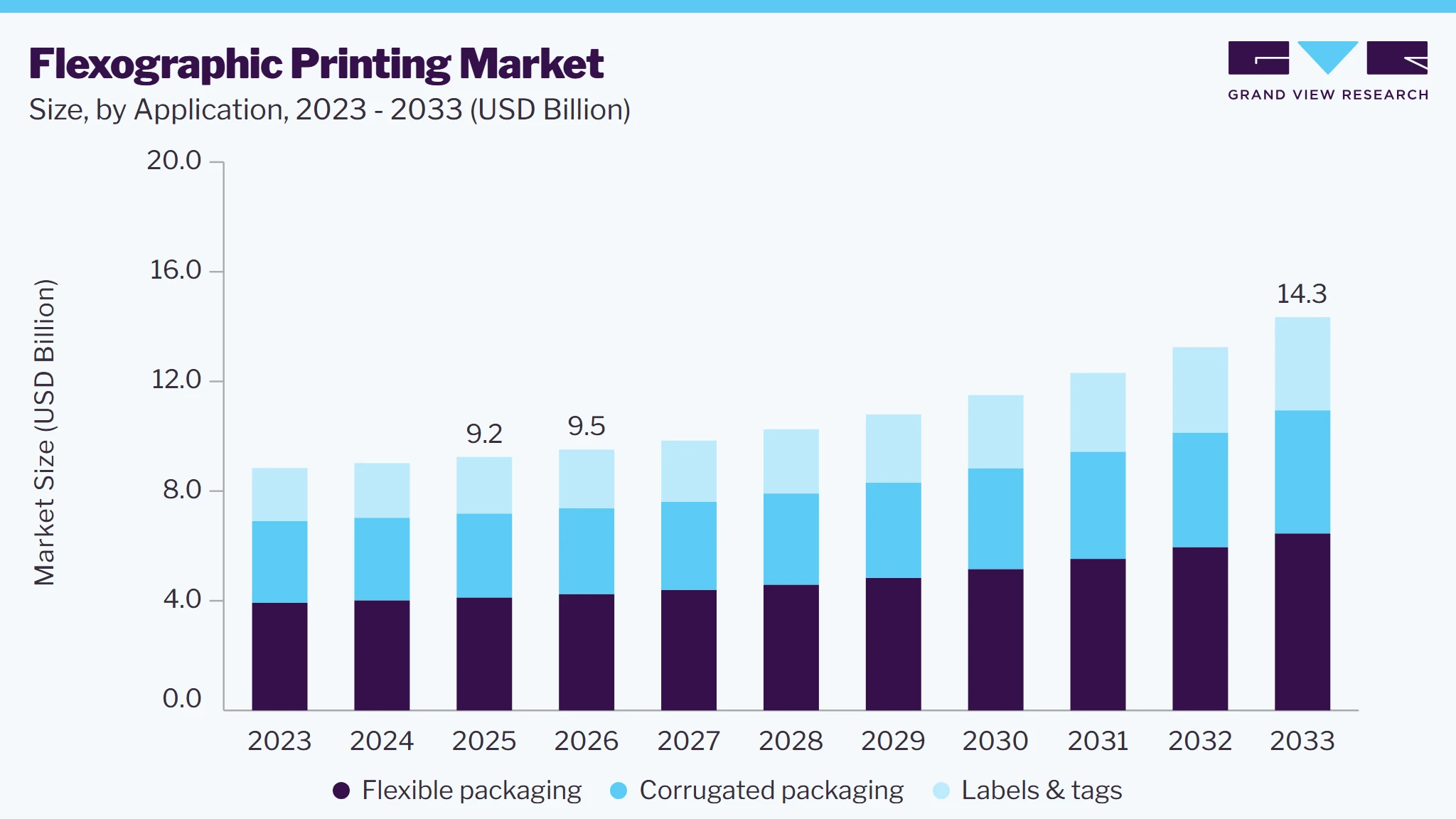 To learn more about this report, Download Free Sample Report
 Additionally, the use of water-based and UV-curable inks in flexo printing reduces volatile organic compound (VOC) emissions compared to solvent-based inks used in other printing methods. Moreover, environmental considerations play a crucial role in driving the adoption of flexographic printing. The shift towards water-based and UV inks reduces volatile organic compound (VOC) emissions and improves workplace safety for operators. Additionally, the efficiency of flexographic printing in minimizing waste and energy consumption supports sustainability goals. These factors have become increasingly important as regulatory requirements tighten and consumer preferences for eco-friendly products grow stronger.
Advancements in technology have significantly enhanced the quality and versatility of flexographic printing. Modern flexo presses can achieve high-definition print quality with sharp images and vibrant colors, suitable for a wide range of applications including food packaging, pharmaceutical labels, and industrial products. The method's ability to print on various substrates-from paper and cardboard to plastics, films, and metallic foils-further expands its utility across diverse industries. This versatility extends to specialty applications such as metallic inks, varnishes, and coatings, allowing for enhanced visual appeal and product differentiation in competitive markets.
However, the initial investment in flexographic printing equipment and infrastructure can be significant, especially for smaller businesses or those entering the market. High-quality flexo presses capable of handling complex designs and substrates may require substantial capital outlay, which can deter some companies from adopting this technology. Additionally, the rise of digital printing technologies has introduced strong competition to traditional printing methods like flexography. Digital printing offers advantages such as faster turnaround times, variable data printing capabilities, and minimal setup requirements for short runs, which can attract customers looking for flexibility and cost-effectiveness.
Market Dynamics
The flexographic printing market is witnessing steady growth driven by rising demand for flexible packaging, corrugated packaging, and pressure-sensitive labels across food, beverage, pharmaceutical, and e-commerce industries. Increasing emphasis on sustainable packaging, advancements in high-definition flexographic presses, automation, and faster production capabilities are strengthening market adoption. The market is also benefiting from improvements in printing plate technologies, water-based inks, and digital workflow integration, enabling higher print quality and operational efficiency. As brand owners seek cost-effective and environmentally compliant printing solutions for large-volume packaging applications, flexographic printing continues to expand its position within the global packaging value chain.
The rapid expansion of flexible packaging across food, beverage, personal care, pharmaceutical, and household product industries is a major driver for the flexographic printing market. Brand owners increasingly prefer flexible packaging formats due to their lightweight nature, lower transportation costs, extended shelf life capabilities, and enhanced product protection. Additionally, changing consumer lifestyles, urbanization, and the growing consumption of packaged goods have significantly increased demand for pouches, sachets, wraps, and films that require high-volume printing solutions. Flexographic printing addresses this demand by offering high-speed production, compatibility with a wide range of substrates, and cost-effective large-scale printing capabilities. Modern flexographic presses can deliver improved print quality while maintaining production efficiency, making them ideal for flexible packaging applications.
The flexographic printing market faces challenges associated with the substantial capital investment required for press installation, prepress systems, plate-making equipment, drying systems, and automation technologies. Small and medium-sized converters often face financial constraints when upgrading from conventional equipment to advanced flexographic systems. In addition, recurring expenditures related to plate manufacturing, maintenance, operator training, and process optimization further increase ownership costs. The impact of this restraint is particularly evident in developing regions and among smaller printing businesses with limited access to capital resources. Companies serving low-volume printing applications may struggle to justify large equipment investments, leading to slower technology adoption rates.
Growing environmental regulations and increasing consumer preference for sustainable packaging are creating significant opportunities within the flexographic printing market. Governments, retailers, and brand owners are promoting recyclable, biodegradable, and compostable packaging solutions to reduce environmental impact. Simultaneously, advancements in water-based, UV-curable, and low-VOC inks are enabling packaging manufacturers to achieve sustainability objectives without compromising print performance. This trend presents substantial growth potential for flexographic press manufacturers, ink suppliers, and packaging converters capable of supporting environmentally compliant production processes. Flexible packaging, labels, and corrugated packaging segments are expected to benefit most from this opportunity due to their direct exposure to sustainability initiatives.
Analyst Perspective
The flexographic printing market remains strongly positioned within the global packaging industry due to growing demand for flexible packaging, labels, and corrugated packaging solutions. Continuous advancements in high-definition printing, automation, smart workflow integration, and sustainable ink technologies are improving operational efficiency and print quality across the value chain. Market participants are increasingly investing in environmentally compliant solutions, including water-based inks and recyclable substrate compatibility, to align with evolving sustainability requirements. Looking ahead, packaging-driven demand from food, beverage, pharmaceutical, and e-commerce sectors is expected to sustain long-term growth. Competitive dynamics are shifting toward technology innovation, automation capabilities, and value-added packaging solutions as manufacturers seek to differentiate their offerings and improve profitability.
Application Insights
Based on application, the flexible packaging segment led the market with the largest revenue share of 43.3% in 2025. The versatility and cost-effectiveness of flexible packaging have driven its widespread adoption across various industries. Flexible packaging, which includes materials like plastic films, foils, and laminates, offers advantages such as lightweight properties, extended shelf life for products, and reduced transportation costs. These benefits have made it increasingly popular in sectors like food and beverage, pharmaceuticals, and personal care. Additionally, the growth of e-commerce has also significantly contributed to the expansion of the flexible packaging segment. As online shopping continues to surge, there is an increased demand for packaging solutions that can protect products during shipping while remaining visually appealing. Flexographic printing on flexible materials meets these requirements effectively, offering high-quality graphics and durability.
The labels & tags segment registered the fastest CAGR of 6.8% over the forecast period. Labels and tags play a critical role across various industries, including retail, logistics, healthcare, and manufacturing. Flexographic printing is particularly well-suited for producing labels and tags due to its ability to handle a wide range of substrates and deliver high-quality printing at relatively low costs. This method allows for efficient production of labels and tags in large volumes, meeting the demands of industries requiring extensive labeling for branding, product identification, and information dissemination. One key driver of the segment's growth is the increasing demand for customized and variable data printing capabilities. Flexographic printing technology has evolved to integrate digital solutions, enabling quick setup changes and personalized printing options. This flexibility appeals to industries where rapid turnaround times and tailored labeling solutions are essential, such as in the fast-moving consumer goods (FMCG) sector and e-commerce logistics.
End User Insights
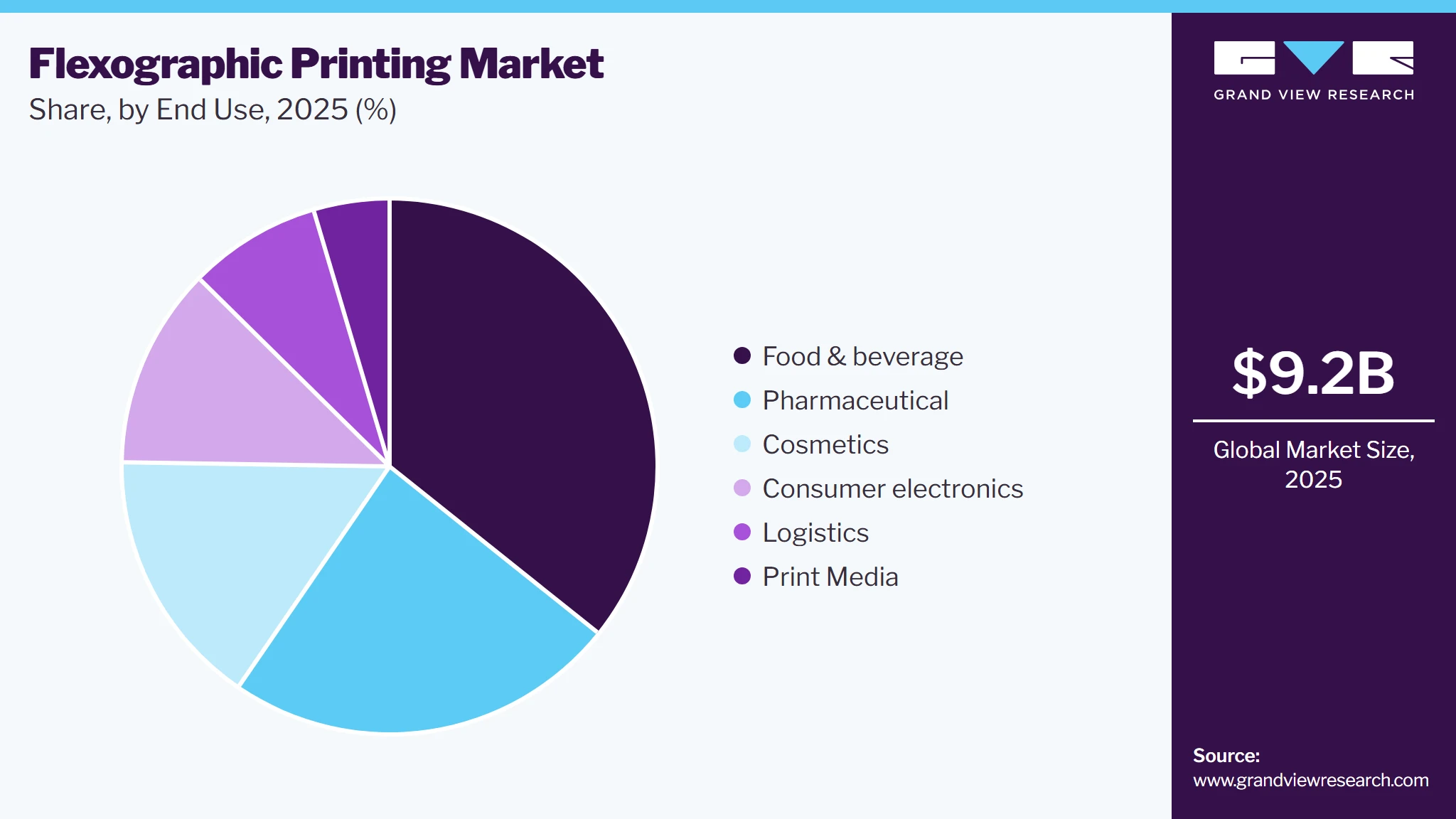
Based on end use, the food & beverages segment led the market with the largest revenue share of 34.7% in 2025. The food and beverages industry requires extensive and diverse packaging solutions to meet various product types, sizes, and regulatory requirements. Flexographic printing is highly versatile and capable of printing on a wide range of packaging materials, such as flexible films, paperboards, and corrugated materials. This versatility allows manufacturers to meet the specific packaging needs of different food and beverage products effectively.
 To learn more about this report, Download Free Sample Report
 The logistics segment is anticipated to register the fastest CAGR of 8.1% over the forecast period in the target market. The logistics industry relies heavily on efficient and standardized packaging and labeling solutions to streamline operations, ensure product identification, and facilitate smooth supply chain management. Flexographic printing offers cost-effective and scalable solutions for producing labels, tags, and packaging materials that meet these requirements. Additionally, flexographic printing technology has evolved to integrate digital capabilities, allowing for flexible and customizable printing solutions. This includes variable data printing, where labels and packaging can be tailored with specific information such as barcodes, QR codes, batch numbers, and shipping details. This customization capability is crucial in logistics for enhancing tracking, inventory management, and compliance with shipping regulations.
Regional Insights
The rapid expansion of e-commerce in North America has become a significant driver for the flexographic printing industry, reshaping demand patterns and influencing market dynamics. This shift in consumer behavior towards online shopping has created a substantial need for packaging solutions, particularly in the realm of corrugated boxes and flexible packaging, where flexographic printing plays a crucial role. The e-commerce sector's growth has introduced new requirements for packaging customization and branding. Online retailers are increasingly seeking to differentiate themselves through unique, visually appealing packaging that enhances brand visibility and improves the customer experience. Flexographic printing's capability to produce high-quality graphics on various substrates positions it favorably to meet these evolving needs.
U.S. Flexographic Printing Market Trends
The flexographic printing market in the China held the largest share in the Asia Pacific region in 2025. One key factor is the increasing consumer demand for packaged products, driven by changing eating habits and lifestyles. This has led to a significant impact on the market for flexographic printing of folding cartons in food packaging. Additionally, the rise in per capita disposable income and a growing population have also contributed to the demand for printed packaging materials.
Asia Pacific Flexographic Printing Market Trends
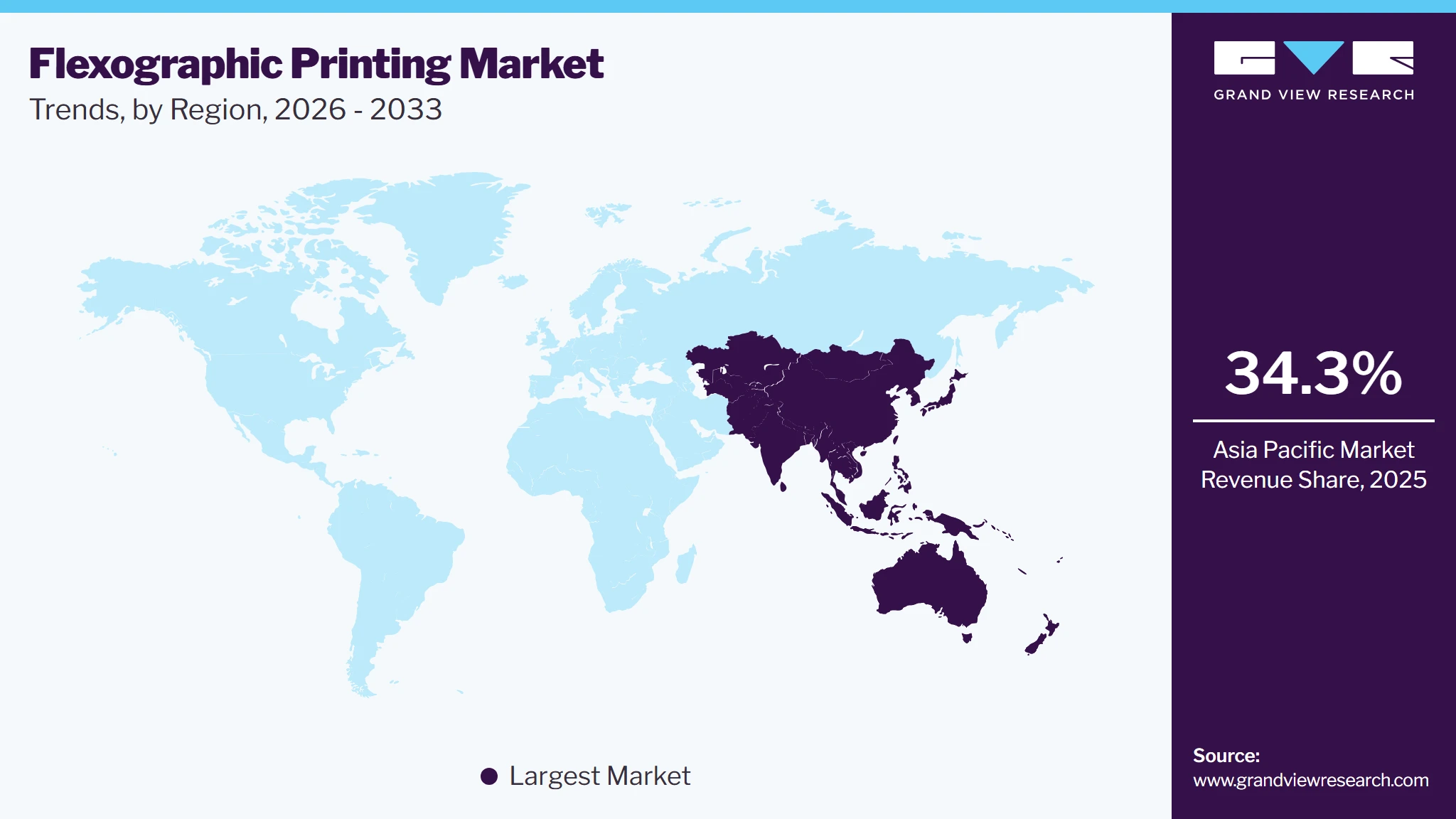
Asia Pacific dominated the global flexographic printing market with the largest revenue share of 34.3% in 2025. This indicates a strong presence and influence within the global market for packaging and labeling materials. The region's dominance can be attributed to several key factors. Firstly, Asia Pacific encompasses major economies like China, Japan, and India, which have experienced rapid industrialization and urbanization. These factors drive robust demand across various sectors, such as food and beverage, consumer goods, and pharmaceuticals, all of which heavily rely on efficient printing solutions for packaging. Additionally, Asia Pacific's strategic position as a global trade hub further bolsters its dominance in the flexographic printing sector. The region benefits from well-established supply chains, facilitating easy access to raw materials and efficient distribution networks. This logistical advantage not only reduces production costs but also enables timely delivery of printed materials to diverse markets worldwide.
 To learn more about this report, Download Free Sample Report
 Europe Flexographic Printing Market Trends
As European countries continue to prioritize environmental responsibility and carbon reduction goals, industries are increasingly turning to printing technologies that minimize ecological impact. Flexographic printing has made significant strides in reducing its environmental footprint. Water-based and UV-curable inks are increasingly used, minimizing volatile organic compound (VOC) emissions and meeting environmental regulations. This aligns with the growing emphasis on sustainable practices and eco-friendly packaging solutions. Additionally, modern presses often incorporate advanced technologies such as LED curing systems, which consume less energy compared to conventional drying methods. This not only lowers operational costs but also reduces the carbon footprint associated with the printing process.
Key Flexographic Printing Company Insights
Some of the key companies operating in the flexographic printing market include Asahi Kasei Corporation, Amcor Flexibles, and among others.
-
Asahi Kasei Corporation is a diversified Japanese multinational corporation with a significant presence in various industries, including chemicals, fibers, homes and construction materials, electronics, and healthcare. The company is particularly notable in the flexographic printing industry through its subsidiary, Asahi Photoproducts. Asahi Photoproducts specializes in producing flexographic photopolymer printing plates. These plates are crucial in flexographic printing processes, offering high-quality printing capabilities with environmental benefits such as reduced solvent use and improved recycling capabilities. It has a global presence with operations and subsidiaries in various countries around the world. This international footprint allows the company to serve diverse markets and customers.
Koenig & Bauer AG and Comexi are some of the emerging market companies in the target market.
-
Koenig & Bauer AG is a renowned German manufacturer of printing presses and systems. Koenig & Bauer is known for its wide range of printing press solutions, catering to various industries, including packaging, commercial printing, newspaper printing, and industrial applications. They manufacture sheetfed offset presses, web offset presses, digital presses, flexographic presses, and special-purpose presses. The company operates globally with production facilities, sales offices, and service centers strategically located around the world. This enables them to provide comprehensive support to their customers and maintain a strong presence in international markets.
Key Flexographic Printing Companies:
The following key companies have been profiled for this study on the flexographic printing market.
-
Wolverine Flexographic LLC
-
Amcor PLC
-
Westrock Company
-
Bobst Group SA
-
Comexi
-
Clicheria Blumenau
-
Mark Andy Inc.
-
SIVA Group
-
Asahi Kasei Corporation
-
Koenig & Bauer AG
Competitive Benchmarking
Category
Operating Strategies
Competitive Edge
Weakness
Established Players (Amcor PLC; WestRock Company; Bobst Group SA; Comexi; Mark Andy Inc.; Asahi Kasei Corporation; Koenig & Bauer AG)
- Expand market presence through investments in advanced flexographic presses, automation technologies, sustainable printing solutions, and global manufacturing networks. Focus on strategic partnerships with packaging converters, development of high-definition printing technologies, and expansion of product portfolios across flexible packaging, corrugated packaging, and label printing applications.
- Strong global brand recognition, extensive manufacturing and distribution networks, broad product portfolios, advanced R&D capabilities, and established relationships with packaging converters and consumer goods companies. Significant financial resources enable continuous innovation in press technology, printing plates, and sustainable printing solutions.
- High capital expenditure requirements, complex global operations, and exposure to fluctuations in packaging and printing demand. Large organizational structures may slow responsiveness to niche customer requirements and emerging regional market opportunities.
Emerging Players (Wolverine Flexographic LLC; Clicheria Blumenau; SIVA Group)
- Focus on specialized flexographic printing solutions, customized plate-making services, niche packaging applications, and regional market expansion. Compete through technical expertise, customer-specific solutions, shorter turnaround times, and tailored support services for packaging converters and printers.
- Greater operational flexibility, strong expertise in specialized flexographic applications, closer customer relationships, and ability to provide customized solutions for specific printing requirements. Agile business models enable faster adaptation to changing customer and market needs.
- Limited global reach, smaller manufacturing capacities, and narrower product portfolios compared to leading industry participants. Lower financial resources may restrict investments in advanced technologies, international expansion, and large-scale production capabilities.
Recent Developments
-
In June 2024, Mark Andy Inc. announced a strategic partnership with RotoMetals, a company specializing in the manufacture of high-precision rotary tooling solutions, particularly for the flexographic printing industry. This collaboration intends to leverage Rotometal's expertise in tooling with Mark Andy's printing technology capabilities to develop innovative solutions that enhance printing quality, efficiency, and productivity for flexographic printers. The partnership aims to address industry challenges and meet the evolving needs of flexographic printers through cutting-edge tooling innovations and collaborative research and development efforts.
-
In May 2024, Amcor plc opened its European Innovation Center (AICE) in Ghent, Belgium. This center is part of Amcor's expansion of its packaging innovation hubs around the world, which already include centers in the Latin America, U.S., and Asia Pacific regions. The AICE aims to pioneer new material technologies and designs that make packaging more sustainable, performant, and visually appealing. It would collaborate with brands and retailers from across Europe to develop packaging solutions that deliver better results for consumers and the environment.
Flexographic Printing Market Report Scope
Report Attribute
Details
Market size in 2025
USD 9.2 billion
Estimated Market size in 2026
USD 9.5 billion
Projected Market size by 2033
USD 14.3 billion
Growth rate
CAGR of 6.0% from 2026 to 2033
Base year for estimation
2025
Historical data
2021 - 2024
Forecast period
2026 - 2033
Quantitative units
Revenue in USD billion and CAGR from 2026 to 2033
Report coverage
Revenue forecast, company market share, competitive landscape, growth factors, and trends
Segments covered
Application, end use, region
Regional scope
North America; Europe; Asia Pacific; Latin America; MEA
Country scope
U.S.; Canada; Mexico; Germany; U.K.; France; China; Japan; India; South Korea; Australia; Brazil; Saudi Arabia; UAE; and South Africa
Key companies profiled
Wolverine Flexographic LLC; Amcor PLC; Westrock Company; Bobst Group SA; Comexi; Clicheria Blumenau; Mark Andy Inc.; SIVA Group; Asahi Kasei Corporation; Koenig & Bauer AG
Customization scope
Free report customization (equivalent up to 8 analysts' working days) with purchase. Addition or alteration to country, regional & segment scope.
Pricing and purchase options
Avail customized purchase options to meet your exact research needs. Explore purchase options
Global Flexographic Printing Market Report Segmentation
This report forecasts revenue growth at global, regional, and country levels and provides an analysis of the latest industry trends in each of the sub-segments from 2021 to 2033. For this study, Grand View Research has segmented the global flexographic printing market report based on application, end use, and region.
-
Application Outlook (Revenue, USD Million, 2021 - 2033)
-
Flexible packaging,
-
Corrugated packaging,
-
Labels & tags
-
-
End Use Outlook (Revenue, USD Million, 2021 - 2033)
-
Pharmaceutical
-
Food & beverage
-
Cosmetics
-
Consumer electronics
-
Logistics
-
Print media
-
-
Regional Outlook (Revenue, USD Million, 2021 - 2033)
-
North America
-
U.S.
-
Canada
-
Mexico
-
-
Europe
-
UK
-
Germany
-
France
-
-
Asia Pacific
-
China
-
Japan
-
India
-
South Korea
-
Australia
-
-
Latin America
-
Brazil
-
-
Middle East and Africa (MEA)
-
KSA
-
UAE
-
South Africa
-
-
Research Methodology
The flexographic printing market figures in this report are based on a proven research process that combines executive interviews with secondary research from proprietary databases, company filings, and recognized regulatory and institutional sources. Market size is built through value-chain sizing - reconciling supply-side and demand-side estimates - and triangulated with bottom-up and top-down approaches. Every estimate passes multiple levels of expert validation before publication, with each flexographic printing segment quantified using the revenue-capture definitions in the table below.
Segment Definition
Segment - Application
Revenue capture definition
Flexible Packaging
Revenue generated from flexographic printing services and printed packaging products used on films, laminates, pouches, sachets, wraps, bags, and other flexible packaging materials. Includes revenues from printing consumables, plates, inks, and press operations associated with flexible packaging production.
Corrugated Packaging
Revenue generated from flexographic printing applied to corrugated boxes, shipping cartons, retail-ready packaging, and industrial packaging solutions. Includes revenues from direct corrugated printing, post-print operations, inks, plates, and related printing services.
Labels & Tags
Revenue generated from flexographic printing of pressure-sensitive labels, shrink sleeve labels, wrap-around labels, barcode labels, RFID labels, product identification tags, and industrial tags. Includes revenues from printing, finishing, converting, and label production activities.
Segment - End Use
Revenue capture definition
Pharmaceutical
Revenue generated from flexographic printing used for pharmaceutical packaging, medicine labels, blister pack printing, healthcare cartons, patient information labels, and regulatory compliance packaging applications.
Food & Beverage
Revenue generated from printing of food packaging, beverage labels, pouches, wrappers, cartons, flexible packaging materials, and promotional packaging used across food and beverage supply chains.
Cosmetics
Revenue generated from printing of cosmetic labels, personal care packaging, beauty product cartons, shrink sleeves, promotional packaging, and decorative packaging materials.
Consumer Electronics
Revenue generated from printing labels, instruction packaging, protective packaging, shipping cartons, barcode labels, and branding materials used for electronic devices and components.
Logistics
Revenue generated from printing shipping labels, tracking labels, RFID-enabled labels, warehouse tags, corrugated transport packaging, and logistics identification materials used across supply chains.
Print Media
Revenue generated from flexographic printing of newspapers, inserts, catalogs, promotional materials, publications, and commercial print products utilizing flexographic printing technology.
Estimation Model
Layer Name
Key Question
Description
Industry Participant Mapping
Who are the key revenue-generating participants in the flexographic printing market?
The estimation begins by identifying flexographic press manufacturers, printing service providers, packaging converters, plate manufacturers, and ink suppliers operating across major regions. Market participation is mapped based on company presence, production capabilities, and service offerings. This layer establishes the competitive landscape and supply ecosystem that generates market revenues.
Capacity & Production Assessment
What is the available flexographic printing capacity and production output?
This layer evaluates installed flexographic presses, production facilities, converter capacities, and printing volumes across flexible packaging, corrugated packaging, and labels & tags applications. Capacity utilization rates, production throughput, and regional manufacturing footprints are analyzed to determine the scale of market activity.
Revenue Benchmarking by Application
How much revenue is generated from flexographic printing activities across applications?
Revenues are estimated by analyzing the value of printed packaging, labels, tags, and corrugated products produced using flexographic technology. Average revenue per print run, converter revenues, equipment sales, consumables spending (inks, plates, sleeves), and service revenues are incorporated to quantify market value across key segments.
Market Consolidation & Forecast Validation
What is the total market size and future growth outlook?
Revenues generated by market participants are aggregated and validated through company financials, industry associations, trade publications, and expert interviews. The final market size is benchmarked against packaging production trends, equipment investments, and technology adoption rates. Forecasts are developed based on converter expansion plans, automation investments, sustainability initiatives, and end-use industry growth.
Delivered Customizations
This report has been delivered with the following In-depth customizations
Client Request
Customization Delivered
Value Adds
Regional Flexographic Printing Market Opportunity Assessment
Conducted country- and region-level market sizing supported by packaging analysis, label and corrugated packaging demand assessment, and printing infrastructure mapping.
Evaluated regional demand drivers, packaging consumption trends, sustainability regulations, e-commerce growth, and manufacturing activity across key end-use industries.
Highlighted region-specific growth opportunities and underpenetrated flexographic printing markets.
Supported regional expansion planning, capacity investment decisions, and market entry strategies for printing equipment manufacturers and converters.
Flexographic Printing Technology & Innovation Assessment
Evaluated emerging technologies including high-definition flexographic printing, automated press systems, digital workflow integration, advanced plate technologies, water-based inks, UV-curable inks, and smart print quality monitoring solutions.
Assessed technology adoption trends among packaging converters, label manufacturers, and commercial printing companies.
Identified technology-led growth opportunities and future investment hotspots.
Supported product roadmap development, technology commercialization strategies, and innovation prioritization initiatives.
Competitive Benchmarking and Strategic Positioning
Benchmarked leading flexographic printing equipment manufacturers, plate suppliers, ink providers, and packaging converters across product portfolios, technological capabilities, geographic presence, sustainability offerings, and customer reach.
Conducted comparative assessment of printing quality, production efficiency, automation capabilities, substrate compatibility, and service support networks.
Identified competitive white spaces in sustainable printing solutions, digital-flexo integration, specialty packaging applications, and advanced automation technologies.
Supported strategic positioning, differentiation initiatives, and growth strategy development for market participants.
Frequently Asked Questions About This Report
The flexible packaging segment claimed the largest market share of 43.3% in 2025 in the flexographic printing market. This dominance can be attributed to its inherent advantages in terms of printing versatility, suitability for packaging applications, growth in consumer goods consumption, technological advancements, and alignment with sustainability goals. These factors collectively drive the adoption of flexographic printing technology across diverse industries.
Some of the prominent players in the flexographic printing market are Wolverine Flexographic LLC, Amcor PLC, Westrock Company, Bobst Group SA, Comexi, Clicheria Blumenau, Mark Andy Inc., SIVA Group, Asahi Kasei Corporation, Koenig & Bauer AG.
The flexographic printing market is driven by factors such as advancements in printing technology, a growing preference for sustainable printing solutions, rapid growth in the e-commerce industry, and Increasing consumer demand for packaged goods.
The global flexographic printing market size was estimated at USD 9.2 billion in 2025 and is expected to reach USD 9.5 billion in 2026.
The global flexographic printing market is expected to grow at a compound annual growth rate of 6.0% from 2026 to 2033 to reach USD 14.3 billion by 2033.
Asia Pacific dominated the global flexographic printing market with the largest revenue share of 34.3% in 2025.Rapid expansion of e-commerce, food & beverage packaging demand, and manufacturing activities is driving increased adoption of flexographic printing solutions across flexible packaging, labels, and corrugated packaging applications.
Based on end use, the food & beverages segment led the market with the largest revenue share of 34.7% in 2025.
The flexographic printing market in China within the Asia-Pacific region held the largest revenue share at 35.2% in 2025.
The flexographic printing market in U.S. within the North America region held the largest revenue share at 68.8% in 2025.
About the Author(s)
Next Generation Technologies Research Team
Technology · Next Generation TechnologiesThis report was authored by the next generation technologies research team at Grand View Research - comprising two research analysts, one senior research analyst, and one industry expert - with specialized expertise in the next generation technologies segment of the technology industry. All findings are based on proprietary technology databases, executive interviews, and regulatory analysis, subject to internal peer review prior to publication.
Last Updated:
Speak to Analyst

Customize this report to your needs - add regions, segments, or data points, with 20% free customization.
Or view our licence options:


ISO 9001:2015 & 27001:2022 Certified
We are GDPR and CCPA compliant! Your transaction & personal information is safe and secure. For more details, please read our privacy policy.


