
- Home
- »
- Biotechnology
- »
-
Fragment Analysis Market Size, Share, Growth Report 2026-2033GVR Report cover

Fragment Analysis Market (2026 - 2033)
Size, Share & Trends Analysis Report By Product & Service (Instruments, Reagents & Consumables), By Technology, By Application, (Genotyping & Polymorphism Analysis, Molecular Diagnostics), By End Use, By Region, And Segment Forecasts
Market Size, 2025
$277.6MMarket Estimate, 2026
$303.0MMarket Forecast, 2033
$584.2MCAGR, 2026–2033
9.8%Fragment Analysis Market Summary
The global fragment analysis market size was valued at USD 277.6 million in 2025 and is projected to grow from USD 303.0 million in 2026 to USD 584.2 million by 2033, at a CAGR of 9.8% from 2026 to 2033. The market in North America dominated with a revenue share of 42.1% in 2025. The market growth is primarily driven by factors such as increasing adoption of advanced analytical techniques, rising demand for high-precision molecular and protein analysis, expansion of research and development activities in the pharmaceutical and biotechnology sectors, and growing applications in genomics, proteomics, and diagnostics.
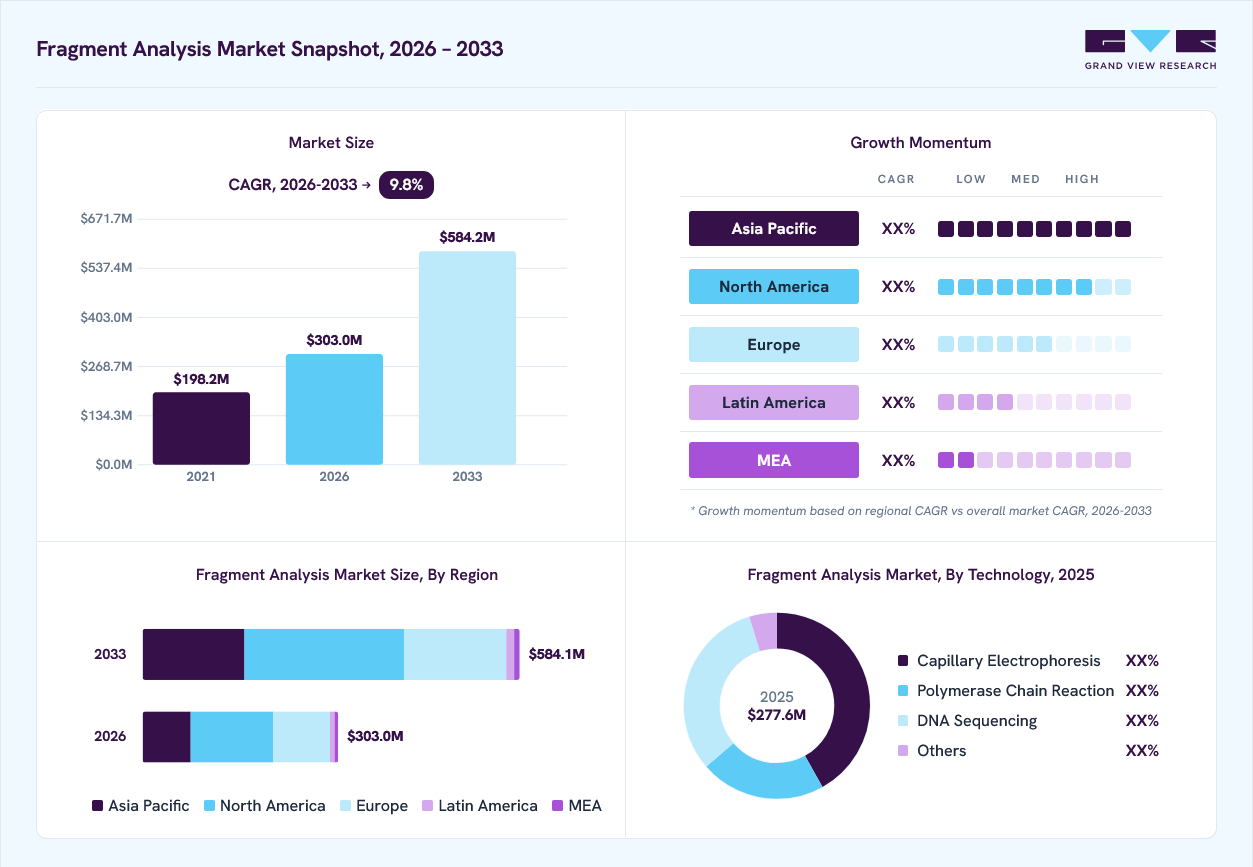 Source: Grand View Research, IR Documents, Primary Interviews, Paid DatabasesTo learn more about this report,
 Download Free Sample Report
 Key Market Trends & Insights
- By product & service: Reagents & consumables segment held the largest market share of 49.2% in 2025.
- By technology: Capillary electrophoresis segment held the largest market share of 41.8% in 2025.
- By application: Genotyping & polymorphism analysis segment held the largest market share of 35.9% in 2025.
- By end use: Academic & research institutes segment held the largest market share of 38.3% in 2025.
Regional Highlights
- Largest regional market: North America (42.1% revenue share, 2025)
- Fastest-growing regional market: Asia Pacific (highest CAGR, 2026-2033)
- By country: The U.S. held the largest market share in 2025.
Market Size & Forecast
- Market size in 2025: USD 277.6 Million
- Estimated market size in 2026: USD 303.0 Million
- Projected market size by 2033: USD 584.2 Million
- CAGR (2026-2033): 9.8%
Three ways to get this report
Buy it, customize it, or ask a question.Ask an Analyst
A direct answer, usually in 1 working day
- AccessReport author, directly
- Reply timeWithin 1 working day
- No sales callDirect answer only
- FormatEmail reply
- CostFree, no cost
Get the Full Report
What the study covers
- FormatsPDF · Excel · Dashboard
- Timeline2026–2033 annual, 2025 base
- Coverage20+ countries, 5 regions
- Companies10+ key players profiled
Customize the Report
20% free customization
- IncludeCountries, segments, points
- TailorTo your product definition
- ExtendDeeper competitor detail
- OrA fully bespoke study
- Turnaround5–10 working days
 To learn more about this report, Download Free Sample Report
 Key Technology Advancements
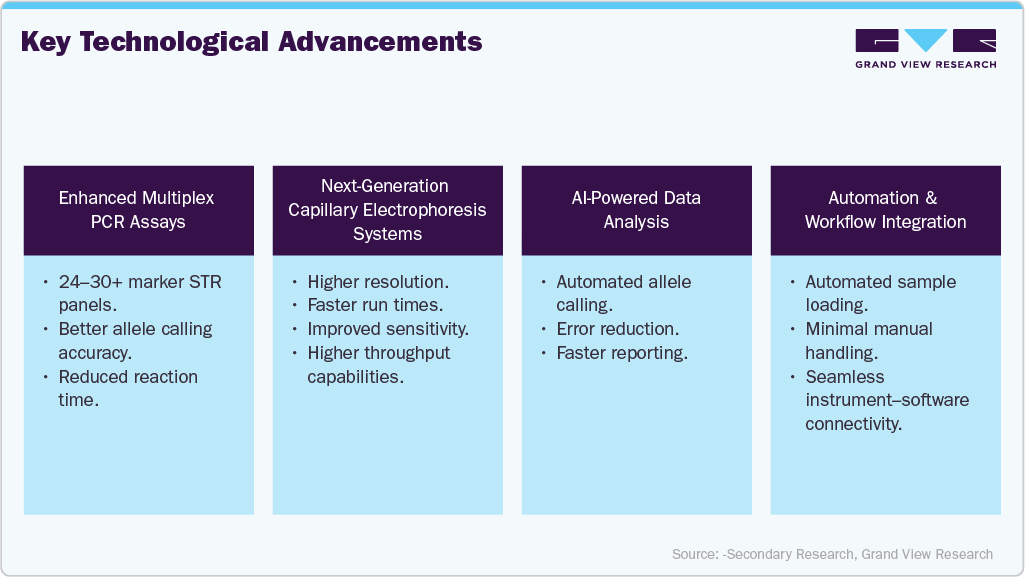
Advancements in Technology have emerged as a major demand driver for the fragment analysis market, primarily due to continuous improvements in capillary electrophoresis (CE) platforms and assay chemistry. Higher resolution, quicker run times, enhanced sensitivity, and the ability to analyze multiple fragments simultaneously via sophisticated multiplexing are all features of new-generation CE instruments. These improvements significantly enhance laboratory workflow efficiency, enabling the detection of microsatellites, STRs, SNPs, and other genetic markers with greater accuracy.
 To learn more about this report, Download Free Sample Report
 The accuracy and repeatability of fragment analysis have also been reinforced by advancements in fluorescent labeling chemistry, sample preparation kits, and precision detection technologies. Compared to alternative genomic techniques, such as NGS, these technological developments enable researchers and clinicians to obtain reliable results at a lower cost per sample. Clinical genetics, forensics, oncology, agriculture, and academic research are all experiencing an increase in adoption, which is fueling steady market growth.
Expanding IVF, Preimplantation, and Prenatal Testing
The rapid rise in IVF procedures and preimplantation genetic testing (PGT) is driving strong demand for fragment analysis technologies. Growing infertility rates, delayed pregnancies, and greater adoption of assisted reproductive technologies have increased the number of IVF cycles globally. Fragment analysis is essential for PGT-M, providing accurate and cost-effective STR-based linkage analysis to identify inherited mutations in embryos.
Prenatal diagnostic programs are expanding, further increasing demand for fragment analysis as it is widely used for aneuploidy detection, fetal genotyping, and maternal-fetal contamination testing. As regulatory bodies promote comprehensive prenatal screening and counseling, reliance on accurate fragment-based assays continues to grow, supporting sustained demand for related instruments and reagents.
Market Dynamics
The fragment analysis market is witnessing steady growth owing to the increasing adoption of molecular biology techniques in life science research, forensic analysis, agricultural genomics, and biopharmaceutical development. Growing demand for accurate DNA and RNA characterization, expanding applications in genotyping and quality control, and continuous advancements in capillary electrophoresis platforms are supporting market expansion. Moreover, increasing investments in genomics research and the rising adoption of automated, high-throughput analytical workflows are expected to drive market growth over the forecast period.
The increasing prevalence of cancer and inherited genetic disorders is a major factor driving the growth of the fragment analysis market. Fragment analysis is extensively used for DNA fragment sizing, microsatellite instability (MSI) testing, mutation detection, genotyping, and loss of heterozygosity (LOH) analysis, making it an important tool in molecular diagnostics. The rising incidence of colorectal, breast, hematological, and other cancers, along with the growing burden of rare genetic disorders, has increased the demand for accurate and reliable genetic testing. Moreover, the expanding adoption of precision medicine and companion diagnostics is accelerating the use of fragment analysis in clinical diagnostics and translational research.
The market is further supported by increasing investments in cancer genomics and precision medicine initiatives. For instance, in January 2024, Illumina, Inc. announced that Bristol Myers Squibb joined the Alliance for Genomic Discovery (AGD) to support large-scale whole-genome sequencing research aimed at advancing genomic discoveries and targeted therapeutics. Such initiatives are expanding genomic research and biomarker discovery efforts, thereby increasing the demand for complementary technologies such as fragment analysis for genotyping, mutation characterization, and biomarker validation in both research and clinical settings.
The increasing adoption of next-generation sequencing (NGS) is restraining the growth of the fragment analysis market by reducing reliance on capillary electrophoresis for several genomic applications. NGS offers comprehensive genomic profiling, higher throughput, and the ability to analyze multiple genetic variants simultaneously, making it the preferred technology for complex research and clinical diagnostics. As a result, laboratories are increasingly adopting NGS platforms for applications that were traditionally performed using fragment analysis.
The transition toward NGS is further supported by continuous investments in sequencing technologies and precision medicine initiatives. Leading life science companies are expanding their NGS portfolios through new product launches and strategic collaborations, encouraging laboratories to modernize their genomic workflows. While fragment analysis remains essential for applications such as microsatellite instability (MSI) testing, genotyping, and quality control, the broader adoption of NGS is expected to limit its use in comprehensive genomic analysis, thereby restraining market growth.
Market Concentration & Characteristics
The fragment analysis industry exhibits a consistent level of innovation, propelled by developments in automated data analysis tools, multiplex PCR, and capillary electrophoresis systems. Workflows are streamlined by advancements in fluorescent dyes and sample prep kits, and newer platforms offer greater resolution, faster throughput, and enhanced sensitivity. Despite technology’s relative maturity, its adoption in clinical, forensic, and research settings is still supported by continuous improvements in accuracy, automation, and usability.
The level of M&A activity in the fragment analysis industry is moderate, driven mainly by larger life science and genomics companies acquiring smaller firms to expand their assay portfolios, strengthen CE-based workflows, and enhance forensic or clinical genetics capabilities. The market is characterized by consistent strategic acquisitions aimed at integrating complementary technologies, expanding reagent and software offerings, and enhancing global distribution networks. Still, it is not as heavily consolidated as high-growth industries like NGS or single-cell analysis. These focused agreements support end-to-end workflow solutions for research, clinical, and forensic applications and help established players stay competitive.
 To learn more about this report, Download Free Sample Report
 Regulations strongly influence the fragment analysis industry by enforcing strict standards for accuracy, validation, and compliance across both clinical and forensic applications. Guidelines from agencies such as the FDA, EMA, and CLIA drive demand for reliable, validated instruments and STR kits, particularly in genetic diagnostics and forensic applications. While regulatory requirements increase development costs, they enhance market trust, standardization, and overall quality of fragment analysis workflows.
The fragment analysis industry is largely driven by product expansion, as businesses continue to add cutting-edge CE instruments, high-multiplex STR kits, improved fluorescent dyes, and optimized sample preparation reagents to their portfolios. The use cases for fragment analysis have expanded in both the clinical and research domains with the introduction of application-specific panels for reproductive genetics, oncology, hereditary disease testing, and forensics. In addition to enhancing end users' performance and flexibility, the consistent rollout of new kits and workflow improvements also motivates labs to expand or upgrade their current systems, thereby supporting long-term market growth.
Manufacturers are expanding into high-potential regions by establishing new distributors, service networks, and localized support, which is driving the growth of the fragment analysis market. Asian, Latin American, and Middle Eastern emerging markets are investing heavily in molecular diagnostics and forensics, driving demand for CE instruments and assay kits. These efforts expand market access and facilitate the adoption of analysis technology worldwide.
Analyst Perspective
The fragment analysis market is expected to grow steadily due to rising demand for genetic analysis in clinical diagnostics, life sciences, forensics, and agricultural biotechnology. Increasing use in genotyping, mutation detection, DNA fingerprinting, and nucleic acid quality assessment is supporting market expansion. Technological advancements in capillary electrophoresis, fluorescent labeling, and automated data analysis are improving efficiency and accuracy. Additionally, the growing prevalence of genetic disorders, focus on precision medicine, and investments in genomics research are driving long-term growth. Market players are focusing on innovation, automation, strategic partnerships, and expanding application portfolios to strengthen their market position.
Product & Service Insights
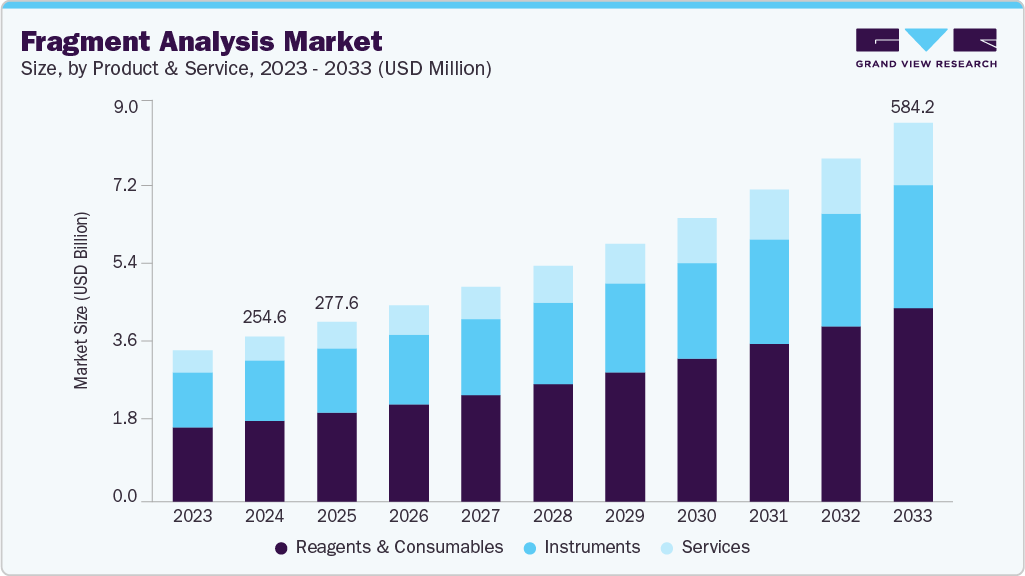
Based on product & service, the reagents & consumables segment held the largest revenue share of over 49.2% in 2025 in the fragment analysis market, primarily due to the continuous need for high-volume supplies such as PCR primers, fluorescent dyes, buffers, enzymes, size standards, and electrophoresis consumables for every workflow. The adoption of high-throughput fragment analysis for STR typing, MSI assessment, microbial strain typing, and mutation screening further increases per-sample reagent usage, reinforcing the segment’s leadership.
The services segment is expected to grow at the fastest CAGR over the forecast period, as more genotyping, STR profiling, and DNA fragment sizing are outsourced to specialized labs to lower turnaround times, costs, and reliance on in-house expertise. Biopharma firms, forensics departments, and CROs that need high-throughput analytics, regulatory-grade reporting, and effective workflow management all contribute to the demand.
Technology Insights
Based on technology, the capillary electrophoresis segment held the largest revenue share of over 41.8% in 2025, because of its exceptional accuracy, repeatability, and sensitivity in sizing DNA fragments for STR genotyping, MSI detection, mutation analysis, and microbial typing. Standardized CE-based kits, strong regulatory acceptance, and seamless compatibility with downstream sequencing workflows further reinforce its dominant position over emerging alternatives.
DNA sequencing is the fastest-growing segment of the fragment analysis market, driven by the rising use of sequencing platforms to validate and enhance insights beyond traditional CE-based fragment sizing. NGS-enabled workflows are gaining traction in oncology mutation profiling, hereditary disease testing, microbial strain differentiation, and population genetics due to their higher resolution and variant detection depth. The increasing demand for multiplexed data output, scalable throughput, and cost-efficient sequencing protocols is driving the integration of these protocols with fragment analysis pipelines.
Application Insights
Based on application, the genotyping & polymorphism analysis segment held the largest revenue share of over 35.9% in 2025, due to the widespread use of fragment analysis to identify STRs, SNPs, VNTRs, and microsatellites in research, clinical, and forensic applications. Adoption has been further accelerated by the growing need for high-throughput genotyping to support large-scale disease association studies, biorepository screening, and personalized medicine. The segment's dominance is maintained by validated assays, workflows that are ready for automation, and compatibility with CE and sequencing platforms.
The molecular diagnostics segment is the fastest-growing in the fragment analysis market, driven by the increasing use of DNA fragment sizing and STR/MSI detection for early disease diagnosis, cancer profiling, infectious disease screening, and genetic testing. Adoption in routine diagnostics is increasing rapidly due to the rise in cancer and rare disease cases, the shift toward precision medicine, and the growing availability of regulatory-approved kits and automated CE/NGS workflows.
End Use Insights
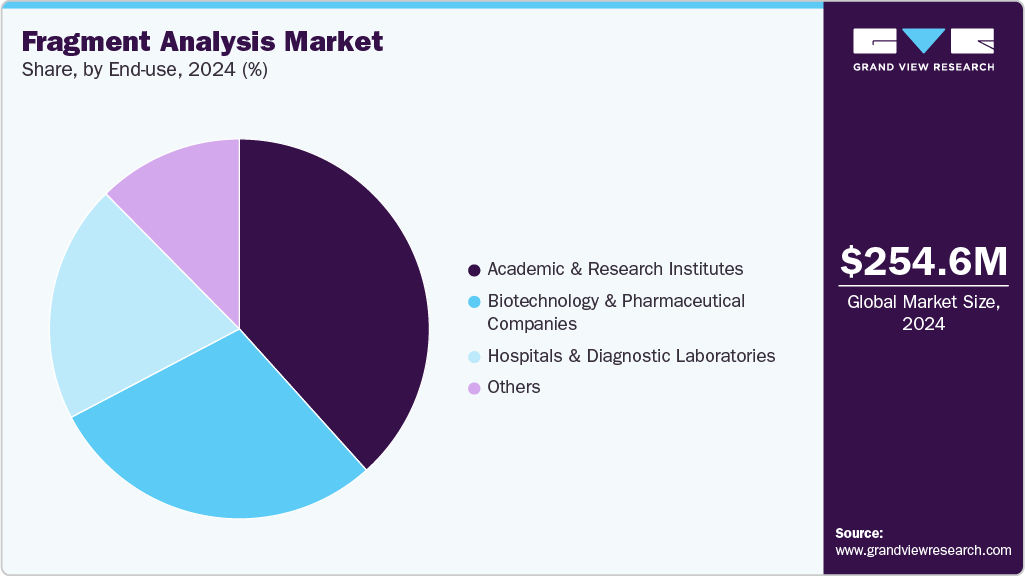
Based on end use, the academic & research institutes segment held the largest revenue share of over 38.3% in 2025. High precision, cost efficiency, and compatibility with high-throughput workflows make CE- and sequencing-based fragment analysis a preferred choice in universities and government labs. Growing funding for genomics and cancer research, along with collaborations between academia and biotech, continues to strengthen the segment’s dominance.
 To learn more about this report, Download Free Sample Report
 The hospitals & diagnostic laboratories segment is projected to grow at the fastest CAGR from 2025 to 2033, driven by increasing use of fragment analysis for cancer diagnostics, hereditary disease testing, infectious disease genotyping, and prenatal screening. The rising focus on precision medicine and early detection, along with the wider adoption of automated CE- and sequencing-based workflows and regulatory-approved kits, is accelerating the routine clinical use. Improving reimbursement and expanding molecular diagnostics in developing regions will further support rapid growth.
Regional Insights
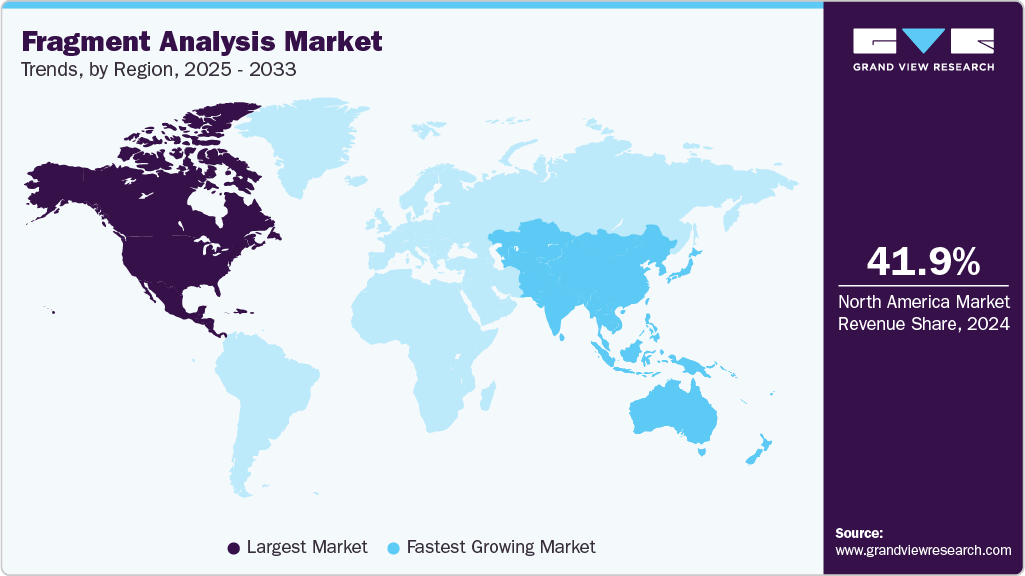
North America dominated the fragment analysis market with the largest revenue share of 42.1% in 2025, primarily due to the strong adoption of this technology across clinical genetics, forensics, and academic research. The region boasts advanced healthcare systems, high awareness of genetic testing, and substantial investments in precision medicine. Early adoption of CE systems and advanced STR/microsatellite analysis workflows accelerated market penetration. Collaboration between biotech, forensic, and genomic research institutes drives market innovation and technology upgrades.
 To learn more about this report, Download Free Sample Report
 U.S Fragment Analysis Market Trends
The fragment analysis market in the U.S. held the largest share in the North America region in 2025. The U.S. fragment analysis industry has experienced steady growth, driven by rising demand for genetic diagnostics, forensics, and reproductive genetics applications. The increased use of STR profiling in criminal investigations, combined with the expansion of newborn screening and hereditary disease testing programs, is fueling its adoption.
Europe Fragment Analysis Market Trends
The Europe fragment analysis industry is set for steady growth driven by strong regulatory frameworks, robust forensic networks, and rising EU funding for genomics. National forensic programs, biobanking efforts, and clinical genetics centers further support adoption.
The UK fragment analysis market is set to grow due to the implementation of robust genetic testing programs and major initiatives, such as Genomics England and UK Biobank. Government support for molecular diagnostics and forensic modernization is boosting demand in the country's market.
The fragment analysis market in Germany benefits from government programs promoting biotechnology and advanced molecular testing, which are driving adoption. For cancer genetics, reproductive testing, and forensic science, laboratories are upgrading CE systems and using high-multiplex PCR kits.
Asia Pacific Fragment Analysis Market Trends
The Asia Pacific fragment analysis industry is expected to witness the fastest CAGR of 11.3% from 2026 to 2033, driven by rising demand for genetic diagnostics, expanding forensics infrastructure, and increasing investments in genomics research. Growing awareness of hereditary disorders, the high prevalence of genetic diseases, and the rapid expansion of IVF and prenatal testing centers are further enabling market growth.
The China fragment analysis market is becoming a major market, driven by heavy investments in genomics, forensics, and precision medicine, under initiatives such as “Healthy China 2030.” The country is rapidly expanding STR profiling, prenatal testing, and oncology genotyping, which supports market growth.
The fragment analysis market in Japan is expected to experience strong growth, driven by advanced healthcare infrastructure, high adoption of precision medicine, and increasing application of fragment analysis in reproductive genetics. Aging population dynamics and rising cancer incidence are driving demand for accurate fragment analysis.
MEA Fragment Analysis Market Trends
The fragment analysis industry in the Middle East & Africa is projected to grow steadily, driven by rising demand for genetic diagnostics, modernization in forensic science, and the strengthening of biotechnology capabilities. The increasing incidence of hereditary diseases and government-led healthcare modernization programs are boosting adoption.
The Kuwait fragment analysis market is still in the early stages of adopting advanced genomic technologies, but it shows strong potential due to growing investment in healthcare modernization and research.
Key Fragment Analysis Company Insights
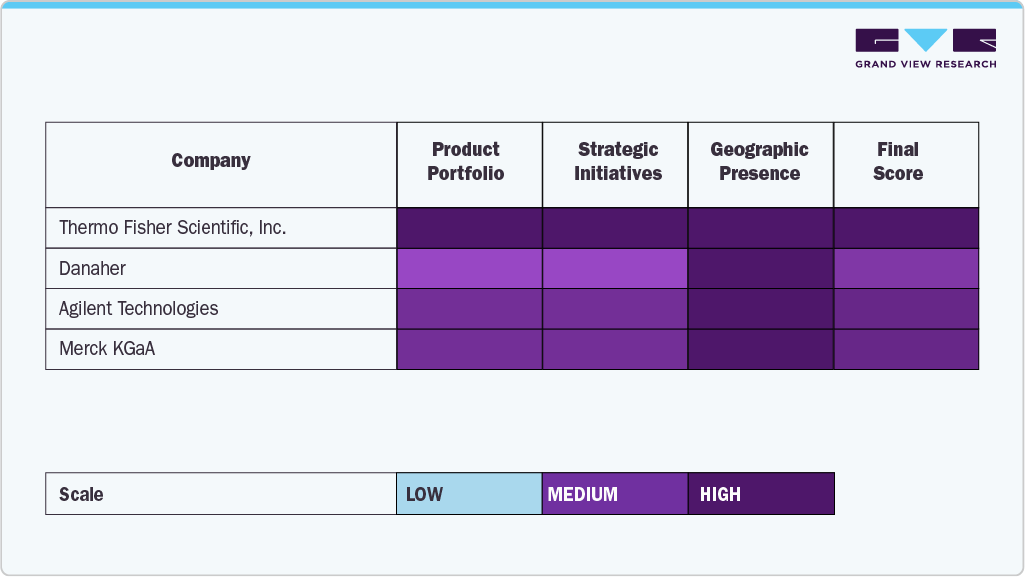
The fragment analysis market is dominated by several established players leveraging robust product portfolios, strategic collaborations, and ongoing investments in research and development. Companies such as Thermo Fisher Scientific, Danaher, and Agilent Technologies maintain significant market share through advanced capillary electrophoresis systems, Sanger sequencing platforms, and comprehensive fragment analysis solutions.
 To learn more about this report, Download Free Sample Report
 Emerging and specialized firms, including NimaGen, Genetika Science, Promega Corporation, LGC, Eurofins Genomics, MCLAB, and SoftGenetics, are expanding their footprint by providing innovative reagents, software tools, and customized services for genotyping, STR analysis, and next-generation sequencing-assisted fragment workflows. Companies that successfully combine scientific innovation with customer-focused solutions are well-positioned to drive sustained value and maintain leadership in this rapidly evolving market.
Key Fragment Analysis Companies
The following key companies have been profiled for this study on the fragment analysis market.
-
Thermo Fisher Scientific, Inc.
-
Danaher
-
Agilent Technologies
-
NimaGen
-
Genetika Science
-
Promega Corporation
-
LGC
-
Eurofins Genomics
-
MCLAB
-
SoftGenetics
Competitive Benchmarking
Category
Operating Strategies
Competitive Edge
Weakness
Established Players (Thermo Fisher Scientific, Danaher, Agilent Technologies, Promega Corporation, etc.)
- Expand fragment analysis offerings through integrated instruments, reagents, consumables, and data analysis software to support genomics, molecular diagnostics, and forensic applications.
- Broad life science portfolios, strong global distribution networks, and established customer relationships across research, clinical, and pharmaceutical laboratories.
- Intense competition and continuous technological advancements requiring sustained R&D investments.
Emerging Players (NimaGen, Genetika Science, MCLAB, SoftGenetics)
- Focus on specialized fragment analysis reagents, sequencing services, and bioinformatics software tailored to niche research and diagnostic applications.
- Agile innovation and faster response to evolving genomics research and molecular diagnostics requirements.
- Narrower product portfolios and lower brand recognition in large-scale clinical and biopharmaceutical markets.
Recent Developments
-
In December 2024, in the UK, LGC acquired DiaMex to strengthen its diagnostics and genomics portfolio, expanding access to Optitrol quality controls and enhancing product choice for global core laboratory customers.
-
In September 2024, in the USA, Promega Corporation developed a novel reduced-stutter polymerase for forensic DNA analysis, enhancing accuracy in STR fragment analysis and enabling integration into upcoming 8-color STR kits.
-
In September 2023, NimaGen partnered with NicheVision to provide forensic laboratories with a combined wet-to-dry DNA sequencing and fragment-analysis workflow, enhancing complex mixture interpretation.
-
In March 2022, in India, Thermo Fisher Scientific launched the SeqStudio Flex Series Genetic Analyzer, enhancing Sanger sequencing and fragment-analysis capabilities with improved throughput, workflow efficiency, and remote connectivity for genomic research.
Fragment Analysis Market Report Scope
Report Attribute
Details
Market size in 2025
USD 277.6 million
Estimated market size in 2026
USD 303.0 million
Projected market size by 2033
USD 584.2 million
Growth rate
CAGR of 9.8% from 2026 to 2033
Historical data
2021 - 2025
Forecast period
2026 - 2033
Quantitative units
Revenue in USD million, and CAGR from 2026 to 2033
Report coverage
Revenue forecast, company ranking, competitive landscape, growth factors, and trends
Segments covered
Product & service, technology, application, end use, region
Regional scope
North America; Europe; Asia Pacific; Latin America; MEA
Country scope
U.S., Canada, Mexico, UK, Germany, France, Italy, Spain, Norway, Denmark, Sweden, China, Japan, India, South Korea, Australia, Thailand, Brazil, Argentina, Saudi Arabia, South Africa, UAE, and Kuwait
Key companies profiled
Thermo Fisher Scientific, Inc.; Danaher; Agilent Technologies; NimaGen; Genetika Science; Promega Corporation; LGC; Eurofins Genomics; MCLAB; SoftGenetics
Customization scope
Free report customization (equivalent up to 8 analysts' working days) with purchase. Addition or alteration to country, regional & segment scope.
Pricing and purchase options
Avail customized purchase options to meet your exact research needs. Explore purchase options
Global Fragment Analysis Market Report Segmentation
This report forecasts revenue growth and provides an analysis of the latest trends in each of the sub-segments from 2021 to 2033. For this study, Grand View Research has segmented the global fragment analysis market report based on product & service, technology, application, end use, and region:
-
Product & Service Scope Outlook (Revenue, USD Million, 2021 - 2033)
-
Instruments
-
Reagents & Consumables
-
PCR master mixes
-
Fluorescent dyes and labels
-
DNA size standards & ladders
-
Capillary arrays
-
Others
-
-
Services
-
-
Technology Scope Outlook (Revenue, USD Million, 2021 - 2033)
-
Capillary Electrophoresis
-
Polymerase Chain Reaction
-
DNA Sequencing
-
Others
-
-
Application Outlook (Revenue, USD Million, 2021 - 2033)
-
Genotyping & Polymorphism Analysis
-
SNP and Indel Genotyping
-
Microsatellite / STR / VNTR Analysis
-
Others
-
-
Molecular Diagnostics
-
Forensic & Paternity Testing
-
Agricultural & Animal Genomics
-
Others
-
-
End Use Outlook (Revenue, USD Million, 2021 - 2033)
-
Academic & Research Institutes
-
Hospitals & Diagnostic Laboratories
-
Biotechnology & Pharmaceutical Companies
-
Others
-
-
Regional Outlook (Revenue, USD Million, 2021 - 2033)
-
North America
-
U.S.
-
Canada
-
Mexico
-
-
Europe
-
Germany
-
UK
-
France
-
Italy
-
Spain
-
Denmark
-
Sweden
-
Norway
-
-
Asia Pacific
-
China
-
India
-
Japan
-
Australia
-
Thailand
-
South Korea
-
-
Latin America
-
Brazil
-
Argentina
-
-
Middle East and Africa (MEA)
-
South Africa
-
Saudi Arabia
-
UAE
-
Kuwait
-
-
Research Methodology
The fragment analysis market figures in this report are based on a proven research process that combines executive interviews with secondary research from proprietary databases, company filings, and recognized regulatory and institutional sources. Market size is built through value-chain sizing - reconciling supply-side and demand-side estimates - and triangulated with bottom-up and top-down approaches. Every estimate passes multiple levels of expert validation before publication, with each fragment analysis segment quantified using the revenue-capture definitions in the table below.
Segment Definition
Segment- Product & Service
Revenue Capture Definition
Instruments
Revenue generated from fragment analysis instruments used to separate, detect, and characterize nucleic acid fragments with high accuracy and resolution. These systems support applications such as genotyping, molecular diagnostics, forensic analysis, and genetic research by enabling precise fragment sizing and detection.
Reagents & Consumables
This segment captures income from consumables required throughout fragment analysis workflows. It includes PCR master mixes for nucleic acid amplification, fluorescent dyes and labels for fragment detection, DNA size standards and ladders for accurate sizing, capillary arrays used in electrophoretic separation, and other reagents and consumables that ensure reliable sample preparation, analysis, and workflow performance.
Services
Market value in this category stems from contract and laboratory services supporting fragment analysis workflows, including sample processing, assay development, data generation, analytical testing, validation, technical support, and customized research services for clinical, academic, and industrial applications.
Segment- Technology
Revenue Capture Definition
Capillary Electrophoresis
Revenue generated from fragment analysis solutions utilizing capillary electrophoresis technology to separate DNA, RNA, and other biomolecules according to fragment size and charge. The technology is widely employed for high-resolution fragment sizing, genotyping, quality control, and molecular diagnostics.
Polymerase Chain Reaction
This segment captures income from fragment analysis workflows that incorporate PCR technologies to amplify target nucleic acid sequences prior to fragment sizing and characterization. PCR-based analysis is extensively used in mutation detection, genetic testing, forensic investigations, and research applications.
DNA Sequencing
Market value in this category stems from fragment analysis methods integrated with DNA sequencing technologies to validate fragment characteristics, identify genetic variations, and support genomic research, clinical diagnostics, and biomarker discovery.
Others
Revenue originates from alternative and emerging fragment analysis technologies not classified under primary analytical platforms, supporting specialized laboratory and research applications.
Segment- Application
Revenue Capture Definition
Genotyping & Polymorphism Analysis
Revenue generated from fragment analysis solutions used to identify genetic variations and polymorphisms across biological samples. This segment encompasses applications including SNP and indel genotyping, microsatellite, STR, and VNTR analysis, as well as other polymorphism detection methods employed in genetic research, disease studies, breeding programs, and population genetics.
Molecular Diagnostics
This segment reflects income from fragment analysis products and services utilized for disease diagnosis, mutation detection, biomarker identification, inherited disorder testing, and other molecular diagnostic applications supporting precision medicine and clinical decision-making.
Forensic & Paternity Testing
Market value arises from fragment analysis technologies used for human identification, relationship testing, forensic investigations, criminal casework, disaster victim identification, and legal DNA analysis.
Agricultural & Animal Genomics
Revenue stems from fragment analysis applications supporting plant and animal breeding, trait mapping, genetic diversity assessment, marker-assisted selection, livestock improvement, and agricultural biotechnology research.
Others
Includes revenue from fragment analysis applications in microbiology, environmental genomics, pharmaceutical research, quality assurance, and other specialized life science fields not covered under the primary application categories.
Segment- End Use
Revenue Capture Definition
Academic & Research Institutes
Revenue generated from fragment analysis products and services utilized by universities, government laboratories, and research organizations conducting studies in genetics, molecular biology, genomics, oncology, and life sciences research.
Hospitals & Diagnostic Laboratories
This segment captures income from fragment analysis technologies employed in hospitals and clinical laboratories for genetic testing, molecular diagnostics, disease monitoring, inherited disorder screening, and precision medicine applications.
Biotechnology & Pharmaceutical Companies
Market value in this category stems from fragment analysis solutions used by biotechnology and pharmaceutical companies for biomarker discovery, drug development, clinical research, quality control, and companion diagnostic development.
Others
Revenue originates from contract research organizations (CROs), forensic laboratories, agricultural testing centers, public health agencies, and other organizations utilizing fragment analysis technologies for specialized analytical and research purposes.
Estimation Model
Stage
Description
Top-Down
Commodity Flow Analysis: Market size was estimated by analyzing revenues generated by key fragment analysis instrument, reagent, and consumable manufacturers, supported by company annual reports, investor presentations, product portfolios, and premium industry databases. Revenue contributions from private and regional companies were assessed through secondary research and validated through primary interviews to derive the overall market value.
Parent Market
Parent Market & Penetration-Based Analysis: The fragment analysis market was evaluated within the broader global life science tools market. Adoption rates of fragment analysis technologies across genomics, molecular diagnostics, next-generation sequencing (NGS) workflows, forensic analysis, agricultural biotechnology, and biopharmaceutical research were analyzed to estimate the addressable market and segment-level opportunities.
Segmentation
Country-Level Segment Share Modeling: Market shares for product & service, technology, application, and end-use segments were derived using country-specific life science research expenditure, genomics research activity, molecular testing volumes, laboratory infrastructure, biotechnology investments, and adoption of capillary electrophoresis-based fragment analysis systems. Weighted average calculations were applied to determine regional and global segment distributions.
Validation
Data Triangulation & Validation Model: Market estimates were validated through triangulation of secondary research, primary interviews, company-level revenue assessments, laboratory demand analysis, technology adoption trends, and end-user utilization data to ensure consistency and accuracy across all market segments and geographies.
Forecasting
Forecasting & CAGR Modeling: Market forecasts were developed using historical trends in genomics research, increasing adoption of NGS workflows, expansion of precision medicine initiatives, rising molecular diagnostics testing, growth in biopharmaceutical R&D, and technological advancements in fragment analysis platforms. Regression-based analysis and trend modeling were applied to project future market growth and CAGR.
Delivered Customizations
This report has been delivered with the following In-depth customizations
Client Request
Customization Delivered
Value Adds
Workflow & Application Cross-Segmentation Analysis for Fragment Analysis
Customized cross-segmentation across fragment analysis workflows covering product & service (instruments, reagents & consumables, services), technologies (capillary electrophoresis, PCR, DNA sequencing), and applications such as genotyping, molecular diagnostics, forensic testing, and agricultural genomics. Analysis further mapped by end users including academic institutes, diagnostic laboratories, and biopharmaceutical companies.
Enables clients to identify the highest-growth workflow combinations, evaluate technology adoption across applications, prioritize product development, and optimize commercialization strategies for targeted end-user segments.
Competitive Benchmarking & Technology Portfolio Assessment
Comprehensive benchmarking of key fragment analysis companies based on product portfolio, capillary electrophoresis capabilities, reagent offerings, software solutions, regional presence, pricing strategy, distribution network, R&D investments, partnerships, and strategic initiatives. Includes assessment of technology positioning across research, clinical, and forensic workflows.
Supports competitive positioning, identifies product portfolio gaps and partnership opportunities, benchmarks innovation strategies, and enables informed investment, acquisition, and market entry decisions.
Regional Demand & End-Use Opportunity Assessment
Customized regional and country-level assessment covering North America, Europe, Asia Pacific, Latin America, and MEA with demand forecasting by technology, application, and end use. Includes evaluation of molecular diagnostics adoption, genomics research funding, forensic infrastructure, regulatory landscape, and laboratory modernization across priority countries.
Helps clients identify high-growth regional markets, prioritize expansion opportunities, optimize go-to-market strategies, and align investments with emerging demand across clinical, research, and forensic laboratories.
Frequently Asked Questions About This Report
Asia Pacific is the fastest-growing region over the forecast period.
The global fragment analysis market size was valued at USD 277.6 million in 2025 and is estimated at USD 303.0 million for 2026.
The global fragment analysis market is expected to grow at a CAGR of 9.8% from 2026 to 2033, reaching USD 584.2 million by 2033.
North America dominated the fragment analysis market with a share of 42.1% in 2025. This is attributable to the well-developed healthcare infrastructure and the increasing number of research and development initiatives in the region.
Some key players operating in the fragment analysis market include Thermo Fisher Scientific, Inc.; Danaher’; Agilent Technologies; NimaGen; Genetika Science; Promega Corporation; LGC; Eurofins Genomics; MCLAB; SoftGenetics
The market growth is primarily driven by factors such as increasing adoption of advanced analytical techniques, rising demand for high-precision molecular and protein analysis, expansion of research and development activities in the pharmaceutical and biotechnology sectors, and growing applications in genomics, proteomics, and diagnostics.
The reagents & consumables segment led with a 49.2% revenue share in 2025, while the services is the fastest-growing segment.
The capillary electrophoresis segment led with a 41.8% revenue share in 2025, while the DNA sequencing segment is the fastest-growing technology.
The genotyping & polymorphism analysis segment led with a 35.9% revenue share in 2025, while the molecular diagnostics segment is the fastest-growing application.
Academic & research institutes segment held the largest share (over 38.0%) in 2025.
About the Author(s)
Biotechnology Research Team
Healthcare · BiotechnologyThis report was authored by the biotechnology research team at Grand View Research - comprising two research analysts, one senior research analyst, and one industry expert - with specialized expertise in the biotechnology segment of the healthcare industry. All findings are based on proprietary healthcare databases, executive interviews, and regulatory analysis, subject to internal peer review prior to publication.
Last Updated:
Speak to Analyst

Customize this report to your needs - add regions, segments, or data points, with 20% free customization.
Or view our licence options:


ISO 9001:2015 & 27001:2022 Certified
We are GDPR and CCPA compliant! Your transaction & personal information is safe and secure. For more details, please read our privacy policy.


