
- Home
- »
- Consumer F&B
- »
-
Frozen Fruit Bar Market Size, Growth Report, 2026-2033GVR Report cover

Frozen Fruit Bar Market (2026 - 2033)
Size, Share & Trends Analysis Report By Type (Original, Low Fat), By Flavor (Citrus, Pineapple, Grape, Apple, Mango, Coconut), By Region, And Segment Forecasts
Market Size, 2025
$18.6MMarket Estimate, 2026
$20.4MMarket Forecast, 2033
$38.5MCAGR, 2026–2033
9.5%Frozen Fruit Bar Market Summary
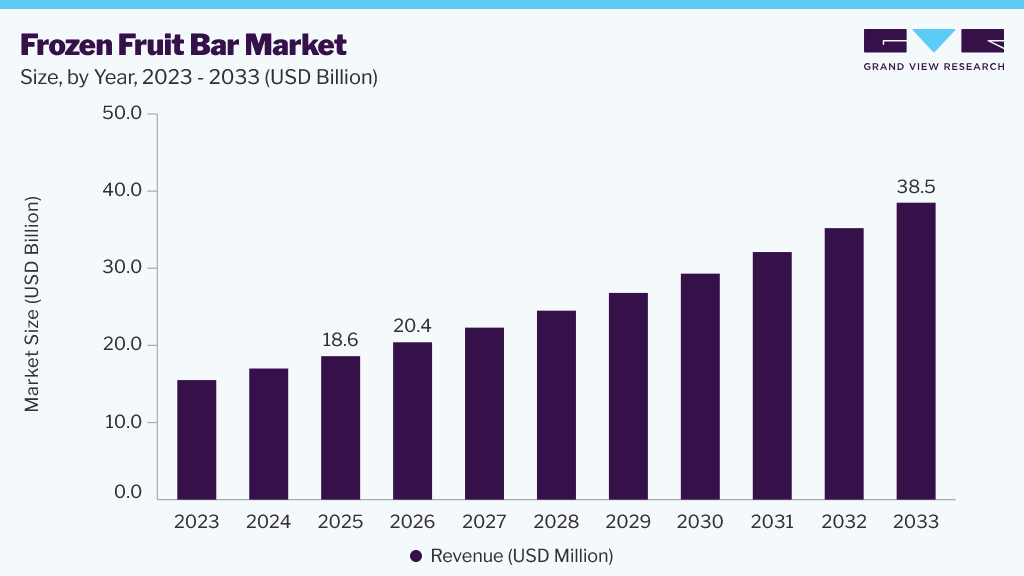
The global frozen fruit bar market size was estimated at USD 18.6 million in 2025 and is projected to grow from USD 20.4 million in 2026 to USD 38.5 million by 2033, growing at a CAGR of 9.5% from 2026 to 2033. North America dominated the market, accounting for a revenue share of 24.5% in 2025. Market growth is driven by consumer demand for innovative flavors, with the introduction of new varieties such as kiwi, lime, and raspberry mix, and unique flavor combinations such as coconut water with banana. The trend towards exotic and seasonal flavors, as well as shifts in consumer preferences for frozen snacks, are key factors contributing to this market expansion.
 Source: Grand View Research, IR Documents, Primary Interviews, Paid DatabasesTo learn more about this report,
 Download Free Sample Report
Key Market Trends & Insights
- By type: The low-fat segment dominated the market, with a revenue share of about 53.0% in 2025.
- By flavor: The citrus segment held the largest revenue share of around 11.5% in 2025.
Regional Highlights
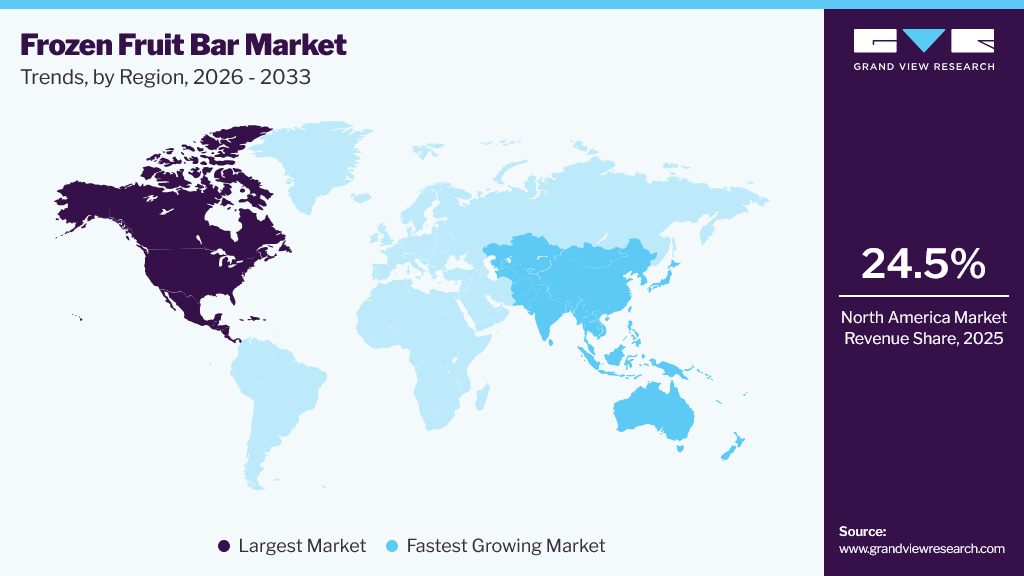
- Largest regional market: North America (24.5% revenue share, 2025)
- Fastest-growing regional market: Asia Pacific (Highest CAGR, 2026-2033)
Market Size & Forecast
- Market size in 2025: USD 18.6 Million
- Estimated market size in 2026: USD 20.4 Million
- Projected market size by 2033: USD 38.5 Million
- CAGR (2026-2033): 9.5%
Prism AI by Grand View Research Free to tryAsk a question about the frozen fruit bar marketTry asking✓Every figure cited from GVR research Prefer the report? Download free sample →Market growth worldwide is driven by several key factors, including the demand for innovative flavors, health and wellness trends, and the seasonality and perishability of fresh fruits. Consumers are seeking new and unique flavor combinations, such as coconut with banana, lime, and raspberry, which has led manufacturers to innovate. Moreover, the growing health consciousness among consumers has increased demand for low-fat, organic, and fortified frozen fruit bar products, making them a popular alternative to traditional ice cream and popsicles.
The frozen fruit bar market is also benefiting from rising consumer disposable incomes and changing lifestyles. With rising incomes, particularly in developing markets, consumers can spend more on premium and innovative frozen fruit bar products. Furthermore, changing lifestyles and on-the-go consumption patterns have boosted demand for convenient frozen snacks such as fruit bars. The expansion of distribution channels, including supermarkets, specialty stores, and online platforms, has also improved product accessibility and driven market growth.
Furthermore, sustainability and environmental consciousness are playing a significant role in driving the growth of the frozen fruit bar market. Consumers are seeking out eco-friendly and sustainable options, which has led manufacturers to develop products that meet these demands. The introduction of new flavors such as mango, passion fruit, guava, and dragon fruit is also attracting a large customer base, particularly among young people eager to try innovative food products.
Analyst Perspective
The frozen fruit bar market is poised for sustained growth, driven by increasing consumer preference for healthier frozen snacks, rising demand for clean-label products, and growing awareness of natural, fruit-based alternatives to conventional ice cream and desserts. The expanding health-conscious population and the shift toward low-calorie, organic, dairy-free, vegan, and reduced-sugar food options are encouraging manufacturers to introduce innovative formulations featuring real fruit, functional ingredients, and plant-based recipes. Manufacturers are also focusing on premium product offerings with exotic fruit flavors, added electrolytes, probiotics, and vitamin-enriched formulations to cater to evolving consumer preferences.
Technological advancements in food processing, freezing techniques, and sustainable packaging are improving product quality, shelf life, and consumer appeal. In addition, advancements in cold-chain logistics and frozen distribution infrastructure are supporting wider product availability across retail channels. The rapid expansion of supermarkets, convenience stores, and e-commerce platforms is further enhancing product accessibility. Seasonal demand spikes during warmer months, coupled with increasing year-round consumption of convenient frozen snacks, are also contributing to market expansion. As consumers continue to prioritize convenient, nutritious, and refreshing snack options, the frozen fruit bar market is expected to witness steady growth throughout the forecast period.
Type Insights
The low-fat segment led the market in 2025, accounting for 53.0% of revenue. This dominance reflects rising demand for healthy, nutritious snacks. Consumers with lactose intolerance or dietary restrictions choose low-fat bars to avoid discomfort, while health-conscious individuals seek products that support a healthy BMI. The growing prevalence of obesity and lifestyle-related health concerns has further accelerated consumer preference for low-calorie and reduced-fat frozen snacks as alternatives to traditional ice cream and high-sugar desserts. In addition, increasing awareness regarding clean-label products made with natural ingredients, real fruit, and no added preservatives has strengthened demand for low-fat frozen fruit bars. Manufacturers are also focusing on product innovation by introducing low-fat bars with improved taste, texture, and functional ingredients to enhance consumer appeal. For instance, in May 2024, JonnyPops introduced new, no-sugar-added, organic fruit bars in 10-packs, which were gluten-free, dairy-free, vegan, and artificial dye-free. Such healthier product innovations are strengthening the demand for low-fat frozen fruit bars.
The original segment in the frozen fruit bar market is expected to register the fastest CAGR over the forecast period. The original flavor segment’s success is driven by the rising demand for natural and organic products, innovative flavors, and widespread availability. Nostalgic appeal also plays a significant role, as familiar flavors evoke comfort and preference. Increasing demand for clean-label, low-calorie frozen snacks is driving growth in the original segment. For instance, Outshine (Nestlé) continues to strengthen its frozen fruit bar portfolio with products made using real fruit or fruit juice and simple ingredients, catering to rising consumer demand for clean-label frozen snacks with familiar fruit flavors. Consumers tend to opt for tried-and-true options, sustaining the growth of the original segment and its large market share.
Flavor Insights
The citrus segment in flavors dominated the frozen fruit bar market with a revenue share of approximately 11.5% in 2025. The citrus flavor segment is driven by its digestive benefits, stomach health, and high vitamin C content, positioning it as a healthier alternative to artificial flavors. The refreshing and tangy taste of citrus fruits such as lemons, oranges, and mandarin’s appeals to a broad consumer base, contributing to the growth of the citrus-flavor frozen fruit bar market. Growing consumer preference for refreshing, hydrating frozen snacks during the summer is further driving demand for citrus-based fruit bars. In addition, rising awareness of immunity-supporting foods and beverages has increased the popularity of citrus flavors due to their strong association with vitamin C and wellness benefits. Manufacturers are also introducing innovative citrus blends, including lemon-lime, orange-mango, and mixed citrus combinations, to attract consumers seeking bold and natural flavor experiences.
The mango flavor segment is expected to register the fastest CAGR over the forecast period. The mango flavor segment is experiencing rapid growth, driven by its widespread popularity, health benefits, and consumer preference. Manufacturers are expanding their mango-based product offerings and distribution networks to capitalize on rising consumer demand in both developed and emerging markets. For instance, in November 2024, Binggrae Co., Ltd. expanded the availability of its Melona multi-flavor packs, including Mango, through Costco Australia, reflecting the increasing popularity of mango-flavored frozen fruit bars across Asia-Pacific and international markets. As one of the most widely consumed fruits globally, mango’s versatility allows for innovative flavor combinations, while its year-round availability through global trade networks fosters market growth and demand.
Regional Insights
North America's frozen fruit bar dominated the market, accounting for a revenue share of 24.5% in 2025. Rising adoption of healthy and nutritious snacks in the diet, strong distribution channels, innovation in the fruit bars, maintaining quality standards, and effective marketing strategies are driving the growth of the frozen fruit bar market in the region. Growing consumer preference for healthier frozen snacks and continuous product innovation are driving market growth in North America. For instance, in January 2025, Unilever unveiled its 2025 ice cream innovation lineup across North America, introducing new products under its Popsicle brand. Such product innovation initiatives by leading manufacturers continue to strengthen North America's leadership in the global frozen fruit bar market.
 To learn more about this report, Download Free Sample Report
U.S. Frozen Fruit Bar Market Trends
The frozen fruit bar market in the U.S. holds a substantial share of the North American frozen fruit bar market because many food & beverage companies are based in the country. The U.S. frozen fruit bar market is driven by strong consumer demand for healthier frozen snacks, continuous product innovation, widespread availability through well-established retail and foodservice channels, and leading manufacturers investing in premium, clean-label, fruit-based frozen products. In addition, continuous product innovation and a large consumer base for frozen products, along with established distribution channels, drive market growth.
Europe Frozen Fruit Bar Market Trends
Europe frozen fruit bar market was identified as a lucrative region in 2025. People's awareness of healthy living and hygienic food habits has increased the consumption of frozen fruit bars as a healthy snack. The European frozen fruit bar market offers consumers a wide variety of flavors. The new and interesting flavors, as well as the combination ideas, have become appealing to consumers seeking a new type of frozen dessert. Growing consumer preference for healthy, clean-label frozen snacks, coupled with rising demand for innovative fruit flavors and premium frozen desserts, is driving growth in the frozen fruit bar market across Europe.
The frozen fruit bar market in the UK is expected to grow rapidly in the coming years due to collaborations with retailers such as Walmart. Moreover, Adherence to natural flavor and nutrient contents in fruits has made UK products superior. The UK frozen fruit bar market is driven by expanding retail partnerships, rising consumer preference for natural, nutrient-rich frozen snacks, and growing demand for products that deliver both superior taste and nutritional value. In addition, taste and nutritional value are primary factors for loyal consumers in the UK.
The Germany frozen fruit bar market held a substantial market share in 2025, owing to health-conscious consumers who prefer healthy, natural products. The German frozen fruit bar market is driven by growing consumer demand for minimally processed, fruit-based frozen desserts, coupled with manufacturers' emphasis on premium ingredients, advanced production technologies, and continuous flavor innovation. They aim to deliver high-quality products made from selected ingredients, delicious flavors, attractive blend profiles, and high-tech production processes.
Asia Pacific Frozen Fruit Bar Market Trends
The frozen fruit bar market in the Asia Pacific is expected to register the fastest CAGR over the forecast period. The growth can be attributed to factors such as increasing awareness about health, availability of a new variety of fruits, research & innovation in production, increasing disposable income, and better promotional strategies. In addition, Asia Pacific countries have experienced growth in their economy, and this has enhanced the standard of living. This has led to increased spending towards better and premium products such as frozen fruit bars. Growing demand for premium frozen snacks and expanding retail presence are driving market growth across the Asia Pacific. In May 2025, Binggrae Co., Ltd. announced its participation in THAIFEX Anuga Asia 2025 in Bangkok, Thailand, to strengthen its presence across Southeast Asia. The company showcased its flagship Melona ice bars, which are already available in Thailand and other Southeast Asian markets, as part of its strategy to expand distribution and meet rising regional demand for premium frozen desserts.
The Japan frozen fruit bar market is expected to grow rapidly in the coming years due to the increasing trend among Japanese consumers toward healthy snacks. Consumers are now more conscious of the foods they eat, thus, rising consumer focus on wellness, expanding demand for premium fruit-based frozen snacks, and increasing preference for products made with organic ingredients and less sugar are supporting the growth of the Japan frozen fruit bar market.
The frozen fruit bar market in China held a substantial share in 2025, owing to consumers seeking healthier snack options amid growing health-related concerns. Since they are derived from real fruits and often contain low-fat or organic fruit ingredients, this novelty food product is considered by society to be a healthier snack option. Rising urbanization, increasing health-conscious purchasing behavior, and expanding availability of premium fruit-based frozen products through modern retail channels are contributing to the growth of the Chinese frozen fruit bar market.
Key Frozen Fruit Bar Company Insights
Some key companies in the frozen fruit bar market include Nestlé S.A. (Outshine), Unilever, J&J Snack Foods Corp., GoodPop, JonnyPops, The Modern Pop, Ice Pop Factory, Binggrae Co., Ltd., and Froneri International Limited. Organizations are leveraging strong brand recognition, extensive distribution networks, product innovation, and clean-label offerings to strengthen their market presence and expand consumer reach across regional and global markets.
- JonnyPops is a leading manufacturer of better-for-you frozen treats, offering a wide portfolio of fruit-based pops, organic water pops, and dairy-based frozen snacks. The company focuses on clean-label products made with simple ingredients, no artificial dyes, and reduced sugar formulations, catering to growing consumer demand for healthier frozen snack options.
- J&J Snack Foods Corp. is a leading manufacturer, marketer, and distributor of snacks, beverages, and frozen novelty products. The company operates through three primary segments: Food Service, Retail Supermarkets, and Frozen Beverages, providing a diversified product portfolio and broad distribution capabilities across multiple sales channels.
Key Frozen Fruit Bar Companies
The following key companies have been profiled for this study on the frozen fruit bar market:
-
Outshine (Nestlé)
-
Unilever
-
J&J Snack Foods Corp.
-
GoodPop
-
JonnyPops
-
The Modern Pop
-
Ice Pop Factory
-
Binggrae Co., Ltd.
-
Chloe’s Soft Serve Fruit Co.
-
Froneri International Limited
Recent Developments
-
In March 2026, JonnyPops announced a nationwide retail expansion through more than 1,800 Albertsons Companies stores across the U.S. The expansion significantly strengthens the brand's distribution network and increases consumer access to its portfolio of clean-label frozen fruit and dairy-based pops.
-
In December 2025, JonnyPops launched No Sugar Added with Electrolytes, Mini Frozen Pops, expanding its functional frozen snack portfolio. The new product is made with organic ingredients, contains no added sugar or artificial dyes, and was developed in response to consumer demand for hydration-supporting frozen treats. The launch reflects the growing trend toward functional, clean-label frozen fruit bars and novelties.
Frozen Fruit Bar Market Report Scope
Report Attribute
Details
Market size in 2025
USD 18.6 million
Estimated market size in 2026
USD 20.4 million
Projected market size by 2033
USD 38.5 million
Growth rate
CAGR of 9.5% from 2026 to 2033
Base year for estimation
2025
Actual data
2021 – 2024
Forecast period
2026 – 2033
Quantitative units
Revenue in USD million, and CAGR from 2026 to 2033
Report coverage
Revenue forecast, company ranking, competitive landscape, growth factors, trends
Segments covered
Type, flavor, and region
Regional scope
North America; Europe; Asia Pacific; Latin America; MEA
Country scope
U.S.; Canada; Mexico; UK; Germany; France; Italy; Spain; China; Japan; India; South Korea; Australia; Brazil; South Africa
Key companies profiled
Outshine (Nestlé); Unilever; J&J Snack Foods Corp.; GoodPop; JonnyPops; The Modern Pop; Ice Pop Factory; Binggrae Co., Ltd.; Chloe’s Soft Serve Fruit Co.; Froneri International Limited
Customization scope
Free report customization (equivalent to up to 8 analysts working days) with purchase. Addition or alteration to country, regional & segment scope.
Pricing and purchase options
Avail of customized purchase options to meet your exact research needs. Explore purchase options
Global Frozen Fruit Bar Market Segmentation
This report forecasts revenue growth at regional and country levels and provides an analysis of the latest industry trends in each of the sub-segments from 2021 to 2033. For this study, Grand View Research has segmented the global frozen fruit bar market based on type, flavor, and region:
-
Type Outlook (Revenue, USD Thousands, 2021 - 2033)
-
Original
-
Low Fat
-
-
Flavor Outlook (Revenue, USD Thousands, 2021 - 2033)
-
Citrus
-
Pineapple
-
Grape
-
Apple
-
Mango
-
Coconut
-
Others
-
-
Regional Outlook (Revenue, USD Thousands, 2021 - 2033)
-
North America
-
U.S.
-
Canada
-
Mexico
-
-
Europe
-
UK
-
Germany
-
France
-
Italy
-
Spain
-
-
Asia Pacific
-
Japan
-
China
-
India
-
South Korea
-
Australia
-
-
Latin America
-
Brazil
-
-
Middle East & Africa
-
South Africa
-
-
Frequently Asked Questions About This Report
The global frozen fruit bar market size was valued at USD 18.6 million in 2025 and is estimated at USD 20.4 million for 2026
The global frozen fruit bar market is expected to grow at a CAGR of 9.5% from 2026 to 2033, reaching USD 38.5 million.
North America dominated with 24.5% revenue share in 2025.
Key players in the market include Outshine (Nestlé); Unilever; J&J Snack Foods Corp.; GoodPop; JonnyPops; The Modern Pop; Ice Pop Factory; Binggrae Co., Ltd.; Chloe’s Soft Serve Fruit Co.; Froneri International Limited, and others.
The low-fat segment accounted for the largest revenue share of approximately 53.0% in 2025.
About the Author(s)
Consumer F&B Research Team
Consumer Goods · Consumer F&BThis report was authored by the consumer f&b research team at Grand View Research - comprising two research analysts, one senior research analyst, and one industry expert - with specialized expertise in the consumer f&b segment of the consumer goods industry. All findings are based on proprietary consumer goods databases, executive interviews, and regulatory analysis, subject to internal peer review prior to publication.
Last Updated:
Speak to Analyst

Customize this report to your needs - add regions, segments, or data points, with 20% free customization.
Or view our licence options:


ISO 9001:2015 & 27001:2022 Certified
We are GDPR and CCPA compliant! Your transaction & personal information is safe and secure. For more details, please read our privacy policy.


