
- Home
- »
- Consumer F&B
- »
-
Fruit Beer Market Size, Share And Trends Report, 2026-2033GVR Report cover
![Fruit Beer Market (2026 - 2033)Report]()
Fruit Beer Market (2026 - 2033)
Size, Share & Trends Analysis Report By Flavor (Peach, Raspberry, Cherry, Apricot), By Distribution Channel (On-Trade, Off-Trade), By Region (North America, Europe, Asia Pacific, Latin America, Middle East & Africa), And Segment Forecasts
Market Size, 2025
$343.6MMarket Estimate, 2026
$360.8MMarket Forecast, 2033
$487.1MCAGR, 2026–2033
4.4%Fruit Beer Market Summary
The global fruit beer market size was valued at USD 343.6 million in 2025 and is projected to grow from USD 360.8 million in 2026 to USD 487.1 million by 2033, at a CAGR of 4.4% from 2026 to 2033. The market in Europe dominated with a revenue share of 38.0% in 2025. This growth is due to the rising trend of low-alcohol beverages and an increasing awareness of health and wellness.
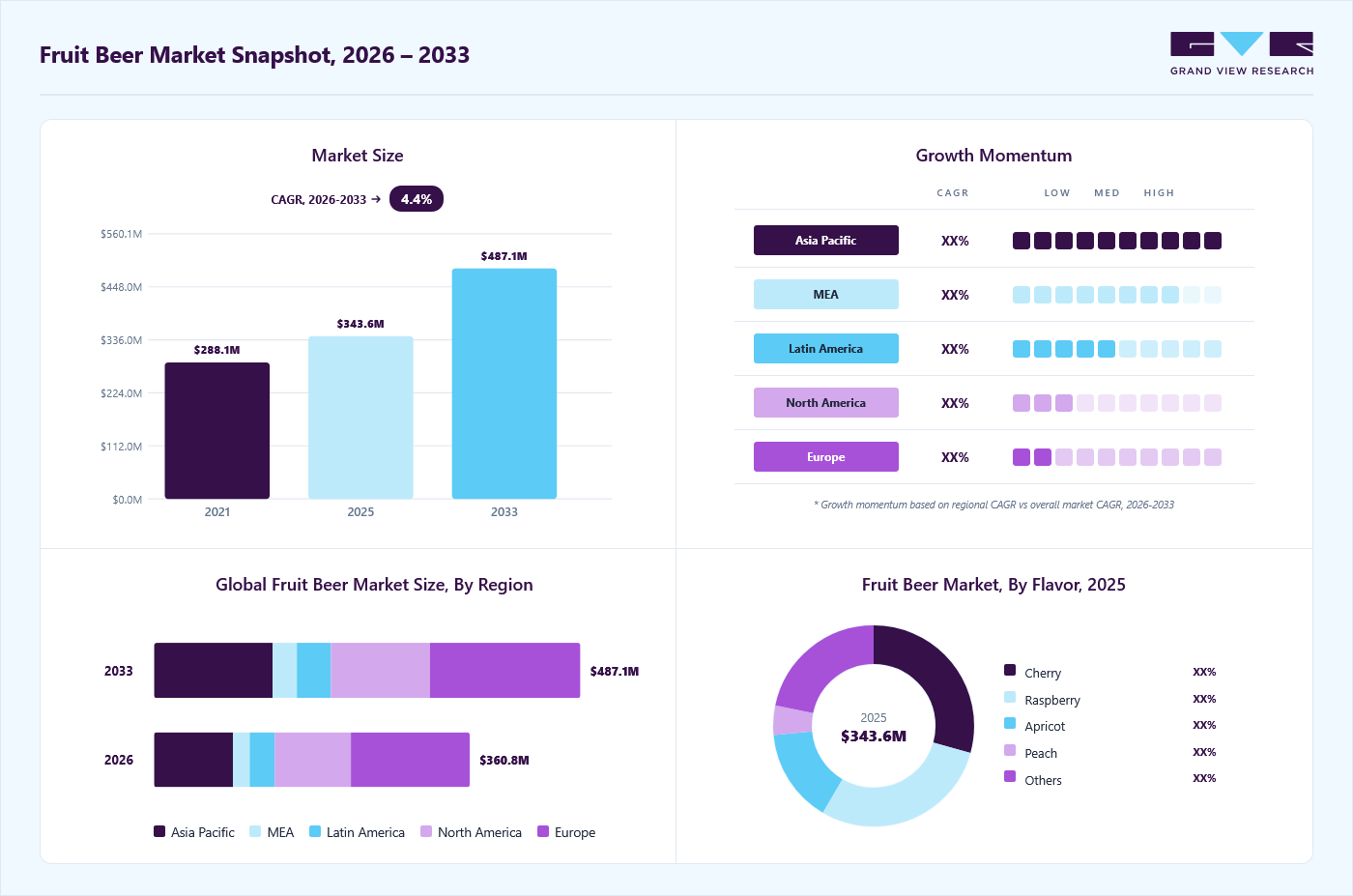
Key Market Trends & Insights
- By flavor: Cherry segment held the largest market share of 29.3% in 2025.
- By distribution channel: On-trade segment held the largest market share of 64.6% in 2025.
Regional Highlights
- Largest regional market: Europe (38.0% revenue share, 2025)
- Fastest-growing regional market: Asia Pacific (highest CAGR, 2026-2033)
- By country: U.S. held the largest market share in 2025.
Market Size & Forecast
- Market size in 2025: USD 343.6 Million
- Estimated market size in 2026: USD 360.8 Million
- Projected market size by 2033: USD 487.1 Million
- CAGR (2026-2033): 4.4%
Consumers are looking for drinks that provide nutritional benefits and come in a variety of flavors. As interest in healthier beverage options increases, fruit beers, which typically have lower alcohol content and are seen as more nutritious, are becoming more popular.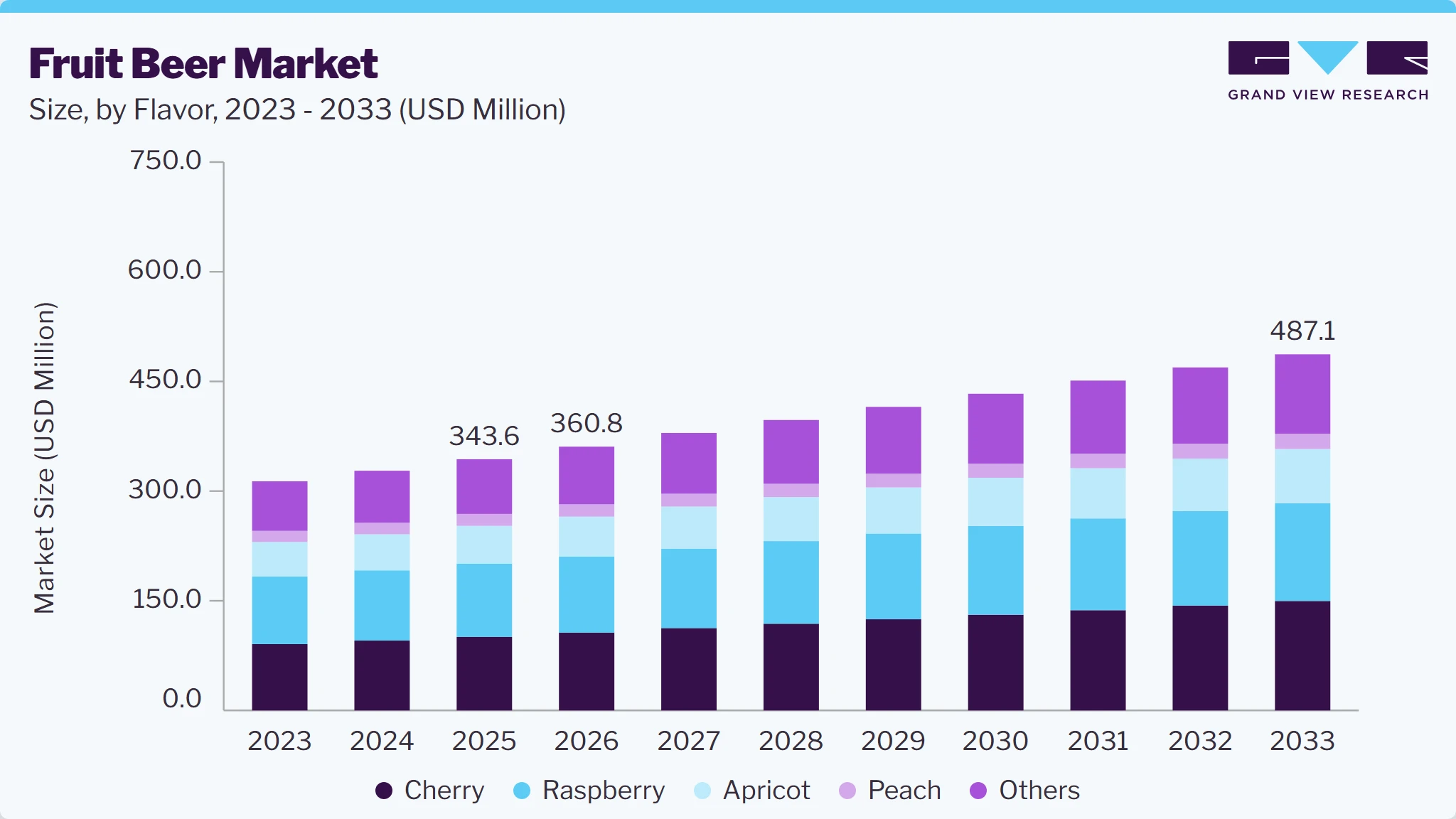
Many consumers, especially millennials, are becoming more aware of the health effects of alcohol consumption. This group is increasingly seeking beverages that provide a flavorful experience without the negative impacts of traditional alcoholic drinks. Fruit beers are often viewed as healthier options due to their lower alcohol content and the vitamins, minerals, and dietary fibers derived from the fruits used in their production. For example, Wild Drum has launched a low-calorie hard seltzer infused with mango and lemon-mint flavors in India.
The growth of microbreweries and the craft beer movement has also significantly boosted the industry. These breweries typically emphasize quality and unique flavors, catering to local preferences. This trend has led to more experimentation with fruit-infused beers, resulting in greater availability and consumer interest. With an increasing number of microbreweries, particularly in Europe and North America, consumers now have better access to a variety of fruit beers that appeal to different tastes. The focus on artisanal products allows these breweries to explore various fruits and brewing methods, enhancing the overall attractiveness of fruit beers.
Furthermore, the rise of social venues such as bars and restaurants is supporting the growth of the fruit beer industry. As socializing in these establishments becomes more popular, many are adding fruit beers to their menus to attract health-conscious customers seeking flavorful alternatives. Additionally, there is a growing acceptance in many societies of moderate drinking or abstaining from alcohol altogether, which aligns well with the qualities of fruit beers. This cultural shift encourages increased consumption among a diverse range of consumers.
Market Dynamics
The fruit beer market is witnessing notable growth as consumers increasingly seek innovative alcoholic beverages that offer unique flavor experiences beyond traditional beer. Fruit beer combines the characteristics of conventional beer with c, creating products that appeal to a wider demographic, including younger consumers and individuals who prefer lighter, sweeter, and more refreshing alcoholic drinks. Manufacturers are continuously introducing new flavor combinations featuring berries, citrus fruits, tropical fruits, and seasonal ingredients to cater to evolving consumer preferences. In addition, the growing popularity of craft brewing, premium alcoholic beverages, and flavored alcoholic drinks is supporting market expansion. Increasing availability through supermarkets, liquor stores, bars, restaurants, and online retail channels is expected to further drive the growth of the fruit beer market.
The increasing consumer preference for flavored alcoholic beverages is a major driver of the fruit beer market. Modern consumers, particularly millennials and younger legal-age drinkers, are increasingly exploring diverse beverage options that offer unique taste profiles and enhanced drinking experiences. Fruit beers provide a balance of traditional beer characteristics with fruity sweetness and aroma, making them attractive to consumers seeking alternatives to conventional lagers and ales.
The rapid growth of the craft beer industry has further accelerated demand for fruit beer products. Craft breweries are leveraging fruit-based ingredients to differentiate their offerings and attract consumers looking for premium, artisanal, and experimental beverages. In addition, growing social drinking culture, rising disposable incomes, and increasing demand for premium alcoholic products in both developed and emerging markets are contributing to higher consumption of fruit-flavored beers. The expanding popularity of low-bitterness and easy-to-drink alcoholic beverages is expected to continue supporting market growth during the forecast period.
Stringent regulations governing the production, marketing, distribution, and advertising of alcoholic beverages remain a significant restraint for the fruit beer market. Governments across various countries continue to implement stricter policies related to alcohol sales, taxation, labeling requirements, and promotional activities in response to public health concerns. Such regulations can limit market accessibility and increase compliance costs for manufacturers.
In addition, growing consumer awareness regarding the health risks associated with excessive alcohol consumption may restrain market growth. Rising concerns related to obesity, liver diseases, cardiovascular conditions, and alcohol dependency are encouraging some consumers to reduce alcohol intake or shift toward non-alcoholic alternatives. Furthermore, increasing demand for healthier lifestyles and wellness-focused consumption patterns may affect long-term alcohol consumption trends, particularly among health-conscious consumers. Fluctuations in raw material costs, including fruits, malt, and hops, can also impact production expenses and profit margins for fruit beer manufacturers.
The expanding market for low-alcohol and non-alcoholic beverages presents significant growth opportunities for the fruit beer market. Consumers are increasingly seeking beverages that deliver flavor and social drinking experiences while supporting moderation and healthier lifestyles. This trend has encouraged breweries to develop low-alcohol and alcohol-free fruit beer variants that maintain authentic fruit flavors and craft beer characteristics.
Product innovation is also creating new opportunities across the market. Manufacturers are increasingly introducing beers infused with exotic fruits, organic ingredients, botanicals, and functional components to attract premium consumers. The continued expansion of the craft beer sector, combined with growing interest in seasonal and limited-edition fruit beer offerings, is expected to enhance product differentiation and consumer engagement. In addition, rising urbanization, expanding e-commerce alcohol sales channels, and increasing premiumization trends in emerging economies are likely to create favorable growth prospects for fruit beer producers worldwide.
Analyst Perspective
The fruit beer market is benefiting from the convergence of premiumization trends, consumer demand for refreshing low-bitterness alcoholic beverages, and growing interest in fruit-based flavor experiences. As younger legal-age consumers increasingly seek beverages that offer greater taste variety, natural ingredients, and enhanced drinkability, fruit beer is evolving beyond a niche craft category into a broader lifestyle-oriented alcoholic beverage segment. The market's long-term growth potential will be shaped by brewers' ability to balance authentic fruit flavors with brewing quality while responding to rising demand for premium, low-alcohol, and seasonal offerings. The strongest competitive advantage is likely to belong to companies that successfully integrate fruit innovation, craft brewing expertise, and premium brand positioning, transforming fruit beer from an occasional specialty purchase into a mainstream choice for social and casual consumption.
Flavor Insights
The raspberry segment is expected to grow significantly over the forecast period due to its appealing flavor profile, which combines sweetness with a slight tartness, making it a favorite among consumers seeking refreshing and fruity beverages. Moreover, raspberries are rich in essential nutrients such as vitamins, minerals, and antioxidants, aligning with the growing health consciousness among consumers who prefer beverages with nutritional benefits and taste. Raspberries pair well with various foods, from grilled meats to desserts. This versatility makes it the first choice for food pairing menus in restaurants and bars, enhancing their marketability. In addition, raspberries, often associated with organic farming practices, resonate well with this demographic, driving demand for raspberry-flavored options.
Based on flavor, the cherry-flavored beer led the market with the largest revenue share of 29.3% in 2025 and is expected to grow at the fastest CAGR over the forecast period. Cherry beers are rich in antioxidants and vitamins, contributing to health benefits that resonate with health-conscious consumers. Cherries provide a rich, tart sweetness that enhances the overall taste experience of fruit beers, making them appealing for casual drinking occasions. In addition, the rising demand for sour-flavored beers aligns well with cherry's natural characteristics, as many consumers are exploring more adventurous and complex flavor profiles.
Distribution Channel Insights
Based on distribution channel, the on-trade channels led the market with the largest revenue share of 64.6% in 2025 due to a unique experience that combines social interaction with the enjoyment of specialized beverages provided by bars, restaurants, and pubs. These establishments host beer-tasting events or festivals focusing on fruit beers, allowing consumers to sample various flavors and styles. These events educate consumers about fruit beers and encourage them to try new options they might not purchase in retail settings. On-trade venues allow breweries to build brand loyalty through direct consumer interactions. Engaging staff can educate patrons about the nuances of different fruit beers, fostering a deeper appreciation for specific brands and encouraging repeat visits.
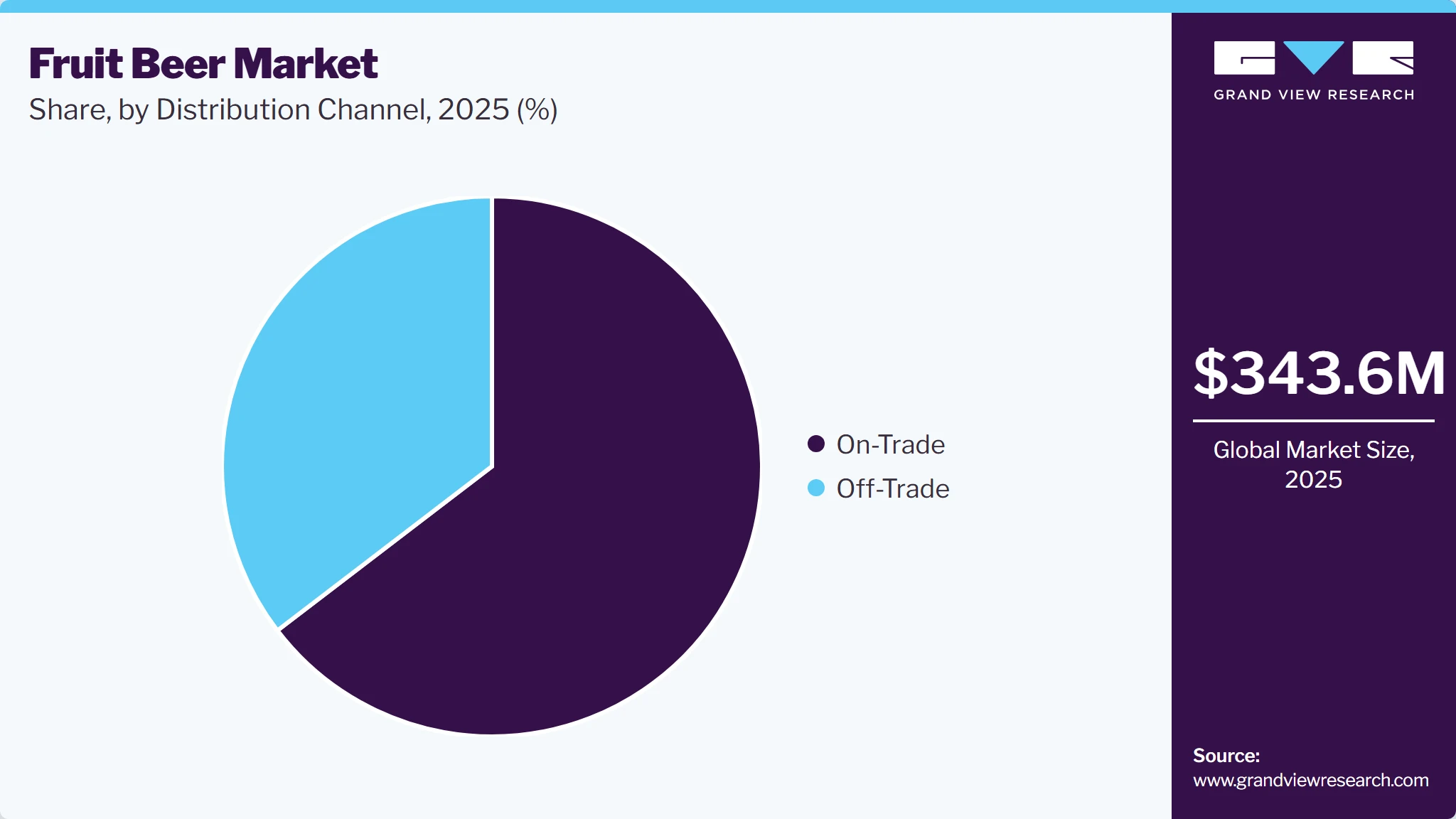
The off-trade segment is expected to grow at the fastest CAGR over the forecast period, as it offers consumers the convenience of purchasing fruit beers for home consumption and a wide selection of fruit beers, including seasonal and limited-edition flavors that might not be available in on-trade venues. Furthermore, the rise in e-commerce has transformed retailers to offer online shopping options for fruit beers, making it easier for consumers to browse and select products from the comfort of their homes. Younger consumers, particularly millennials and Gen Z, are more inclined to explore diverse beverage options at home, this demographic shift is prompting retailers to expand their offerings to meet the evolving tastes of consumers.
Regional Insights
The North American fruit beer market is expected to grow significantly over the forecast period, driven primarily by rising disposable incomes and changing consumer preferences toward unique and flavorful beverages. As consumers have more disposable income, they are increasingly willing to spend on premium and innovative products, including fruit beers that offer distinctive taste experiences. In addition, the growing trend of health consciousness is encouraging consumers to seek options that are perceived as healthier alternatives to traditional beers. Furthermore, the expansion of bars and restaurants that focus on craft beer selections enhances the visibility and availability of fruit beers, further propelling market growth.
U.S. Fruit Beer Market Trends
The fruit beer market in the U.S. held the largest share in the North America region in 2025. U.S. fruit beer market dominated North America, driven by increasing consumer interest in craft beers, particularly those that offer unique and innovative flavors. As American consumers become more adventurous in their drinking habits, they are drawn to fruit beers that provide refreshing and diverse taste experiences, such as raspberry or peach-infused options. For instance, breweries such as New Belgium have successfully introduced fruit beers that cater to this trend, attracting a loyal customer base. In addition, the rise of health-conscious drinking is influencing preferences, as fruit beers are often perceived as lighter and more flavorful alternatives to traditional lagers and ales. The trend towards healthier choices, along with an increasing number of craft breweries and bars offering a wide variety of fruit beers, sets the stage for continued growth and innovation in the U.S. market in the coming years.
Europe Fruit Beer Market Trends
Europe dominated the fruit beer market with the largest revenue share of 38.0% in 2025, primarily due to its rich brewing heritage and strong consumer demand for innovative flavors. The region has a long-standing tradition of fruit-infused brewing, particularly in countries such as Belgium and Germany, where brewers have perfected the art of incorporating fruits such as cherries and raspberries into their beers. This cultural appreciation for fruit beers is complemented by a growing trend among consumers who seek unique and refreshing alternatives to traditional lagers and ales. For instance, Belgian-style lambics, which are often brewed with fruits, have gained popularity for their complex flavors and artisanal production methods.

Belgium fruit beer market dominated Europe, driven due to its rich brewing tradition and the country's historical expertise in crafting fruit-infused beers. Belgian brewers have long been known for their innovative use of fruits, particularly in styles such as lambics, which often incorporate ingredients such as cherries and raspberries. This cultural heritage fosters a deep appreciation for unique flavors among consumers, driving demand for fruit beers that showcase local fruits and traditional brewing methods. For instance, the famous Kriek lambic, made from sour cherries, exemplifies Belgium's ability to blend fruitiness with complex fermentation techniques, appealing to both domestic and international markets.
Asia Pacific Fruit Beer Market Trends
The Asia Pacific fruit beer market is expected to grow at the fastest CAGR over the forecast period due to the increasing popularity of beer consumption in countries such as India, China, and Japan, where traditional drinking cultures are evolving to embrace innovative beverage options. As consumers become more health-conscious, there is a notable shift toward fruit beers, which are often perceived as lighter and more nutritious alternatives to conventional beers. For instance, breweries in India are introducing fruit-infused beers that cater to local tastes, such as mango and lychee flavors, appealing to a younger demographic looking for refreshing drinks.
China dominated the Asia Pacific fruit beer market due to a combination of rising disposable incomes, changing consumer preferences, and the growing popularity of craft beverages. As the middle class expands, consumers are increasingly willing to experiment with diverse flavors, including fruit-infused beers that offer refreshing alternatives to traditional lagers. The country's burgeoning craft beer scene has also led to the emergence of innovative breweries that focus on unique fruit flavors, such as lychee and peach, appealing to younger demographics seeking new drinking experiences. For instance, local breweries, including Jing-A Brewing Co., have successfully introduced fruit beers that resonate with Chinese consumers, enhancing the overall market appeal.
Key Fruit Beer Company Insights
Some key players in the fruit beer industry are Jester King Craft Brewery LLC., New Glarus Brewing Company., Allagash Brewing Company, SIREN CRAFT BREW, Founders Brewing Co., New Belgium Brewing Company, Inc., THE BOSTON BEER COMPANY, INC., Anchor Brewing, The Golden Road., SIXPOINT BREWERY and others. These companies in the fruit beer industry employ various strategies to maintain a competitive edge, including the development of innovative fruit-infused beers that cater to evolving consumer tastes for unique flavors. They focus on seasonal and limited-edition offerings to attract craft beer enthusiasts. These companies enhance product authenticity by highlighting local fruit varieties and traditional brewing methods while supporting local agriculture.
-
New Belgium Brewing Company, Inc. specializes in crafting diverse fruit beers that combine traditional brewing techniques with innovative flavor profiles. The company emphasizes sustainability and quality, sourcing premium fruits to create unique offerings that appeal to a wide audience. By integrating environmental practices into their operations, New Belgium enhances the flavor of their products and aligns with the growing consumer demand for eco-friendly options.
-
The Boston Beer Company, Inc. focuses on delivering a variety of fruit beers that cater to evolving consumer preferences for refreshing and flavorful beverages. By leveraging its extensive brewing expertise, the company creates unique fruit-infused options that appeal to both casual drinkers and craft beer aficionados.
Key Fruit Beer Companies:
The following key companies have been profiled for this study on the fruit beer market.
-
Jester King Craft Brewery LLC.
-
New Glarus Brewing Company.
-
Allagash Brewing Company
-
SIREN CRAFT BREW
-
Founders Brewing Co.
-
New Belgium Brewing Company, Inc.
-
THE BOSTON BEER COMPANY, INC.
-
Anchor Brewing,
-
The Golden Road.
-
SIXPOINT BREWERY
Competitive Benchmarking
Category
Operating Strategies
Competitive Edge
Weakness
Established Players (The Boston Beer Company, Inc., New Belgium Brewing Company, Inc., Founders Brewing Co., Anchor Brewing, Golden Road Brewing, Sixpoint Brewery)
- Expand fruit beer portfolios through the introduction of berry, citrus, tropical fruit, and seasonal variants targeting consumers seeking refreshing and flavorful alcoholic beverages
- Strengthen distribution through retail, on-premise channels, and e-commerce while leveraging premium branding and marketing campaigns
- Strong brand recognition, extensive distribution networks, and large-scale brewing capabilities
- Ability to commercialize successful fruit beer innovations rapidly and achieve broad market penetration across regions
- Greater exposure to fluctuating fruit ingredient costs and changing alcohol regulations
- Larger organizational structures may limit responsiveness to emerging niche flavor trends and local consumer preferences
Emerging Players (Jester King Craft Brewery LLC, New Glarus Brewing Company, Allagash Brewing Company, Siren Craft Brew)
- Focus on small-batch fruit beers, locally sourced ingredients, specialty fermentation methods, and limited-edition releases to differentiate products
- Emphasize authenticity, artisanal brewing, and direct consumer engagement through taprooms, events, and community-focused marketing
- High flexibility in developing unique fruit combinations and experimental brewing styles
- Strong appeal among consumers seeking premium, craft, and authentic drinking experiences
- Limited production capacity and narrower geographic reach compared to larger breweries
- Higher production costs and dependence on specialty retail channels may constrain scaling opportunities
Recent Developments
-
In March 2024, Bira 91 and New Belgium Brewing announced a collaboration to launch a new beer named "Chutney Sour," inspired by Indian flavors. This innovative brew combines the essence of traditional Indian chutneys with New Belgium's craft beer expertise, aiming to create a distinctive sour beer experience.
Fruit Beer Market Report Scope
Report Attribute
Details
Market size in 2025
USD 343.6 million
Estimated market size in 2026
USD 360.8 million
Projected market size by 2033
USD 487.1 million
Growth rate
CAGR of 4.4% from 2026 to 2033
Base year for estimation
2025
Historical data
2021 - 2024
Forecast period
2026 - 2033
Quantitative units
Revenue in USD million/billion and CAGR from 2026 to 2033
Report coverage
Revenue forecast, company ranking, competitive landscape, growth factors, and trends
Segments covered
Flavor, distribution channel, region
Regional scope
North America; Europe; Asia Pacific; Latin America; Middle East & Africa
Country scope
U.S.; Canada; Mexico; Germany; UK; France; Italy; Belgium; China; Japan; India; South Korea; Australia & New Zealand; South Korea; Brazil; Argentina; South Africa; UAE
Key companies profiled
Jester King Craft Brewery LLC.; New Glarus Brewing Company.; Allagash Brewing Company; SIREN CRAFT BREW; Founders Brewing Co.; New Belgium Brewing Company, Inc.; THE BOSTON BEER COMPANY, INC.; Anchor Brewing; The Golden Road.; and SIXPOINT BREWERY.
Customization scope
Free report customization (equivalent up to 8 analysts' working days) with purchase. Addition or alteration to country, regional & segment scope.
Pricing and purchase options
Avail customized purchase options to meet your exact research needs. Explore purchase options
Global Fruit Beer Market Report Segmentation
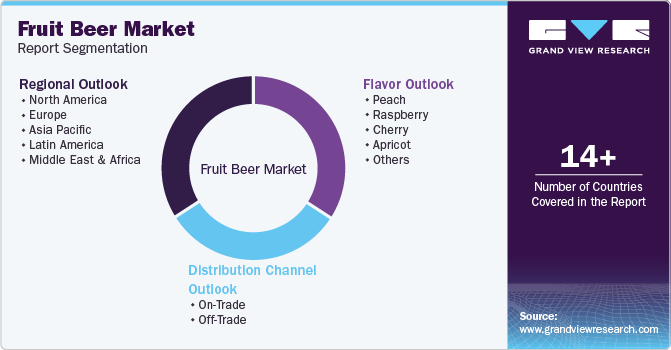
This report forecasts revenue growth at global, regional, and country levels and provides an analysis of the latest industry trends in each of the sub-segments from 2021 to 2033. For this study, Grand View Research has segmented the global fruit beer industry report based on flavor, distribution channel, and region:
-
Flavor Outlook (Revenue, USD Million, 2021 - 2033)
-
Peach
-
Raspberry
-
Cherry
-
Apricot
-
Others
-
-
Distribution Channel Outlook (Revenue, USD Million, 2021 - 2033)
-
On-Trade
-
Off-Trade
-
-
Regional Outlook (Revenue, USD Million, 2021 - 2033)
-
North America
-
U.S.
-
Canada
-
Mexico
-
-
Europe
-
Belgium
-
Germany
-
UK
-
France
-
Italy
-
Spain
-
-
Asia Pacific
-
China
-
Japan
-
India
-
Australia & New Zealand
-
-
Latin America
-
Brazil
-
Argentina
-
-
Middle East and Africa (MEA)
-
South Africa
-
UAE
-
-
Research Methodology
The fruit beer market figures in this report are based on a proven research process that combines executive interviews with secondary research from proprietary databases, company filings, and recognized regulatory and institutional sources. Market size is built through value-chain sizing - reconciling supply-side and demand-side estimates - and triangulated with bottom-up and top-down approaches. Every estimate passes multiple levels of expert validation before publication, with each fruit beer segment quantified using the revenue-capture definitions in the table below.
Segment Definition
Segment - Flavor
Revenue capture definition
Peach
This segment includes the sales of peach-flavored beer.
Raspberry
This segment includes the sales of raspberry-flavored beer.
Cherry
This segment includes the sales of cherry-flavored beer.
Apricot
This segment includes the sales of apricot-flavored beer.
Others
This segment includes the sales of other fruit-flavored beers.
Estimation Model
Layer Name
Key Question
Description
Alcohol Consumer Layer
Who consumes alcoholic beverages?
Identify the legal drinking-age population that consumes alcoholic beverages across target markets. Analyze beer consumption habits, social drinking trends, disposable income levels, and preference for flavored alcoholic beverages to define the potential consumer pool for fruit beer products.
Market Access Layer
Who can access fruit beer products?
Apply region-specific alcohol retail penetration, on-trade and off-trade distribution coverage, regulatory permissions, and e-commerce alcohol availability (where permitted) to the eligible consumer base to estimate the addressable fruit beer market.
Fruit Beer Adoption Layer
Who actively purchases fruit beer?
Apply fruit beer penetration rates and consumer preferences for flavored alcoholic beverages. Factor in demand from younger adult consumers, casual drinkers, female consumers, premium beer enthusiasts, and consumers seeking lower-bitterness alternatives to traditional beer to convert the addressable population into active fruit beer buyers.
Monetisation Layer
How much revenue is generated?
Multiply active fruit beer consumers by average annual consumption volume and spending per consumer. Add revenue contributions from bars, restaurants, pubs, supermarkets, liquor stores, specialty beverage retailers, and seasonal product launches to estimate total market revenue.
Delivered Customizations
This report has been delivered with the following In-depth customizations
Client Request
Customization Delivered
Value Adds
Fruit Flavor Innovation, Consumer Preference & Product Trends
Conducted a focused analysis of fruit beer consumption across citrus, berry, apple, peach, cherry, mango, tropical fruit, and mixed-fruit varieties, covering evolving taste preferences, premiumization trends, craft brewing innovations, and demand for refreshing and flavorful alcoholic beverages.
Helps stakeholders identify high-growth fruit flavor categories, evaluate changing consumer preferences, and assess commercialization opportunities for new product launches and premium fruit beer offerings.
Low-Alcohol Consumption & Craft Beer Adoption Trends
Evaluated adoption trends for low-alcohol, flavored, craft, gluten-free, and specialty fruit beers, including consumer purchasing behavior, health-conscious drinking patterns, experiential consumption trends, and growing demand among millennials and Gen Z consumers.
Provides insights into emerging beverage consumption trends, unmet consumer needs, and commercially attractive product categories to support brand positioning, product innovation, and portfolio diversification strategies.
On-Trade Expansion, Seasonal Product Launches & Market Opportunity Assessment
Assessed demand across bars, pubs, restaurants, breweries, supermarkets, convenience stores, liquor stores, and e-commerce channels, along with trends in seasonal fruit flavors, limited-edition offerings, premium packaging, and regional product customization strategies.
Supports investment and expansion strategies by identifying high-potential sales channels, evaluating consumer acceptance of innovative fruit beer products, and strengthening long-term growth opportunities across both on-premise and off-premise markets.
Frequently Asked Questions About This Report
The on-trade segment led with a 64.6% revenue share in 2025, while the off-trade is the fastest-growing segment.
Europe dominated the fruit beer market with the largest revenue share of 38.0% in 2025.
Asia Pacific is the fastest-growing region in the fruit beer market over the forecast period.
The global fruit beer market size was valued at USD 343.6 million in 2025 and is estimated at USD 360.8 million for 2026.
The global fruit beer market is expected to grow at a CAGR of 4.4% from 2026 to 2033, reaching USD 487.1 million by 2033.
The cherry-flavored beer led the market with the largest revenue share of 29.3% in 2025 and is expected to grow at the fastest CAGR over the forecast period.
Some key players operating in the fruit beer market include Jester King Craft Brewery LLC.; New Glarus Brewing Company.; Allagash Brewing Company; SIREN CRAFT BREW; Founders Brewing Co.; New Belgium Brewing Company, Inc.; THE BOSTON BEER COMPANY, INC.; Anchor Brewing; The Golden Road.; and SIXPOINT BREWERY.
This growth of the market is due to the rising trend of low-alcohol beverages and an increasing awareness of health and wellness.
About the Author(s)
Consumer F&B Research Team
Consumer Goods · Consumer F&BThis report was authored by the consumer f&b research team at Grand View Research - comprising two research analysts, one senior research analyst, and one industry expert - with specialized expertise in the consumer f&b segment of the consumer goods industry. All findings are based on proprietary consumer goods databases, executive interviews, and regulatory analysis, subject to internal peer review prior to publication.
Last Updated:
Speak to Analyst

Need a Tailored Report?
Customize this report to your needs — add regions, segments, or data points, with 20% free customization.
Or view our licence options:


ISO 9001:2015 & 27001:2022 Certified
We are GDPR and CCPA compliant! Your transaction & personal information is safe and secure. For more details, please read our privacy policy.












