
- Home
- »
- Advanced Interior Materials
- »
-
Gas Radiators Market Size, Growth Report, 2026-2033GVR Report cover

Gas Radiators Market (2026 - 2033)
Size, Share & Trends Analysis Report By Installation Type (Wall Mounted, Floor Standing), By Type (Panel Radiator, Column Radiator, Baseboard Radiator, Towel Radiator), By End Use, By Region, And Segment Forecasts
Market Size, 2025
$1.7BMarket Estimate, 2026
$1.8BMarket Forecast, 2033
$2.7BCAGR, 2026–2033
6.0%Gas Radiators Market Summary
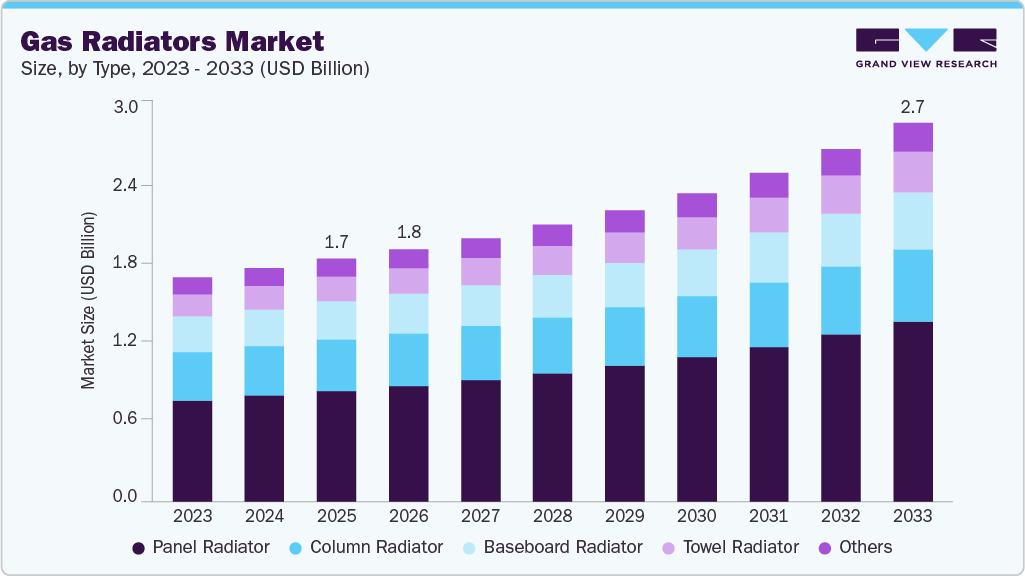
The global gas radiators market size was valued at USD 1.7 billion in 2025 and is projected to grow from USD 1.8 billion in 2026 to USD 2.7 billion by 2033, at a CAGR of 6.0% from 2026 to 2033. Europe dominated the global market, accounting for the largest revenue share of 51.2% in 2025.. The gas radiators industry is driven by the growing demand for efficient and cost-effective heating solutions, especially in regions with prolonged winter seasons.
 Source: Grand View Research, IR Documents, Primary Interviews, Paid DatabasesTo learn more about this report,
 Download Free Sample Report
 Key Market Trends & Insights
- By installation type: Wall-mounted segment led the market with the largest revenue share of 75.3% in 2025.
- By end use: Commercial segment is projected to grow at the fastest CAGR of 6.7% from 2026 to 2033.
Regional Highlights
- Largest regional market: Europe (51.2% revenue share, 2025)
- By country: The U.K. gas radiators industry is a major contributor to the global market.
Market Size & Forecast
- Market size in 2025: USD 1.7 Billion
- Estimated market size in 2026: USD 1.8 Billion
- Projected market size by 2033: USD 2.7 Billion
- CAGR (2026-2033): 6.0%
Three ways to get this report
Buy it, customize it, or ask a question.Ask an Analyst
Analyst response in 1 business day
- AccessReport author, directly
- Reply timeWithin 1 working day
- No sales callDirect answer only
- FormatEmail reply
- CostFree, no cost
Get the Full Report
What the study covers
- FormatsPDF · Excel · Dashboard
- Timeline2026–2033 annual, 2025 base
- Coverage20+ countries, 5 regions
- Companies10+ key players profiled
Customize the Report
20% free customization
- IncludeCountries, segments, points
- TailorTo your product definition
- ExtendDeeper competitor detail
- OrA fully bespoke study
- Turnaround5–10 working days
Compared to electric heating, gas-based systems often offer lower operating costs and faster heat output, making them a preferred choice for residential and commercial users. The expansion of natural gas infrastructure in developing economies, along with rising urbanization and housing development, is further supporting adoption.
 To learn more about this report, Download Free Sample Report
 The gas radiators industry is witnessing growing emphasis on energy efficiency and user comfort, driving advancements in radiator design, including improved heat distribution, compact configurations, and the integration of smart temperature-control features. End-use sectors such as hospitality and healthcare are further driving demand, as they require consistent, reliable indoor heating solutions. Although increasing environmental concerns are driving a gradual transition toward low-carbon alternatives, ongoing innovations in high-efficiency gas radiators and hybrid heating systems are sustaining market growth.
Market Concentration & Characteristics
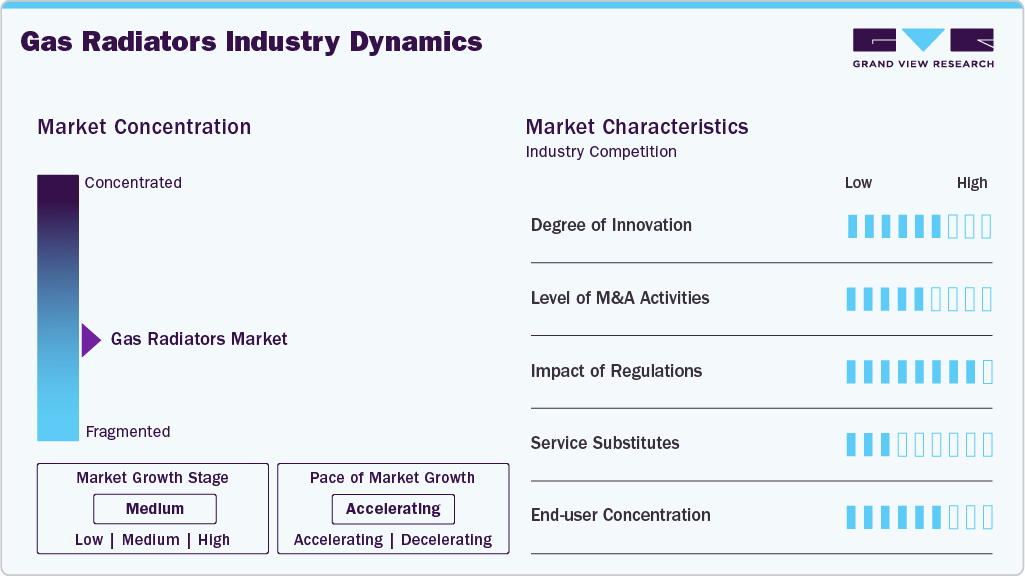
The gas radiators industry is fragmented, with a wide mix of global, regional, and local manufacturers competing across various product types and price segments. No single player dominates globally, as demand differs by region based on climate conditions and gas infrastructure availability. While developed markets exhibit relatively higher consolidation due to established heating systems and distribution networks, emerging markets remain highly competitive, with many smaller, price-focused suppliers. Overall, competition is driven by energy efficiency, product design, pricing, and service offerings, resulting in a dynamic and decentralized industry landscape.
The gas radiators industry shows a moderate level of innovation, mainly focused on improving energy efficiency, heat output, and user convenience. Manufacturers are introducing advanced materials, compact designs, and enhanced heat exchange technologies to improve performance while reducing energy consumption. There is also growing integration of smart controls and thermostatic systems, allowing users to regulate temperature more precisely and optimize energy use.
 To learn more about this report, Download Free Sample Report
 Regulations play a significant role in shaping the market, particularly in developed regions where governments enforce strict energy efficiency and emission standards. Policies aimed at reducing carbon footprints are pushing manufacturers to develop high-efficiency gas radiators and hybrid heating solutions. Building codes and energy labelling requirements also influence product adoption, especially in new construction and renovation projects.
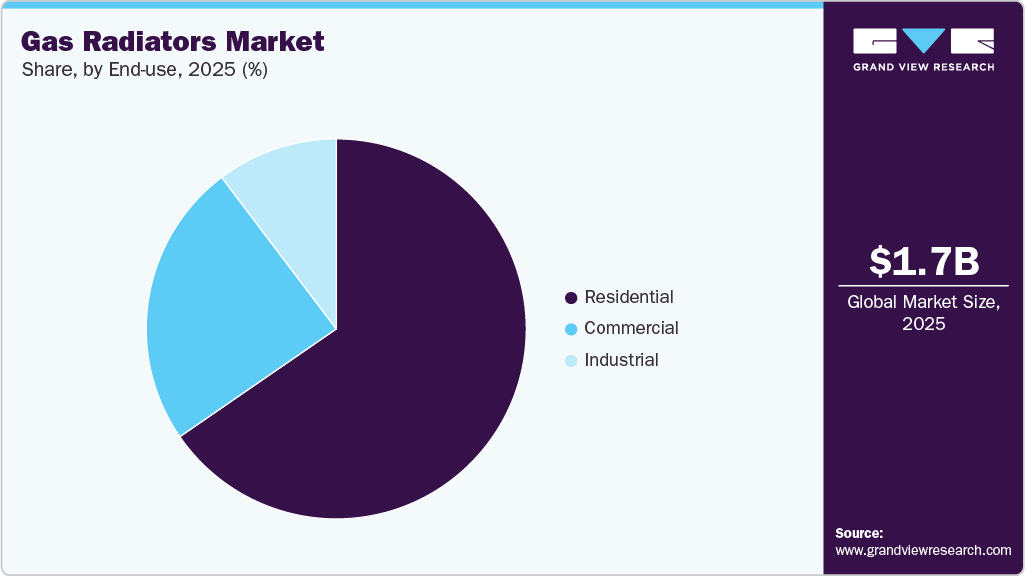
The gas radiators industry has a diversified end-user base, with the residential segment accounting for the largest share due to widespread use in home heating. Commercial users, including offices, hotels, hospitals, and retail spaces, also contribute significantly, driven by the need for consistent indoor heating and comfort. Industrial use is comparatively small but remains relevant in facilities that require controlled heating environments.
Drivers, Opportunities & Restraints
The gas radiators industry is mainly driven by the need for reliable and cost-effective heating, especially in colder regions where consistent indoor warmth is essential. Gas-based systems often provide faster heating and lower operating costs than electric alternatives, making them attractive to residential and commercial users. Growing urbanization, expansion of natural gas infrastructure, and increasing renovation activities in older buildings are also supporting demand. In addition, the ability of gas radiators to integrate with existing central heating systems continues to make them a practical choice.
There are significant opportunities in energy-efficient upgrades and smart heating solutions. Consumers are increasingly seeking systems with better temperature control, lower energy consumption, and modern designs that complement interior aesthetics. Retrofitting older buildings with advanced radiators, along with demand from the hospitality and healthcare sectors, creates further growth potential. Emerging markets also present opportunities as access to gas networks improves and awareness of efficient heating solutions rises.
The market faces challenges due to environmental concerns and regulatory pressure to reduce carbon emissions. Many regions are promoting alternative heating technologies such as electric heat pumps and renewable-based systems, which can limit long-term demand for gas radiators. Fluctuations in natural gas prices and reliance on gas infrastructure also act as constraints, particularly in regions with inconsistent supply.
Installation Type Insights
The wall-mounted gas radiators segment accounted for the largest market revenue share in 2025 and is projected to grow at the fastest CAGR during the forecast period, mainly because of their space-saving design and ease of installation, making them ideal for modern residential and commercial interiors. With increasing urbanization and smaller living spaces, especially in apartments and office settings, these radiators offer efficient heating without occupying floor area. They are also compatible with contemporary interior layouts and central heating systems, making them the preferred choice for both new construction and renovation projects.
The floor-standing gas radiators segment is anticipated to grow at a significant CAGR of 4.9% during the forecast period, due to their higher heating capacity and suitability for larger spaces. These units are often preferred in commercial buildings, industrial facilities, and older constructions where wall installation may not be practical. Their robust performance and ability to heat large areas effectively make them a reliable option for high-demand environments such as halls, warehouses, and heritage buildings. As demand for powerful heating solutions in spacious or poorly insulated areas rises, the adoption of floor-standing radiators is expected to increase.
Type Insights
The panel radiators segment led the market with the largest revenue share of 45.6% in 2025, due to their high efficiency, compact structure, and versatility across residential and commercial spaces. Their flat design enables quick heat distribution and improved energy efficiency, making them a practical choice for modern heating systems. They are easy to install, compatible with central heating setups, and available in a wide range of sizes to suit different room requirements. In addition, their clean and minimal appearance aligns well with contemporary interiors, which has further strengthened their widespread adoption.
The towel radiators segment is anticipated to grow at the fastest CAGR of 6.9% during the forecast period, driven by increasing demand for multi-functional and space-efficient heating solutions, particularly in bathrooms. These radiators not only heat the space but also keep towels warm and dry, adding convenience and comfort for users. Growth is further supported by rising living standards, residential construction expansion, and demand from the hospitality sector, where enhanced customer comfort is a priority. Their stylish designs and ability to complement modern bathroom aesthetics are also contributing to their rapid adoption.
End Use Insights
The residential segment led the market with the largest revenue share of 65.4% in 2025, driven by the widespread need for reliable and efficient home heating. Gas radiators are commonly used in houses and apartments due to their ability to provide consistent warmth at lower operating costs than some electric systems. Rising urbanization, growth in housing construction, and increasing renovation of older homes, especially in colder regions, have further supported demand. Their compatibility with central heating systems and availability in compact, aesthetically pleasing designs also make them a preferred choice for homeowners.
 To learn more about this report, Download Free Sample Report
 The commercial segment is anticipated to grow at the fastest CAGR during the forecast period, driven by increasing demand for efficient heating in offices, hotels, hospitals, retail spaces, and other public buildings. These environments require consistent and scalable heating solutions, which gas radiators can provide efficiently. Growth is further driven by expanding infrastructure, rising investments in hospitality and healthcare, and the need to maintain indoor comfort standards for occupants. In addition, retrofitting and upgrading of existing commercial buildings with modern, energy-efficient heating systems are accelerating adoption in this segment.
Regional Insights
The gas radiators market in North America is experiencing steady growth, driven by the replacement of outdated heating systems and demand for improved indoor comfort. The presence of extensive gas networks and a focus on energy efficiency are encouraging adoption, particularly in residential and light commercial buildings. Increasing retrofitting activities and modernization of HVAC systems are key contributors in this region.
U.S. Gas Radiators Market Trends
The gas radiators market in the U.S. held a significant market share in North America in 2025, supported by its extensive natural gas infrastructure and strong demand for reliable residential heating systems. Growth is largely driven by the replacement of aging heating equipment, rising home renovation activities, and the need for energy-efficient solutions in colder regions. The increasing focus on energy efficiency and the modernization of HVAC systems continues to strengthen market demand across both residential and commercial sectors.
Europe Gas Radiators Market Trends
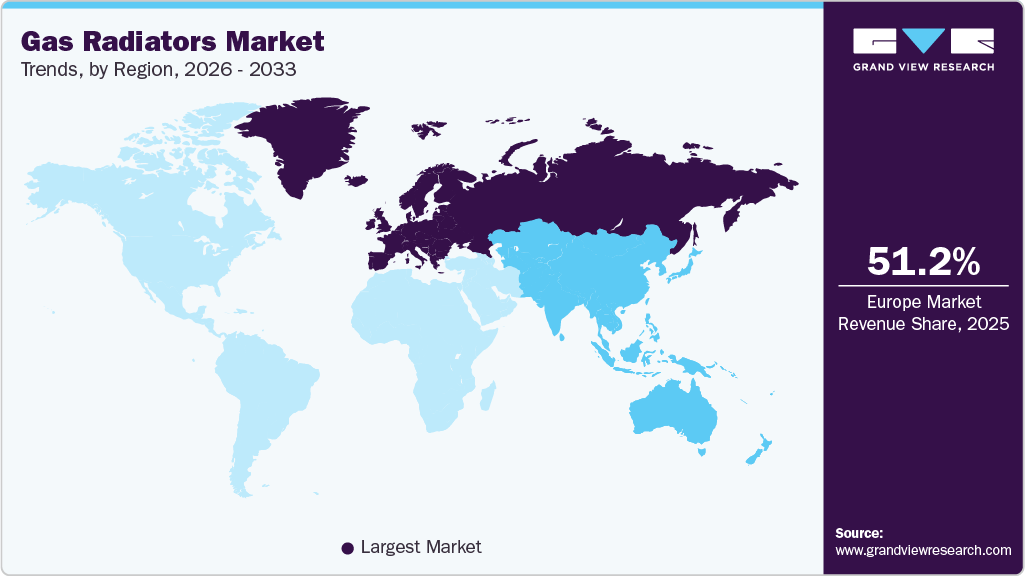
Europe dominated the global gas radiators market with the largest revenue share of 51.2% in 2025, supported by its well-established central heating infrastructure and widespread reliance on gas-based systems. Cold climatic conditions, strict building standards, and a strong base of existing radiator installations continue to sustain demand. Ongoing renovation of aging housing stock and the push for energy-efficient upgrades further reinforce the region’s dominant position.
 To learn more about this report, Download Free Sample Report
 The gas radiators market in the UK accounted for the largest market revenue share in Europe in 2025, supported by ongoing housing development, renovation activity, and rising demand for efficient home heating systems. The country’s aging housing stock is driving the replacement of older heating equipment with modern, energy-efficient radiator systems that integrate with gas-based central heating. In addition, increasing focus on indoor comfort and improved building standards is encouraging adoption across residential and select commercial applications.
The Germany gas radiators market is also witnessing notable growth, driven by its large installed base of central heating systems and strong emphasis on energy efficiency. The country’s cold climate and well-developed gas infrastructure continue to support steady demand, particularly in residential and multi-family housing. Moreover, the ongoing modernization of heating systems and the retrofitting of older buildings are key growth factors. While the market is gradually transitioning toward low-carbon alternatives, demand for efficient radiator systems remains strong due to their compatibility with existing heating networks.
Asia Pacific Gas Radiators Market Trends
The gas radiators market in the Asia Pacific is anticipated to grow at the fastest CAGR during the forecast period, due to rapid urbanization and expanding construction activity in colder regions of countries such as China and South Korea. Rising disposable incomes and improved access to gas infrastructure are driving the shift toward efficient heating solutions. The market is also benefiting from growing awareness of indoor comfort and modern building practices.
The China gas radiators market is growing steadily, supported by expanding urbanization and government initiatives to promote cleaner heating solutions in northern regions. The shift from coal-based heating to natural gas systems has significantly increased demand for radiators used in centralized and district heating networks. Rapid residential construction, along with infrastructure development in urban areas, is further driving adoption. In addition, improving living standards and a stronger focus on indoor comfort are encouraging the use of efficient heating solutions.
The gas radiators market in India is emerging, driven by rising urban development and increasing awareness of modern heating solutions in colder northern regions. While overall penetration remains relatively low compared to developed markets, expanding city infrastructure and gradual access to gas networks are supporting adoption. Demand is also influenced by premium residential projects, hospitality developments, and commercial spaces seeking enhanced comfort. As disposable incomes rise and construction activity increases, the market is expected to expand gradually.
Latin America Gas Radiators Market Trends
The gas radiators market in Latin America is witnessing gradual growth, mainly in regions with seasonal heating needs such as the southern parts of the continent. Increasing urban development and improving access to gas distribution networks are supporting adoption. The market is still developing, with opportunities tied to infrastructure expansion and rising demand for affordable heating solutions.
The Brazil gas radiators market is gradually expanding, driven by urban growth and rising demand for indoor comfort in cooler southern regions. While heating needs are not widespread across the country, areas with seasonal temperature drops are seeing increased adoption, particularly in residential and hospitality sectors. Improving access to natural gas infrastructure and the ongoing development of modern housing projects are supporting market growth.
Middle East & Africa Gas Radiators Market Trends
The gas radiators market in the Middle East & Africa is seeing moderate growth, driven by selective demand in colder areas and high-altitude regions. While overall heating needs are lower than in other regions, niche applications in residential, hospitality, and commercial sectors are driving market expansion. Infrastructure development and diversification of building standards are expected to support gradual adoption.
The Saudi Arabia gas radiators market is growing steadily, with demand concentrated in commercial spaces and regions experiencing cooler seasonal or nighttime temperatures. While large-scale heating is not widely required, growth is supported by expanding infrastructure, hospitality projects, and high-end residential developments that prioritize indoor comfort. Increasing adoption of modern building standards and energy-efficient systems is also contributing to demand.
Key Gas Radiators Company Insight
Some of the key players operating in the market include Stelrad Limited, Zehnder Group AG, and Purmo Group.
-
Stelrad Limited is a UK-based manufacturer and part of the broader Stelrad Group plc, recognized as one of Europe’s leading radiator specialists. The company designs and supplies a wide range of steel panel radiators, towel radiators, and decorative heating solutions for residential and commercial applications. With a strong presence in more than 40 countries and manufacturing facilities across multiple regions, Stelrad focuses on delivering energy-efficient, high-performance heating products.
-
Zehnder Group AG is a manufacturer specializing in indoor climate solutions, including radiators, heating and cooling systems, ventilation, and air purification technologies. Founded in 1895 and headquartered in Gränichen, the company operates across Europe, North America, and Asia with multiple production facilities. It focuses on delivering energy-efficient, comfortable indoor environments by offering products such as decorative radiators, heating and cooling ceilings, and advanced ventilation systems. With a presence in over 70 countries, Zehnder has established itself as a leading player in integrated indoor climate solutions for residential and commercial buildings.
Key Gas Radiators Companies:
The following key companies have been profiled for this study on the gas radiators market.
- Stelrad Limited
- Zehnder Group AG
- KERMI
- Vasco Group
- Purmo Group
- Arbonia
- Fondital Group
- Myson
- Jiangsu Weichuang Radiator Manufacturing Co., Ltd
- JAGA N.V.
- BEMM GmbH
- Henrad
- Radson
- DEMİRDÖKÜM
- Reina Radiators
Recent Developments
-
In March 2026, Stelrad has launched its Green Series, a radiator range made using 90% low-carbon steel to support more sustainable heating solutions. The lineup includes multiple models designed to reduce environmental impact while maintaining performance. These radiators are fully recyclable and come with eco-friendly packaging, reflecting a strong focus on sustainability.
-
In February 2025, Midea Group finalized the acquisition of Arbonia’s climate division and introduced a new HVAC partnership under the name MBT Climate in collaboration with Clivet. This strategic move combines their product strengths to expand presence in the European market and enhance innovation capabilities. The addition of Arbonia’s expertise in heating, cooling, and ventilation supports a more comprehensive offering.
Gas Radiators Market Report Scope
Report Attribute
Details
Market size in 2025
USD 1.7 billion
Estimated Market size in 2026
USD 1.8 billion
Projected Market size by 2033
USD 2.7 billion
Growth rate
CAGR of 6.0% from 2026 to 2033
Base year for estimation
2025
Historical data
2021 - 2024
Forecast period
2026 - 2033
Quantitative units
Revenue in USD million/billion, and CAGR from 2026 to 2033
Report coverage
Revenue forecast, company market position analysis, competitive landscape, growth factors, and trends
Segments covered
Installation type, type, end use, region
Regional scope
North America; Europe; Asia Pacific; Latin America; Middle East & Africa
Country Scope
U.S.; Canada; Mexico; Spain; France; Germany; Italy; UK; China; India; Japan; Australia; South Korea; Brazil; Argentina; Saudi Arabia; South Africa; UAE
Key companies profiled
Stelrad Limited; Zehnder Group AG; KERMI; Vasco Group; Purmo Group; Arbonia; Fondital Group; Myson; Jiangsu Weichuang Radiator Manufacturing Co., Ltd; JAGA N.V.; BEMM GmbH; Henrad; Radson; DEMİRDÖKÜM; Reina Radiators
Customization scope
Free report customization (equivalent up to 8 analysts working days) with purchase. Addition or alteration to country, regional & segment scope.
Pricing and purchase options
Avail customized purchase options to meet your exact research needs. Explore purchase options
Global Gas Radiators Market Report Segmentation
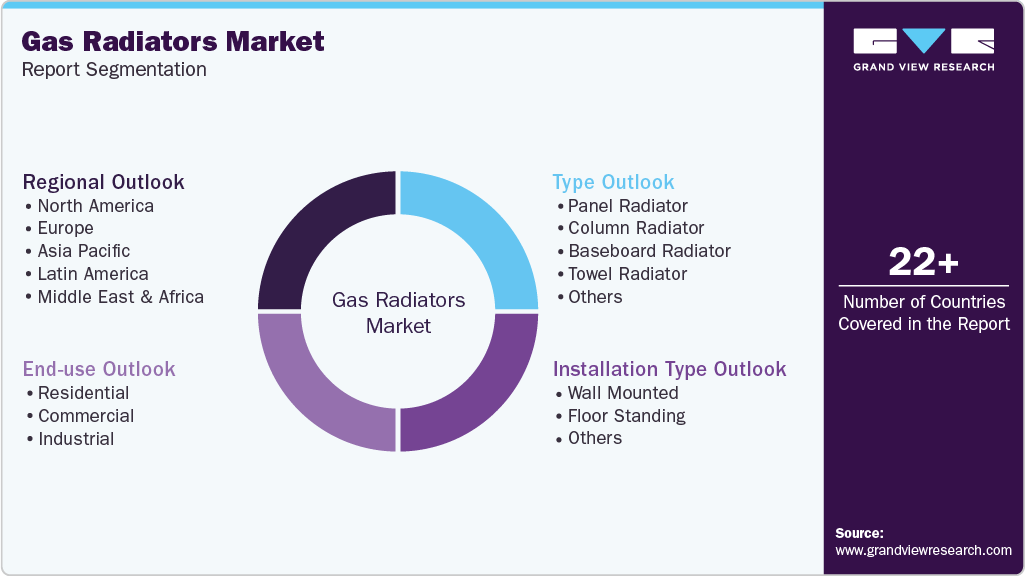
This report forecasts revenue growth at global, regional & country levels, and provides an analysis on the latest trends and opportunities in each of the sub-segments from 2021 to 2033. For this study, Grand View Research has segmented the global gas radiators market report based on installation type, type, end use, and region:
 To learn more about this report, Download Free Sample Report
 -
Installation Type Outlook (Revenue, USD Million, 2021 - 2033)
-
Wall Mounted
-
Floor Standing
-
Others
-
-
Type Outlook (Revenue, USD Million, 2021 - 2033)
-
Panel Radiator
-
Column Radiator
-
Baseboard Radiator
-
Towel Radiator
-
Others
-
-
End Use Outlook (Revenue, USD Million, 2021 - 2033)
-
Residential
-
Commercial
-
Industrial
-
-
Regional Outlook (Revenue, USD Million, 2021 - 2033)
-
North America
-
U.S.
-
Canada
-
Mexico
-
-
Europe
-
Spain
-
Germany
-
Italy
-
France
-
UK
-
-
Asia Pacific
-
China
-
India
-
Japan
-
Australia
-
South Korea
-
-
Latin America
-
Brazil
-
Argentina
-
-
Middle East & Africa
-
Saudi Arabia
-
South Africa
-
UAE
-
-
Frequently Asked Questions About This Report
The global gas radiators market size was valued at USD 1.7 billion in 2025 and is estimated at USD 1.8 billion for 2026.
The global gas radiators market is expected to grow at a CAGR of 6.0% from 2026 to 2033, reaching USD 2.7 billion by 2033.
Europe led the gas radiators market with a 51.2% share in 2025, supported by its well-established central heating infrastructure and widespread use of gas-based systems. The region’s cold climate, strong renovation activity in older buildings, and strict energy efficiency standards have further driven demand.
The gas radiators market is driven by the rising demand for cost-effective and efficient heating solutions, especially in colder regions. Growth is supported by expanding natural gas infrastructure, increasing residential construction, and renovation of older buildings. Additionally, the need for reliable, fast heating and energy-efficient systems continues to boost adoption.
Asia Pacific is the fastest-growing region over the forecast period.
The wall-mounted segment led with a 75.3% revenue share in 2025, and is the fastest-growing installation type.
Residential segment led with a 65.4% revenue share in 2025, while commercial is the fastest-growing segment.
Panel radiators segment held the largest share (over 45.0%) in 2025, while towel radiators is the fastest-growing type.
Key players include Stelrad Limited; Zehnder Group AG; KERMI; Vasco Group; Purmo Group; Arbonia; Fondital Group; Myson; Jiangsu Weichuang Radiator Manufacturing Co., Ltd; JAGA N.V.; BEMM GmbH; Henrad; Radson; DEMİRDÖKÜM; Reina Radiators.
About the Author(s)
Advanced Interior Materials Research Team
Advanced Materials · Advanced Interior MaterialsThis report was authored by the advanced interior materials research team at Grand View Research - comprising two research analysts, one senior research analyst, and one industry expert - with specialized expertise in the advanced interior materials segment of the advanced materials industry. All findings are based on proprietary advanced materials databases, executive interviews, and regulatory analysis, subject to internal peer review prior to publication.
Last Updated:
Speak to Analyst

Customize this report to your needs - add regions, segments, or data points, with 20% free customization.
Or view our licence options:


ISO 9001:2015 & 27001:2022 Certified
We are GDPR and CCPA compliant! Your transaction & personal information is safe and secure. For more details, please read our privacy policy.


