
- Home
- »
- Biotechnology
- »
-
Glycoprotein Market Size, Share, Trends Report, 2026-2033GVR Report cover
![Glycoprotein Market (2026 - 2033)Report]()
Glycoprotein Market (2026 - 2033)
Size, Share & Trends Analysis Report By Product Type (Reagents, Assay Kits), By Glycosylation Type (N-Linked Glycoproteins), By Technique, By End-use, By Region, And Segment Forecasts
Market Size, 2025
$1.1BMarket Estimate, 2026
$1.3BMarket Forecast, 2033
$2.8BCAGR, 2026–2033
12.1%Glycoprotein Market Summary
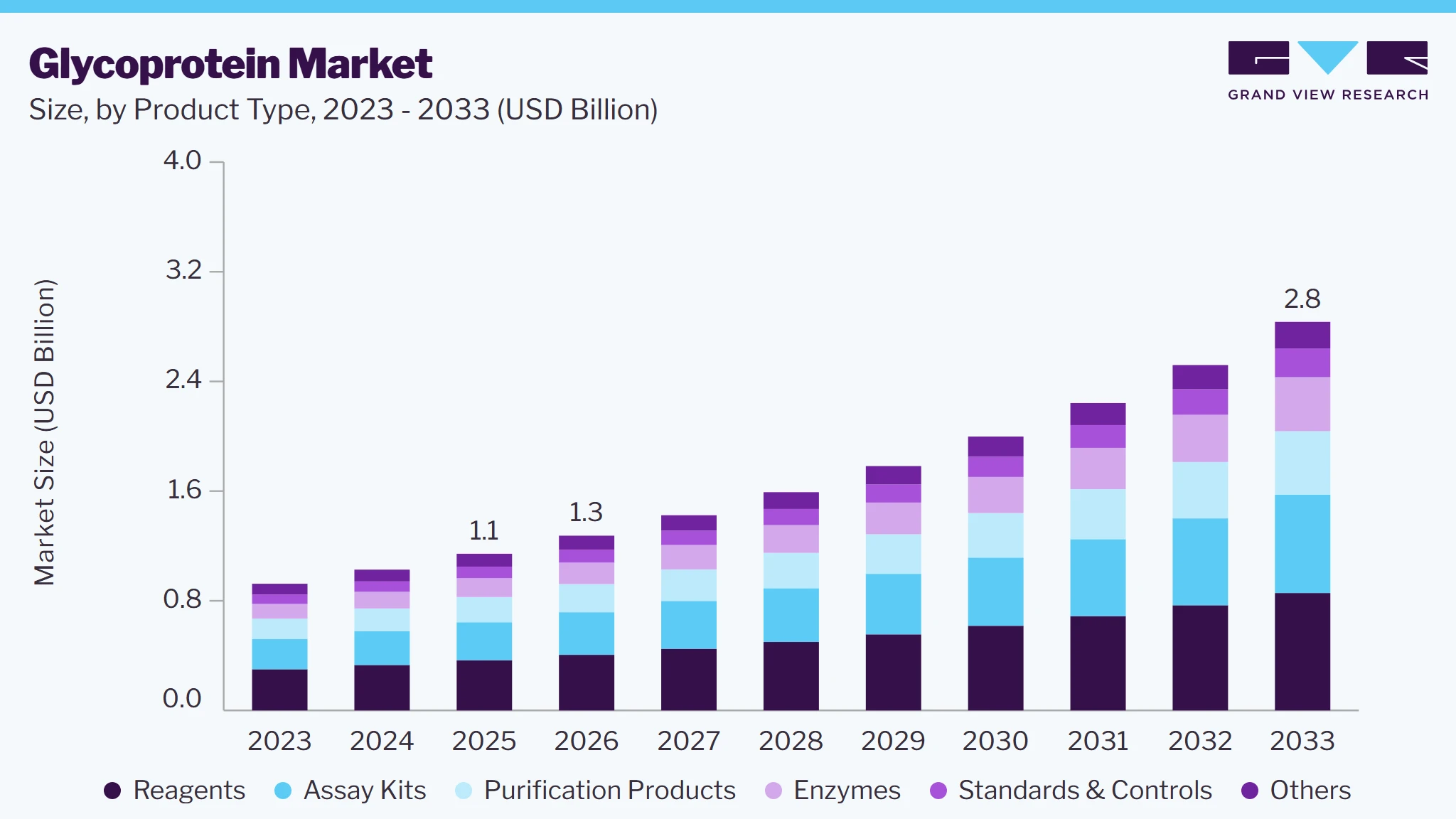
The global glycoprotein market size was valued at USD 1.1 billion in 2025 and is projected to grow from USD 1.3 billion in 2026 to USD 2.8 billion by 2033, at a CAGR of 12.1% from 2026 to 2033. North America dominated the market, accounting for the largest revenue share of 37.0% in 2025. The market growth is driven by the increasing demand for glycoproteins in biopharmaceuticals, diagnostics, vaccine development, and life science research.
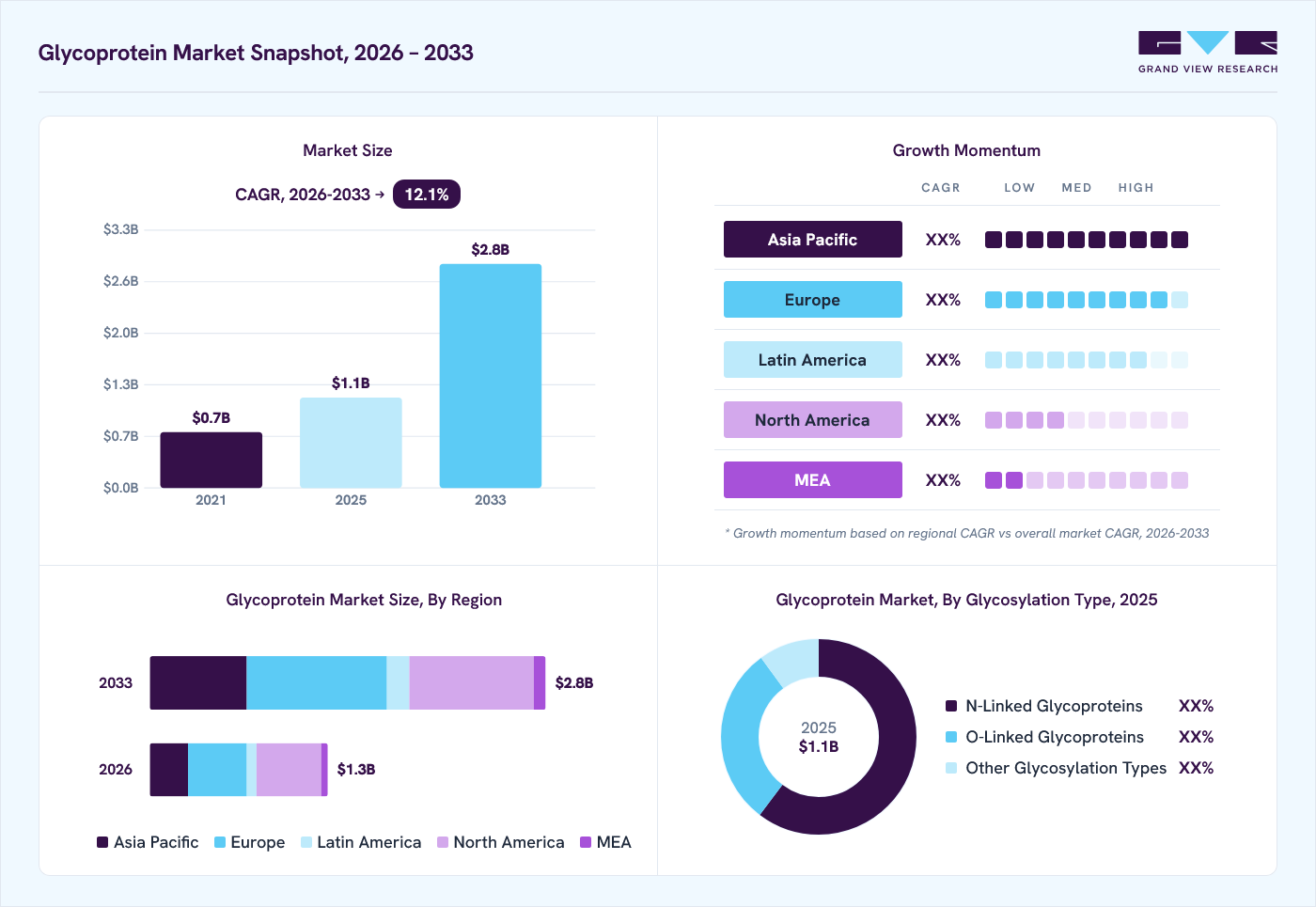
Key Market Trends & Insights
- By product type: Reagents segment held the highest market share of 32.0% in 2025.
- Based on glycosylation type: N-linked glycoproteins segment held the highest market share in 2025.
- Based on technique: Mass spectrometry segment held the highest market share in 2025.
- By end use: Pharmaceutical & biotechnology companies segment held the highest market revenue share of 42.5% in 2025.
Regional Highlights
- Largest regional market: North America (37.0% revenue share, 2025)
- Fastest-growing regional market: Asia Pacific (highest CAGR, 2026-2033)
- By country: The U.S. held the largest market share in 2025
Market Size & Forecast
- Market size in 2025: USD 1.1 Billion
- Estimated market size: USD 1.3 Billion
- Projected market size by 2033: USD 2.8 Billion
- CAGR (2026-2033): 12.1%
Market Dynamics
The glycoprotein market is witnessing high growth, driven by the expanding applications of glycoproteins in diagnostics, vaccine development, glycomics and proteomics research, and biomarker discovery. Increasing investments in life science research, growing adoption of advanced glycoanalytical technologies, and rising demand for glycoprotein-based biomarkers in precision medicine are supporting market expansion. Moreover, continuous advancements in recombinant protein expression, glycosylation analysis, and bioprocessing technologies, along with increasing collaborations between academic institutions and biopharmaceutical companies, are expected to sustain market growth over the forecast period.
Increasing investments in glycomics research and applications are supporting the growth of the global glycoprotein market by strengthening research infrastructure, accelerating the development of glycan analysis technologies, and expanding the use of glycan-based approaches in diagnostics, therapeutics, and biotechnology. Growing funding from research organizations and private investors is also enabling the translation of glycomics research into commercial applications, supporting innovation and increasing demand for glycoprotein characterization and related analytical technologies. For instance,
- • In December 2024: GlycoNet and its partners announced a USD 8.60 million (C$12 million) investment in 21 Canadian glycomics research projects focused on advancing health and agricultural applications. The funding supports the development of new therapeutics, diagnostics, and glycomics tools targeting areas such as cancer, infectious diseases, cardiovascular health, and pandemic preparedness
- • In February 2024: GlycanAge raised USD4.2 million (£3.3 million) in seed funding, led by LAUNCHub Ventures and Kadmos Capital, to advance its glycan biomarker technology. The funding is supporting the company’s expansion from longevity testing into broader diagnostic applications, including the development of disease-specific prognostic biomarkers and associated regulatory and product strategies, highlighting the increasing application of glycan-based technologies in healthcare.
The structural complexity and heterogeneity of glycosylation remain key restraints for the glycoprotein market, as variations in glycan structures caused by host cell lines, culture conditions, and manufacturing processes can affect biological activity, stability, pharmacokinetics, and immunogenicity. Ensuring consistent glycosylation therefore requires stringent process controls and advanced analytical techniques such as mass spectrometry, liquid chromatography, and capillary electrophoresis, increasing manufacturing costs and technical requirements. In addition, stringent regulatory requirements for glycan characterization and batch-to-batch consistency, particularly for recombinant glycoproteins and biosimilars, can extend development timelines and increase quality assurance costs, potentially delaying commercialization and limiting market growth.
Advancements in single-cell glycoproteomics technologies present a significant growth opportunity for the glycoprotein market by enabling high-resolution analysis of protein glycosylation at the individual cell level. Unlike conventional bulk analyses, single-cell glycoproteomics reveal cellular heterogeneity and glycosylation dynamics that are critical for understanding disease mechanisms, immune responses, and tumor progression. These capabilities are accelerating biomarker discovery, supporting precision medicine initiatives, and expanding the application of glycoproteins in translational research and targeted therapeutic development.
According to an article published in Nature Communications in January 2025, an in situ glycosylation profiling platform for single cells was developed using surface plasmon resonance imaging. The technology enabled label-free, high-throughput analysis of cell-surface glycosylation at single-cell resolution, providing deeper insights into glycoprotein expression and cellular heterogeneity. Such advancements are expected to accelerate the adoption of single-cell glycoproteomics in disease research, biomarker discovery, and therapeutic development, creating growth opportunities for the glycoprotein market.
Market Concentration & Characteristics
The glycoprotein industry is characterized by a high degree of innovation, driven by continuous advancements in glycoproteomics, glycan labeling, recombinant protein engineering, and analytical technologies. Companies are increasingly developing novel tools and workflows to improve glycoprotein detection, characterization, and visualization, supporting applications in biomarker discovery, disease research, and biopharmaceutical development. For instance, in January 2026, Biotium launched the GlycoLiner Cell Surface Glycoprotein Labeling Kits, designed for rapid and selective labeling of live-cell surface glycoproteins. The kits enabled efficient glycoprotein imaging and downstream applications, including immunofluorescence, flow cytometry, and biochemical analysis, reinforcing innovation in glycoprotein research and analytical workflows.
“Biotium has launched an extensive selection of unique membrane-labeling probes that support different workflows. We are excited to provide yet another option that offers highly selective imaging of live cell surface glycoproteins that is also compatible with fixation.”
- Lori Roberts, PhD, Director of Bioscience.
The glycoprotein industry is witnessing a moderate level of mergers, acquisitions, and strategic collaborations as companies strengthen their capabilities in glycoprotein analytics, biologics manufacturing, and glycomics research. These partnerships are aimed at expanding technology portfolios, accelerating innovation, and improving end-to-end biopharmaceutical solutions. For instance, in July 2024, Thermo Fisher Scientific acquired Olink Holding AB, strengthening its proteomics portfolio by integrating advanced protein biomarker analysis technologies that support glycoprotein research and precision medicine applications. This acquisition is expected to enhance innovation and broaden the company's life science solutions relevant to the glycoprotein market.

The glycoprotein market is significantly influenced by regulatory frameworks governing biologics, recombinant proteins, and glycoprotein-based therapeutics. Regulatory agencies, including the U.S. FDA and the European Medicines Agency (EMA), require comprehensive characterization of glycosylation patterns, product consistency, and manufacturing quality to ensure the safety, efficacy, and comparability of glycoprotein products. These stringent requirements continue to encourage investments in advanced analytical technologies and standardized quality control practices across the industry.
The glycoprotein industry has witnessed moderate product expansion, driven by the introduction of advanced glycoproteomics platforms, analytical reagents, and protein characterization solutions. Companies are broadening their product portfolios to support biomarker discovery, glycan profiling, and biopharmaceutical research. For instance, in October 2024, Bruker introduced GlycoScape and Glyco-PASEF as part of its 4D-Proteomics platform to enhance high-throughput glycopeptide identification and glycoprotein characterization. The launch strengthened the company's glycoproteomics portfolio and expanded capabilities for translational and clinical research.
The glycoprotein industry is witnessing a moderate to high regional expansion, supported by increasing investments in biopharmaceutical manufacturing, glycomics research, and advanced proteomics infrastructure across emerging markets. Growing government funding for life science research, expanding biotechnology capabilities, and rising collaborations between academic institutions and industry participants are further strengthening regional market growth.
Analyst Perspective
The glycoprotein market is expected to witness high growth, driven by the expanding use of glycoproteins in biopharmaceutical development, vaccine production, diagnostics, and biomedical research. Increasing demand for biologics, biosimilars, and precision medicine is accelerating the adoption of glycoprotein-based products and analytical solutions. Advancements in glycoproteomics, protein characterization technologies, and glycan analysis are further supporting market expansion by improving the understanding of protein function and therapeutic efficacy. Market participants are focusing on product innovation, strategic collaborations, and advanced analytical capabilities to address the evolving needs of life science and biopharmaceutical research.
Product Type Insights
The reagents segment accounted for the largest revenue share, over 32.0% in 2025. The segment's dominance is attributed to the extensive use of glycoprotein-specific reagents, including lectins, antibodies, enzymes, labeling agents, and staining reagents, for glycoprotein isolation, detection, purification, and characterization across research and biopharmaceutical applications. The recurring demand for consumables in glycoproteomics workflows, coupled with increasing investments in biomarker discovery and therapeutic development, further supported segment growth. For instance, in February 2025, Biotium expanded its glycobiology portfolio by launching five new CF Dye Lectin Conjugates for glycan detection and glycoprotein analysis, reinforcing continued innovation and demand for specialized glycoprotein research reagents.
The enzymes segment is expected to register the fastest CAGR over the forecast period, driven by the increasing adoption of glycosidases, glycosyltransferases, and endoglycosidases for glycoprotein modification, glycan release, and structural characterization. Growing demand for enzymatic workflows in biopharmaceutical process optimization, glycoengineering, and quality control, coupled with advancements in enzyme specificity and efficiency, is expected to support segment growth.
Glycosylation Type Insights
The N-linked glycoproteins segment dominated the market with a share of 60.3% in 2025. The segment's dominance was attributed to the critical role of N-linked glycosylation in protein folding, stability, and biological activity, making it indispensable in therapeutic protein development and disease research. The global application of N-linked glycoproteins in monoclonal antibodies, recombinant biologics, vaccine development, and biomarker discovery, coupled with advancements in glycoproteomic profiling and glycan characterization technologies, further strengthened segment demand.
The O-linked glycoproteins segment is expected to register the fastest CAGR over the forecast period. Growth is anticipated to be driven by increasing research on O-linked glycosylation in disease pathogenesis, particularly in cancer, inflammatory disorders, and infectious diseases, where O-glycans serve as important biomarkers and therapeutic targets. The rising adoption of advanced glycan profiling technologies, coupled with expanding applications in therapeutic protein characterization, precision medicine, and biomarker discovery, is expected to further accelerate segment growth throughout the forecast period.
Technique Insights
The mass spectrometry segment dominated the market with a share of 29.4% in 2025 and is expected to grow at fastest CAGR during the forecast period, owing to its ability to accurately identify glycosylation sites, characterize glycan heterogeneity, and analyze complex glycoprotein structures at high resolution. Increasing regulatory emphasis on detailed glycosylation profiling for biologics, coupled with the growing use of mass spectrometry in therapeutic protein development and manufacturing, has accelerated its adoption. Moreover, improvements in analytical throughput and data interpretation capabilities have strengthened technology’s role in glycoprotein research and quality assessment.
The glycan labeling & detection segment is expected to register a significant CAGR over the forecast period, driven by the increasing need for accurate visualization and quantification of glycan structures during glycoprotein analysis. Rising adoption of fluorescence- and chemiluminescence-based labeling techniques for sensitive glycan detection, coupled with expanding applications in biotherapeutic characterization, glycosylation profiling, and translational research, is expected to fuel demand. For instance, in July 2025, Vector Laboratories launched the Glysite Explorer In Situ PLA Glycan Detection Kit, enabling spatial detection of glycans in proximity to target proteins and advancing functional glycoprotein analysis in tissue and cell samples.
End-use Insights
The pharmaceutical & biotechnology companies segment dominated the market with a share of 42.5% in 2025. driven by the extensive adoption of glycoprotein-based technologies throughout biologic drug discovery, process development, and commercial manufacturing. Increasing investments in monoclonal antibodies, recombinant glycoproteins, biosimilars, and glycosylation engineering have accelerated the demand for glycoprotein characterization and quality assessment. Moreover, stringent regulatory requirements for glycosylation consistency and product quality have reinforced the integration of advanced glycoprotein analytical solutions across biopharmaceutical development and production.
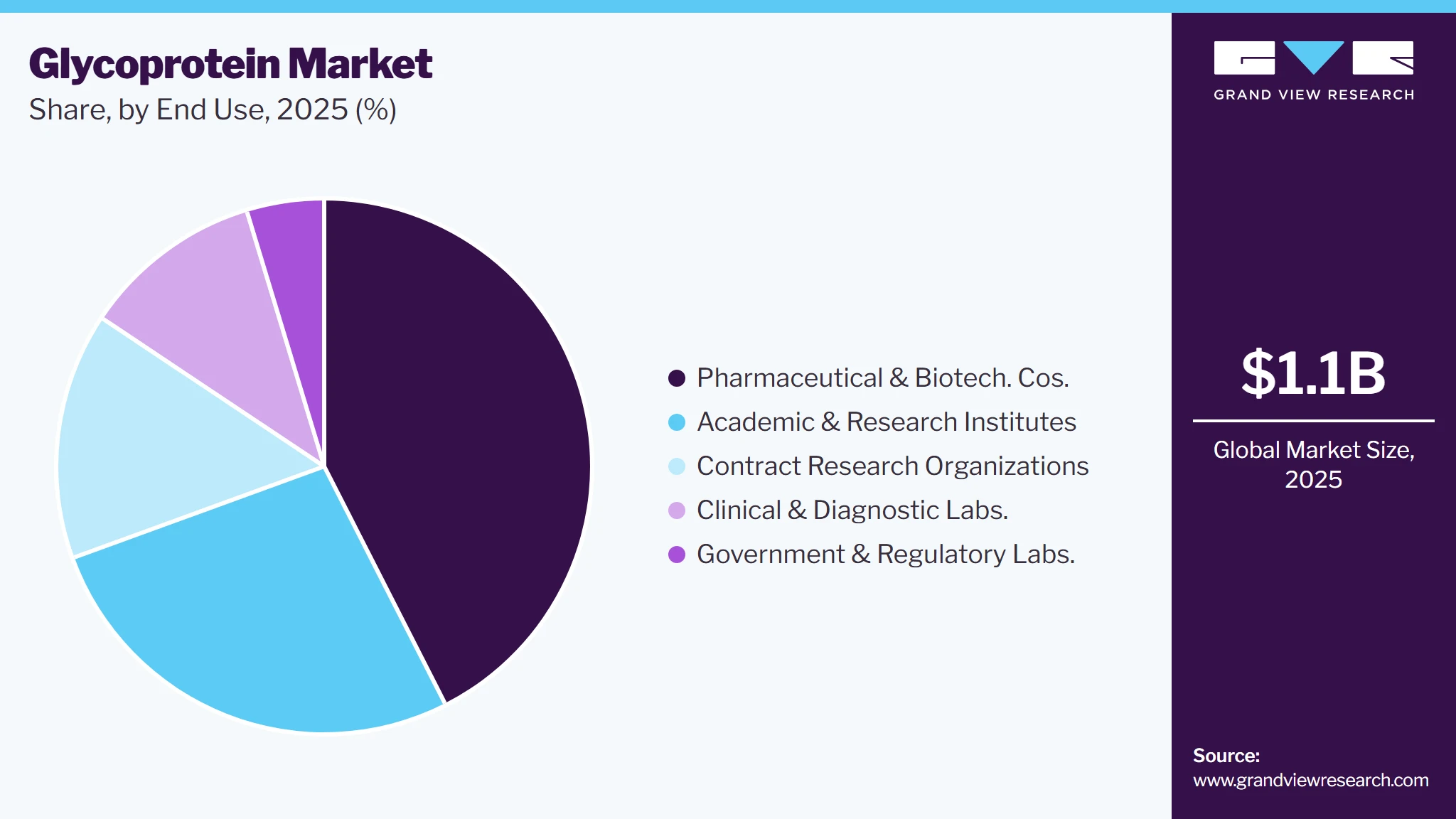
The contract research organizations (CROs) segment is projected to witness the fastest CAGR, driven by increasing outsourcing of glycoprotein characterization and bioanalytical services by pharmaceutical and biotechnology companies. Rising demand for specialized glycosylation analysis, regulatory-compliant testing, and cost-effective development services, coupled with the expanding biologics pipeline, is expected to support segment growth.
Regional Insights
North America dominated the glycoprotein market, accounting for the largest revenue share of 37.0% in 2025, driven by the strong presence of biopharmaceutical manufacturers, advanced life science research infrastructure, and increasing adoption of plasma-derived and recombinant glycoprotein therapeutics. Growing investments in biologics development and commercialization continue to strengthen regional market growth. For instance, in July 2024, Grifols and Biotest launched Yimmugo, an intravenous immunoglobulin (IVIG) therapy, in the U.S., with projected cumulative sales exceeding USD 1 billion over seven years. The launch expanded the availability of plasma-derived glycoprotein therapeutics and strengthened the companies' immunoglobulin portfolios, supporting the growth of the glycoprotein market in North America.

U.S. Glycoprotein Market Trends
Glycoprotein industry in the U.S. is expected to grow over the forecast period, driven by increasing biopharmaceutical R&D, expanding development of glycoprotein-based therapeutics, and the presence of leading biotechnology companies. For instance, in November 2025, Phase III CELEBRATE trial results demonstrated that the novel glycoprotein IIb/IIIa inhibitor zalunfiban improved coronary reperfusion and reduced 30-day cardiovascular events in patients with STEMI, supporting the development of innovative glycoprotein-targeted therapies in the U.S. market.
Europe Glycoprotein Market Trends
The glycoprotein market in Europe was identified as a lucrative region in this industry, owing to robust life science research, increasing investments in glycomics, and favorable regulatory support for biologics. Growing collaborations between research institutes and biotechnology companies continue to accelerate innovation in glycoprotein analysis and therapeutic development.
Increasing research and development activities in glycoprotein-based therapeutics are supporting the growth of the UK glycoprotein market. The country’s strong academic and biomedical research ecosystem is driving advances in glycoprotein structural biology and therapeutic applications. For instance, in May 2026, the University of Cambridge reported the determination of the atomic structure of the HERV-K envelope glycoprotein, identifying potential drug- and carbohydrate-binding sites and providing insights for developing therapies targeting cancer and autoimmune diseases. Such research advancements are expected to expand applications of glycoproteins in drug discovery and therapeutic development, thereby supporting market growth in the UK.
The glycoprotein market in Germany is anticipated to grow significantly over the forecast period, supported by its strong biopharmaceutical manufacturing base and advanced analytical research capabilities. For instance, in July 2024, Pentixapharm acquired the target discovery business of Glycotope GmbH, expanding its oncology antibody discovery capabilities and strengthening glycan-targeted therapeutic research in Germany.
“The acquisition will broaden Pentixapharm’s Intellectual Property portfolio beyond the one built around the CXCR4 receptor. This will immediately double the development pipeline and significantly expand the associated business and clinical development opportunities.”
- Hakim Bouterfa, CEO of Pentixapharm AG
Asia Pacific Glycoprotein Market Trends
Asia Pacific is expected to grow at the fastest CAGR of 14.2% during the forecast period, owing to expanding biotechnology infrastructure, increasing investments in biologics manufacturing, and growing adoption of proteomics and glycomics research. Government initiatives supporting life science innovation are further accelerating regional market growth.
The China glycoprotein market is driven by expanding biotechnology research, increasing investments in vaccine and antibody development, and growing research activities in infectious diseases. Rising focus on glycoprotein characterization and glycosylation analysis is supporting the development of advanced vaccines, biologics, and targeted therapeutics. In addition, increasing government support for biotechnology innovation, expansion of biopharmaceutical manufacturing capabilities, and growing research infrastructure are expected to strengthen the adoption of glycoprotein-based products and technologies, thereby supporting market growth in China.
The glycoprotein market in Japan is witnessing rapid growth, supported by its well-established biotechnology infrastructure, strong pharmaceutical R&D capabilities, and increasing emphasis on advanced biologics and precision medicine. The country's focus on innovative drug development, regenerative medicine, and molecular research is expected to create opportunities for glycoprotein-based therapeutic and diagnostic applications.
Latin America Glycoprotein Market Trends
The Latin America glycoprotein market is expected to grow steadily, driven by improving healthcare infrastructure, increasing adoption of advanced biologic therapies, and expanding research collaborations. Rising investments in clinical research capabilities and gradual advancements in biotechnology platforms are expected to support the regional development of glycoprotein applications.
Middle East & Africa Glycoprotein Market Trends
The glycoprotein industry in MEA is anticipated to witness gradual growth, supported by healthcare modernization initiatives, increasing focus on specialty therapeutics, and improving access to advanced diagnostic technologies. Growing investments in biotechnology infrastructure and collaborations with international research organizations are expected to enhance the adoption of glycoprotein-based solutions across the region.
Key Glycoprotein Company Insights
Several well-established companies operate in the glycoprotein market, driven by their broad portfolios of glycoprotein research reagents, analytical instruments, recombinant proteins, and bioprocessing solutions. Leading players such as Thermo Fisher Scientific Inc., Merck KGaA, Agilent Technologies, Inc., Waters Corporation, Bruker, Danaher Corporation, Biotium, Bio-Techne, GenScript, Shimadzu Corporation, Sartorius AG, Bio-Rad Laboratories, Inc., and Sino Biological, Inc. maintain a strong market presence through continuous product innovation, strategic collaborations, and investments in glycoproteomics, biologics development, and advanced protein characterization technologies.
Key Glycoprotein Companies
The following key companies have been profiled for this study on the glycoprotein market.
-
Thermo Fisher Scientific Inc.
-
Merck KGaA
-
Agilent Technologies, Inc.
-
Waters Corporation
-
Bruker
-
Danaher Corporation
-
Biotium
-
Bio-Techne
-
GenScript
-
Shimadzu Corporation
-
Sartorius AG
-
Bio-Rad Laboratories, Inc.
-
Sino Biological, Inc.
Competitive Benchmarking
Category
Operating Strategies
Competitive Edge
Weakness
Established Players (Thermo Fisher Scientific Inc., Merck KGaA, Agilent Technologies, Inc., Waters Corporation, etc.)
- Strengthen market position through strategic acquisitions, product innovation, expansion of analytical and bioprocessing portfolios, and investments in glycoproteomics and biologics research.
- Extensive global presence, comprehensive portfolios of analytical instruments, bioprocessing solutions, and life science products, supported by strong R&D capabilities and well-established distribution networks.
- High operational and R&D costs, complex regulatory compliance, and increasing competitive pressure to continuously innovate.
Emerging Players (Bruker, Bio-Techne, GenScript)
- Focus on expanding specialized glycoproteomics technologies, recombinant protein portfolios, and research reagent offerings through product innovation and strategic collaborations.
- Strong expertise in glycoprotein analysis, recombinant proteins, antibodies, and niche life science research solutions with growing adoption in biopharmaceutical and academic research.
- Comparatively smaller commercial footprint and product diversification than larger multinational competitors, with increasing pressure to expand globally and differentiate their offerings.
Recent Developments
-
In August 2026, the U.S. Food and Drug Administration approved Moderna’s mFLUSIVA, the first mRNA-based influenza vaccine for adults aged 50 years and older, encoding influenza hemagglutinin glycoproteins to induce protective immune responses and advance mRNA vaccine innovation for seasonal influenza prevention.
-
In May 2026, Chugai Pharmaceutical reported positive Phase 3 METEOROID trial results for satralizumab, a recombinant monoclonal antibody glycoprotein, demonstrating reduced relapse risk in myelin oligodendrocyte glycoprotein antibody-associated disease (MOGAD) and supporting its potential as the first approved targeted therapy for the condition.
-
In April 2026, Sapient launched its Tumor Protein Mapping Platform, incorporating the SurfaceSeek workflow with selective enrichment of mature N-linked glycoproteins to enable high-resolution characterization of tumor cell surface glycoproteins, thereby advancing glycoprotein-based target identification, biomarker discovery, and precision oncology research.
Glycoprotein Market Report Scope Table
Report Attribute
Details
Market size in 2025
USD 1.1 billion
Estimated market size in 2026
USD 1.3 billion
Projected market size by 2033
USD 2.8 billion
Growth rate
CAGR of 12.1% from 2026 to 2033
Historical data
2021 - 2025
Forecast period
2026 - 2033
Quantitative units
Revenue in USD million/billion, and CAGR from 2026 to 2033
Report coverage
Revenue forecast, company ranking, competitive landscape, growth factors, and trends
Segments covered
Product type, glycosylation type, technique, end-use, region
Regional scope
North America; Europe; Asia Pacific; Latin America; MEA
Country scope
U.S.; Canada; Mexico; UK; Germany; France; Italy; Spain; Norway; Denmark; Sweden; China; Japan; India; South Korea; Australia; Thailand; Brazil; Argentina; Saudi Arabia; South Africa; UAE; Kuwait
Key companies profiled
Thermo Fisher Scientific Inc.; Merck KGaA; Agilent Technologies, Inc.; Waters Corporation; Bruker; Danaher Corporation; Biotium; Bio-Techne; GenScript; Shimadzu Corporation; Sartorius AG; Bio-Rad Laboratories, Inc.; Sino Biological, Inc.
Customization scope
Free report customization (equivalent up to 8 analysts' working days) with purchase. Addition or alteration to country, regional & segment scope.
Pricing and purchase options
Avail customized purchase options to meet your exact research needs. Explore purchase options
Global Glycoprotein Market Report Segmentation
This report forecasts revenue growth and provides an analysis on the latest trends in each of the sub-segments from 2021 to 2033. For this report, Grand View Research has segmented the global glycoprotein market report on the basis of product type, glycosylation type, technique, end-use, and region
-
Product Type Outlook (Revenue, USD Million, 2021 - 2033)
-
Reagents
-
Assay Kits
-
Purification Products
-
Enzymes
-
Standards & Controls
-
Others
-
-
Glycosylation Type Outlook (Revenue, USD Million, 2021 - 2033)
-
N-Linked Glycoproteins
-
O-Linked Glycoproteins
-
Other Glycosylation Types
-
-
Technique Outlook (Revenue, USD Million, 2021 - 2033)
-
Mass Spectrometry
-
Chromatography
-
Electrophoresis
-
Lectin-Based Analysis
-
Immunoassays
-
Capillary Electrophoresis
-
Glycan Labeling & Detection
-
Others
-
-
End-use Outlook (Revenue, USD Million, 2021 - 2033)
-
Pharmaceutical & Biotechnology Companies
-
Academic & Research Institutes
-
Contract Research Organizations (CROs)
-
Clinical & Diagnostic Laboratories
-
Government & Regulatory Laboratories
-
-
Regional Outlook (Revenue, USD Million, 2021 - 2033)
-
North America
-
U.S.
-
Canada
-
Mexico
-
-
Europe
-
UK
-
Germany
-
France
-
Italy
-
Spain
-
Denmark
-
Sweden
-
Norway
-
-
Asia Pacific
-
Japan
-
China
-
India
-
Australia
-
Thailand
-
South Korea
-
-
Latin America
-
Brazil
-
Argentina
-
-
Middle East and Africa (MEA)
-
South Africa
-
Saudi Arabia
-
UAE
-
Kuwait
-
-
Research Methodology
The glycoprotein market figures in this report are based on a proven research process that combines executive interviews with secondary research from proprietary databases, company filings, and recognized regulatory and institutional sources. Market size is built through value-chain sizing-reconciling supply-side and demand-side estimates-and triangulated with bottom-up and top-down approaches. Every estimate passes multiple levels of expert validation before publication, with each glycoprotein segment quantified using the revenue-capture definitions in the table below.
Segment Definition
Segment- Product Type
Revenue Capture Definition
Reagents
Revenue generated from reagents used for glycoprotein isolation, enrichment, labeling, detection, characterization, and analytical workflows. These products include buffers, staining reagents, labeling chemicals, affinity reagents, and other laboratory chemicals that support glycoproteomics research, biomarker discovery, disease diagnostics, and biopharmaceutical development.
Assay Kits
This segment captures income from ready-to-use assay kits designed for the qualitative and quantitative analysis of glycoproteins and glycan structures. These kits are widely used for glycoprotein detection, glycosylation profiling, biomarker validation, therapeutic protein characterization, and clinical research applications.
Purification Products
Market value in this category stems from products used to isolate and purify glycoproteins from complex biological samples. These include affinity resins, chromatography media, purification columns, magnetic beads, and related products that facilitate high-purity glycoprotein recovery for downstream analytical and therapeutic applications.
Enzymes
Revenue originates from enzymes used to modify, cleave, digest, or analyze glycoproteins and glycans during glycoproteomic workflows. These products support glycan release, deglycosylation, glycosylation analysis, structural characterization, and functional studies in research and biopharmaceutical development.
Standards & Controls
This segment reflects earnings from reference materials, calibration standards, quality controls, and certified glycoprotein preparations used to validate assay performance, ensure analytical accuracy, and standardize glycoprotein testing across research, diagnostic, and quality control laboratories.
Others
Revenue generated from specialized products and consumables used across glycoproteomics workflows. These include ancillary laboratory products, sample preparation materials, specialized consumables, and other solutions that support glycoprotein isolation, analysis, characterization, glycan profiling, and research applications.
Segment- Glycosylation Type
Revenue Capture Definition
N-Linked Glycoproteins
Revenue generated from products and analytical solutions used for the study, detection, characterization, and quantification of N-linked glycoproteins, in which glycans are attached to asparagine residues. These glycoproteins are extensively investigated in biopharmaceutical development, disease biomarker discovery, and protein quality assessment.
O-Linked Glycoproteins
This segment captures income from products supporting the analysis and characterization of O-linked glycoproteins, where carbohydrate chains are attached to serine or threonine residues. Applications include cancer research, mucin biology, immunology, and therapeutic protein characterization.
Other Glycosylation Types
Market value in this category stems from products used to investigate less common glycosylation forms, including C-linked glycosylation, glypiation (GPI anchors), phosphoglycosylation, and other specialized glycan modifications involved in biological and disease-related processes.
Segment- Technique
Revenue Capture Definition
Mass Spectrometry
Revenue generated from glycoprotein analysis products and consumables used in mass spectrometry-based workflows for protein identification, glycan characterization, site-specific glycosylation analysis, and quantitative glycoproteomics. These techniques provide high sensitivity and molecular-level characterization of glycoproteins.
Chromatography
This segment captures income from products supporting chromatographic separation and purification of glycoproteins and glycans based on their physicochemical properties. Chromatography techniques are widely employed for sample preparation, glycan profiling, purification, and quality assessment in research and biopharmaceutical manufacturing.
Electrophoresis
Market value in this category stems from products used in electrophoretic separation of glycoproteins according to molecular weight or charge. These techniques support glycoprotein characterization, purity assessment, and comparative protein analysis across research and clinical laboratories.
Lectin-Based Analysis
Revenue originates from lectin-based technologies that utilize carbohydrate-binding proteins to selectively detect, enrich, and profile glycoproteins according to their glycan structures. These approaches are commonly applied in glycan profiling, biomarker discovery, and disease diagnostics.
Immunoassays
This segment reflects earnings from antibody-based analytical techniques used for glycoprotein detection and quantification in biological samples. Immunoassays support clinical diagnostics, therapeutic monitoring, biomarker validation, and biomedical research.
Capillary Electrophoresis
Revenue generated from capillary electrophoresis-based glycoprotein analysis systems used for high-resolution separation and characterization of glycans and glycoproteins. These techniques enable rapid, sensitive, and reproducible analysis in research and quality control applications.
Glycan Labeling & Detection
This segment captures income from technologies used to label, visualize, and quantify glycans released from glycoproteins. These workflows improve analytical sensitivity and facilitate glycan profiling, structural characterization, and therapeutic protein quality assessment.
Others
Market value in this category stems from additional glycoprotein analysis techniques not classified under the primary analytical methods, including emerging multi-omics platforms and specialized glycoproteomic technologies.
Segment- End Use
Revenue Capture Definition
Pharmaceutical & Biotechnology Companies
Revenue generated from glycoprotein products and analytical solutions utilized by pharmaceutical and biotechnology companies for biologics development, therapeutic protein characterization, quality control, biosimilar development, and glycoengineering research.
Academic & Research Institutes
This segment captures income from glycoprotein technologies adopted by universities, research institutes, and government-funded organizations conducting studies in glycobiology, proteomics, disease mechanisms, biomarker discovery, and translational research.
Contract Research Organizations (CROs)
Market value in this category stems from glycoprotein analysis products and services used by CROs providing outsourced analytical testing, biomarker analysis, glycosylation profiling, method development, and biopharmaceutical research services for pharmaceutical, biotechnology, and academic clients.
Clinical & Diagnostic Laboratories
Revenue originates from glycoprotein assays and analytical products employed in clinical laboratories for disease diagnosis, biomarker testing, therapeutic monitoring, and validation of glycoprotein-based diagnostic assays.
Government & Regulatory Laboratories
This segment reflects earnings from glycoprotein products used by government agencies, regulatory bodies, and public health laboratories for quality assessment, reference testing, regulatory compliance, standardization, and biomedical research initiatives.
Estimation Model
Top-Down
Segmentation
Validation
Forecasting
Commodity Flow Analysis
Country-Level Segment Share Modeling
Data Triangulation & Validation Model
Forecasting & CAGR Modeling
Market size was estimated by analyzing revenues generated by key glycoprotein manufacturers and suppliers, supported by company annual reports, investor presentations, product catalogs, and premium industry databases. Revenue contributions from private and regional companies were assessed through secondary research and validated through primary interviews to derive the overall market value.
Market shares for product type, technique, glycosylation type, and end use segments were derived using country-specific biotechnology R&D expenditure, biopharmaceutical manufacturing capacity, academic research funding, clinical research activity, and adoption of glycoprotein-based products. Weighted average calculations were applied to determine regional and global segment distributions.
Market estimates were validated through triangulation of secondary research, primary interviews, company-level revenue assessments, production and consumption analysis, and end-user demand trends to ensure consistency and accuracy across all market segments and geographies.
Market forecasts were developed using historical demand trends, increasing biologics and vaccine development, expansion of glycobiology research, growth in biomarker discovery, rising investments in biotechnology and pharmaceutical R&D, and technological advancements in glycoprotein production and characterization. Regression-based analysis and trend modeling were applied to project future market growth and CAGR.
Delivered Customizations
This report has been delivered with the following In-depth customizations
Client Request
Customization Delivered
Value Adds
Analytical Workflow & Laboratory Adoption Assessment
Comprehensive evaluation of glycoprotein analysis workflows across sample preparation, glycan release, purification, labeling, separation, detection, and data interpretation. Includes assessment of analytical technique adoption (mass spectrometry, chromatography, electrophoresis, immunoassays, lectin-based analysis, etc.) across research, biopharmaceutical, and clinical laboratories.
Enables clients to identify workflow bottlenecks, understand technology adoption patterns, optimize product portfolios for specific laboratory workflows, and prioritize high-value opportunities across the glycoprotein analysis ecosystem.
Biopharmaceutical Pipeline & Glycoprotein Research Opportunity Analysis
Customized assessment of glycoprotein utilization across monoclonal antibodies, biosimilars, vaccines, recombinant proteins, and other glycoprotein-based therapeutics. Includes evaluation of R&D activity, clinical pipeline trends, regulatory focus on glycosylation characterization, and demand for glycoprotein analysis tools throughout drug development.
Helps clients identify emerging therapeutic opportunities, align product development with biopharmaceutical R&D trends, prioritize high-growth therapeutic areas, and capitalize on increasing demand for glycosylation analysis in biologics development.
Regional Research Funding & Laboratory Infrastructure Assessment
Country-level assessment of government research funding, academic proteomics initiatives, biopharmaceutical manufacturing capacity, laboratory infrastructure, regulatory environment, and investments supporting glycoprotein research and glycosylation analysis across North America, Europe, Asia Pacific, Latin America, and MEA.
Supports identification of high-investment markets, prioritization of regional expansion, evaluation of commercialization readiness, and development of targeted market entry strategies based on research infrastructure and funding ecosystems.
Frequently Asked Questions About This Report
The global glycoprotein market size was valued at USD 1.1 billion in 2025 and is estimated at USD 1.3 billion for 2026.
The global glycoprotein market is expected to grow at a CAGR of 12.1% from 2026 to 2033, reaching USD 2.8 billion by 2033.
The reagents segment led with a 32.0% revenue share in 2025.
North America dominated with a 37.0% revenue share in 2025.
The market growth is driven by the increasing demand for glycoproteins in biopharmaceuticals, diagnostics, vaccine development, and life science research.
Key players include Thermo Fisher Scientific Inc., Merck KGaA, Agilent Technologies, Inc., Waters Corporation, Bruker, Danaher Corporation, Biotium, Bio-Techne, GenScript, Shimadzu Corporation, Sartorius AG, Bio-Rad Laboratories, Inc., and Sino Biological, Inc.
The N-Linked glycoproteins segment led with a 60.3% revenue share in 2025.
The mass spectrometry segment led with a 29.4% revenue share in 2025.
The pharmaceutical & biotechnology companies led with a 42.5% revenue share in 2025.
About the Author(s)
Biotechnology Research Team
Healthcare · BiotechnologyThis report was authored by the biotechnology research team at Grand View Research - comprising two research analysts, one senior research analyst, and one industry expert - with specialized expertise in the biotechnology segment of the healthcare industry. All findings are based on proprietary healthcare databases, executive interviews, and regulatory analysis, subject to internal peer review prior to publication.
Last Updated:
Speak to Analyst


Customize this report to your needs — add regions, segments, or data points, with 20% free customization.
Or view our licence options:


ISO 9001:2015 & 27001:2022 Certified
We are GDPR and CCPA compliant! Your transaction & personal information is safe and secure. For more details, please read our privacy policy.


