
- Home
- »
- Petrochemicals
- »
-
Grinding Fluids Market Size, Share & Trends Report, 2033GVR Report cover

Grinding Fluids Market (2026 - 2033)
Size, Share & Trends Analysis Report By Type (Water-soluble, Synthetic, Semi-synthetic), By Application (Disk Drivers, Silicon Wafer, Metal Substrates, Lubricate Machine Tools), By Region, And Segment Forecasts
Market Size, 2025
$743.2MMarket Estimate, 2026
$772.5MMarket Forecast, 2033
$1,027.4MCAGR, 2026–2033
4.2%Grinding Fluids Market Size & Trends
The global grinding fluids market size was valued at USD 743.2 million in 2025 and is projected to grow from USD 772.5 million in 2026 to USD 1,027.4 million by 2033, at a CAGR of 4.2% from 2026 to 2033. Asia Pacific dominated the market, accounting for the largest global share of 45.2% in 2025. This growth is attributed to the fact that the grinding process is widely adopted in various industries for achieving precise dimensions and smooth surface finishes of products while enabling tight tolerances. These fluids are crucial, as they lubricate and cool grinding tools and workpieces, and remove chipped material.
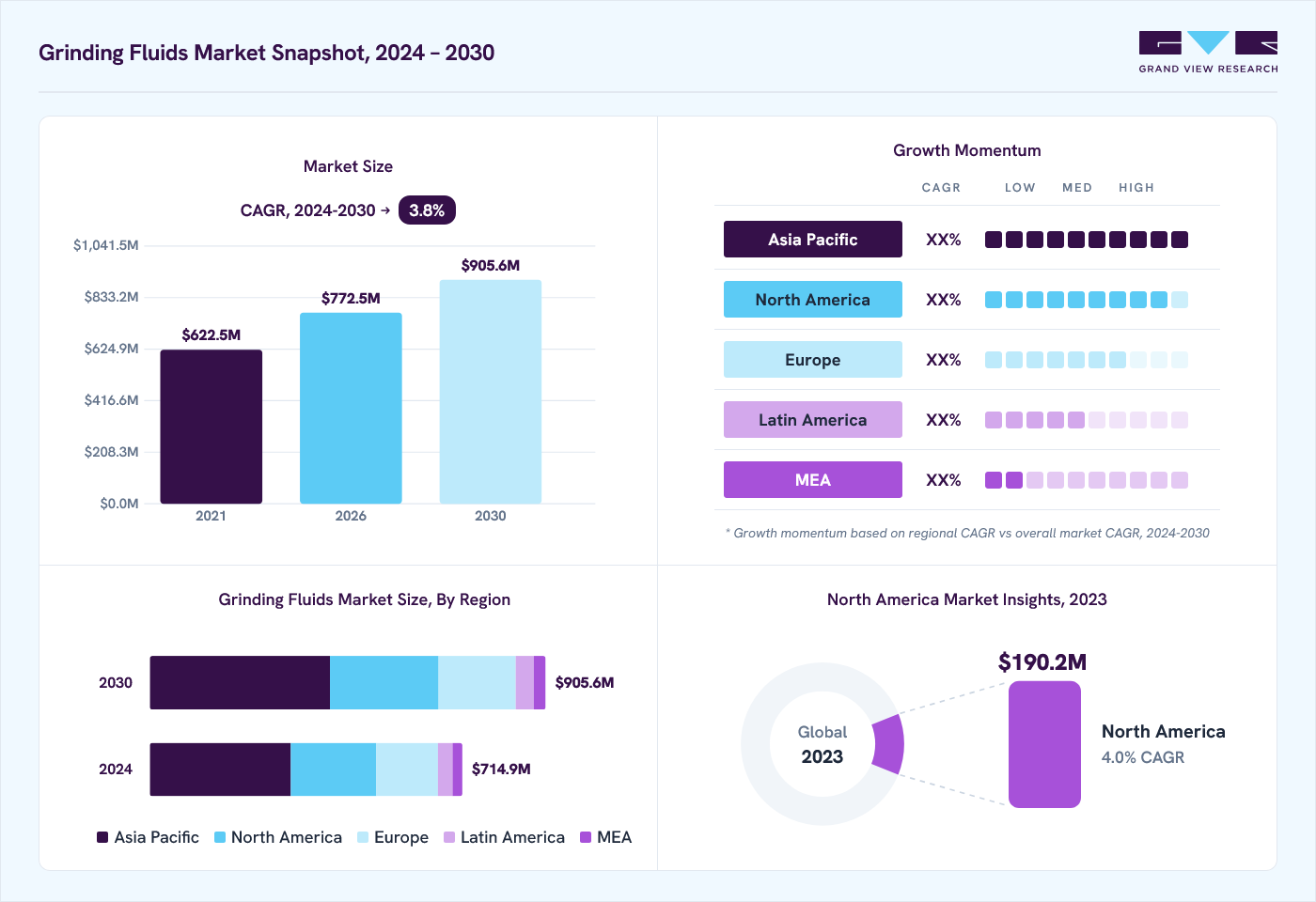 Source: Grand View Research, IR Documents, Primary Interviews, Paid DatabasesTo learn more about this report,
 Download Free Sample Report
Key Market Trends & Insights
- By type: Synthetic segment dominated the market with a share of 34.9% in 2025.
- By application: Disk drivers segment projected the largest share of 33.3% in 2025.
Regional Highlights
- Largest regional market: Asia Pacific (45.2% revenue share, 2025)
- By country: The China held the largest share of Asia Pacific in 2025.
Market Size & Forecast
- Market size in 2025: USD 743.2 Million
- Estimated market size in 2026: USD 772.5 Million
- Projected market size by 2033: USD 1,027.4 Million
- CAGR (2026-2033): 4.2%
Prism AI by Grand View Research Free to tryAsk a question about the grinding fluids marketTry asking✓Every figure cited from GVR research Prefer the report? Download free sample →This machinery includes heavy equipment such as excavators, bulldozers, crushers, and conveyors, which are essential for mining operations. According to the Federal Ministry of the Republic of Australia, the global mining industry produced 17.9 billion metric tons in 2019, with Asia-Pacific accounting for 58.9% of that total. According to a report released by the Government of India, mineral production in the country grew from USD 1,010.5 million in 2020 to USD 1,400.4 million in 2021. All these factors are anticipated to drive the demand for grinding fluids worldwide over the forecast period.
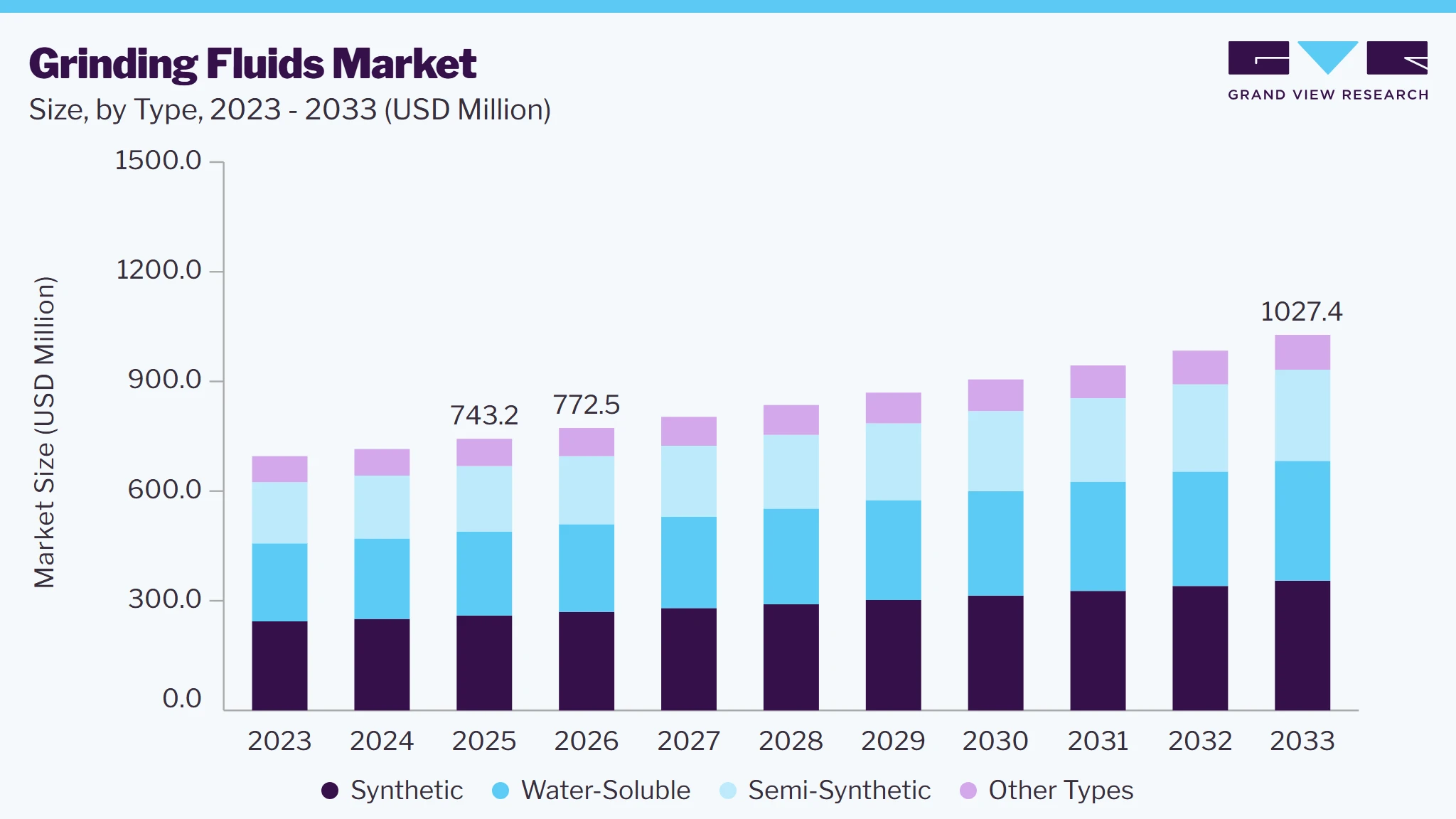 To learn more about this report, Download Free Sample Report
The U.S. is a major consumer of the product in North America with a revenue share of 79.9% in 2023. The growth of the product market during the forecast period can be attributed to the growth in industrial activities, particularly in sectors such as automotive, manufacturing, heavy machinery, and metalworking, in the U.S. The advancement in the automotive industry has resulted in more complex machining operations. Grinding fluids are essential in these operations to dissipate heat and ensure successful machining and high-quality products.
According to the International Organization of Motor Vehicle Manufacturers (OICA), automotive production in the U.S. grew 10%, reaching 10.1 million units in 2022. Moreover, the U.S. accounts for over two-thirds of the total steel demand in North America. The demand for iron and steel products in the U.S. comes from automotive, construction, transportation, and electronic sectors. The modest growth in the construction and automotive sectors is expected to steadily drive the demand for synthetic grinding fluids over the forecast period.
Market Dynamics
The grinding fluids market is growing due to the increasing demand for precision machining across automotive, aerospace, electronics, and metal fabrication industries. Manufacturers are adopting advanced grinding fluids to improve surface finish, extend tool life, reduce friction, and enhance machining efficiency, supporting higher productivity and lower operating costs. Growing production of high-performance components and tighter dimensional tolerances are further driving the adoption of synthetic and semi-synthetic formulations. At the same time, stringent environmental regulations and workplace safety standards are encouraging the development of low-toxicity, biodegradable, and water-soluble grinding fluids with improved sustainability profiles. Technological advancements in metalworking processes and the expansion of automated manufacturing facilities are creating opportunities for specialized fluid formulations tailored to demanding applications such as silicon wafer processing and precision metal substrates. However, fluctuations in base oil and additive prices, along with increasing compliance costs associated with chemical regulations, continue to influence production economics.
The growing emphasis on high-precision manufacturing is a major driver of the grinding fluids market. Industries such as automotive, aerospace, electronics, and industrial machinery increasingly require components with superior dimensional accuracy, tighter tolerances, and enhanced surface quality. Grinding fluids play a critical role in achieving these requirements by minimizing friction, controlling heat generation, improving lubrication, and efficiently removing metal particles from the grinding zone. Their ability to enhance machining stability while extending grinding wheel life makes them an essential element in advanced manufacturing operations. As manufacturers strive to improve production efficiency and product reliability, the demand for high-performance grinding fluids continues to increase.
The expansion of precision engineering activities and the adoption of automated machine technologies further reinforce this trend. Modern computer numerical control (CNC) grinding systems operate at higher speeds and require specialized fluids that maintain consistent cooling and lubrication under demanding conditions. In addition, increasing production of electric vehicle components, aerospace parts, medical devices, and semiconductor materials has intensified the need for grinding fluids that support high-quality finishes and reduce machining defects. These factors collectively strengthen market demand by positioning grinding fluids as an indispensable component of precision manufacturing processes.
Fluctuating prices of base oils, specialty additives, emulsifiers, corrosion inhibitors, and other chemical ingredients remain a significant restraint for the grinding fluids market. Variations in crude oil prices, disruptions in global chemical supply chains, and geopolitical uncertainties frequently increase manufacturing costs and create pricing instability for producers. At the same time, tightening environmental and chemical safety regulations require continuous investment in product reformulation, testing, certification, and compliance documentation to meet regional standards. These additional costs place considerable pressure on manufacturers, particularly small and medium-sized companies with limited financial resources. Higher production expenses can reduce profit margins, increase product prices for end users, and slow the adoption of advanced grinding fluid formulations in cost-sensitive industries, thereby limiting overall market expansion despite favorable long-term demand.
The transition toward environmentally responsible manufacturing presents a significant growth opportunity for the grinding fluids market. Industrial users are increasingly seeking formulations that reduce environmental impact while maintaining superior machining performance. This has encouraged manufacturers to invest in biodegradable, low-VOC, chlorine-free, and water-based grinding fluids that comply with evolving environmental regulations and occupational health standards. Such products enable manufacturers to improve sustainability performance without compromising operational efficiency, creating opportunities for product differentiation and long-term customer relationships. Continuous advancements in fluid chemistry are also enabling the development of multifunctional grinding fluids with improved cooling efficiency, longer service life, enhanced microbial resistance, and lower maintenance requirements. These innovations reduce fluid replacement frequency and total operating costs, making them attractive to end users focused on productivity and lifecycle cost optimization.
Analyst Perspective
The grinding fluids market is experiencing growth, due to the increasing demand for precision machining across the automotive, aerospace, electronics, and semiconductor industries. The shift toward high-speed CNC machining and advanced manufacturing processes is driving the adoption of high-performance synthetic and semi-synthetic grinding fluids. Sustainability trends are encouraging manufacturers to develop biodegradable, low-emission formulations that comply with evolving environmental regulations. Technological advancements in fluid chemistry and customized application-specific solutions are strengthening product differentiation and competitive positioning. Companies that combine innovation, technical service capabilities, and global distribution networks are expected to maintain a competitive advantage as industrial automation and precision manufacturing continue to expand.
Type Insights
By type, the synthetic segment dominated the type segment with a market share of 34.9% in 2025. This is attributed to its exceptional cooling and lubricating capabilities, which surpass those of other grinding fluids. Advancements in additive technology have further solidified their position as the preferred choice in the product market. These fluids are further enhanced with additional additives to inhibit corrosion. This extends their lifespan, reduces maintenance requirements, and minimizes downtime for fluid replacement.
They are used in diluted form, at concentrations ranging from 3% to 20%. They are known for their stability and compatibility with various materials. They can be used to grind metals, including ferrous and non-ferrous materials, without compromising performance or damaging the workpiece. Thus, the growing industrialization is anticipated to drive the demand for synthetic grinding fluids over the forecast period.
The semi-synthetic segment is anticipated to witness growth over the forecast period. It is a blend of synthetic and mineral oil-based components, resulting in a fluid that combines the best properties of both types. The synthetic portion comprises carefully selected additives, emulsifiers, and surfactants, which enhance lubricity, cooling, and corrosion resistance. Meanwhile, the mineral oil base provides excellent chip-carrying and flushing capabilities. One of the key advantages of the product is improved lubrication. The synthetic components in these fluids offer superior lubrication properties, reducing friction between the grinding wheel and the workpiece. This reduction in friction leads to reduced tool wear, improved surface finish, and enhanced dimensional accuracy in grinding operations.
Application Insights
Based on application, disk drivers segment projected the largest share of 33.3% in 2025. This is attributed to the fact that grinding fluids play a crucial role in manufacturing disk drivers, particularly in producing drive platters. Disk drivers, such as hard disk drives (HDDs), rely on precise and efficient grinding processes to shape and refine the drive platters, which house the magnetic media for data storage. These fluids have significant cooling properties crucial for dissipating the heat generated during the high-speed grinding of disk drivers. They help maintain stable temperatures of the machinery, thereby safeguarding the workpieces and the grinding wheels from potential damage caused by their operation.
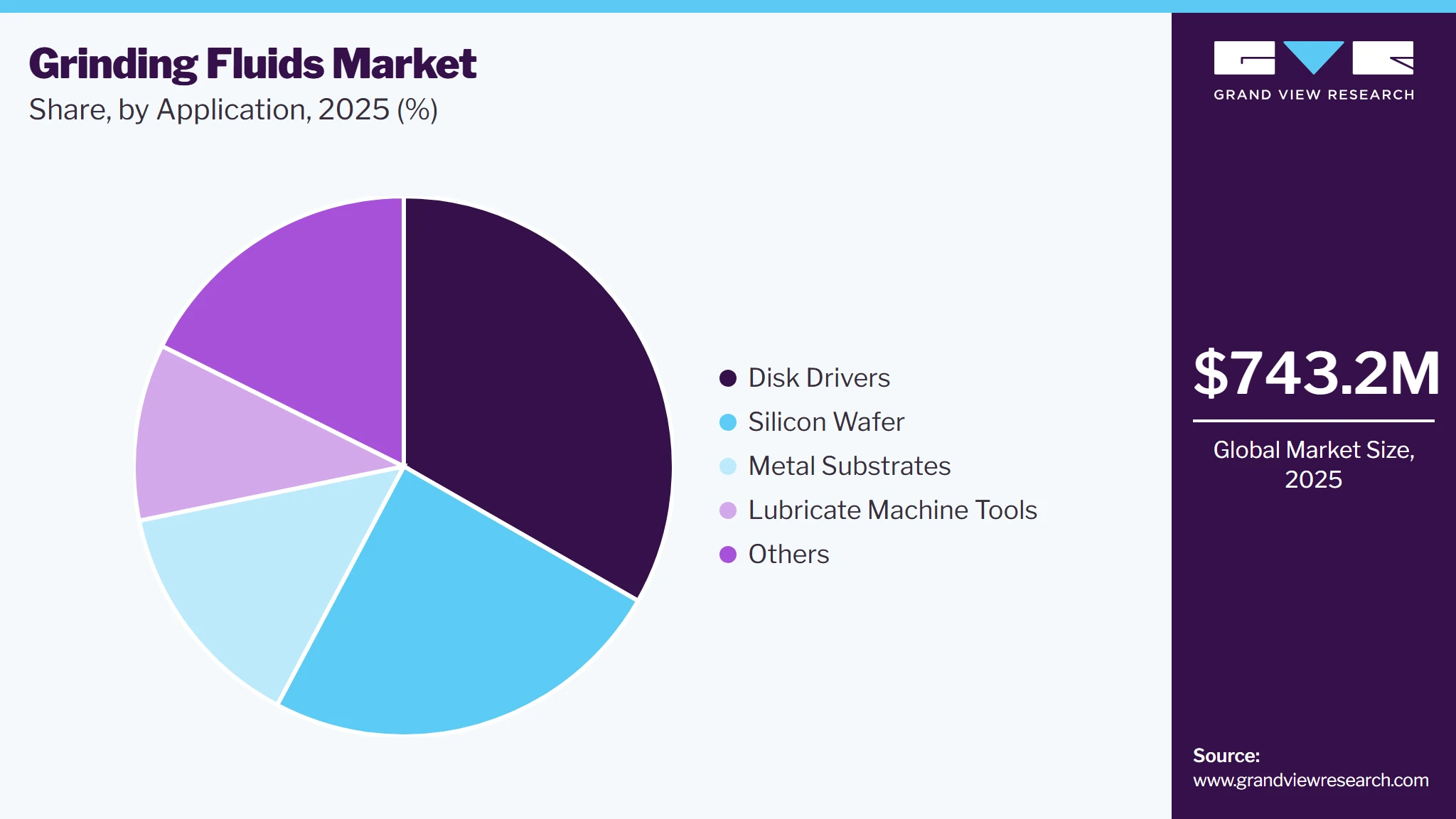 To learn more about this report, Download Free Sample Report
Another significant benefit of the product is its ability to facilitate chip removal. As the grinding process generates chips and debris, these fluids effectively flush them away, thereby preventing interference of chips and debris with the grinding process and protecting the disk drive components from any potential damage. By ensuring efficient chip removal, the grinding process becomes highly effective, improving the overall manufacturing process of disk drives.
Metal substrates are another application anticipated to witness growth over the forecast period. Metals, especially those with high thermal conductivity, can quickly absorb and retain heat during grinding. Without proper cooling, this heat buildup can result in thermal deformation, surface cracks, or even metallurgical changes in metal substrates. This leads to the need for grinding fluids, which help dissipate heat and maintain stable temperatures during the process. The risk of thermal damage to metal substrates is significantly reduced by controlling temperature, ensuring dimensional accuracy, and preserving the integrity of the materials used in their fabrication.
Regional Insights
Asia Pacific accounted for 45.2% of the grinding fluids market revenue in 2025, making it the largest regional market. Furthermore, India is the world’s second-largest producer of crude steel, with an output of 125.32 MT in 2023, according to the India Brand Equity Foundation (IBEF). The easy availability of resources such as cheap labor and the presence of iron ore reserves have made India one of the leading steel producers. Thus, increasing steel production owing to its increasing demand from different end-use industries like automobile, defense, electronics, construction equipment, mining machinery, and metallurgical machinery is expected to drive the demand for products in the region.
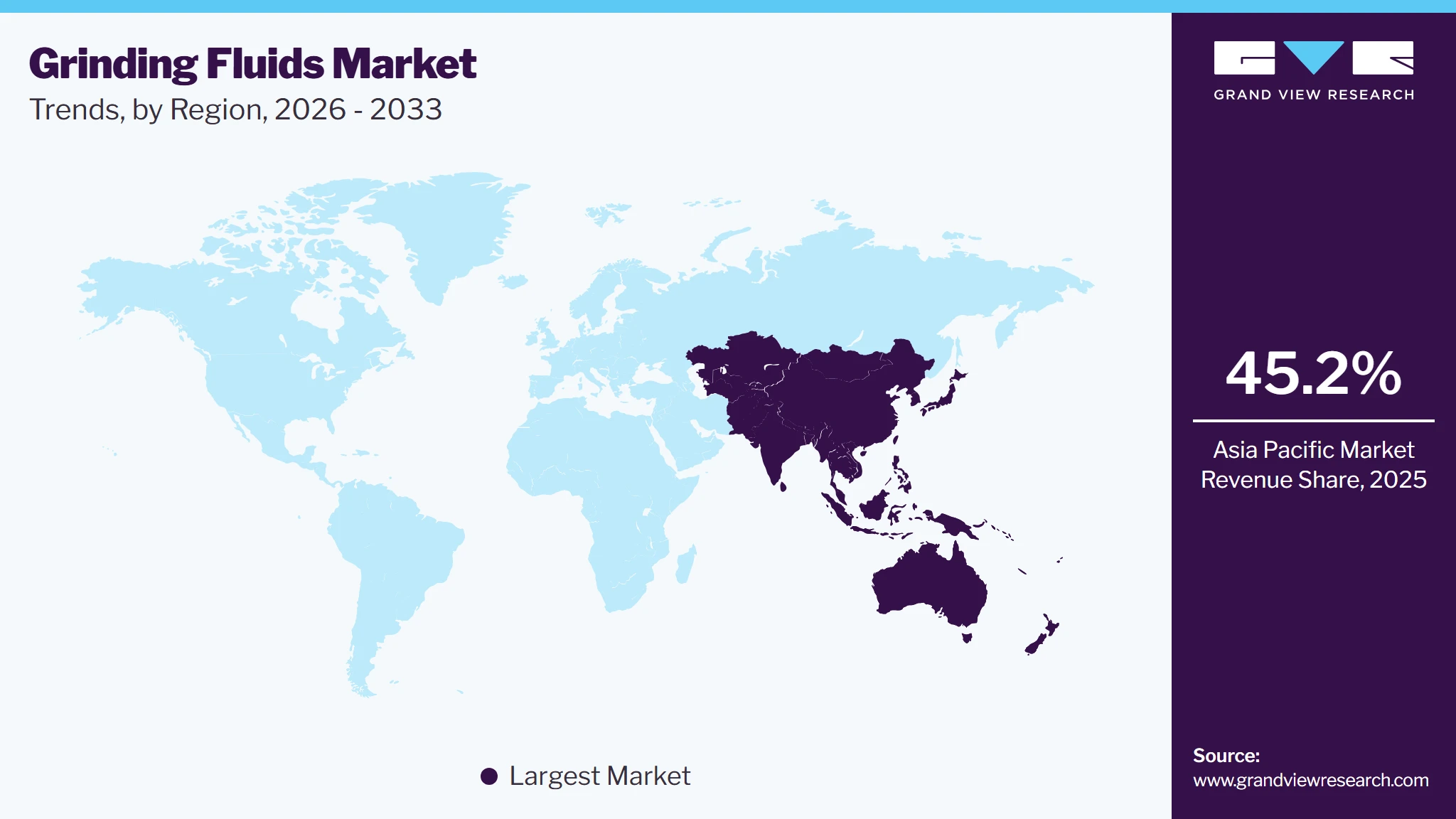 To learn more about this report, Download Free Sample Report
Furthermore, India is the world’s second-largest producer of crude steel, with an output of 125.32 MT in 2023, according to the India Brand Equity Foundation (IBEF). The easy availability of resources like manpower with cheap labor and the presence of iron ore reserves have made India one of the leading steel producers. Thus, increasing steel production owing to its increasing demand from different end-use industries like automobile, defense, electronics, construction equipment, mining machinery, and metallurgical machinery is expected to drive the demand for products in the region.
Europe is another region anticipated to witness growth over the forecast period. The strong manufacturing base in Germany and Russia's automobile industry and the increasing demand for automotive components are expected to boost the demand for the product in Europe in the coming years. According to the European Automobile Manufacturers' Association (ACEA), car production in Europe grew by 7.1% in 2022 compared to the previous year. Thus, the advancing end-use industries in the region are anticipated to drive product demand over the forecast period.
China Grinding Fluids Market Trends
China held the highest market revenue share in the Asia-Pacific region in 2025. Globally, the production of metals such as titanium and aluminum was dominated by China as of 2022, according to the International Aluminum Association. Aluminum production in the country in 2023 was around 3,500 thousand metric tons. Therefore, the increase in aluminum production due to the production capacity additions by several manufacturers in China is expected to augment the demand for grinding fluids over the forecast period.
Key Companies & Market Share Insights
The product market is highly competitive, with companies continuously expanding their regional presence through strategies such as expansion, new product launches, and partnerships. For instance, in May 2023, Amsoil Inc., a synthetic lubricant manufacturer, acquired Benz Oil Inc. This acquisition is expected to strengthen Amsoil Inc.'s expertise in metalworking fluids.
Key Grinding Fluids Companies
The following key companies have been profiled for this study on the grinding fluids market.
-
Benz Oil, Inc.
-
Carborundum Universal Limited
-
CASTROL LIMITED
-
CGF, Inc.
-
EnviroServe Chemicals, Inc.
-
ETNA Products, Inc.
-
ExxonMobil Holdings Corporation
-
FUCHS
-
Lincoln Chemical Corporation
-
oelheld GmbH
-
Sun Chem Pvt. Ltd.
-
TotalEnergies SE
Recent Developments
-
In July 2026, FUCHS announced that ECOCOOL GLOBAL 1000 received published approval under Boeing BAC 5008 Sections 5 and 6. The water-miscible metalworking fluid is designed for demanding aerospace machining applications involving materials such as titanium, nickel-based alloys, and aluminum.
-
In September 2025, Castrol launched SmartCoolant, an automated coolant-management solution that monitors and regulates parameters such as concentration, pH, temperature, and conductivity in metalworking-fluid systems. The technology is designed to improve fluid management, process consistency, and operating efficiency in manufacturing applications.
Competitive Benchmarking
Category
Operating Strategies
Competitive Edge
Weakness
Established Players (Exxon Mobil Corporation, FUCHS, TotalEnergies SE, Castrol Limited, oelheld GmbH, Carborundum Universal Limited)
- Invest in continuous research and development to introduce high-performance and environmentally compliant grinding fluid formulations.
- Expand global manufacturing facilities and distribution networks to strengthen supply chain reliability and market reach.
- Establish long-term partnerships with OEMs and major industrial manufacturers to secure recurring business.
- Provide technical services, fluid management programs, and application support to enhance customer retention and operational efficiency.
- Strong global brand recognition supported by decades of industry expertise.
- Comprehensive product portfolios catering to diverse grinding and metalworking applications.
- Large-scale production capabilities backed by substantial financial and technological resources.
- Extensive international sales, distribution, and after-sales service networks.
- High manufacturing and regulatory compliance costs reduce pricing flexibility.
- Complex organizational structures can slow product innovation and decision-making.
- Greater dependence on mature industrial markets limits high-growth opportunities.
- Global supply chains are more vulnerable to fluctuations in raw material prices and logistics disruptions.
Emerging & Regional Players ( Benz Oil, Inc., CGF, Inc., EnviroServe Chemicals, Inc., ETNA Products, Inc., Lincoln Chemical Corporation, Sun Chem Pvt. Ltd.)
- Focus on specialized grinding fluid formulations for niche machining applications.
- Expand regional distribution partnerships to increase market penetration.
- Offer customized products and responsive technical support to meet specific customer requirements.
- Invest in sustainable and application-specific formulations to strengthen product differentiation.
- High operational flexibility enables quicker response to evolving customer needs.
- Competitive pricing attracts small and medium-sized industrial customers.
- Strong capability to develop tailor-made solutions for specialized machining processes.
- Deep understanding of regional markets supports closer customer relationships.
- Limited financial resources restrict investment in research, expansion, and capacity development.
- Smaller geographic footprint reduces access to multinational customers.
- Narrow product portfolios limit participation across multiple industrial segments.
- Lower brand visibility and distribution capabilities make international expansion more challenging.
Grinding Fluids Market Report Scope
Report Attribute
Details
Market size value in 2025
USD 743.2 million
Market size value in 2026
USD 772.5 million
Revenue forecast in 2033
USD 1,027.4 million
Growth rate
CAGR of 4.2% from 2026 to 2033
Base year for estimation
2025
Historical data
2021 - 2024
Forecast period
2026 - 2033
Quantitative units
Revenue in USD million/billion, and CAGR from 2026 to 2033
Report coverage
Revenue forecast, company ranking, competitive landscape, growth factors, and trends
Segments covered
Type, application, region
Regional scope
North America; Europe; Asia Pacific; Latin America; MEA
Country scope
U.S.; Canada, Mexico; Germany; UK; France; Italy; Spain; Netherlands; China; India; Japan; South Korea; Brazil; Argentina; Saudi Arabia; South Africa
Key companies profiled
Benz Oil, Inc.; Carborundum Universal Limited; CASTROL LIMITED; CGF, Inc.; EnviroServe Chemicals, Inc.; ETNA Products, Inc.; ExxonMobil Holdings Corporation; FUCHS; Lincoln Chemical Corporation; oelheld GmbH; Sun Chem Pvt. Ltd.; TotalEnergies SE
Customization scope
Free report customization (equivalent to up to 8 analysts' working days) with purchase. Addition or alteration to country, regional & segment scope.
Pricing and purchase options
Avail customized purchase options to meet your exact research needs. Explore purchase options
Global Grinding Fluids Market Report Segmentation
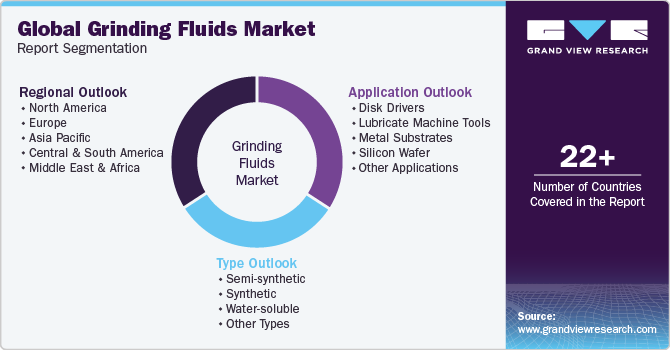
This report forecasts revenue and volume growth at the global, regional, and country levels and provides an analysis of the latest industry trends across sub-segments from 2021 to 2033. For this study, Grand View Research has segmented the global grinding fluids market report based on type, application, and region:
 To learn more about this report, Download Free Sample Report
-
Type Outlook (Volume, Kilotons; Revenue, USD Million, 2021 - 2033)
-
Semi-synthetic
-
Synthetic
-
Water-soluble
-
Other Types
-
-
Application Outlook (Volume, Kilotons; Revenue, USD Million, 2021 - 2033)
-
Disk Drivers
-
Lubricate Machine Tools
-
Metal Substrates
-
Silicon Wafer
-
Other Applications
-
-
Regional Outlook (Volume, Kilotons; Revenue, USD Million, 2021 - 2033)
-
North America
-
U.S.
-
Canada
-
Mexico
-
-
Europe
-
Germany
-
UK
-
France
-
Italy
-
Spain
-
Netherlands
-
-
Asia Pacific
-
China
-
India
-
Japan
-
South Korea
-
-
Central & South America
-
Brazil
-
Argentina
-
-
Middle East & Africa
-
Saudi Arabia
-
South Africa
-
-
Research Methodology
The grinding fluids market figures in this report are based on a proven research process that combines executive interviews with secondary research from proprietary databases, company filings, and recognized regulatory and institutional sources. Market size is built through value-chain sizing - reconciling supply-side and demand-side estimates - and triangulated with bottom-up and top-down approaches. Every estimate passes multiple levels of expert validation before publication, with each grinding fluids segment quantified using the revenue-capture definitions in the table below.
Segment Definition
Segment – Type
Revenue capture definition
Semi-Synthetic
Includes revenue generated from semi-synthetic grinding fluids formulated with mineral oils and synthetic additives, widely used in precision grinding operations requiring balanced lubrication, cooling efficiency, and extended tool life.
Synthetic
Represents income derived from fully synthetic grinding fluids designed for high-speed and high-precision machining applications, offering superior cooling performance, cleanliness, and thermal stability across advanced manufacturing environments.
Water-Soluble
Covers revenue from water-soluble grinding fluids utilized in metalworking and grinding processes where effective heat dissipation, corrosion protection, and improved machining efficiency are essential for consistent production quality.
Other Types
Accounts for sales generated by specialty grinding fluid formulations, including straight oils, bio-based fluids, and customized blends developed to address unique material processing requirements and specialized industrial applications.
Segment – Application
Revenue capture definition
Disk Drivers
Captures revenue from grinding fluids supplied for manufacturing and finishing disk drive components, supporting precision grinding, superior surface integrity, and dimensional accuracy during production.
Lubricate Machine Tools
Represents sales generated from grinding fluids used for lubricating grinding machines and related equipment, minimizing friction, reducing wear, and improving operational efficiency during continuous machine processes.
Metal Substrates
Includes revenue from grinding fluids applied in the machining and finishing of metal substrates across automotive, aerospace, industrial equipment, and fabricated metal component manufacturing.
Silicon Wafer
Covers income from high-purity grinding fluids utilized in silicon wafer processing, enabling controlled cooling, contamination reduction, and precision surface finishing for semiconductor manufacturing.
Other Applications
Encompasses revenue generated from grinding fluids used in diverse applications, including precision tooling, ceramics, glass processing, medical components, optical materials, and other specialized industrial manufacturing operations.
Estimation Model
Layer No.
Layer Name
Key Question
Description
01
Grinding Fluids Production Layer
What forms is the supply base?
Identify the global production capacity of grinding fluids by evaluating blending facilities, formulation technologies, additive manufacturing capabilities, base oil availability, specialty chemical processing, packaging infrastructure, and production capacities for synthetic, semi-synthetic, water-soluble, and specialty grinding fluid formulations across major manufacturing regions.
02
Application Adoption Layer
Where are grinding fluids utilized?
Estimate the distribution of grinding fluid demand across precision machining, metalworking, semiconductor manufacturing, machine tool operations, disk drive production, and other industrial applications by analyzing manufacturing output, machining intensity, technological advancements, automation levels, and end-use industry expansion across key regional markets.
03
Consumption Intensity Layer
How much grinding fluid is consumed?
Assess grinding fluid consumption across major end-use industries by evaluating machining volumes, grinding operations, metal component production, semiconductor wafer processing, equipment utilization rates, maintenance cycles, and application-specific fluid requirements to estimate annual demand across leading geographic markets.
04
Revenue Layer
How is market revenue generated?
Market revenue is generated through the sale of grinding fluids, including synthetic, semi-synthetic, water-soluble, and specialty formulations, supplied to manufacturers, precision engineering companies, semiconductor fabricators, machine tool operators, metal processors, and industrial distributors through direct contracts, OEM partnerships, and authorized distribution networks worldwide.
Delivered Customizations
This report has been delivered with the following In-depth customizations
Client Request
Customization Delivered
Value Adds
Regional segmentation
The study delivers detailed country-level analysis of key grinding-fluid production and consumption markets. It evaluates manufacturing capacity, industrial machining activity, end-use demand, raw material availability, trade dynamics, regulatory framework, and regional growth prospects.
Enables effective market expansion by identifying high-potential countries, manufacturing clusters, demand trends, supply chain strengths, and investment opportunities across major regions.
Competitive Benchmarking
Comparative assessment of leading grinding fluid manufacturers based on product portfolio, formulation expertise, production capabilities, distribution network, geographic footprint, technical service offerings, sustainability initiatives, R&D activities, and recent strategic developments.
Supports competitive decision-making by identifying product differentiation, innovation capabilities, market presence, operational strengths, and strategic positioning of major industry participants.
Opportunity Assessment
Comprehensive evaluation of emerging growth opportunities driven by precision engineering, CNC machining adoption, semiconductor manufacturing, electric vehicle production, aerospace component manufacturing, and demand for sustainable grinding fluid technologies.
Assists business planning by identifying high-growth application areas, evolving customer requirements, technology adoption trends, and attractive investment opportunities for long-term market expansion.
Frequently Asked Questions About This Report
By type, synthetic segment dominated the type segment with a market share of 34.9% in 2025, due to the increasing adoption of high-speed CNC machining and precision manufacturing processes is further strengthening demand for synthetic grinding fluids due to their superior cooling efficiency, thermal stability, and extended service life.
Based on application, disk drivers segment projected the largest share of 33.3% in 2025, supported by the growing production of data storage devices and the increasing need for precision grinding processes that ensure superior surface finish and dimensional accuracy.
Water-soluble is the fastest growing segment with a CAGR of 4.6% in the forecast period. The segment is gaining momentum due to its superior cooling efficiency, ease of maintenance, and increasing preference for environmentally compliant formulations in high-precision machining operations.
Silicon wafer is the fastest growing application segment with a CAGR of 4.6% in the forecast period. The increasing investments in semiconductor fabrication, consumer electronics manufacturing, and advanced microelectronics production are accelerating demand for high-performance grinding fluids used in precision silicon wafer processing.
The global grinding fluids market size was valued at USD 743.2 million in 2025 and is estimated at USD 772.5 million in 2026.
The global grinding fluids market is expected to grow at a CAGR of 4.2% from 2026 to 2033, reaching USD 1,027.4 million by 2033.
Asia Pacific accounted for 45.2% of the grinding fluids market revenue in 2025, making it the largest regional market. The region's dominance is supported by its extensive metalworking industry, expanding automotive and electronics manufacturing base, and rising investments in precision machining and industrial automation.
Some key players operating in the grinding fluids market include Benz Oil, Inc., Carborundum Universal Limited, CASTROL LIMITED, CGF, Inc., EnviroServe Chemicals, Inc., ETNA Products, Inc., ExxonMobil Holdings Corporation, FUCHS, Lincoln Chemical Corporation, oelheld GmbH, Sun Chem Pvt. Ltd., and TotalEnergies SE.
The grinding fluids market is primarily driven by the growing demand for precision machining in the automotive, aerospace, electronics, and industrial manufacturing sectors. Increasing adoption of CNC machining, the need for enhanced tool life and surface finish, and the development of high-performance, environmentally compliant fluid formulations are further supporting market growth.
About the Author(s)
Petrochemicals Research Team
Bulk Chemicals · PetrochemicalsThis report was authored by the petrochemicals research team at Grand View Research - comprising two research analysts, one senior research analyst, and one industry expert - with specialized expertise in the petrochemicals segment of the bulk chemicals industry. All findings are based on proprietary bulk chemicals databases, executive interviews, and regulatory analysis, subject to internal peer review prior to publication.
Last Updated:
Speak to Analyst

Customize this report to your needs - add regions, segments, or data points, with 20% free customization.
Or view our licence options:


ISO 9001:2015 & 27001:2022 Certified
We are GDPR and CCPA compliant! Your transaction & personal information is safe and secure. For more details, please read our privacy policy.


