
- Home
- »
- Beauty & Personal Care
- »
-
Hair Serum Market Size, Share & Trends Report, 2025-2033GVR Report cover

Hair Serum Market (2025 - 2033)
Size, Share & Trends Analysis Report By Product Type (Hair Treatment Serum, Hair Styling Serum), By Category (Natural/Organic, Synthetic), By Distribution Channel (Supermarkets & Hypermarkets), By Region, And Segment Forecasts
Market Size, 2024
$1.3BMarket Estimate, 2026
$1.5BMarket Forecast, 2033
$2.4BCAGR, 2025–2033
7.1%Hair Serum Market Summary
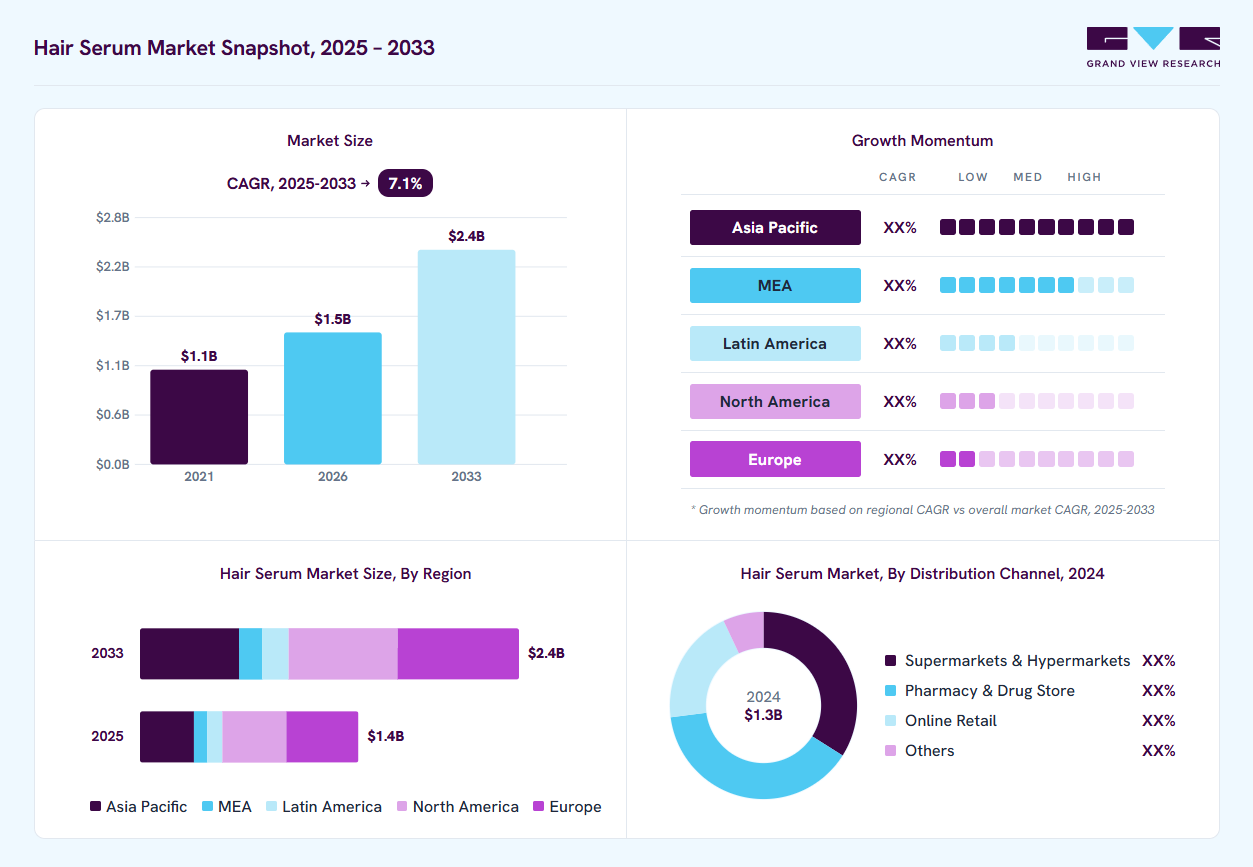
The global hair serum market size was valued at USD 1.3 billion in 2024 and is projected to grow from USD 1.5 billion in 2026 to USD 2.4 billion by 2033, at a CAGR of 7.1% from 2025 to 2033. Europe dominated the market, accounting for a revenue share of 33.1% in 2024. Growing concerns over hair fall, thinning, and scalp issues are driving demand for targeted hair serum solutions.
 Source: Grand View Research, IR Documents, Primary Interviews, Paid DatabasesTo learn more about this report,
 Download Free Sample Report
 Key Market Trends & Insights
- The hair serum industry in Asia Pacific is anticipated to register a CAGR of 7.9% from 2025 to 2033.
- The hair treatment serumsegment accounted for the largest market share of 64.6% in 2024.
- Synthetic hair serum accounted for a share of about 66.94% of the global hair serum market in 2024.
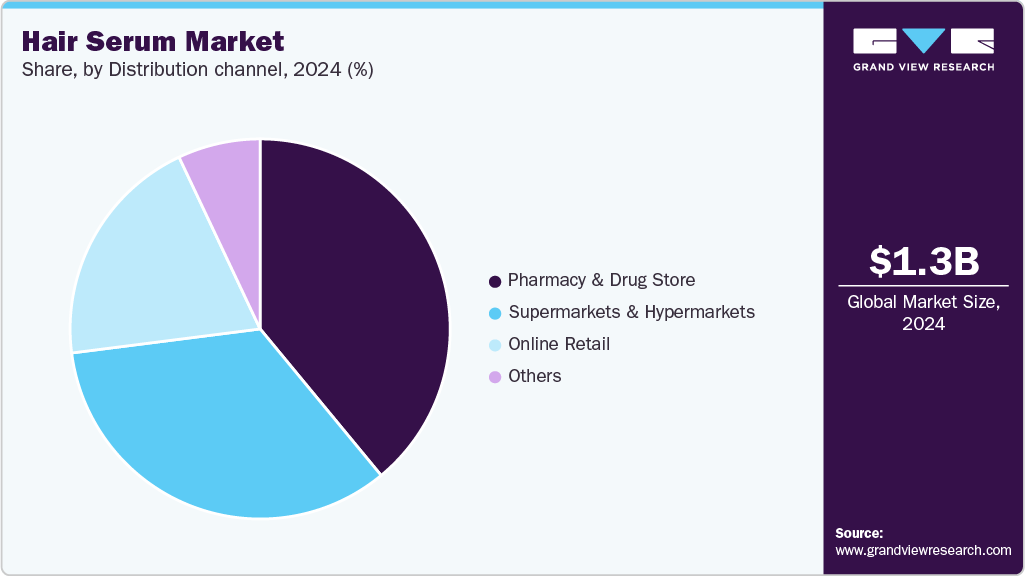
- The distribution through pharmacies and drugstores accounted for a share of about 39.0% in 2024.
Market Size & Forecast
- 2024 Market Size: USD 1.3 Billion
- 2033 Projected Market Size: USD 2.4 Billion
- CAGR (2025-2033): 7.1%
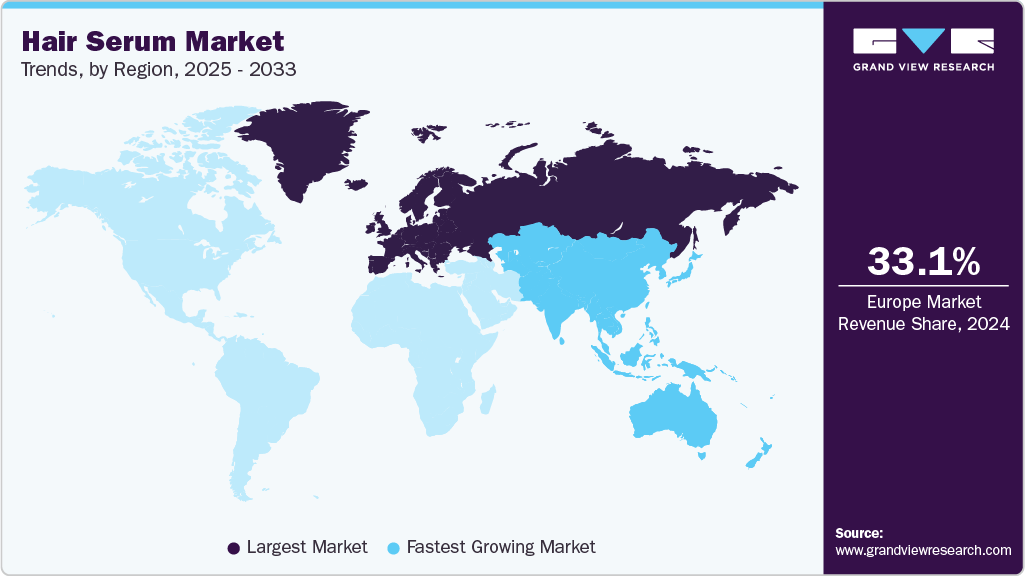
- Europe: Largest market in 2024
- Asia Pacific: Fastest growing market
Three ways to get this report
Buy it, customize it, or ask a question.Ask an Analyst
Analyst response in 1 business day
- AccessReport author, directly
- Reply timeWithin 1 working day
- No sales callDirect answer only
- FormatEmail reply
- CostFree, no cost
Get the Full Report
What the study covers
- FormatsPDF · Excel · Dashboard
- Timeline2025–2033 annual, 2024 base
- Coverage20+ countries, 5 regions
- Companies10+ key players profiled
Customize the Report
20% free customization
- IncludeCountries, segments, points
- TailorTo your product definition
- ExtendDeeper competitor detail
- OrA fully bespoke study
- Turnaround5–10 working days
Consumers increasingly seek clean, natural, and multi-benefit formulations, fueling the expansion of this category. Influencer marketing and social media buzz also play essential roles in accelerating product discovery and enhancing brand engagement in the hair care industry. Consumers have become more aware of their hair's health due to increasing urbanization and environmental stressors such as pollution, UV radiation, and chemical exposure from styling products. Hair serums are sought after for their ability to protect, repair, and nourish hair. Consumers are particularly focused on damage control, frizz reduction, and hair-smoothing factors that serums directly address. Scalp issues like dryness, dandruff, or excess oil can clog follicles and hinder growth, making scalp care an essential part of hair routines. For instance, Brooke Shields' Commence Root Serum, featuring ingredients like alfalfa extract and quinoa peptides, is designed to nourish the scalp, improve hair texture, and promote growth.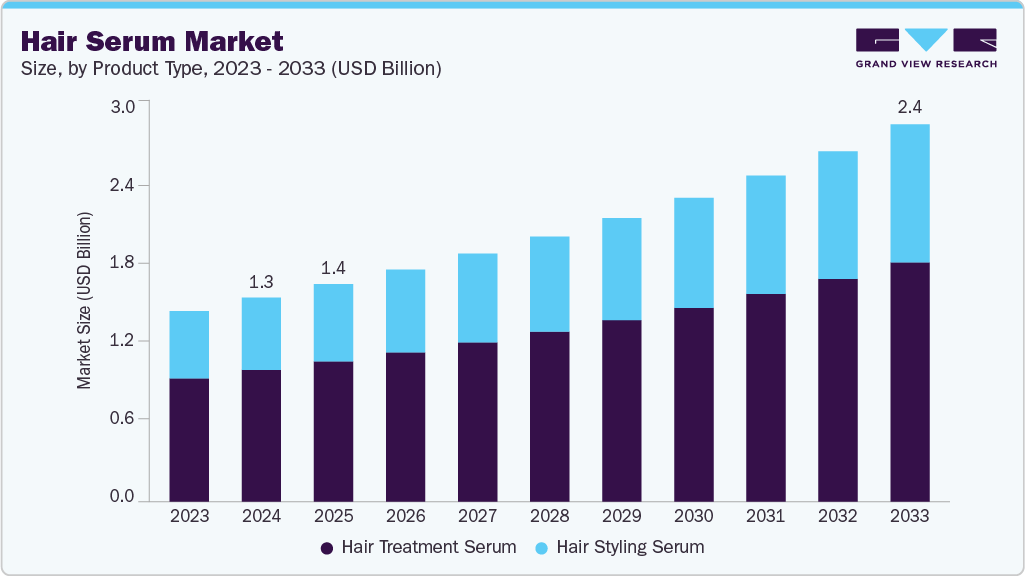 To learn more about this report, Download Free Sample Report
 Tech-driven hair care is quickly gaining traction as brands utilize AI, online quizzes, and mobile apps to provide personalized product recommendations tailored to individual hair types and concerns. Hair serums have become a crucial part of this customization trend, featuring solutions designed to address specific needs such as scalp health, frizz control, or volume enhancement. Startups like Function of Beauty and Prose are leading the way, harnessing consumer data from digital assessments to create and deliver custom hair serum solutions. This shift toward hyper-personalized beauty routines resonates strongly with Gen Z and millennial consumers, who prioritize products that closely align with their unique hair care goals.
There has been a noticeable shift in personal care habits, as men and women increasingly adopt a broader range of self-care products. Men, in particular, are now more engaged in taking care of their skin and hair, demonstrating greater openness to trying specialized products like hair serums. According to the survey conducted in 2022, 96% of men purchase grooming products for themselves, with 56% spending between $26 and $100 monthly on personal care items. The survey also noted that 87% of men buy products specifically marketed for men, while 42% choose unisex brands. This change is largely driven by the wider availability of such products and a growing awareness of self-care's importance in overall well-being and appearance.
Consumer Insights & Surveys
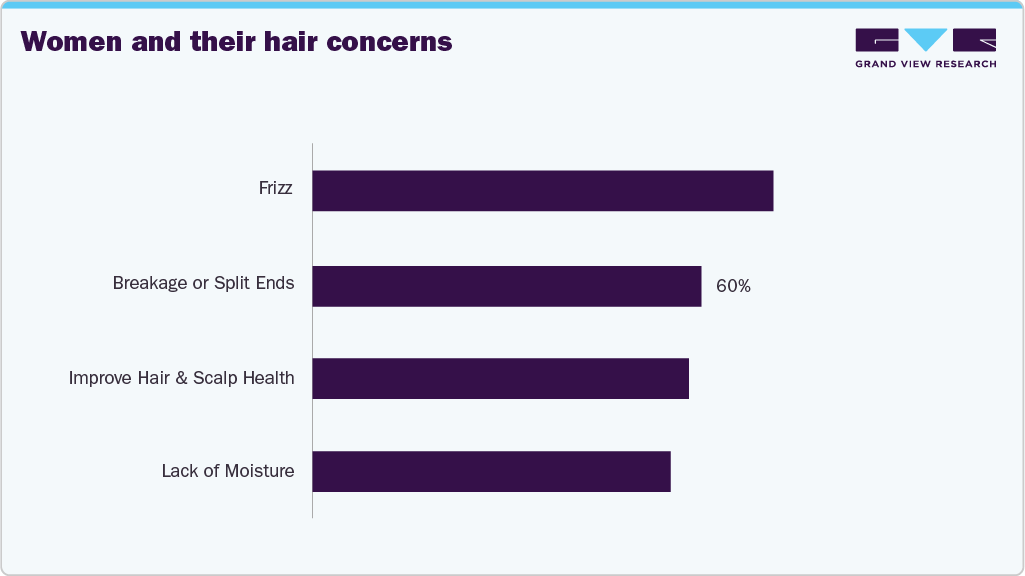
The hair care product market is expanding due to an increase in hair problems among consumers. Factors such as pollution, climate, diet, and extreme temperatures contribute to these issues. Concerns for many women include hair damage, frizz, lack of smoothness, thinning and loss, scalp health challenges, dryness and moisture deficiency, volume and flatness issues, split ends and breakage, greasy or oily hair, and curl definition are some of the concerns among women. For Black women, dryness is the most significant hair issue, and 60% say leave-in conditioner is their primary solution. Additionally, Black (46%) and Latina (47%) women are increasingly noting hair loss among their hair care concerns. Sales of shampoo and conditioner are rising as Black women become more informed about caring for and styling their natural hair at home, choosing hair care products over salon services. Moving forward, businesses might consider enhancing existing product lines to create multipurpose items that will improve usability and allow consumers to customize their haircare routines.
 To learn more about this report, Download Free Sample Report
 While men's grooming needs differ from women's, this behavior reflects a broader trend of men seeking places, products, and services that cater to their growing interest in self-care. Men spend about 37 minutes a day on their hair, compared to approximately 52 minutes for women. In the U.S., male pattern baldness is the most prevalent type of hair loss. By the age of thirty-five, two-thirds of American men will experience some degree of noticeable hair loss, and by the age of fifty, around 85% of men will have significantly thinning hair. About 25% of men with male pattern baldness begin losing hair before the age of twenty-one.
Men are increasingly seeking solutions for thinning hair and receding hairlines earlier in life, often prompted by social media influencers, online ads, or telehealth platforms. Additionally, a shift toward preventative care has led younger men in their 20s and 30s to proactively invest in hair care products designed to support scalp health and reduce shedding before significant hair loss occurs. This trend reflects a broader cultural shift where grooming and self-care are now embraced as important aspects of men’s wellness.
Product Type Insights
The hair treatment serum segment accounted for a share of about 64.64% of the global hair serum market in 2024. Endorsements from dermatologists and clinical studies reinforce the credibility of hair treatment serums. Experts recommend products like the Ordinary Multi-Peptide Serum for Hair Density for their effectiveness in promoting hair growth and enhancing scalp health. Such professional support assures consumers of the products' safety and efficacy, encouraging their adoption.
Treatment serums are often products formulated with clinically backed active ingredients that address the root causes of hair concerns rather than merely providing surface-level improvements. For instance, minoxidil, an FDA-approved compound, is widely used to promote hair regrowth, particularly in cases of pattern baldness. Caffeine is another key ingredient that stimulates hair follicles and enhances blood circulation to the scalp, thereby supporting hair density. Additionally, ingredients like peptides and biotin help strengthen hair strands and repair the scalp barrier.
Demand for hair styling serum is projected to grow at a CAGR of 7.5% from 2025 to 2033. Consumers are increasingly aware of the damage caused by heat-styling tools like dryers and straighteners, which can result in dryness, frizz, and breakage. In response, many styling serums now feature heat-protectant properties. For instance, Livon Damage Protect Serum shields hair from heat up to 250°C and incorporates heat-activated proteins and conditioners to reduce breakage and guard against static and environmental damage.
Modern consumers seek hair styling products that deliver results without weighing down their hair. In response, brands have developed lightweight serums that provide shine, frizz control, and heat protection without leaving a greasy residue. For instance, The Color Wow Pop & Lock Frizz Control and Glossing Serum exemplifies this innovation. This dual-action serum combines the benefits of an oil and a serum, enhancing hair's color vibrancy and providing a glossy finish while maintaining a lightweight feel suitable for daily use.
Category Insights
Synthetic hair serum accounted for a share of about 66.94% of the global hair serum industry in 2024. Synthetic serums typically include silicones such as dimethicone and cyclopentasiloxane, which offer immediate smoothness, shine, frizz control, and heat protection. These compounds form a protective layer on the hair shaft, providing a quick and visible solution.
Synthetic hair serums offer better shelf life and stability because their ingredients, such as silicones, resist breakdown and spoilage over time. This makes storage easier for manufacturers and appeals to consumers, allowing them to use the product longer without losing its effectiveness. For example, John Frieda Frizz Ease Serum maintains its texture and anti-frizz benefits even after months, thanks to its stable synthetic product formulation.
The organic hair serum is projected to grow at a CAGR of 7.6% from 2025 to 2033. Consumers are increasingly choosing organic hair serums due to their numerous advantages over conventional products. These organic alternatives are formulated with natural ingredients like aloe vera, coconut oil, and shea butter, which are rich in vitamins, minerals, and antioxidants that nourish and hydrate both the hair and scalp. For instance, Dr. Organic Moroccan Argan Oil Hair Treatment Serum. It’s made with natural ingredients like argan oil, aloe vera, and green tea extract, nourishing and hydrating hair without harsh chemicals. The serum is known for smoothing frizz, adding shine, and promoting healthy scalp care—all while being free from parabens, sulfates, and synthetic fragrances.
Distribution Channel Insights
The distribution through pharmacies and drugstores accounted for a share of about 39.01% of the global hair serum market in 2024. Consumers prefer purchasing hair serums from pharmacies and drugstores because these locations provide trusted, regulated products supported by professional advice from pharmacists who assist in selecting the right serum for individual needs. Pharmacies are conveniently located and often offer competitive pricing, making quality hair care accessible and affordable. The strict regulatory standards also ensure that the products are safe and genuine, giving consumers confidence in their purchases. According to a Harris Poll, 91% of consumers in the U.S. shop in person for hair styling products. The survey highlighted that consumers value the opportunity to see and sample products before making a purchase, which is more readily available in physical stores such as pharmacies and drugstores.
 To learn more about this report, Download Free Sample Report
 The online sales channels are anticipated to register a CAGR of 7.9% from 2025 to 2033. The convenience of shopping anytime from anywhere, access to a wider variety of brands and product options, and the availability of detailed reviews and ratings greatly assist consumers in their product choices. Online products often offer better prices, frequent discounts, and easy home delivery, eliminating the need to visit physical stores. Additionally, the rise of personalized recommendations and subscription services enhances the shopping experience, making it easier for consumers to find products tailored to their hair needs.
Regional Insights
The hair serum industry in Europe held a global revenue share of 33.18% in 2024. Increased disposable incomes in European countries allow consumers to spend more on premium hair care products. According to NielsenIQ, Europe's average per capita purchasing power rose to €18,768 in 2024, up from €17,688 in 2023. This increase indicates a 3.9% nominal rise, revealing significant global disparities. For instance, residents of Liechtenstein, Switzerland, and Luxembourg enjoy per capita purchasing power well above the European average.
 To learn more about this report, Download Free Sample Report
 Asia Pacific Hair Serum Market Trends
The hair serum industry in Asia Pacific is anticipated to register a CAGR of 7.9% from 2025 to 2033, driven by rising urbanization, increasing disposable incomes, and a greater awareness of personal grooming and hair care. Rapid lifestyle changes and exposure to pollution have resulted in more hair concerns like dryness, damage, and hair fall, which in turn fuels the demand for protective and nourishing hair serums. Additionally, the influence of social media, celebrity endorsements, and the growing availability of diverse hair care products have encouraged consumers to incorporate serums into their daily hair care routines. Furthermore, a young, beauty-conscious population in these markets is eager to explore innovative and premium hair care solutions, further boosting serum consumption.
U.S. Hair Serum Market Trends
Consumers in the U.S. are increasingly favoring hair serums due to a growing awareness of hair health, a desire for easy-to-use styling solutions, and the popularity of multifunctional products that combine benefits like frizz control, shine, and heat protection. The rise of busy lifestyles has pushed consumers toward quick, effective products that enhance hair appearance without heavy styling. Additionally, the trend toward natural and clean beauty has boosted the demand for serums with nourishing ingredients that repair damage and improve scalp health.
A popular example is the Olaplex No.7 Bonding Oil, which is widely favored in the U.S. market. It not only provides heat protection and frizz control but also strengthens and repairs damaged hair by rebuilding broken bonds. Its lightweight, non-greasy formula appeals to consumers looking for both styling and treatment benefits in a single product. Olaplex’s strong presence on social media and endorsements by hairstylists have made it a go-to serum for many American consumers.
President Trump's recent escalation of tariffs has substantially affected the U.S. hair serum industry, resulting in higher costs, supply chain disruptions, and strategic changes among both manufacturers and retailers. The imposition of tariffs, ranging from 54% on Chinese imports to 20% on goods from the European Union, has caused significant price increases in the beauty sector. Hair care products, many of which depend on imported ingredients and packaging, are facing price hikes of around 20%.
Key Hair Serum Company Insights
The dominance of major hair serum companies such as Procter & Gamble (P&G), Unilever, L'Oréal, and Kao Corporation continues to define the upper tier of the competitive spectrum.
-
L'Oréal S.A. is a French multinational company and the world’s largest cosmetics and beauty brand. Founded in 1909 and headquartered in Clichy, France, L'Oréal specializes in a wide range of beauty and personal care products, including skincare, haircare, makeup, and fragrances. The company operates in over 150 countries and owns numerous globally recognized brands such as L'Oréal Paris, Garnier, Maybelline, Lancôme, and Kérastase.
-
Kao Corporation is a leading Japanese multinational company headquartered in Tokyo, Japan. Founded in 1887, Kao specializes in consumer goods, with a strong focus on beauty care, personal care, and household products. Its product portfolio includes skin and hair care brands like Asience, Essential, Biore, and John Frieda, as well as household items like detergents and sanitary products.
Key Hair Serum Companies:
The following are the leading companies in the hair serum market. These companies collectively hold the largest market share and dictate industry trends.
- L’Oréal S.A.
- The Procter & Gamble Company (P&G)
- Unilever PLC
- Kao Corporation
- Moroccanoil Israel Ltd.
- Vogue International LLC
- Estée Lauder Companies Inc.
- John Paul Mitchell Systems
- Briogeo
- Olaplex Holdings, Inc.
Recent Developments
-
In February 2025, L’Oréal Paris launched the Elvive Growth Booster Scalp Serum, a $38 product targeting hair thinning concerns. The serum is formulated with an aminexil-based Growth & Strength Complex, niacinamide, and ginger extract to strengthen roots and minimize hair fall. Designed for wet and dry hair, it absorbs quickly without leaving a greasy residue. In clinical tests, 78% of users reported reduced hair loss within six weeks when used with the matching shampoo and conditioner.
-
March 2025 - Olaplex unveiled the No.0.5 Hydrating & Strengthening Scalp Serum as part of its scalp-care pivot. This lightweight gel serum, enriched with ceramides, hyaluronic acid, rice bran oil, and Olaplex’s signature bond‑building technology, aims to hydrate, soothe, and fortify the scalp barrier. Independent testing showed it significantly reduced dandruff and itchiness within two weeks while remaining gentle and non-greasy.
-
In June 2025, Drybar launched the Overnight Hair Serum under the new brand Messy by Alli Webb; this leave-in, no-rinse treatment is packed with natural oils (castor, acai, apricot, argan, and avocado), plus a sunflower lipid repair blend to nourish, strengthen, and smooth hair while you sleep. It targets breakage and frizz, promising visibly softer, stronger strands by morning
-
In June 2025, Brooke Shields launched the Commence Root Serum, blending organic and natural actives like alfalfa extract, quinoa peptides, lactobacillus ferment, and acai stem cells to nurture scalp health and uplift hair texture. Tailored for women over 40, this lightweight product typically aims to soothe itching, balance the scalp environment, and support volume and density without heaviness.
-
In July 2024, India-based The Derma Co. introduced its 20% Actives Peptide‑Stem Cell Hair Growth Serum. This plant-powered product combines Redensyl with a peptide‑stem cell blend (Foligen and Anagain) to reactivate dormant follicles and encourage thicker, fuller hair. With over 98% natural ingredients, it supports scalp health while boosting hair density and reducing breakage.
Hair Serum Market Report Scope
Report Attribute
Details
Market size in 2024
USD 1.3 billion
Estimated Market size in 2026
USD 1.5 billion
Projected Market size by 2033
USD 2.4 billion
Growth rate
CAGR of 7.1% from 2025 to 2033
Actuals
2021 - 2024
Forecast period
2025 - 2033
Quantitative units
Revenue in USD million and CAGR from 2025 to 2033
Report coverage
Revenue forecast, company ranking, competitive landscape, growth factors, and trends
Segments covered
Product type, category, distribution channel, region
Regional scope
North America; Europe; Asia Pacific; Central & South America; Middle East & Africa
Country scope
U.S.; Canada; Mexico; Germany; UK; France; Italy; Spain; China; Japan; India; South Africa; Saudi Arabia; Brazil; Argentina
Key companies profiled
L’Oréal S.A.; The Procter & Gamble Company (P&G); Unilever PLC; Kao Corporation; Moroccanoil Israel Ltd.; Vogue International LLC; Estée Lauder Companies Inc.; John Paul Mitchell Systems; Briogeo; Olaplex Holdings, Inc.
Customization
Free report customization (equivalent up to 8 analysts working days) with purchase. Addition or alteration to country, regional & segment scope.
Pricing and purchase options
Avail customized purchase options to meet your exact research needs. Explore purchase options
Global Hair Serum Market Report Segmentation
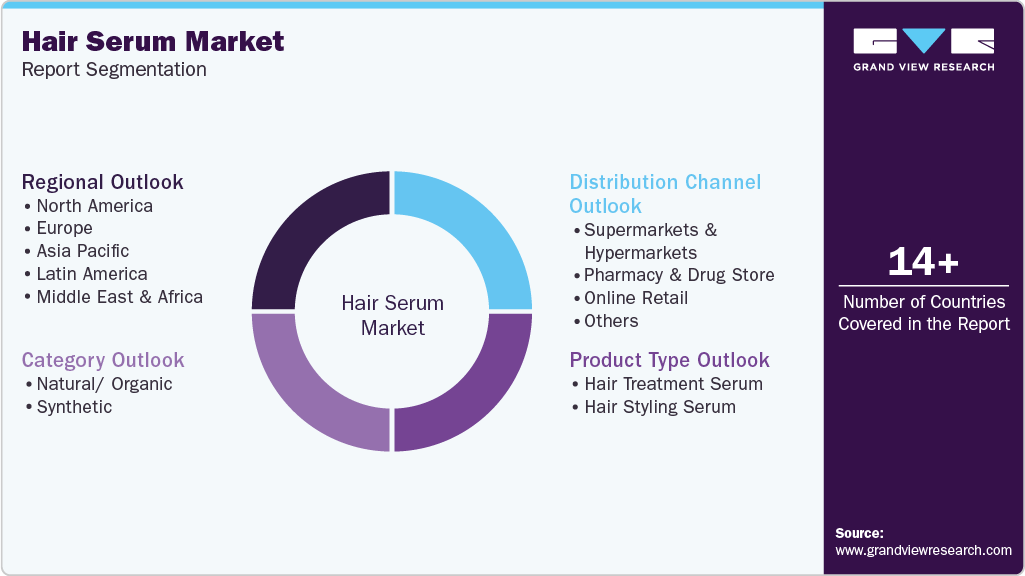
This report forecasts revenue growth at the global, country, and regional levels and provides an analysis of the latest industry trends and opportunities in each of the sub-segments from 2021 to 2033. For this study, Grand View Research has segmented the global hair serum market report by product type, category, distributional channel, and region:
 To learn more about this report, Download Free Sample Report
 -
Product Type Outlook (Revenue, USD Million, 2021 - 2033)
-
Hair Treatment Serum
-
Hair Fall Control
-
Hair Growth
-
Dandruff Control
-
Scalp Repair
-
Others
-
-
Hair Styling Serum
-
Frizz Control
-
Smoothing and Straightening
-
Heat Protection
-
Others
-
-
-
Category Outlook (Revenue, USD Million, 2021 - 2033)
-
Natural/ Organic
-
Synthetic
-
-
Distribution Channel Outlook (Revenue, USD Million, 2021 - 2033)
-
Supermarkets & Hypermarkets
-
Pharmacy & Drug Store
-
Online Retail
-
Others
-
-
Regional Outlook (Revenue, USD Million, 2021 - 2033)
-
North America
-
U.S.
-
Canada
-
Mexico
-
-
Europe
-
UK
-
Germany
-
France
-
Italy
-
Spain
-
-
Asia Pacific
-
Japan
-
China
-
India
-
Australia
-
South Korea
-
-
Latin America
-
Brazil
-
-
Middle East and Africa (MEA)
-
UAE
-
-
Frequently Asked Questions About This Report
The global hair serum market size was valued at USD 1.3 billion in 2024 and is estimated at USD 1.5 billion for 2026.
The global hair serum market is expected to grow at a CAGR of 7.1% from 2025 to 2033, reaching USD 2.4 billion by 2033.
The hair treatment serum segment accounted for a share of about 64.64% of the Global hair serum market in 2024. The credibility of hair treatment serums is bolstered by endorsements from dermatologists and clinical studies.
Some of the key players in the global hair serum market is - L’Oréal S.A.; The Procter & Gamble Company (P&G); Unilever PLC; Kao Corporation; Moroccanoil Israel Ltd.; Vogue International LLC; Estée Lauder Companies Inc.; John Paul Mitchell Systems; Briogeo; Olaplex Holdings, Inc.
Rising concerns over hair fall, thinning, and scalp issues drive demand for targeted hair serum solutions. Consumers are increasingly seeking clean, natural, and multi-benefit formulations, fueling this category's expansion. Influencer marketing and social media buzz are also pivotal in accelerating product discovery and enhancing brand engagement.
About the Author(s)
Beauty & Personal Care Research Team
Consumer Goods · Beauty & Personal CareThis report was authored by the beauty & personal care research team at Grand View Research - comprising two research analysts, one senior research analyst, and one industry expert - with specialized expertise in the beauty & personal care segment of the consumer goods industry. All findings are based on proprietary consumer goods databases, executive interviews, and regulatory analysis, subject to internal peer review prior to publication.
Last Updated:
Speak to Analyst

Customize this report to your needs - add regions, segments, or data points, with 20% free customization.
Or view our licence options:


ISO 9001:2015 & 27001:2022 Certified
We are GDPR and CCPA compliant! Your transaction & personal information is safe and secure. For more details, please read our privacy policy.


