
- Home
- »
- Medical Devices
- »
-
Healthcare Consulting Services Market Report, 2026-2033GVR Report cover

Healthcare Consulting Services Market (2026 - 2033)
Size, Share & Trends Analysis Report By Services (Strategic Management Consulting, Financial Management Consulting), By End-use (Pharmaceutical Companies, Insurance Companies, Government Organizations), By Region, And Segment Forecasts
Market Size, 2025
$36.1BMarket Estimate, 2026
$38.9BMarket Forecast, 2033
$72.4BCAGR, 2026–2033
9.3%Healthcare Consulting Services Market Summary
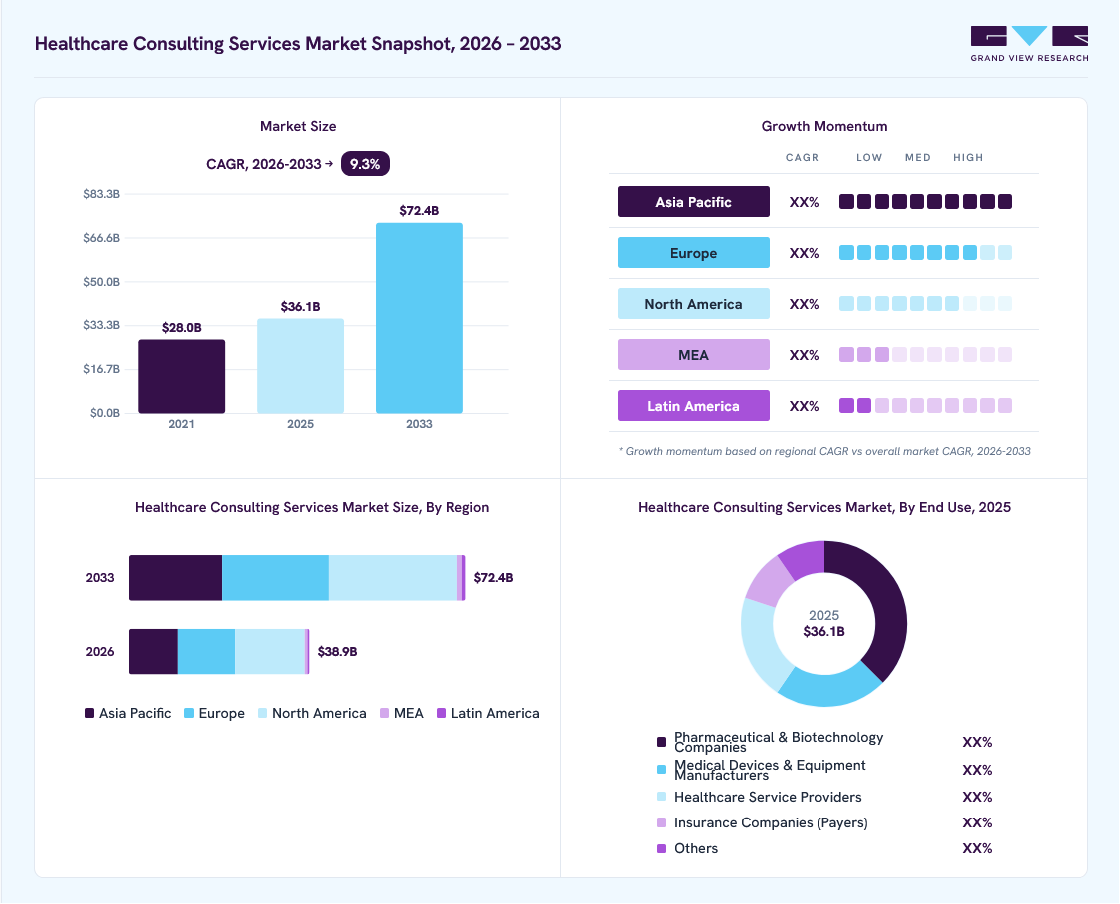
The global healthcare consulting services market size was valued at USD 36.1 billion in 2025 and is projected to grow from USD 38.9 billion in 2026 to USD 72.4 billion by 2033, growing at a CAGR of 9.3% from 2026 to 2033. North America dominated the healthcare consulting services market with the largest revenue share of 38.5% in 2025. The high adoption of digitalization in healthcare firms, the increased demand for improving the efficiency of these firms, and the growing demand for a structured organization are some of the key factors contributing to the demand for management consulting services in healthcare firms.
 Source: Grand View Research, IR Documents, Primary Interviews, Paid DatabasesTo learn more about this report,
 Download Free Sample Report
Key Market Trends & Insights
- By service: Strategy consulting segment held the largest market share of 34.3% in 2025.
- By end use: Pharmaceutical & biotechnology companies segment held the largest market share of 37.5% in 2025.
Regional Highlights
- Largest regional market: North America (38.5% revenue share, 2025)
- Fastest-growing regional market: Asia Pacific (highest CAGR, 2026-2033)
- By country: The U.S held the largest market share in 2025
Market Size & Forecast
- Market size in 2025: USD 36.1 Billion
- Estimated market size in 2026: USD 38.9 Billion
- Projected market size by 2033: USD 72.4 Billion
- CAGR (2026-2033): 9.3%
Three ways to get this report
Buy it, customize it, or ask a question.Ask an Analyst
Analyst response in 1 business day
- AccessReport author, directly
- Reply timeWithin 1 working day
- No sales callDirect answer only
- FormatEmail reply
- CostFree, no cost
Get the Full Report
What the study covers
- FormatsPDF · Excel · Dashboard
- Timeline2026–2033 annual, 2025 base
- Coverage20+ countries, 5 regions
- Companies10+ key players profiled
Customize the Report
20% free customization
- IncludeCountries, segments, points
- TailorTo your product definition
- ExtendDeeper competitor detail
- OrA fully bespoke study
- Turnaround5–10 working days
During the COVID-19 pandemic, institutions such as pharma & biotech companies, healthcare payers, providers, medical device companies, and government organizations adopted advanced technologies, and software to improve their overall functioning. For instance, during the pandemic, Microsoft consulting services helped in the secure and efficient distribution of the COVID-19 vaccine through its software, Vaccination Registration and Administration Solution (VRAS).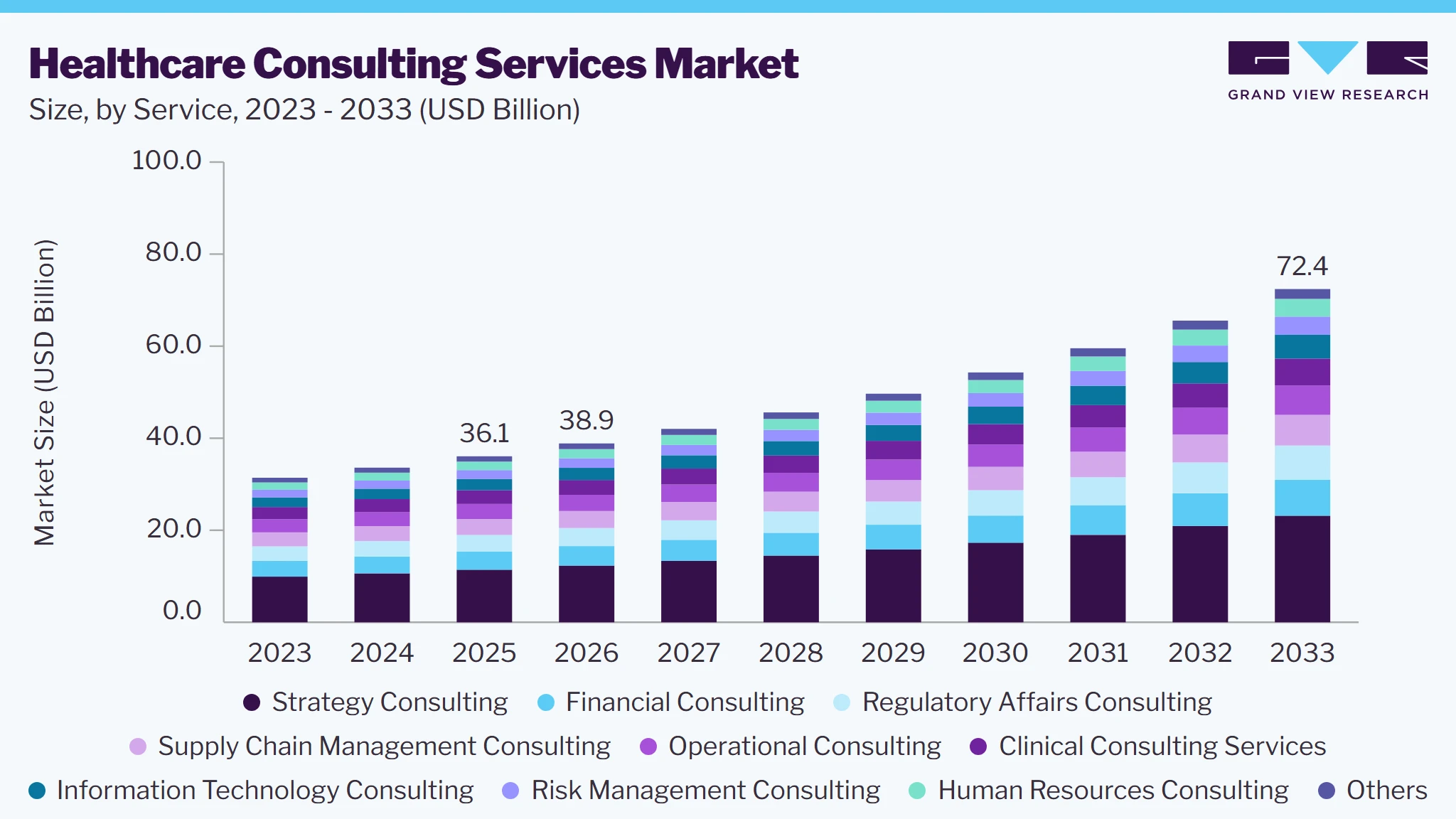 To learn more about this report, Download Free Sample Report
The demand for technology in the healthcare industry is expected to improve in the coming years owing to the advantages associated with these technologies in healthcare. Thus, supporting the healthcare consulting services market in the post-pandemic period. The industry is required to adapt to the ever-changing regulatory framework. It is difficult to adapt to every change in regulatory requirements. The healthcare industry spends a significant amount of money to keep up with regulatory requirements. The Medicare and Medicaid reforms, such as MACRA state that healthcare organizations must do more with less.
In the forecasted period, such factors are expected to boost demand for healthcare advisory services to understand regulatory requirements. The healthcare industry is complex. It is required to follow different policies, regulations, and laws, and there are daily developments in treatment and diagnosis; owing to these reasons, pharma and biotechnology organizations have a lot to keep track of all such activities professionally and thoroughly, which is very important for their success. These factors are further supporting the demand for healthcare consulting services.
Market Dynamics
The global healthcare consulting services market is driven by the increasing complexity of healthcare delivery, evolving regulatory requirements, and the growing need for operational efficiency across healthcare systems. Hospitals, health systems, pharmaceutical companies, life sciences organizations, and payers are increasingly engaging consulting firms to optimize costs, improve patient outcomes, and navigate digital transformation and regulatory compliance initiatives.
Rising investments in healthcare information technology, advanced analytics, artificial intelligence (AI), and value-based care models are further accelerating demand for consulting services focused on strategic planning, technology implementation, operational improvement, and organizational transformation. As healthcare regulations continue to evolve and digital adoption increases, consulting firms play a critical role in enabling healthcare organizations to achieve sustainable growth, enhance operational resilience, and improve clinical and financial performance.
The increasing focus on healthcare cost optimization and operational efficiency is a key driver of the global healthcare consulting services market. Healthcare providers, payers, and life sciences organizations are facing mounting financial pressures due to rising treatment costs, workforce shortages, changing reimbursement models, and increasing patient expectations. Consequently, organizations are engaging consulting firms to improve operational performance, optimize resource utilization, streamline clinical and administrative workflows, and enhance financial sustainability. Consulting services support healthcare organizations in identifying inefficiencies, implementing best practices, and redesigning operating models to improve productivity while maintaining high-quality patient care and regulatory compliance.
The transition toward value-based care and outcome-driven healthcare delivery is further accelerating demand for consulting services. Healthcare organizations are increasingly seeking expertise in revenue cycle management, supply chain optimization, organizational restructuring, performance improvement, and data-driven decision-making to enhance clinical and financial outcomes. For instance, in March 2026, Sanquin partnered with Impact Stewards after one of its two blood-processing sites became unavailable within 2 years. The collaboration tackled a complex healthcare supply chain challenge, aiming to future-proof blood logistics, maintain a reliable patient supply, and improve operations across the donor-to-patient chain in the Netherlands.
“We thought it wise to seek external help for such a high-impact issue that doesn’t come up every day. Impact Stewards was the right partner, with specialist healthcare supply chain expertise and the ability to guide the decision-making process effectively.”
-Ivo van Schaik, chairman of the board, Sanquin
Consulting firms also help implement digital technologies, advanced analytics, and process automation to improve efficiency and reduce operational costs. As healthcare systems worldwide continue to prioritize sustainable growth, quality improvement, and long-term financial resilience, demand for specialized healthcare consulting services is expected to increase, supporting continued expansion of the global healthcare consulting services market.
Some of the recent developments include:
-
In March 2026, CF and Medlior Health Outcomes Research formed a UK-Canada partnership under the Access Innovation BioBridge programme to generate policy-grade real-world evidence for life sciences sponsors. Using NHS England and Alberta data, they are anticipated to study cardiovascular, kidney, diabetes, and obesity conditions to support clinical development, market access, and HEOR.
-
In March 2026, Clinical Healthcare Analytics and St. Vincent’s International partnered to combine CHA’s real-time clinical analytics platform with St. Vincent’s NHS digital transformation expertise. The collaboration aims to help healthcare leaders improve outcomes, learn from global health systems, and avoid repeating the challenges of transformation.
-
In July 2025, B. Braun partnered with H&Z Management Consulting to transform its global indirect procurement through the “Procure One” program. The initiative standardized processes across 60+ countries and 40,000 suppliers, clarified roles and governance, and improved efficiency, transparency, collaboration, and team engagement across the company’s worldwide procurement function.
The increasing adoption of generative artificial intelligence in healthcare presents implementation challenges that are likely to restrain the growth of the healthcare consulting services market. While AI technologies have significant potential to improve operational efficiency, automate administrative tasks, and enhance clinical workflows, concerns related to algorithm accuracy, workflow integration, data privacy, cybersecurity, and legal accountability continue to limit widespread adoption. As a result, many healthcare organizations are taking a cautious approach toward enterprise-scale AI implementation, delaying digital transformation initiatives and associated consulting engagements until technology performance and governance frameworks become more established.
According to the American Medical Association's (AMA) 2025 Augmented Intelligence Survey, physicians continue to express concerns regarding AI-generated inaccuracies, legal liability, patient data privacy, and integration with electronic health record (EHR) systems. Although physician adoption of AI technologies is increasing, many clinicians believe that AI-generated outputs require substantial human oversight and clinical validation before routine implementation in patient care and administrative workflows. Survey respondents also indicated that poorly integrated AI solutions could increase workflow complexity rather than improve efficiency. These challenges are anticipated to slow the pace of AI adoption and digital transformation, thereby moderating demand for healthcare consulting services supporting AI implementation and organizational change initiatives.
The increasing outsourcing of non-core healthcare functions presents a significant opportunity for the global healthcare consulting services market. Healthcare providers, payers, and life sciences companies are under growing pressure to improve operational efficiency while controlling costs and maintaining regulatory compliance. As a result, organizations are increasingly relying on external consulting firms to support revenue cycle management, supply chain optimization, workforce planning, procurement, financial management, and regulatory affairs. Outsourcing these specialized functions enables healthcare organizations to focus on core clinical operations while leveraging consulting expertise to improve productivity, reduce operational costs, and strengthen organizational performance.
The growing complexity of healthcare regulations, reimbursement models, and digital transformation initiatives is further accelerating demand for outsourced consulting services. Healthcare organizations increasingly seek external expertise to manage large-scale transformation programs, implement healthcare IT systems, optimize operational workflows, and comply with evolving regulatory requirements. Consulting firms also provide specialized capabilities in mergers and acquisitions, organizational restructuring, cybersecurity, and enterprise risk management, areas where many healthcare organizations lack internal expertise. For instance, in August 2025, Covita Health Partners launched as a new regulatory and quality consulting firm for life sciences, aiming to make expert support more accessible and affordable. It serves medical devices, diagnostics, digital health, combination products, and tissue-based therapies, emphasizing collaboration, creativity, measurable value, and helping innovations reach patients faster.
Thus, as healthcare systems continue to prioritize efficiency, scalability, and financial sustainability, the expanding trend toward outsourcing strategic and operational functions is expected to create substantial growth opportunities for healthcare consulting service providers worldwide.
Market Concentration & Characteristics
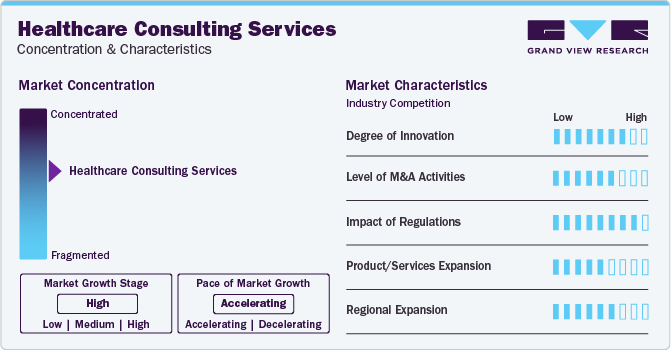
Market growth stage is high, and the pace of the market growth is accelerating. The healthcare consulting services market is characterized by a high degree of innovation due to rapid technological advancements such as adopting machine learning and artificial intelligence in advisory services and platforms. Companies are entering the market and bringing novel technologies and platforms, which are expected to drive innovation in the industry. For instance, in October 2023, Avallano collaborated with Elligo Health Research and introduced an AI-powered clinical trial recruitment and engagement platform, myTrialsConnect. This platform is useful to identify qualified patients and engage them during, before and after clinical study. Such developments are expected to bring innovative platforms to the market.
 To learn more about this report, Download Free Sample Report
The market is characterized by the high level of merger and acquisition (M&A) activity by leading players operating in the industry. This is due to numerous factors, including the desire to gain a competitive advantage in the industry and the need to consolidate in a rapidly growing market. Major industry participants are acquiring firms providing services and solutions for pharmaceuticals and medtech. For instance, in September 2023, Accenture, a major advisory organization, acquired the UK-based leading digital healthcare consultancy firm Nautilus Consulting. This acquisition is expected to bring expertise in operational and strategic consulting services and assist clients in implementing and optimizing their digital solutions. Such acquisitions are expected to propel industry growth in coming years.
Furthermore, the industry participants operating across the industry are focusing on increasing their presence in several regions and improving access to the services and solutions needed during pharmaceutical and biotechnology studies and procedures across the globe. For instance, in June 2023, Axis Consulting, a Dublin headquartered firm announced plans to expand in the UK market by opening a new office in Edinburgh. The company serves biopharma and health tech businesses, providing them with the local knowledge required to access different markets and health tech assessments. Thus, regional expansions by the major players are expected to improve access to the services of the markets.
Analyst Perspective
The global healthcare consulting services market is highly competitive, with major firms such as Accenture, Deloitte, and PwC leveraging expertise in AI, cloud transformation, cybersecurity, and analytics to support healthcare providers, payers, pharmaceutical companies, and government agencies. Their comprehensive service offerings and strategic partnerships continue to strengthen their market presence. Strategy consulting firms including McKinsey & Company, Bain & Company, and Boston Consulting Group, along with specialized providers such as IQVIA, Cognizant, and Huron Consulting Group, are benefiting from growing demand for value-based care, regulatory compliance, healthcare IT modernization, and data-driven decision-making. Firms that combine strategic advisory, technology implementation, and healthcare-specific expertise are expected to gain a competitive advantage as the industry advances its digital transformation efforts.
Services Insights
Based on Service, the strategy consulting segment led the market with the largest revenue share of 34.3% in 2025. The growing number of mergers and acquisitions among healthcare organizations such as pharmaceutical companies, biotechnology companies, and others is one of the major factors supporting the demand for strategic management consulting services. Moreover, there has been an increase in drug research activities, which is contributing to the demand for launch strategy consulting and further supporting the segment market growth.
On the other hand, the information technology consulting segment is anticipated to witness the fastest growth over the forecast period. This is due to the high adoption rate of digitalization solutions such as big data, artificial intelligence, telehealth, and others in healthcare organizations. These technologies help optimize systems, streamline physicians’ work, reduce human error, improve patient outcomes, and lower the cost of services. The consulting firms provide advisory services on choosing the best use of the technology and how the technology can be used for the betterment of the organization. These factors are supporting the segment market.
End-use Insights
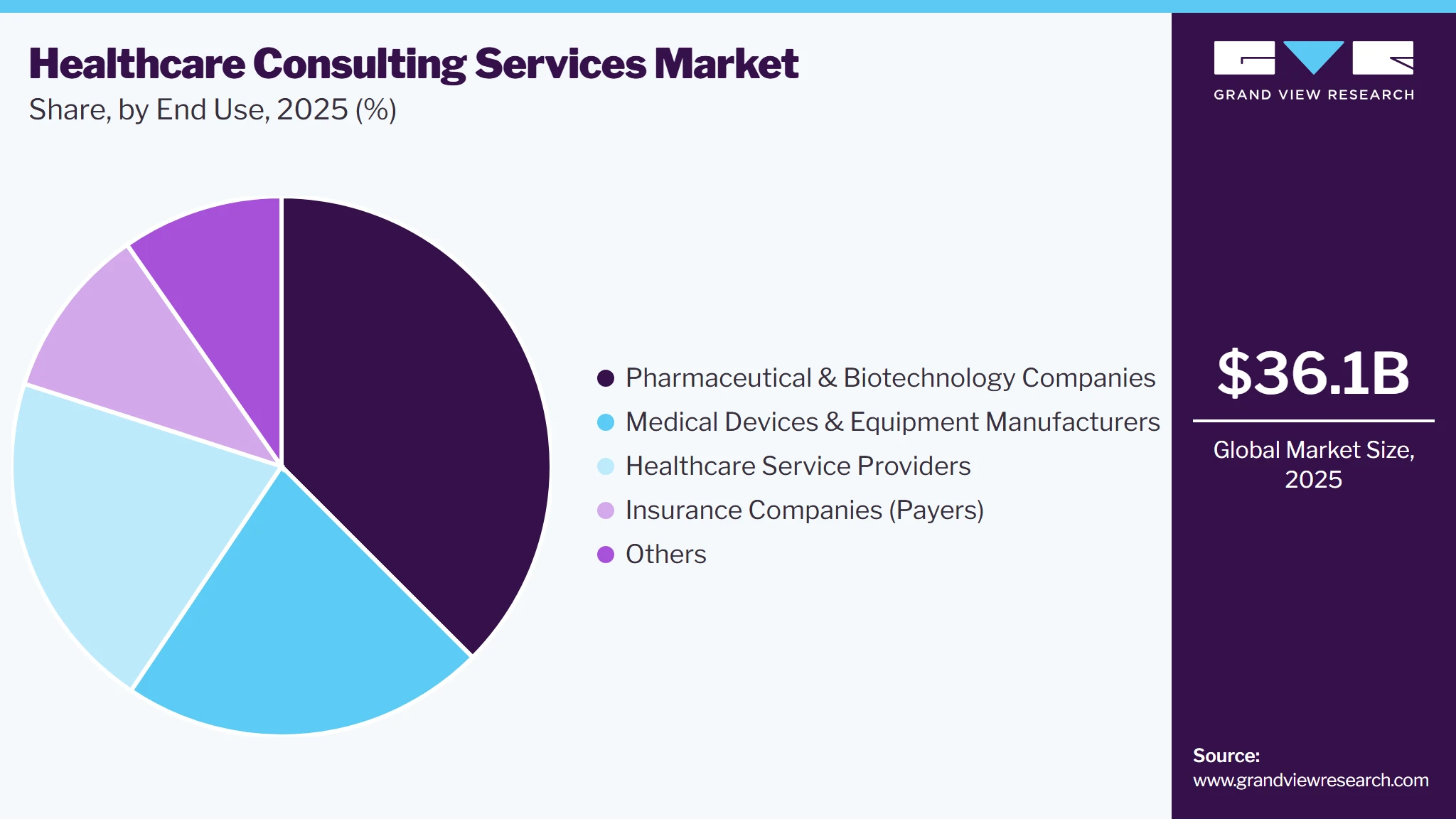
Based on end use, the pharmaceutical & biotechnology companies’ segment led the market with the largest revenue share of 37.5% in 2025 and it is also expected to witness the fastest growth over the forecast period. Growing demand for optimizing costs associated with API operations, formulations development, supply chain management, and the increasing need to understand mergers and acquisition strategy implementation among these companies are some of the key factors supporting the segment market. Furthermore, the growing need to understand product launch plans and brand management of existing products are other factors supporting the segment demand.
 To learn more about this report, Download Free Sample Report
The hospital segment is projected to witness significant growth over the forecast period. Escalating hospital expenses have made it essential to manage hospitals by maintaining operational and financial performance. Moreover, while launching a new hospital, it is essential to understand certain factors, such as how to license the hospital, raise funds, recruit talent, and improve the branding and marketing of hospitals, among others. These are some key factors that are improving the demand for hospital advisory services. Moreover, there is also a rising interest in the adoption of new technologies in hospitals for improving patient experiences, which further contributes to the demand for hospital consulting services.
Regional Insights
North America dominated the healthcare consulting services market with the largest revenue share of 38.5% in 2025. This can be attributed to the increased adoption of digital solutions by healthcare organizations such as public agencies, pharmaceutical companies, biotechnology companies' hospitals, and other institutions. Moreover, North America has a stringent regulatory framework in order to keep up with the changing regulations; there is an increased demand for regulatory consulting services across the region among healthcare organizations, which further drives market growth of the region.
 To learn more about this report, Download Free Sample Report
Asia Pacific is anticipated to witness the fastest growth in the market. Increasing regional expansions in business by the health care organizations across region and the presence of a significant number of consultants are some key factors supporting market growth in Asia-Pacific. Moreover, in the last five years, there has been an improvement in the number of new launches of drugs and medical devices in the region, which further promotes the demand for advisory services across the region. Furthermore, there is an increasing adoption of digital solutions among government organizations and pharmaceutical and biotechnology companies, which is further driving the growth in Asia Pacific market. The Healthcare consulting services market in the U.S. held the largest share in the North America region in 2025.
Key Healthcare Consulting Services Company Insights
Key players operating in the market offer a wide range of solutions and have a vast global geographic presence. These companies adopt strategies such as partnerships, collaborations, and acquisitions to maintain their leading market share.
L.E.K. Consulting and Bain & Company, Inc are some of the emerging market participants in the market. These players focus on expanding their offerings and geographic presence. Some of the strategies adopted by these players include partnerships for geographic expansion, customer acquisition strategies and development of personalized solutions for their clients.
Key Healthcare Consulting Services Companies:
The following key companies have been profiled for this study on the healthcare consulting services market.
-
Accenture
-
McKinsey & Company
-
Deloitte Global
-
L.E.K. Consulting
-
PwC
-
Huron Consulting Group Inc. and affiliates.
-
Cognizant
-
EY
-
Bain & Company, Inc.
-
IQVIA Inc,
-
Boston Consulting Group
Competitive Benchmarking
Operating Strategies
Competitive Edge
Weaknesses
Established Players: Accenture, Deloitte, PwC
- Focus on large-scale healthcare transformation projects involving digital health, AI implementation, cloud migration, cybersecurity, revenue cycle optimization, and regulatory compliance.
- Expand capabilities through acquisitions, technology partnerships, and investments in healthcare analytics and generative AI solutions.
- Strong global brand recognition, extensive healthcare client networks, broad service portfolios, deep industry expertise, advanced technology capabilities, and significant financial resources.
- Ability to manage complex, enterprise-wide transformation programs across multiple regions.
- Higher service costs compared to smaller firms, complex organizational structures, and longer project implementation timelines.
- Large-scale operations may reduce flexibility in addressing niche client requirements.
Leading Strategy & Management Consultants: McKinsey & Company, Bain & Company, Boston Consulting Group (BCG)
- Provide strategic advisory services focused on healthcare growth strategies, operational excellence, value-based care, M&A advisory, organizational transformation, and AI-enabled business innovation.
- Support healthcare providers, payers, and life sciences companies in long-term decision-making and performance improvement.
- Strong executive-level relationships, proven strategic expertise, extensive healthcare research capabilities, and experience supporting large-scale transformation initiatives.
- Trusted advisors for C-suite decision-makers and complex healthcare challenges.
- Limited technology implementation capabilities compared to technology-focused consulting firms.
- Premium pricing models may restrict accessibility for smaller healthcare organizations.
Specialized Healthcare & Technology Consulting Firms: IQVIA, Cognizant, Huron Consulting Group
- Focus on healthcare-specific consulting services including clinical research support, healthcare IT modernization, data analytics, revenue cycle management, regulatory compliance, and operational performance improvement.
- Leverage healthcare data assets and technology expertise to deliver targeted solutions.
- Deep healthcare domain knowledge, specialized industry expertise, strong analytics capabilities, and tailored service offerings for healthcare providers, payers, and life sciences companies.
- Greater agility in addressing sector-specific challenges.
- Smaller global footprint compared to multinational consulting leaders, lower brand visibility among non-healthcare clients, and greater dependence on healthcare industry spending cycles and regulatory changes.
Recent Developments
-
In May 2023, VMG Health, a major healthcare strategy company acquired the specialist healthcare advisory firm, BSM Consulting. With this acquisition, BSM added new services, including recruitment, subscription-based membership programs, and leadership development resources that can help advance VMG Health’s wider array of solutions.
-
In February 2023, Accenture, a major industry participant, purchased a strategy and advisory firm, Bionest. The acquired company helps biopharma companies address complex strategic decisions across innovative areas of science, including diagnostics, precision medicine, cell & gene therapy (CGT), oncology, and rare diseases. With this acquisition, the company expanded its strategy capabilities in life sciences.
-
In August 2023, Nordic Consulting, a technology and health consulting firm collaborated with the Workday, a major player in enterprise cloud applications for human resources and finance.
Healthcare Consulting Services Market Report Scope
Report Attribute
Details
Market size in 2025
USD 36.1 billion
Estimated market size in 2026
USD 38.9 billion
Projected market size bu 2033
USD 72.4 billion
Growth rate
CAGR of 9.3% from 2026 to 2033
Historical data
2021 - 2025
Forecast period
2026 - 2033
Quantitative units
Revenue in USD million/billion and CAGR from 2026 to 2033
Report coverage
Revenue forecast, company ranking, competitive landscape, growth factors, and trends
Segments covered
Services, end use, region
Regional scope
North America; Europe; Asia Pacific; Latin America; MEA
Country scope
U.S.; Canada; Mexico; Germany; UK; France; Italy; Spain; Norway; Denmark; Sweden; China; Japan; India; South Korea; Australia; Thailand; Brazil; Argentina; Saudi Arabia; South Africa; UAE; Kuwait
Key companies profiled
Accenture; McKinsey & Company; Deloitte Global; L.E.K. Consulting; PwC; Huron Consulting Group Inc.;Cognizant; EY; Bain & Company, Inc.; IQVIA Inc;Boston Consulting Group
Customization scope
Free report customization (equivalent to up to 8 analysts' working days) with purchase. Addition or alteration to country, regional & segment scope.
Pricing and purchase options
Avail customized purchase options to meet your exact research needs. Explore purchase options
Global Healthcare Consulting Services Market Report Segmentation
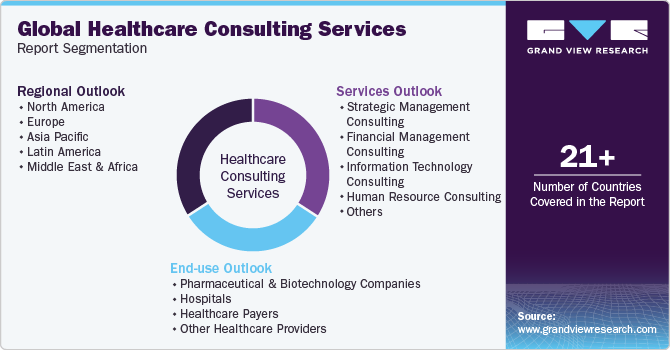
This report forecasts revenue growth at global, regional, and country levels and provides an analysis of the latest industry trends in each of the sub-segments from 2021 to 2033. For this study, Grand View Research has segmented the global healthcare consulting services market report based on services, end-use and region.
 To learn more about this report, Download Free Sample Report
-
Services Outlook (Revenue, USD Million, 2021 - 2033)
-
Strategic Management Consulting
-
Financial Management Consulting
-
Information Technology Consulting
-
Human Resource Consulting
-
Others
-
-
End-use Outlook (Revenue, USD Million, 2021 - 2033)
-
Pharmaceutical Companies
-
Hospitals
-
Insurance Companies
-
Government Organizations
-
Other Healthcare Providers
-
-
Regional Outlook (Revenue, USD Million, 2021 - 2033)
-
North America
-
U.S.
-
Canada
-
-
Europe
-
U.K.
-
Germany
-
France
-
Italy
-
Spain
-
Denmark
-
Sweden
-
Norway
-
-
Asia Pacific
-
China
-
India
-
Japan
-
South Korea
-
Australia
-
Thailand
-
-
Latin America
-
Brazil
-
Mexico
-
Argentina
-
-
Middle East & Africa
-
South Africa
-
Saudi Arabia
-
UAE
-
Kuwait
-
-
Segment Definition
Segment - By Services
Revenue capture definition
Strategy Consulting
Advisory services that help healthcare organizations develop long-term business strategies, market entry plans, growth initiatives, mergers and acquisitions (M&A) strategies, portfolio optimization, digital transformation roadmaps, and organizational restructuring to improve competitiveness and sustainability.
Financial Consulting
Consulting services focused on improving financial performance through budgeting, cost optimization, revenue cycle management, financial planning, reimbursement strategy, investment analysis, valuation, mergers and acquisitions support, and financial risk assessment.
Operational Consulting
Services aimed at enhancing operational efficiency by optimizing clinical workflows, hospital operations, process improvement, capacity planning, quality management, patient flow, resource utilization, and organizational performance across healthcare systems.
Regulatory Affairs Consulting
Advisory services that assist healthcare organizations in complying with local and international healthcare regulations, including FDA, EMA, GMP, GCP, HIPAA, MDR, IVDR, and other regulatory requirements. These services support product approvals, regulatory submissions, quality systems, and compliance management.
Information Technology (IT) Consulting
Consulting services focused on healthcare IT strategy, digital transformation, electronic health records (EHR) implementation, cybersecurity, cloud migration, interoperability, artificial intelligence, data analytics, telehealth, and healthcare information systems integration.
Human Resources Consulting
Advisory services related to healthcare workforce planning, talent acquisition, organizational design, leadership development, compensation strategies, workforce optimization, employee engagement, training, and change management.
Supply Chain Management Consulting
Consulting services that optimize procurement, inventory management, logistics, supplier relationships, distribution networks, demand forecasting, and supply chain resilience to improve operational efficiency and reduce costs across healthcare organizations.
Risk Management Consulting
Services that help healthcare organizations identify, assess, mitigate, and monitor financial, operational, clinical, regulatory, cybersecurity, and enterprise risks while strengthening governance, business continuity, and compliance frameworks.
Clinical Consulting Services
Specialized consulting focused on improving clinical operations, patient care quality, clinical workflow optimization, value-based care implementation, clinical trial management, care pathway design, patient safety initiatives, and healthcare quality improvement programs.
Other Services
Includes consulting services related to market access, health economics and outcomes research (HEOR), sustainability, environmental health and safety, mergers and acquisitions integration, commercialization, public health strategy, medical affairs, and other specialized healthcare advisory services.
By End Use
Pharmaceutical Companies
Pharmaceutical, biotechnology, and life sciences companies that engage consulting firms for support in drug development, commercialization, regulatory compliance, market access, digital transformation, operational excellence, clinical development, and business strategy.
Hospitals
Public and private hospitals that utilize consulting services to improve operational efficiency, financial performance, clinical quality, patient experience, healthcare IT implementation, workforce management, and regulatory compliance.
Insurance Companies
Public and private health insurers that leverage consulting services for claims management optimization, actuarial analysis, risk assessment, digital transformation, fraud detection, reimbursement strategy, and value-based care implementation.
Government Organizations
National, regional, and local government agencies, public health authorities, and healthcare regulators that engage consultants to support healthcare policy development, health system reforms, public health programs, regulatory modernization, healthcare financing, and digital health initiatives.
Other Healthcare Providers
Includes ambulatory surgery centers, diagnostic laboratories, physician practices, long-term care facilities, rehabilitation centers, home healthcare providers, academic medical centers, and other healthcare organizations seeking consulting support for operational, clinical, financial, and strategic initiatives.
Estimation Model
Model Details
This research methodology outlines the process for estimating the size of the global healthcare consulting services market for the period from 2021 to 2033. The study covers key service segments, including strategy consulting, operations consulting, financial consulting, digital health consulting, IT and analytics consulting, regulatory and compliance consulting, organizational transformation, and revenue cycle management consulting across major geographic regions including North America, Europe, Asia Pacific, Latin America, and the Middle East & Africa. The objective is to develop a robust and defensible market estimate through a combination of bottom-up and top-down approaches supported by primary industry validation.
A triangulated market sizing approach was used, combining:
-
Bottom-Up Analysis from healthcare consulting firm revenues, consultant workforce, client engagements, and average project values.
-
Top-Down Checks using healthcare expenditure data, healthcare provider spending, payer investments, digital transformation initiatives, and government healthcare modernization programs.
-
Primary Research with consulting firms, healthcare providers, pharmaceutical companies, payers, government agencies, digital health companies, healthcare executives, and industry consultants.
Step-By-Step Market Estimation Process
• Healthcare Organization Consulting Adoption Model
This model calculates the market size by estimating the number of healthcare organizations utilizing consulting services across major countries and their annual consulting expenditure.
-
Step 1: Country-level data on healthcare organizations, including hospitals, physician groups, health systems, pharmaceutical companies, biotechnology firms, payers, and government healthcare agencies, was collected from international healthcare databases, national health ministries, OECD, WHO, and industry publications.
-
Step 2: A consulting adoption rate was applied, estimating the percentage of healthcare organizations engaging external consulting firms annually. The adoption rate was derived from primary interviews, consulting industry reports, procurement data, and healthcare executive surveys.
-
Step 3: Average annual consulting expenditure per organization was estimated using consulting contract values, procurement disclosures, consulting firm interviews, and industry benchmarks.
-
Step 4: Market size was calculated by multiplying healthcare organizations × consulting adoption rate × average annual consulting expenditure.
-
Step 5: Calculations were performed at the country level and subsequently aggregated to regional and global levels.
-
Step 6: Historical and forecast growth rates were incorporated based on healthcare digitalization, regulatory reforms, value-based care adoption, healthcare infrastructure investments, and outsourcing trends.
• Consulting Firm Revenue Extrapolation Model
This model estimates market size using the number of healthcare consulting firms and their average annual healthcare consulting revenues.
-
Step 1: The number of healthcare consulting providers by country was identified through business registries, consulting firm databases, professional associations, company disclosures, and proprietary databases.
-
Step 2: Average annual healthcare consulting revenue per firm was estimated using annual reports, financial disclosures, practice-level revenue estimates, consulting firm interviews, and industry benchmarking studies.
-
Step 3: Consulting revenues were adjusted for regional differences in healthcare spending, consulting penetration, project complexity, consultant billing rates, and purchasing power parity.
-
Step 4: Country-level market size was calculated by multiplying the number of healthcare consulting firms by the adjusted average annual healthcare consulting revenue per firm.
-
Step 5: Regional and global market values were generated through aggregation of country-level estimates.
-
Step 6: Annual adjustments were applied to account for consulting practice expansion, mergers and acquisitions, workforce growth, digital consulting demand, and new service offerings.
• Consulting Engagement and Project Spending Model
This model estimates market size based on the volume of healthcare consulting engagements globally and the average spending associated with each consulting service category.
-
Step 1: Consulting engagement volume data was collected from consulting firms, healthcare organizations, procurement databases, healthcare associations, government reports, and industry publications.
-
Step 2: Consulting projects were categorized into strategy consulting, operational improvement, financial advisory, digital transformation, healthcare IT consulting, regulatory and compliance consulting, revenue cycle management, organizational transformation, and analytics consulting.
-
Step 3: Average consulting project values by region were established using publicly available consulting fee benchmarks, procurement records, consulting firm disclosures, and expert interviews.
-
Step 4: Revenue generated by each consulting category was calculated by multiplying project volume by average consulting engagement value.
-
Step 5: Category-level revenues were aggregated to determine country, regional, and global market sizes.
-
Step 6: Forecast assumptions incorporated healthcare digital transformation, AI adoption, regulatory changes, hospital modernization, payer transformation initiatives, and healthcare cost optimization programs.
Geographic Demand Potential Index (GDPI) Validation Model
In addition to the core triangulation models, a Geographic Demand Potential Index (GDPI) model was developed to benchmark healthcare consulting demand across countries and regions globally. This model applied four macroeconomic and industry-specific indicators:
-
Healthcare Expenditure
-
Healthcare Infrastructure & Provider Density
-
Healthcare Digital Transformation & Regulatory Complexity
-
Healthcare Organization Spending on External Consulting Services
Each country's GDPI score was calculated and normalized to estimate its relative share of global healthcare consulting demand. The resulting scores were used as a validation framework for the market estimates generated through Models 1–3, ensuring alignment with actual consulting demand, healthcare investment patterns, digital transformation initiatives, and regional growth dynamics.
Final Market Triangulation
The final global healthcare consulting services market size was derived through triangulation of:
-
Healthcare Organization Consulting Adoption Model
-
Consulting Firm Revenue Extrapolation Model
-
Consulting Engagement and Project Spending Model
-
Geographic Demand Potential Index (GDPI) Validation Model
The weighted average of these models, validated through primary interviews and secondary industry sources, was used to generate the final historical estimates (2021–2025) and forecast projections (2026–2033) for the healthcare consulting services market.
Delivered Customizations
This report has been delivered with the following In-depth customizations
Client Request
Customization Delivered
Value Adds
Healthcare Consulting Service Adoption & Strategic Transformation Analysis
Developed a tailored analysis of the global healthcare consulting services market focused on strategy consulting, operational improvement, financial advisory, digital transformation, healthcare IT consulting, regulatory compliance, revenue cycle optimization, mergers & acquisitions, and value-based care implementation. The study assessed adoption trends across hospitals, health systems, pharmaceutical companies, biotechnology firms, medical device manufacturers, payers, healthcare governments, agencies, and life sciences organizations while evaluating healthcare reforms, digitalization initiatives, and evolving reimbursement models influencing market growth.
Enables stakeholders to understand evolving healthcare transformation trends, identify high-growth consulting service areas, assess strategic investment opportunities, and evaluate the impact of consulting engagements on operational efficiency, regulatory compliance, financial performance, and long-term organizational growth.
Digital Health, Operational Excellence & Regulatory Advisory Assessment
Delivered a customized evaluation of healthcare consulting services across healthcare IT implementation, artificial intelligence adoption, electronic health record (EHR) optimization, revenue cycle management, supply chain transformation, population health management, organizational restructuring, market access strategy, clinical operations improvement, and regulatory compliance. The analysis assessed digital health integration, value-based care initiatives, data analytics adoption, workforce optimization, payer-provider collaboration, and demand for specialized consulting solutions supporting healthcare transformation. The assessment incorporated consulting capabilities offered by Accenture, McKinsey & Company, Deloitte, PwC, EY, Bain & Company, Boston Consulting Group (BCG), Cognizant, Huron Consulting Group, L.E.K. Consulting, and IQVIA.
Provides actionable insights into commercially attractive consulting segments, emerging healthcare transformation priorities, evolving regulatory requirements, and growth opportunities associated with digital health modernization, operational excellence, cost optimization, improved patient outcomes, and enhanced organizational resilience.
Healthcare Ecosystem, Competitive Landscape & Market Expansion Assessment
Conducted a focused assessment of the healthcare consulting services ecosystem, including healthcare providers, life sciences organizations, public health agencies, payers, healthcare technology vendors, and regulatory authorities. The analysis evaluated consulting engagement models, competitive positioning, digital capabilities, implementation expertise, global delivery networks, strategic partnerships, regulatory advisory services, and competitive differentiation initiatives among leading consulting firms including Accenture, McKinsey & Company, Deloitte, L.E.K. Consulting, PwC, Huron Consulting Group, Cognizant, EY, Bain & Company, IQVIA, and Boston Consulting Group.
Supports strategic planning for consulting service expansion, digital transformation initiatives, healthcare partnerships, geographic market entry, operational improvement programs, and investment decisions by identifying demand drivers, regulatory challenges, technology adoption trends, revenue opportunities, competitive advantages, and long-term growth prospects across the global healthcare consulting services value chain.
Frequently Asked Questions About This Report
The global healthcare consulting services market size was estimated at USD 36.1 billion in 2025 and is expected to reach USD 38.9 billion in 2026.
The global healthcare consulting services market is expected to grow at a compound annual growth rate of 9.3% from 2026 to 2033 to reach USD 72.4 billion by 2033.
Some key players operating in the healthcare consulting services market include Accenture; Accenture, McKinsey & Company, Deloitte Global, L.E.K. Consulting, PwC, Huron Consulting Group Inc. and affiliates., Cognizant, EY, Bain & Company, Inc., IQVIA Inc, and Boston Consulting Group.
The need to implement new technologies such as big data analytics, cloud deployment, and IoT by healthcare institutions including life sciences corporations and government bodies, as well as the desire to improve operational efficiency are some of the main factors driving the market for healthcare consulting services.
Asia Pacific is the fastest-growing region over the forecast period.
Based on service, the strategy consulting segment led the market with the largest revenue share of 34.3% in 2025.
Based on end use, the pharmaceutical & biotechnology companies’ segment led the market with the largest revenue share of 37.5% in 2025.
North America dominated the healthcare consulting services market with a share of 38.5% in 2025. This can be attributed to the increased adoption of digital solutions by healthcare organizations such as public agencies, pharmaceutical companies, biotechnology companies' hospitals, and other institutions.
About the Author(s)
Medical Devices Research Team
Healthcare · Medical DevicesThis report was authored by the medical devices research team at Grand View Research - comprising two research analysts, one senior research analyst, and one industry expert - with specialized expertise in the medical devices segment of the healthcare industry. All findings are based on proprietary healthcare databases, executive interviews, and regulatory analysis, subject to internal peer review prior to publication.
Last Updated:
Speak to Analyst

Customize this report to your needs - add regions, segments, or data points, with 20% free customization.
Or view our licence options:


ISO 9001:2015 & 27001:2022 Certified
We are GDPR and CCPA compliant! Your transaction & personal information is safe and secure. For more details, please read our privacy policy.


