
- Home
- »
- Advanced Interior Materials
- »
-
Hemp-based Building Products Market Report, 2026-2033GVR Report cover

Hemp-based Building Products Market (2026 - 2033)
Size, Share & Trends Analysis Report By Product Type (Hempcrete, Hemp Insulation, Hemp Fiberboards & Panels, Hemp-based Composites), By End-use (Residential, Non-residential), By Region, And Segment Forecasts
Market Size, 2025
$4.0BMarket Estimate, 2026
$4.5BMarket Forecast, 2033
$9.4BCAGR, 2026–2033
11.3%Hemp-based Building Products Market Summary
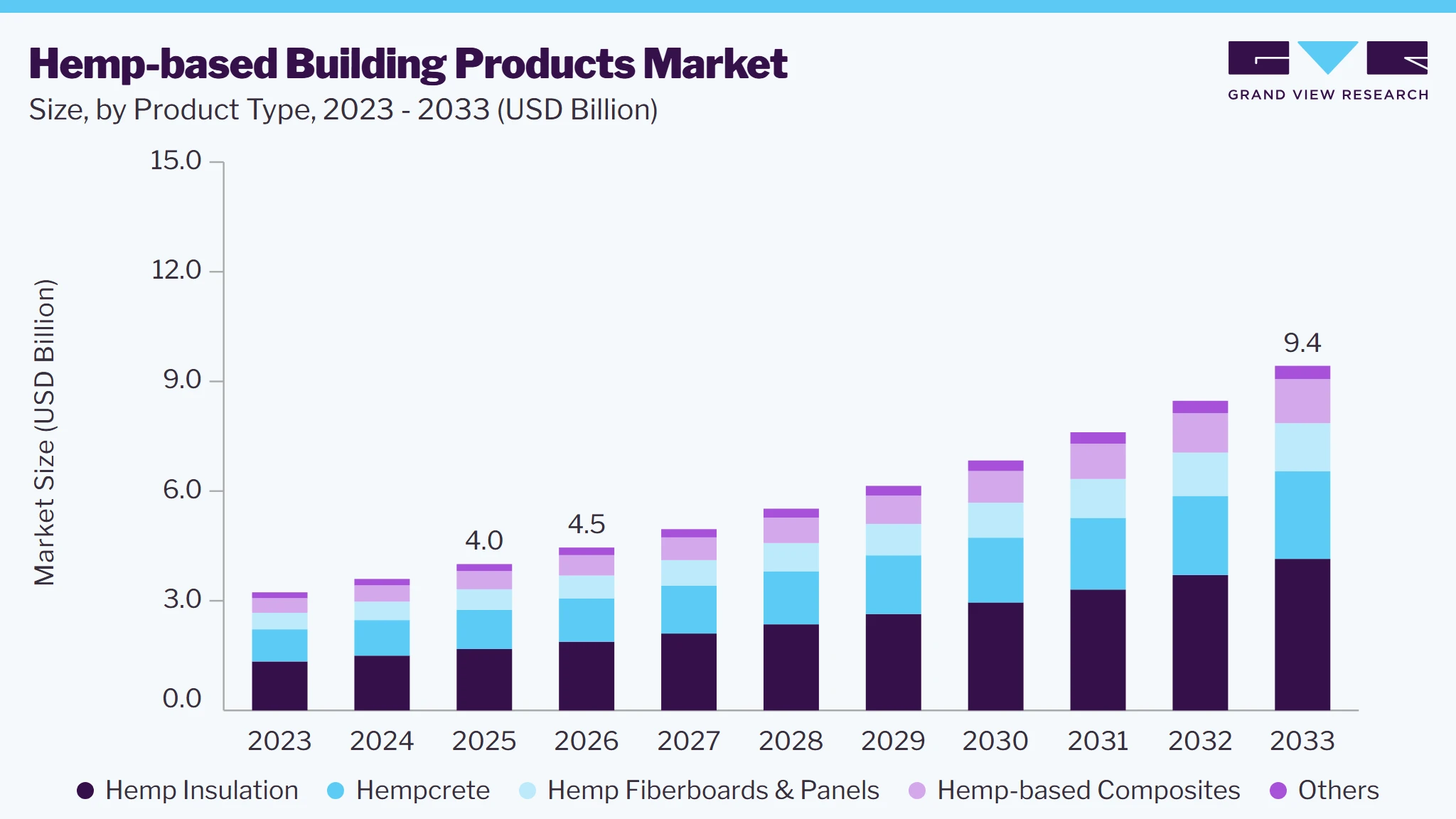
The global hemp-based building products market size was valued at USD 4.0 billion in 2025 and is projected to grow from USD 4.5 billion in 2026 to USD 9.4 billion by 2033, at a CAGR of 11.3% from 2026 to 2033. Asia Pacific dominated the hemp-based building products market with the largest revenue share of 40.7% in 2025. The growth is driven by the increasing global demand for sustainable and renewable construction materials.
 Source: Grand View Research, IR Documents, Primary Interviews, Paid DatabasesTo learn more about this report,
 Download Free Sample Report
 Key Market Trends & Insights
- By product type: Hemp insulation segment held the largest market share of 41.9% in 2025.
- By end use: Residential segment held the largest market share of 55.3% in 2025.
Regional Highlights
- Largest regional market: Asia Pacific (40.7% revenue share, 2025)
- By country: China held the largest market share in 2025
Market Size & Forecast
- Market size in 2025: USD 4.0 Billion
- Estimated market size in 2026: USD 4.5 Billion
- Projected market size by 2033: USD 9.4 Billion
- CAGR (2026-2033): 11.3%
Three ways to get this report
Buy it, customize it, or ask a question.Ask an Analyst
Analyst response in 1 business day
- AccessReport author, directly
- Reply timeWithin 1 working day
- No sales callDirect answer only
- FormatEmail reply
- CostFree, no cost
Get the Full Report
What the study covers
- FormatsPDF · Excel · Dashboard
- Timeline2026–2033 annual, 2025 base
- Coverage20+ countries, 5 regions
- Companies10+ key players profiled
Customize the Report
20% free customization
- IncludeCountries, segments, points
- TailorTo your product definition
- ExtendDeeper competitor detail
- OrA fully bespoke study
- Turnaround5–10 working days
As environmental concerns rise, builders and architects are turning toward natural alternatives such as hempcrete, hemp insulation, and fiber-reinforced panels. These products offer significant reductions in carbon emissions compared to conventional materials such as concrete or fiberglass. The biodegradability and energy efficiency of hemp-based materials further align with green building certification standards such as LEED and BREEAM. This growing shift toward eco-conscious construction is accelerating market expansion across both residential and commercial sectors.Government initiatives promoting carbon-neutral construction and low-impact materials are major drivers of the hemp-based building products market. Many countries are revising their building codes and sustainability regulations to encourage the use of renewable raw materials. Subsidies, tax incentives, and research grants for bio-based construction innovation have also strengthened industrial adoption. In regions such as Europe and North America, policymakers have recognized hemp as an effective crop for carbon sequestration and rural economic development. This regulatory backing is creating a favorable environment for manufacturers and developers to scale production and commercialization.
 To learn more about this report, Download Free Sample Report
 Rapid advancements in material processing technologies are enhancing the performance and versatility of hemp-based construction products. Innovations in fiber treatment, composite engineering, and binder formulation have improved structural strength, moisture resistance, and thermal insulation properties. These technological improvements are enabling hemp-based materials to compete directly with traditional products on both performance and cost. Furthermore, automation and digital design tools in construction are making it easier to integrate hemp-based panels and blocks into modern architectural systems. As production efficiency increases, cost competitiveness is expected to further strengthen market growth.
Market Dynamics
The hemp-based building products market is gaining strong momentum as the construction industry increasingly prioritizes sustainable, low-carbon, and energy-efficient materials. Products such as hempcrete, insulation panels, fiberboards, and bio-composites are becoming attractive alternatives to conventional building materials due to their renewable nature and lower environmental footprint. Growing awareness of green construction practices, combined with stricter building regulations aimed at reducing carbon emissions, is encouraging the adoption of hemp-based materials across residential, commercial, and institutional projects. Continuous advancements in material processing and manufacturing technologies are further improving product performance, making hemp-based building products more commercially viable for modern construction.
The global construction industry is witnessing a major shift toward environmentally responsible materials as governments and developers seek to reduce greenhouse gas emissions from buildings. Hemp-based building products store carbon during cultivation and require significantly less energy during production than many conventional construction materials. This aligns well with global decarbonization targets and green building certification programs, encouraging architects and contractors to incorporate hemp-derived materials into new construction and renovation projects.
Additionally, increasing consumer awareness regarding healthy indoor environments is supporting market growth. Hemp-based insulation and hempcrete offer excellent thermal insulation, moisture regulation, and breathability while minimizing the use of synthetic chemicals. These performance benefits, coupled with their biodegradable nature and contribution to circular construction practices, are driving greater adoption across sustainable housing and eco-friendly infrastructure developments.
Despite growing demand, the market faces challenges due to limited hemp processing infrastructure and inconsistent regulations governing industrial hemp cultivation across different countries. Many regions still lack sufficient processing facilities capable of producing construction-grade hemp fibers and hurds at commercial scale, leading to supply constraints and higher production costs. Furthermore, varying licensing requirements and regulatory frameworks create uncertainty for manufacturers and investors, slowing the expansion of hemp-based building material production.
Government initiatives promoting net-zero buildings and sustainable infrastructure are creating significant opportunities for hemp-based building products. Increased investments in bio-based construction materials, along with research into advanced hemp composites, prefabricated panels, and high-performance insulation systems, are expanding the range of commercial applications. As manufacturing technologies improve and production scales up, hemp-based products are expected to become more cost-competitive, enabling wider adoption across both developed and emerging construction markets.
Market Concentration & Characteristics
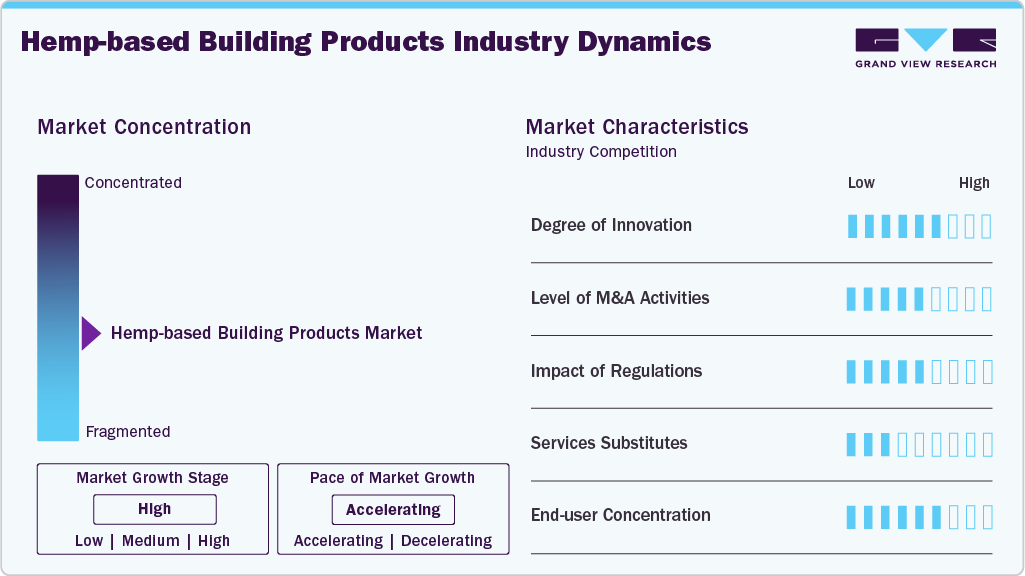
The hemp-based building products market is moderately fragmented, with a mix of emerging startups, regional producers, and established construction material companies integrating bio-based portfolios. The degree of innovation is high, driven by advancements in material science, composite engineering, and sustainable binder technologies. Continuous R&D efforts are focused on improving durability, fire resistance, and insulation performance of hemp-based materials to meet global building standards. Strategic collaborations between agricultural, chemical, and construction firms are enhancing product development and commercialization. The growing emphasis on lifecycle sustainability and low-carbon materials has positioned innovation as a key competitive differentiator within the market.
 To learn more about this report, Download Free Sample Report
 The market has witnessed a moderate level of mergers and strategic partnerships as companies aim to strengthen supply chains and expand geographical reach. Regulatory frameworks promoting green construction and the legalization of industrial hemp cultivation in several countries have had a significant positive impact on market growth. Strict environmental regulations and government incentives for carbon-neutral infrastructure are accelerating adoption. While service substitutes such as recycled concrete or natural fiber composites exist, hemp-based materials offer unique benefits in insulation and carbon sequestration. End user concentration remains relatively dispersed, with growing adoption across residential, commercial, and institutional sectors, indicating a balanced and expanding demand base globally.
Analyst Perspective
The hemp-based building products market is expected to witness robust long-term growth as the construction industry increasingly shifts toward low-carbon, bio-based, and circular building materials. Rising investments in green buildings, stricter environmental regulations, and growing demand for energy-efficient construction are accelerating the adoption of hempcrete, insulation, fiberboards, and hemp-based composites. Continued advancements in processing technologies, expanding industrial hemp cultivation, and increasing commercialization of sustainable building solutions are expected to improve product availability and cost competitiveness. Companies that invest in scalable manufacturing, strategic partnerships across the construction value chain, and innovative product development are likely to strengthen their competitive position as sustainable construction becomes a mainstream industry priority.
Product Type Insights
Based on product type, the hemp insulation segment led the market with the largest revenue share of 41.9% in 2025 and is expected to grow at a CAGR of 12.0% over the forecast period, driven by the increasing demand for eco-friendly and non-toxic insulation solutions in modern construction. Hemp insulation offers superior thermal and acoustic performance while being fully biodegradable and free from harmful chemicals such as VOCs and formaldehyde. The growing emphasis on indoor air quality and occupant health has encouraged the adoption of plant-based materials. Moreover, the rising cost of energy and tightening building efficiency regulations are pushing builders toward high-performance natural insulation.
Hemp-based composites segment is expected to grow at the fastest CAGR of 11.6% over the forecast period, driven by advancements in material engineering and the need for sustainable alternatives to synthetic composites. These materials combine hemp fibers with lime, bio-resins, or recycled polymers to create lightweight yet strong components for walls, panels, and structural elements. The increasing focus on circular economy principles and carbon-negative construction practices supports market expansion. Hemp-based composites also offer excellent moisture regulation, fire resistance, and durability, making them ideal for diverse climatic conditions.
End-use Insights
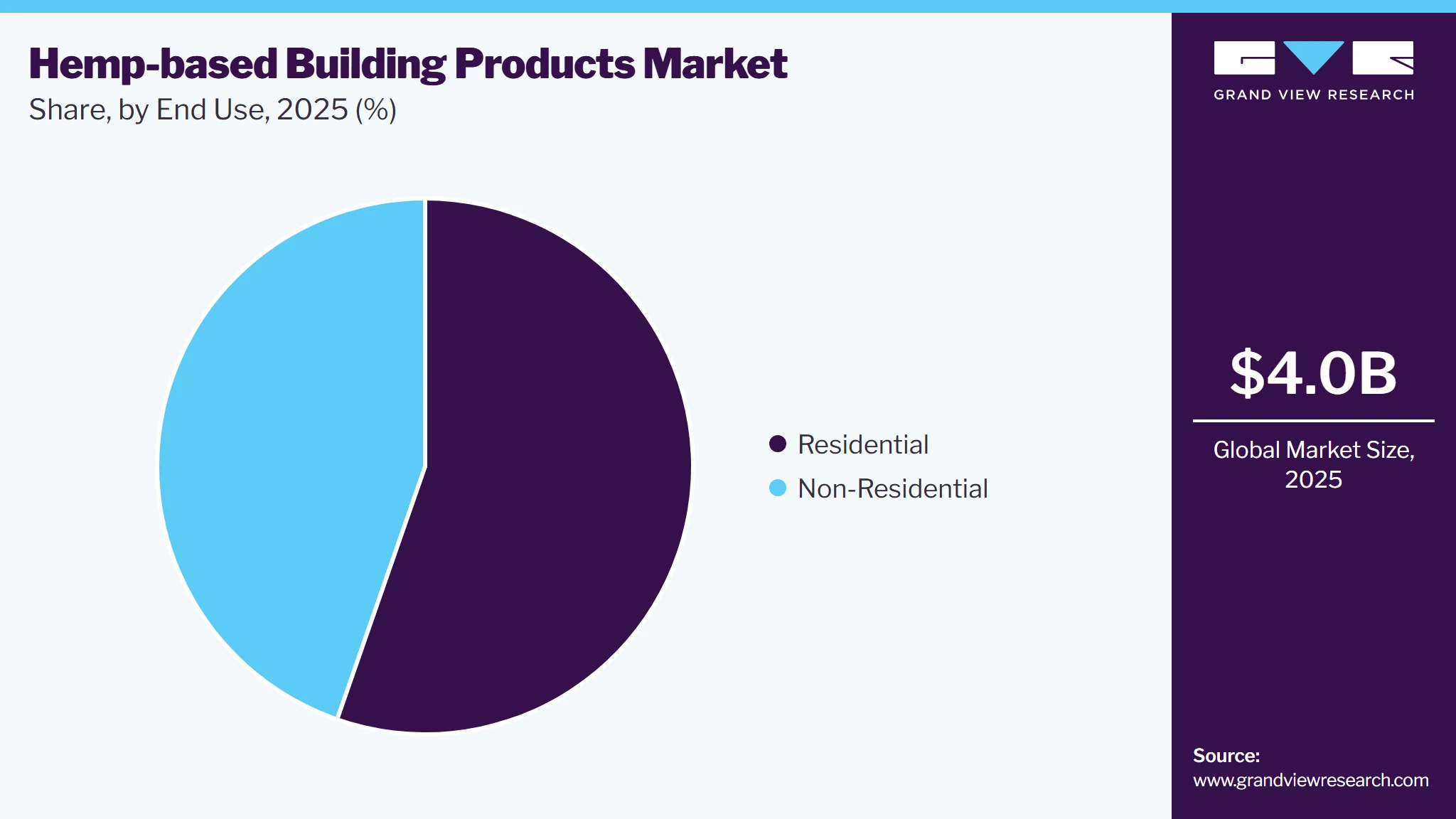
Based on end use, the residential segment led the market with the largest revenue share of 55.3% in 2025 and is expected to grow at a CAGR of 11.1% over the forecast period, driven by the growing consumer preference for sustainable, energy-efficient, and health-conscious housing solutions. Homeowners are increasingly seeking natural materials that minimize environmental impact and improve indoor comfort. Hemp-based products such as insulation, lime-hemp blocks, and breathable plasters are gaining traction in eco-homes and passive house designs. Rising awareness of carbon footprints and the long-term cost savings associated with energy-efficient construction are further promoting adoption.
 To learn more about this report, Download Free Sample Report
 Non-residential segment is expected to grow at the fastest CAGR of 11.6% over the forecast period, driven by the growing integration of sustainable construction practices in commercial, institutional, and industrial projects. Corporations and public institutions are increasingly adopting hemp-based materials to align with ESG goals and carbon reduction commitments. Hemp composites and insulation are being used in offices, educational buildings, and retail spaces due to their energy efficiency and acoustic benefits. The segment also benefits from large-scale investments in green infrastructure and smart city projects across developed and emerging economies.
Regional Insights
The North America hemp-based building products market is driven by growing environmental awareness and strong regulatory support for sustainable construction practices. The legalization of industrial hemp cultivation under the U.S. Farm Bill has significantly boosted raw material availability. Increasing demand for carbon-neutral and energy-efficient housing has led to greater adoption of hempcrete, hemp insulation, and hemp fiber panels. Government-backed green building programs and tax incentives for renewable materials further stimulate market growth. Collaboration between hemp producers and construction innovators is enhancing product development and commercialization. Additionally, the rising popularity of eco-friendly home renovations continues to strengthen regional demand.
U.S. Hemp-based Building Products Market Trends
In the U.S., the market is fueled by federal and state-level initiatives promoting carbon reduction and renewable resource utilization in construction. The Department of Energy’s focus on low-emission building technologies supports hemp-based material integration in sustainable housing. Increasing consumer preference for healthy, non-toxic indoor materials drives the use of hemp insulation and wall systems. The presence of innovative startups and research collaborations with universities accelerates technological advancements in hempcrete and biocomposites. Moreover, growing investment in sustainable infrastructure under the Inflation Reduction Act contributes to rapid market expansion. Rising construction of green residential units further reinforces national demand for hemp-based products.
Asia Pacific Hemp-based Building Products Market Trends
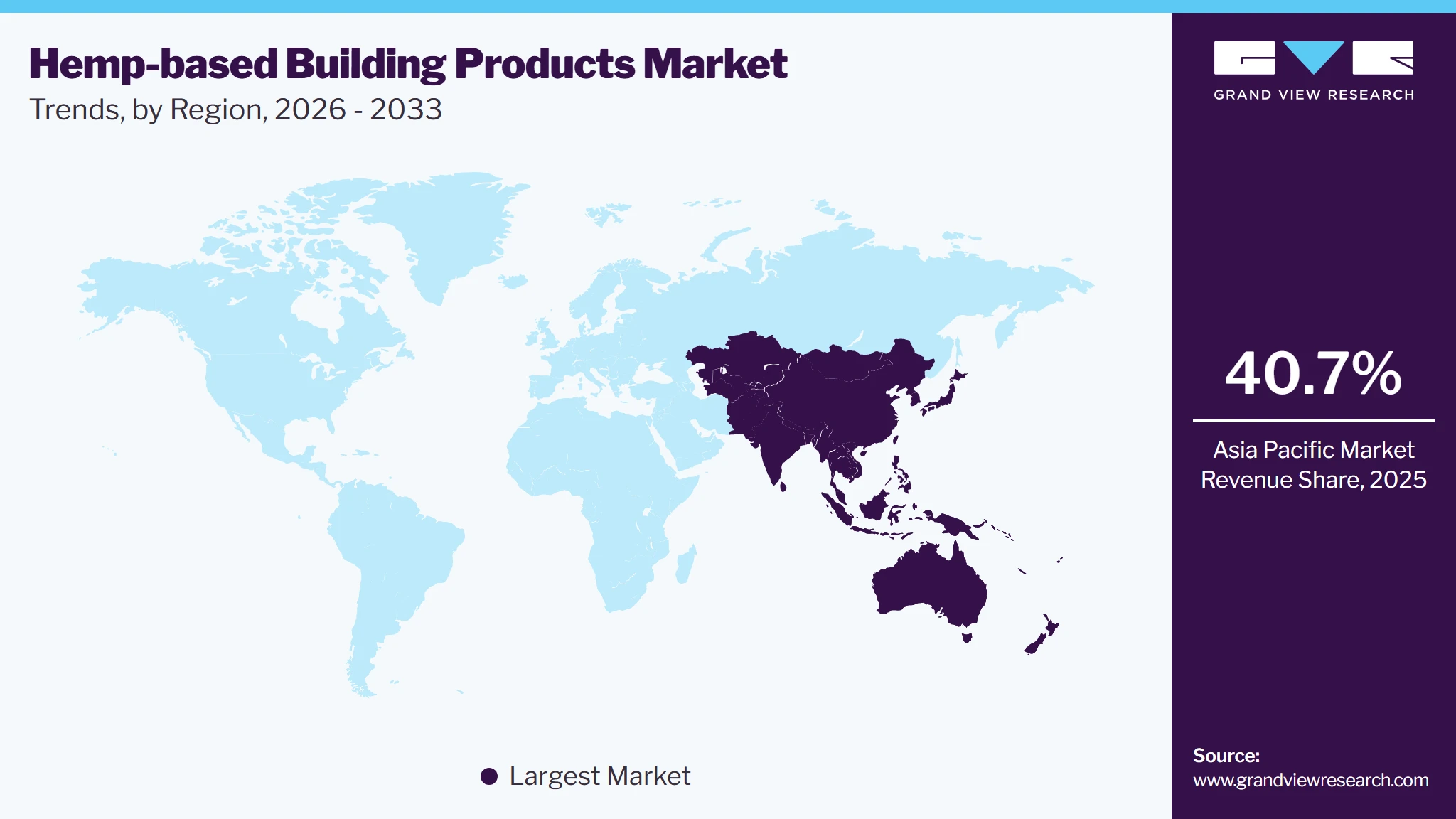
Asia Pacific dominated the hemp-based building products market with the largest revenue share of 40.7% in 2025, expanding due to rapid urbanization and a growing emphasis on environmentally responsible building materials. Countries such as India, Japan, and Australia are promoting bio-based construction to curb rising carbon emissions. The availability of affordable agricultural land and favorable climatic conditions for hemp cultivation strengthen the regional supply chain. Governments are encouraging sustainable infrastructure through green building certifications and low-carbon city projects. Increasing construction of smart and eco-cities is also stimulating demand for innovative materials such as hempcrete and natural fiber composites. Furthermore, partnerships between regional manufacturers and global bio-material companies are supporting technological transfer and product diversification.
 To learn more about this report, Download Free Sample Report
 China Hemp-based Building Products Market Trends
The hemp-based building products market in China held the largest share in the Asia Pacific region in 2025. Hemp-based building products market in China is primarily driven by government-backed sustainability goals aligned with the nation’s “dual carbon” strategy aimed at achieving carbon neutrality. The Chinese construction industry’s focus on green transformation has accelerated the integration of hemp-based materials in both residential and industrial projects. Investments in R&D for eco-friendly construction materials and rural revitalization programs are expanding domestic production. The country’s large-scale infrastructure development and urban renewal initiatives promote demand for energy-efficient insulation and wall systems. In addition, the rising popularity of prefabricated and modular green buildings supports broader use of hemp composites. Continuous government regulation promoting renewable building inputs further fuels market momentum.
Europe Hemp-based Building Products Market Trends
Europe’s hemp-based building products market is driven by stringent environmental regulations and strong policy support for circular economy initiatives. The European Green Deal and national sustainability programs encourage the adoption of renewable construction materials with low embodied carbon. Growing consumer preference for green-certified and energy-efficient buildings has increased the use of hempcrete and hemp insulation products. Innovation hubs across France, the Netherlands, and the UK are advancing research in bio-based composites and binders. The availability of well-established hemp farming networks ensures consistent raw material supply. Moreover, the region’s mature regulatory framework fosters standardization and trust in hemp-based construction solutions.
Germany’s market growth is supported by its ambitious climate protection goals and commitment to sustainable architecture. The government’s emphasis on reducing the carbon footprint of buildings drives adoption of hemp-based insulation, lime-hemp composites, and breathable wall systems. Strong R&D capabilities and collaboration between construction firms and academic institutions are promoting material innovation. The country’s construction industry is integrating bio-based materials in prefabricated homes and energy-efficient building designs. In addition, supportive policies under Germany’s Climate Action Plan 2050 enhance investment in green materials. The growing preference for healthy, VOC-free interiors further strengthens market adoption.
Latin America Hemp-based Building Products Market Trends
The hemp-based building products market in Latin America is gaining momentum due to expanding green construction initiatives and increasing focus on sustainable housing. Countries such as Brazil, Mexico, and Chile are encouraging hemp cultivation and renewable material development to support environmental goals. Growing investment in eco-friendly urban development projects is boosting demand for hemp-based panels, blocks, and insulation. The region’s abundance of agricultural land offers cost advantages for large-scale hemp production. Moreover, collaboration with international green material companies is enhancing technological capability and product quality. Rising awareness of climate-resilient infrastructure is further contributing to long-term market growth.
Middle East & Africa Hemp-based Building Products Market Trends
In the Middle East & Africa, the market is driven by the growing shift toward sustainable urbanization and diversification of non-oil economies. Government programs such as Saudi Vision 2030 and the UAE’s Green Building Regulations promote bio-based materials for energy-efficient construction. The region’s extreme climatic conditions have increased demand for thermally efficient and breathable materials such as hempcrete and hemp insulation. International collaborations are helping transferring hemp-processing technologies to local industries. In addition, sustainability-driven investments in smart city projects and carbon-neutral architecture are fostering market expansion. Growing environmental awareness among developers and policymakers is expected to further strengthen regional adoption of hemp-based products.
Key Hemp-based Building Products Company Insights
Some of the key players operating in market includeHempitecture Inc., American Lime Technology Ltd.
-
Hempitecture Inc. specializes in HempWool insulation and hempcrete blocks designed for superior thermal and acoustic performance. Its products are carbon-negative and free from harmful chemicals, promoting healthy indoor environments.
-
American Lime Technology Ltd. focuses on developing natural and low-carbon building systems. The company is known for its proprietary Hemcrete technology, which combines hemp shiv and lime binder for high-performance wall systems. These products offer excellent insulation, moisture regulation, and sustainability benefits.
HempFlax Group B.V., BAFA Neu GmbH are some of the emerging market participants in hemp-based building products market.
-
HempFlax Group B.V. offers hemp fibers, shives, and hempcrete mixes used in insulation panels, plasters, and composite materials. Its vertically integrated operations ensure quality control from cultivation to final production.
-
BAFA Neu GmbH specializes in producing eco-friendly hemp-based construction materials. The company manufactures hemp insulation boards, hemp-lime blocks, and natural fiber composites for sustainable building applications. BAFA Neu’s products are recognized for their superior thermal performance, durability, and recyclability.
Key Hemp-based Building Products Companies:
The following key companies have been profiled for this study on the hemp-based building products market.
- Hempitecture Inc.
- American Lime Technology Ltd.
- HempFlax Group B.V.
- BAFA Neu GmbH
- Dun Agro Hemp Group
- IsoHemp SA
- Green Building Store
- JustBioFiber Structural Solutions Corp.
- Limetec Ltd.
Competitive Benchmarking
Category
Operating Strategies
Competitive Edge
Weakness
Established Players (HempFlax Group B.V.; BAFA Neu GmbH; IsoHemp SA; American Lime Technology Ltd.; Dun Agro Hemp Group)
- Develop a comprehensive portfolio of hemp-based construction materials, including hempcrete, insulation, and fiber-based products.
- Invest in advanced hemp processing technologies and sustainable manufacturing capabilities.
- Expand partnerships with construction companies, architects, distributors, and green building developers.
- Strong expertise in industrial hemp cultivation and processing.
- Established manufacturing infrastructure and distribution networks across key markets.
- Broad product portfolio supported by technical knowledge and sustainability credentials.
- Dependent on industrial hemp cultivation and agricultural supply.
- High production, processing, and certification costs.
- Regulatory variations across regions can limit market expansion.
Emerging Players (Hempitecture Inc.; JustBioFiber Structural Solutions Corp.; Green Building Store; Limetec Ltd.)
- Develop innovative, high-performance bio-based building materials for sustainable construction.
- Expand regional production, strategic collaborations, and distribution partnerships.
- Focus on low-carbon construction solutions and customized products for residential and commercial projects.
- Strong focus on innovation and environmentally sustainable building solutions.
- Greater flexibility to develop niche and application-specific products.
- Ability to rapidly address evolving green building requirements.
- Limited global brand recognition and geographic presence.
- Smaller production capacity compared to established manufacturers.
- Limited financial resources for large-scale commercialization, expansion, and R&D investments.
Recent Developments
- In October 2025, Heidelberg Materials announced the launch of a cement-free hemp lime product designed to promote sustainable and low-carbon construction. The new material combines processed hemp fibers with a natural lime binder, offering excellent insulation, moisture regulation, and carbon sequestration properties. This innovation reflects the company’s commitment to decarbonizing the construction sector and expanding its portfolio of eco-friendly building solutions.
Hemp-based Building Products Market Report Scope
Report Attribute
Details
Market size in 2024
USD 36.0 billion
Estimated Market size in 2026
USD 44.5 billion
Projected Market size by 2033
USD 94.3 billion
Growth rate
CAGR of 11.3% from 2025 to 2033
Base year for estimation
2024
Historical data
2021 - 2023
Forecast period
2025 - 2033
Quantitative units
Revenue in USD million/billion, and CAGR from 2025 to 2033
Report coverage
Revenue forecast, company ranking, competitive landscape, growth factors, and trends
Segments covered
End-use, product type, region
Regional scope
North America; Europe; Asia Pacific; Central & South America; Middle East & Africa
Country scope
U.S.; Canada; Mexico; UK; Germany; France; Italy; Spain; China; India; Japan
Key companies profiled
Hempitecture Inc.; American Lime Technology Ltd.; HempFlax Group B.V.; BAFA Neu GmbH; Dun Agro Hemp Group; IsoHemp SA; Green Building Store; JustBioFiber Structural Solutions Corp.; Limetec Ltd.
Customization scope
Free report customization (equivalent up to 8 analysts’ working days) with purchase. Addition or alteration to country, regional & segment scope.
Pricing and purchase options
Avail customized purchase options to meet your exact research needs. Explore purchase options
Global Hemp-based Building Products Market Report Segmentation
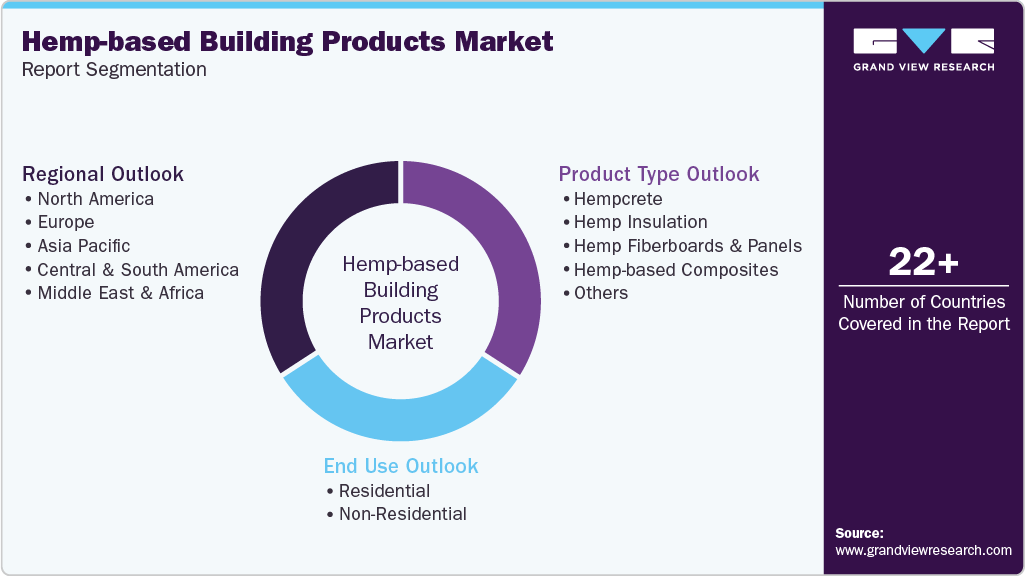
This report forecasts revenue growth at global, regional, and country levels and provides an analysis of the latest industry trends in each of the sub-segments from 2021 to 2033. For this study, Grand View Research has segmented the global hemp-based building products market report based on product type, end-use, and region.
 To learn more about this report, Download Free Sample Report
 -
Product Type Outlook (Revenue, USD Million, 2021 - 2033)
-
Hempcrete
-
Hemp Insulation
-
Hemp Fiberboards and Panels
-
Hemp-based Composites
-
Others
-
-
End Use Outlook (Revenue, USD Million, 2021 - 2033)
-
Residential
-
Non-Residential
-
-
Regional Outlook (Revenue, USD Million, 2021 - 2033)
-
North America
-
U.S.
-
Canada
-
Mexico
-
-
Europe
-
Germany
-
UK
-
France
-
Italy
-
Spain
-
-
Asia Pacific
-
China
-
Japan
-
India
-
-
Central & South America
-
Middle East & Africa
-
Research Methodology
The hemp-based building products market figures in this report are based on a proven research process that combines executive interviews with secondary research from proprietary databases, company filings, and recognized regulatory and institutional sources. Market size is built through value-chain sizing - reconciling supply-side and demand-side estimates - and triangulated with bottom-up and top-down approaches. Every estimate passes multiple levels of expert validation before publication, with each hemp-based building productssegment quantified using the revenue-capture definitions in the table below.
Segment Definition
Segment - Product Type
Revenue capture definition
Hempcrete
Revenue generated from the sale, manufacturing, supply, installation, and application of hempcrete blocks, cast-in-place hempcrete, and prefabricated hempcrete systems used for walls, insulation, and sustainable building construction.
Hemp Insulation
Revenue generated from the sale, production, installation, and distribution of hemp-based insulation products, including batts, rolls, loose-fill insulation, and insulation panels used for thermal and acoustic performance in buildings.
Hemp Fiberboards and Panels
Revenue generated from the sale, manufacturing, fabrication, and installation of hemp fiberboards, wall panels, ceiling panels, and structural boards used for interior and exterior building applications.
Hemp-based Composites
Revenue generated from the sale, production, and application of hemp fiber-reinforced composite materials used in structural components, façade systems, prefabricated building elements, and other construction applications.
Others
Revenue generated from the sale, manufacturing, and installation of other hemp-based building materials, including hemp roofing products, flooring materials, plasters, mortars, binders, decorative panels, and specialty construction solutions.
Segment Application
Revenue capture definition
Residential
Revenue generated from the supply, installation, and maintenance of hemp-based building products used in single-family homes, multi-family housing, apartments, and residential renovation projects to improve energy efficiency, indoor air quality, and sustainability.
Non-Residential
Revenue generated from the supply, installation, and maintenance of hemp-based building products used in commercial, industrial, institutional, educational, healthcare, hospitality, and public infrastructure projects to enhance building performance, durability, and environmental sustainability.
Estimation Model
Layer Name
Key Question
Description
Raw Material & Component Manufacturing
What is the production capacity and supply of hemp-based building product materials by product type?
Estimates the supply of hemp hurds (shiv), hemp fibers, hemp lime binders, natural binders, insulation fibers, bio-based resins, fiberboards, composite materials, prefabricated panels, and other hemp-based building product components by evaluating raw material availability, hemp cultivation, processing capacity, manufacturing technologies, supplier output, and production trends across major manufacturing regions.
Hemp-based Building Product Manufacturing & Installation
How much hemp-based building material is manufactured and installed across building types?
Evaluates the production, fabrication, supply, and installation of hempcrete, hemp insulation, hemp fiberboards, hemp-based composites, and other hemp construction products by building material manufacturers, prefabrication companies, contractors, and construction firms, considering manufacturing volumes, installation methods, project specifications, and adoption across residential, commercial, industrial, and institutional buildings.
End-Use Application Demand
Which applications generate the highest demand for hemp-based building products?
Measures demand across residential and non-residential construction by analyzing investments in green buildings, energy-efficient construction, affordable housing, commercial real estate, educational and healthcare infrastructure, renovation projects, net-zero buildings, sustainable urban development, and government initiatives promoting low-carbon and bio-based construction materials.
Regional Revenue Validation
What is the final market value by region and segment?
Validates market estimates through regional construction activity, green building investments, industrial hemp cultivation, government regulations and incentives, environmental policies, building permit trends, raw material pricing, import-export analysis, adoption of bio-based construction materials, and demand across major end-use sectors to derive the final market size.
Delivered Customizations
This report has been delivered with the following In-depth customizations
Client request
Customization delivered
Value adds
Regional & Country-Level Market Analysis
Comprehensive analysis of market size, growth opportunities, demand trends, industrial hemp cultivation, construction activity, regulatory framework, import-export scenario, raw material availability, pricing trends, and competitive landscape across major regions and key countries.
Enables companies to identify high-growth regional markets, optimize expansion strategies, assess country-specific risks, and make informed investment and market entry decisions.
Competitive Benchmarking
Detailed benchmarking of leading market participants based on product portfolio, production capacity, manufacturing footprint, pricing strategy, technological capabilities, sustainability initiatives, strategic partnerships, mergers & acquisitions, recent developments, and regional presence.
Helps stakeholders evaluate competitors' strengths and weaknesses, identify market gaps, benchmark best practices, and develop effective product differentiation and competitive growth strategies.
Sustainability & Regulatory Assessment
In-depth evaluation of green building regulations, industrial hemp cultivation policies, carbon reduction initiatives, environmental certifications, building codes, government incentives, lifecycle assessment standards, and evolving sustainability requirements influencing hemp-based construction materials.
Assists manufacturers, investors, and developers in ensuring regulatory compliance, enhancing ESG performance, minimizing policy-related risks, and leveraging incentives to accelerate the adoption of sustainable hemp-based building products.
Frequently Asked Questions About This Report
The global hemp-based building products market size was valued at USD 36.0 billion in 2024 and is estimated at USD 44.5 billion for 2026.
The global hemp-based building products market is expected to grow at a CAGR of 11.3% from 2025 to 2033, reaching USD 94.3 billion by 2033.
Residential segment dominated the market and accounted for the largest revenue share of 55.4% in 2024, driven by the growing consumer preference for sustainable, energy-efficient, and health-conscious housing solutions
Some of the key players in the hemp-based building materials market are Hempitecture Inc., American Lime Technology Ltd., HempFlax Group B.V., BAFA Neu GmbH, Dun Agro Hemp Group, IsoHemp SA, Green Building Store, JustBioFiber Structural Solutions Corp., and Limetec Ltd.
The key factors driving the hemp-based building materials market include growing demand for sustainable construction materials, supportive government regulations, advancements in bio-composite technologies, and rising awareness of energy-efficient and healthy indoor environments.
About the Author(s)
Advanced Interior Materials Research Team
Advanced Materials · Advanced Interior MaterialsThis report was authored by the advanced interior materials research team at Grand View Research - comprising two research analysts, one senior research analyst, and one industry expert - with specialized expertise in the advanced interior materials segment of the advanced materials industry. All findings are based on proprietary advanced materials databases, executive interviews, and regulatory analysis, subject to internal peer review prior to publication.
Last Updated:
Speak to Analyst

Customize this report to your needs - add regions, segments, or data points, with 20% free customization.
Or view our licence options:


ISO 9001:2015 & 27001:2022 Certified
We are GDPR and CCPA compliant! Your transaction & personal information is safe and secure. For more details, please read our privacy policy.


